

Sorry, there were no results found for “”
Sorry, there were no results found for “”
Sorry, there were no results found for “”
When you’re responsible for a team, a lot of your day probably goes into answering the same questions:
In many teams, the answers are scattered across task management tools, team communication apps, and project management tools.
You end up piecing together the current state of work from multiple locations. That’s exhausting!
Team management software exists to solve this problem.
It gives you one place to assign work, see who owns what, track status, and keep decisions tied to execution. No need to chase people for updates or keep rebuilding context.
Below, we explore the best team management apps, including their features, limitations, and pricing, to help you make the right choice.
Here’s a snapshot of the best team management software and what each offers.
| Tool | Key features | Best for | Pricing* |
| ClickUp | AI-powered Tasks, Contextual AI, Chat, Dashboards, Super Agents and Automations | All-in-one AI-powered team management with customizable workflows | Free Forever; Customization available for enterprises |
| Asana | Multiple project views, task ownership, Work Graph, 200+ integrations | Multi-team coordination | Free; Paid plans from $13.49/user/month |
| Monday.com | Custom boards, no-code automations, dashboards, multiple views | Building custom team workflows | Free (2 seats); Paid plans from $12/user/month |
| Jira | Backlogs, sprint boards, burndown & velocity charts, 2,500+ integrations | Sprint-driven and engineering-led teams | Free (10 users); Paid plans from $7.91/user/month |
| Microsoft Teams | Channels, meetings, file sharing, AI meeting recaps | Meeting-centric, Microsoft-native teams | From $4/user/month |
| Notion | Databases, templates, forms, linked views, permissions | Process consistency without micromanagement | Free; Paid plans from $12/user/month |
| Basecamp | Message boards, check-ins, to-dos, centralized files | Async-first, low-overhead teams | Free; Paid plans from $15/user/month |
| Airtable | Tables, forms, automations, portals, dashboards | Data-first operations teams | Free; Paid plans from $24/user/month |
| Smartsheet | Grid & Gantt views, automations, executive dashboards | Spreadsheet-native project management | Paid plans from $12/user/month |
| nTask | Multiple workspaces, meetings, tasks & subtasks | Budget-conscious multi-team management | Paid plans from $4/user/month |
| ProofHub | Gantt charts, forms, online proofing, flat-fee pricing | Client and agency collaboration | Paid plans from $50/month |
| Wrike | Cross-tagging, custom item types, live editor, timesheets | Complex, multi-layered workflows | Free; Paid plans from $10/user/month |
| Teamwork.com | Gantt & Kanban, utilization tracking, billable hours | Agency-style delivery and utilization tracking | Free; Paid plans from $13.99/user/month |
Our editorial team follows a transparent, research-backed, and vendor-neutral process, so you can trust that our recommendations are based on real product value.
Here’s a detailed rundown of how we review software at ClickUp.
Not every team management tool works the same way. As your team grows, gaps in visibility, planning, and coordination become harder to manage.
Here’s what you should look for in a team management app:
⚡ Template Archive: Free Task Management Templates in ClickUp and Excel
👀 Did You Know? As per a report, over 79% of marketers agree that AI and automation tools can help them spend less time on manual tasks and more time on the most important parts of their role.
Below, you’ll find the best team management apps for different team structures, workflows, and priorities.
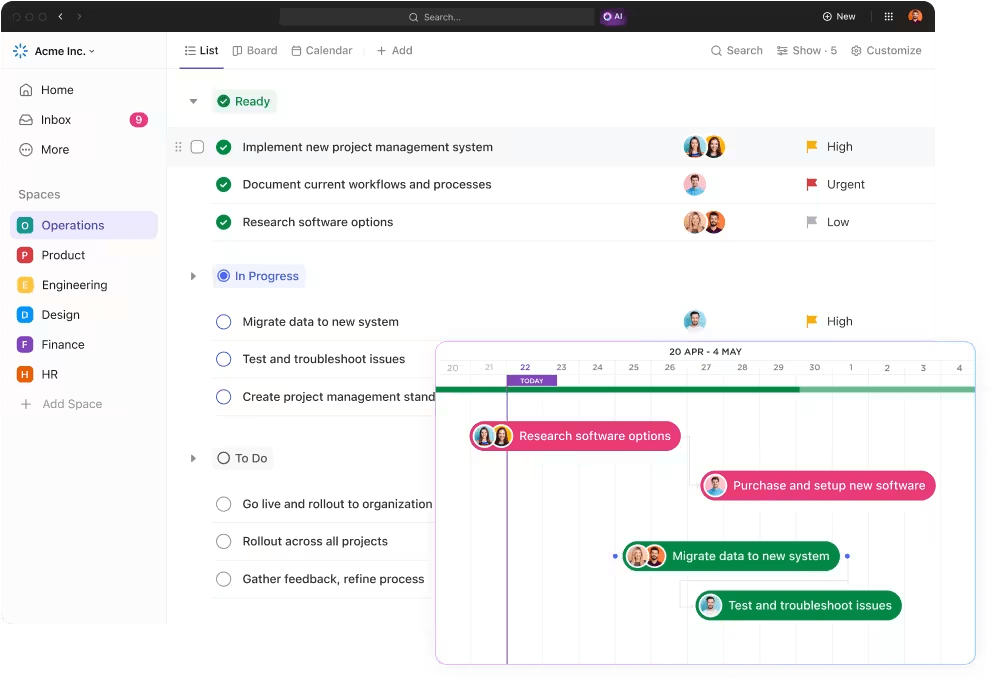
ClickUp, the world’s first converged AI workspace, unifies tools and workflows in a centralized platform. With tasks, goals, documents, communication, automation, and AI in a single, unified space, teams can spend more time on work and less on work about work.
Let’s see how ClickUp’s Project Management Platform supports team management 👇
ClickUp Tasks are the foundation of team accountability.
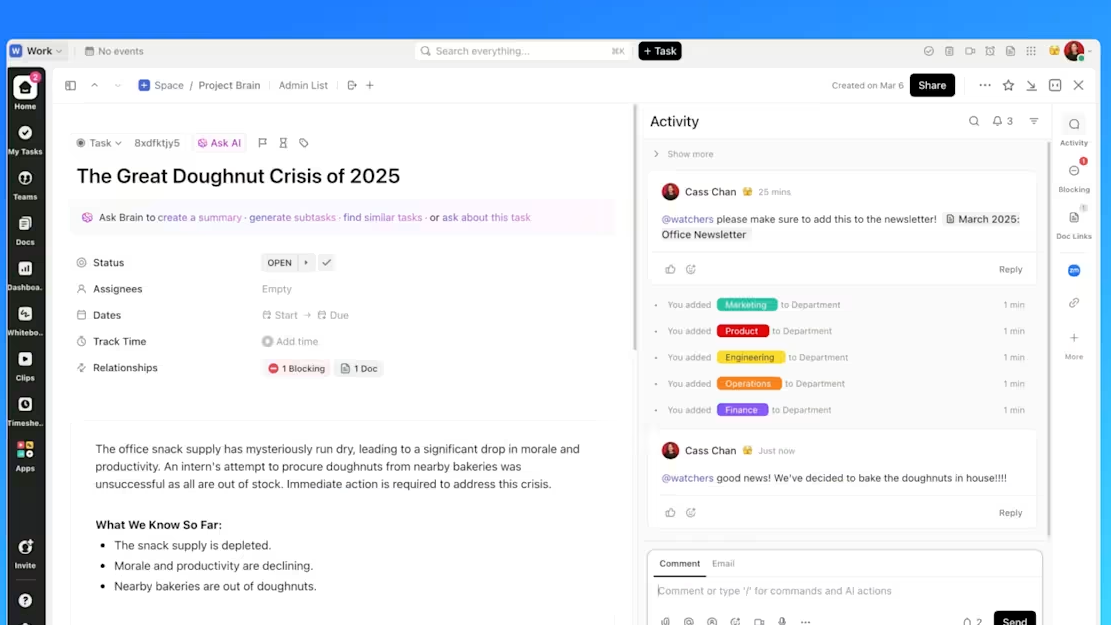
Every task can include owners, priorities, due dates, dependencies, and subtasks.
AI Custom Fields allow you to enrich tasks with dynamic, AI-generated context. You don’t need to manually update fields like priority, risk level, or task summaries. AI populates and refines them automatically based on task content and activity.

The best part? ClickUp Brain, the integrated AI, can instantly generate concise summaries that capture progress, decisions, and blockers. It can also generate structured task descriptions, ensuring expectations are clear from the start, and suggest which tasks should be prioritized.
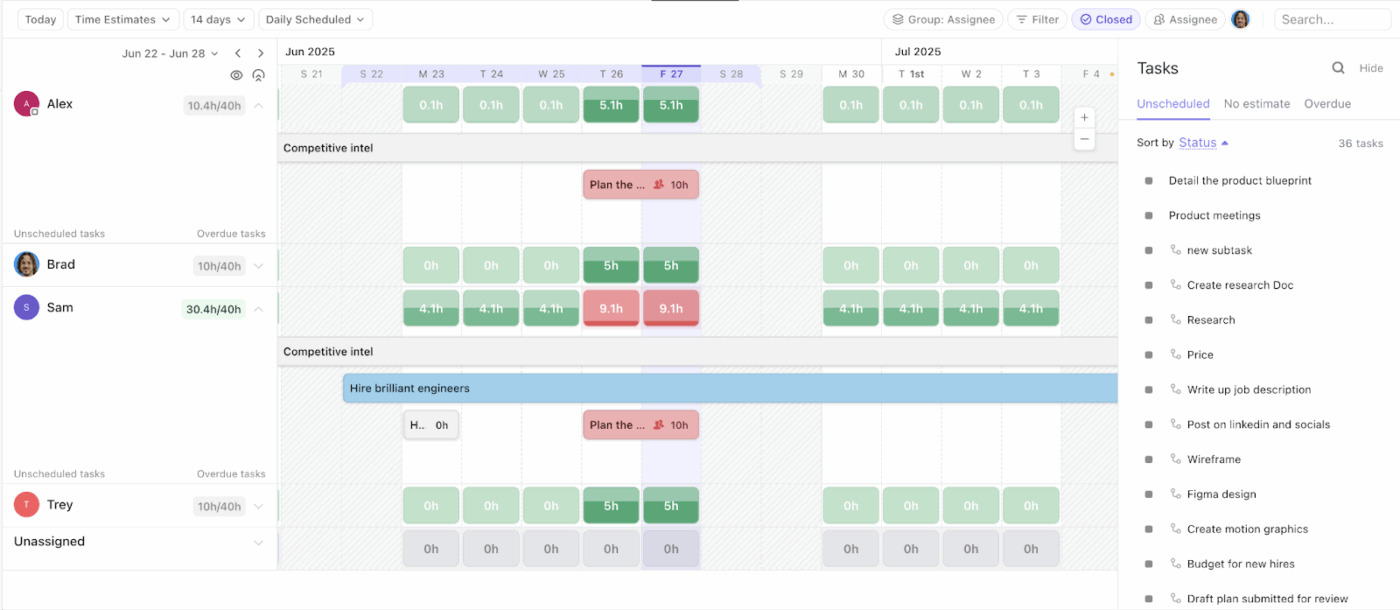
The ClickUp Workload View shows who is overallocated, underutilized, or at risk of burnout across projects. You can zoom in and out to see your workload by day, week, or month, and easily create tasks by clicking an empty space on the canvas.
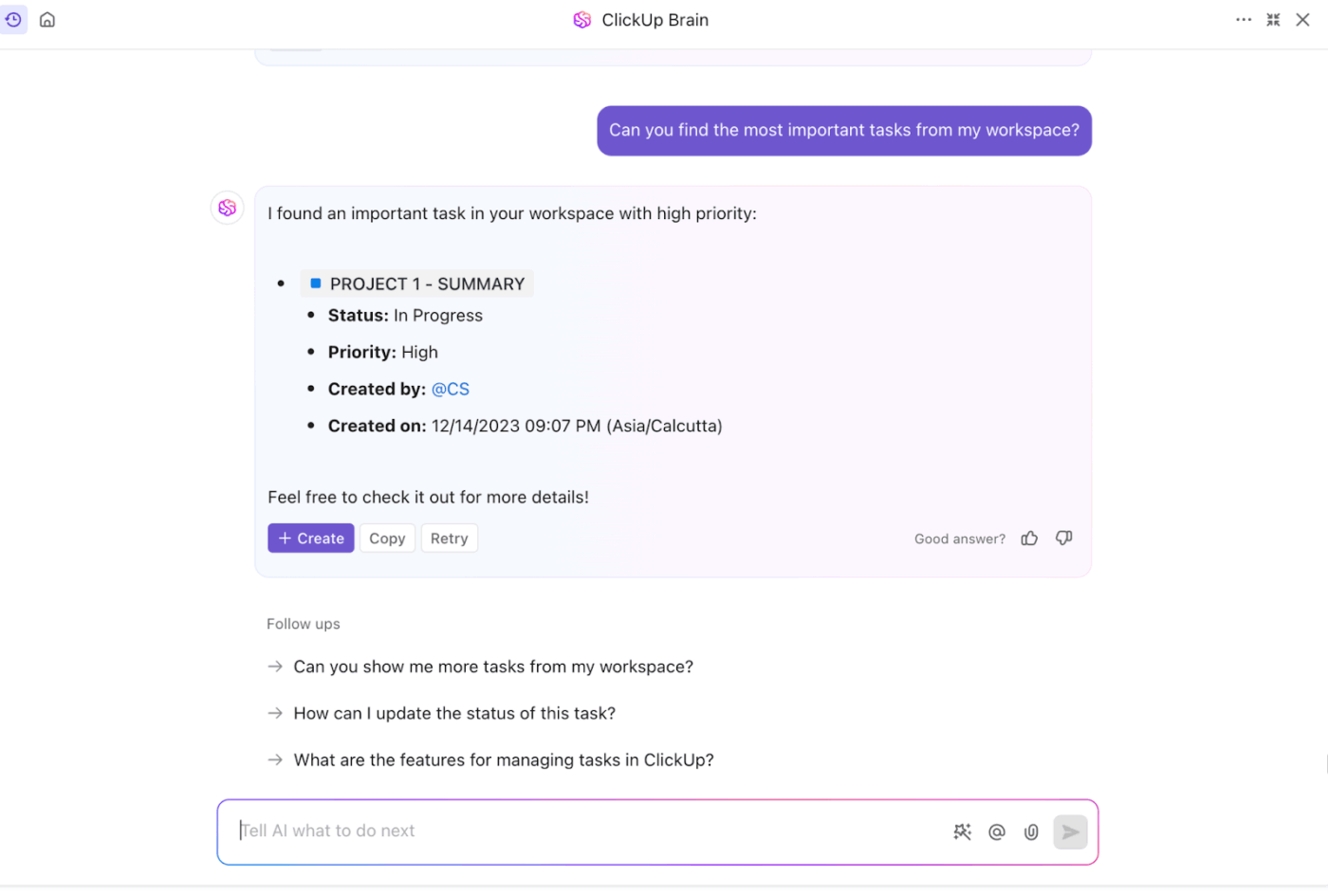
ClickUp’s built-in contextual AI is designed to work inside your team’s workflows.
Brain understands the full context of your workspace—including tasks, Docs, comments, goals, timelines, owners, and project structure, so outputs are grounded in actual work. It can answer practical questions without team members or managers needing to manually piece information together.
📌 Example: What’s blocking this project, who’s overloaded this week, or what changed since the last update?
ClickUp Brain pulls signals from across the workspace to generate summaries, surface risks, and highlight priorities in a way that reflects how the team is actually operating.
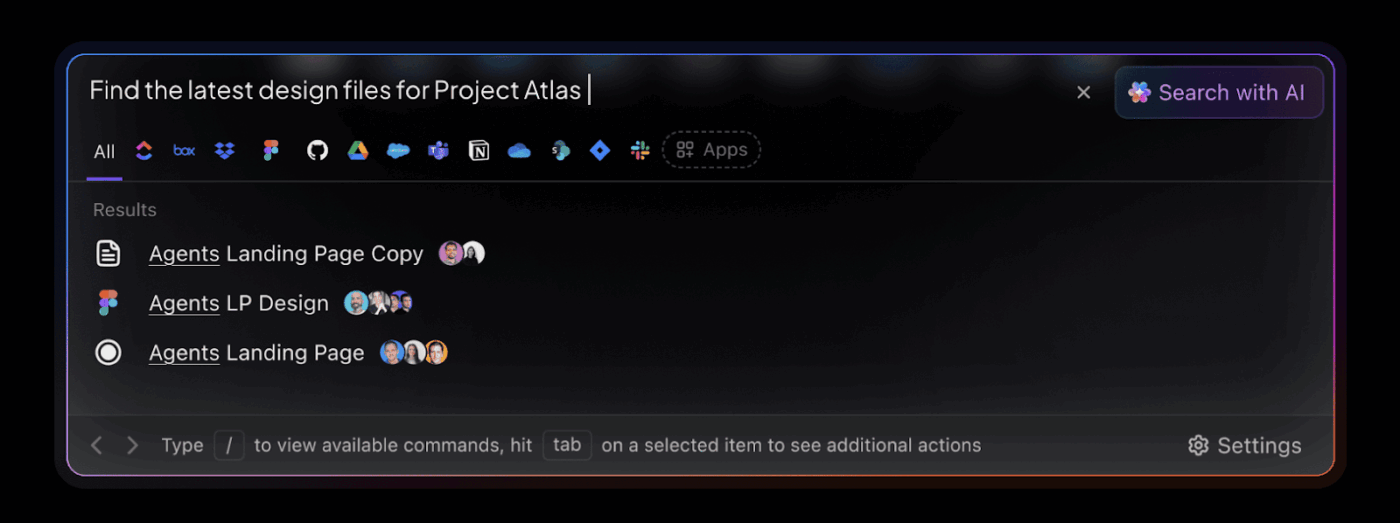
ClickUp BrainGPT’s Enterprise Search is built for teams that work across many tools every day. Instead of jumping between apps to find files, messages, or updates, you can search everything from one single search bar inside ClickUp.
Ask a question, and ClickUp Enterprise Search pulls the most relevant results from ClickUp tasks, subtasks, comments, Docs, attachments, and connected apps like Google Drive, GitHub, Jira, etc.
The search is context-aware, so it shows the most relevant files, tickets, or links based on what you’re working on.
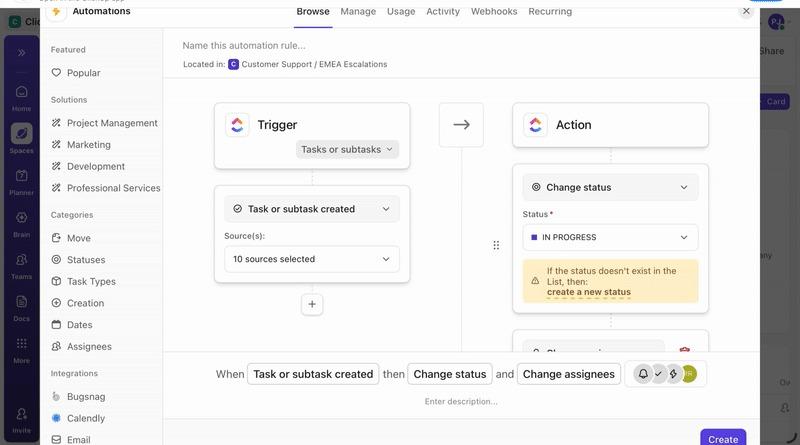
ClickUp Automations reduces the need to manually push work forward. Instead of laboriously assigning tasks, updating statuses, or chasing follow-ups, you can define simple rules that keep work moving automatically.
You can trigger actions based on real-time changes like task status, priority, assignee, or due date.
For more complex tasks, turn to ClickUp Super Agents. These are your ambient, contextual AI teammates with defined roles and responsibilities. They don’t just react to rules. Based on the goals you define, Super Agents can monitor work, understand context, and take action.
Each agent can be configured around a specific task or function, such as project coordination, risk monitoring, or stakeholder updates.
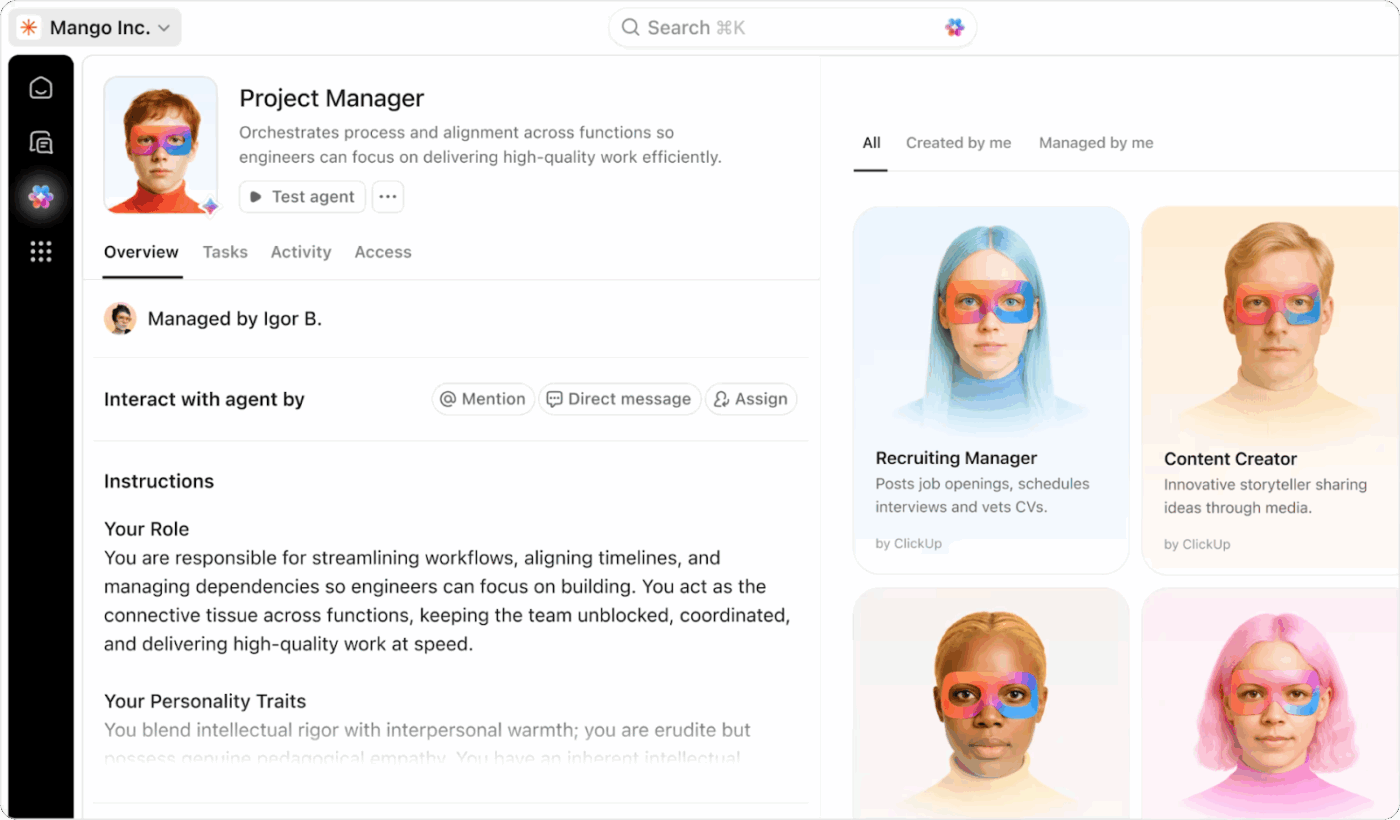
📌 Example: When a meeting or task update references an overdue dependency, a Super Agent can automatically:
To know more about Super Agents, watch this video 👇
If you’re a team leader, you know the struggle of getting a clear picture of what’s working, what’s blocked, and what needs attention when updates are scattered around.
ClickUp’s Team Management Plan Template is a single source of truth for tracking progress, concerns, and commitments consistently across teams and departments.
Here’s why you will love this template:
A G2 user says:
ClickUp brings all our tasks, documents, goals, and time tracking into one unified workspace. We’ve been using it since 2018, and it’s incredibly flexible for managing both internal workflows and client projects. The customizable views (List, Board, Calendar, etc.) and detailed automation options save us hours each week. Plus, their frequent feature updates show they’re serious about improving the platform.
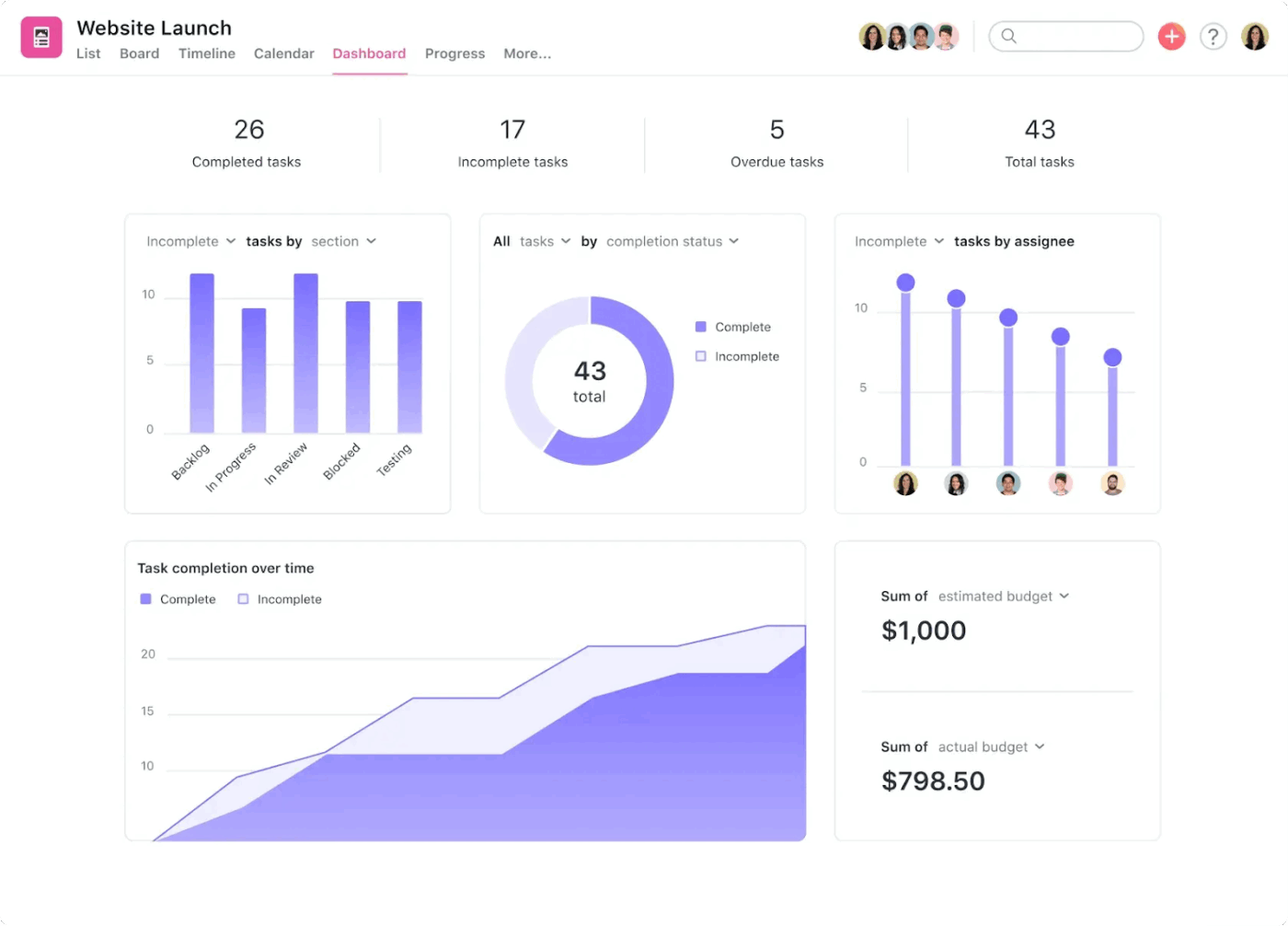
Unlike a simple to-do list, Asana provides clarity on “who is doing what by when” in the entire organization through its Work Graph. You can break high-level initiatives into bite-sized tasks with clear ownership and due dates.
With advanced features like the Workflow Builder, Asana lets you create custom workflows and no-code automations to standardize how work moves through different stages. For example, teams can automate task handoffs, status updates, or approvals without relying on manual follow-ups.
Asana’s AI Studio focuses on reducing planning and coordination overhead rather than replacing execution. It helps teams summarize project status, generate task descriptions, identify risks, and surface blockers based on activity inside the workspace.
The platform also connects to 200+ tools, including Google Workspace, Slack, Zoom, Power BI, and Vimeo.
A G2 user says:
I like using Asana’s digital features and resources because it allows me to manage my projects and work processes efficiently and professionally, facilitating collaboration and professional input from all members of my business to organize my tasks and workflows.
👀 Did You Know? Teams with deep-level diversity (differences in values, perspectives, and thinking) tend to show higher creativity and innovation outcomes than teams with only surface-level similarity, shows research. Simple similarity (e.g., same background) does not automatically boost creative performance. Deep-level diversity can provide more informational resources for creative problem-solving.
📚 Read More: Best Asana Alternatives and Competitors
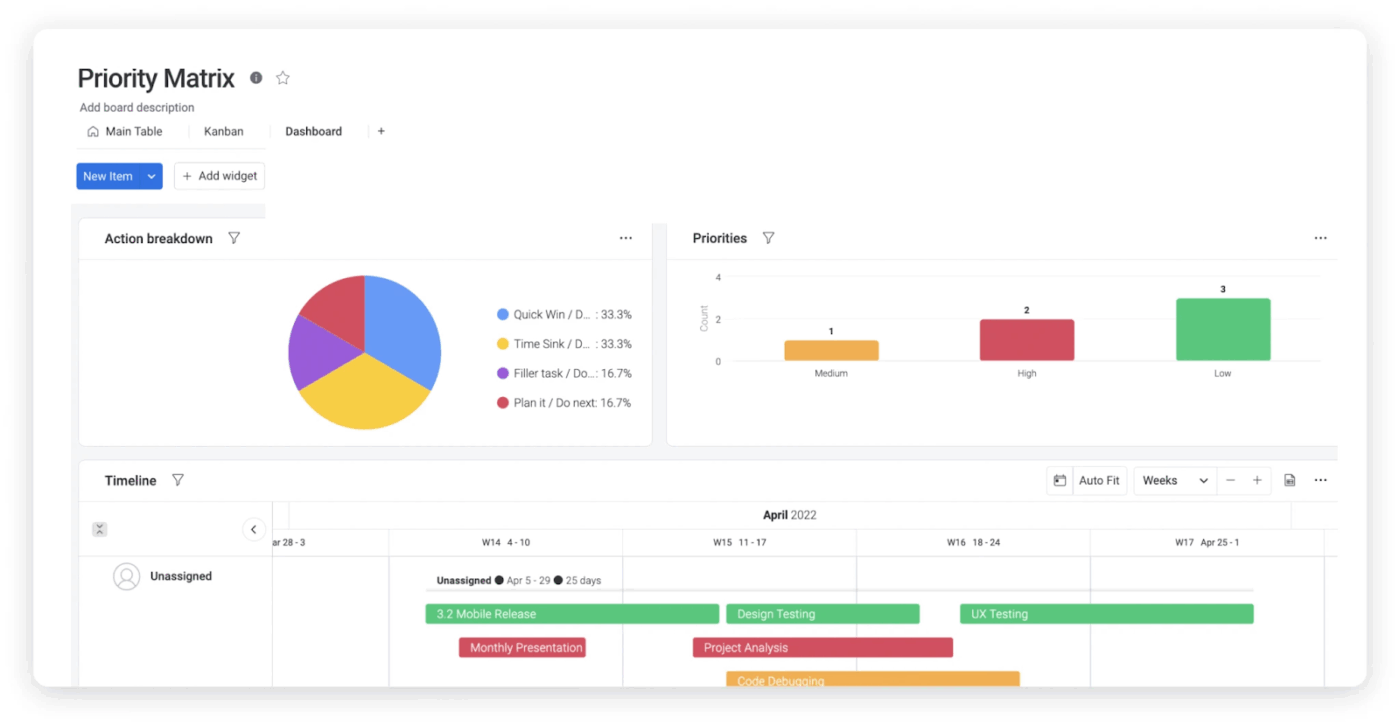
Monday.com operates as a Work OS that emphasizes visual project management and transparency across teams.
It uses a flexible board-based system in which rows (items) and columns (data points) can be configured to track everything from task status and priority to budget and owner. This structure allows managers to build a customized dashboard that reflects how their teams actually work.
To manage execution, you can visualize deadlines and dependencies using views like Calendar, Timeline, Kanban, Chart, Files, and Map. This helps you track key project milestones and spot risks early.
Collaboration is centralized through “Updates” sections on every item, where teams can tag colleagues, share files, and use GIFs or emojis to keep engagement high.
The tool’s AI helps you generate task descriptions, summarize updates, rephrase messages, and extract key information from long activity threads.
A more recent addition to the suite is AI Agents and Agent Factory. These agents can monitor boards, detect patterns, and take action based on defined goals, such as flagging risks, routing work, or triggering follow-ups automatically.
A G2 user says:
I find monday Work Management incredibly beneficial for coordinating my projects, particularly because it keeps all my information in one convenient location. The accessibility across devices, such as my phone and iPad, enhances its convenience, allowing me to manage and track tasks from anywhere. I love the visually appealing design that is both simple and pleasing, making it comfortable to interact with.
📮 ClickUp Insight: More than half of respondents type into three or more tools daily, battling “app sprawl” and scattered workflows.
While it may feel productive and busy, your context is simply getting lost across apps, not to mention the energy drain from typing. BrainGPT brings it all together: speak once, and your updates, tasks, and notes land exactly where they belong in ClickUp. No more toggling, no more chaos—just seamless, centralized productivity.
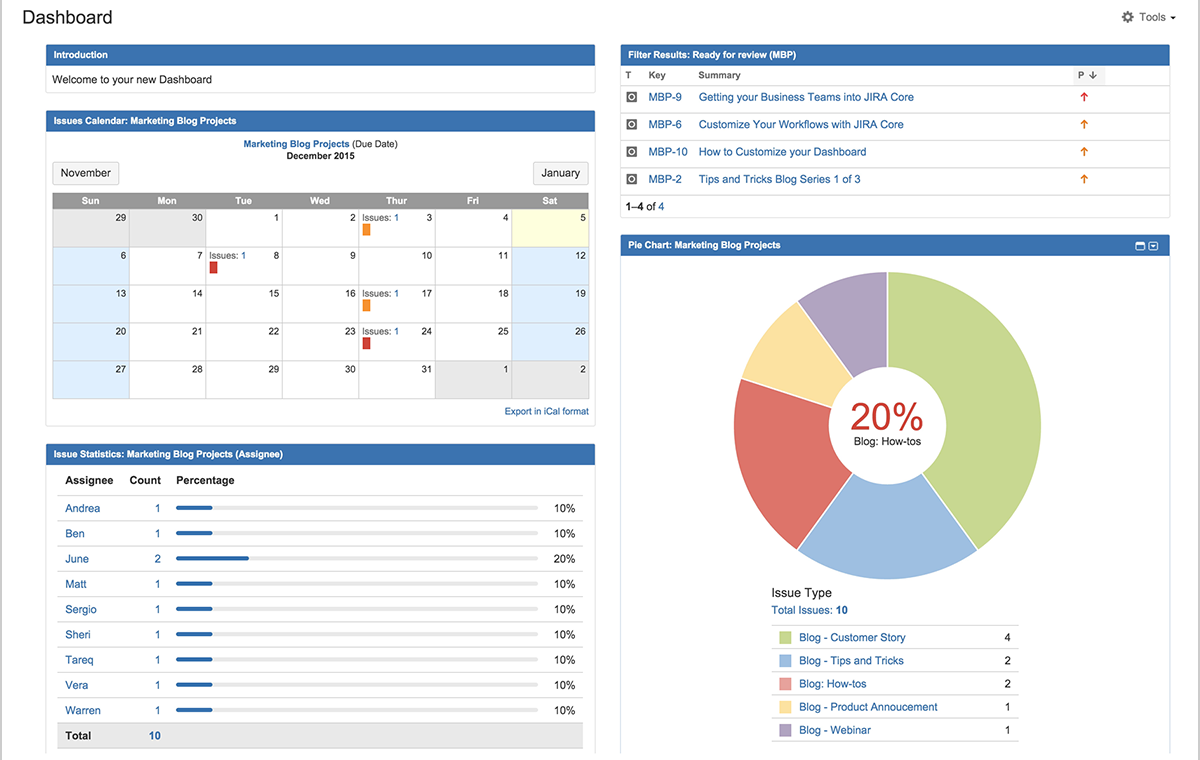
Jira is a project management tool for teams that work in structured cycles, such as software sprints, bug-fix queues, and release plans. You can group tasks or “issues” in a shared backlog, where they can be prioritized, assigned, and scheduled.
You can then move those issues through clear stages, such as To Do, In Progress, and Done. Out of the box, Jira provides professional-grade charts like Burndown Charts (showing if you’ll finish your work by the end of the week) and Velocity Charts (measuring how much work your team gets done over time).
Within Jira, you get access to Rovo Agents—your context-aware teammates that understand your work in Jira. They can help automate common project tasks like building workflows, checking work readiness, and ensuring issues are properly defined and prioritized before sprint planning.
Jira’s AI capabilities include enterprise-grade search and context-rich insights that help teams find and understand work faster. AI can surface related issues, link to Confluence documentation, and pull in context from integrated tools to support efficient team management.
A G2 user says:
What I like best about Jira is that I can create projects, and whenever there is a new feature requirement, we can create a ticket for that task and assign it to specific teammates. We can also track the ticket status, and the workflow is fully customizable based on our process. In addition to that, Jira provides clear visibility into progress through boards, filters, and reports, which makes it easy to track sprint progress and identify blockers early.
⭐ Bonus: If you need help with some team-building activities, here are some fun and practical communication games.
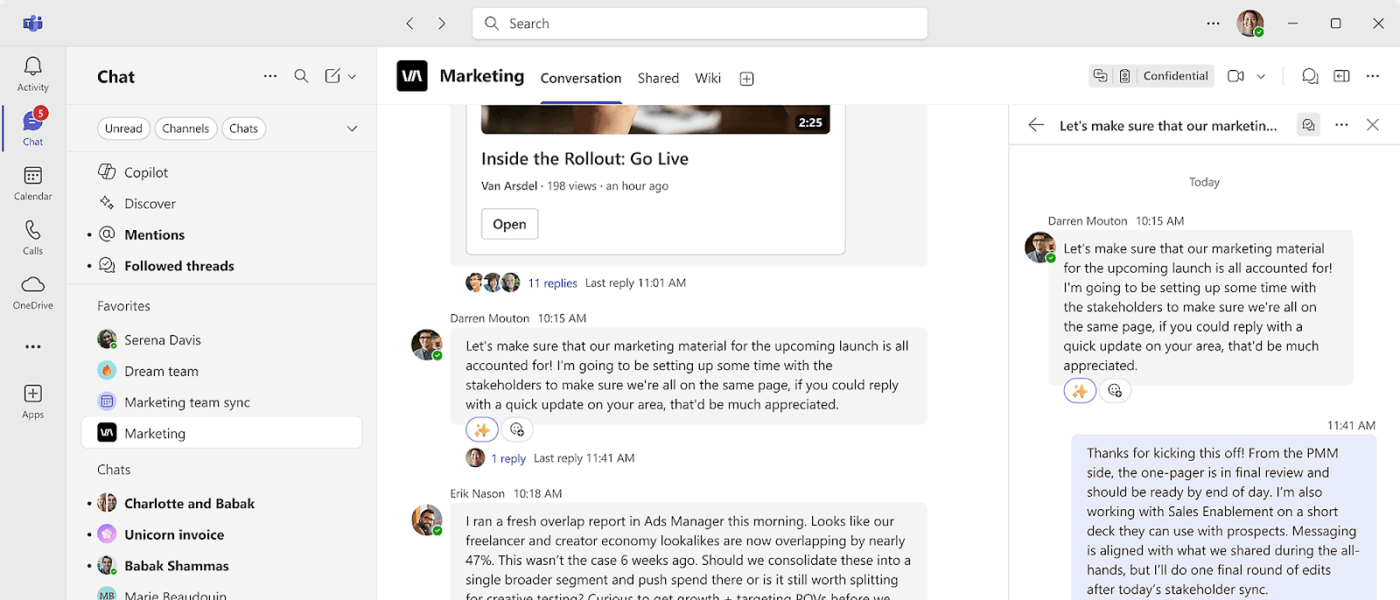
Microsoft Teams is a communication and collaboration tool that’s effective for teams already entrenched in the Microsoft environment who want to avoid the friction of jumping between different platforms.
Teams lets you manage conversations through channels, share task lists, collaborate with embedded apps, and handle voice calls and voicemails from a single interface. It includes an AI-powered recap of meetings you didn’t attend, giving you a concise overview of what was discussed, key decisions, and next steps.
While time tracking is not a native feature, it is supported through third-party integrations and Power Automate workflows that allow teams to log hours directly within their project channels.
A G2 user says:
What I appreciate most about Microsoft Teams is its ability to bring all aspects of collaboration together in one unified workspace. The integration of chat, meetings, file sharing, and various applications is seamless, which greatly minimizes the need to switch between different tools and enhances daily productivity.
🚀 ClickUp Advantage: ClickUp Clips lets teams record, share, and comment on screen and voice messages directly inside tasks, Docs, or chats, eliminating the need for external tools like Loom.
Recordings are automatically added to the Clips Hub. When you enable ClickUp AI, you also get transcripts with timestamps for searchable context and easy task conversion.

This makes visual communication faster and clearer, especially for walkthroughs, feedback, or asynchronous updates that teams can reference without long threads or meetings.
📚 Read More: Microsoft Teams Alternatives and Competitors
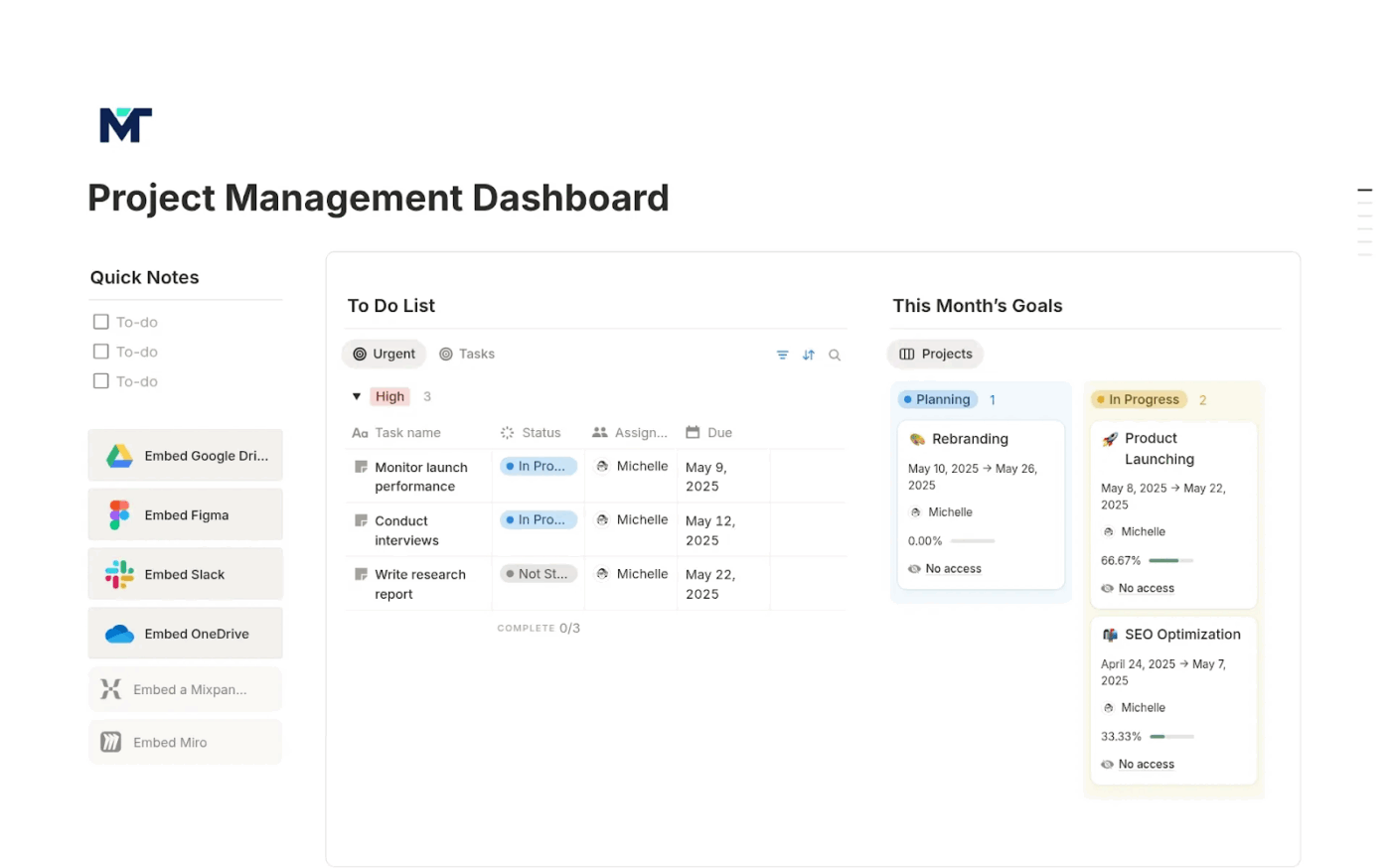
Searching for ways to keep your team consistent without micromanaging or relying on everyone’s individual task management skills? Use Notion, an all-in-one digital workspace.
Notion lets you define shared structures once—such as project layouts, task formats, and documentation templates—and reuse them across teams. This creates alignment without forcing everyone to manage work the exact same way.
Linked views give managers precise visibility control. In a one-on-one, for example, you can surface only an individual’s tasks, goals, or OKRs, while hiding unrelated projects. Combined with granular permissions, this makes Notion well-suited for mixed visibility environments.
You can keep a Performance Reviews database fully private, share a Project Planning board with the whole team, and expose a single Project Timeline page to an external client—without leaking internal discussions or context.
Use Notion AI to maintain consistency for your entire team by generating first drafts of SOPs, project briefs, and review notes directly within shared templates
A G2 user says:
Notion is by far the best tool I’ve used for bringing my projects, ideas, and tasks all into a usable space without overwhelm or clutter. The databases are incredibly robust, and using the views to get actionable insights or quickly create a personal dashboard has been invaluable. I’ve also recently started trying the AI Agents, but so far they’ve been both helpful and genuinely exciting to use.
👀 Did You Know? Teams that feel safe to take interpersonal risks (asking questions, admitting mistakes, and proposing ideas) learn and perform better over time.
Harvard Business School professor Amy C. Edmondson found that teams with high psychological safety engaged in more learning behavior, which in turn improved their overall performance compared with teams where people feared speaking up.
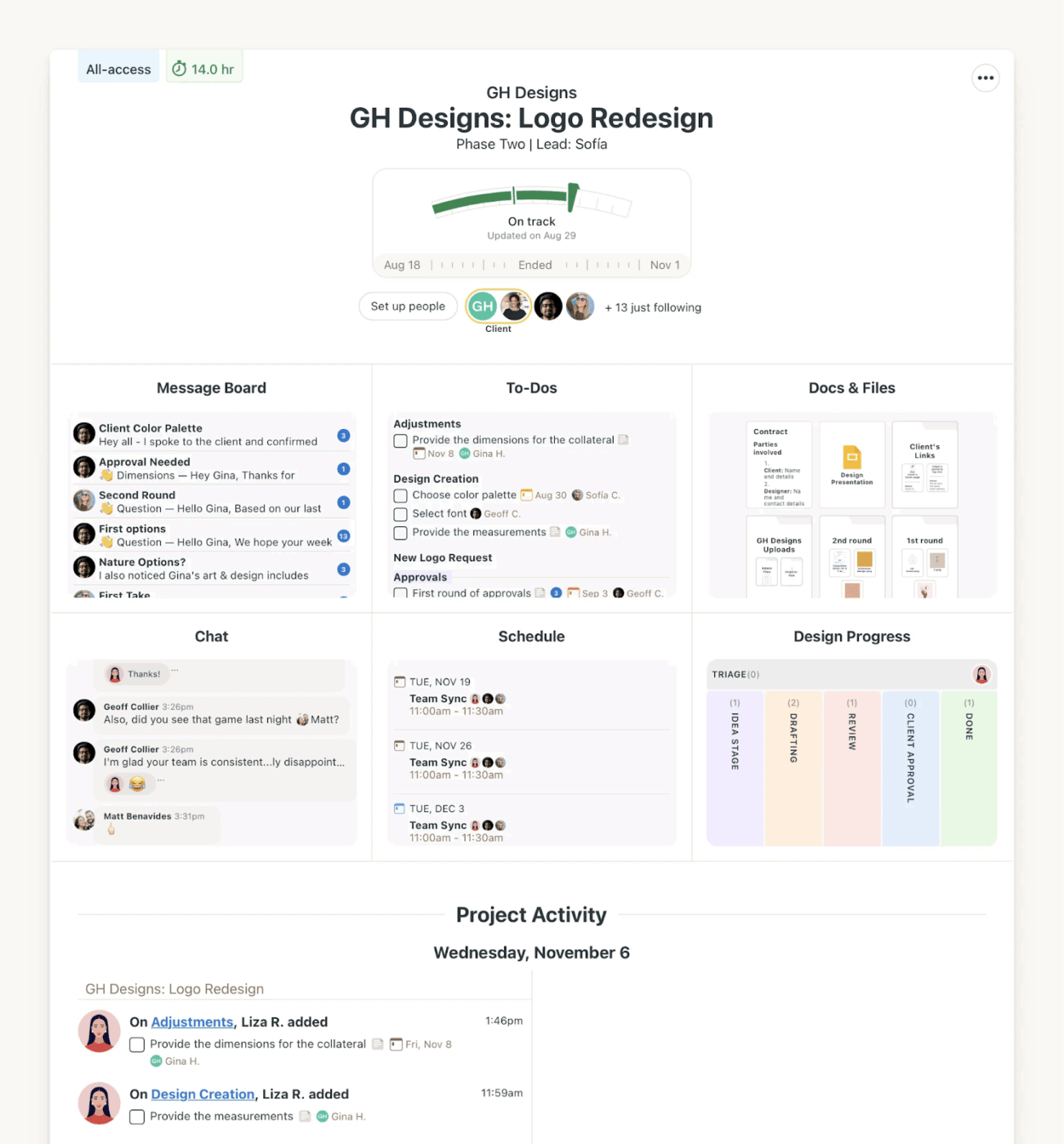
Basecamp is a cloud-based project collaboration software. It helps you streamline projects, manage tasks, and share files. It takes a minimalist approach to team management by consolidating all project communication and tasks into a single page.
For instance, Basecamp uses Message Boards for big announcements and deep discussions. Every post is a structured page. Comments stay threaded under that specific topic forever, eliminating unnecessary to-and-fro.
What’s interesting about using Basecamp for team management is that it replaces the daily stand-up meeting. You can set a recurring question, such as “What did you work on today?”, to be sent to everyone on a specific day and time. This keeps team productivity intact, especially during deep work hours.
A G2 user says:
Basecamp makes it easy to keep everyone on the same page across multiple farm sites. I like how it centralises communication, task lists, and document sharing in one place, which is especially useful during busy harvest periods when teams are spread out.
🧠 Fun Fact: Your brain is wired to emotionally sync with people around you.
Mirror neurons allow humans to unconsciously mimic emotions they observe, which is why a leader’s stress or calm can spread quickly across a team.
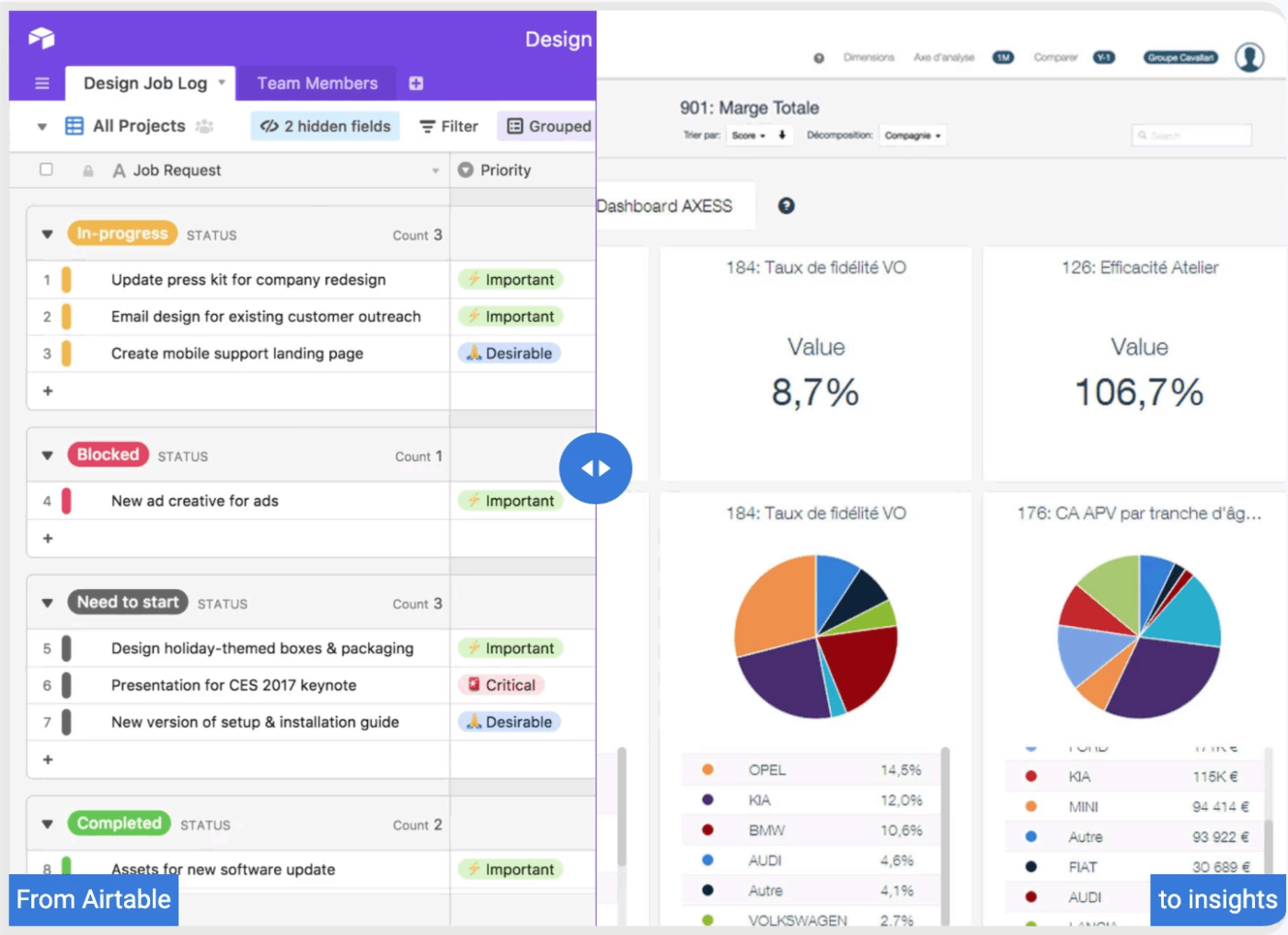
Airtable is a database-driven work management tool that combines the structure of spreadsheets with team collaboration and resource allocation.
For team management, it is incredibly versatile, allowing users to build custom workflows and link any piece of information across different tables. You can model things like product catalogs or editorial calendars as tables, switch between views such as Gallery, Calendar, and Form, and apply automations to move records through review and approval stages.
You can also collect work requirements using Airtable Forms shared with other departments. When someone submits a form, the platform creates a new record in your team’s table, assigns it to the appropriate owner, and sends an automatic notification.
Airtable’s AI Agents sit directly on top of your databases. They help teams automate judgment-heavy steps, not just rule-based actions. These agents can review records, classify requests, flag exceptions, or enrich data based on context in your tables.
Workload management in Airtable is driven by its Interface Designer and diverse views. Managers can create custom dashboards that track team capacity through bar charts or timelines, and role-specific views for managers, contributors, or external partners.
A G2 user says:
I enjoy using Airtable as my project management system of choice. It stands out as my preferred platform because it is user-friendly, intuitive, and adapts well to my needs. The automations are not just impressive but also genuinely useful, allowing me to adjust to real-time changes in my organization’s workflow with ease.
📚 Also Read: Best Airtable Alternatives & Competitors
⭐ Bonus: If you’re struggling to build a strong team at work, we made this video for you. We break down the best practices and tools to help you out.
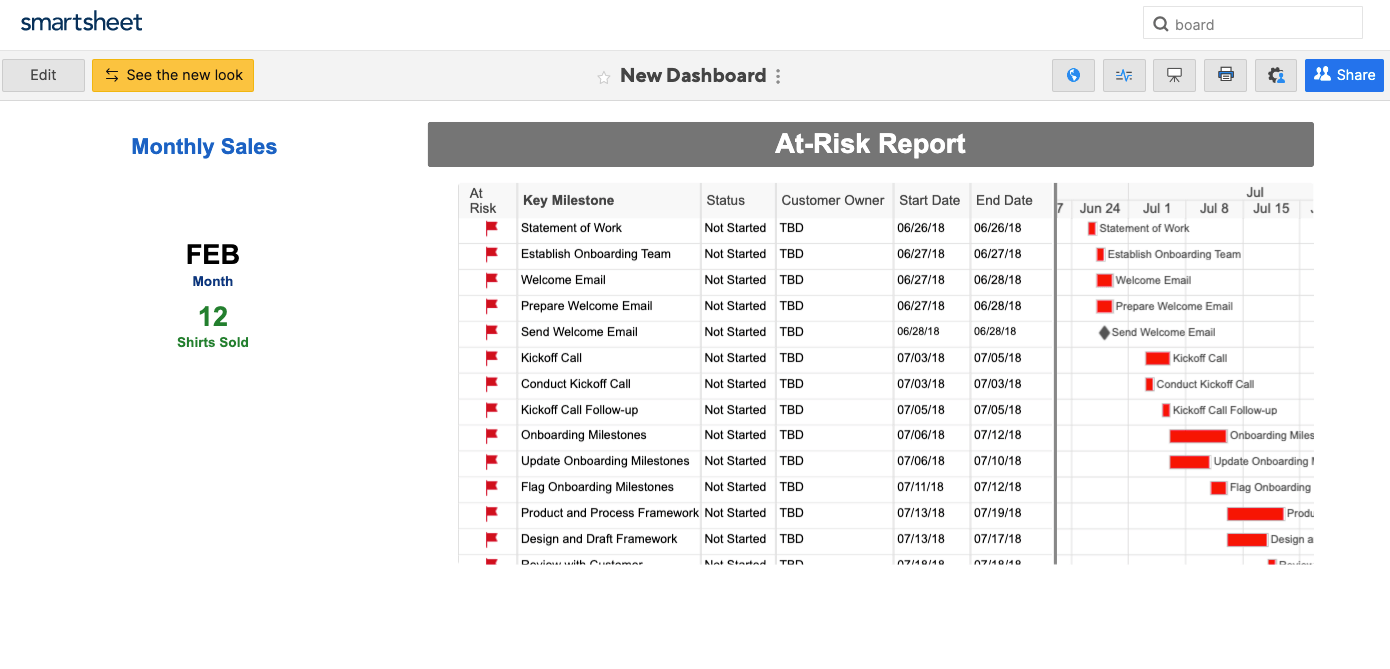
While it looks like Excel, Smartsheet suits teams that organize work in rows and columns but need dependencies, ownership, and automation beyond spreadsheets.
For starters, work the way you want with Gantt, Kanban boards, Card and Grid views, then track progress through auto-generated visuals like burndown and time-series charts.
Smartsheet’s intuitive “if this, then that” automation builder allows you to automate project setup, approvals, and status-based alerts. For example, when a task’s status changes to Blocked, you can automatically notify the manager in Slack and highlight the row visually.
Workload management through its Resource Management (formerly 10,000ft) integration allows managers to forecast hiring needs, track team availability across the entire organization, and drill down into individual time logs.
Smartsheet’s AI features focus on accelerating decision-making across large sheets and reports. It allows you to generate summaries, identify trends, and surface insights from complex project data without manually reviewing every row.
For leaders managing large portfolios, this helps turn dense spreadsheets into readable updates, highlighting risks, delays, and patterns that need attention.
A G2 user says:
Ease of the functionalities. Smartsheet offers a wide range of tools to work efficiently. There’s a lot of features I haven’t fully discovered, yet everything feels easy and straightforward to use. The best way to describe it is Excel on steroids.
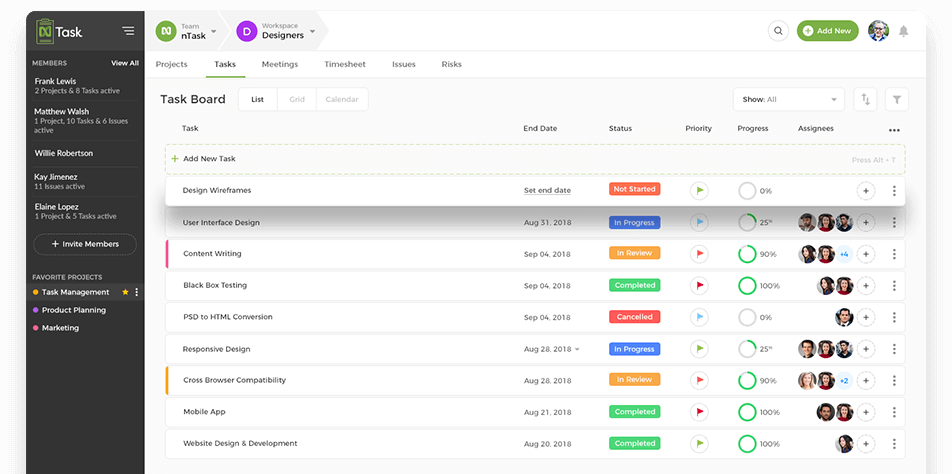
nTask is an all-in-one project management software useful when you are managing multiple teams or client projects in separate, self-contained workspaces.
It provides built-in time tracking and timesheet capabilities. Team members can log hours manually or using in-task timers, and managers can then review these timesheets for approval. The Team module allows leaders to manage resources and team capacity, and track individual performance.
Collaboration is supported through dedicated workspaces and task-level comments. You can also use the integrated meeting management tool to create meeting agendas, invite attendees, and record meeting minutes directly within the platform.
A G2 user says:
What to tell about nTask, it perfectly fits for medium-sized and enterprise companies which are fond of teamwork. This communicating tool stands out with its agile methodologies. It helps manage data and organize tasks to be done at specific times. You can attach files and documents to the projects and share them among your colleagues and teammates through emails or messages.
👀 Did You Know? The biggest predictor of team effectiveness isn’t talent or experience—it’s psychological safety.
Google’s Project Aristotle, which analyzed over 180 teams and more than 250 variables, found that teams where members felt safe to speak up, ask questions, admit mistakes, or share ideas without fear of embarrassment or punishment were far more effective than teams with higher individual talent or seniority.
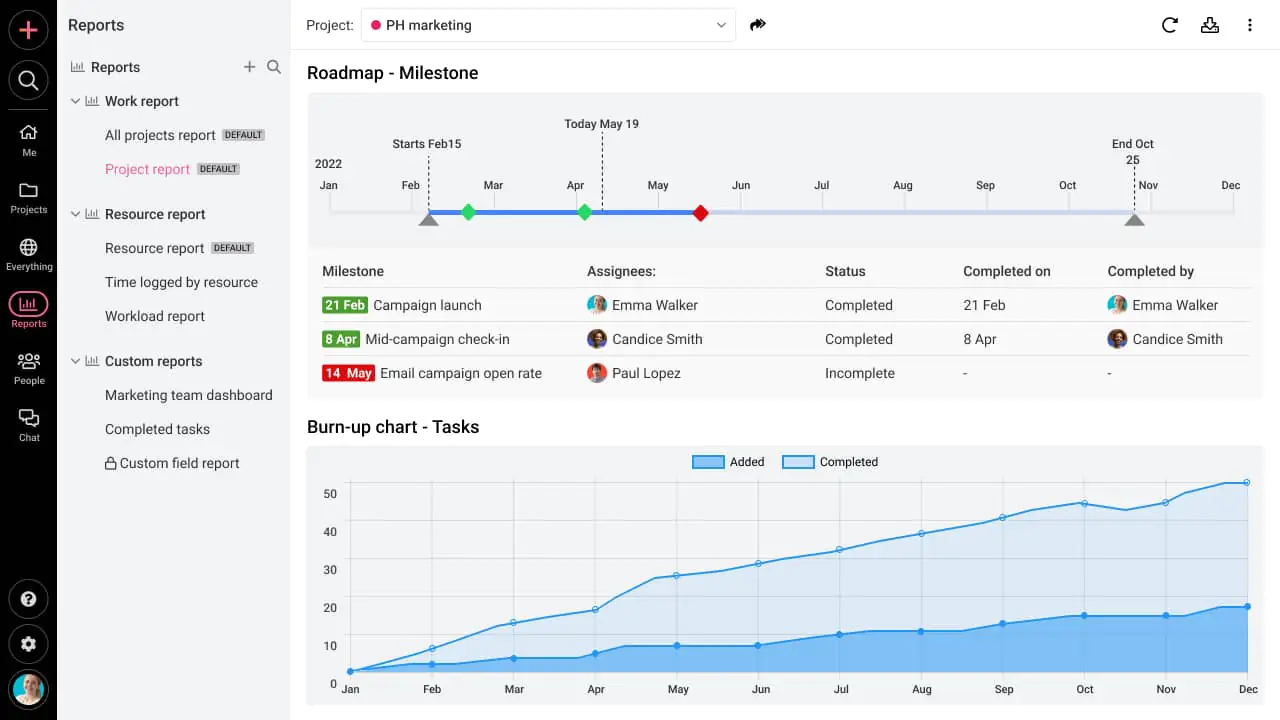
If your team needs task scheduling, reviews, and approvals to stay tightly coordinated, ProofHub brings everything into one place. You can assign tasks based on priority, track due dates and milestones, and generate custom reports.
Teams can run 1-on-1 chats, group discussions, and project-specific brainstorming sessions directly inside each project. This keeps decisions, feedback, and updates tied to the work they impact, reducing back-and-forth and lost context.
ProofHub also supports structured review and approval workflows, which is especially useful for marketing, creative, and client-facing teams. Files can be shared, reviewed, annotated, and approved in one place, so feedback cycles stay organized and traceable.
And as your team grows, pricing stays predictable with ProofHub’s flat-fee model. You can onboard clients, freelancers, and new hires without worrying about per-user licensing fees.
A G2 user says:
ProofHub keeps all our campaigns, content calendars, and design feedback in one place. I love how easy it is to create tasks, set deadlines, and keep conversations focused within each project. The discussions, proofing, time tracking, and file-sharing features save us from endless email chains.
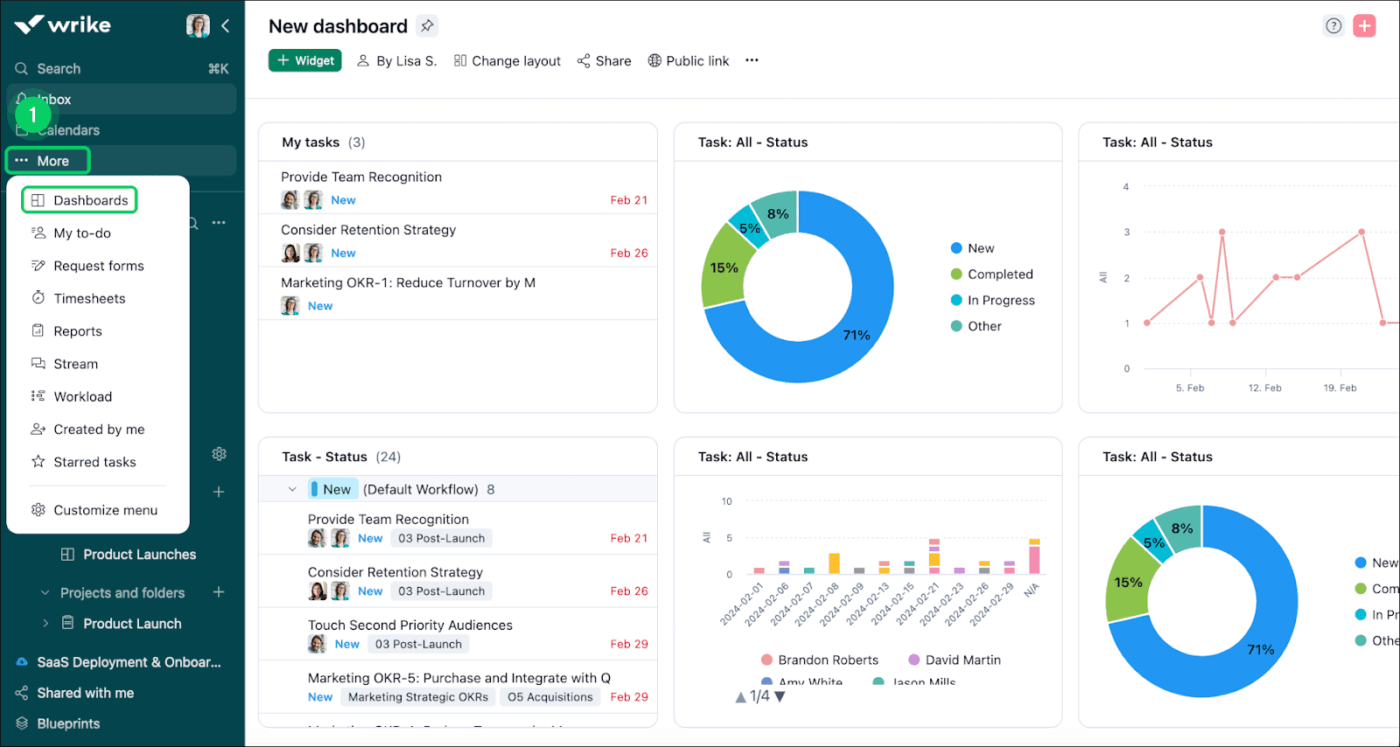
Wrike is an end-to-end task management software that supports complex enterprise-grade workflows. Its deep customization lets you adapt the system to virtually any team, industry, or process, making it easier to align strategic goals with day-to-day execution.
Its Workload view gives managers a real-time look at team capacity and allows effortless resource rebalancing via drag-and-drop, accounting for part-time schedules and specific time-off requests. The platform also features built-in time tracking with a live timer and manual entry options.
Wrike’s Blueprints feature is particularly useful for team management, allowing leaders to create standardized project shells that can be deployed instantly, ensuring consistency across initiatives.
AI Agents in Wrike support large teams by reducing manual coordination and surfacing execution risks early. They help with task creation, effort estimation, summarization, and prioritization by analyzing data across projects, timelines, and dependencies.
A G2 user says:
Wrike centralizes client work, approvals, and task ownership so our 5-person team isn’t chasing threads across email and chat. Dashboards and workload views give me a real-time picture of project health, and automations remove repetitive follow-ups so we move faster without growing headcount.
⚡ Template Archive: Free Goal Setting Templates to Plan, Track, and Achieve Your Goals
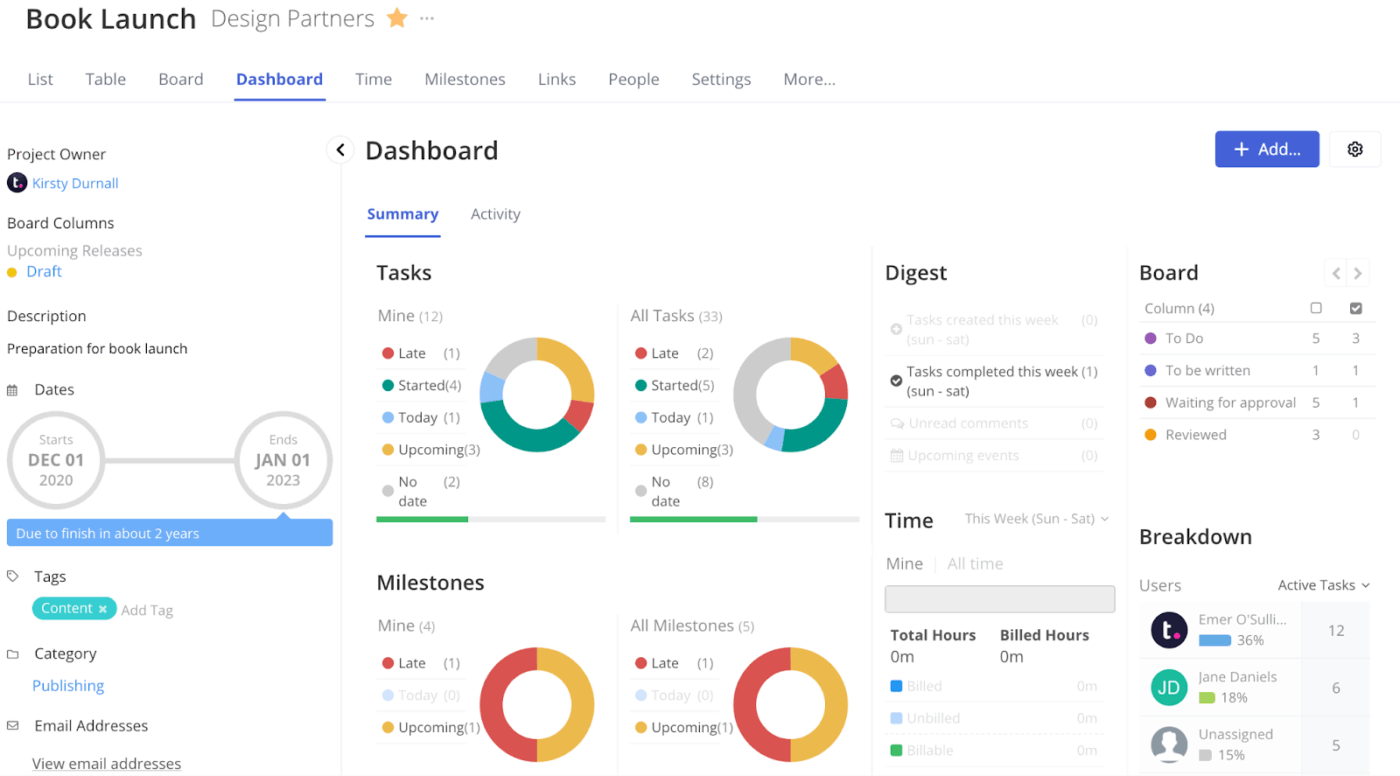
If your work demands managing not just your team but also external stakeholders, then Teamwork.com is the project and resource management software of choice.
The tool allows you to plan work using Gantt charts or Kanban boards, then save entire frameworks, including time estimates and dependencies, as reusable templates to spin up new client projects in seconds.
Its dedicated Workload planner tracks team capacity based on estimated hours versus logged time, so managers can see who is available for new client work and who is hitting their billable targets. The platform also includes a native time-tracking system that integrates directly with its billing and invoicing modules.
Recent updates have introduced AI features that summarize long comment threads and provide Utilization Summaries. AI Teammates, prebuilt into your Teamwork account, can provide instant recaps and insights into what you missed since your last login.
A G2 user says:
Teamwork is an impressive project management platform that powers our agency. I use it every day to manage my team’s tasks, review deadlines, steps in various project approval processes, and manage day-to-day work so I can stay on task and see top priority projects and progress happening each week.
Every team works differently. Some are distributed. Some are client-facing. Some move fast with constant change, while others run on long-term plans. No matter the structure, a team management tool should support the basics of how work moves through your team.
ClickUp brings all of that into one place. With flexible workflows, built-in collaboration, automation, and contextual AI, you can work smarter and faster every single day.
With everything from tasks and documentation to communication and time management integrated with AI into one unified platform, ClickUp is the only team management app you’ll need.

Arya P Dinesh
Max 15min read

Manasi Nair
Max 15min read
Manasi Nair
Max 19min read

© 2026 ClickUp





