Sorry, there were no results found for “”
Sorry, there were no results found for “”
Sorry, there were no results found for “”
A marketing campaign can look on track in your project dashboard while the creative is still waiting for approval. Between the first brief and the launch date, teams have to manage assignments, feedback, budget decisions, and several rounds of review.
In XR’s August 2026 study of more than 400 marketers, 46% named budget approvals as their biggest campaign bottleneck. Another 38% said reaching agreement on creative concepts was a major hurdle, while 30% reported that legal reviews often delayed or stopped creative work.
Marketing project management software helps keep these moving parts connected, from incoming requests to approved assets and launch dates. But the right tool also needs to fit how your team reviews work, handles feedback, and coordinates with stakeholders.
In this guide, we’ll compare 12 marketing project management tools, focusing on how they handle requests and approvals. We’ll also cover their features, pricing, and limitations to help you shortlist the right options for your marketing campaign management process.
TL;DR: Here’s how to narrow down your options based on your team’s workflow:
| Tool | Best for | Key marketing capabilities | Starting price* | Main consideration |
| Wrike | Creative teams managing requests and approvals across brands | Dynamic request forms, Blueprint-based projects, staged approvals, external reviewers, and workload planning | Free; paid from $10/user/month | Request forms and approval workflows require Business or above; check compatibility with externally stored files |
| Asana | Cross-functional campaigns tied to business goals | Shared tasks across projects, Goals, Portfolios, approval tasks, and AI Studio intake and handoffs | Free; paid from $10.99/user/month, billed annually | Goals, Portfolios, approvals, and proofing require Advanced or above; AI Studio usage is credit-limited |
| ClickUp | Managing briefs, requests, production, and reviews in one workspace | Forms, Docs, image/PDF/video Proofing, Gantt dependencies, Brain², and Super Agents | Free; paid plans available | Custom workflows need initial setup; conditional Forms require a higher-tier plan |
| monday.com | Coordinating campaigns across teams and projects | WorkForms, cross-board reporting, Workload, AI workflows and agents, plus Enterprise portfolios and resource planning | Free; paid from $9/seat/month, billed annually | Advanced portfolio and resource planning require Enterprise; approval stages need configuration |
| Adobe Workfront | Enterprise marketing operations with complex resourcing and reviews | Request queues, resource and budget planning, portfolio oversight, and Frame.io-based review | Custom pricing | Extensive setup suits complex operations; Workfront Planning has separate licensing requirements |
| Smartsheet | Spreadsheet-based campaign planning with structured approvals | Form-based intake, grid and Gantt planning, automated approval requests, proofing, and workload tracking | From $9/member/month, billed annually | Proofing and workload tracking require Business or above; larger linked-sheet setups need ongoing maintenance |
| Teamwork.com | Agencies managing client delivery and profitability | Billable time, retainer budgets, intake forms, client Proofs, and capacity planning | Free; paid from $9.99/user/month, billed annually | Accelerate supports time-based retainers; financial budgets, profitability, and resource scheduling require Optimize or above |
| Hive | Internal marketing teams managing requests and repeatable reviews | Shareable forms, project templates, dependencies, approval routes, and external proofing | Free; paid rates vary by region; proofing add-on available | Proofing is an add-on to Teams; approval reports omit private tasks and review requests without due dates |
| Airtable | Content operations connecting campaigns, assets, and markets | Linked records, tailored reviewer interfaces, Omni AI, and native Proofing with version comparison | Free; paid from $20/user/month, billed annually | Proofing requires Business or Enterprise Scale; it excludes video, mobile review, and lookup attachment fields |
| Jira | Marketing teams coordinating launches with engineering | Marketing business spaces, content workflows, release-linked calendars, conditional forms, and Rovo agents | Free; paid rates vary by team size and billing cycle | Native team-managed approvals require Premium or Enterprise; teams must manage attached draft versions |
| ProofHub | Teams needing flat-rate access for freelancers and client reviewers | Task workflows, request forms, proofing, file versions, and project discussions | From $45/month flat, billed annually; unlimited users | Essential supports up to 40 projects; Ultimate Control adds broader permissions, reporting, and branding controls |
| Workzone | Departments needing structured processes and hands-on onboarding | Intake forms, document approvals, workload planning, portfolio views, and staff training | From $8/user/month, billed annually | Intake, proofing, and dedicated onboarding support start on Team; external approvals and integrations require Enterprise |
Our editorial team follows a transparent, research-backed, and vendor-neutral process, so you can trust that our recommendations are based on real product value.
Here’s a detailed rundown of how we review software at ClickUp.
Before choosing a tool, think about how your team manages a campaign from the initial brief to final approval. Look at where information gets lost, which steps need constant follow-ups, and what still takes manual effort. Then use these six questions to find software that fits your workflow:
The creative is done, but the campaign still can’t go out. Brand, legal, finance, and the client all want a look before launch. Their feedback lands at different times, and one small tweak can send the asset back for another round.
This is a common complaint. In The Marketing Meetup’s State of Marketers 2026 report, 25% of the 1,248 marketers surveyed said sign-off takes too long. Junior marketers felt it more (36%) than directors did (17%).
It gets harder when several people give feedback, but no one has clear authority to approve the final version.
David Mayer, Senior Partner at Lippincott, shared:
Strong marketing should absolutely be challenged, and different functions bring valuable expertise. But there is a clear distinction between inviting input and diffusing accountability.
Keep that in mind when you set up your approval process. Legal can check the claims, and brand can review the messaging. The team still needs to know who makes the final call, and when the work is ready to move on.
Adding another tool won’t fix unclear ownership on its own. Before you buy a separate proofing app or form builder, check what your existing marketing resource management software already does.
When you compare platforms, run a real campaign through each one. Submit a brief with the budget, deadline, and approver. Then push an asset through feedback, legal review, and final sign-off. Can everyone see the latest version? Can they tell where the approval stands?
If review rounds keep slowing you down, our guide to managing creative teams shows how to organize feedback and approvals around the work itself.
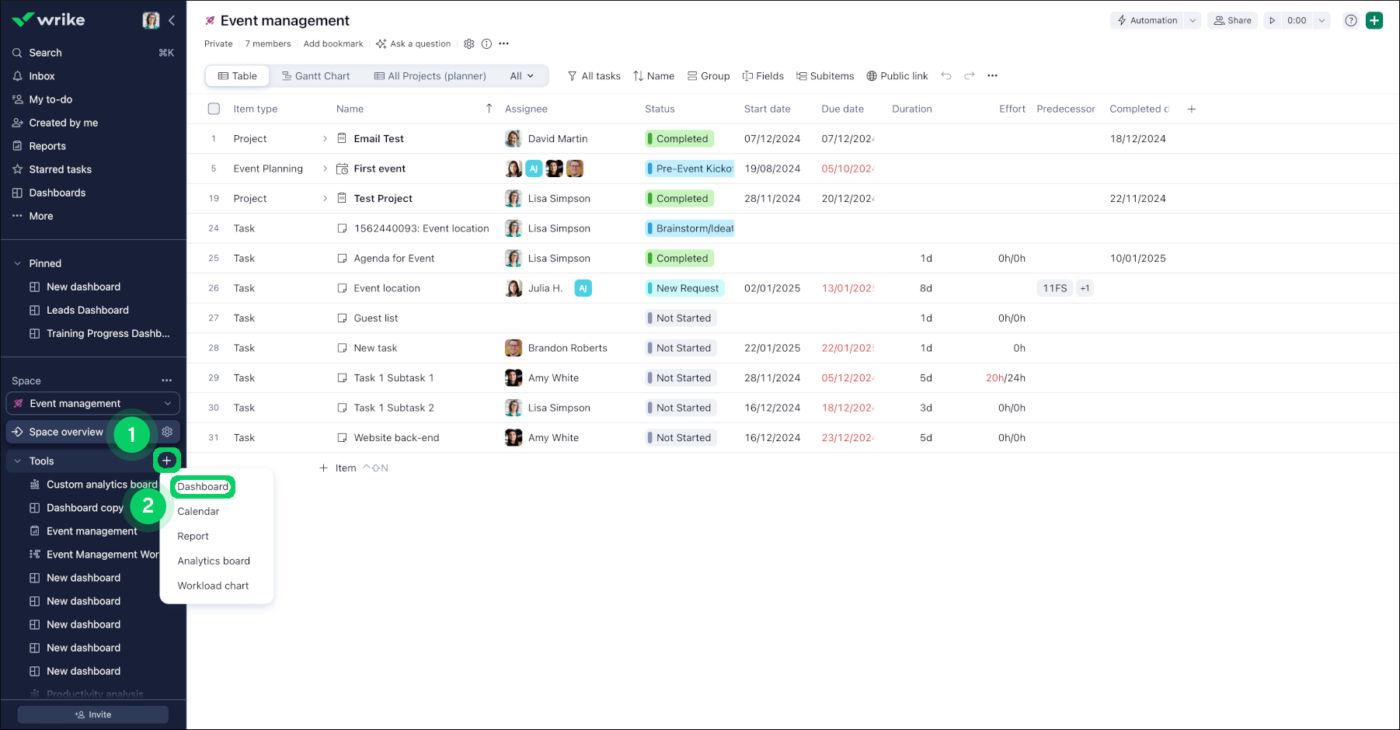
Wrike helps you manage creative requests coming in from multiple departments, brands, or clients. Its dynamic request forms adjust the questions based on what’s being requested. Once someone submits a brief, Wrike can create a project from a saved Blueprint, with the tasks and production stages already in place.
Say you’re handling packaging updates for several brands. One request might need approval from a regional marketing lead, while another needs to go through legal and an external client. Wrike lets you set up different approval stages for each workflow and keep the feedback attached to the relevant asset.
External reviewers can also join the process without needing a full workspace license. They can leave comments and approve files through a shared review link. Wrike keeps a record of those decisions, which helps when you need to check who signed off on an asset or why a review is still pending.
For a closer look at its broader project management capabilities, read our Wrike review.
Where it taps out: Wrike reserves request forms and approval workflows for Business and higher plans. Its file approvals also exclude most cloud storage attachments. Teams relying on externally stored creative files should check compatibility before committing.
Best for: Enterprise creative teams managing multiple brands, detailed review rounds, and external approvals
Skip it if: Your team mostly needs a shared campaign calendar and rarely runs formal sign-off rounds
A user review says:
I love using Wrike as a project management tool for my in-house creative marketing team. It has been a lifesaver for organizing tons of requests into clear tickets with timelines, briefs, and assigned resources. I also enjoy using the approval tool for reviewing assets. The timeline feature is my favorite. It’s so easy to create timelines using predecessors and blueprint templates. I rely on a handful of blueprint templates that I created, and I appreciate how easy it is to adjust huge timelines with the predecessor feature. The bandwidth tool is another highlight for me, as it not only helps estimate bandwidth but also allows me to see what everyone is working on in one concise area.
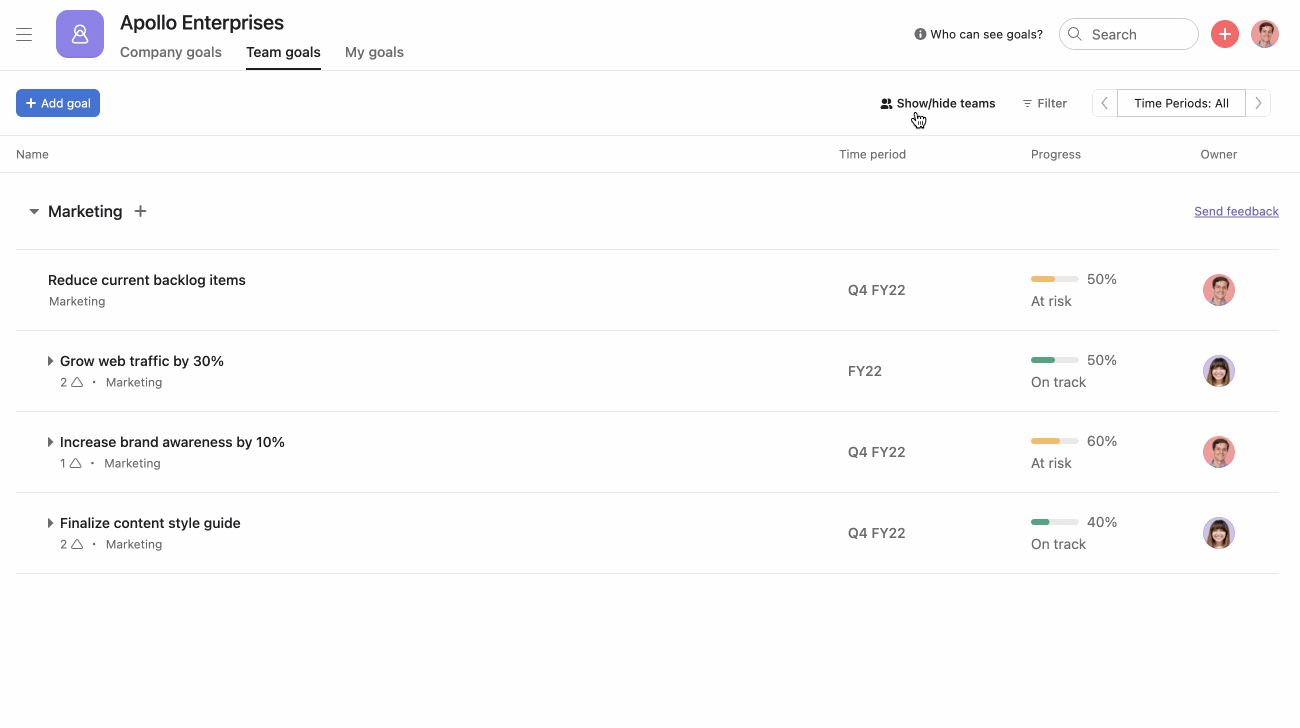
Asana brings campaign work from different departments into a shared project. Marketing, product, and sales teams can follow the same launch plan, while portfolios give leadership a broader view of ongoing campaigns. Each project can also connect to a goal, helping teams see how their work contributes to quarterly priorities.
You can also manage the details. A task can appear in multiple projects without creating separate copies. That means a landing page update can stay visible to both the campaign team and the website team, with changes reflected in each project.
Asana Forms handle incoming requests, while approval tasks give reviewers a clear way to approve work or request changes. Teams can also save campaign structures as templates, including dependencies and relative deadlines. This gives recurring launches a consistent process while leaving room to adjust individual deliverables.
If you’re setting up repeatable campaign workflows, our collection of Asana project management templates provides a few starting points.
Where it taps out: Asana’s proofing supports images and PDFs, but it doesn’t offer timestamped feedback on videos. If you’re producing video ads, reels, or other motion content, you’ll need another way to collect frame-specific comments.
Best for: Cross-functional campaign planning tied to goals, where product, sales, and marketing share the same launch
Skip it if: Most of your week goes to multi-round creative review with external stakeholders
A user review says:
I appreciate that Asana offers multiple layers of options for organizing tasks and projects. Features like recurrences, dependencies, and other tools that let you add complexity to a more nuanced project aren’t typically included in out-of-the-box services, and that’s something I felt our team really needed.
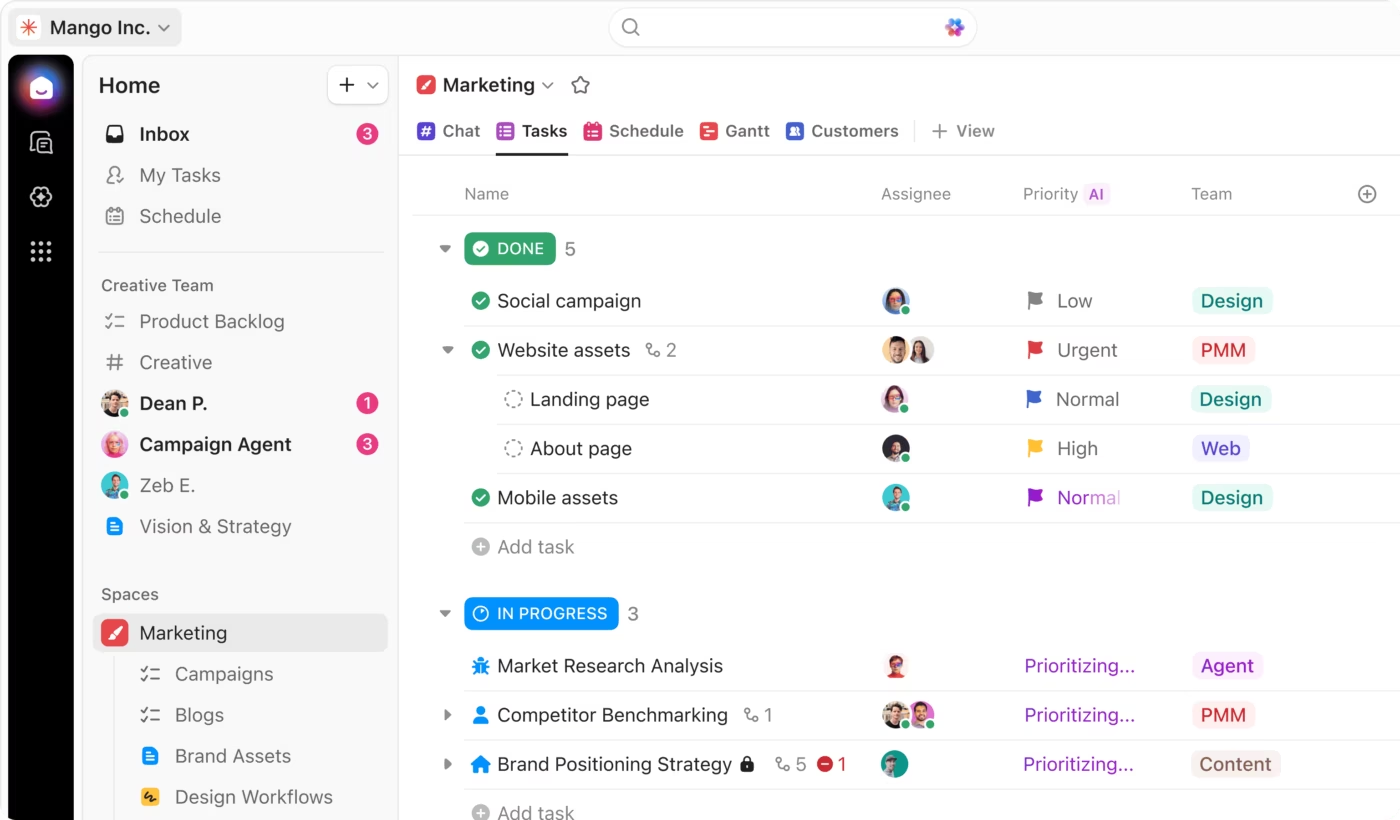
ClickUp keeps campaign briefs in Docs alongside the tasks, requests, and reviews needed to deliver the work. Every ClickUp Form submission becomes a task in the list you choose, with the assignee, priority, and Custom Fields filled in from the answers.
Clients and other stakeholders can submit without a ClickUp account, and conditional logic shows each requester only the questions their request type needs. Brain², ClickUp’s native work AI, reviews submissions for missing details before the task lands. Meanwhile, ClickUp Super Agents, your AI teammates, can triage new responses by assigning priority and routing them to a reviewer.
When it’s time for review, ClickUp Proofing lets stakeholders comment directly on images, PDFs, and videos. Video comments are tied to specific timestamps, and you can assign feedback to the person responsible for making changes.
For campaign scheduling, ClickUp Gantt Charts show how your deliverables depend on one another. Say your landing page needs to be ready before the paid campaign goes live. Link those tasks, set a launch milestone, and see how a delay might affect the schedule. Also enable automatic rescheduling to adjust dependent deadlines when plans change.
Where it taps out: ClickUp’s flexibility takes some setup. It offers several ways to structure projects, statuses, and Custom Fields, which can become overwhelming. Conditional Forms also require a higher-tier plan.
Best for: Keeping briefs, tasks, and reviews in one workspace, from the first request to the approved file
Skip it if: You only need a shared checklist for a handful of recurring posts
A user review says:
I really like how simple it is to organize our tasks in it, but also build really robust marketing calendars that allow us to go through multiple iterations of first drafts. The interface is really intuitive to use – when I first signed up I was nervous of how fast I can pick it up since I’ve never used ClickUp before but it was very easy to build a calendar on the first go without going in circles. It’s especially helpful that now we can use Brain, and it will have all the context instead of doing all our onboarding to other AI’s and still not getting first drafts close to the final result.
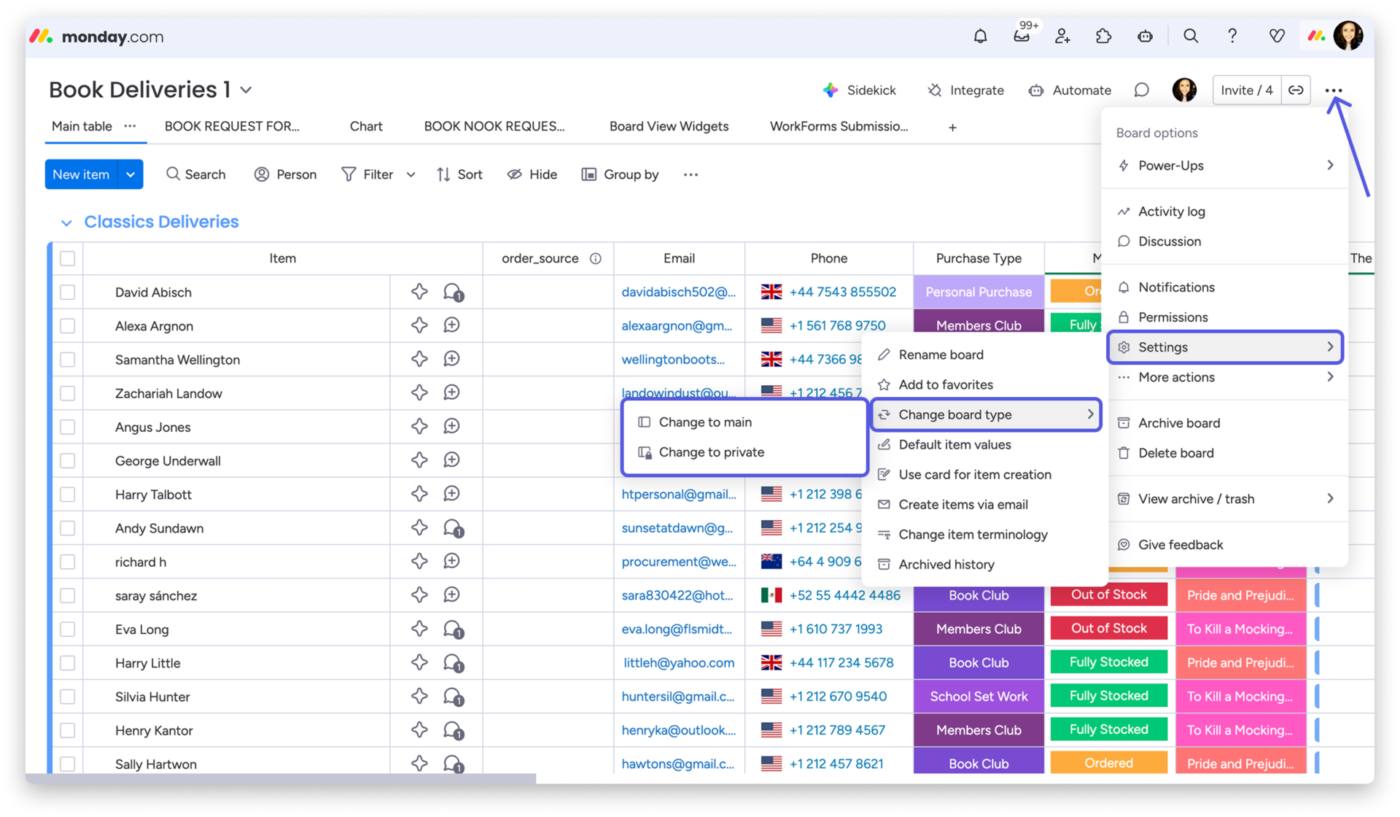
monday.com connects campaign requests, production schedules, and team workloads. WorkForms turn incoming briefs into trackable work, while dashboards bring progress from multiple projects into one report. For a launch involving content, design, and regional teams, this lets each team manage its deliverables while marketing operations monitors the wider campaign.
On Enterprise, the portfolio solution brings connected projects into a shared overview of progress, timelines, and risks. Resource Planner lets managers allocate people or reserve roles before production starts, and Capacity Manager shows those commitments across projects. That helps when several campaigns need the same designers or writers during the same week.
Creative feedback stays attached to the work. Reviewers can annotate images, PDFs, and videos, including comments at specific video timestamps. File versioning keeps earlier drafts available to open, annotate, or restore. Teams can then configure review stages and handoffs using automations or build multi-step, cross-board processes in the AI workflow builder.
Where it taps out: Portfolio connections and advanced resource planning require Enterprise. Teams still need to configure their approval stages and workflow rules, and AI workflows have plan-based limits and credit requirements. File annotations and versioning are currently described as trial features that may require payment in the future.
Best for: Marketing teams coordinating several campaigns across departments, with shared reporting and resource planning
Skip it if: You need portfolio-level resource planning on a lower-tier plan or want a predefined approval process with little configuration
A user review says:
I use monday Work Management to manage our marketing campaigns. It helps remove communication barriers and silos by contextualizing work from Slack, email, and meetings, then updating our projects accordingly. I like that it has a lot of tools and templates that make it really easy to get started. The AI has advanced a lot over the past year, and it makes it really easy to use natural language to create systems, workflows, and boards that can function and be implemented.
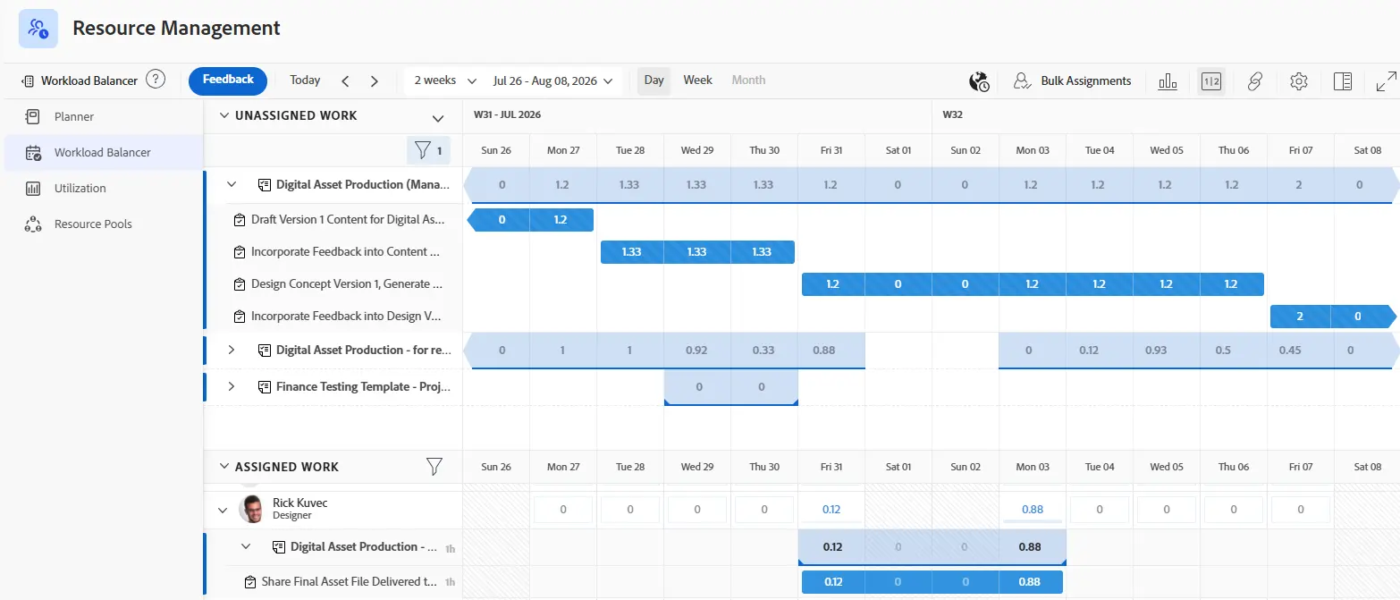
Adobe Workfront is designed for large marketing organizations managing campaigns across departments, business units, and regions. Workfront handles incoming requests through request queues and uses project templates to organize recurring work. You can plan tasks, define dependencies, and estimate how many hours each deliverable will take. Its Resource Planner also lets you compare planned work against available capacity and budget allocations by project or job role.
For a global campaign, you might have a central creative department producing assets for several regional markets. Workfront lets you organize those projects under a shared portfolio and monitor their schedules, resource needs, and costs. The Workload Balancer gives managers a closer look at assignments when priorities change.
Creative reviews also connect with Adobe’s ecosystem. Workfront’s unified review and approval experience uses the Frame.io viewer for comments, version comparisons, and video feedback. Route assets through multiple approval stages and keep a record of the decisions made.
Where it taps out: The depth that works well for a global marketing organization may feel like too much for smaller projects. For example, a mid-size marketing organization might find these custom capabilities add unnecessary complexity.
Best for: Enterprise marketing ops inside Adobe, where reviews run through Frame.io and Creative Cloud
Skip it if: Your team is under 20 people and most projects are a brief, a draft, and one sign-off
A user review says:
I like Workfront’s ability to streamline work and manage the intake queue effectively. Reporting and proofing features on Workfront are also beneficial. It’s a valuable operational system of record for marketing and helps other business units intake requests and run projects.
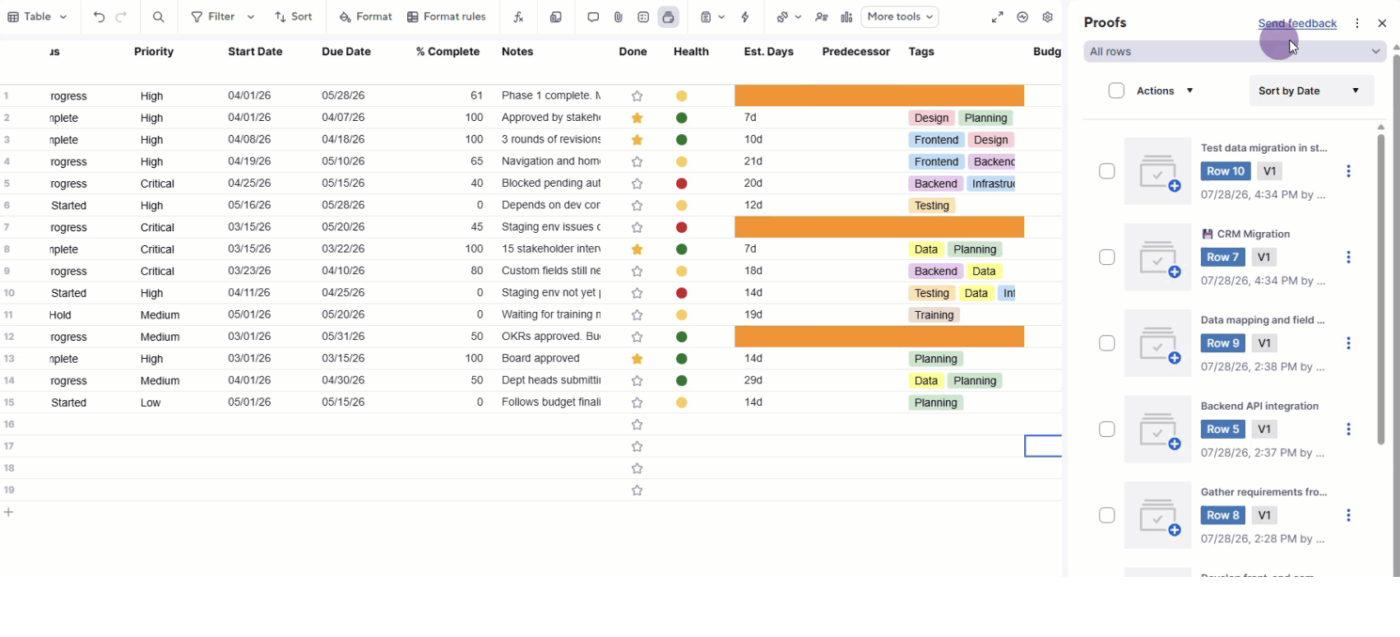
Smartsheet keeps the familiar spreadsheet layout and adds project management abilities around it. Plan campaigns in a grid, collect requests through forms, and use automated workflows to manage assignments and approvals. Each form submission creates a new row, complete with the information needed to start work.
For a marketing operations department planning several campaigns across a quarter, that grid becomes a shared production schedule. Each row represents a deliverable, with columns for the campaign, channel, owner, budget, and deadline. Switch to Gantt view to see how tasks overlap and which dependencies could affect your launch dates.
Smartsheet also supports approval requests on every plan. A status change can notify the appropriate reviewer and record their decision in the sheet. The Business plan includes proofing for creative assets, Timeline view, and workload tracking. Consider these additions if your campaign plans involve frequent reviews and shared resources.
Where it taps out: Large campaign setups with many linked sheets, formulas, and dashboards can become hard to maintain. Changes to one sheet may affect several others, so you’ll need to manage those connections carefully as your reporting grows.
Best for: Spreadsheet-native resource planning for marketing ops teams that think in rows and columns
Skip it if: Your campaign plan spans dozens of interlinked sheets that several people edit daily
A user review says:
How it combines the familiarity of a spreadsheet with project-management and workflow-automation features. It can be adapted for project tracking, marketing campaigns, operations, IT requests, construction projects, and more. Teams can share sheets, collect information through forms, and track progress in real time.
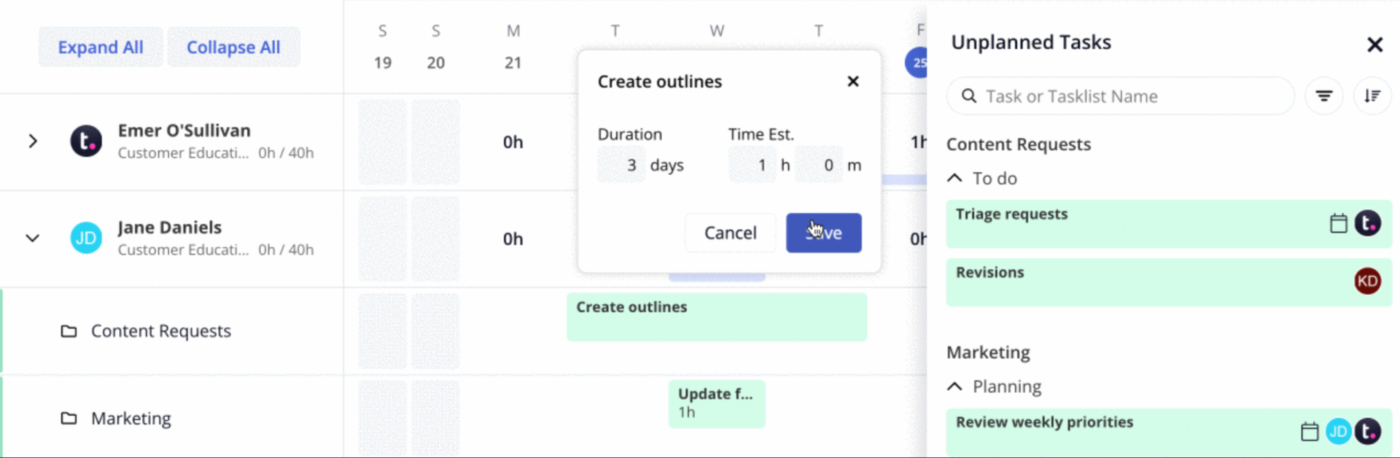
When you’re running a marketing agency, completing the work is only part of project management. You also need to track the hours spent on each client, watch budgets, and understand whether the work remains profitable. Teamwork.com brings those financial details into project management.
Start with a client project, break the campaign into tasks, and add time estimates for the work involved. As your writers, designers, and account managers log their hours, track billable time alongside project progress. Higher-tier plans add time budgets and capacity planning, along with recurring retainer budgets that account for surpluses and deficits between periods.
Teamwork.com also handles client requests and creative approvals. Forms collect incoming work directly into project task lists, and Proofs lets clients review files without a Teamwork.com account. Clients can leave comments, request revisions, or approve the final version. You’ll also see which approvals are still pending.
For a broader look at software used in client-service businesses, explore our guide to marketing agency software.
Where it taps out: Accelerate supports time-based retainer budgets, but financial and fixed-fee budgets, project profitability, and resource scheduling require Optimize or above. Agencies that need to manage margins alongside delivery will need the higher tier.
Best for: Agencies billing client retainers that need budgets, time, and approvals in one place
Skip it if: You’re an in-house team that never bills time back to anyone
A user review says:
We run our entire digital marketing agency (25+ team members) with Teamwork after switching from Asana nearly two years ago and haven’t looked back. Our monthly retainer clients are entered as projects with monthly budgets that are directly connected to estimated times for tasks and actual logged and billable time entered by our team. This time is directly exported each pay period from Teamwork and used to process payroll via Quickbooks, Wise, and Paypal. It’s a great platform.
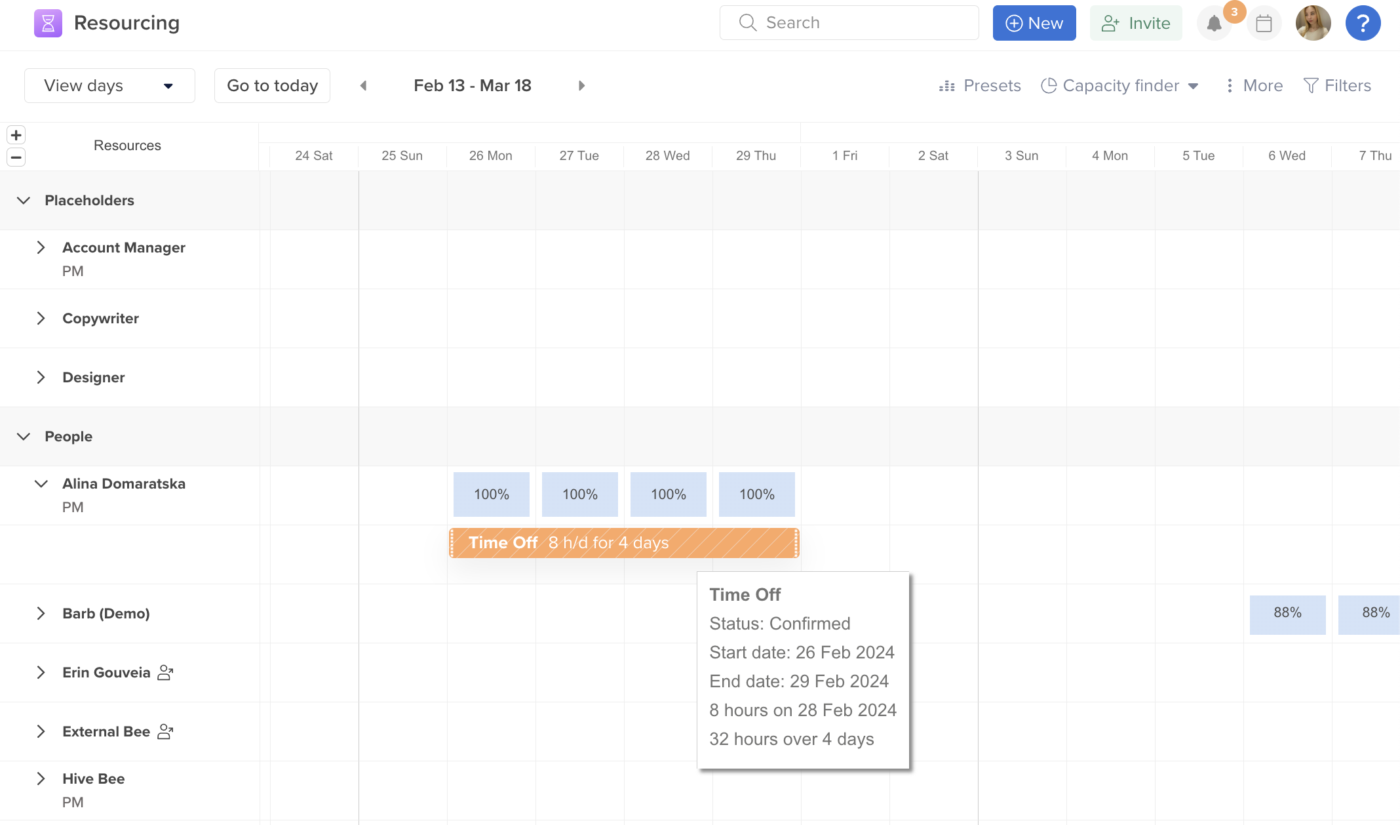
Hive lets you group work into projects, assign tasks, set dependencies, and track deadlines across different views. On the Teams plan, shareable forms let other departments request work from you.
Picture a marketing team that gets creative requests from sales, HR, and product. One intake form collects the campaign goal, asset needs, and deadline. All of that lands before the request reaches production. Once you assign the work, project templates and task dependencies lay out each step up to delivery.
Hive also handles creative proofing when you need it. The Proofing and Approvals add-on supports several review stages, file annotations, and outside approvers. You can save approval routes as templates. That helps when the same brand or legal reviewers sign off on every campaign.
Where it taps out: Hive’s Approvals Reporting only shows active review rounds on public tasks with due dates. Approvals on private tasks or requests without deadlines won’t appear in the report. That can leave gaps when you’re tracking outstanding sign-offs across several marketing campaigns.
Best for: In-house teams that add proofing as needed and want structured intake from internal partners
Skip it if: You need one approval report that includes private tasks and review requests without due dates
A user review says:
Gives us a detailed view of upcoming work, resources required, and where we can best optimize to get the most work done in the best way. I can see where our team is getting stuck, where I can intervene as a leader to get the team unstuck, and where we are likely to hit stuck points in the future.
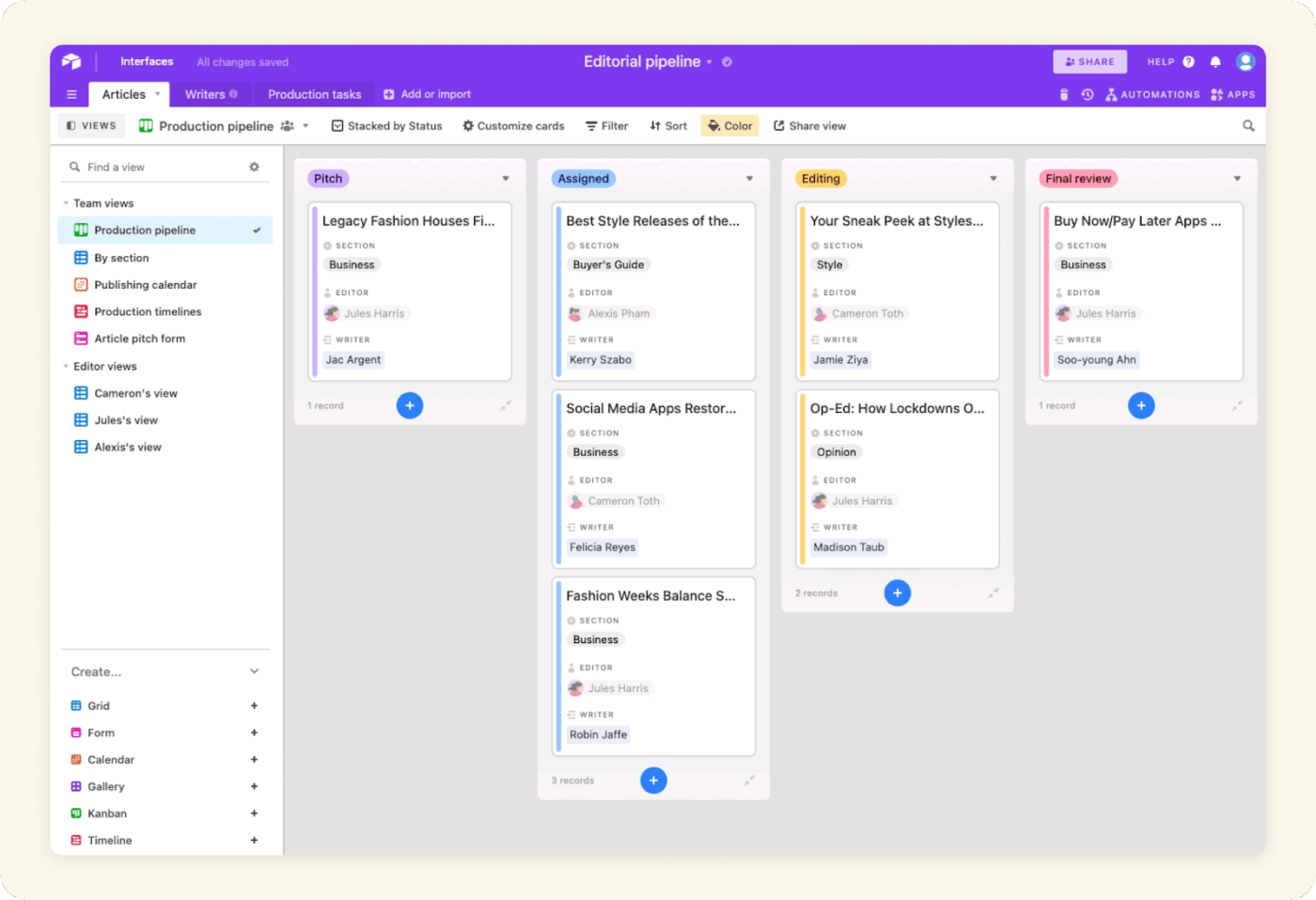
Airtable takes a database-driven approach to marketing project management. Instead of organizing everything into separate task lists, build connected tables for campaigns, assets, channels, markets, and stakeholders. An update to one record stays connected to the other records that reference it.
This is perfect for content operations managing large asset libraries or regional campaigns. Say you’re preparing several versions of a campaign for different markets. Keep the assets in one table, connect them to the relevant launch dates and markets, and use Airtable Interfaces to give each regional lead a view of their assigned work.
Airtable also supports creative review alongside campaign tracking. Use the Record review layout to organize an approval queue by reviewer and status. On Business and Enterprise Scale, native Proofing lets reviewers annotate files, compare versions side by side, and keep feedback attached to each version. External stakeholders can participate with appropriate commenter permissions without full access to the underlying base.
Where it taps out: Airtable Proofing requires Business or Enterprise Scale and does not support video files or mobile review. It also cannot proof attachments displayed through lookup fields. If campaign records pull assets from another table, reviewers must open the original attachment field to annotate them.
Best for: Content operations built on a database, with many assets, markets, and approvers to connect
Skip it if: Your team has no one with time to build and maintain the base
A user review says:
Airtable has become our new savior in handling the insanely complicated content priority lists, providing our marketing department with a concise and well-structured overview of the campaigns, timeline, and asset position in a single platform. The linked record feature has been the strongest one and we are able to relate the similar data in different tables and the resultant duplication that led to errors in our reporting is avoided. There is also the capacity to provide filtered views to external stakeholders without providing a full-blown database access, which has also proven to be a feature that helps in collaboration with customers in a client-based scenario.
Note: Bending Spoons completed its acquisition of Airtable in September 2026. Airtable says its existing plans, prices, and services remain unchanged for now. Still, watch for product updates, pricing, and plan limits as the new ownership rolls out its roadmap.
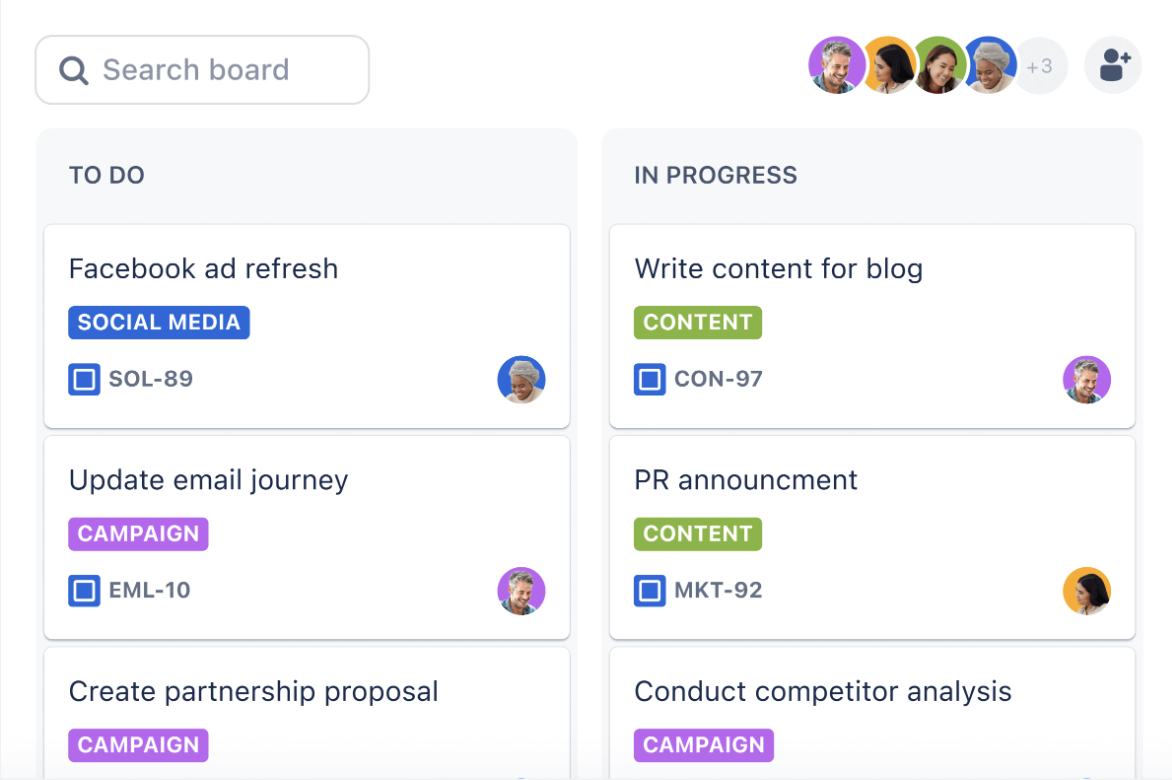
Jira supports marketing workflows through business spaces, with templates for tracking content from production through review and approval. Teams can manage campaign tasks, attach drafts, and set deadlines for individual deliverables. It is particularly useful when marketing shares launch dependencies with engineering: link campaign work to development tasks and display software release dates alongside marketing deadlines.
Jira also sits within the wider Atlassian suite. Keep briefs and copy in Confluence, share feedback through Loom, and link both to tasks in Jira. The Teamwork Collection bundles all three, though a Jira plan alone doesn’t grant paid access to each app.
For daily work, Jira offers boards, calendars, timelines, and forms. You can also add sign-off steps, such as a legal review before a launch page goes live. Native approvals in team-managed business spaces require Jira Cloud Premium or Enterprise.
Where it taps out: Teams need to adapt Jira’s workflows to their review process and maintain clear version control for attached creative drafts. Native approvals in team-managed business spaces also require Premium or Enterprise. Check those requirements before choosing Jira for a campaign with several review stages.
Best for: Marketing teams that share a workspace with engineering and want launch content tied to releases within the Atlassian stack
Skip it if: You want a ready-made creative review process without configuring workflow stages or managing draft versions
A user review says:
As a Digital Marketing Coordinator, Jira has become one of the tools I rely on to keep marketing projects organised. From planning social media campaigns to coordinating website updates and creative requests, it gives our team a clear view of what needs to be done and when. It has made collaboration much smoother, especially when multiple teams are involved. My favourite feature is the visual boards, which make it easy to track the progress of every marketing task. I can quickly see what’s planned, what’s in progress, and what’s ready to launch. Comments, due dates, and file attachments keep everything related to a project in one place.
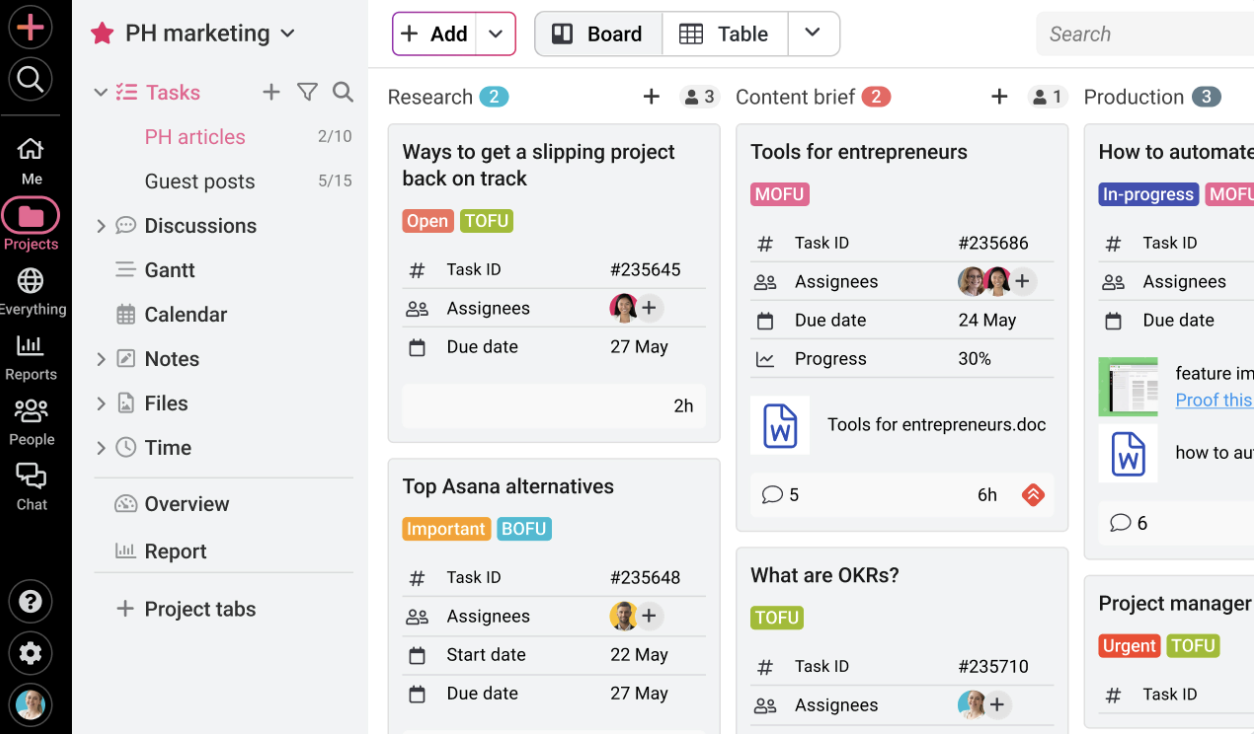
ProofHub offers a different pricing model from most of the tools on this list. You pay a flat monthly fee for unlimited users, which can be appealing if your marketing projects involve freelancers, agency partners, or clients who need occasional access.
The platform covers day-to-day project management with task lists, boards, Gantt charts, calendars, and project discussions. Forms collect new work requests, and custom workflows let you organize deliverables by production stage. You also get file proofing and approvals, along with version history for creative assets.
ProofHub’s Essential plan supports up to 40 projects. Ultimate Control removes that project limit and adds more control over permissions, reporting, and workspace branding. If you’re planning the intake process first, our marketing brief templates offer some starting points.
Where it taps out: ProofHub focuses on managing campaign work and collaboration. Its listed integrations include cloud storage services, but it doesn’t have native reporting for ad platforms or email marketing performance. You’ll need a separate reporting process to compare campaign results with project delivery.
Best for: Flat-rate pricing with unlimited users, especially for teams with many freelancers and client reviewers
Skip it if: You want ad and email performance data next to the campaign tasks
A user review says:
ProfHub has, hands down, come across as an effective solution for structuring our day-to-day marketing execution. Being the VP of marketing, I need real-time visibility into campaign timelines, content progress, creative reviews, and team workloads without micromanaging or digging in too deep. The proofing and feedback feature on creatives, in particular, saves us from countless email threads and Slack pings without losing context.
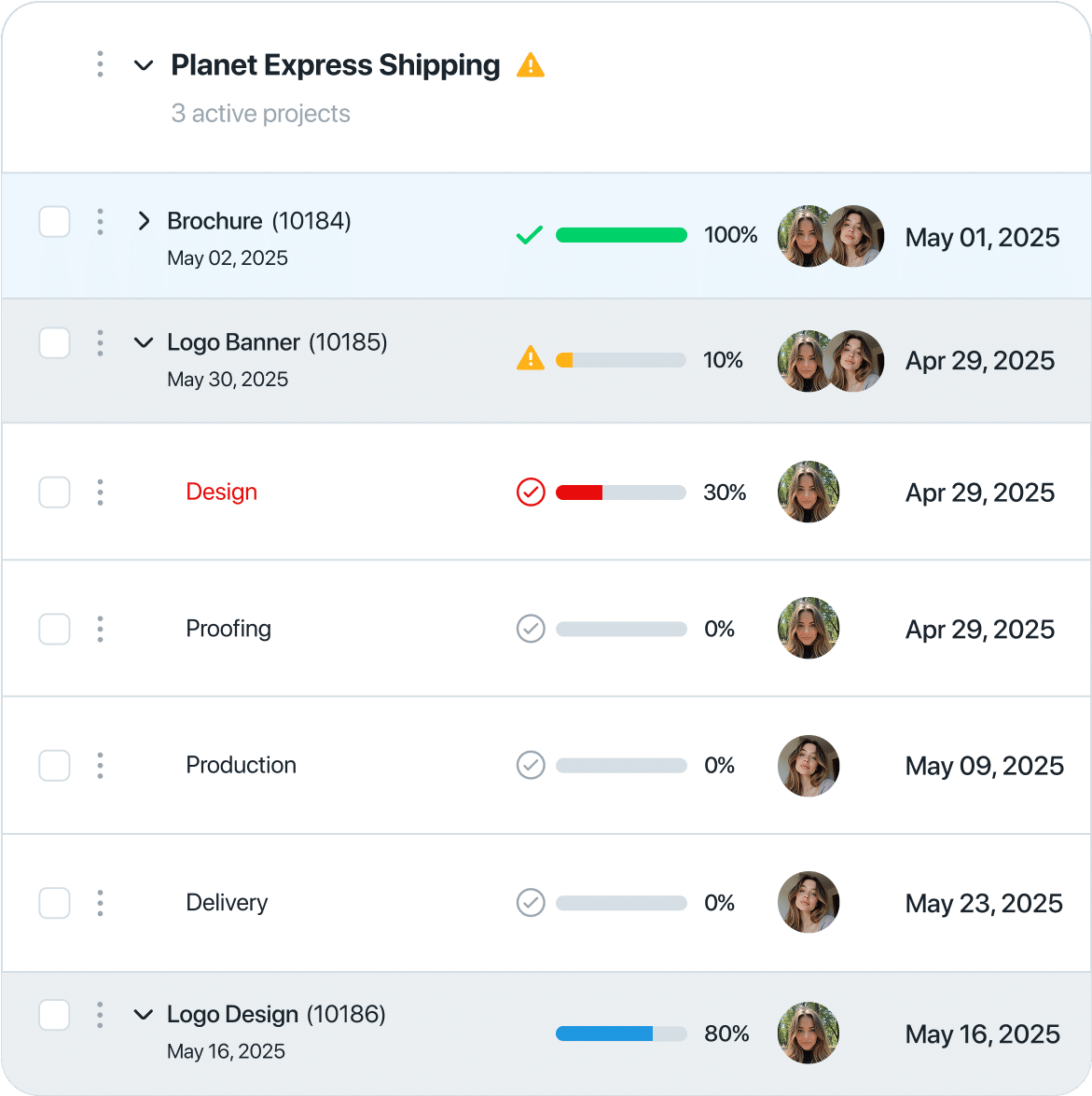
Workzone suits marketing and communications departments in higher education, healthcare, and other organizations that receive requests from several internal groups.
You get the usual project management suite, including tasks, Gantt charts, and project templates. The Team plan adds intake forms, document approvals, and workload planning.
Workzone also puts a lot of emphasis on onboarding. Its Team plan includes a dedicated success manager, human-led training, and ongoing phone support. That matters when you’re moving an established department away from spreadsheets or email-based requests and need staff across several functions to adopt the same process.
The Enterprise tier adds public intake forms, external markups and approvals, and broader collaboration options.
Where it taps out: Workzone reserves integrations for its top tier. The Enterprise plan includes integrations and APIs, SSO, and cross-project dependencies. Paid plans are billed annually, and teams that need integrations must choose Enterprise. Workzone offers a 2-week free trial before committing.
Best for: Departments that want hands-on onboarding and a vendor that trains every new hire
Skip it if: Your workflow depends on connecting the PM tool to your CRM and ad accounts from day one
A user review says:
The custom list of tactics was helpful and easy to set up. I liked the approval options, simple to use and easy for both those submitting work for approval and those approving the work. The user interface is pretty straightforward, and it’s a good tool for documenting working files for later reference.
Trello, Basecamp, and Notion can all handle marketing projects, but they have fewer built-in options for creative proofing and formal approvals. Consider them if your campaigns don’t involve complex review cycles.
Trello (Free; starts at $5/user/month, billed yearly) keeps campaign work organized on visual boards. You can capture tasks from email, Slack, and Teams, then move them through your production stages. However, you’ll need to manage creative sign-offs through comments, card statuses, or Power-Ups. Calendar, Timeline, Table, and Dashboard views also require a higher plan. Our content calendar templates offer a starting point for planning your workflow.
Basecamp (Free; starts at $29/month, billed monthly) gives each campaign a shared space for to-dos, files, discussions, and schedules. Its flat-rate pricing covers unlimited users and projects on the Pro Unlimited plan, which may appeal to agencies working with several clients. However, Basecamp doesn’t have dedicated intake forms or creative approval workflows, so you’ll need to manage requests and sign-offs through its existing project tools.
Notion (Free; starts at $10/member/month, billed yearly) works well when you need your campaign briefs, editorial calendar, and asset tracker to stay connected. Its databases and linked pages let you organize that information in one place, and it offers basic forms for free. You can also build approval steps using database buttons and automations, though you’ll need to set up that process yourself. It doesn’t yet offer dedicated creative proofing like the tools covered above.
Start by looking at where your campaigns get held up. If requests arrive with missing details, prioritize intake forms. If creative work goes through several rounds of feedback, check how the tool handles proofing and approvals. And if you’re constantly juggling deadlines and resources, look for workload planning, dependencies, and a shared marketing calendar.
Check what each platform includes at the plan you’re considering. Some reserve advanced approvals, resource planning, or integrations for higher tiers. Use these workflow differences to narrow your shortlist:
Before committing, run a real campaign through your top two choices. Include an actual brief, a few deliverables, and the people who normally review your work. Test the plan you would buy, since a trial may include higher-tier features.
Track two things: how long it takes to turn a request into an assigned task, and how many review rounds an asset goes through before approval. Also check whether reviewers can find the latest version and whether you can see what’s holding up a launch without chasing updates.e latest version and whether you can see what’s holding up a launch without chasing updates.
Pro Tip: Once you’ve mapped out your campaign workflow, look for the steps your team still handles manually. Start with assigning work, notifying reviewers, and updating statuses. This quick walkthrough shows how to set up automations that keep those routine handoffs moving.
Your next campaign should tell you whether the software is helping. Can someone submit a complete brief without a follow-up email? Can a reviewer find the latest draft and leave feedback on the file? Can you see who needs to act before the launch slips?
Use those questions to judge your shortlist. A tool that handles your team’s actual handoffs is a better choice than one with features you won’t use.
With ClickUp, you can keep the campaign brief in Docs, collect requests through Forms, and connect production tasks to creative feedback and deadlines. Start with one campaign, define who approves each deliverable, and save the workflow as a template once it works.
For smaller marketing departments, it may cover basic file storage, version history, and creative reviews. However, a dedicated digital asset management (DAM) system offers more control over asset rights, metadata, search, and distribution. If you regularly reuse creative assets across brands or markets, check whether your project management tool can support those needs.
Yes. Eight tools on this list offer free plans, including Wrike, Asana, ClickUp, and monday.com. However, creative proofing and formal approvals often require a paid plan. ClickUp’s Free Forever plan includes 100 Proofing uses, while Hive offers proofing as a $5/user/month add-on to its paid Teams plan.
Look for role-based permissions, private projects, guest access, and controls for sharing files externally. Check whether you can restrict access to confidential campaign briefs and remove permissions when a contract ends. Also test what a guest can actually see before inviting outside collaborators.
Start with the work that’s still in progress. Move the tasks, owners, deadlines, dependencies, and current approval statuses first. Then link the latest creative files and ask the people involved to check their assignments. Keep the old workspace accessible until the campaign finishes, so important feedback or decisions don’t get lost during the move.
Creative project management centers on producing and reviewing assets. Marketing project management also covers campaign schedules, dependencies, budgets, and results. Adobe Workfront and ClickUp appear in both categories because the workflows overlap. Choose based on the work you need to coordinate.

Manasi Nair
Max 27min read
Manasi Nair
Max 30min read
Manasi Nair
Max 22min read

© 2026 ClickUp