

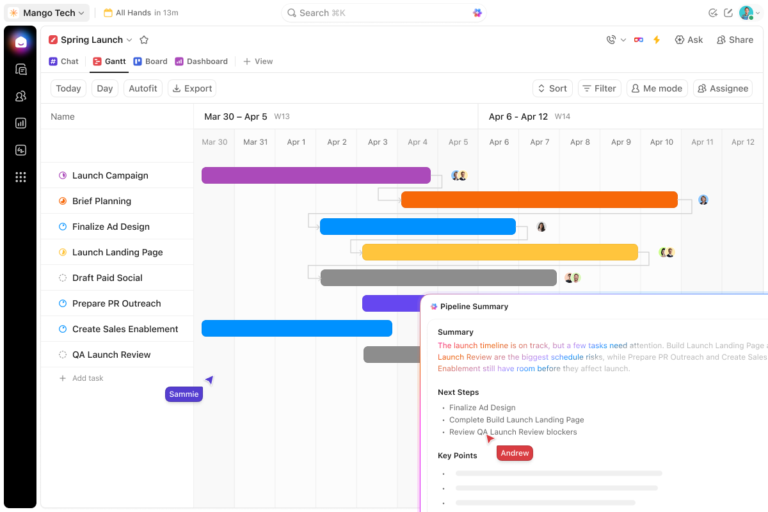
Sorry, there were no results found for “”
Sorry, there were no results found for “”
Sorry, there were no results found for “”
Microsoft Project never shipped a Mac version. Neither did Primavera. For years, that left project managers on macOS choosing between clunky web ports, Windows virtual machines, or lightweight task apps that couldn’t model a dependency.
That era’s over. Native Mac scheduling tools now rival anything on Windows, and every major cloud platform ships an Apple Silicon desktop build. The real problem isn’t scarcity anymore. It’s fit: Mac-native file apps and cloud platforms solve different problems, and picking from the wrong category wastes months.
The goal of this guide is to help you pick one project management software for Mac that covers your actual workflow, so tool sprawl disappears. Nine tools, sorted by who they’re really built for and where each one hits a wall.
| Tool | Best for | Standout feature | Pricing* | Where it taps out |
|---|---|---|---|---|
| Merlin Project | Solo Mac planners who model schedule risk before committing to a date | Its Monte Carlo simulations run thousands of timeline scenarios to show the real probability of hitting your finish date | Paid plans (Merlin Project Express) start at $69.99/year. The full Merlin Project for Mac is $229.99/year | No live web co-editing, so two people pass files back and forth instead of working on the same plan |
| OmniPlan 4 | Mac planners who want to own the software across Mac, iPad, and Vision Pro | Its leveling engine rebalances the timeline automatically when you double-book someone on overlapping tasks | One-time license from $199.99; subscription $199.99/year | Short integration list, and multi-person work runs through publish-and-subscribe syncing rather than a shared workspace |
| Project Plan 365 | Cross-platform teams tied to Microsoft Project files on a Mac | Its native .mpp support opens, edits, and saves Project files without converting to XML or CSV | Paid plans start at $10.99/user/mo | Windows-style ribbon interface on macOS disappoints anyone expecting native Apple design |
| Things 3 | Freelancers and founders tracking personal and client work with zero setup | Its Quick Entry panel launches over any Mac app to capture a task without leaving what you’re doing | $49.99 one-time purchase | No assignees, dependencies, or shared progress, so it stops working the moment a second person joins |
| ProjectLibre | Mac planners who need a free open-source Microsoft Project alternative | Its open-source engine handles native .mpp files, Work Breakdown Structures, and Earned Value Management without licensing fees | Free desktop; paid cloud plan at $9.99/user/mo | Live team co-editing requires upgrading to the cloud subscription |
| ClickUp | Mac teams replacing separate task, docs, and chat subscriptions | Its Brain AI reads every task, doc, and conversation to draft standups and answer status questions from live data | Free; paid plans start at $7/user/mo | Offline mode restricts you from editing tasks or creating subtasks, so you cannot build a full schedule without a connection |
| Asana | Teams that need follow-through on well-understood, recurring processes | Its Workflow Builder routes tasks and notifies reviewers using plain-language rules, no code required | Free; paid plans start at $10.99/user/mo | One assignee per task forces co-owners into extra subtasks and follower workarounds |
| Notion | Document-heavy teams that want to build their own structure | Its standalone Notion Calendar app syncs task schedules to your day, so writing, databases, and time blocks live in one system | Free; paid plans start at $10/user/mo | Blank-page start means you design statuses, views, and rollups yourself before anything gets tracked |
| Trello | Small Mac teams whose work fits a single visual board | Its Butler automation archives cards and assigns reviewers from plain-language board rules | Free; paid plans start at $5/user/mo | Cross-project reporting and dependency logic are thin, so visibility breaks across multiple boards |
Our editorial team follows a transparent, research-backed, and vendor-neutral process, so you can trust that our recommendations are based on real product value.
Here’s a detailed rundown of how we review software at ClickUp.
Mac project management software splits into two categories—document-based apps and database-based platforms. This is because individual project managers and team collaborators need completely different workflows.
A document-based app saves your project in a local file on your Mac. You open the file, adjust task timelines, recalculate the schedule, and save it. A database-based platform stores project records on a cloud server. Multiple team members can update tasks simultaneously, and everyone sees the changes live.
This division isn’t new. Back in 1991, PM Network highlighted this exact challenge as Mac project software began to grow. Harvey A. Levine, a past president and chairman of the Project Management Institute (PMI), offered advice in that column that settles the choice faster:
Software tools should be matched to the kind of project work that your organization does, and to the way that your organization manages them.
Choosing the right Mac tool comes down to one core question: Does a single person own the project file, or does an entire team need to edit it together? Everything else builds on that answer.
To choose the right Mac project management software, prioritize five criteria: native Apple Silicon performance, offline access, advanced scheduling, Windows file compatibility, and a licensing model that fits your team size. These five features set a real project management tool apart from a glorified to-do list.
.mpp and Microsoft Project XML files, so you can easily share plans with Windows colleaguesFive apps fall into this category: Merlin Project, OmniPlan 4, Project Plan 365, Things 3, and ProjectLibre. All five run only on Apple hardware and keep each plan in a local file. You get native Apple Silicon performance, full offline access, and advanced scheduling without a subscription gate. The tradeoff is live co-editing: you give it up entirely.
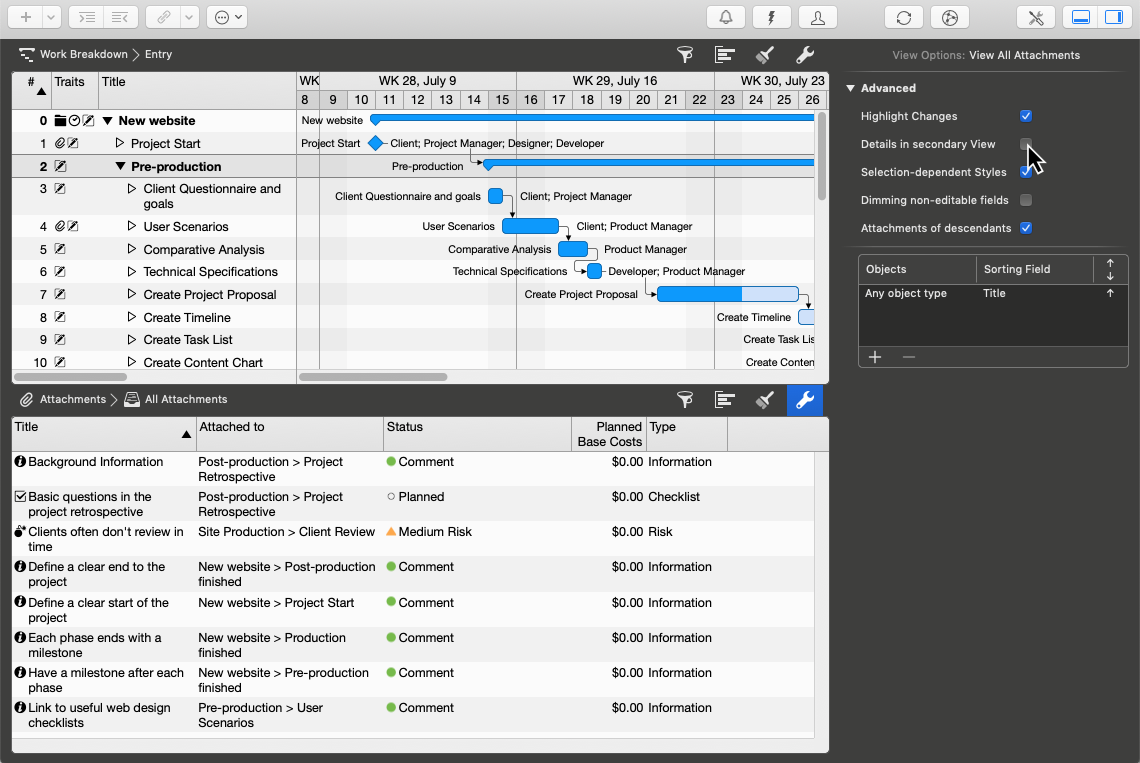
You start your plan in Merlin Project with a quick mind map brainstorm, then switch to a Gantt chart or Kanban board without retyping a single task. It keeps timeline, cost, and task data in one local file on your Mac or iPad. Build and edit schedules on a train, at a remote job site, or anywhere without an internet connection.
As your schedule grows more complex, you use its built-in Monte Carlo simulations to protect your deadline. Instead of relying on a single best-case finish date, the app runs thousands of timeline scenarios to show you the exact probability of finishing on time. When you need to send schedules to Windows colleagues, you export them as Microsoft Project XML files.
Because your project files are stored on your Apple hardware, you maintain full control over your data privacy without a cloud server or data processing agreement. Even if your 30-day trial ends, the app turns into a free viewer—meaning you never get locked out of reading your past files.
When Merlin Project is not an ideal choice: Merlin Project shares files rather than hosting live web sessions, so two people cannot edit the same plan simultaneously in a browser. Its reporting features focus on printable documents and PDFs rather than interactive online dashboards.
Skip Merlin Project if: Your team requires multiple people to co-edit project schedules simultaneously inside a web browser.
Hear about Merlin Project from this G2 reviewer:
The software itself works perfectly and does everything you need to plan activities and milestones for a project. The resources system is great. The software includes every function you can ever want.
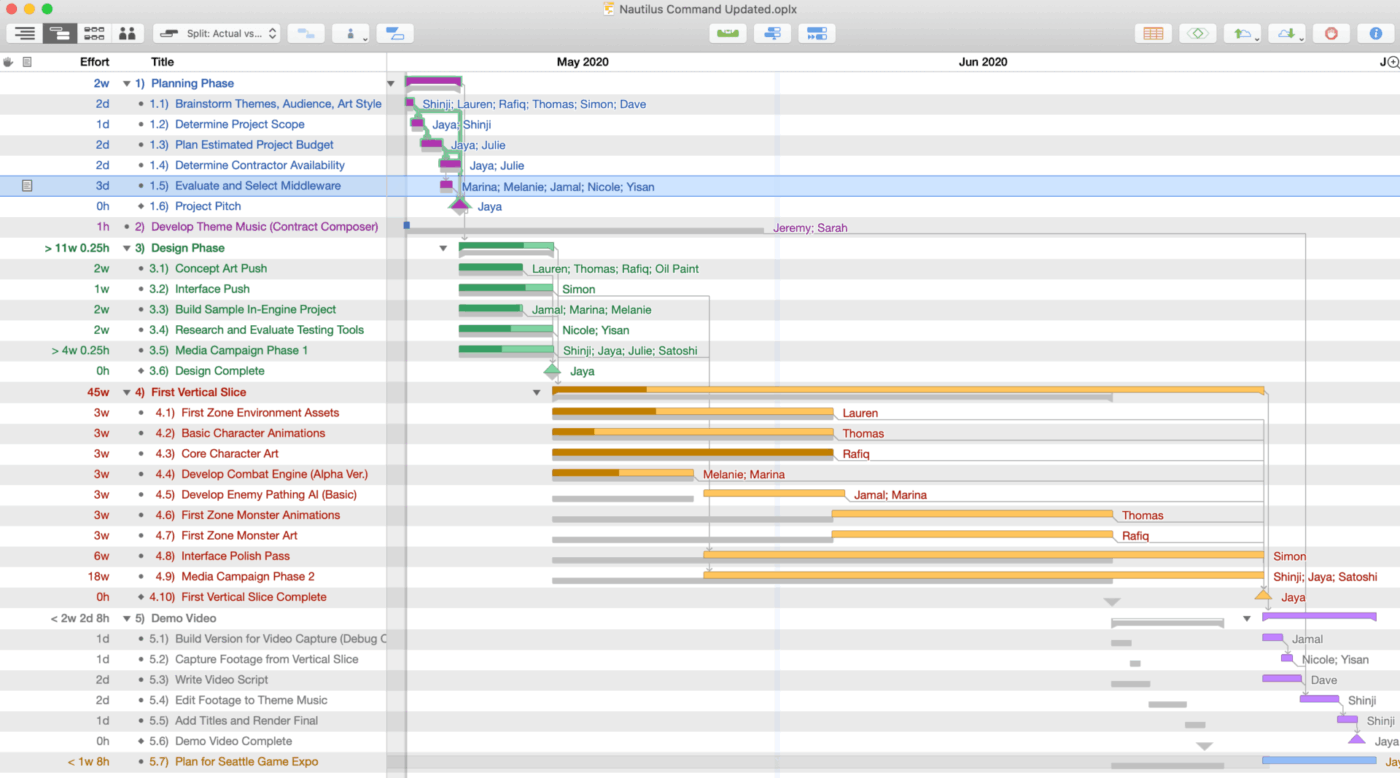
OmniPlan 4 gives you a native desktop experience across your Mac, iPad, and Apple Vision Pro. You start with its new project assistant, which walks you through setup questions to build your Gantt timeline with standard Apple toolbars and keyboard shortcuts.
When you assign work across your team, OmniPlan’s leveling engine keeps your schedule realistic. If you accidentally double-book a team member on overlapping tasks, the app rebalances your timeline automatically to clear the conflict. You can also display cost and effort numbers directly below tasks on your Gantt chart to track spending across specific time intervals.
You can also sync files across your Apple devices or share files with Microsoft Project users when sharing updates. Because OmniPlan relies on publish-and-subscribe file syncing rather than a web browser login, you get a clean desktop workspace without managing cloud user permissions.
.mpp and XML files directly to collaborate with Windows colleaguesWhen OmniPlan 4 is not an ideal choice: The integration list is short compared to a cloud platform’s, and multi-person work happens through publish-and-subscribe syncing rather than live editing.
Skip OmniPlan 4 if: You need many third-party integrations or a shared workspace your whole team logs into.
See what this Capterra reviewer likes about OmniPlan 4:
One of the best features of this software is the Gantt diagram visualization, its objective is to help the user to efficiently manage their projects with visual tools that allow a clear and accurate monitoring of each process and task to be executed in the project.
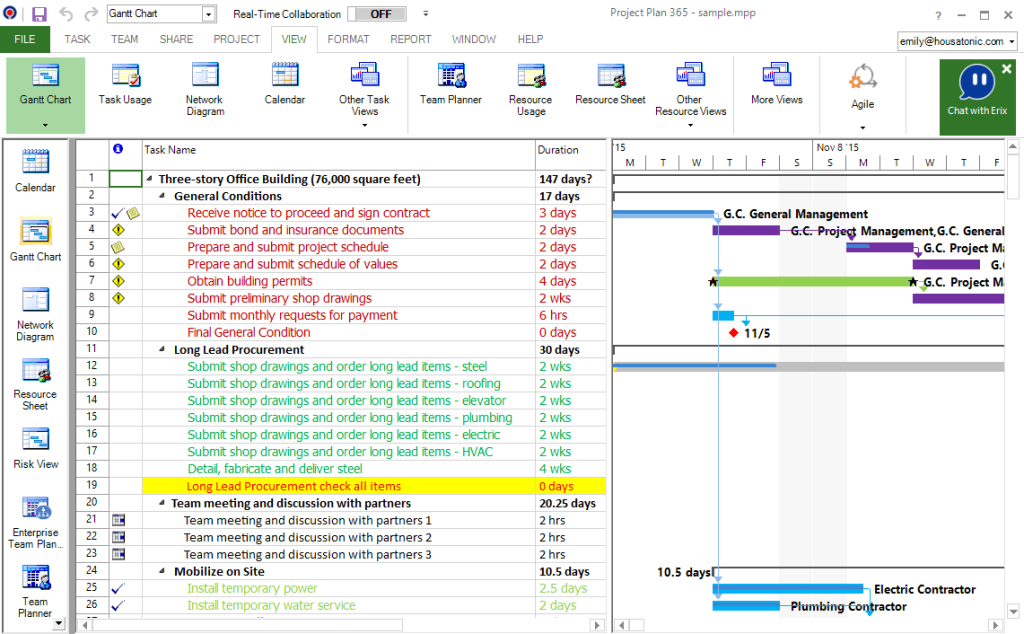
Project Plan 365 opens, edits, and saves Microsoft Project .mpp files natively on a Mac without converting them to XML or CSV formats. The app mirrors the familiar ribbon toolbar and scheduling engine of Microsoft Project, which is why team members navigate menus, set task dependencies, and calculate critical paths without learning a new layout.
Cross-platform teams pull project files straight from OneDrive, SharePoint, Google Drive, or Microsoft Project Server. The app preserves custom fields, baseline schedules, and calendar exceptions during edits, so Windows colleagues open updated .mpp files without missing data or broken formatting.
Offline support keeps project planning moving on a Mac, automatically syncing changes once an internet connection returns. To keep stakeholders informed without buying extra licenses, assign them free read-only seats to review Gantt charts and progress dashboards.
When Project Plan 365 is not an ideal choice: Project Plan 365 looks and feels like Windows software running on macOS, which may disappoint users looking for a sleek, native Apple design. Collaboration is also file-based.
Skip Project Plan 365 if: Your team does not use Microsoft Project or .mpp files.
See what this G2 reviewer thinks about Project Plan 365:
It’s an old-style, simple piece of software, and I like that it can create a critical path, a CPM diagram, and a network diagram just by adding tasks.
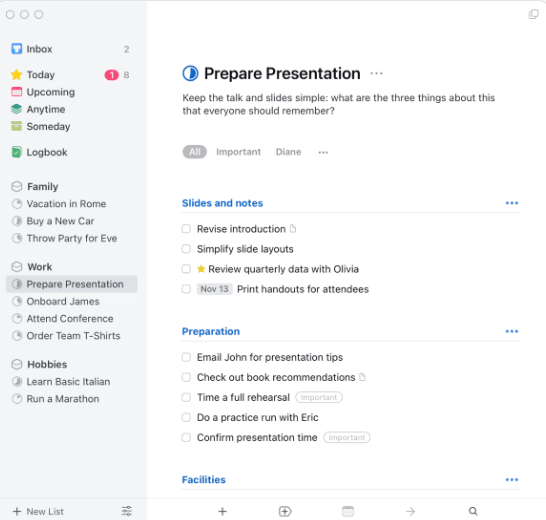
Cultured Code built Things 3 specifically for Apple hardware to manage personal tasks without a complex software setup. Independent freelancers, founders, and creators group their work into Areas, Projects, and Headings. This keeps their client projects separate from their personal goals.
Daily planning centers on the Today and Upcoming views, which gather scheduled items from across all projects into one clear task list. Global keyboard shortcuts launch the Quick Entry panel over any active Mac application to capture new thoughts instantly, while native integrations bring Apple Calendar events directly into the daily schedule.
The app syncs data across Mac, iPhone, iPad, Apple Watch, and Vision Pro using Cultured Code’s custom cloud service. A one-time purchase per platform gives you full ownership of each client app forever, avoiding ongoing monthly subscription fees.
When Things 3 is not an ideal choice: Things lacks collaboration tools, so team members cannot assign tasks to others or view shared project progress. It also skips complex project management features like Gantt charts, task dependencies, location-based reminders, and web browser access.
Skip Things 3 if: Your projects require team collaboration, shared task assignments, or task dependency tracking.
See why this G2 reviewer likes Things 3:
Minimal looks and is clearly integrated with a lot of useful tools. That makes me more productive than ever.
The most thing that I liked of Things is the one minute setup and you can use in every moment of your day.
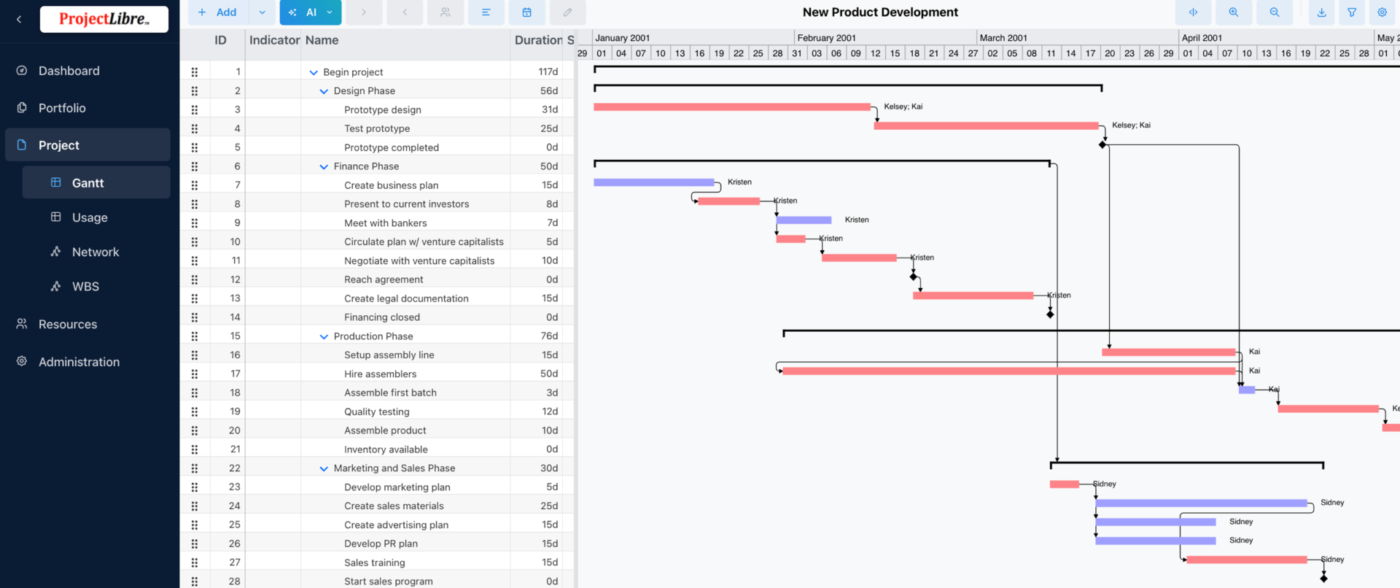
Running on macOS, Linux, and Windows, ProjectLibre allows you to build and manage project plans locally on your Mac while maintaining seamless file compatibility across multi-OS environments. You can open and edit existing Microsoft Project (.mpp) files without converting data to intermediate formats.
The desktop software includes advanced scheduling tools such as interactive Gantt charts, Work Breakdown Structures (WBS), Network Diagrams, critical path analysis, and Earned Value Management costing. Built-in resource management tools also allow you to track workloads and level resources across tasks to avoid over-allocation.
Because the desktop software runs locally on your Apple hardware, your project data stays private and accessible without an internet connection. However, the desktop interface retains a legacy functional design. So, teams that need multi-project cloud management or prompt-based plan generation can optionally upgrade to the paid ProjectLibre AI Cloud platform.
When ProjectLibre is not an ideal choice: The advanced portfolio and resource tools carry a noticeable learning curve. Live web co-editing and automated AI task generation also require upgrading to the paid cloud subscription.
Skip ProjectLibre if: You require real-time web browser co-editing without paying for a cloud plan.
See what this G2 reviewer thinks about ProjectLibre:
Free, easy to get started with it to aid in project management, lightweight in terms of memory footprint, it has major functionalities and features of similar project management tools.
This category comprises four platforms: ClickUp, Asana, Notion, and Trello. All four store project data on a server so multiple people can edit simultaneously, ship native macOS desktop builds, and scale through per-seat licensing. Offline access and Windows file compatibility are limited or absent, depending on the tool.
ClickUp is an all-in-one work platform that handles project plans, team communication, documentation, and reporting in a single workspace. Where other tools on this list do one of those jobs well and punt the rest to integrations, ClickUp treats them as native features sharing the same data layer.
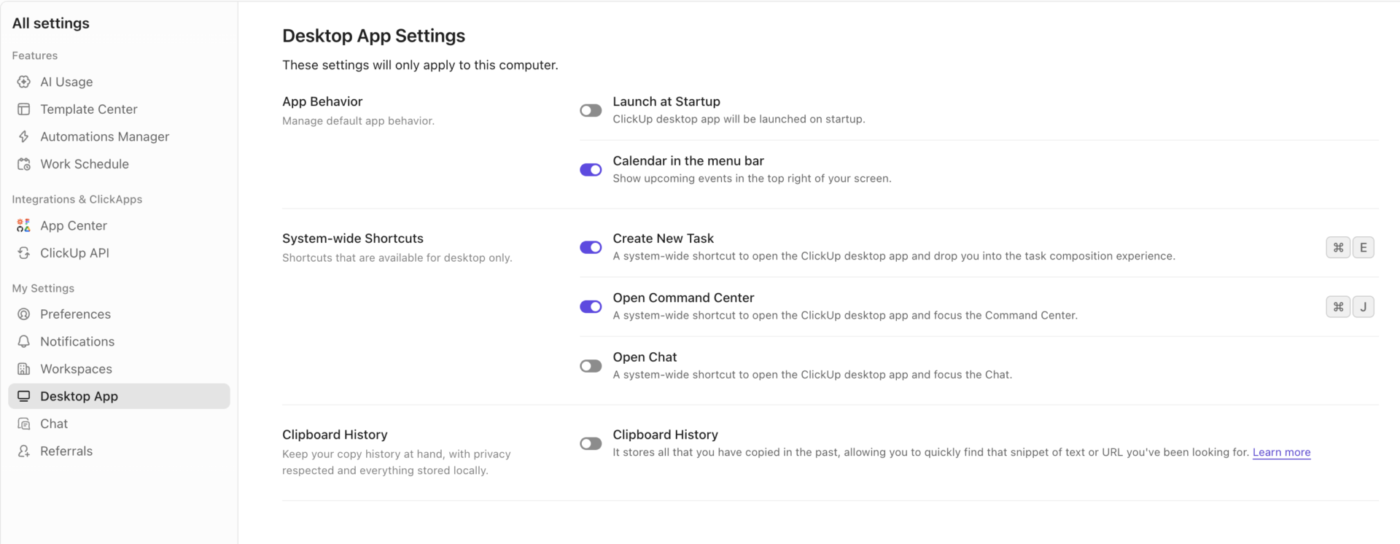
On Mac, the native Apple Silicon ClickUp Desktop App runs without Rosetta translation. A system-wide shortcut (Cmd+J) launches a Command Bar over any active application, so you can create a task from Figma or your email client without context switching. Your projects live in a flexible hierarchy that scales from a five-person team to a fifty-person org without restructuring.
What separates ClickUp from every other cloud platform in this roundup is ClickUp Brain, an AI layer that reads every task, doc, and conversation in your workspace. It drafts standups, answers status questions from live data, and powers Super Agents: AI teammates you assign work to and @mention. Status reporting happens automatically instead of consuming Monday mornings.
When ClickUp is not an ideal choice: ClickUp’s depth means setup takes longer than simpler tools. In offline mode, you can create tasks and reminders and view open items, but you cannot edit existing tasks or create subtasks until you reconnect.
Skip ClickUp if: Your team wants a minimal board with zero configuration, or you need to build and edit full project schedules without an internet connection.
Listen to this G2 reviewer about ClickUp:
The UI and UX are great. ClickUp does have a learning curve, but after the initial onboarding process, the experience becomes seamless. Performance on my Mac is excellent, whether I’m using it in the browser or in the native app. In terms of pricing and ROI, it’s a great option if you actually use all of its features, since it can replace other software. The integrations with Google apps—my company’s main ecosystem—are also strong, including Drive, Calendar, Email, and more. The AI integrations are great, either to give context in chats, create and automate tasks, and you can go beyond with agents.
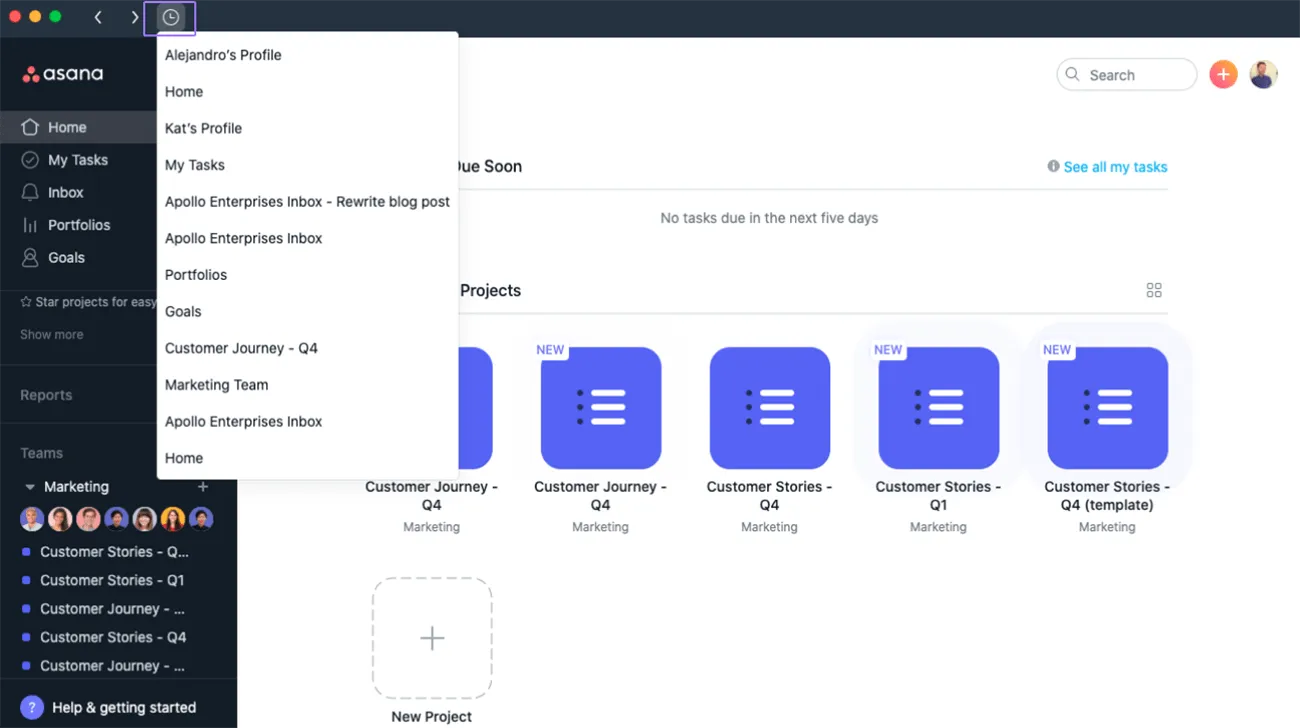
Asana organizes team workflows around clear task ownership by assigning every action item to exactly one owner and one due date. It suits teams where the work is well understood, and the problem is follow-through: marketing calendars, client onboarding, recurring operational processes.
The native macOS app includes desktop tools designed to eliminate browser tab distractions. Team members can access priority tasks directly from the Mac menu bar and automatically convert mobile voice recordings or photo uploads into structured tasks.
Visual project layouts let teams switch between List, Board, Calendar, and Timeline views without re-keying data. To keep projects moving without manual oversight, the visual Workflow Builder sets up custom rules using plain-language triggers that route tasks and update team members as work completes.
When Asana is not an ideal choice: Asana limits each task to a single assignee, forcing teams that co-own tasks to create extra subtasks and followers.
Skip Asana if: Your team requires multiple people to co-own individual tasks, or you need advanced portfolio tracking on a tight budget.
This is what a G2 reviewer thinks about Asana:
I like that Asana is intuitive and easy to use. It’s available everywhere, including on Mac, the web, mobile, and through extensions, which I find incredibly convenient. I can add tasks on the fly, dig deeper on my laptop, or send a task via Microsoft Teams. Asana has become an essential part of my work due to these features. I also appreciate that it’s more robust than Trello without being overwhelming, making it a great tool for my needs.
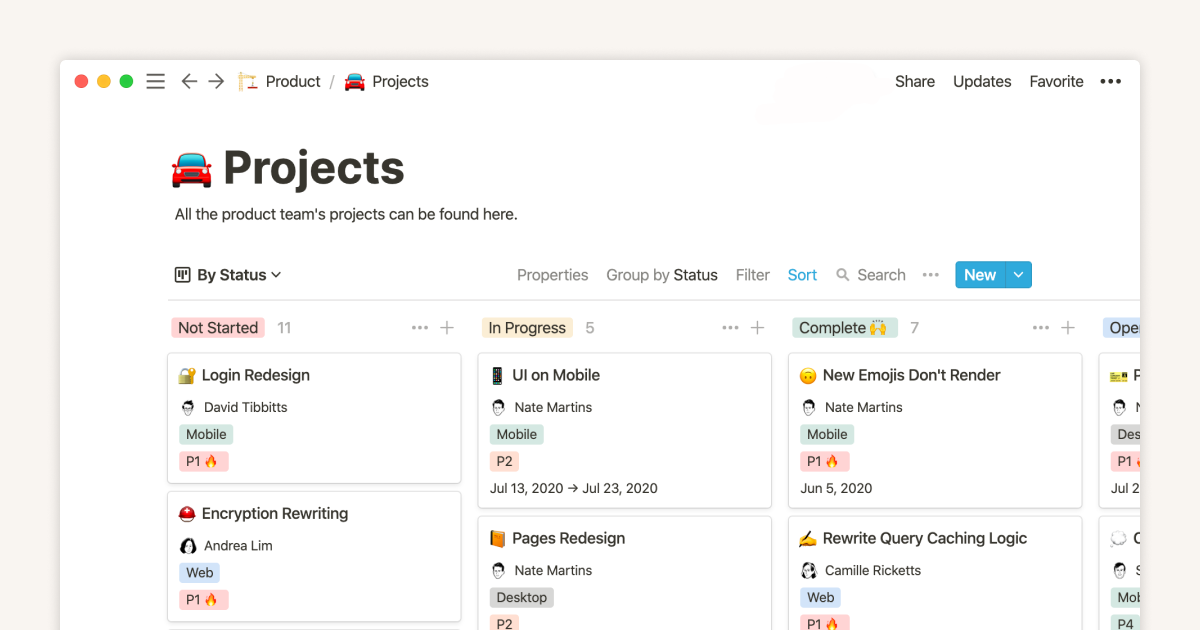
Notion combines documents and databases on the same page, making it ideal for teams running research programs, editorial calendars, and grant proposals. Its native macOS desktop app loads quickly and includes a browser web clipper to capture online research directly into project pages.
Teams customize database records to display as tables, Kanban boards, calendars, or visual timelines. Relational properties link project trackers directly to client records in a CRM, while custom filters allow writers and editors to view their own tailored task queues.
Built-in Notion AI extracts action items from meeting notes, auto-fills database fields, and answers questions across entire project workspaces. Teams can deploy AI agents and summarize documents without buying external software add-ons.
When Notion is not an ideal choice: Notion starts with a blank page rather than a pre-built project structure, requiring teams to design their own statuses, views, and database rollups. It also lacks native chat features, requiring separate tools like Slack for team communication.
Skip Notion if: Your team requires dependency-aware scheduling, or you want software that arrives pre-configured with a set project management methodology.
A G2 reviewer reviewed Notion:
I think Notion is a very lightweight application that includes just the features needed for documentation. It starts up quickly and offers numerous components to edit. I find it really easy due to its intuitive UI. The layout is straightforward, which makes it simple to take quick notes and share them with others. It’s very convenient to edit content on the go, whether I’m using it on my Mac or elsewhere. Setting it up was also very easy for us.
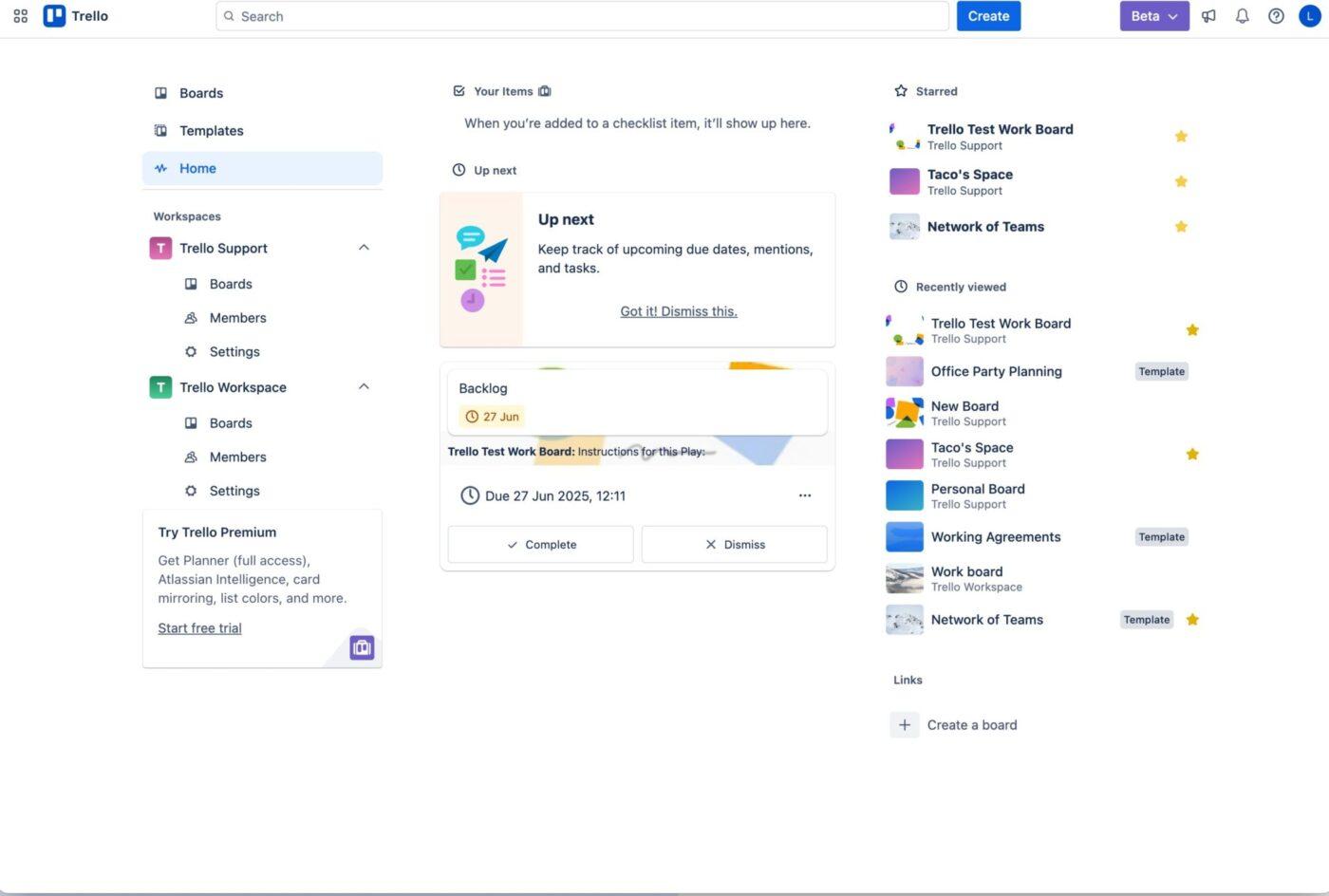
If your team’s workflow fits on a single board, Trello keeps it there without asking you to configure anything else. A three-person content team drags blog posts from Draft to Review to Published. Similarly, a founder moves candidates through the Interview, Offer, and Hired states.
On Mac, the dedicated desktop app pulls your boards out of the browser, keeping project work separate from the tab chaos of email and Slack. Custom global keyboard shortcuts let you quick-add a card from any screen, and desktop notifications respect macOS Do Not Disturb automatically, so focus blocks stay unbroken.
Teams that outgrow the basic board layout in Trello can unlock Timeline, Calendar, and Dashboard views. On the other hand, Power-Ups connect boards to external tools like Slack and Jira.
When Trello is not an ideal choice: Trello struggles with project structures that extend beyond standard board layouts. Cross-project reporting, resource allocation tools, and task dependency logic are thin or absent, making it difficult to maintain high-level visibility across multiple simultaneous boards.
Skip Trello if: You need to track task dependencies or perform cross-project reporting across multiple teams.
This is what a G2 reviewer thinks about Trello:
I personally like the work of trello is that in trello application we easily distributed the work in team or segregate. Even we invite different users to see our boards. Trello application easily access in processor either in mobile phone or mac and window.
To pick the right Mac project management software, determine how many people will edit your project plan. Everything else flows from that single constraint.
Use this decision guide to match your team’s workflow:
.mpp files directly on macOS, or choose ProjectLibre for a completely free, open-source desktop alternativeThe most expensive mistake is buying one tool from each category. This happens when a project manager tracks Gantt charts in OmniPlan while the rest of the team updates daily tasks in Asana.
Running two separate tools causes your schedule and your actual work to drift apart, forcing someone to reconcile the data every week manually. In fact, nearly one in three employees reports that the current pace of work is unsustainable.
Manual tool syncing and context switching only add to that workload.
If your setup requires both desktop scheduling and team tracking, pick one application as your official source of truth. Treat the other as a read-only export. A Gantt chart that team members cannot trust creates more friction than having no chart at all.
Count how many subscriptions touch your project data right now. If the answer is three or more (a planning tool, a chat tool, a docs tool), the consolidation math matters more than any feature comparison.
A single workspace that covers tasks, docs, and communication eliminates the reconciliation tax: no one manually copies a Gantt update into a Slack thread or pastes a status into a Google Doc every Monday. ClickUp’s free plan covers all three, so testing costs nothing. If it sticks, you drop two invoices and one integration headache.
But consolidation only works if the tool handles your hardest constraint. If your schedules live in .mpp files that contractors expect, no cloud platform replaces that exchange format cleanly. If you fly six hours a week and need full offline editing, a local file will always be faster than waiting for a sync. Pick the tool that solves the constraint first, then let it absorb as many adjacent jobs as it can.
Get started with ClickUp for free!
It depends. Both Merlin Project and OmniPlan are Mac-native schedulers. The choice comes down to risk features and pricing model. Merlin Project is better suited to risk-heavy planning. OmniPlan suits buyers who want a one-time perpetual license across Mac, iPad, and Vision Pro, plus automatic resource leveling. Pick Merlin for simulation depth, OmniPlan to own the software outright.
For editing .mpp files, Project Plan 365 offers a free viewer edition. For planning from scratch, ProjectLibre is a free open-source desktop scheduler, and ClickUp’s Free Forever plan includes Gantt charts with a critical path. This choice gets more urgent in 2026: Microsoft is retiring Project Online on September 30, 2026, which removes the browser-based option Mac users often relied on. That leaves a Windows virtual machine or native Mac software.
Whether Mac project management apps work offline depends on the architecture. Document apps, like Merlin Project, OmniPlan, Things 3, and Project Plan 365, are fully offline because their plans are stored locally. Cloud platforms vary: ClickUp’s Offline Mode lets you create tasks and reminders offline and view already-opened items, but you can’t edit opened tasks or create subtasks until you reconnect. Check each tool’s specific offline limits before relying on them.
No, Apple does not make project management software. macOS ships with Reminders, Notes, and Calendar, which cover personal task tracking. But they lack dependencies, Gantt charts, resource management, and shared project reporting. For anything beyond a personal list, Mac users choose third-party software, either a Mac-native app such as Merlin Project or OmniPlan or a cloud platform such as ClickUp or Asana.
Merlin Project is the best choice for a solo Mac user who needs real scheduling, and Things is the better choice for someone who only needs to track work. The difference: scheduling means you care what happens when a task slips. You need dependencies, a critical path, and maybe a Monte Carlo simulation before you commit to a deadline. Things 3 doesn’t do any of that, and it shouldn’t. It’s a fast, beautiful task list that stays out of your way.
If you’re modeling timelines, pick Merlin. If you’re checking things off, pick Things. If you’re running full-scale projects as a solopreneur, use ClickUp.
Yes, there is construction project management software for Mac. Merlin Project and OmniPlan both handle resource leveling and cost tracking, and Project Plan 365 connects to Microsoft Project Server, which many general contractors still run. Because .mpp remains the exchange format across construction supply chains, file compatibility usually matters more than interface preference.
Yes, some Mac project management software syncs with Apple Calendar and Reminders, and the mechanism differs by tool. Mac-native apps such as Merlin Project and OmniPlan export or publish to iCalendar, which Apple Calendar subscribes to as a read-only feed. Things integrates directly with both Apple Calendar and Reminders. Cloud platforms generally offer two-way calendar sync through their own integrations rather than through macOS itself, so check whether the connection writes back or only displays.

Manasi Nair
Max 22min read
Manasi Nair
Max 26min read

Arya P Dinesh
Max 18min read

© 2026 ClickUp




