
Sorry, there were no results found for “”
Sorry, there were no results found for “”
Sorry, there were no results found for “”
Client collaboration tools are split into two camps. On one hand, you have portal-native tools that give clients a separate branded space. On the other hand, there are internal tools with guest access that let clients into a scoped view of your workspace.
Pick the wrong camp, and you’re right back to lost approvals, multiple file versions, and scope that changed in a reply nobody saw.
This guide compares the 12 best client collaboration software tools on what matters for external work, so you can shortlist tools that fit your tech stack.
| Tool | Best for | Standout feature | Pricing* | Where it falls short |
|---|---|---|---|---|
| Teamwork.com | Mid-sized agencies managing complex, multi-layered client lifecycles | Free external access to dashboards, milestones, and shared tasks, with native timers that calculate resource costs against budget | Starts at $9.99/mo (billed annually) | Uses hour-based estimates, not story points, so agile dev teams miss sprint planning |
| Moxo | Firms in regulated industries running high-touch onboarding | Separate branded entry points for clients and vendors, with plain-language workflows and encrypted e-signatures | Free; Business $960/yr | Entry tier limits integrations and has no internal timers for hourly billing |
| monday.com | Marketing agencies needing high-visibility, color-coded progress tracking | Color-coded status boards that make delays obvious | Free; paid from $9/mo | No column-level privacy, so hiding sensitive details from contractors is hard |
| ClickUp | Scaling, cross-functional teams wanting to consolidate internal operations and client work | Guest permissions control exactly what a client sees, with tasks, Docs, proofing, Chat, and Forms in one workspace and free view-only guests | Free; paid from $7/user/mo | Teams from a single-purpose app need a week or two to configure Spaces and permissions |
| Asana | Small teams coordinating rigid, timeline-dependent client milestones | Dependency tracking that keeps timeline-based handoffs on schedule | Free; paid from $10.99/mo | Built for timelines over heavy client communication; needs a clear hierarchy to stay usable |
| Basecamp | Growing agencies looking for flat-rate pricing with unlimited client users | Flat pricing with zero per-seat charges for unlimited client users | Free; Pro $15/mo/user; Pro Unlimited $299/mo | Lacks granular permissions to restrict sensitive data on shared boards |
| Slack | Engineering and tech teams prioritizing rapid, real-time client communication | Free Slack Connect channels that pull external partners into shared conversation | Free; paid from $8.75/mo/user | Key updates can slip by in high-traffic channels; free tier caps message history |
| Google Workspace | Distributed teams needing lightweight, document-heavy client co-editing | Live, cloud-native co-editing that removes the send-revised-attachment cycle | Starts at $7/mo (billed annually) | Optimized for docs over heavy data, so very large formula-driven sheets can slow down; cross-app alerts stack up |
| Notion | Creative studios needing highly customizable client dashboards and asset hubs | Flexible blocks and Teamspace separation to build custom client portals | Free; paid from $10/mo | Large databases can slow down; limited offline access |
| FuseBase | Client-facing agencies wanting fully white-labeled, website-style portals | Portal-native spaces that look like websites, with magic-link access and full white-labeling | Starts at $32/mo (billed annually) | Slower load times and no direct data export to Google Sheets |
| Zoho Projects | Budget-conscious teams looking for familiar, social-media-style stakeholder updates | A social-media-style project feed for updates, files, and feedback | Free; paid from $4/mo | Feature-rich, so navigation feels busier than a minimalist tool on large portfolios |
| Trello | Freelancers and small teams mapping out simple, visual client workflows | A board inbox that auto-converts client emails into draggable task cards | Free; paid from $5/mo | No native dependencies or time tracking for complex, multi-layer projects |
Our editorial team follows a transparent, research-backed, and vendor-neutral process, so you can trust that our recommendations are based on real product value.
Here’s a detailed rundown of how we review software at ClickUp.
Client collaboration software gives external clients a secure, shared space to work alongside your team. Inside it, they can view project progress, exchange files, approve deliverables, and message you, all without touching your internal operations.
It’s not the same as internal collaboration tools, which are built for employees. And it’s different from client management software, which tracks the relationship rather than doing the shared work.
The distinction that matters: good client collaboration tools let you control exactly what the client sees, so the work stays shared but your workspace stays private.
Score every tool against nine criteria: external access model, secure file sharing and permissions, approvals and proofing, real time collaboration, client-facing project visibility, white-labeling, integrations, guest pricing, and onboarding effort.
Together, they separate a tool built for outsiders from an internal one with a guest seat bolted on. Here’s why each line matters for client work specifically:
If you’re leaning toward a branded client portal, this video will walk you through a few options:
Twelve collaboration tools made this list: Teamwork.com, Moxo, monday.com, ClickUp, Asana, Basecamp, Slack, Google Workspace, Notion, FuseBase, Zoho Projects, and Trello.
Each one wins for a different setup and falls short somewhere else. Every pick below gets the same treatment: who it suits, what it does best, where it doesn’t fit the bill, and what it costs.
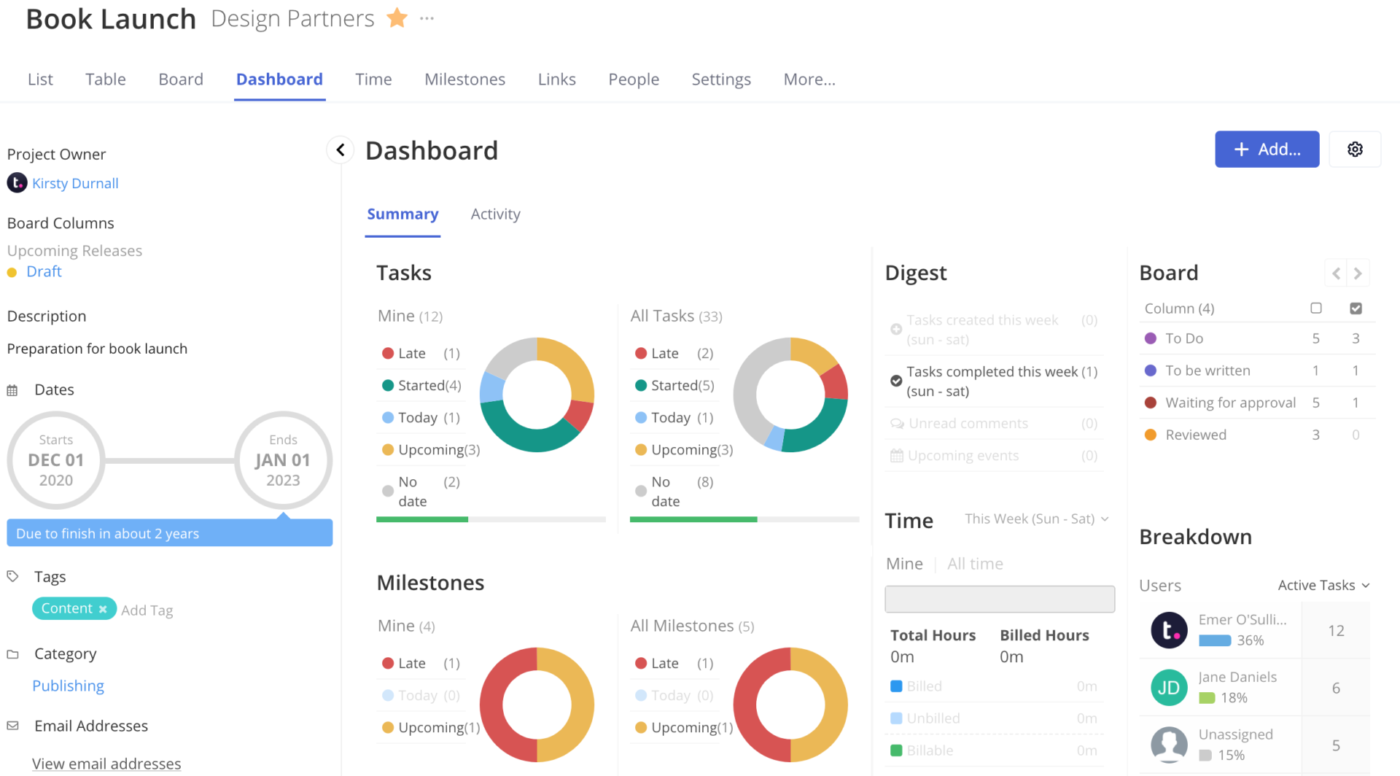
If your team needs to coordinate client deliverables without paying for extra software seats, Teamwork.com fits. It gives external stakeholders free access to dashboards, milestones, and shared tasks. This makes it a strong pick for professional services firms that need transparency across long project lifecycles.
Say a marketing agency is managing a website build. The client gets invited to review development tasks directly, log feedback, or track project hours inside the shared list. Managers can also run native timers on individual assignments, and the platform automatically calculates resource costs against the total budget.
Where Teamwork.com falls short: Agile development teams will face fit issues because the tool uses hour-based estimations instead of story points. The platform also lacks advanced backlog management and detailed bug lifecycle workflows.
Skip Teamwork.com if: Your teams require native sprint planning frameworks or need to see completed and active tasks simultaneously on a single screen.
Hear about Teamwork.com from this G2 reviewer:
What I like best about Teamwork.com is its comprehensive project management capabilities, including task tracking, time management, collaboration tools, and reporting features. It helps teams stay organized, improve productivity, meet deadlines efficiently, and maintain clear communication throughout project lifecycles successfully.
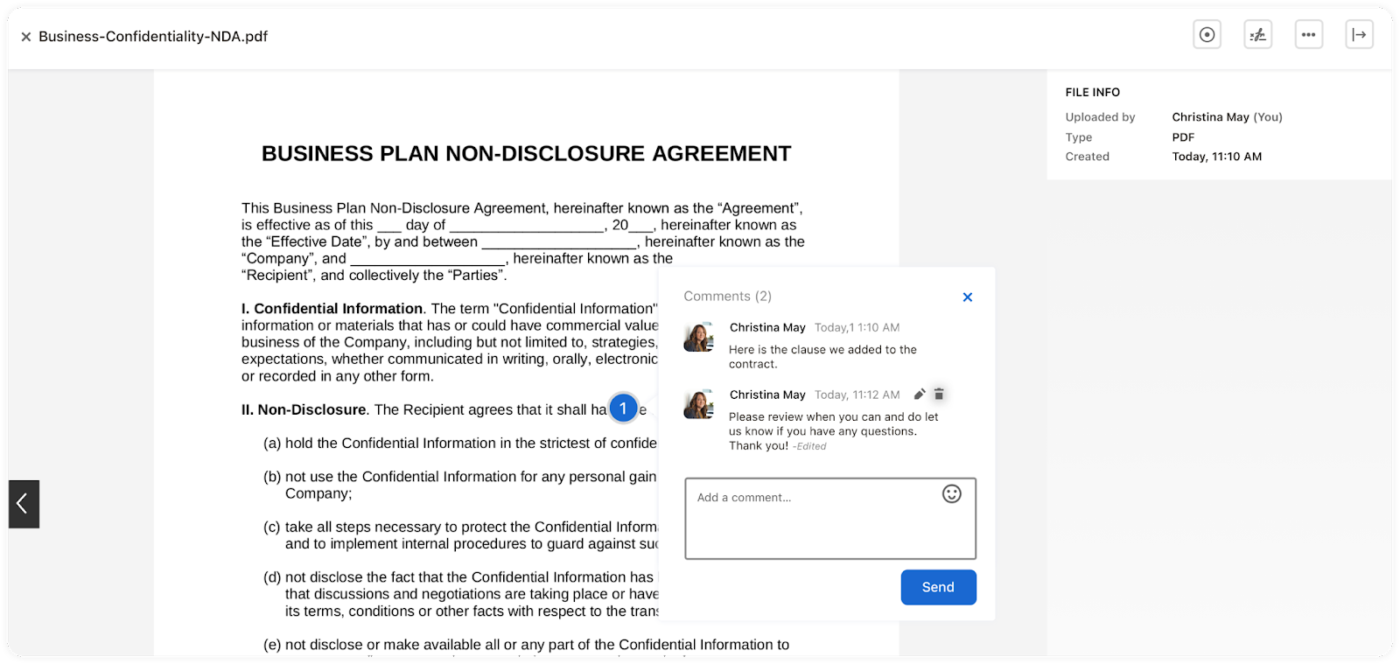
Built to move client account management into unified workspaces, Moxo creates distinct entry points for different external stakeholders. Clients see one portal interface, vendors interact with a separate layout, and internal teams outline delivery steps in plain language to generate workflows. Outside parties stay aligned with delivery timelines from day one.
A real estate brokerage can use it to handle partner onboarding. The firm shares listing collateral and schedules setup calls inside the mobile app. Incoming agents sign onboarding documents directly through the secure interface, and client signatures stay locked down with enterprise-grade encryption.
Where Moxo falls short: The entry tier restricts direct connections to external databases and cloud storage folders. This limitation forces manual data duplication, while the lack of internal timers slows time reporting.
Skip Moxo if: Your business operations require accurate hourly time billing or extensive base-tier integrations.
See what this G2 reviewer appreciates about Moxo:
I appreciate the enhanced client experience and the user-friendly design. Being able to customize forms and notifications for our clients has been extremely valuable for our team. Additionally, the customer support team has been very responsive and a reliable resource whenever I need assistance.
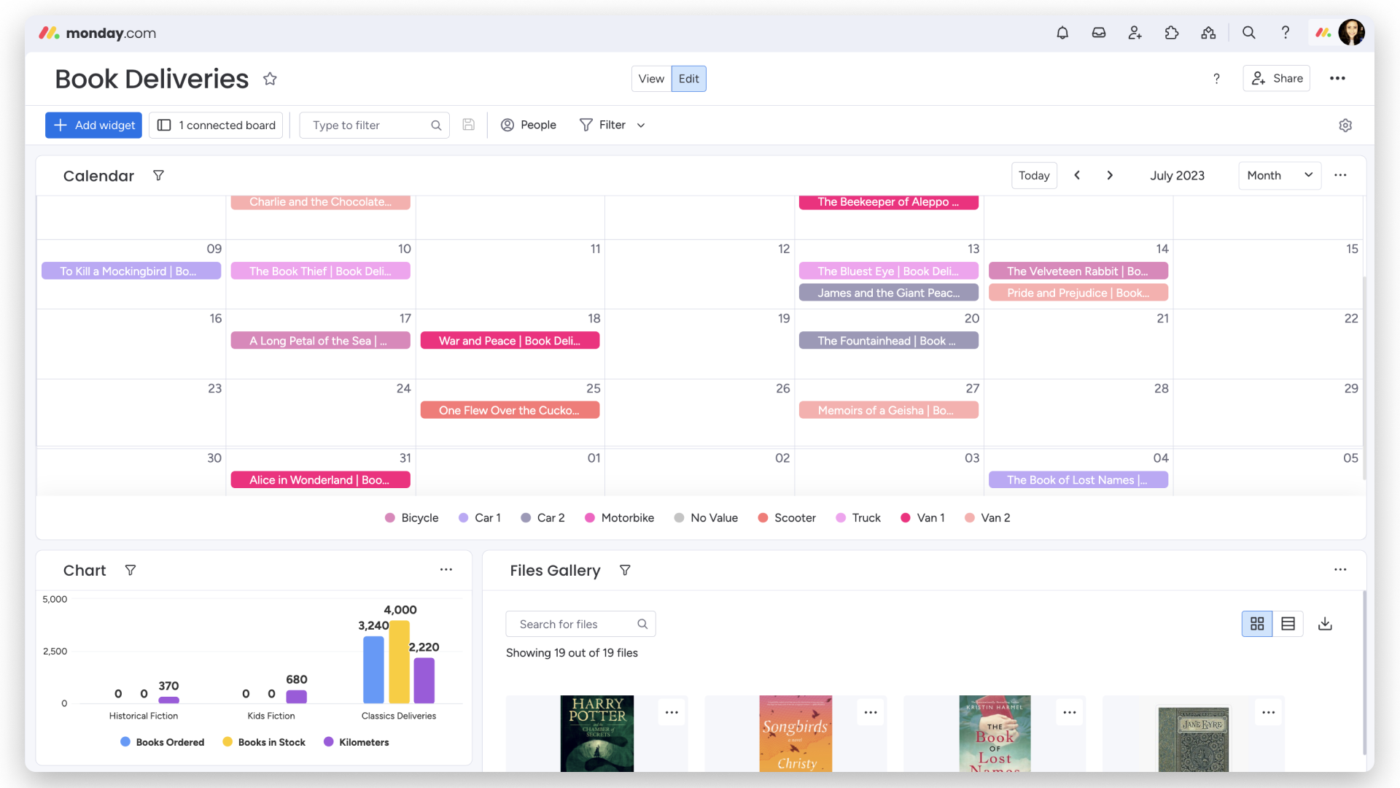
If scattered spreadsheets are how your team currently tracks client accounts, monday.com replaces them with color-coded status boards. You can visualize deadlines and plan accordingly. Updates anchor directly to specific deliverables, and a dedicated person column shows task ownership without constant check-in meetings.
A creative agency managing a multi-channel campaign can deploy a shareable board for external partners. New asset requests arrive via embedded web forms that auto-populate rows with deadline details. Account managers click a built-in clock to track billable hours on revisions, and that data transfers directly into client progress reports.
Where monday.com falls short: monday.com’s boards don’t offer column-level view restrictions, so hiding sensitive client details from outside contractors on a shared board takes planning. Also, its automation builder is powerful but leans manual for complex if/then logic. Intricate rule chains are better suited to teams willing to invest in setup time.
Skip monday.com if: Your operation requires strict column-level privacy controls when sharing active tracking boards with external partners.
Hear about monday.com from this G2 reviewer:
What I like most about monday Work Management is how easy it makes it to see the work at a glance. I can open a board and, within a few seconds, understand what’s in progress, what’s waiting on the client, and what’s late. The status labels, owners, and due dates are very clear, so there’s less guessing and fewer “who has this?” messages in Slack or email.
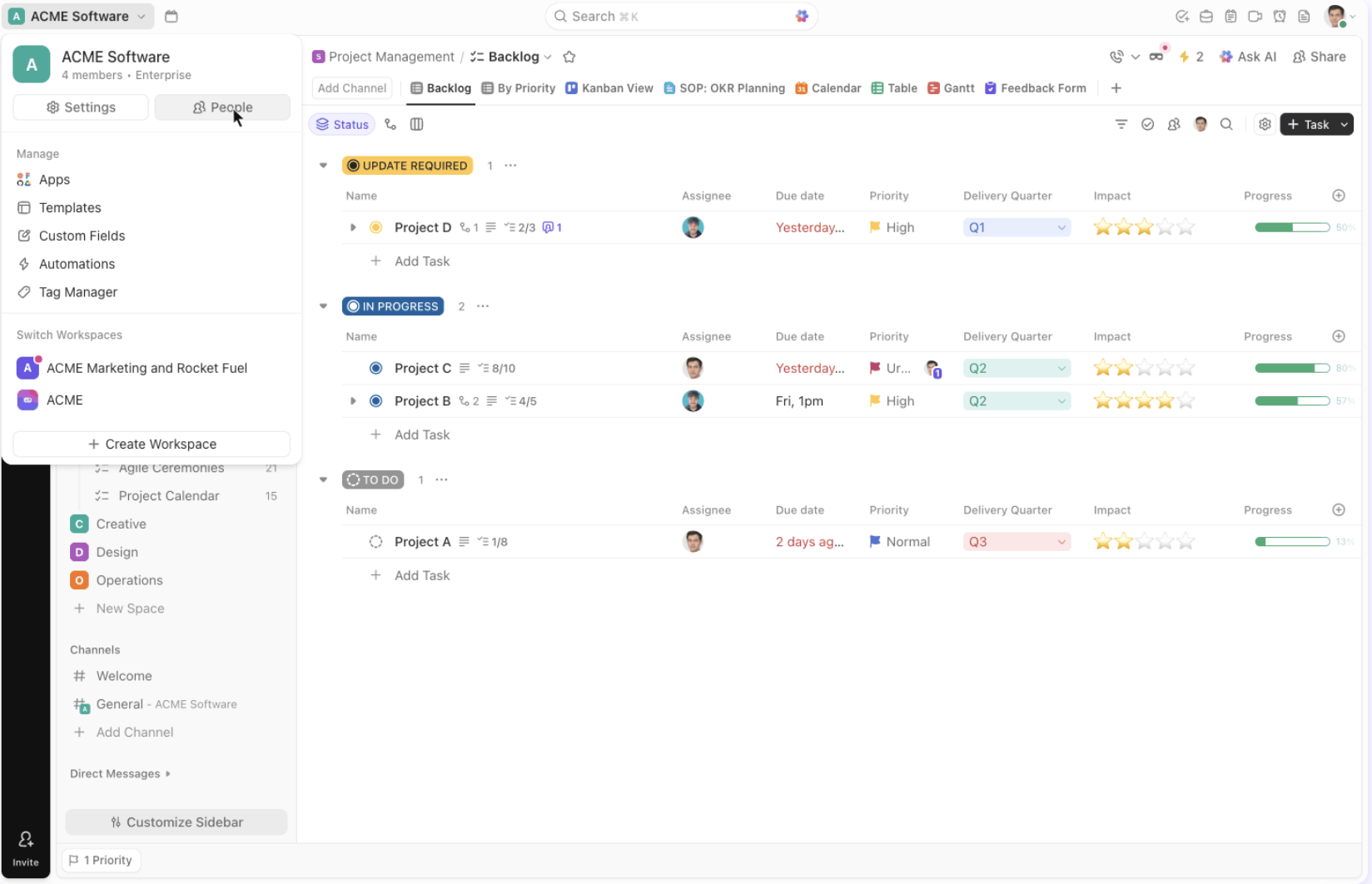
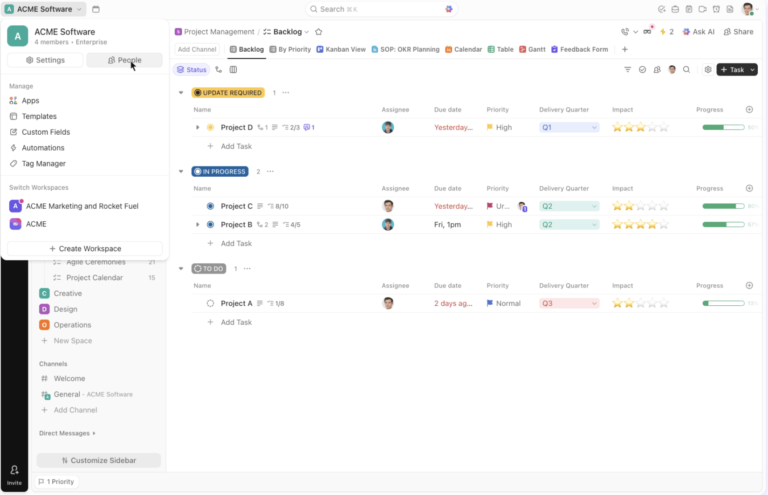
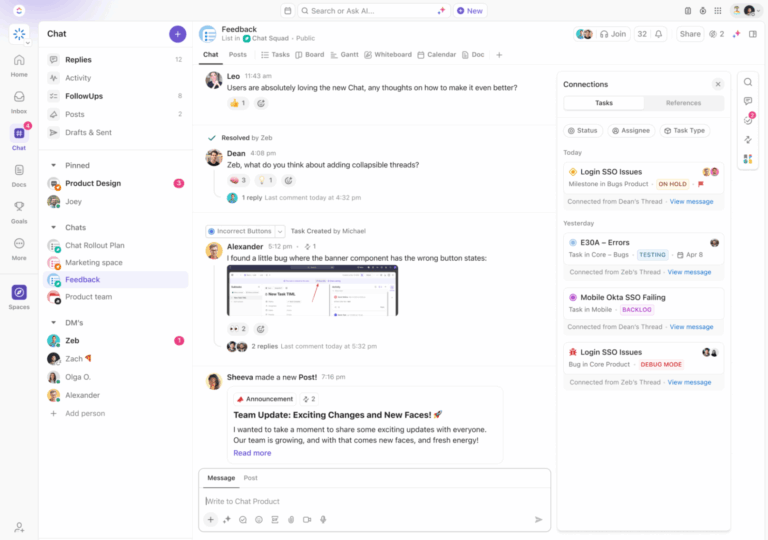
Most teams run client work in one tool and internal work in another. ClickUp removes that split. Tasks, Docs, Whiteboards, Chat, Dashboards, proofing, and Forms all live in one workspace. View-only and permission-controlled guest types let you control exactly what a client can see. For zero-login access, public shared views let anyone see progress through a link.
Here’s how that plays out. A branding agency sets up a client’s ClickUp Folder with a List for deliverables, a Doc for the brief, and ClickUp Dashboards for tracking progress. The client logs in, leaves proofing annotations on design files (PNG, PDF, or video), and messages the team in Chat. They never see internal sprint boards or team conversations.
ClickUp Forms collect new asset requests and auto-create tasks in the right List. Collaboration Detection shows when a client is viewing or editing in real time. Docs autosave about 1.5 seconds after someone stops typing, so co-editing feels instant.
Where ClickUp falls short: The breadth that makes ClickUp consolidate tools also means more upfront setup: teams coming from a single-purpose app typically need a week or two to configure Spaces, views, and permissions before it clicks.
Skip ClickUp if: A branded, microsite-style portal is non-negotiable, and building it through guest permissions feels too manual for your workflow.
How ClickUp’s being an all-in-one platform helps this G2 reviewer:
What I like best is that it consolidates everything into one place. Before ClickUp I had project tracking, client work, and team coordination scattered across different tools, and now it all lives in one system. I can manage our projects, keep client deliverables on track, and keep the team coordinated without bouncing between apps. That single-source-of-truth setup has been the biggest win for us over the past year.
Learn how to invite and manage guests in ClickUp:
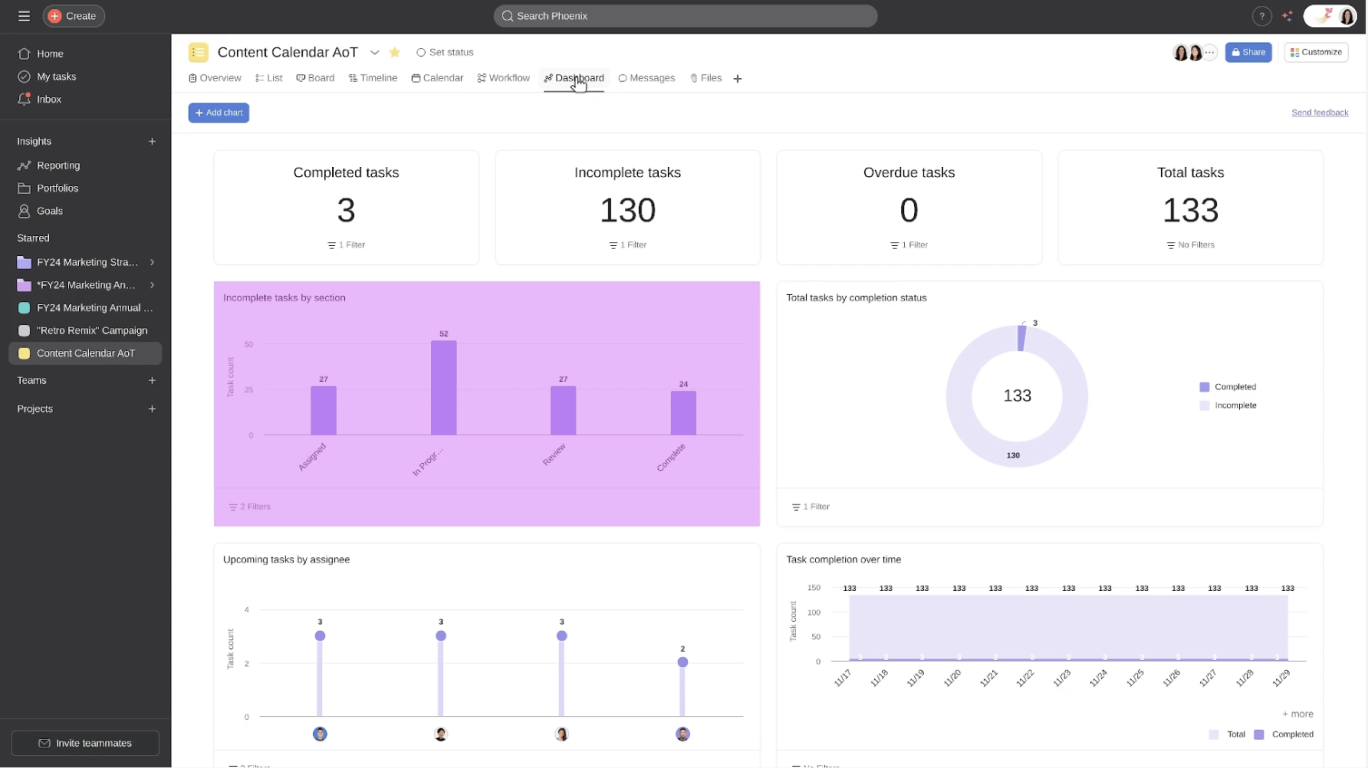
Asana keeps client work organized through structured projects, timelines, and task dependencies that make progress easy to follow. Teams can invite clients to collaborate on specific projects, collect feedback directly on tasks, and automate routine updates without creating long email chains. The platform creates clarity around ownership, deadlines, and next steps.
A small business owner managing customer training can use Asana templates to build an onboarding workflow that instantly generates 40 to 50 dependent tasks. The system tracks dependencies to ensure internal handoffs happen on schedule. Teammates comment on individual cards, upload project files, and mention colleagues to share context.
Where Asana falls short: Platform updates occasionally change established features, which forces users to spend time finding new software workarounds. Reviewers also note that hovering over tasks opens them automatically, creating minor friction during daily navigation.
Skip Asana if: Your team lacks a unified structural hierarchy, as the database easily becomes a confusing dumping ground for tasks.
Why this G2 reviewer finds Asana user-friendly:
I find Asana incredibly user-friendly and easy to use. It’s a perfect fit for my small team size. I like the app integration with Clockify, which saves my intern and me a lot of time in getting paid and tracking hours and timesheets. The visibility it provides for my team into projects and client tasks is really beneficial.
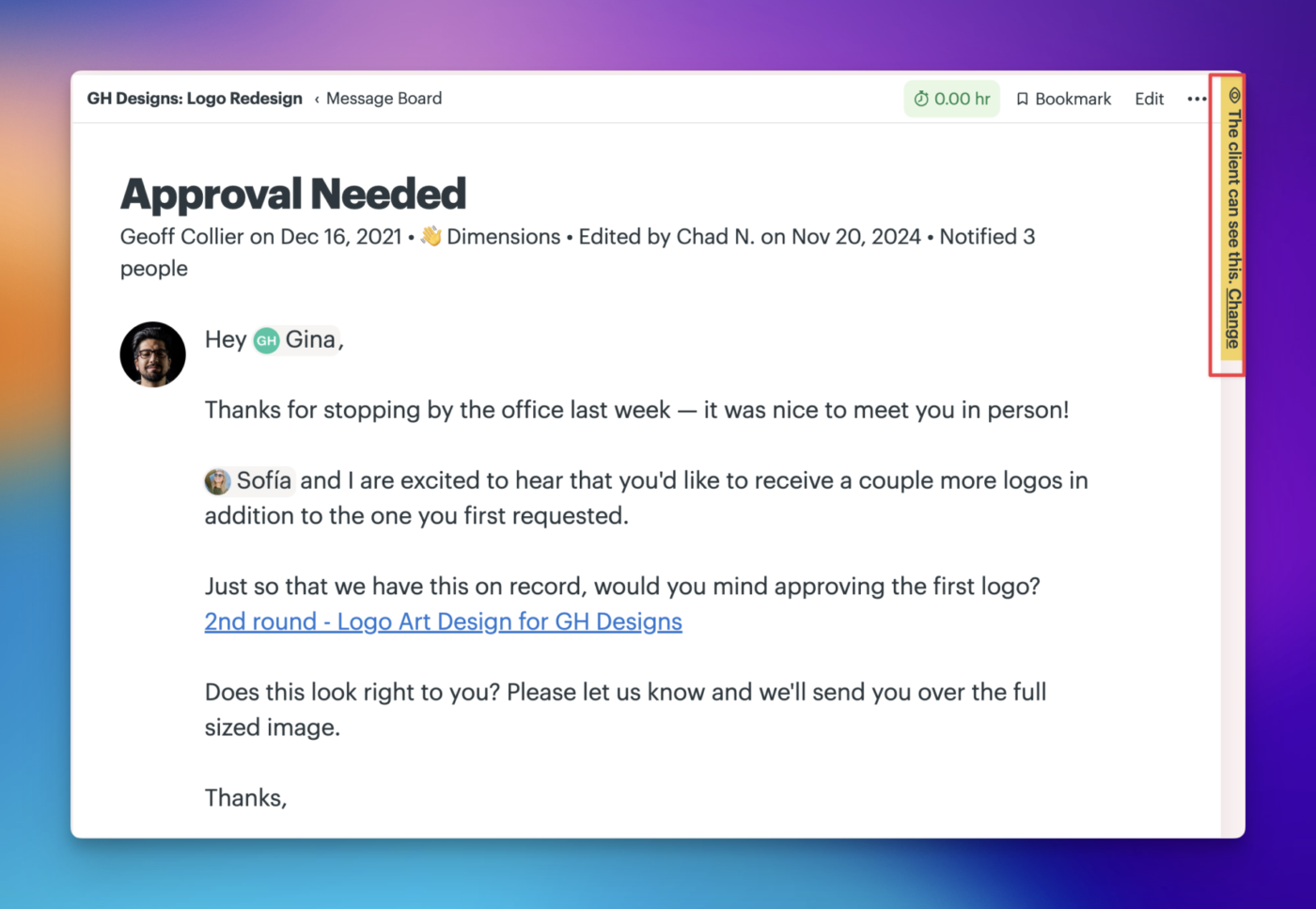
Flat-rate pricing and zero per-seat charges for clients make Basecamp the simplest option for growing agencies that just want to stop project info from scattering. The platform replaces email threads with centralized message boards and transparent to-do lists. Internal teams add outside vendors and clients to specific projects at no extra cost.
An agency director can use the Mission Control dashboard to view project health instantly. The team checks a visual needle metric to gauge progress without opening individual boards. Clients participate in Campfire chats or review files directly inside the shared interface.
Where Basecamp falls short: It trades granular controls for simplicity, so restricting sensitive data from external collaborators on shared boards isn’t its strength. Teams needing tight per-item permissions should weigh that first.
Skip Basecamp if: You need to restrict sensitive data on shared boards or set tight per-item permissions for external collaborators.
See how this G2 reviewer uses Basecamp:
I’m responsible for keeping multiple teams aligned, basecamp supports communication and collaboration across the entire organization. It make it easy to keep reference materials, project documents and working files accessible to everyone involved reducing confusion and version control headaches. It can comfortably connect with CRM, marketing and customer service tools to keep my client facing work aligned with internal operations.
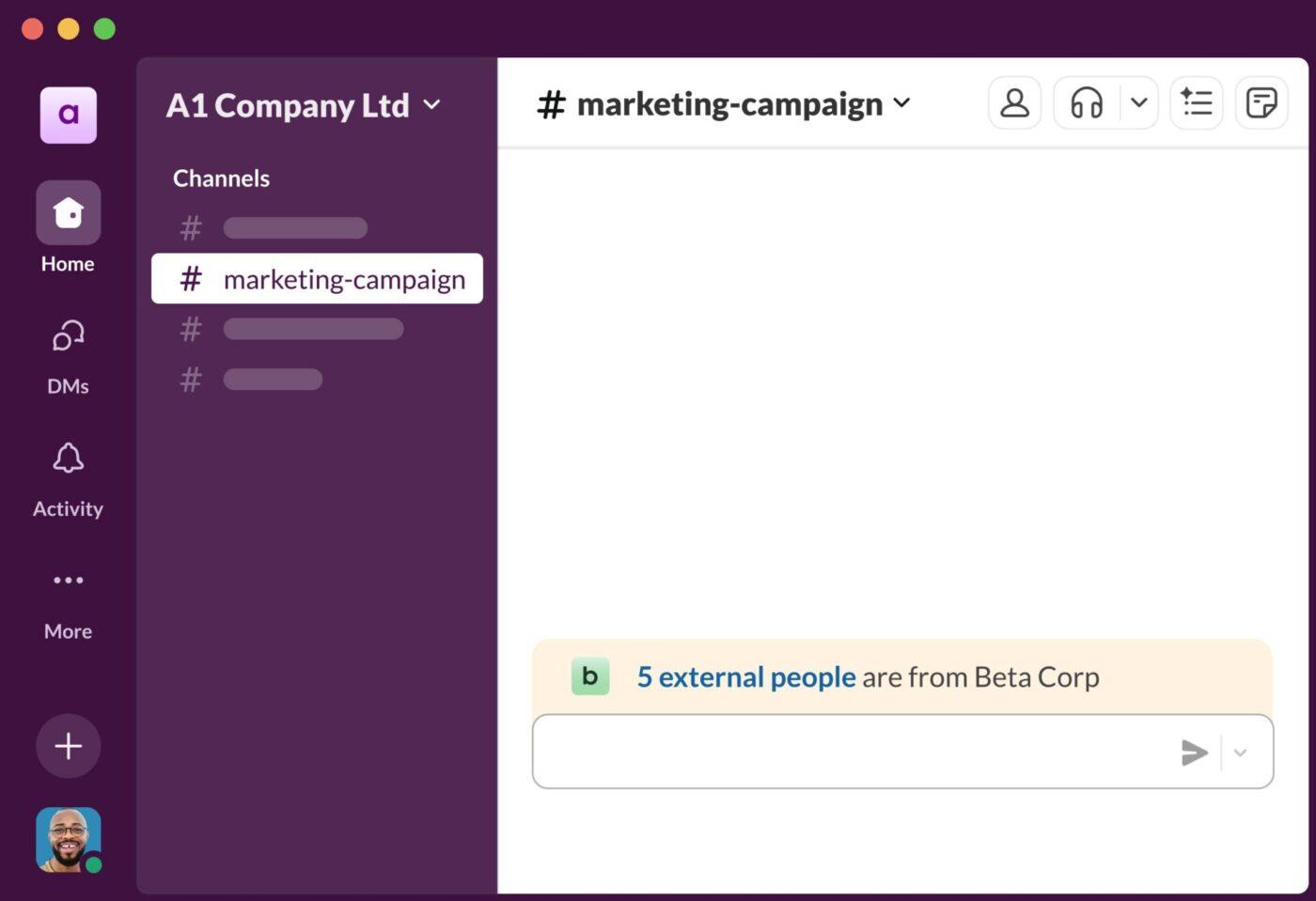
Slack simplifies client communication by replacing long email chains with real-time messaging in one digital space.
An engineering team troubleshooting a database spike can launch a live huddle inside a monitoring channel. Engineers share screens and instantly discuss solutions without switching to a third-party app. Those threads create a searchable history that functions as living documentation for later analysis.
External collaboration works through secure channel invitations sent to partners for free, letting them participate in creative approvals. That turns a chat app into a shared workspace for external partners.
Where Slack falls short: Because Slack is built for real-time chat, important updates can slip past in high-traffic channels, so it works best paired with a system of record for decisions.
Skip Slack if: Your team relies on the free tier to maintain a permanent searchable archive of past decisions.
Perks of using Slack, per this G2 reviewer:
I like most about Slack is the history and the search option. Whatever chats I have done in Slack are well recorded, and all my documents and everything is recorded. Even if I have lost a client and they’re not still connected to me, whatever chats I have done with them will be stored in that particular conversation history, which is very helpful.
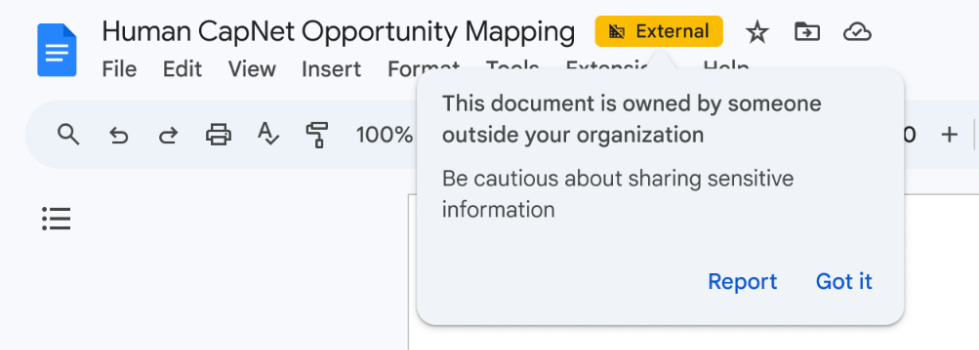
Google Workspace brings email, documents, spreadsheets, presentations, video meetings, and cloud storage into one connected collaboration environment. Instead of moving files between separate apps, internal teams and clients work together in shared documents with live comments, suggestions, and version history. Permission controls make it easy to share only what’s relevant with external stakeholders.
A marketing agency preparing a product launch can draft campaign copy in Google Docs while the client leaves comments in real time. Designers upload creative assets to Drive, the team discusses revisions in Google Meet, and final approvals happen without sending multiple email attachments. Everyone works from the same source of truth.
Where Google Workspace falls short: Very large, formula-dense trackers can slow down with many simultaneous editors. Aggregated notifications from Gmail, Docs, and Calendar can also create an overwhelming dashboard experience during peak working hours.
Skip Google Workspace if: Your client work runs on large, formula-heavy trackers or you need a structured project system rather than a stack of shared docs.
Here’s what this G2 reviewer has to say about Google Workspace:
Real time collaboration is the biggest win for me. I love being able to work in a spreadsheet or document at the same time as my team, without having to worry about version control or emailing files back and forth. With everything synced in one cloud-based hub, it’s easy to switch between my laptop and phone while still keeping all my projects organized.
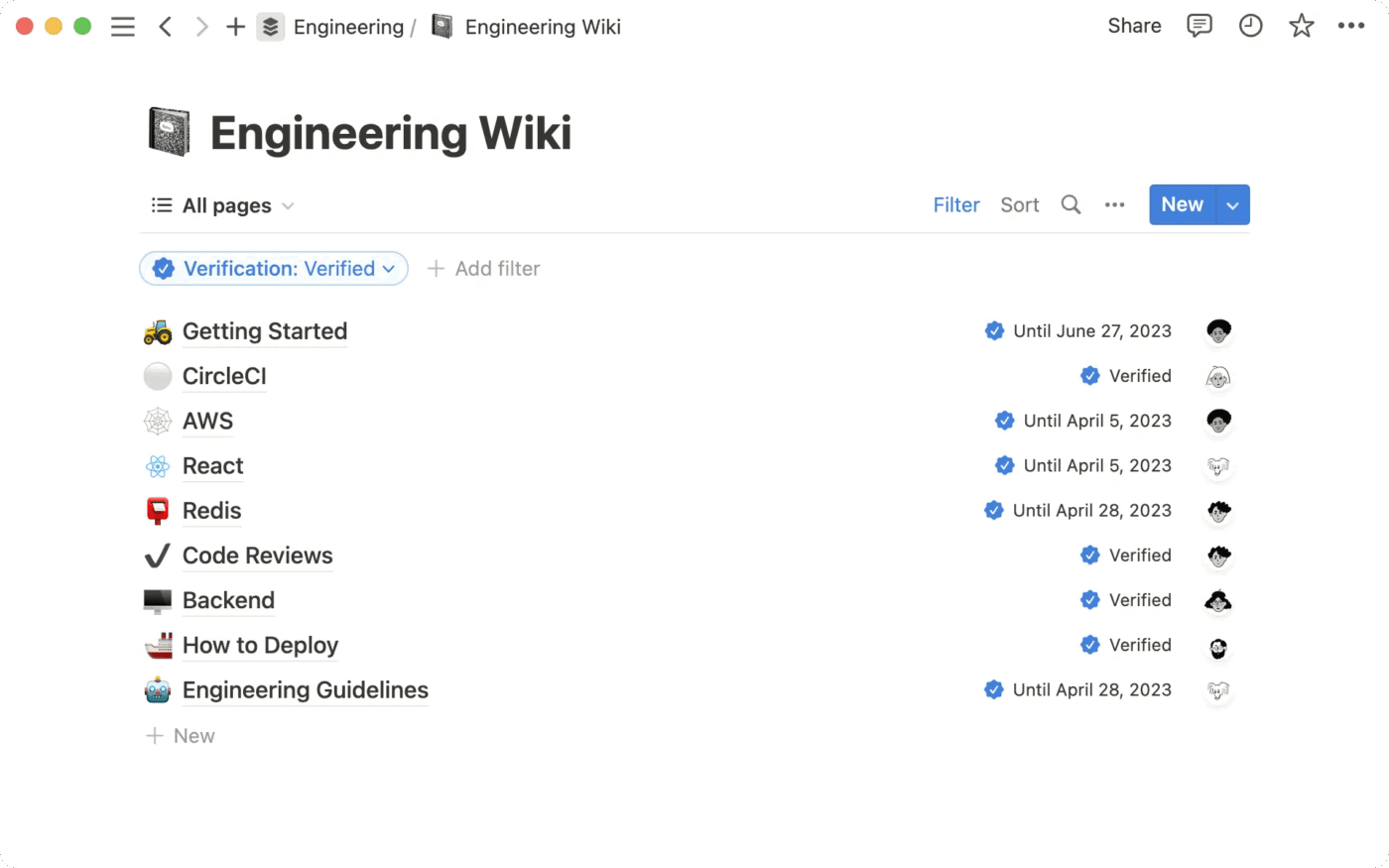
If your creative team needs highly customizable dashboards to track client deliverables, Notion is worth a look. It treats project documentation as flexible blocks rather than rigid templates. Teams can build personalized client portals that house brand guidelines, budgets, and schedules side by side.
A photography studio can use the database framework to manage complex shoot calendars. The manager switches the same dataset from a flat list to a calendar view depending on the immediate need. That single data source connects internal photographers with external editors on one live source of truth. Real time page edits let distributed teams collaborate asynchronously across time zones.
Where Notion falls short: Notion stays snappy for docs and small databases, but very large or deeply nested databases can slow it down. Heavy-data teams should test at scale before committing. Offline access is also limited, which matters most if your field team works without a reliable connection.
Skip Notion if: Your field operations require a desktop application that works reliably without an active internet connection.
This is what a G2 reviewer thinks about Notion:
I really love the shared team space in Notion for client management. It helps us record meeting notes and share to-do lists effectively. The calendar feature is also something we utilize and love. The to-do list feature allows us to set tasks, assign them to different people, change due dates, and set priority items which has been a really helpful tool for us.
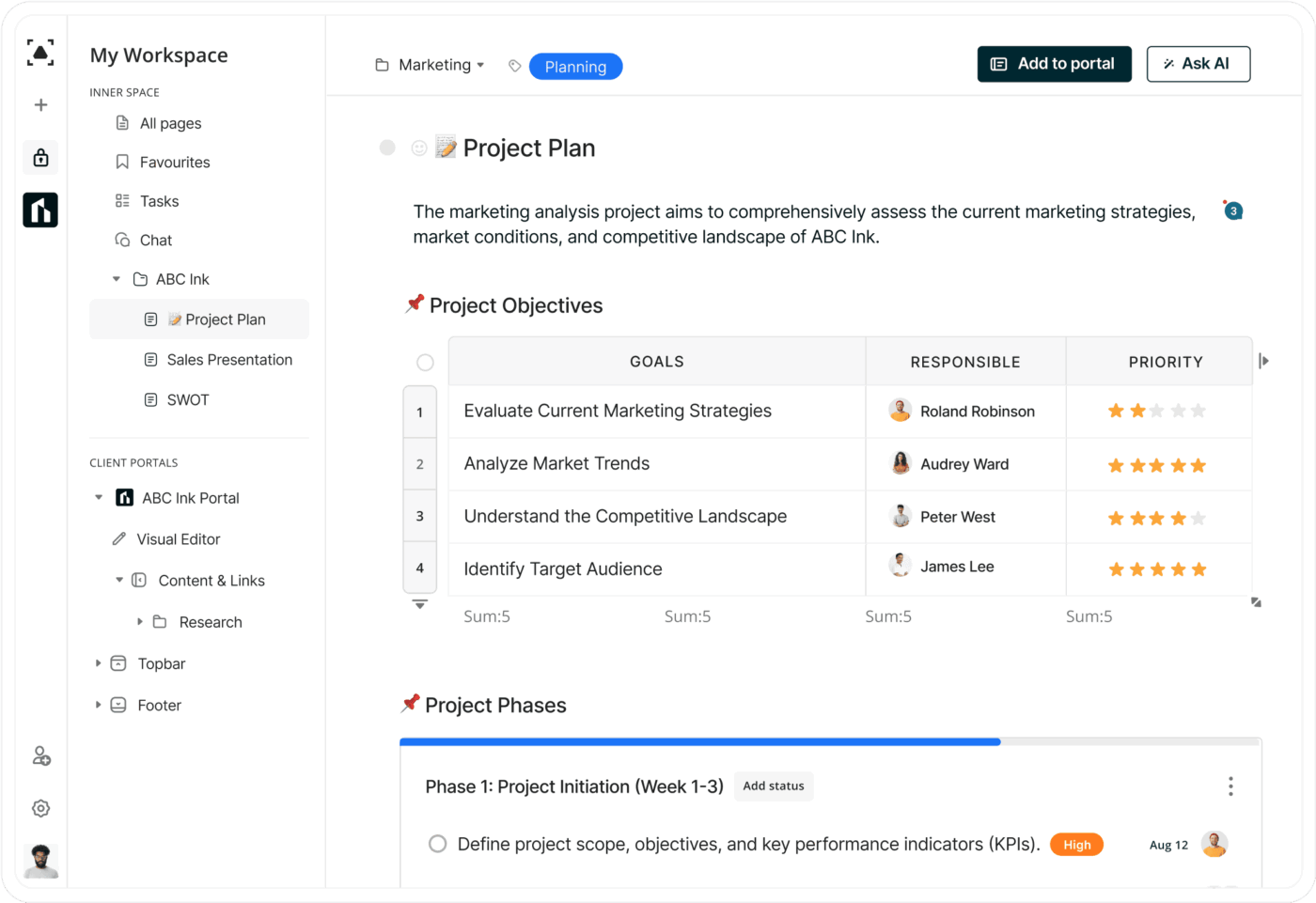
Fusebase combines client portals, project collaboration, and documentation in a single workspace. Agencies create branded portals where clients can access project updates, approve deliverables, exchange files, and find answers without digging through email threads. It removes the learning curve for partners who struggle with traditional project dashboards.
An agency can deploy a digital sales room to share files and collect legal signatures. Access via password-free magic links guarantees immediate stakeholder entry. Internal notes live in a separate backend workspace that keeps client views completely hidden.
Where FuseBase falls short: FuseBase is built portal-first, so data-heavy workflows aren’t where it shines. There’s no direct export to Google Sheets, so teams that live in spreadsheets will need a workaround to move data out
Skip FuseBase if: Your agency requires rapid data export capabilities to secondary external spreadsheets.
Hear about FuseBase from this G2 reviewer:
My team has a dedicated internal space with PM tools and a document editor, and our clients have a personalized portal with an AI assistant.FuseBase handles data seamlessly, allowing our sales and onboarding teams to focus more on building relationships than dealing with administrative tasks.
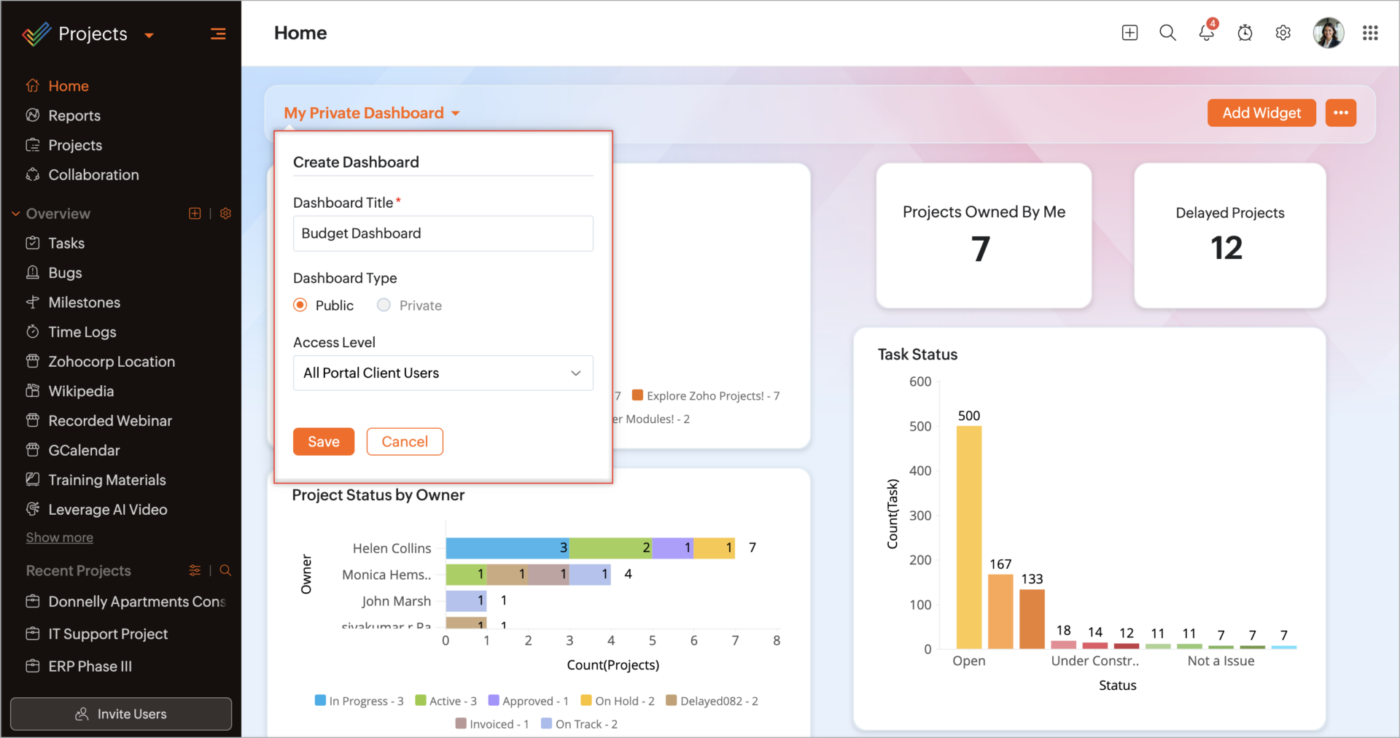
Budget-friendly Zoho Project is built for teams that want stakeholder communication to feel familiar. It borrows design elements from social media: an interactive project feed where teams post status updates, upload attachments, and log immediate feedback.
A clinic coordinator can organize corporate account notes and custom schedules in one workspace, tracking upcoming patient follow-ups on a visual Kanban board. Native chat rooms and message boards let colleagues resolve questions without opening external apps.
Where Zoho Projects falls short: Zoho packs in a lot of surface area, and that depth shows. Teams running very large portfolios or heavily tagged workspaces will find navigation busier than a minimalist tool. It’s best suited to teams happy to trade some simplicity for feature range.
Skip Zoho Projects if: Your team members lack a technical background and require a lightweight, minimalist tracking interface.
A G2 reviewer‘s verdict about Zoho Projects:
I like Zoho Projects because it provides a clear overview of project progress, helps manage tasks and deadlines effectively, and improves team coordination through a centralized platform.
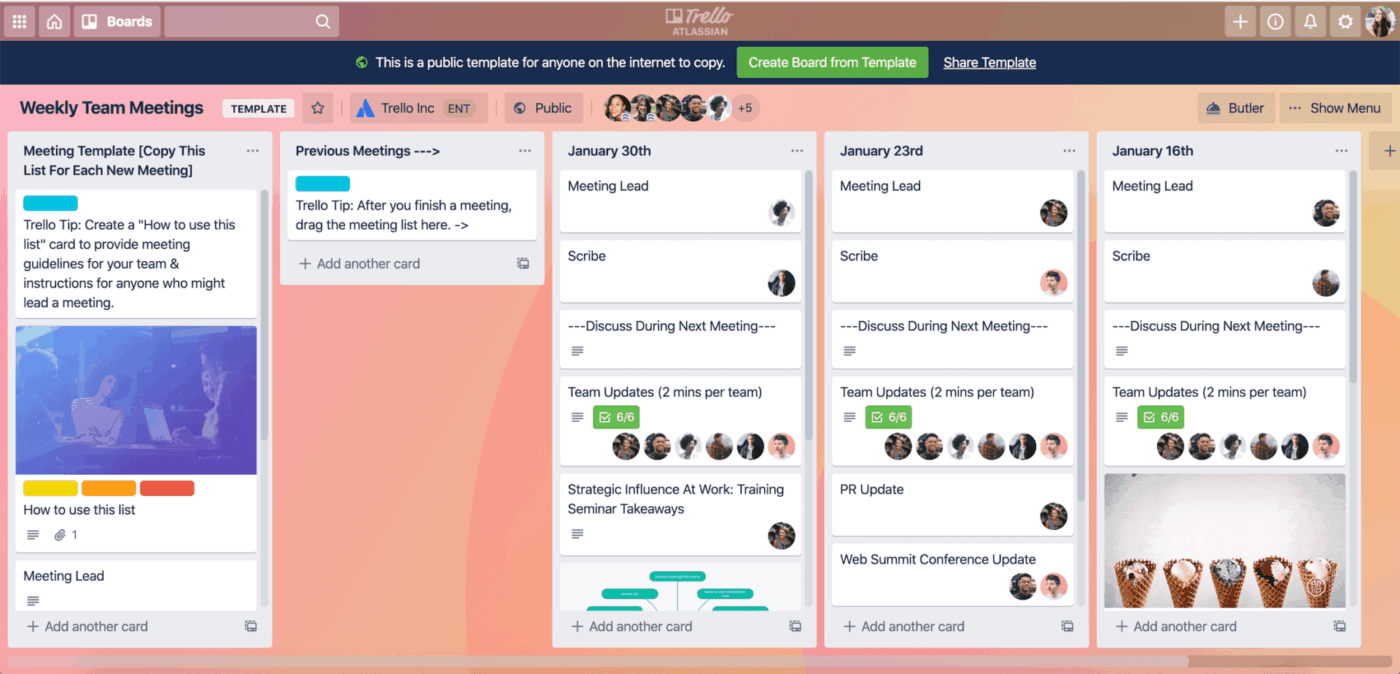
Teams that think in visual pipelines will feel at home in Trello. It turns incoming client messages into draggable cards across custom stages, keeping active deliverables visible without administrative confusion.
A graphic designer coordinating a brand launch can set up a dedicated client board in Trello. When a customer sends an update via email, the manager forwards it to the board inbox. The system auto-converts the message into a task card.
Card mirroring displays identical tasks on separate team boards to prevent disjointed progress updates. Client reviews keep moving without filling chat channels with non-urgent pings.
Where Trello falls short: The platform lacks native task dependencies, so managers must manually adjust every related card when schedules shift. Large projects can also make the boards feel cluttered, which slows down daily text searches for specific task details.
Skip Trello if: Your operation handles complex, multi-layered client projects that require native time-tracking software or automatic timeline shifts.
Why this G2 reviewer uses Trello:
I primarily use Trello for staying organized with client work and deliverables, ensuring that nothing slips through the cracks, from simple tasks to long-term planning. I appreciate Trello’s ability to help me keep track of competing priorities and manage tasks that need completion, which gives me peace of mind knowing things won’t be forgotten. I like the visual layout, which shows at a glance what’s in progress, done, blocked, and what’s currently moving.
Most teams buy client collaboration software to pull clients into their internal workspace: a guest seat here, a shared board there. The stronger move is usually the opposite. Give the client a purpose-built, low-surface-area space and keep the fragmented internal work out of sight.
‘Add clients to everything’ fails in both directions. Clients drown in internal tasks and chatter never meant for them, or your team starts self-censoring because a client is watching. The tool meant to reduce friction adds it.
Showing clients the right amount has a counterintuitive upside, and it’s backed by research. Harvard Business School professor Ryan W. Buell found that operational transparency changes behavior:
Witnessing the hidden work performed on their behalf makes customers more satisfied, more willing to pay, and more loyal.
The goal isn’t maximum access or minimum access. It’s designed access: show the progress, deliverables, and decisions that build confidence, and hide the internal churn that only adds noise. That’s the line the portal-versus-guest decision draws, which is why it beats any feature checklist.
So the real question isn’t ‘which tool has the most features.’ It’s how much of your workspace the client should see.
That splits the category cleanly: portal-native tools (Moxo, FuseBase) give clients a clean branded surface but cost more and carry setup overhead. While internal tools with guest access (ClickUp, monday.com, Asana, Slack, Google Workspace, Notion, Trello) are cheaper and familiar but expose more of your workspace. This leaves the client one wrong permission away from internal chatter.
Narrowing twelve tools to a shortlist comes down to four questions about your work, not the tools’ feature lists. Answer them in order: each one rules out a camp until two or three picks remain.
Here’s where each one lands and which tools to start with:
| If this is you | Your camp | Start with |
|---|---|---|
| Formal, regulated, or document-heavy client work | Client portal | Moxo, FuseBase |
| Client and internal work overlap heavily | Workspace with guests | ClickUp, monday.com, Asana |
| Real-time conversation is the main need | Chat-first | Slack |
| Work is mostly shared docs and light coordination | Doc-first | Google Workspace, Notion |
The best client collaboration software is the one that offers your clients complete transparency, filtering out irrelevant updates. Decide how much of your workspace a client should see, pick the camp that matches, and shortlist two or three tools from the list above to trial with a real project.
If you want client work and internal work to share space with a company-wide AI, ClickUp is built for exactly that. Get started with ClickUp for free and set up your first client-facing space in an afternoon.
Yes. Reputable tools secure external work with per-file permissions, encryption, and access controls that keep clients out of your internal workspace. Portal-native tools like Moxo and FuseBase are built for regulated finance, legal, and healthcare workflows, while guest-access tools like ClickUp scope a client to a single Space, List, or Doc. Security still depends on configuration, so review permission settings before inviting anyone in.
Usually, clients don’t need a paid account to collaborate. Most tools let clients join as free or low-cost guests rather than full paid seats. ClickUp, monday.com, Asana, Notion, and Trello all support guest access, and Basecamp’s flat-rate Pro Unlimited plan invites unlimited client users for one fee. Watch for guest caps on free tiers and per-guest charges on higher plans, which vary by vendor.
For small businesses, Trello, Basecamp, and ClickUp’s Free Forever plan offer the lowest-friction start, balancing simple client sharing with minimal setup. Trello and Basecamp win on speed to onboard a client, while ClickUp leaves room to consolidate internal and client work as you grow. Small firms in regulated fields should still consider a portal-native tool like Moxo for a compliant, branded space.
Client collaboration software is built to bring external clients into shared work securely, while project management software is built primarily to run a team’s internal projects. Many project tools (ClickUp, monday.com, Asana) do both by adding guest access, whereas portal-native tools (Moxo, FuseBase) focus only on the client-facing layer. Choose based on whether clients are central participants or occasional viewers.
Client collaboration software ranges from free to about $12/user/month for entry paid tiers, while portal-native tools often quote custom enterprise pricing only after a demo. ClickUp’s Unlimited plan starts at $7/user/month; FuseBase’s portal starts around $32/month. Guest and client seats can cost more than your base subscription, so confirm per-guest charges before you commit.

Manasi Nair
Max 24min read
Manasi Nair
Max 30min read
Manasi Nair
Max 28min read

© 2026 ClickUp




