
Sorry, there were no results found for “”
Sorry, there were no results found for “”
Sorry, there were no results found for “”
Adobe Workfront is built for large enterprise operations, and its pricing and behavior reflect that: sales-only quotes and a feature set that most teams use only half of.
That’s why most teams look for Workfront alternatives for three reasons: opaque pricing, slow setup, and depth that they cannot use quickly.
The right replacement depends entirely on which of those is your sticking point. There’s no universal best, just the best fit for the gap Workfront left.
This guide compares eight alternatives that cover the same core jobs—planning, resource allocation, proofing, reporting, and financial tracking—but with clearer pricing and faster time-to-value. Jump to the one that sounds like you from the table of contents and skip the rest.
Tool Best for Standout feature Starting price Where it taps out Wrike Enterprise resource management and proofing Workload charts, Resources view, proofing, approvals, and Wrike Copilot Free; paid from $10/user/mo Heavy setup and Business-tier depth may be too much for smaller teams ClickUp Consolidating project work, resources, and reporting Forms, tasks, Docs, Gantt, Workload, Dashboards, Brain AI, and Super Agents in one workspace Free; paid from $7/user/mo Can feel heavier if you only need a simple task list Asana Clean, structured task coordination Goals, portfolios, Workflow Builder, Smart Status, Smart Summaries, and AI Studio Free up to 2 users; paid from $10.99/user/mo Time tracking starts on Advanced; resource planning is lighter than Wrike monday.com Visual, at-a-glance work management Color-coded boards, 30+ column types, dashboards, automations, and AI agents Free up to 2 seats; paid from $9/seat/mo 3-seat minimum and automation caps can raise costs fast Smartsheet Spreadsheet-native project operations Grid-first project control with Dynamic View, Control Center, Resource Management, and AI dashboards Free trial; paid from $9/user/mo Advanced portfolio, sharing, connectors, and capacity planning can require add-ons or custom pricing Celoxis Project financials and portfolio depth Budgets, billing, forecasting, utilization, resource conflicts, and Lex AI Paid from $10/user/mo Too much of a tool if you only need lightweight task tracking Teamwork.com Client services and billable work Time tracking, retainers, expenses, client users, invoices, profitability, and TeamworkAI Paid from $9.99/user/mo Less useful for internal teams without billable time or client reporting ProjectManager Schedule-driven project control Gantt planning, baselines, critical path, workload reports, budgets, and AI Project Insights Free trial; paid from $15/user/mo Narrower if you need docs, chat, whiteboards, and knowledge management Note: Pricing and features reflect what was available at the time of writing and can change. Always verify the current details on the tool’s official website before making a decision.
Our editorial team follows a transparent, research-backed, and vendor-neutral process, so you can trust that our recommendations are based on real product value.
Here’s a detailed rundown of how we review software at ClickUp.
Teams look for a Workfront alternative mainly because of opaque custom pricing, heavy onboarding, and enterprise-grade features most teams never fully use.
Adobe does not publish a starting price, so buyers cannot model cost without a sales call. Reviewers on G2 and Capterra also describe a steep learning curve and longer setup than competing tools. Workfront is strong at enterprise resource management and proofing, but many smaller teams never reach that depth.
To be fair, Workfront is genuinely strong where it counts: enterprise resource management, proofing through its Adobe lineage, and portfolio oversight. So the question you need to answer is, “Can my team actually reach that depth, at a price I can justify?”
A real Workfront alternative has to match its resource and capacity planning, publish transparent per-user pricing, and enable a non-admin to fast-track productivity. And, importantly, offer AI that does real work. Score every tool against these seven criteria before you shortlist:
The eight best Workfront alternatives are Wrike, ClickUp, Asana, monday.com, Smartsheet, Celoxis, Teamwork.com, and ProjectManager, each suited to a different reason for leaving.
Note: If your org runs on Adobe Experience Cloud/Creative Cloud (e.g., proofing assets directly in Workfront), almost none of these tools will match that native integration. Workfront’s online proofing/review-and-approval tooling is a difficult gap to bridge.
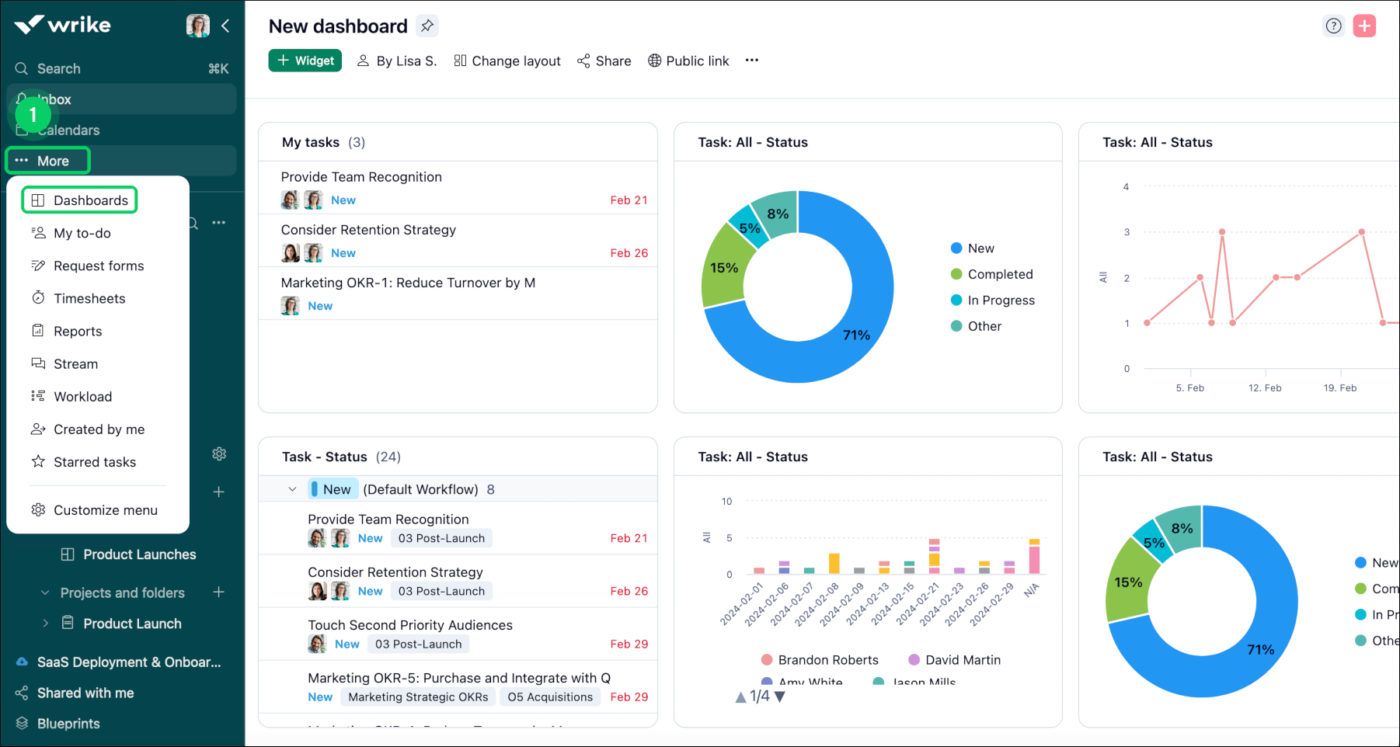
Wrike is the closest match for Workfront’s enterprise power. It works best for PMOs, marketing groups, and large cross-functional teams. These groups need real resource management, detailed proofing, and full portfolio reports.
Its biggest strength is operational control. Workload charts show daily, weekly, or monthly effort using clear color codes. The Resources view shows who is on a project, their total workload, and their scheduled tasks. Proofing lets teams comment directly on files and web pages. At the same time, the approvals feature tracks reviewers, choices, delays, and status.
And in terms of its native AI, Wrike Copilot can answer questions and summarize your projects. More advanced AI agents and actions are available on higher pricing tiers. This makes Wrike a great choice for teams that need strict project rules and clear resource tracking in one place.
A G2 reviewer praised Wrike’s reporting and resource management:
I like that Wrike is very clear and easy to use. We can set up blueprints for our typical projects and add as many people as we need. Time tracking is simple and straightforward, and reporting is great, allowing us to pull time reports at the end of the month and bill our clients easily. The capacity and workload management feature is important as it helps us during our weekly stand-ups to see what’s on everyone’s plate, making it easy to know who is available for more projects or who might need assistance.
Where it taps out: Wrike has the enterprise depth of Workfront. And it makes the most sense when teams need structured resource planning, proofing, approvals, and portfolio visibility. But smaller teams may not use enough of that depth to justify the setup and annual Business-tier floor.
Best for: Enterprise marketing, PMO, and agency teams replacing resource planning, proofing, intake, and reporting workflows.
Skip it if: You need a lightweight PM tool your team can adopt without heavy workflows, approvals, or capacity planning.
Also Read: Wrike Alternatives
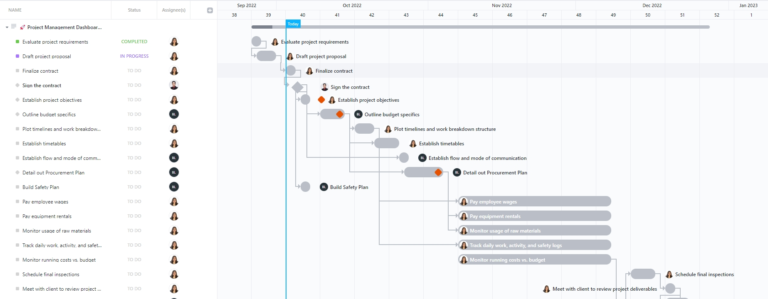
ClickUp is perfect for teams that want intake, planning, and reporting in one workspace. It’s a great fit for teams like marketing, agencies, and PMOs, that need smart, AI-powered workflows from the first request to the final delivery.
Work starts with a ClickUp Form that captures details like budget, priority, and due dates. This automatically becomes a task or project in ClickUp. It then moves through simple-to-comprehensive statuses and approval steps. Teams can share and forecast their work in List, Board, Calendar, Gantt, and 15+ other views.
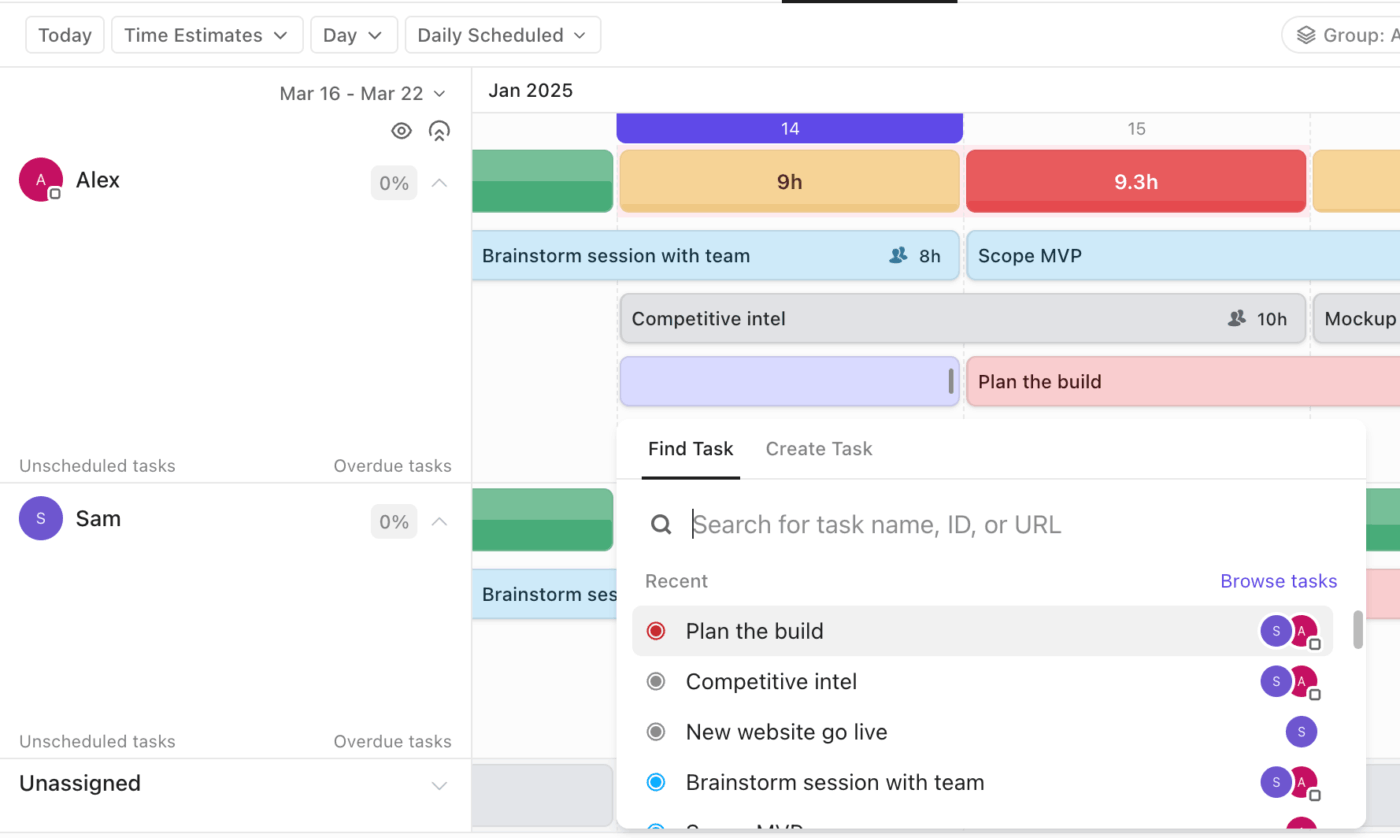
ClickUp shines when planning and reporting stay connected. Gantt view maps out timelines, while the Workload view shows exactly who is busy. All this live data feeds into ClickUp Dashboards to track project health. To save you time, AI Cards in project dashboards can write detailed real-time standups and answer questions using your workspace data.
Finally, ClickUp’s AI works on top of live workspace data. ClickUp Brain can draft plans, summarize status, and answer questions across tasks, docs, and dashboards. ClickUp’s Super Agents step in to analyze risks, check workloads, build custom reports, assign tasks, and update statuses autonomously.
A G2 reviewer admired the flexibility and broad feature set of ClickUp:
I really love how flexible ClickUp is—you can manage pretty much any type of project or task in it. It’s easy to adapt to your own management style and set things up in a way that works for everyone involved, including you, your team, and stakeholders. I also like the UX/UI a lot because it feels modern and looks great.
I’m a big fan of Custom Fields, since they’re a really useful way to group and organize details that can’t always be covered by a simple task/subtask structure. I use automations a lot as well, and I recently started using AI to help me gather information in a more structured way. That’s saved me a lot of time compared to when I used to do it manually.
I also think it’s affordable for any budget, and if you’re not familiar with the tool, you can start with a free plan just to see if it fits. Finally, ClickUp has really great onboarding documents if you’re new to it.
Where it taps out: ClickUp makes the most sense when a team plans to consolidate more than task tracking. If all you need is a small personal task list, setup may feel heavier than the job requires. ClickUp’s flexibility can also become a configuration/maintenance burden for large enterprise teams.
Best for: Scaling teams that want to consolidate separate systems for project tracking, docs, chat, dashboards, time tracking, and resource planning into one tool.
Skip it if: You only need a lightweight task board with no reporting, docs, approvals, or capacity planning.
Asana is the pick for teams that found Workfront over-engineered and just want work to move cleanly between people. It suits marketing, operations, and cross-functional teams that share tasks across departments and prioritize clarity over configuration.
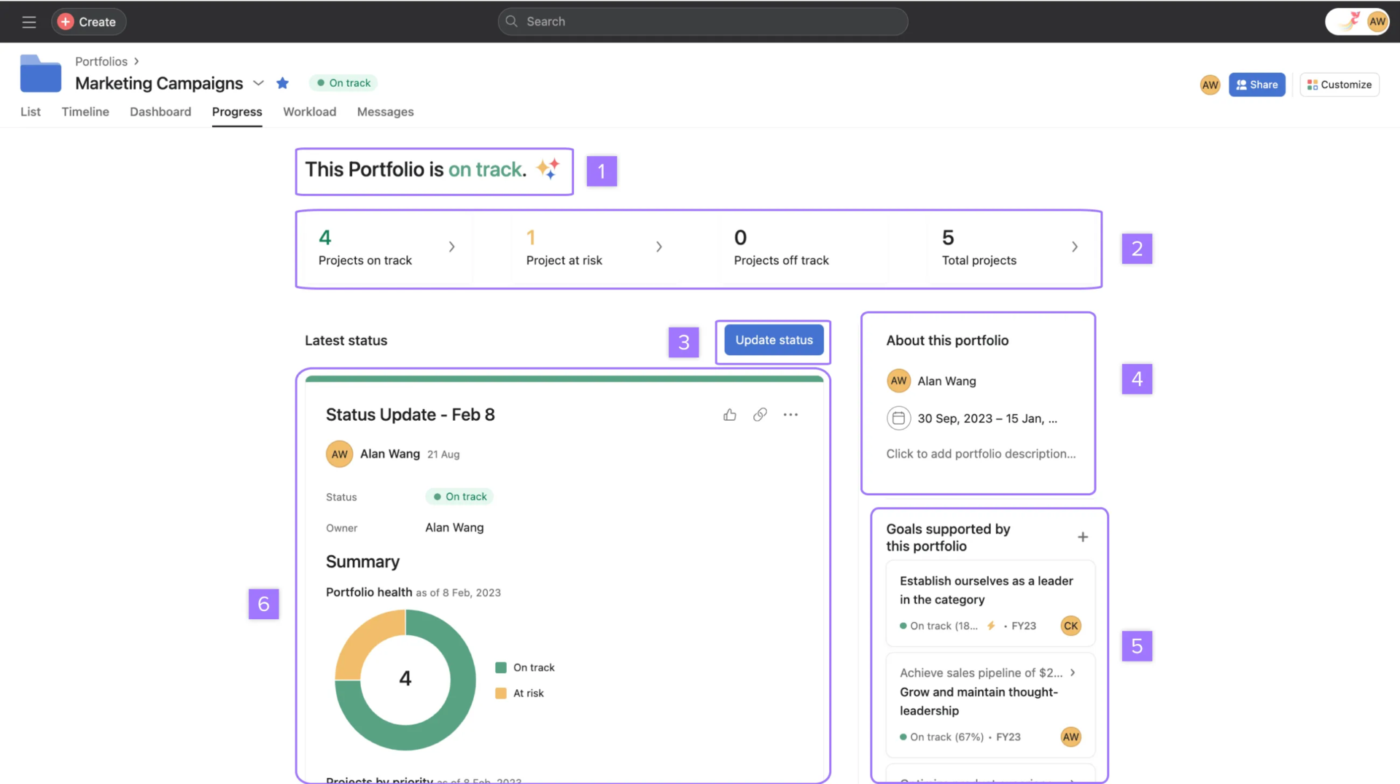
Goals are where Asana pulls ahead. A Goal updates itself by pulling progress directly from its linked projects. A team lead can describe an objective in plain language—like “cut campaign launch time by 20%.” Then, AI can draft it as a SMART goal and link it to the right projects. From there, leaders can open a single dashboard to view real-time progress.
The rest of the platform is clean and quick. Standard views like List, Board, and Timeline cover most planning needs. A no-code builder handles task routing, while higher tiers offer proofing for creative work. Asana’s AI drafts your status updates and summarizes missed details. A chat assistant can even create tasks and answer questions about your work. For advanced needs, AI Studio builds workflows for intake, campaigns, and resource planning.
A G2 user says Asana brought better visibility to their projects:
What I like best about Asana is how effectively it brings structure and visibility to cross-functional work. As someone working closely with Sales Ops, Marketing Ops, and Tech Ops, Asana helps me break down complex, ongoing initiatives into clear projects, tasks, owners, and timelines.
The flexibility of Asana is a big plus — I can use it both for long-term operational projects and day-to-day BAU requests. Features like custom fields, rules, and forms make it easy to standardize intake, prioritize work, and ensure nothing falls through the cracks. It has significantly reduced follow-ups and ad hoc communication by giving all stakeholders a single source of truth.
Where it taps out: Time tracking starts from Advanced. Seat-bundle pricing means small teams can pay for seats they don’t fill. Heavy resource and capacity planning is lighter here than in Wrike and Workfront.
Best for: Teams that want fast adoption and clean coordination across departments.
Skip it if: You need built-in time tracking or deep resource planning in an entry plan.
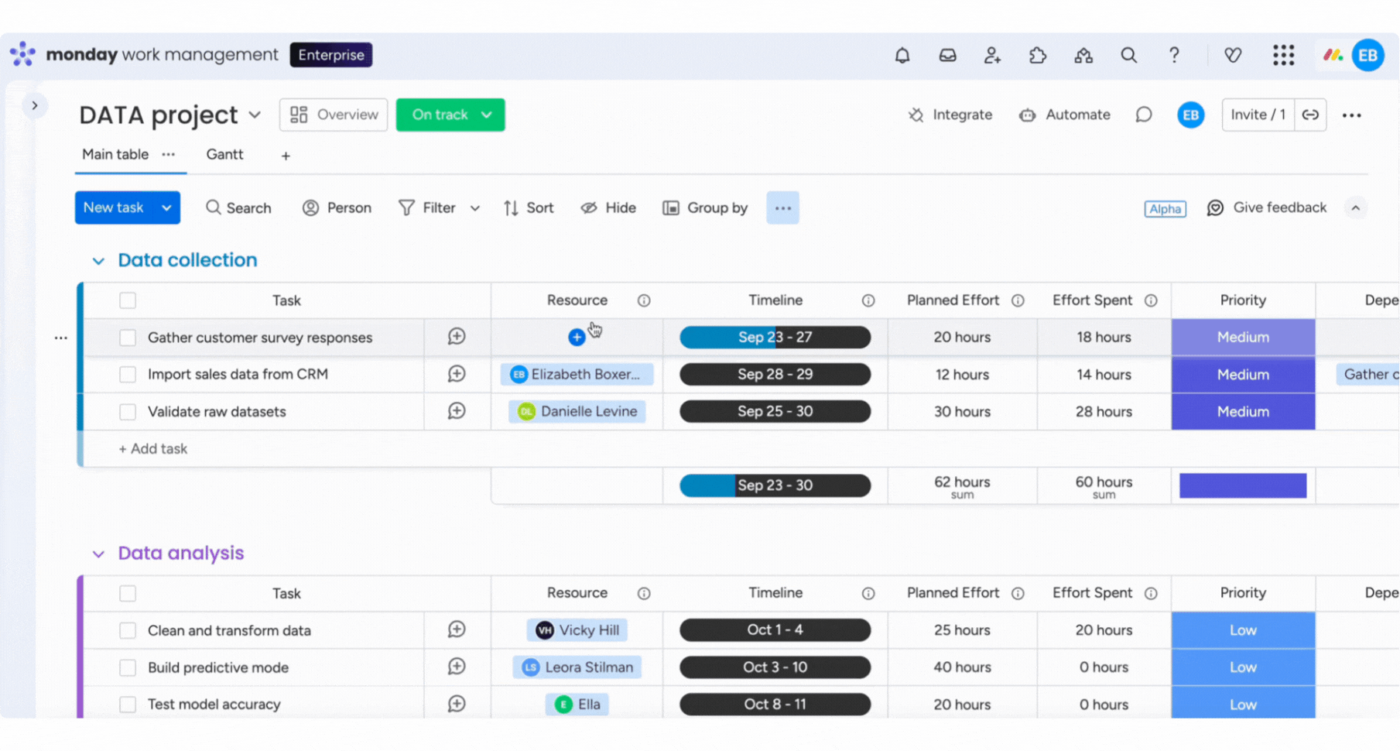
monday.com is the pick for creative groups who found Workfront too gray and dense. It works best for non-tech teams looking for visual task management.
Color is the actual standout here. Every status, priority, and owner gets a brightly colored cell. This lets a manager scan a board and instantly spot what is stuck, late, or done. You can build boards using over 30 column types, so your team can shape the workflow to fit your exact process. Dashboards then pull data from several boards to give you a big-picture view.
No-code automations easily handle task routing, due-date reminders, and status updates. Plus, monday’s AI agents can summarize work right inside your boards. Just watch the pricing tiers carefully. Real automation starts on the Standard plan, and the Basic plan has none.
A G2 user praised monday’s ease of onboarding:
You can customize the boards and groups to fit exactly what you need, and the automations really help save time by instantly updating everyone in the group about any changes. The implementation process was straightforward; when I first set it up, even people who were completely unfamiliar with the platform and not very tech-savvy were able to get onboarded with minimal assistance.
Where it taps out: The three-seat minimum and bucket pricing can drive up costs if your team falls between tiers. The Standard plan caps at 250 automations a month, and Basic gives you zero. Because of this, you need at least the Standard plan to automate your work. It only makes sense if your headcount matches their seat buckets.
Best for: Visual, non-technical teams that want immediate legibility and fast onboarding.
Skip it if: You’re a solo user or a pair, or you need high-volume automation on a lower tier.
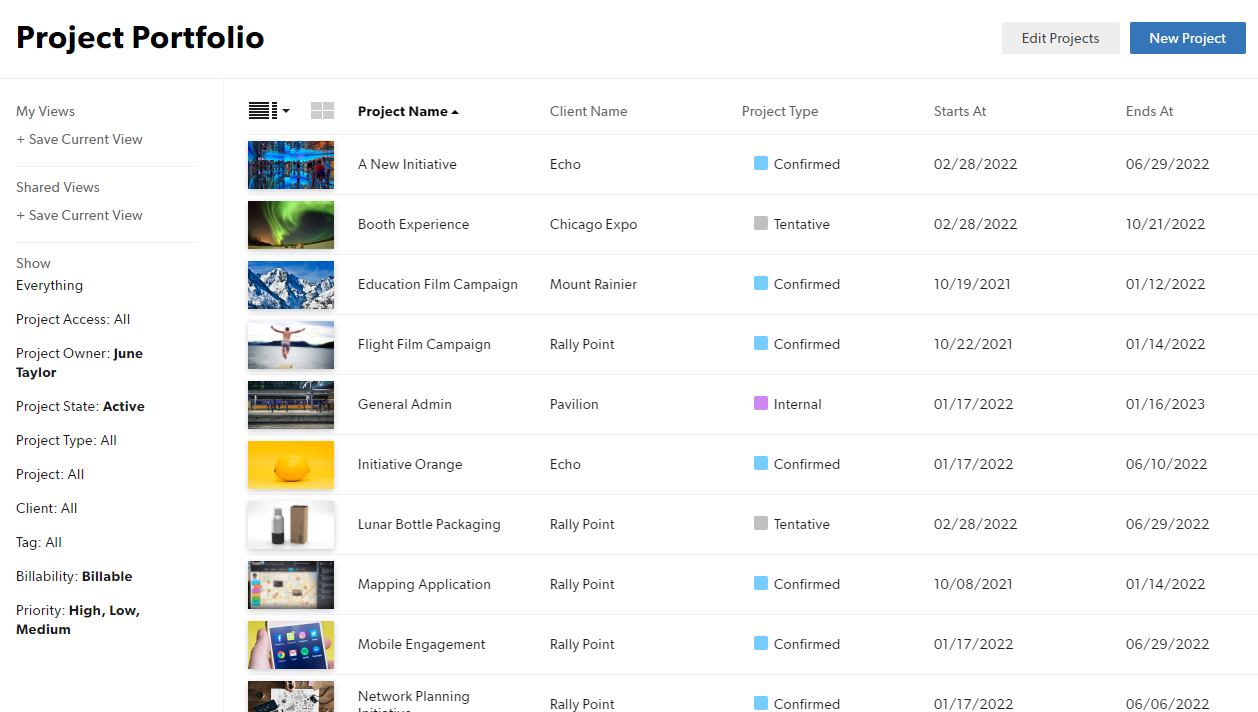
Smartsheet is for teams whose work already runs like a spreadsheet. Every project uses rows, dates, formulas, and reports. Instead of forcing you into a card-based system, Smartsheet keeps the familiar grid and builds project views around it.
This makes it a good fit for operations, IT, and construction groups that manage repeatable tasks across sites or vendors.
The real value shows up at scale. Dynamic View lets you share specific data without exposing the whole sheet. Control Center builds new projects from standard templates and handles high-level reports. When basic workload tracking is not enough, Resource Management adds deeper capacity planning and time tracking.
Smartsheet AI fits right into this grid model. It brings in helpful tools like Smart Assist and AI-powered dashboards. The Business plan even lets you connect Smartsheet to outside AI tools.
A G2 reviewer pointed to Smartsheet’s core spreadsheet-plus-project-management fit:
Smartsheet has become one of the main tools I use for tracking projects, support cases, and team activities. I like how easy it is to organize information in sheets, create dashboards, and share updates with different teams. The permission controls are very useful because I can provide view-only or edit access without exposing sensitive information. I also use favorites to quickly access the sheets I work with every day, which saves time. Another feature I appreciate is the ability to organize workspaces and group related sheets together, making collaboration across multiple departments much easier. The automation features, such as notifications and reminders, have helped reduce manual follow-ups and improved task tracking.
Where it taps out: Smartsheet works best when the grid is how your team thinks. But advanced portfolio, controlled sharing, connector, and capacity-planning needs can push teams into custom-priced plans or add-ons, which raise costs.
Best for: Spreadsheet-native operations, IT, construction, and program teams managing structured work across many rows, sites, vendors, or workstreams.
Skip it if: You want a permanent free plan, a visual-first workspace, or deep portfolio controls without custom pricing.
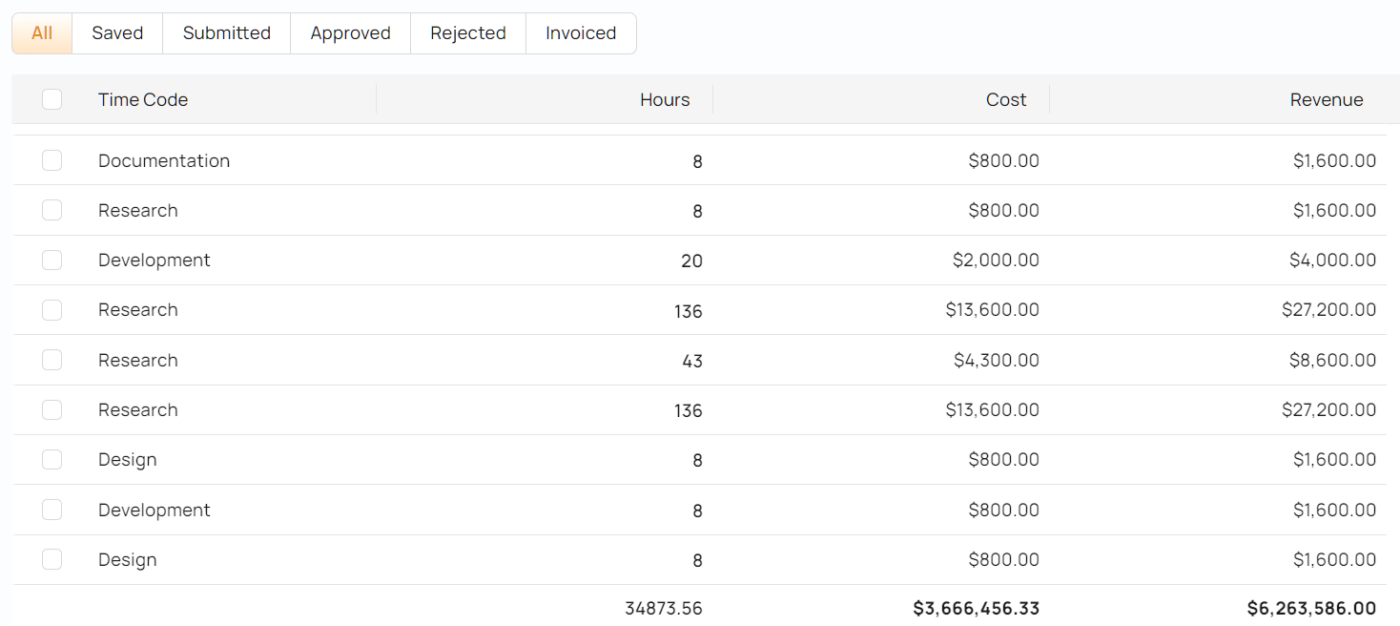
Celoxis is for teams where project management is directly tied to money. Beyond tasks, dates, and owners, it houses utilization, billing, forecasts, costs, risks, and portfolio-level decisions.
That makes it a strong Workfront alternative for PMOs, professional services teams, implementation teams, and client-facing organizations running a dozen active projects simultaneously.
Celoxis also supports automatic scheduling, inter-project dependencies, multiple resources per task, job roles, work calendars, workload tracking, capacity planning, and instant resource conflicts. Easy Scheduling provides teams with automatic rescheduling and calendar-aware dates, while Advanced Scheduling adds more robust project plan control for teams that need it.
The financial layer is the real differentiator. Celoxis supports fixed-price, hourly, and task-level budgets, along with expense tracking, cost forecasting, OPEX and CAPEX tracking, billing, client portals, and portfolio reporting. Lex, Celoxis’ project management AI, sits inside this operating model by helping teams streamline workflows, manage resources, track budgets, and surface real-time project insights.
A G2 reviewer praised Celoxis for connecting projects, budgets, and reporting:
What I like most about Celoxis is how it brings project management, resource planning, budgeting, and analytics together in one well-organized platform. Rather than juggling separate tools for timelines, team workloads, and financial tracking, Celoxis keeps everything connected in one place, which makes project execution feel much more streamlined and easier to manage.
Where it taps out: Celoxis is meaningful when project financials, capacity planning, and portfolio reporting are core. If only task tracking is needed, the 5 full-access-user minimum and setup may be excessive.
Best for: PMOs and services teams that need project schedules, capacity, budgets, billing, and portfolio reporting in one system.
Skip it if: You want a free plan, simple task tracking, or a lightweight workspace for small- to mid-sized teams.
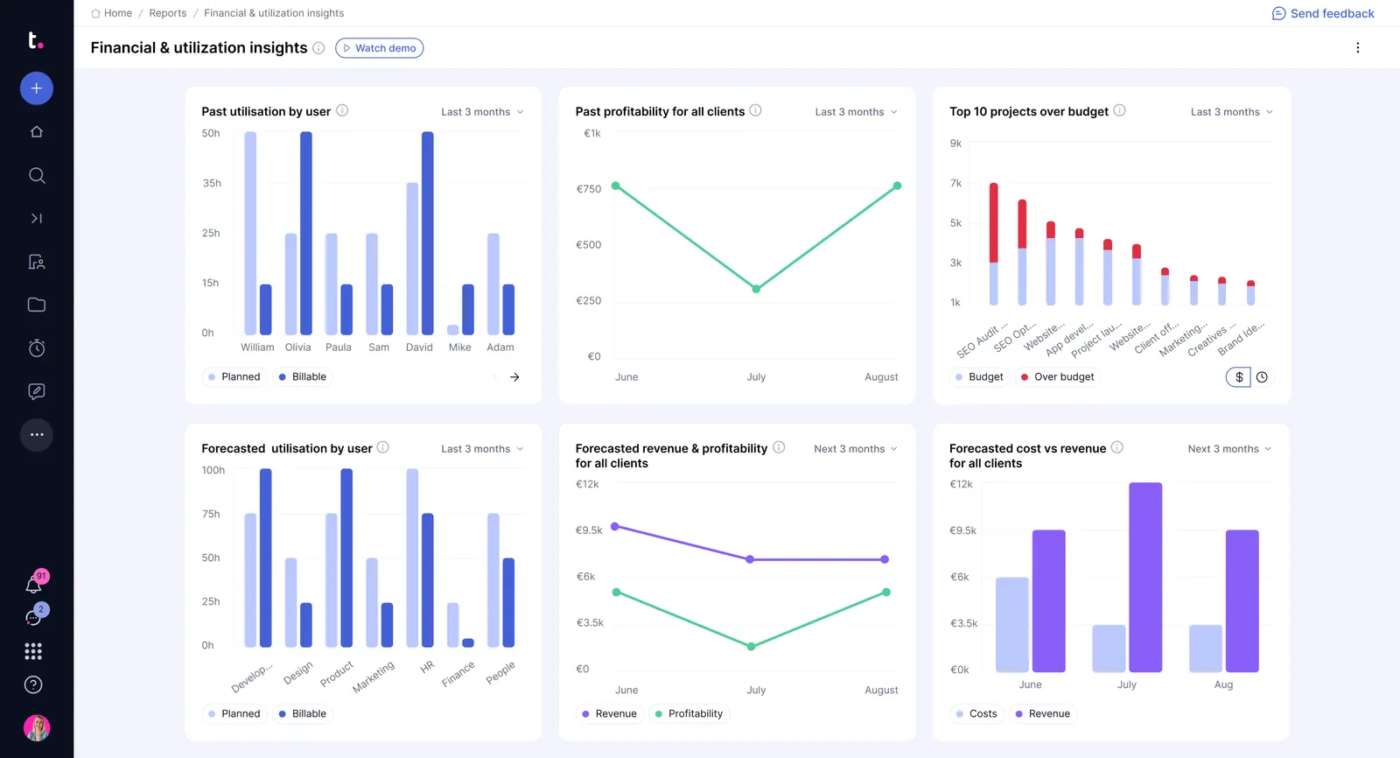
Teamwork.com is for agencies and service teams that need tighter control over billable work, beyond enterprise workflow management.
It’s a well-suited alternative for agencies, consultancies, IT services teams, and professional service firms. A project can carry billable and non-billable time, fixed-fee budgets, retainers, expenses, client users, proofs, invoices, and profitability reports in the same workspace.
In it, the Clients View gives account managers a cross-project view of each client, including profitability, billable time, non-billable time, budget usage, and client-level notes. Resource planning also connects back to money: teams can plan workloads, use availability, schedule by role or skill, set utilization targets, and track whether staffing decisions protect billable capacity.
TeamworkAI follows the services-business logic. Plans include AI summaries, an AI Project & Task Wizard, Scout for personal assistance, and Flo for project tracking. Higher tiers add AI utilization insights, Ask AI, Remi for resource planning, Kash for profitability, and Jack for custom AI workflows.
A G2 user praised Teamwork.com’s finance visibility:
In my experience, Teamwork.com is a powerful project management tool that truly shines with its all-in-one approach to client work. I find it incredibly useful for consolidating time tracking, billing, and resource management into one platform, which helps me streamline my workflow. The platform’s flexibility and customization features, from different project views to customizable templates, let me tailor it to my specific needs, making it an essential part of my process for improving collaboration and client transparency.
Where it taps out: Teamwork.com is a good alternative when it’s all about client work, billable hours, utilization, and boosting profitability. If your internal team doesn’t have billing involved, you might not experience as many of its service-oriented features.
Best for: Agencies and services firms that need projects, clients, time, budgets, utilization, invoices, and profitability in one place.
Skip it if: You run internal-only projects and do not need heavy billable time, client reporting, or profitability tracking.
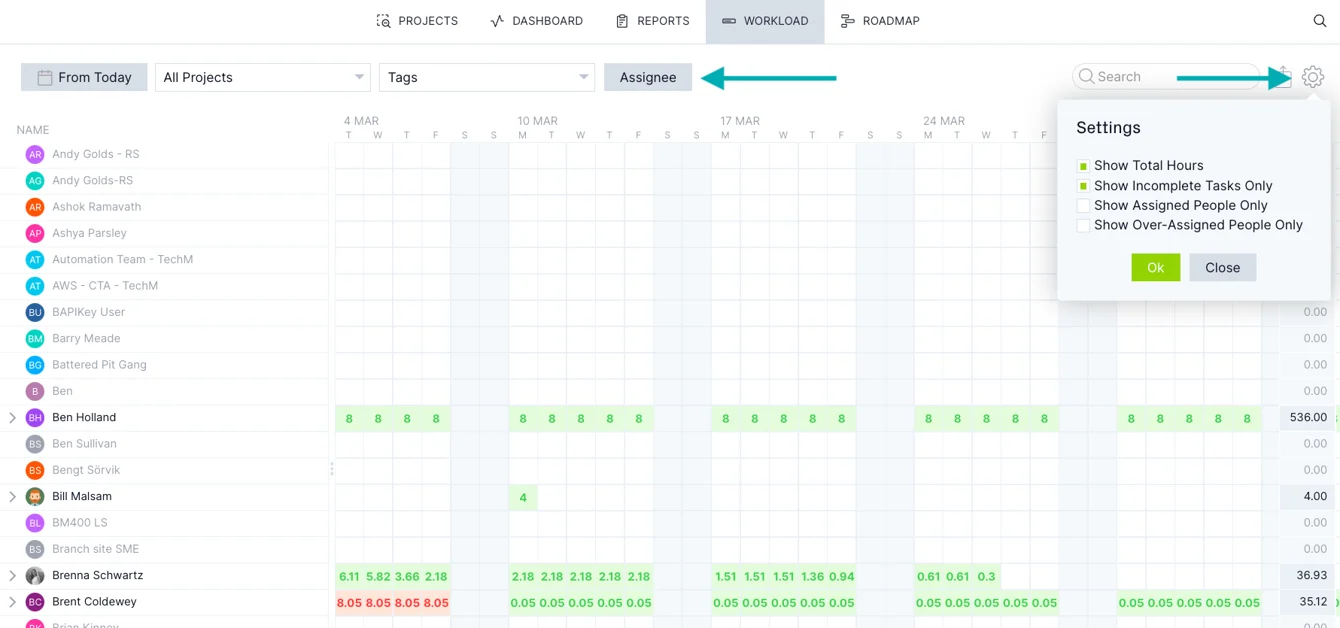
ProjectManager is for teams that want classic, schedule-first project management without the enterprise weight of Workfront. It suits project managers in operations, construction-adjacent, and traditional PM settings who plan around hard timelines and real resource availability. If the Gantt chart is the heart of how you work, this is built for you.
A manager can import MPP, Excel, or CSV files, build plans in Gantt view, link dependency types, set milestones, filter critical path, and compare progress to the baseline. Changes in linked tasks update deadlines.
ProjectManager also ties the schedule to resources and costs. Team availability is shown in the planning layer, while workload reports, timesheets, labor rates, budgets, and planned-versus-actual costs help managers assess whether the plan remains realistic. AI Project Insights further generates project summaries, flags risks related to costs, resources, and progress, and provides recommendations based on project data.
A G2 reviewer admired ProjectManager’s planning abilities:
I appreciate ProjectManager for its effortless planning and smart execution, allowing me to manage projects smoothly from start to finish. I enjoyed the comprehensive overview it provides for tasks and the entire lifecycle of each project, simplifying complex processes. This tool excels in facilitating collaboration with stakeholders and other departments, significantly enhancing project execution through effective communication and coordination. The dashboard is particularly valuable, keeping everything on task at each step and ensuring that no detail is overlooked, which makes it much easier to monitor progress and stay organized.
Where it taps out: ProjectManager is strongest when schedules, resources, costs, and portfolio tracking are the core job. Teams looking for a broader workspace with deep docs, chat, whiteboards, and knowledge management may find it narrower.
Best for: Schedule-driven PM teams that need Gantt planning, baselines, critical path, workload tracking, and real-time project reporting.
Skip it if: You want one workspace for project work, docs, chat, brainstorming, and knowledge management.
The right question isn’t “Which tool is best?” It’s “Which tool fits the way we already work?” Start with the one job that pushed you off Workfront. That single need points you straight at the shortlist:
Then pressure-test three things before you commit:
If you’re still torn, default to the broadest fit. A consolidated platform like ClickUp lets you replace several subscriptions and expand into deeper features later.
Whatever tool you pick, make sure capacity is visible, because an overloaded team will outlast any platform you throw at it. Here’s a quick walkthrough on catching burnout early:
Workfront teams rarely leave for lack of features. They leave because the depth was unreachable, the setup was heavy, and the pricing was opaque. So the real mistake is overcorrecting: swapping it for a tool so light the team outgrows it in two quarters.
The better move is depth that your team can actually reach. That means breadth you adopt incrementally, the features you need on a tier you can afford, and AI that understands your work rather than just narrating it.
For most teams leaving Workfront, that means an all-in-one workspace that consolidates the tools their work is currently scattered across. ClickUp is built for exactly that. Map your must-haves to a tier you can afford, test it with one team, and migrate the rest once it sticks. Start your project work in ClickUp for free and consolidate your stack before committing to a full migration.
There’s no single best alternative to Workfront; the right pick depends on the gap you’re filling. For teams consolidating multiple tools, ClickUp is the broadest fit and is consistently rated among the top Workfront alternatives on G2 (4.6/5 from 12,000+ reviews). Teams with one dominant need often prefer a specialist: Celoxis for project financials, Teamwork.com for client billing, or ProjectManager for schedule-driven work.
Yes. ClickUp, Wrike, Asana, and monday.com all offer permanent free plans, which Workfront does not. while Adobe Workfront does not publish a free self-serve tier. Free plans work best for small teams testing workflows before they commit to deeper reporting, resource planning, or billing features. ClickUp’s Free Forever plan is the most generous for small teams that want tasks, docs, and multiple views without paying.
Workfront implementations typically run several weeks to multiple months, with enterprise rollouts often cited in the three-to-nine-month range, frequently involving consultants or Adobe professional services. This setup overhead, alongside opaque pricing, is one of the most common reasons teams evaluate lighter-weight alternatives that a non-admin can run in days.
Yes, they’re the same product. Adobe acquired Workfront in December 2020 for about $1.5 billion and folded it into Adobe Experience Cloud, rebranding it Adobe Workfront. It now integrates natively with Adobe Creative Cloud and Experience Manager. That is why it remains strongest for large creative and marketing operations already standardized on Adobe.
Adobe Workfront is enterprise work management software used to plan, manage, and report on work at scale, with particular strengths in resource management, portfolio management, and creative proofing, owing to its Adobe lineage. It’s aimed at large marketing and creative operations teams coordinating high volumes of work across departments.
Start with pricing transparency, onboarding speed, and resource planning depth. Those three factors usually explain why teams leave Adobe Workfront in the first place. After that, compare proofing, approvals, reporting, and AI support. If a vendor hides pricing or gates core features to higher tiers, the migration can recreate the same frustration teams were trying to escape.
Wrike is one of the strongest fits for enterprise marketing teams that need native proofing, approvals, and resource management. It stays closest to Workfront’s core enterprise use case without stripping out the operational depth larger PMOs rely on. Teams that also want docs, chat, and broader workspace consolidation may still prefer ClickUp.
For many mid-market teams, yes. ClickUp combines tasks, docs, chat, dashboards, and AI in one workspace with public pricing, which lowers both tool sprawl and evaluation friction. That matters for teams that need breadth but do not want to buy into enterprise-only pricing or a long setup cycle.
Teams usually switch because Workfront is powerful but expensive to evaluate and slower to adopt. Reviewers often point to custom pricing, a steep learning curve, and heavier setup than competing tools. The issue is rarely feature depth alone. It is whether a team can actually reach that depth without admin overhead or outside help.
Teamwork.com is one of the best Workfront alternatives for agencies because it connects time tracking, billing, profitability, and client collaboration in one system. That is a stronger fit than a general PM tool when revenue, utilization, and account health matter as much as task completion. Teams running internal-only projects may not need that extra layer. Source: https://www.teamwork.com/pricing/
Reachable depth matters more than raw feature count. A tool only solves the Workfront problem if teams can adopt its most valuable features early, on a tier they can afford, without a long implementation cycle. In practice, that means judging platforms on time-to-value, pricing clarity, and how quickly end users ca

Manasi Nair
Max 15min read
Manasi Nair
Max 19min read
Manasi Nair
Max 26min read

© 2026 ClickUp




