
Sorry, there were no results found for “”
Sorry, there were no results found for “”
Sorry, there were no results found for “”
If you don’t know where your time is going, you don’t really know what your work is worth.
For freelancers, time is currency. But between juggling client calls, revisions, invoices, and deadlines, tracking those hours can feel like yet another job you didn’t ask for.
And when you’re not logging time accurately, that’s when your effort stops matching your earnings
❌ You undercharge for high-effort work
❌ You miss billable hours
❌ You say yes to projects that don’t actually pay off
That’s where time tracking tools come in—not just to count the hours, but to give you clarity, control, and confidence in your pricing.
We tested 15 of the best freelance time tracking apps—from simple timers to smart, integrated workspaces. Whether you’re a solopreneur or managing multiple clients, there’s something here that’ll make your life easier (and your invoices smarter).
Let’s break it down. 👇
I lined up my favorite apps for freelance time tracking so you don’t have to do any digging. 👇
| Tool | Best For | Best Features | Pricing |
|---|---|---|---|
| ClickUp | All-in-one time + project management Team size: Solo → Enterprise | Built-in time tracking, Time Estimates, Dashboards, AI time suggestions, Billable hours, Chrome extension | Free forever; Customization available for enterprises |
| Toggl Track | One-click timers & minimal setup Team size: Freelancers, small teams | Pomodoro timer, Timeline view, Auto project switching, Profit reports | Free; paid plans from $10/user/mo |
| Clockify | Managing multiple people & approvals Team size: Freelancers → mid-sized teams | Kiosk mode, Timesheet approvals, Custom rates, “Who Worked On What” reports | Free; paid plans from $6.99/user/mo |
| Harvest | Time tracking + invoicing in one place Team size: Freelancers, agencies | Client invoicing, Expense capture, Forecast planning, Client portals | Free; paid plans from $13.75/user/mo |
| My Hours | Visual project insights & summaries Team size: Freelancers, consultants | Widgets, Visual performance reports, Daily goals | Free; Pro $9/user/mo |
| Timely | Automatic background time tracking Team size: Freelancers with ADHD or forgetful timers | Memory timeline, Private Time filters, AI suggestions, Focus score | Paid plans from $11/user/mo |
| Hubstaff | Remote team monitoring & field work Team size: Distributed teams | Activity tracking, Screenshots, GPS, Automatic payroll | Paid plans from $7/user/mo |
| TopTracker | Freelancers using marketplaces (Upwork, etc.) Team size: Solo freelancers | Smart time detection, Work Diary screenshots, App-triggered timers | Free |
| Jibble | Mobile-first, GPS & geofencing Team size: Field teams, on-site freelancers | Facial recognition, Geofencing, Kiosk mode | Free; paid from $4.99/user/mo |
| TimeCamp | Advanced reporting & profitability analytics Team size: Freelancers → SMBs | Automatic tracking, Profitability reports, Alerts, Rate categories | Free; paid plans from $3.49/user/mo |
| Everhour | Deep PM tool integrations Team size: Teams using ClickUp, Asana, Trello, Notion | Budget tracking, Time vs. estimate reports, Client access | Free; paid plan $10/user/mo |
| TMetric | Detailed work classification Team size: Freelancers, small teams | Idle detection, Browser extension, Detailed timesheets | Free; paid plans from $5/user/mo |
| Fanurio | Professional billing & retainer work Team size: Consultants, service pros | App-triggered timers, Branded invoices, Expense tracking | Annual plan from $29/year |
| RescueTime | Productivity awareness & focus coaching Team size: Solo freelancers | Activity tracking, FocusTime blocking, Weekly insights | Free; paid from $9/mo |
| Memtime | Automatic memory-based time reconstruction Team size: Freelancers who forget to track | Local-only data, Retroactive time assignment, Full activity timeline | Paid plans from $18/user/mo |
The right time tracking tool helps you stay profitable and keep clients happy. Here’s what to look for in a tool if you’d like to solve your time management problems:
🧠 Fun Fact: The first patent for a mechanical time clock was filed by Willard Bundy in 1888. His invention kicked off the punch-card era and ultimately led to the creation of the company that eventually became IBM.
These freelance time tracking tools helped me get my hours (and my income) in check. 📋
Our editorial team follows a transparent, research-backed, and vendor-neutral process, so you can trust that our recommendations are based on real product value.
Here’s a detailed rundown of how we review software at ClickUp.
ClickUp is where I manage every part of my freelance work. It keeps my projects, tracked time, estimates, invoices, and reports in one place.
I no longer need five tools to track client deadlines and billable hours. ClickUp’s Freelancer Project Management Software does it all, and it does it cleanly.
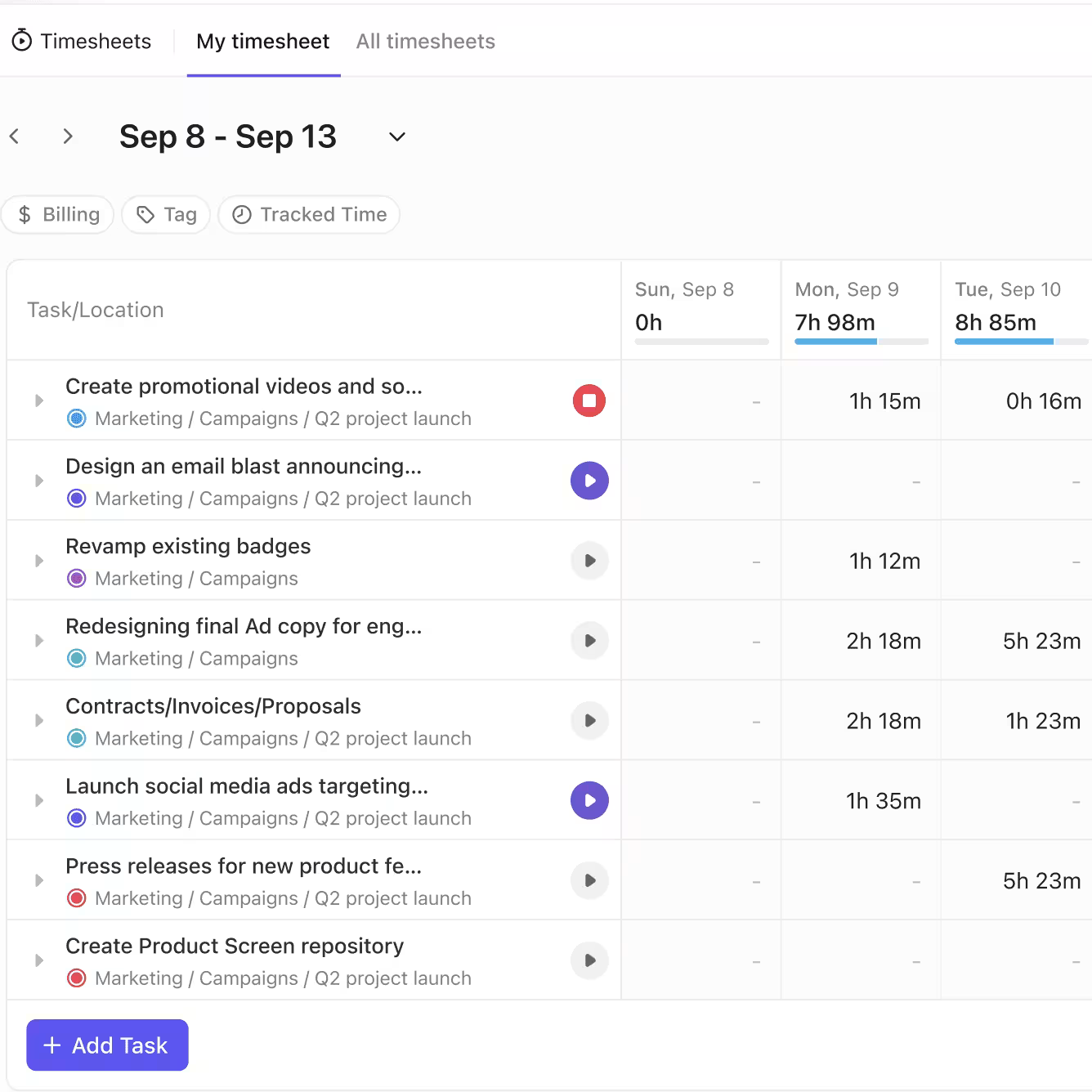
I start with ClickUp Project Time Tracking, which lets me track hours directly inside each task. When I work on a product page rewrite or a full blog draft, I start the timer right from the task.
Every session gets logged under that specific task, so I never have to guess how long I spent or dig through my calendar later. If I split time between writing and revisions, both entries sit in the same task, labeled and timestamped.

Then comes ClickUp Time Estimates.
Before my week starts, I add estimated time to each task.
For example, if I’m handling a complete website audit, I’ll block two hours for the audit, one and a half hours for writing findings, and one hour for revisions. Once I start tracking time, I can see right away if I’m going over my estimate. That visibility helps me set better prices and manage my workload.

To keep everything visible at a glance, I use ClickUp Dashboards.
My dashboard shows how many hours I’ve logged per client, what’s still pending, and which tasks have gone over their estimate. I also added widgets that show my total tracked hours across projects and how that compares to my monthly capacity. That way, I always know how much time I’ve actually billed and how much I still can.

ClickUp Brain takes the guesswork out of planning by learning from your past work. It suggests time estimates for new tasks based on similar projects you’ve already done. Instead of guessing how long something will take, you get clear, AI-powered estimates based on real work you’ve completed.
When I add a ‘strategy doc + content plan’ task last week, it pre-filled the time estimate using data from past client planning sessions. It also keeps me focused by surfacing overdue tasks or those that take too long to complete. I don’t waste time guessing what’s urgent—it shows up right when I need it.
Once the work is done, I open ClickUp Docs to build invoices. I use the ClickUp Invoice Template, which pulls in task details and hours. What’s best is that I can drop in my hourly rate, and it’ll calculate the totals automatically.
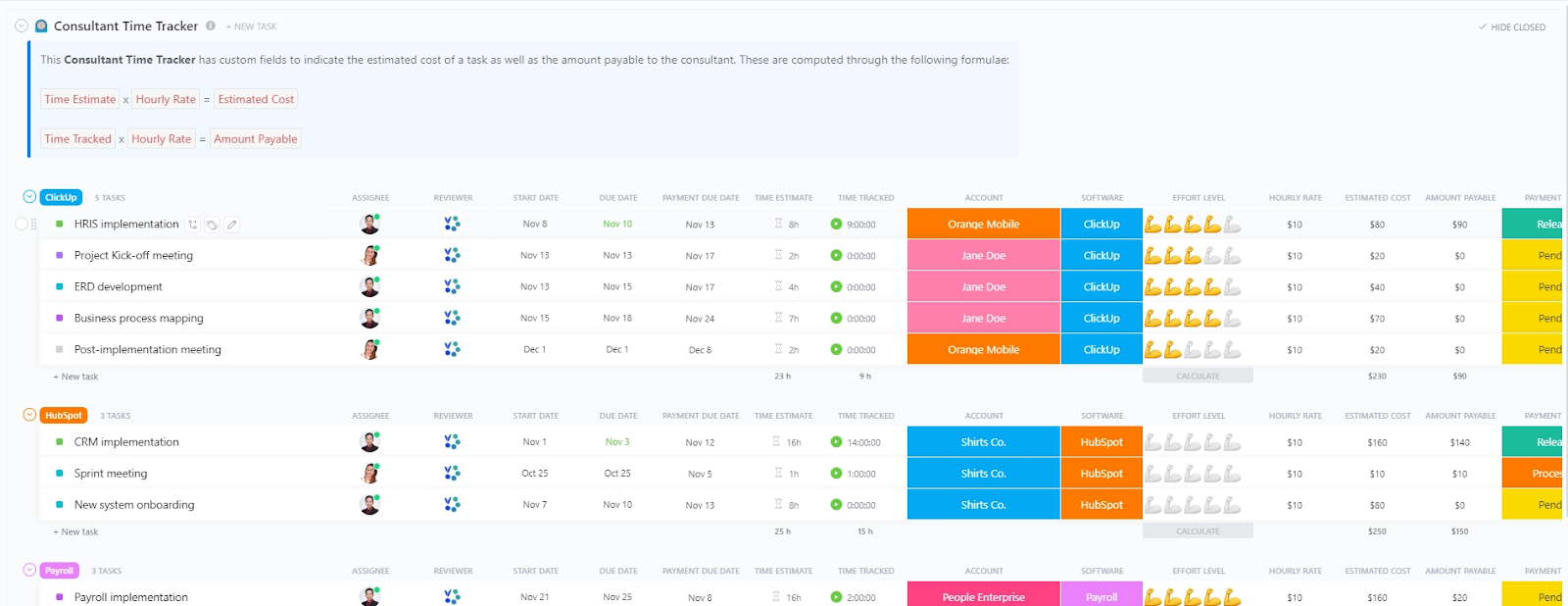
Further, the ClickUp Consultant Time Tracking Template gives me a whole structure for hourly billing. It comes with built-in time tracking views, daily and weekly summaries, and ready-made labels for billable vs. non-billable tasks.
This time tracking template saved me hours when I first set it up, and I still use it to onboard new client projects.
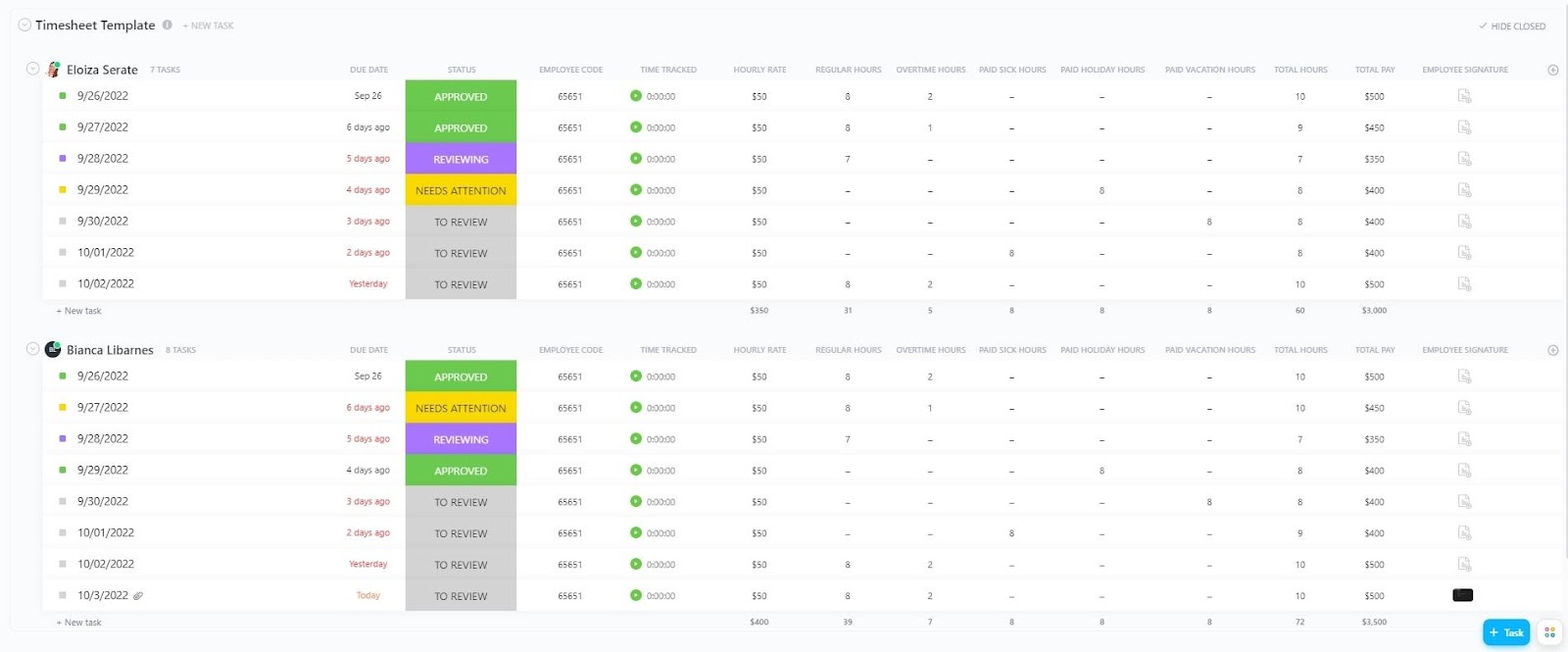
For retainer work and recurring services, I use the ClickUp Services Timesheet Template.
It’s perfect for tracking repeatable deliverables like strategy reviews, monthly reporting, or client check-ins. I set up recurring tasks using this timesheet template and keep all my time logs structured by service type.
💡 Pro Tip: Want to skip setup and just plug in your projects?
Grab these Time Tracking Templates and Timesheet Templates to start logging hours, billable time, and client work right away. They’re free, flexible, and fully customizable.
This G2 review really says it all:
I’ve been able to stop using the other time tracking app I used and now use ClickUp for that instead. They’ve also released customizable dashboards for spaces and folders which I LOVE. We’re able to keep important documents, links, and resources all in one easy-to-find place. You can also add widgets that breakdown tasks by assignee, time spent on the project, overdue tasks, etc. It’s all super customizable and has made using ClickUp for project management even more seamless.
📮ClickUp Insight: While 40% of employees spend less than an hour weekly on invisible tasks at work, a shocking 15% are losing 5+ hours a week, equivalent to 2.5 days a month!
This seemingly insignificant but invisible time sink could be slowly eating away at your productivity. ⏱️
Put ClickUp’s Time Tracking and AI assistant to work and find out precisely where those unseen hours are disappearing. Pinpoint inefficiencies, let AI automate repetitive tasks, and win back critical time!
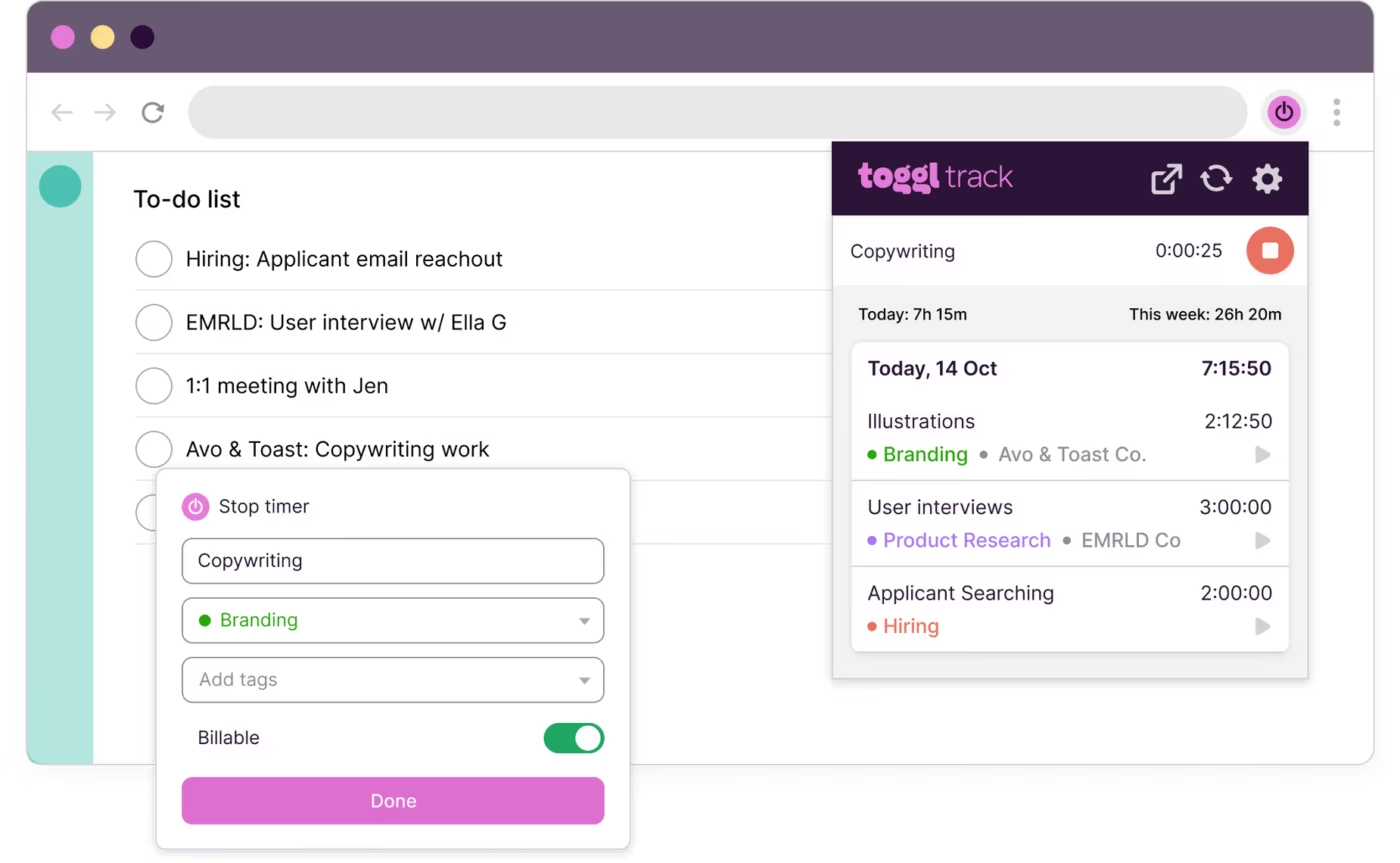
via Toggl Track
Toggl Track gets straight to the point. Toggl Track strips away the complexity that slows freelancers down.
You literally click one button, and you’re tracking time. The color-coded projects make sense visually, and their little desktop widget sits quietly in your corner until you need it. Plus, when you’re jumping between different browsers and web apps, their extension follows you everywhere.
This Capterra review brings up an interesting angle:
Toggl Track is very user-friendly. It is simple to navigate. I like how easy it is to continue with a previous project or add a new one. The colour-coding also helps to breakdown the areas in which I am spending most of my time. I also really like the reports tab – it’s nice seeing how many hours have been worked and the percentage of my time spent on each project.
🚀 Workflow Upgrade: If there is one thing that used to drain me, it was all the tiny admin tasks around time tracking. ClickUp Agents take that off my plate by watching for patterns, surfacing overdue work, flagging estimate overruns, and nudging me when a task is eating more hours than planned.
They turn the data from my time tracking into real recommendations and next steps, which makes staying on top of my workload feel a lot less manual.
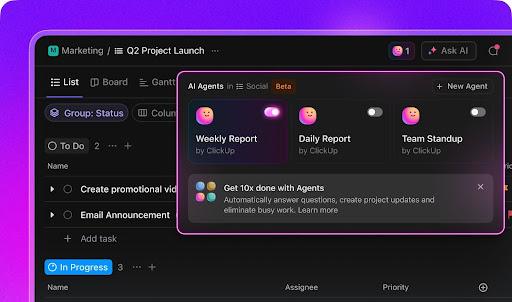

via Clockify
Here’s the thing about team time tracking: it usually turns into a complete mess. Clockify solves this problem instead of creating new ones.
I had previously managed freelancer teams of 15+ people using this tool, and surprisingly, it doesn’t implode under pressure. The timesheet approval process flows smoothly, so you’re not drowning in email chains about submitted hours. Meanwhile, their calendar view helps you spot scheduling disasters before they happen.
Here’s a G2 review about this freelance time tracking software:
If you are a freelancer or agency, you’d understand how much work it is tracking your time manually… Clockify handles that completely. Instead of logging my time in an unorganized excel document, I am able to use it to send out invoices, send reminders, and pull time for different clients! I use it every single day. I love how easy Clockify makes it to track your time, there is also an app version as well. Seeing the reports is super easy, and being able to add long descriptions has been amazing.
📖 Also Read: How to Find Clients as a Freelancer

via Harvest
Harvest bridges that annoying gap between tracking hours and sending invoices. I love how you can snap a photo of a receipt, and it automatically attaches to the right project (no more shoebox accounting!).
Plus, it plays nicely with QuickBooks and other accounting software, which saves me hours during tax season.
A G2 reviewer said this:
As a Harvest user, I can say that it is an accessible and efficient platform for organizing and visualizing the performance of all your work operations, giving you total control over each of your professional activities.
In addition, Harvest stands out for its technical capabilities to visualize all your work projects and manage your time with total efficiency.

via My Hours
Some people think in spreadsheets, others think in colors and charts. If you’re the visual type, My Hours will make perfect sense.
Their freelancer task templates have helped me set up similar projects. The mobile app responds quickly, unlike some competitors that feel like they’re running underwater.
Additionally, their export options cover most client billing scenarios while maintaining data integrity.
This G2 review explains it well:
After searching and trying multiple timesheet packages I found myhours to be the closest to what I need, which is a basic, easy to use web based timesheet tracking and reporting software. The customer service is great, all questions I asked were promptly answered by return email.
💡 Pro Tip: Create a second calendar where you design your dream freelance week: 4-hour days, no Monday meetings, 90-minute deep work sprints, etc. Then compare it to your actual tracked hours. Not to shame yourself, but to see what version of your workflow wants to exist.
🎥 Want more time for deep work without burning out? This video walks you through the best time-blocking and time-tracking tools that help you plan your day, understand where your hours go, and protect your focus.

via Timely
Forget about starting and stopping timers; Timely runs silently in the background, capturing everything you do. This freelance time tracking software remembers which websites you visit, applications you use, and documents you work on.
I found myself checking the memory timeline when I couldn’t remember what I did three hours ago. The AI suggestions get smarter over time, learning your patterns and categorizing work automatically.
A fellow freelancer on G2 shared this feedback:
What I love most is the automatic time tracking. It captures everything I work on without me having to manually start or stop timers. As someone with ADHD, remembering to track time can be a real challenge—but Timely takes care of it for me, accurately and effortlessly. It’s honestly life-changing for my productivity.

via Hubstaff
Remote work transparency becomes crucial when you’re managing distributed teams. Hubstaff addresses this through activity monitoring and screenshot capture. I’ve used their GPS tracking for field work and client visits, and it works reliably.
I also appreciated how their productivity pulse reports analyze my focus throughout the day.
One G2 review puts it this way:
Hubstaff offers a seamless way to track time and monitor team productivity. The ability to take periodic screenshots, track activity levels, and integrate with project management tools like Trello and Asana makes it extremely valuable for remote teams. […] At times, the activity tracking can feel overly intrusive, especially with frequent screenshots. The mobile app also tends to lag or crash on occasion, which can interrupt productivity on the go.
💡 Pro Tip: After each task, rate how drained or energized you feel on a 1-5 scale. Then, cross-check it weekly with the amount paid for that task or client. You’ll visibly see which high-paying gigs aren’t worth the burn, and which lower-paying ones bring peace (and potential for upselling).

via TopTracker
Working through Upwork or Freelancer? TopTracker integrates directly with these platforms without the usual compliance headaches. This freelance time tracking software with screenshots handles platform requirements automatically, so you don’t have to worry about documentation standards.
Their desktop application also stays lightweight and doesn’t slow down your computer.
Here’s a firsthand perspective from a Capterra review:
I’m a consultant and work for several different companies. This tool allows me to track time for each of them very easily. It monitors when I’m on my computer (activity) and records the time. I can switch companies (projects) as I change tasks.

via Jibble
Mobile time tracking usually feels like an afterthought. Jibble flips this around, making mobile the primary experience.
I’ve found their geofencing incredibly useful; timers start automatically when you arrive at client locations. The beacon technology works indoors, where GPS typically fails. Offline tracking continues working without an internet connection, syncing everything later automatically.
Straight from a Reddit review about this freelance time tracking software:
I’ve been using Jibble for a couple of years now and have found it to be the best one out there. Very user friendly interface, switch seemlessly between web browser and the app, clock different activities within the same account and the free version has so many options. Of course the premium version has even more amazing tools to offer. Overall our team has been very happy with Jibble (we tried some others first before finding Jibble but have not needed to look further ever since!)

via TimeCamp
Data nerds, this one’s for you.
TimeCamp digs deep into project profitability through detailed cost analysis and budget tracking. The freelancing time tracking software connects time data directly to financial metrics, showing which projects make money vs. those that just keep you busy.
I find the computer activity monitoring helpful for understanding my productivity patterns throughout the day. Since my billing rates vary by project and client, I relied on its Gantt charts to visualize project timelines alongside my actual time tracking data.
This G2 review caught my eye:
I been using TimeCamp as a individual user for over a year. I am a freelancer, and it’s very important for me to know how much I’ve spent on each project. With that being said, TimeCamp has shown itself to be very useful! It has a lot of useful features. such as automatic project tracker, task widget, weekly timesheets and progress reports. And it’s so very convenient to use. I simply installed it on my PC, and it tracks my activity every day.
⚙️ Bonus: Curious how I got into freelancing in the first place? This guide on how to become a freelancer is what helped me take the leap.

via Everhour
I tested Everhour to evaluate its time tracking and project management capabilities. Everhour stands out for its seamless integration with popular project management platforms, allowing users to turn tasks into trackable time entries without duplicating work.
The freelance time tracking software made it easy to compare time estimates with actual hours, monitor budgets, and generate invoices directly from project data.
Here is what made a difference for one Reddit reviewer:
I love the Everhour integration. It’s not perfect like the resource planner and capacity planning is not great. But it does a great job allowing people to book time at the task level, mark it billable or unbillable and integrates fairly well with QBO with only one minor inconvenience where the invoice number doesn’t carry over. The reporting is also pretty decent but you can export to .csv and do whatever you want with the data.
📖 Also Read: Learn more about ClickUp’s integrations with tools like Everhour.
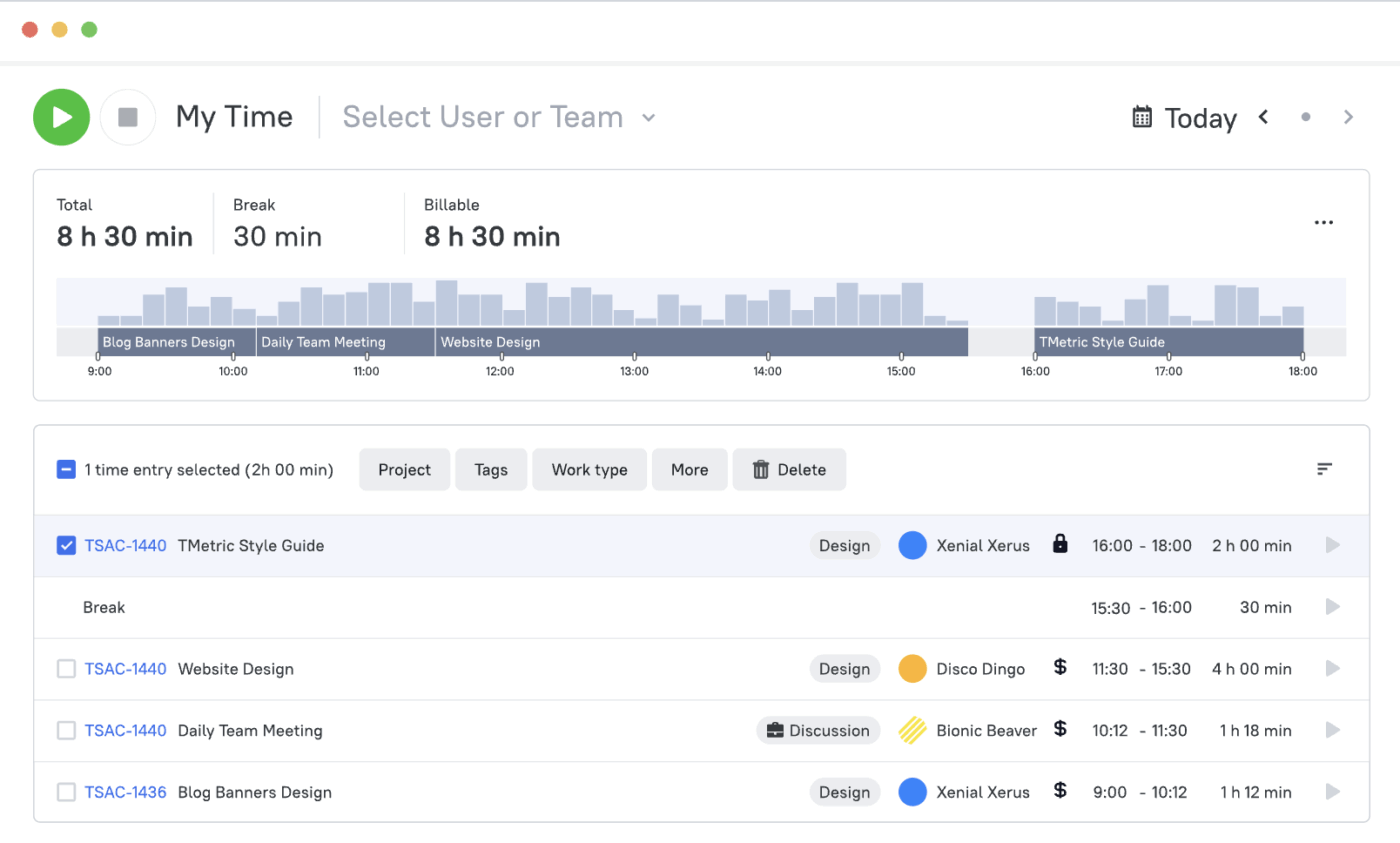
via TMetric
As an organization freak, I enjoyed trying TMetric’s work classification. It allows you to organize projects into detailed hierarchies using custom tags and categories, which makes complex billing scenarios more manageable.
Beyond core tracking, the desktop widget provides quick access to timer controls and project switching, while the browser extension seamlessly tracks web-based work.
According to one G2 review about this freelance time tracking software:
I have found this tool amazing to know how much time I dedicate to each of my clients and how profitable they are

via Fanurio
This freelance time tracking software handles retainer billing and progress invoicing scenarios, which I used to manage manually. My clients can check project progress and billing status through the client portals, reducing the number of status emails I receive.
However, the learning curve was steeper than I expected. The expense tracking, while comprehensive, requires more manual input than I’d prefer for smaller items.
Hear it from this Capterra reviewer:
I’m not a particularly organized financial person. This program has saved my life. And because it ties to Quickbooks, I can spend less time managing billing and collections and spend more time working to generate cashflow.
💡 Pro Tip: We often bleed time making micro-decisions: Do I take this call? Shall I send the draft now? Should I batch this? Log the number of decisions made during a work block, and how long each took. That’s your decision tax. Design systems to cut it down.
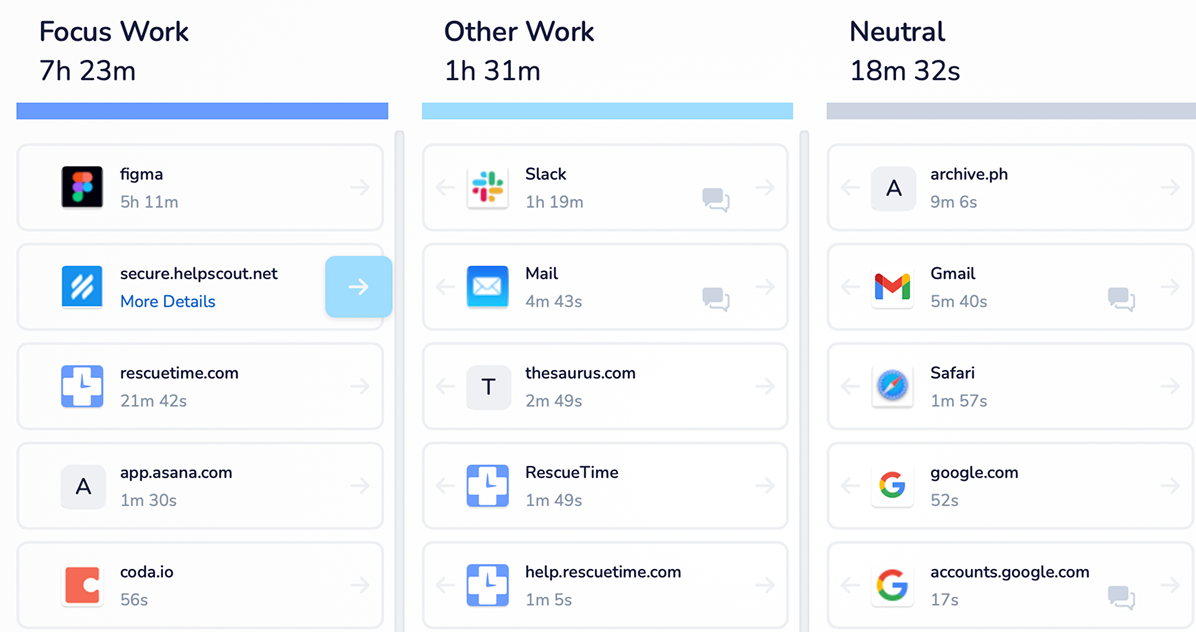
via RescueTime
When I tested RescueTime’s freelance time tracking software, it categorized everything into productive, neutral, or distracting work. The weekly reports surprised me by showing where my time actually goes vs. where I think I’m spending it.
I could also set goals to maintain focus on important projects, and the FocusTime feature blocks distracting websites during designated work periods. The downside is that it’s purely passive tracking—there’s no manual time entry for offline work or specific project billing.
Here’s a Reddit user’s opinion:
I’m completely new to rescue time, but i just subscribed to their 2 week trial based on the timesheets feature, which seems simple and perfect for a freelancer like me. Some of the features seem to lack documentation, but it seems fresh.
via Memtime
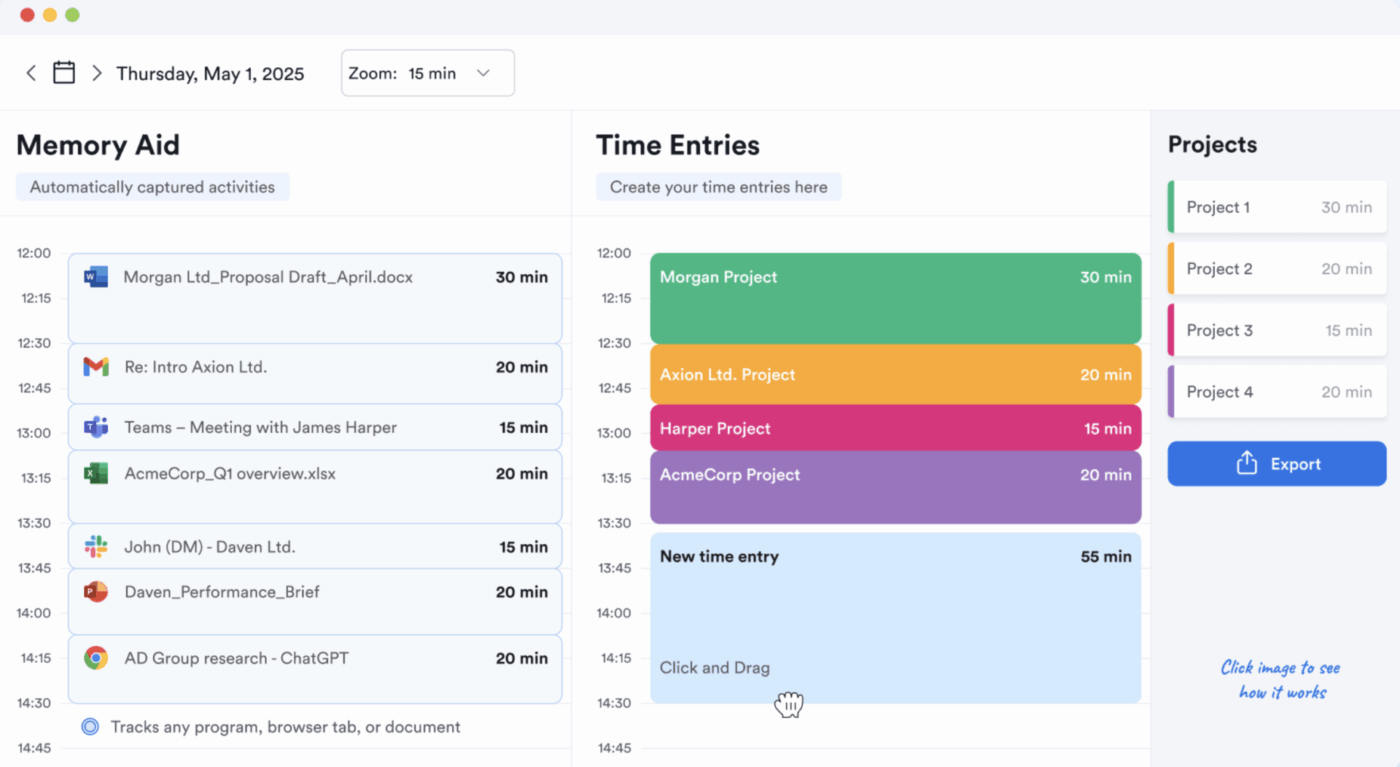
Memtime takes automatic time tracking further than most tools, capturing every document, program, and browser activity without interrupting your workflow. The tool runs completely silently, recording every program, document, and website you use throughout the day.
I found their privacy-first approach reassuring since all data stays on your local machine. Even better? Project assignment happens retroactively, so you never interrupt your workflow to manage timers.
Here’s what a G2 review said about this freelance time tracking software:
I appreciate how Memtime streamlines my time tracking process as a freelancer. The automated tracking features significantly reduce manual entry, saving me considerable time each week. The intuitive interface made it easy to get started without extensive training. I particularly value the clear reporting features that give me insights into how I spend my working hours, helping me identify areas where I can improve efficiency and better allocate my time across different projects.
⚙️ Bonus: Check out these time management tips and freelancer hacks I swear by!
I’ve tried enough time tracking tools to know what works and what wastes time. I don’t need another app that logs hours and leaves me guessing what to do next.
ClickUp gives me a clear view of my work. I can track hours inside tasks, see live estimates, and view dashboards that show what’s billable, what’s overdue, and where my time is going. It helps me plan better, price my work accurately, and understand how I spend my time across clients and projects.
Other tools helped me track. ClickUp helps me improve. That’s what I care about: building a freelance workflow that’s clear, intentional, and scalable.
If you’re serious about owning your time, start with ClickUp. ✅

Manasi Nair
Max 31min read
Manasi Nair
Max 23min read
Manasi Nair
Max 25min read

© 2026 ClickUp