






Still downloading templates?
There’s an easier way. Try a free AI Agent in ClickUp that actually does the work for you—set up in minutes, save hours every week.
Sorry, there were no results found for “”
Sorry, there were no results found for “”
Sorry, there were no results found for “”
Your agency is growing. What worked for a five-person team doesn’t quite fit your 20-person operation.
Asana got you this far, but now that you’re scaling up, you need something different. These 11 Asana alternatives for marketing agencies might be just what you need for your expanding marketing firm.
Let’s find you something that grows with your ambition. 🎯
Asana’s agency project management software works for many, but marketing agencies often need more tailored solutions. Here’s why you might look elsewhere:
🧠 Fun Fact: Volney B. Palmer started the first known ad agency in the USA. His original plan was to just sell ad space in newspapers. Strategy, slogans, and creative departments came much later.
Here’s a brief comparison of the best Asana alternatives for marketing agencies. 👇
| Tool | Best for | Best features | Pricing* |
| ClickUp | All-in-one agency management platform for creative and operational alignment Team size: Ideal for individuals, startups, and enterprises | Custom workflows, AI assistance, Dashboards, Docs, time tracking, AI calendar, feedback tools | Free forever; Customizations available for enterprises |
| Wrike | Creative asset organization and client portal workflows Team size: Ideal for midsize to large creative teams | Request forms, proofing, side-by-side versioning, client workspaces, automated reports | Free; Paid plans start at $10/month per user |
| Jira | Agile campaign execution and iterative project updates Team size: Ideal for technical marketing teams and dev-collaborative agencies | Custom workflows, Kanban boards, campaign automation, over 30 built-in reports | Free; Paid plans start at $8/month per user |
| Trello | Visual task management and campaign mapping Team size: Ideal for editorial, social, and content teams | Content calendars, customizable templates, Google Drive sync, Power-Up integrations | Free; Paid plans start at $6/month per user |
| ProofHub | Structured creative reviews and stakeholder approvals Team size: Ideal for design, content, and branding teams | Markup feedback, approval flows, custom forms, permission controls | Free trial; Paid plans start at $50/month |
| Teamwork | Profitability tracking and client-centric delivery Team size: Ideal for agencies managing billing, retainers, and deliverables | Time/budget tracking, QuickBooks invoicing, workload planner, client view access | Free; Paid plans start at $13.99/month per user |
| Airtable | Campaign planning with customizable workflows and data views Team size: Ideal for operations and planning teams | Formula fields, campaign portals, color-coded calendars, conditional logic | Free; Paid plans start at $24/month per user |
| ActiveCollab | Project profitability monitoring and time-based invoicing Team size: Ideal for finance-aware project managers and service agencies | Timers on tasks, recurring invoices, workload overview, scope creep alerts | Free; Paid plans start at $11/month per user |
| Basecamp | Simplified communication and central project visibility Team size: Ideal for lean teams and cross-functional marketing groups | Message boards, auto check-ins, document hub, client simplicity | Free; Paid plans start at $15/month per user |
| Zoho Projects | Marketing ops tied into business-wide workflows Team size: Ideal for teams using the Zoho ecosystem | Project portals, expense tracking, workload views, Blueprint automations | Free; Paid plans start at $5/month per user |
Our editorial team follows a transparent, research-backed, and vendor-neutral process, so you can trust that our recommendations are based on real product value.
Here’s a detailed rundown of how we review software at ClickUp.
These are our picks for the best Asana alternatives for marketing agencies. 📝
ClickUp gives you the structure that Asana lacks, while staying flexible enough to match the way your agency works.
To begin with, ClickUp’s Project Management Software serves as your agency’s operational backbone. And when you integrate ClickUp’s Marketing Solution and the ClickUp Creative Agency Software, you gain access to specialized workflows designed specifically for marketing operations
Say your agency is working on a full-funnel campaign for a consumer tech brand—organic posts, paid ads, email drips, and landing pages all rolling out over six weeks.
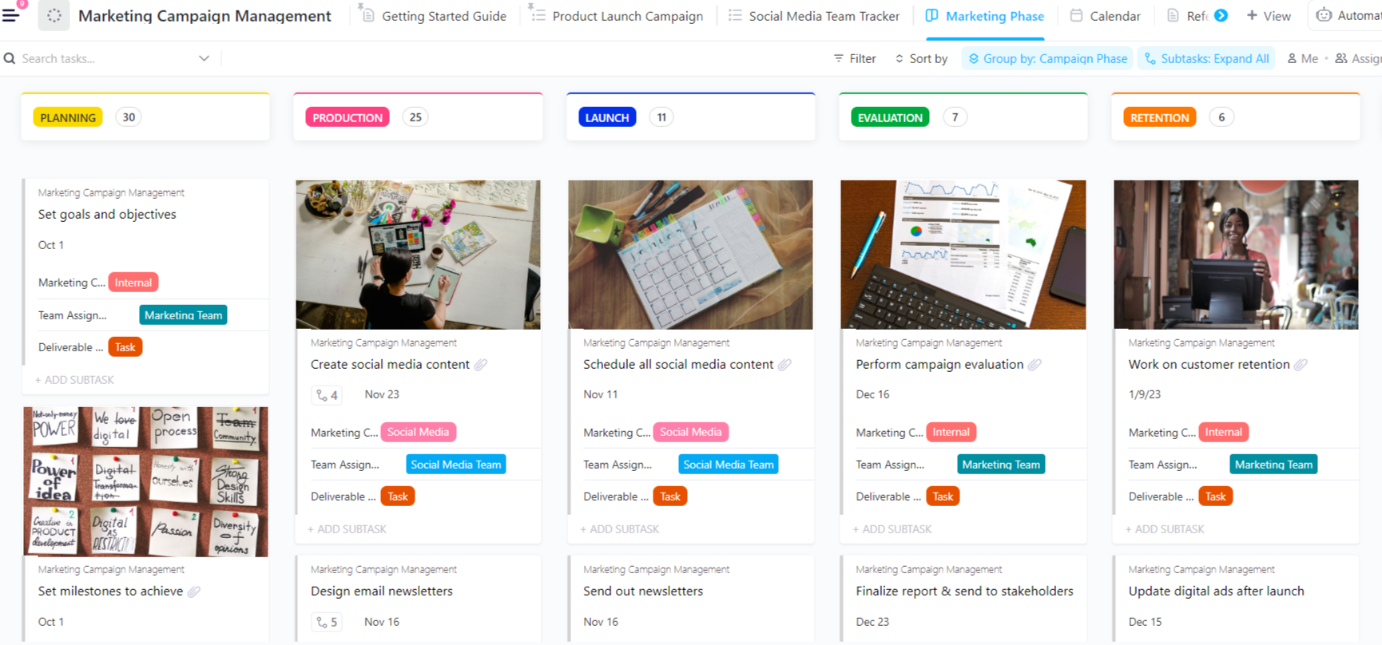
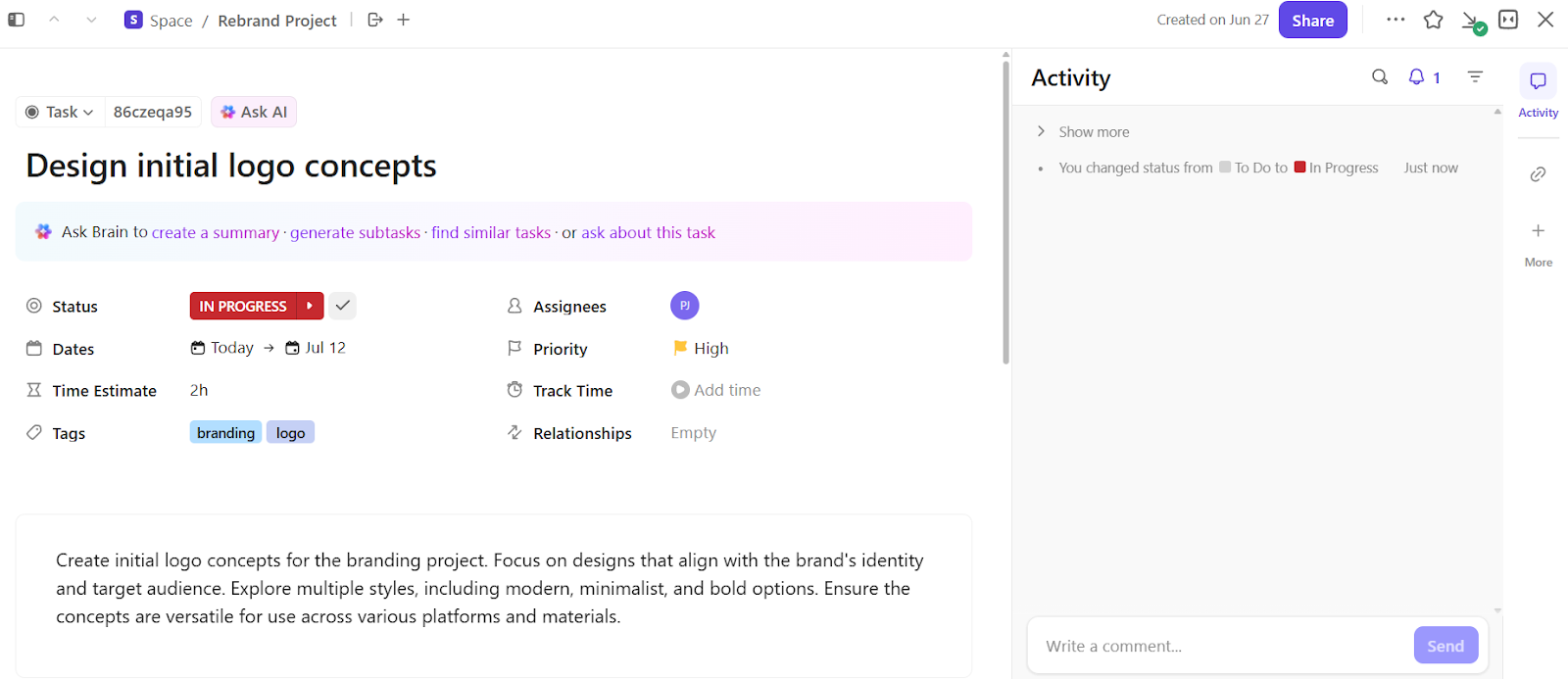
You start by building a Folder for the campaign. Inside it, you use ClickUp Tasks to create detailed deliverables for each asset: one for the Instagram carousel, one for the launch email, and one for the video ad.
Each Task gets assigned to the right team member along with deadlines, creative briefs, and subtasks for handoffs.
Watch it (and more) in action in the video below: 👇🏼
To keep everyone aligned on progress, you define your own ClickUp Custom Task Statuses: ‘Briefing’, ‘Draft in Progress’, ‘Internal Review’, ‘Client Review’, and ‘Final Approval’. These reflect the actual stages your agency follows.
At the same time, you add ClickUp Custom Fields to every task so your team can slice and filter the work easily. Specify the deliverables’ channel, audience type, asset format, and campaign priority.
So if your strategist wants to see all top-priority assets for paid media going live next week, they can filter the view in seconds.
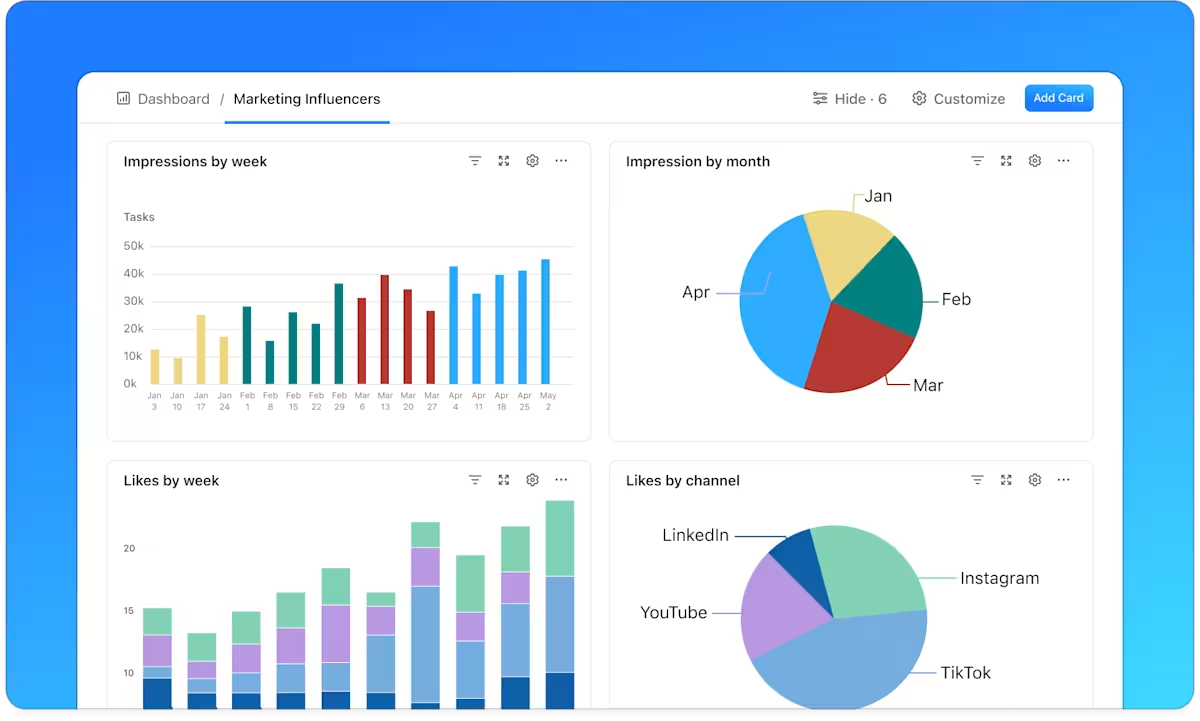
Your operational data transforms into strategic insights through ClickUp Dashboards. These visual command centers display real-time information about team capacity, project deadlines, and campaign performance across all your clients.
You can also create private client-facing dashboards that show live progress on deliverables, deadlines, and blockers without exposing internal notes or production-level detail.
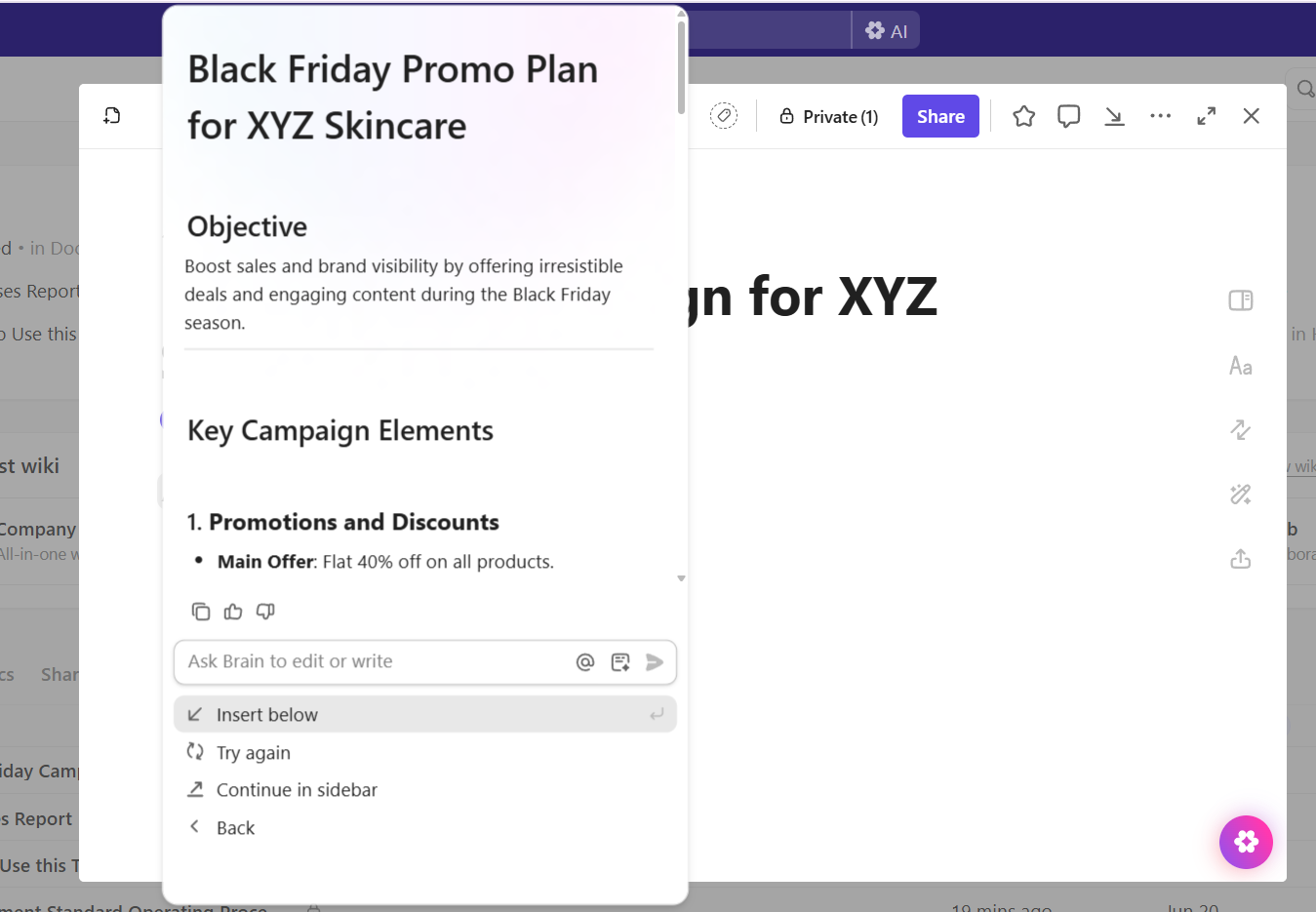
ClickUp Brain is the platform’s built-in AI engine that helps your team plan, write, and summarize without losing momentum.
Suppose your agency is planning a Black Friday campaign for an e-commerce client. The strategist opens a ClickUp Doc to outline the campaign structure. They type a short prompt like ‘Black Friday promo plan for skincare brand’.
ClickUp Brain suggests a campaign schedule broken down by channels—email, paid social, landing pages, and influencer collabs—along with key messaging angles and deliverable formats.
⭐️ Bonus: You can choose from multiple AI models like Claude, ChatGPT, and Gemini right from within your ClickUp Workspace! Pick the LLM of your choice in ClickUp so it has the full context of your work and connected apps, and get creative!
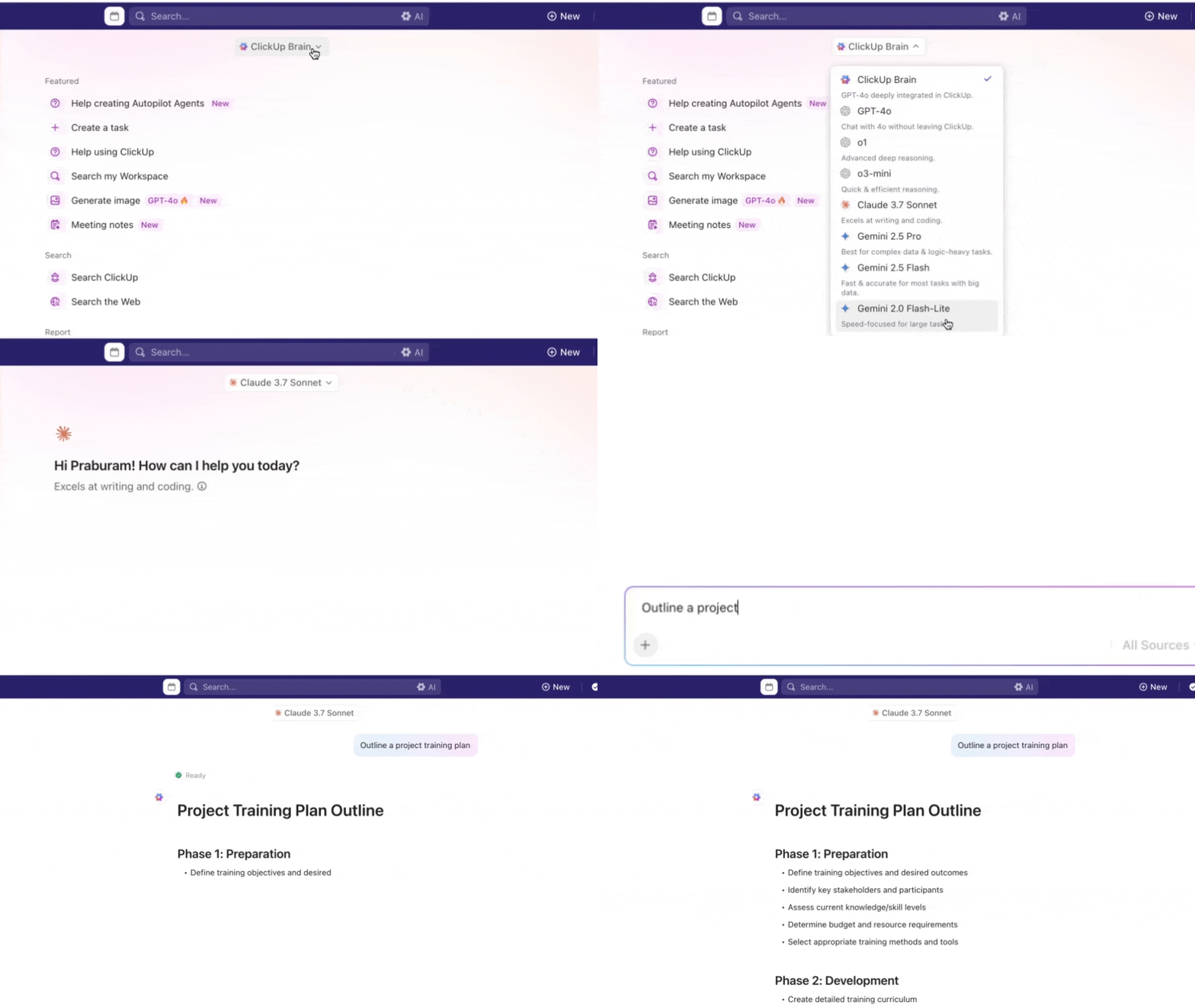
Then, during the production phase, if your creative lead wants to know what’s still pending review or where feedback is blocked, the AI marketing tool can summarize the latest comments across tasks in one click.
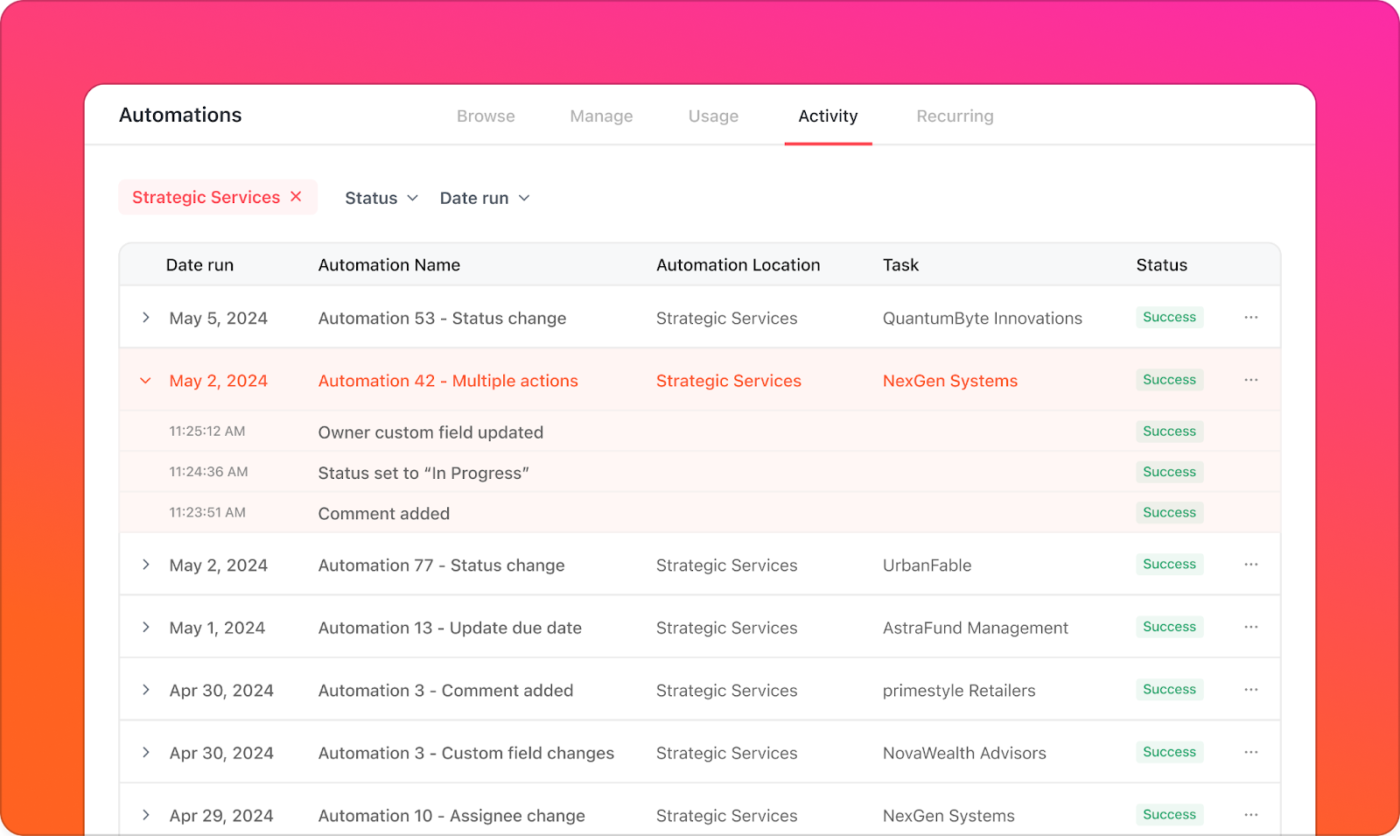
ClickUp Automation handles all the tedious project status updates, assignment changes, and reminders that eat up your team’s time during campaigns.
For example, when a Task moves to ‘Client Review’, an Automation can automatically tag the account manager, set a deadline for feedback, and reassign the task if that deadline slips.
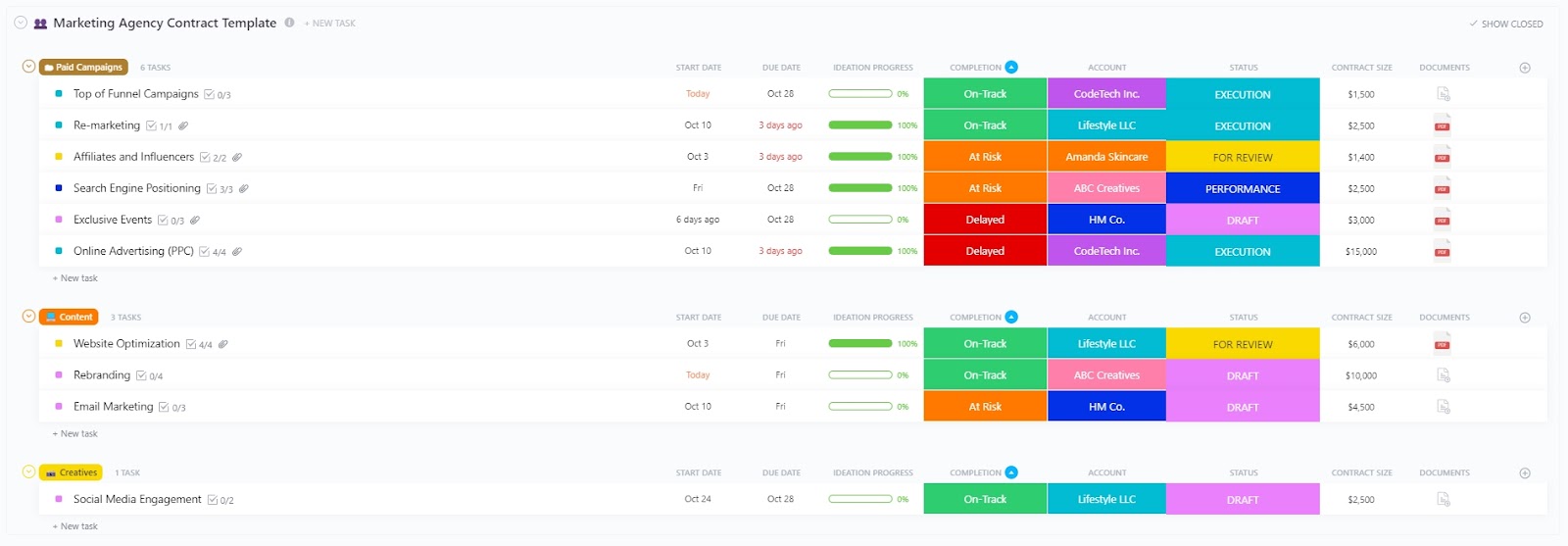
The ClickUp Marketing Agency Template is built for agencies that manage campaign cycles across multiple clients. It includes Lists for creative requests, pre-built Custom Task Statuses for review flows, and Custom Fields for platform and format.
The template also includes views like Contract Timelines and Account Overviews, giving you instant visibility.
If you also manage retainers or client ops alongside creative delivery, the ClickUp Agency Management Template will help you get set up faster.
This Reddit review really says it all:
We’ve been running our agency on ClickUp for about half a year now, and honestly, it’s changed how we work in ways I didn’t expect. At first I was skeptical about all the extra features, but they’ve grown on me. […]Their Docs system has quietly replaced most of our Google Docs work. Everything just flows better when our documentation lives in the same place as our projects. The team adapted to it faster than I thought they would. I was on the fence about ClickUp Brain at first, just seemed like another AI gimmick. But it’s saved me from some tedious writing tasks, especially when I need to summarize lengthy client emails or get a draft started. Not perfect, but helpful when I’m swamped. […] Like anything, it took some getting used to, and there are still moments when things feel a bit clunky. But looking back at how we worked before, I wouldn’t want to go back.
via Wrike
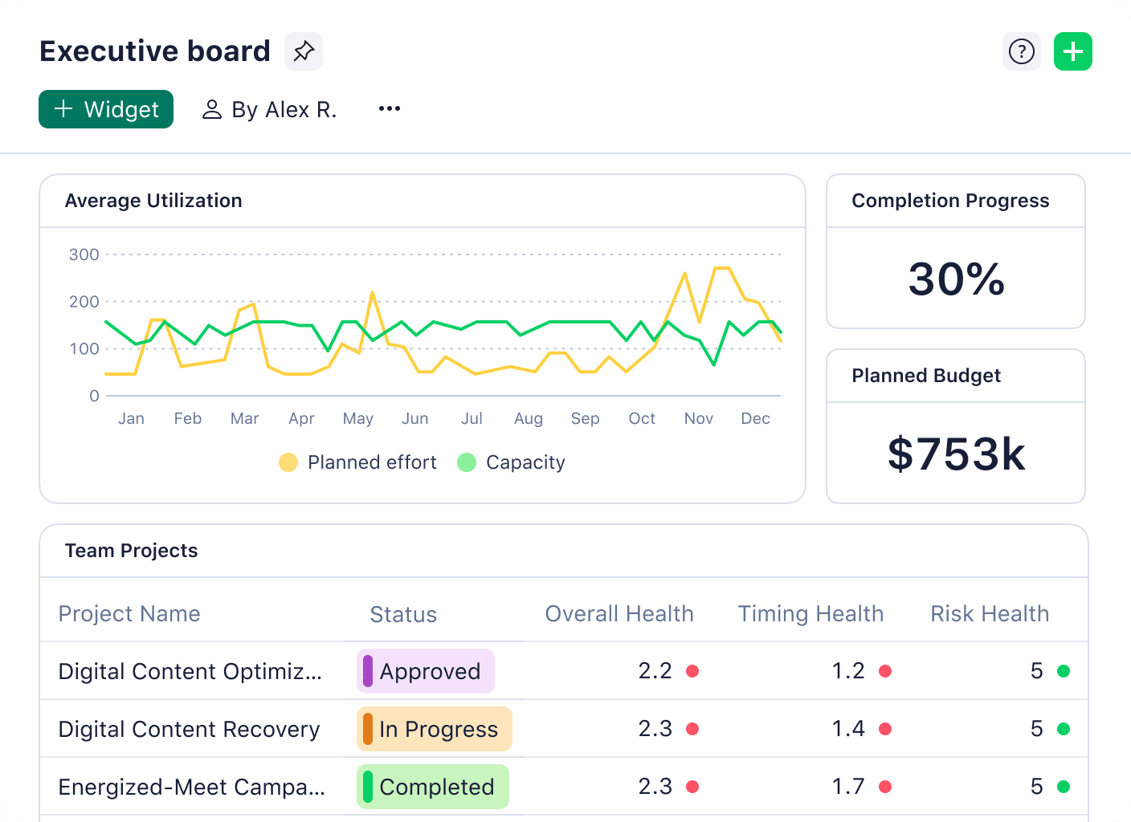
You know that sinking feeling when a client asks for ‘the logo with the blue background’ and you realize there are 12 versions scattered across different folders? Wrike gets it.
This Asana alternative for marketing agencies shines when you’re handling multiple demanding clients who each have their own special way of doing things.
Your biggest headache—getting everyone on the same page about project requirements—gets solved through marketing templates. No more starting from scratch every time you onboard a new client or launch a familiar campaign type.
Here’s a Reddit user’s opinion on this tool:
I’ve used a ton of PM systems and I really like Wrike. Not just because I’m a PM, but for the fact that 30 members of my team all picked it up easily and use it daily. It makes my job as a PM much easier that we have 100% adoption of a software. It’s a really complex system though from the backend; setting up custom fields, custom item types, building submission forms, etc. It has a bit of a learning curve from the PM standpoint, but it does a LOT.
🔍 Did You Know? David Ogilvy, often called the father of modern advertising, didn’t start out in marketing. After leaving Oxford, he trained as a chef in Paris and later sold AGA stoves door-to-door in Scotland. He was so good at it that he wrote a sales manual in 1935, which was later praised by Fortune as one of the best ever written.
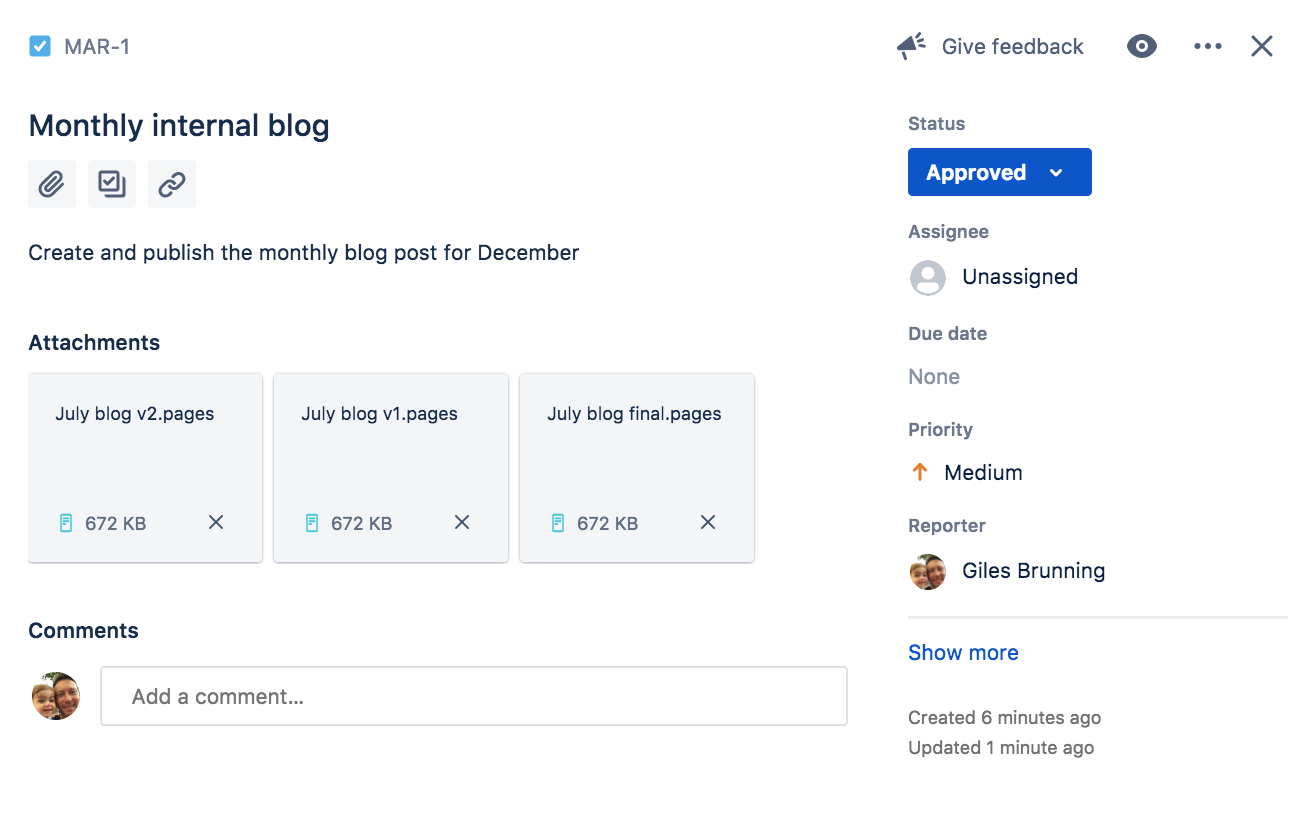
via Atlassian
Here’s the thing about marketing campaigns: they change. A lot. Sometimes hourly. Jira recognizes this reality because it was designed for software development, where requirements shift faster than fashion trends.
While your competitors are still trying to force marketing into waterfall processes, you’ll be adapting on the fly. The customization depth means you can model exactly how your team works rather than conforming to someone else’s idea of ‘best practices.’
Straight from a G2 review:
Jira makes it incredibly easy to break down complex projects into manageable stories and tasks. I really like the ability to create custom workflows, assign tasks to team members, and track progress in real-time. The visual tools like Kanban and Scrum boards are especially helpful for staying organized and keeping everyone aligned.
🧠 Fun Fact: The original meaning of the word ‘brand’ comes from livestock. Ranchers burned unique marks onto cattle to indicate ownership. Marketers co-opted the term to describe products that ‘stuck’ in consumer minds.
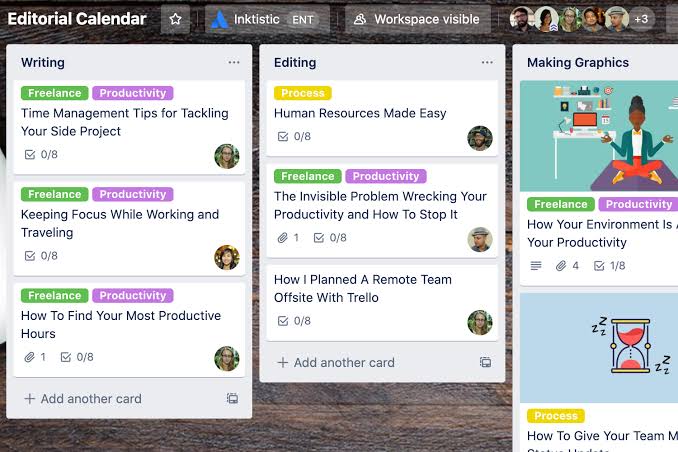
via Trello
Content writing service providers thrive on visual organization that shows the big picture at a glance.
Trello’s card-based approach mirrors how editorial teams naturally think about content pipelines and campaign flows. The Asana alternative works particularly well for agencies that prioritize simplicity over feature complexity.
Butler automation handles the mundane tasks that eat up creative time, while multiple view options let different team members see projects in their preferred format.
A G2 reviewer shared this feedback:
I’ve used Trello for years and it has never failed to deliver – it’s super easy to use even for larger, company-wide projects. And it is SUPER easy to learn to use. I love that it has so many integrations and automations – we were able to automate task assignments, deadlines, client deliveries, and operational adjustments all within Trello. Honestly, it made managing a big team and multiple projects a breeze.
➡️ Read More: Free Consulting Proposal Templates to Win Clients
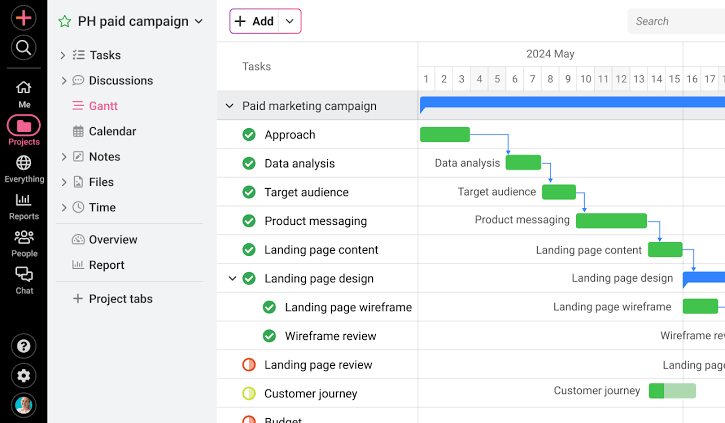
via ProofHub
ProofHub recognizes that most marketing work involves visuals that need stakeholder sign-off, and email chains are where creativity goes to die. The Asana alternative for marketing agencies brings order to the chaos of creative reviews through structured approval processes that actually work.
What makes it particularly smart is how it handles client permissions—giving them exactly what they need to see without drowning them in features they’ll never use.
The custom forms help capture those rambling initial briefs that usually come as stream-of-consciousness emails.
From a G2 review:
What I like best about ProofHub is how it simplifies managing various aspects of content marketing. As I can handle everything from content creation and collaboration to proofing, all from one place. Once we finalize campaign objectives, I use the ‘discussion’ board to document our plan and make adjustments on the go. I really like its ability to create custom workflows and manage tasks using the ‘board’ view. […] The ability to review and approve creative assets on time, share feedback, and manage external collaborators with ease is a huge advantage. Plus, collaborating outside the organization without paying anything extra is a huge plus for us.
Your agency’s not a mess, your process is.
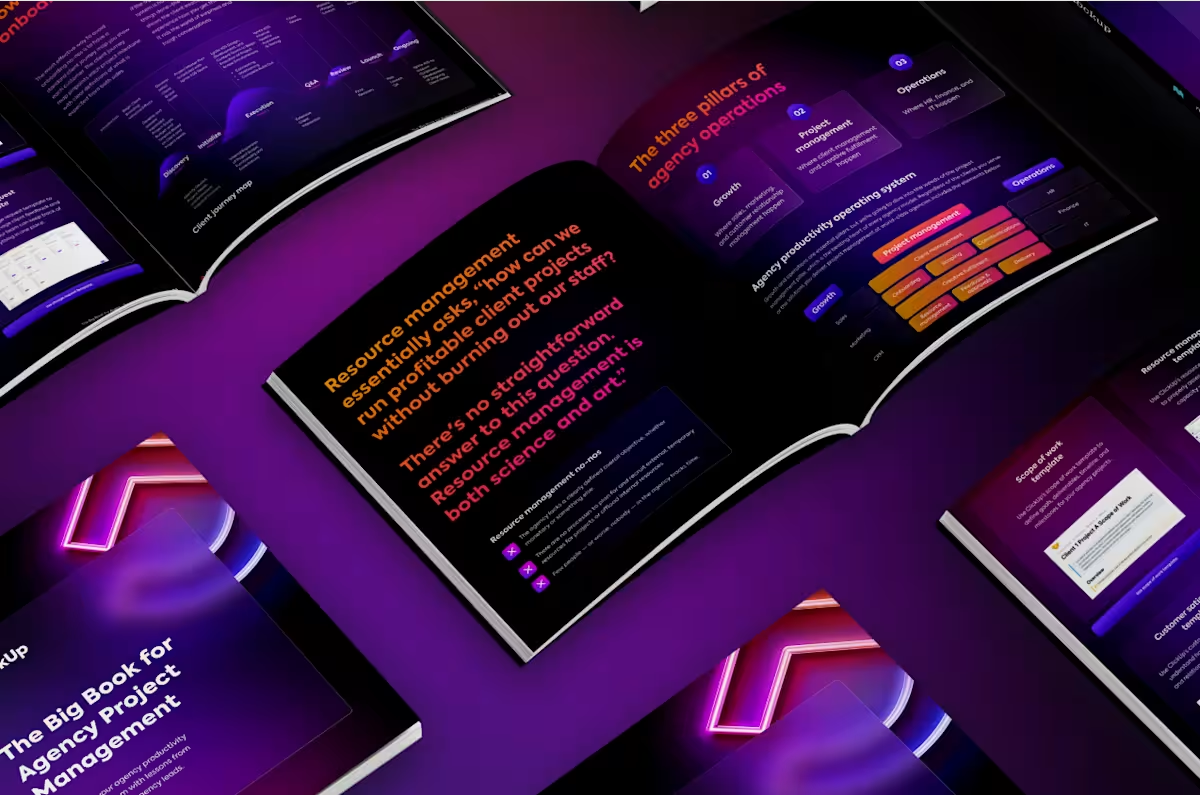
Fix it with The Big Book for Agency Project Management: a no-BS playbook packed with real strategies agencies use to run smoother projects, keep clients happy, and actually make money doing it.
via Teamwork
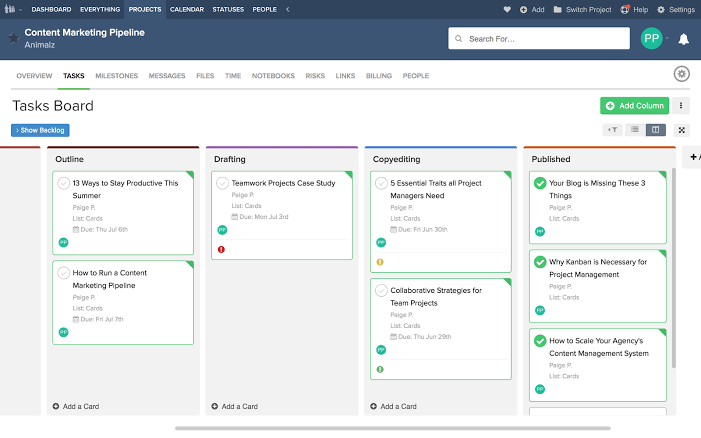
Running an agency means walking a tightrope between keeping clients happy and maintaining a profitable business. Teamwork doesn’t pretend that these goals always align, but it helps you manage both simultaneously.
The project management tool treats client collaboration as a first-class feature rather than an afterthought, which makes a huge difference when you’re trying to maintain professional relationships while hitting deadlines.
This comes straight from a Reddit thread:
My company uses it, I quite like it and I would like to work in the future with it. My experience with Jira is limited, but I would prefer Teamwork if I had to choose between the two. A lot of functions work based on calendar start and due dates and estimates so if your org can manage to have both, then it will have the most use out of it, estimates work by hours (I am not sure if this can be configed to Fibonacci or something else)
💡 Pro Tip: To grow your digital marketing agency, build a ‘conversion insights vault.’ After every campaign, document what worked, what didn’t, audience behavior trends, and creative angles. Over time, this becomes a marketing roadmap with tested strategies that sharpen your edge and speed up results for future clients.
via Airtable
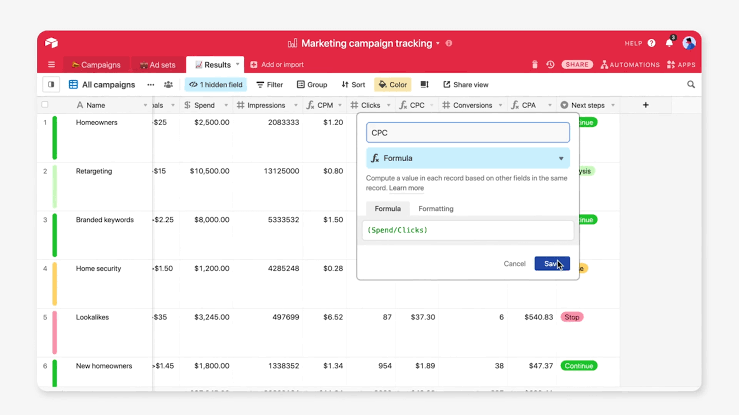
Airtable brings database power to project management in ways that Asana simply can’t. Marketing agencies can build custom workflows that connect campaign budgets to timelines, track creative assets through attachment fields, and set up automated approval processes that make sense for client work.
The beauty lies in how you can slice and dice this interconnected data in countless ways, revealing insights that would stay hidden in other Asana alternatives for marketing agencies.
Here’s a G2 reviewer’s take:
Once I was able to understand how Airtable is able to take simple data, and then filter it into views of information that can tell you insightful stuff: like, how many projects a designer has at any given time, how much time is being wasted on edits, how many projects actually help us hit our goal – it became a game changer. Customizing the data to show you what you need to know is pretty easy once you get the hang of it.
⚙️ Bonus: Want to scale quality output without burning out your team? Start using content writing templates tailored to each stage of the buyer journey.
📮 ClickUp Insight: 37% of our respondents use AI for content creation, including writing, editing, and emails. However, this process usually involves switching between different tools, such as a content generation tool and your workspace.
With ClickUp, you get AI-powered writing assistance across the workspace (+ the use of multiple AI models like ChatGPT, Gemini, and Claude)—all while maintaining context from your entire workspace.
via ActiveCollab
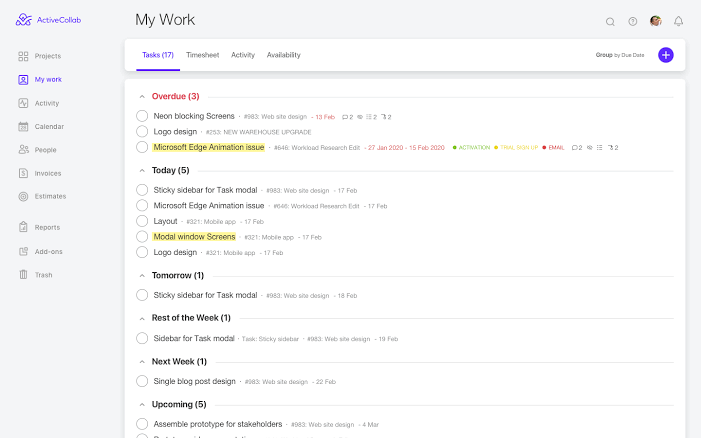
ActiveCollab fixes the annoying gap between doing the work and getting paid for it.
Your team logs time directly on project tasks while collaborating through visual proofing tools, and that tracked time transforms into professional invoices without the usual spreadsheet gymnastics (you know what we’re talking about!).
Watch project budgets shift from green to red in real time as hours accumulate, catching scope creep before it kills profitability.
Here’s what a G2 review says about this Asana alternative for marketing agencies:
The workload view was very helpful for resource management, and the ability to switch between the kanban view and list view was helpful. The most useful area of the entire product was the timetables and users being able to easily and quickly track time towards similar or repeating tasks.
Life of an agency owner in one photo.
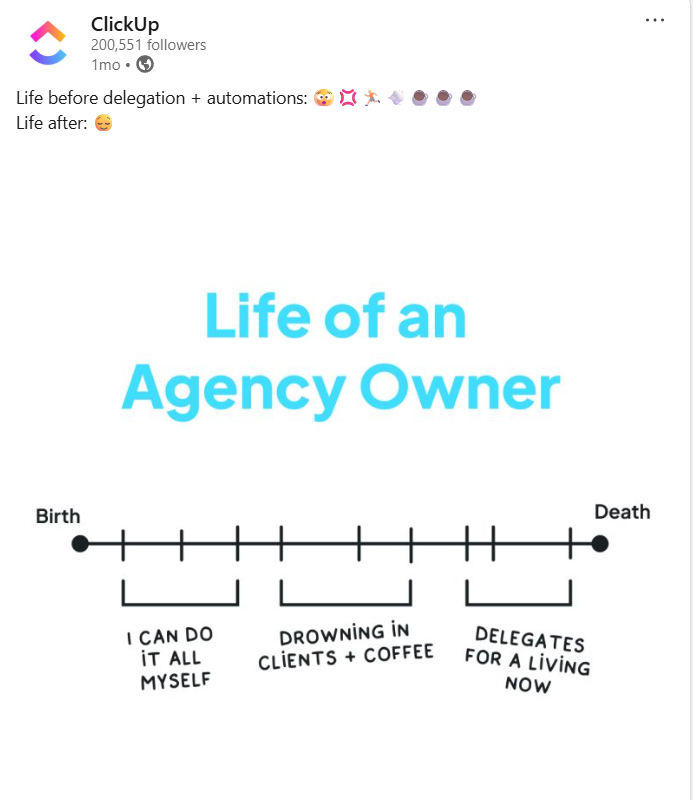
If this hits close to home, we’re sharing more real agency ops talk over on our LinkedIn.
via Basecamp
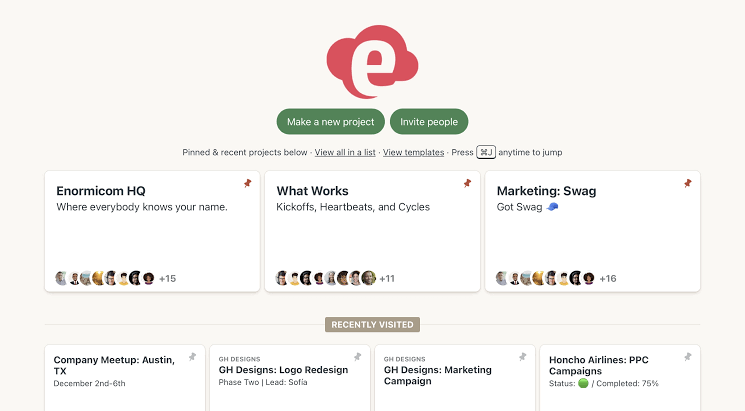
While most Asana alternatives for marketing agencies pile on PM features, Basecamp strips them away to focus on keeping everyone informed and accountable. The platform works well for agencies drowning in communication chaos across multiple channels.
Your clients will love it because they can participate meaningfully without needing a training manual, and your team will appreciate not having to learn yet another complicated system.
According to a Reddit post:
Switched to Basecamp a while back to manage projects for our marketing team (5 people). Sold on the simplicity and clean interface. Perfect for basic task management and keeping track of conversations. Here’s the thing: As our team grew and projects became more complex, Basecamp started to feel limiting.
💡 Pro Tip: Stop guessing who’s ready to buy. Using AI for lead generation lets you zero in on high-intent prospects by analyzing behavior patterns in real time. Think fewer cold leads, more laser-focused outreach, and smarter follow-ups that actually convert.
via Zoho
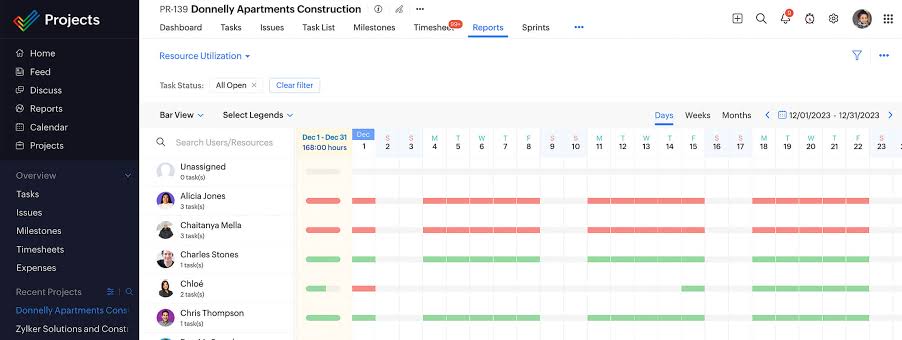
Marketing doesn’t happen in a vacuum—it connects to sales pipelines, customer service issues, and broader business operations. Zoho Projects gets this interconnected reality and plays nicely with the entire Zoho ecosystem.
The alternative to Asana shines when you need to coordinate marketing efforts with other business functions without constantly switching between different tools. Blueprint workflows help standardize those repetitive processes that every agency has but rarely documents properly.
This is what a Reddit user had to say:
It’s pretty good. Interface could use some love. They just redesigned it like last year and some of the changes had me scratching my head. Overall it’s nice and if you have Zoho one it’s a no brainer.
📽️ Behind The Scenes: Learn how ClickUp’s marketing team uses ClickUp to scale content, campaigns, and conversions.
Asana alternatives for marketing agencies aren’t hard to find, but most of them solve only parts of the problem.
ClickUp covers the whole thing. It’s the everything app for work, which means your team doesn’t have to jump between tools just to launch one campaign.
You can spin up custom workflows that match each client’s process, track every deadline without extra coordination, and move from brief to review without losing momentum.
Sign up for ClickUp today! ✅

© 2026 ClickUp

There’s an easier way. Try a free AI Agent in ClickUp that actually does the work for you—set up in minutes, save hours every week.