
Product Adoption: Definition, Stages, Challenges, and Improvement Strategies

Sorry, there were no results found for “”
Sorry, there were no results found for “”
Sorry, there were no results found for “”
If only we could have a magic spell that turns prospects into loyal customers, every business would be the next Apple, Inc. 🧙♂️
Since that’s not the case, you must figure out effective strategies to drive product adoption. You must build a robust product, invest in its marketing, and boost user engagement and make users sticky.
What’s stickiness? Stickiness is best explained by how we scroll on Instagram or Twitter for hours together. Thats makes us sticky users. It’s every product owner’s dream.
In this guide, we’ll discuss all things product adoption. Besides the basics needed to understand the concept, we’ll explore the methods of measuring it, common challenges and how to overcome them, and strategies you can implement to boost product adoption and customer success.
Product adoption, or user adoption, is the process your customers go through before deciding to integrate your new product or feature into their daily lives or business operations. It represents the completed set of actions that signifies the new users have found value in the product. ✨
Product adoption is similar to product acquisition but they have distinct goals:
Both concepts are essential, but it is product adoption that indicates long-term customer success. Having many visitors is a great start, but it won’t mean much if those visitors don’t convert into buying customers.
Product adoption is a universally adopted key performance indicator (KPI). It helps product teams understand whether their product strategy and development efforts are successful. It’s reflected in many other sales and product management metrics, some of which include:
The aim is to identify and quantify the actions that indicate product adoption. By doing so, we can objectively assess whether our product has met its primary goal—providing the benefits it was designed for.
When you know which actions convert new users into long-term users, you can optimize the product so the users repeat said actions.
Even a slight increase in the product adoption rate is highly impactful. The sooner the users adopt the product, the sooner they’ll find value in it and the more value they’ll accumulate over time.
The new product adoption process represents the customer journey from the initial discovery to repeated product use. It usually consists of the following six stages:
You should treat each product adoption stage with the same level of care and attention. They’re all crucial to getting the user to the finish line, which is satisfaction with the product. 🏁
During the awareness stage, users discover your product and its potential benefits. This is where product marketing steps onto the stage.
Marketing ensures your target user base becomes aware of your product and its ability to solve their problems. In some cases, it even unearths the problems themselves.
For your product development and marketing efforts to be effective, you must have a deep understanding of the customers’ pain points. 💥
Having an established and well-known brand can give you a headstart. If the users already trust you, they’ll be more willing to try and adopt your new product or feature.
If the awareness campaign is fruitful and the users feel like your product has the potential to benefit them, they will become interested in it. They will continue exploring your product, assessing how it aids in their jobs to be done (JTBD).
Many factors can influence users’ interest. For instance, discovering the product at the right time can be pivotal in the users’ decision to investigate it further. 🔍
When it comes to innovative and unconventional solutions, you need to invest more in marketing to convince the users to look into them.
Bonus: Jobs To Be Done Templates!
At the evaluation stage, users are considering your product as a viable solution to their problems. They’re paying attention to its cost and additional benefits like customer support. It’s crucial to make all the information easily accessible to them.
Potential customers and users will also seek word-of-mouth recommendations and online reviews. They will compare your product to other options on the market. Finally, they’ll decide whether to try the product or not.
During the evaluation stage, you should focus on highlighting the advantages of your product over its competitors, allowing your product positioning efforts to come to the fore. Offering discounts, bonuses, free trials, and demos can tip the scale for some users. ⚖️

At this point, users are sampling your product. They’re weighing factors like:
Success at this stage depends on the design of your product and its onboarding experience. Make sure to provide sufficient resources and support to facilitate learning about your product’s capabilities. 🦸
To identify areas for improvement, use heatmaps and session recordings. Qualitative feedback in the form of interviews and surveys is also valuable.
Activation occurs when users first discover the true worth of your product. This stage is the necessary stepping stone between the initial exploration and full endorsement. 👞
Your job is to help the users reach the activation stage as soon as possible. Activation may look different depending on the user profile, so you should adjust your efforts accordingly.
You can accelerate the process by showcasing examples of using your product and offering templates to help them get started quickly.

When users adopt your product, it means they’ve made it a regular part of their personal or professional lives. The price they’ve paid and the effort they’ve invested into exploring and testing have now paid off. If the product hits the spot for them, existing customers may even spread the word and become promoters of your brand. 🗣️
Now that you’ve gained the users’ trust, direct your efforts toward keeping it. You can do so through customer retention strategies, loyalty programs, milestones, and continuous product improvement.
We measure product adoption with the product adoption rate, which is the percentage of potential users who have become regular users of the product, i.e., loyal customers.
Product adoption is a complex concept, so measuring its true scope can be challenging. First, you must define what constitutes the adoption event—the series of actions that indicate the user’s acceptance of the product.
To determine how much value customers are getting from the product, we use various product adoption metrics, such as:
Analyzing product adoption metrics gives us the tools to track and analyze user behavior and preferences. They allow us to hone our product development strategy to ensure continuous user satisfaction.
Below, we’ll discuss the most common product adoption roadblocks companies face and propose some solutions:
Users won’t adopt your product if they don’t know it exists or recognize the need for it. The competition is usually high, so you must find a way to stand out and raise awareness about your product. Here’s how you can do that:
With a valuable product and effective marketing, you can achieve critical mass even before the product launch, setting your product up for success. 🌟
Say the users are aware of your product and find it promising. They go on to try it enthusiastically but are met with confusing design, a deluge of features, or annoying bugs. Their enthusiasm will likely dwindle. They won’t even test the product, let alone adopt it.
To nip this problem in the bud, do the following:
Even if the user is aware and fond of your product, they won’t adopt it if its price is too high for them, especially if a competitor offers it for cheaper.
This problem is prevalent and difficult to solve. Lowering your prices is not always possible.
It’s all about finding that balance—accounting for production and labor costs but still making the product affordable to your target user base. Users may be willing to shell out if the product is unique and provides high value. 🪙
Below, we’ll share some tips to help you boost product adoption. You’ll also learn how a comprehensive project management platform such as ClickUp can support you throughout each stage of the product adoption process.
The chase for product adoption begins with the conception of the product. To develop a product that users can’t live without, you must first understand their pain points and preferences. Then, you should use that knowledge to build a must-have, user-friendly product.
Proper organization is essential to any operation, especially a complex one such as product development. A productivity tool like ClickUp can make the product managers’ job easier and less stressful.
ClickUp’s features for product teams are various. The app can act as a hub for all your knowledge and documentation, strategic planning, release management, and sprint tracking.
With its hierarchical structure and ClickUp Tasks, you can assign and schedule work, dividing it into subtasks and checklists. ClickUp’s selection of over 15 Views and 20 Custom Field types lets you personalize your workspace to meet your needs.
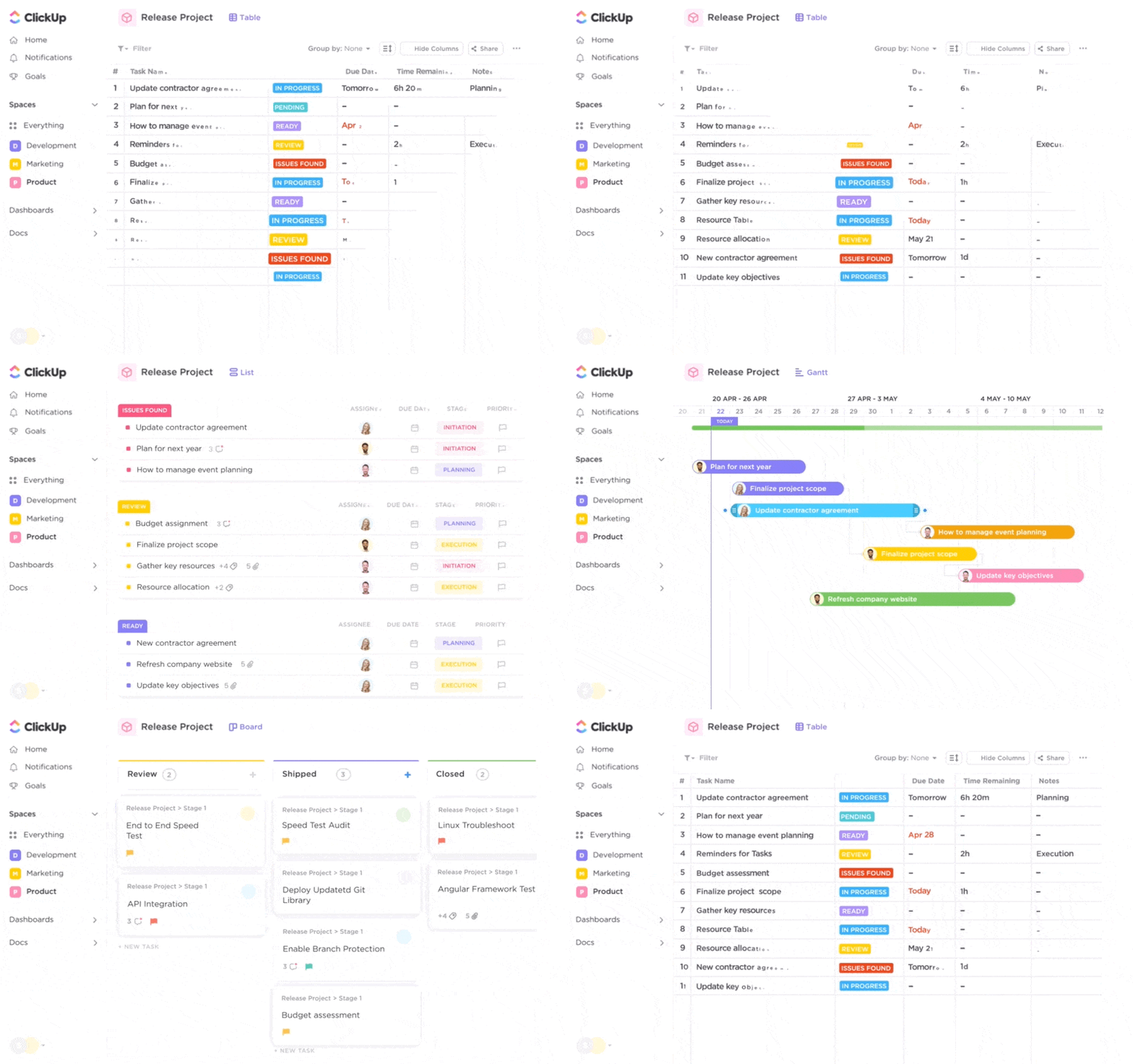
For example, the classic ClickUp Board view makes it easy to visualize upcoming work, such as issues, updates, and product marketing campaigns.

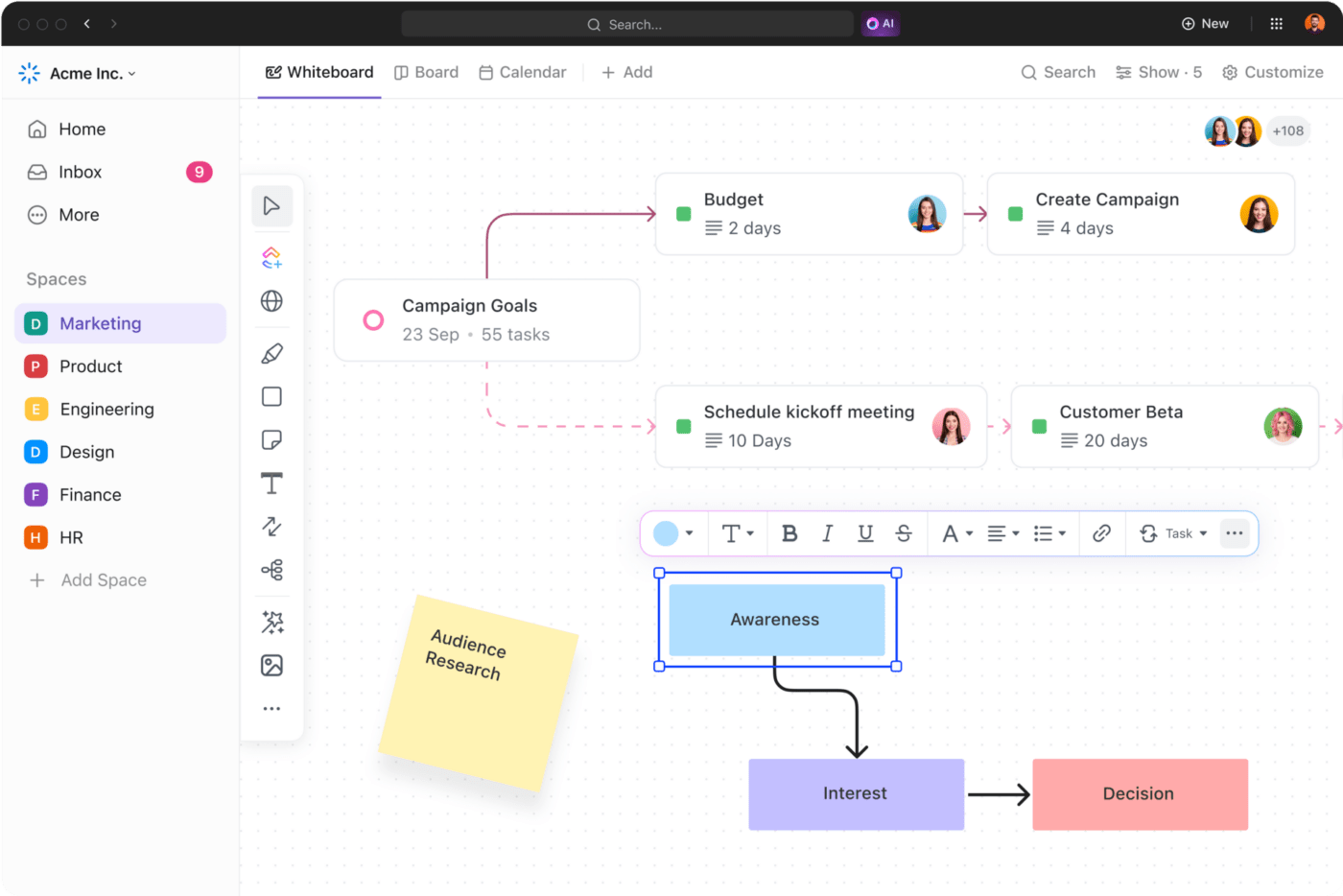
You can use ClickUp Whiteboards to brainstorm with your team and craft engaging strategic roadmaps and user journey maps. 🗺️
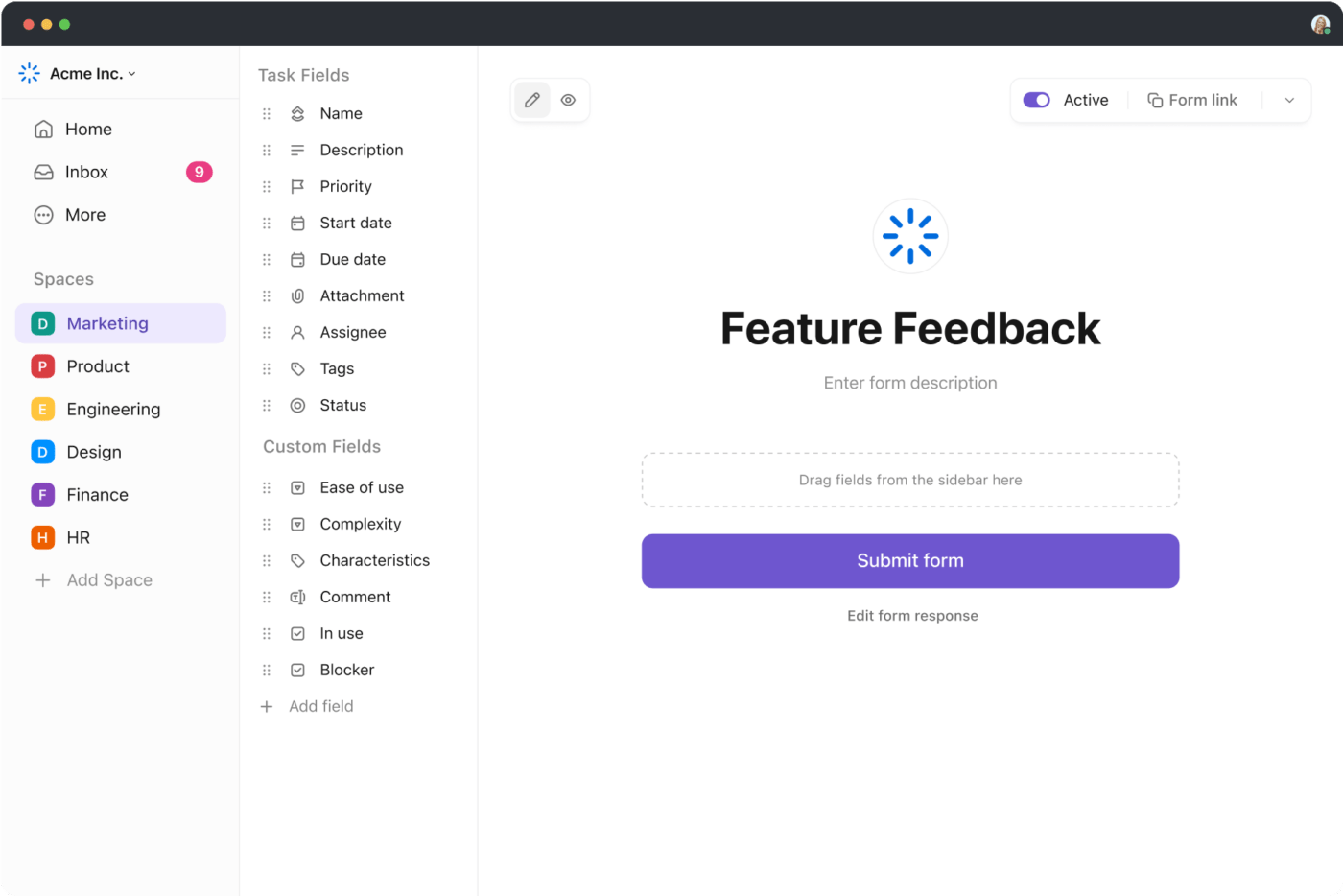
ClickUp Forms allow you to build and distribute surveys to collect information about users’ needs, bugs, and product feedback. To save you time and effort, responses can automatically convert into tasks. You can detect and resolve issues promptly, keeping customer satisfaction intact.
ClickUp integrates with many development tools, such as GitHub, GitLab, and BitBucket, allowing you to streamline your development workflow.
Creating hype around your product is a necessary step toward adoption. You should publish content such as blogs and social media posts, educating the audience about your product and the problem it’s trying to solve. Doing so also allows you to build authority and establish trust in your company and brand.
You can use ClickUp to plan and execute your marketing campaigns. Craft engaging content with ClickUp Docs and its rich formatting options. 🖋️
Meanwhile, ClickUp AI is your trusted AI writing assistant. In only a few seconds, it can draft campaign outlines, propose ideas, summarize notes, check the spelling of your marketing content, and much more!

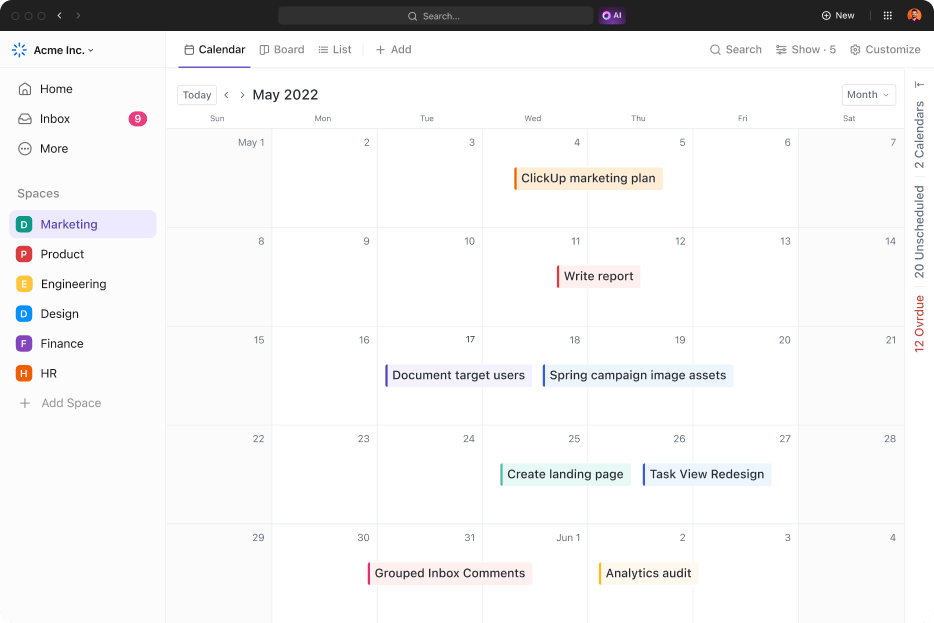
You can also manage the publishing of your marketing content within the app, as ClickUp’s Calendar view doubles as a content calendar. All you need to do is create content tasks and drag and drop them onto the calendar to schedule them. The view is highly customizable, allowing you to switch between daily, weekly, or monthly views and add colors, emojis, and filters.
Once the users are past the awareness stage and considering trying or buying your product, it’s important to make it easy for them to get answers. You should provide comprehensive information on your website and create mid and bottom-funnel content such as tutorials and product comparisons.
You should monitor your product’s performance and gather user input throughout every stage of product development and adoption. Doing so lets you be objective and make decisions that will propel your product toward success. 🙌
During the awareness stage, use SEO research tools to determine what topics your user base is interested in. Track product adoption metrics such as page views and the bounce rate to assess the performance of marketing content.
As users become more interested, track the number of booked calls, demos, and sign-ups. Use heatmaps and session recordings to understand how users interact with your product.
Gathering qualitative information is also crucial. Create and share ClickUp Forms to:
If you measure progress during project development, you can detect bottlenecks and get ideas on improving your workflow.
ClickUp Goals allows you to track progress toward specific targets and goals, whereas ClickUp Dashboards gives you a real-time overview of your work and resource usage. With over 50 cards, you can customize your Dashboard to display the info you need.

After you’ve hooked users in, do what you can to nurture the connections.
Communicate with users in-app and externally via email. Offer support during onboarding, especially if your product has a steep adoption curve. Provide positive reinforcements for specific behaviors, celebrating each milestone. Share tips, update users on new features and changes, and offer loyalty programs and discounts as a way to say thank you. 🙏
Doing so will solidify your relationship, ensuring your users transform from early adopters to advocates.
Product adoption is not an easy concept to grasp and sway. Having a well-thought-out plan and an efficient workflow can help, though. A product management tool like ClickUp assists you in your efforts, enhancing productivity and team collaboration across the board.
With your workflow in order, an excellent and evolving product, and continuous performance assessment, your product will stand out in the competitive market and your users will remain content. 😊
Sign up for ClickUp and discover all the ways it can ensure seamless product development and adoption.

Sudarshan Somanathan
Max 29min read

Praburam Srinivasan
Max 22min read

Manasi Nair
Max 21min read

© 2026 ClickUp




