Sorry, there were no results found for “”
Sorry, there were no results found for “”
Sorry, there were no results found for “”
The average worker receives 117 emails and 153 Teams messages a day, according to a report on the infinite workday. A good share of those messages carry a task. Task management software exists to catch them before they sink.
Every task has two customers. The person doing it needs to capture it in seconds and see what’s due today. The person waiting on it needs to know who owns it and when it will land. When a team buys a tool built only for the second customer, the people doing the work keep a private list on the side. Call it the shadow list. The official board goes stale, and status meetings fill the gap.
This guide sorts 10 task management tools by which customer they serve: team platforms, personal apps, and the few that try to serve both. For each tool, the question is the same: will the people doing the work put their tasks here, or continue to keep a shadow list?
TL;DR: Shadow lists form when adding a task to the team’s tool takes longer than writing it down somewhere else. Pick software the people doing the work will use, then match it to where your work starts.
If you’re hacking timeline views into Planner, Monday seems like the fix. But teams that scaled past 15 people on Monday hit the same wall. This migration checklist covers the move that actually lasts.👇🏼
| Tool | Best for | Standout feature | Starting price | G2 rating | Where it taps out |
| ClickUp | Keeping personal and team views on the same task | My Tasks page and Personal List, plus Tasks in Multiple Lists | Free Forever; paid plans available | 4.6/5 | More setup than a solo list needs |
| Asana | Cross-functional teams that run on rules | Unlimited rules on paid plans | Free; Starter $13.49/user/month | 4.4/5 | Free plan stops at two people |
| monday.com | Teams that want to build their own boards | Custom columns on every board | Free; Basic $9/seat/month (billed yearly) | 4.7/5 | Automation actions are capped by plan |
| Trello | Small teams that want a Kanban board running today | Inbox that captures from email, Slack, and Teams | Free; Standard $5/user/month (billed yearly) | 4.4/5 | No native task dependencies |
| Microsoft Planner | Teams already living in Microsoft 365 and Teams | My Day and My Tasks pull work from meeting notes and Loop | Included in Microsoft 365; Plan 1 $10/user/month (billed yearly) | 4.2/5 | Key views sit behind separate licenses |
| Jira | Software teams moving issues through enforced workflows | Workflow rules that block skipped statuses | Free; Standard $9.70/user/month | 4.3/5 | Heavy for non-technical teams |
| Wrike | Teams handling a steady stream of requests and reviews | Interactive Gantt charts and shareable dashboards | Free; Team $10/user/month (billed yearly) | 4.2/5 | Seats sold in groups of five or more |
| Todoist | Individuals who capture tasks by typing a sentence | Natural-language Quick Add | Free; Pro $7/month | 4.5/5 | Full team workspace needs Business |
| TickTick | Personal planning with a calendar and focus timer built in | Eisenhower matrix and Pomodoro timer in one app | Free; Premium $49.99/year | 4.5/5 | Shared lists cap at 29 members |
| Things 3 | Apple users who want a list they buy once | One-time purchase, no subscription | $49.99 one-time (Mac) | Not enough reviews | Apple devices only |
Our editorial team follows a transparent, research-backed, and vendor-neutral process, so you can trust that our recommendations are based on real product value.
Here’s a detailed rundown of how we review software at ClickUp.
Task management software refers to a tool category where the core unit is the task: something you can create, assign to yourself or a teammate, give a date, and track to done. Reminders, recurring tasks, and a view of what’s due next are the minimum features. Everything else is a layer on top.
Inside the category, there are two kinds of products. Personal task apps such as Todoist, TickTick, and Things 3 are built around one person’s list and the speed of getting a thought into it. Team task tools such as Asana, monday.com, Trello, Microsoft Planner, Jira, and Wrike are built around shared projects, owners, and status. The shadow list forms in the gap between them. A personal app is fast to capture information, but the team can’t see it, and a team tool is visible to everyone but slow to capture information. A few platforms, ClickUp among them, try to give each person a personal view of tasks that live in team projects.
The shared project is also where task tools start to overlap with the broader types of project management software, but they answer different questions. A task manager answers “what do I do next, and is it done?” A project management platform adds the questions around it: which tasks depend on others, who has capacity, and whether the whole project lands on time. The difference between project and task management matters when you’re shopping, because a project tool can feel heavy to someone who just needs a list.
How we picked the 10: A tool qualifies if its core object is a task you can create, assign, date, and track to done. It also needs reminders, recurring tasks, and published pricing or a permanent free plan. Tools that missed the cut, including docs-first workspaces such as Notion, are in the “worth watching” section at the end.
A shadow list forms when adding a task to the team’s task management software takes longer than writing it down somewhere else. People pick the faster option every time. The task then lives in two places, and only one of them stays current.
Picture a five-person marketing team running campaigns on a shared board. The designer gets three requests a day in Slack. Opening the board, finding the right project, and filling in four fields takes a minute, so she types the requests into her phone’s notes app instead. Her card on the board says “In progress” for nine days. The marketing lead schedules a status meeting to find out what’s happening, and the meeting becomes the real tracking system.
The pattern shows up in reviews, too. On G2, one project manager describes running TickTick as a personal system to keep small tasks straight across parallel projects. That isn’t a failure of TickTick, or of the team tool. It’s someone building the capture layer their team’s software didn’t give them.
You have three honest ways out:
If your own list is the starting point, these to-do list examples show how people structure the personal side.
The right tool makes it faster to add a task to your list. It should also enable visibility for your team, without creating extra copies. Finally, its free plan should fit your team size. These six checks separate the 10 tools on this list.
The best task management software depends on which side of the task you sit on. The first seven tools are built for teams, starting with the one that also gives each person a personal view. The last three are personal apps.
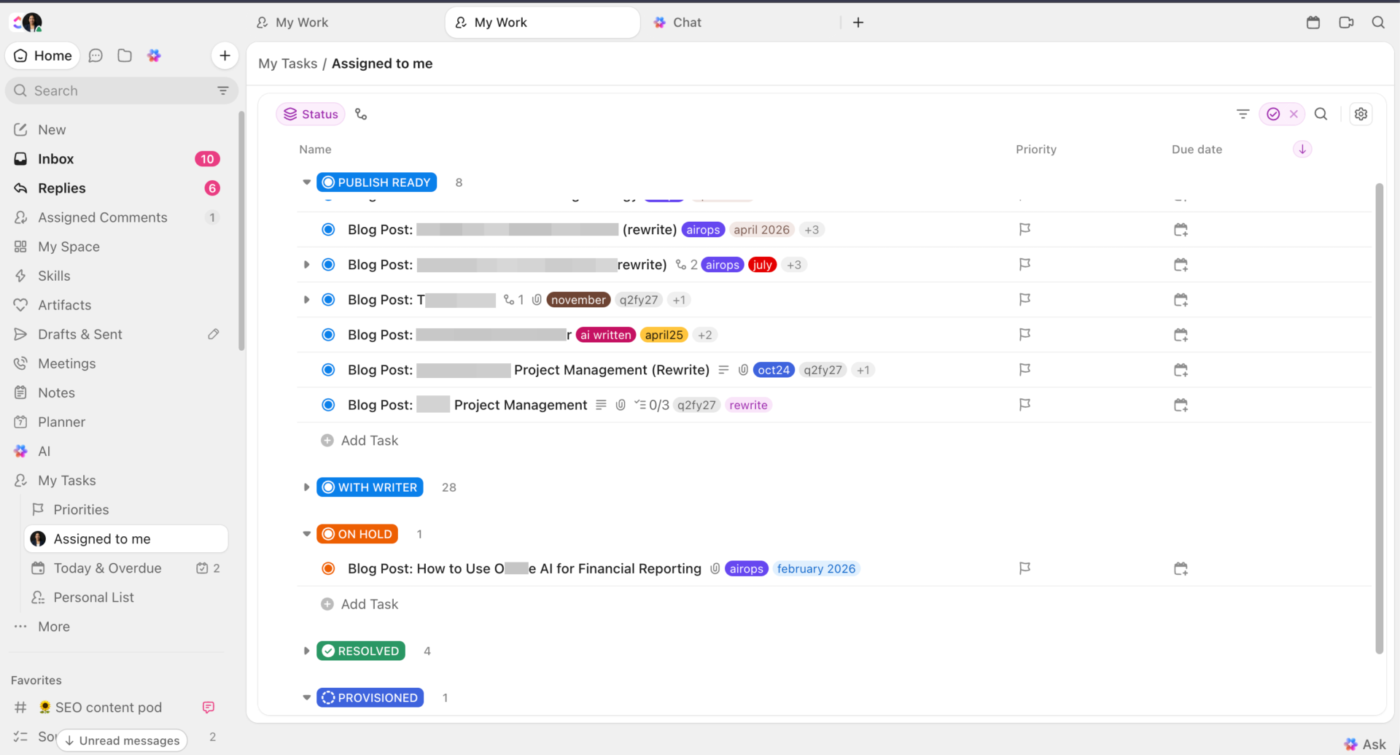
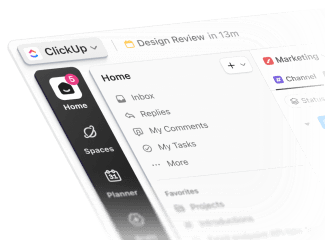
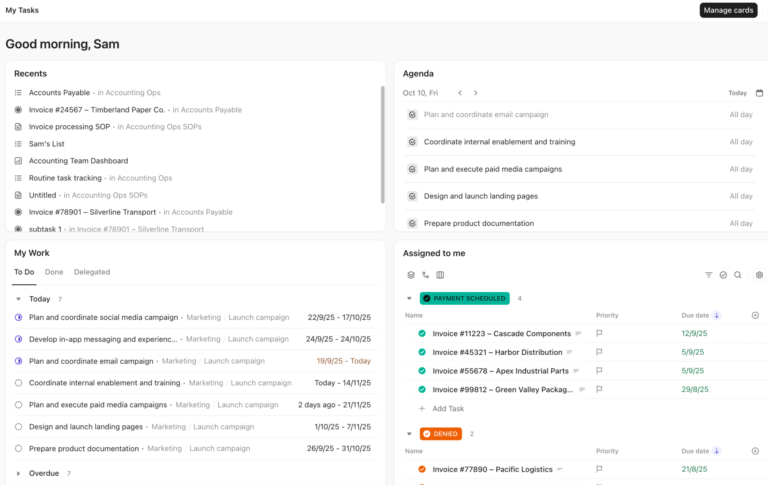
ClickUp gives each person their own view of their work and keeps it tied to the team’s projects. The My Tasks page collects the tasks assigned to you, your reminders, comments assigned to you, and a Personal List for to-dos that don’t belong to a project yet.
A manager can add tasks to a teammate’s LineUp, a prioritized list of what to finish first that shows up on that person’s page. The Planner lets you drag tasks into time slots next to your calendar events.
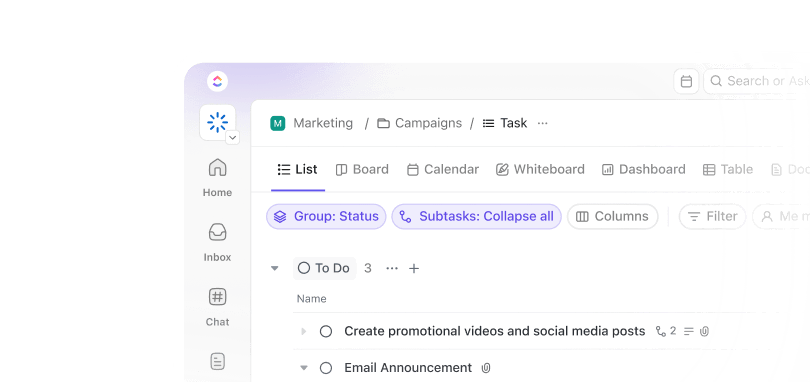
Back to the designer from earlier. She adds a Slack request to her Personal List in a few seconds. When the marketing lead moves it into the campaign List, it’s still the same task, so its status, comments, and due date stay in one place. With Tasks in Multiple Lists, it can also sit in the design team’s queue without a second copy.
ClickUp Brain answers questions about tasks across the Workspace and can create or update tasks from a prompt. ClickUp Super Agents can be assigned tasks and @mentioned like teammates, and they can find tasks that haven’t been updated in a while.
Where it taps out: ClickUp’s flexibility is also its setup cost. Spaces, Folders, Lists, custom fields, and views give a team many ways to model work, and teams coming from a single-purpose tool such as a plain to-do app need time to decide on the structure.
Best for: Keeping personal and team views on the same task.
Skip it if: You work alone and only need a fast list for your own tasks.
A user review says:
I like the consistency, structure, and visibility of tasks in ClickUp, and how easily I can see who is responsible for what. I use it to structure task briefs with context, deliverables, resources, and deadlines, and to track ownership, accountability, and project delivery. I love the templates, Docs, forms, and automations for standardizing processes and reducing repetitive admin. ClickUp helps me keep track of my work and due dates, follow progress and blockers, and reduce mental admin and work getting lost between handovers. The initial setup was quite simple.
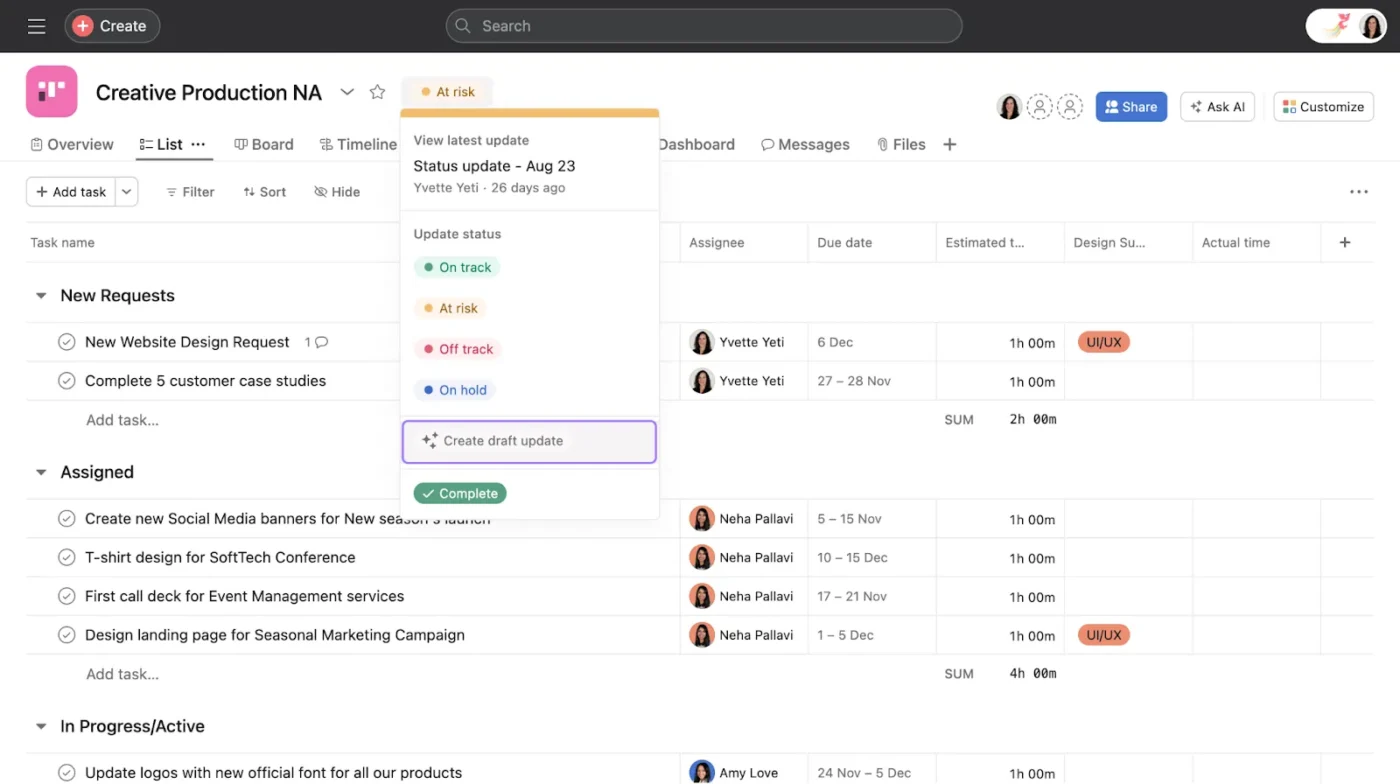
Asana’s task management is built around rules: once a team agrees on how work should move, triggers and actions keep tasks current without anyone chasing them. Every paid plan includes unlimited rules, and every person gets My tasks, a personal list of everything assigned to them across projects. A task can also be multi-homed into several projects, so a legal review task can sit in both the product launch and the legal team’s queue with one set of comments.
The rules matter most when one late task should move the next. A small renovation business, for example, can set a rule so that when a dependency slips, every downstream due date shifts with it, instead of the painter showing up to a site that isn’t ready. That’s the kind of chain operations, marketing, and agency teams run every week, and it’s where Asana sits comfortably between a simple board and a heavier project suite.
Asana’s AI comes as AI Teammates and Asana Dash, with five requests per user each month on paid plans and a per-account monthly cap that rises with the plan.
Where it taps out: Asana’s free plan is built for one or two people, so a team can’t test shared projects for long without paying. The jump from Starter to Advanced is also where goals, portfolios, and proofing live. Teams that want Asana’s structure across a whole department should price the Advanced tier from day one. If you’re weighing it against Microsoft’s tool, this Microsoft Planner vs. Asana comparison breaks down the trade.
Best for: Cross-functional teams that run on rules.
Skip it if: Your team needs a free plan for more than two people.
A user review says:
I’m a freelance web developer with about three clients at any time, and a big part of my week used to be answering the same email: “Hey, how’s it going?” Now each client gets their own project in Asana and I add them as a guest, so they only see their own tasks and nothing else. They can see what’s done and what’s next, and they leave comments right on the task. Last month a client said she never approved a homepage change. I opened the task and her “looks good, go ahead” comment was right there with the date, and the conversation ended in about a minute.
This walkthrough from the ClickUp team covers the habits behind tracking tasks across a busy week, which is the job every tool below is competing for.
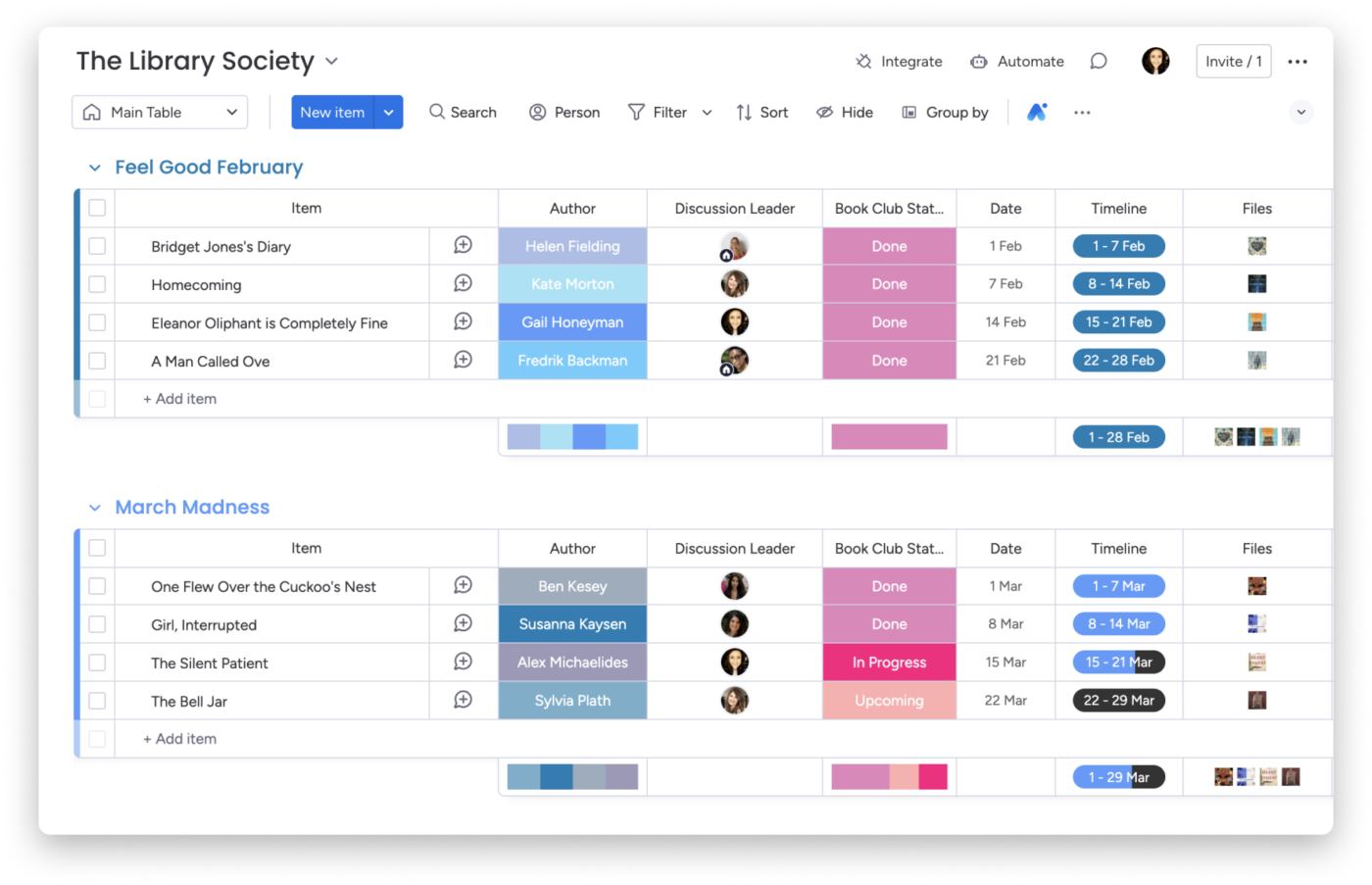
monday.com treats task management as something you assemble. A board is a table of items, and you decide which columns it carries: status, owner, date, priority, budget, a link, or a file. That makes it a good fit for operations, HR, and client-service teams whose “task” looks different from a software team’s, because the board can match the process instead of the other way round.
Each item can break into sub-items, and boards can link to each other, so a client request on one board can point to the delivery work on another. When a team’s process changes, they add or swap a column and leave the rest of the board as it is. Our full monday.com review covers the wider platform.
AI on monday.com sits inside the board. Sidekick, the context-aware assistant, answers questions about your work. AI columns fill, categorize, or summarize data across every item, and an AI agent workforce handles routine work on its own.
Each paid plan includes a monthly allowance of AI credits, starting at 1,000 on Basic. The meeting notetaker and AI columns start on Standard.
Where it taps out: Automation is metered by plan. Standard includes 250 automation actions and 250 integration actions a month, which a busy board can use up quickly, and the jump to 25,000 actions comes with Pro. Teams that plan to automate most status changes should price Pro rather than Standard. Engineering-heavy teams comparing it to an issue tracker can read this monday.com vs. Jira breakdown.
Best for: Teams that want to build their own boards.
Skip it if: You want automation-heavy workflows on an entry-level plan.
A user review says:
As someone responsible for program-level visibility across multiple active and pipeline projects, monday.com has made it much easier to break work down into tasks and keep timelines in one place, rather than juggling scattered spreadsheets or status decks. The visual board layout lets me see where each project stands at a glance, and being able to switch between timeline/Gantt views and task-level views is especially helpful depending on whether I’m reporting up to leadership or managing day-to-day execution with the team. It’s also flexible enough to tailor boards to different project types, without creating a steep learning curve for new team members.
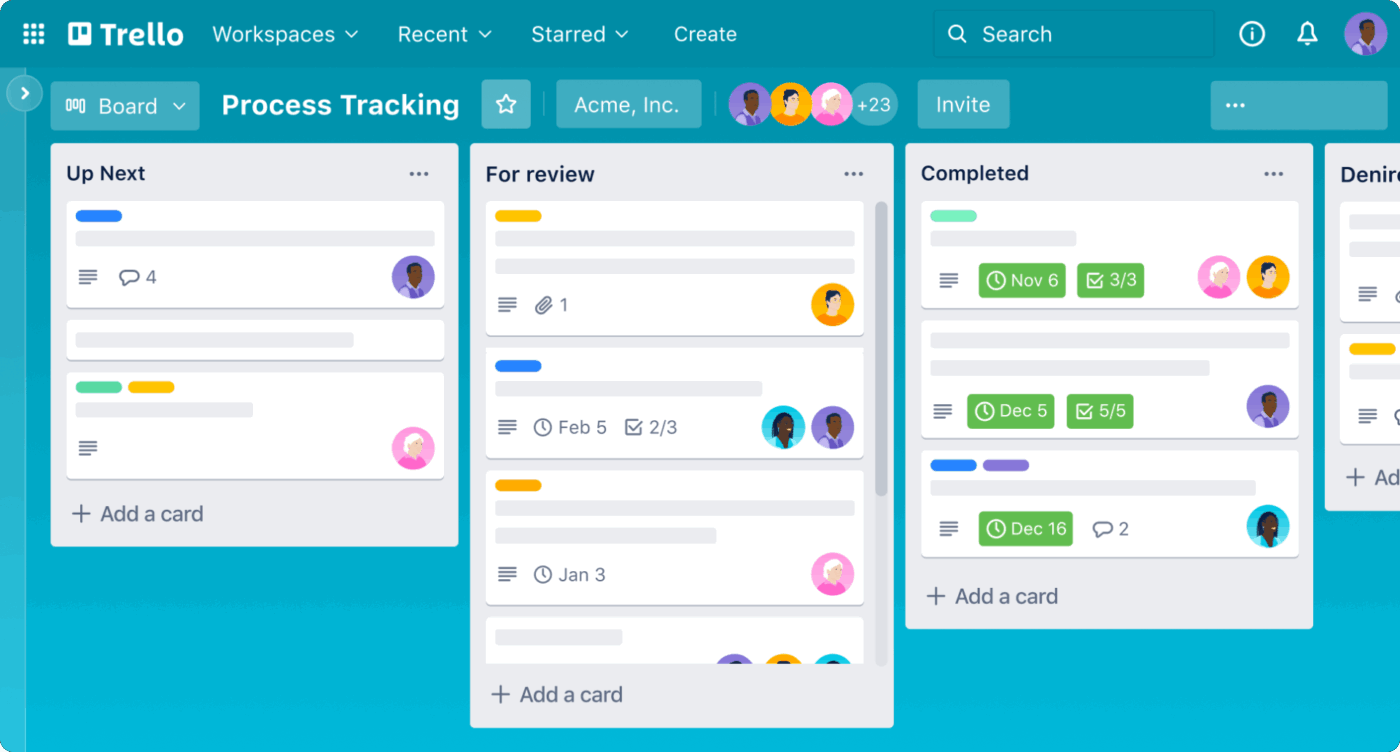
Trello is the fastest way to get a team onto a shared board. Cards move left to right across lists, and that’s most of what a new user needs to learn. It’s the classic form of visual task management, and it suits small agencies, student groups, editorial teams, and anyone whose work has three or four stages.
Trello also takes the shadow list seriously. Its Inbox is a personal space that captures to-dos from email, Slack, and Microsoft Teams before you sort them onto boards, and it’s on the Free plan. Planner, Trello’s calendar view, shows scheduled cards next to your events. So a team lead can forward a client email, park it in the Inbox, and drop it on the right board in the Monday planning session. Ready-made Kanban board templates help if you’d rather not design the lists yourself.
AI starts on Standard. Quick Capture powered by AI turns emails and messages into cards, and Trello’s AI helps draft, correct, and brainstorm card descriptions and comments.
Where it taps out: Trello has no native way to link cards that depend on each other, so a late card doesn’t move the cards waiting on it. A large board also gets hard to read as a timeline. Teams can bolt on Power-Ups, and this guide to Gantt charts in Trello covers the workarounds.
Best for: Small teams that want a Kanban board running today.
Skip it if: Your tasks form chains where one delay should move the rest.
A user review says:
I like Trello because its clean, visual UI/UX makes organizing tasks and projects simple. Its integrations with other productivity tools help connect my workflow, and the platform performs reliably for day-to-day work. The pricing offers good ROI for teams that need flexible project management. It is easy to onboard new users, and the available support resources are helpful. Trello’s AI capabilities also make it easier to summarize information, organize work, and save time.
Microsoft Planner is the task manager many teams already own. It’s included with Microsoft 365, it runs inside Microsoft Teams and on the web, and its personal views, My Day, My Tasks, and Assigned to me, collect work from shared plans. Tasks assigned in meeting notes and Microsoft Loop show up there too, which closes part of the shadow-list gap for teams whose work starts in Teams meetings.
The basic version covers Grid, Board, Schedule, and Charts views, checklists, labels, and custom plan templates. When the work outgrows that, Planner Plan 1 adds sub-tasks, backlogs and sprints, task dependencies, goals, milestones, and the Timeline view. These Microsoft Planner templates show what the plan structures look like.
Planner’s AI, the Planner Agent, needs a Microsoft 365 Copilot license at $30 per user per month. With it, you can assign routine tasks to the agent, generate status reports, and turn a goal into a task list grounded in the plan. People without Copilot can still collaborate on the plan but can’t work with the agent.
Where it taps out: Planner’s features are split across licenses. Timeline view, People view, goals, and dependencies need Plan 1, and the Planner Agent needs Copilot. On a mixed team, people with the basic version can’t see the same views of the same plan as everyone else, so the plan stops being the one place everyone checks. Teams that need Gantt-style scheduling can check how Gantt charts work in Microsoft Planner first.
Best for: Teams already living in Microsoft 365 and Teams.
Skip it if: Your team doesn’t use Microsoft 365 day to day.
A user review says:
What I like most is how easy it is to organize work with it. I use it to track tasks, assign work, set due dates, and monitor progress without making everything feel complicated. The board view is straightforward, so I can quickly see what’s pending, what’s in progress, and what’s already completed. Because it’s part of Microsoft 365, it integrates smoothly with Teams and other Microsoft apps I use every day. That’s convenient, since I don’t have to jump between a bunch of different tools just to check tasks and updates. Overall, it’s a solid tool for keeping small projects and day-to-day work organized. It helps the team stay aligned and on the same page without adding unnecessary complexity.
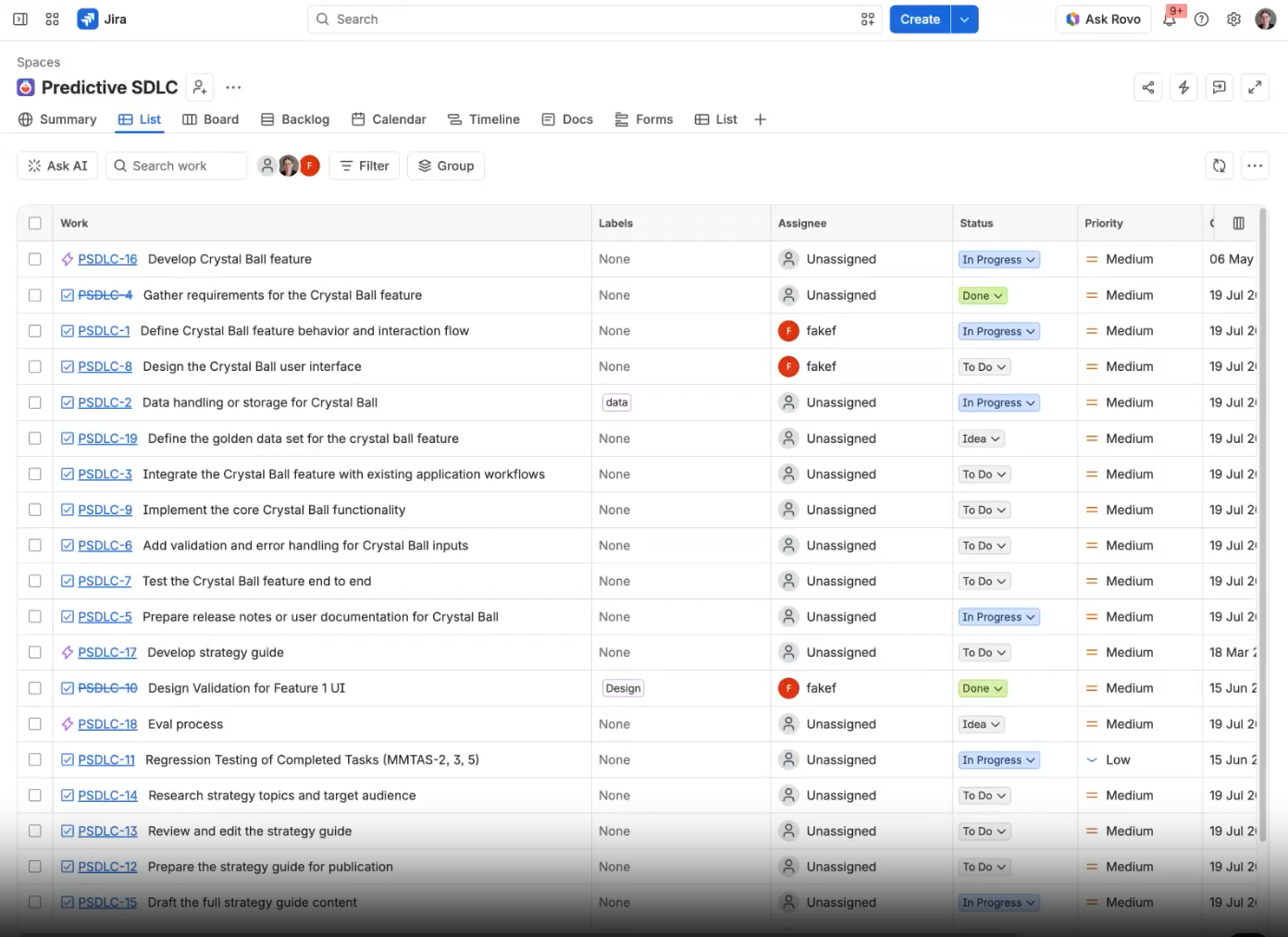
Jira manages tasks as issues that move through a workflow the team defines, and it can enforce that workflow. A ticket can be blocked from jumping straight from Open to Done, so it has to pass through Dev Complete and QA first. For engineering teams, that enforcement is the point: the board reflects what actually happened to the code, not what someone remembered to update.
For engineers, that also removes the reason to keep a private list. The sprint board shows each person what’s assigned to them in the current sprint, and an issue can’t look finished until it has passed every step. Teams that work in sprints can run the full cycle in Jira, and this guide on managing a sprint cycle covers the rhythm.
Rovo Search, Chat, and Agents are included on every paid plan, with a monthly allowance of 25 AI credits per user on Standard and 70 on Premium. The Free plan, for up to 10 users, doesn’t include Rovo.
Where it taps out: Jira is built for teams that think in tickets and workflows. Marketing, HR, or operations teams usually find the configuration, permissions, and issue screens heavier than their work needs, so they track their side somewhere else and the engineering board shows only half the project. If your engineers love it and everyone else avoids it, these Jira alternatives are worth a look, and Linear vs. Jira covers the lighter option for product teams.
Best for: Software teams moving issues through enforced workflows.
Skip it if: Most of the people tracking tasks aren’t in engineering.
A user review says:
Jira is very flexible. I can set up Scrum or Kanban boards, break work into epics and tasks, and customize workflows to fit how our team works. The dashboards and sprint reports make it easy to track progress, and the integrations with Confluence, Slack, and GitHub keep everything linked to tickets in one place.
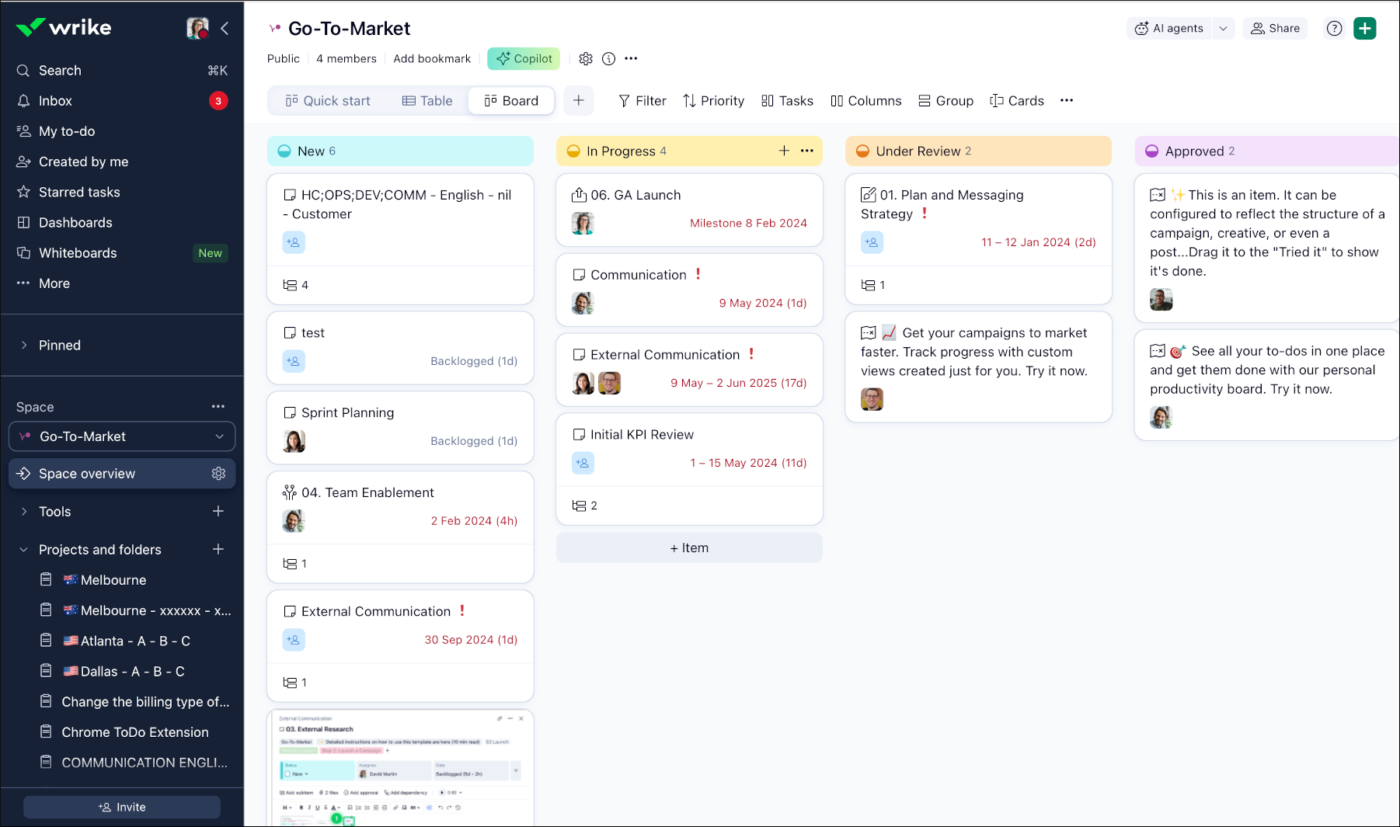
Wrike is built for teams that use tasks to track requests: creative studios, marketing operations, and professional services groups. Work is broken into tasks with assignees, files, and schedules, and teams can see it on a Kanban board, a spreadsheet-style table, or an interactive Gantt chart. The feedback loop is where Wrike shines: editors and reviewers can direct questions to a specific colleague inside the work instead of in a separate thread.
Picture a 12-person in-house design team. Requests come in, get templatized into a standard set of tasks on Business, flow through review, and roll up into a shared dashboard the marketing director checks on Friday. That’s the shape Wrike handles well, and it scales: the Business plan covers 5 to 200 users. A detailed Wrike review covers the wider feature set.
Wrike’s AI is tiered. The Team plan includes AI Essentials: content editing, comment summaries, board AI, mobile inbox prioritization, and automation rules written in plain language. Wrike Copilot and AI agents arrive with Business, which includes a starter pack of AI Elite actions, and higher tiers add more.
Where it taps out: Wrike sells seats in groups rather than one at a time: groups of five up to 30 seats, groups of 10 from 30 to 100, and groups of 25 above that. The Team plan stops at 15 users, so a growing team hits a plan change and a bigger seat bundle at about the same moment. Teams comparing it with a scheduling-first tool can read Microsoft Project vs. Wrike.
Best for: Teams handling a steady stream of requests and reviews.
Skip it if: You want to add seats one at a time as the team grows.
A user review says:
Wrike is most helpful for keeping project work structured and visible. I regularly use task assignments, due dates, status updates, and project views to understand priorities and track progress. Having this information in one place makes coordination easier, especially when multiple people are contributing to the same project.
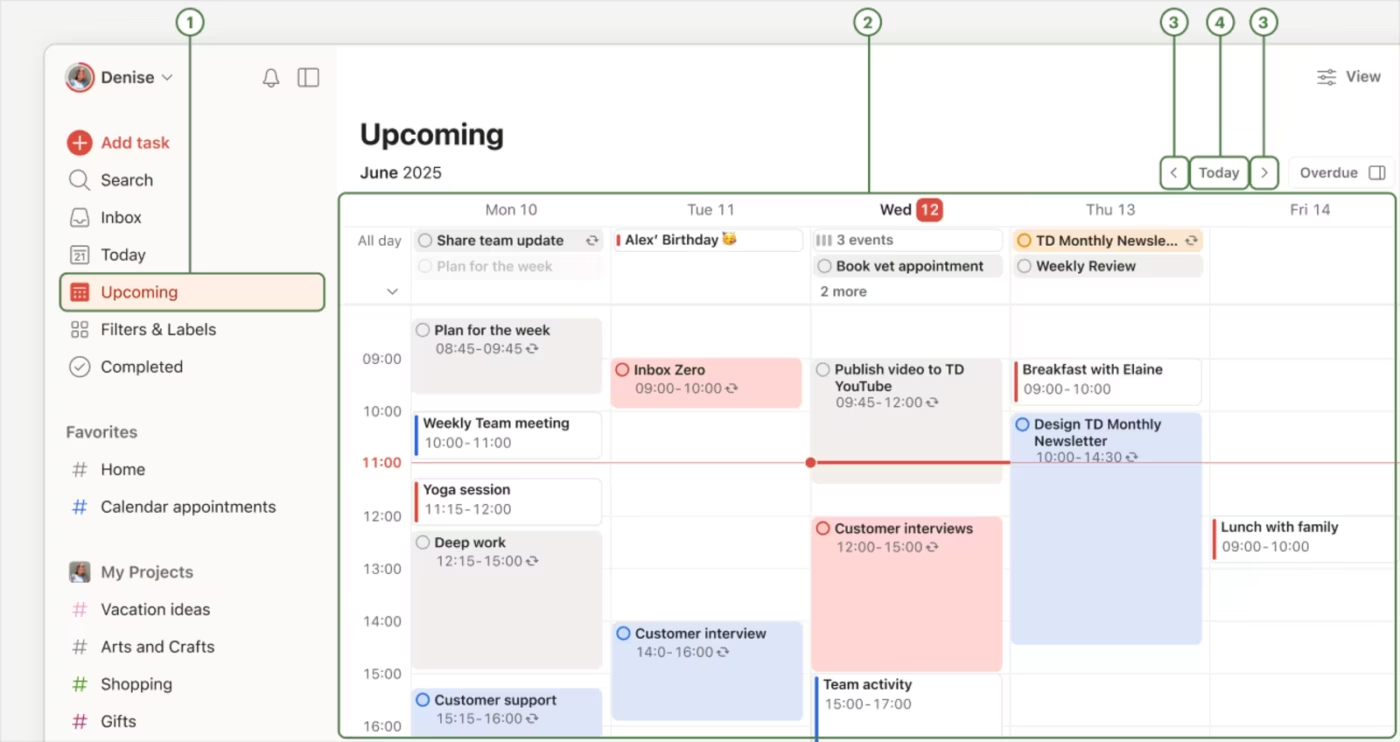
Todoist is the strongest answer on this list to the capture problem. Its Quick Add reads a sentence and pulls out the date, time, recurrence, project, and priority. That speed is why it’s the app people keep next to a team tool, and why it shows up so often as the personal half of a two-tool setup.
The free Beginner plan covers five personal projects, three filter views, board and list layouts, and automatic reminders for tasks with a date and time. Pro adds 300 personal projects, a calendar layout, task durations, time-blocking, deadlines, custom reminders, and full activity history. A freelancer, for example, can run client work and household admin in separate projects and block focus time on the calendar. This guide to time blocking pairs well with that setup, and Notion vs. Todoist covers the docs-first alternative.
Todoist’s AI focuses on capture. Ramble turns speech into tasks and Task Capture Assist reads text, images, and documents, with 10 sessions a month on Beginner and unlimited use on paid plans. Pro adds Todoist Assist for busywork automations and Email Assist, which turns forwarded emails into tasks.
Where it taps out: Todoist’s collaboration is light until you move to Business. Any plan can share a personal project with up to five people, and a free team gets up to five team projects, but the full team workspace, with up to 500 team projects, roles, and folders, needs Business. A department that needs owners, shared status, and reporting across projects will outgrow it. For a look at an AI-scheduling take on the same personal job, see Motion vs. Todoist.
Best for: Individuals who capture tasks by typing a sentence.
Skip it if: You need one shared system for a whole department.
A user review says:
I really like how simple and easy Todoist is to use. Creating tasks, setting due dates, and organizing my daily to-do list all feel quick and straightforward. It helps me stay organized and on track without making task management feel complicated or overwhelming.
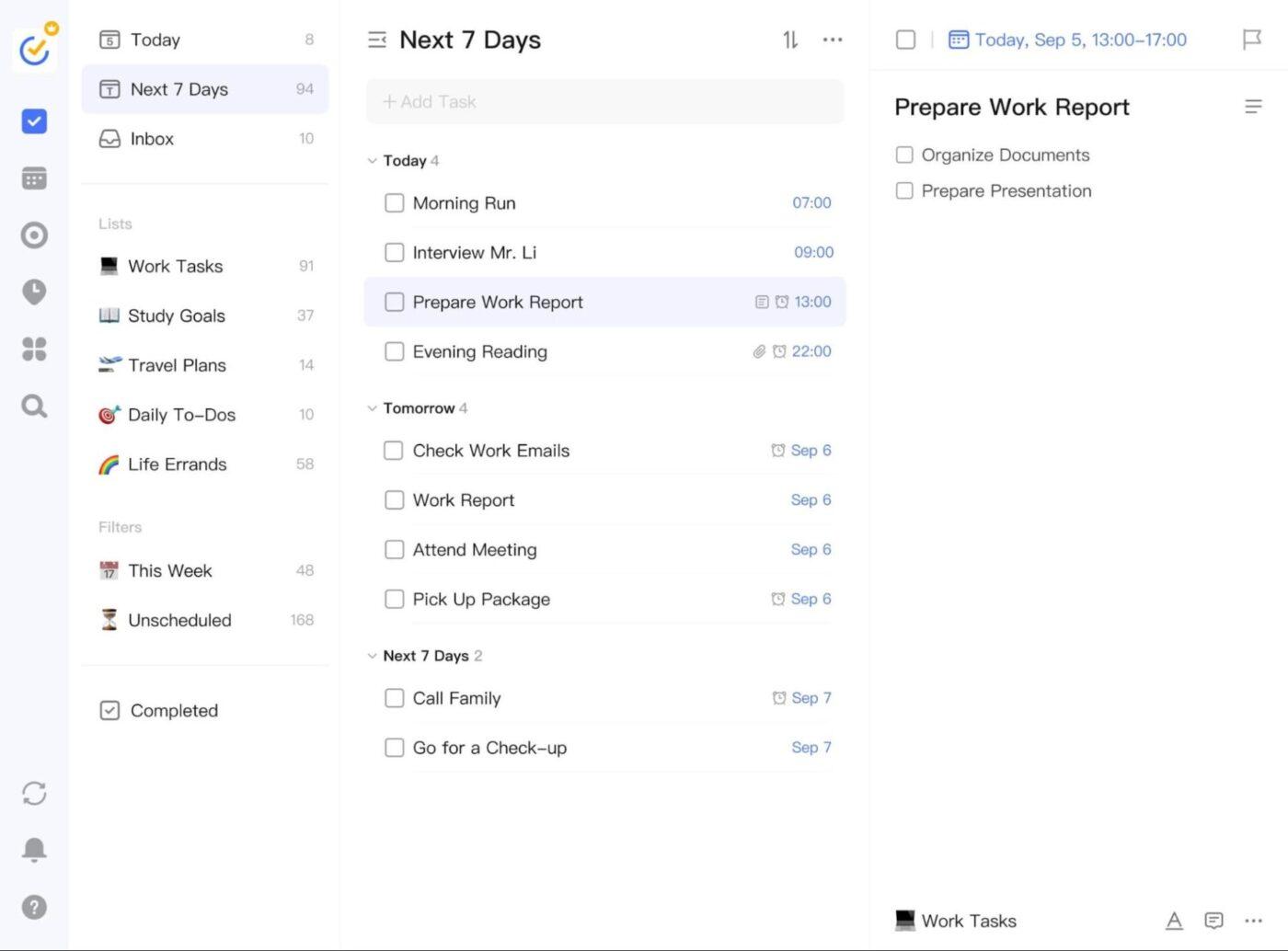
TickTick bundles the tools people usually spread across three personal apps: a task list, a calendar, and a focus timer. Tasks can be sorted on an Eisenhower matrix into urgent and important quadrants, scheduled on a calendar, and worked through with a Pomodoro timer that tracks focus time per task.
That bundle makes TickTick a good home for a deliberate shadow list: a private planning layer that sits next to the team’s tool instead of replacing it. A manager can keep meeting notes inside each task and check the calendar for days where work piles up, while team status stays on the shared board.
TickTick’s pricing page lists AI features in its plan comparison but doesn’t describe them, so treat AI as a minor part of the decision here.
The free plan covers nine lists with 99 tasks each, list and Kanban views, natural-language dates, reminders, and five habits. Premium raises that to 299 lists with 999 tasks each and adds multiple calendar views, a timeline view, task duration, email reminders, and full statistics.
Where it taps out: TickTick’s sharing is built for a few people, not a team. A shared list holds two members on the free plan and 29 on Premium, which covers a household or a small project but not a department. Use it as a personal system and keep team status somewhere built for teams.
Best for: Personal planning with a calendar and focus timer built in.
Skip it if: Several people need to edit the same lists every day.
A user review says:
It’s easy to use and easy to get started with—you can just jump in and start making tasks right away. I really like having subtasks, and everything feels fast and smooth when clicking around and opening things. Plus, it’s free!
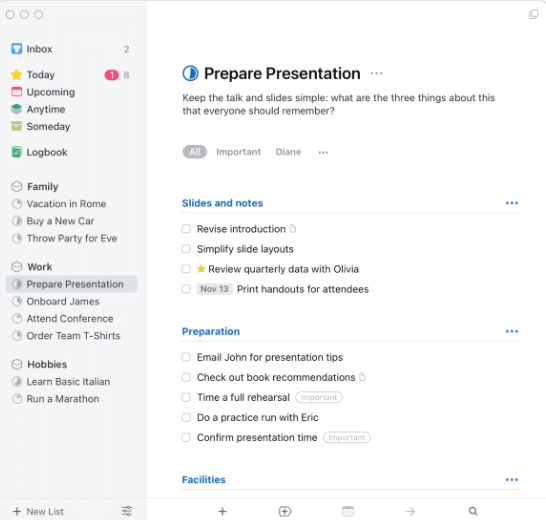
Things 3, from Cultured Code, is a personal task manager for Mac, iPhone, Apple Watch, iPad, and Vision Pro. It’s built to help one person plan the day, manage projects, and work toward goals, and it has won the Apple Design Award twice. In a category full of monthly subscriptions, Things is a one-time purchase per platform.
The app is designed around a calm daily list. You collect tasks in the Inbox, choose which ones belong in Today, and file the rest into projects and areas. Tasks can come in from other apps through the share sheet, from Apple Reminders, or by voice through Siri, so capture works from wherever the task shows up. There’s no AI built in, which suits anyone who wants a list that stays out of the way.
Where it taps out: Things 3 runs only on Apple devices and is built for one person. There’s no Windows, Android, or web app, and no shared projects, so it can’t be the system a mixed-device team works from. Anything a teammate needs to see has to be copied into the team’s tool by hand.
Best for: Apple users who want a list they buy once. For more Apple-side options, see these task management apps for Mac.
Skip it if: You use Windows or Android, or need to share tasks with a team.
A user review says:
I use Things for personal as I mentioned, integrate it with Apple Notes, & Calendar (using Shortcuts).
For business, Todoist is better for sharing tasks, commenting & attachments. Also it already integrates with Google Workspace calendar.
But Things is perfect for personal, or Solo business (Freelancers for example).
Notion (from $12/user/month) handles tasks as database rows inside pages, which suits teams that want docs and tasks in one place. Its core object is a page, so it missed this list’s inclusion test, and task-heavy teams end up building the task system themselves.
Basecamp (from $15/user/month) bundles to-dos, message boards, and client sharing in one project space, which agencies like for client visibility. The catch is customization: reviewers note it’s less configurable than most tools here.
Any.do (from $4.99/user/month) is a personal planner with calendar integration and smart reminders across devices. The catch is depth: it covers daily planning well but offers far less team structure than the team tools above.
Start with the shadow list your team already has. Ask the person who keeps the most tasks outside the official tool where those tasks come from and why they don’t go in. Their answer tells you which of the three setups from earlier fits your team.
Speed is usually part of that answer. Capterra’s analysis of a year of task management reviews puts sluggish system performance at the top of its list of common challenges, and a slow tool is the quickest way to push tasks into a notes app.
Before you switch, run one real project in the new tool for two weeks with the whole team, including the person who currently keeps the shadow list. If that person still writes tasks somewhere else at the end of week two, the capture path is too slow, whatever the feature list says.
Pro Tip: Anyone drowning in small requests can try task batching before buying anything. If your team still runs on spreadsheets, these task tracker templates for Excel are a reasonable bridge.
The expensive mistake is buying a tool built for tracking and expecting capture to happen on its own. When adding a task takes longer than writing it down, the shadow list comes back, the board goes stale, and status meetings take over the tracking again.
Whichever tool you pick, judge it by what happens to those meetings. When the board is current, the person waiting on a task can see who owns it and when it will land without asking. When the meetings keep growing, the tasks are living somewhere else.
ClickUp is built to solve this exact problem. The Personal List, Notepad, and tasks from Chat give each person a fast place to put work, and each of those tasks is the same one the team tracks in its projects. The My Tasks page and LineUp show each person what to finish first, and Super Agents can flag tasks that haven’t been updated in a while, before anyone needs a meeting to find out.
The best free task management app depends on team size. For a team, ClickUp’s Free Forever plan includes unlimited tasks and unlimited members, and Trello’s Free plan covers up to 10 collaborators per Workspace. For one person, Todoist’s free Beginner plan includes five personal projects with reminders, and TickTick’s free plan includes nine lists with a calendar and Pomodoro timer.
Yes. Microsoft Planner is included with Microsoft 365 and runs in Microsoft Teams and on the web, with My Day, My Tasks, Board, Grid, Schedule, and Charts views. Timeline view, People view, goals, and dependencies need Planner Plan 1 at $10 per user per month billed yearly, and the Planner Agent needs a Microsoft 365 Copilot license.
The strongest AI for task management sits on top of your real task data. ClickUp Super Agents can be assigned tasks and @mentioned, Asana includes a monthly allowance of AI requests on paid plans with extra requests at $0.50 each, monday.com includes monthly AI credits on paid plans, and Todoist’s Ramble turns speech into tasks. Check how each tool meters AI, because credits, requests, and separate licenses change the real price.
For a small business, the best task management software is one whose free or entry plan covers your whole team. ClickUp, Trello, and Jira have free plans that work for more than two people, and Wrike’s free plan has no user limit but caps active tasks at 200. Asana’s and monday.com’s free plans stop at two.
Todoist, TickTick, and Things 3 are the strongest personal task management apps. Todoist is fastest for typing tasks in plain language, TickTick adds a calendar, habit tracker, and Pomodoro timer, and Things 3 is a one-time purchase for Apple devices. If your personal tasks also need to show up in team projects, a platform like ClickUp keeps both on the same task.

Manasi Nair
Max 17min read

Arya P Dinesh
Max 20min read
Manasi Nair
Max 22min read
© 2026 ClickUp