






Still downloading templates?
There’s an easier way. Try a free AI Agent in ClickUp that actually does the work for you—set up in minutes, save hours every week.
Sorry, there were no results found for “”
Sorry, there were no results found for “”
Sorry, there were no results found for “”

Not every influencer partnership delivers results. Some drive engagement and sales, while others fizzle out despite looking promising on paper.
The difference? Data. 📊
AI tools for influencer marketing help brands and agencies go beyond follower count, analyzing audience demographics, engagement authenticity, and campaign performance to make smarter decisions.
But not every tool is worth your time. Some are great for discovery, while others focus on campaign management or analytics.
Here’s a look at 13 top AI tools for influencer marketing to help you run more effective influencer campaigns. 🗃️
We’ve also covered some of the best ones in this video!
Here’s our list of the 13 best influencer marketing tools with AI:
With so many AI tools for marketing project management, it’s easy to get overwhelmed. Do you need better influencer discovery, campaign automation, or detailed analytics? The right tool depends on your goals.
Let’s see what to look for to ensure you’re investing in something that actually helps. 👇
Here are the top AI-powered platforms that actually make a difference in influencer marketing campaign management. 📝
ClickUp is the everything app for work that combines project management, knowledge management, and chat—all powered by AI that helps you work faster and smarter.
For marketing teams, ClickUp Marketing Project Management Software simplifies influencer campaign management by keeping everything—content creation, task tracking, and collaboration—in one place. It helps teams organize workflows, automate repetitive tasks, and manage large influencer databases without switching between tools.
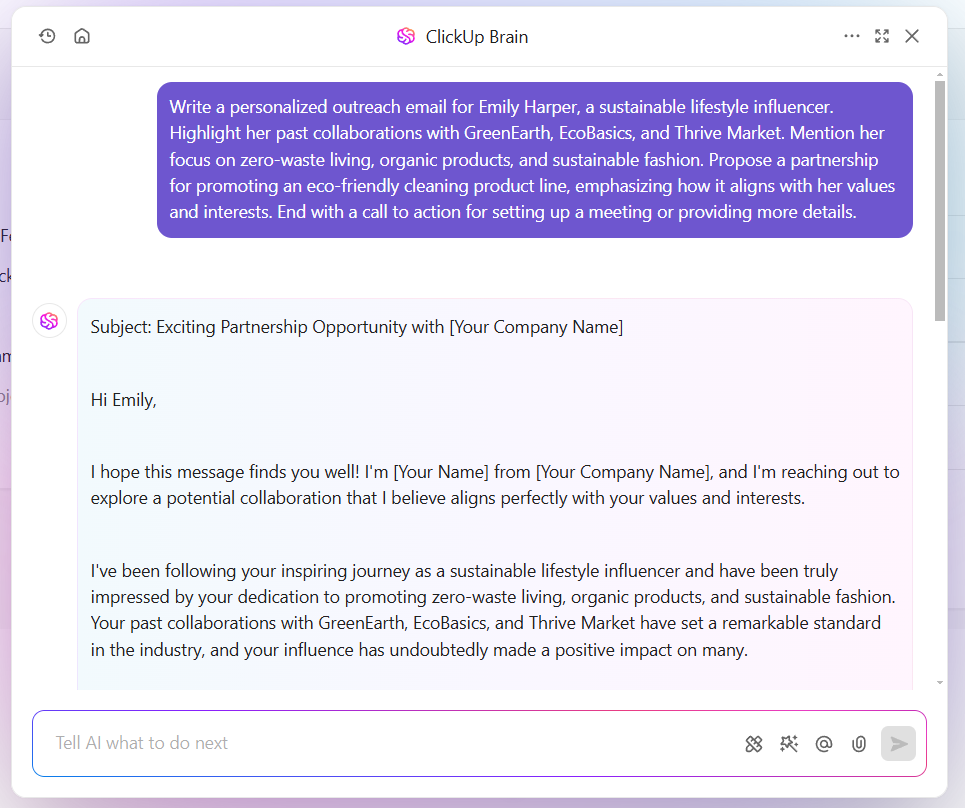
ClickUp Brain is an AI-powered assistant that supports content generation, data analysis, and workflow management. It can draft outreach messages, refine campaign copy, summarize key information, and more.
It also analyzes campaign performance by summarizing engagement trends and providing actionable insights, making it easier to evaluate which partnerships deliver the best results.
📮ClickUp Insight: Only 12% of our survey respondents use AI features embedded within productivity suites. This low adoption suggests current implementations may lack the seamless, contextual integration that would compel users to transition from their preferred standalone conversational platforms.
For example, can the AI execute an automation workflow based on a plain text prompt from the user? ClickUp Brain can! The AI is deeply integrated into every aspect of ClickUp, including but not limited to summarizing chat threads, drafting or polishing text, pulling up information from the workspace, generating images, and more! Join the 40% of ClickUp customers who have replaced 3+ apps with our everything app for work!
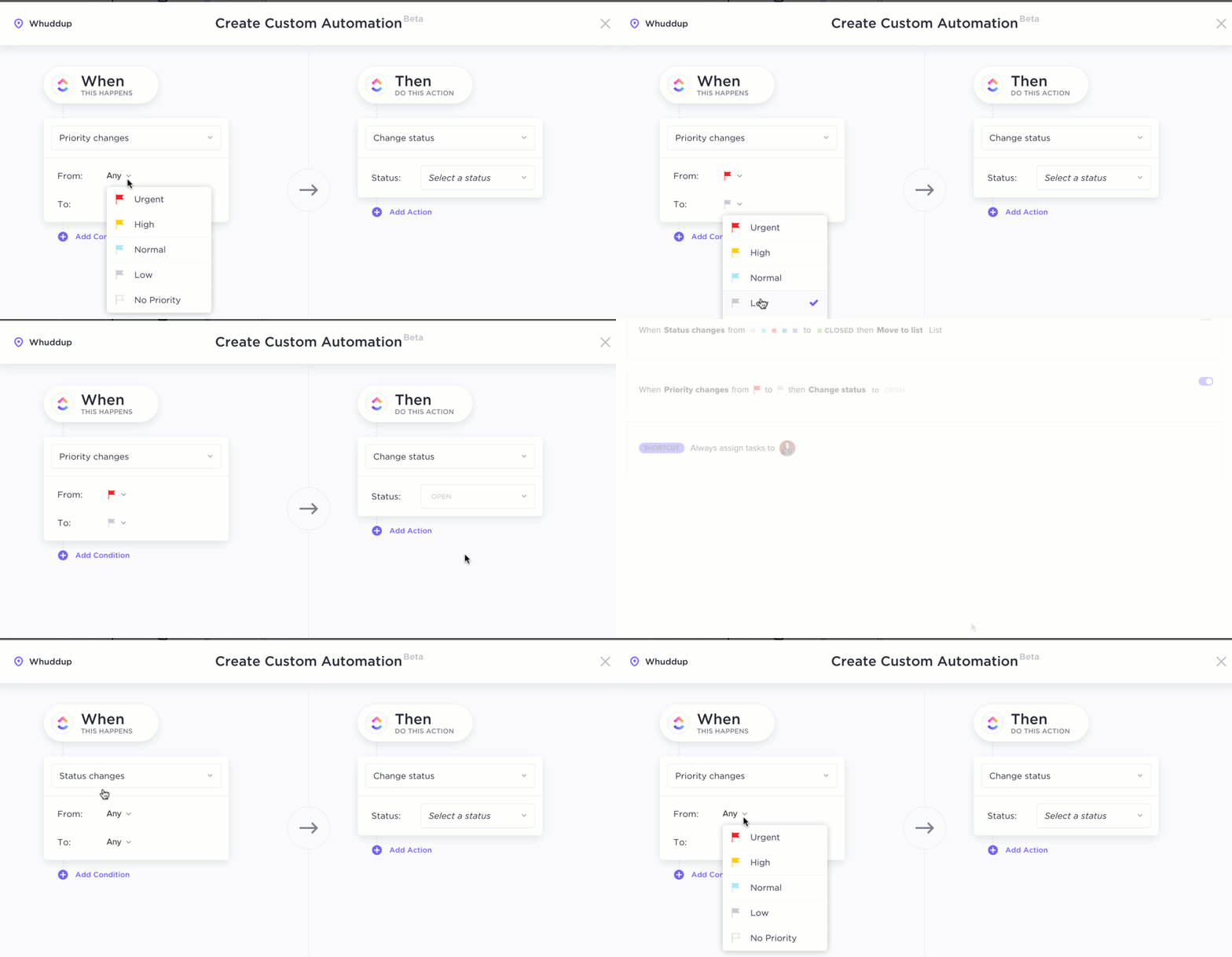
ClickUp Automations helps you manage influencer relationships and campaign processes without getting overwhelmed.
For instance, if an influencer submits their deliverables, Automations can immediately notify the creative team for review, update the campaign stage to ‘Approval Pending,’ and schedule the content for publishing once approved.
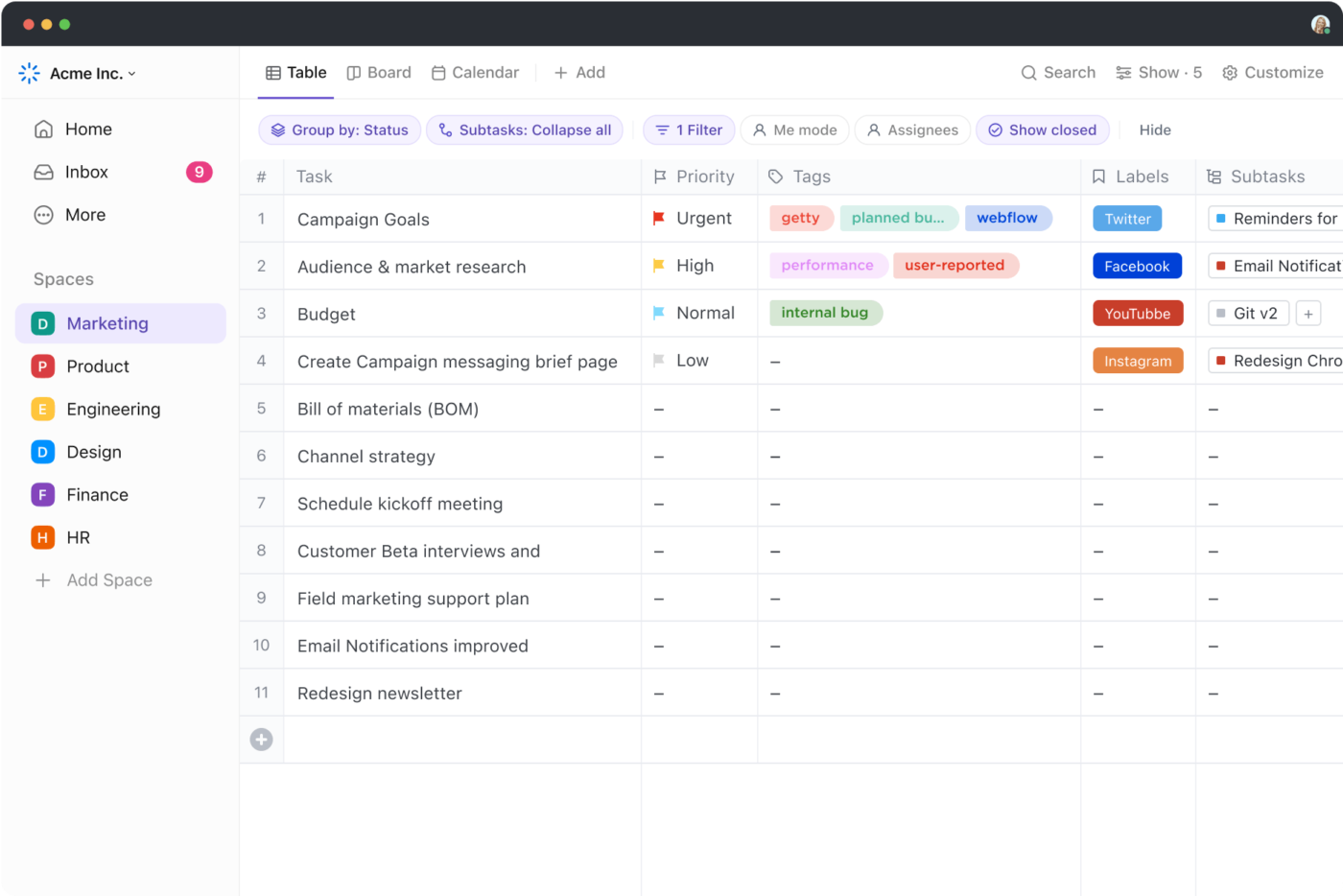
What’s more, ClickUp Table View offers a familiar spreadsheet-like interface to organize your database and act as a dynamic influencer CRM. You can track essential details like contact information, collaboration history, and performance metrics in a clear, customizable format.
ClickUp enables us to utilize our marketing resources more effectively and align our GTM approach across multiple business units.
Most marketers who use ClickUp are especially fond of the software’s pre-built influencer templates.
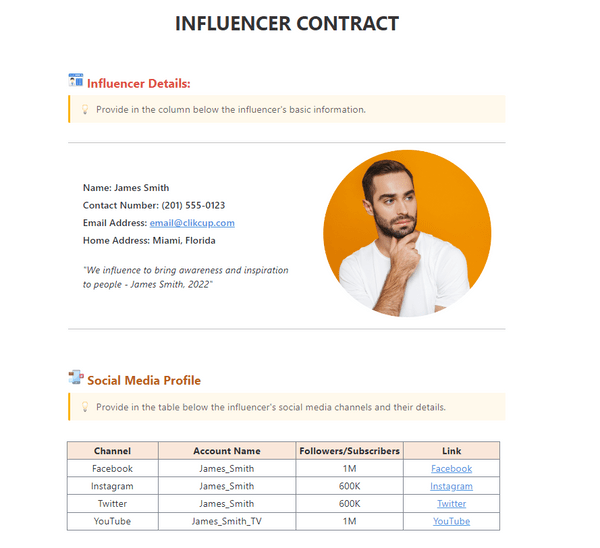
For example, the ClickUp Influencer Contract Template creates secure and thoroughly reviewed documents that protect the rights of both parties. It offers sufficient descriptions of key terminologies and industry-standard protocols for payments and reimbursements.
The template also:
The ClickUp Modern Social Media Calendar Template keeps track of influencer content plans across multiple platforms. Similarly, the ClickUp Content Writing Template offers clear guidelines for the tone of voice and script structure the influencer must use.
🔍 Did You Know? The first YouTuber to hit one million subscribers was a gamer. In 2009, Fred Figglehorn, a fictional character played by Lucas Cruikshank, became the first YouTuber to reach one million subscribers—showing that humor and creativity have always driven online influence.
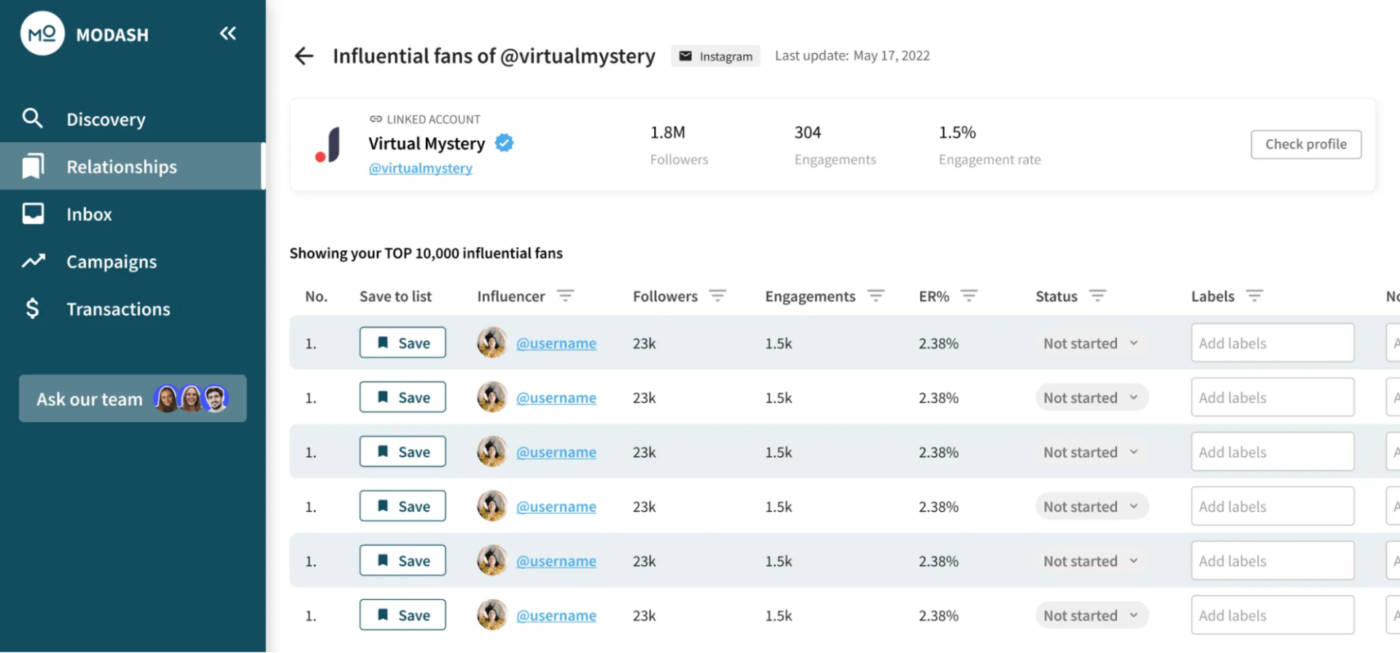
A database with 250+ million influencer profiles ensures Modash has enough options for brands to connect with content creators. You can assess potential partners through metrics like gender distribution, audience age, and others.
Note that the platform also includes a fake follower audit that verifies the quality of an influencer’s audience. This indicates wise investments from your client’s marketing budget.
🧠 Fun Fact: In 1760, Josiah Wedgwood, a British potter, used Queen Charlotte’s endorsement to market his fine china as ‘Royal-approved.’ This is one of the earliest examples of influencer marketing.
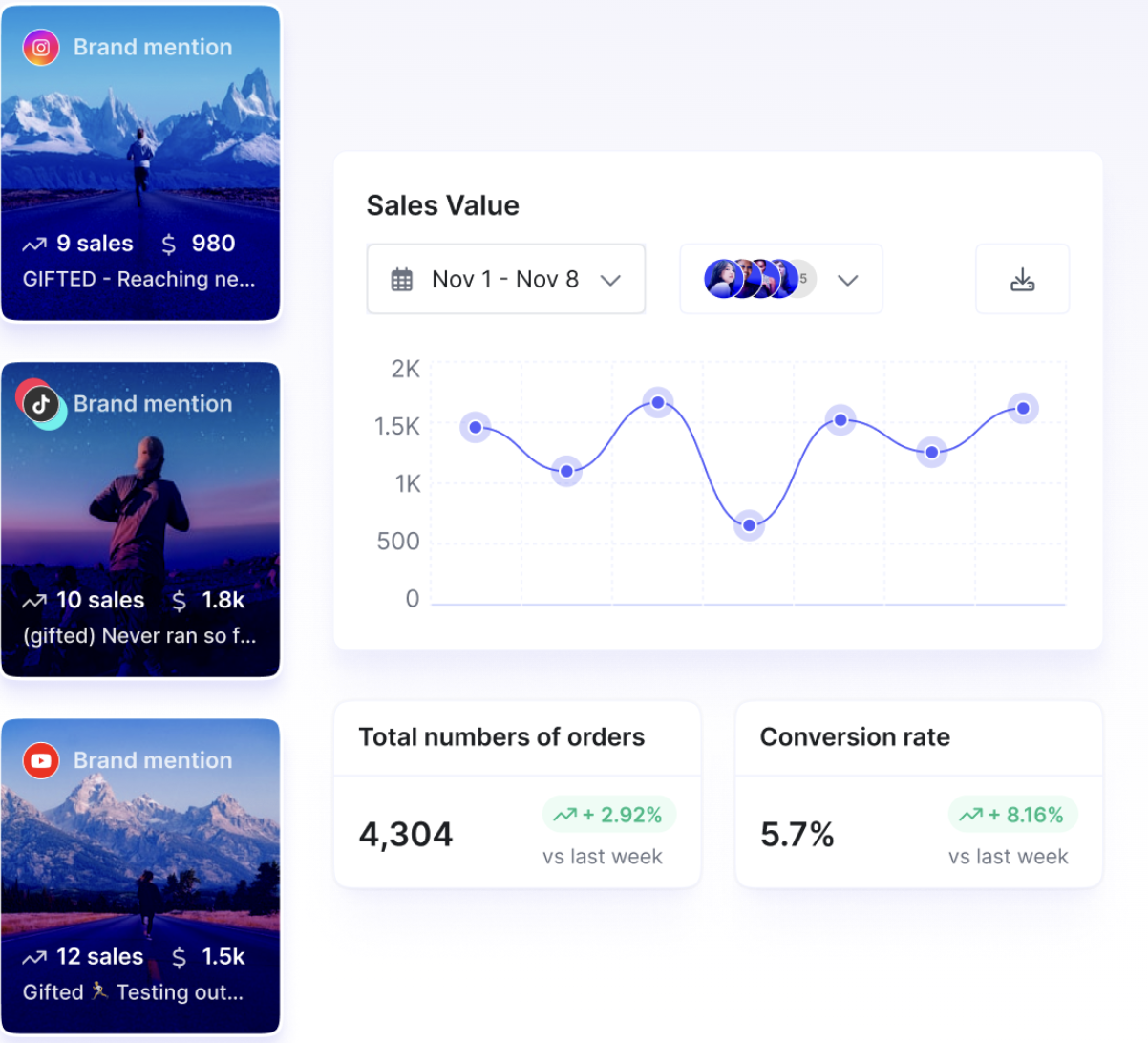
Upfluence helps brands connect with the right influencers using filters for engagement rates, audience demographics, and content style, so you’re not just guessing who’s the best fit.
Its AI-run feature, Jace AI automates and personalizes your outreach while matching brands with influencers based on content relevance.
In addition, Jace AI keeps a constant eye on changing influencer profiles and past interactions. The data gathered is what helps most brands also communicate with the right influencer in a contextually relevant manner.
🔍 Did You Know? AI-generated influencers like Lil Miquela and Shudu have secured brand deals with top fashion labels despite not being real people!
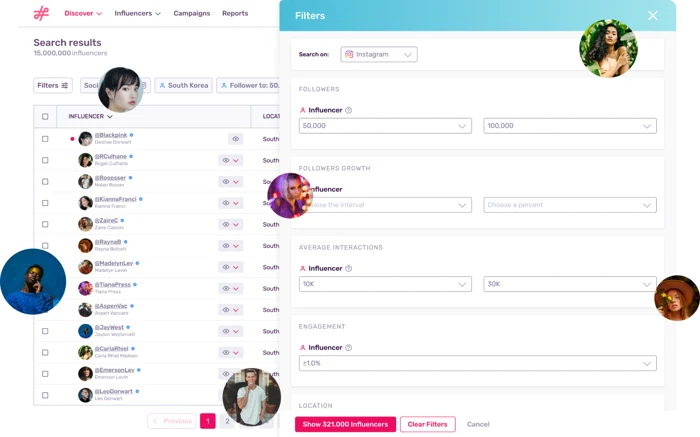
Influencity equips agencies with advanced search filters, allowing users to refine results using 20+ criteria. The platform, coupled with the influencer relationship management (IRM) system, lets you organize influencer collaborations easily and carry out activities like communication tracking and monitoring campaign progress.
You can also integrate your Shopify account into the creator database. This helps streamline influencer seeding for campaigns at scale.
🧠 Fun Fact: Influencer marketing has been around longer than social media. Before Instagram and YouTube, brands partnered with celebrities, athletes, and even fictional characters to promote products. Even the Marlboro Man and Popeye boosting spinach sales were early forms of influencer marketing.
Brandwatch Influencer uses its proprietary Iris AI to extract insights from social media data. As a result, you get intricate information on consumer behavior and emerging trends. Combine this with Brandwatch Influencer’s sentiment analysis features, and you get access to data on brand mentions and present public emotions.
Its adaptability to Salesforce and Google Analytics means enterprise users can enhance its utility. Additionally, merging this with social media templates to keep all your influencer data organized.
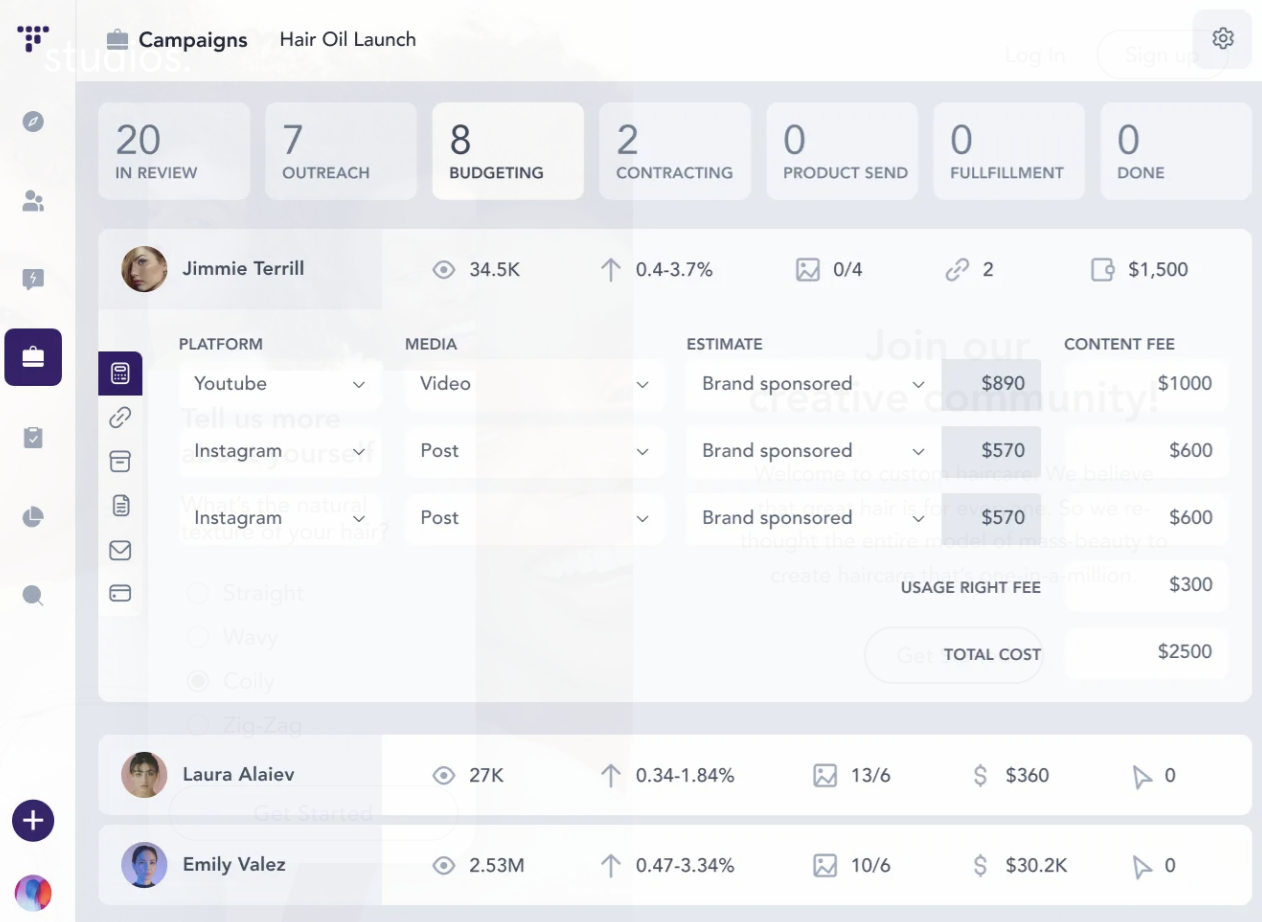
Traackr takes influencer vetting seriously by allowing users to access advanced analytics before engaging in partnerships. Go through real-time audience credibility insights and avoid wasting budgets on influencers with low engagement quality.
The platform offers a global influencer database across all major social media platforms. Visibility into the historical performance section also establishes the influencer’s long-term credibility.
🧠 Fun Fact: Even pets can be influencers. Dogs, cats, and even hedgehogs have landed sponsorships with major brands. Some, like Doug the Pug, have more followers than many human influencers!
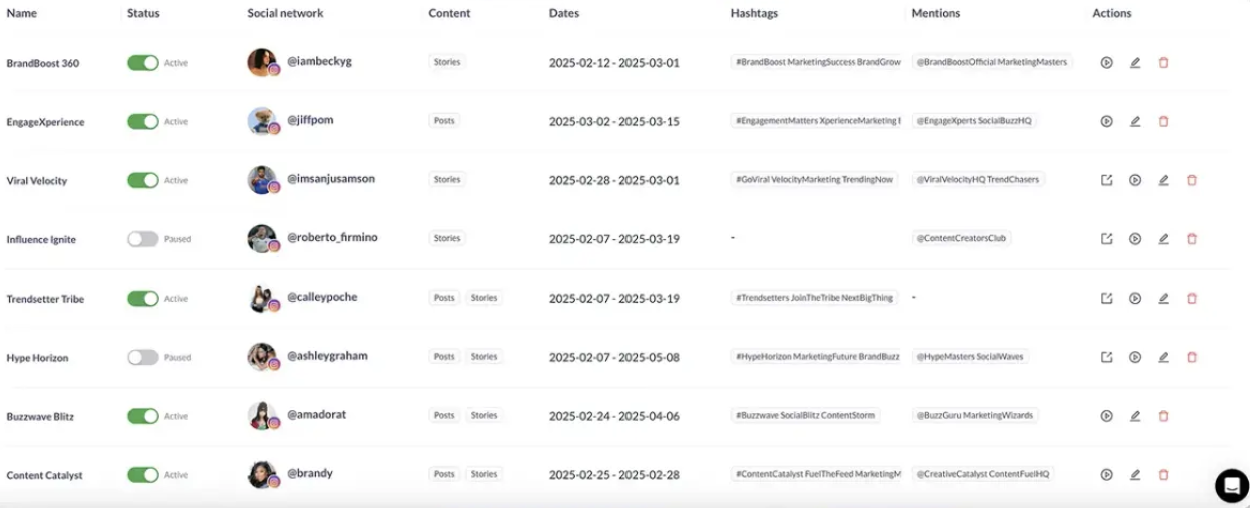
Heepsy is an AI-powered influencer search and discovery platform for small to mid-sized brands looking to connect with micro and nano-influencers. Unlike some complex influencer marketing platforms, it stands out for its easy-to-use search interface.
The tool’s competitor analysis capabilities let brands see which influencers their competitors work with. This feature provides key takeaways into industry trends and high-performing collaborations.
📖 Also Read: Free Content Calendar Templates for Social Media
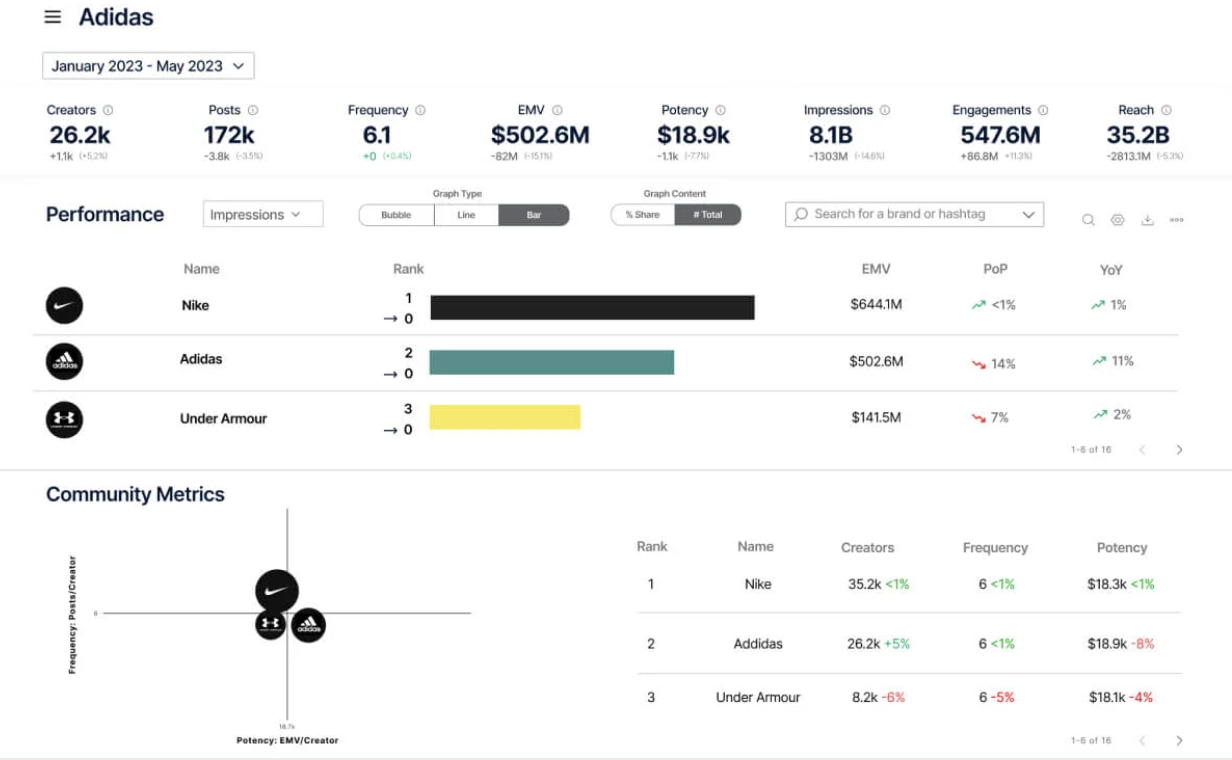
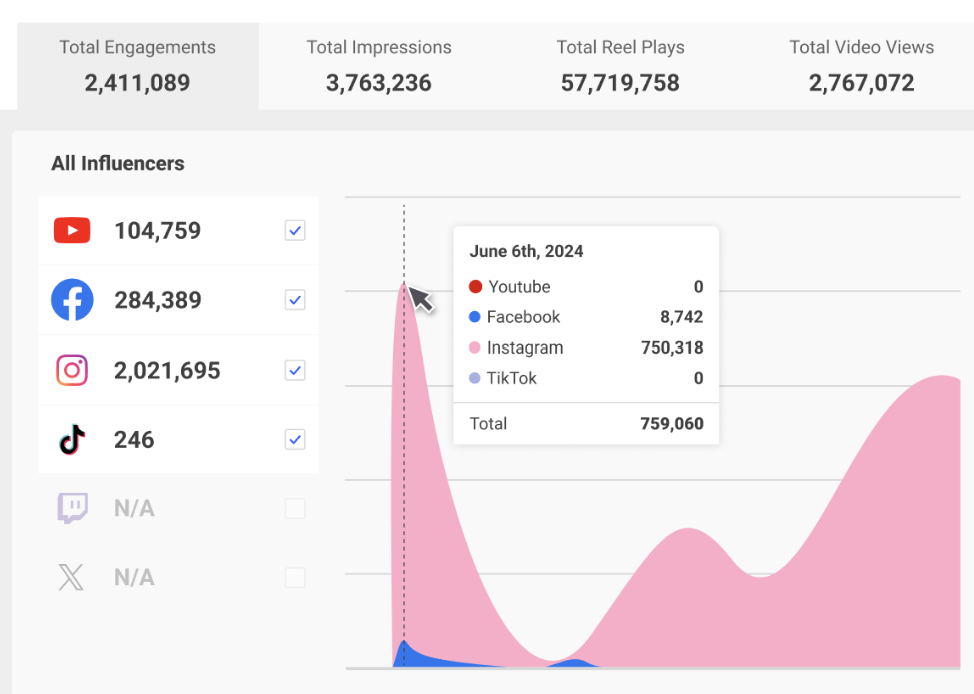
CreatorIQ is among the top influencer marketing tools. It connects to social media platforms via API integrations, allowing brands to access real-time influencer data and campaign performance tracking. What sets CreatorIQ apart is its AI-driven scoring system that assesses an influencer’s brand alignment, authenticity, and content engagement quality.
While most tools focus solely on follower count, CreatorIQ leverages machine learning to predict which influencers will perform best for specific campaign goals.
🔍 Did You Know? Video content dominates influencer marketing. Static Instagram posts aren’t enough anymore—brands prefer influencers who create engaging short-form videos, whether it’s a casual vlog, an unboxing, or a full-blown cinematic ad disguised as a TikTok trend.
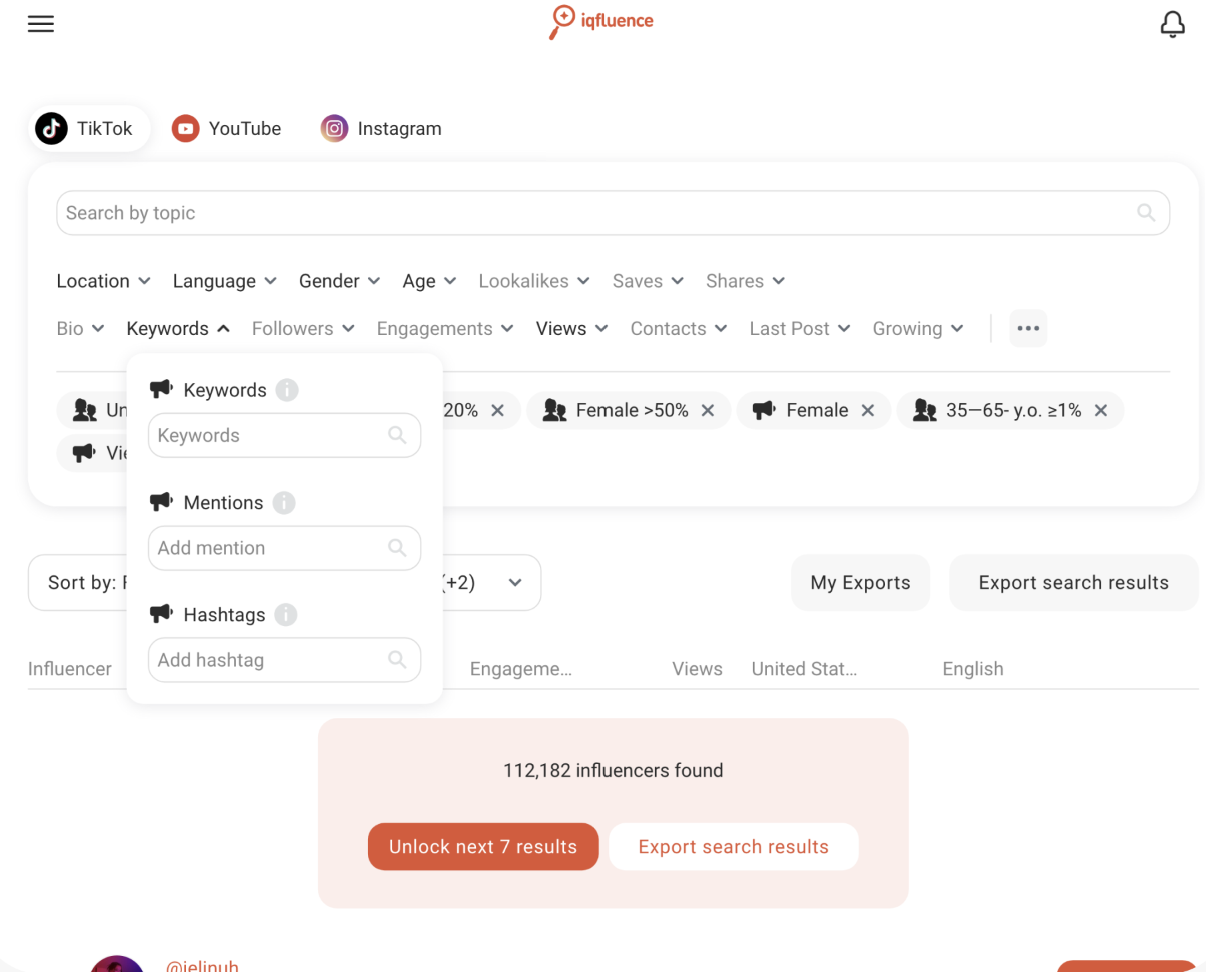
IQfluence’s AI scans social media platforms to identify emerging influencers based on engagement trends and follower sentiment, also factoring in industry relevance. This allows brands to discover high-performing micro and macro-influencers before they go mainstream, setting the base for more cost-effective partnerships.
Despite this, some marketers may find the platform’s customization options overwhelming since there’s a steep learning curve before fully leveraging its capabilities.
🔍 Did You Know? The number of fake follower profiles recently cleared by TikTok is 720.29 million.
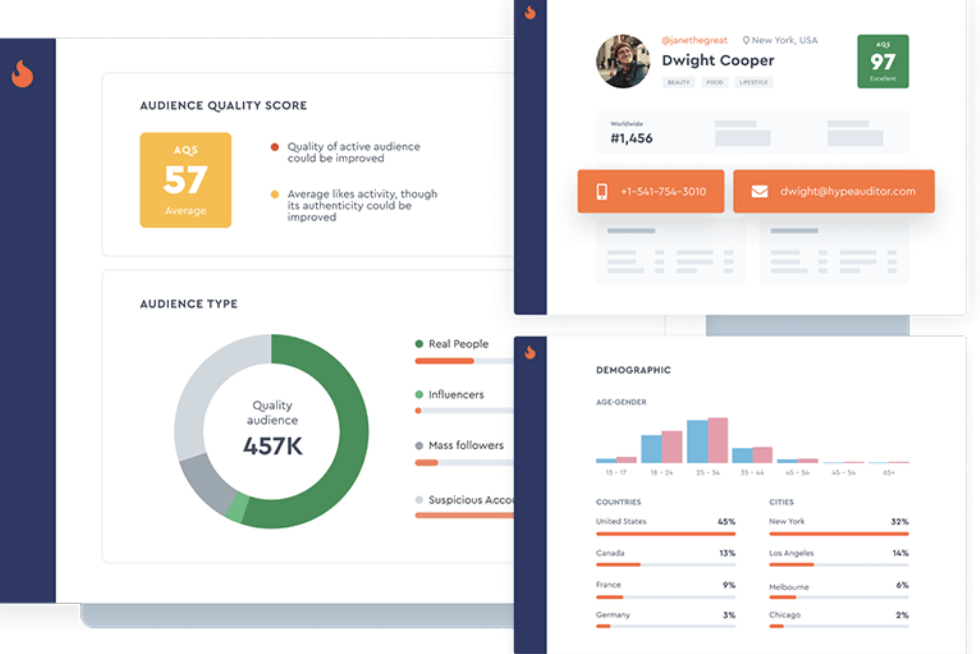
HypeAuditor’s AI-driven audience quality score provides detailed reports on an influencer’s follower base, including real engagement vs. artificial interactions. This eliminates the risk of paying for inflated metrics and directs your marketing budgets toward genuine reach and conversions.
However, while its analytics are powerful, it lacks influencer outreach and relationship management features.
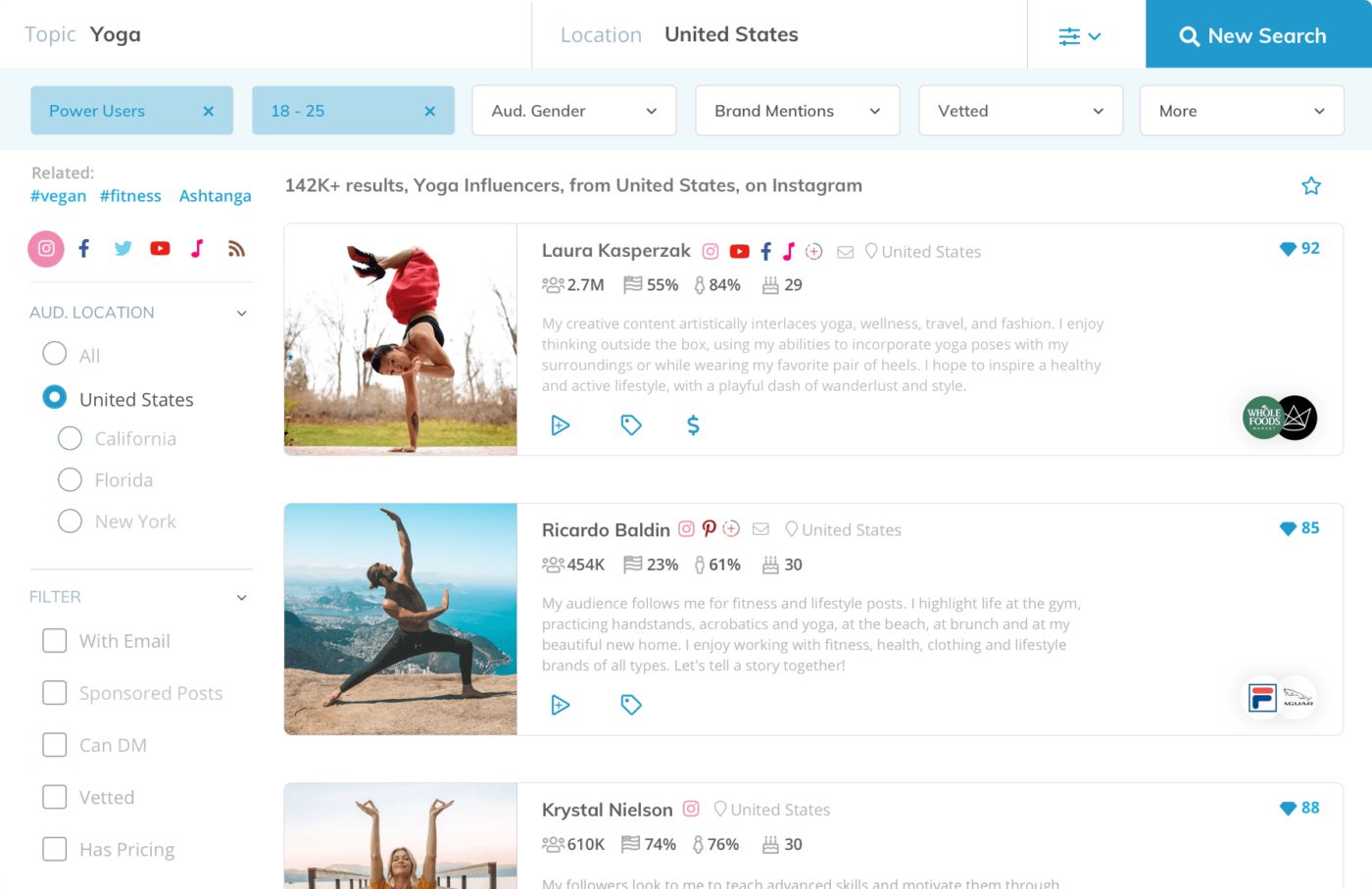
Klear tracks historical influencer content and allows marketers to check whether an influencer’s engagement rates are consistent or artificially inflated. Even better, for brands running large-scale campaigns, Klear automates influencer outreach and contract management.
Nevertheless, its campaign execution tools are more basic.
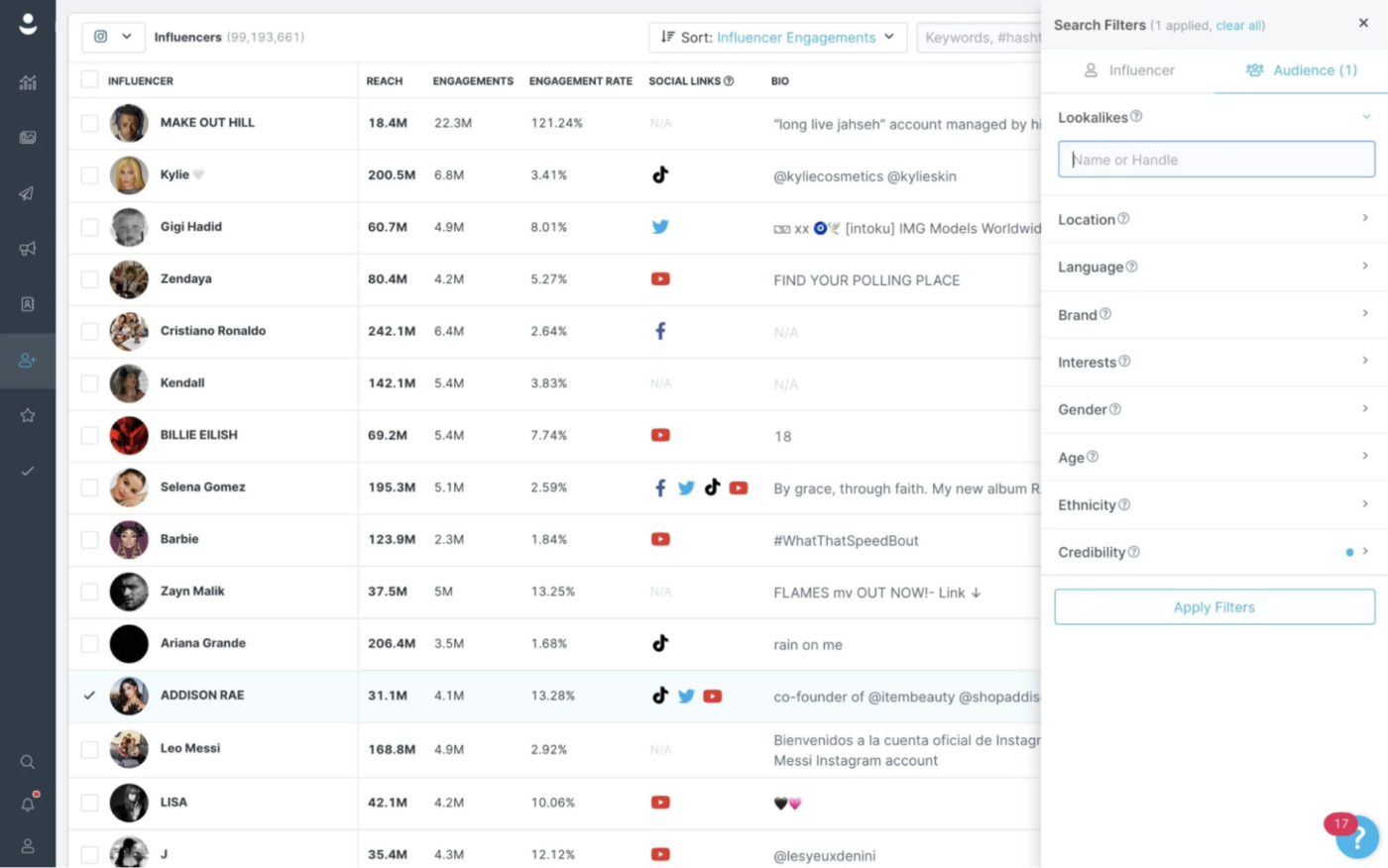
GRIN is a comprehensive influencer marketing platform designed for e-commerce brands looking to manage influencer relationships at scale.
It deviates from influencer marketplaces offering one-off collaborations. Instead, the platform prioritizes long-term partnerships, offering a CRM-like system for tracking influencer outreach, contracts, content approvals, and payments in one place.
Yet, its pricing is set for mid-to-large businesses, making it less accessible for startups.
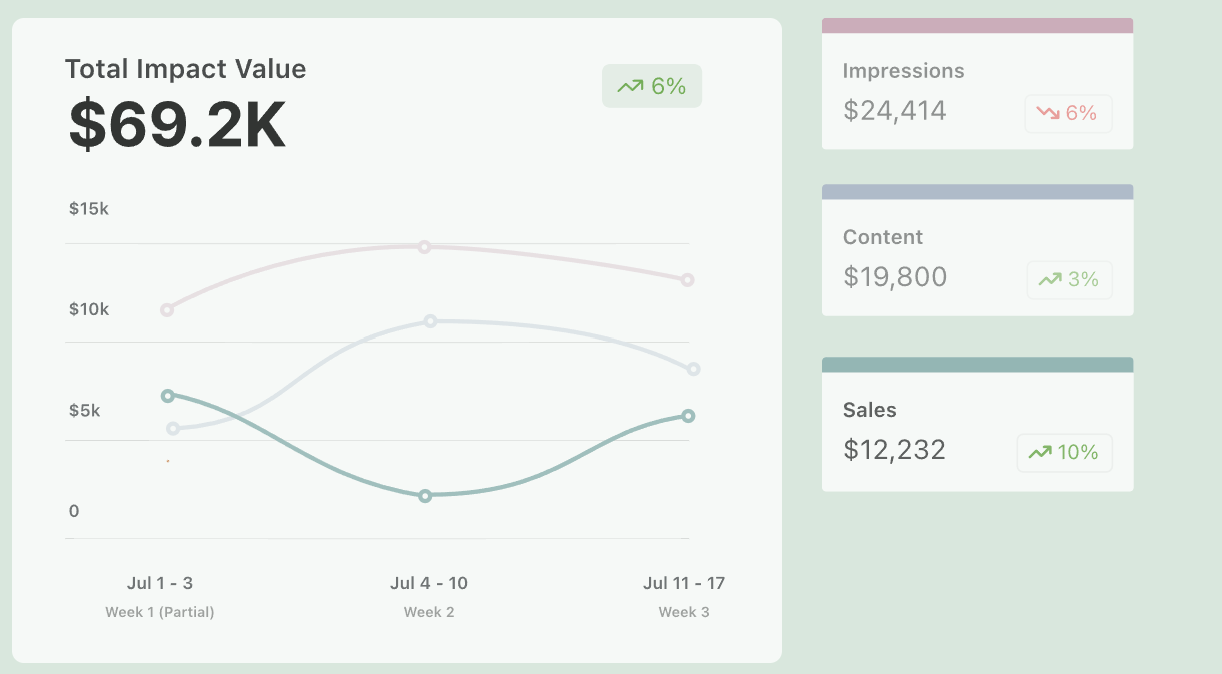
Like GRIN, Aspire.io is particularly well-suited for brands looking beyond one-off influencer deals by nurturing long-term ambassador relationships and user-generated content (UGC) collaborations. It also automates influencer outreach and helps brands connect with relevant creators without manual prospecting.
Its analytics go beyond surface-level engagement, giving you insights into audience demographics, conversions, and ROI. The built-in CRM keeps influencer relationships organized, making it easier to nurture long-term partnerships.
The influencer marketing industry has evolved at breakneck speed, underscoring how AI is now a necessity more than a luxury. Brands are now automating outreach and vetting influencers to measure ROI with precision. What was once a manual, time-consuming process is now a data-powered, scalable strategy.
All 13 tools on this list have their own advantages. However, ClickUp takes the crown for a range of workflow and campaign monitoring solutions.
You can amplify these advantages by choosing this tool for its integration and organization facilities. Onboard ClickUp to centralize everything from content approvals to influencer communication.
Sign up to ClickUp for free today!

© 2026 ClickUp

There’s an easier way. Try a free AI Agent in ClickUp that actually does the work for you—set up in minutes, save hours every week.