

Welcome to the daily struggle of modern work life—you start a task with the best intentions, only to find yourself lost in TikTok minutes later. You glance at your email and suddenly need a quick sandwich.
We’ve all been there—the frustrating battle of trying to focus at work amidst distractions.
Join us on a journey to master focus and concentration amidst daily chaos. If you’re tired of battling distractions, we’ve got concentration hacks for you.
And for those seeking a digital ally in the battle for focus, stay tuned as we explore how tools such as ClickUp help you reclaim your focus and amp up your attention.
Let’s dive in!
Can’t Focus at Work? Try These Concentration Hacks | ClickUp

 Summarize this article for me please
Why Can’t I Focus at Work?
Being focused at work is a real struggle, especially in a culture where over one-third of workers work more than 48 hours per week.
No wonder you’re distracted at times!
And let’s face it: concentration becomes a distant dream when you feel bored or distracted.
But it’s not just the burnout. Constant notifications, emails, multitasking demands, lack of interest in certain tasks, and stress can derail your focus.
Alright, how do you boost your focus with all these distractions? First, break down the brain’s focus stages so you understand yourself better.
Summarize this article for me pleaseThe Stages of Focus in The Brain
Focusing involves a complex interplay between your brain’s cognitive functions and neural networks. Knowing the focus stages will give you a glimpse into how your brains handle attention and concentration.
Here are the different stages of focus in the human brain:
- Sensory input: It starts with absorbing information from your surroundings through your senses—sight, sound, touch, and more
- Attention capture: Certain things grab our attention more easily. Here, the brain prioritizes and selects specific information for further processing
- Selective attention: Once something has our attention, the brain zeros in on specific details while filtering out the irrelevant stuff, helping us stay focused on the task at hand
- Working memory: Think of it as your brain’s short-term memory storage. It allows us to hold, manipulate, and process data relevant to the task
- Executive functions: If the task is more complex, executive functions come into play. These functions are the high-level cognitive processes like planning, organizing, and initiating actions
- Goal-oriented focus: Finally, your brain ties everything together, blending information from different parts to keep a clear and purposeful focus on your goals and priorities
Neuroscience behind the lack of concentration
Knowing what disrupts our focus stages will help us improve our concentration. Here is the neural basis of why we lose focus:
- Distractibility and neural networks: How easily your brain gets distracted boils down to the activity balance in different networks, like the default mode network (for mind-wandering) and the task-positive network (for goal-directed attention). Imbalances in these networks can make it hard to stay focused
- Neurotransmitters and attention regulation: Chemicals like dopamine and norepinephrine keep our attention in check. If their levels get out of balance (due to genetics, stress, medications, substance abuse, neurological disorders, hormonal changes, diet and nutrition, or other factors), it can affect our ability to focus
- Brain structure and attention disorders: Differences in brain structure due to mental health conditions, such as Attention Deficit Hyperactivity Disorder (ADHD), can impact attention and focus. Understanding these structural variations helps develop targeted interventions
- Stress and cortisol levels: When stress levels go up and cortisol, the stress hormone, kicks in, it can mess with your attention and focus. Chronic stress can lead to structural and functional changes in the brain, affecting cognitive performance
Summarize this article for me pleaseCommon Reasons For Difficulty in Focusing at Work
If you’re finding it hard to focus and have difficulty concentrating at work, here are some possible reasons:
1. Procrastination and its effects on focus
Procrastination is when you dodge critical tasks, convincing yourself you’ll tackle them later.
Constantly putting things off adds stress and tanks your productivity. Procrastination messes with your work focus, causing unnecessary delays and distractions.
Imagine you’ve delayed a crucial report until the last minute. You’re stressed, tired, and can’t focus the night before it’s due. As you hurriedly put the report together, you might miss some vital details, affecting the overall quality of your work.
When you postpone tasks, the upcoming deadlines create pressure and a sense of urgency. This heightened stress level can impair your cognitive functions and cause trouble concentrating on a difficult task.
2. Sleep deprivation and its impact on concentration
Your brain functions 24/7 for you. When you sleep, it takes a break to recharge. During deep sleep, your brain cells repair itself and restore homeostasis (internal balance). This helps prepare your brain for the next day.
However, inadequate or irregular sleep overworks your brain cells, leading to brain fog. Sleep deprivation delays brain signal transmission, making it hard to concentrate and leaving you tired all day.
For example, you have an important presentation at work the following day. Yet, you stay up late binge-watching a TV series, getting only a few hours of sleep.
This increases your cortisol levels—the infamous stress hormone that increases stress and negatively affects your focus. The next day, during the presentation, you find it challenging to articulate your thoughts clearly and stay on track.
3. Health conditions that affect concentration
Lack of focus could be due to various health issues. Mental and physical health problems can impact your concentration and attention span.
Some conditions that affect your focus are:
- Attention -Deficit/Hyperactivity Disorder (ADHD)
- Obsessive-Compulsive Disorder (OCD)
- Depression
- Anxiety
- Insomnia
- Blood sugar/pressure problems
Spot the signs and symptoms of these health conditions early on for quick intervention and effective management. Contact healthcare professionals for proper guidance to deal with whatever’s affecting your focus.
4. Attention Deficit/Hyperactivity Disorder and its influence on focus
Attention-Deficit/Hyperactivity Disorder (ADHD) is a medical condition that affects how the brain works. People with ADHD find it challenging to stay focused, get easily distracted, and have difficulty sitting still.
Tasks that others find manageable can be challenging for someone with ADHD, especially the slow, long ones, those with delayed rewards, or repetitive tasks.
It’s more than just a lack of focus; it’s more about not having complete control over what you focus on. Lack of control can manifest in various ways, such as difficulty starting tasks, mind wandering, or getting overly focused on unimportant factors.
For example, imagine being in a meeting and trying to listen to the speaker, but with ADHD, you might easily get distracted by things like a flickering light or someone tapping a pen.
Even if you try hard, you might miss crucial details in the meeting, impacting your overall work performance.
Check out these ADHD apps!
5. How conditions like depression and anxiety disorders affect focus
Depression and anxiety, covering a wide range, bring in factors like cognitive distortions, neurotransmitter imbalance, and life stressors. Together, these affect your ability to focus.
These conditions, with chemical imbalances and structural brain changes, make maintaining attention and cognitive performance challenging.
Depression disrupts your sleep, mood, and stress levels, making you feel unmotivated and stuck in bed. On the other hand, anxiety brings on excessive worry, stress over little things, and distractions from what matters.
Both can throw off your focus and make completing daily chores harder.
6. Consequences of fatigue and burnout on work focus
Fatigue means feeling extremely tired, having low energy levels and trouble focusing. It can make concentrating hard, reduce your attention span, and increase the chances of making mistakes. And it hampers your problem-solving and decision-making abilities, which can impact how well you do at work.
Burnout, a chronic mix of feeling physically and emotionally drained, usually happens when stress and too much work pile up. It’s not just about feeling tired; it also affects your mind and emotions.
As fatigue kicks in, you make more mistakes, adding to stress and making you more susceptible to burnout. On the flip side, burnout drains your energy even more and leads to fatigue due to the emotional toll.
This cycle continues, challenging your focus at work.
7. The impact of trying to multitask vs focusing on one task at a time
When you’ve got a long to-do list, the temptation to multitask is real. You might think you’re a pro at context-switching and being super productive. However, it’s not as helpful as it appears. Studies show that reorienting takes up to 23 minutes to switch between tasks entirely.
Multitasking makes your mind jump around, causing mental fatigue, lowering productivity, and increasing the likelihood of mistakes.
On the other hand, dedicating your attention to a single task eliminates the need for constant context-switching. This focused approach is more time-efficient, and you’re likely to complete the task more efficiently, with fewer errors, and without the mental toll of constant multitasking.
8. Dealing with pressure and stress overwhelms and causes a lack of focus
Feeling pressured or stressed out can lower your focus, especially in high-pressure situations like meeting deadlines, dealing with expectations, or chasing personal goals. Stress just makes it harder to stay focused.
When you’re stressed, your body releases cortisol, and if it stays high for too long, it impairs your focus and decision-making skills.
Dealing with constant stress and challenging situations—like tight deadlines, conflicts, high expectations, or changes at work—makes it tough to stay focused on tasks. Staying focused on specific thoughts is harder when your mind is worried.
9. The role of environmental distractions in destroying focus
Numerous environmental factors can distract you; unfortunately, you can’t shut off your brain to get away from them.
Understanding and managing these productivity killers helps you create a focused workspace.
Noise is a common factor—loud conversations, traffic, or disruptions. It affects concentration and hampers focus.
Clutter is another environmental distraction. A disorganized or cluttered workspace can overload visual stimuli, making prioritizing and focusing on specific tasks challenging. Interruptions from a phone buzzing with notifications or colleagues dropping by can distract you.
10. The impact of lack of motivation or disinterest in work on focus
When you love your job, focus comes easy, you take charge, and work doesn’t feel like a chore. But what if going to work feels more like a marathon you didn’t sign up for?
The lack of motivation can make even the simplest task feel like an overwhelming burden.
When you’re motivated about a task, your brain releases chemicals like oxytocin that keep you alert and focused. But when motivation is low, tasks become more challenging due to disinterest, and focusing feels like trying to juggle with hands tied behind your back.
Summarize this article for me pleaseStrategies to Improve Focus and Productivity
Now that you understand why you might be losing focus at work let’s see how we can tackle these challenges:
1. Utilize tools that promote focus
ClickUp is a versatile project management tool designed to enhance collaboration and productivity. This all-in-one app helps you stay focused and productive. It helps block distractions like social media and time-wasting websites and create a focused digital space, allowing you to concentrate on tasks and goals.
Let’s explore the features of ClickUp that will help you and your team maintain focus at work.
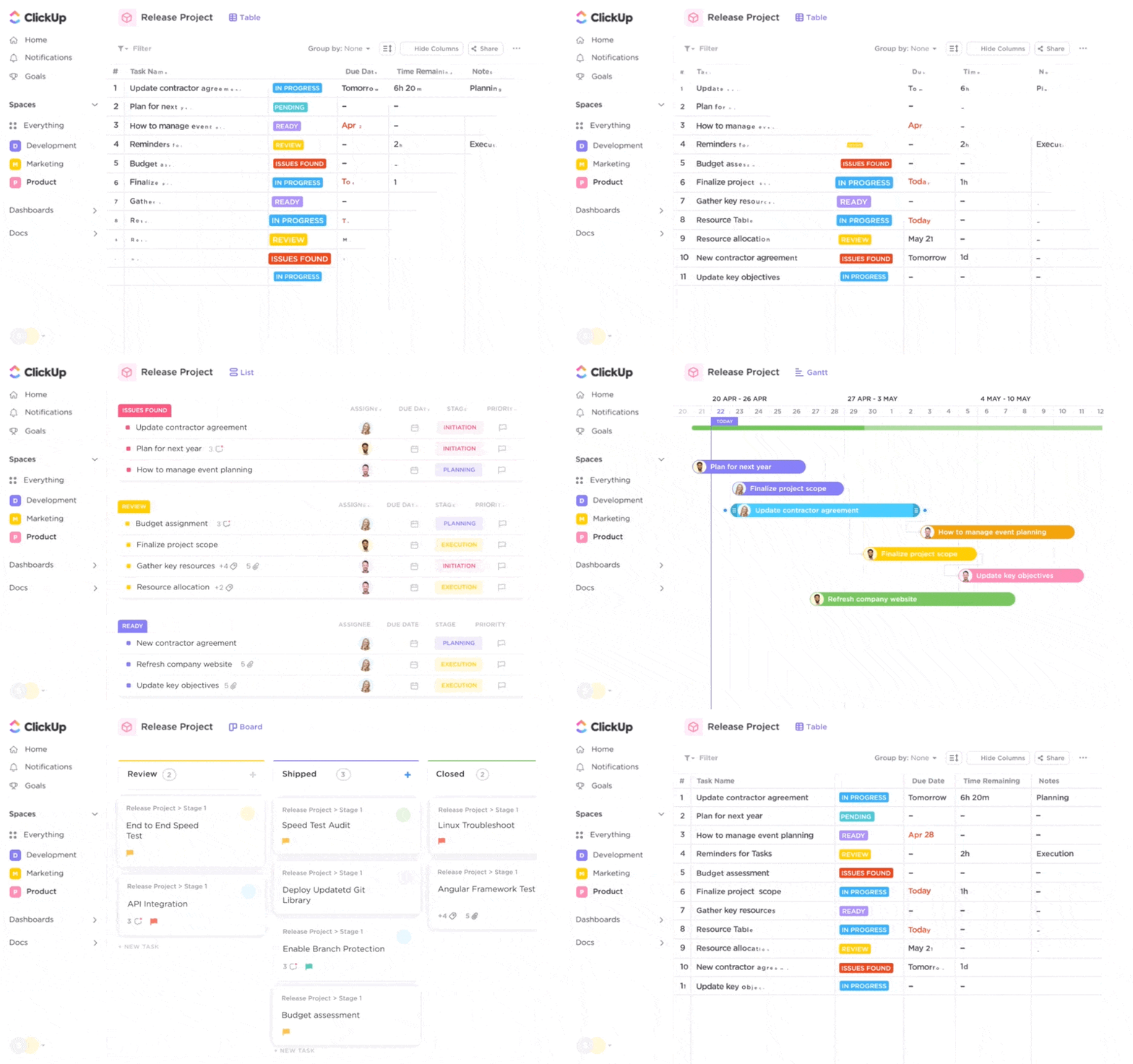
- Customizable task management: ClickUp Tasks provides a personalized approach to managing, organizing, and prioritizing work. Customize your workspace to fit your needs with ease. Focus on the task at hand without being tied to a rigid structure
- Goal management: Streamline how you track and achieve work objectives with ClickUp Goals centralize goal management, making it easier to stay organized and focused on achieving success at work. Stay accountable with clear timelines and measurable targets. The automatic progress tracking feature eliminates manual updates, while the option to set various target types ensures flexibility
- Enhanced collaboration: Streamline communication and teamwork throughout your organization with features like multiple assignees, assigning tasks to more than one person, and comment threads for discussing specific topics. Get all work-related communication in one central platform, saving time and eliminating the need to switch between different tools or platforms
- Templates: Get more done in less time with productivity templates—they are pre-designed for activities like task organization and daily planning, so you can get more done quickly without starting from scratch. With clear frameworks, ClickUp lets you focus on getting tasks done instead of figuring out how to organize your work
- Integrations: Create a centralized hub for information with ClickUp Integrations. Ever wish all your tools were in one place? ClickUp’s got you covered. It creates a connected work environment by bringing over 1000+ tools into a unified interface. Focus better, minimize context switching, enhance efficiency, and streamline workflows. Some of the best integrations are Slack, Gmail, Dropbox, and Zapier
Save time with ClickUp
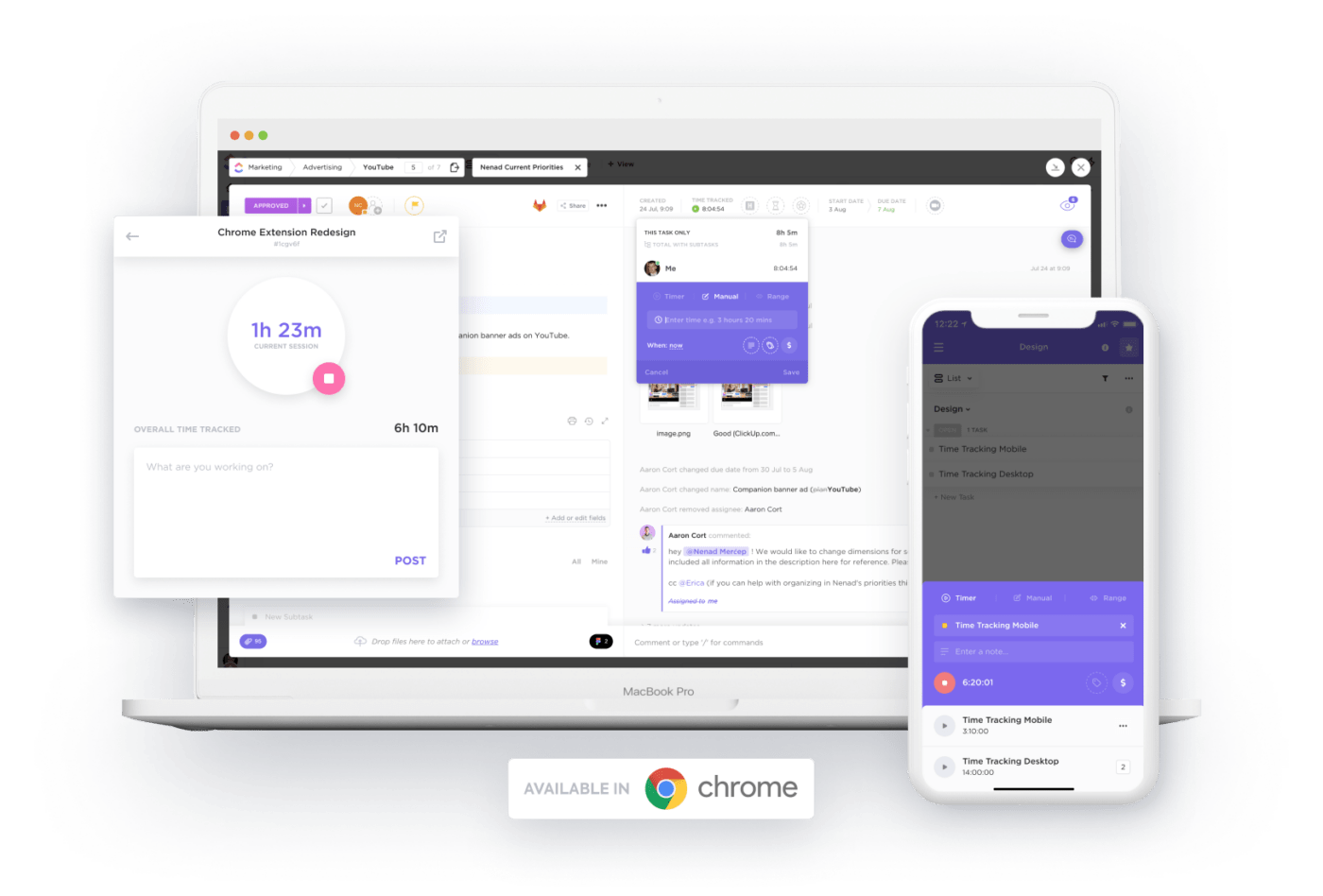
- Time tracking: Make the most of your time and get insights into your productivity with ClickUp’s user-friendly time tracking features. You can tweak time manually and add notes with ClickUp. Link the time tracked to specific tasks using the global timer and integrate with popular apps like Harvest, Everhour, Toggl, and more. Additionally, you can use the free Chrome extension to record time seamlessly from a desktop, mobile, or web browser
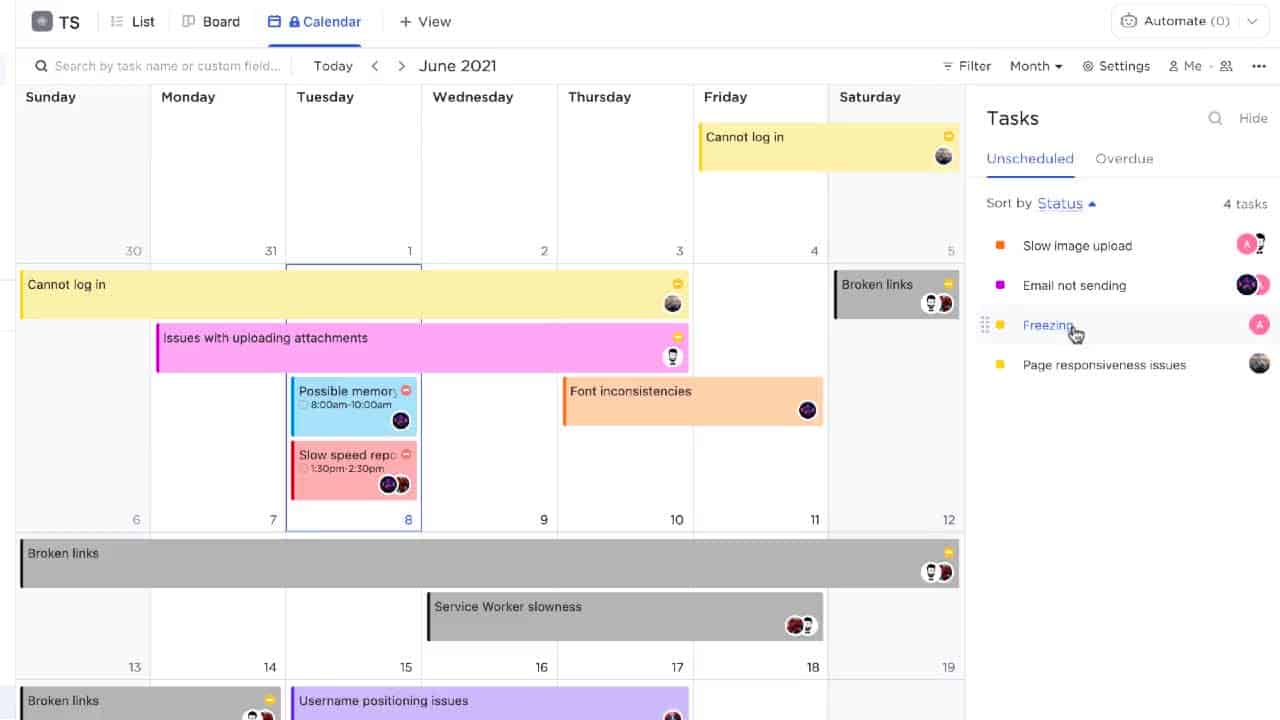
- Calendar view: Plan projects, set timelines, and visualize your team’s progress on ClickUp’s Calendar View, a flexible calendar for seamless collaboration. Easily view your calendar by day, week, or month and track projects at a glance. Share and schedule tasks with ClickUp’s drag-and-drop functionality, launch meetings from Calendar view, sync tasks with Google Calendar, and use color-coded tasks for organization
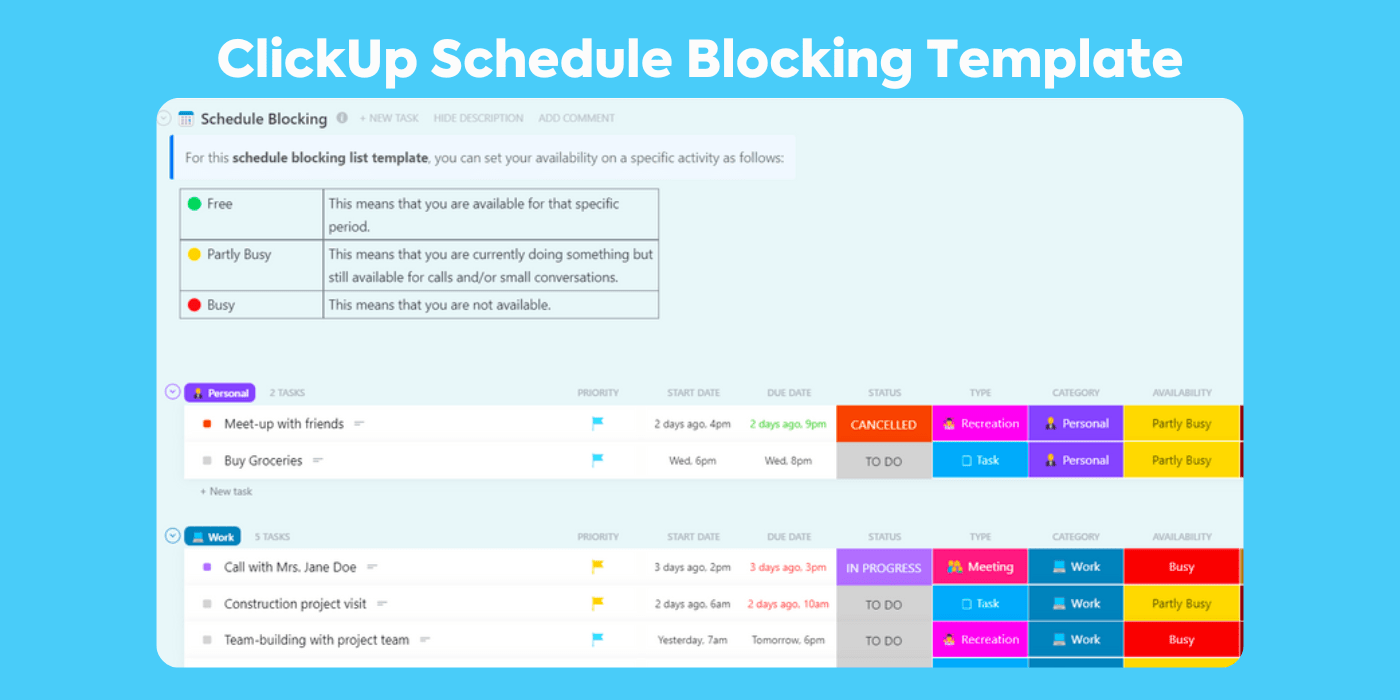
- Time blocking: Manage and plan your days, weeks, and months with time-blocking templates that divide and organize your hours to complete more tasks. This helps you make the maximum use of your time while staying motivated to complete necessary tasks. Provide a clear structure to park your thoughts and low-priority tasks to carry on completing tasks without distractions
- Reminders: Boost your focus and save time at work with ClickUp’s Reminders feature. Stay organized with comments and conversation reminders, ensuring you read all crucial discussions. Get a daily summary in your email to stay informed on due tasks, upcoming activities, and overdue items. You can also delegate reminders to your team effortlessly for a smooth workflow
Stay focused with ClickUp Views
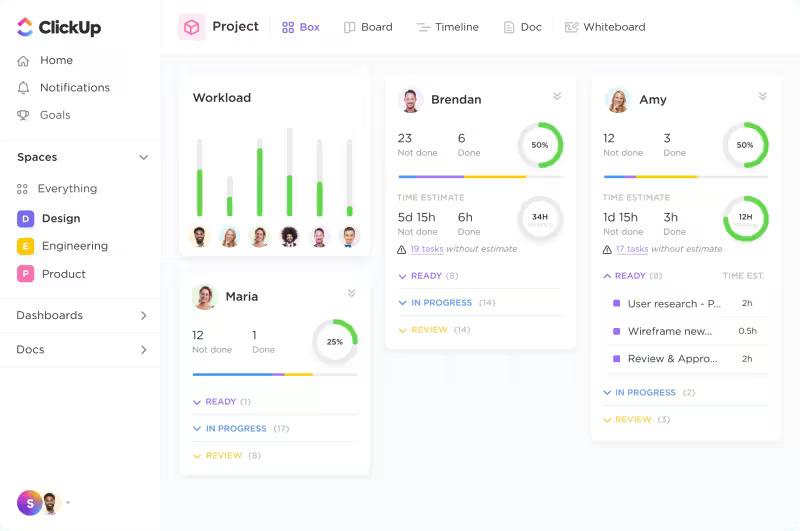
Balance workloads with ClickUp Views. These are fully customizable viewing options to help you visualize and manage your tasks efficiently.
- Board view: Group tasks by team member or priority, ensuring a balanced distribution of work
- List view: Create detailed task lists, sorting them by priority or due date. This view provides a comprehensive overview, allowing you to allocate resources effectively
- Gantt chart view: Visualize task dependencies and timelines. This also helps you identify critical paths and allocate resources accordingly to maintain a balanced workload across your team
- Box view: Get a holistic perspective on task distribution and adjust assignments based on team members’ strengths and availability
Explore ClickUp Brain
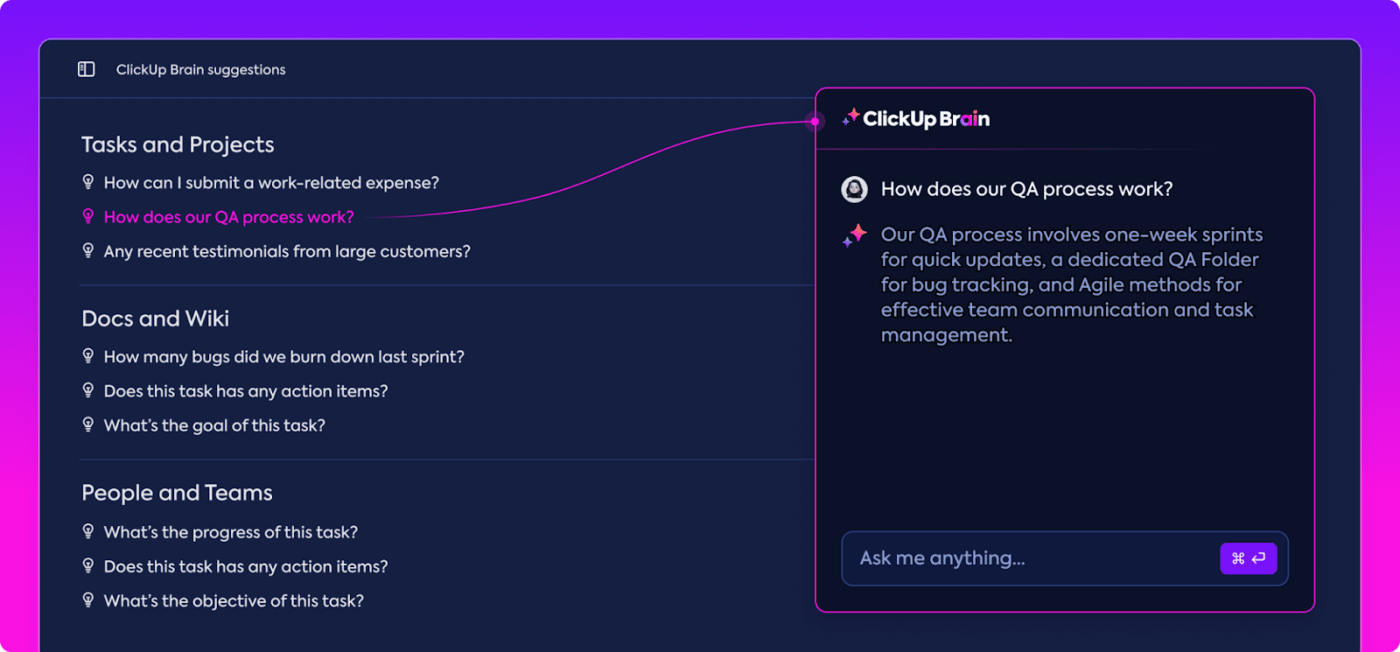
Elevate your work efficiency with ClickUp Brain—it streamlines tasks, enhances collaboration, and provides intelligent insights to optimize your workflow.
- Content generation: ClickUp Brain helps you create instant and high-quality content for blog posts, emails, or advertising copy. This AI tool has you covered with powerful content research and ideation features
- Summarize agenda: Simplify your meetings with ClickUp Brain. It summarizes agendas, extracts vital details, and saves you precious time. And it doesn’t just end at meetings—it can sum up docs, comment threads, recent task activity, and even whip up progress updates
- Create lists: Create lists with ease using ClickUp’s Brain’s assistance. Whether it’s task lists, to-do items, or project outlines, the AI understands context and helps you to generate organized and prioritized lists effortlessly
- Manage knowledge: Get answers to your project-related questions and queries without reviewing your documents, tasks, and other documentation. Get updates on the progress of tasks, fixing of bugs, or any pending action items
Streamline tasks with ClickUp Automation
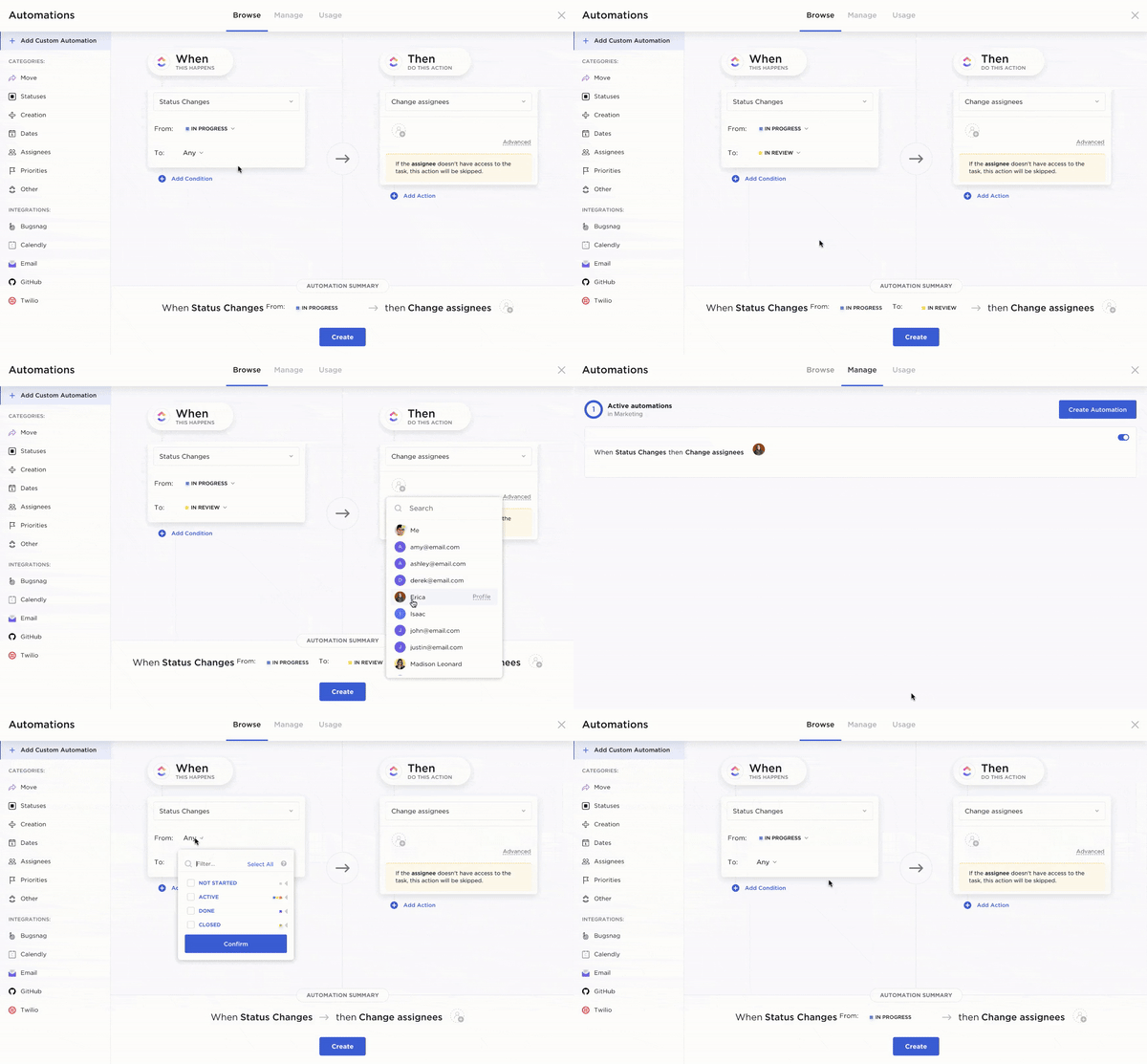
ClickUp Automation allows you to concentrate on what truly matters—your work. Whether assigning tasks, updating statuses, or sending notifications, these automation options streamline processes, eliminating the need for constant oversight.
It enhances your focus by minimizing distractions and allowing you to concentrate on more meaningful aspects of your work.
- Custom automation: Create customized automation options according to your priorities and weekly goals. You can even choose from 100+ pre-built automation options and tailor it to meet your specific needs
- Automate tasks: Streamline your workflow by automatically assigning tasks, changing assignees, posting comments, moving statuses, and more
- Task updates: Automatically update task statuses, assignees, tags, and more in response to changes in priority or when creating a new task
Importance of disciplined time management
Disciplined time management helps you maintain focus and concentration in daily life. When you allocate specific time slots for different activities, you know when to focus on what.
Moreover, disciplined time management isn’t just about what to prioritize; it’s equally about deprioritization. Trim away what doesn’t match your goals or priorities so you can concentrate on what matters.
If you don’t know where to start, let us help you.
- Create a to-do list: Start your day by listing tasks based on priority. A task list keeps you organized and provides a clear roadmap for your day
- Set realistic goals: Consider what you can accomplish in a given timeframe. Setting achievable goals prevents overwhelm and supports focus
- Use time blocking: Leverage techniques like time-boxing to schedule time with Pomodoro Apps and the Getting Things Done (GTD) method that provides structured approaches to managing and optimizing time for increased productivity. Use ClickUp’s Schedule Blocking Template and don’t let poor time management get you in trouble
- Practice the two-minute rule: Do it immediately if a task takes less than two minutes. This prevents small tasks from piling up and demanding attention later
The role of mindfulness and meditation in enhancing focus
Mindfulness and meditation enhance focus by training the mind to stay present and attentive. Being mindful makes you aware of your thoughts and surroundings, while meditation is a technique to train your mind for mindfulness, focusing on things like your breathing.
Regular practice makes you more aware of your thoughts and emotions, enabling you to redirect your attention to the task at hand. This helps you concentrate, manage distractions, and ultimately enhance overall focus and concentration.
Here’s a simple yet effective technique to enhance your focus. Find a quiet place, sit comfortably, and focus on your breathing. Inhale and exhale naturally, paying attention to each breath. When your mind wanders, gently bring it back to your breath. Consistent practice will improve your overall focus and concentration.
The connection between sleep hygiene and increased focus
Good sleep hygiene practices are integral to enhancing focus and improving cognitive function. Sleep hygiene involves promoting quality sleep, like maintaining a consistent sleep schedule, creating a comfortable sleep environment, and avoiding stimulants before bedtime.
Following these practices consistently regulates the sleep-wake cycle, positively impacting attention and focus during waking hours.
Here are a few practical tips to improve your sleep hygiene and get sufficient rest to promote sustained focus in your daily life.
- Consistent sleep schedule: Establish a consistent bedtime and wake-up schedule every day, including weekends, to regulate your body’s internal clock
- Create a relaxing bedtime routine: Establish calming pre-sleep rituals, such as reading a book or taking a warm bath, to signal to your body that it’s time to wind down
- Watch your diet: Avoid heavy meals, caffeine, and excessive fluids close to bedtime to get more sleep
- Limit naps: If you need to nap, keep it short (around 20-30 minutes) and avoid napping too close to bedtime
Tips on creating a distraction-free environment
Working effectively on complex problems requires a distraction-free environment, but balancing team collaboration and individual-focused time is crucial.
You can achieve this balance by planning time for team interactions and allocating individual-focused time, promoting a positive environment for individual work and team collaboration.
Despite the challenges, here are tips to minimize distractions and enhance concentration.
- Declutter: Remove distractions and unnecessary items from your workspace
- Organize: Keep things in order so you’re not hunting for what you need
- Limit gadgets: Minimize the use of cell phones and other electronic devices to reduce distractions
- Quiet zone: Find a quiet place to work without constant interruptions
- Digital detox: Turn off unnecessary notifications for a distraction-free zone
- Comfortable seating: Make sure your workspace is comfy and supports good posture
- Natural light: Use natural light or well-placed lighting for a conducive environment
- Establish routine: Create a consistent work routine to boost focus depending on whether you’re a morning or evening person
The importance of healthy lifestyle habits for maintaining focus
A balanced lifestyle has a ripple effect on your overall cognitive performance. Let’s look into the importance of a healthy lifestyle and how it affects your focus and productivity at the workplace.
- Nutrition: Consuming a balanced diet provides essential nutrients that support brain function, helping to enhance cognitive abilities and sustained focus
- Physical wellbeing: Regular exercise or even just a short walk can increase blood flow to the brain and release chemicals that improve mood and concentration, contributing to increased productivity
- Adequate sleep: Quality sleep is crucial for memory retention and overall cognitive performance, directly impacting alertness and focus during waking hours
- Stress management: Healthy lifestyle practices, such as mindfulness and stress-reducing activities, reduce stress and mitigate it’s negative effects on mental clarity
- Hydration: Dehydration can impair cognitive function and delay brain signals. So maintaining proper hydration levels is vital for sustained focus and overall well-being
- Social connections: Maintaining a healthy social life contributes to emotional well-being, reducing feelings of isolation, and enhancing overall mental health, which positively impacts productivity
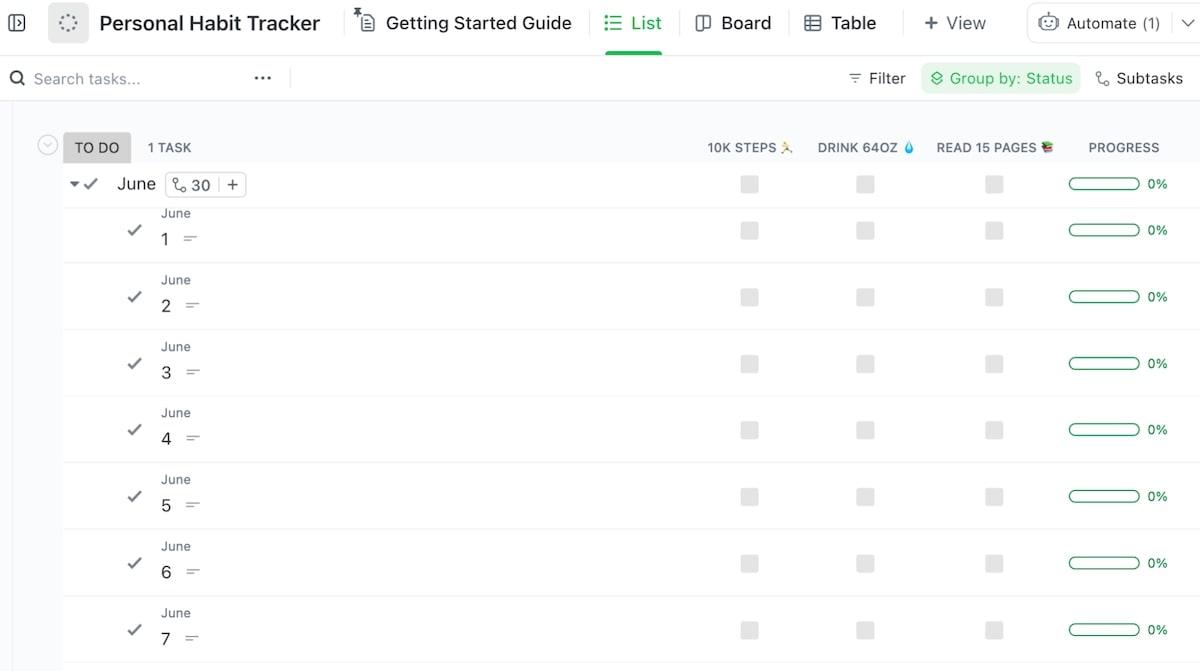
- Healthy habits formation: Stay focused and disciplined with ClickUp’s habit tracker that helps you track and manage habits. A holistic approach to a healthy lifestyle helps cultivate positive habits that, over time, become ingrained, leading to long-term improvements in focus
Tackle difficult tasks first to increase focus
Starting your day by tackling difficult tasks head-on can significantly boost focus throughout the day.
When you dive into challenging tasks, your mind is fresh, and your mental energy levels are high. This sets a tone of accomplishment, triggering a positive psychological effect. The satisfaction of overcoming a tough challenge releases dopamine, a chemical associated with reward and motivation, building momentum for the rest of the day.
Moreover, addressing difficult tasks first minimizes the looming stress and mental clutter of procrastination. You free up mental space, enabling better concentration on subsequent tasks.
So, consider embracing it first the next time you’re tempted to postpone a tough task!
Manage mental health for optimal concentration
Taking care of your mental health helps you achieve optimal concentration. Breaking the cycle of stress restores focus.
Implementing stress-management techniques can significantly enhance your mental health, promote a sense of calmness, and pave the way for improved focus and concentration in your daily life.
- Take short breaks: Incorporate short breaks into your day, acting as a mental reset button to enhance overall concentration
- Seek support: Don’t hesitate to contact friends, family, or a mental health professional. A well-tended mind, supported by a strong network, is the key to improved concentration and overall physical well-being
- Cultivate positivity: Stay motivated and weed out negativity and self-doubt, replacing them with affirmations and constructive thoughts to foster concentration
Summarize this article for me pleaseImprove Your Focus at Work
And there you have it—the pivotal role of focus in driving productivity within the contemporary workplace and a comprehensive guide on how to focus amidst all the chaos.
In today’s world, staying focused is critical for top-notch results. From juggling digital distractions to multitasking, we need proactive solutions. Trying mindfulness, refining time management skills, and creating a work-friendly space are vital steps to boost focus.
A lack of focus doesn’t just affect personal performance; it ripples through your teams and overall outcomes.
Creating a focus-driven culture requires continuous workplace learning initiatives. Discussing effective strategies, sharing successes, and exploring solutions fosters collaboration.
With features like task management, time tracking, and goal setting, ClickUp, one of the best focus apps, helps teams stay organized and focused on their objectives. Sign Up for FREE and stay focused throughout your day.
Summarize this article for me pleaseCommon FAQs
1. Why can’t I seem to focus at work?
If you find it difficult to focus at work, it could be digital distractions, multitasking, or the modern work buzz. Pinpointing the cause can help you find solutions and regain that concentration.
2. How do you focus at work when you are too stressed?
Stress and worry at work can be a focus-killer. Break tasks into smaller chunks, take short breaks, and sometimes just step away for a minute. It helps to regain perspective and keeps you focused amid the chaos.
3. How do I get my focus back at work?
Try breaking tasks into smaller, manageable chunks to reclaim your focus at work. Prioritize your to-do list, declutter your workspace, and set specific time blocks for focused work.
Experiment with techniques to find what works best for you, and don’t forget to stay hydrated and well-rested—small adjustments can make a big difference in getting your focus back on track.


Everything you need to stay organized and get work done.

Recent Articles
8 Communication Strategies That Actually Fix Team Chaos 
8 Communication Strategies That Actually Fix Team Chaos
ADHD Task Management: How to Build a System You’ll Still Use in a Month 
ADHD Task Management: How to Build a System You’ll Still Use in a Month
What Is Tacit Knowledge? Definition, Benefits and Examples
What Is Tacit Knowledge? Definition, Benefits and Examples
