

Sorry, there were no results found for “”
Sorry, there were no results found for “”
Sorry, there were no results found for “”
‘We’re spending more time looking for documents than actually using them.’
— Every frustrated team lead, ever
It’s a common complaint and an expensive one. As organizations grow, so do their files: policies, contracts, briefs, feedback, legal disclaimers, and onboarding materials. However, without a structured document management workflow, growth quickly becomes cluttered.
👀 Did You Know? Professionals spend an average of 4.5 hours a week searching for documents.
A strong document management system is a foundational layer of operational efficiency. It ensures every document, from the first draft to the signed version, flows through a predictable, accessible, and secure path.
In this guide, we’ll break down the essentials of document management workflow, from mapping your existing process to automating repetitive steps and selecting the right tools.
A document management workflow is the step-by-step process your organization follows to create, review, store, share, and archive documents in a consistent, trackable, and organized way.
Instead of relying on ad-hoc methods (like hunting through email threads for the latest file), a document management workflow defines:
For example, in a hiring process, an offer letter might follow this workflow:
HR drafts the offer letter → Legal review → Manager approval → Candidate receives signed copy → HR stores final PDF in secure folder
Good document workflow software centralizes everything from invoices to project plans and compliance records and prevents lost files, duplicate work, and unnecessary delays.
📚 Also Read: Best Writing Assistant Software With AI
Typically, effective document management workflows are built in five stages:
Efficient document creation is about having a structured way to generate content that aligns with your business goals, team inputs, and recurring needs.
At this stage, the best workflows already include:
ClickUp Docs make this super easy with built-in header blocks, workspace-integrated wikis, toggle sections, and team collaboration. Use them to create structured, easy-to-navigate docs that live inside a much deeper, interconnected knowledge block.

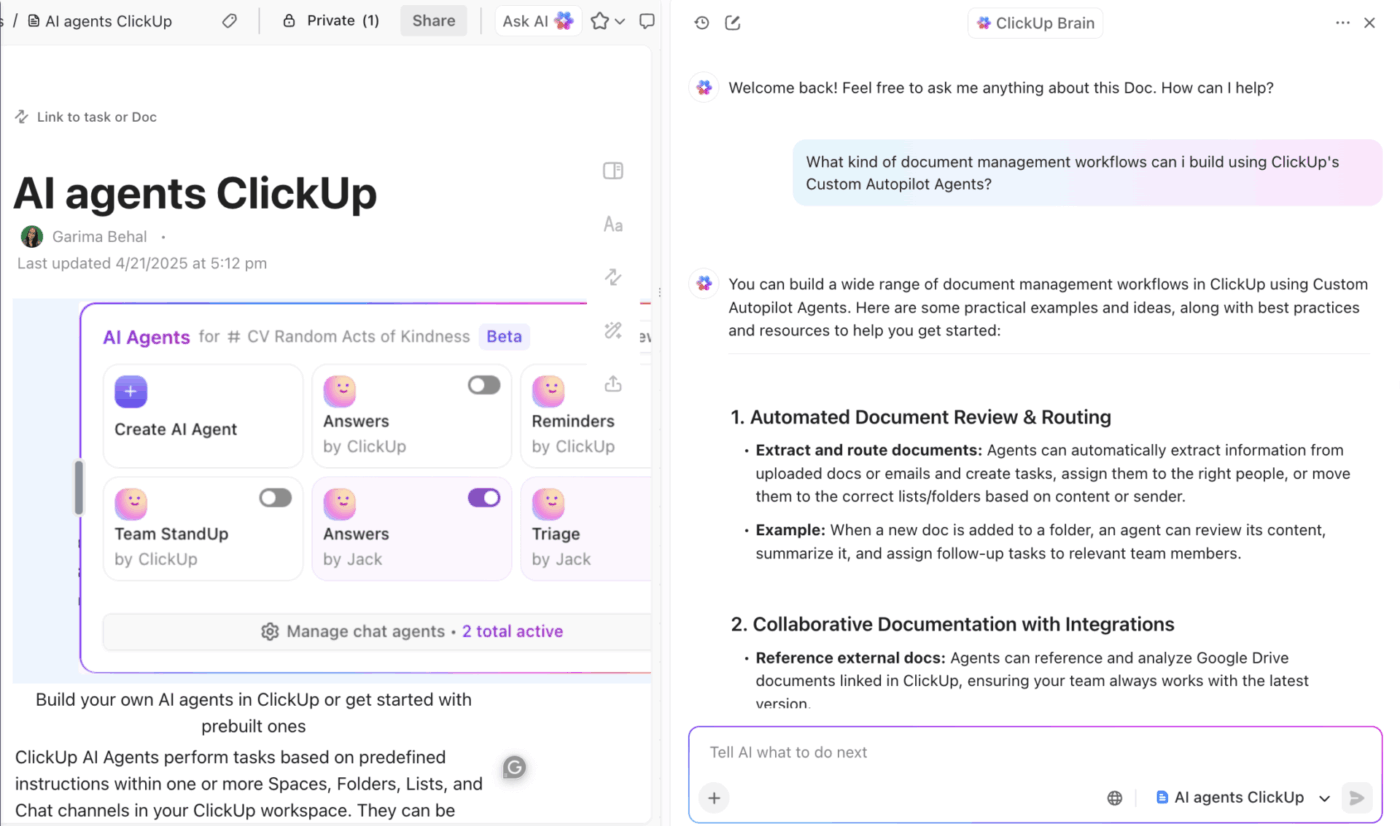
You can take your document creation workflows a step further with ClickUp Brain. It’s ClickUp’s powerful, built-in AI that has all your work context. Just prompt it directly inside the doc editor. Whether it’s summarizing a project, writing first-draft copy, or turning meeting notes into an action plan, Brain helps you move from ‘ugh, I’ll do it later’ to ‘done in five minutes.’
📌 For example, based on a Doc about ClickUp’s AI Agents, you can ask Brain to suggest document management workflows that Agents can automate.
It responds as follows:
⚡ Template Archive: Free Content Writing Templates for Faster Content Creation
Document creation kicks things off, but it’s the review and collaboration stage where your document earns its keep.
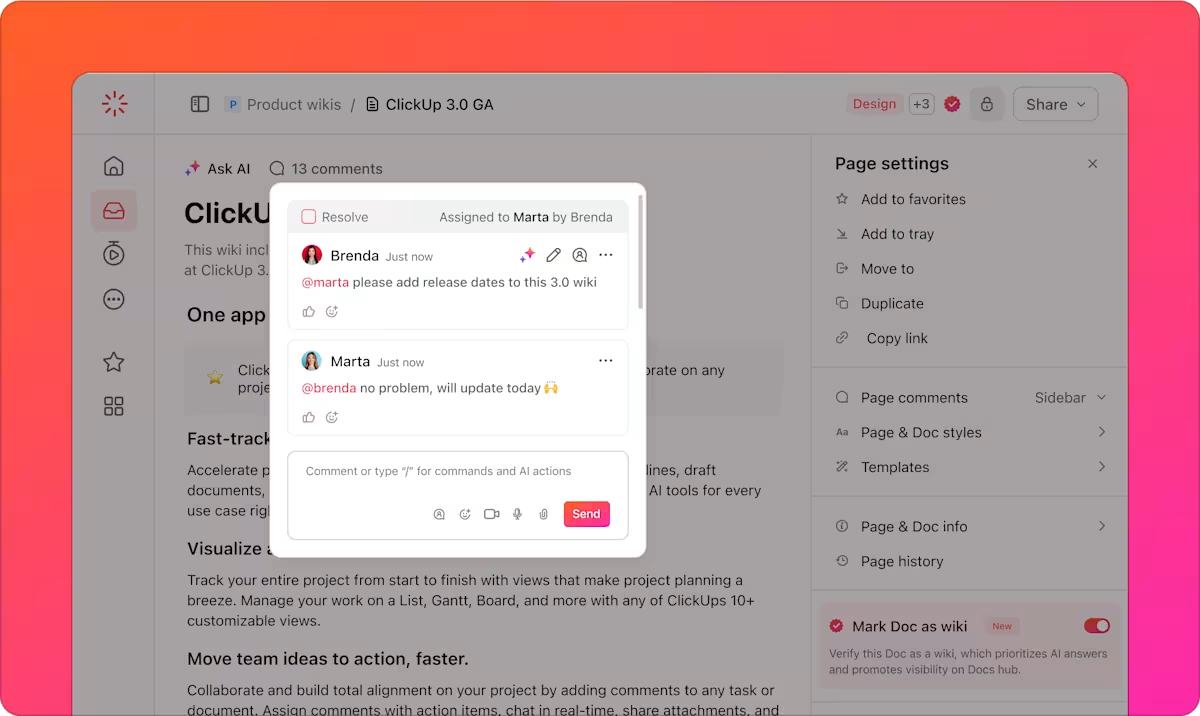
At this point in the document management workflow, you’re gathering feedback, refining ideas, and turning rough drafts into polished, usable assets. Without a clear structure, this phase can easily spiral into conflicting comments, outdated versions, and confusion over who is responsible for what.
A robust document management system helps prevent that mess by offering features designed for frictionless teamwork. Here’s what that looks like in practice:
This phase also benefits from a tidy files and folders setup. When each document has a clear home and logical path, it’s easier for reviewers to find, comment, and move things forward.
When every edit is in and the draft finally looks ‘done,’ someone still has to say, ‘Ship it.’
Clear, speedy approvals keep momentum high and processes running smoothly.
💡 Pro Tip: Here’s how you can build a quick approval system:
In an effective document management workflow, this stage ensures documents are delivered securely, shared with the right people, and easily located when needed.
Here’s how to keep things smooth and scalable during distribution:
📮 ClickUp Insight: More than half of all employees (57%) waste time searching through internal docs or the company knowledge base to find work-related information. And when they can’t? 1 in 6 resorts to personal workarounds—digging through old emails, notes, or screenshots just to piece things together.
ClickUp Brain eliminates the search by providing instant, AI-powered answers pulled from your entire workspace and integrated third-party apps, so you get what you need—without the hassle.
This final stage in your document management workflow implementation plan involves ensuring that documents remain accessible, secure, and properly categorized.
Here’s how to do it well:
💡 Pro Tip: Name your ClickUp Docs in a simple format like “Team – Project – Type” (e.g., Marketing – Website – Strategy) and add a few helpful tags. Then connect your documentation tools like Google Drive or Confluence to ClickUp. Now, when you press Cmd/Ctrl + K and search a keyword, ClickUp’s Connected Search pulls up every related piece of documentation—from your Docs to Drive files to Slack threads—all in one place. No more digging!
Ultimately, this stage transforms storage from a dumping ground into a reliable knowledge hub. It closes the loop in your document management process and sets the foundation for scaling your workflows as your team or business grows.
👀 Did You Know? Improper document handling, storage, or security can trigger heavy penalties, up to €20 million under GDPR or $1.5 million per year per violation under HIPAA!
Even with the right tools, setting up and running a document management workflow can be challenging.
Five common document management workflow challenges include:
👀 Did You Know? Companies spend an average of $220 in labor just to reproduce a single lost document. Now imagine that happening across teams, every week. The cost of poor document management quietly eats into your bottom line, one missing file at a time.
Here’s how a well-designed document management process helps:
📮 ClickUp Insight: More than half of employees struggle to find the information they need at work. While only 27% say it’s easy, the rest face some level of difficulty—with 23% finding it very difficult.
When knowledge is scattered across emails, chats, and tools, wasted time adds up fast. With ClickUp, you can turn emails into trackable tasks, link chats to tasks, get answers from AI, and more within a single workspace.
💫 Real Results: Teams are able to reclaim 5+ hours every week using ClickUp—that’s over 250 hours annually per person—by eliminating outdated knowledge management processes. Imagine what your team could create with an extra week of productivity every quarter!
📚 Also Read: Ways to Be More Productive at Work
Wondering how to create the most seamless document management workflow? Here’s what you need to know 👇
Before introducing new tools, take a step back. Watch how your team handles documents right now (not how they say they do it).
If people are still creating paper documents, emailing attachments back-and-forth, or digging through half a dozen folders just to access documents, it’s a clear sign: your document workflow management could use a serious upgrade.
Start by tracking the journey a document takes from creation to storage. Ask questions like:
Now, zoom out. Discuss with various teams, including marketing, HR, and operations. You’ll likely find that each department has its own approach to handling project documentation and workflow processes. This is normal, but it can also be a recipe for inefficiency.
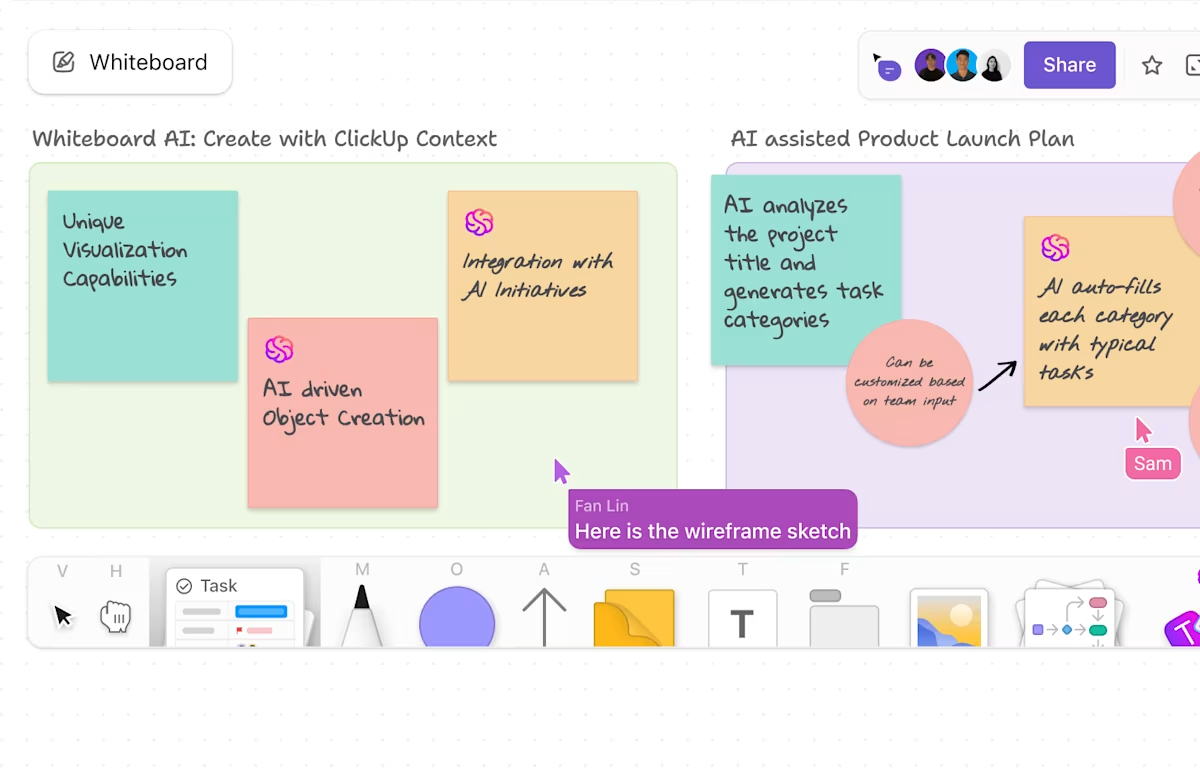
Once you’ve gathered the intel, sketch it out. A simple diagram or flowchart helps visualize the document journey. You’ll quickly spot overlaps, dead ends, or awkward handoffs that slow things down.
💡 Pro Tip: If you want to map out your workflow with your team using sticky notes, cards, or quick sketches, give ClickUp Whiteboards a try. It’s a free space to draw, plan, and bring ideas to life. Plus, you can connect your whiteboard directly to tasks, docs, and even chats, so nothing gets lost in the shuffle!
After mapping the current flow, the next step is to identify where delays or errors typically occur. Are people waiting too long for approvals? Are handoffs between teams unclear or inconsistent?
To pinpoint exactly where these issues occur, break down each step of the workflow and compare the expected actions with what’s happening. The table below can help structure that analysis:
| Step in the workflow | Expected action | Actual issue observed | Notes/Root cause |
| Document submission | Employee uploads a document | Delayed or missing submissions | Lack of clarity on deadlines or tools used |
| Initial review | Supervisor reviews within one business day | Review takes 3–4 days | Reviewer overloaded; unclear priority |
| Departmental handoff | Document routed to the next team | Manual handoff causes confusion or delays | No standardized routing method |
| Approval request | Approver is notified and signs off | The approver is unaware or has forgotten | No automatic notifications/reminders |
| Final archiving | Document stored in the correct location | Misfiled or not archived | The approver is unaware or has forgotten |
Every document requires a single point of contact from start to finish. Name the owner upfront, such as HR for the employee handbook or Finance for vendor invoices, so everyone knows where to direct questions.
Then break the job into clear roles:
Next, establish rules for how to use the file sharing software and who has access to it. Choose a fixed folder or drive and appoint someone, often IT or the document owner, to control permissions.
Finally, establish a quick review routine to keep files up to date. Decide how often to revisit each document (quarterly, annually, or when a specific cost threshold is reached) and schedule reminders accordingly.
Here’s a quick-fire checklist you can copy and paste (tick as you go):
📚 Also Read: Workflow Automation Examples and Use Cases
You’ve got the plan. Now you need the right tool to bring it to life.
A good document management software does more than just store files. It helps automate steps, route approvals, assign roles, track versions, and keep everyone on the same page. Look for a platform that supports collaboration, visibility, and scalability.
And that brings us to…
ClickUp is the ‘everything app for work’ to build and scale efficient document management systems. Here’s how ClickUp fits into every stage of the workflow ⤵️
ClickUp Docs for creation and real-time collaboration
With ClickUp Docs, your team can create, edit, and collaborate on documents within the same workspace where the rest of your work takes place.
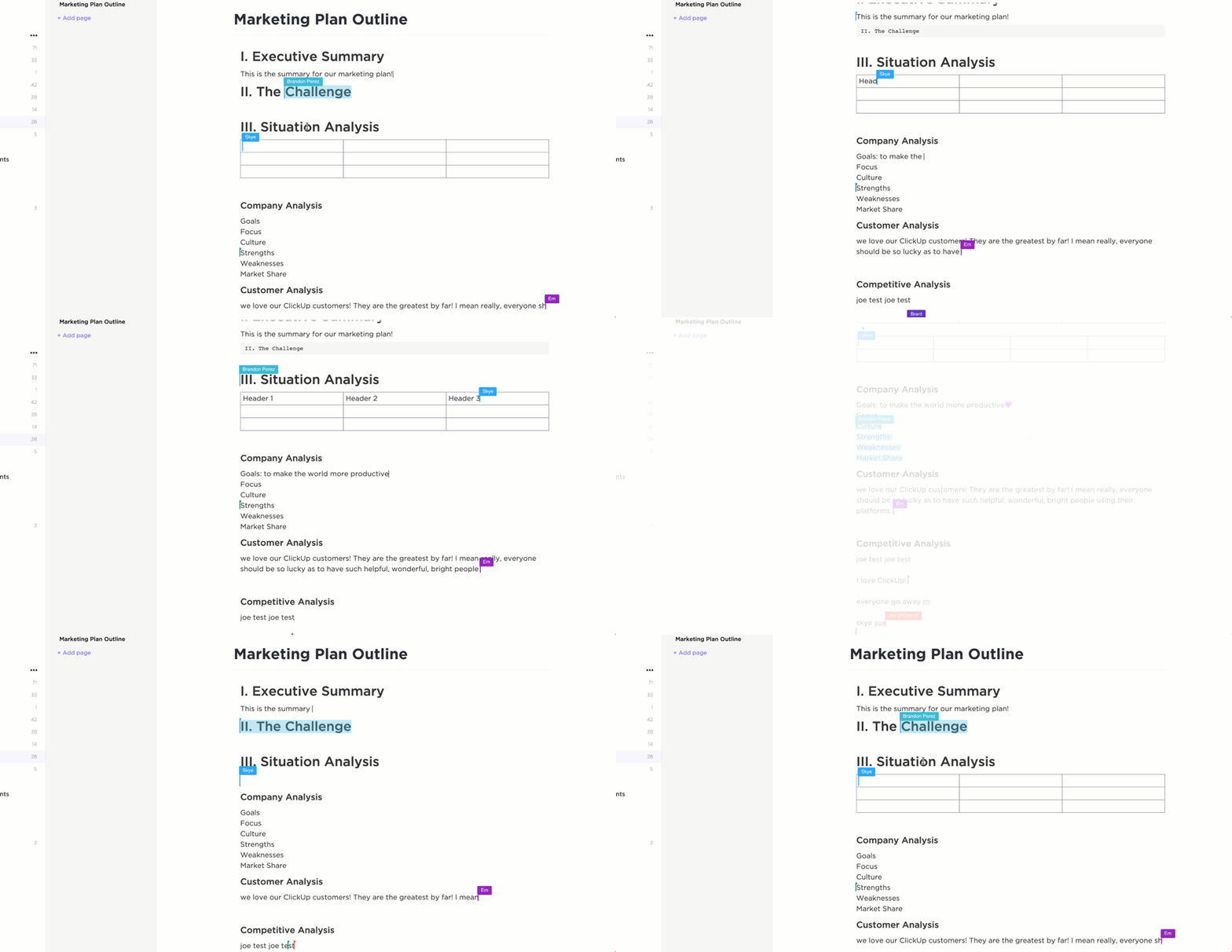
This is what we mean:
Use ClickUp Task Templates and custom workflows
If you find yourself creating the same kind of project documentation repeatedly—think client onboarding docs, team meeting agendas, or monthly reports—you shouldn’t have to start from scratch every time.
With ClickUp Task Templates, you can pre-save:
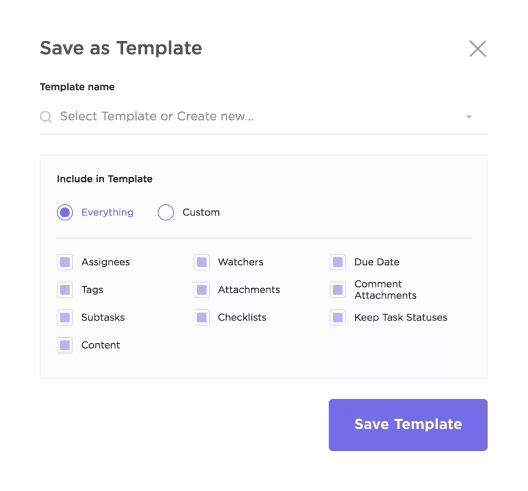
You can also trigger templates automatically using ClickUp Automations. For example, whenever a new doc request is submitted via ClickUp Forms, it can auto-create a task using your chosen template.
Permissions by user, team, or folder
You need to ensure the right people can access, edit, or approve documents while keeping sensitive information locked down. That’s where ClickUp’s permission levels and a robust hierarchy come in handy.
ClickUp Hierarchy gives you layers of control to organize your docs and i=files within: Workspace → Spaces → Folders → Lists → Tasks.

This structure makes it easy to manage who sees what. For example:
Plus, with ClickUp Permissions, you can modify⬇️
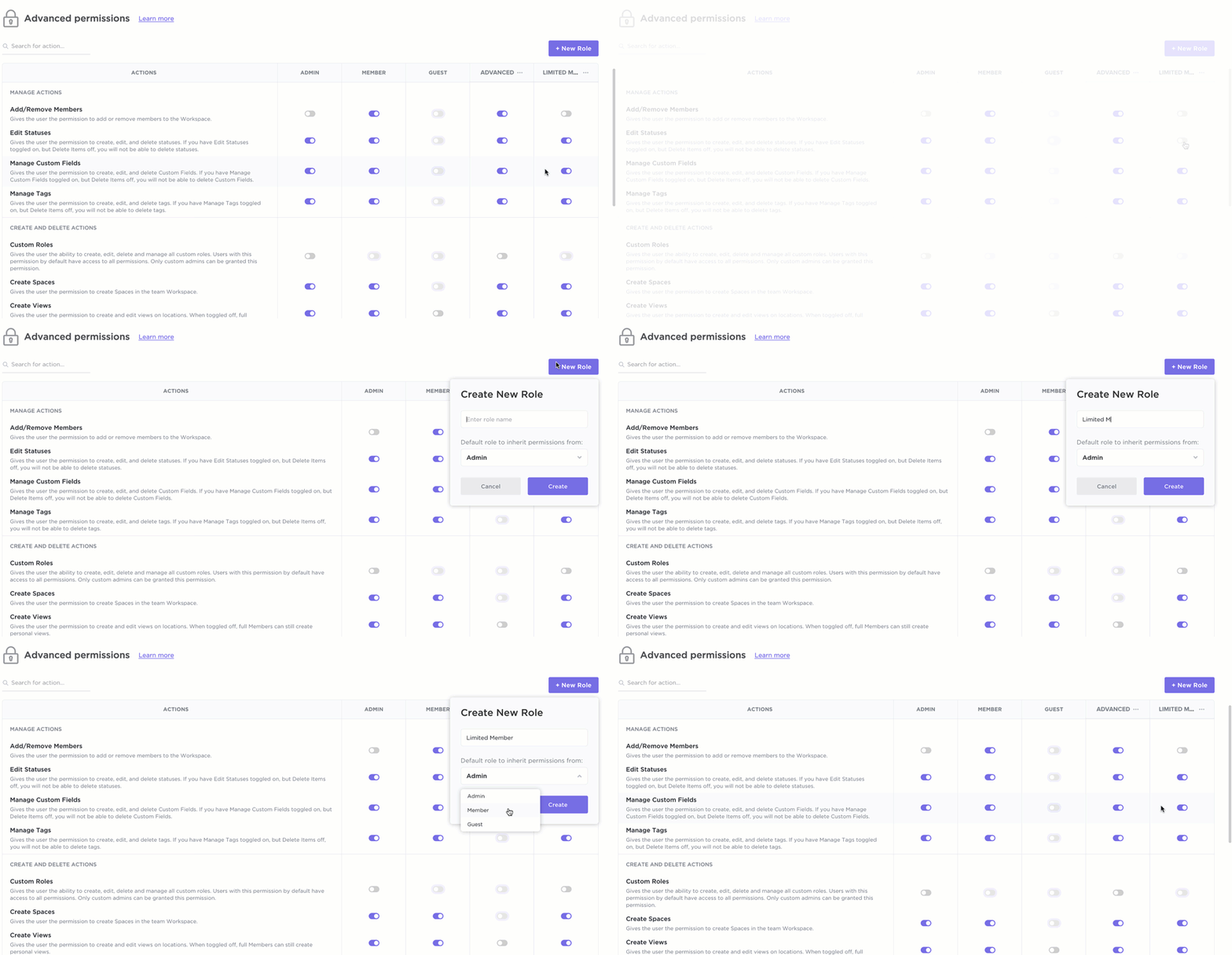
Working with external reviewers or clients? ClickUp’s Guest Roles let you share individual Docs or Lists without exposing the rest of your Workspace. You can even control what each guest can do—view, comment, or edit—based on your needs.
Audit trails and version control baked into ClickUp Docs
Every document tells a story, but only if you can see who wrote what, when, and why. With page history in ClickUp Docs, every change is automatically tracked and recorded. You don’t need to dig through old attachments or wonder who deleted a section last Tuesday.
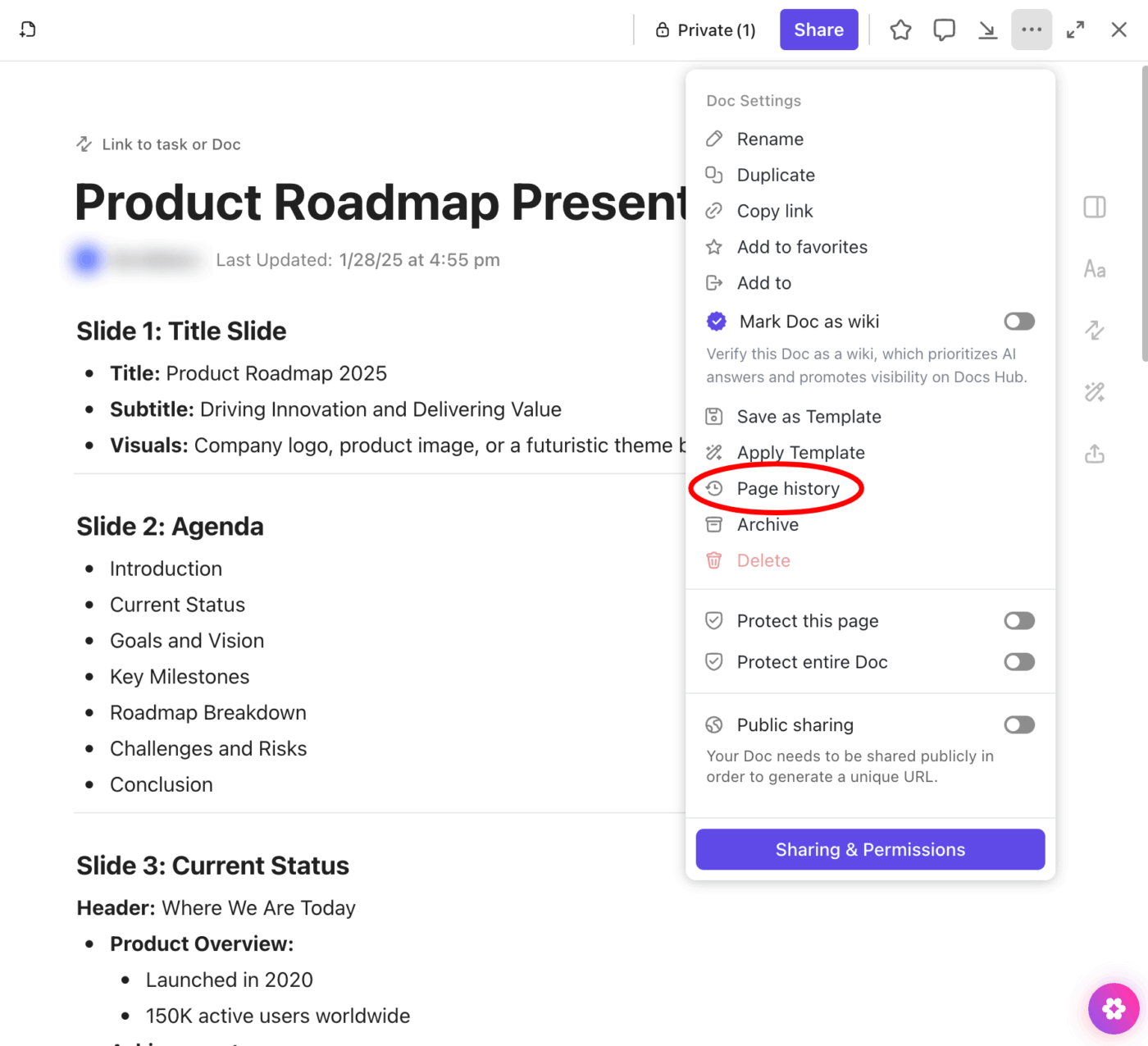
Get complete version control baked in:
But here’s where it gets even better: ClickUp Brain takes it up a notch. You can ask Brain questions like:
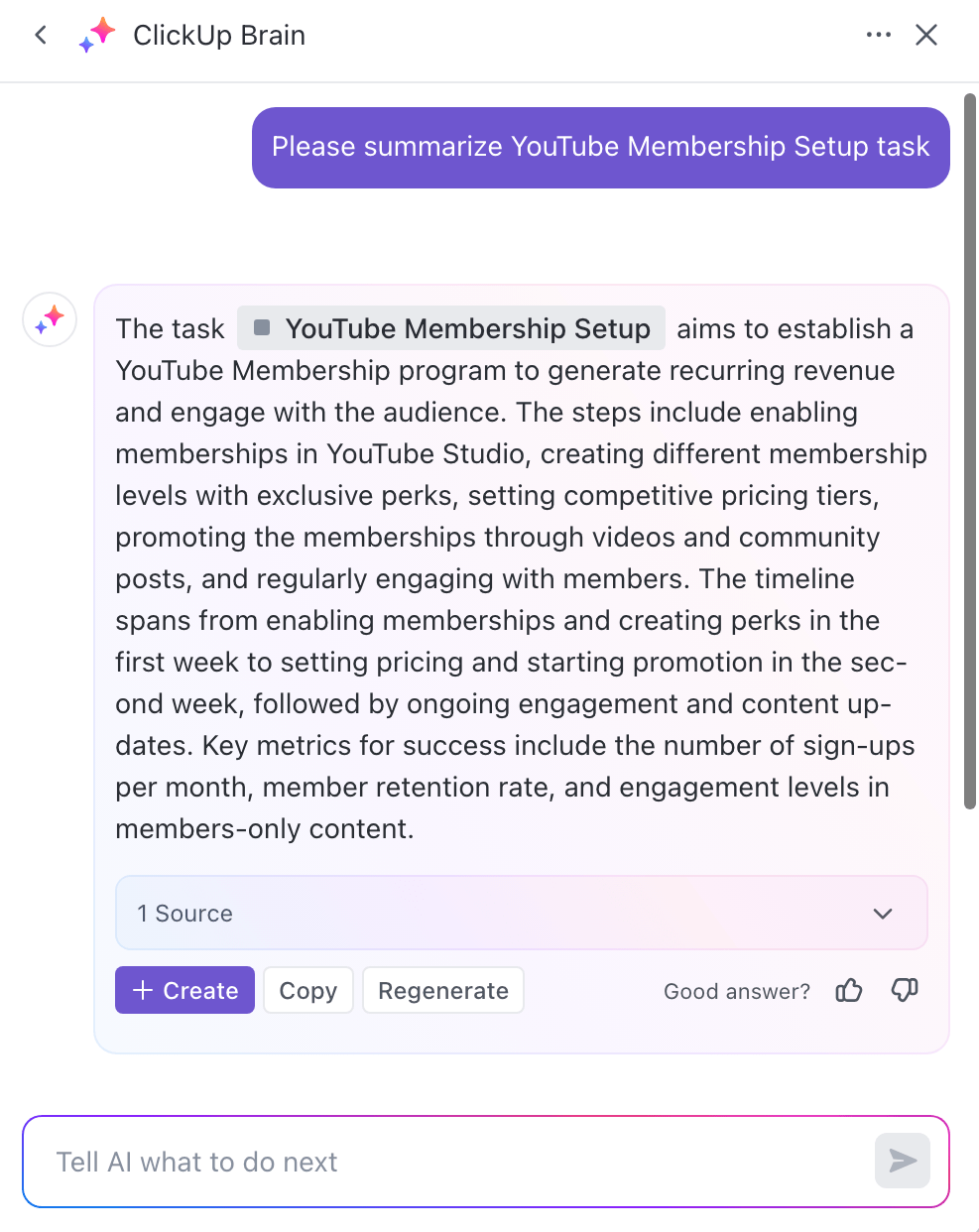
So whether you’re reviewing historical edits, prepping for an audit, or onboarding a new teammate, you’ve got a smart trail of every decision and an AI partner that helps you understand it.
Use ClickUp for knowledge management
Creating documents is great. But turning them into long-term, reliable knowledge is what differentiates the best from the good. Want to be the former? Then turn to ClickUp’s Knowledge Management capabilities.
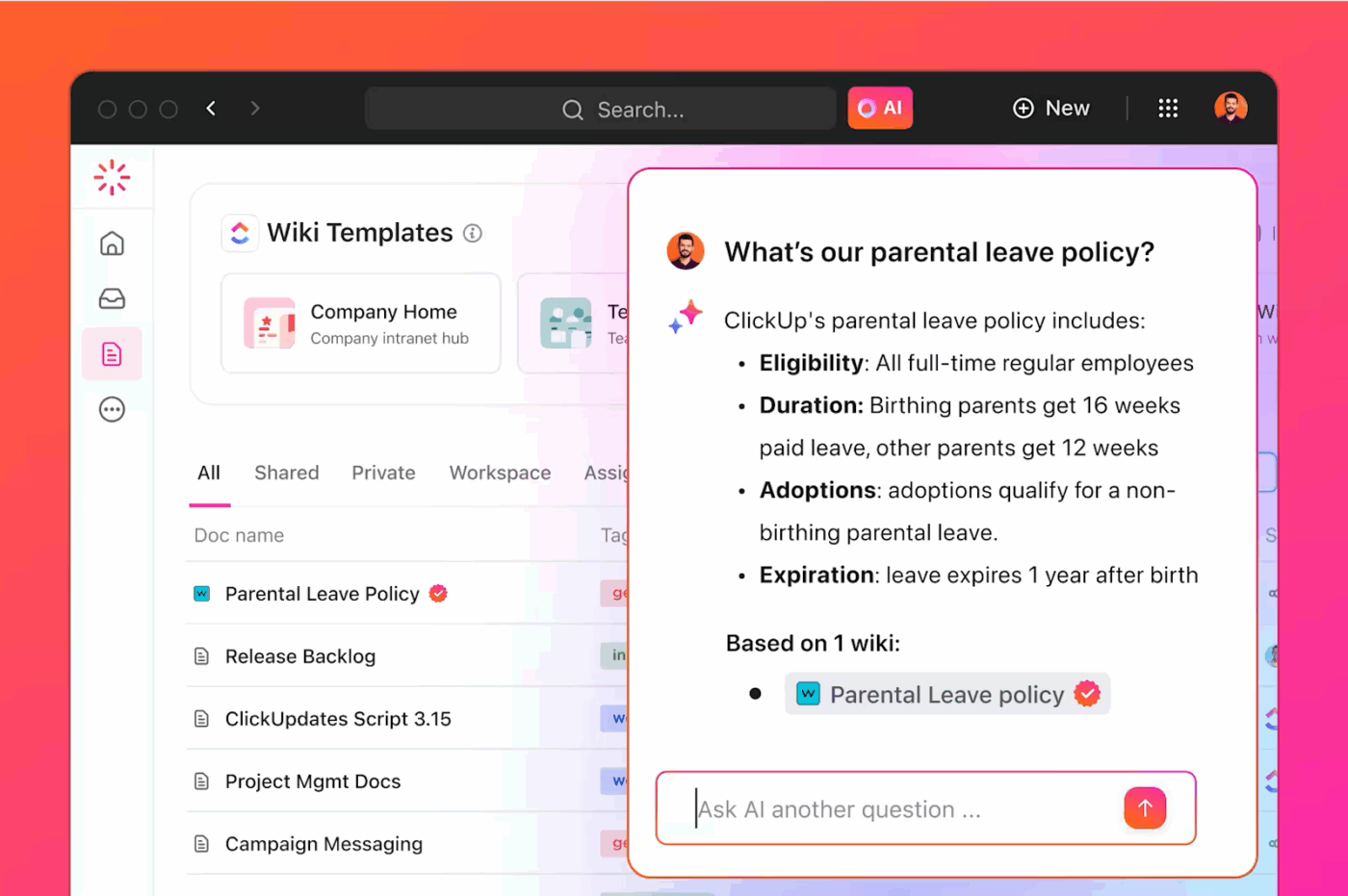
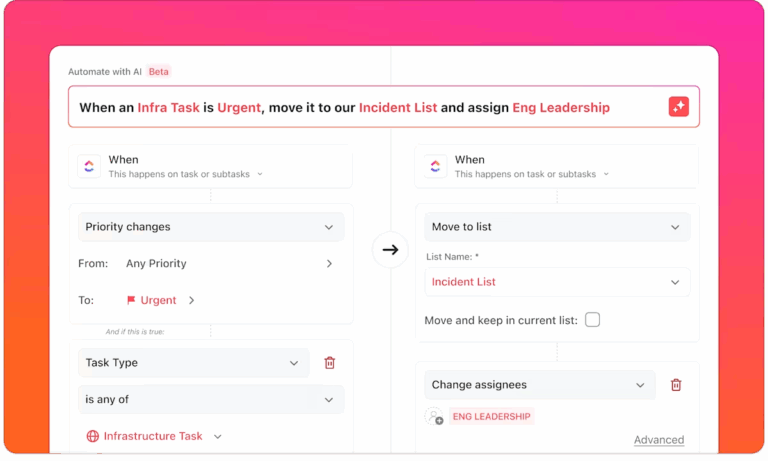
Once you select the right tool, work toward automating document workflow. For example, if you send the same approval request to your manager every week, you can set up an automatic trigger to do it for you.
Here’s how to make workflow automation easier:
🎥 Here’s how to use ClickUp Automations to reduce the administrative overhead:
Instead of manually tagging approvers, sending reminders, or updating statuses, you can automate all of it using ClickUp’s simple trigger → condition → action setup.
Here’s how it works in action:
You can apply these workflow automations at any level—List, Folder, or Space—and customize them based on task sources, fields, or even integrations (like email or forms). Automations also work with subtasks and duplicated templates, making them perfect for recurring documentation flows.
📮ClickUp Insight: 18% of our survey respondents want to use AI to organize their lives through calendars, tasks, and reminders. Another 15% want AI to handle routine tasks and administrative work.
To do this, an AI needs to be able to: understand the priority levels for each task in a workflow, run the necessary steps to create tasks or adjust tasks, and set up automated workflows.
Most tools have one or two of these steps worked out. However, ClickUp has helped users consolidate up to 5+ apps using our platform! Experience AI-powered scheduling, where tasks and meetings can be easily allocated to open slots in your calendar based on priority levels. You can also set up custom automation rules via ClickUp Brain to handle routine tasks. Say goodbye to busy work!
There is nothing so useless as doing efficiently that which should not be done at all.
If your team is still spending time hunting for docs, chasing approvals, or rewriting the same thing twice, the workflow is broken (not the work).
An efficient document workflow system brings structure to chaos: clear roles, repeatable steps, clean handoffs, and docs that don’t vanish the moment someone leaves the company.
ClickUp makes that whole system easier to build. You can draft Docs, track version history, route approvals, and store everything where it actually belongs—inside your projects, not outside them. Even better, use built-in AI and automations to streamline things further!
Sign up for ClickUp now and stop wasting time managing documents the hard way.

Sudarshan Somanathan
Max 22min read

Praburam Srinivasan
Max 23min read
Praburam Srinivasan
Max 21min read

© 2026 ClickUp




