








Still downloading templates?
There’s an easier way. Try a free AI Agent in ClickUp that actually does the work for you—set up in minutes, save hours every week.
Sorry, there were no results found for “”
Sorry, there were no results found for “”
Sorry, there were no results found for “”

A clear marketing plan is essential for turning big ideas into real business outcomes. Without one, even the best campaigns can fall flat.
If you want your marketing efforts to lead to steady growth, knowing how to create a clear and effective marketing plan is the first step. In this blog, we’ll break down the simple steps to help you build a marketing strategy that works for your business and connects with your audience.
✅ Fact Check: Companies that document their marketing strategy are 313% more likely to report success
Trying to build a marketing plan that actually works? Here’s how to create one that drives growth and stays aligned with your goals:
A marketing plan is a structured roadmap that outlines how you’ll reach your target audience, promote your offering, and achieve specific marketing objectives.
It provides direction to your marketing strategies and ensures that every action supports your larger business objectives.
Without one, teams risk launching disconnected marketing campaigns, misallocating budgets, or missing key opportunities in a competitive environment. With a clear plan, you stay focused, efficient, and adaptable to changing market trends.
A strong marketing plan includes:
It’s not about doing more, it’s about doing what works with a strategy built to grow your reach and connect with the right people.
Without a clear marketing plan, most businesses operate reactively like chasing trends, copying competitors, or spreading efforts too thin across multiple marketing channels. This leads to inconsistent messaging, missed opportunities, and underwhelming results.
A solid plan gives you structure, so you’re not just doing things; you’re doing the right things.
Here’s what a marketing plan helps you do:
Whether launching a startup or scaling an existing brand, knowing how to create a marketing plan is essential. It’s about building a cohesive system to turn those ideas into results.
You don’t need to be a marketing expert to write a strong plan, but you do need the right framework. Let’s look at one.
📖 Also Read: Marketing Goals Examples to Achieve Your Objectives
Creating a marketing plan starts with structure. These steps will help you connect your marketing efforts to your business objectives, and build a system that’s focused, measurable, and built for growth.
Every successful marketing plan starts with a clear direction. Without defined goals, it’s nearly impossible to measure progress, prioritize tasks, or evaluate what’s working.
That’s why setting the right marketing objectives is the first and most critical step in building a plan that works.
Vague intentions like “get more visibility” or “grow faster” don’t offer a path forward. You need goals that are measurable, time-bound, and tied to your larger business objectives.
Setting SMART goals means making them:
This approach makes it easier to prioritize key metrics, stay focused, and avoid distraction from non-essential marketing activities.
📌 Need help getting started?
Use the ClickUp SMART Goals Template to outline actionable goals that are easy to track and revisit. It’s built to keep teams aligned and accountable, whether you’re setting goals for a single marketing campaign or an entire quarter.
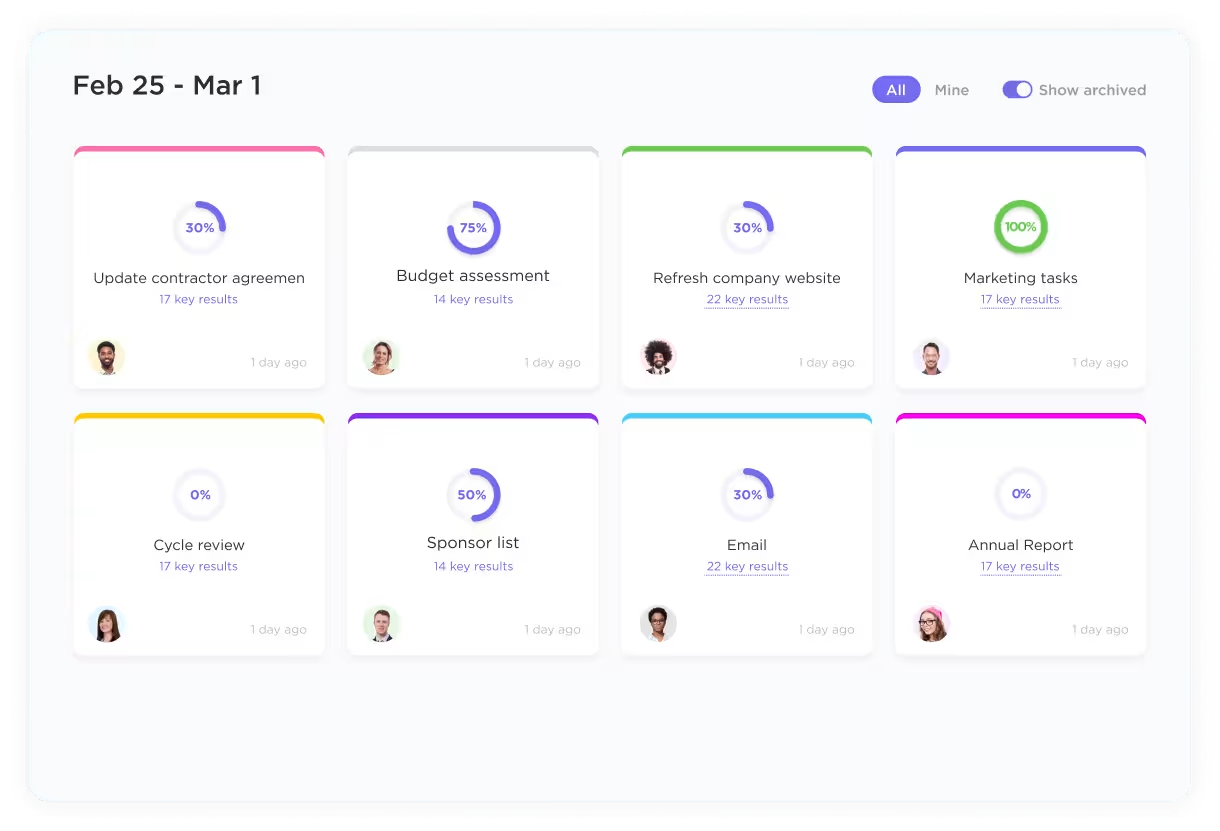
You can also leverage ClickUp Goals to track progress visually, connect tasks to outcomes, and monitor real-time updates across your marketing team.
You can have the right product, pricing, and promotion—but if you’re talking to the wrong people, none of it matters. That’s why defining your target audience is a core step in creating a marketing plan that delivers results.
Your goal here isn’t just reach. It’s relevance.
Before drafting messaging or selecting channels, you need a comprehensive understanding of who you’re trying to reach.
Dig into both quantitative and qualitative data to uncover:
This is where strong market research sets the foundation. It helps filter out the noise so your marketing efforts are directed at the right customer segments and not just anyone who might click.
A buyer persona is a profile of your ideal target customer. You’re not guessing here rather you’re analyzing data and turning it into a living reference point.
Each persona should capture:
Well-defined personas make your campaigns sharper, your messaging more personal, and your offers more relevant. Your audience segments will differ depending on what you’re offering.
A marketing plan aimed at SaaS founders won’t speak the same language as one targeting college students exploring a new platform. Break your customer base into clear, focused segments and tailor your strategy accordingly. That’s how you turn general traffic into potential customers who convert.
You can’t build a strong marketing strategy in a vacuum. Understanding your competitive landscape helps you position your brand, highlight your strengths, and avoid missteps.
This step involves using research to define your market positioning. It is not based on guesswork but on how your competitors operate and what your target audience responds to.
You’ve already looked at who you’re targeting, now it’s time to evaluate the space they’re navigating.
Focus your research on:
This lets you identify white space or areas where your brand can gain a real competitive advantage.
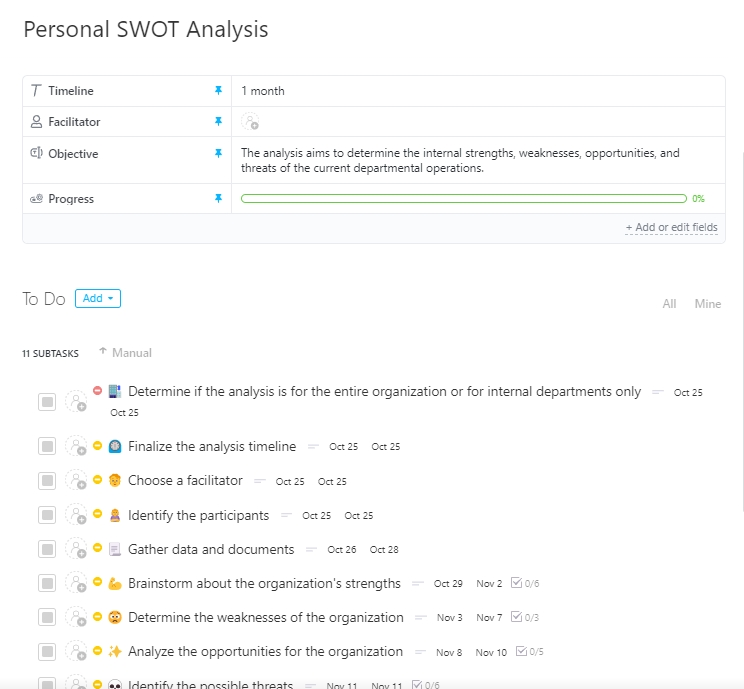
A SWOT analysis helps you assess both internal capabilities and external challenges. It’s a quick way to understand how your brand stacks up in a crowded market.
The ClickUp Work SWOT Analysis Template helps map your brand’s strategic position clearly, so your marketing objectives are based on actual market forces and just not gut instinct.
Don’t just list what others are doing rather, document how they’re positioning themselves and where they’re gaining traction.
Track details like:
Create a shared space in ClickUp Docs to track your competitive analysis and update it as the competitive landscape evolves. This keeps your whole marketing team aligned on where you stand and where you can win.

In a saturated market, simply having a great product isn’t enough. Your unique value proposition is what tells your target audience why they should choose you quickly, clearly, and confidently.
If your message sounds like everyone else’s, you’re invisible.
A strong UVP answers three simple questions:
This isn’t just about product features. It’s about the specific problem you solve and how your solution fits into your customers’ lives better than anyone else’s.
For example, two companies might sell identical tools—but one positions itself as time-saving for freelancers, while the other emphasizes collaboration for remote teams. Same product. Different market positioning. Clear competitive edge.
Your UVP should be informed by the work you did in previous steps. Use your competitive analysis, market research, and audience segments to shape a message that speaks to real needs.
❌ Avoid broad claims like “We offer the best service” or “We’re innovative.”
Instead, be specific. If you increase customer engagement, say how. If you help teams reduce project time by 40%, lead with that.
The sharper your UVP, the easier it is to build targeted marketing campaigns, develop content that resonates, and carve out a real competitive advantage in the broader market.
⚡ Template Archive: Free Content Calendar Templates for Social Media in Excel & Sheets
Once your message is clear, the next step is getting it in front of the right people. The marketing channels you choose can make or break your strategy. Not every platform deserves your time, budget, or attention.
Focus on where your target audience already spends their time and how they prefer to engage with content.
Most brands today operate in a digital marketing ecosystem, but that doesn’t mean throwing your message on every platform. The key is selecting channels that match both your offer and your audience.
Here are some core channels to evaluate:
Not every channel works for every business. A B2B SaaS startup might prioritize SEO and LinkedIn, while a consumer fashion brand leans into TikTok and Instagram for customer engagement.
Once you’ve selected your channels, focus on creating cohesive marketing campaigns that feel consistent across them. The tone, visuals, and core message should stay aligned. Whether someone finds you through search, a blog, or a social media post.
😎 Fun Read: How ClickUp’s Marketing Team Uses ClickUp?
Your channels are chosen and now it’s time to fill them with content that speaks to your target audience. A strong messaging and content creation strategy ensures every piece of communication supports your brand and drives real outcomes.
Inconsistent voice, scattered topics, and one-off posts won’t get you far. You need a plan that aligns your marketing strategies, brand tone, and delivery schedule.
Every piece of content should reinforce your value proposition and guide your audience through the buyer journey, from awareness to decision.
Focus on:
Think beyond just blog posts. Include a mix of marketing materials like case studies, video snippets, newsletters, webinars, and downloadable guides—designed to match different preferences and channels.
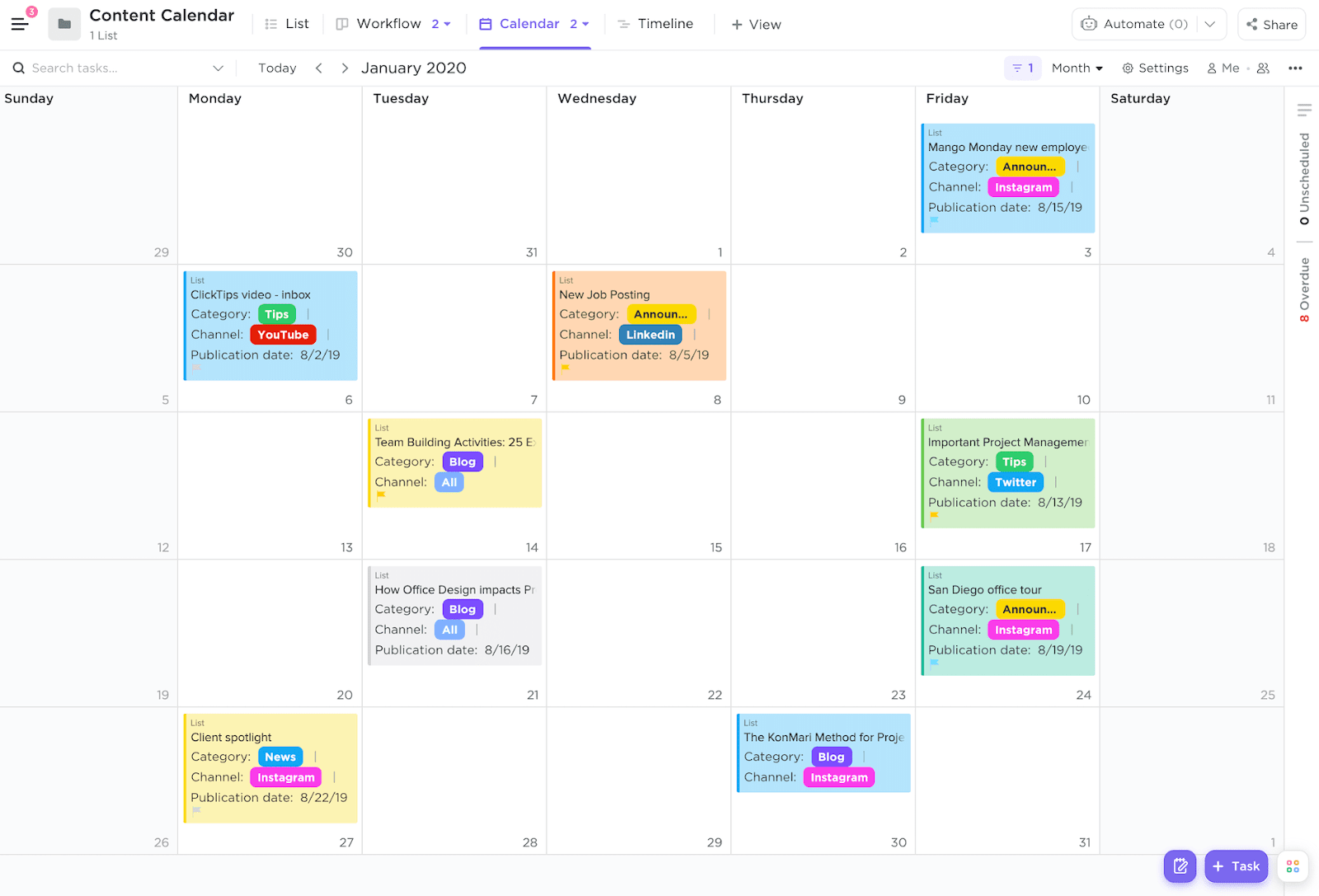
Without structure, your messaging becomes reactive. A content calendar helps your marketing team stay aligned and strategic.
Try the ClickUp Content Calendar Template to:
Great content isn’t created in isolation, it’s tied to product launches, seasonal campaigns, or audience behavior. Use your content plan to support larger marketing campaigns, ensuring that everything from a tweet to a webinar ladders up to the same strategy.
This makes your message stronger, your customer engagement more effective, and your team more focused.
Look at your marketing goals, available resources, and audience preferences before making decisions.
⚡ Template Archive: Free Go-to-Market Strategy Templates You Should Keep on Hand
An ambitious strategy without a realistic marketing budget is just a wishlist. Budgeting isn’t about cutting costs, it’s about aligning your marketing activities with your most important business objectives and spending where it actually drives results.
Your budget should be built to support the marketing goals you’ve already defined—not the other way around. Begin by mapping out your planned marketing campaigns, required tools or resources, and the costs associated with each marketing channel.
Ask questions like:
Once your budget is outlined, it’s critical to link it with key metrics. You should be able to measure how each dollar supports brand awareness, lead generation, conversions, or retention.
Your budget shouldn’t just live in a spreadsheet—it should be tied to performance tracking and updated as your strategy evolves.
📖 Also Read: Need help structuring your spend? Check out – The Ultimate Marketing Budget Guide. It walks you through real examples and common mistakes and includes a free budget plan template you can customize for your team.
A great marketing plan means nothing without a clear execution path. You need more than ideas; you need structure, deadlines, and accountability. That’s where a strong action plan comes in.
Break your plan into phases like monthly, quarterly, or campaign-specific, and outline:
If you want to keep everything aligned without scattered docs or spreadsheets, the ClickUp Marketing Plan Template can help you:
This gives your marketing team the clarity they need to move fast without losing direction.
Once your action plan is set, scheduling becomes just as important. Map your tasks and campaigns to actual dates so you can manage resources and avoid overlaps.
To do this, plug everything into your ClickUp Marketing Calendar Template. It helps visualize all your workstreams in one timeline so nothing slips through.
No marketing plan survives unchanged. Deadlines shift, priorities change, and new opportunities emerge. That’s why your action plan should give you structure but not rigidity.
Check in monthly, adjust based on outcomes, and treat your plan like what it is: a living system designed to drive results.
You’ve launched your marketing campaigns and now it’s time to track how they’re performing. Without measurement, your team is flying blind.
This step helps you translate numbers into insight, fine-tune your marketing efforts, and keep progress aligned with your overall smart goals.
Don’t get stuck tracking vanity numbers. Focus on key metrics that tie directly to business impact, like:
When your metrics match your marketing goals, you gain clarity on what’s moving the needle and what needs to change.
Using separate spreadsheets, platforms, and tools to review results slows your team down. That’s where ClickUp Dashboards come in.
You can:
If you need a pre-built system to track campaign performance, try the ClickUp Campaign Tracking & Analytics Template.
This template will help you:
Most reporting is a time drain. But when done right, it helps you tell a story backed by data without spending hours formatting slides. To streamline your reporting you can use the ClickUp Marketing Report Template.
This template will help you:
No SEO marketing plan or social campaign is perfect out of the gate. Set regular checkpoints to review performance, update your strategy, and improve over time. The data is there to help you move faster and not to slow you down. The best marketers treat optimization as a habit, not a phase.
Now that your marketing plan is built, it’s time to bring it to life. Execution is more about turning strategy into consistent, repeatable action across your marketing team.
To make execution seamless, you need systems that align people, timelines, and resources in one place. ClickUp is the everything app for marketing teams. You can brainstorm, plan, and execute your team’s marketing programs—from multi-channel campaigns to global events and more with this all-in-one productivity platform.
Start by breaking each campaign into tactical, trackable work. Assign responsibilities, set deadlines, and link everything to your original marketing goals.
Tools like ClickUps Tasks make this process scalable.
You can:
This way, everyone knows what’s happening and how their work ties into the bigger picture.
If your plan involves customer engagement, lead nurturing, or outreach, a CRM system isn’t optional, it’s essential. You can utilize ClickUp’s CRM to help you:
💡 Pro Tip: Leverage the ClickUp CRM Template to streamline how your team manages relationships across channels
Repetitive work slows down execution. Marketing automation saves time and protects your team’s bandwidth for creative and strategic thinking.
With ClickUp Automations, you can:

This keeps momentum high and conversion rates steady, especially during fast-paced launches.
When your systems are structured well, your marketing plan becomes a machine—not a mess of disconnected tasks. The right structure gives your team a shared strategic direction, clear priorities, and the confidence to move fast without losing alignment.
Even a solid strategy can slip if the execution leans on bad habits. These aren’t dramatic errors but rather subtle missteps that quietly derail your progress.
Avoid these traps if you want your marketing plan to deliver results:
A marketing plan is your strategy in motion. When it’s backed by clear goals, real audience insights, the right tools, and a system for execution, it becomes the foundation for growth that scales.
Whether launching your first campaign or refining a mature strategy, ClickUp gives you everything you need to plan, track, and optimize your marketing in one place.
Ready to put your plan into action? Sign up for ClickUp today and build smarter, faster, and more aligned marketing from day one.

© 2026 ClickUp

There’s an easier way. Try a free AI Agent in ClickUp that actually does the work for you—set up in minutes, save hours every week.