

Sorry, there were no results found for “”
Sorry, there were no results found for “”
Sorry, there were no results found for “”
Great content dies every day, not because it’s bad, but because it shows up at the wrong moment (or not at all). That’s where content mapping steps in. It helps you sync what you create with what your audience actually needs, right when they need it.
Think about it: a potential customer clicks on your email, but the link takes them to a beginner’s guide they’ve already outgrown. A high-intent visitor hits a landing page… built for the awareness stage. The misalignment isn’t obvious until the results stall—low engagement, high bounce, no movement.
And this isn’t rare.
✅ Fact Check: Only 11% of marketers rate their content strategy as excellent, even though 84% have a strategy in place.
Most content doesn’t fail because it’s poorly written; it fails because it misses the moment.
Content mapping fixes that. It ties your ideas to buyer personas, decision stages, and real business goals, so your work isn’t just well-written, but well-placed.
By the end of this guide, you’ll know how to spot content gaps, build a smart content map, and turn your content strategy into something that actually moves people forward.
Content mapping is the process of aligning every piece of content to a specific audience, goal, and moment in the buyer’s journey. Instead of creating content based on what you think will work, you map it to what your audience actually needs at that moment in the customer journey.
Done right, it helps you deliver relevant content that supports real decision-making at every touchpoint.
At its core, content mapping connects three moving parts:
When these align, your content feels less like noise and more like a signal.
It’s not just long-form blogs and eBooks. A smart content map can include:
You’re not just publishing but guiding. Content mapping helps you build trust, identify content gaps, and keep your content marketing efforts aligned with your audience’s actual journey.
📖 Read More: How to Create a Content Marketing Management Plan?
Content without a map is like navigation without a compass. It moves, but not always in the right direction.
Without content mapping, even great content runs into real problems:
Content mapping changes that. It’s how you shift from publishing content to guiding decisions, making sure every blog, page, or post has a purpose in your buyer’s journey.
A content map is only useful if it’s built on the right foundation. Great content mapping starts with a few critical components. Each one ensures your work moves the right person, at the right time, for the right reasons.
Here’s what you need to build it right:
You can’t map content if you don’t know who you’re mapping it for. Buyer personas give you a clear picture of:
When you develop detailed buyer personas, your content becomes personal, not just personalized. It speaks to a specific audience instead of trying to please everyone.
Each piece of content should meet your audience exactly where they are. That means understanding:
You risk overwhelming new visitors or underserving decision-ready leads without matching content to the customer journey stage.
⚡️Template Archive: Want to get started with mapping customer journeys? Check out these free customer journey mapping templates to hit the ground running.
Every stage of the buyer’s journey demands a different kind of conversation. The format you choose can either spark curiosity, help prospects compare options, or nudge them toward a decision.
And using visuals to tell a story isn’t new.
👀 Did You Know? While the term “infographic” became popular in the 1970s, the idea of using visuals to tell a story dates back thousands of years to early cave paintings.
Today, content mapping taps into that same idea: matching the right format to the right moment.
Here’s how different formats align with intent across the journey:
Choosing the right format ensures that every asset you create moves your audience closer to their next step.
Before you create a content map, you need a clear view of:
Skipping this step leads to duplicate efforts and missed opportunities. A solid audit helps you identify gaps and prioritize what to create next.
😎 Fun Read: How to Market to Millennials?
Content mapping isn’t just about the customer experience; it’s also about achieving business outcomes. Each mapped piece should align with a goal, like:
Without tying your map to real content KPIs, it’s easy to lose sight of why you’re creating content in the first place.
Mapping isn’t just organizing what you already have. It’s designing a system that aligns your content with buyer needs, company goals, and clear, measurable outcomes.
📖 Read More: How To Create A Content Marketing Roadmap
An effective content map turns ideas into a structured path, designed to meet your audience at every step of their decision-making journey.
Here’s how you build it with purpose:
Everything starts with precision. Knowing who your audience is and what drives their decisions makes the difference between good content and content that actually converts.
Focus on:
💬 Use ClickUp Forms to gather firsthand insights directly from prospects and customers. Centralize findings inside your internal workspace for easy access across marketing, content, and product teams.

Clear goals turn content from creative output into a business strategy. Each mapped asset should have a direct line to a business outcome.
Define your strategy by:
🎯 Set and track all content-related goals inside ClickUp Goals, linking progress directly to mapped initiatives.
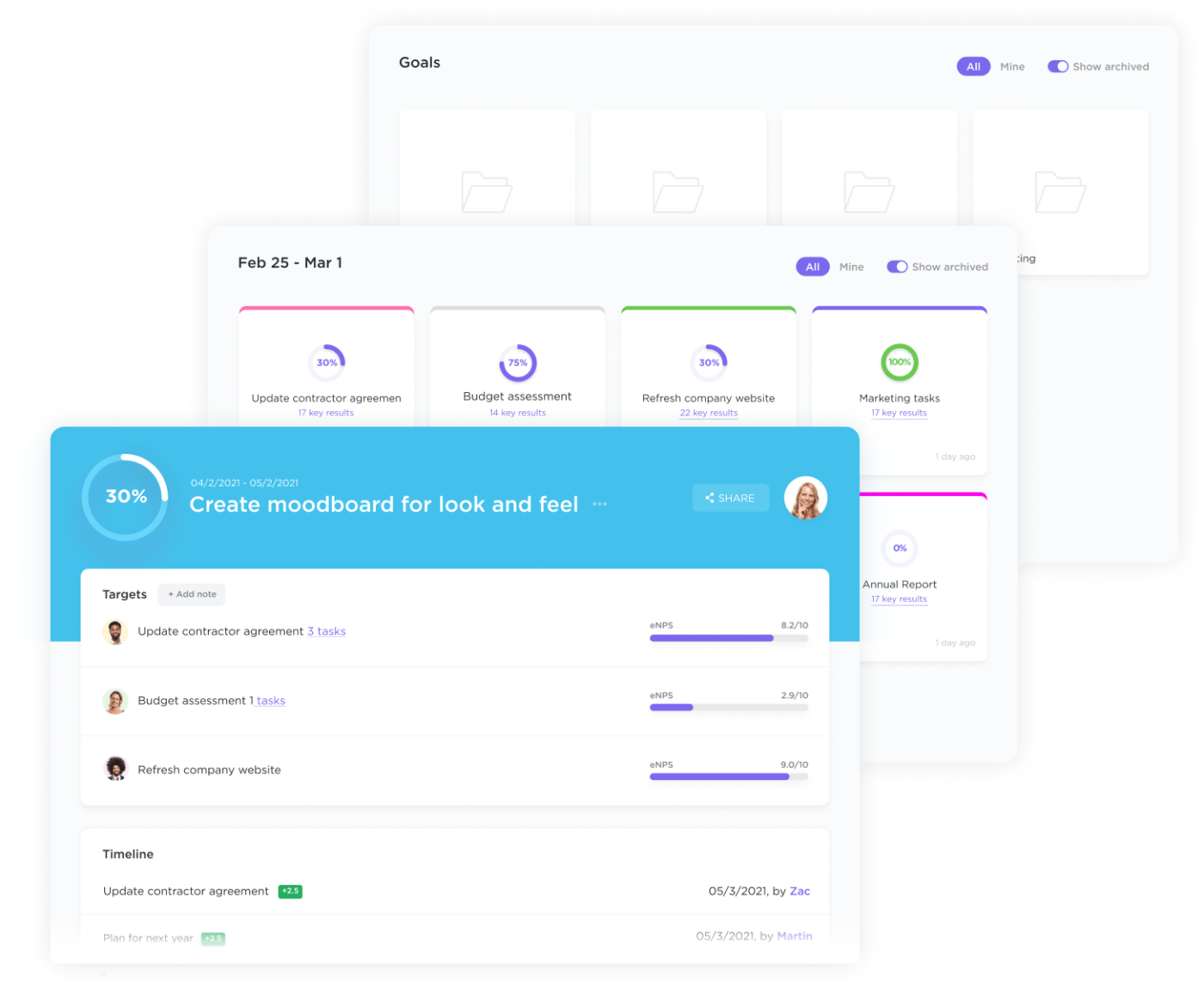
Each stage of the buyer’s journey needs specific support. Great content maps anticipate the next question, not just the next click.
Organize content ideas by:
🧠 Use ClickUp Whiteboards to visually brainstorm ideas for each stage, making it easier for teams to build journey-driven campaigns.

📖 Also Read: How to Create a Content Brief (Template + Examples)
A clear, strategic calendar keeps your team focused and your content efforts connected to real audience needs. Instead of chasing deadlines, you plan around purpose.
Organize production by:
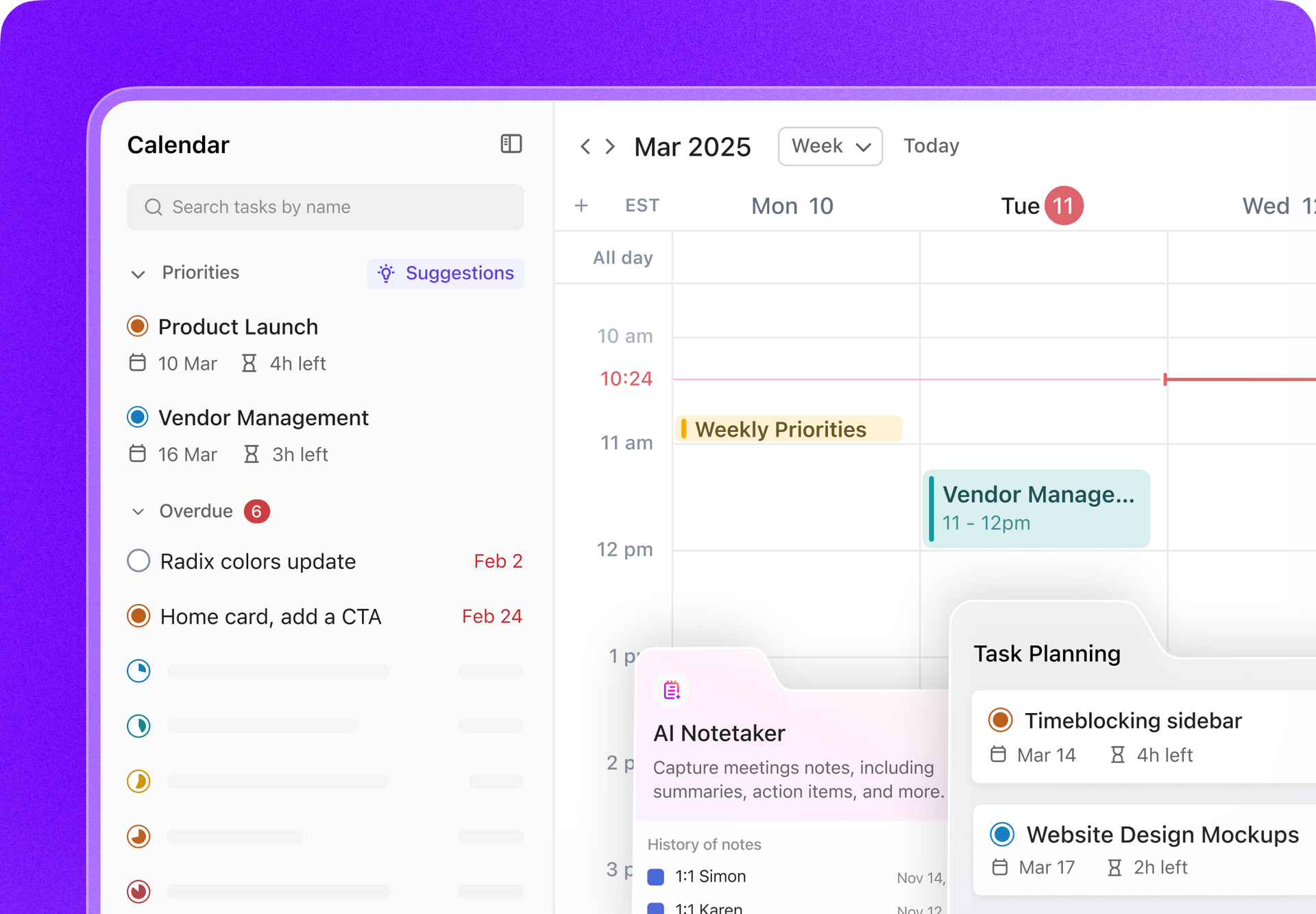
📅 Start with the ClickUp Content Calendar Template to lay out your topics, timelines, and publishing workflows in one place.
Then manage your day-to-day scheduling easily using ClickUp Calendar, tracking progress across teams, deadlines, and content stages without losing visibility. A mapped calendar not only streamlines execution but also helps you maintain momentum as content demands scale over time.
An active content map stays responsive to what real customers are doing, not what you assume they’ll do.
Keep it sharp by:
Performance is the engine that keeps your map aligned with moving customer needs.
Building a content map from scratch can feel overwhelming. The right templates and tools make it easier to plan with structure, collaborate across teams, and scale your content marketing efforts without missing critical steps.
Here are some resources that simplify the process:
Mapping content across buyer personas and customer journeys often requires intensive brainstorming and research. AI-powered tools can speed up this process without sacrificing strategic quality.
With ClickUp Brain, you can:
Instead of starting from a blank page every time, you move faster toward strategic content that meets real audience needs.
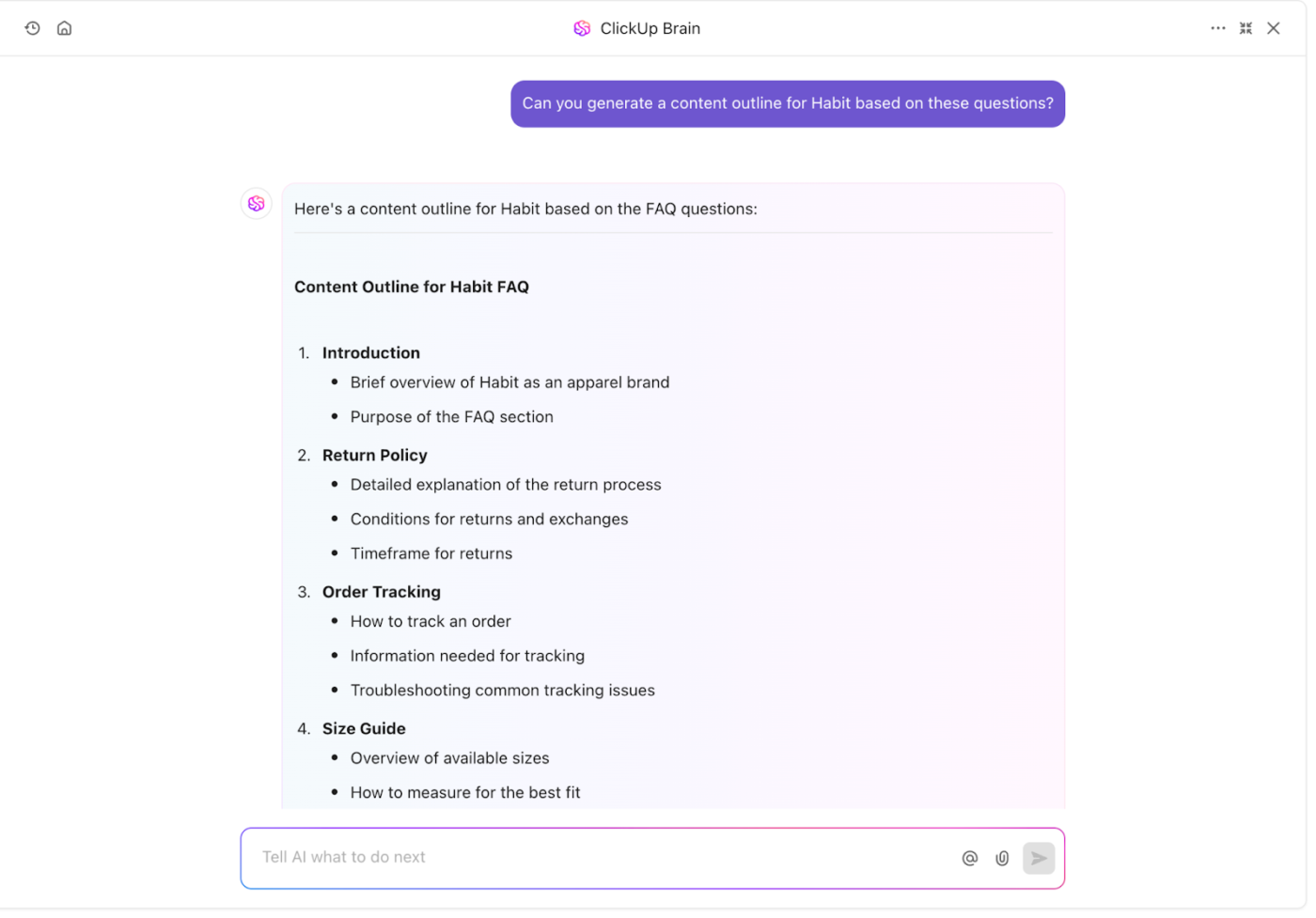
✨ Bonus: ClickUp Brain users can choose from multiple external AI models, including Claude and GPT-4o, right from their ClickUp Workspace!

Content mapping evolves as buyer behavior changes. Having a centralized, flexible workspace ensures your map stays current and actionable.
With ClickUp Docs, teams can:
This way, your content map doesn’t just live in a spreadsheet; rather, it becomes part of your everyday workflows.
Starting with the right template means you can skip the heavy setup work and focus on strategy. Here’s how different frameworks can streamline your process:
Templates give you a system, but they stay flexible enough to evolve alongside your team’s processes, content strategies, and brand standards.
Smart tools don’t replace critical thinking. They give you the breathing room to focus on what truly moves buyers forward: delivering the right message at the right time in the right way.
⚡ Template Archive: Free Content Strategy Templates for Marketing
Building a content map is a strong start. The real momentum comes when you embed it into your everyday marketing workflows, making sure mapped ideas, timelines, and customer insights guide real execution.
Here’s how to make it happen:
Your content map should live at the center of your planning sessions, not tucked away in a folder.
Every campaign, blog post, nurture email, and product launch should tie directly back to mapped buyer personas, journey stages, and strategic goals.
Strengthen the link between strategy and execution by:
📖 Also Read: How to Create a Content Creation Checklist?
Execution without visibility leads to missed signals. Tracking performance across mapped content ensures you stay proactive, not reactive.
Smart ways to measure:
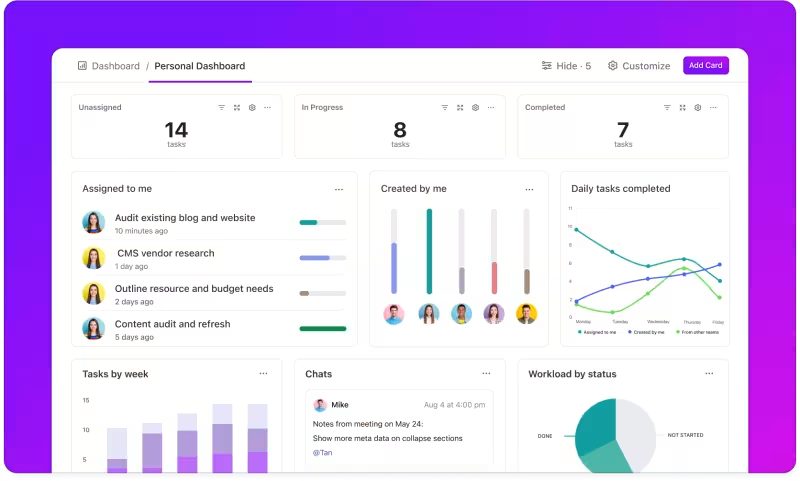
📈 Build customized tracking views inside ClickUp Dashboards to tie your mapped content directly to marketing KPIs. This gives your team real-time insights without fragmented reporting.
Mapped content should flow through production without constant manual management. Automation helps you protect the momentum you build at the planning stage.
Ways to automate smarter:
Use ClickUp Automations to connect your mapped content workflows, keeping projects moving even when priorities shift.
🔔 Set ClickUp Reminders for key publishing dates, draft handoffs, or performance review milestones to ensure that no critical action is missed.

A living content map documents and powers your content strategy. When you connect your mapped ideas to real production, measurement, and automation, content stops being a backlog and starts becoming an engine for growth.
📖 Also Read: Best Content Management Software and Tools
A strong content map anchors your ideas to clear action. It connects every blog, campaign, and launch to real target audience needs, creating a system that keeps your strategy moving forward.
When you build workflows around mapped content, you gain the visibility and momentum needed to deliver relevant experiences at every stage. Smart templates, real-time dashboards, and automation tools give your team the structure to plan faster, adapt quickly, and scale impact over time.
Ready to move your content strategy from plan to performance?
👉 Try ClickUp today and build smarter with every campaign.

Sudarshan Somanathan
Max 23min read
Sudarshan Somanathan
Max 22min read
Sudarshan Somanathan
Max 22min read

© 2026 ClickUp




