







Still downloading templates?
There’s an easier way. Try a free AI Agent in ClickUp that actually does the work for you—set up in minutes, save hours every week.
Sorry, there were no results found for “”
Sorry, there were no results found for “”
Sorry, there were no results found for “”
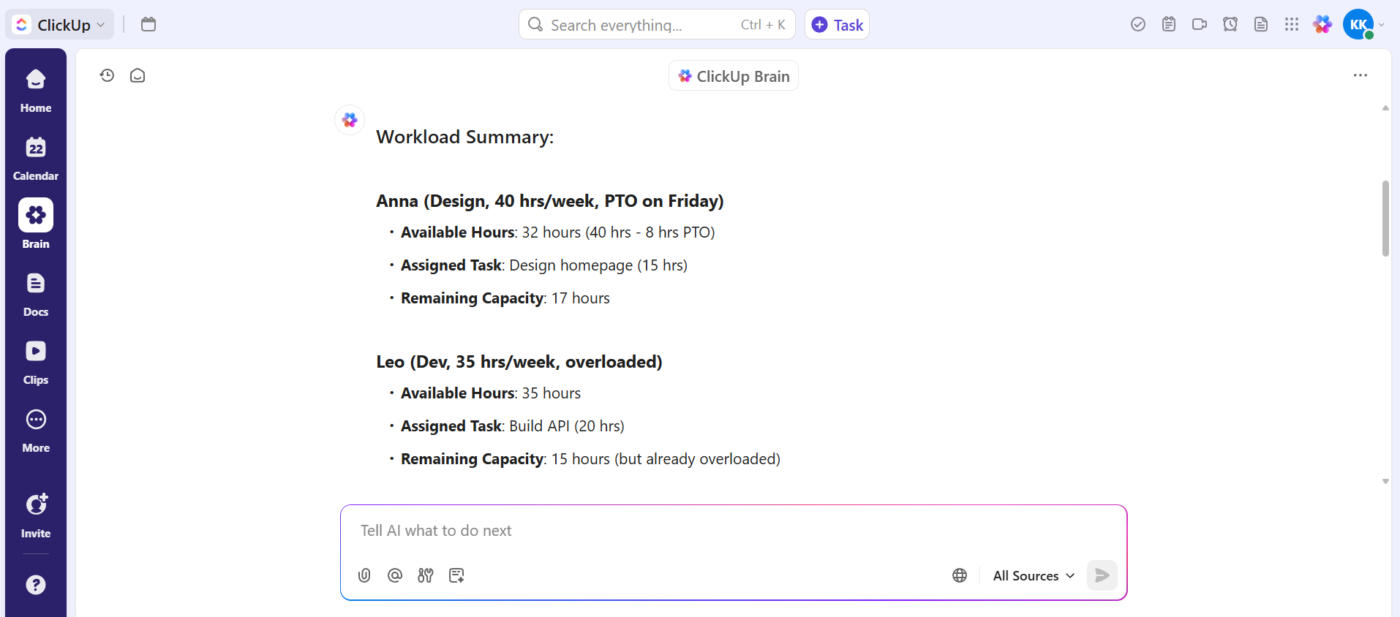
It’s Monday morning, and your inbox already has three ‘urgent’ project updates, one PTO request, and a spreadsheet telling you your most reliable dev is double-booked for the week.
Sigh, classic. 🤦
You shuffle resources around (again), ping three people for availability, and somehow still miss that one task.
Maybe (definitely), it’s time for artificial intelligence (AI) to do the heavy lifting.
In this blog post, we’ll explore 11 AI resource management software to help you allocate, schedule, and manage resources effectively. 🧰
When choosing an AI tool for resource management, you need to look beyond automated schedules or double bookings. The right tool should optimize resource utilization, help you react quickly to changing priorities, and allow you to plan for growth confidently.
Here’s what a great tool should do. 👀
🧠 Fun Fact: Over 3,000 years ago, ancient Mesopotamians and Egyptians already managed labor and trade. Think of it as early resource scheduling, just with clay tablets.
| Tool | Best Feature | Primary Use Case | Pricing |
|---|---|---|---|
| ClickUp | ClickUp Brain for workload insights, Workload View, Integrated time tracking and resource templates | Centralized project and resource management with AI-driven scheduling, updates, and workload balancing | Free forever; Customization available for enterprises |
| Scoro | Financial forecasting, Capacity planning, Billable hour tracking and smart rescheduling | Integrated business and resource planning for agencies, consultancies, and service firms | Core: $23.90/month; Growth: $38.90/month; Performance: $59.90/month |
| Teamwork | Tentative project planning, Workload planner, Role-based billing and resource economics | Client-centric teams needing capacity forecasting and billable time tracking | Deliver: $13.99/month; Grow: $25.99/month; Scale: Custom pricing |
| Resource Guru | Drag-and-drop planner, Availability bar, Skills-based filtering and booking approvals | Fast visual scheduling of people, equipment, and spaces for SMBs and cross-time-zone teams | Plans start at $5/month per user |
| Mosaic | AI Team Builder, Headcount planning, Real-time workload heatmaps | Workforce planning and smart resource allocation across growing service teams | Custom pricing |
| Forecast | AI-powered scheduling, Budget forecasting, Placeholder and win-probability planning | Firms needing predictive planning tied to resource performance and profitability | Custom pricing |
| Float | Real-time capacity tracking, Role tagging and cost rates, Smart time-off management | Agencies and departments managing live capacity forecasts with visual scheduling | Starter: $8.50/month; Pro: $14/month |
| Runn | Capacity heatmaps, Placeholder planning, Smart search and financial forecasting | Services teams doing what-if planning, revenue tracking, and real-time workload balancing | Starter: $10/month; Professional: $14/month |
| Kantata | AI staffing recommendations, Skills inventory, Team sentiment and pulse tracking | Professional services firms managing people, performance, and delivery at scale | Custom pricing |
| Wrike | Workload charts, AI work creation, Resource bookings and dashboards | Enterprise teams requiring visibility, automation, and scalable workflows | Free plan; Paid plans start at $10/month |
| Paymo | Ghost bookings, Passive time tracking, Leave planner with timeline views | SMBs needing connected time tracking, invoicing, and team scheduling | Starter: $5.90/month; Small Office: $10.90/month; Business: $16.90/month |
Our editorial team follows a transparent, research-backed, and vendor-neutral process, so you can trust that our recommendations are based on real product value.
Here’s a detailed rundown of how we review software at ClickUp.
After worldwide generative AI implementation, companies have started turning to technology for repetitive tasks. AI resource management tools automate scheduling, forecast availability, and optimize workloads in real time.
Let’s look at the top solutions built to help you manage resources with precision. ⚒️
Work today feels broken.
Projects, knowledge, and communication live in silos—spread across too many apps, files, and pings. Instead of moving faster, teams waste hours just trying to stay aligned.
ClickUp changes that. It’s the Everything App for Work that unites your projects, docs, and conversations in one place—and layers AI on top so work actually flows.
The standout? ClickUp Brain, your built-in AI assistant that turns scattered data into instant answers, summaries, and updates.
ClickUp Brain is your intelligent assistant for managing resources without manually digging through tasks or spreadsheets. Need to know who’s overloaded or what’s due today for your design team? Just ask.
Seriously, just type ‘Which assignee has tasks due today?’ and it’ll pull insights straight from your workspace.
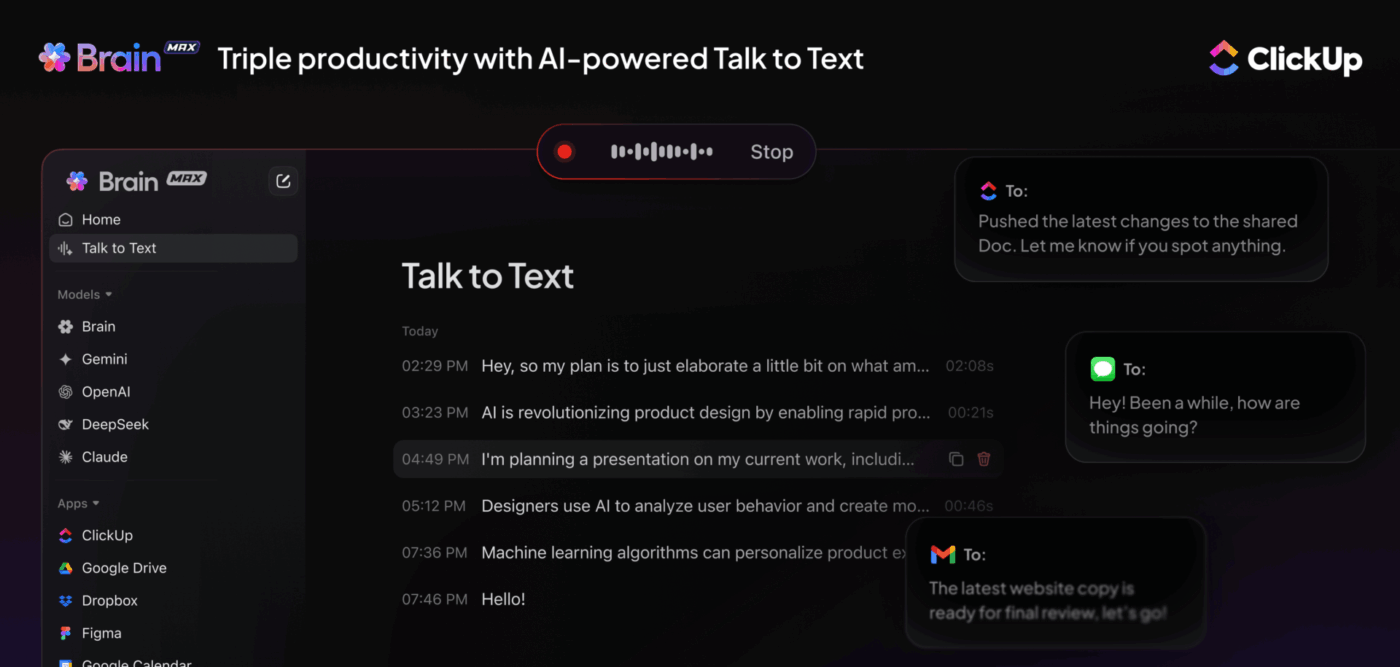
Resource planning can spiral fast—double bookings, unclear timelines, and endless spreadsheet edits. With ClickUp Brain Max, you skip the manual work. Use Talk-to-Text capture to reassign tasks, log time, or create action items instantly—just say it, and Brain Max builds it into your workspace. Pair that with Enterprise Search, and you can ask questions like “Who’s free to take on a new project next week?” or “Which tasks are at risk of slipping?”—and get answers in seconds, directly from your tasks, Docs, and chats.
Instead of reacting to resourcing problems after they happen, you get real-time insights to balance workloads and prevent bottlenecks before they derail your project.
Does it help with task management? Yes, absolutely. Say you write, ‘Prepare Q2 sales report by next Friday.’ Brain turns this into a fully built-out ClickUp Task, complete with a deadline, assignee, and any context it can find. Plus, the AI task manager summarizes project updates, so you always know what’s happened without constant status meetings.
🎥 Want a quick look at how ClickUp Brain works? This short video shows how the AI assistant helps you manage tasks, docs, and team knowledge in one place.
Watch the video →
To balance workloads across multiple teams, ClickUp Workload View gives you a clear, real-time look at team capacity so you can reassign tasks before burnout hits.
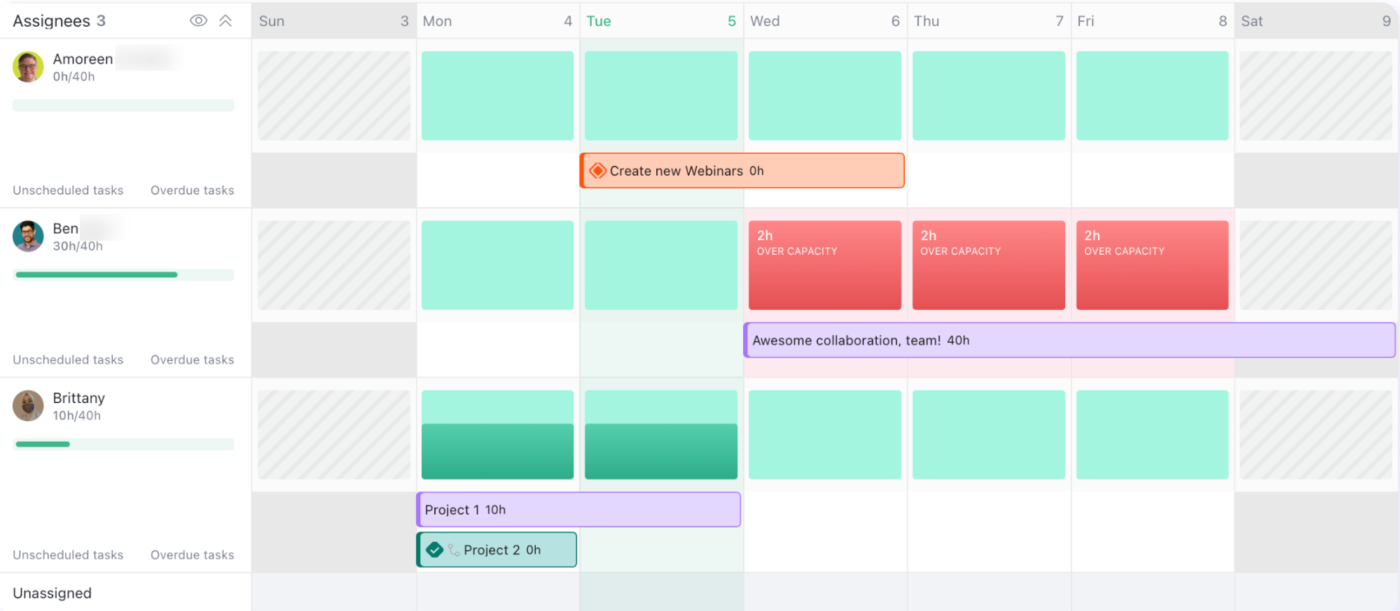
Set each person’s capacity and see in real time who’s drowning and who’s coasting. Then, just drag and drop to reassign tasks and keep everything balanced.
For instance, your lead designer is maxed out, but the freelance designer has bandwidth. You can shift the overflow within seconds and keep the project on track.
⚙️ Bonus: Pick the ClickUp Project Resource Matrix Template to align team members, tools, and timelines for each project phase, making resource planning easier and smarter.
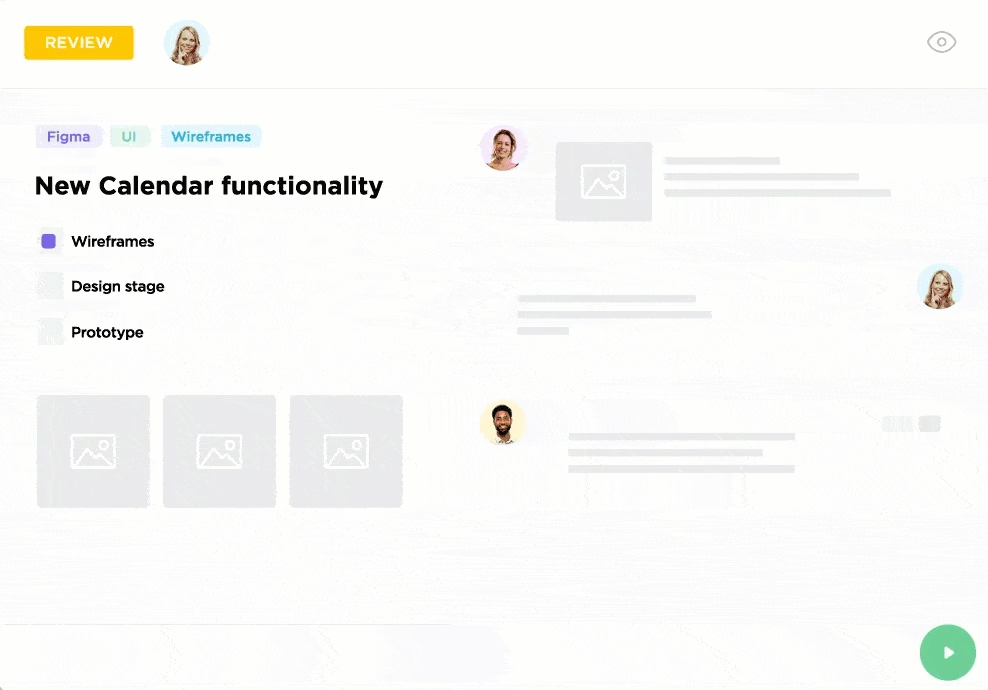
If you want to ensure tasks fit within the team’s and deadline’s time limits, ClickUp Project Time Tracking lets you visualize how long tasks actually take. Use timers or log time manually; it’s all tracked.
Suppose your video editor logs six hours for a teaser video scoped for three. Now you know where time’s going, and you can redistribute work to a freelancer before things go south.
Apply the ClickUp Resource Planning Template to visualize tasks and resources in a unified workflow, optimize workloads, anticipate potential risks, and align teams around priorities and business goals.
Plus, you can manage hours, subcontractors, and availability with customizable fields.
⚙️ Bonus: Implement the ClickUp Resource Management People Template to plan and allocate work across individuals, track availability, and ensure no one is overburdened.
Here’s what a G2 review had to say about this AI resource management software:
…I finally found something that feels like home…What sets ClickUp apart for me is how seamlessly it combines task management with real-time messaging and collaboration…I can just click into a task and start a discussion right there. Every comment, file, and update is exactly where it needs to be, attached to the task itself.
📮 ClickUp Insight: 88% of our survey respondents use AI for their personal tasks, yet over 50% shy away from using it at work. The three main barriers are a lack of seamless integration, knowledge gaps, and security concerns.
But what if AI is built into your workspace and is already secure? ClickUp Brain, ClickUp’s built-in AI assistant, makes this a reality. From predicting capacity crunches to auto-updating timelines and balancing workloads in real time, it helps you move to clarity effortlessly.
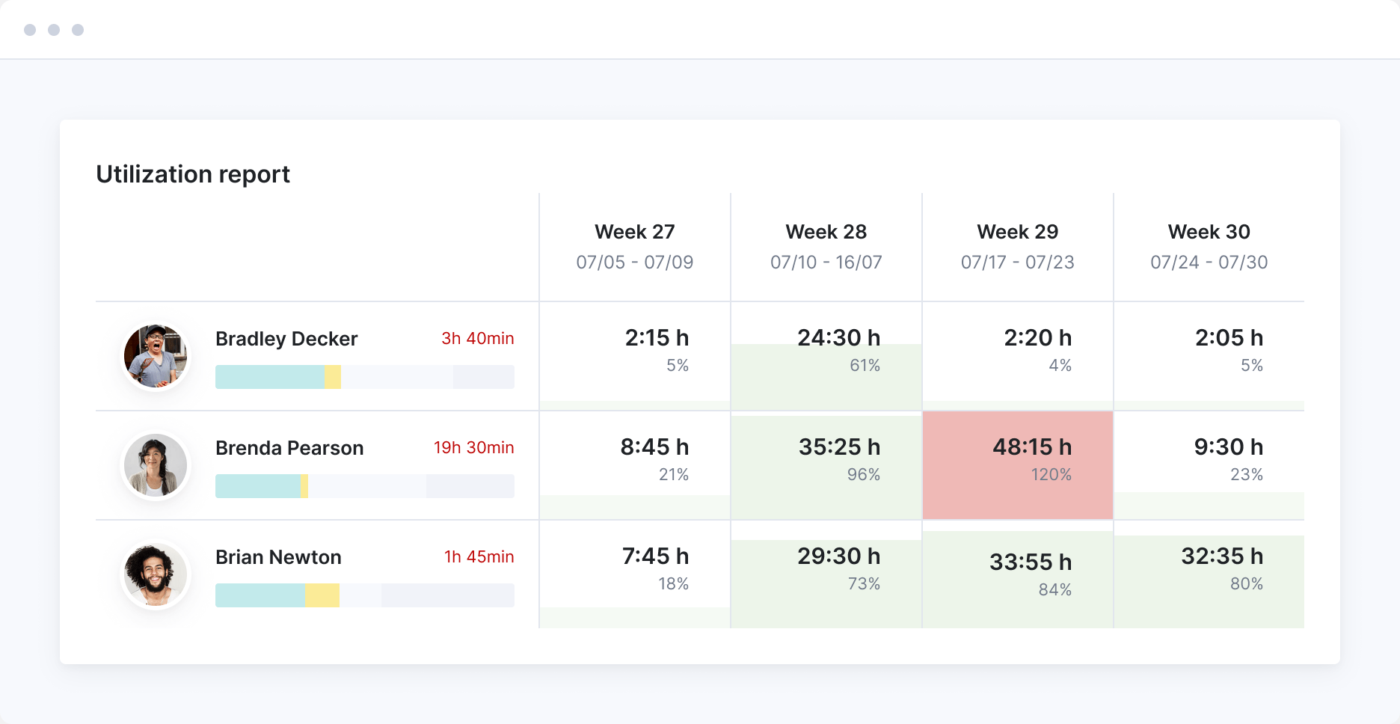
Scoro is a resource management tool for professional service businesses like consultancies and agencies. It integrates project management, resource planning, budgeting, sales, and finance into one connected system, giving you a real-time view of your business’s performance and profitability.
What sets Scoro apart is its depth in financial control. Its tools, like real-time profitability tracking, project-level cost management, and detailed quoting, make it especially valuable for businesses that care about margins. Plus, it’s great at balancing workload—it forecasts resource needs and distributes tasks based on availability, helping you prevent burnout.
Here’s a Capterra review for the AI resource management software:
Scoro has limited integrations with other solutions. Although APIs are available, APIs won’t work for everything. Scoro’s fields for postal codes and countries and mailing addresses are set to use UK-based and European-based format, which makes it a little confusing when entering contact details.
🔍 Did You Know? Resource management evolved with tools like Gantt charts (1900s) and the Critical Path Method (1950s), enabling better project management and resource allocation.
📖 Also Read: Free HR Templates & Forms to Improve HR Processes
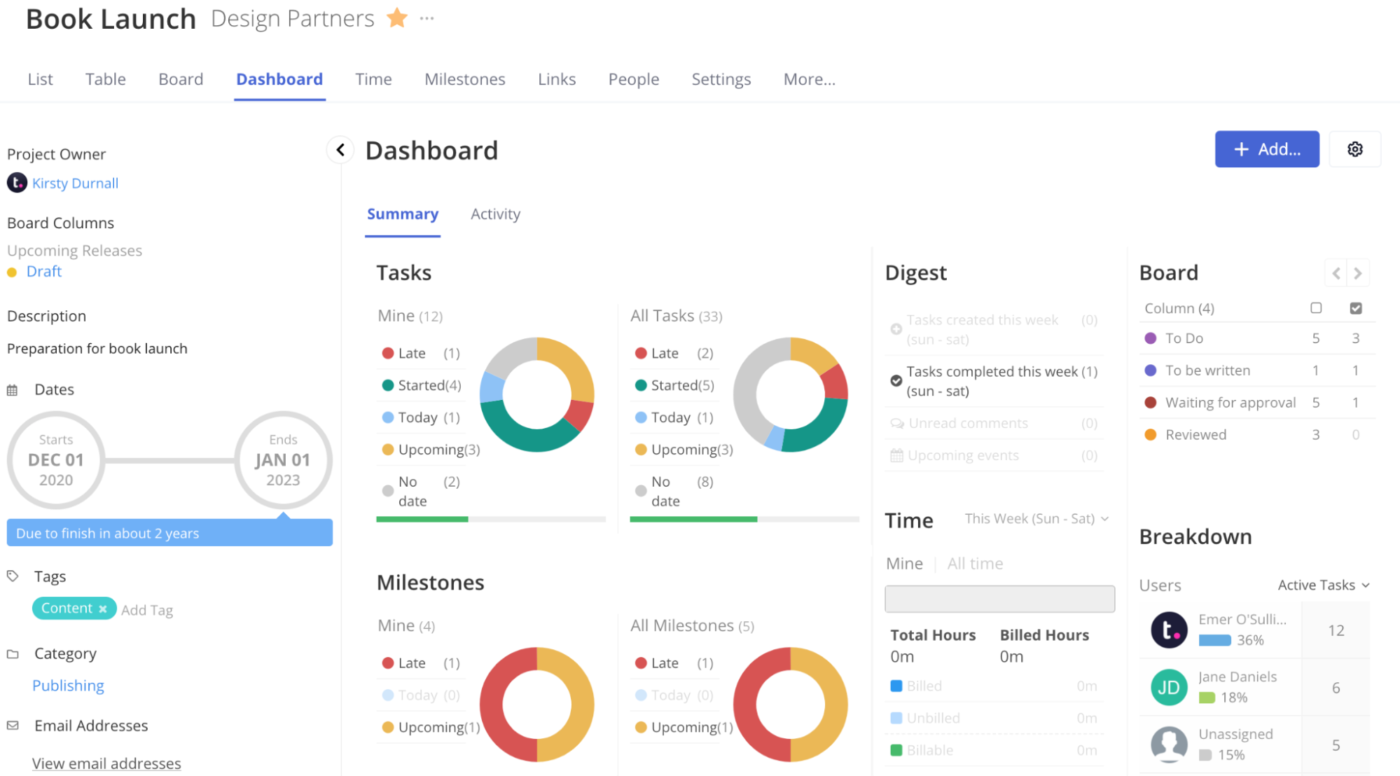
Teamwork is a comprehensive project management platform that excels in resource management. It’s ideal for agencies and client-focused teams aiming to optimize their operations. The AI-enhanced project management platform directly ties human resource planning to profitability without complicating things.
It also helps you monitor scope creep, track every billable hour, and spot capacity issues early. With tools like the Resource Scheduler and Tentative Projects, you can forecast demand and plan ahead.
🔍 Did You Know? The Industrial Revolution flipped resource management on its head. Assembly lines, time studies, and Frederick Taylor’s ‘scientific management’ made productivity the new king.
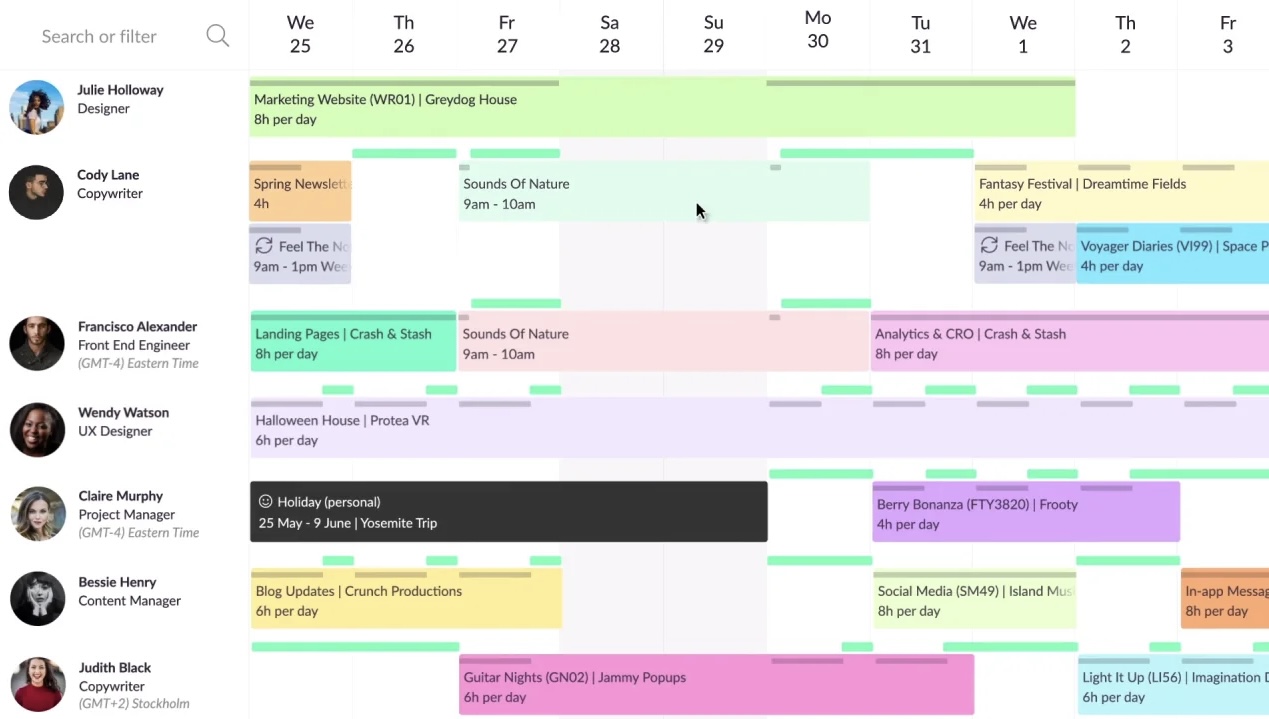
Resource Guru is a cloud-based AI resource management software and scheduling tool that helps teams allocate people, equipment, and meeting spaces. Known for its intuitive interface and robust scheduling capabilities, it caters to small and mid-sized teams across various industries.
It makes daily scheduling effortless with drag-and-drop interactions, visual workload indicators, and intuitive clash detection. Custom Fields handles people, equipment, and meeting rooms from a centralized resource pool, and you can filter talent by skills, departments, and locations.
Here’s what a G2 reviewer said:
There is no real downside to using a resource guru itself. However it is not very useful when people don’t update it with what project they are on and when.
🔍 Did You Know? During the Middle Ages (476-1450 AD), guilds emerged as associations of artisans and merchants who managed resources to produce goods such as bread and armor. These small businesses relied on master artisans to oversee production, making an early form of resource management at the organizational level.
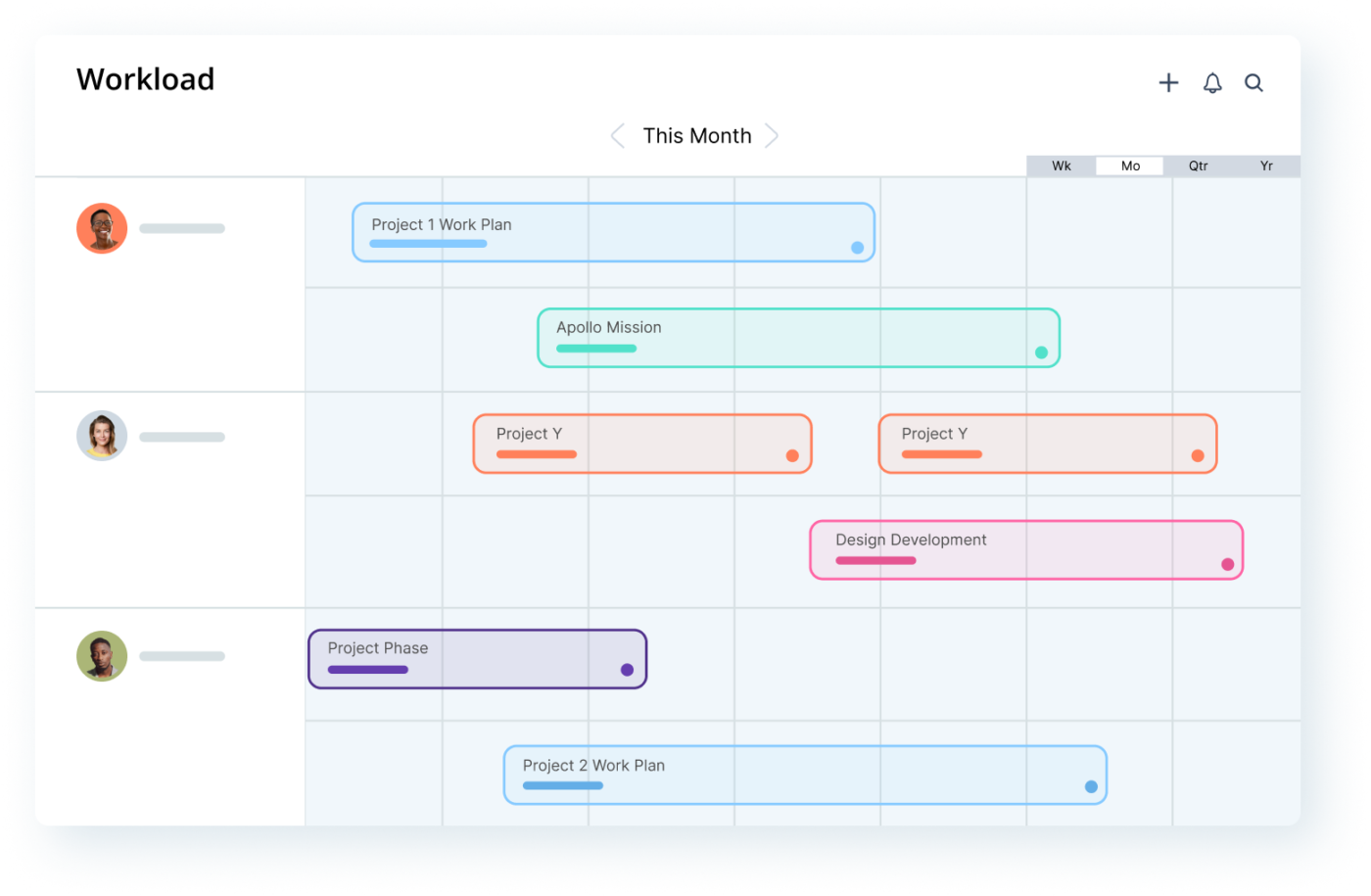
Mosaic is an AI-native resource management tool that flips the script on outdated spreadsheets and disconnected planning. It pulls real-time data from your systems and gives you visibility into who’s working on what, when, and why it matters. Mosaic offers a visual resource calendar to plan and track project assignments, enhancing team visibility.
The tool automatically syncs with your existing tools, offers instant workload forecasts, and delivers visual reports that tell a story. You can track performance without delay using reports and utilization dashboards that help you analyze planned vs. actual time, budgets, and team output in real time.
⚙️ Bonus: Here are free project management templates ready to download, customize, and implement immediately.
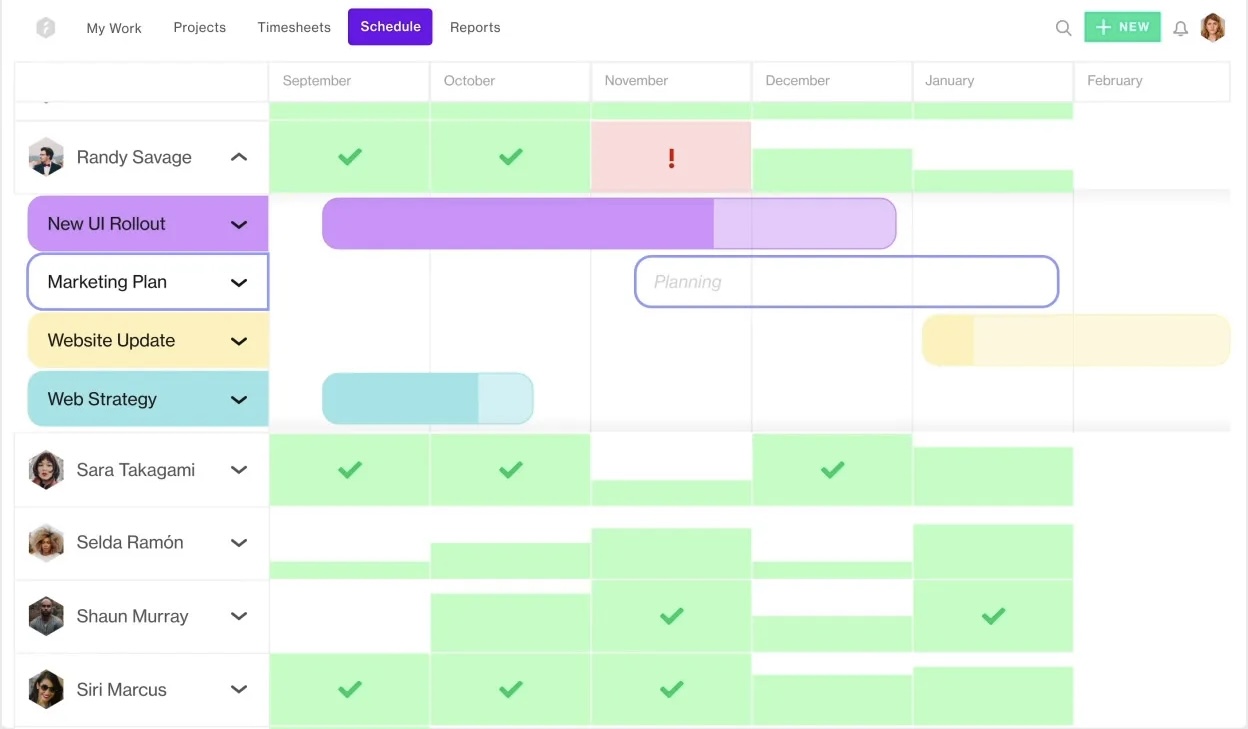
With AI-powered timesheets, Forecast takes the hassle out of time logging and gives you clear, real-time insight into how your projects, people, and profits are tracking. It’s like having a built-in analyst that spots where you’re bleeding margin, which tasks are hogging resources, and what needs fixing, before it becomes a problem.
Forecast also automates the behind-the-scenes work so your team can move faster and smarter. If staying profitable and proactive is the goal, this tool’s got your back.
A Capterra review mentions:
I can easily see my upcoming and past cards, deadlines, project timelines, milestone plans, team members. I can easily change the status of the card from to-dos to in-progress to Done.
💡 Pro Tip: Use the 80/20 rule or a decision matrix to prioritize high-impact resources and projects. It keeps you focused and avoids burnout. Use objective scoring to avoid emotional decisions in resourcing.
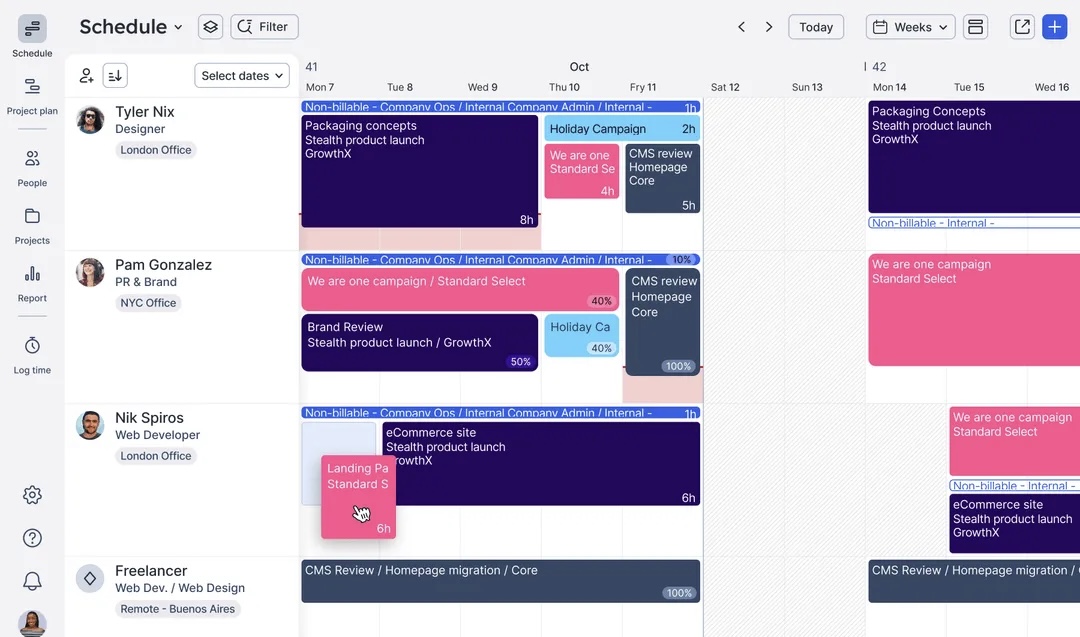
Float keeps resource planning simple and super visual. It’s designed to give you a real-time, no-guesswork view of who’s working on what, who’s overloaded, and where your budgets stand.
You can drag and drop tasks on the Schedule, allocate hours or percentages, and even tag people by skill or department. The AI resource management software instantly shows how changes affect your forecast. Even better? It accounts for time off, holidays, and billable rates so you’re not double-booking or misallocating.
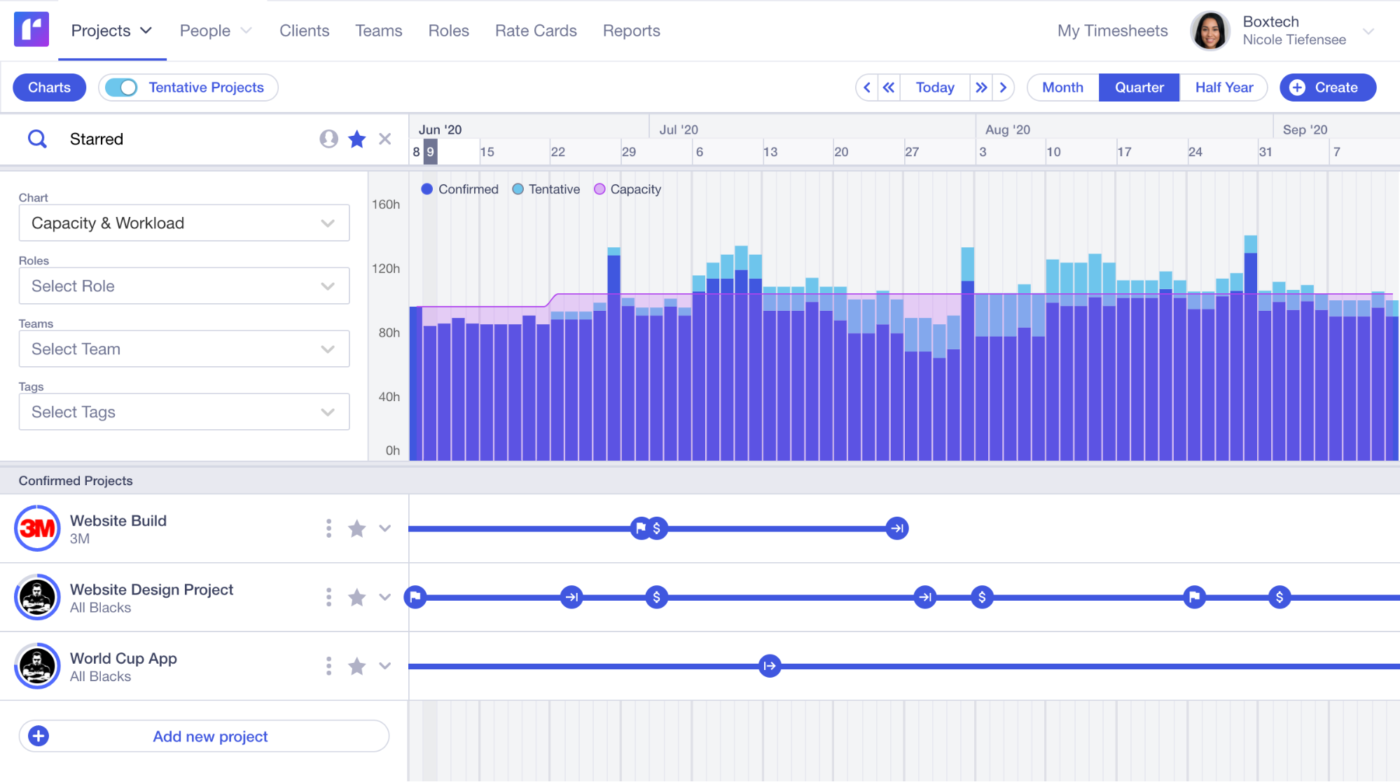
Runn takes the stress out of juggling people, projects, and forecasts by giving you one clear, interactive view. Its drag-and-drop scheduler and real-time visualizations make it easy to adjust timelines or reallocate resources on the fly.
Got a maybe project or unconfirmed hire? You can plan around that, too, using placeholders and tentative projects to prep before anything’s set in stone. The Capacity Heatmap gives you a quick color-coded look at team utilization and resource allocation. At the same time, People Reports break down revenue, billable hours, and who’s got room on their plate.
Here’s what a Capterra review has to say:
I would like some more features in the space of HR Management of people and their skills to be able to better use the time allocation part in conjunction with RFI/RFP answering.
🧠 Fun Fact: The Roman Empire ran like clockwork thanks to job descriptions and chains of command. Even the Church had early versions of org charts.
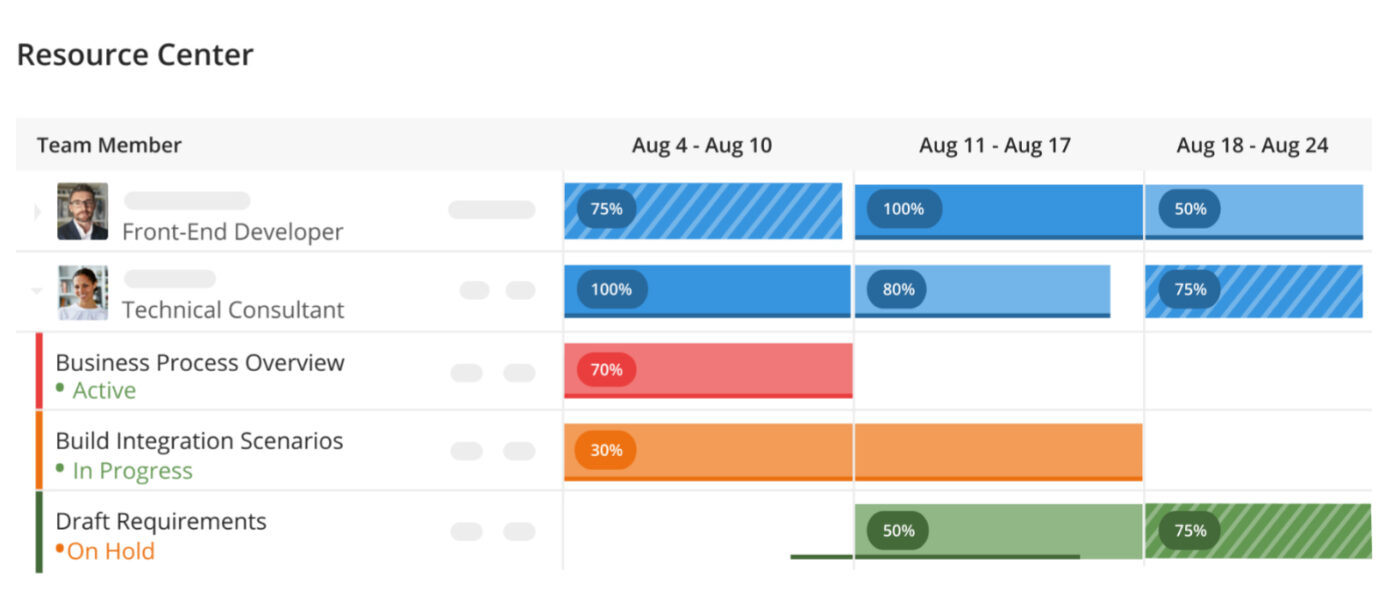
Kantata is built for teams where people are the product, like consultancies, agencies, and professional services firms. It goes way beyond basic scheduling. You get smart staffing recommendations, live project updates, and real-time forecasts in one place.
Features like the Skills Inventory and Resource Forecasting make it easy to match the right people to the right projects quickly. Instead of a static dashboard, you get what users call a ‘windshield view,’ an always-updating plan that moves with your business.
🔍 Did You Know? The global artificial intelligence (AI) software market size is expected to grow at a CAGR of 30%. This means it will reach $1.43 billion by 2030.
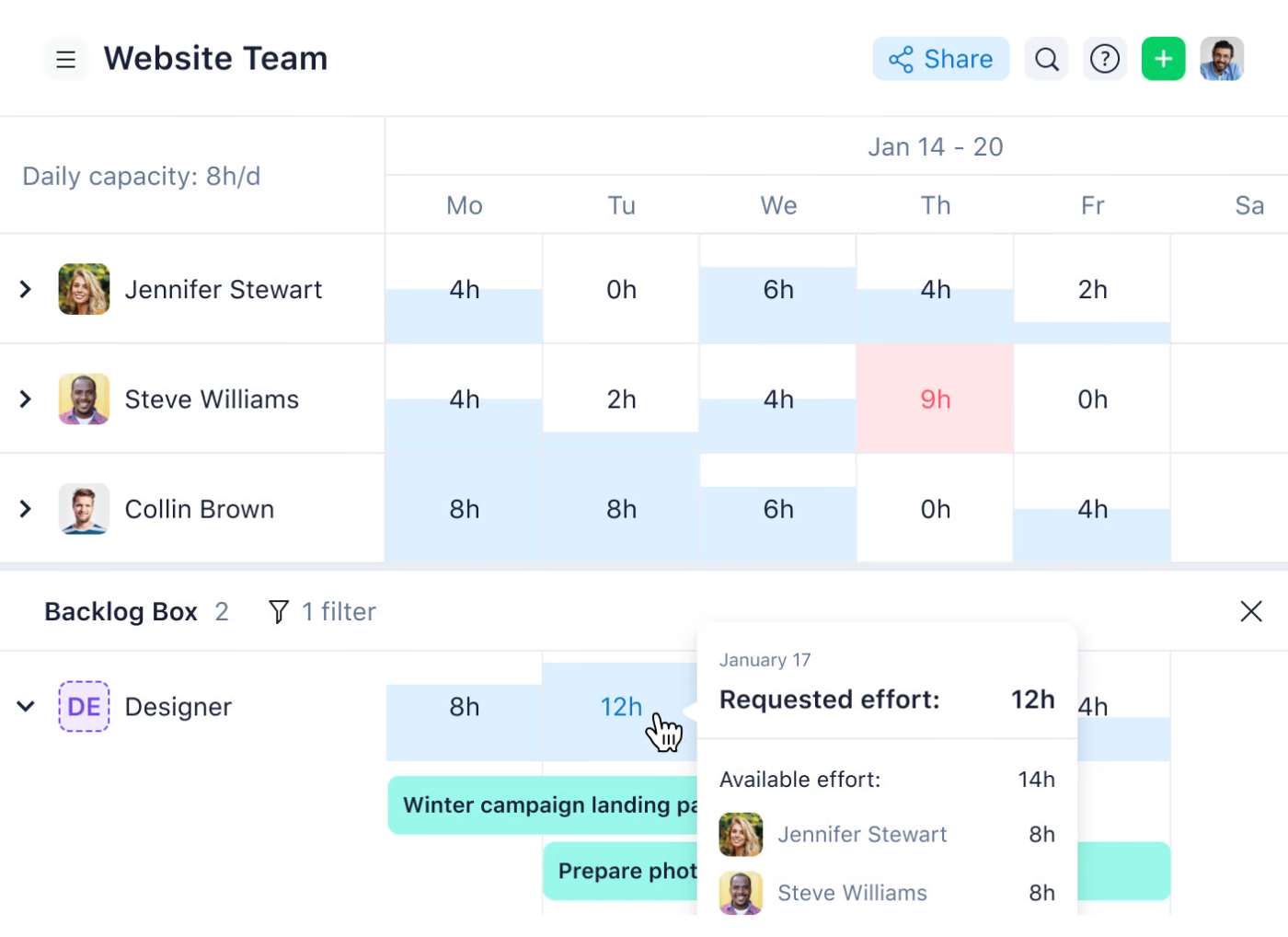
If you’re after more than just tracking hours and assigning tasks, Wrike might be your tool. It connects planning, collaboration, and execution, adapting to your team’s workflow rather than forcing you to adjust. Workload charts and resource bookings give you a live view of workloads, effort, and bookings, making capacity planning accurate.
Wrike also takes the hassle out of intake and execution with workflow automation, thanks to Dynamic Request Forms and Custom Item Types. Everything flows in a single workspace, without manual handoffs or spreadsheets. Plus, its Klaxoon integration turns brainstorming sessions into actionable work, directly in Wrike.
A G2 reviewer said this about the AI resource management software:
My organization gets high usage from the ability to create tasks directly from email. We often receive requests via email and want to capture the body of the initial request for future reference in the task. The email feature allows us to do that quickly and consistently.
🤝 Friendly Reminder: Cross-train where you can. It gives you backup options when key resources are stretched thin.
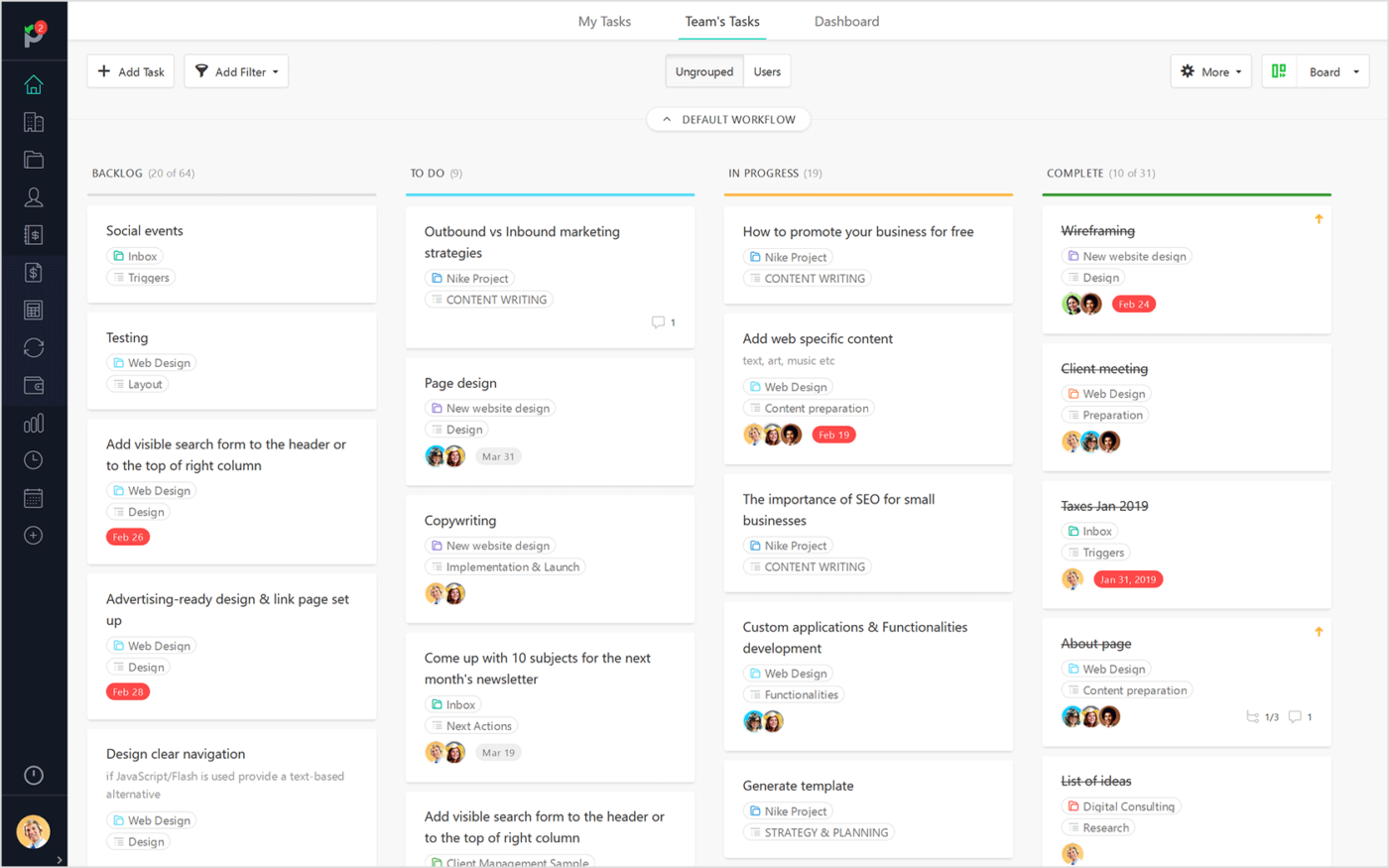
Paymo is built for teams that need a clear picture of who’s doing what, when, and how it’s impacting the bottom line. It combines time tracking, project planning, resource scheduling, and invoicing.
What’s handy? You can switch between project and employee views on the same timeline, so optimizing resource allocation across your team is a breeze. And since Paymo combines operational and financial data, you can easily monitor profit margins and spot if someone’s overbooked or underutilized before it becomes a problem.
💡 Pro Tip: Build a living skills map for your team inside your resource management tool. AI can surface hidden strengths—like a designer with data-viz experience or a developer fluent in multiple frameworks—so you assign work based on talent, not just availability. Refresh this inventory regularly to avoid skill gaps, plan training, and make smarter staffing decisions when new projects land.
All these digital project management tools offer valuable features for project managers, such as intelligent scheduling, capacity planning, and time and project progress tracking. However, most of them excel in one area, not all.
That’s where ClickUp, the everything app for work, stands out.
From ClickUp Brain, which generates summaries, answers real-time questions, and efficiently allocates resources, to ClickUp Workload View for effective resource management, you optimize how your team works.
Sign up with ClickUp for free today! ✅

© 2026 ClickUp

There’s an easier way. Try a free AI Agent in ClickUp that actually does the work for you—set up in minutes, save hours every week.