


Businesses today deal with an unprecedented amount of risk and uncertainty. Supply chain disruptions, cyber threats, currency fluctuations, geo-political upheavals, and many other scenarios can upend growth at any time.
Implementing an enterprise risk management (ERM) program helps manage these risks, making task management easy.
However, manual risk management can be significantly time-consuming. So, why not adopt enterprise risk management software?
After countless hours of research and testing, the team at ClickUp and I have found 15 top-notch risk management solutions. These tools offer superior functionalities—everything from real-time insights to business continuity management—and great pricing plans.
Let’s check them out!
15 Best Enterprise Risk Management Software (ERM) for 2024
- Enterprise Risk Management and Its Importance
- What Should You Look for in an Enterprise Risk Management Software?
- The 15 Best Enterprise Risk Management Software
- 1. ClickUp (Best for comprehensive risk tracking and collaboration)
- 2. Archer (Best for proactive risk identification)
- 3. MetricStream (Best for accessing risk data insights)
- 4. SureCloud (Best for third-party risk management)
- 5. Diligent (Best for centralized risk data management)
- 6. OneTrust (Best for automating regulatory reporting)
- 7. Resolver (Best for risk visualization and tracking threats)
- 8. Camms.Risk (Best for incident management and risk tracking)
- 9. Onspring (Best for centralizing risk and compliance data management)
- 10. SAI360 (Best for compliance management and automating workflows)
- 11. ServiceNow GRC (Best for resolving compliance issues)
- 12. LogicManager (Best for managing complex risk landscape)
- 13. LogicGate (Best for quantifying and assessing risks)
- 14. AuditBoard (Best for risk assessment automation for quick insights)
- 15. Fusion Risk Management (Best for streamlining recovery processes)
- Optimize Your Risk Management Processes With ClickUp

 Summarize this article for me please
Enterprise Risk Management and Its Importance
Enterprise risk management (ERM) streamlines risk management processes, helping your business identify and address potential threats across the organization. It enables you to mitigate risks proactively before they escalate.
Whether operational, financial, or cyber risks, enterprise risk management ensures no risk is overlooked. It helps you automate risk assessments, improve compliance, and enhance operational efficiency.
With the right enterprise risk management software, this process becomes much more manageable. It saves time and resources and improves decision-making.
💡Pro Tip: Want to ensure your company’s systems are secure? Use an effective cybersecurity risk management framework for secure systems with better risk identification.
Summarize this article for me pleaseWhat Should You Look for in an Enterprise Risk Management Software?
When searching for the best enterprise risk management software, there are a few must-have features that you should pay attention to.
Here are the key features I prioritized when looking for an effective software that meets my expectations:
- Centralized dashboard: Choose ERM software that consolidates all risk data, risk assessments, and processes, providing real-time insights across the entire organization
- Automated risk assessments: Opt for a solution that automates risk identification, monitoring, and reporting, minimizing manual efforts and ensuring continuous risk awareness
- Compliance management: Ensure that the software supports regulatory compliance by tracking key risk indicators (KRIs) and aligning with data privacy regulations and industry standards
- Risk visibility: Look for software that increases risk visibility with heat maps and advanced analytics to monitor risks across business units and improve informed decision-making
- Business continuity management: Prioritize a risk management software that supports business continuity plans, helping mitigate risks to safeguard long-term business performance
Summarize this article for me pleaseThe 15 Best Enterprise Risk Management Software
Here are 15 enterprise risk management (ERM) software that I found best for diverse companies to fit your needs:
1. ClickUp (Best for comprehensive risk tracking and collaboration)
Have you found tracking and mitigating risks efficiently challenging? Try ClickUp—an all-in-one project management tool that offers a powerful enterprise risk management (ERM) solution!
Manage risks effectively with ClickUp Tasks
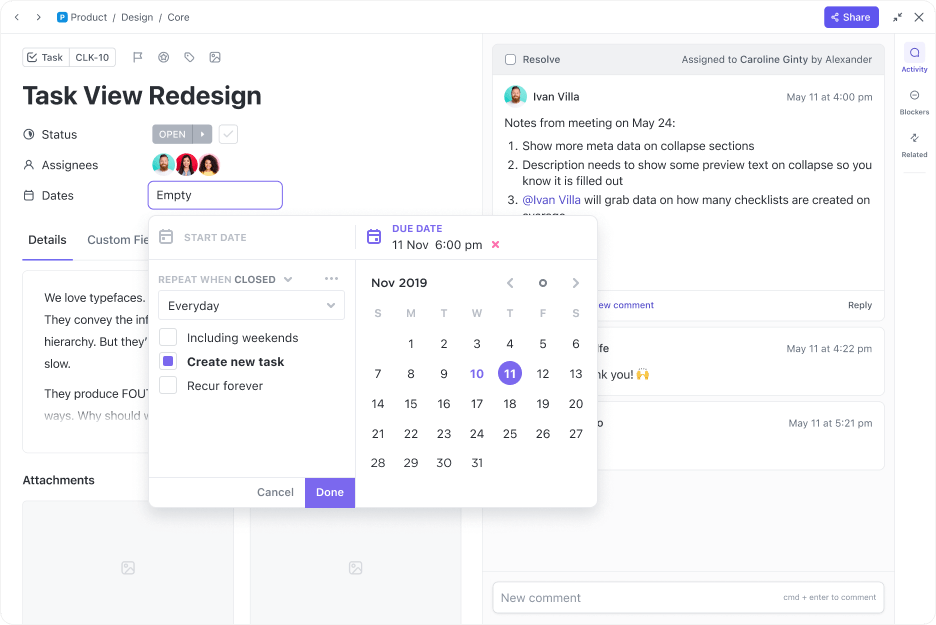
I’ve been using ClickUp with my team for months, and I’m amazed by its intuitive management tools. With ClickUp Tasks you can target complex risks and break them down into super manageable tasks. It lets you assign tasks to team members and ensure they are prioritized and addressed efficiently.
See your risks at a glance on ClickUp Dashboards
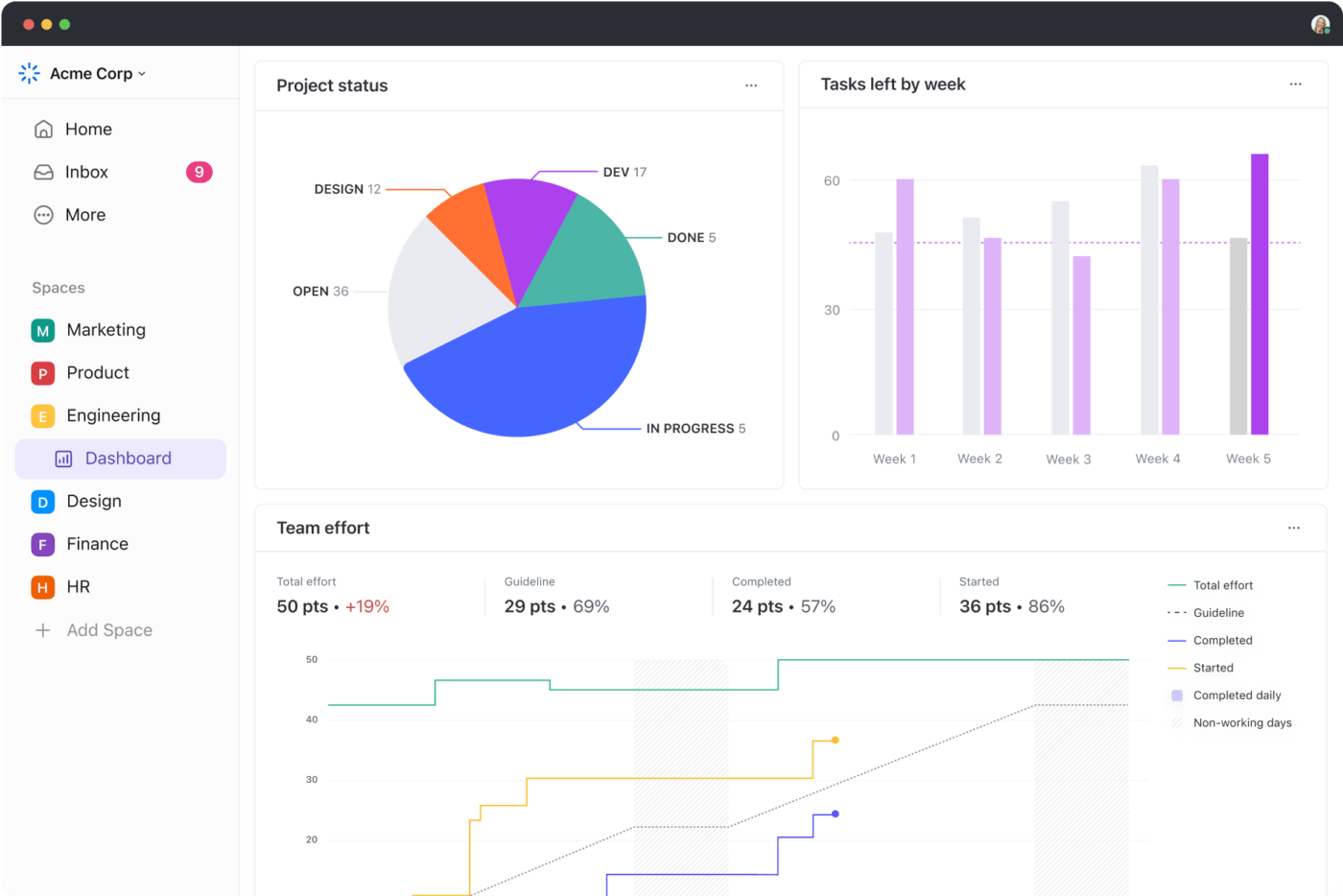
ClickUp Dashboards is excellent for visualizing risk data and tracking key risk indicators in real time. I could easily see the issues being addressed and communicate effectively with stakeholders, which helped me make informed decisions quickly.
Automate risk management with ClickUp Automations
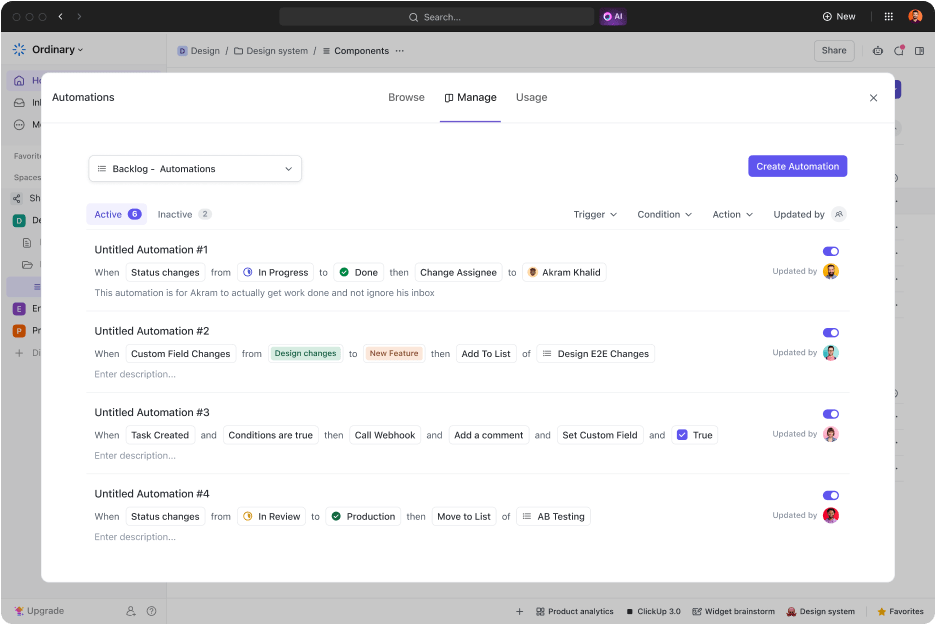
Are you afraid of overlooking or missing a risk? Don’t worry; ClickUp Automations lets you automate numerous tasks and optimize your workflow. For instance, you can set up automated reminders for risk assessments and follow-ups and focus more on analyzing risks.
Create detailed risk plans with ClickUp Docs

Using ClickUp Docs, create comprehensive risk management documents that include strategies and procedures. This tool is best for collaborating with teams to update your risk management plans as needed.
Discuss risks alongside tasks in ClickUp Chat
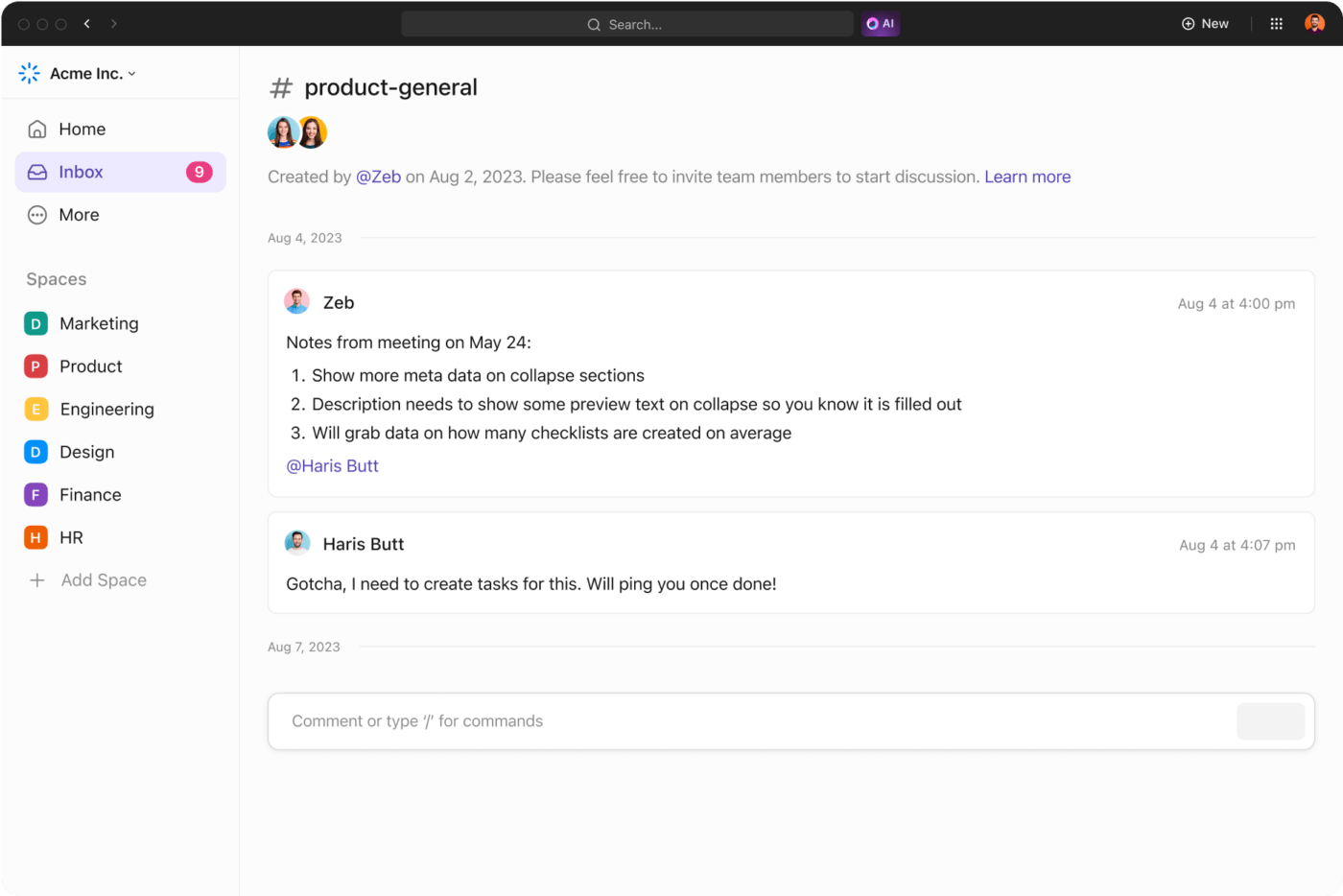
Use ClickUp Chat to discuss potential or existing risks while referencing tasks and documents. It greatly reduces confusion, maintains context in conversations, and keeps discussions focused.
Mitigate risks using ClickUp’s Risk Assessment Whiteboard Template
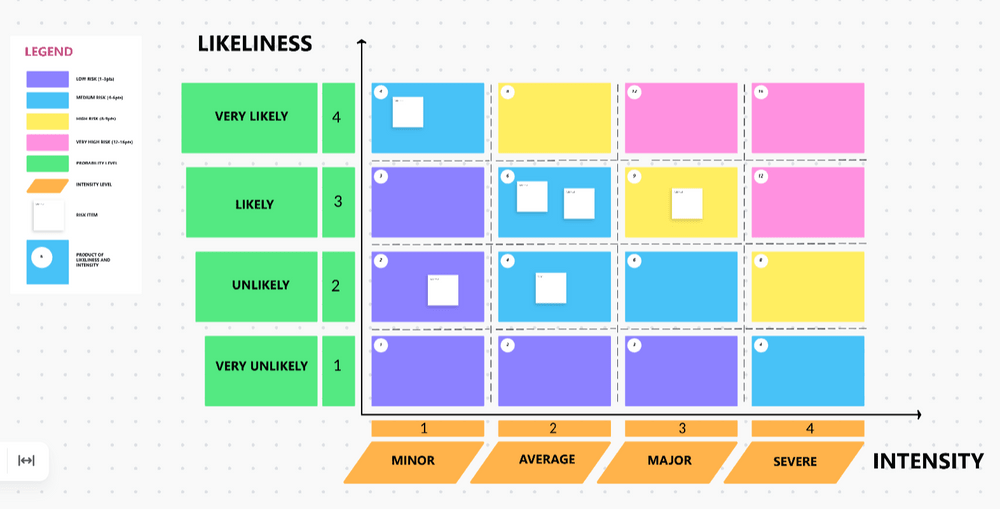
The ClickUp Risk Assessment Whiteboard Template was particularly helpful to my team. It helped identify, assess, and prioritize risks visually. It includes customizable statuses to track risk levels in real time and collaborative features to ensure everyone is updated on risk management measures.
Keep track of every risk with the ClickUp Risk Register Template

Use the ClickUp Risk Register Template, which takes it a step further by allowing you to track the status of each risk and employ preventive measures beforehand.
Do a thorough risk analysis with the Project Management Risk Analysis to plan a proper risk mitigation plan. This will ensure secure systems and help avoid future risks for better time management.
Using it, my team could develop proactive plans to mitigate and manage project cost risks, ensuring projects stay on schedule and within budget.
💡 Pro Tip: Want to streamline your project risk management process and ensure your projects stay on track? Explore the 10 best risk management templates for project management in Excel, Word, & ClickUp.
ClickUp best features
- Set measurable goals to mitigate risks and track progress over time with ClickUp Goals
- Brainstorm and visualize risk mitigation ideas collaboratively with your teams using ClickUp Whiteboards to plan risk management
- Integrate ClickUp with your favorite tools to centralize your work and increase productivity with ClickUp Integrations
- Monitor your time spent on risk management tasks effectively using ClickUp Time Tracking
- Communicate with your team seamlessly with ClickUp Assign Comments to allocate tasks or use ClickUp Chat for quick discussions
ClickUp limitations
- ClickUp’s mobile app lacks certain functionalities that are present in the desktop version
- As there are many features, the tool has a learning curve (though the bank of tutorials makes it easier)
ClickUp pricing
- Free Forever
- Unlimited: $7/month per user
- Business: $12/month per user
- Enterprise: Contact for pricing
- ClickUp Brain: Add to any paid plan for $7/month per Workspace member
ClickUp ratings and reviews
- G2: 4.7/5 (9,000+ reviews)
- Capterra: 4.6/5 (4,000+ reviews)
2. Archer (Best for proactive risk identification)

Archer is one of the most flexible enterprise risk management tools. Its workflow automation features save hours of manual work.
With its audit management and customizable reporting features, it simplifies compliance tracking and improves your decision-making process.
Archer best features
- Ensure adherence to industry standards with integrated compliance management features
- Streamline project evaluation and identify their risks with automated risk assessments
- Centralize risk management for accountability and consistency
Archer limitations
- Archer is not as modern as compared to its competitors
- It requires a lot of vendor and IT support for ongoing management
Archer pricing
- Custom pricing
Archer ratings and reviews
- G2: N/A
- Capterra: N/A
3. MetricStream (Best for accessing risk data insights)

MetricStream is a comprehensive GRC software that helped me assess risks and offered real-time insights into risk data.
With its customizable interface, you can tailor reports to specific business objectives. Using MetricStream’s advanced analytics feature, you can analyze risk trends and make informed decisions quickly.
MetricStream best features
- Automate policy creation, distribution, and enforcement for streamlined governance
- Ensure real-time alignment with evolving regulations like GDPR and SOC 2
- Visualize risks and simplify risk identification using heat maps
MetricStream limitations
- Presents a steep learning curve and a clunky user experience
- System performance may slow down with larger datasets
MetricStream pricing
- Custom pricing
MetricStream ratings and reviews
- G2: N/A
- Capterra: N/A
4. SureCloud (Best for third-party risk management)

SureCloud offers a risk management program for centralizing and simplifying risk management across your organization. Its third-party risk management module has also helped me easily manage risks tied to vendors.
I found its real-time risk dashboard super helpful. It lets you gain instant visibility into emerging risks and spot potential issues before they escalate.
SureCloud best features
- Receive alerts for high-risk activities
- Visualize data on dashboards to gain insights into risk trends
- Ensure third-party compliance with internal policies
SureCloud limitations
- The reporting and dashboard tools lack several modern features of BI tools
- SureCloud doesn’t offer risk assessment templates
SureCloud pricing
- Custom pricing
SureCloud ratings and reviews
- G2: 4.3/5 (30+ reviews)
- Capterra: N/A
5. Diligent (Best for centralized risk data management)

Diligent is reliable in managing IT, third-party, and operational risks. What I love about Diligent is its ability to centralize risk data and provide visibility into potential threats.
With Diligent’s integrated risk management features, you can identify and assess risks across your organization effortlessly and save time with automated workflows.
Diligent best features
- Align compliance efforts with global standards like ISO 31000
- Visualize risk relationships using strategic mapping and dashboards
- Centralize risk data to get a complete overview
Diligent limitations
- The initial setup and integration with other systems is complex
- Managing policy lifecycle changes isn’t user-friendly
Diligent pricing
- Custom pricing
Diligent ratings and reviews
- G2: 4.3/5 (130+ reviews)
- Capterra: 4.5/5 (80+ reviews)
6. OneTrust (Best for automating regulatory reporting)

OneTrust offers an effective risk management program for large enterprises. Its automated risk assessments streamline compliance checks, making regulatory reporting much more manageable.
OneTrust’s dashboard is particularly useful for tracking varying levels of risk in real time.
OneTrust best features
- Automate compliance tasks for GDPR and CCPA
- Access dashboards for real-time visibility into compliance
- Organize policies and procedures for ISO and SOC compliance
OneTrust limitations
- OneTrust is difficult to integrate with other systems
- Users with small-scale businesses have considered it to be expensive
OneTrust pricing
- Custom pricing
OneTrust ratings and reviews
- G2: 4.3/5 (140+ reviews)
- Capterra: 4.2/5 (30+ reviews)
7. Resolver (Best for risk visualization and tracking threats)

Resolver is great for tracking emerging risks and instantly seeing any new threats. It helped me identify potential risks and implement mitigation efforts efficiently.
With its risk visualization, it maps out threats so you can understand how one department’s risks might impact another.
Resolver best features
- Set up risk mitigation workflows and reminders without manual input
- Gain instant visibility into emerging risks with detailed dashboards
- Generate audit-ready reports with a few clicks
Resolver limitations
- The implementation process requires expert IT assistance
- Managing the dashboards is difficult because of how detailed they are
Resolver pricing
- Custom pricing
Resolver ratings and reviews
- G2: 4.4/5 (100+ reviews)
- Capterra: 4.4/5 (40+ reviews)
8. Camms.Risk (Best for incident management and risk tracking)

Camms.Risk offers a comprehensive GRC solution and is incredible for managing incidents and ensuring compliance with various regulations. Its pre-built templates and user-friendly dashboard make identifying, assigning, and tracking risks easy.
You can also use Camms.Risk’s many other features, such as customizable risk registers, real-time monitoring, and workflow management to orient risk strategies with business goals.
Camms.Risk best features
- Automate workflows for incident management and compliance tracking
- Visualize data with interactive dashboards and reporting tools
- Track risks with customizable risk registers and real-time dashboards
Camms.Risk limitations
- The UX is not very intuitive
- Lacks the ability to quantify risks for better assessments
Camms.Risk pricing
- Custom pricing
Camms.Risk ratings and reviews
- G2: 4.5/5 (60+ reviews)
- Capterra: N/A
9. Onspring (Best for centralizing risk and compliance data management)

Onspring offers risk management processes and lets you manage threats across various domains, such as financial, operational, and reputational, all in one place.
Its risk register feature is also useful for organizing threats into hierarchies and providing automatic updates based on tolerance levels.
Onspring best features
- Automate workflows for risk assessments, audits, and controls
- Generate real-time risk insights for better business decisions
- Use advanced analytics to detect anomalies
Onspring limitations
- It poses a steeper learning curve for non-technical users
- It has limited customization options for risk reports
Onspring pricing
- Custom pricing
Onspring ratings and reviews
- G2: 4.7/5 (50+ reviews)
- Capterra: 4.8/5 (70+ reviews)
10. SAI360 (Best for compliance management and automating workflows)

SAI360’s risk management system, which automates workflows and notifications and tracks threats, proved quite effective for my risk management efforts.
Even the pre-configured dashboards provide real-time insights into various risks, like cybersecurity and third-party risks. This can help you make quicker and smarter business decisions.
SAI360 best features
- Leverage pre-configured regulatory frameworks to meet compliance requirements
- Generate detailed, tailored reports for different stakeholders
- Set automated alerts and notifications for assessments and audits
SAI360 limitations
- Reported slow loading times and system lags
- It doesn’t integrate well with big data tools
SAI360 pricing
- Custom pricing
SAI360 ratings and reviews
- G2: 4.1/5 (100+ reviews)
- Capterra: N/A
11. ServiceNow GRC (Best for resolving compliance issues)

ServiceNow GRC offers real-time insights and workflow automation, which is great for streamlining risk management and reducing manual effort.
You can use ServiceNow GRC to manage risks like cybersecurity threats, compliance issues, and vendor management. It’s also very effective for centralizing all your risk data in one place, making tracking and mitigating risks easy.
ServiceNow GRC best features
- Streamline routine compliance processes with automation
- Access instant insights and data visualization for better decision-making
- Automate audit management to prioritize risks and streamline workflows
ServiceNow GRC limitations
- UI is complex and not very intuitive
- Poses a learning curve after implementing the tool
ServiceNow GRC pricing
- Custom pricing
ServiceNow GRC ratings and reviews
- G2: 4.4/5 (20+ reviews)
- Capterra: N/A
12. LogicManager (Best for managing complex risk landscape)

LogicManager is a well-known enterprise risk management tool designed to help you anticipate and mitigate risks. It helps prioritize business risks by linking them to organizational goals.
Logic Manager’s AI-driven analytics helped identify risk likelihood I might’ve missed manually and helped me make smarter decisions for the company.
LogicManager best features
- Identify risks and mitigate them effectively across departments
- Transform data into clear reports with automated reporting
- Track all risk incidents in one place
LogicManager limitations
- Not very customizable and lacks many critical integrations
- Presents difficulty in measuring the effectiveness of GRC activities
LogicManager pricing
- Custom pricing
LogicManager ratings and reviews
- G2: 4.6/5 (50+ reviews)
- Capterra: 4.5/5 (20+ reviews)
13. LogicGate (Best for quantifying and assessing risks)

LogicGate streamlines risk management processes effectively. Its risk assessment feature includes pre-configured scoring, which I believe is a great functionality for helping you assess risks and instantly assign mitigations.
LogicGate’s customizable dashboards and Monte Carlo simulations also help you quantify risks in financial terms for better decision-making.
LogicGate best features
- Customize reports and dashboards for stakeholder engagement
- Streamline compliance processes with pre-configured workflows
- Visualize risks with heatmaps, bar charts, and more
LogicGate limitations
- Initial setup requires adequate technical knowledge
- Slower reporting speed under heavy data loads
LogicGate pricing
- Custom pricing
LogicGate ratings and reviews
- G2: 4.6/5 (150+ reviews)
- Capterra: 4.6/5 (60+ reviews)
14. AuditBoard (Best for risk assessment automation for quick insights)

AuditBoard is a reliable ERM tool that simplifies tracking and managing risks across an organization. Its RiskOversight feature centralizes risk management—this means I can avoid sifting through data, streamline assessments, and identify risks quickly.
AuditBoard best features
- Store audit documents and access them easily
- Get alerts for risks and manage compliance proactively
- Automate risk assessments and identify risks quickly
AuditBoard limitations
- Slower customer support response times, causing delays in resolving critical issues
- The interface isn’t intuitive for new users, slowing down the software adoption
AuditBoard pricing
- Custom pricing
AuditBoard ratings and reviews
- G2: 4.6/5 (1000+ reviews)
- Capterra: 4.7/5 (300+ reviews)
15. Fusion Risk Management (Best for streamlining recovery processes)

Fusion is another powerful enterprise risk management software that helps assess organizational risks and create effective business continuity programs.
Using its key features, such as risk and impact assessments, IT disaster recovery, and dependency mapping, you can gather real-time data across departments and prioritize your recovery efforts.
Fusion best features
- Map and analyze interdependencies across your business units
- Streamline incident response and recovery efforts with automated processes
- Access real-time data and analytics for informed decision-making
Fusion limitations
- Integration with other systems hinders the seamless flow of data across platforms
- Complex for beginners, requiring a steep learning curve
Fusion pricing
- Custom pricing
Fusion ratings and reviews
- G2: 4.4/5 (120+ reviews)
- Capterra: 4.4/5 (40+ reviews)
Summarize this article for me pleaseOptimize Your Risk Management Processes With ClickUp
Choosing the right ERM or enterprise risk management software can feel overwhelming and tough with so many options available. With this hand-picked list, carefully evaluate the top 15 tools for you, considering their features and functionalities, their significant drawbacks, and user reviews.
In case you’re doubtful about the process or find it time-consuming, have faith, heed our advice, and go for ClickUp. As an all-in-one productivity platform, ClickUp offers a comprehensive suite of features that can streamline your risk management processes.
Ready to take the next step? Sign up for ClickUp today and discover how it transforms your risk management efforts!

Everything you need to stay organized and get work done.
