







Still downloading templates?
There’s an easier way. Try a free AI Agent in ClickUp that actually does the work for you—set up in minutes, save hours every week.
Sorry, there were no results found for “”
Sorry, there were no results found for “”
Sorry, there were no results found for “”
Halfway through the quarter, the numbers didn’t add up. The budget said one thing, the spreadsheet another, and the finance team had a third version altogether. No one was wrong, but no one had the whole picture either.
If you’ve dealt with scattered cost data or late-stage budget surprises, you know how quickly things spiral without the proper setup. The fix? Tools built to track costs as the project moves.
Here are the top project cost tracking software tools that bring clarity to budgets and forecasts. Let’s get started! 💰
Before you dive in, here’s a quick side-by-side look at the top project management software for cost tracking. 💸
| Tool | Best for | Best features | Pricing* |
| ClickUp | Centralized cost tracking within live project workflows for individuals, mid-market companies, and large enterprises | Task-level cost tracking with Custom Fields, budget vs. actuals analysis in Dashboards, automated cost alerts, time tracking, AI and automation | Free forever; Customization available for enterprises |
| Productive | Agency profitability tracking from quote to invoice for mid-market teams and growing agencies | Real-time budget and profitability tracking, custom billing rates, detailed financial reporting, AI assistance | Free trial available; Plans start at $11/month |
| Screendragon | Campaign cost management in creative marketing workflows for marketing departments and in-house creative teams | Multi-channel spend tracking, ROI-based reporting, automated budget approvals, AI assistance | Custom pricing |
| Wrike | Complex cross-departmental cost oversight for enterprise project teams and consultants | Project budget templates, automated time tracking, phase-level profitability reporting, AI assistance | Free plan available; Paid plans start at $10/month per user |
| Smartsheet | Spreadsheet-based budgeting with real-time collaboration for small teams and finance-focused users | Spend alerts, roll-up reports, audit trails, collaborative cost planning sheets, AI assistance | Free plan available; Paid plans start at $12/month per user |
| Toggl Track | Simple time-based budgeting with no-frills setup for freelancers and lean project teams | Project time tracking with budget alerts, productivity analysis reports | Free plan available (up to 5 users); Paid plans start at $10/month per user |
| Harvest | Time tracking linked directly to billing and revenue for consultants and client-service teams | Time logs, profitability reports by client/project, burn-rate forecasting | Free plan available; Paid plans start at $13.75/month per user |
| Hubstaff | Time and cost management and monitoring for distributed teams and remote-first companies | Employee productivity tracking, project-based cost tracking, payroll integration | Free trial available; Plans start at $7/month per user |
| Sage Intacct | Integrating cost tracking for finance teams at large enterprises | Project budgets linked to general ledger, real-time expense governance, multi-dimensional profitability reporting, AI assistance | Custom pricing |
| Procore | Full-spectrum project cost control for large construction firms and general contractors | Construction-specific cost codes, field-to-finance sync, automated change order management, detailed reporting, AI assistance | Custom pricing |
When selecting project cost tracking software, prioritize features that streamline financial management and support project success. Consider these capabilities for your preferred cost management tools:
💡 Pro Tip: Use a ‘spend shadow’ log to track informal costs, like team lunches or ad-hoc tools, so you can see how these small expenses add up and set a cap.
📊 Budget Blunder: Montreal’s Olympic Stadium was initially budgeted at $134 million CAD but ended up costing over $1.6 billion CAD. Poor financial oversight and political interference made it a 30-year debt burden.
Here’s a look at some of the best project cost tracking software built to handle real team workflows. 📑
Our editorial team follows a transparent, research-backed, and vendor-neutral process, so you can trust that our recommendations are based on real product value.
Here’s a detailed rundown of how we review software at ClickUp.
Tracking project costs in isolation often leads to delays, overspending, or missed approvals. Teams switch between spreadsheets, email chains, and time-tracking apps—none of which connect back to the actual work.
ClickUp brings everything into one space, so cost tracking becomes part of the project, not an afterthought.
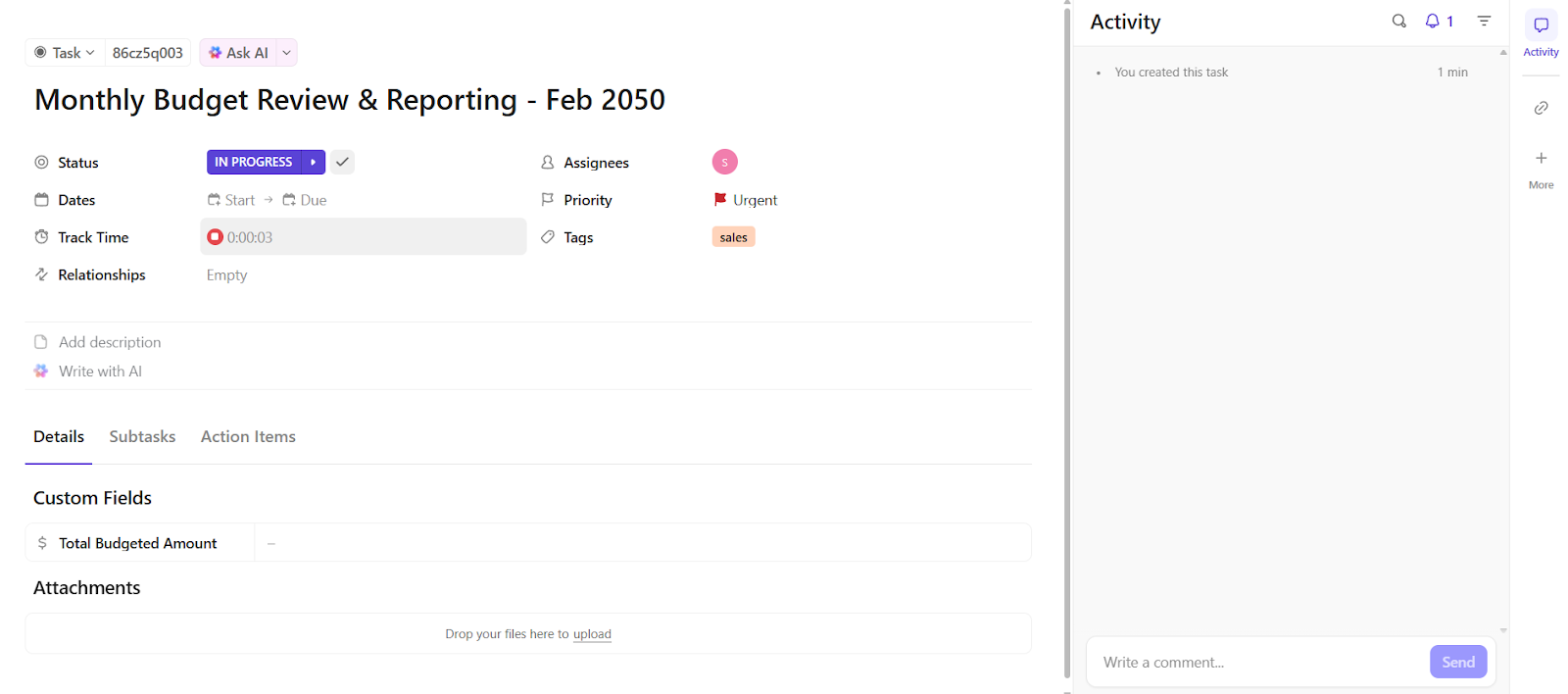
ClickUp Tasks makes it easy to track financial updates at the task level.
Let’s say an event agency is coordinating a large conference. Each task—venue booking, speaker coordination, vendor management—can include cost notes, vendor invoices, and real-time status updates. Finance and project teams can tag each other, leave comments, and confirm payments without the toggle tax.
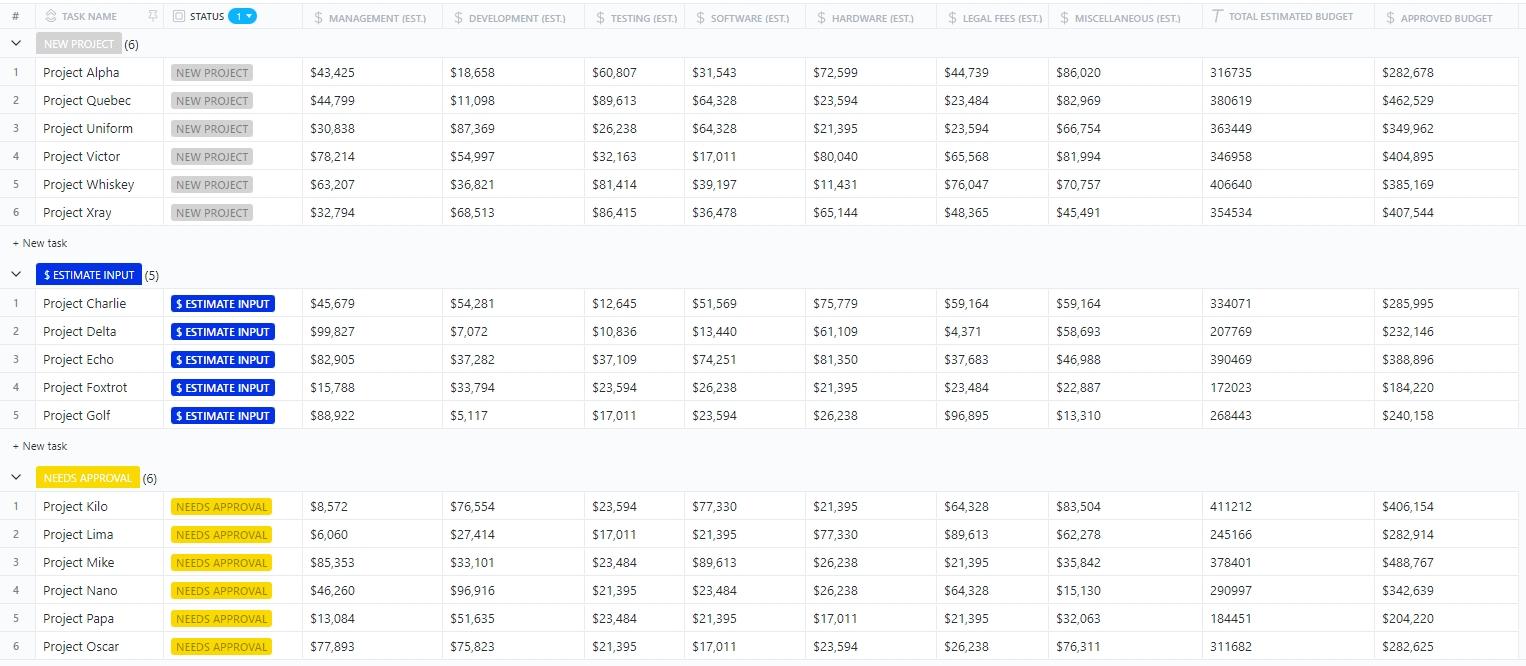
Layer in ClickUp Custom Fields to turn tasks into budget trackers by adding inputs like ‘Estimated Cost’, ‘Actual Cost’, and ‘Cost Type’.
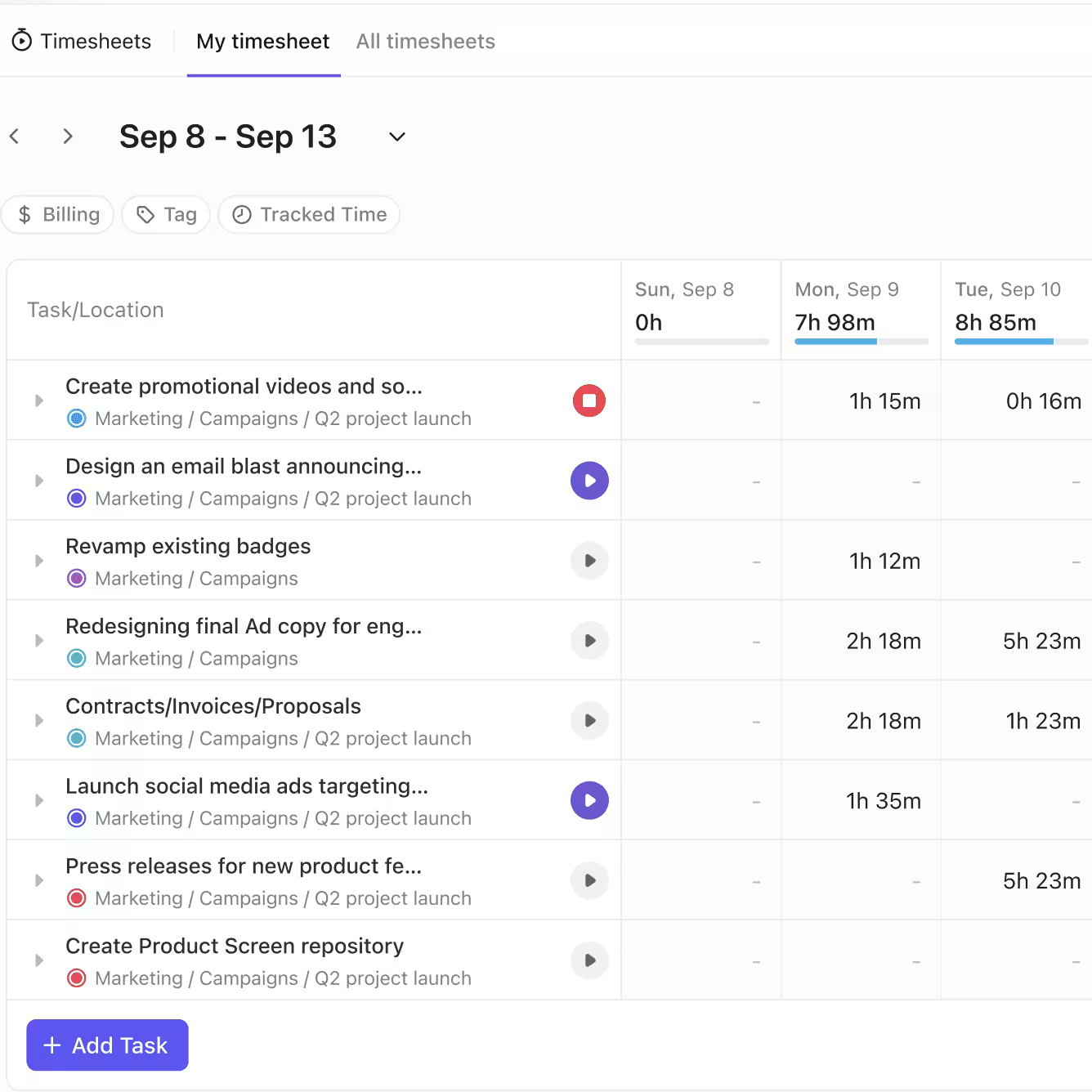
ClickUp Project Time Tracking brings labor costs into the picture. Team members track hours per task, and project managers see real-time data so that timelines can be adjusted or overages flagged.
Teams can surface project data through ClickUp Dashboards, selecting from 50+ widgets to customize them.
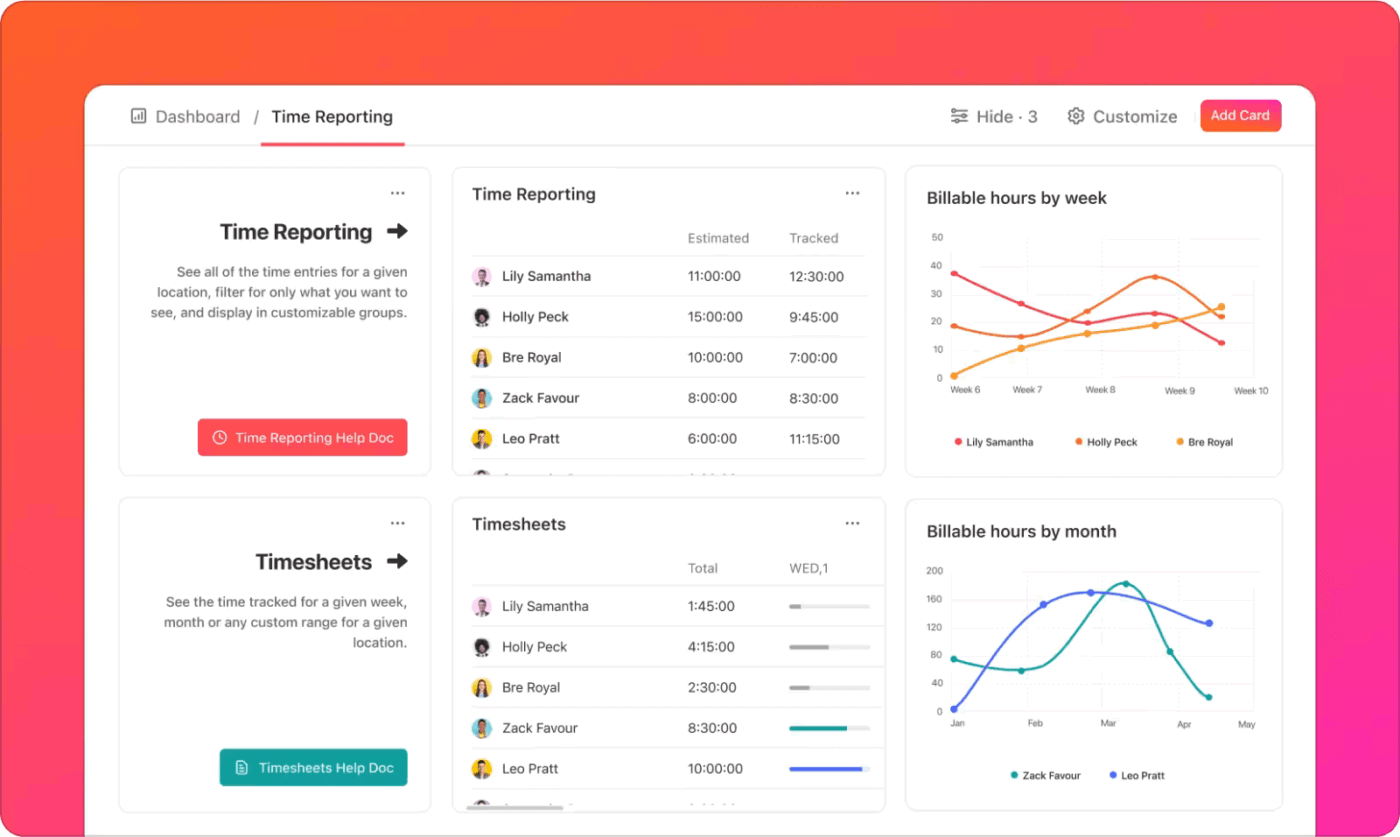
For example, a product team managing a major feature rollout might build a dashboard that shows hours logged per team member, budget vs actuals by sprint, and cost breakdowns by task type. This gives everyone from project leads to executives a shared view of financial progress without extra reporting work.
ClickUp Project Cost Analysis Template gives teams a ready-made structure for estimating and tracking budgets across milestones. It’s especially useful for teams running projects with fixed scopes or grant-based funding that requires accurate variance tracking.
At the same time, ClickUp’s Project Cost Management Template adds more oversight. A digital agency managing several client retainers can use this to assign recurring budget reviews, log client approvals, and compare cost performance across multiple deliverables.
The template keeps everything visible and organized, even when multiple teams are involved.
This G2 review really says it all about ClickUp as a project cost tracking software:
ClickUp’s capabilities in project and program management are truly exceptional, setting a new benchmark in the market. It provides a powerful suite of tools that facilitate not only efficient task tracking but also comprehensive management of diverse projects and programs. […] Additionally, ClickUp’s extensive selection of well-designed templates streamlines the project setup process, significantly enhancing productivity and project planning efficiency.
📮 ClickUp Insight: 16% of managers struggle with integrating updates from multiple tools into a cohesive view. When updates are scattered, you end up spending more time piecing together information and less time leading.
The result? Unnecessary administrative burdens, missed insights, and misalignment. With ClickUp’s all-in-one workspace, managers can centralize tasks, documents, and updates, reducing busywork and surfacing the insights that matter most, right when they’re needed.
💫 Real Results: Convene unified 200 professionals into one ClickUp workspace, using customizable templates and time tracking to reduce overhead and improve delivery times across multiple locations.
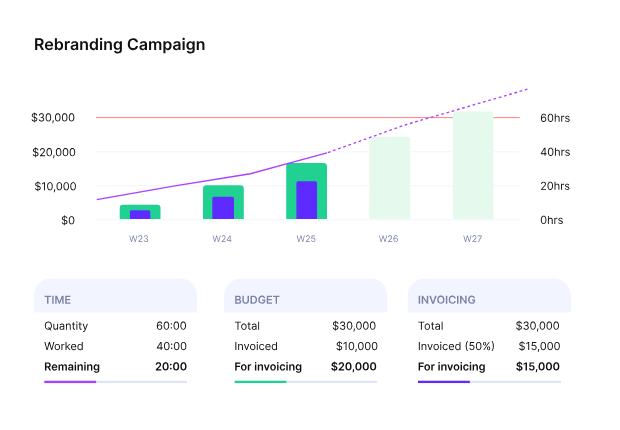
Creative agencies often struggle to figure out which projects actually make money. Productive solves this through real-time profitability tracking that shows where your agency stands financially on every single project.
The platform connects time tracking directly to budgets, allowing you to monitor profit margins as work progresses. What makes this tool different from generic project managers is its deep understanding of agency workflows, from client onboarding to final billing.
Here’s a G2 reviewer’s take on Productive’s project cost management tools:
The most helpful thing for us as an agency is the visibility we have over everything that is going on in the business. From an initial quote/budget, through the life of a project and into invoicing, the tight integration of relevant data makes errors far less likely. Being able to see all of our resourcing and utilisation (did I mention you can pull a report for just about anything?) all in one dashboard is really useful.
📚 Also Read: Best Productive.io Alternatives
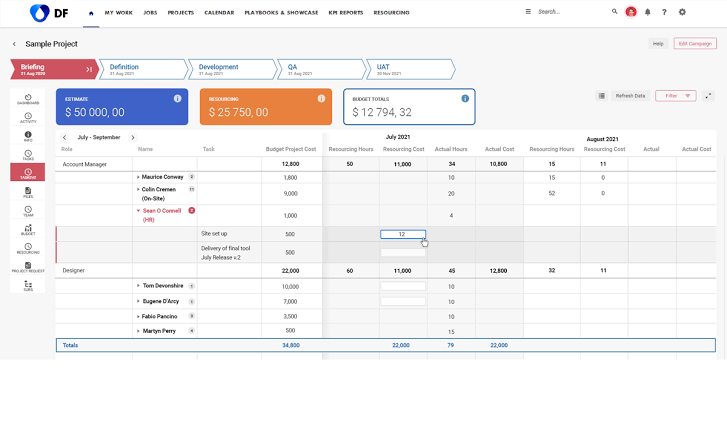
Ever tried managing a complex marketing campaign while keeping track of every dollar spent? Screendragon tackles this challenge through purpose-built workflow automation designed specifically for marketing teams. It seamlessly handles creative approval processes that typically create bottlenecks in campaign execution.
Teams can set up automated routing that keeps projects moving while maintaining complete budget visibility. This way, you can see exactly how much each stage of campaign development costs and optimize accordingly.
💡 Pro Tip: Create a ‘spend velocity’ metric to measure how fast each team burns through its budget. This is great for spotting inefficiencies, like a team overusing contractor hours.
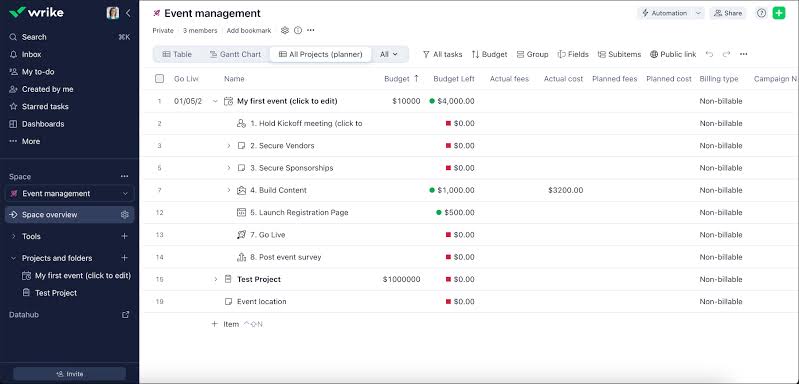
Complex projects have a way of spiraling out of control, especially when multiple departments need to collaborate on deliverables. Wrike approaches this through customizable workflows that adapt to virtually any project structure while maintaining detailed cost tracking throughout.
Teams particularly appreciate the platform’s ability to handle enterprise-level complexity without sacrificing visibility into project costs and resource utilization.
📊 Budget Blunder: Berlin Brandenburg Airport was meant to open in 2011 with a budget of €2.5 billion. It finally opened in 2020 after costs rose to €7 billion. Investigations cited poor project management cost control, and a lack of centralized tracking.
📚 Also Read: We Tested the Best Wrike Alternatives & Competitors
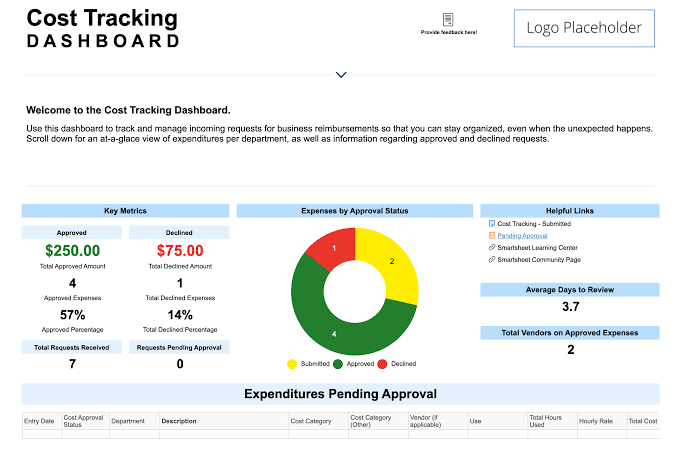
If your team lives and breathes spreadsheets but needs more sophisticated project tracking capabilities, Smartsheet perfectly bridges that gap. It combines the familiar grid interface everyone knows how to use with powerful project management features that effectively track costs.
Teams can build complex project budgets using spreadsheet formulas while accessing advanced features like automated workflows and real-time collaboration.
You can use it to track expenses, monitor resource costs, and create roll-up reports that consolidate financial data from multiple projects.
Here’s a firsthand perspective on this project cost tracking software from a G2 review:
I like how Smartsheet is versatile and can be utilised for many different applications. Sometime I just use it as a more advanced and interactive version of Excel, other times you can take advantage of its dashboard and automation functionalities to create very powerful tools that can make work a lot easier and more organized
📚 Also Read: Top Smartsheet Alternatives
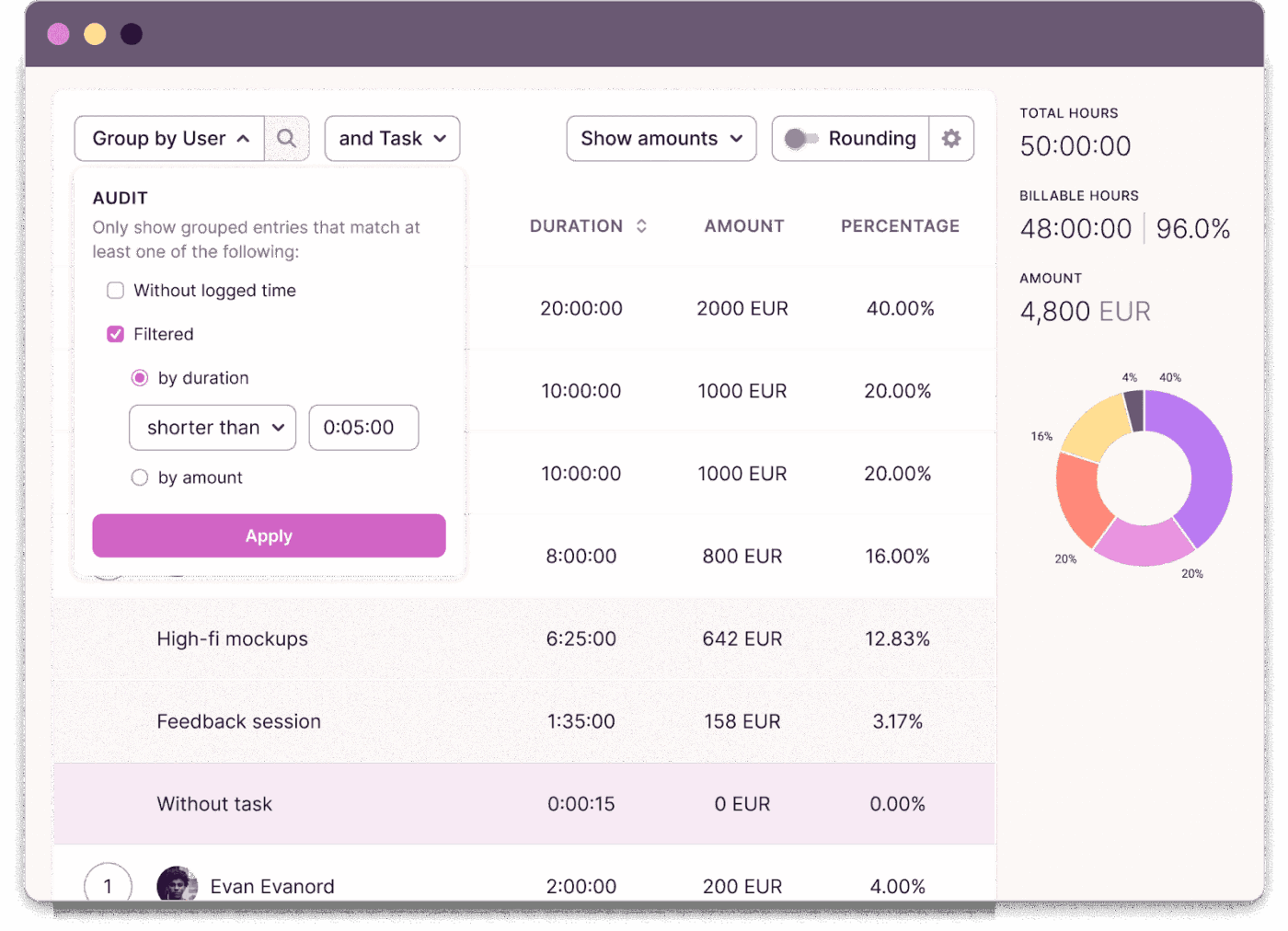
Sometimes you just need to know where your time goes without dealing with complicated project management overhead. Toggl Track delivers that through dead-simple time tracking that works across any device or platform.
This tool is designed to get out of your way—start a timer, assign it to a project, and stop when you’re done. No complicated workflows or mandatory fields that slow down your actual work. Teams love how the detailed reports reveal patterns in time usage that directly impact project profitability.
This Capterra review brings up an interesting angle:
Toggl Track is very user-friendly. It is simple to navigate. I like how easy it is to continue with a previous project or add a new one. The colour-coding also helps to breakdown the areas in which I am spending most of my time. I also really like the reports tab – it’s nice seeing how many hours have been worked and the percentage of my time spent on each project.
📚 Also Read: Top Toggl Alternatives for Time Tracking
🔍 Did You Know? Only 41% of organizations mostly or always deliver projects on budget. This highlights a significant gap that cost tracking can help close.
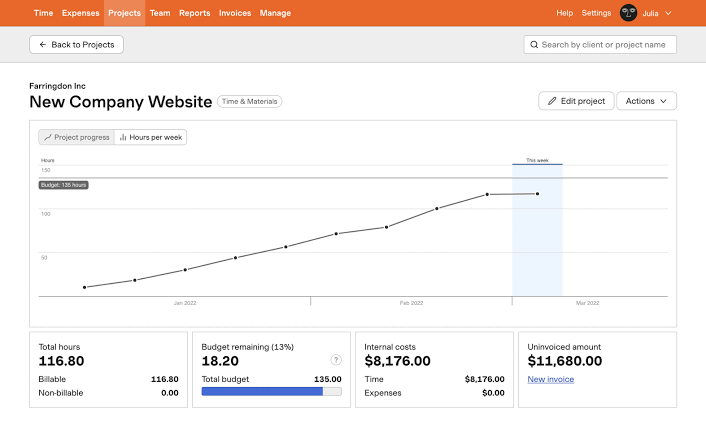
Project managers who need seamless integration between cost tracking and client billing find Harvest particularly valuable. The project budget software connects time tracking directly to invoicing processes, ensuring that all billable hours get captured and converted to revenue efficiently.
Finance teams appreciate how Harvest handles both internal cost tracking and external client billing in one system, reducing reconciliation work between different platforms. The detailed reporting shows which projects and clients generate the highest margins.
📚 Also Read: Harvest vs Toggl Comparison (Features, Pricing)
📊 Budget Blunder: In the early 2000s, a British government project to modernize healthcare records ballooned from £2 billion to £12 billion before being scrapped.
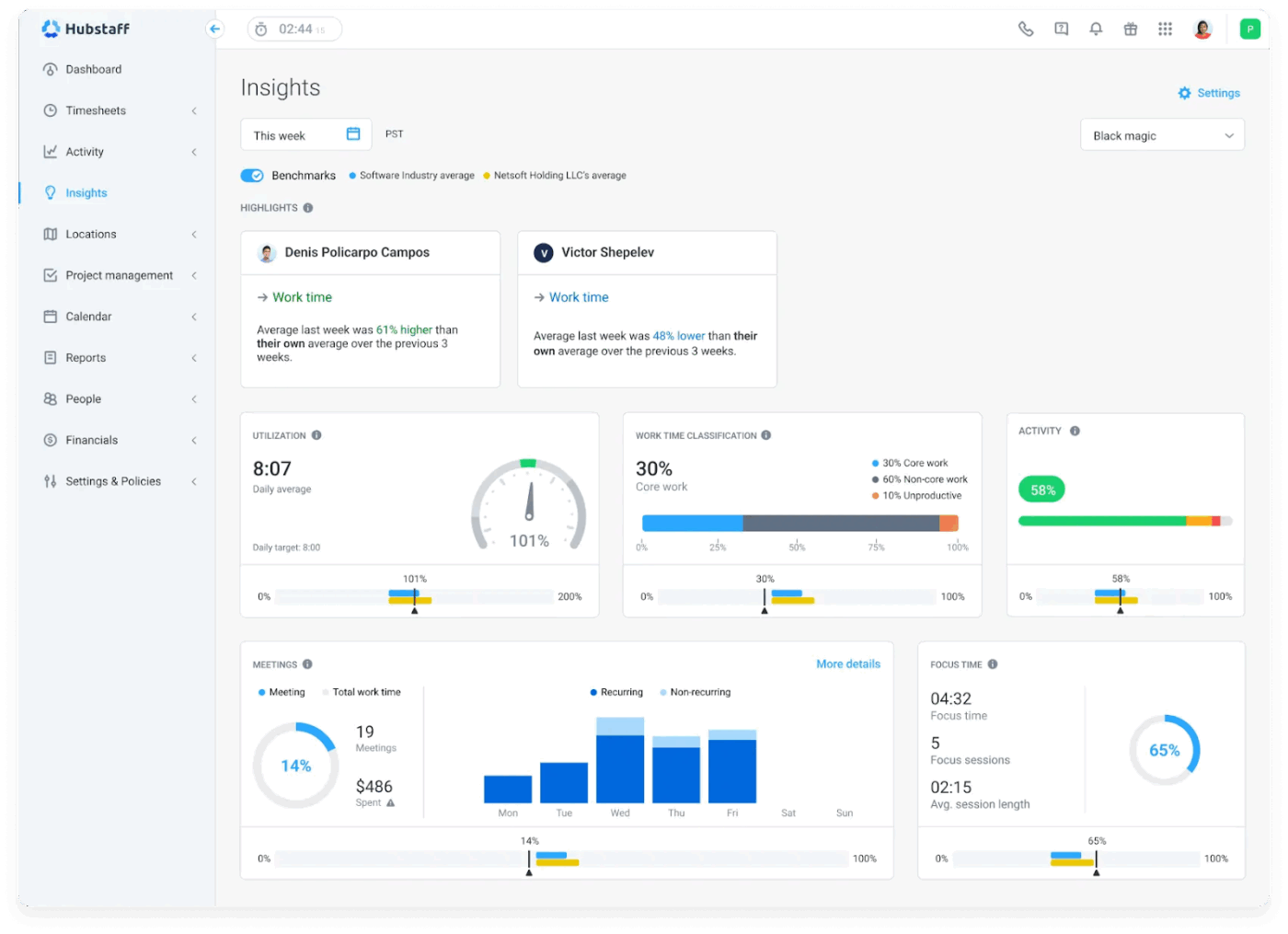
Operations leaders managing distributed teams need detailed visibility into how remote workers spend time and how that translates to project costs. Hubstaff provides this visibility through comprehensive activity monitoring.
It provides accountability without being overly invasive—team members can see their own productivity patterns while managers get the visibility they need for accurate project costing. The detailed reporting helps identify which remote work patterns lead to the most efficient project delivery.
One G2 review puts it this way:
Hubstaff offers a seamless way to track time and monitor team productivity. The ability to take periodic screenshots, track activity levels, and integrate with project management tools like Trello and Asana makes it extremely valuable for remote teams. […] At times, the activity tracking can feel overly intrusive, especially with frequent screenshots. The mobile app also tends to lag or crash on occasion, which can interrupt productivity on the go.
📚 Also Read: Best Hubstaff Alternatives and Competitors
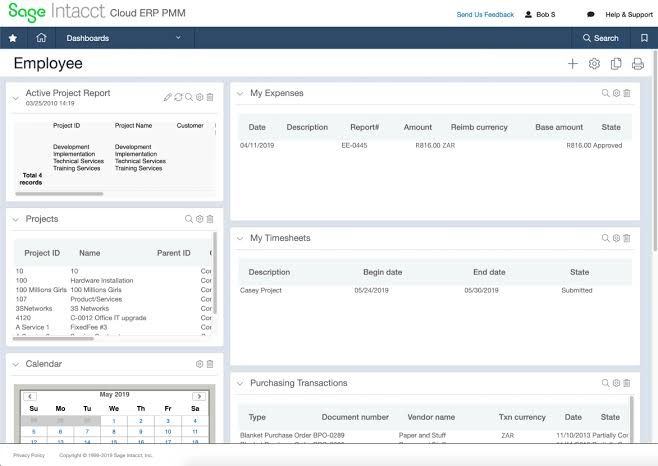
Enterprise organizations need project cost tracking that integrates seamlessly into existing financial systems and reporting structures. Sage Intacct delivers this through comprehensive financial management capabilities.
It excels at project accounting, allowing you to track and manage costs, billings, and revenue for each project with a high degree of precision. You can allocate direct and indirect costs, manage complex billing schedules, and recognize revenue according to accounting standards.
Finance teams can finally get accurate project profitability data that feeds directly into corporate financial statements and executive reporting without manual data manipulation.
💡 Pro Tip: Implement a quick spend veto process where any non-critical expense over a set threshold needs a second sign-off to prevent impulse purchases. You can build an AI Agent in ClickUp to automate this for you.
📊 Budget Blunder: California’s High-Speed Rail project was projected at $33 billion in 2008. By 2023, estimated costs had reached $128 billion with no clear completion date. This was largely blamed on inconsistent cost monitoring and scope shifts.
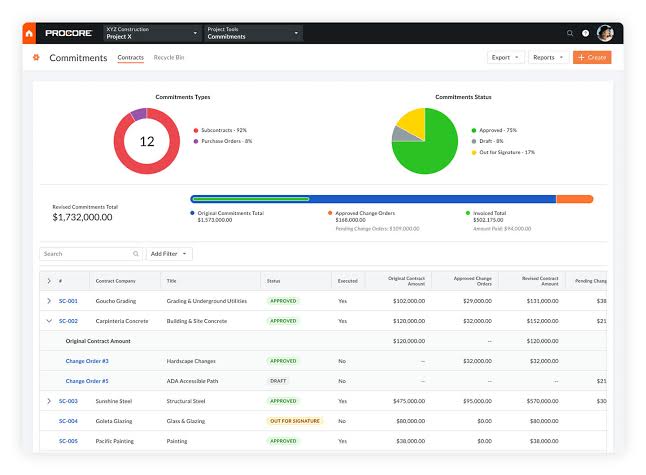
Construction involves unique project cost management challenges that generic tools simply can’t handle effectively. Procore addresses these specific needs through purpose-built features for construction project financial management.
It understands how construction costs flow and provides visibility at every stage, from pre-development to closeout. Teams can track labor, materials, equipment, and subcontractor costs while adhering to construction accounting principles and reporting requirements.
A Capterra review summed it up like this:
Procore is a well organized, efficient platform with all of the capabilities you could ever need to preform large scale industrial projects all the way down to a simple residential construction.
💡 Pro Tip: To simplify software cost reduction, track feature creep expenses separately. Try logging any add-on requests against the original scope, so you can negotiate or defer them to stay within budget.
Budget tracking often happens in a silo. Teams update spreadsheets, numbers get passed around, and project visibility suffers.
ClickUp closes that gap. This project cost tracking software helps teams monitor project budgets without losing momentum on tasks or timelines.
With task management, reports, documents, and communication in one connected platform, budgets stay connected to the work. Naturally, decisions happen faster, and projects stay on track.
Sign up for ClickUp today! ✅

© 2026 ClickUp

There’s an easier way. Try a free AI Agent in ClickUp that actually does the work for you—set up in minutes, save hours every week.