


Sorry, there were no results found for “”
Sorry, there were no results found for “”
Sorry, there were no results found for “”
Your team is working hard, but productivity feels stuck in quicksand. You’re hiring, training, and replacing employees faster than you can say revolving door!
It’s no surprise, considering employee turnover rates have shot up 20% post-pandemic.
That’s where Multifactor Productivity (MFP) can be your ally. Unlike basic productivity measures that only look at output per hour, MFP digs deeper.
It tells you how well your business is turning multiple inputs, like labor, capital, and technology, into tangible results.
So, if you’re tired of working harder without seeing better results, it’s time to crack the MFP code. Let us break it down for you. Plus, we’ve got a bonus resource management tool to help you maximize efficiency!
Multifactor Productivity is a measure of economic performance that compares the amount of output to the combined inputs used to produce it.
These inputs can include labor, capital, energy, materials, and even purchased services—giving a more complete view of efficiency.
Unlike calculating labor productivity, which only looks at output per worker or per hour, MFP considers a lot more. It considers how different resources, including labor input, work together to drive results.
A company might produce more, but is it due to better equipment, smarter processes, or longer hours? MFP helps answer that.
By tracking all the moving parts, MFP offers a clearer picture of what’s genuinely driving productivity—and what’s just adding noise.
Measuring MFP isn’t just stats for economists and nerds—it’s a game plan for economic growth. Here’s why it matters:
🧠 Fun Fact: While the term Multifactor Productivity wasn’t around during the Industrial Revolution, its principles were already in play. When steam engines replaced manual labor in factories, output soared—without adding more workers. That’s an early glimpse of how smarter tech and better processes can boost productivity—even more than hiring extra hands!
Convinced about the advantages of calculating MFP? It’s now time to look at what actually moves the needle on the metric. Since MFP measures how efficiently inputs turn into output, anything that impacts those inputs or how they interact can change the final score.
Some key factors include:
Each element in this list affects the metrics that go into MFP calculations, making them crucial levers for improvement.
Businesses and economists rely on a mix of key metrics, smart methods, and a few detective skills to understand what drives efficiency.
At its core, MFP is calculated using:
Multifactor Productivity = Total Output /Combined Inputs (Unit labor costs + Material + Energy + Capital + Miscellaneous)
But how do companies actually track it?
Businesses first need to gather these productivity metrics to measure MFP:
Let’s say a manufacturing company produces 10,000 smartphones in a month. To make them, they use:
Total combined inputs = $155,000 + 500 worker hours = 155,500
Now, calculating the initial MFP:
MFP = 10,000/155,500 ≈ 0.0643
After improving automation, the company produces 12,000 smartphones using the same resources. The new MFP is:
MFP = 12,000/155,500 ≈ 0.0772
Since MFP increased from 0.0643 to 0.0772, this means the company is producing more without increasing labor or costs—clear proof of better efficiency!
Wouldn’t it be great if you could know why your business is producing more than you were before? That’s where these different MFP tracking methods come in:
Mixing these methods gives a much clearer picture of what’s really driving productivity. But measuring MFP isn’t always smooth sailing.
Measuring MFP isn’t always a walk in the park. Some inputs, like labor hours or material costs, are easy to track. But what about innovation or employee skills? You can’t exactly put a number on creativity or experience.
Then, there are external curveballs—market crashes, supply chain issues, or even sudden technological progress that raise productivity numbers.
And let’s not forget the waiting time. A newly purchased software or automation might supercharge efficiency, but the impact isn’t always immediate.
👀 Did You Know? Disengaged employees cost the US economy a staggering $1.9 trillion in lost productivity yearly. If factors like morale can drain efficiency at that scale, imagine how tricky it is to measure everything that affects MFP!
📚 Also Read: How to Measure Productivity in the Workplace
More hours don’t always mean more results. Actual efficiency comes from more innovative systems, skilled teams, and better resource management. Here’s how businesses can get more done with what they have:
When employees are stuck updating spreadsheets, chasing approvals, or managing tasks across a dozen apps, productivity tanks.
Here’s where tools like ClickUp, the everything app for work, can save the day.
📮ClickUp Insight: Context-switching is silently eating away at your team’s productivity. Our research shows that 42% of disruptions at work come from juggling platforms, managing emails, and jumping between meetings. What if you could eliminate these costly interruptions? ClickUp unites your workflows (and chat) under a single, streamlined platform. Launch and manage your tasks from across chat, docs, whiteboards, and more—while AI-powered features keep the context connected, searchable, and manageable!
With task management, real-time collaboration, and workflow automation, businesses can keep projects moving without wasting effort on repetitive admin work. Let’s explore how:
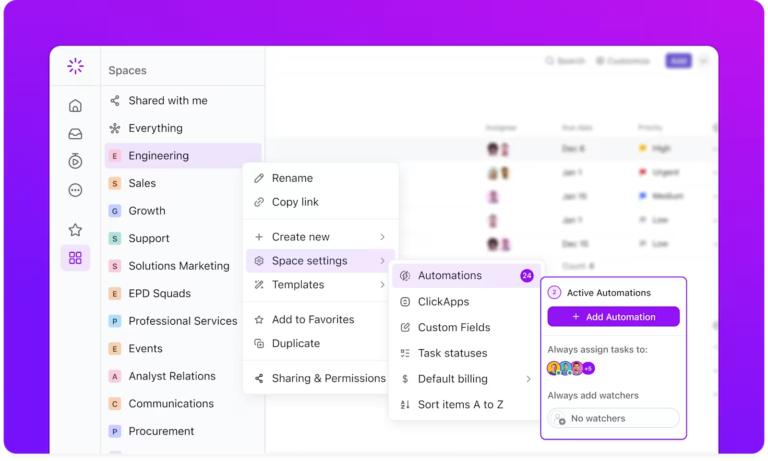
Routine tasks shouldn’t consume your team’s time. ClickUp Automations handle the busywork so that you can focus on your core work. Whether assigning tasks, updating statuses, or sending emails, ClickUp does it all—automatically.
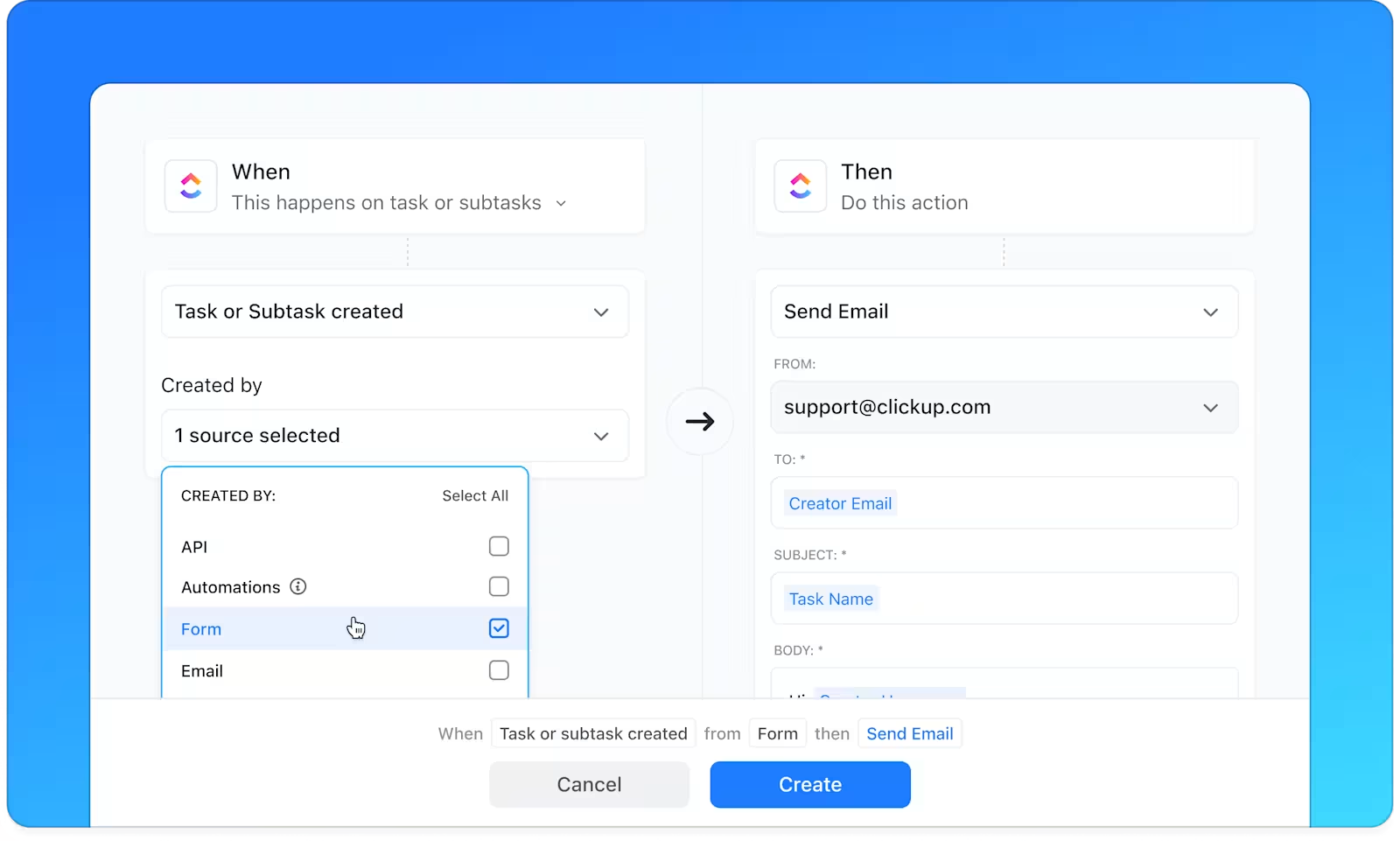
Here’s what you can do with ClickUp automations:
👀 Did You Know? 7 out of 10 enterprises have already automated at least one key process, and 4 out of 10 even have dedicated automation roles.
📚 Also Read: Business Process Automation Examples and Templates
Tracking productivity is one thing; understanding it in real time is another. ClickUp Dashboards turn your work into a visual command center, letting you track tasks, deadlines, workloads, and key metrics at a glance.
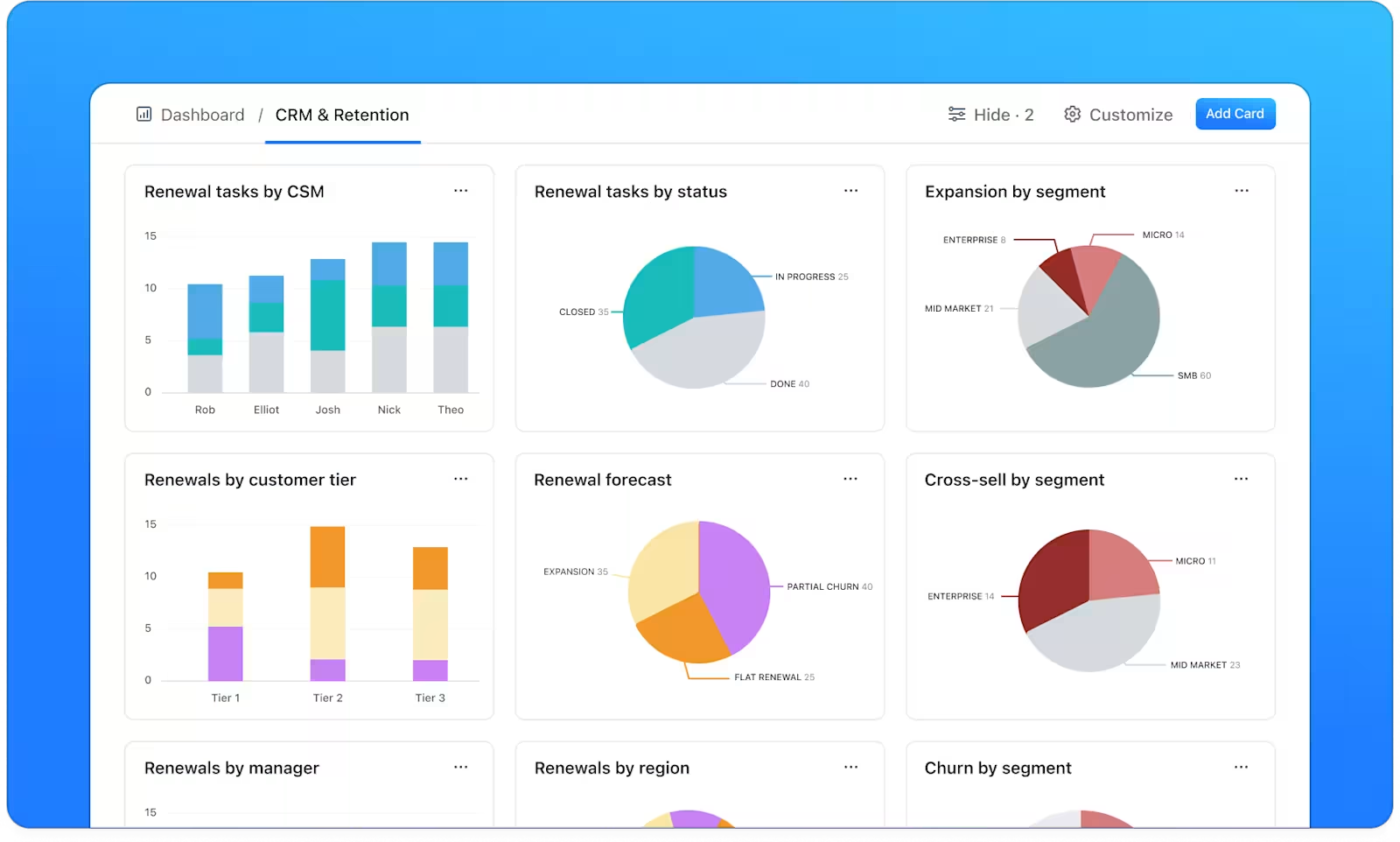
Whether managing a team, running sprints, or tracking billable hours, Dashboards make it easy to stay on top of everything without the spreadsheet chaos. Plus, they make daily productivity review processes a breeze!
From sales overviews and marketing campaigns to personal productivity and CRM insights, ClickUp lets you customize Dashboards to fit your workflow.
💡Pro Tip: Need instant answers? Use AI Insights to scan every Dashboard in your ClickUp workspace and deliver key takeaways in seconds. This way, you can focus on decisions, not digging through data!
Skilled employees are just as crucial as top-tier technology. A company can have the best tools, but without proper training, they won’t be used to their full potential.
To keep productivity growing, businesses need:
Beyond formal training, fostering a culture of continuous learning is key.
Encouraging employees to explore new skills, experiment with better working methods, and share knowledge helps businesses increase productivity without constantly hiring more people.
More resources don’t always mean more output. Sometimes, it’s about using what you have more effectively. Businesses often waste money on underutilized tools, misallocated budgets, or inefficient workflows without realizing it.
ClickUp Brain can help you make smart decisions using the right insights. It connects tasks, docs, and people in one AI-powered workspace. In this way, teams spend less time searching and more time doing.
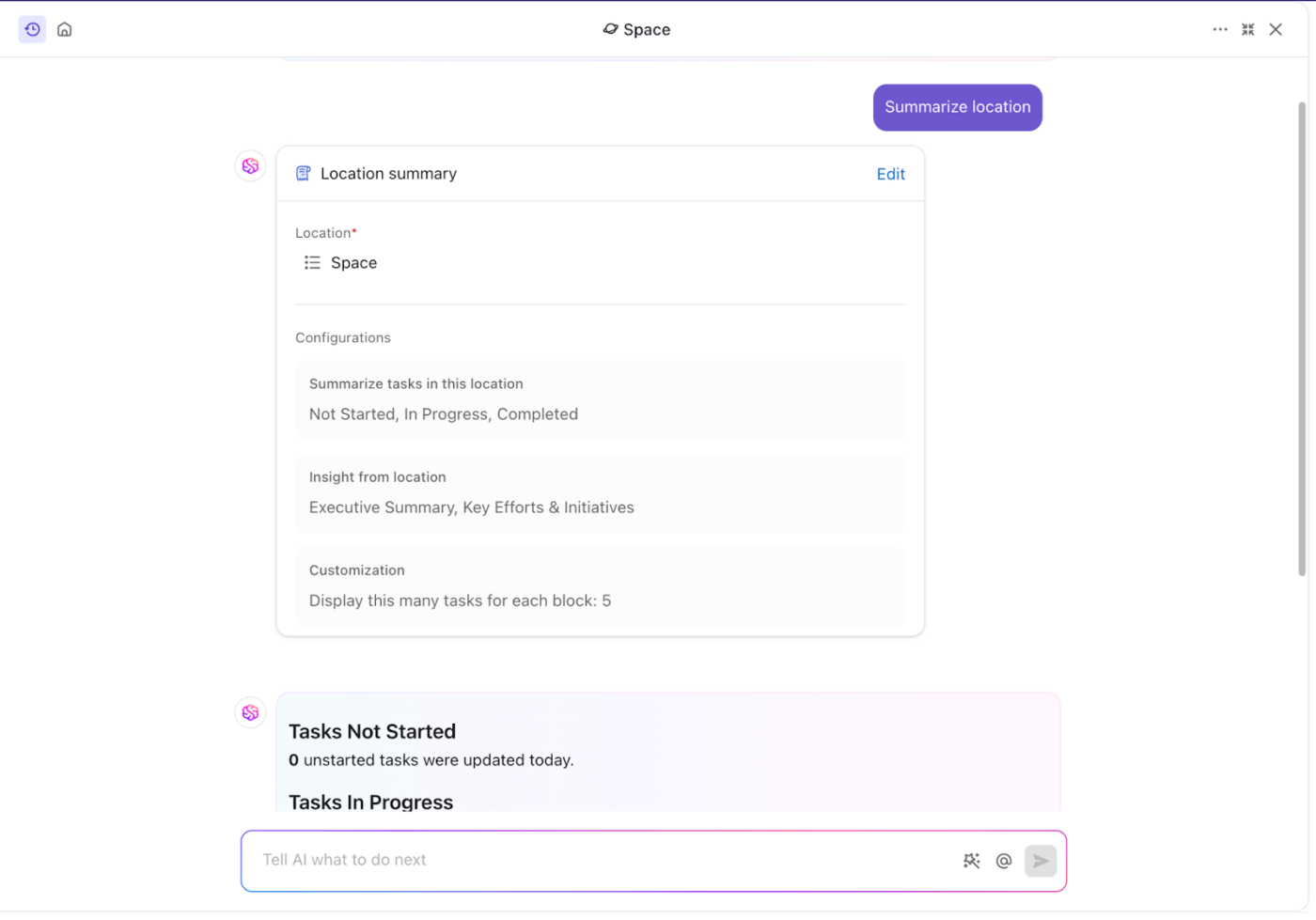
Here’s how ClickUp Brain helps you work smarter:
🧠 Fun Fact: Studies show that AI can boost productivity by up to 40%, making it a must-have for both personal and professional efficiency!
Traditional project management can be rigid and slow. Lean and Agile methodologies focus on flexibility, continuous improvement, and eliminating inefficiencies. Thus, they help teams move faster while maintaining quality.
The ClickUp Project Management suite is designed for Agile and Lean teams. It makes it easy to plan, track, and optimize workflows, all in one connected platform—no more jumping between tools or struggling with outdated spreadsheets.
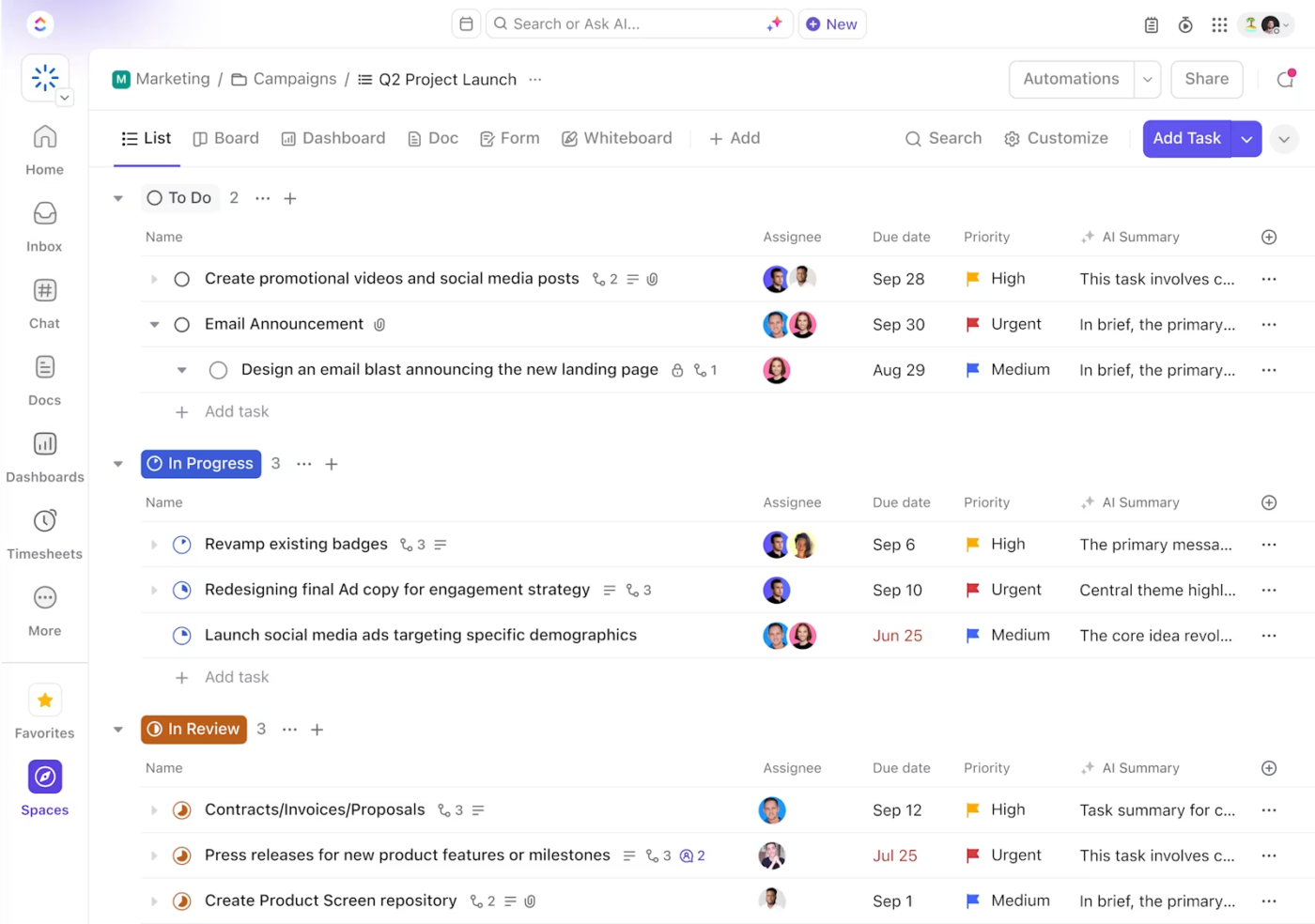
Here’s how ClickUp simplifies project management:
Disconnected tools slow teams down. ClickUp brings everything into one place, so Agile and Lean teams can focus on delivering their best work faster.
Transparency is the backbone of a productive team. When information flows freely, decisions happen faster, and work moves smoother. It’s not just us; 70% of employees believe better collaboration could save time and boost productivity.
The right tools don’t just connect collaboration in the workplace; they keep teams in sync, eliminating the chaos of endless email chains and scattered messages.
Messaging and work shouldn’t live in separate apps. ClickUp Chat combines conversations with tasks, docs, and projects, so nothing gets lost in translation. Whether you’re assigning tasks, sharing updates, or syncing priorities, everything stays connected in one place.
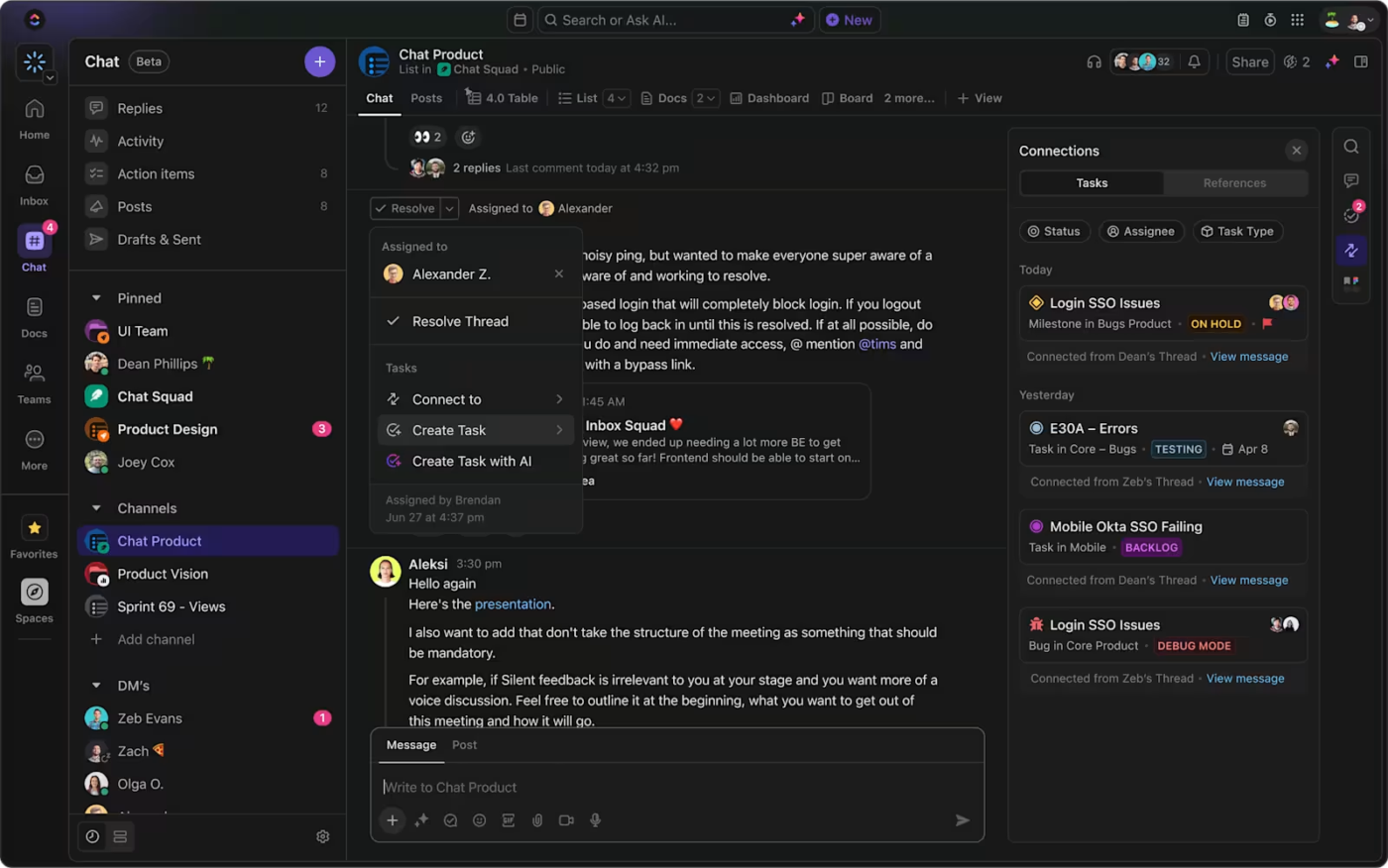
Here’s how you can keep your team moving with ClickUp Chat:
Here’s what our customer, Charles F., shared about his experience with ClickUp:
ClickUp allows us to house all our projects in one place with ease. With each project, there can be issues or hurdles the team has to overcome, but ClickUp allows us to communicate quickly to those who we need to reach. Automations have allowed us to take a very outdated and time-consuming process to make it flow quicker and more accurately.
Working smarter—and not longer—is the most foolproof way to boost multifactor productivity. Businesses can achieve more with the same effort by optimizing resources, embracing AI, simplifying workflows, and fostering collaboration.
The right tools make all the difference, and that’s where ClickUp blows the competition out of the water.
From automation to AI-powered insights, ClickUp helps teams cut out inefficiencies and focus on high-impact work. No more juggling multiple platforms or wasting time on repetitive tasks, just a smarter way to increase company productivity.
Ready to see MFP in action and transform the way your team works? Sign up for ClickUp today!

Sudarshan Somanathan
Max 22min read
Sudarshan Somanathan
Max 23min read

Manasi Nair
Max 28min read

© 2026 ClickUp




