






Still downloading templates?
There’s an easier way. Try a free AI Agent in ClickUp that actually does the work for you—set up in minutes, save hours every week.
Sorry, there were no results found for “”
Sorry, there were no results found for “”
Sorry, there were no results found for “”
You might think your brand is searchable everywhere…until you ask ChatGPT and your name never shows up. A wake-up call for you as a marketer.
As generative AI search engines like ChatGPT, Perplexity, and Gemini become the first place people turn for answers, traditional SEO may no longer enough.
Your brand also needs to show up in AI responses to user prompts. Generative engine optimization (GEO) tools will help you understand how large language models (LLMs) interpret, cite, and surface your content.
But not all GEO tools do the same thing. Some track where and how often you’re cited across AI platforms. Others help structure your content so AI can interpret it more accurately.
In this post, we break down 13 GEO tools that are designed to decode how AI search engines process your content.
Are you looking for a quick way to find the best Generative Engine Optimization tools, comparing features, pricing, and ideal uses? This table serves as your go-to reference.
| Tool name | Key features | Best for | Pricing* |
| Peec AI | Multi‑engine prompt tracking, competitor benchmarks, and platform-agnostic visibility analytics | Mid-sized teams wanting affordable GEO analytics | Custom pricing |
| BrightEdge | Enterprise-grade SEO and AI intent insights, on-page and content optimization, workflow dashboards | Large enterprises need scalable SEO intelligence | Custom pricing |
| Conductor | Actionable SEO and AI visibility dashboards, content health monitoring, enterprise integrations | Agencies and big brands managing complex SEO & GEO | Custom pricing |
| Otterly.AI | Brand mention tracking across ChatGPT, Gemini, Perplexity, sentiment, and keyword prompts | Brands prioritizing brand and mention visibility | Starts at $29/month |
| Semrush | ChatGPT/Perplexity ranking tracking, prompts sentiment, SEO, and GEO toolkit integration | SEO teams expanding into AI-search visibility | Plan starts at $199/month per user |
| Scrunch AI | Prompt-level monitoring, automated CSV exports, basic scoring, and brand tracking | Small-to-mid marketing teams focused on AI branding | Plans start at $300/month |
| AthenaHQ | GEO-focused analytics, sentiment, competitor tracking, prompt volume control, and action center | Mid-large brands scaling AI visibility strategy | Plan starts at $295+/month |
| Rankscale | Credit-based prompt tracking, AI crawler insights, and unknown competitor detection | Agencies or brands needing highly granular GEO data | Plan starts at $20/month |
| Mangools AI Search Grader | AI Search Score across GPT-4o, Gemini, DeepSeek, Perplexity; basic prompt insight | Small teams exploring entry-level GEO awareness | Free trial, Plan starts at $24.5/month |
| Profound | Conversation Explorer, sentiment mapping, crawler auditing, and BI integrations | Enterprise brands needing deep GEO analytics | Plan starts at $99/month |
| Surfer SEO | Real-time content editor, SERP Analyzer, audits, topic planner, JSON‑LD generation | Content teams blending SEO and GEO-friendly writing | Plan starts at $99/month per user |
| MarketMuse | Topic modeling, content inventory scoring, brief generation, gap explorer, and Connect linking feature | SEO/content teams managing large editorial pipelines | Free plan available, Custom pricing |
| HubSpot AI Search Grader | Instant brand sentiment & share of voice across GPT‑4o, Perplexity, Gemini results | Brands wanting a quick AI visibility snapshot | Completely free with no login or account required |
Our editorial team follows a transparent, research-backed, and vendor-neutral process, so you can trust that our recommendations are based on real product value.
Here’s a detailed rundown of how we review software at ClickUp.
Similar to traditional search engines, AI search engines have several moving parts. The best tools help with each layer of the process. Here’s what to prioritize.
🧠 Fact Check: Unlike traditional SEO results, AI-generated responses offer faster context and clearer answers. In fact, 41% of users now turn to tools like ChatGPT for more direct, in-depth information—and 1 in 3 rely on generative AI when searching for answers online.
Whether you’re a content marketer, SEO lead, or startup founder, these GEO tools give you the insights and prompt-level data that traditional search engine optimization platforms miss.
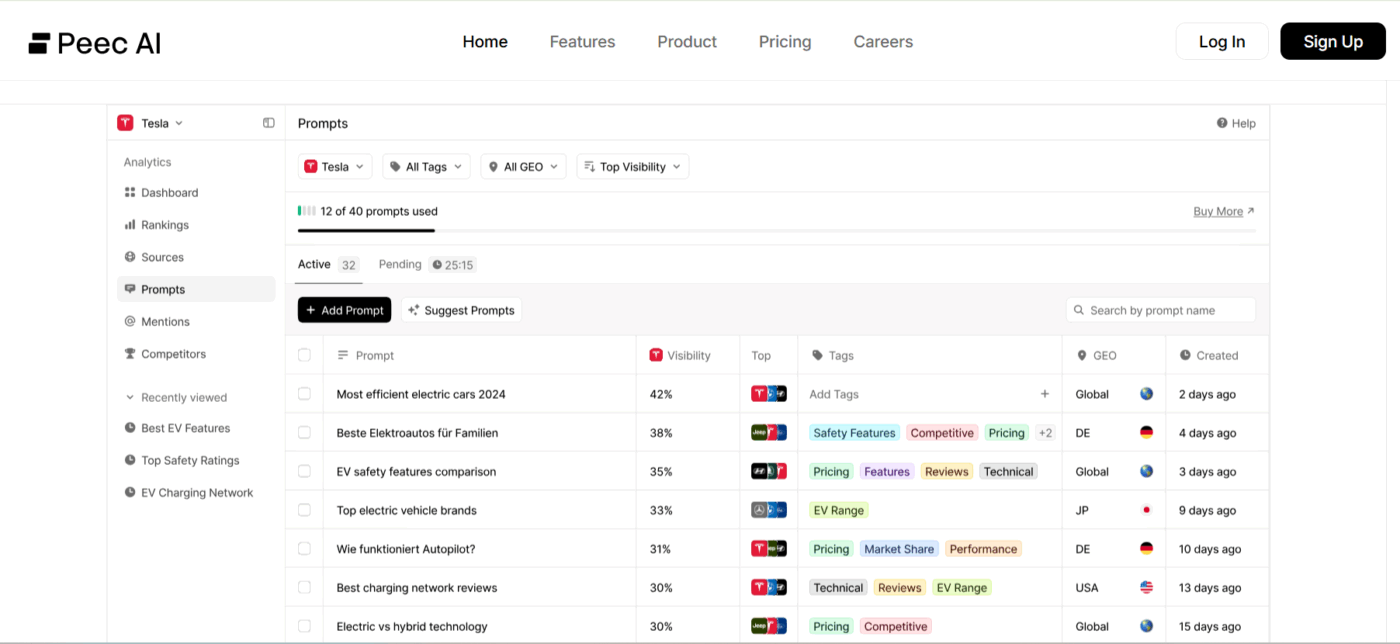
Peec AI offers AI search analytics for marketing teams looking to understand and improve their visibility in generative search platforms. With prompt-level analytics, you don’t need to guess whether your content is being cited for user queries.
Peec shows exactly when, where, and how often your brand is mentioned in AI-generated answers. You get a high-level view of your brand’s presence in response to real user prompts.
You can monitor competitors, track movement over time, and export insights to refine your GEO strategy. Additionally, to plug your results directly into your analytics platform, you can either download all visibility and prompt data through CSV or API exports.
Here’s a G2 review:
It’s easy to use, setup is extremely fast, you get immediate insights and you finally get some data to better understand where and how your brand is mentioned in LLMs. What I love is that I can also see the URLs that were quoted. Super helpful to understand how to optimize for this prompt.
👀 Did You Know? Nearly 80% of users now rely on generative summaries (zero click results) in at least 40% of their searches. Upending traditional search behavior, this shift has resulted in a 15-25% reduction in organic web traffic.
🎥 Watch: How to create a marketing playbook that actually works?
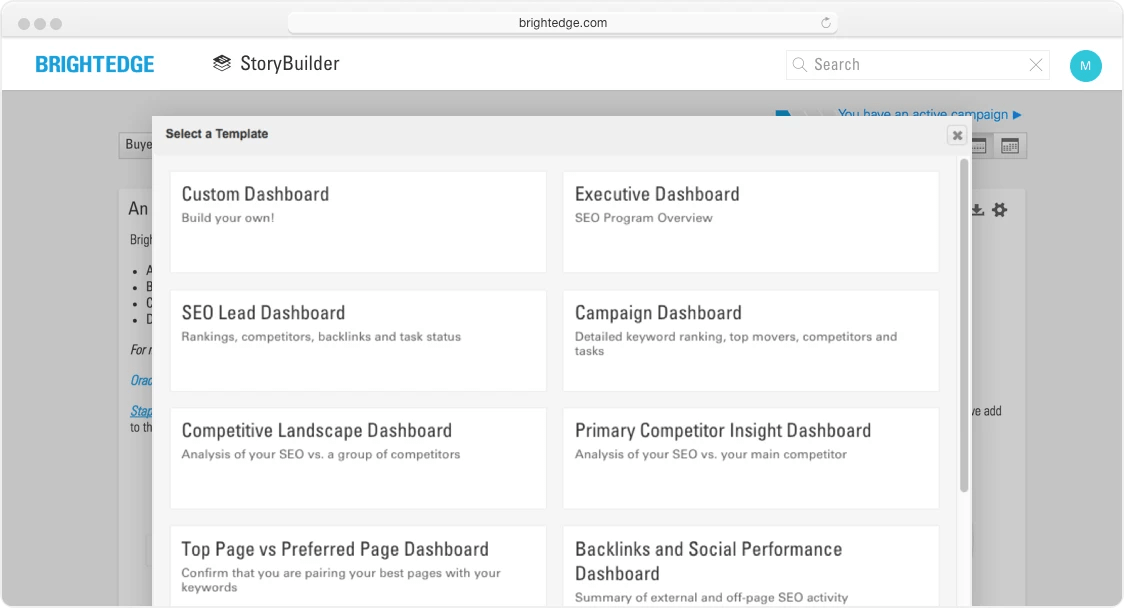
BrightEdge is an enterprise-grade SEO and content performance platform designed for teams managing multi-site digital ecosystems. The traditional SEO tools cover the entire lifecycle—from keyword discovery to page optimization, rank tracking, and performance reporting.
At the core of its GEO capabilities is BrightEdge Insights, an AI-powered engine that analyzes billions of web and search data points to uncover high-impact content opportunities. It surfaces real-time trends, alerts, and optimization actions. These insights help you respond faster to changes in AI-driven search behavior.
BrightEdge also features Copilot for AI-assisted metadata generation and DataMind for pattern recognition across search intent and engagement. With AI Visibility Tracking, you can monitor your brand presence in Google’s AI-driven search engine.
Here’s a G2 review:
BrightEdge is a powerful SEO platform that offers in-depth insights and data-driven recommendations to boost online visibility.
📮 ClickUp Insight: We recently discovered that about 33% of knowledge workers message 1 to 3 people daily to get the context they need. But what if you had all the information documented and readily available?
With ClickUp Brain’s AI Knowledge Manager by your side, context switching becomes a thing of the past. Simply ask the question right from your workspace, and
ClickUp Brain will pull up the information from your workspace and/or connected third-party apps!
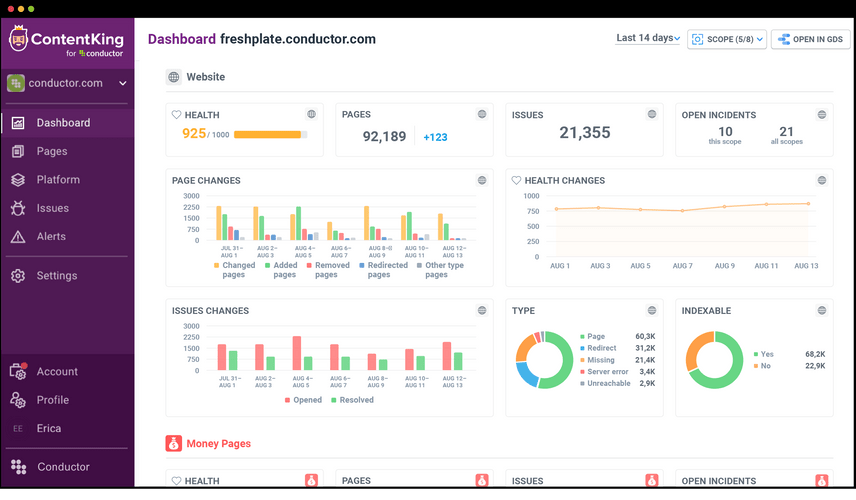
Conductor started out as a website optimization and intelligence platform. Now, with Conductor AI, the platform has introduced intelligent automation into its core workflows, offering a more responsive and scalable approach to content and search strategy.
The AI content creation tool turbocharges your productivity by generating keyword-driven content briefs, automating on-page optimization tasks, and surfacing emerging trends based on live search intent data.
Conductor also integrates with tools like DeepCrawl and Adobe, enabling technical SEO, content workflows, and reporting in one ecosystem.
Conductor doesn’t offer deep prompt-level tracking or detailed visibility across AI engines like ChatGPT or Perplexity. But it helps teams refine clarity, structure, and relevance—qualities AI models and search engine results pages consistently prioritize when choosing what to surface in answers.
Here’s a G2 review:
The tool provides detailed information on optimization, I like its clear and intuitive interface. Its analysis results are fast and comprehensive, it’s a really good tool for monitoring changes. This has allowed me to better understand how websites perform.
⭐️ Bonus: Try ClickUp BrainGPT to unlock the next level of AI-powered GEO
ClickUp BrainGPT leverages advanced generative AI to supercharge every stage of your SEO workflow, from research and planning to content creation and optimization.
What makes BrainGPT a game-changer for SEO and GEO?
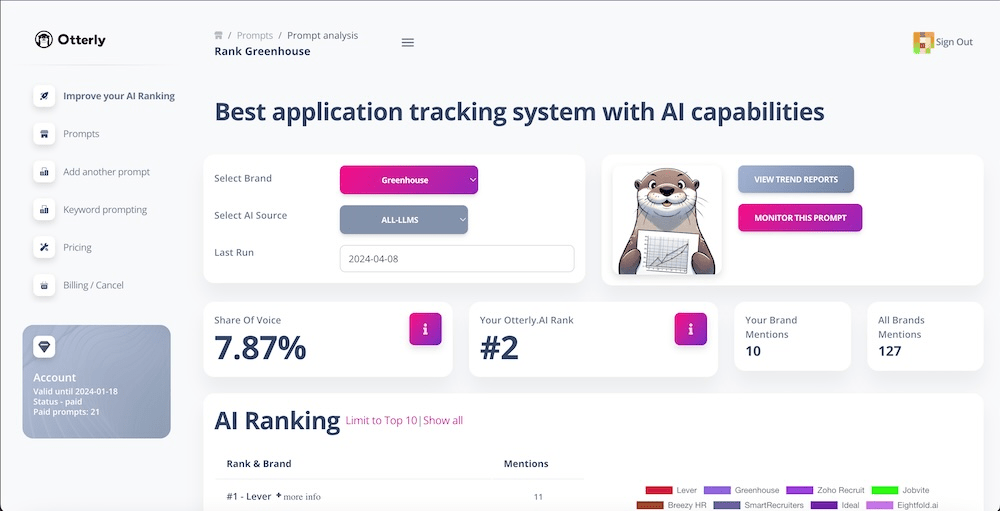
The AI search engine optimization tool Otterly AI helps you stay relevant for new search platforms as it is engineered for prompt-level intelligence.
Brand Visibility Index is a proprietary metric that scores your presence across leading AI engines like ChatGPT, Perplexity, Gemini, and Claude. Otterly also provides Link Citations Analysis to show whether you’re being directly credited or just paraphrased, and how often those links drive visibility.
You also get Domain Ranking and Analytics that reveal how your site stacks up against competitors in AI-driven responses. Using this data, you can benchmark performance by prompt, topic, and source credibility. All this is updated regularly through a clean, intuitive dashboard to help you guide your marketing roadmap.
Here’s a G2 review:
I really like how intuitive and focused the tool is—it delivers actionable suggestions quickly and presents them in a user-friendly way.
🧠 Fun fact: A Boston Dynamics humanoid called Atlas took an unexpected dive off the stage during a live demo after tripping on a spotlight. The audience reportedly gave a collective ‘oof’—and Atlas stumbled off rather than elegantly strolling back to center stage.
📚 Read More: SEO Goals & Objectives to Target
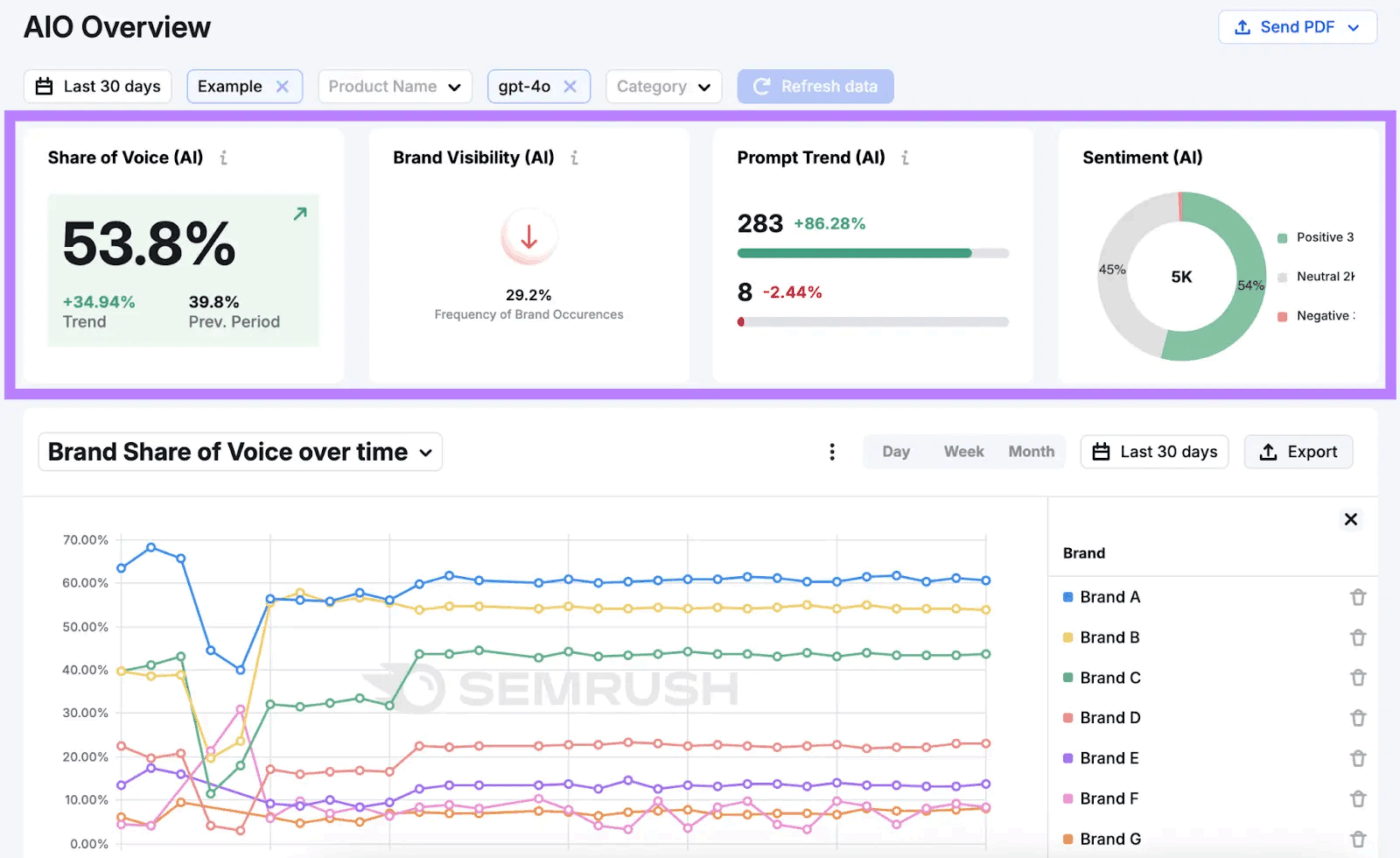
Founded in 2008 as a keyword and competitor research tool, Semrush is the go-to platform for SEO professionals. Originally focused on SERP visibility and backlink tracking, it has expanded into a full-stack content marketing suite.
At the enterprise level, Semrush Enterprise AIO enables brand-level metrics for AI discovery. Its AI Overview tracking reveals exactly when your content is surfaced in Google’s summary blocks, which competitors are cited, and what search intent triggers inclusion.
If your marketing team is already using SEMrush’s SEO and keyword toolkits, GEO functionality adds tracking of AI-generated presence.
Here’s a Capterra review:
Overall, the experience with Semrush has been positive due to its great depth of analytics and integrations available. I was able to get a very thorough look at the rankings, serps, and keyword optimization for each page and my competitors.
📚 Read More: Best Semrush Alternatives to Elevate Your SEO
As a website operator, being findable on Google has always mattered—but today, being citable by AI assistants is just as important. AI search is now one of the fastest-growing consumer use cases in history, and the users who click through from ChatGPT or Perplexity answers tend to be more qualified and more likely to convert.
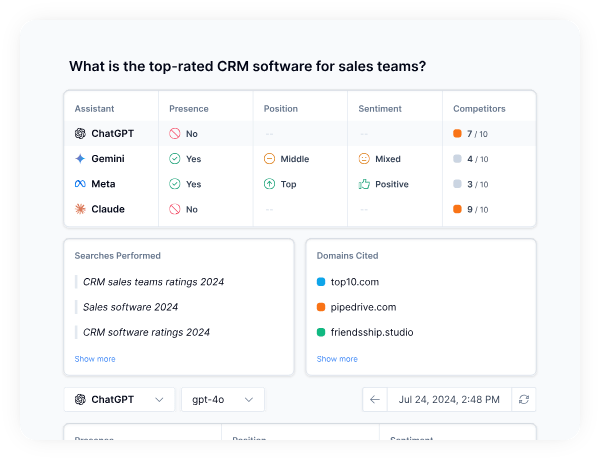
This is a critical issue in using AI for content marketing that Scrunch AI is addressing. With prompt-level data from ChatGPT, you can access sentiment, ranking position, and frequency of citations. These insights help you quantify the AI share-of-voice and refine content strategy around what AI-driven search engines surface.
A unique feature in itself, Scrunch’s Agent Experience Platform (AXP) creates a parallel AI-ready version of your site. It is served invisibly to AI agents, optimized for LLMs, and mapped to your sources of truth.
Here’s a G2 review:
Scrunch is consistently releasing new features that other tools often can’t compare to. They base these new releases around client requests – if you have Scrunch and want a certain feature, it’s likely they can make it happen. Beats similar generative engine analyzers/trackers.
🧠 Did You Know? Ranking on Google’s first page strongly correlates (around 0.65) with being mentioned by LLMs, while ranking well on Bing also matters, though to a slightly lesser extent.
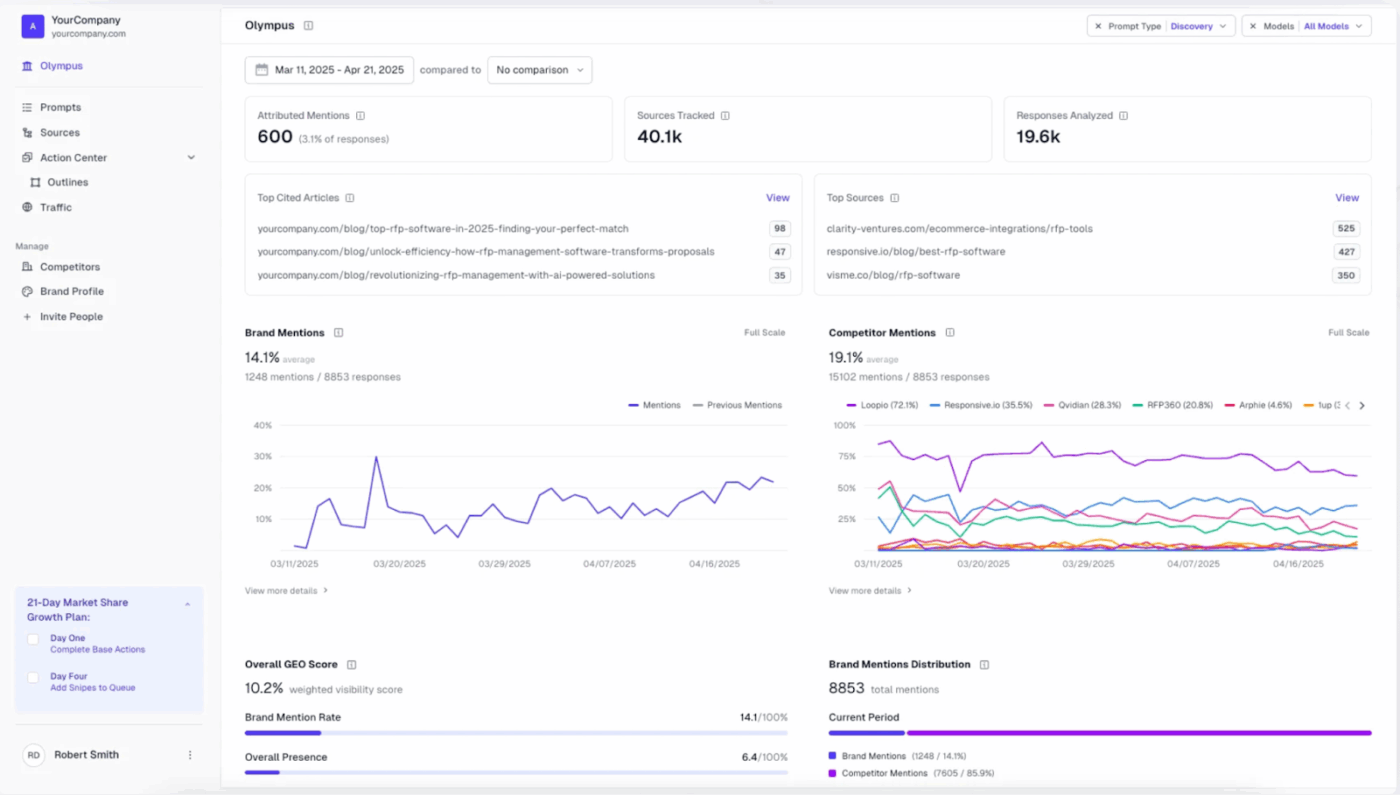
Built by former Google engineers, AthenaHQ focuses on prompt intelligence at scale. It tracks brand mentions, sentiment, prompt data, and content gaps across platforms. Plus, it offers a unified dashboard that merges analytics with actionable insights.
What sets Athena apart is its Prompt Volume dashboard and Monitoring tools, which break down exactly where you’re mentioned, how often, and how that’s changing over time.
Its Action Center then recommends specific fixes like targeting neglected topics, adjusting page structure, or responding to competitor gains.
Here’s a G2 review:
The dashboards are intuitive, and it was incredibly easy to integrate into our existing systems.
👀 Did You Know? In prompt engineering, token optimization isn’t just about staying within model limits—it’s about increasing clarity and precision. Techniques like leading with instructions, separating context from the task, and removing filler language help AI models generate more focused and cost-effective responses.
⚡ Template Archive: Tired of blank-page syndrome when using AI tools? AI prompt templates eliminate guesswork and help you get better, faster results from ChatGPT, Claude, and other LLMs—whether you’re writing content, planning a strategy, or running an analysis.
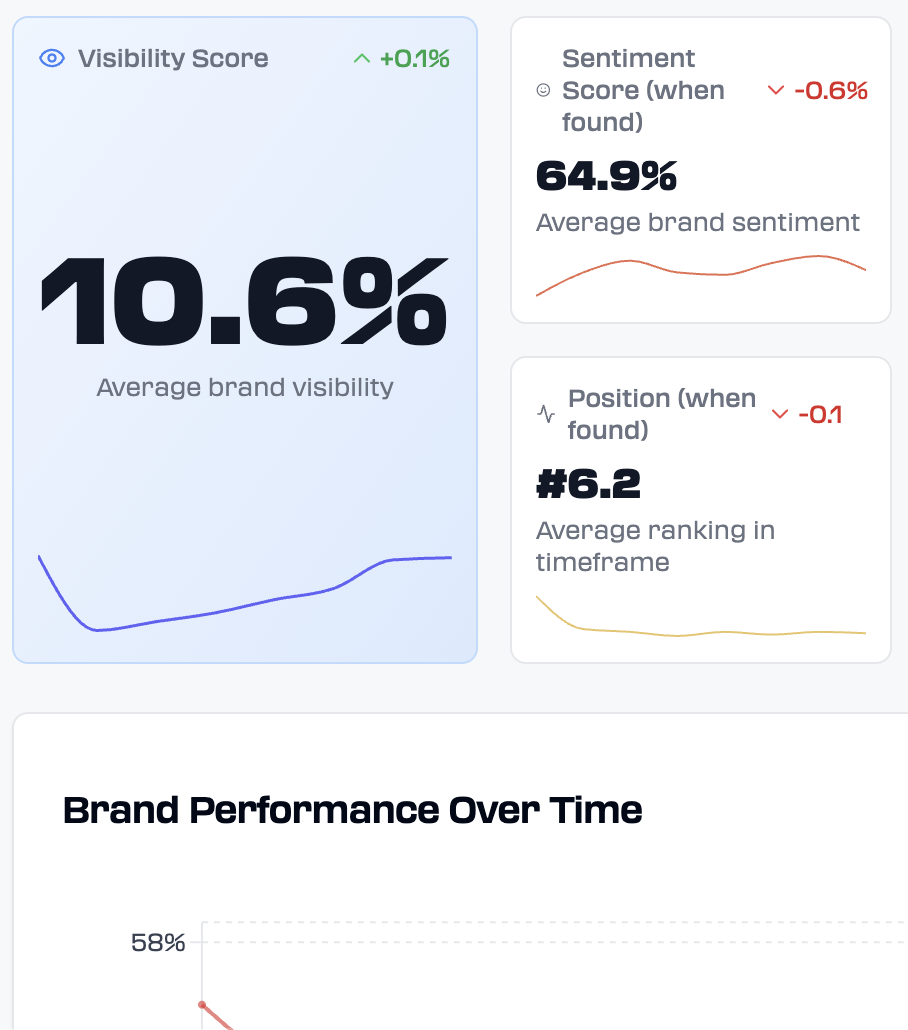
RankScale is built for agencies and consultants managing multiple clients’ AI search performance. Unlike one-brand trackers, it supports multi-brand visibility tracking within a single account, making it useful for marketing and SEO agencies managing multiple client sites.
As an SEO agency software, Rankscale tracks your presence across ChatGPT, Perplexity, Gemini, Claude, DeepSeek, xAI Grok, and Microsoft Copilot. You get prompt-level data on when, where, and how your brand (or your client’s) appears in AI-generated results.
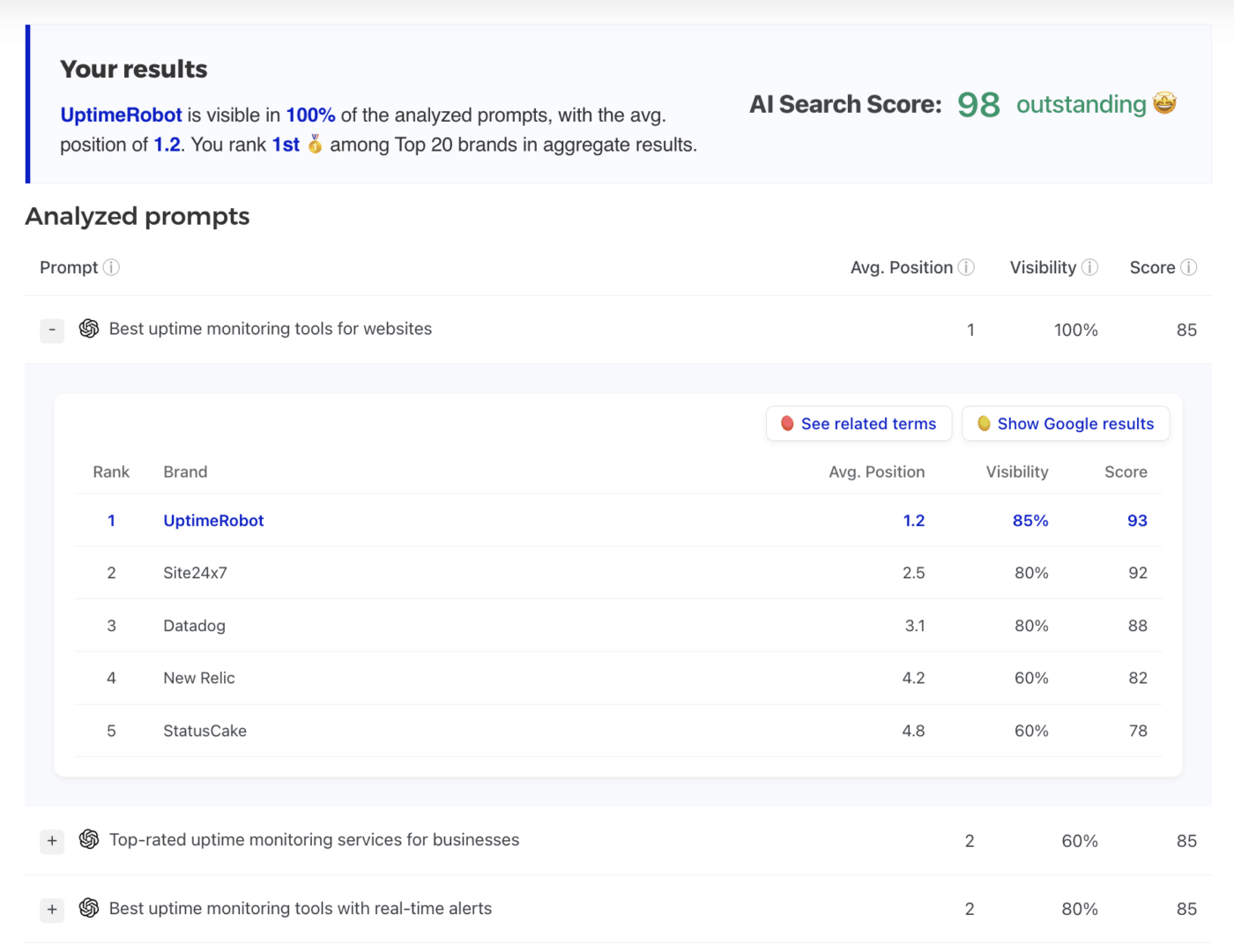
The free AI Search Visibility and Ranking Analysis feature crawls your website, uses AI to generate prompts your audience might ask, and runs those queries through live AI engines. You get an instant snapshot of how visible and how replaceable your brand is in the AI discovery layer.
📌 What You Should Also Know: Tracking AI visibility is only half the battle—executing on it requires structured workflows. Whether you’re updating dozens of pages for prompt-level improvements or coordinating cross-functional GEO efforts, you need to have a system for SEO project management is essential.
From assigning fixes to monitoring implementation timelines, this guide to SEO project management shows how to turn visibility insights into action when you’re managing multiple stakeholders, writers, or technical tasks.
Why does AI search visibility matter even if you’re a small brand or solo marketer? Because AI assistants like ChatGPT and Perplexity are shaping how people discover content. Most independent businesses have no idea whether they’re being mentioned or overlooked.
Mangools AI Search Grader offers a simple, no-login-needed way to answer that question. This free tool scans your site, analyzes your content with AI, and simulates real AI search behavior. It then generates relevant prompts based on your domain. You also get an AI Search Score, average rank, and competitor citations.
It is suitable for marketers who want a fast reality check for using ChatGPT for SEO, without investing in a full GEO suite. While it’s not built for ongoing tracking, it’s one of the easiest ways to benchmark your brand’s visibility in AI-generated answers.
Here’s a G2 review:
Mangools combines simplicity with powerful functionality. The keyword tool (KWFinder) is very intuitive. The dashboard is clear and easy for team members with little SEO experience.
Considering that 98% of B2B buyers have adopted generative AI for self-guided information in their buying process, generative engine optimization is mission-critical for your business.
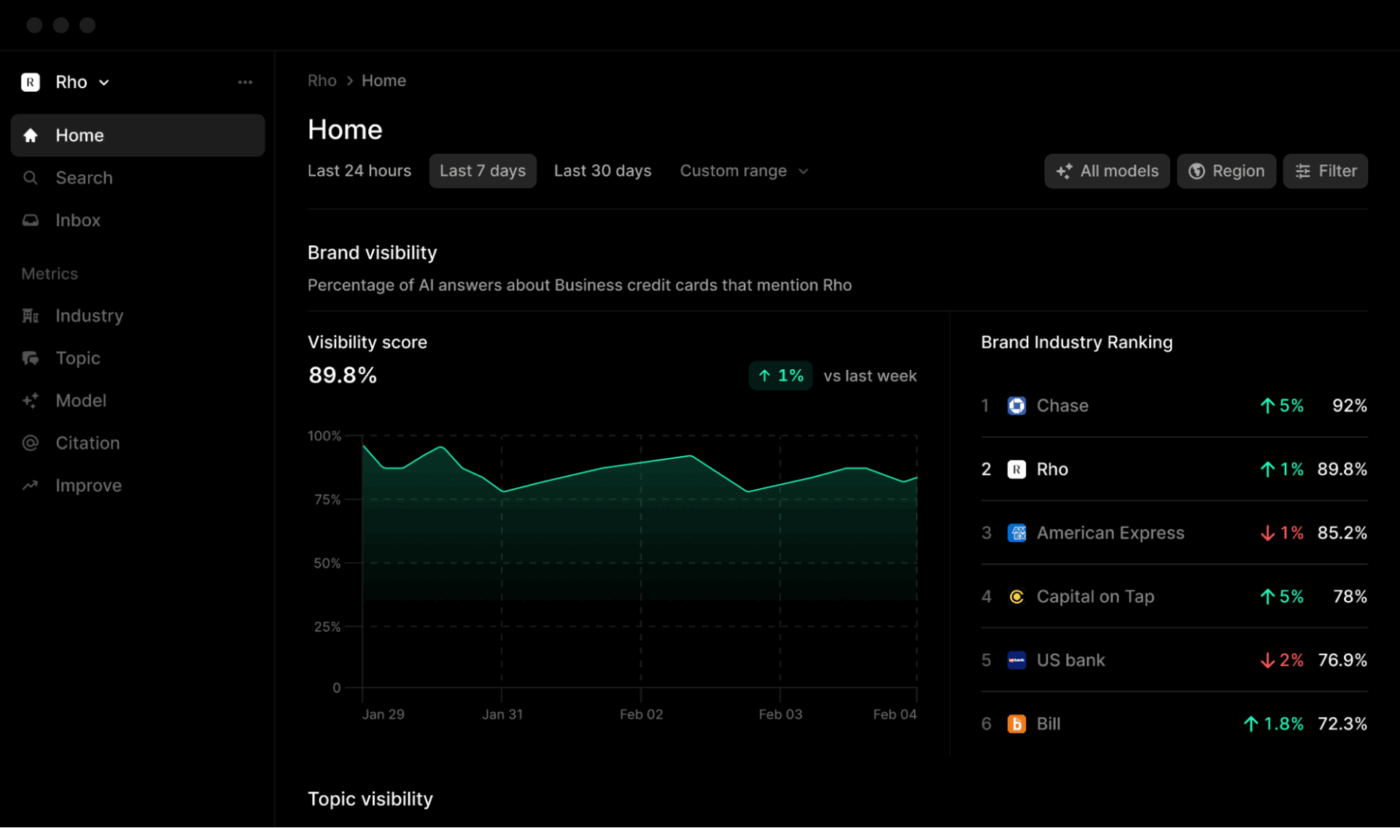
Profound is a full-stack GEO platform built specifically for enterprise teams that want to take control of how their brand is represented in AI search algorithms. From branded prompt tracking to sentiment analysis and competitor comparison, you get a 360º view of your AI search footprint.
Its Conversation Explorer and Agent Analytics let you simulate how AI assistants crawl, interpret, and cite your content. Also, the platform’s performance dashboards turn GEO insights into executive-ready reporting.
Here‘s a G2 review:
At its most basic, Profound gives us a way to measure an entirely new discovery channel, but their tools have evolved consistently to continue further enablement. The open feedback loop we have with the Profound team has made it possible to do more with less in a rapidly changing environment.
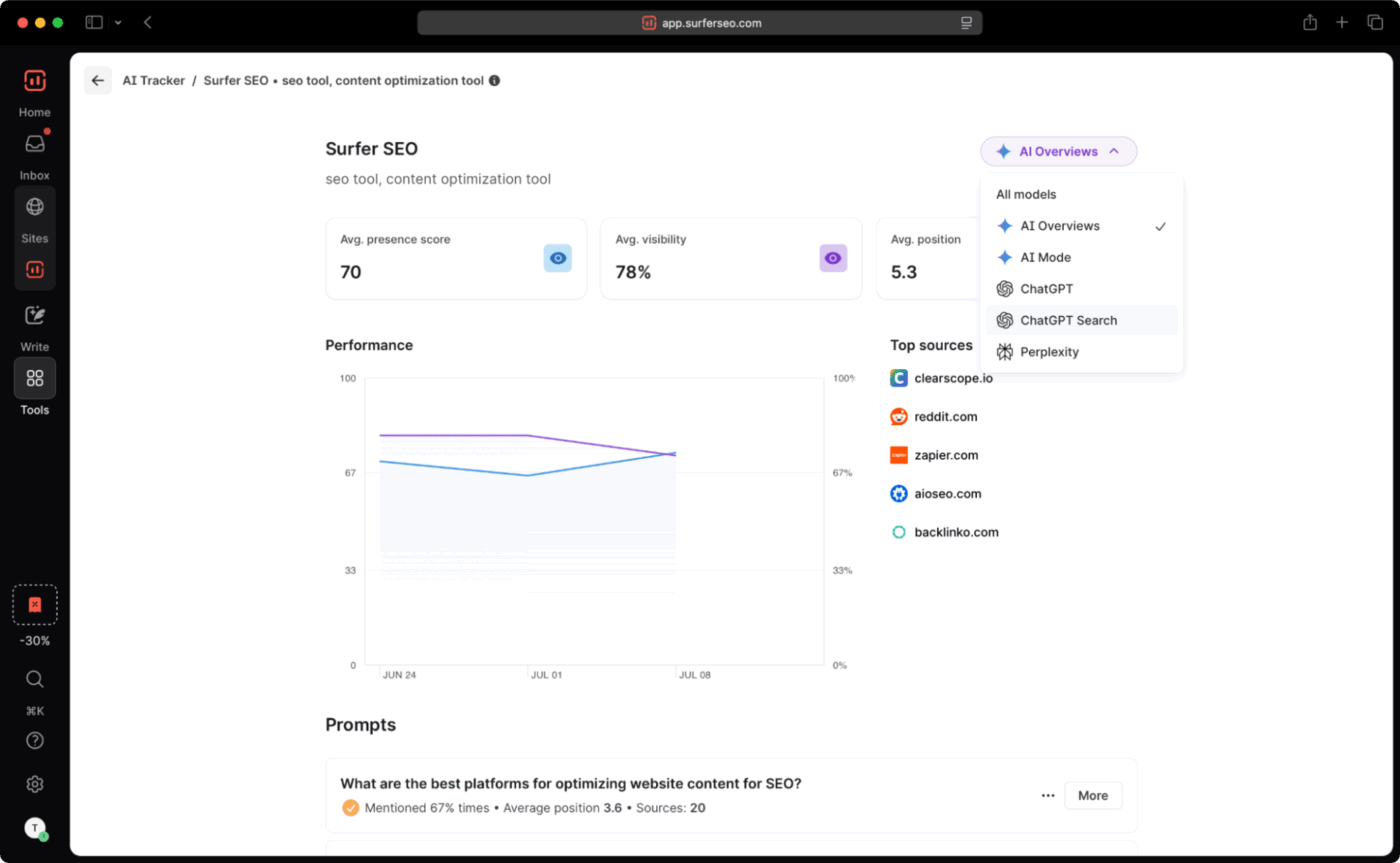
You’re optimizing a blog, landing page, or resource hub. You need it to rank and get cited by AI tools like ChatGPT. But where do you start: new content or existing assets? Surfer simplifies the decision for you.
You begin by auditing what you already have using the Content Audit tool. It identifies underperforming pages, gaps in topical coverage, and competitor benchmarks, showing what to update first. Content Editor guides your rewrites using data-backed suggestions for keywords, structure, and length based on what’s working in search and favored by LLMs.
To plan what’s next, you use Topical Map, an AI tool for keyword search to cluster keywords and concepts into interconnected content themes. Surfer’s Grow Flow is like an SEO assistant, recommending weekly, bite-sized optimization tasks to keep your site evolving.
Here’s a Capterra review:
It has been great so far. We have not used much of the AI aspects of Surfer as the content that we do have we are just trying to bring more value to our customers with.
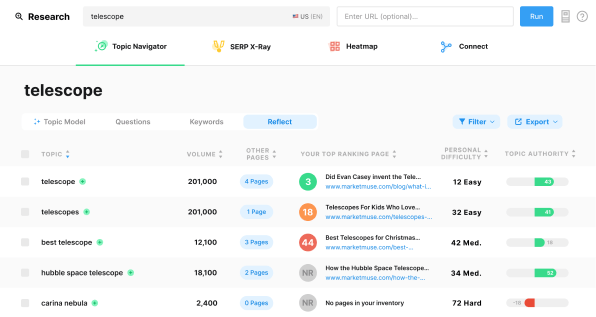
When you’re managing content for a large site, you need a system to plan, scale, and optimize content that performs well in search engines. It should also be visible in AI-generated answers. MarketMuse is an AI-powered content intelligence platform that helps you manage multiple and massive client inventories.
The Planning feature maps topic clusters and identifies content gaps across your site or vertical. What to write, update, or consolidate will be based on this information. With the Brief Generator, you can build detailed, SEO-ready outlines quickly. This SEO tool gives you target keywords, questions to answer, subheadings, and internal link suggestions.
When the draft is ready, using the Optimize feature, it’s easier to assess if the content has topical authority. You need this for both ranking on traditional search engines and AI citations.
Here’s a Capterra review:
Our content better meets the needs of our readers, it expedites and improves our content strategies, and our rankings in Google have improved.
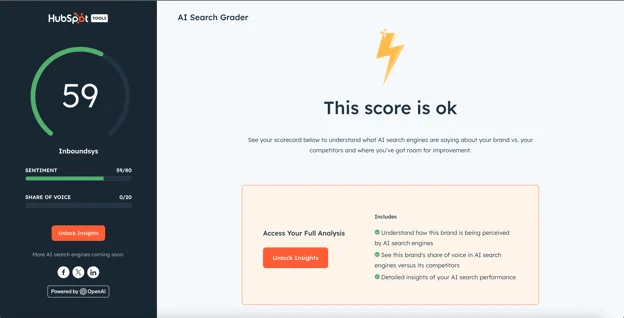
If you’re just beginning to explore how AI search engines like ChatGPT-4o, Perplexity, or Gemini affect your brand, HubSpot’s AI Search Grader is a good starting point. Before you invest in a full-scale GEO platform to use AI in SEO extensively, this free tool gives you a snapshot of how your brand is performing in AI-powered search.
The AI search grader analyzes your brand’s visibility and perception across AI assistants, offering an AI Visibility Score. You get data for how often your brand is mentioned and how you’re positioned versus competitors. It also shows top citations and brand sentiment, giving you an instant benchmark.
While it doesn’t replace prompt-level monitoring or multi-engine tracking, HubSpot’s grader acts as a frictionless entry point into AI overviews. The typical use case is for early discovery and internal reporting.
Here’s a TrustRadius review:
It is our central CRM and marketing automation tool. We use inboxes, deals, contacts, companies, and more every day. Other features that we utilize often are forms, feedback surveys, workflows, and email features. In short, it is a crucial part of our business that is heavily utilized across all teams, both for customer and internal communications.
👀 Did You Know? AI search engine Platforms like ChatGPT and Perplexity often cite sources from Google’s top 10 search engine results. Perplexity pulls from them in over 90% of cases, and Google AI Overviews around 85%, while ChatGPT lags at about 44%.
All the tools in this list show you where your brand stands in AI search. However, if you plan to centralize all your SEO and content activities, you will need another tool.
PS: That’s also the in-house favorite for marketing project management.
Generative Engine Optimization (GEO) tools help you adapt, but here’s the problem: insights about AI visibility still need to turn into actual content updates, task assignments, and publishing workflows.
ClickUp bridges this gap as the world’s first Converged AI Workspace. Instead of jumping between GEO analytics, content docs, and project trackers, ClickUp brings them together.
Spot a content gap? Create a task directly from your research. Need to update existing content for AI search? Assign it with full context—the original post, competitor analysis, and target keywords—all in one place.
ClickUp eliminates Work Sprawl by providing 100% context and a single workspace where humans and AI agents collaborate—from strategy to published content that actually ranks in ChatGPT and Perplexity responses. Think of it as a unified platform that hosts your entire content lifecycle, from strategy to delivery.
Now, let’s see how your SEO and content teams can best use ClickUp for Marketing Teams.
Start with ClickUp Brain to generate content briefs, headlines, or first-draft outlines tailored to a specific task. Whether you’re launching a blog series or writing product copy, Brain can auto-suggest ideas based on your goals, tone, or persona inputs.
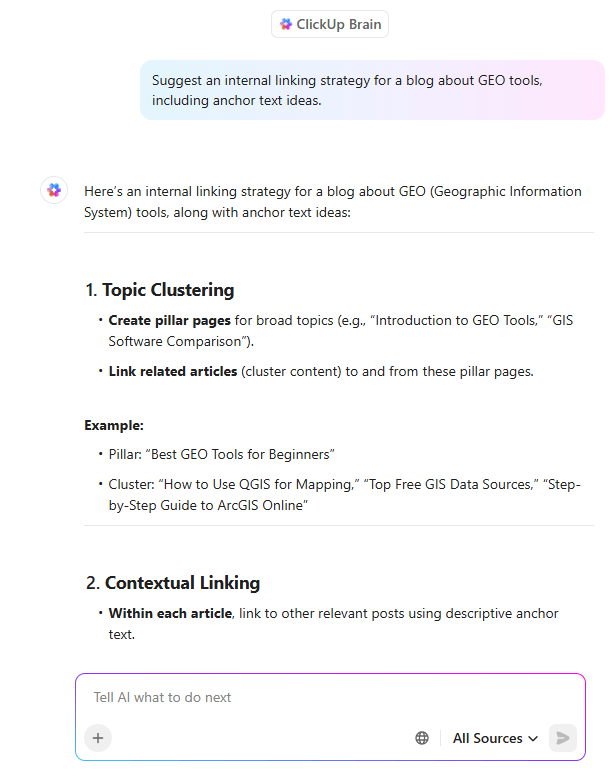
Additionally, like BrainGPT Brain also supports multiple AI models, including Gemini, Claude, and ChatGPT. This flexibility means you can experiment with prompts, angles, and formats that are more likely to be interpreted and cited by different AI search engines under the same roof.
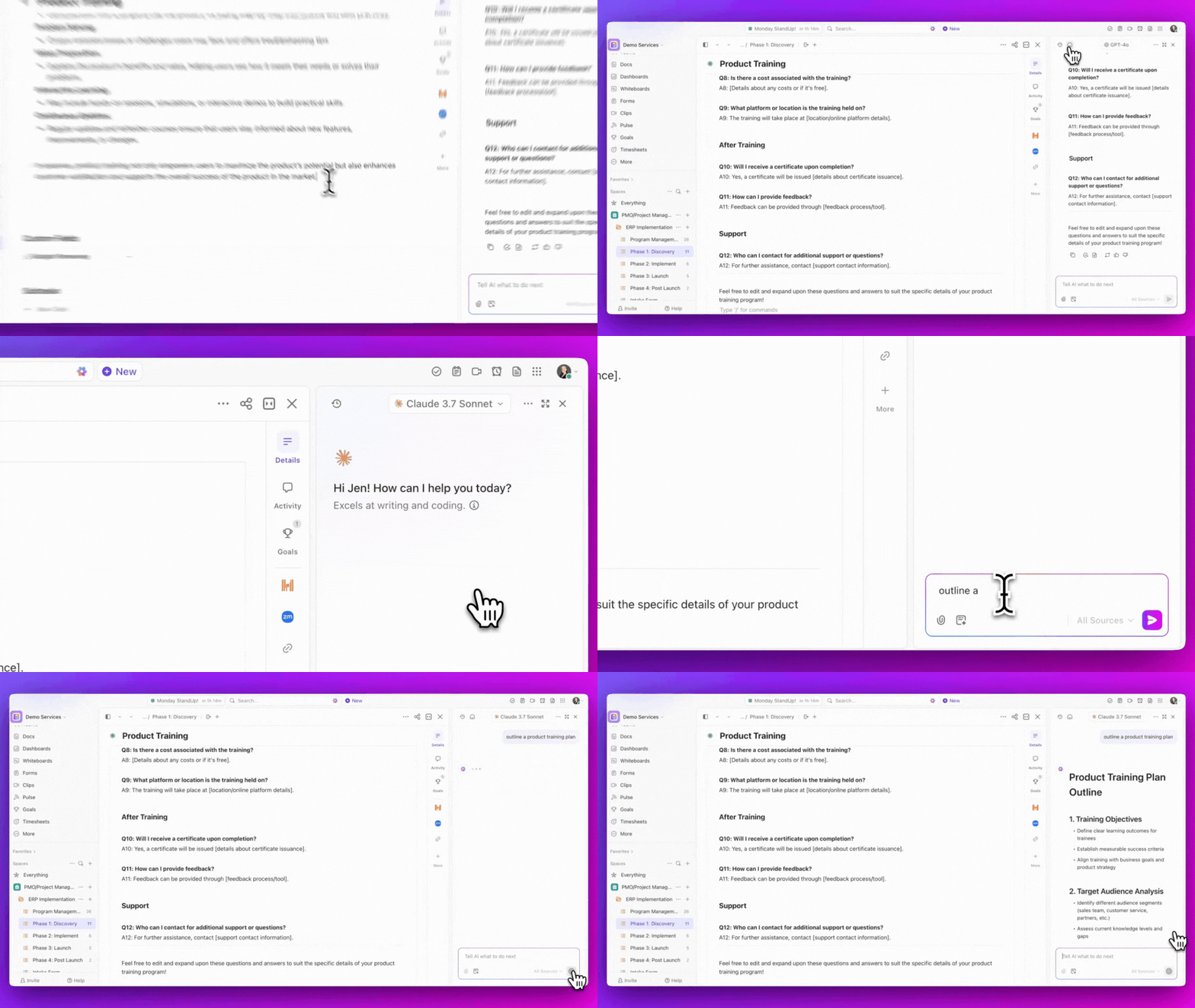
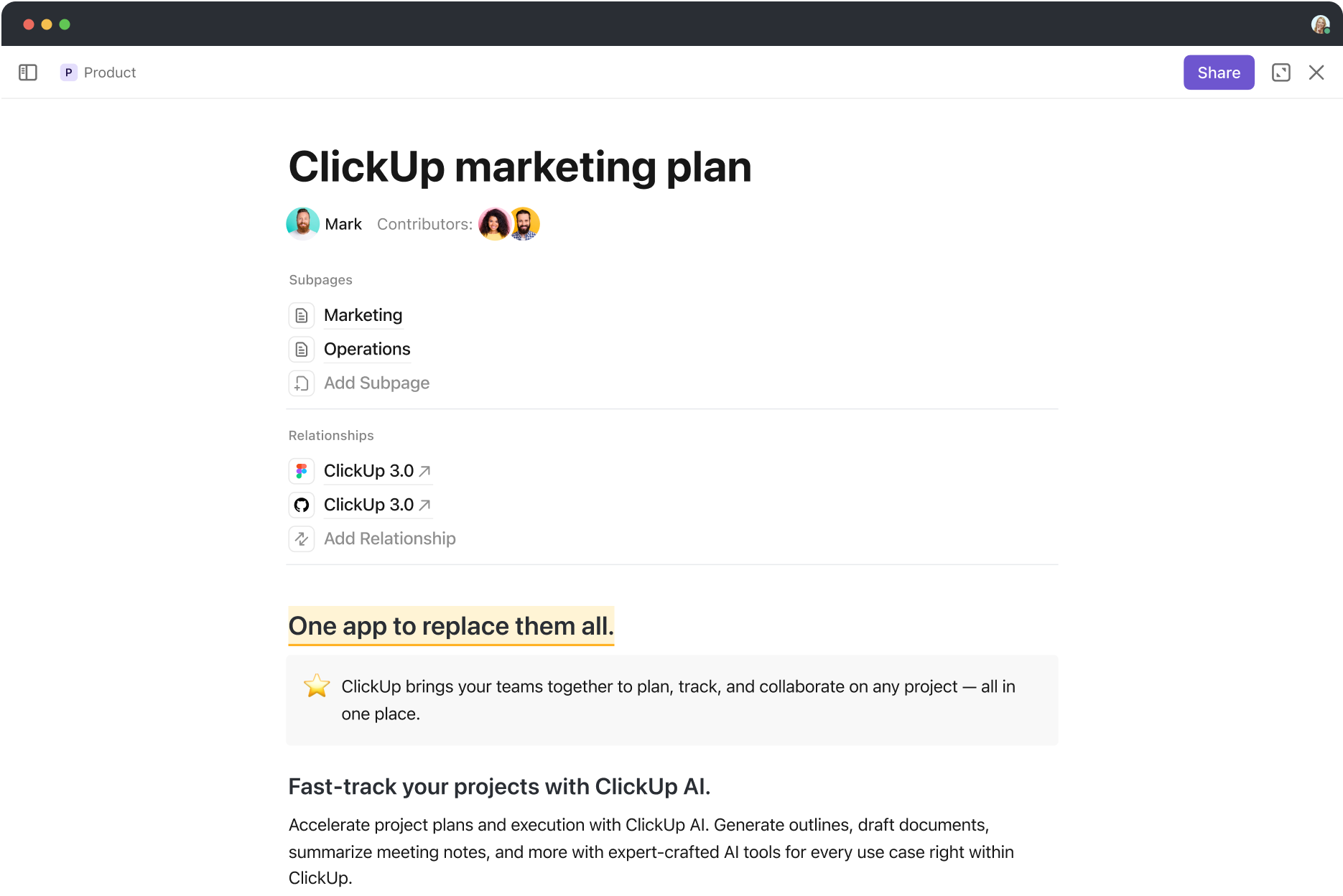
When you have all your content ideas for search intent, user queries, etc., related to generative engine optimization, you would want to store them in an editable doc. ClickUp Docs is centrally accessible for all, where you organize everything from campaign briefs and SOPs to style guides.
You can add comments, videos, spreadsheets, and format tables. The best part is that all this is linked to the tasks they support—so strategy and execution never drift apart.
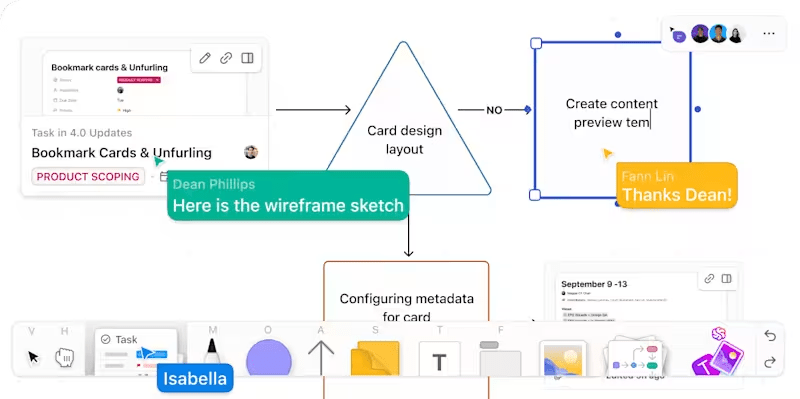
For execution, using ClickUp Tasks, you can assign writing, editing, and design deliverables with built-in content suggestions from Brain. You can set Custom Fields for SEO metadata, asset links, or due dates.
If you need to map dependencies and collaborate visually in real-time, ClickUp Whiteboards comes to your rescue. When content is ready for review, switch to Proofing Mode, where stakeholders can leave feedback directly on images, PDFs, or videos.
Once you uncover where your brand shows up in AI-generated answers, the real work begins: acting on those insights. ClickUp’s Agents are designed for this. They automate the next step in your content workflow based on structured, repeatable tasks.
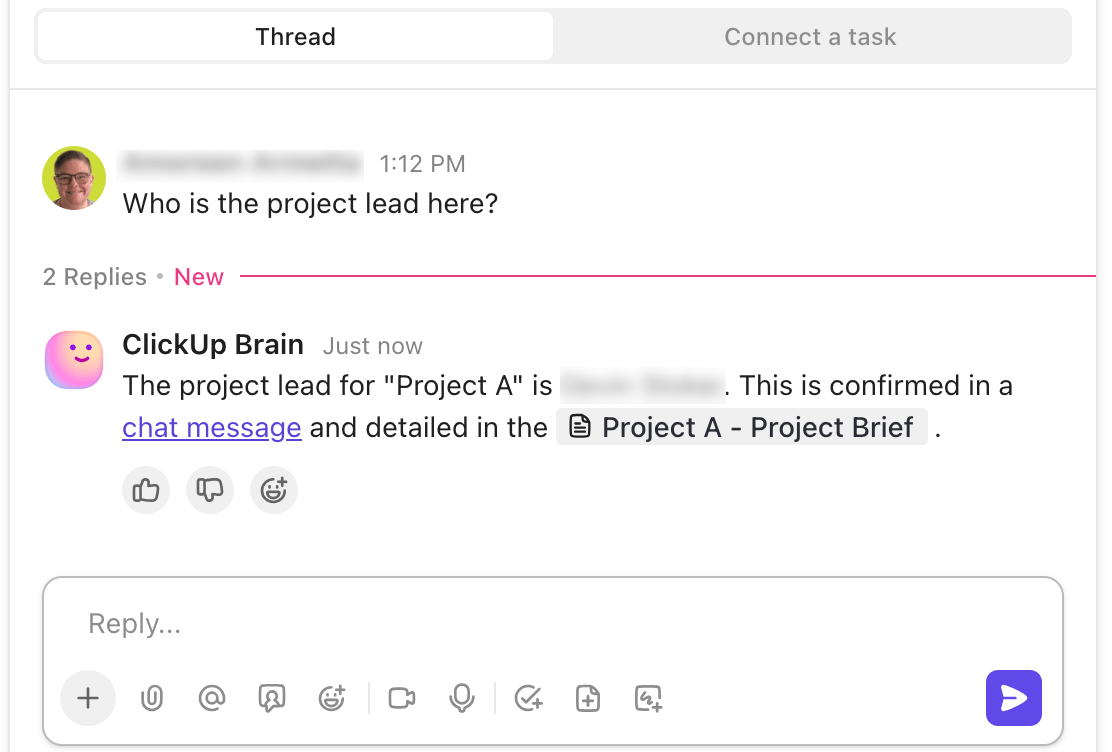
These AI Agents are like autonomous assistants. They can be customized for specific jobs, like summarizing meetings based on traditional SEO strategies, answering questions on project status, delivering weekly reports, and more. No prompt engineering or AI setup required.
When you want to track marketing KPIs such as campaign performance, content volume by type, SEO project velocity, and team bandwidth, ClickUp Dashboards lets you do all that in one place.
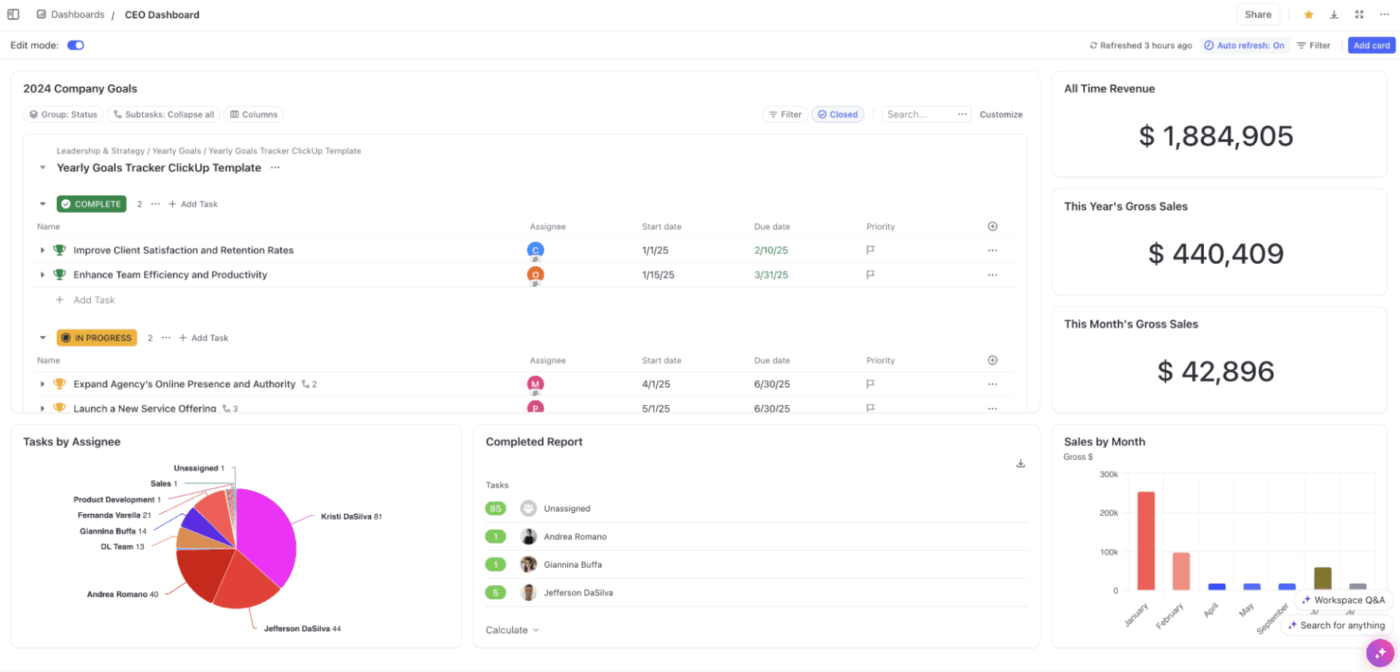
You can create custom widgets to monitor blog pipeline status, launch timelines, or engagement metrics across platforms. You can also track chatbot deflection rates, average handling time, and customer satisfaction scores—all linked to real-time task data.
ClickUp offers pre-built templates for content calendars, brand guidelines, campaign briefs, creative requests, and other marketing workflows. They save you hours of operational work at every step of your operations.
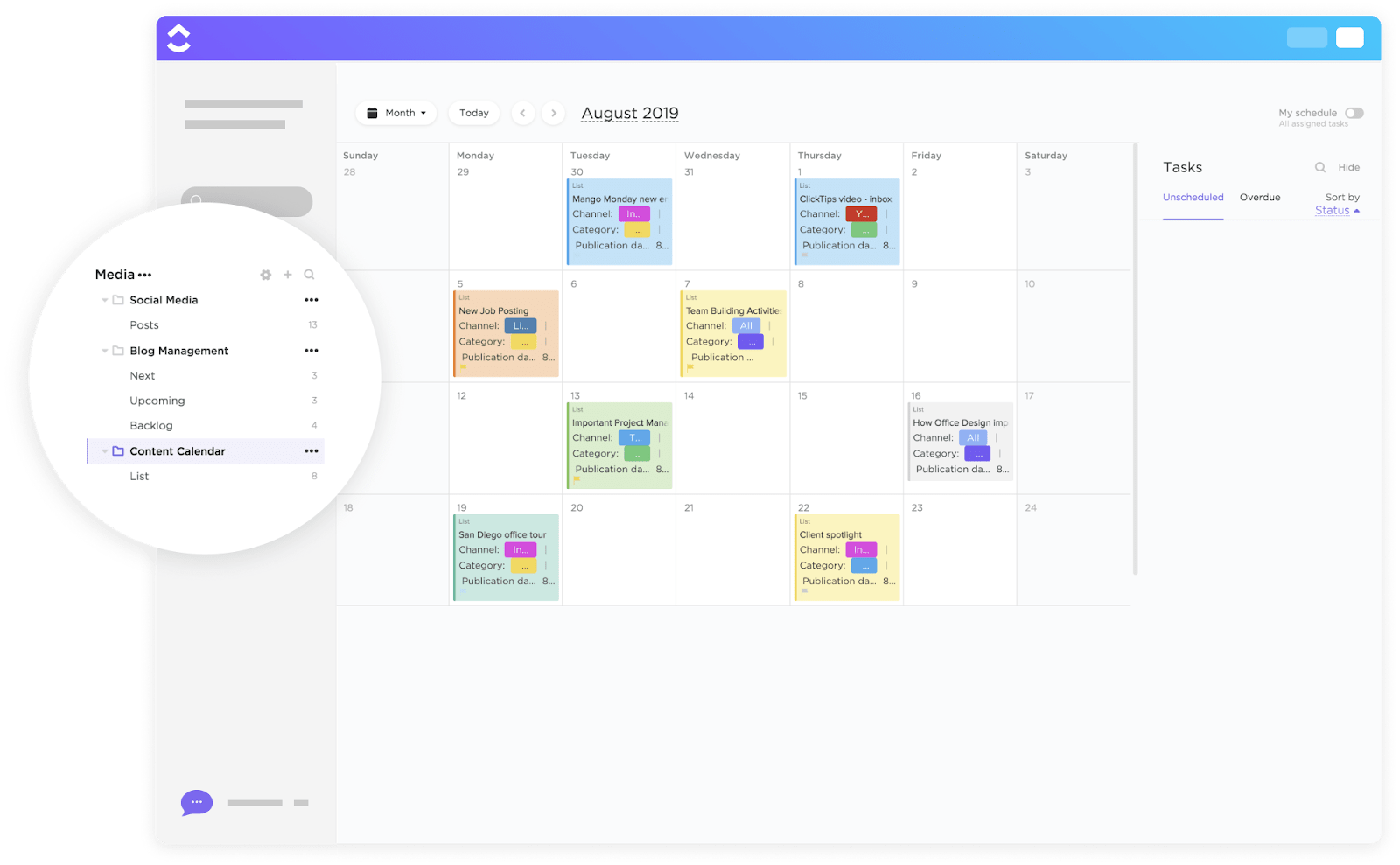
For instance, you can try the ClickUp Content Calendar Template. It centralizes all your content plans in one place while staying flexible enough to match your process. You can use it to schedule posts, assign tasks, track approvals, and ensure every piece of content aligns with your larger campaigns.
Here’s a G2 review:
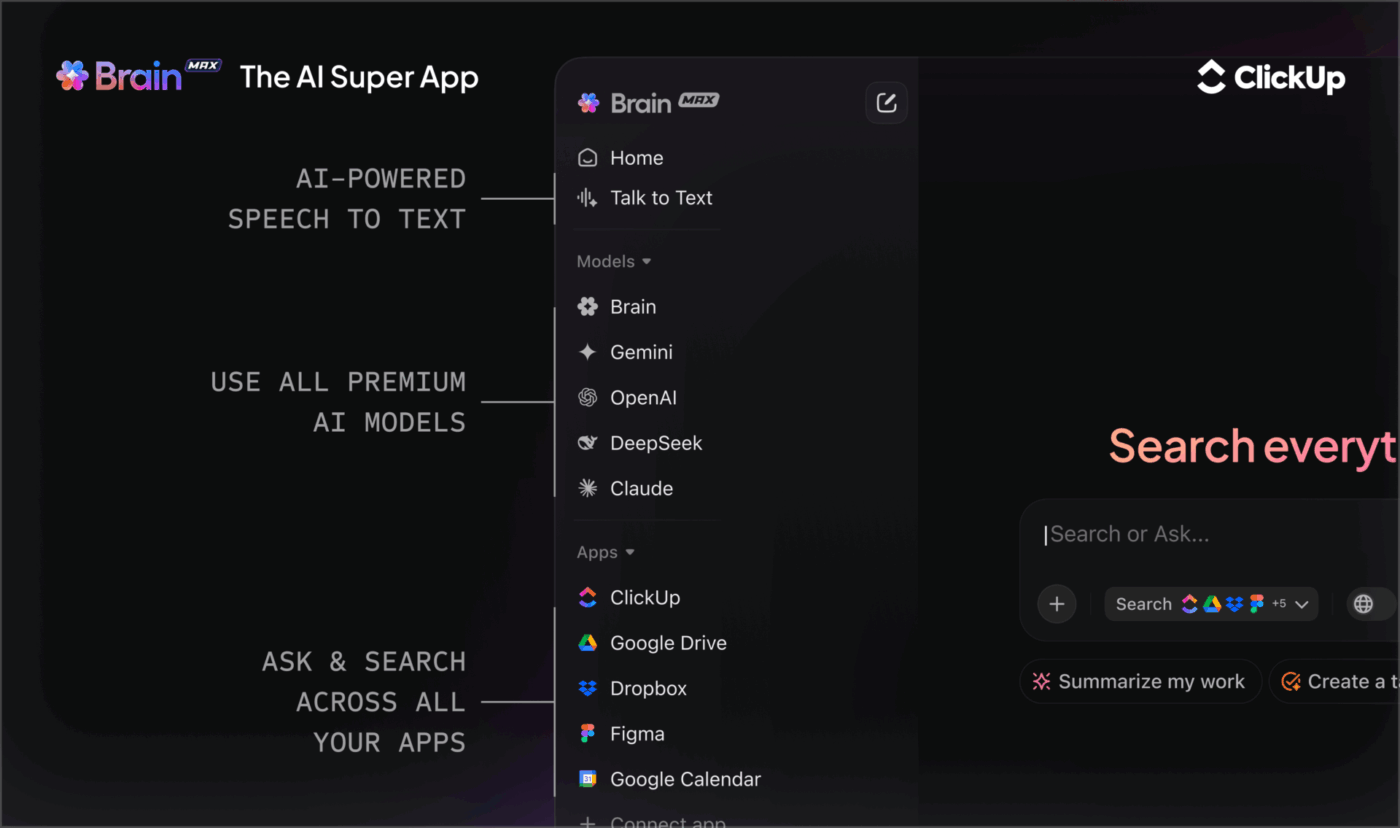
The new Brain MAX has greatly enhanced my productivity. The ability to use multiple AI models, including advanced reasoning models, for an affordable price makes it easy to centralize everything in one platform. Features like voice-to-text, task automation, and integration with other apps make the workflow much smoother and smarter.
📚 Also Read: How ClickUp’s Marketing Team Uses ClickUp
Before you go, here’s a quick GEO checklist to help your brand stay visible in AI-generated results:
Want to manage all of this in one place? With ClickUp, you can build a GEO content calendar, assign optimization tasks, use AI to draft briefs, and track progress—all in one dashboard.
Sign up on ClickUp for free to get started.

© 2026 ClickUp

There’s an easier way. Try a free AI Agent in ClickUp that actually does the work for you—set up in minutes, save hours every week.