






Still downloading templates?
There’s an easier way. Try a free AI Agent in ClickUp that actually does the work for you—set up in minutes, save hours every week.
Sorry, there were no results found for “”
Sorry, there were no results found for “”
Sorry, there were no results found for “”
Sometimes, you run the ‘perfect’ campaign, or so you think. It’s got humor, a catchy punch line, and the right amount of sales information. It gets a few clicks, but no conversions. And as marketers, we know contributing to revenue is what counts at the end of the day.
We’ve all been there, and it’s frustrating. Good design and clever copy aren’t enough if the core idea doesn’t connect.
To spark something that sticks, you need examples that earned attention. That’s why in this blog post, we’re breaking down 15+ advertisement campaign examples.
And after you’re inspired, we’ll show you how to start your standout campaign with ClickUp. So let’s get started! 💁
Drawing from industry research and successful campaigns, here are the key ingredients that consistently drive standout advertising:
🧠 Fun Fact: The word ‘advertisement’ has been around since at least 1426 and has roots in both French (advertissement) and Italian (avvertimento). It originally meant a warning or notice, way before it became the flashy billboards and pop-ups.
Let’s take a look at 15+ standout advertising campaigns to help you figure out your strategy for marketing campaign management.
When B2B brands play it safe, everything starts to look similar: buzzwords, blog formats, and stiff office stock photos. ClickUp decided to flip the script with its ‘Return to Work’ campaign, making enterprise software feel more human.
Launched in August 2021, this multi-video campaign didn’t pitch product features. Instead, it told hilarious, relatable workplace stories: awkward encounters, overused jargon, and post-pandemic confusion. It garnered millions of views, sparked conversation, and prompted marketers to rethink what B2B content could look like.

via Yellow Chili
Can you imagine Michael Cera meandering through NYC, clutching CeraVe moisturizer? Yes, it was a quirky coincidence that a brand and a celebrity shared a similar name.
CeraVe leaned into the confusion with a mock‑luxury 90s‑style ad and an ‘I am CeraVe’ microsite. This playful stunt teased its first Super Bowl spot, blending dermatologist authority with pop‑culture charm. It drove buzz organically and made skincare feel witty and relatable for a brand that’s usually clinical.

via e.l.f. Cosmetics
Liquid Death (a canned water company) joined forces with e.l.f. Cosmetics for an over‑the‑top corpse paint line, infusing gothic metal visuals into beauty products.
The unusual pairing of heavy metal and skincare generated over 250 million social impressions and countless reaction videos, turning both brands viral. It stands out because it disrupted category norms, reinforcing brand boldness without traditional ad spend.
🔍 Did You Know? The principle of social proof, such as displaying reviews or popularity statistics, can enhance consumer confidence and increase conversion rates, particularly in competitive markets.

via X
Chili’s brought serious nostalgia to the table with its ‘Big Smasher BurgerTime’ campaign, a playful spin on the classic 1980s arcade game BurgerTime. In this branded version, players became Joe Chili Head to fight off cheeky fast-food mascots while building giant Big Smasher burgers across six action-packed levels.
But this wasn’t just about fun and games. The campaign cleverly spotlighted Chili’s $10.99 ‘3 For Me’ meal deal as a budget-friendly answer to rising fast-food prices. With over 8,000 hours of gameplay logged in just 20 days, it ticked all the marketing campaign checklists and made fast food feel like a full-on arcade experience.
📮 ClickUp Insight: 30% of workers believe automation could save them 1–2 hours per week, while 19% estimate it could unlock 3–5 hours for deep, focused work.
Even those small time savings add up: just two hours reclaimed weekly equals over 100 hours annually—time that could be dedicated to creativity, strategic thinking, or personal growth. 💯
With ClickUp’s AI Agents and ClickUp Brain, you can automate workflows, generate project updates, and transform your meeting notes into actionable next steps—all within the same platform. No need for extra tools or integrations—ClickUp brings everything you need to automate and optimize your workday in one place.
💫 Real Results: RevPartners slashed 50% of their SaaS costs by consolidating three tools into ClickUp—getting a unified platform with more features, tighter collaboration, and a single source of truth that’s easier to manage and scale.

via Grab
In the face of the heat in the Philippines, Grab launched its ‘No Sweat Summer’ campaign. It featured a sweating character saved by GrabCar’s air‑conditioned rides and deliveries.
The playful messaging resonated, resulting in a nearly 30% increase in GrabCar Saver transactions in core areas. It showed how relevance, humor, and local insight can spark awards and real growth.
🔍 Did You Know? Herd mentality is one of the most powerful drivers in advertising. People are more likely to engage when they see others doing the same.

Channel 4’s ‘Considering What?’ campaign for the Paris 2024 Paralympic Games reframed how audiences viewed Paralympic athletes. They advertised them as elite competitors facing the same challenges all athletes contend with.
It critiques patronizing praise like ‘She’s fast…considering.’ Athletes Aaron Phipps, Dame Sarah Storey, and Emmanuel Oyinbo-Coker help dismantle such ablistic perceptions through their performances. With a multi-platform rollout, the campaign has garnered widespread acclaim and a notable rise in viewership.

via BricksFanz
LEGO invited children to write stories set in LEGO City. The best tales were animated into official videos, showcasing kids’ imagination as a brand storytelling tool.
Parents encouraged their kids to prioritize creativity, and the campaign deepened engagement by turning user‑generated content into polished marketing.
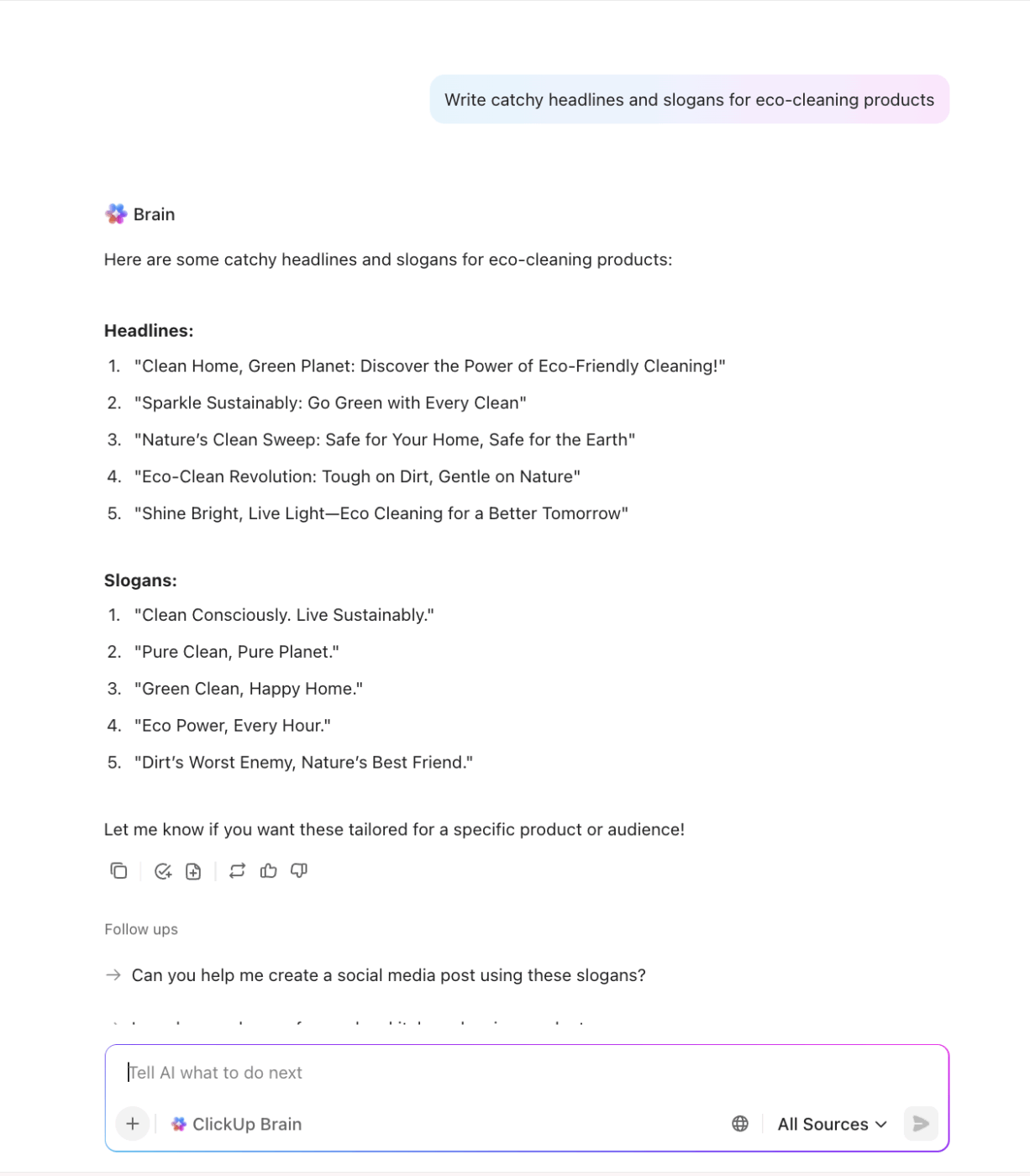
Friendly Tip: You can ClickUp Brain like your personal AI ad copy tool to instantly generate multiple ad headline variations, taglines, or product descriptions. Just type your campaign goal as a prompt like ‘Write catchy headlines for eco-friendly cleaning products’ and watch the ideas roll in.

via LinkedIn
Old Spice’s ‘The Man Your Man Could Smell Like’ campaign changed Old Spice’s image from a dated drugstore staple into a bold, humorous, and socially savvy brand. Starring Isaiah Mustafa as the smooth-talking, towel-clad ‘Old Spice Man,’ the ads cleverly targeted women, who often buy men’s grooming products.
Its rapid-fire monologues, absurd humor, and surreal one-take transitions broke the mold of traditional men’s advertising. However, the real standout was Mustafa responding directly to fan questions in real time via personalized YouTube videos. This revitalized the brand image with an unforgettable line: Look at your man, now back to me.

Uber Eats leaned into humor and transparency with its ‘Get Almost, Almost Anything’ campaign, showing what would happen if they really delivered ‘everything.’ In their YouTube videos, actress Nicola Coughlan accidentally summons a suitor from the 1800s. While actor Tom Felton orders ‘magic.’
It highlights why ‘almost’ is often enough. The ads cleverly positioned Uber Eats’ growing range (groceries, retail, alcohol, and more) while poking fun at the chaos of delivering anything.
🔍 Did You Know? Advertising creativity is often evaluated using five key standards: symbolism, simplicity, accuracy, uniqueness, and artistry. These help determine how effective and original a creative idea is.
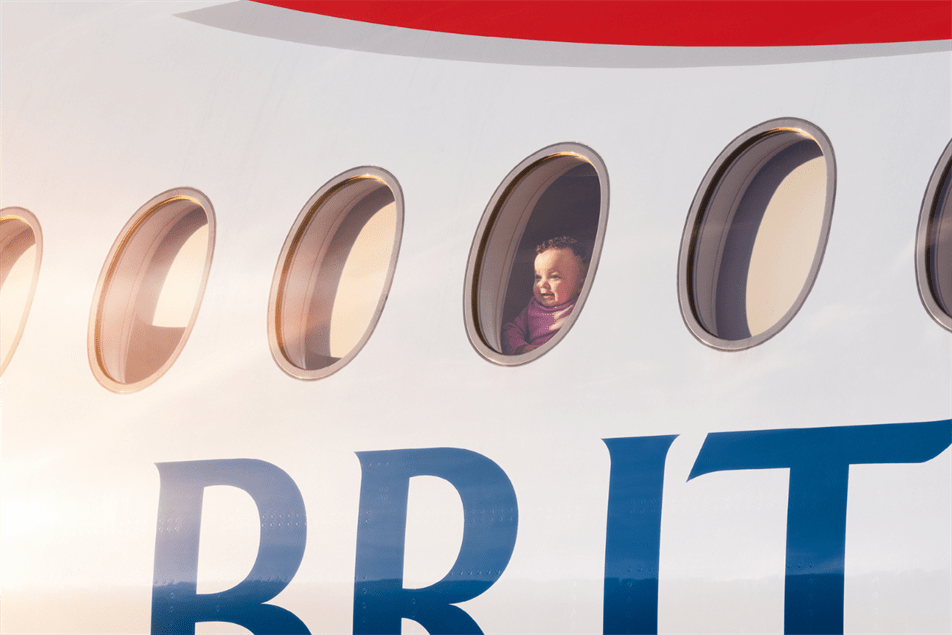
via LBB
British Airways ran an out-of-home campaign called ‘Windows,’ featuring close-up photos of passengers gazing out of airplane windows. There was no logo, tagline, or CTA in sight. The ads flipped the usual travel narrative, focusing on the emotions inside the plane rather than the scenery outside. And because BA is considered iconic, people recognized the brand instantly.
👀 Did You Know: Over a three-year period, organizations using ClickUp achieved an estimated 384% return on investment (ROI), according to Forrester Research. These organizations generated about US $3.9 million in incremental revenue through projects enabled or improved by ClickUp.

Telstra’s ‘Better on a Better Network’ campaign shows Australia’s most expanded mobile network in a quirky series of 26 stop-motion films. Each video ad spotlights a different region and its oddball inhabitants.
From larping Tasmanian devils to teenage goth cockatoos and blokey wattle flowers, the campaign embraces the country’s character-rich corners. Each 15-second spot delivers a bite-sized narrative that reinforces Telstra’s coverage, positioning it as a thread that connects Australians.
🧠 Fun Fact: Emotionally charged ads activate more regions of the brain, leading to stronger memory encoding and higher ad recall.

via Volkswagen
The 1959 ‘Think Small’ campaign introduced the VW Beetle to an American market obsessed with big, flashy cars. However, instead of masking the Beetle’s size, the ads featured a tiny car surrounded by white space, highlighting its fuel efficiency, affordability, and reliability.
Creative leads Helmut Krone and Julian Koenig leaned into the car’s perceived weaknesses (size and shape) and turned them into selling points. They used down-to-earth copies like ‘Lemon’ or ‘It’s ugly, but it gets you there.’
🔍 Did You Know? Businesses generate an average of $8 in profit for every $1 spent on Google Ads. This demonstrates the cost-effectiveness of digital advertising.

via Dove
Dove’s emotional ‘Real Beauty Sketches’ campaign launched in 2013 as a short film. It featured a forensic sketch artist who drew women based first on their own self-descriptions and then on descriptions provided by strangers. The results revealed how women tend to judge themselves more harshly than others do.
This contrast delivered a powerful visual representation of the campaign’s core message: beauty is often defined by self-perception, not reality. The video won a Cannes Lions Grand Prix, resulting in a 6% increase in Dove’s sales.
🧠 Fun Fact: In the ancient and medieval world, advertising existed as a word-of-mouth practice. The first step towards modern advertising came with the development of printing in the 15th and 16th centuries.

via Creativepool
Heineken’s campaign encouraged people to disconnect from their smartphones and reconnect with real life, especially at live music events. In a standout activation, the brand deployed a clever use of infrared technology to deliver hidden messages visible only through phone cameras.
When concertgoers held up their phones to record, these invisible-to-the-eye messages appeared on their screens. As part of the broader Boring Phone platform, which features phone swaps, camera stickers, and offline treasure hunts, it promotes digital detox.
🧠 Fun Fact: One of the most famous advertisement posters from the First World War shows Field Marshal Lord Kitchener asking people to join the British Army. It said ‘BRITONS: Lord Kitchener Wants You’ and it came from a magazine ad campaign. Its visual appeal was picked up by other artists in the USA, with Kitchener’s image being replaced by Uncle Sam!

via Muse by Clios
After 12 years of silence, Starburst returned with the ‘Different Every Time’ campaign. It was a vibrant, tech-fueled campaign that celebrated the candy’s endless possibilities. With over 479 million flavor combinations in a 12-piece pack, the brand leveraged this variety to its advantage.
The campaign uses generative AI to create ever-changing ads. From Snapchat AR lenses to Spotify’s ‘chews-your-own-adventure’ playlists, fans are invited to experience Starburst through personalized journeys.
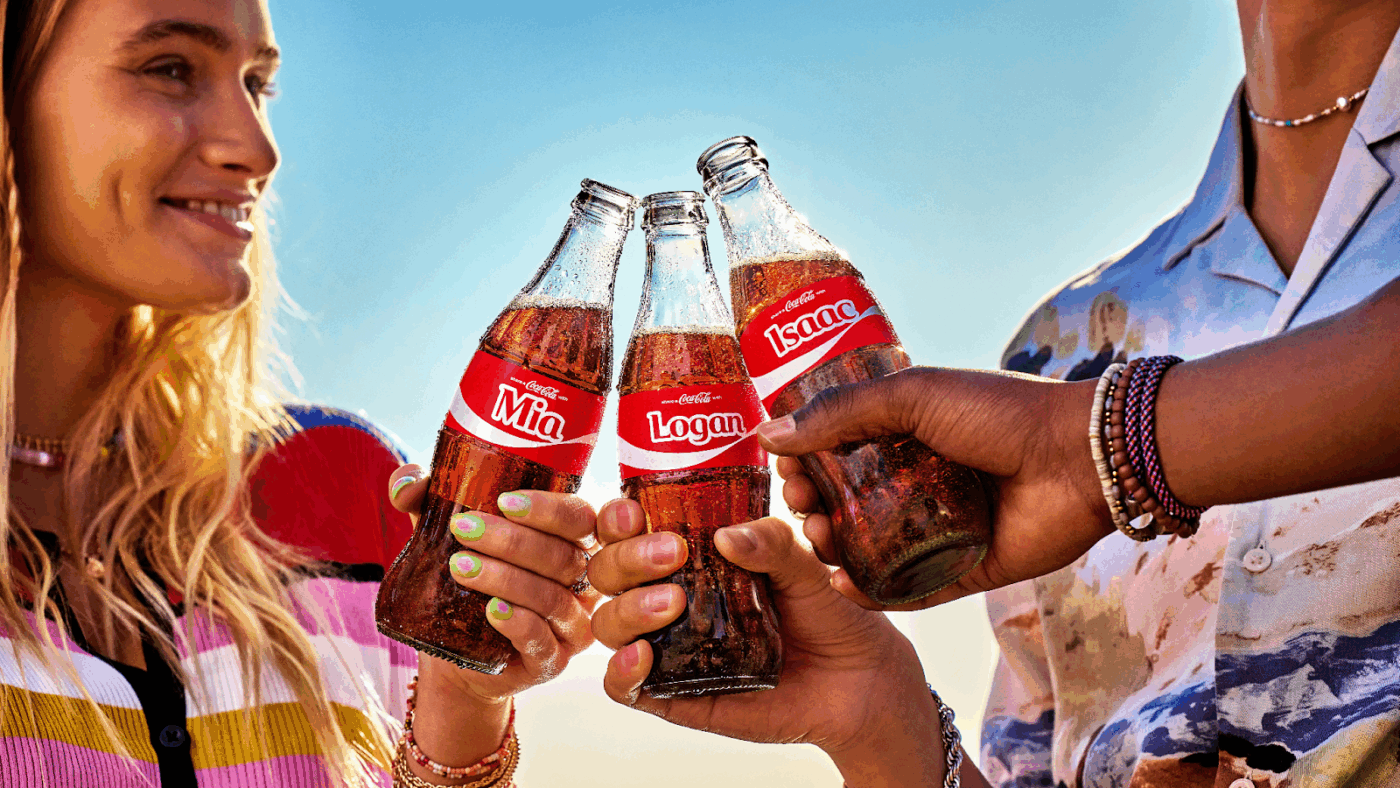
via Coca-Cola
Coca-Cola’s ‘Share a Coke’ campaign is one of the most iconic marketing plays in recent history. It all started with a bold idea: swap out the classic Coca-Cola logo for people’s first names. From Australia to the rest of the world, bottles and cans featured names and nicknames. People loved the thrill of spotting their own names on shelves, or grabbing a bottle for someone they cared about.
The company leaned into the moment with interactive experiences. QR codes on packaging and digital tools let people customize their bottles, create videos and memes, and even share Coke-themed memories online.
Campaign types vary depending on the goal, audience, and platform. Each one serves a unique purpose, helping you connect with your audience effectively.
Here are some of the most common types of marketing campaigns and where they’re most effective. 👇
📌 Example: Apple’s Shot on iPhone campaign showcases camera quality while subtly reinforcing brand prestige through user-generated content.
📌 Example: Nike’s launch of self-lacing shoes used social media teasers, influencer partnerships, and PR stunts to generate buzz.
📌 Example: Chili’s Big Smasher BurgerTime campaign plugged its $10.99 meal deal. With 8,000+ hours of gameplay in just 20 days, the campaign turned fun into foot traffic, driving real-world purchases while keeping things playful.
📌 Example: The ALS Ice Bucket Challenge, which went viral worldwide to raise awareness and funds for ALS through social media and celebrity participation.
📌 Example: Lululemon’s Pride in the Park campaign, where they created an immersive art installation in Hudson River Park and hosted community yoga sessions, encouraging people to share their experience on Instagram using #ProudAndPresent.
The best advertising campaigns look effortless—witty copy, stunning visuals, perfect timing. But behind every memorable ad is a team juggling briefs, revisions, approvals, media schedules, and last-minute changes.
So you’re not just losing efficiency—you’re risking launch delays and miscommunication that can tank even the strongest concept.
ClickUp connects the dots as the world’s first Converged AI Workspace. It serves as your centralized workspace for planning, assigning, writing, reviewing, and tracking every detail of your ad campaign strategy, all powered by AI.
The ClickUp Marketing Project Management Software also eliminates Work Sprawl by bringing campaign end-to-end execution into one workspace. Your team sees 100% context at every stage—from initial brief to final reporting and tracking. Creative teams can collaborate on assets while account managers track approvals and media teams schedule placements.
Let’s walk through the steps to plan a marketing campaign.
Every winning ad campaign starts with a spark: an idea, a message, or a visual concept. That’s where these campaign management tools come in.
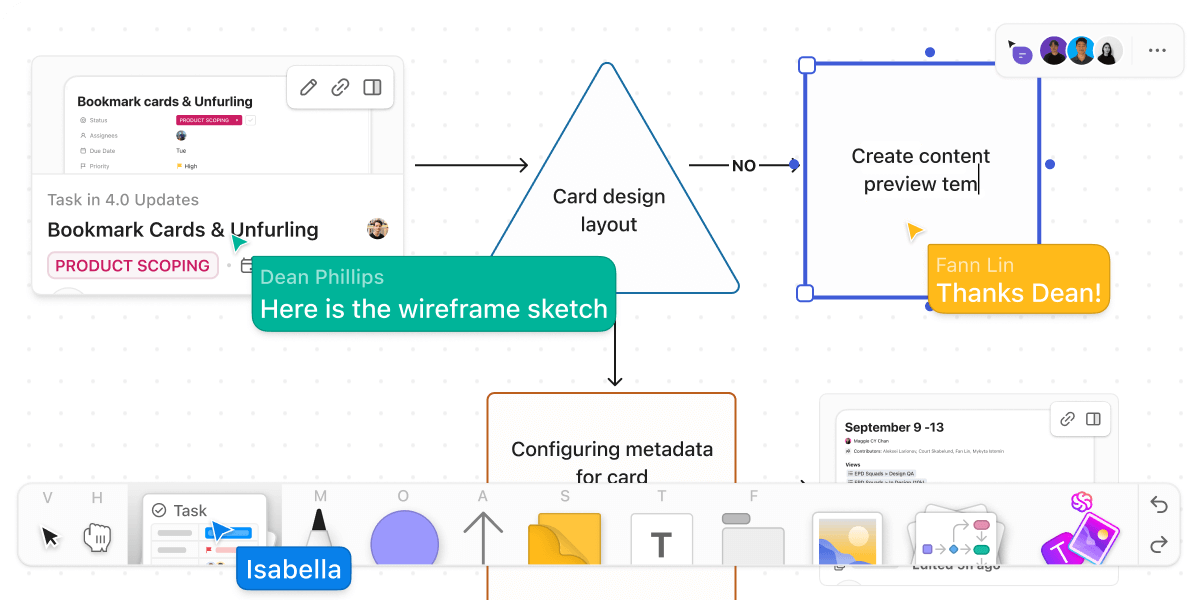
Use ClickUp Whiteboards to map out the building blocks of your marketing roadmap:
🚀 Friendly Hack: Inside Whiteboards, ClickUp Brain can generate campaign theme ideas based on a simple prompt (e.g., Give me five angles for a summer skincare campaign) or even suggest visual concepts or hero images to guide your design team.
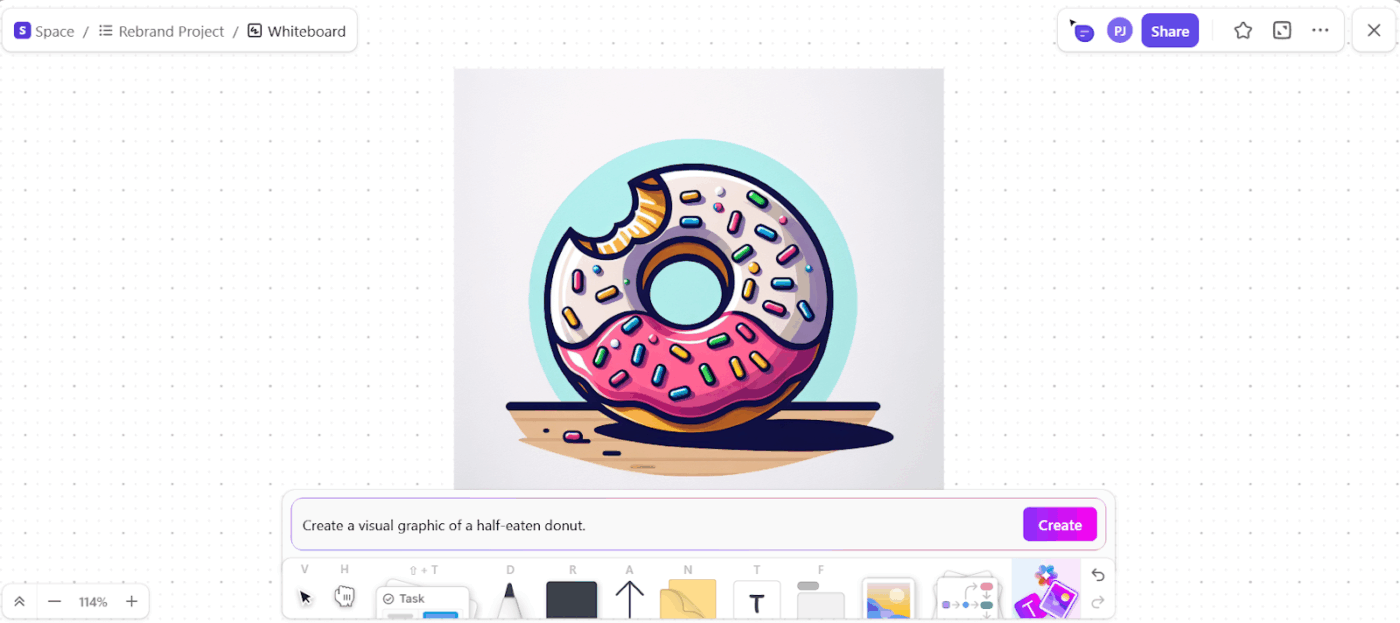
Once your campaign direction is clear, shift to ClickUp Docs + ClickUp Brain to turn ideas into real content and plans:
If you’ve got an action item in your document, just highlight the section and assign it to your copywriter or designer using ClickUp Assign Comments.
Let’s say your team wrapped a strategy session on Whiteboards for your next seasonal campaign. Open a Doc and start building the creative brief right within it. The brand lead adds tone and positioning, the copywriter drafts headlines and scripts, and the designer lists key deliverables.
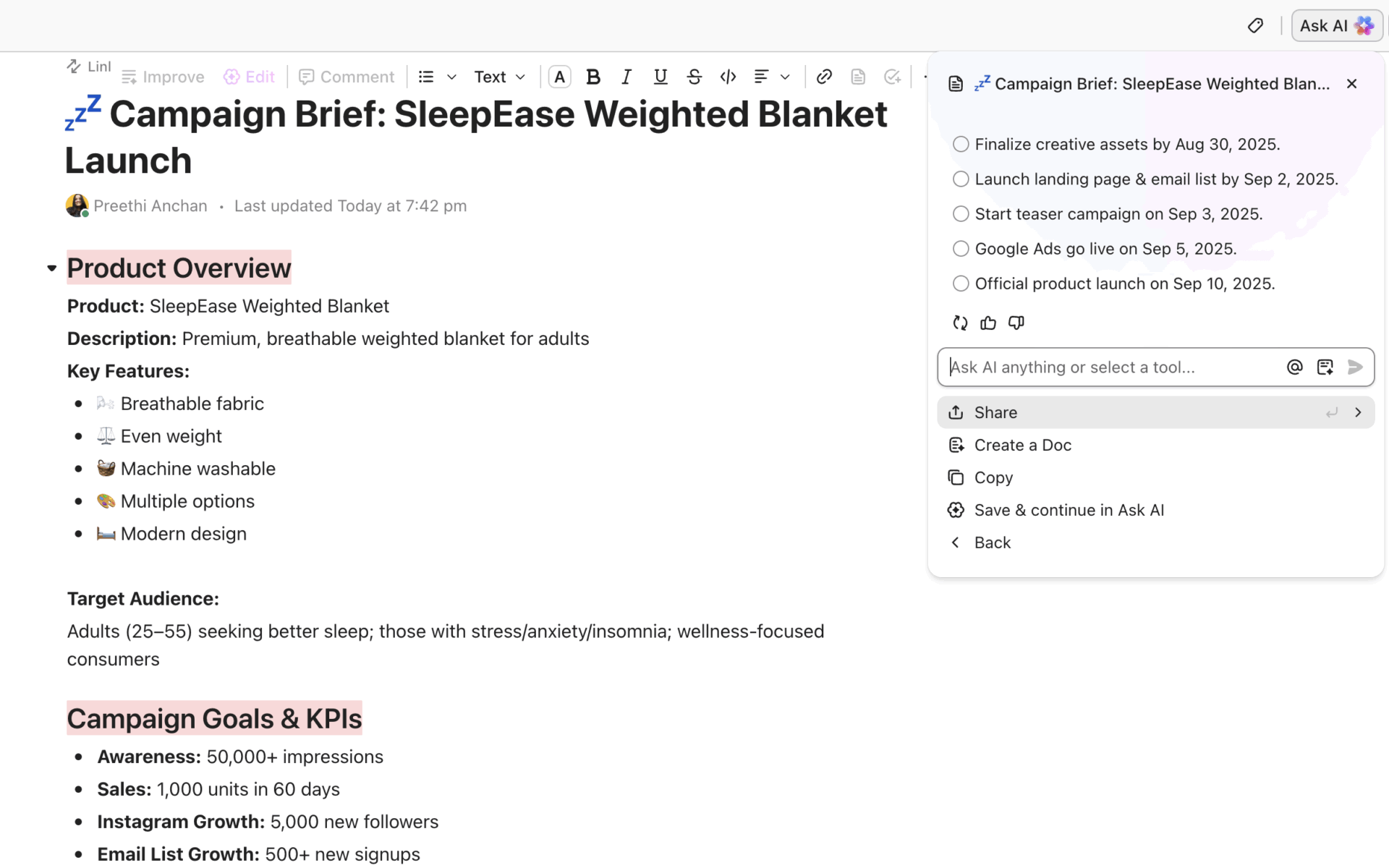
You can also use ClickUp Brain inside Docs to:
A campaign without a timeline is just a wish list. Use ClickUp Gantt View to map dependencies visually. This helps prevent bottlenecks and keeps your deadlines realistic.
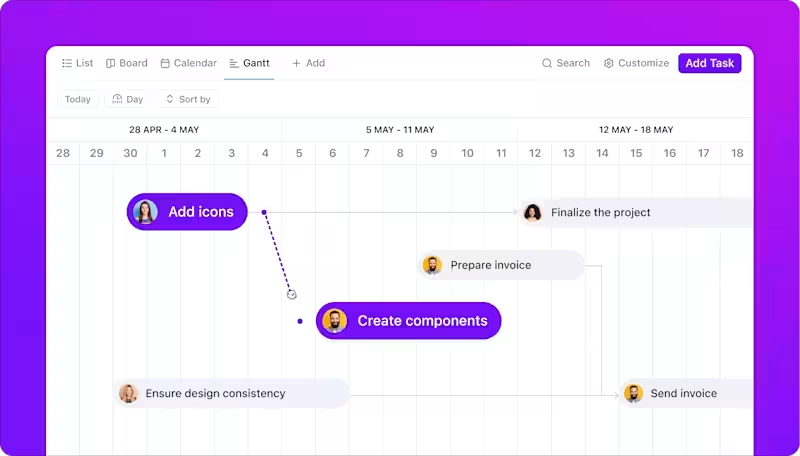
For instance, if you’re finalizing your ‘Back-to-School’ promo timeline, you can use a Gantt chart to schedule tasks, set dependencies, and visualize your critical path.
And if you prefer lists, you can use ClickUp List View to manage campaign tasks with clear priorities, assignees, and due dates, perfect for content calendars, ad variations, or channel-specific tasks.
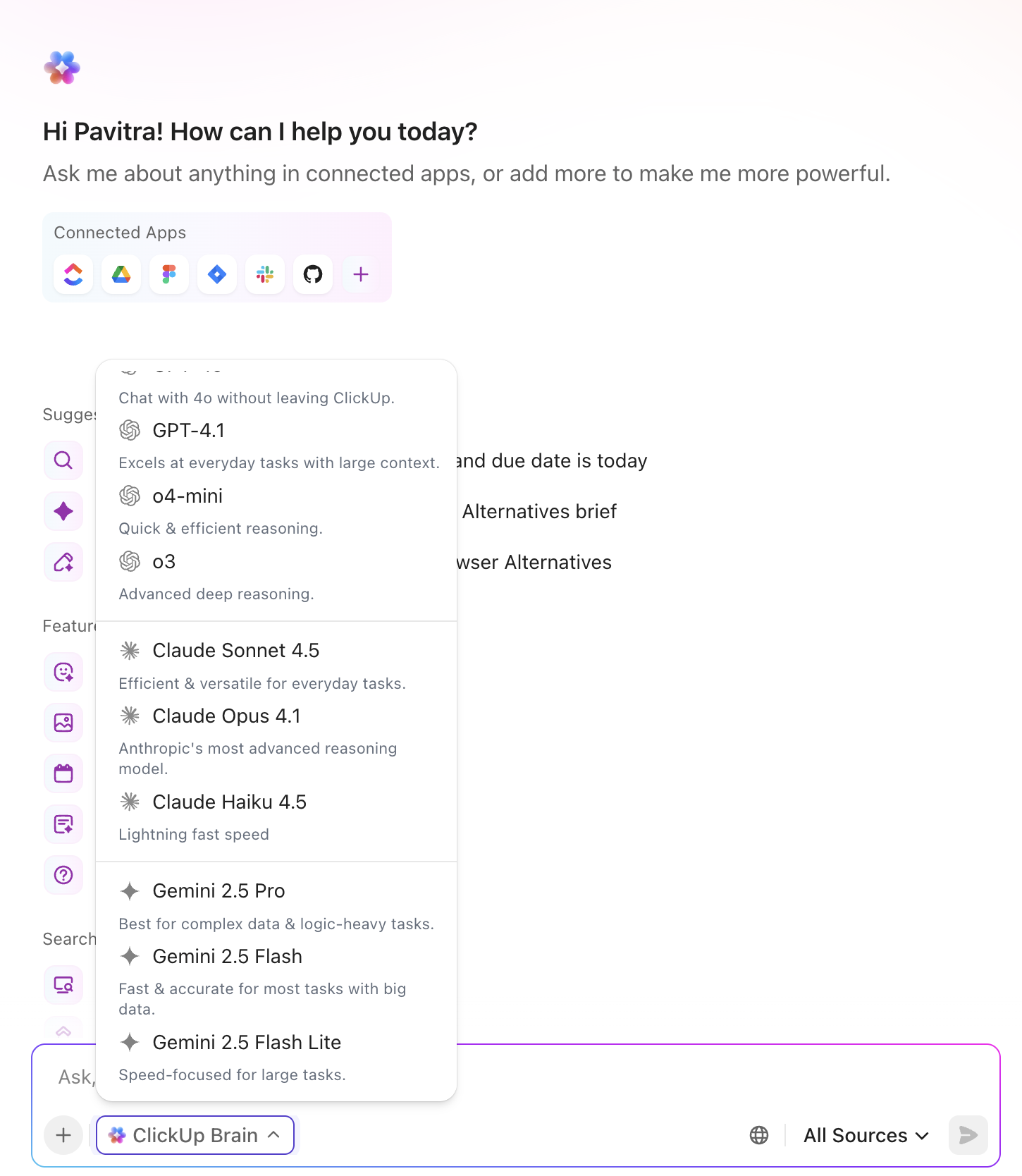
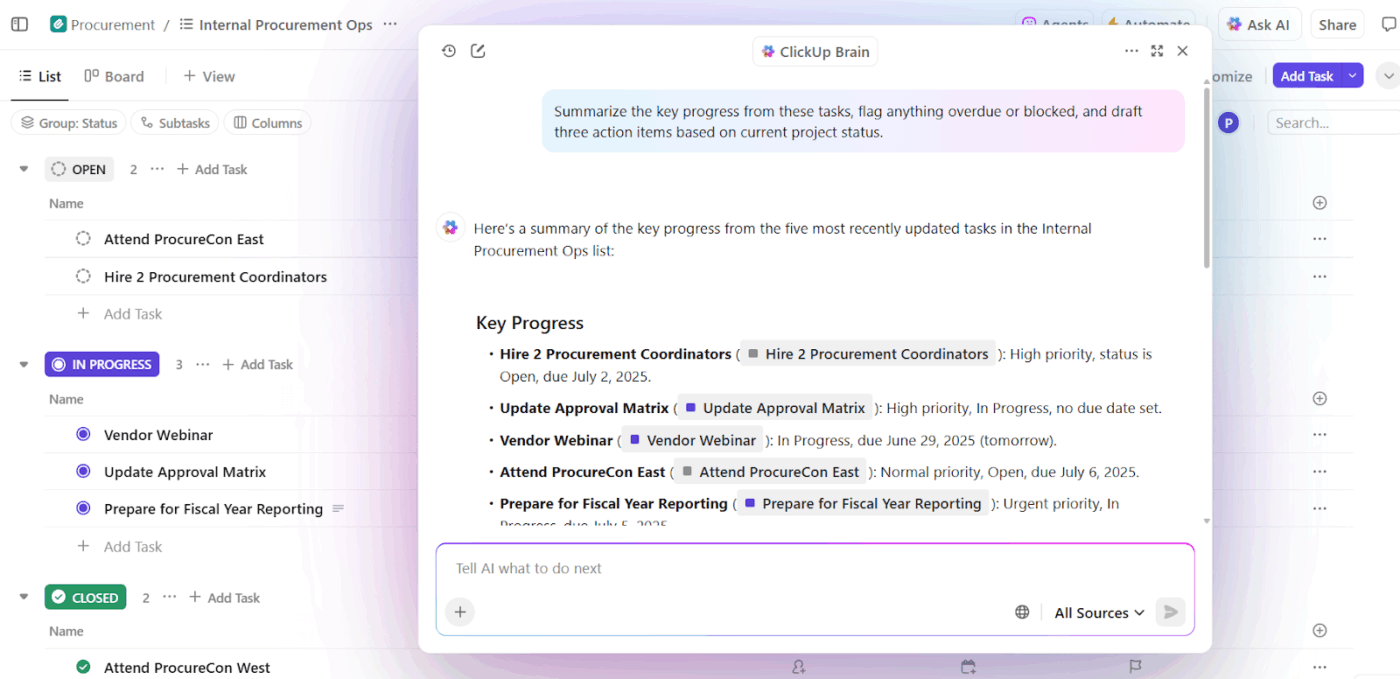
ClickUp Brain acts like your strategic assistant
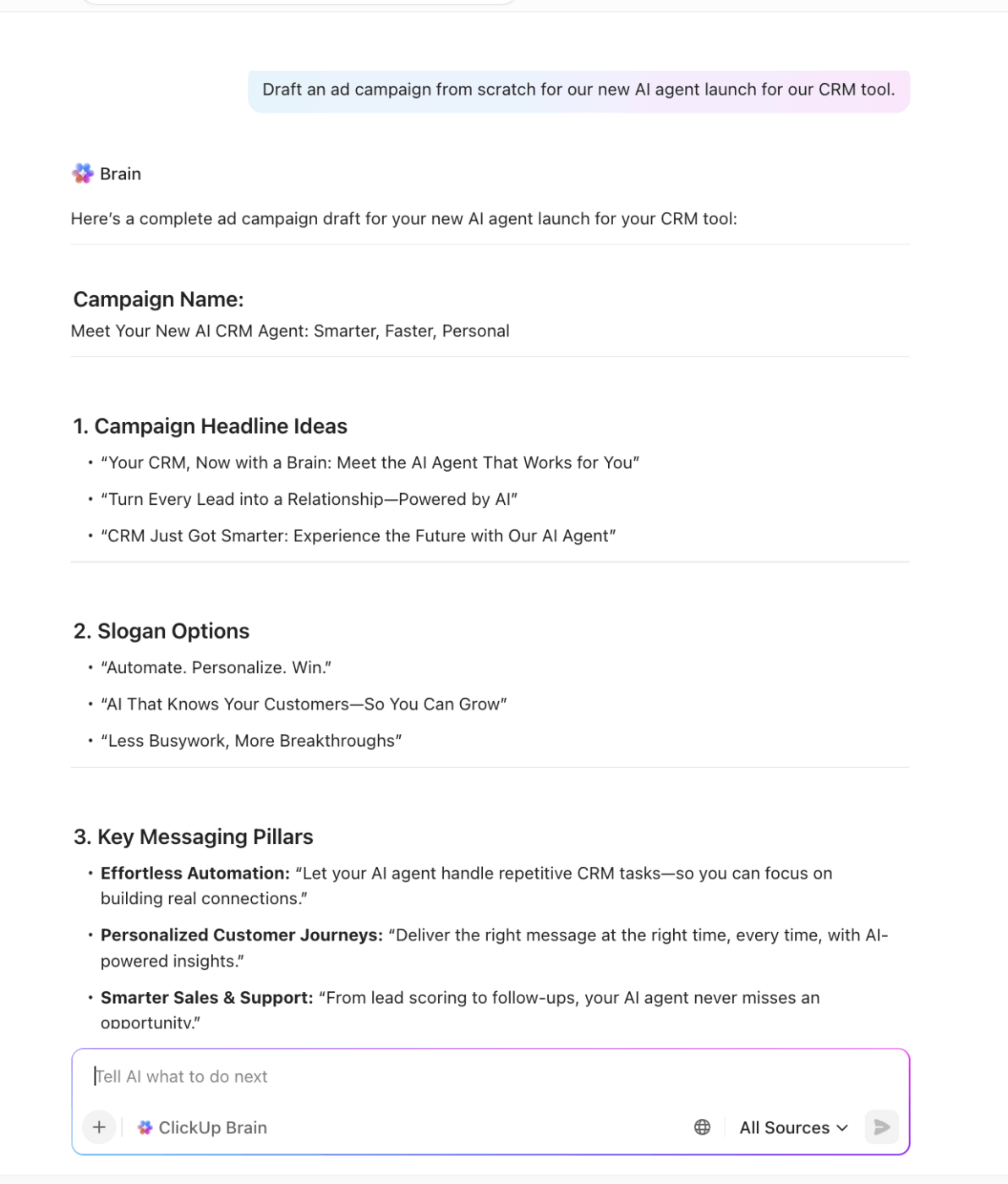
Here’s how to use AI in advertising when planning timelines:
Chelsea Bennett, Brand Engagement Manager, Lulu Press, shares her experience:
A project management platform is essential for a marketing team, and we love that it helps us stay connected to other departments. We use ClickUp literally every day, for everything. It has been very helpful for our creative team and has made their workflow better and more efficient.
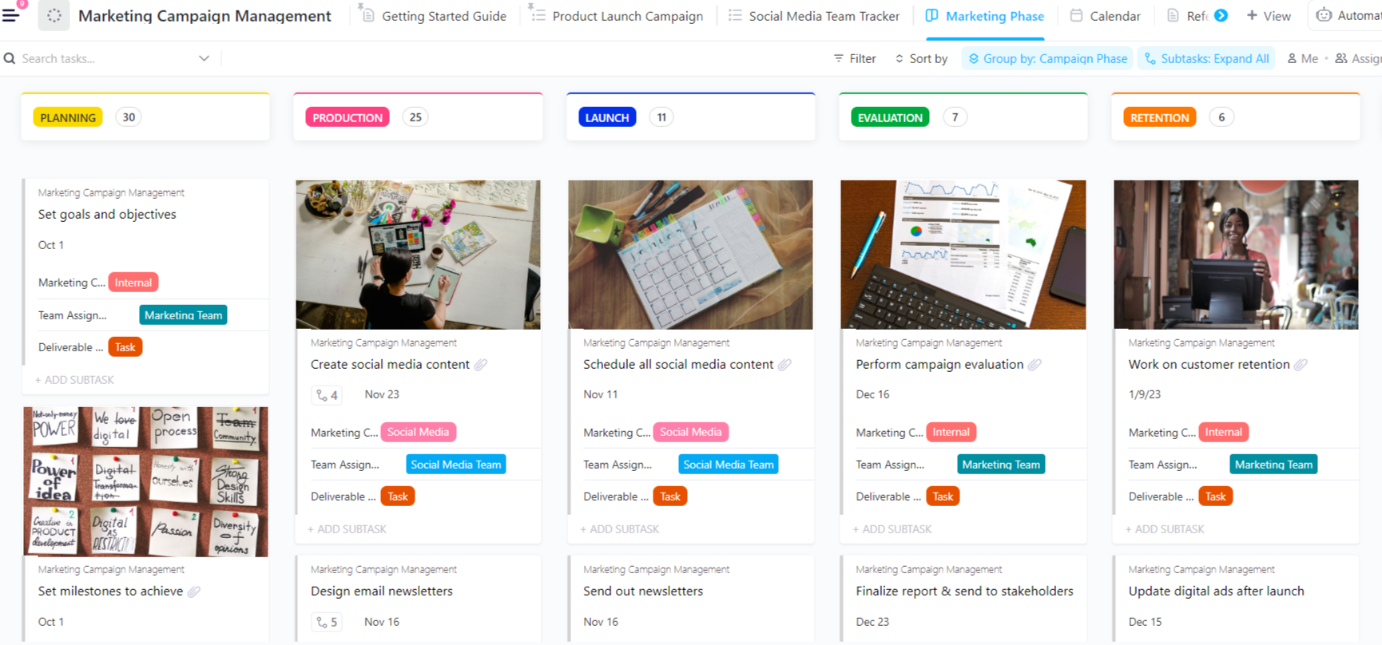
Running similar campaigns for email, social, or paid media? Save time by using the ClickUp Marketing Campaign Management Template. It comes with seven custom statuses, including Blocked, Cancelled, Complete, Done, and In Progress, to help teams monitor the exact stage of each campaign task.
This marketing plan template also includes 11 Custom Fields such as Final Content, Draft, Reference, Approval, and Team Assigned. These allow you to capture critical information about each task and visualize campaign progress clearly across review stages.
⚡ Template Archive: The ClickUp Advertisement Template is the perfect way to brainstorm ideas and strategies, prioritize tasks, and monitor performance metrics. The advertising template fast-tracks planning and ensures you reach your target audience in time.
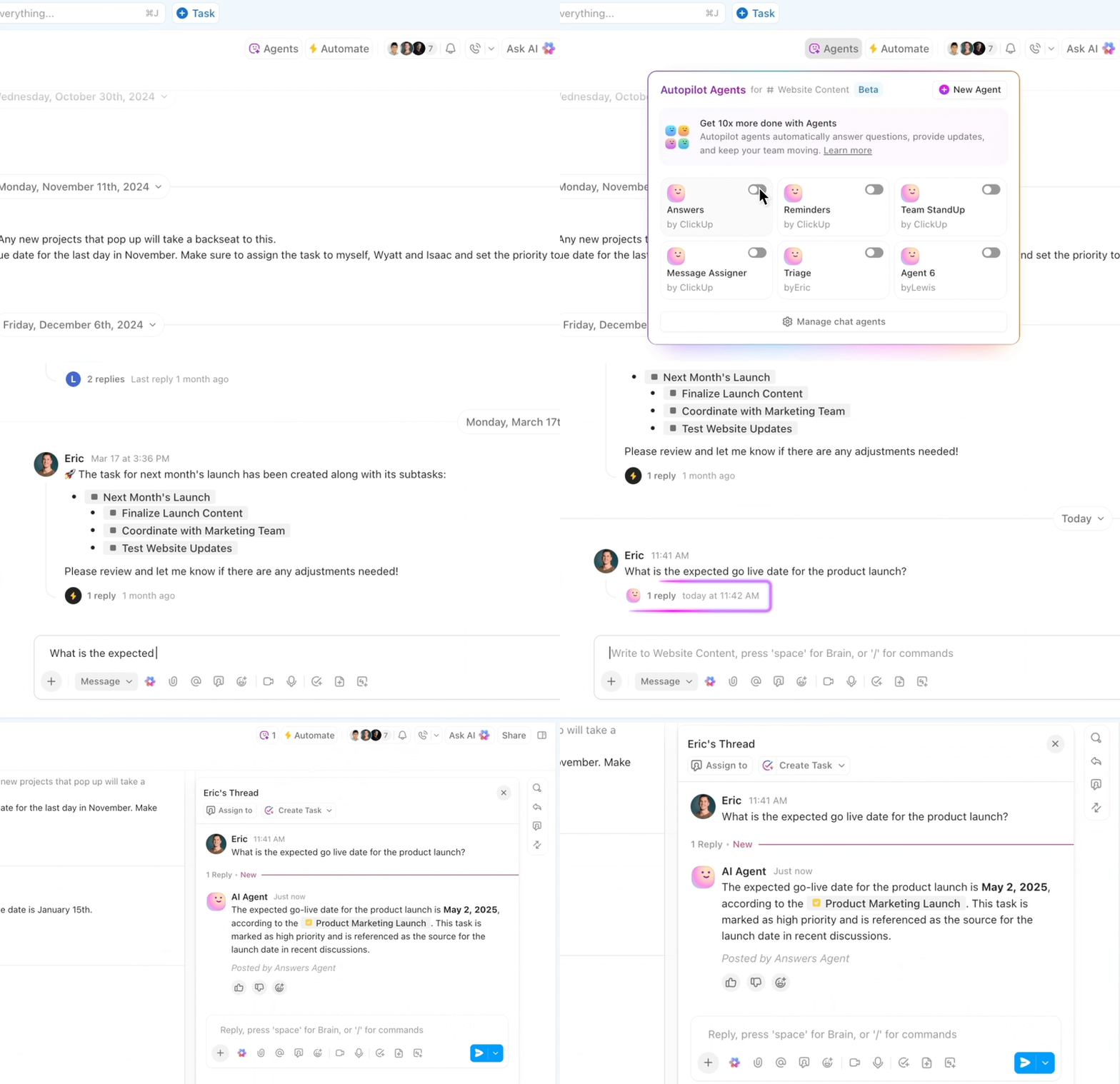
If you’re tired of chasing people for updates, set up ClickUp Automations + AI Agents to handle reminders, auto-assign tasks when statuses change, and notify stakeholders when their approval is needed.
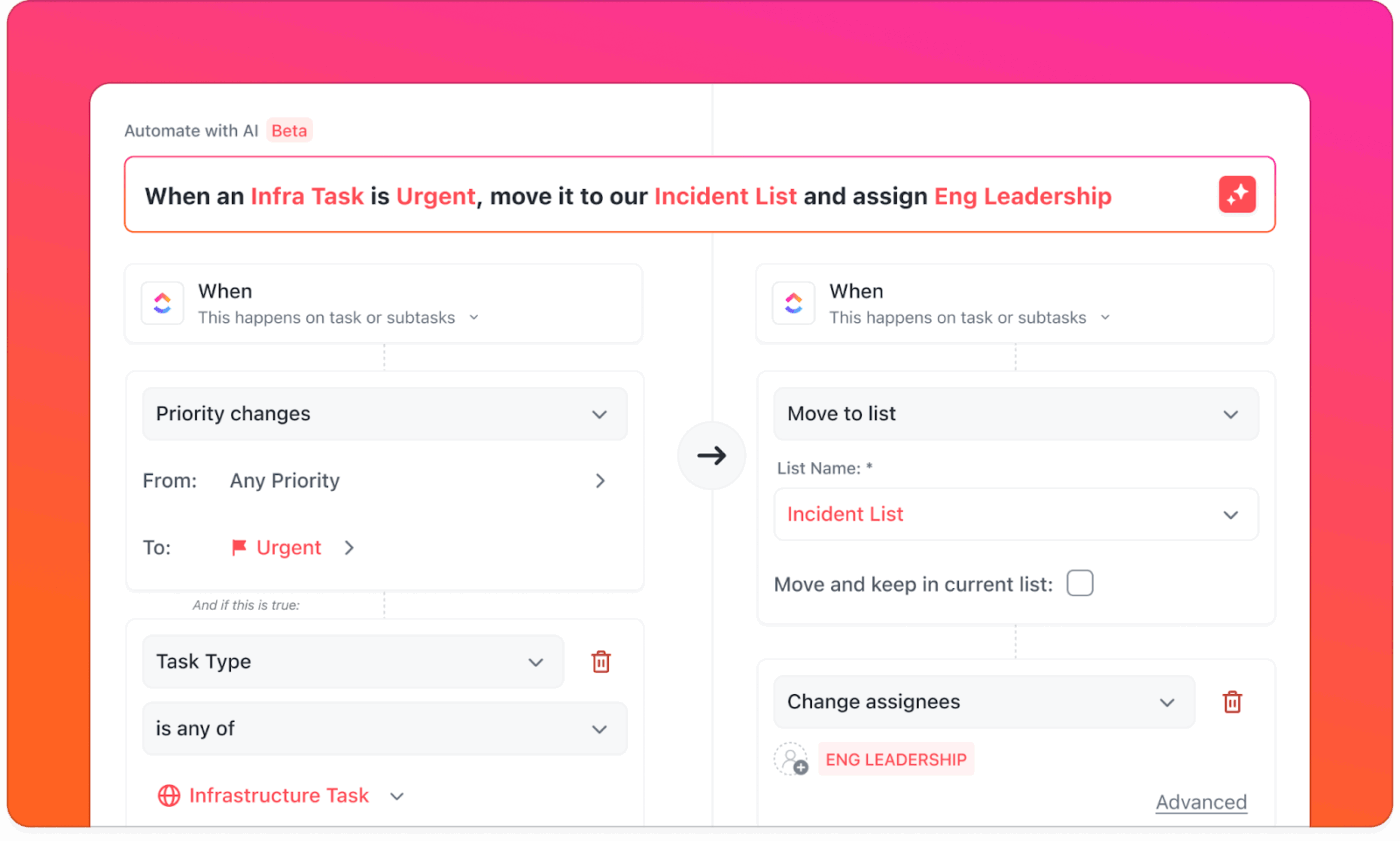
Here’s how to set up a custom Automation in ClickUp:
Beyond traditional rule-based Automations, ClickUp AI Agents introduce a more adaptive, intelligent layer to your workflow.
Instead of waiting for simple triggers, AI Agents interpret task context, understand intent, and take proactive action based on what they find—whether that’s flagging missing briefing details, generating checklists, rewriting task descriptions using your internal standards, or coordinating multi-step workflows automatically.
They can monitor patterns, predict delays, reassign work, adjust timelines, and communicate in natural language with summaries or updates that convey a human touch. In short, while Automations handle the predictable, AI Agents handle the ambiguous—elevating your workspace from reactive triggers to genuinely intelligent workflow management.
Visibility into campaign performance helps teams stay aligned and respond faster to what matters most.
Build a ClickUp Dashboard for your ad campaign that displays key KPIs, including impressions, conversions, creative status, marketing budget, and more. Add cards like progress bars for asset creation, goal tracking for team deliverables, and charts for platform-specific performance.
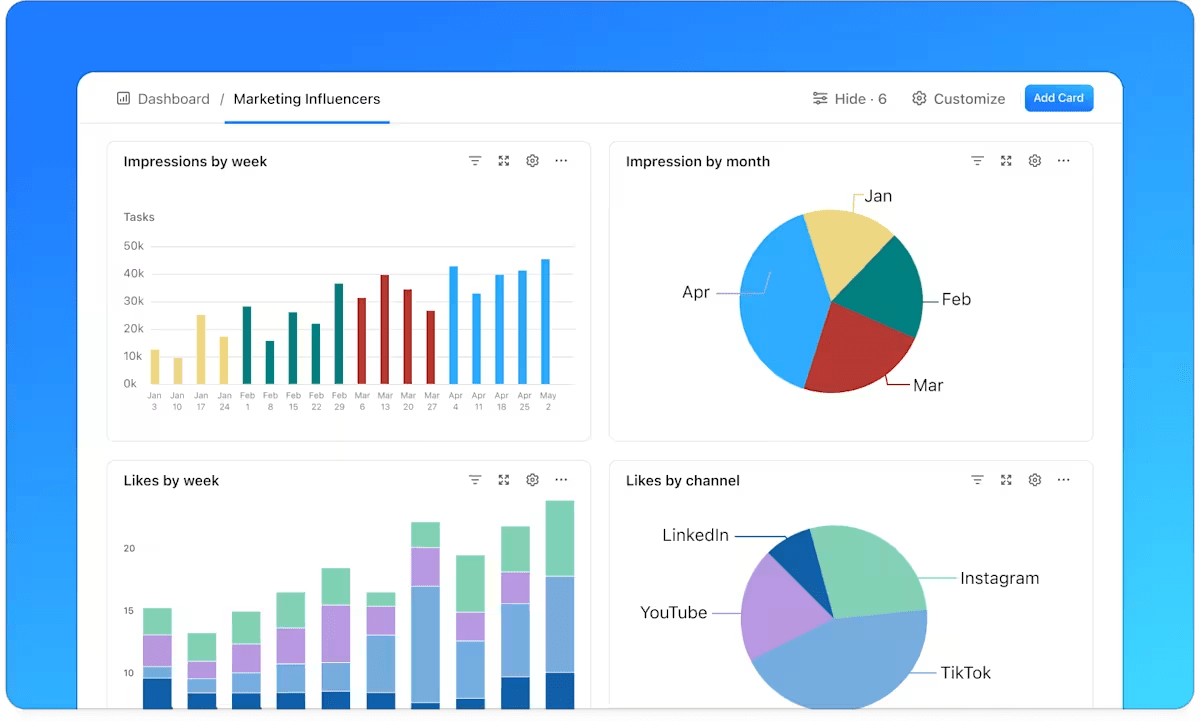
To build a custom campaign dashboard:
🚀 Quick Hack: Running a campaign means juggling assets, feedback, research, and creative ideas at once. ClickUp Brain MAX brings it all into focus.
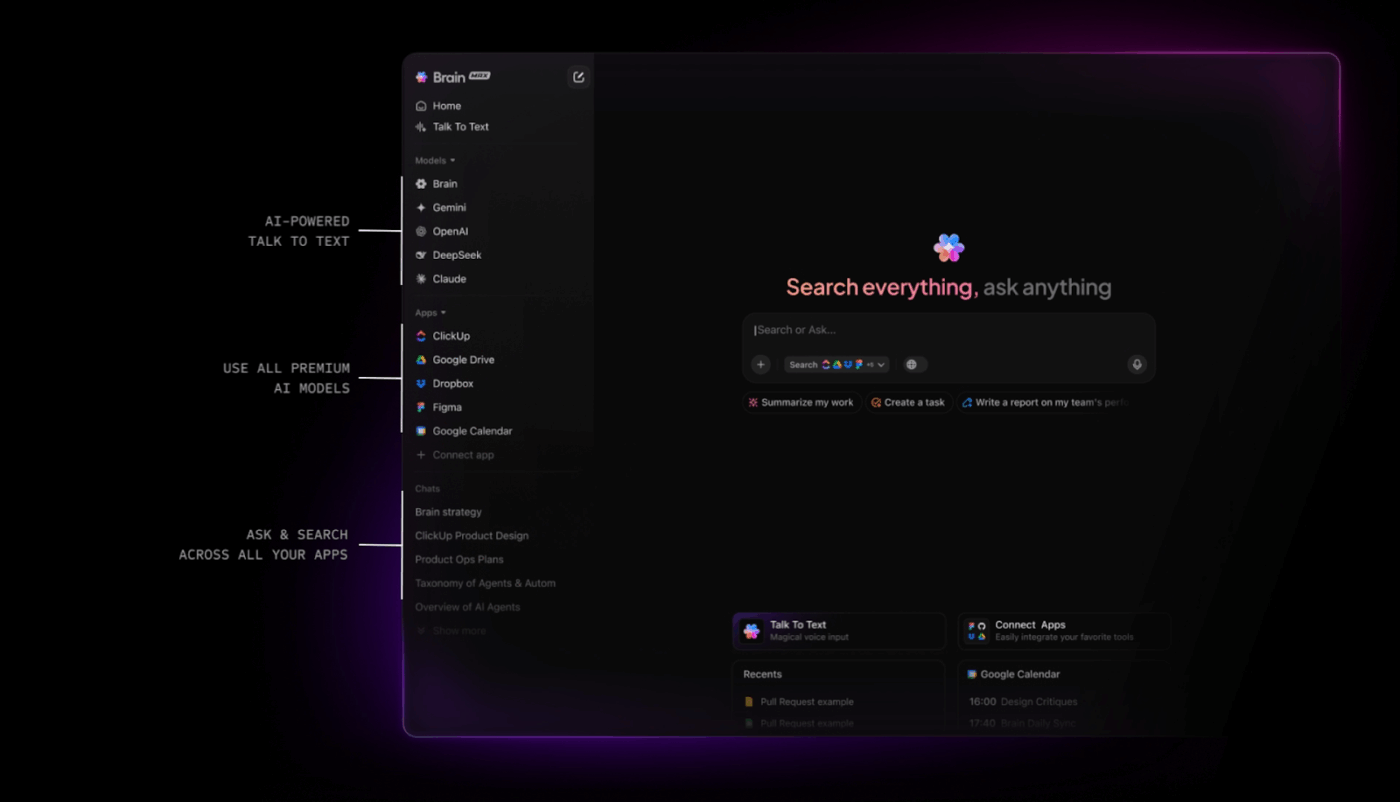
Here’s how:
Try ClickUp Brain MAX—the AI that knows your brand guidelines, past campaigns, and team workflows. Ditch the AI tool sprawl today.
Want your next ad campaign to hit? Here’s what some of the great promotion strategies teach us:
Behind every unforgettable campaign lies a great deal of planning, coordination, and creative chaos.
With ClickUp, you get everything in one place: draft concepts in Docs, map timelines with Gantt charts, organize assets, and automate repetitive tasks.
And with ClickUp Brain, your team’s ideas become even smarter and faster.
Don’t wait for the best idea to strike, get creative and execute with ClickUp.
Sign up to ClickUp for free today! ✅

© 2026 ClickUp

There’s an easier way. Try a free AI Agent in ClickUp that actually does the work for you—set up in minutes, save hours every week.