Sorry, there were no results found for “”
Sorry, there were no results found for “”
Sorry, there were no results found for “”
By 2027, there will be approximately 86.5 million freelancers in the US. This number makes up 51% of the total US workforce!
But why is freelancing so popular?
Imagine working from a home office on projects you’re passionate about, with the freedom to work on your terms. You don’t have to worry about rush hour traffic or rigid schedules.
This is what freelancing offers, along with the opportunity to transform your unique skills into a profitable business. However, navigating the freelance world can be overwhelming without suitable guidance.
This article will take you through everything you need to know about how to become a freelancer. From the most popular freelancing jobs to how to start freelancing, this article is your ultimate guide to working independently.
1. What does freelancing mean and how does it work for beginners?
Freelancing is a self-employed work model where you offer skills to multiple clients on a project or contract basis, giving you full control over your schedule and earning potential.
2. What is the first step to start a freelance career with no experience?
Identify your skills, explore your passions, and check market demand for services you can offer, such as writing, design, development, or marketing.
3. How do new freelancers choose the right niche and target clients?
Select a niche based on your strengths and industry demand, then research ideal clients by industry, company size, location, and common pain points.
4. How should beginners set their freelance rates?
Research standard rates on platforms like Upwork or Fiverr, factor in your experience, niche, and market demand, then set sustainable pricing without undervaluing your work.
5. What tools help freelancers manage projects, clients, and workflows efficiently?
All-in-one platforms like ClickUp centralize tasks, documents, communication, and automations so you can run your freelance business smoothly from one workspace.
Freelancing is a work arrangement where you offer your skills and services to various clients on a project or contract basis. Rather than being employed by a single company, you are self-employed. As a freelancer, you operate as an independent contractor and manage your business operations.
Freelancers typically earn on a per-job or per-task basis. There are usually no specific work hours or a fixed amount of work you have to do. Many people today are either full-time freelancers or freelance as a side hustle for extra money.
With freelancing, you can:
In short, you have full control over your schedule and work.
One of the best things about being a freelancer is getting the opportunity to become a digital nomad. You can travel all around the world while keeping up with your clients and work. And bonus: You are your own boss. In fact, 80% of freelancers chose this line of work to have more independence and be their boss.
Sounds like a dream, right? What’s more, you can offer as many services as you want.
Here are some of the most in-demand freelancing jobs:
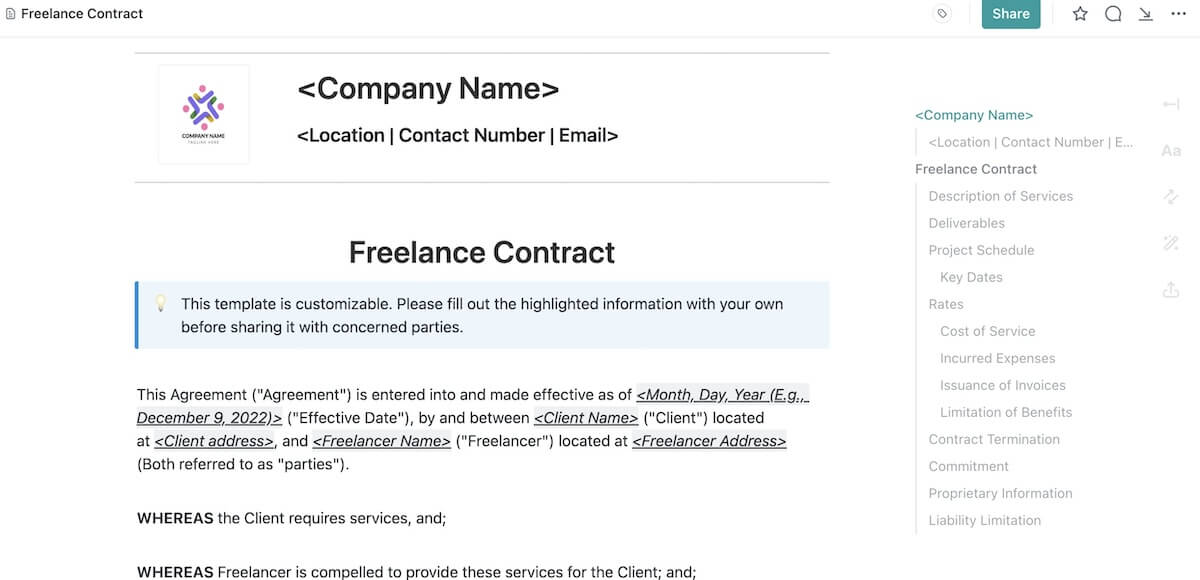
Use ClickUp’s Freelance Contract Template to create clear, professional agreements in minutes. It saves time, sets expectations, and protects both parties for freelancers working with new clients.
Follow a simple build → market → deliver → scale approach.
Ready to launch your career as a freelancer? Here is our detailed guide on how to become a freelancer in 11 simple steps:
For many, freelancing is a way of exploring their passions and skills. Whether they have a separate full-time job or intend to make a career in freelancing, it helps them explore the unknown with less risk.
Therefore, start by exploring your passions and interests. Do you have a way with words? Or with people? Or do you love creating experiences or software? Whatever your skills and interests are, check whether there’s a market for them out there.
Upwork, one of the world’s top freelance platforms, came up with a list of in-demand skills. Take a look:

Pro tip: While exploring your interests, also consider why you want to enter freelancing. Do you want some extra income or intend to break free of the 9-to-5 cycle? This will ultimately determine how much effort you must put in and the steps you should take.
Once you’ve decided the industry you want to freelance in, it is time to figure out the specifics. For example, if you are a writer, figure out whether you want to do blog writing, technical writing, copywriting, or pick another niche. Also, consider the fields you’d like to write exclusively about, for example, skincare, data analytics, or digital marketing.
Similarly, if you are a graphic designer, do you want to specialize in logo design, branding, or web design?
The options are endless. Selecting a niche helps narrow your focus and enables you to provide more value to your clients.
Here’s how you can select one:
Remember, you can still start freelancing if you don’t want to select a particular niche just yet. You can take your time and explore various options to find the one that suits you the best.
As a new freelancer, you have the opportunity to choose your clients and audience freely. Therefore, consider who your ideal client is. This will help you effectively target your marketing efforts and attract the right clients. Here’s how to do it:
While looking for your target clients, take time to research their needs. Check the pain points of your target industry. Engage in forums and online communities where potential clients are active to identify their needs. You can also reach out to potential clients through social media, email, or networking events.
Setting your rates can be intimidating and time-consuming. After all, there’s no rule book on how you can do it. Your experience, industry demands, skillset, project type, niche—all these and more significantly influence pricing.
However, setting the right rates is crucial to ensure your freelance business is sustainable and profitable. Freelancers typically charge on a per-project, per-task, or per-hour basis. To determine your rates as a beginner, do some research to understand what a successful freelancer is charging.
Once you understand the industry standards, decide your rate. Consider the following:
While you probably shouldn’t charge a premium as a newcomer, don’t undervalue yourself, either. Try to find the right balance. And remember, you can always revise your rates as you gain more experience, develop new skills, and do more freelance projects.
Remember: Freelancers have to pay self-employment taxes in addition to their regular income taxes. The self-employment tax rate in the US is currently 15.3% (as of 2024), and it covers social security and medical care.
The next step in starting freelancing is to create a portfolio and website. This is the best way to showcase your skills and attract potential clients. It will help you get organic leads, present your work, and market yourself.
Ensure your website has:
If you’re wondering how to start freelancing with no experience, then creating a solid portfolio is crucial. Add some samples that show your strengths and skills to potential clients. You can also do mock pieces. For instance, you can write a blog on a topic of your niche or design a graphic of your choice.
As you grow your business, you can also add client testimonials and their names.
Don’t forget to optimize the website for search engines by using relevant keywords, meta tags, and alt texts for images. Ensure it is mobile-friendly and loads quickly.
Creating a website is not a mandatory step. You can create a website once you’ve gained some experience. However, we still recommend building a portfolio, as it allows you to show your skills and talent.
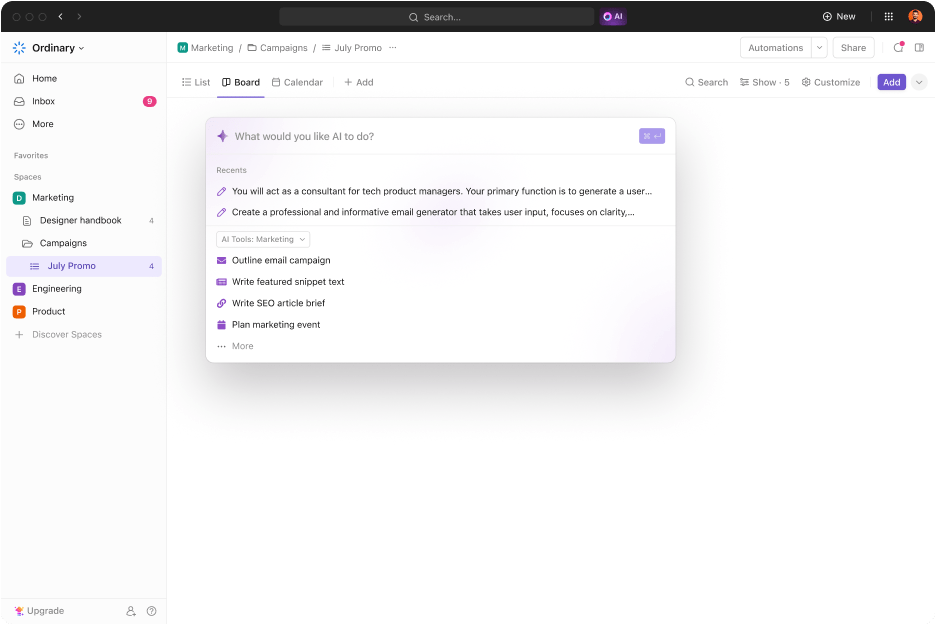
Pro Tip: Not confident about your copywriting skills? Never fear; ClickUp Brain will help you quickly generate copy for your website in the style and tone you prefer.
Armed with your portfolio and website, you are all set to find your first client now. Your first client may find you through your website. But if they don’t, no worries, here’s how you can look for new clients:
Pro tip: While working with a client, don’t think of them as a one-time deal. Instead, focus on building a long-lasting relationship. Having positive relationships with clients can help you get good testimonials, client referrals, and a better reputation in the industry.

Once you find a prospective client, it is time to build a proposal. A well-crafted portfolio can be the key to winning freelance jobs. Develop a standardized freelancer template to save time and ensure consistency. This can include the following:
Use ClickUp Docs to create and store your proposal templates. Refine and easily update the template when needed or create different templates for different projects.
While a standardized template is extremely useful, it is crucial to personalize each proposal to show your sincerity and enthusiasm about the project. Therefore, take some time to research the client and tailor the proposal to meet their specific needs.
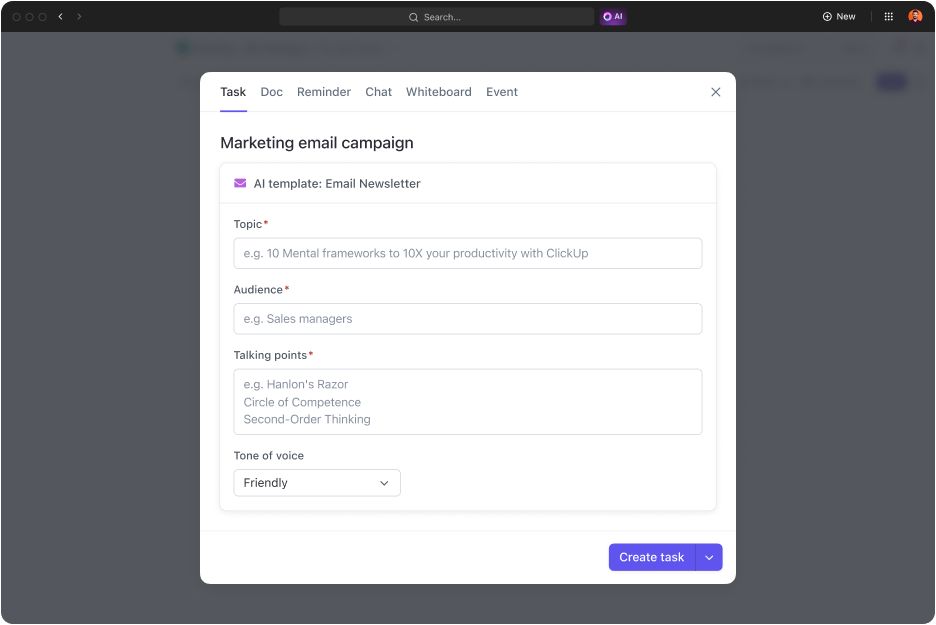
Pro tip: Use AI tools for freelancers, such as ClickUp Brain, to create stronger and more impactful proposals. ClickUp Brain’s AI Writer for Work helps you create templates and write role-specific content. You can even use it to get feedback on your proposal, improve it, and edit it.
Building a solid reputation is essential for long-term success as a freelancer. Each client, each project, and each task will contribute to your image in the industry. Therefore, try to do your best.
Here’s how you can develop a positive reputation:
Also, focus on expanding your network. Cultivate good relationships with your existing and prospective clients, as they play a major role in expanding your business.
Attend industry webinars and events. Connect with experienced people in your field to learn from them. You can also network with other freelancers to stay updated with the new happenings in the industry.
📮 ClickUp Insight: 1 in 4 employees uses four or more tools just to build context at work. A key detail might be buried in an email, expanded in a Slack thread, and documented in a separate tool, forcing teams to waste time hunting for information instead of getting work done.
ClickUp converges your entire workflow into one unified platform. With features like ClickUp Email Project Management, ClickUp Chat, ClickUp Docs, and ClickUp Brain, everything stays connected, synced, and instantly accessible. Say goodbye to “work about work” and reclaim your productive time.
💫 Real Results: Teams are able to reclaim 5+ hours every week using ClickUp—that’s over 250 hours annually per person—by eliminating outdated knowledge management processes. Imagine what your team could create with an extra week of productivity every quarter!
9. Digitize your freelancing activities
A significant part of your reputation depends on the quality of the services you offer. Consider digitizing your freelancing activities to enhance your client’s experience and make freelancing easier than ever.
Leverage project management software for freelancers, like ClickUp, to scale your business. ClickUp for Freelancers offers tools and templates to help you organize, manage, track, and grow all aspects of your business on a single platform.
One thing that really sets ClickUp apart from competitors is its versatility to adapt practically to any situation and automate almost every mundane task that you might have. Also, being able to integrate all services into it (like emails, calendars, etc.) makes my life much easier.

Here’s how you can use ClickUp to transform your freelancing experience:
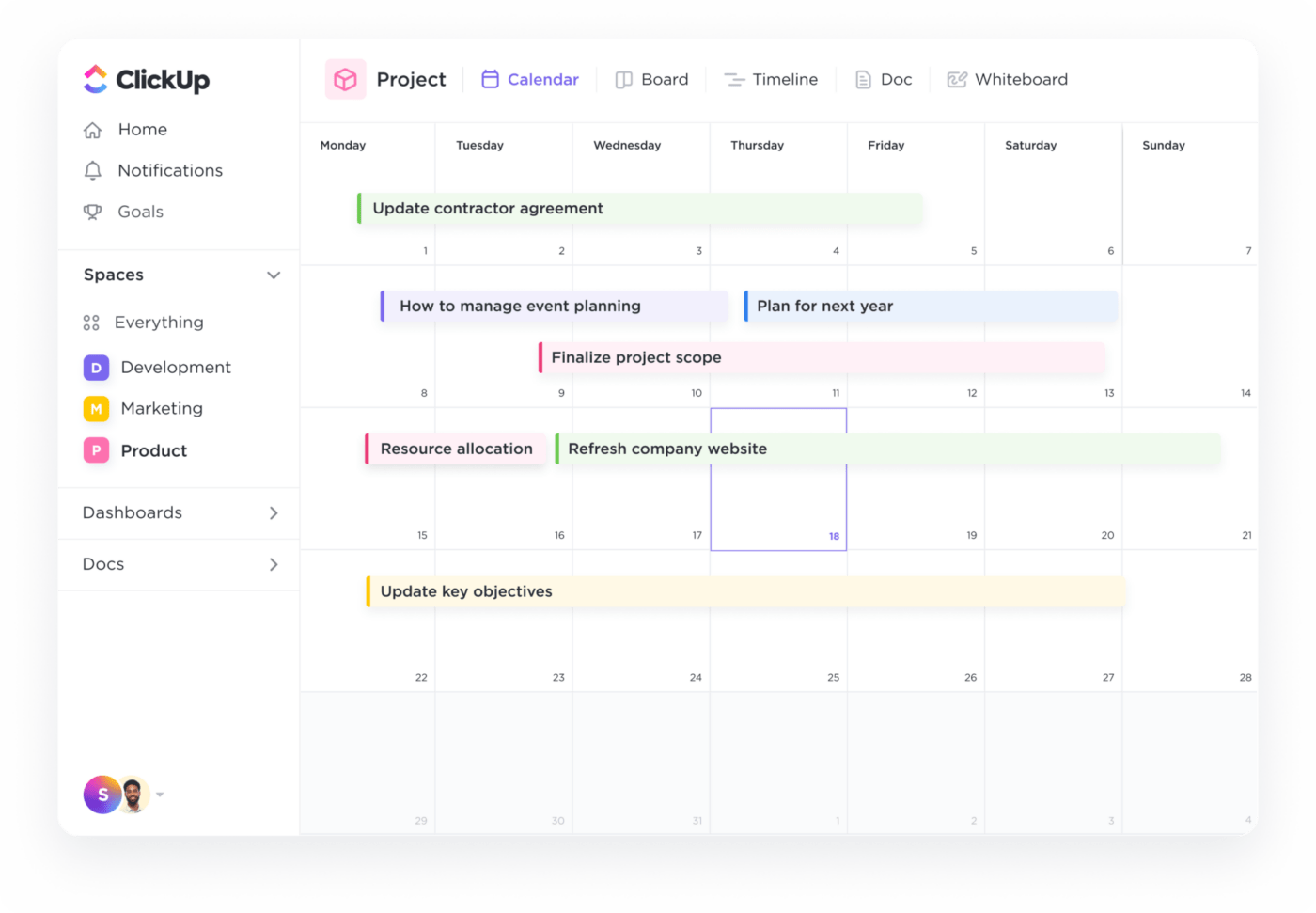

Pro tip: Use freelancer templates, such as ClickUp’s Freelance Contract Template, to ensure consistency and minimize errors in all your freelance jobs. The template helps you create legally binding contracts that protect your rights, set expectations, negotiate terms, and streamline contract management processes.
In the initial stages of your business, it is best to go for active marketing. In contrast to passive marketing, which relies on attracting clients who are already searching for experienced freelancers, active marketing involves directly reaching out and promoting yourself to potential clients.
Consider these strategies to actively market your services:
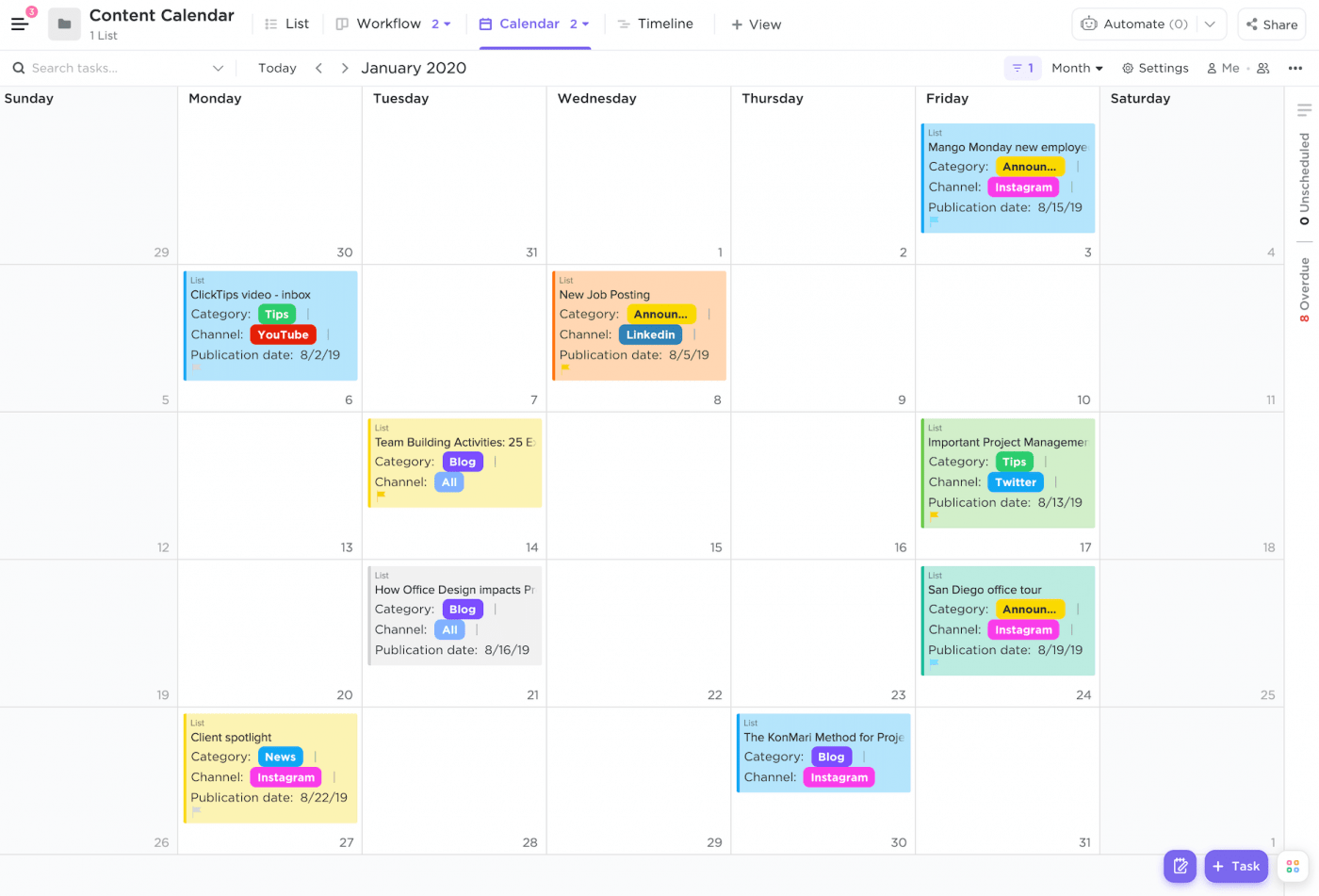
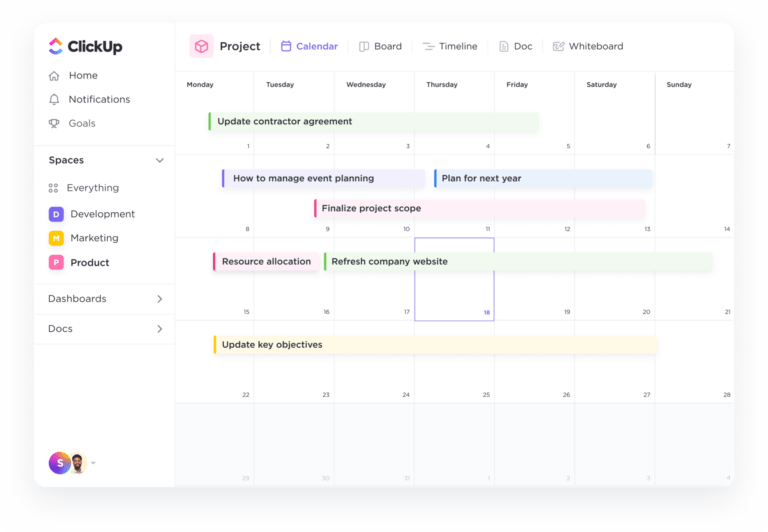
Pro tip: Use ClickUp’s Calendar View to plan and schedule blog posts, social media updates, and email campaigns
Continuously improve your skills and knowledge to stay competitive and adaptable. Stay informed about industry trends, tools, and best practices. Consider following industry leaders and reading blogs and newsletters to keep up with the changes.
Expand your skill set to offer new services and hone your previous ones. You can do this by:
Many successful freelancers start their journey while still holding down a full-time job. Balancing these two commitments, however, requires careful planning, time management, and efficient organization. Here’s how to become a freelancer while successfully managing a 9-to-5 job:
Allocate specific hours outside of your full-time job for freelancing. This may include evenings, weekends, or designated blocks of time during lunch breaks.

Determine which freelancing tasks are most urgent or revenue-generating. Focus on completing these first. Create Tasks in ClickUp for each freelancing project and prioritize them based on deadlines and importance. You can also share tasks and deadlines with clients for transparency and streamlined communication.
Block dedicated time in your calendar for freelancing activities. It is best to set reminders and allocate realistic time frames for each task. Use ClickUp Reminders to create tasks for focused work sessions and set reminders for when to begin them. This prompts you to set aside time in your schedule for these sessions.
Centralize communication to ensure there are no overlaps between your freelancing activities and a full-time job. With ClickUp, you can discuss projects, share updates, and securely exchange files—all within a single platform.
The most significant challenges of freelancing are the ones you often face in remote work: feelings of isolation, lack of communication, misunderstandings, time zone differences, maintaining work-life balance, and more. You may also face challenges in managing remote work expenses.
But worry not, for you can tackle most of these challenges using freelance hacks like these:
You can also leverage ClickUp to manage your small business for free. With ClickUp’s innovative features, remote work has become simpler than ever.
Remote work is simplified with ClickUp, helping us manage all our projects anywhere at any time. We can easily assign tasks, set priorities, track projects, and collaborate all under one single platform.
For tackling remote work expenses, here are the things you should remember:
We hope we’ve answered all your questions about how to become a freelancer.
Freelance work offers unparalleled opportunities for autonomy, flexibility, and professional growth. Whether you plan to be a full-time freelancer or run a freelance business alongside your current job, the transition can be both rewarding and challenging. Becoming a successful freelancer requires dedication, strategic planning, and a commitment to continuous learning.
Therefore, focus on self-improvement, enhance your skills, form meaningful and long-lasting relationships with clients and peers, and expand your client base.
By leveraging platforms like ClickUp, you can streamline workflows, enhance collaboration and productivity, and offer memorable experiences to your clients. Sign up for free today!

Manasi Nair
Max 20min read

Praburam Srinivasan
Max 14min read
Manasi Nair
Max 32min read

© 2026 ClickUp