


“Well begun is half done.”
A great philosopher, Aristotle knew the importance of strong beginnings. This timeless saying applies to philosophy and every task, especially our projects.
Have we allocated the necessary resources appropriately for the project? How can we manage any budget constraints? How do we establish quality standards?
Questions like these often arise if you fail to initiate your project well. Project initiation is the most crucial stage of any project.
However, whether you’re a seasoned project manager or a newbie, the question of how to begin a project may bug you. In this article, we will take you through the ABCs of the project initiation phase, along with steps for an effective initiation.

 Summarize this article for me please
What is Project Initiation?
The Project Management Institute divides a project’s lifecycle into five stages:
- Initiation: Defining the project and getting stakeholders
- Planning: Creating goals and a roadmap
- Execution: Launching the project
- Performance: Measuring performance using KPIs
- Closure: Share the details with stakeholders
This article focuses on project initiation. As evident by the name, project initiation is the first step of a project. It involves defining the project at a broad level, obtaining approvals from key stakeholders, and establishing a solid foundation for the project.
This stage defines the future of your project—will it go forward or not? Only with the stakeholders’ approval can you begin the project. You must showcase your ideas, their feasibility, and business value to get that approval.
Therefore, the activities involved in this stage include:
- Project definition: Defining the purpose, objectives, and deliverables
- Project charter: Developing a project charter (more on this later)
- Scope definition: Defining the scope of the project, constraints, and assumptions
- Risk assessment: Identifying potential risks and uncertainties
- Feasibility study: Understanding the feasibility of your project
- Cost-benefit analysis: Identifying whether the project has business value
- Resource planning: Estimating the resources required and developing a preliminary project schedule
- Stakeholder engagement: Identifying and engaging with stakeholders
- Project approval: Getting stakeholders’ approval
- Team formation: Forming the dream team who’ll work on the project
Managing all aspects within a limited time makes project management challenging. Therefore, throughout the project lifecycle, you need tools to help you manage risks, tasks, resources, and performance.
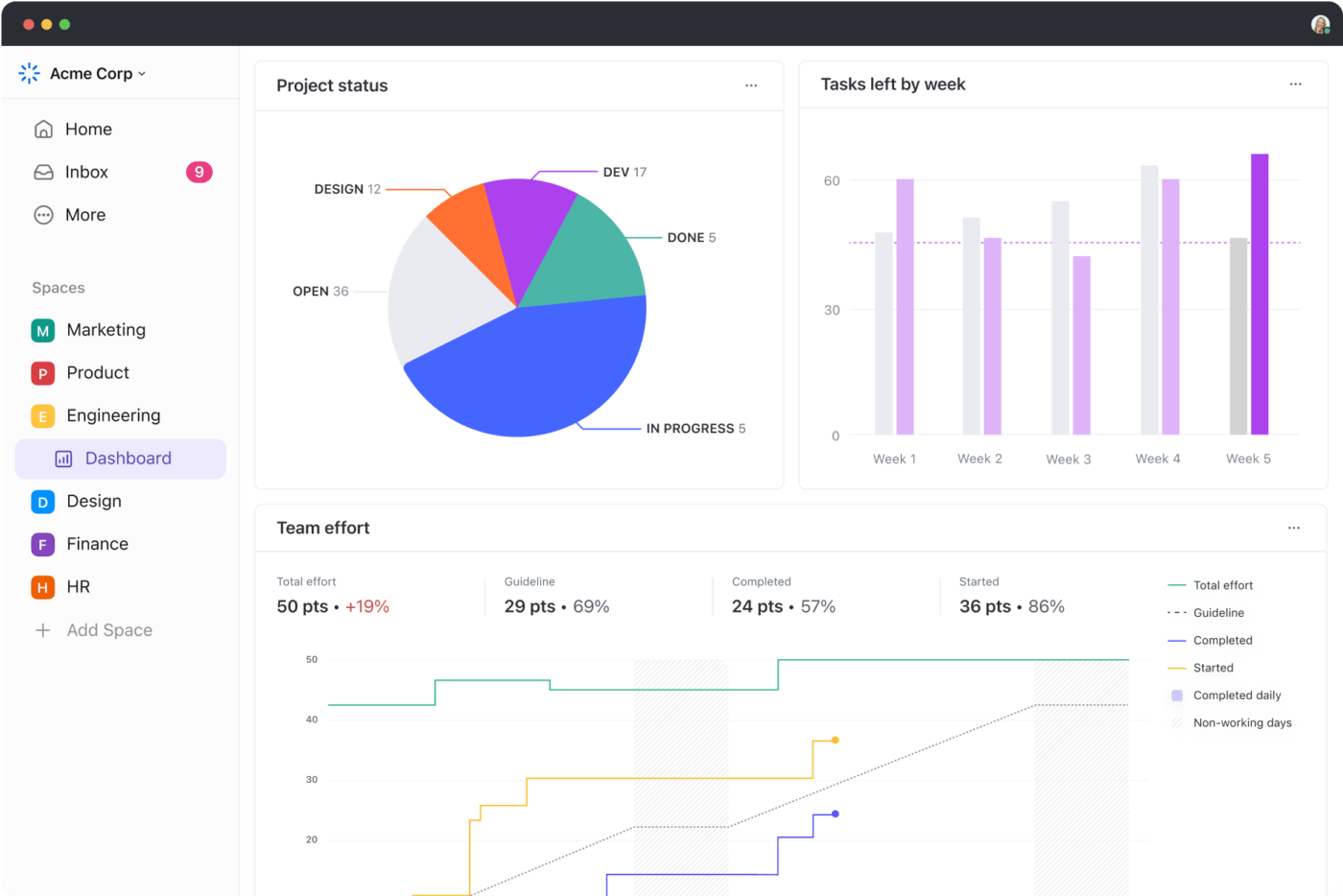
ClickUp’s Project Management Tool accelerates project planning and execution, ensures transparency, tracks your priorities, and enables you to deliver projects faster and better.
Project initiation vs. project planning
It is easy to confuse the project initiation phase with project planning. Many people use initiation and planning interchangeably while talking about project management. However, these are two distinct terms.
You already know what project initiation involves, so let’s discuss project planning. Project planning is the second phase of project management. It involves defining specific objectives and deliverables and working on the minute details of the plan. The project planning tools used at this stage also differ.
For a better understanding, here’s the general difference between the two:
| Basis | Project Initiation | Project Planning |
| Phase | First phase | Second phase |
| Purpose | Defining the project in a broad sense and getting approval | Creating a detailed project plan to outline how the project will be executed, monitored, and controlled |
| Key Documents | Project charter | Project management plan, schedule, budget, and risk management plan |
| Scope | Focuses on the broad scope | Focuses on details |
Summarize this article for me pleaseWhy is a Strong Project Initiation Phase Important?
The project initiation phase can make or break your project. This phase is incredibly critical, from getting project approval to assembling a team to realize your vision. Let us go through the importance of this stage.
Clarity of purpose
It establishes a clear understanding of the project’s objectives, goals, and purpose. This ensures everything is aligned with the project scope, with little chance of scope creep.
Engaging the stakeholders
It involves engaging with your stakeholders and getting their approval. The earlier the involvement, the better your chances are of gathering support and mitigating potential challenges. The earlier you get your executive sponsor on board, the higher the project’s chances of taking off.
Identifying the risks
This stage involves the process of identifying and understanding the risks. It is crucial to project planning and minimizing the impact of uncertainties on the project.
Aligning the resources
It helps to align resources, including human, financial, and technological assets. Proper allocation of resources reduces the chances of facing bottlenecks in future phases. Optimum resource allocation will ensure your project flows smoothly and with minimal hiccups.
Defining project scope and constraints
This phase also includes clearly defining the project scope. This, along with identifying constraints and assumptions, lays the groundwork for realistic planning and expectations.
Authorizing the project charter
The project charter is equivalent to the project’s existence. It formally authorizes the project’s existence. With this document, you get the power to initiate project activities.
Establishing communication
Effective communication is key to the success of any project. This stage establishes the most effective communication channels between the project team and external stakeholders.
While this is checked throughout the project duration (and after project execution) to prevent miscommunication, it helps prevent wasting time and resources.
Foundation for planning
A solid beginning sets a robust foundation for the project planning phase. With a well-executed initiation phase, you can ensure that the rest of the planning is based on accurate information and a thorough understanding of project requirements.
Therefore, the initiation phase establishes your project’s direction and resource requirements. It ensures all the stakeholders and team members are on the same page regarding goals, scope, objectives, and how to proceed.
Summarize this article for me please5 Steps to an Effective Project Initiation Phase
Now that you know the why and when of project initiation, let us move on to the how. How do we ensure an effective project initiation phase? The answer is simple—with some finesse, the perfect project management tool, and these steps! And do not forget to follow the project management principles.
1. Create a project charter
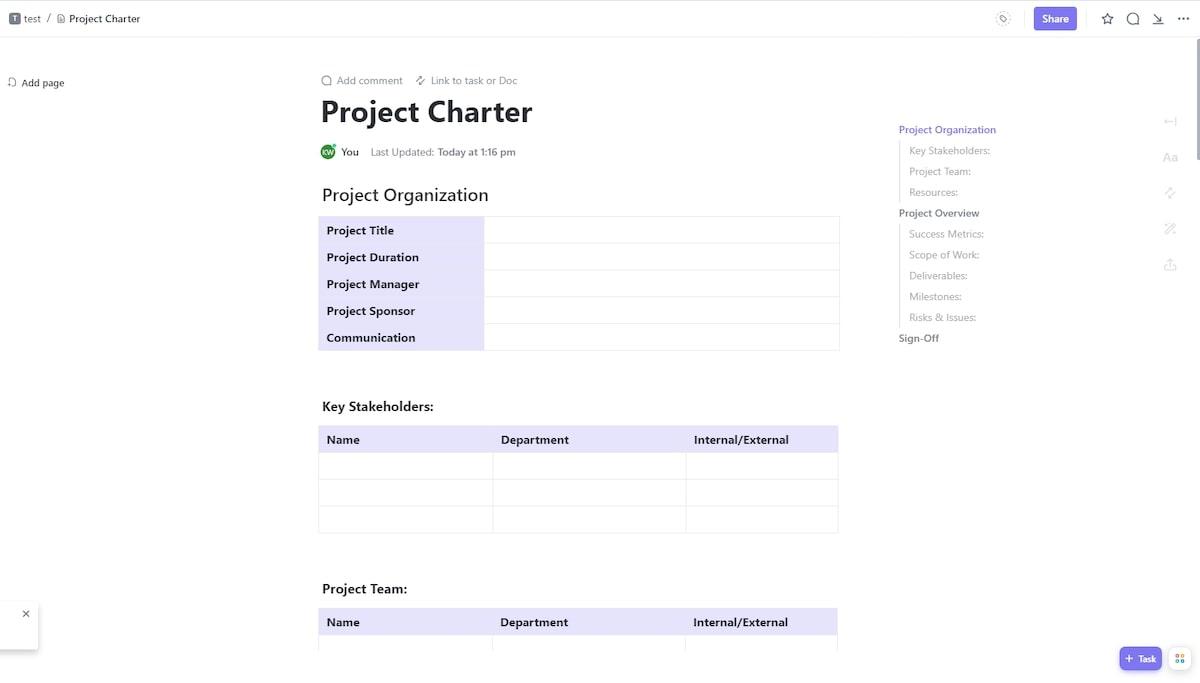
A project charter is a crucial document in the project management life cycle. It formalizes your project and gives everyone direction. Its basic use is to:
- Authorize the project
- Show why your project is necessary
- Hold everyone accountable for their roles and responsibilities
- Act as a baseline throughout the project lifecycle
A project charter is vastly different from a business case. A business case is used for larger projects with more items, while a project charter is used for smaller projects with fewer items.
Content of your project charter
Here’s what you should include while creating a project charter:
- Your project’s name: Add your project name and make it as specific as possible. It should be catchy and effectively communicate your project goals
- Purpose and goal: Include what the project aims to achieve and why it is proposed
- Budget: Add the estimated costs and resources required
- Deliverables: Add the deliverables, KPIs, and metrics
- Risk: Include identified goals and mitigation strategies
- Scope: State the scope of your project
- Duration: State the beginning and ending time frames of your project
- Stakeholders: Who will you report to? Add the details of your key stakeholders
- Roles and responsibilities: Define each team member’s role and responsibility in the project
In short, cover the why, what, and who: why does this project exist? What is the scope of the project? And who will work on the project? The best way to create a comprehensive project charter is to use a project charter template.
Methods to create a project charter
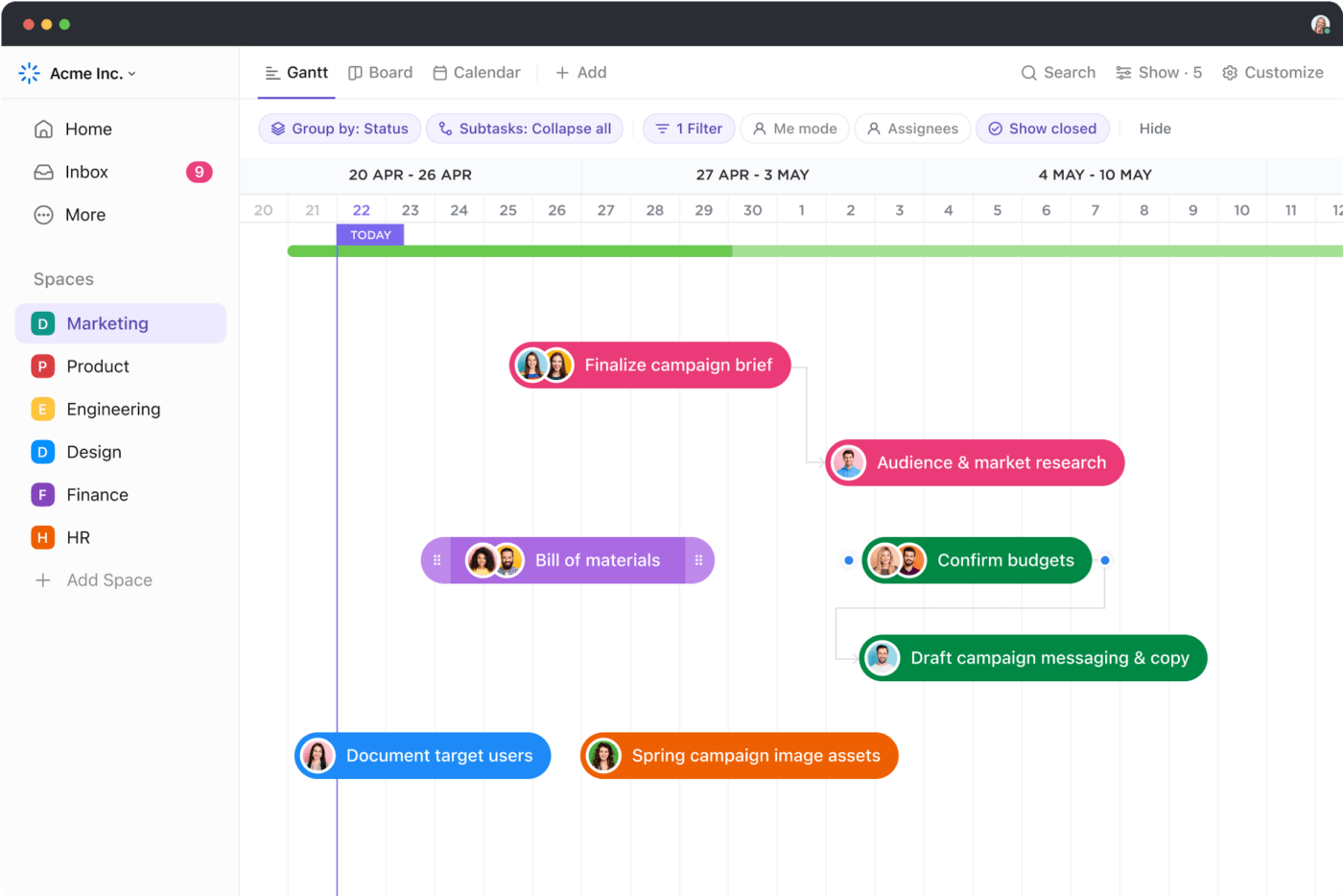
Your project charter will be crucial in informing and persuading the stakeholders. Therefore, it should be appealing. Use visuals like a Gantt chart or Timeline View to make it visually appealing. This way, your stakeholders will easily digest the information.
Another thing to remember is to get your team’s critical members involved in the process. The Project Management Office or PMO functions as a team and group. The project initiation process is an important project life cycle step to involve multiple key stakeholders early on.
The good thing is that most project management software has features that offer collaboration and visuals. So you do not have to do everything manually.
Project managers use ClickUp’s Project Charter Template to overview their goals and objectives comprehensively. It offers an easy-to-use checklist for tracking progress and flexible document-sharing options with stakeholders. All you have to do is sign up for ClickUp, add the template, and invite members to your workspace to begin the collaboration.
2. Identify your key stakeholders
The next step in project initiation is to find key stakeholders who will sign off on your project charter. The Project Management Institute defines stakeholders as people who influence the project or are influenced by the project, such as executive leaders, sponsors, etc.
They provide resources and approval for the project. And their satisfaction is a major factor in project success.
There are two types of stakeholders:
- Internal stakeholders: These are typically people from within the organization involved in the project. This includes the project team, manager, sponsor, and internal teams
- External stakeholders: These people are affected by the project’s result, though they might not be directly involved in the project. For example, external clients, subcontractors, suppliers, and end users
Another way of identifying stakeholders is to conduct a project stakeholder analysis. According to this, divide your stakeholders into four groups:
- People with high influence and high interest
- People with high influence and low interest
- People with low influence and high interest
- People with low influence and low interest
People in the first group are your key stakeholders. With these people by your side, your project has a better chance of success, as they help identify risks and bring their experience to the table. And remember to create a stakeholder register. This will help you align the frequency and the means of communication with them.
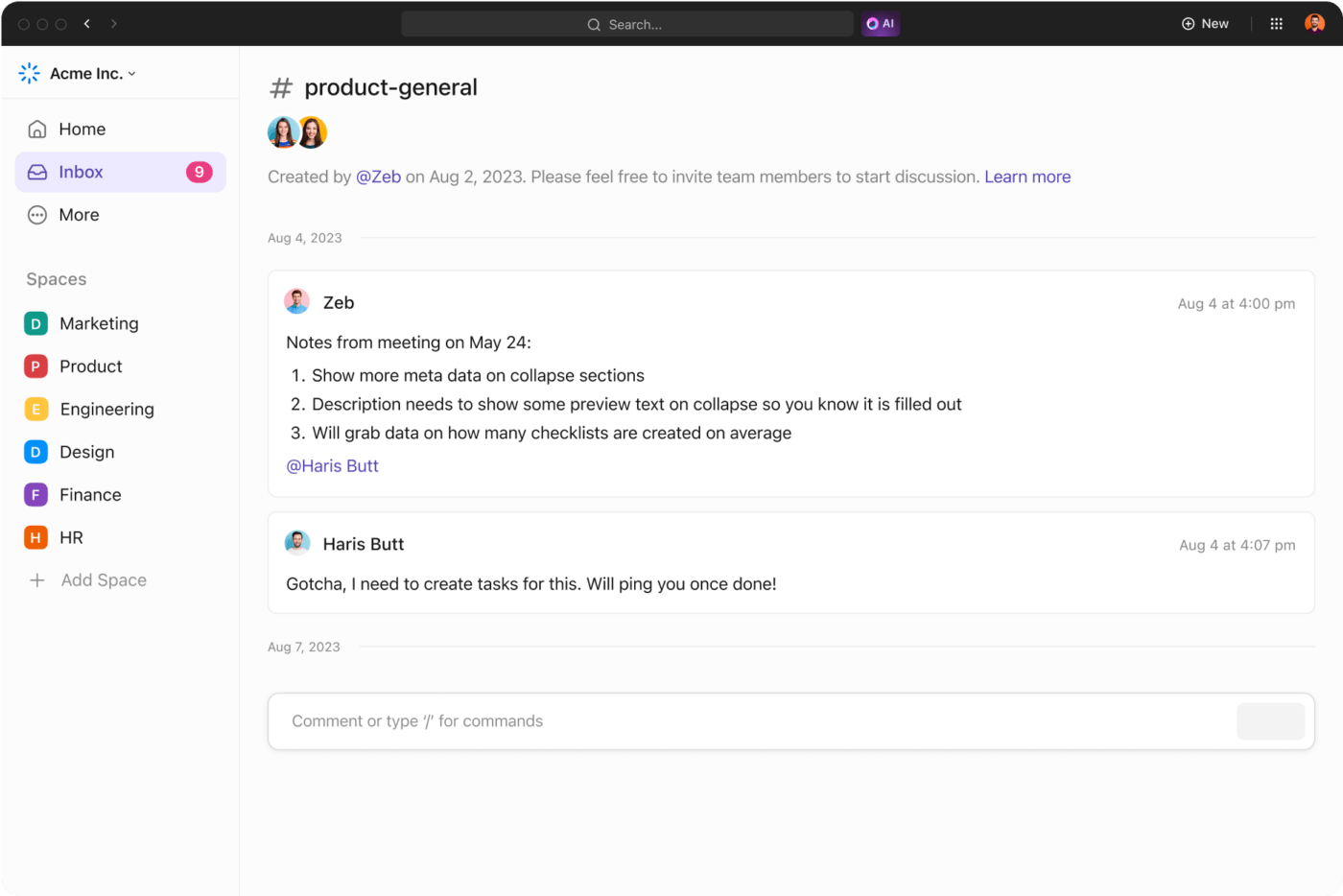
Another crucial part of this step is determining the communication methods with the stakeholders. This will also come in handy during team communication. Choose the right communication and collaboration tools. This includes simple tools like email, Skype, or something more intuitive like project management software.
3. Pitch your project
Now that you’ve found the key stakeholders, the next step in project initiation is to pitch your project to them. Pitching involves presenting and advocating for your project. When successfully done, you get support, resources, and alignment from people who can influence your project.
Here are some elements to consider when pitching your project:
- Create a compelling narrative about the project. Communicate its purpose, goals, and outcomes in a way that resonates with the priorities and interests of the stakeholders
- Identify the stakeholders’ concerns, expectations, and priorities, and tailor your pitch to address those points
- Clearly explain the value proposition of the project. Make sure to emphasize its benefits and positive impact on the organization and community
- Make sure to address risks and challenges. Acknowledge them clearly and share mitigation strategies
- Make the pitch visually appealing. Use charts, graphs, and slides to provide a concise overview of the project
- Make it interactive and engaging. Encourage questions and discussions to enable stakeholders to express their concerns and provide feedback
- Timing matters a lot. Therefore, choose an opportune time to pitch your project. Consider other ongoing initiatives and priorities before making your move
- Always ask for feedback. Address stakeholders’ concerns and share additional information if required
- And lastly, embrace project standardization. With standardized methodologies, your pitches become clearer, more consistent, and better aligned with organizational objectives
4. Run a feasibility study
The next step in project initiation is to run a feasibility study. This study assesses the feasibility of your project with the available resources. It confirms market opportunities and gets more information before you make the final decision.
Essentially, it answers the following questions:
- Does the project team have the required resources to complete this project?
- Will the project generate enough ROI to make it worth pursuing?
A feasibility study is done after project pitching. You can do it alongside SWOT analysis and project risk assessment. Here are the steps to conducting the study:
- Conduct a preliminary analysis
- Evaluate the financial feasibility of the project
- Perform a market assessment
- Review the data collected by all types of feasibility studies
- And finally, make a decision
A project management tool like ClickUp helps you track all the necessary information related to the feasibility study. Check progress in real-time, collaborate instantly and easily, enable Team View, and streamline the entire process.
Before conducting a feasibility study, consider whether your project needs it. Since it costs a fair bit of time and resources, it is essential to determine this. Typically, you don’t need to do it for smaller projects that do not have a major long-term impact on your organization. You do not have to do it again if you’ve done a similar project or study within the past three years.
5. Find your people
With stakeholders’ approval on the one hand and the project’s feasibility on the other, you’re all set to begin your project. All that is left is to find your dream team. A project team involves people from different departments, depending on your requirements.
Some of the common members of a team include:
- Project sponsor: The person responsible for the project vision and governance. They are typically senior to the project manager
- Project manager: The person who leads and guides the team, makes decisions, creates a project plan, monitors the project progress, and interacts with the stakeholders
- Team lead: In larger teams, a team lead differs from a project manager. They are responsible for team management responsibilities
- Team members: People with the required skill set who are responsible for completing different tasks
A project team can also have other members, depending on the needs. Ultimately, your aim should be to establish a functional team with the right experience and skills. You can either hire new people or reassign existing employees.
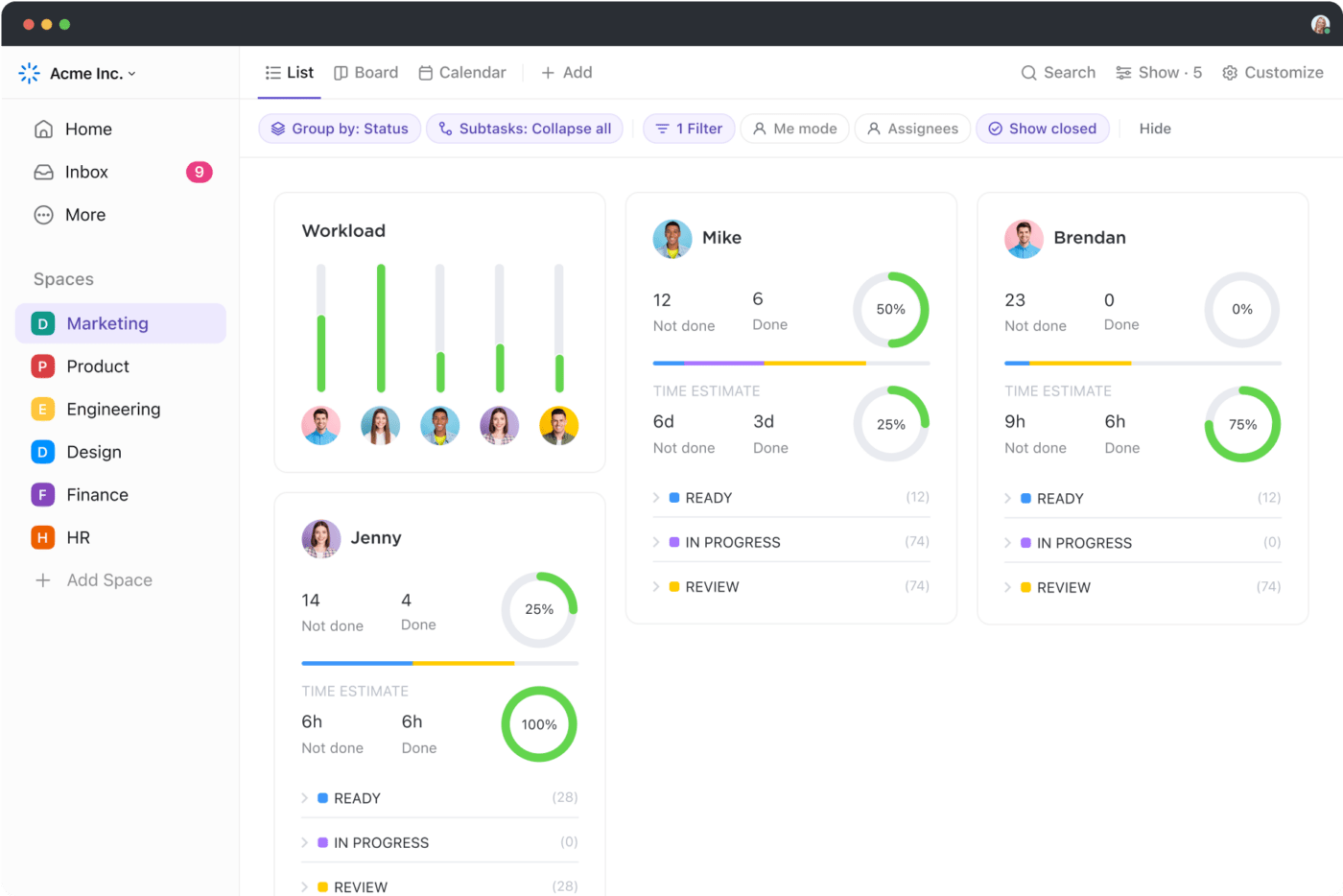
With a large team, monitoring your team members’ progress can be difficult. However, you can monitor each employee’s progress using the team view status available on your project management tool.
Summarize this article for me pleaseConclusion
As the first step in project development, the initiation phase bears great power over the rest of the project.
The decisions during this phase affect the entire project lifecycle, shaping its trajectory and determining its ultimate success. Each step covered in this article will bring you closer to the best project initiation phase.
Following these steps will make your project initiation smarter and stronger. And remember, do not let this energy fizzle throughout the project. Ensure each aspect, including project schedules, capacity building, quality management, and more, begins and ends with the same energy (or better!).


Everything you need to stay organized and get work done.

Recent Articles

Enterprise Project Management: How to Run Every Project as One Portfolio 
Enterprise Project Management: How to Run Every Project as One Portfolio
How to Build a Task Dashboard Your Team Actually Trusts
How to Build a Task Dashboard Your Team Actually Trusts
