Sorry, there were no results found for “”
Sorry, there were no results found for “”
Sorry, there were no results found for “”
🔎 Did You Know? The global SaaS market is booming—set to skyrocket from $315.68 billion in 2025 to $1.1 trillion by 2032 at a blazing 20% CAGR.
What’s powering this surge? SaaS sales teams!
As businesses move to scalable, cloud-based solutions, the sales reps who adapt, close, and retain clients are leading the charge.
But selling SaaS isn’t about one-time transactions—it’s about building long-term relationships, reducing churn, and maximizing customer lifetime value (LTV).
This blog breaks it all down—proven strategies, expert insights, and the best tools for SaaS sales success. Let’s get started!🚀
SaaS (Software as a Service) is a cloud-based model where users subscribe to software instead of purchasing it outright. It simplifies IT management with seamless scalability, automatic updates, and cost-effective, anytime-anywhere access.
📈 With 92% of organizations planning to invest in AI-powered software, cloud-based SaaS operations are becoming the norm.
Here’s why companies are betting on this sales model:
🧠 Fun Fact: SaaS has deeper roots than you think! In the 1960s, businesses rented computing power instead of owning giant mainframes. That time-sharing model was the blueprint for the modern SaaS business model!
SaaS sales involve selling cloud software through a recurring revenue model, focusing on retention, expansion, and long-term value rather than one-time transactions. It blends consultative selling with customer relationship management, convincing prospects that your software is the best solution while retaining existing customers.
➡️ Also Read: Best AI Tools for Sales Teams
To succeed, SaaS sales teams are structured with specialized roles:
📖 Read More: Sales professionals balance pipelines, quotas, and team performance—all while driving revenue growth. Want to see how top leaders stay ahead? Peek behind the scenes at a day in the life of a sales manager and uncover their secret.
The SaaS sales process is a structured roadmap to attract, convert, and retain customers—fueling long-term revenue growth.
Here’s how top sales teams navigate this:
Attracting the right leads starts with defining your ideal buyer persona (IBP)—decision-makers who need your solution and are ready to invest.
The best sales reps educate, inspire, and create demand. The key? Deliver the right message to the right audience at the right time and move potential customers faster through the sales funnel.
🔎 Did You Know? 80% of sales need at least five follow-ups, yet most reps quit after one. Don’t be one of them—consistency and personalized outreach win deals.
Chase the right deals—qualify high-intent buyers faster and increase close rates.
A common approach to doing this is the BANT (Budget, Authority, Need, Timeline) framework—a quick check to confirm if a lead has the budget, decision-making power, and urgency to move forward.
However, traditional lead scoring isn’t enough for SaaS—long sales cycles require deeper qualifications. Use advanced frameworks like:
🧠 Remember: Top SaaS sales reps set focused sales goals to qualify leads faster, close more deals, and drive retention. Because in SaaS, revenue is a marathon, not a sprint!
Most product demos miss the mark. Sales representatives overload prospects with features, forget to ask for the close—and then wonder why deals stall.
Meanwhile, leading SaaS companies adapt their offerings based on customer feedback and real-world needs.
Your product demo should do the same—here’s how to make it count:
💡 Pro Tip: Objections mean interest—turn them into wins! Build a sales battle card to counter competitors and keep your discussion engaging. Ask yourself, ‘Would I stay engaged in this demo?’ If not, tweak your pitch!
At this stage, new customers are interested—but not sold yet.
With 80% of B2B buyers preferring omnichannel sales, SaaS buyers expect digital-first interactions and innovative solutions that scale with their needs.
That’s where data-driven SaaS sales teams win—using product usage insights, success stories, and real-time adoption trends to drive decisions.
With ClickUp’s Sales solutions, teams can streamline workflows, automate follow-ups, and track key sales metrics in one place. This enables reps to personalize outreach, optimize deal cycles, and accelerate revenue growth with AI-powered insights and real-time collaboration.
To close deals faster, focus on these key strategies:
For SaaS businesses, revenue doesn’t stop at the first sale—it scales with retention and expansion.
Even a 5% increase in retention boosts profits by 25% to 95%, proving that SaaS customer success is about continuous value and long-term growth.
Here’s how you can keep that ARR graph climbing higher and higher:
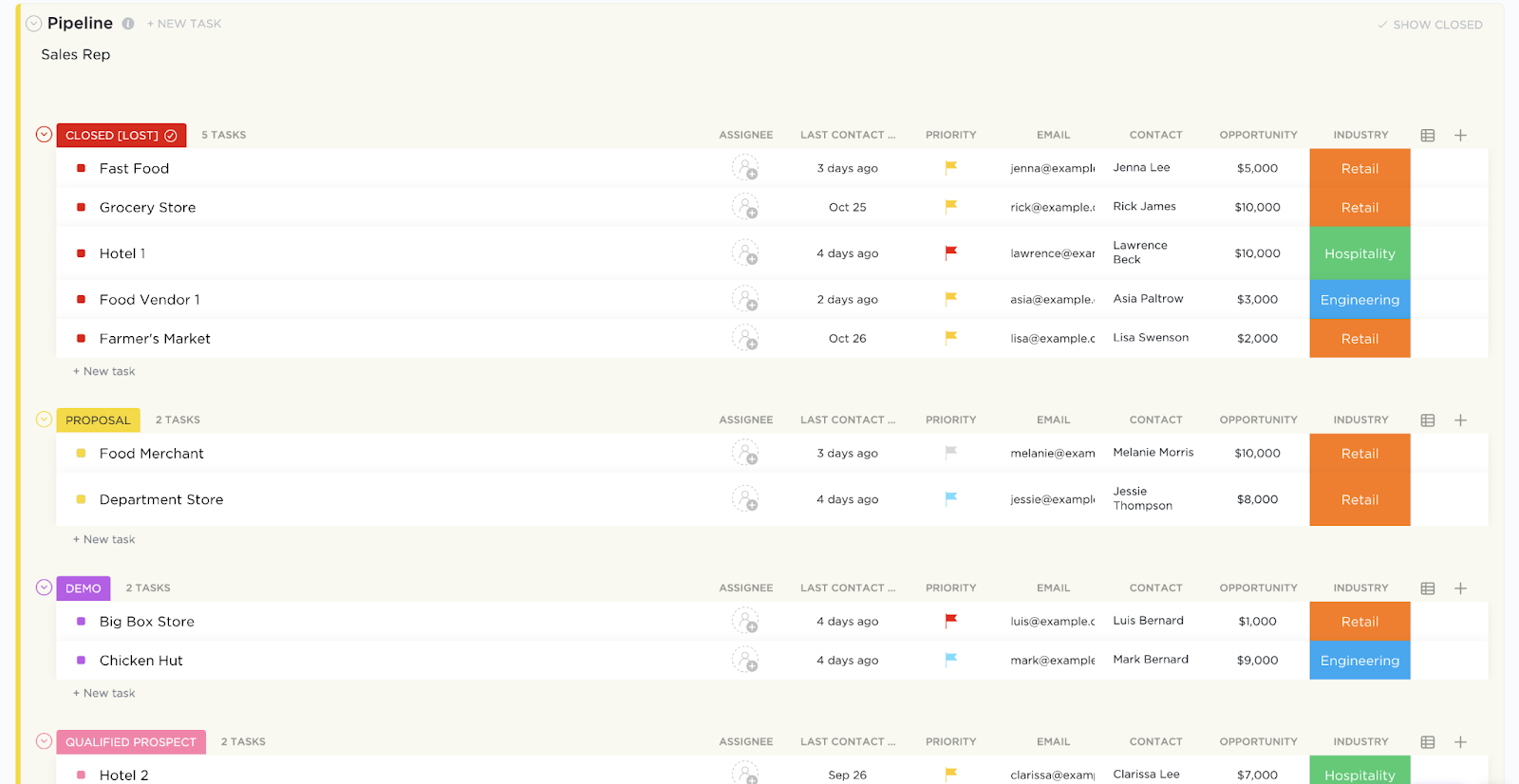
With ClickUp’s Sales Pipeline Template, SaaS sales teams can visualize deals, streamline follow-ups, and track customer interactions in real time.
Here’s how it helps:
SaaS subscriptions are not like gym memberships! If a few months go by without the customer using the SaaS solution, they will stop paying for it. Companies need to get their customers on board, keep them engaged, and show them value week in and week out. Companies need to keep marketing, even to their existing clients.
As your SaaS company grows, different sales strategies fuel success at each stage. Blend data-driven tactics with human connection to solidify user retention.
Here’s how to refine your SaaS sales playbook, close more deals, and scale faster:
Inbound vs. outbound isn’t a debate—it’s a growth strategy. The best software sales teams master both to create a scalable, predictable revenue stream.
👉🏼 Example: HubSpot practically wrote the book on inbound sales. They attract leads through educational content like blogs, free templates, and courses. Their strategy centers around drawing prospects via SEO, lead magnets, and a strong content engine, then nurturing them with email workflows until they’re sales-ready.
Many enterprise sales teams in SaaS employ sophisticated outbound approaches. They identify target accounts through data analysis, and then their sales development representatives (SDRs) reach out directly with personalized pitches. Their outbound strategy focuses on demonstrating the ROI of their platform to specific decision-makers at large organizations.
➡️ Also Read: Sales Funnel Templates to Generate More Leads
One-size-fits-all? Not in SaaS sales. Buyers expect more than generic pitches. They want tailored solutions that meet their needs.
Take it further with Account-Based Selling (ABS). Treat high-value accounts like VIPs—engaging multiple decision-makers with hyper-relevant messaging. This includes creating custom landing pages, personalized advertisements, and direct mail tailored to each account’s unique pain points.
For instance, CEOs, CTOs, and Heads of Operations care about different things—tailor your pitch to each role. Reach them via email, targeted ads, and sales industry events to create a seamless, high-impact experience.
Here’s an example:
👨💼 CEOs
Our customers reduce operational costs by 20% in year one—freeing up capital to invest in growth.
👩💻 CTO or Head of Engineering
We integrate with your existing cloud environment in under 2 weeks, with SOC 2 compliance and full audit logging out of the box.
👨💼 Head of Operations
Teams cut manual tasks by 40% and get full operational visibility in one dashboard—no more duct-taped spreadsheets.
💡 Bonus Tip: Wondering how to write effective sales OKRs?
Here are some tips to follow:
Sales professionals spend only 36% of their time selling—the rest goes into admin work, data entry, and follow-ups.
That’s where AI and sales automation tools change the game.
🎯 Quick Hack: Use AI-driven sales tools to qualify leads, personalize outreach, and automate follow-ups.
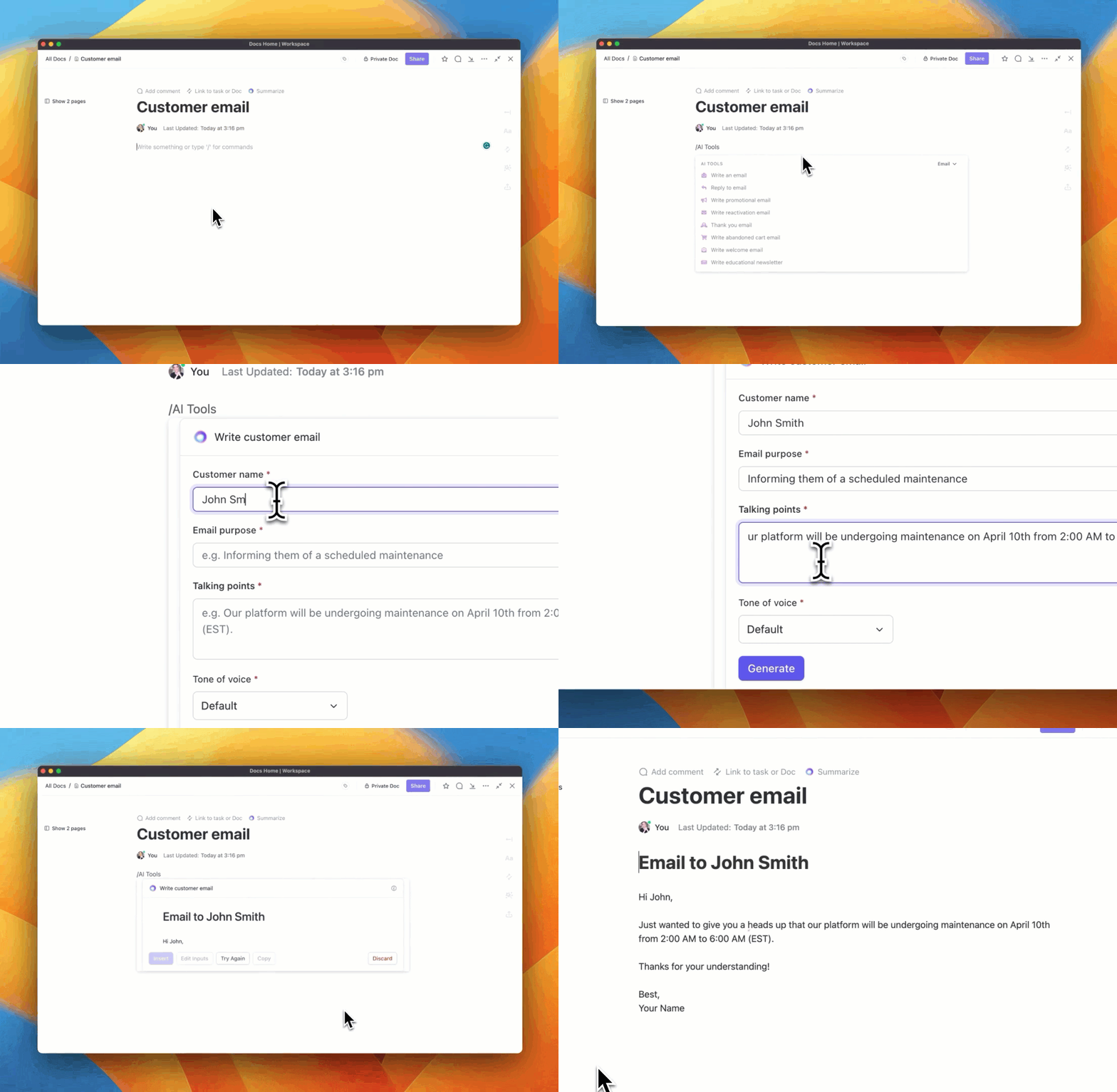
ClickUp Brain does all the busy work as you smart AI assistant—summarizing meeting notes to identify key pain points, suggesting action items, and drafting personalized outreach emails in the right tone instantly—so you focus on winning high-value SaaS deals.

SaaS buyers trust peers, communities, and industry conversations more than ever. Social selling and active community engagement help you build credibility, nurture relationships, and influence buying decisions.
👉🏼 If you’re looking for inspiration in this department, we’ve got a few tricks up our sleeve.
As a community-focused brand, ClickUp thrives on social platforms like TikTok, Instagram, and YouTube by sharing behind-the-scenes content, showcasing employees, posting inspirational material, and creating entertaining videos.
➡️ Also Read: Best B2B SaaS Enterprise Software Solutions
Selling SaaS is one thing—sustaining and scaling it is another. Without the right metrics, revenue slips through the cracks, churn rises, and growth stalls.
Keep tabs on these four essential key performance indicators (KPIs):
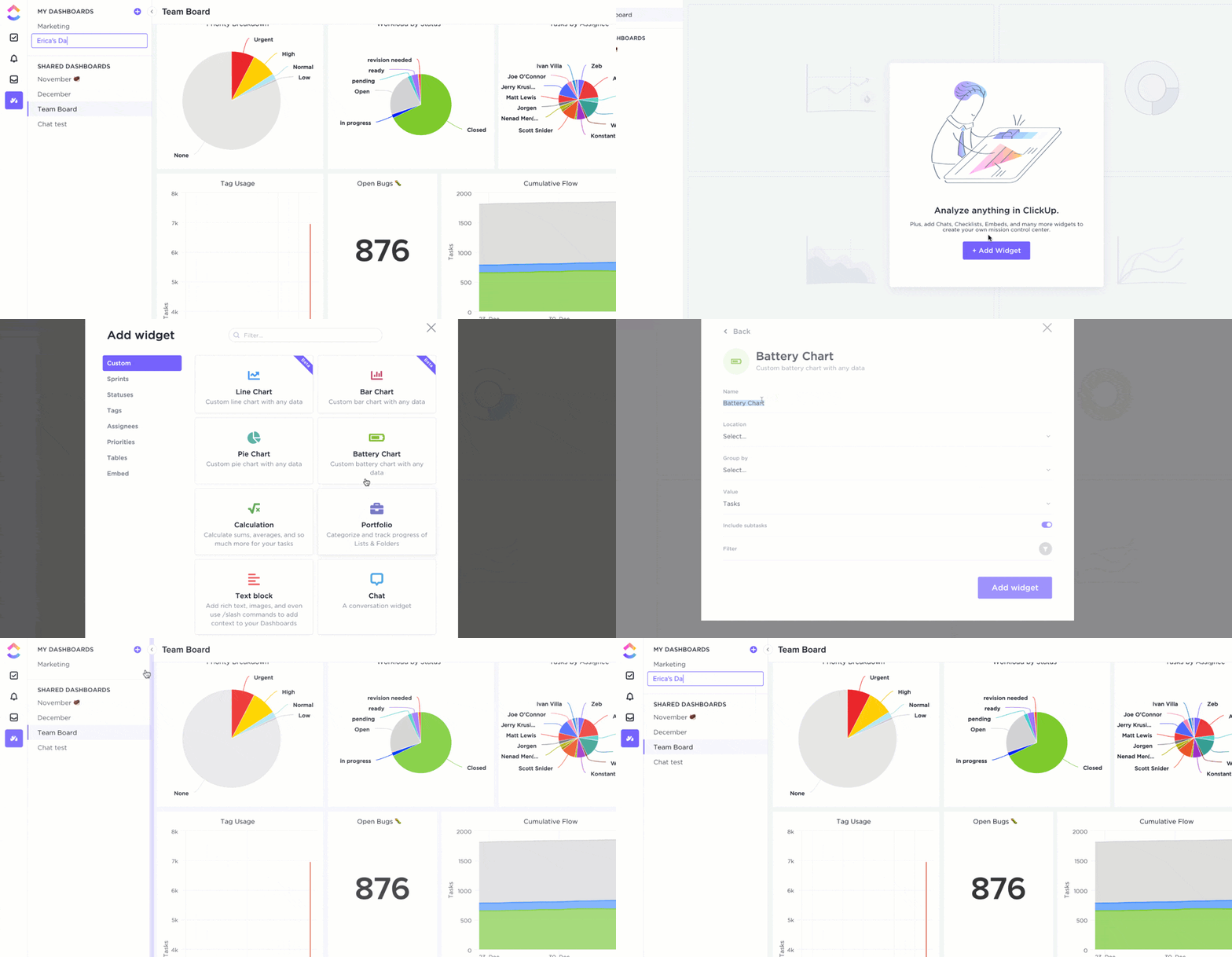
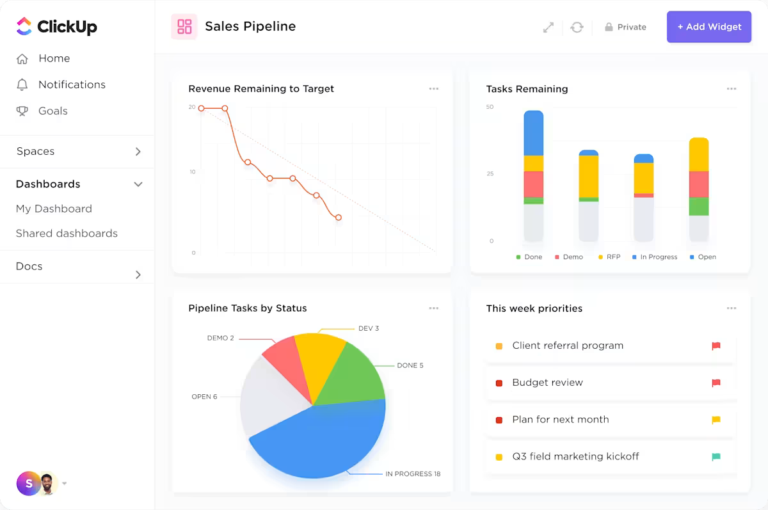
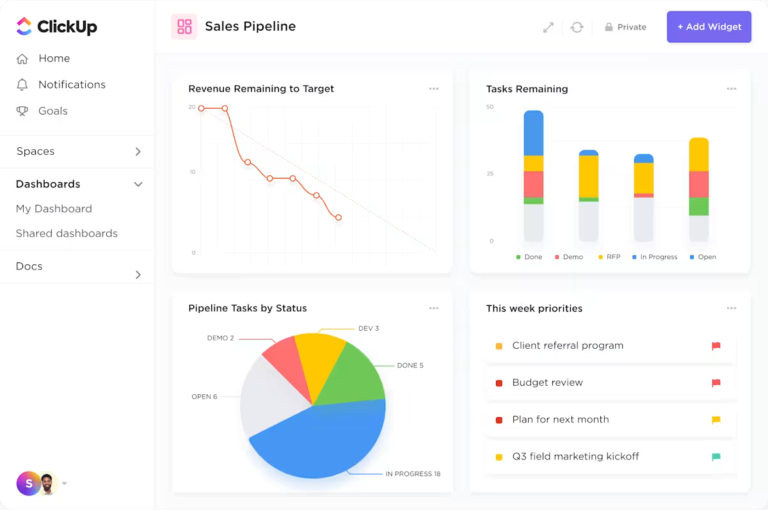
Metrics don’t matter—unless you act on them. ClickUp Dashboards turn numbers into strategies with real-time insights. With 50+ customizable cards, your sales and marketing teams can access real-time customer data and the tools to optimize strategy on the fly.
This not only tracks performance but also empowers teams to make data-driven decisions, streamline workflows, and accelerate revenue growth.
Sales in the SaaS industry move fast—and the right tools keep your pipeline flowing. To scale efficiently, you need SaaS tools that help you manage leads, automate follow-ups, and track real-time data.
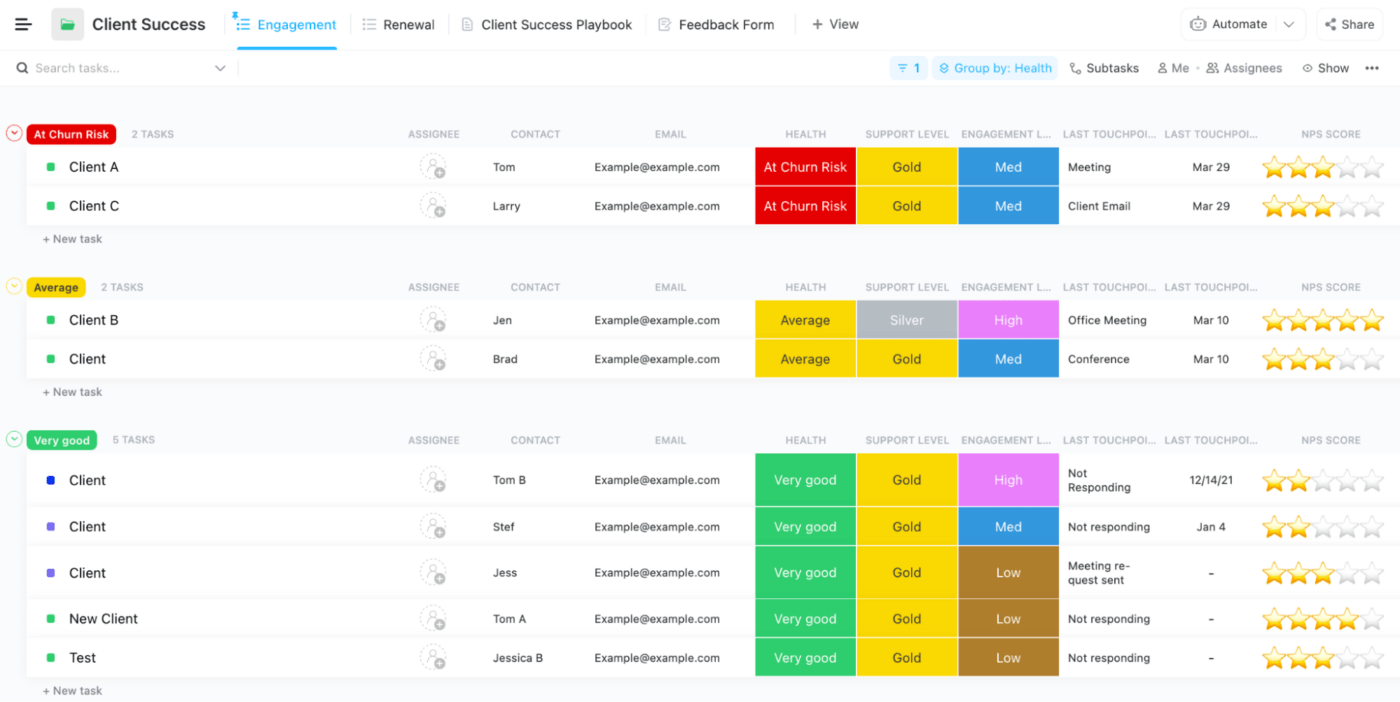
A CRM isn’t just a database—it’s the engine that drives SaaS sales. From tracking deals to automating workflows, it keeps your pipeline moving.
Yet traditional CRMs like HubSpot, Salesforce, and Pipedrive often have higher price points, rigid workflows, and integration issues, making them less ideal for fast-moving SaaS teams.
That’s where ClickUp CRM stands out—a flexible, all-in-one platform that scales with your SaaS sales workflow. With customizable pipelines, automated follow-ups, and seamless integrations, ClickUp CRM empowers sales teams to close deals faster and drive revenue growth.
Overall, it helps you:
Eliminate inefficiencies and grow sales—see how Pharmacy Mentor did it with ClickUp!
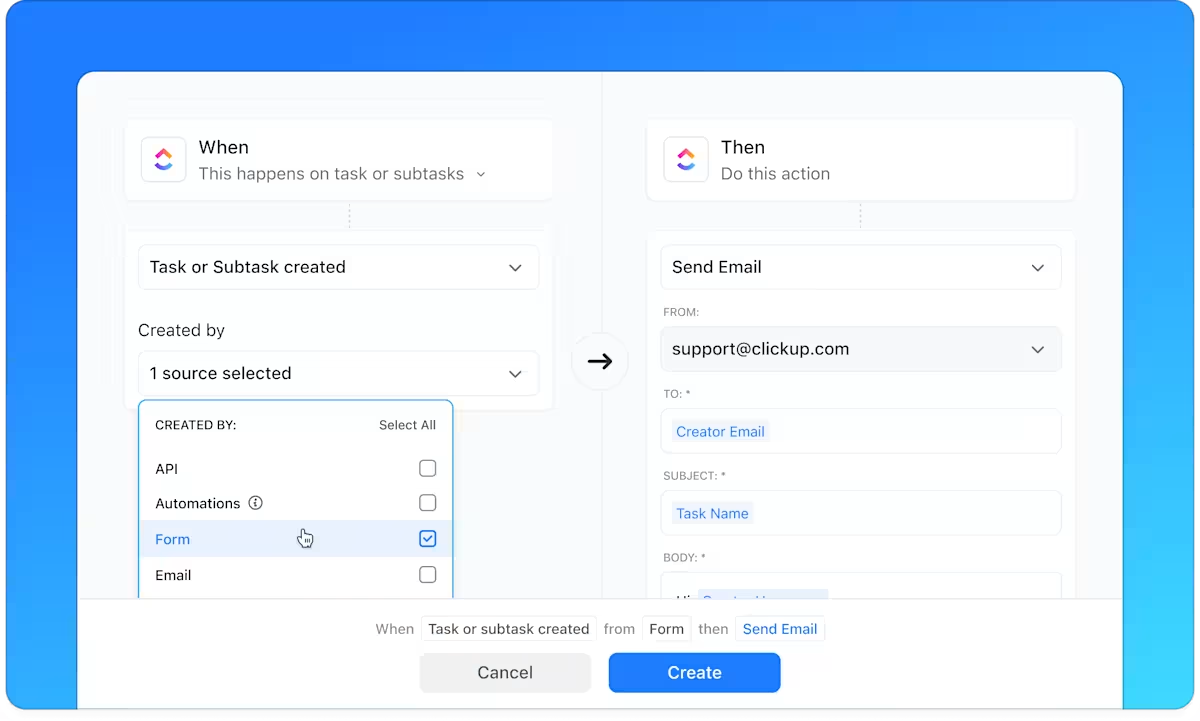
The best automation tools don’t replace sales reps; they amplify their productivity by eliminating manual, repetitive tasks. And ClickUp Automations lead the pack. With 100+ no-code automations, this tool is a SaaS team’s dream—streamlining lead management, outreach, and pipeline updates without the busy work.
It helps you:
🧠 Remember: ClickUp Automations do more than streamline tasks—they supercharge your entire sales tech stack! ClickUp integrates with 1000+ tools, including HubSpot, GitHub, and Twilio, so you can create custom webhooks to automate workflows across your favorite apps.

SaaS sales thrive on timely engagement. If your sales reps do not nurture leads with personalized interactions at the right moments, you’ll lose deals to competitors.
ClickUp for Sales Teams transforms engagement into momentum—helping teams track leads, manage follow-ups, and optimize the buyer journey.
💡 Pro Tip: Keep your SaaS sales pipeline predictable and scalable! Use these sales plan templates to build data-driven tactics that keep deals moving and revenue growing.
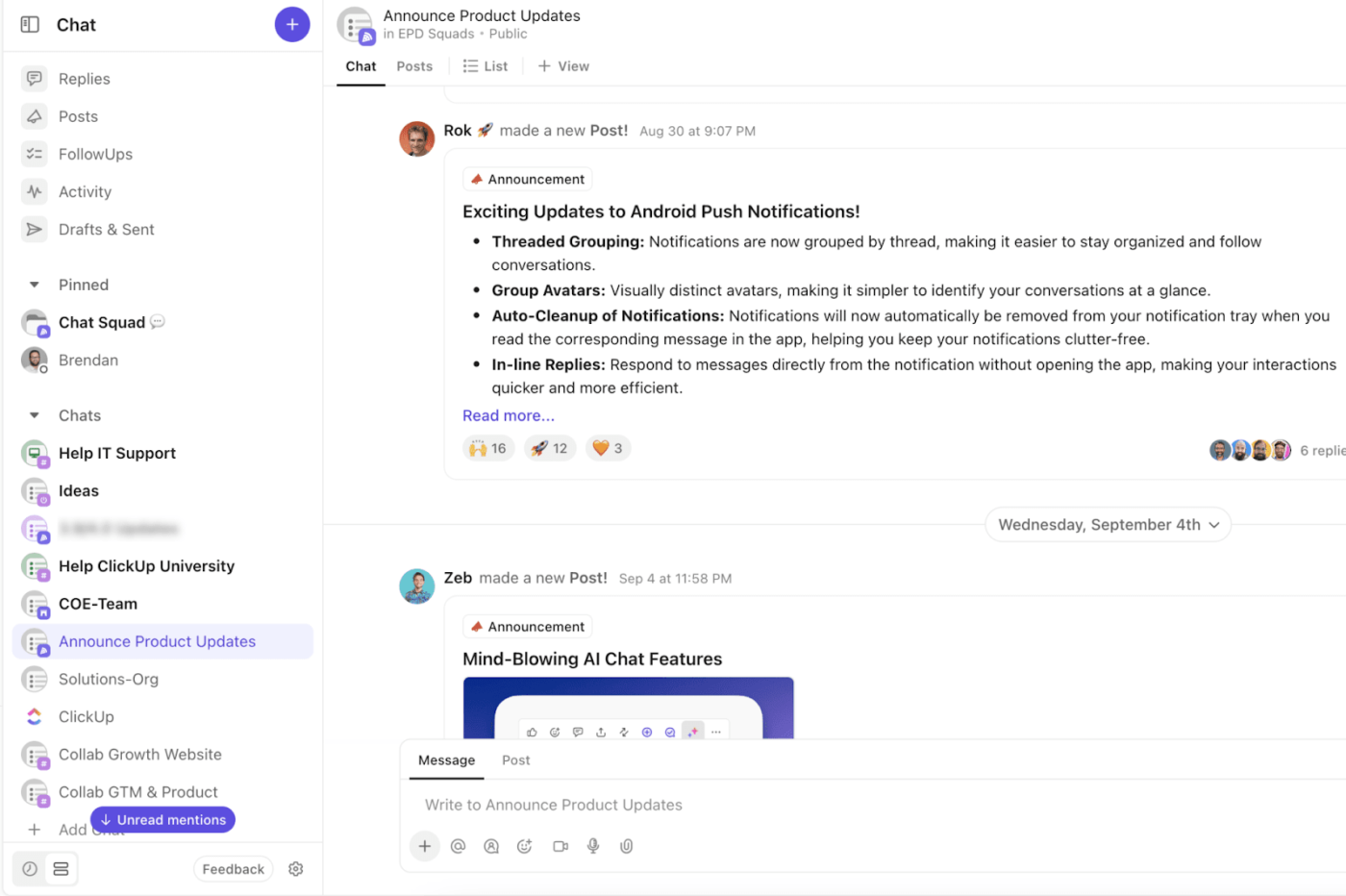
83% of top-performing companies rely on cross-functional collaboration to stay ahead, yet many SaaS teams still struggle with siloed communication and scattered workflows.
ClickUp eliminates these barriers by creating a single source of truth that keeps sales and marketing in sync, from lead generation to closed-won deals.
📮 ClickUp Insight: 60% of workers reply to instant messages within 10 minutes, yet each interruption drains up to 23 minutes of focus—turning quick conversations into productivity killers.
With ClickUp, your sales team can stop the endless back-and-forth and work smarter without wasting time looking for answers.
Breaking into SaaS sales requires a mix of industry knowledge, business acumen, and adaptability in a fast-moving, tech-driven market.
Whether you’re starting fresh or transitioning from another sales role, here’s how to get ahead:
SaaS sales operate under three core models based on product complexity, pricing, and target customers:
➡️ Also Read: SaaS Examples You Need To Know About
Success in SaaS sales goes beyond persuasion.
Sharpen these must-have skills to shine:
SaaS sales require both hands-on experience and strong connections.
A strong sales methodology keeps your process structured and scalable.
Here are four proven approaches:
Going global? Selling SaaS in international markets demands deep localization and disruptive strategy.
Here are some tips to help you out:
Winning SaaS sales is all about speed, strategy, and the right tools. Teams need a clear process, strong collaboration, and automation to stay ahead.
ClickUp brings everything your sales team needs together—from pipeline tracking to automation and seamless collaboration—so your sales process stays efficient and results-driven. In fact, beyond sales, ClickUp empowers teams across the entire customer journey. From lead generation to retention, its all-in-one platform optimizes workflows, automates repetitive tasks, and provides real-time insights to drive smarter decisions.
So why wait? Sign up for ClickUp and start closing deals, optimizing operations, and scaling faster!

Garima Behal
Max 22min read

Praburam Srinivasan
Max 18min read
Praburam Srinivasan
Max 19min read

© 2026 ClickUp