







Still downloading templates?
There’s an easier way. Try a free AI Agent in ClickUp that actually does the work for you—set up in minutes, save hours every week.
Sorry, there were no results found for “”
Sorry, there were no results found for “”
Sorry, there were no results found for “”
Products are like stories. They have a beginning, a middle, and, if you are lucky, a few unexpected twists to keep things interesting.
But, navigating a product’s journey is rarely a smooth ride.
There is the thrill of the launch, the hustle of scaling, and the challenge of staying fresh as the product matures. And then comes the moment when you might need to let it go, which is never easy.
The good news is that with the right strategies, you can keep your product thriving at every stage. Let’s figure this out together.🌟
The product life cycle is the timeline for your product’s journey.
It kicks off when your product hits the market and wraps up when it’s no longer on the shelves. This concept is a key part of product management, helping businesses decide when to boost marketing efforts, reduce production costs, adjust prices, explore new markets, or refresh the product’s look to keep it competitive.
Understanding the product life cycle is like having a cheat sheet for your product’s success. Here’s why it’s a big deal:
💸 Save your budget: It informs you when to spend wisely at each stage and avoid throwing cash where it won’t work
🤝Spot new opportunities: It’s your guide to finding fresh markets or new customers at the right time
🏁 Stay ahead of the game: It helps you make the right moves before competitors can take advantage of the same opportunities
💰 Make more money: By adjusting your strategies at the right time, you squeeze out maximum profits before the buzz fades
⚙️ Optimize resource use: You know how to allocate time, energy, and funds efficiently. This avoids over-investing when it’s not needed
Product life cycle management (PLCM) is a strategic process of managing a product from its inception to its retirement. It involves knowing what to do at each stage to keep your product fresh, profitable, and in demand.
🧠 Fun Fact: The idea of managing a product’s life in stages started in 1931. But it wasn’t until 1957 that Booz Allen Hamilton introduced the five-step product life cycle: introduction, growth, maturity, saturation, and decline.
Each product life cycle stage is at the core of product life cycle management principles and comes with distinct characteristics and challenges. Here’s a breakdown that will help improve your product life cycle stage strategy:
The market introduction stage is where your product and brand presence is new, fresh, and stepping into the market spotlight.
🤔 What happens here:
⚠️ Challenges:
📌 Example: At the launch of the first iPhone in 2007, Apple had to educate people on what a ‘smartphone’ was. Now, we can’t live without them.
Your product is gaining momentum—sales are climbing, and people are talking.
🤔 What happens here:
⚠️ Challenges:
📌 Example: Remember when streaming services exploded? Netflix was the star, but then Hulu, Disney+, and everyone else jumped on the bandwagon.
Your product has hit its peak of market acceptance and market saturation. It’s widely known and making good money, but growth is slowing.
🤔 What happens in the market maturity phase:
⚠️ Challenges:
📌 Example: Whether it’s a Keurig, Nespresso, or regular drip, coffee makers are reliable, but there’s no groundbreaking change happening anymore. It’s all about the little upgrades, like Wi-Fi or single-serve pods.
The glory days are over. Your product’s hanging on, but new trends or tech have stolen the spotlight.
🤔 What happens in the decline stage:
⚠️ Challenges:
📌 Example: MP3 players, like the iPod, were once a must-have. With smartphones able to do everything, the MP3 player has been slowly phased out, collecting dust in drawers.
The product life cycle helps product management and marketing professionals know exactly where a product stands, identify key product management challenges at each stage, and craft appropriate responses.
Here’s why a product life cycle map is helpful:
Do you find it challenging to keep track of where your product stands at every stage? Without the right insights, it’s easy to miss key trends, which can slow you down.
To manage the product life cycle effectively, you need tools that help you track progress, stay organized, and collaborate with your team. You need customizable dashboards, task management, project tracking, and smooth team collaboration.
That’s where ClickUp comes in as the everything app for work. It brings all these tools together in one platform, making it easy to oversee every phase of your product’s journey. From launch to full growth, maturity, and decline, ClickUp’s Product Management Software keeps everything on track so you can make smarter, more informed decisions.
First, know exactly what product you’re talking about and who your target market is.
Defining this upfront ensures the whole PLC analysis is on point. After all, you can’t figure out where your product is in the lifecycle if you’re not clear on what it is and who you’re selling it to.
🎯 To do it effectively:
Use ClickUp Docs to create a document titled ‘Target Audience Personas’ where you and your team can collaboratively add details about each persona.
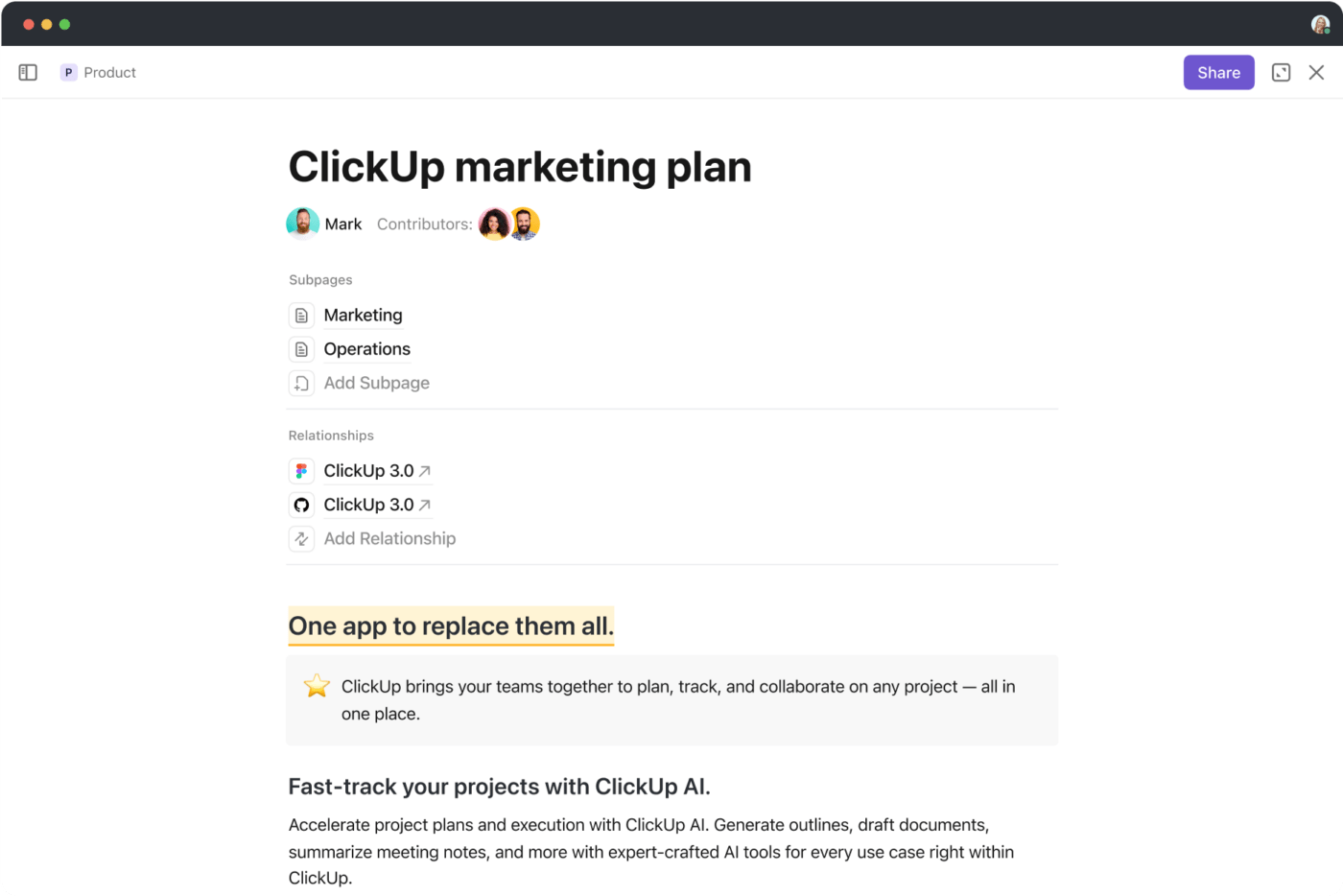
As new data comes in, you can easily update and refine the personas in one place, keeping everything aligned and accessible.
ClickUp also comes with multiple customizable and ready-to-use product management templates that save you time and effort in setting up your processes.
The ClickUp Product Roadmap Template gives you a bird-eye view of your entire product development process. Product managers, developers, and marketers can work together in real time to bring your product marketing plan to life.
Imagine launching a new feature for your app. Use Custom Task Statuses in ClickUp to track each step and know exactly where everything stands:
This active tracking helps you stay on top of your project’s progress.
This helps determine which product management strategies to apply—whether it’s going all-in on marketing and distribution channels or starting to think about innovation.
🎯 To do it effectively:
ClickUp Goals can be a game-changer here.

The goal here is to gather as much information as possible to understand how your product is performing.
📊 What data to gather?
🎯 To do it effectively:
You have the raw data. Now, let’s make sense of it to understand what’s going on with your product.
🎯 To do it effectively:
Use ClickUp Dashboards to bring all this data together in one view, giving you an easy way to analyze and stay on top of everything.
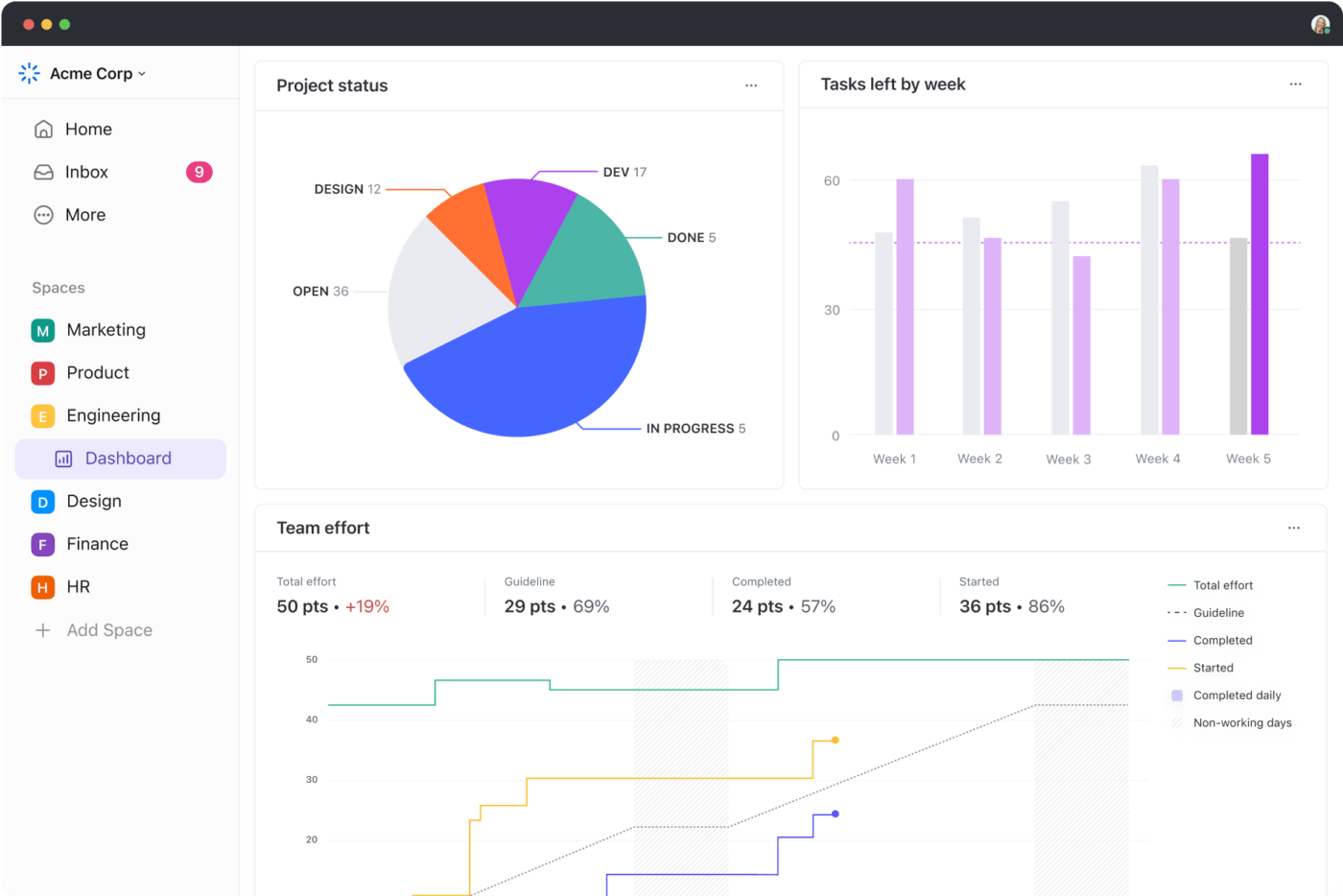
Here’s how it helps:
Based on what you’ve gathered, it’s time to get strategic. Your actions will vary depending on the product’s development stage, so tailor your strategy accordingly.
Here are some actions to consider:
| Introduction | 1. Launch with ads, social media, influencer collaborations, or a quirky stunt to grab attention 2. Explain your product’s benefits and uniqueness through blogs, explainer videos, and demos 3. Attract early adopters with discounts, free trials, or limited-time offers and build credibility with testimonials |
| Growth | 1. Ramp up marketing and spread the word 2. Explore new markets or audiences 3. Listen to customer feedback for valuable insights 4. Make small tweaks to turn your product into a must-have |
| Maturity | 1. Keep things fresh with new features, special editions, or exclusive offers 2. Streamline operations by cutting costs, automating, and improving customer service 3. Reward loyal customers with exclusive deals or VIP perks |
| Decline | 1. Revive the product with a fresh campaign, new packaging, or features if there’s potential 2. If it’s time to move on, shift focus to new ideas, or slowly phase it out 3. Even during a market decline, serve a smaller, dedicated audience with tailored offerings |
🎯 To do it effectively:
Whether you’re launching, expanding, or pivoting, ClickUp Tasks allow you to break down strategic actions into clear, manageable tasks.
For example, during the introduction stage, you can create tasks for:
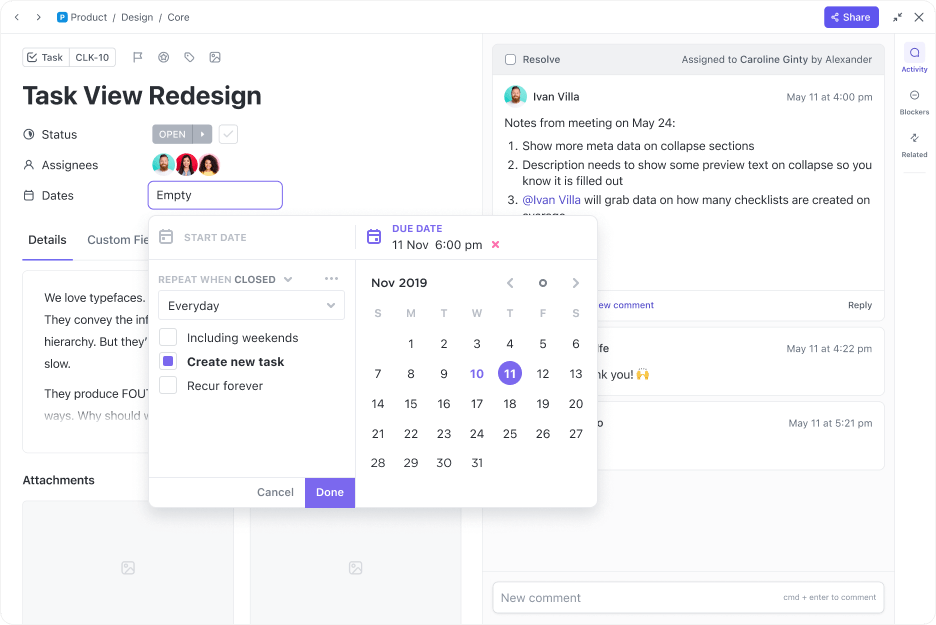
This ensures every action has a clear owner and timeline, so you never miss a crucial step. Team members can also collaborate directly within tasks, attaching files, leaving comments, and tagging other team members.
Further, ClickUp Whiteboards provide a centralized, interactive space where you can visualize, collaborate, and track your product life cycle progress.

📌 For example:
With ClickUp Automations, you can automate alerts to notify your team when a product has entered a new phase (e.g., from a growth stage to a maturity stage). This helps with timely transitions.
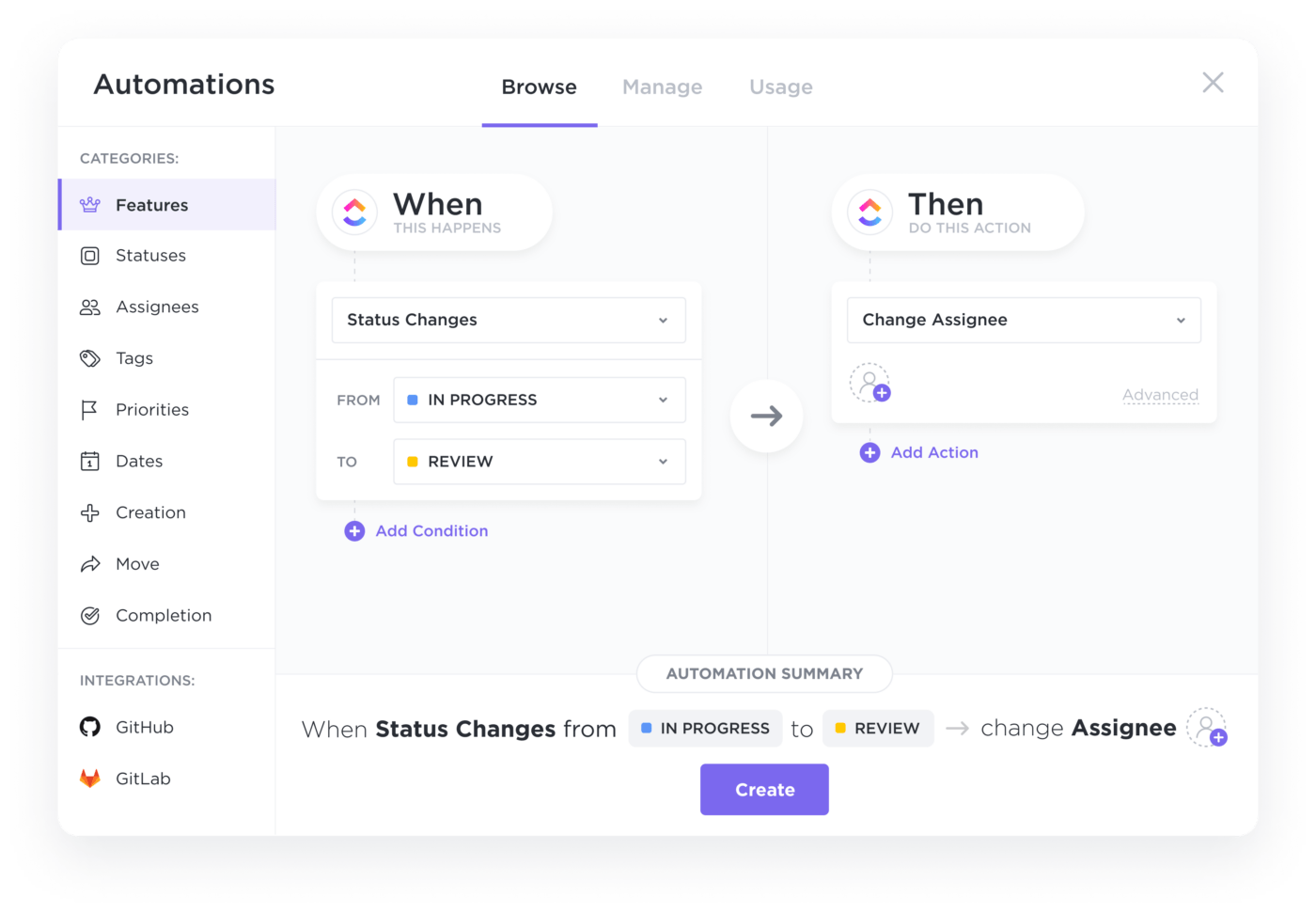
📌 For example, when a task marked as ‘Growth’ hits 75% completion, ClickUp sends an automatic notification to the team to start preparing for maturity strategies.
💡Pro Tip: Use product strategy templates to stay on track with clear goals, actionable steps, and progress tracking for each stage.
Here’s a quick look at three product life cycle examples to see how different products in line with emerging technologies are making their mark (or fading out) at various stages.
Once your lifeline to the world, landlines were bulky but essential. Then came mobile phones with texts, calls, and the internet, making landlines obsolete. Now, they’re mostly for nostalgia or emergencies, deep in the decline phase.
EVs are thriving in the growth stage. Sleek designs, zero emissions, and brands like Tesla are driving demand in new markets. While challenges like charging infrastructure persist, the EV revolution is gaining unstoppable momentum.
AI has moved from sci-fi to everyday life. From Netflix recommendations to self-driving cars, it’s transforming industries like healthcare and education. With constant advancements, AI isn’t peaking—it’s just getting started.
Read More: 8 Best Product Lifecycle Management Software
In product portfolio management, nailing each product phase is key to driving growth and beating the competition. Follow these tips to steer your product to success:
Managing a product life cycle can be overwhelming. Without the right tools, your teams can quickly lose focus.
With ClickUp Tasks, you can break down your product’s life cycle into manageable tasks. Dashboards provide a real-time overview of your product’s stages, helping you monitor everything from launch to decline.
Not only that, ClickUp’s library of templates lets you hit the ground running, so you don’t have to waste time setting up each phase of your product life cycle.
Ready to take control of your product life cycle? Sign up for ClickUp today! 🙌

© 2026 ClickUp

There’s an easier way. Try a free AI Agent in ClickUp that actually does the work for you—set up in minutes, save hours every week.