







Still downloading templates?
There’s an easier way. Try a free AI Agent in ClickUp that actually does the work for you—set up in minutes, save hours every week.
Sorry, there were no results found for “”
Sorry, there were no results found for “”
Sorry, there were no results found for “”
If you’re looking to move into the realm of online sales, then you’re going to need ecommerce software options that will help you put your products in front of customers.
So what are the best ecommerce platform solutions? There are lots to choose from, both open source and with paid plans that offer all the bells and whistles you could imagine.
We’re here to help you cut through the confusion to find the right software for you. Whether you need a website builder, AI tools for ecommerce, apps or add-ons to add a shopping cart and other features to an existing site, or good ways to manage multi-channel sales, the apps below represent the best in the business. ?
Most ecommerce software options offer loads of features to help you build a website, market across multiple channels, and even assist with back-office and in-store tasks. But what specific features should you look for? Here are a few essentials:
There are lots of ecommerce software options to choose from and a variety of features—like tools to build a website, track analytics, and manage social media. Some of the most popular include all-in-one commerce platforms designed to help you manage both online and in-person sales, and you’ll also find software options that feature AI tools to automate various tasks.
We’ve rounded up the 10 best options available to help you choose the right one for your business.
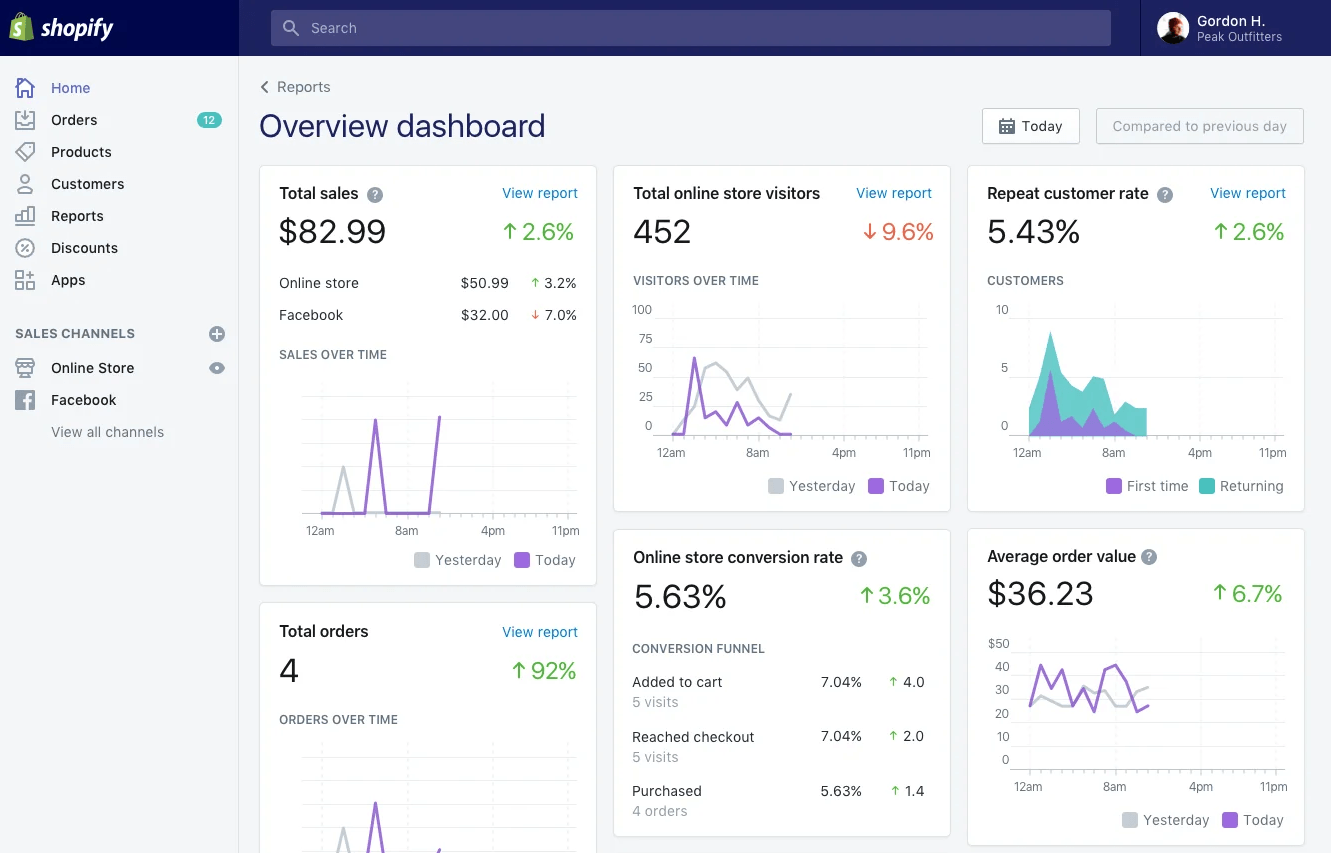
Shopify is an all-in-one ecommerce platform that gives you everything needed to build a website and market products across your website, social media, marketplaces, brick-and-mortar stores, and more.
This platform isn’t just a website builder for ecommerce. You can also use Shopify to manage your marketing campaigns, assist with accounting, point of sale, and much more.

Adobe Commerce (formerly Magento) is similar to Shopify in that it’s an all-in-one platform where you can build out a storefront and market across multiple channels.
One key difference is that this platform natively integrates with other Adobe products—including the Creative Cloud, which makes it easy for you to personalize your brand with custom imagery and graphics.

The BigCommerce platform has a lot to offer for merchants of all sizes. Plus, it’s designed to scale easily, which makes it a good starting point for small businesses that anticipate growth.
While it offers most of the same features as Shopify or Adobe Commerce, BigCommerce places extra emphasis on creating a multi-storefront experience. This lets you create custom storefronts to match a variety of customer segments.

OpenCart is meant to get merchants up and running quickly and easily. With free or low-cost templates plus product descriptions and product photos, you can put a site together in just a few clicks—and start accepting orders soon thereafter.

There are a couple of things that set WooCommerce apart from the competition. For starters, it’s not a platform but rather a WordPress plugin that you can integrate with a self-hosted WordPress site to expand online shopping capabilities.
That leads to the second key difference, which is that while merchants can use it to create their own stores, developers who specialize in ecommerce can also use it to create stores for others.

Volusion is a great choice for small businesses who are looking for an all-in-one platform that will get their web store up and running quickly.
Choose from among 120 different themes to create your site, add advanced functionality through various third-party integrations, and use Volusion’s shopping cart software to create a seamless checkout and payment processing experience.

PrestaShop is an open-source commerce platform that offers a vast suite of modules so that you can build out your own online store with all the features you need.
Merchants can get started by choosing between Classic PrestaShop, which requires you to handle your own web hosting, or Hosted PrestaShop, which includes everything you need to get started plus web hosting services.

osCommerce is unique among ecommerce software options in that it’s actually two things. For starters, it’s a free, open-source shopping cart that you can add to your online store.
It’s also a marketplace where you can find both paid and free apps that you can add to your shopping cart to build out functionality. The app marketplace offers something for everyone: search engine optimization tools, apps to generate reports, tools for design, marketing, shipping, payments, and more.

Wix got started as an easy, drag-and-drop website builder—and today, this platform still offers all of those features, plus the added functionality that comes with Wix eCommerce.
Wix eCommerce is among the most popular ecommerce platforms—not just for its ease of use but also because it gives entrepreneurs the ability to manage shipping, payments, marketing, and other key tasks using one unified dashboard.
Learn about the top Wix competitors!

Ecwid is an ecommerce platform designed to give you complete control over multi-channel sales efforts. With it, you can manage sales everywhere—on your web store, on social media, via marketplaces like eBay or Amazon, or even in brick-and-mortar stores.
Centralized inventory management and pricing helps you ensure consistency across all channels.
Shopify, BigCommerce, and other ecommerce software providers give you a full suite of tools designed specifically for setting up stores and marketing products. But what about other aspects of your business? For example, software like ClickUp lets you use templates to create user personas or even draft product descriptions with generative AI.
When it comes to sales, ClickUp gives you lots of helpful tools. For starters, ClickUp for Sales Teams gives you everything needed to manage your sales funnel, top to bottom. Use customizable workflow views to create lists, tables, or Kanban boards so that you can track data, deals, accounts, and sales leads. ?
You can also use ClickUp for customer relationship management (CRM). The flexible views make it easy to analyze each customer’s data. Automations let you centralize customer outreach—just integrate your email with ClickUp to easily send out updates or make customer onboarding easier.
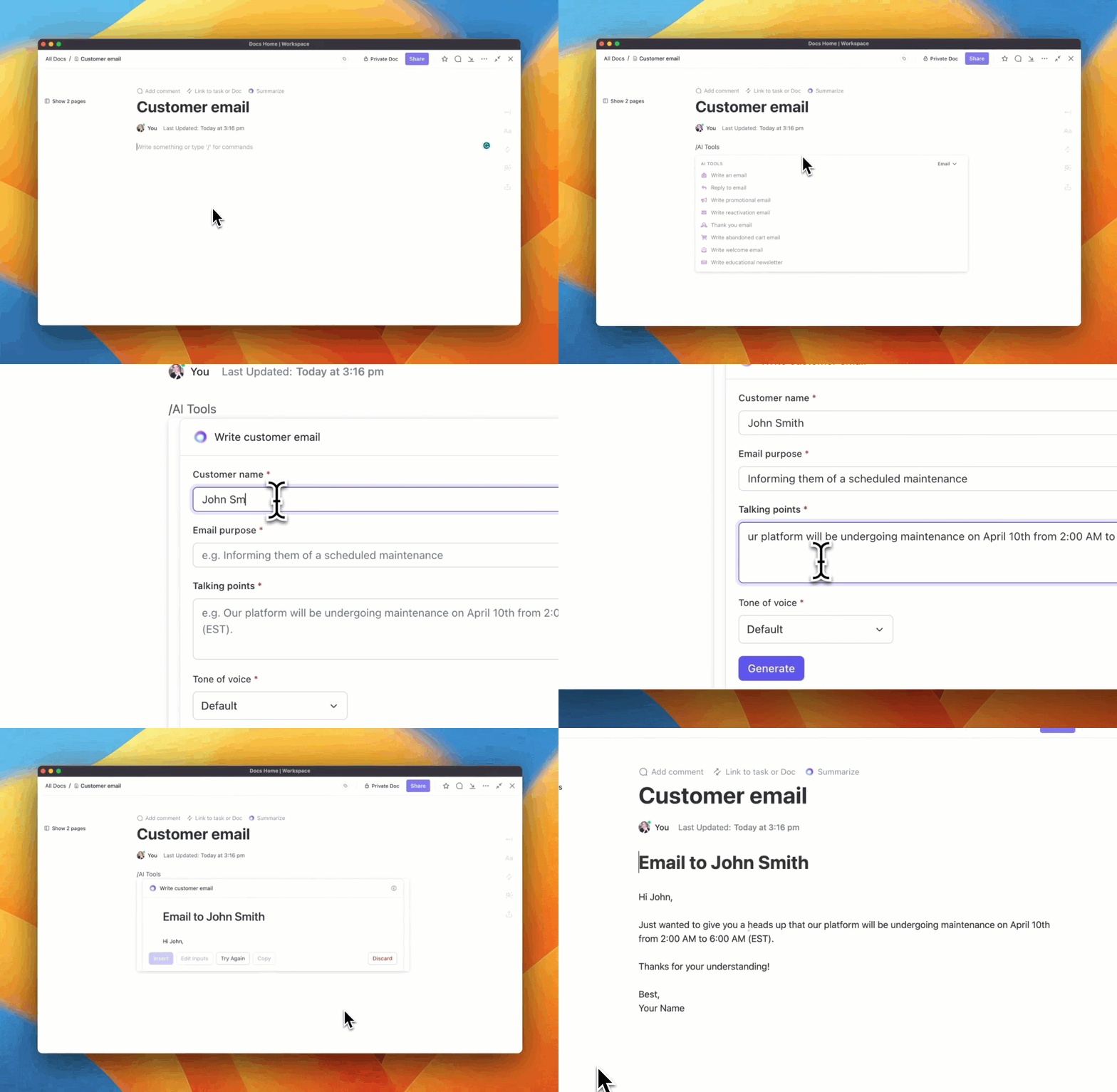
ClickUp also caters to merchants—with features designed to help you increase your productivity. If you need to write product descriptions or other types of content, ClickUp delivers AI writing tools to help you get the job done. ?
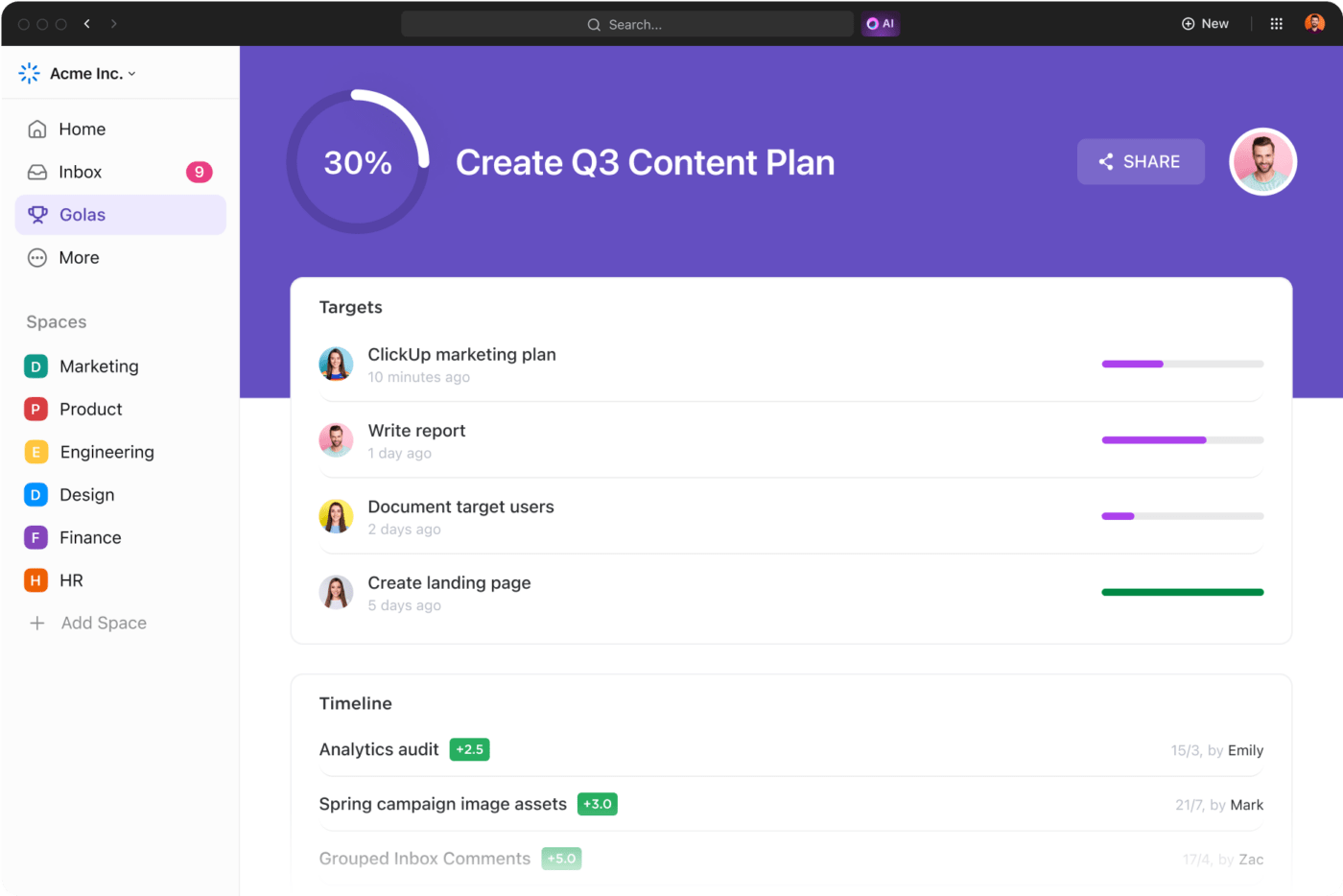
As an ecommerce business, you’ll also have certain goals and targets to meet—and ClickUp is among the best goal tracking apps out there. Whether you’re tracking OKRs, meeting a product launch deadline, or keeping your team on task with weekly goals, this platform gives you everything needed to reach those objectives.
Break your goals down into specific tasks to assign out to team members, and use ClickUp Dashboards to track metrics, and get a high-level look at everything happening in your team’s Workspace.
For software development teams in particular, ClickUp is an all-in-one project management and collaboration tool that will help you build, launch, and market your SaaS products. With this platform, you can create product roadmaps, track bugs and issues, and integrate with GitHub, GitLab, and other development tools so that you can track development progress and create a better product for your customers.
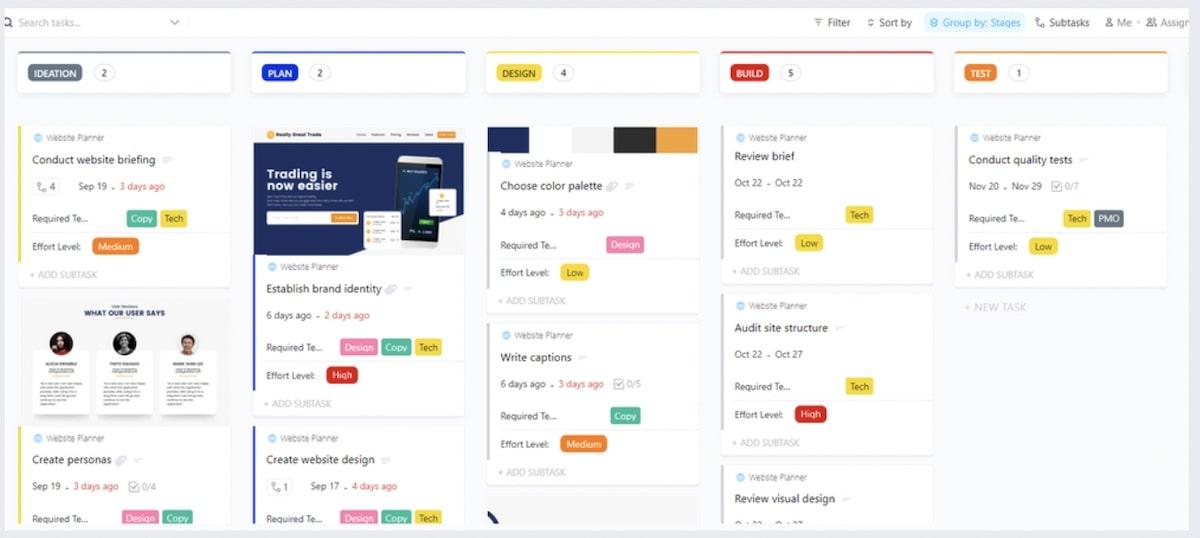
Use ClickUp’s Website Planner Template to get started on you ecommerce site!
The right ecommerce software solution will help you build, host, and run your online store. By adding a robust project management app to the mix, you’ll be able to stay on top of sales and marketing, customer relationships, content creation, and more.
As an ecommerce business owner, you can use ClickUp to stay on top of all these tasks and more—including inventory management, new product development, omnichannel marketing campaigns, etc.
Ready to give it a try? Sign up for ClickUp for free to discover how it will help you maximize the success of your ecommerce business.

© 2026 ClickUp

There’s an easier way. Try a free AI Agent in ClickUp that actually does the work for you—set up in minutes, save hours every week.