
Sorry, there were no results found for “”
Sorry, there were no results found for “”
Sorry, there were no results found for “”
I’ve started more goals than I’ve finished, and for years, I blamed my willpower. Turns out I just kept losing track. A goal you can’t see is a goal you forget soon after thinking about it.
The right app fixes that: it keeps the target in front of you, breaks it into simple steps, and shows progress so you don’t quit in the middle. I tested the best goal tracking apps on how well they turn good intentions into finished work. Here are the ones worth your time.
Short version: A goal tracking app keeps a target visible, breaks it into steps, and shows progress so you follow through instead of forgetting. For solo streaks and daily habits, a lightweight app like Habitica, Streaks, or Way of Life is all you need. But when your goals are real projects with deadlines and other people attached, ClickUp and Weekdone tie the goal to the actual work, which is where follow-through actually happens.
| Tool | Best for | Standout feature | Pricing* | Where it falls short |
|---|---|---|---|---|
| Habitica | Gamifying individual task breakdowns | Turns goals into an RPG where completing Habits, Dailies, and To-Dos earns XP, gold, and gear, while missed commitments damage your character | Free | Gamification loses its pull over the long haul, and there’s no calendar or heatmap view to see completion history at a glance |
| Strides | Tracking personal milestone progress | The Pace line calculates whether today’s progress is fast enough to finish on time and turns the bar green or red, across four tracker types | Free; Plus: $4.99 onwards | iOS-only for now (Android on a waitlist), and it leans on manual logging with little for team sharing |
| Streaks | Minimalist habit tracking in the Apple ecosystem | Protects your chain (complete = +1 day, skip = reset to zero) and auto-records goals like steps through the iOS Health app | Lifetime: $5.99 | 24-task cap and simple yes/no habits only, so numeric targets and multi-step projects fall outside it |
| Way of Life | Simple, insight-driven habit tracking for individuals | One color-coded grid (green/red/gray taps) that rolls up into long-range trend charts across weeks, months, and years | Free; Premium: $29.99 onwards | Records only yes/no/skip (no counts or ratings), and data doesn’t sync between iOS and Android |
| TickTick | Tasks and habits in one app | A full task manager with a built-in habit tracker, calendar view, Pomodoro timer, and Eisenhower matrix in one workspace | Free; Premium: $35.99/billed annually | Shared lists get messy with several editors, and habit trends are lighter than a dedicated tracker |
| Todoist | Capturing and organizing to-dos | Natural language input schedules recurring habits instantly, and the Karma system gamifies follow-through with points and streaks | Beginner: Free; Pro: $5/mo; Business: $8/mo | Habit tracking rides on recurring tasks, so no streak heatmaps or rich progress charts |
| ClickUp | Goals tied to real projects for individuals and teams | Keeps the goal and the tasks that complete it in one place, with Custom Fields, Recurring Tasks, Reminders, Dashboards, and live shared views for real-time accountability | Free; paid plans start at $7/user/mo | Does far more than track habits, so new users face a slight learning curve, and it’s overkill for a single daily tick |
| Reclaim.ai | Defending time for your goals | AI books goals as real calendar time and reschedules the block when a meeting lands on top, pulling tasks from ClickUp, Asana, Jira, and Todoist into focus sessions | Free; Starter: $10/mo; Business: $15/mo | The AI won’t always place work where you would, and it assumes you run your days from a calendar |
| Weekdone | Aligning team goals with company OKRs | Runs on OKRs, linking each person’s weekly plans to top-level quarterly goals in a visual OKR tree, with automated weekly reports | Free (up to 3 users); Premium: $90/mo (up to 10 users; climbs with more) | Setup takes real effort, and it’s squarely a team tool, so solo users leave much of it unused |
Our editorial team follows a transparent, research-backed, and vendor-neutral process, so you can trust that our recommendations are based on real product value.
Here’s a detailed rundown of how we review software at ClickUp.
You should evaluate a goal tracking app on four things: reminders and nudges, goal breakdown, progress visibility, and sharing options. Nail these and the app sticks; miss one, and it’s abandoned within no time.
Prefer to watch first? This walkthrough covers how the best goal tracking tools compare in practice:
Nine tools made this list: Habitica, Strides, Streaks, Way of Life, TickTick, Todoist, ClickUp, Reclaim.ai, and Weekdone. Each one nails goal tracking for a different job and falls short at the rest. Every pick below gets the same treatment.
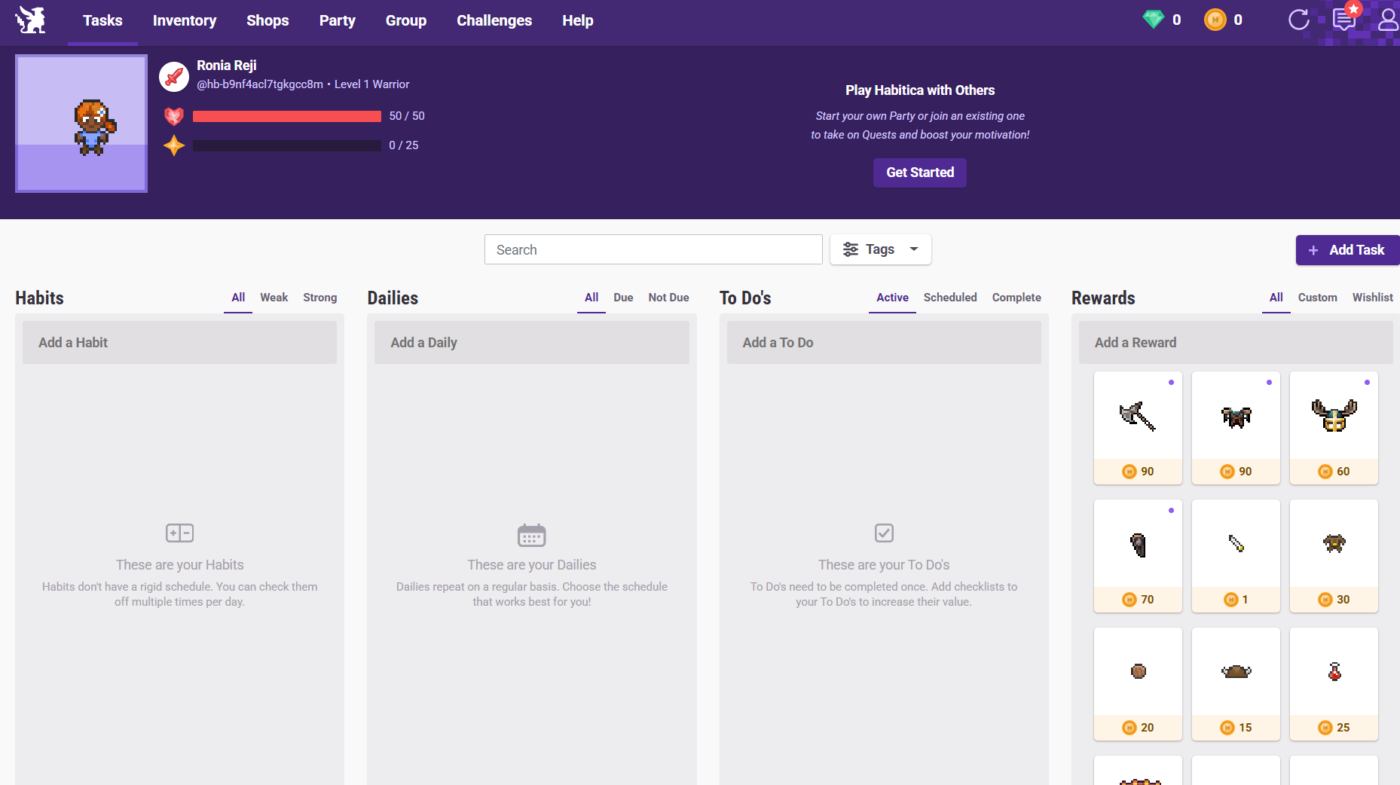
Habitica turns your goals into a role-playing game. You build an avatar, and every habit, daily task, or to-do you complete earns XP, gold, and gear. Miss commitments and the character takes damage. The fear of losing a hard-won streak genuinely gets you to the gym.
The social layer in it works nicely to beat isolation. Join a party with friends, take on quests, and battle monsters together as a team. That shared accountability keeps everyone honest.
Habitica is an ideal pick for individuals pursuing personal health, study, or self-care goals who know they respond to rewards more than to a plain checklist.
Where Habitica falls short: The gamification loses some of its pull over the long haul, and there’s no calendar or heatmap view to see your completion history at a glance.
Skip Habitica if: You’re tracking work or team goals tied to real projects, or you want clean progress dashboards over game mechanics. A work-integrated tracker like ClickUp will fit that better.
Hear about Habitica from this G2 reviewer:
I love how cute, fun, and interactive it is vs. just another to-do-list style app. It makes it fun, and the thought of my little pixelated avatar taking health damage because I didn’t fold my laundry is somehow way more motivating than I would’ve thought.
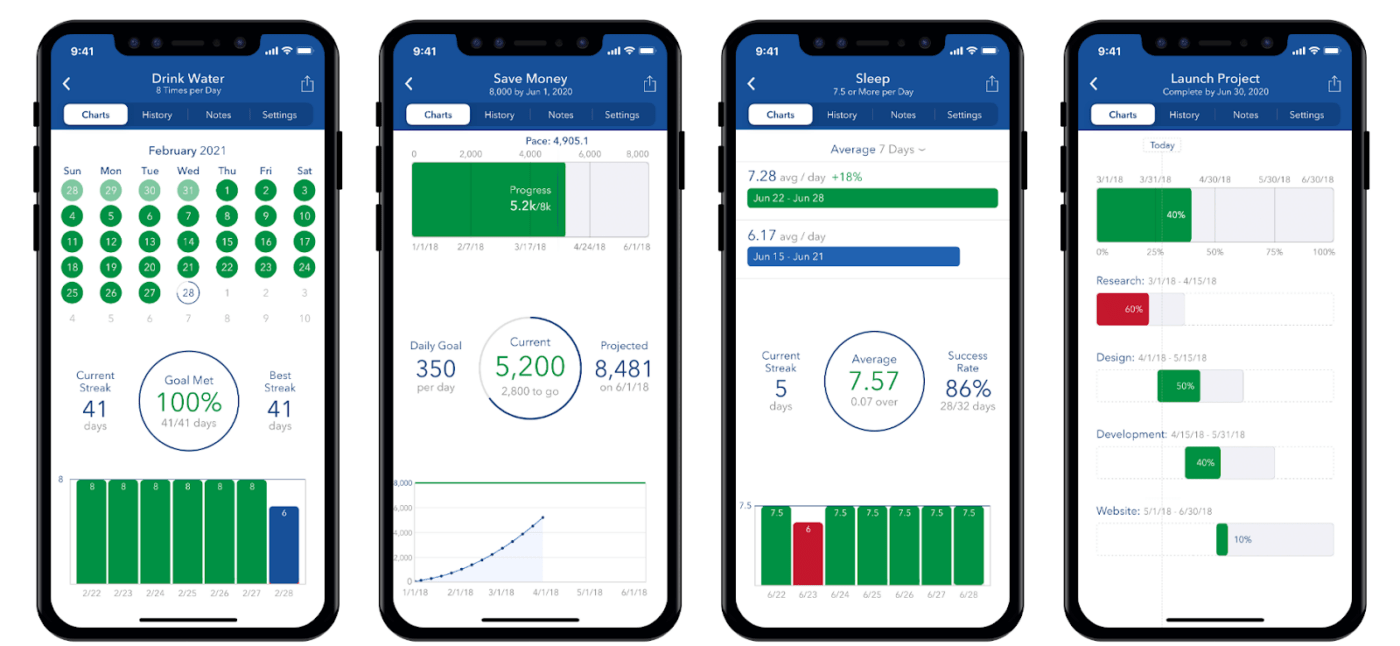
If you want a single clean app to measure everything at once, Strides is helpful. Its advantage is flexibility: four distinct tracker types mean no goal gets forced into the wrong shape. Log a Habit with a simple yes or no. Set a Target to reach a number by a deadline. Hold a benchmark with an Average. Advance through defined steps with a Project.
The smartest feature is the Pace line, which calculates whether today’s progress is fast enough to finish on time and turns the bar green or red accordingly.
Strides suits individuals who want serious tracking flexibility without the clutter of separate apps.
Where Strides falls short: It leans heavily on manual logging and individual use, so there’s little here for team sharing or hands-off automation. The four tracker types also require a bit of configuration before the app feels dialed in.
Skip Strides if: You’re on Android or Windows, since the app is iOS-only for now, with the Android version still on a waitlist. Habitica and Way of Life both operate across platforms.
This is what an Apple store reviewer thinks about Strides:
Love the app functions, UI/UX. It has been pivotal in tracking my progress and staying on top of goals. My only issue and something I think should be changed is the tagging and archive features.
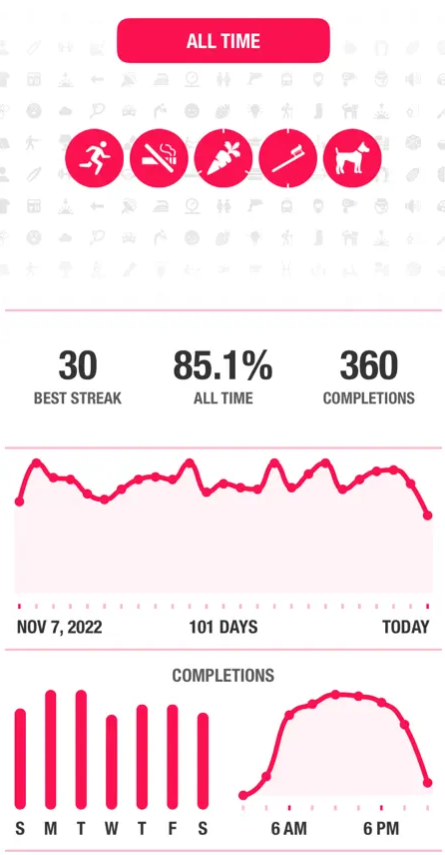
Streaks earns its Apple Design Award by doing one thing exceptionally well: it protects your chain. The concept is simple. Complete a task today, and your streak grows by a day. Skip it, and the count resets to zero. That single consequence is a powerful motivator, and it’s why the interface stays so minimal.
You choose up to 24 tasks, from flossing to practicing Spanish, and set the exact days each one is due. The standout advantage is the integration with the iOS Health app, which records goals like your steps or a run automatically.
Streaks is the top pick for individuals who want a clean, distraction-free habit tracker across their Apple devices.
Where Streaks falls short: The 24-task cap keeps things focused, but boxes in anyone with a longer list of habits. It also sticks to simple yes-or-no habits, so numeric targets and multi-step projects fall outside its scope.
Skip Streaks if: You’re outside the Apple ecosystem, since it only runs on iPhone, iPad, Apple Watch, Mac, and Vision Pro. Android or Windows users should look at Habitica, and anyone needing varied goal types will get a wider range from Strides.
What this Apple Store reviewer likes about Streaks:
Really clean, minimal UI and super easy to use. I liked how no-nonsense the layout is.
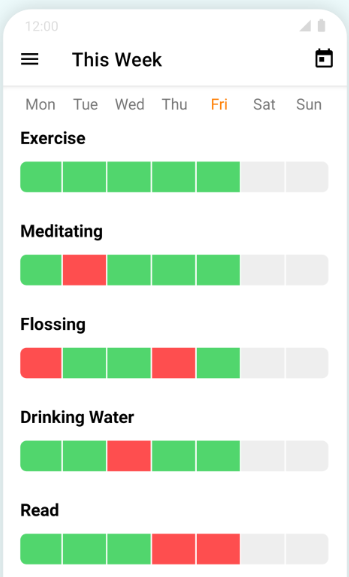
Some habit trackers overwhelm you with configuration. Way of Life takes the opposite approach. The entire system runs on one color-coded grid: tap green for a good day, red for a bad one, and gray to skip. Logging seven or eight habits takes only a few seconds, which is precisely why people continue using it for years.
Over time, those daily taps accumulate into charts that reveal trends across weeks, months, or even years. You discover how your habits behave versus how you imagine they do. A quick diary field lets you record what triggered a slip.
Way of Life is ideal for individuals who want a fast, minimal tracker that converts honest daily input into long-term insight.
Where Way of Life falls short: It only records yes, no, or skip, so you can’t log a count or a rating when you want finer detail. Your history also stays on one platform, since data doesn’t move between the iOS and Android versions.
Skip Way of Life if: You need numeric targets or a richer entry than a daily tap. Strides handles varied tracker types, and Habitica adds motivation if plain logging feels flat.
Hear about Way of Life from this Play Store reviewer:
Clean, simple, easy, and perfect. It’s an intuitive, customizable, and easy to remember to use app that doesn’t take much thought or time to complete and without the weird guilt of others that you “lose” if you miss habits.
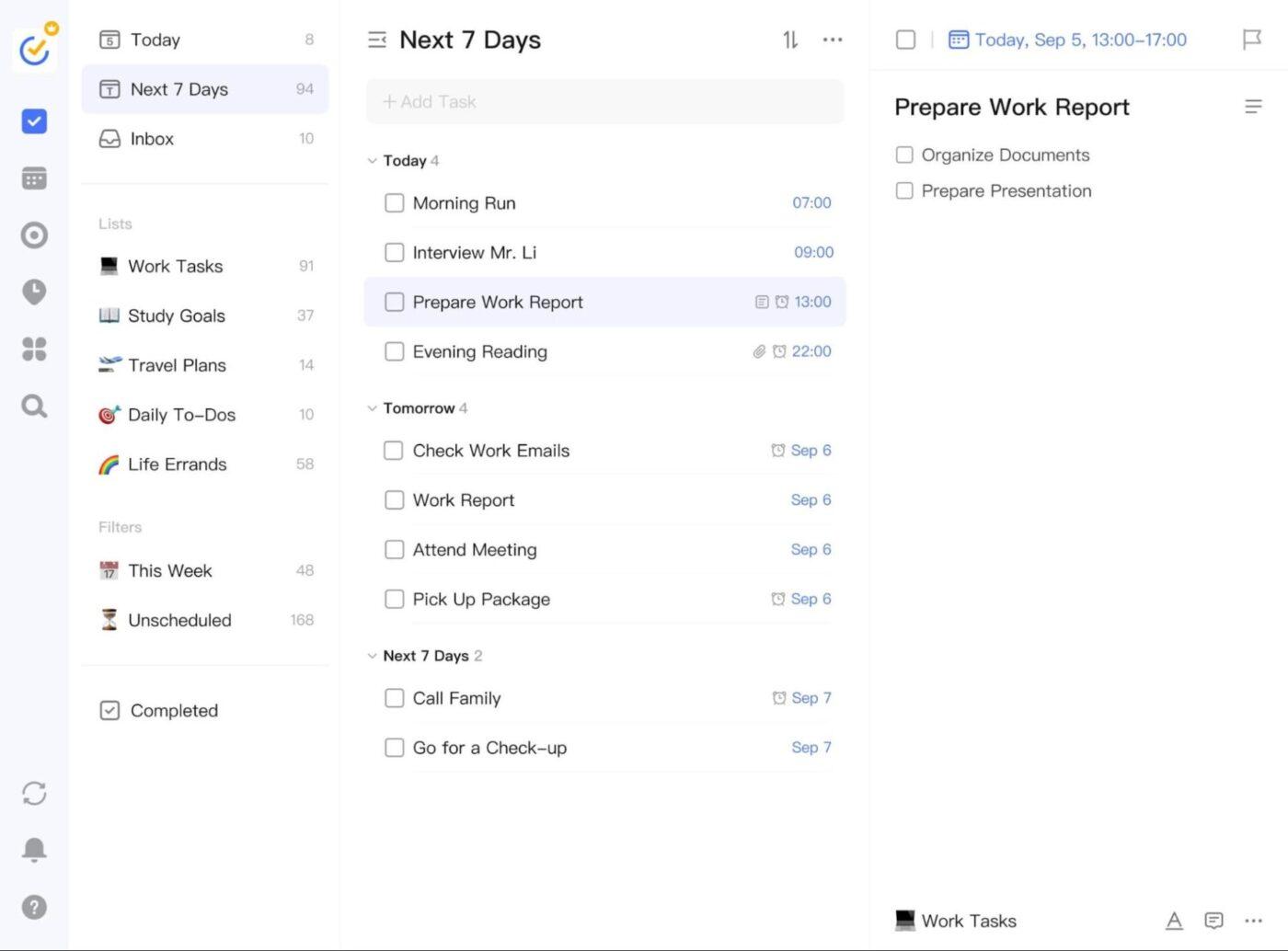
Most goal apps make you pick between a to-do list and a habit tracker. TickTick refuses to choose. It’s a comprehensive task manager first, so your goals sit right beside your daily tasks, calendar, and reminders. The habit tracker then operates inside that same workspace, supported by a rich habit library and clear statistics.
Map out the week in a calendar view and run a Pomodoro timer to maintain focus. You can also prioritize time with an Eisenhower matrix, all without leaving the app. It synchronizes across phone, tablet, computer, and watch in real time.
TickTick is the pick for individuals who want their habits and their entire task list in one clean place.
Where TickTick falls short: It’s built around personal productivity, so a shared list can get messy once several people edit it at once. The habit tracker is also lighter on visual trends than a dedicated one.
Skip TickTick if: You want deep habit charts or formal team goals. Way of Life shows cleaner trend graphs, and Weekdone handles company-wide OKRs.
See what this G2 reviewer likes about TickTick:
I like that the platform is very simple to use, it fulfills its function perfectly, it has many options for making lists, with different views, which is great.
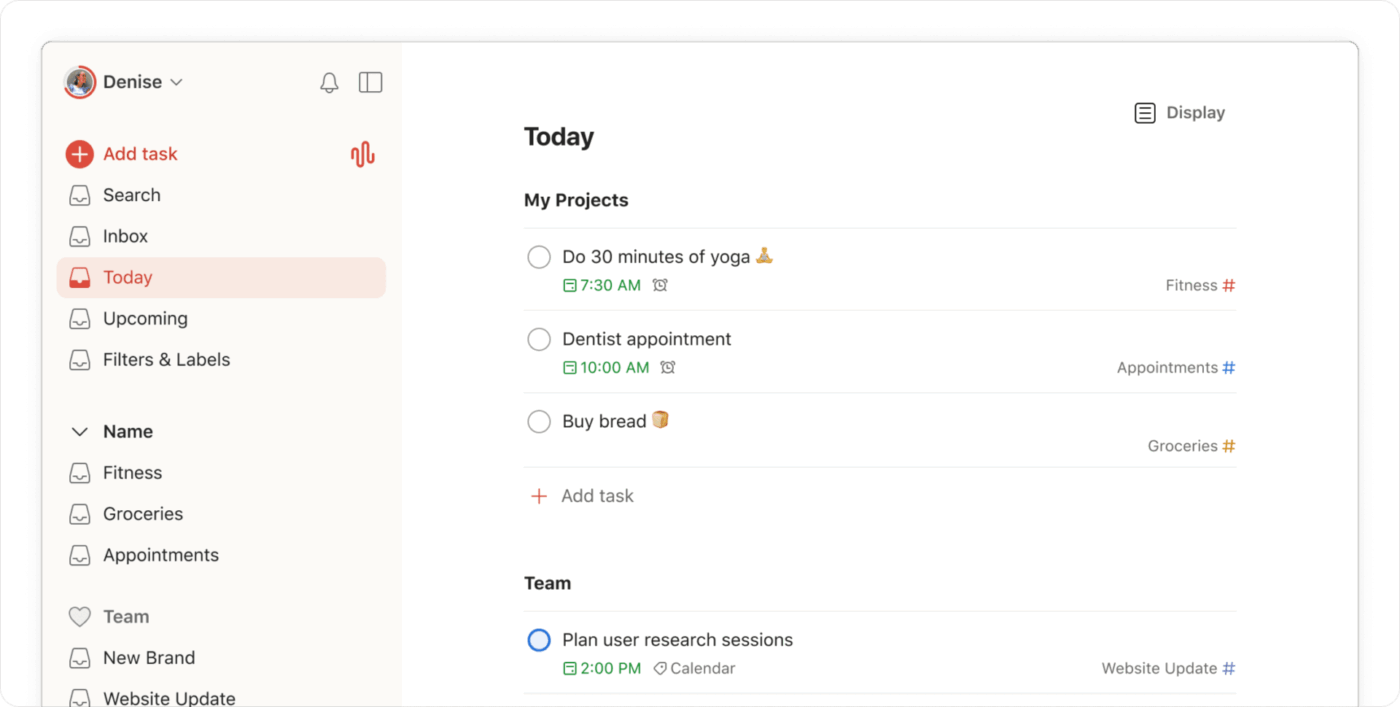
Todoist focuses on one thing the most: getting tasks out of your head and into order fast. Its standout trick is natural language input. Type ‘run every day at 7 am’ and it schedules the recurring habit instantly, no menus required. Nudges and location-based reminders keep you on track.
The Karma system then turns follow-through into a game. It awards points as you finish tasks and hit daily and weekly targets. You watch your productivity level climb and your streaks grow, which keeps the momentum going.
Todoist is the pick for individuals who want a fast, friction-free way to turn routines into lasting habits.
Where Todoist falls short: Habit tracking here rides on recurring tasks rather than a dedicated tracker, so you won’t get streak heatmaps or rich progress charts. A long list can also feel cramped in the default view.
Skip Todoist if: You want a purpose-built habit tracker with visual streaks. Streaks and Way of Life do that cleanly, while Habitica leans into game-style motivation.
Hear about Todoist from this G2 reviewer:
It’s a modest and very valuable tool with goal setting. Amazing how incredibly it is with task prioritization. Reliable with deadline setting for tasks.
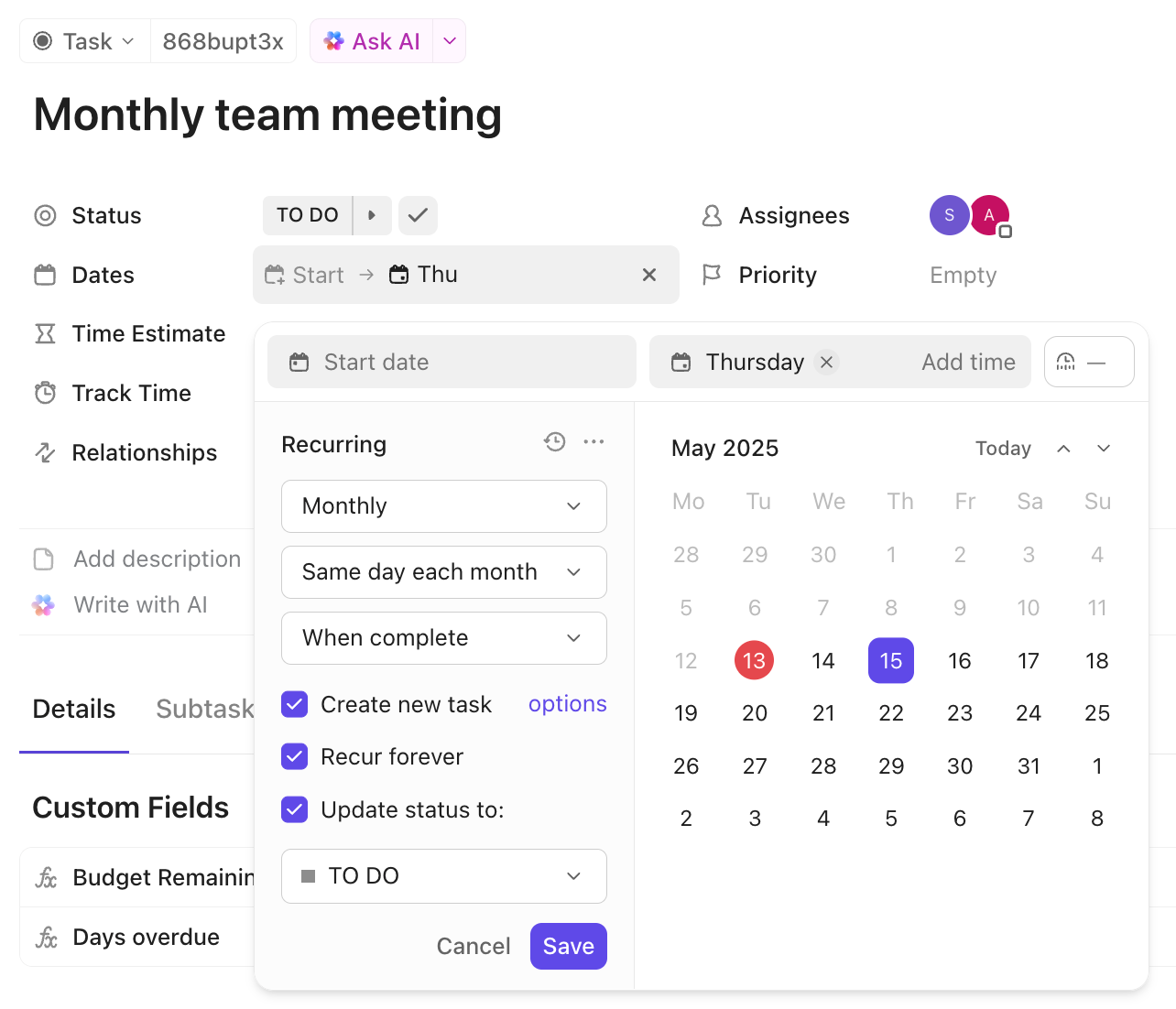
ClickUp is a comprehensive AI work management platform, so the goal and the tasks that complete it live in the same place.
It’s a solid fit for anyone whose goals are like projects. Build the goal as a list of tasks and subtasks, and add Clickup Custom Fields, like a number, currency, or formula, to convert the target into a figure that climbs as work progresses.
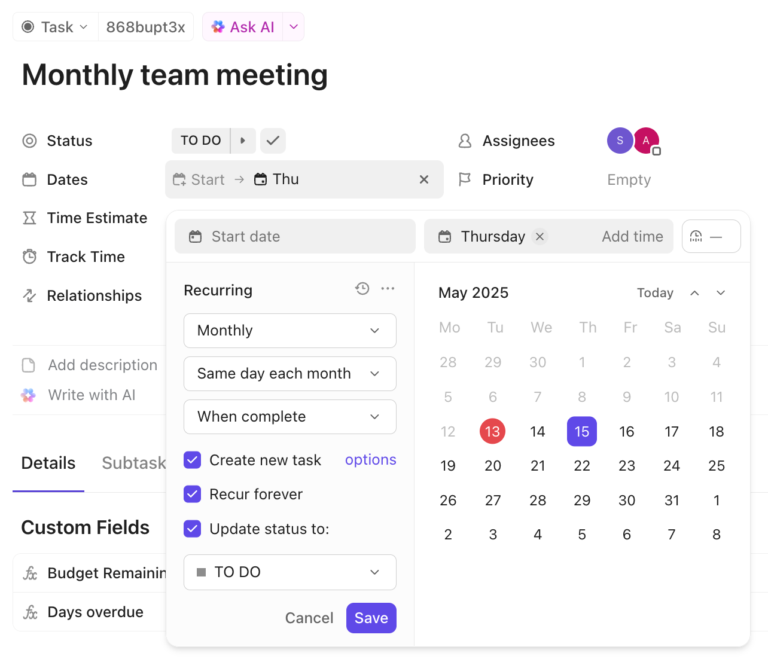
For habit-style goals, Recurring Tasks trigger on a schedule. A daily writing session or a thrice-weekly workout appears without you configuring it each time. ClickUp Dashboards then consolidate all your goals into one view, so you see overall momentum instead of digging through lists.
Accountability is where ClickUp fits work-based goals best. Assign the goal, add comments, and share a live view, so a teammate or manager sees your progress in real time.
Where ClickUp falls short: It does considerably more than track habits, so a new user faces a slight learning curve while configuring things. For a single daily tick, all that capability can feel like more than you require.
Skip ClickUp if: You only want a lightweight daily habit checklist with nothing else attached. Streaks and Way of Life nail that simplicity.
Hear about ClickUp for goal tracking and management from this G2 reviewer:
ClickUp is amazing. I started using it several years ago and quickly became a huge fan. With all of the AI additions like Brain2 and others, I honestly can’t imagine using any other software to keep my work organized. It helps me and my team stay on track and move toward our goals in meaningful, measurable ways, while getting it all done. We couldn’t do it without ClickUp!
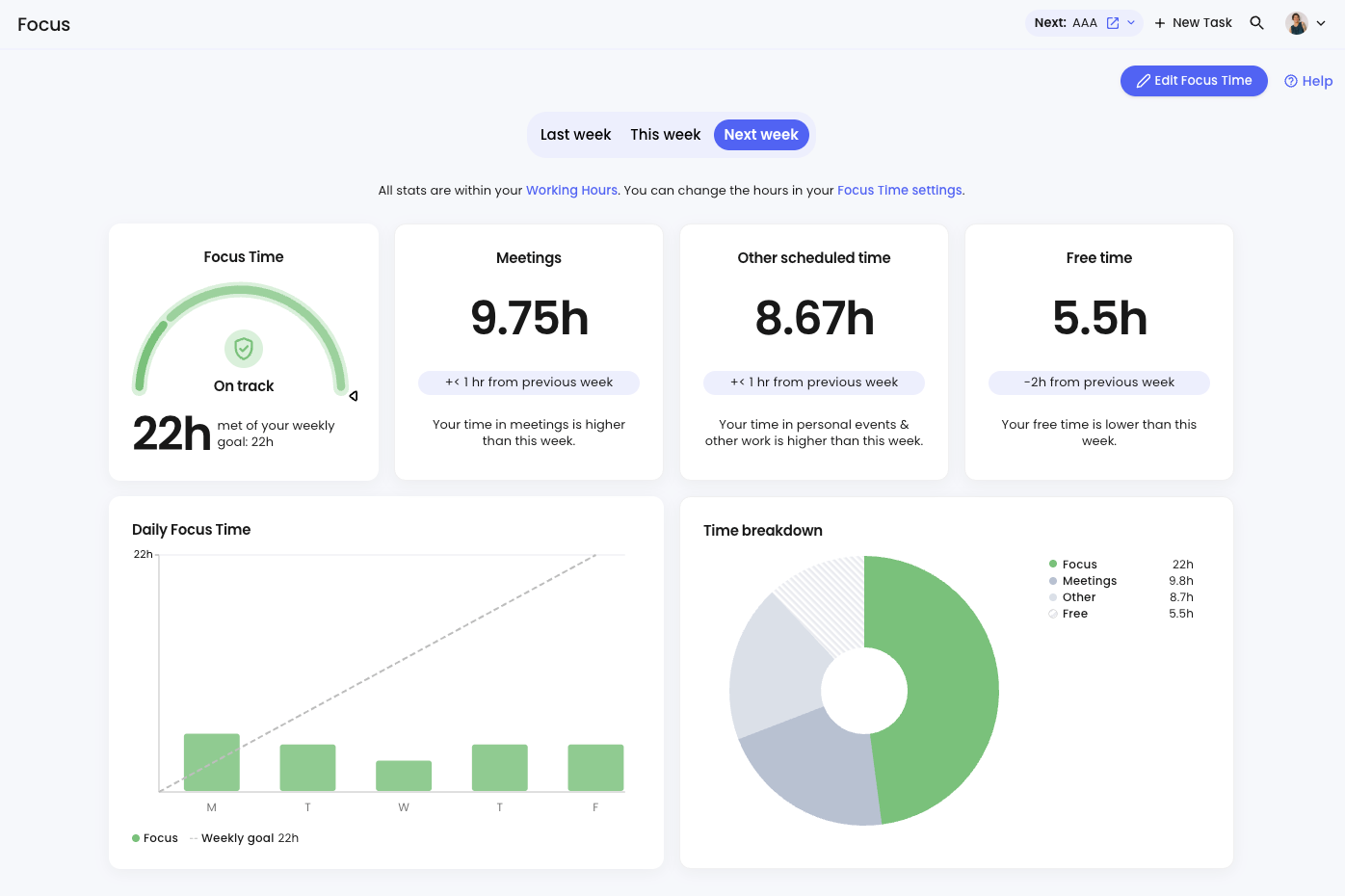
Reclaim takes a different angle from the rest of this list. Instead of a checklist you tap each day, it defends goals in real time on your calendar. You tell it a habit, like exercising three times a week. Its AI agent then finds the slots and books them. When a meeting lands on top, it reschedules the block so the commitment never just vanishes.
It also pulls tasks from ClickUp, Asana, Jira, and Todoist into focused work sessions, so project goals earn calendar time too.
Reclaim is the pick for people who want their goals protected against a packed schedule, not tracked after the fact.
Where Reclaim.ai falls short: The AI won’t always place work where you personally would, so now and then you’ll drag a block to a better time. It also assumes you run your days from a calendar, which not everyone does.
Skip Reclaim.ai if: You’d rather tap a daily checklist than defend time on a calendar. Streaks and Way of Life suit tap-to-log habits.
See what this G2 reviewer thinks about Reclaim.ai:
Reclaim is one of a few tools I use to protect my focus in a world full of distractions. What I appreciate most is that it adapts when my calendar shifts around—and my calendar shifts a lot, even though I try to stick to a strict schedule. When my gym session or focus block gets bumped, Reclaim quietly reshuffles things and reminds me to actually focus. That nudge alone has been valuable.
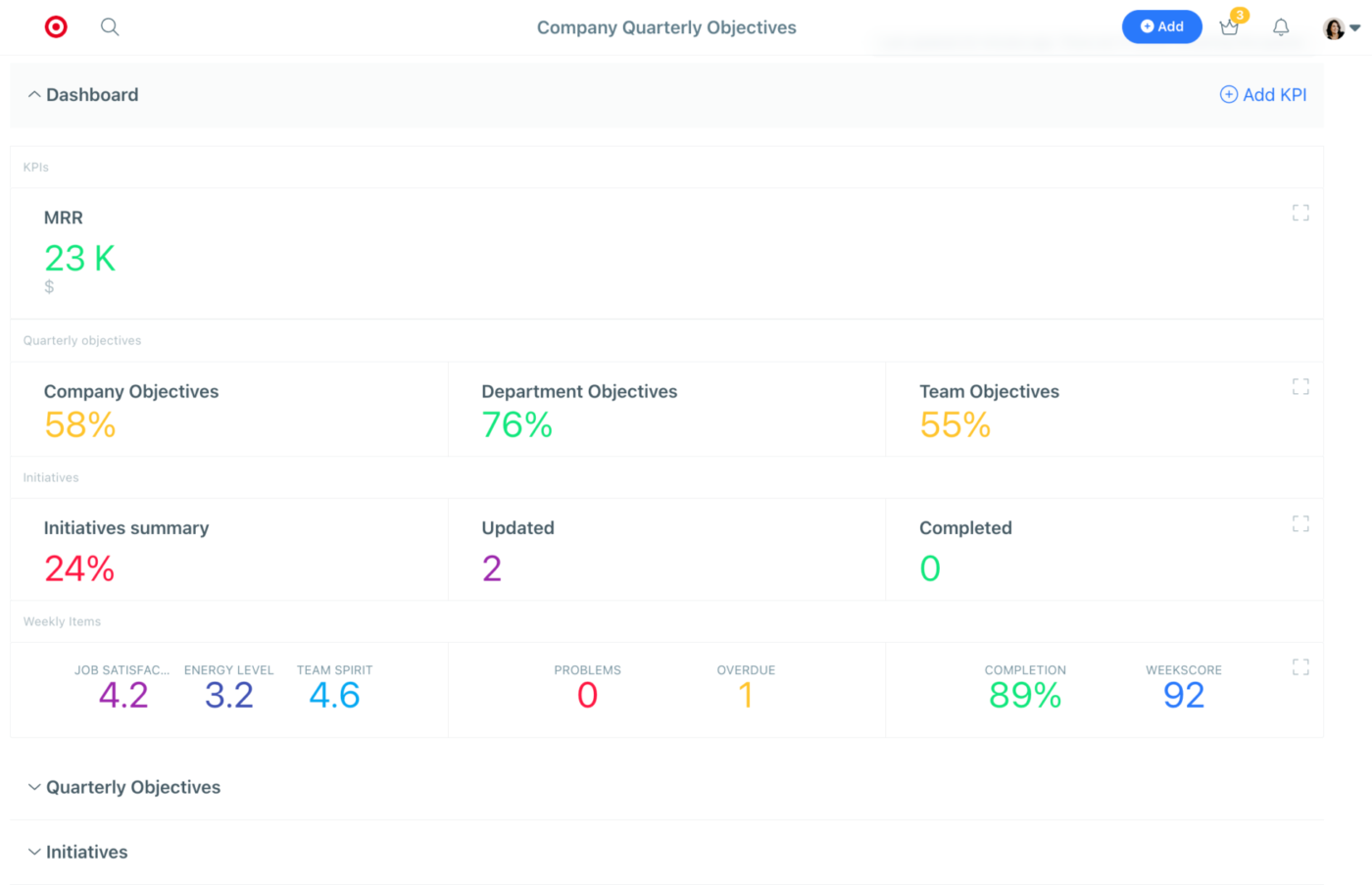
Nearly every other tool on this list tracks personal goals. Weekdone is built for a company chasing shared ones. It runs on the OKR method, so you set quarterly goals at the top and link each person’s weekly plans to them. Everyone sees how their work adds up to the bigger target, and leaders get instant visibility without chasing status updates.
It also pulls in tasks from Jira, Google Sheets, and more, then links to Slack or Teams for check-ins.
Weekdone is the pick for managers and growing teams who want private goals tied to company goals, not tracked alone.
Note: This is the starting premium cost for Weekdone, for up to 10 users. The cost increases when users do. For example, for 11 to 15 users, the charges are $135/month, and so on.
Where Weekdone falls short: Getting set up takes real effort, and new users often lean on tutorials or the support team to configure it. It’s also squarely a team tool, so a solo user will leave a lot of it unused.
Skip Weekdone if: You’re one person tracking daily habits, not a team running company OKRs. Habitica and Streaks fit solo goals far better.
This is what a G2 reviewer thinks about Weekdone:
Weekdone is OKR based & hence it organizes every individual goal with the organizational goal & improves team coordination. Employee goals are prioritized according to their weightage in the organization’s goal.
The best goal apps track the system, not just the outcome: the daily action, the protected time, or the linked project, not a number creeping toward a target.
Habitica tracks the daily action. Way of Life logs why you skipped. Reclaim protects the time on your calendar. ClickUp ties the goal to the real work. Weekdone puts a weekly report in front of your team. The apps that fade are the ones that only show a number creeping toward a target.
There’s a reason for that, and it isn’t just design. As James Clear puts it in Atomic Habits:
You do not rise to the level of your goals. You fall to the level of your systems.
The research backs him up. A Dominican University study by psychology professor Gail Matthews found that people who wrote their goals down and sent weekly progress reports to a friend scored dramatically higher on achievement. This was in comparison to those who simply wrote a goal or merely thought about one.
Writing goals down helps. Building a system of action and accountability around them helps considerably more. Decades of goal setting research by Locke and Latham point in the same direction: specific, challenging goals beat vague do-your-best intentions.
So here’s the takeaway for choosing an app. Don’t pick the one with the prettiest progress ring. Pick the one whose system matches how you genuinely change behavior.
Choosing the right goal tracking app comes down to three questions: whether your goals are personal or work-related, what devices you use, and the reason your last goal fell apart. Answer those three, and the field narrows itself fast.
Match the tool to the reason your last goal didn’t stick, and you’ll pick better than any rating average can tell you.
If your goals are purely personal streaks, any of the habit apps here will do the job. Pick the one whose style fits yours. But if your goals connect to real projects, deadlines, and other people, a standalone tracker always means duplicate entry and a goal that drifts out of sync with the work.
ClickUp eliminates that gap. You break the objective into tasks, add a Custom Field to measure the target, and progress updates itself from the work you’re already completing, consolidated so you watch the whole objective advance at once.
Get started with ClickUp for free and start tracking your goals in a few minutes.
Habitica is the strongest free option for personal habits if you like game mechanics, while Streaks is the best minimalist pick for Apple users. Way of Life is a better fit if you want simple yes/no tracking across iOS and Android. The right choice depends less on ratings and more on what keeps you consistent: rewards, simplicity, or visible pattern tracking.
A habit tracker records repeated daily actions as yes/no streaks; a goal tracker measures progress toward a defined outcome with a target or deadline. Habit trackers like Streaks and Way of Life optimize for consistency, while goal trackers like Strides and ClickUp optimize for reaching a specific result. Many tools blur the line: TickTick and Todoist bundle both. Pick a habit tracker for daily routines, a goal tracker when the finish line is a number, or a project.
ClickUp is the best fit when goals depend on tasks, deadlines, and shared ownership, while Weekdone is better for teams running formal OKRs with weekly check-ins. The difference is workflow depth. ClickUp connects goals to work already happening in your projects, and Weekdone is built more narrowly around organizational goal reporting.
Goal tracking apps are not always better than task management apps. A task manager like Todoist is better when your real problem is capturing and organizing work, while a goal tracking app is better when you need to measure sustained progress over time. Hybrid tools like TickTick sit in the middle by combining tasks, habits, and a calendar view in one place.
Yes, goal tracking apps actually help people follow through, but only when they support accountability and specificity. Research from Dominican University found that people who wrote goals down and shared weekly progress reports performed much better than people who only thought about their goals. Goal setting research from Edwin Locke and Gary Latham also found that specific, challenging goals outperform vague intentions in most studies. The app helps when it reinforces those conditions.
Strides and Streaks are the strongest iPhone-first options. Strides is better for structured SMART goals, while Streaks is better for simple daily habit tracking with Apple Health integration. Both are Apple-only, so they stop making sense if you also work on Android or Windows.
Yes, free goal tracking apps can be enough if your needs are simple. Habitica offers its full core feature set for free, Strides gives you three trackers, and ClickUp includes goals on its Free Forever plan. Free plans usually break at a specific limit, though, such as tracker caps, project caps, or user caps, so it is worth checking the ceiling before you commit.
A goal tracking app measures whether you’re making progress on individual goals. OKR software links those goals into a shared hierarchy so that a whole team pulls toward the same objectives. Tools like Habitica, Streaks, and Way of Life focus on personal follow-through. OKR software like Weekdone connects each person’s weekly plans to top-level quarterly objectives, giving leaders roll-up visibility without chasing status updates.

Manasi Nair
Max 24min read
Manasi Nair
Max 30min read
Manasi Nair
Max 28min read

© 2026 ClickUp




