Sorry, there were no results found for “”
Sorry, there were no results found for “”
Sorry, there were no results found for “”
When you’re building a startup, every second and every dollar counts.
Now consider this: Tool sprawl—the phenomenon when teams use too many tools that overlap in purpose without working together—costs companies $1 million annually per development team. In fact, 75% of developers lose up to 15 hours every week navigating an average of 7.4 disconnected tools to build applications.
In a startup, you are building, selling, shipping, hiring, and fixing things, often at the same time. So if a new tool adds setup time, another login, another subscription fee, or another place to check, it quietly steals both focus and budgets.
That’s why you need the best tools from the get-go.
In this blog post, we will break down the best tools for startups, what each one is best at, and how to choose a stack that stays lean as you scale.
The best tools for startups are software applications designed to help early-stage companies manage operations, collaborate, and scale without being overwhelmed by layers of complexity or high costs.
These tools , often delivered as SaaS (Software as a Service), span categories such as project management, communication, marketing, and automation—each solving a specific operational challenge that startups face daily.
| Tool | Best for | Key features | Pricing* |
|---|---|---|---|
| ClickUp | Running projects and workflows with AI Agents and automations in one workspace | Tasks + Views for fast execution, Chat + SyncUps for real-time comms, Dashboards, Brain, Super Agents | Free forever; Customizations available for enterprises |
| Notion | AI-assisted docs and databases for startup knowledge + lightweight ops | Linked databases, Notion AI inside pages, publishable pages for stakeholders | Free plan available; Paid plans start at $12/user/month |
| Slack | Team communication with AI summaries | Channels + threads, AI recaps/summaries, Slack Connect, Workflow Builder | Free plan available; Paid plans start at $4.38/user/month |
| Asana | Project planning with goals, portfolios, and AI status support | Portfolios + Goals, AI-written status updates, Rules automation, Timeline | Free plan available; Paid plans start at $13.99/user/month |
| Trello | Board-based planning with built-in AI help for cards | Boards/lists/cards, Atlassian Intelligence in cards, Butler automations, templates | Free plan available; Paid plans start at $5/user/month |
| monday.com | Customizable boards with AI inside docs and workflows | Branded invoicing, time-to-invoice flow, expense capture, and core reports | Free plan available; Paid plans start at $9/seat/month |
| HubSpot | CRM + marketing + support in one system with AI assistance | CRM + pipeline, lifecycle automations, Breeze AI drafts/summaries, reporting | Free plan available; Paid plans start at $9/month/seat |
| Mailchimp | Email-first marketing automation and customer journeys | Customer Journey Builder, templates + Brand Kit, Content Studio for assets | Free plan available; Paid plans start at $13/month |
| FreshBooks | Invoicing, time tracking, and simple accounting for services | Branded invoicing, time-to-invoice flow, expense capture, core reports | Paid plans start at $23/month |
| Canva | Fast, brand-ready design for startup teams | Templates, Brand Kit, real-time collaboration, AI design generation | Free plan available; Paid plans start at $15/month per person |
| Zoom | Video calls with reliable meetings and AI summaries | Meetings + recording, breakout rooms, scheduling links, AI Companion summaries | Free plan available; Paid plans start at $16.99/user/month |
| Loom | Async video updates and walkthroughs for distributed teams | One-click screen recording, share links, comments on video, basic editing | Free plan available; Paid plans start at $15/user/month |
| Zapier | Automating repetitive work across apps with multi-step workflows | Triggers/actions, multi-step Zaps, filters/paths, broad app coverage | Free plan available; Paid plans start at $29.99/month |
| Deel | Global hiring, payroll, and compliance for distributed teams | EOR + contractors, localized contracts, global payments, compliance workflows | Paid plans start at $49/contractor/month |
| Semrush | SEO research, site audits, and competitor insights | Keyword research, site audits, rank tracking, competitor analysis | Paid plans start at $199/month |
You have to choose a tool that packs what you need into one intuitive interface. In a nutshell, this is what you should look for:
Our editorial team follows a transparent, research-backed, and vendor-neutral process, so you can trust that our recommendations are based on real product value.
Here’s a detailed rundown of how we review software at ClickUp.
Let’s take a deep dive and look at the top tools you need as a startup 👇
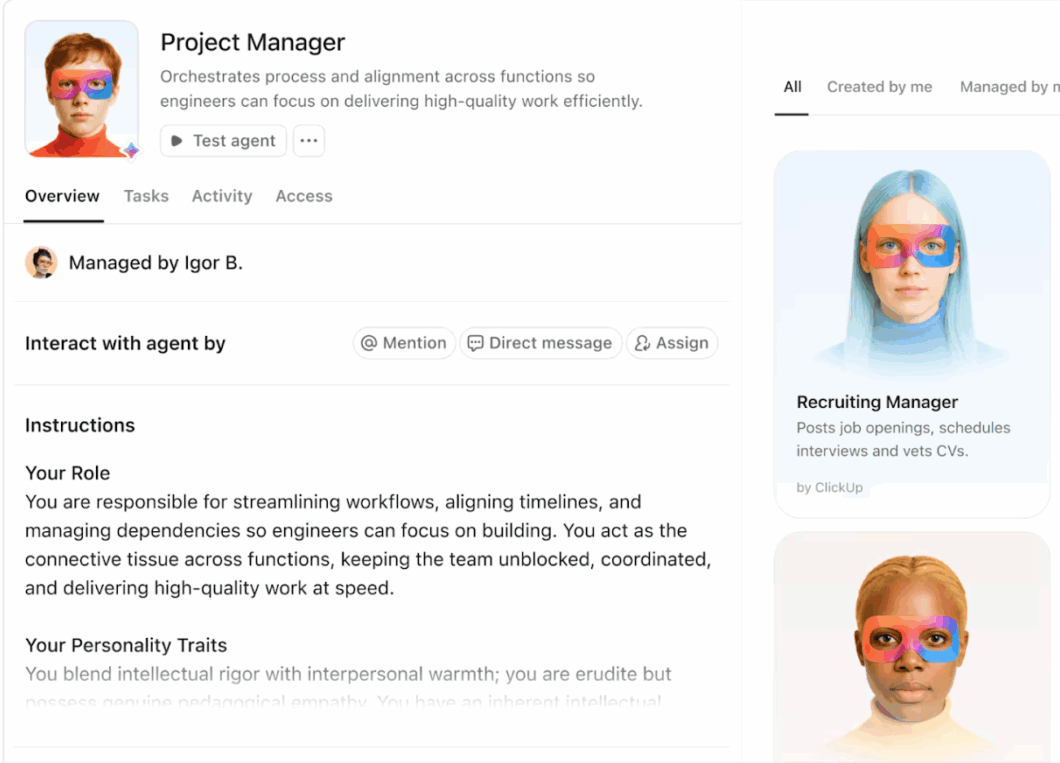
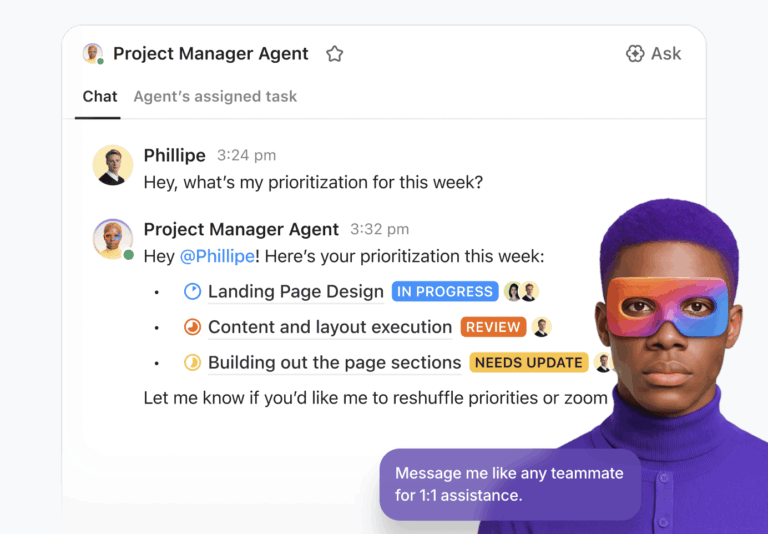
As a startup, you want tools that minimize tool sprawl and offer a consolidated setup where work, docs, and team coordination live together.
That’s the idea behind ClickUp, the world’s first Converged AI Workspace. In ClickUp, projects, docs, chat, and analytics work together with AI assistants and agents that have full workspace context.
Let’s take a better look:
Working in startups means dealing with thousands of moving parts, all equally urgent. Because every deliverable has dependencies, owners, and evolving deadlines. This is when you turn to ClickUp Tasks, the foundation that gives every piece of work a single location, complete with status, assignee, priority, start and due dates, and so much more.
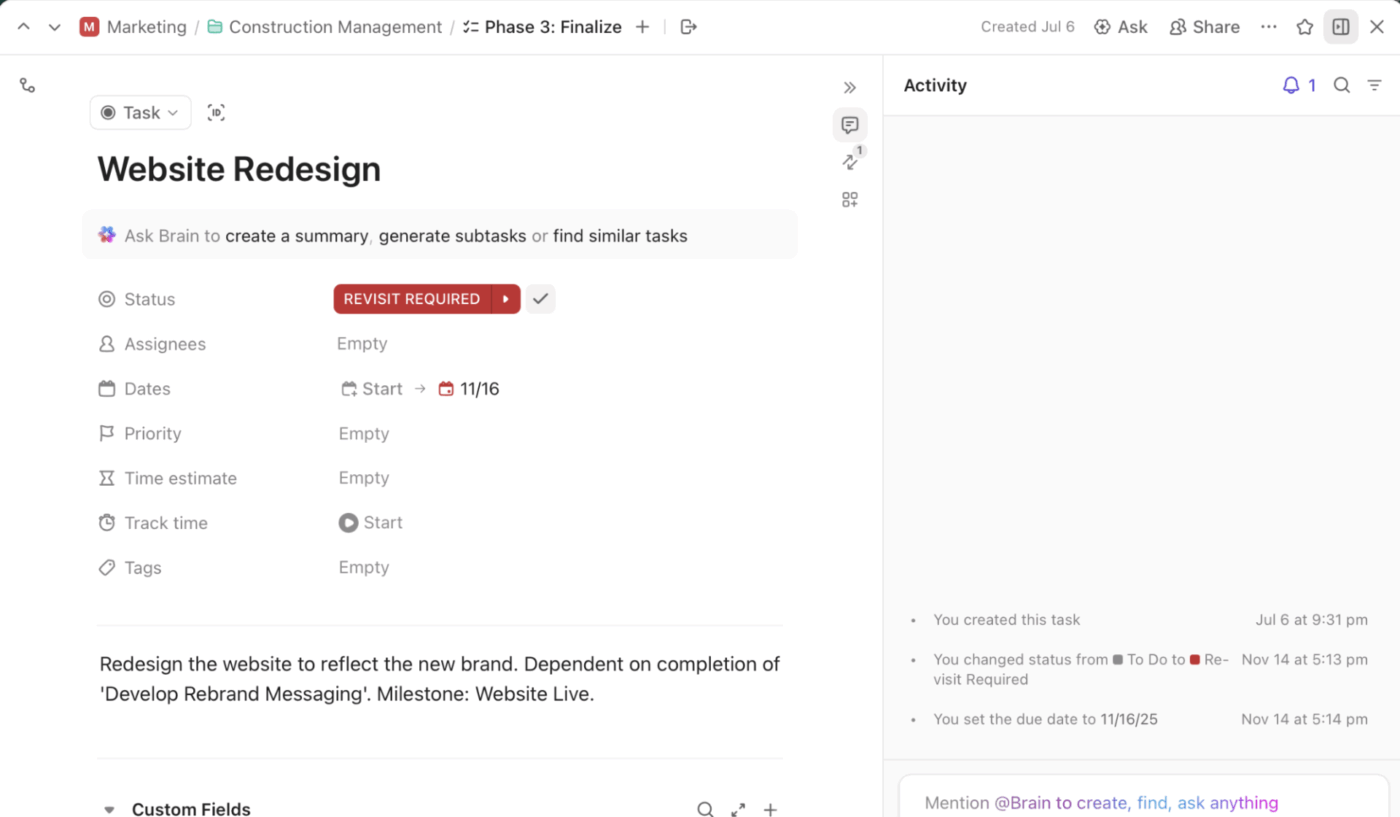
To keep the momentum going without redoing the same thing over and over, you can also use ClickUp Task Templates. You can also automate routine work using ClickUp Recurring Tasks. The goal is to free up your time to grow your business while work runs steadily in the background.
Pair ClickUp Tasks with ClickUp Views to view the work the way you like. Views are basically different lenses on the same task data, so your team and your partners can work in whatever format helps them execute faster.
You get access to views like:
Never again rely on a separate tool (and an extra subscription!) to chat, call, or drop a voice note. You can do all that and more in ClickUp Chat. Even better, you can create tasks directly from a message if it’s important and needs urgent attention.
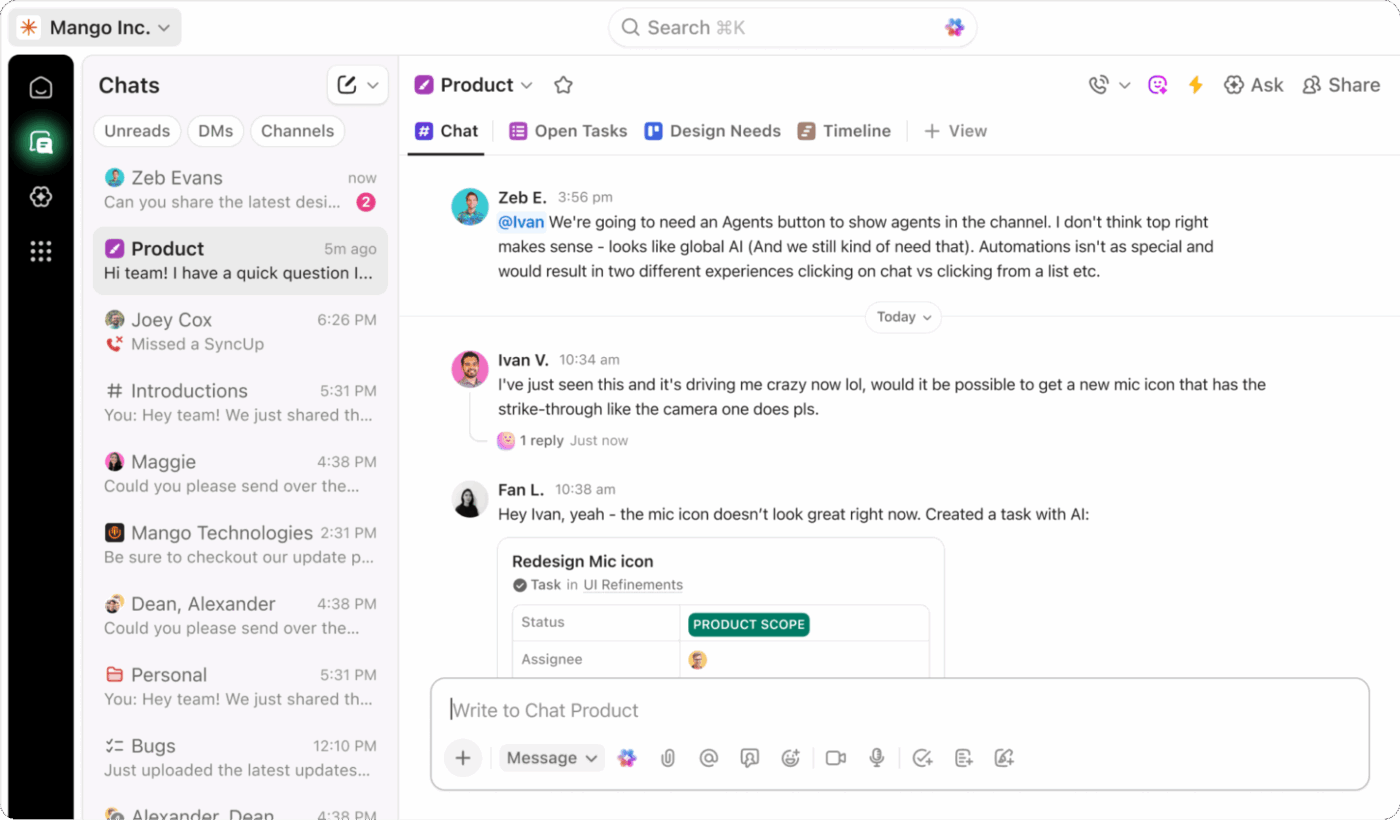
And if you’re on the move, have Chat open on your phone, all the time, every time!
Inside ClickUp Chat, you can also spin up SyncUps to have discussions on video calls.
/SyncUp command, and ClickUp drops a join message in-thread so others can hop in immediately
When your tasks move incredibly fast, the hardest part is rarely doing the work; it’s finding the latest context and turning it into an actionable next step. ClickUp Brain is ClickUp’s in-workspace AI layer, so you can summarize, write, and ask questions directly inside the places where work lives (Tasks, Docs, comments, and more).
📌 Example: Open a task that has 60 comments and a couple of subtasks, then use Brain to generate a task activity summary that explains what happened in the thread and what the subtasks are doing. This gives you the most up-to-date, latest changes you need on the fly.
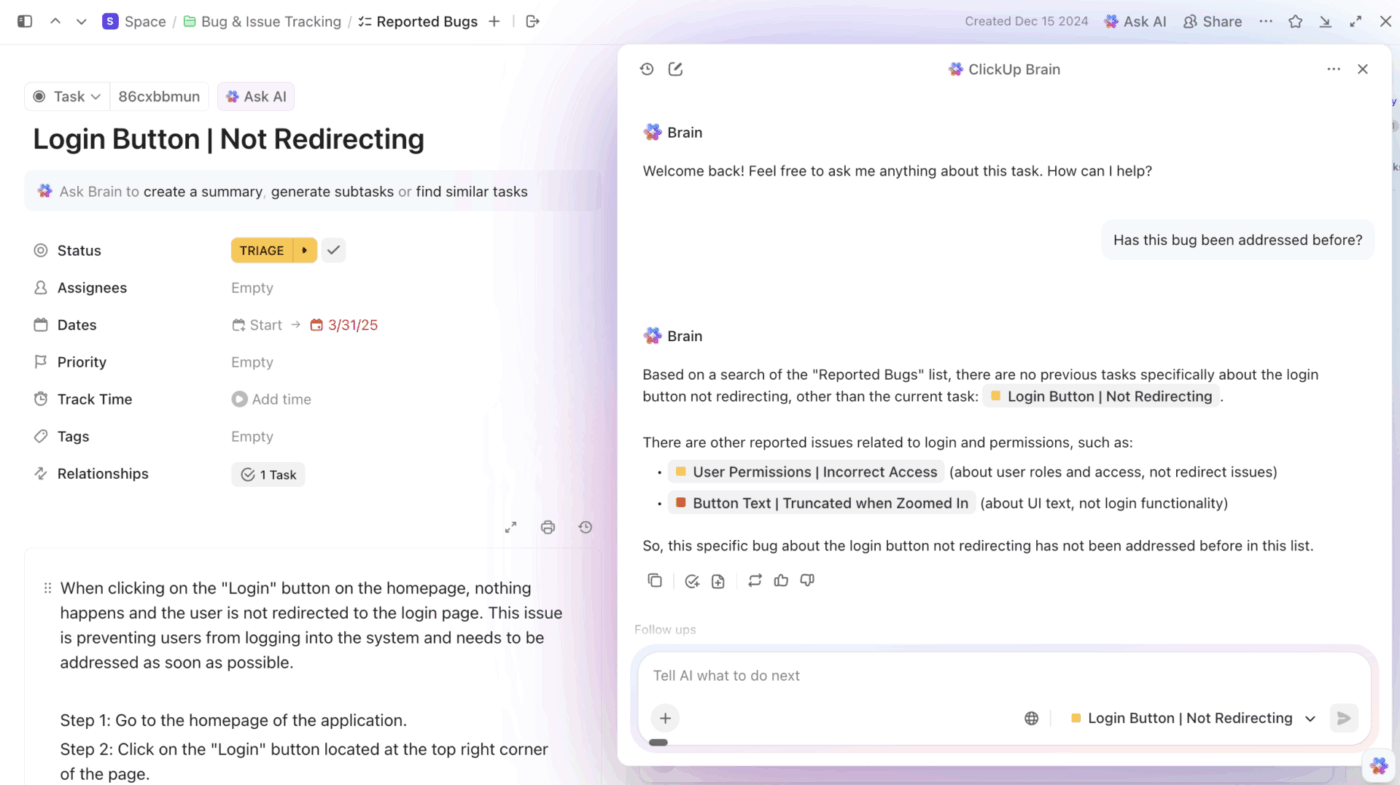
And when you want the same intelligence layer as a desktop app, just get ClickUp Brain MAX. It’s the desktop AI companion layer for when you want AI beyond a single task or Doc. It’s designed to search across your ClickUp Workspace, connected apps, and the web to support you with fully contextual solutions. The icing on the Brain MAX cake is a hands-free dictation experience with Talk-to-Text.
A G2 user says:
I like that ClickUp helps me structure tasks, prioritize deliverables, and keep teams aligned. I appreciate how ClickUp addresses the lack of visibility and disorder in execution. Additionally, it facilitates turning strategy into measurable actions. What I like the most is its integration with AI, as it helps me organize ideas and reduce manual work in one space. I also found that the initial setup is quite intuitive.
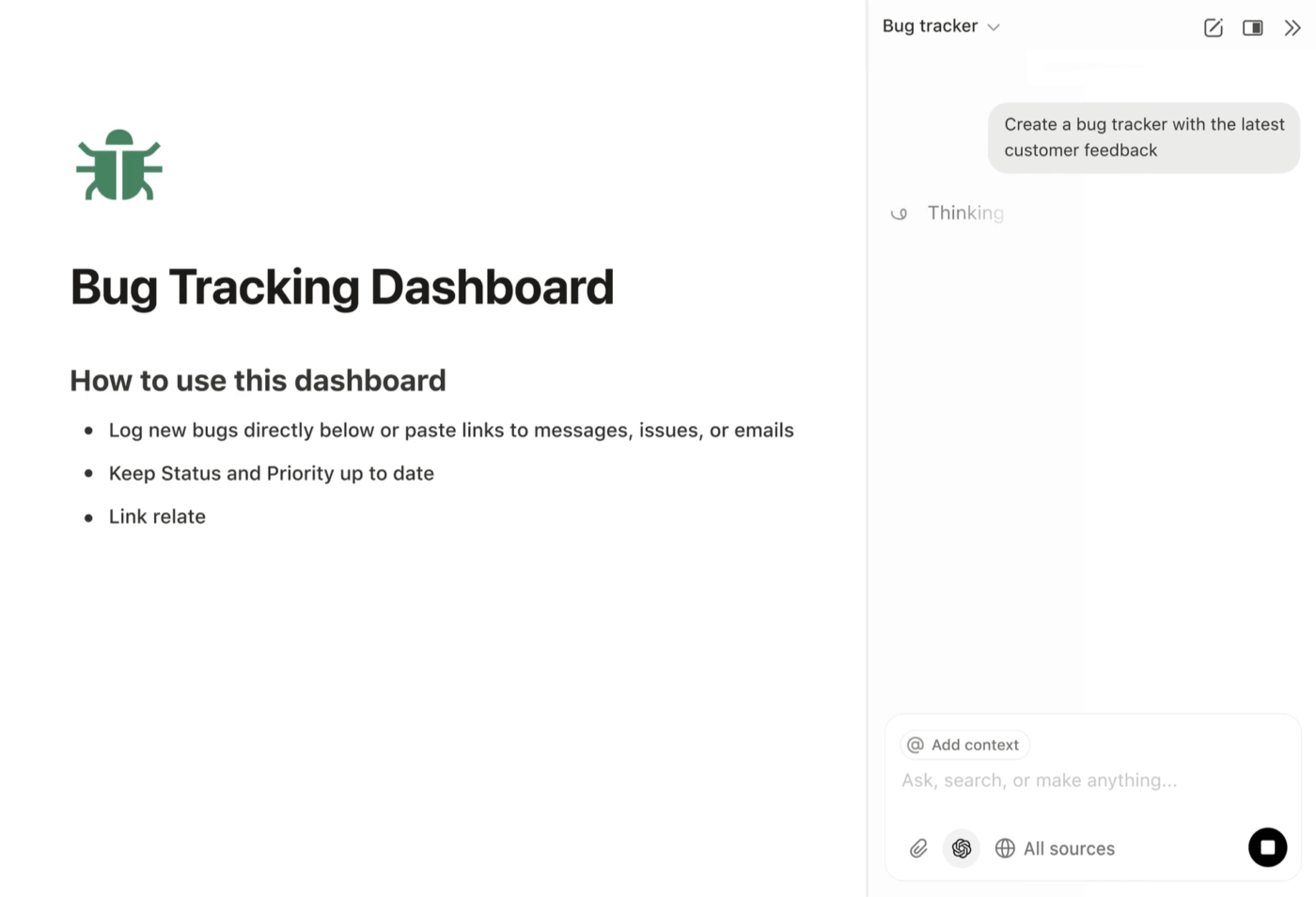
Notion is a docs-and-databases workspace that works well for startups trying to tie strategy, product specs, notes, and execution together. With Notion’s AI, you can summarize long docs, turn raw notes into action items, rewrite content in a specific tone, and translate internal updates for distributed teams.
You can also ask questions inside Notion and pull relevant context from your workspace, which is handy when someone needs the latest decision, a product requirement, or the current status of an initiative.
Because Notion blends documents with databases, you can run AI-assisted workflows on structured data too, like drafting project updates from a roadmap database, generating first-pass job descriptions from a hiring pipeline, or cleaning up meeting notes and linking them back to the right project pages.
A Capterra user says:
Notion AI is incredibly helpful for me, as I frequently take notes for my business. It quickly converts my handwritten notes into digital text within seconds. I also use Notion AI as a project management tool, ensuring all my projects are seamlessly exported to my clients through the platform.
📮 ClickUp Insight: For about 20% of users, focus sessions just aren’t practical. Their days are filled with teamwork, quick pivots, and constant collaboration—so adaptability matters more than long blocks of deep work.💫
If you’re one of them, then ClickUp is your unified, AI-powered command center.
You can assign tasks, jump into video calls, brainstorm ideas, collaborate on documents, and even generate content or images—all without switching apps. Everything you need to keep up with a fast-paced workday is right here in one place.3. Slack (Best for AI-powered team communication and fast internal alignment for startups)
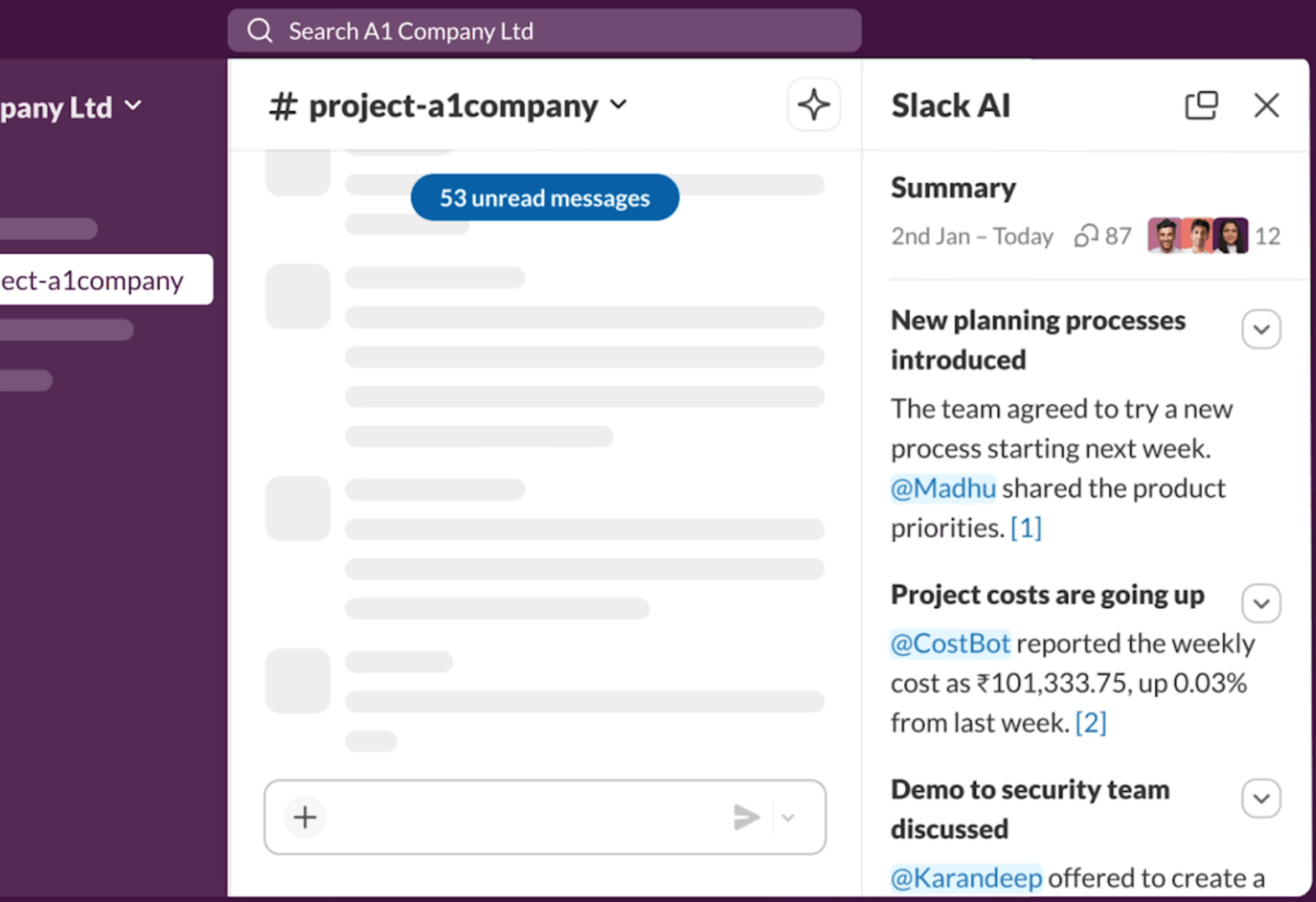
Slack is a popular team communication platform built around channels, threads, huddles (audio and video 1:1 calls), and searchable message history. Inside Slack, you can organize your work by function (such as #product, #growth, or #support) or by initiative (like #launch-week or #fundraising), with conversations and files remaining tied to the correct channel over time.
For startup teams moving quickly, Slack’s AI layer is what helps the product keep up. It includes AI capabilities, such as conversation summaries, daily recaps, file summaries, and AI search, which help teams catch up after being immersed in execution.
A Capterra user says:
It is easy to learn how to use and it acts as a messaging platform allowing us to tag others in the channel or in the direct messages. The automation using AI bots are exceptional and our organization uses it to track the parts for our charging stations that are being shipped and the bot works like a charm. Even the huddle option to call someone had all the features like screenshare and messaging on the huddle. Overall, a very good tool especially for professional works.
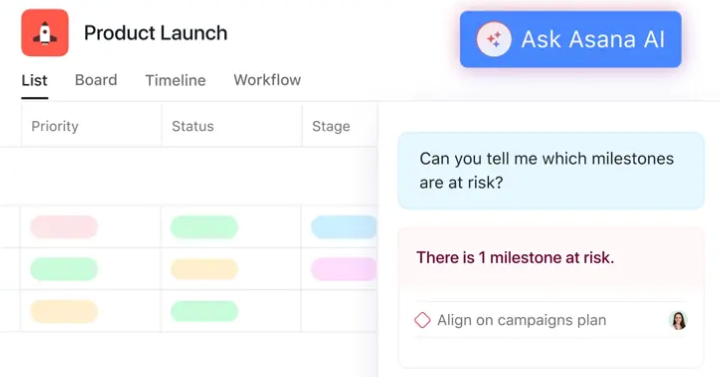
Asana is a project and work management platform built for startups that need execution across product, GTM, ops, and hiring. In Asana, you can break initiatives into projects, map dependencies, and keep owners and deadlines transparent as work moves across teams. When planning needs a higher-level layer, Asana also supports portfolios and goal tracking, so leadership can see how project progress rolls up to outcomes.
Asana’s AI features also help streamline many processes for fast-paced teams. For example, ‘Smart Assists’ drafts project updates by pulling context from work and activity, and ‘Smart Summaries’ condense task and project context into quick highlights and action items when threads get lengthy.
A G2 user says:
What I like best about Asana is its flexibility for building real operational workflows, not just simple task lists. It allows us to structure work with clear ownership, dependencies, and standardized tasks that reflect how work actually happens across teams.
It provides strong visibility without micromanagement and integrates well with tools like Slack and HubSpot, which makes automation and cross-team coordination much more efficient.
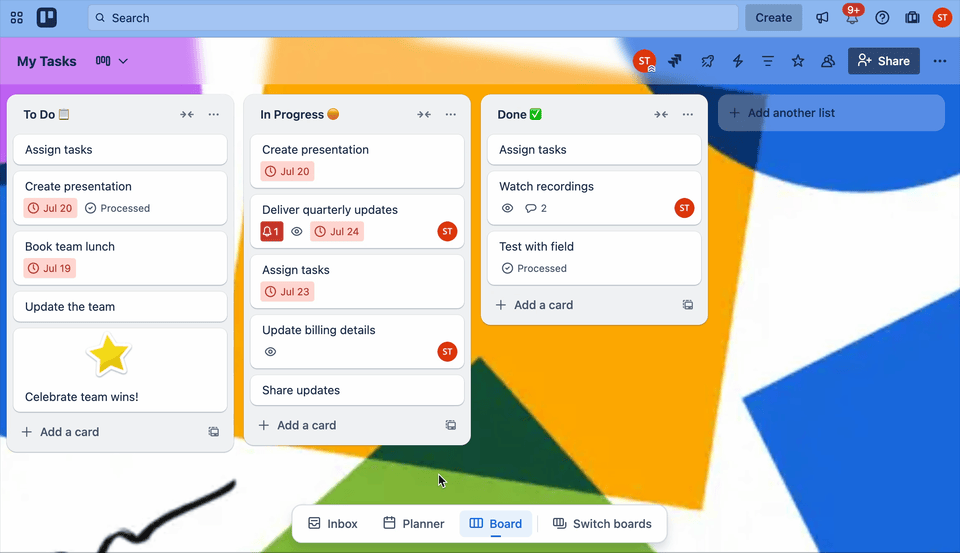
Trello is a visual work management tool built around boards, lists, and cards for startups to track product work, launches, pipelines, and content calendars without needing a heavy PM setup. Cards hold the full thread of work, including owners, due dates, checklists, and attachments, so execution stays readable as priorities shift.
For AI support, Trello includes Atlassian Intelligence inside card descriptions and comments. It can generate new copy, transform what you already wrote, summarize long text, pull out action items, and clean up phrasing when you need.
You can extend its functionality with Power-Ups for integrations and custom fields, and use workflow automation for simple, repetitive actions.
Trello works well for small teams and simple workflows, but struggles as projects become more complex.
A G2 user says:
Trello is one of the easiest and most effective tools for organizing work visually. Its board-and-card layout feels intuitive and flexible, and it works well for everything from simple task tracking to lightweight project management. It’s fast to set up, easy for teams to adopt, and it keeps workflows clear without adding unnecessary complexity. Features like checklists, labels, due dates, and automations (Butler) help keep projects moving, while integrations with tools like Slack and Google Drive make it even more useful as a central place to manage tasks.
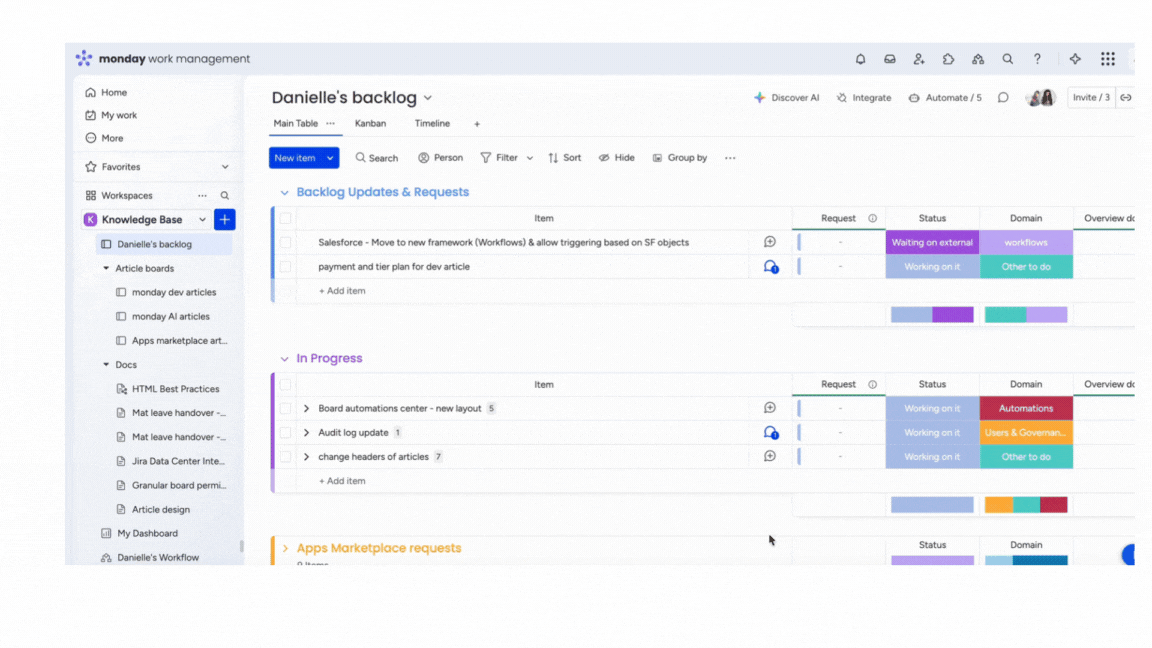
Monday.com positions itself as a ‘Work OS’ that helps startups plan projects, run cross-functional workflows, and maintain visibility as the team scales. It’s built around customizable boards where you can track product launches, hiring pipelines, customer requests, marketing calendars, or onboarding tasks with owners, timelines, and status always in view.
It also features Monday AI. With Sidekick, you can use AI directly inside boards and Workdocs to summarize updates, draft content, and take action across a board when things move fast.
On the ecosystem side, monday.com offers a marketplace of integrations and apps, plus developer tooling to extend workflows, which matters once your team wants work to stay connected to Slack, Drive, CRM, or analytics tools.
A G2 user says:
What I like most about monday.com is how visual and customizable it is. I can quickly see job statuses, crews, and deadlines at a glance, without having to dig through spreadsheets. It helps keep everyone aligned, and it saves me a ton of time in my day-to-day work.
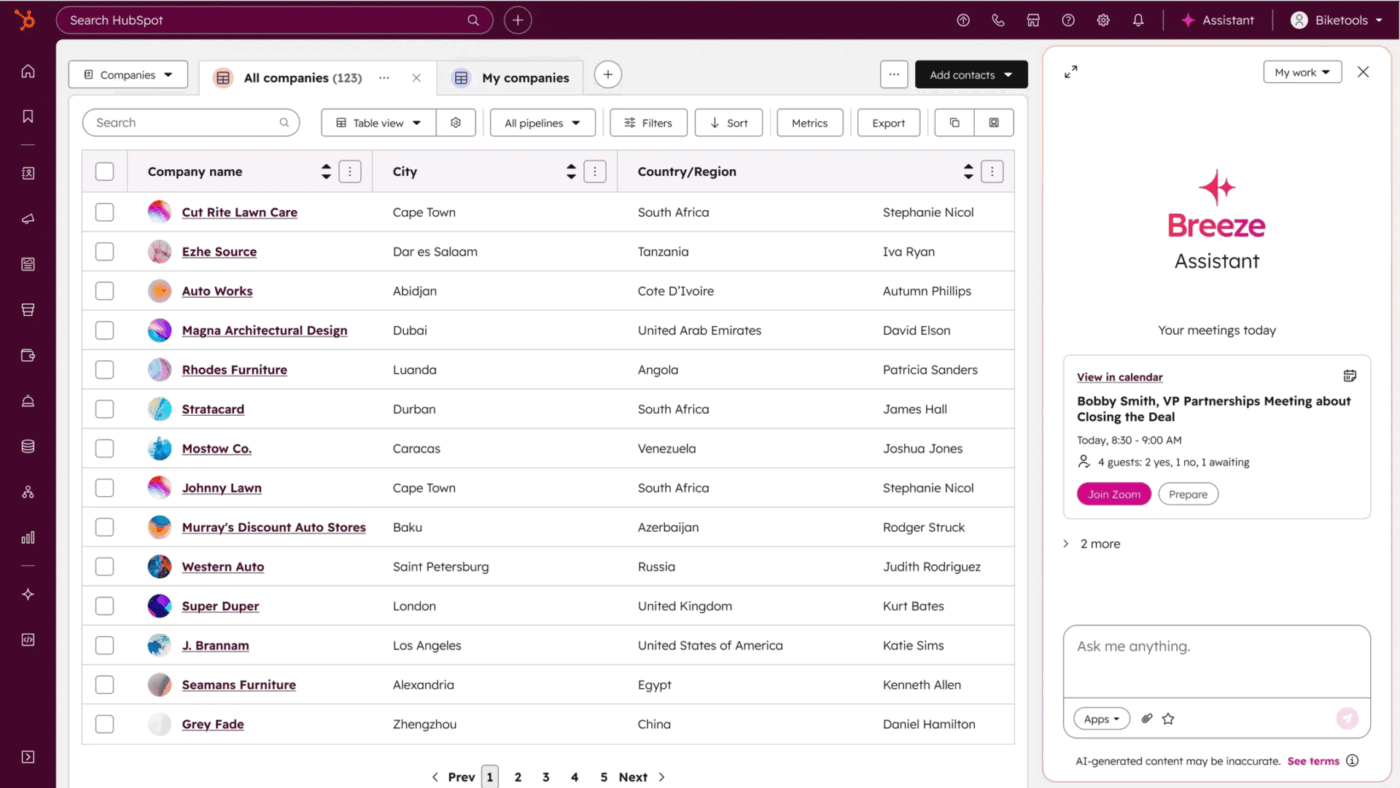
HubSpot is a CRM platform that bundles core startup needs into one place: contact and deal tracking, email and marketing automation, customer support tickets, and a CMS for landing pages or a simple site. As your pipeline grows, it helps keep lead capture, follow-ups, and customer conversations tied to the same record, so handoffs do not disappear across tools.
On the AI side, HubSpot’s ‘Breeze’ is designed to speed up everyday work inside the platform, like drafting emails and pages, generating summaries, and helping teams move faster without leaving the CRM context.
For startups that want a view of what’s working, HubSpot’s reporting pulls across CRM and marketing activity, helping you see which campaigns are creating pipeline and where deals are getting stuck.
A G2 user says:
What I love most is the all-in-one nature of the platform. Having the CRM, email marketing, and automation workflows perfectly integrated saves us an incredible amount of time. The user interface is extremely intuitive, making it easy for new team members to get up to speed without extensive training. The segmentation capabilities are also top-notch
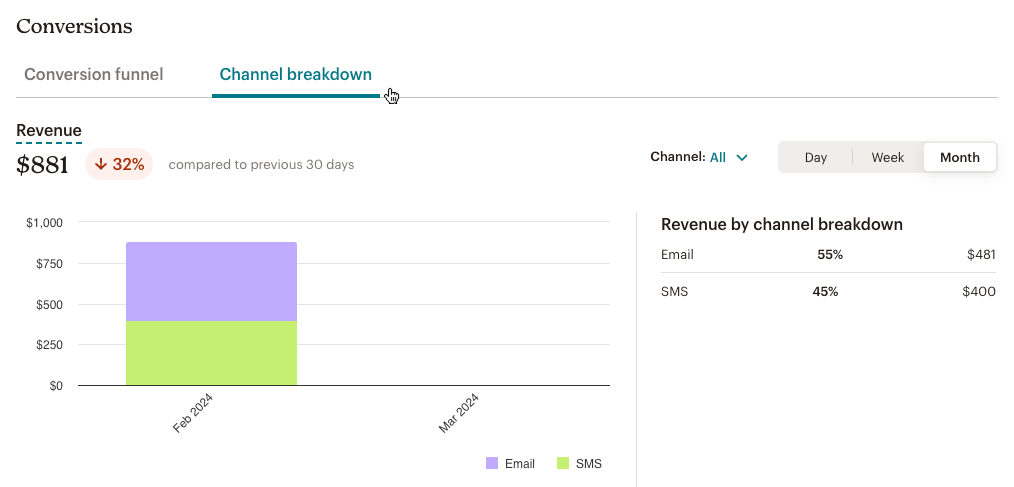
Mailchimp is an email marketing and automation platform that helps startups capture leads, send campaigns, and run lifecycle messaging from one place. It’s a strong fit when you need repeatable outbound, like newsletters, product announcements, onboarding sequences, and win-back campaigns, with enough structure to keep targeting and creative consistent as your list grows.
A big part of Mailchimp’s appeal is its Customer Journey Builder (Marketing Automation Flows), which lets you map automated paths with rules like branching points and delays based on how contacts engage. That makes it easier to move beyond one-off blasts and into ‘if they clicked this, send that’ style sequences that keep messaging relevant.
On the creative side, Mailchimp helps startups build a consistent brand presence through visual design. Brand Kit can store your logos, fonts, and colors, then use AI to generate on-brand layouts and graphics for emails and other marketing assets. And Content Studio gives you a centralized library for the images and files you reuse across campaigns.
A Capterra user says:
The Mailchimp email platform is the perfect starter program for creating marketing emails when you don’t really know what you’re doing or are just getting started and want to look professional and polished without putting in a ton of time and effort building emails. The templates are super user-friendly and the drag-and-drop features can be figured out by all skill levels.
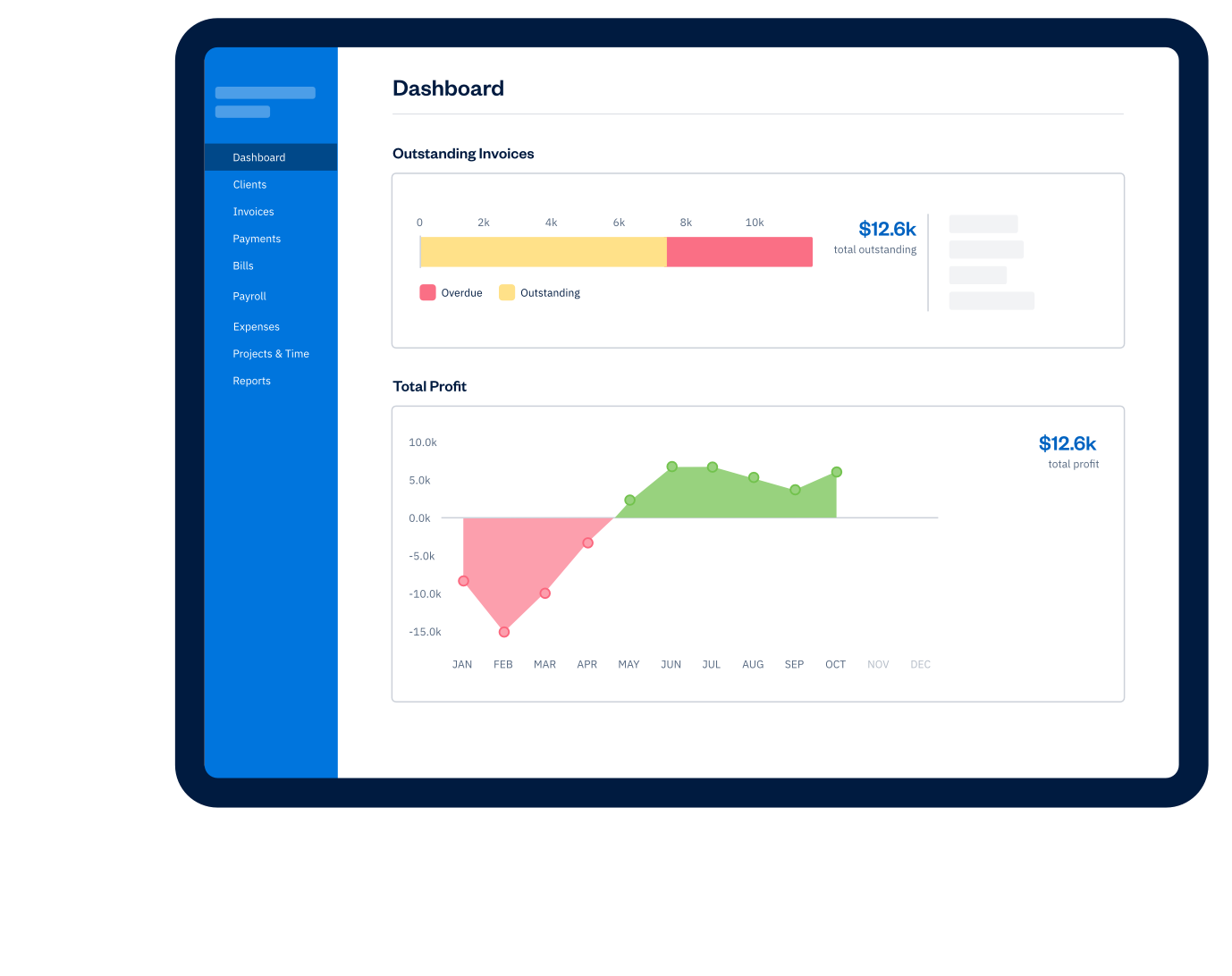
FreshBooks is an invoicing-first accounting platform designed for startups that bill for projects, retainers, or hourly work and want that billing tied directly to delivery. You can create polished invoices, collect online payments, and keep client communication attached to the invoice.
It also handles the day-to-day admin work that usually gets scattered across tools: track time against a client or project, turn tracked hours into an invoice, log expenses, and generate the core financial reports you need to understand cash flow.
If you run multiple client projects at once, FreshBooks’ project tracking helps you group time, expenses, and invoices under one client-facing view.
A Capterra user says:
FreshBooks is a user-friendly accounting solution that aids small businesses and freelancers in simplifying financial management tasks, saving time, and maintaining organization.
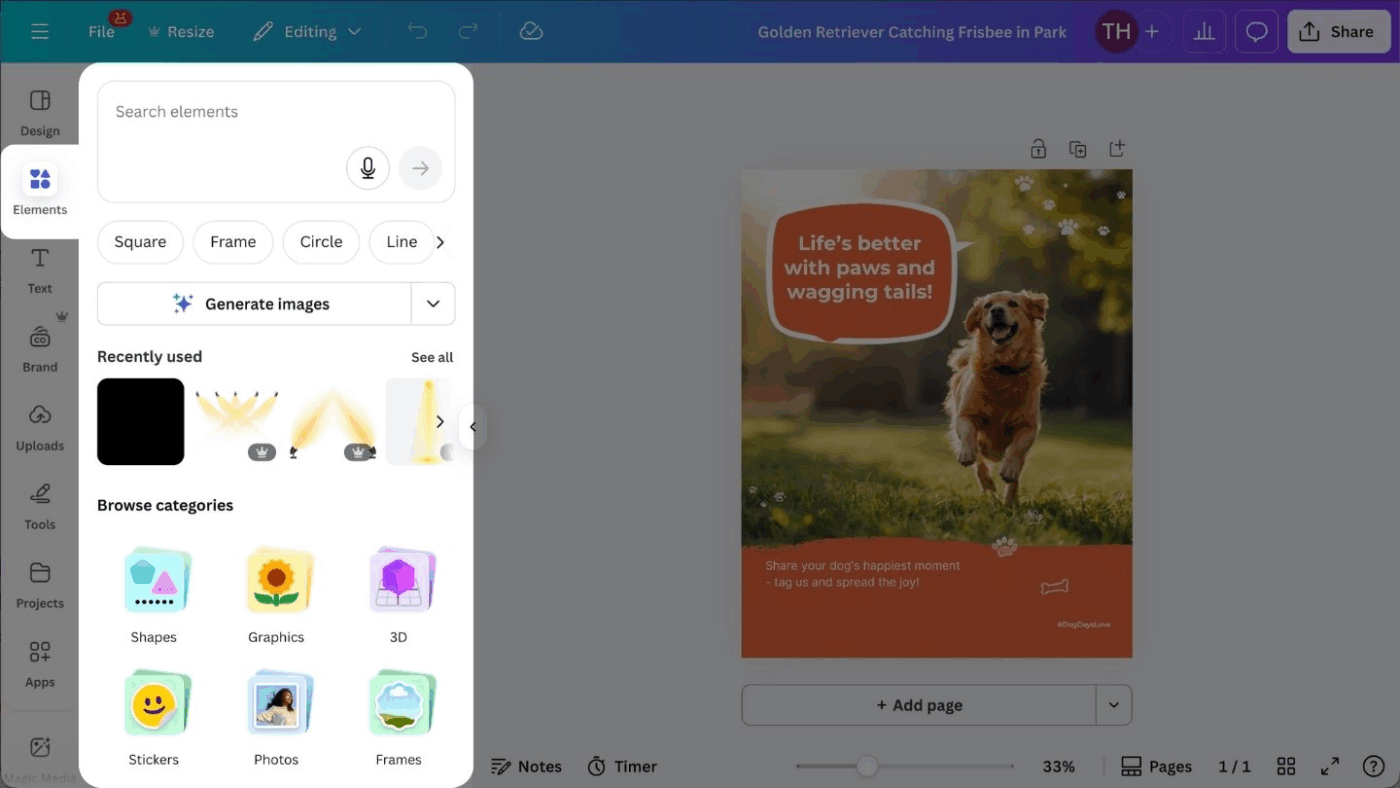
Canva is a design platform built for all things design, like social posts, pitch decks, landing page graphics, product one-pagers, investor updates, and internal docs. It gives you a template-first workflow, a drag-and-drop editor, and collaboration tools.
It also fits how startups actually work day to day. You can keep brand elements consistent across a small team using shared kits and templates, collaborate with comments and approvals inside the design, and export assets in the formats you need for different channels.
Magic Design and other AI features now generate designs from text prompts, accelerating the design process even further.
A Capterra user says:
Easy to use! I make visually attractive presentations on a day-to-day basis for meetings and also make notes that come in handy while pitching solutions. It can easily be accessed by team members too for their reference. I use it for making Instagram and other social media posts to make attractive wishes during the festive season. I have tried their AI feature too; it’s amazing. Canva is my go-to app for any designing needs!
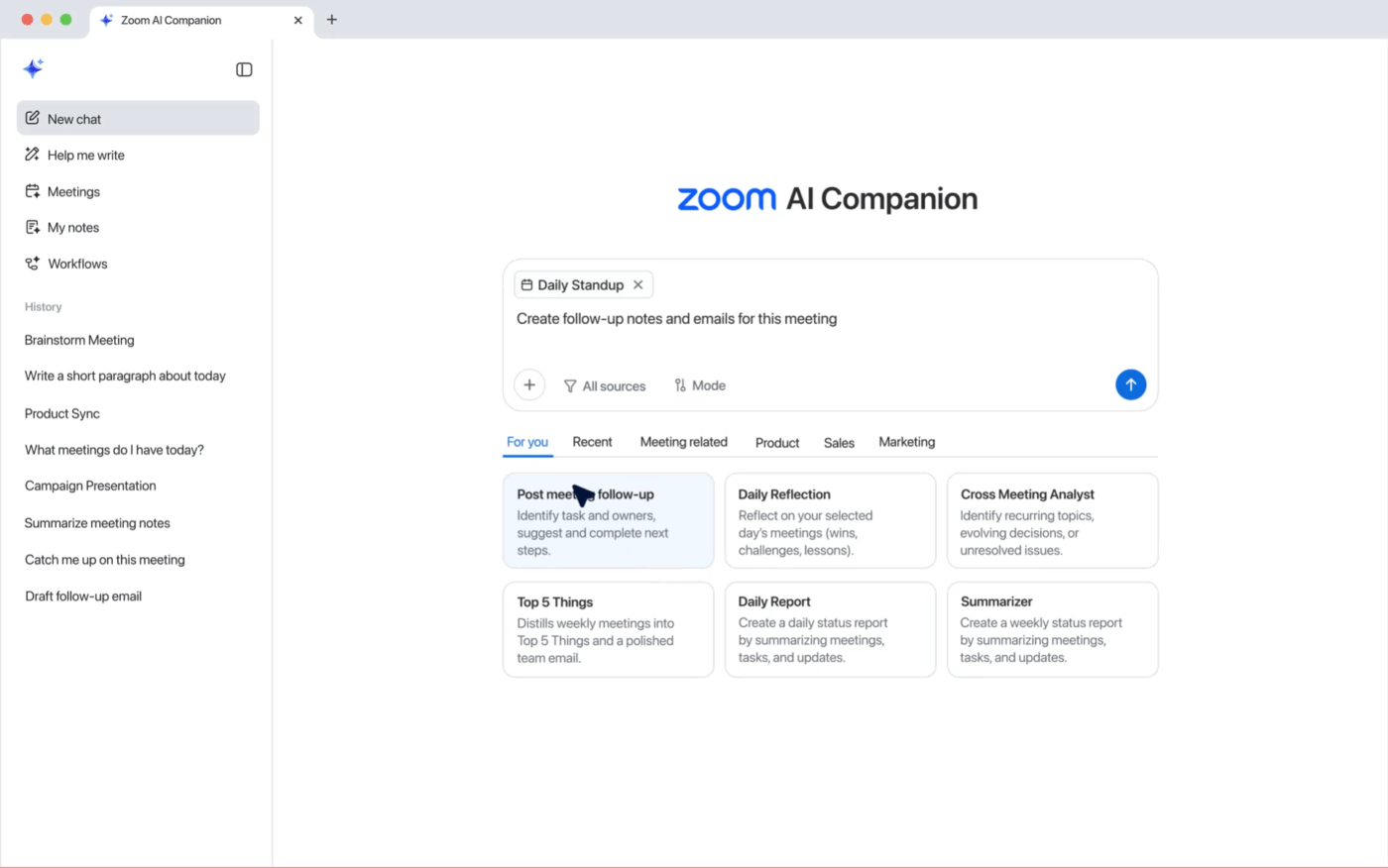
Zoom is a video-first communication platform that startups use to run everything from daily standups to investor updates and customer demos. It’s built around reliable meetings, but it also gives you a lighter workspace layer with chat and collaboration, so conversations don’t disappear the moment a call ends.
Where Zoom shines is execution speed. You can schedule a meeting quickly, share a link, and get everyone in with little to no friction. That matters when your team is moving fast across sales calls, onboarding sessions, partner check-ins, and internal reviews in the same day.
If you want help beyond just hosting calls, Zoom’s AI Companion is designed to summarize meetings and surface what happened, so follow-ups don’t rely on someone remembering to take notes.
A G2 user says:
The ease of use, the user-friendly interface, the versatility, and more.
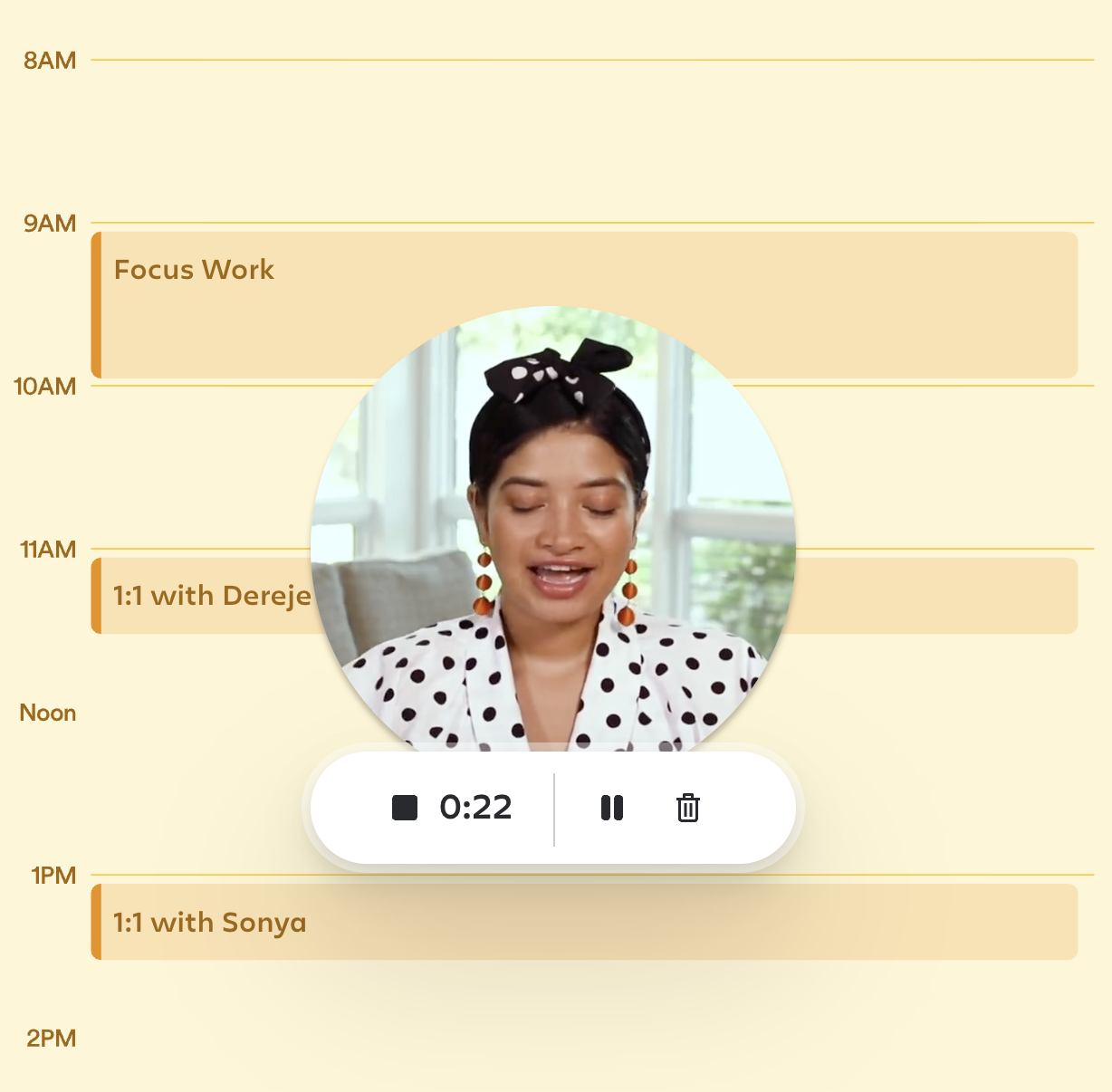
Loom is a video messaging tool that helps startups share quick product updates, bug walkthroughs, customer feedback, and internal announcements without pulling everyone into another call. You record your screen, camera, or both, then share a link so teammates can watch on their own time, react with comments, and reply with follow-ups right on the video.
It’s especially handy for fast-moving teams where context gets lost in long threads. A founder can record a roadmap update, a PM can walk through a spec, and support can send a polished customer explanation, all with the same lightweight flow.
A Capterra user says:
Loom is very simple to use. You can access it on the fly from your screen and start to quickly do a recording. I like the design features it has.
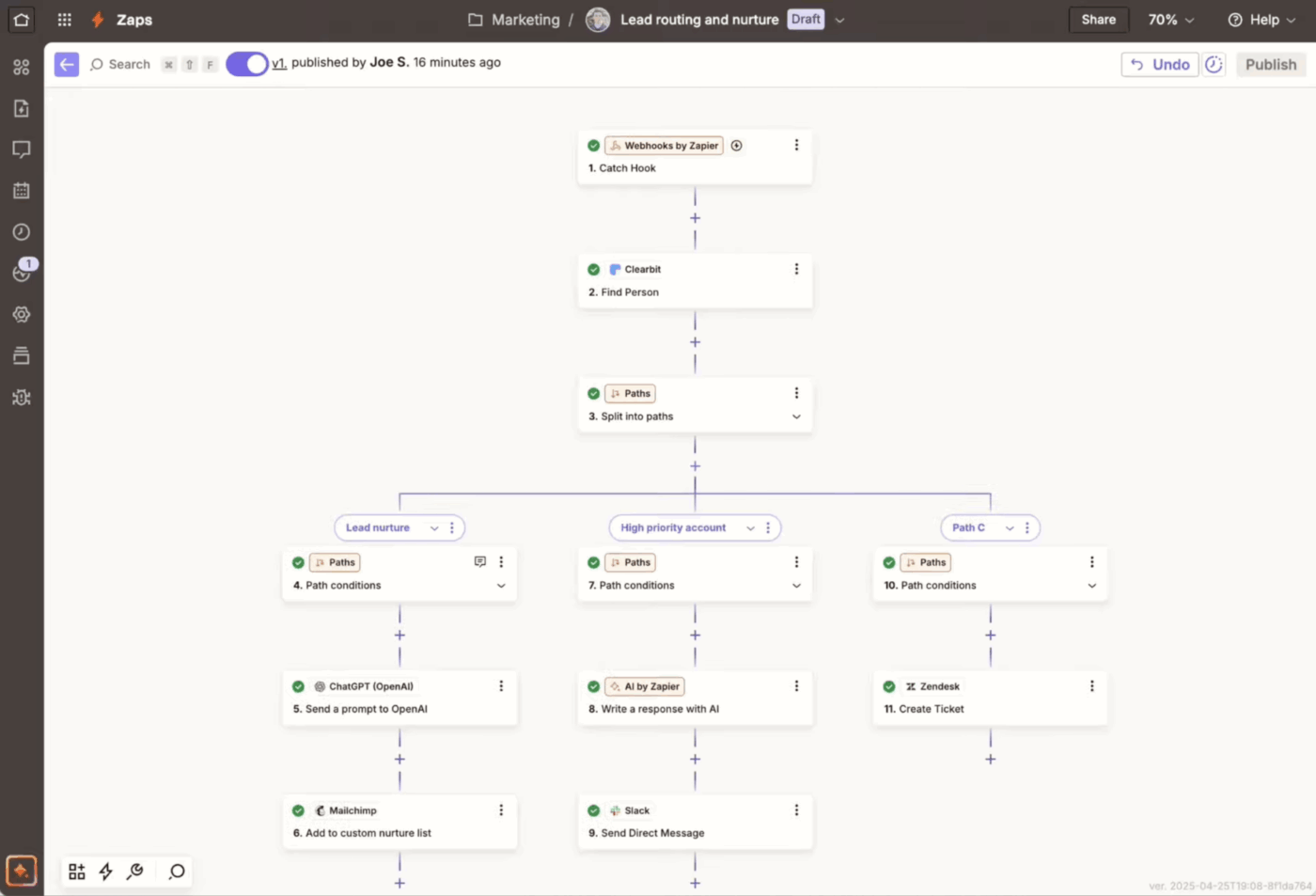
Every new lead in your CRM needs to be added to your email marketing tool, every new customer needs a row in your spreadsheet, and every support ticket needs a Slack notification. This manual data entry can eat up hours of your week.
Zapier automates workflows between apps without requiring code. For startups, this means you can connect your disparate tools so data flows automatically. Create a ‘Zap’ that triggers when something happens in one app (like a new form submission) and automatically performs actions in other apps (add to CRM, send Slack message, create a task).
Zapier supports thousands of apps, making it the glue that holds your tech stack together. Multi-step Zaps handle complex workflows, and filters ensure automations only run when specific conditions are met.
A G2 user says:
Zapier makes automations simple, even for someone without a technical background. It allowed me to connect multiple platforms (like TikTok Lead Ads, Meta Lead Forms, and Google Sheets) so our lead management became much faster and more organized. Once the Zaps are set up, they run reliably in the background and save us a lot of manual work.
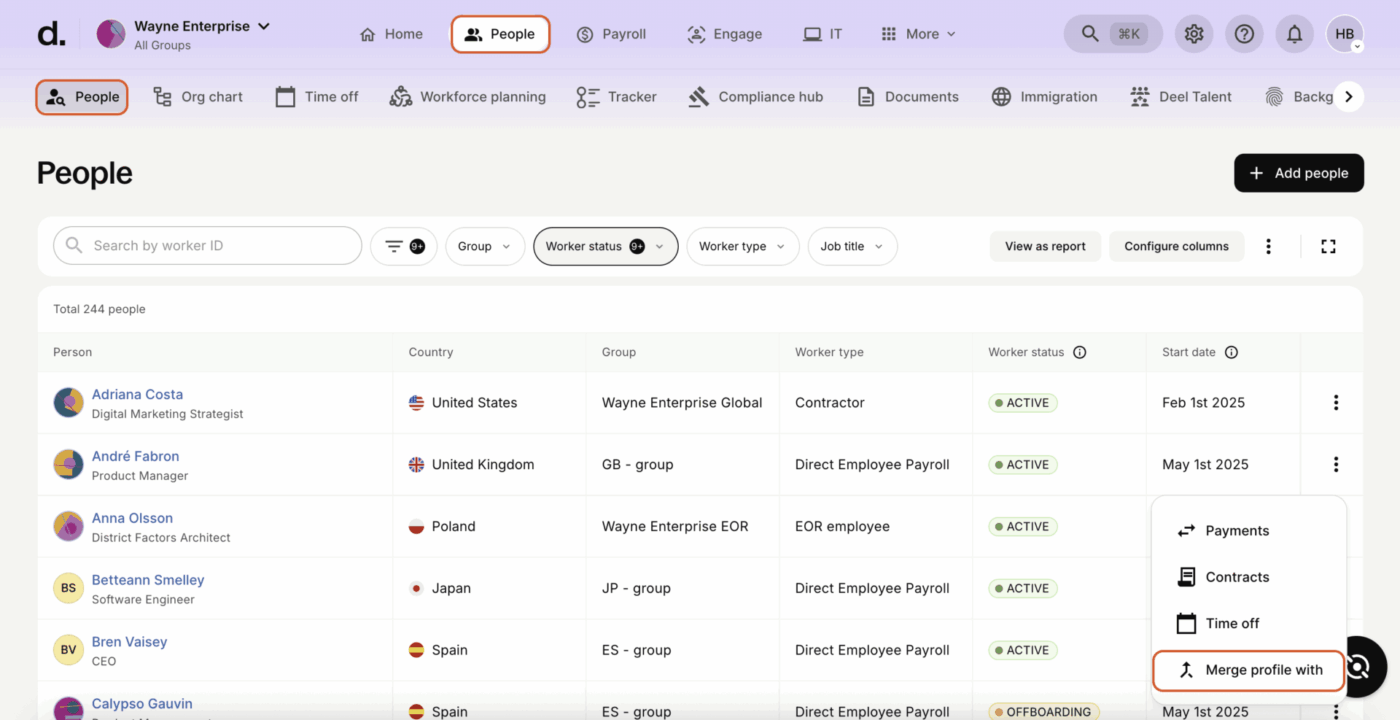
Deel simplifies global hiring by handling payroll, compliance, and contracts for international contractors and employees. For startups building distributed teams, Deel acts as an employer of record (EOR), managing local compliance so you can hire internationally without setting up legal entities in every country.
Pay contractors in their local currency, handle tax withholdings automatically, and generate compliant contracts specific to each country’s labor laws. Deel’s self-serve platform makes international hiring as simple as domestic hiring.
A G2 user says:
What I like most about Deel is how smooth and stress-free the whole process is. Payments are fast, the fees are reasonable, and everything just works.
The app is very user-friendly, and it makes getting paid across borders straightforward without unnecessary back-and-forth. Overall, it removes a lot of the friction that usually comes with international payroll.
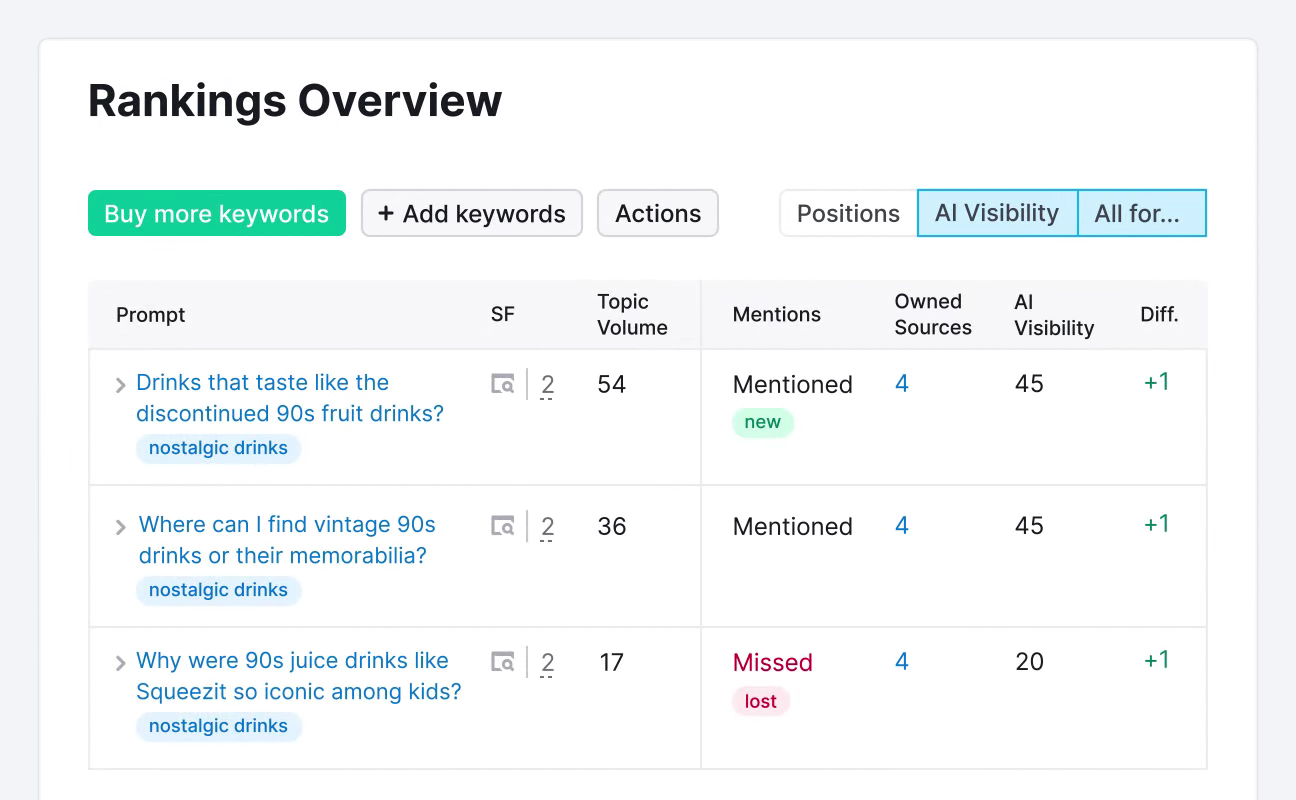
Semrush is a comprehensive SEO and digital marketing platform that helps startups research keywords, analyze competitors, audit their site, and track rankings.
For startups relying on organic growth, Semrush provides the data needed to create an effective SEO strategy.
The platform’s keyword research shows search volume, difficulty, and related terms, while site audits identify technical SEO issues. Even more, the competitor analysis it supports reveals what’s working for others in your space, and ‘position tracking’ monitors your progress over time.
A G2 user says:
For me personally, the market insights are the most valuable element. While I always take it with a degree of skeptisism, having a way to compare and benchmark our performance vs the market and understand where our competitors are winning (or losing) is immensely valuable.
As you scale, the biggest risk is tool sprawl. More logins, more tabs, more places where updates get lost. The stack grows, but speed drops.
ClickUp helps you stay lean by pulling core work into one place. Tasks, docs, knowledge, dashboards, and AI live together, so planning, execution, and updates stay connected without constant context switching. When your system of work is unified, the rest of your tools can stay focused on what they do best.
Keep your stack simple. Keep your team moving. Start building on ClickUp. ✅

Manasi Nair
Max 26min read
Manasi Nair
Max 20min read

Arya P Dinesh
Max 23min read

© 2026 ClickUp