Sorry, there were no results found for “”
Sorry, there were no results found for “”
Sorry, there were no results found for “”
One influencer sips a canned drink on camera. The next day, it’s sold out.
That’s not magic, it’s a solid influencer marketing campaign in motion.
What started with sponsored selfies has evolved into full-blown influencer campaigns that drive serious results. Think user-generated content flooding feeds, social media influencers shaping purchase decisions, and brands tracking every click, comment, and conversion.
✅ Fact Check: The global influencer marketing industry is projected to hit $24 billion by the end of 2025 which more than double its size just four years ago.
But none of it happens by accident. The best influencer marketing efforts are built on smart choices like picking the right influencer, knowing your target audience, and creating content that actually fits the scroll.
From indie beauty brands to global tech giants, everyone’s in the game. And the playbook? It’s constantly evolving.
Trying to crack the code on influencer marketing? Here’s how to create campaigns that don’t just go live but actually go viral:
Plan, track, and scale influencer campaigns that hit harder and stick longer.
A solid influencer marketing campaign is a carefully planned collaboration between a brand and an influencer. It’s is designed to deliver on specific marketing goals.
Influencer marketing campaigns are how beauty brands get real-time tutorials trending, how SaaS companies tap into social media platforms with expert explainers, and how fitness startups partner with micro-influencers to generate buzz before a launch.
Here’s what goes into a typical campaign:
The most effective influencer marketing campaigns don’t try to hijack a feed; they blend in and convert.
When a creator’s content feels authentic to their style and aligned with your brand’s values, you’re promoting your brand and building trust. That’s what makes a campaign work.
📖 Also Read: Best Content Creation Apps for Creators
Some influencer campaigns go viral. Others go quiet. What separates the two? A sharp strategy, the right creator, and content that doesn’t feel like an ad. Here are some blockbuster influencer marketing campaigns that did what they set out to do!
When Charli D’Amelio posted her go-to Dunkin’ drink on TikTok, it didn’t just rack up views. But it also led to a 57% increase in app downloads the day it launched and a 20% boost in cold brew sales. The drink was renamed The Charli, and her fans ran with it.
Key takeaway: Find a social media influencer (or bonafide celebrity) whose audience is likely to follow their actions and buy products they endorse. Then let the influencer them lead the narrative.
📖 Also Read: Top TikTok Growth Hacks to Make Your Brand Go Viral
Gymshark didn’t just sponsor fitness influencers, but they gave them a structured challenge that their communities could join. Participants committed to 66 days of transformation, tracked progress, and shared updates on various social media platforms.
Key takeaway: Campaigns with built-in community interaction drive long-term engagement, not just a one-time click. And here, the work and public image of the participants/influencers in this campaign aligned very strongly with Gymshark’s offerings.
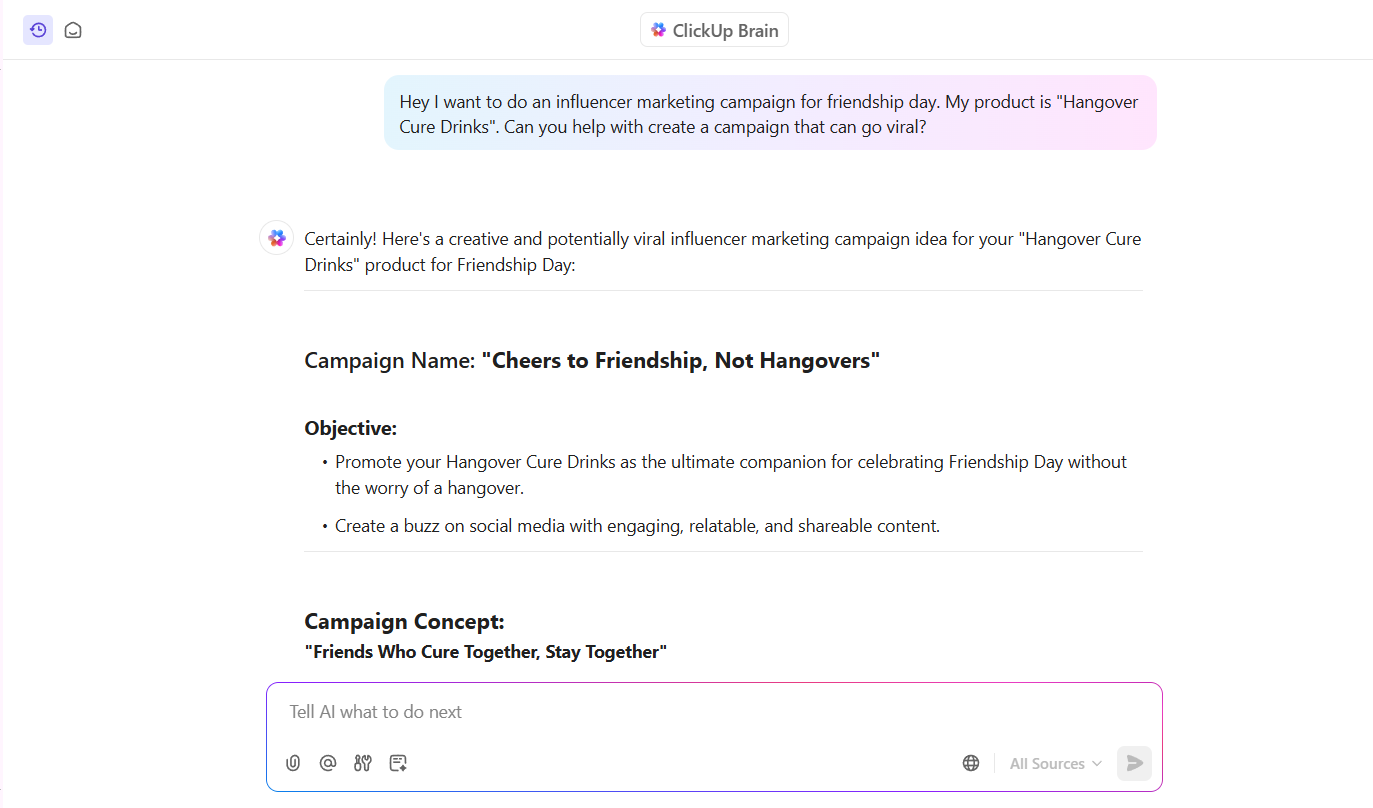
💡Pro Tip: Looking for influencer marketing ideas? Try ClickUp Brain. Clickup Brin users can choose from multiple AI models, including Claude, ChatGPT, and more.
Daniel Wellington didn’t have the budget for celebrity endorsements in their early days but they had a clever idea. Instead of chasing A-listers, they gifted minimalist watches to micro-influencers with sleek Instagram aesthetics.
The only ask? Post a styled photo with the hashtag #DWPickoftheDay and tag the brand.
Within months, social feeds were flooded with DW content not ads, but authentic snapshots that felt like fashion inspiration.
Key takeaway: A strong influencer marketing campaign doesn’t need a celebrity face. It needs a clear aesthetic, scalable outreach, and a reason for creators (and audiences) to care.
Fenty didn’t roll out ads. They handed their entire product line to a diverse range of influencers across skin tones and content styles. These creators posted everything from tutorials to no-filter reviews, especially on their terms.
Key takeaway: If your brand values inclusion, reflect that in the creators you collaborate with.
HelloFresh didn’t chase viral moments. Instead, they built consistent partnerships with YouTubers and Instagram creators who naturally fit the brand’s vibe. Their names and discount codes became familiar over time, boosting trust and conversions.
Key takeaway: Long-term influencer partnerships feel more genuine and are often more effective than one-off campaigns.
Glossier built a beauty brand and a movement. By leveraging its blog, Into the Gloss, the brand invited everyday users to help shape products before they even launched. Then it handed over the social spotlight to real customers, not just influencers.
Fans weren’t just buying makeup. They were building it and telling everyone about it.
Key takeaway: Your most powerful influencers might already be your customers. Give them a platform and let them lead.
Coca-Cola swapped its iconic logo for something even more personal, i.e. your name. The “Share a Coke” campaign printed popular names on bottles, encouraging fans to find, share, and post them. It quickly became a viral sensation, turning a classic product into personalized content.
Key takeaway: Personalization turns products into shareable experiences. If people see themselves in it, they’ll share it.
Airbnb wanted travelers to ditch tourist traps and “live like locals.” So, they partnered with travel creators and local influencers to spotlight hidden gems and authentic experiences. The message? Don’t just stay somewhere; belong there.
Key takeaway: Influencer marketing is about the lifestyle they unlock.
📖 Also Read: How to Create a Marketing Calendar?
Instead of chasing external influencers, ASOS created the ASOS Insiders. These were real employees and micro-influencers who posted their daily outfits, styling tips, and product links on Instagram, creating a shoppable, relatable feed.
Key takeaway: Building in-house influencer programs gives you consistent, branded content that still feels personal.
Subaru flipped the script by making their car owners the stars. Through #MeetAnOwner, they partnered with adventure influencers and creatives who genuinely drove Subarus. They captured road trips, mountain climbs, and real-life moments behind the wheel.
Key takeaway: Don’t just sell the product rather sell the lifestyle that comes with it, using people who already live it.
Duolingo didn’t play it safe on TikTok. Instead, their green owl mascot leaned into chaotic, self-aware content that poked fun at brand behavior and followers couldn’t get enough. Duolingo paired internal social managers with trending audio, internet humor, and witty responses that blurred the line between marketing and memes.
Key takeaway: Sometimes, the best influencer is your own brand persona if you give it a strong, scroll-stopping voice.
🧐 Also Read: How to Go Viral on TikTok with Proven Strategies
To celebrate National Avocado Day, Chipotle launched a TikTok campaign inviting fans to show off their best “GuacDance” using a trending sound. With popular creators like Brent Rivera and Loren Gray kicking things off, the hashtag blew up and so did online orders.
Key takeaway: Combine influencer momentum with platform-native challenges to create viral loops and sales spikes.
Zara didn’t rely on traditional influencers or even post much themselves. Instead, they created an Instagram ecosystem where minimal brand posts let curated user generated content shine.
Their hashtag campaigns like #DearZara and #ZaraStyle encouraged aesthetic, editorial-style uploads that matched the brand’s luxe but accessible vibe.
Key takeaway: You don’t always need influencers with a huge following, sometimes your most powerful campaign is in how you curate what already exists.
Apple turned every customer into an ambassador with its #ShotOniPhone campaign. Rather than push technical specs, the brand showcased real photos and videos taken by users around the world. Then featured them in global billboards, Instagram reels, and product launches.
Over 27 million photos have been tagged with #ShotOniPhone to date.
Key takeaway: UGC at scale becomes an influence when your product delivers results people want to show off.
Instead of quick-fire partnerships, Sephora built the Sephora Squad. A year-long influencer program that mixed established creators with emerging talent. Members got early access to products, invites to events, and the ability to shape campaigns, creating a more collaborative influencer ecosystem.
Key takeaway: Build relationships, not just campaigns. Long-term squads can create loyalty, deeper storytelling, and a content flywheel.
Great campaigns don’t happen by accident. They’re built, from the first DM to the final dashboard report. And if you’ve just seen what works in the real world, this is where you make it work for yours.
Let’s break it down into four parts, starting with what most brands get wrong at the very beginning: choosing the wrong creator.
Don’t chase follower counts, instead go for a proper fit. A creator can have a million followers and still miss your audience completely. The right influencer is someone whose content, tone, and values match what your brand stands for and who your target audience actually trusts.
💡 Pro Tip: Use ClickUp Custom Fields to sort relevant influencers by audience type, past brand collaborations, or outreach status.
Before you launch a campaign, know what success looks like. Are you trying to boost sales, drive website traffic, or raise brand visibility? If your answer is “all of the above,” it’s time to narrow the focus.
The best influencer marketing campaigns are guided by sharp goals. That starts with defining what you’re measuring and why.
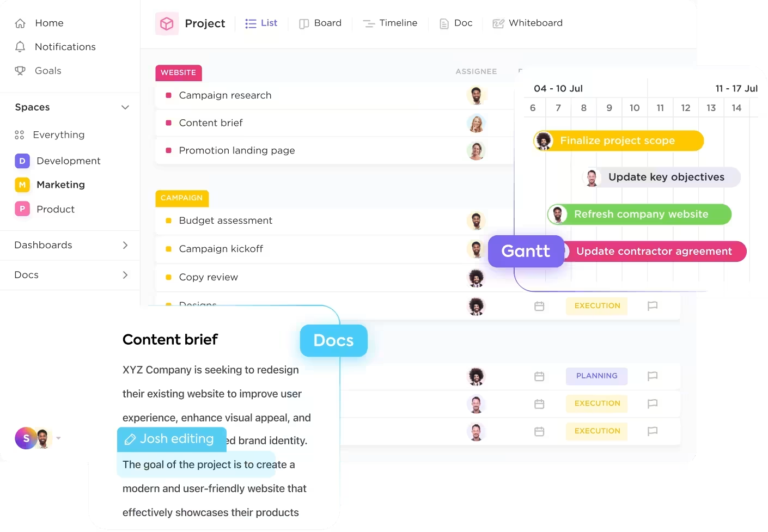
To keep everything trackable in real time, teams often build campaign dashboards using ClickUp Goals for measurable targets and ClickUp Dashboards to monitor metrics across influencers and platforms. You can even automate reminders and updates using ClickUp Automations, so progress never falls through the cracks.

You don’t want dozens of cumbersome spreadsheets to stay aligned. You just need the right structure, goals that match the business, and tools that surface the numbers when they count
If you want to learn more about how to use AI for automations, check this out 👇
You can’t fake a connection. And you can’t expect results from copy-paste captions. The best influencer content feels real because it is rooted in the creator’s voice, shaped around your product, and delivered with the kind of energy that scrolls stop for.
Before anything goes live, the ideation has to land. ClickUp Brain helps you build that foundation very quickly. It’s your creative co-pilot for every brief, post, and pitch, from generating content ideas and rewriting captions to optimizing tone and structure.
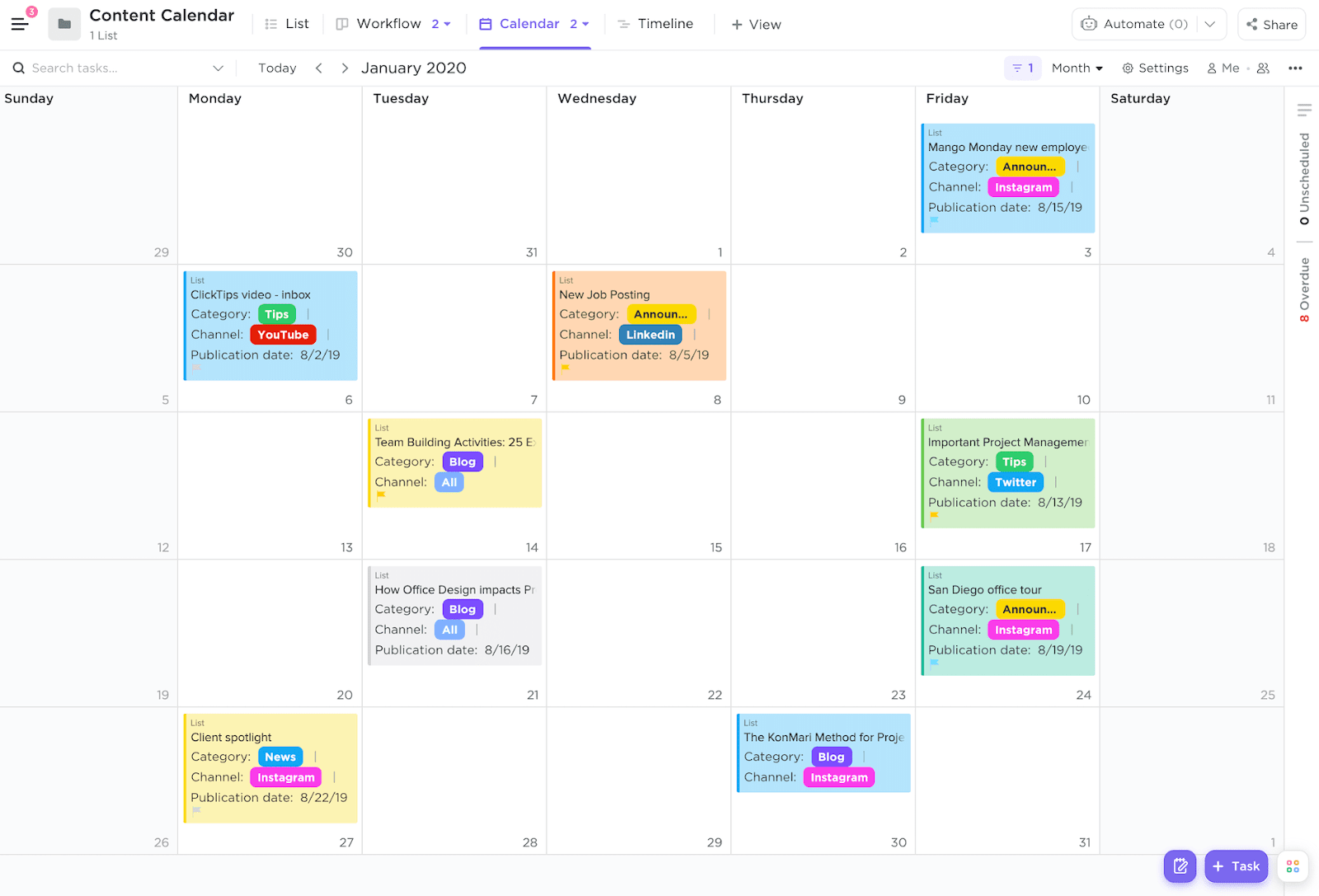
Once you’ve nailed the concept, it’s time to lock in the plan. The ClickUp Content Calendar Template helps marketing teams schedule influencer posts, track deadlines, and align campaigns across platforms, without losing momentum.
Why it works:
Need to brief your influencers or structure editorial flow? The ClickUp Editorial Calendar Template and ClickUp Content Writing Template help teams align on topics, tone, and messaging without going back and forth. For quick check-ins, feedback loops, or last-minute changes, ClickUp Chat keeps your team and collaborators in sync.
⚡ Template Archive: Free Content Calendar Templates for Social Media in Excel & Sheets
If you’re only measuring likes and comments, you’re missing the full picture. A campaign successful on the surface might be underperforming deeper down the funnel.
To truly understand what worked and what didn’t, you need structured data tracking and a tight feedback loop.
ClickUp simplifies the review process by centralizing everything in one view. Teams use ClickUp Dashboards to track post performance across platforms and creators without needing to hop between tools.
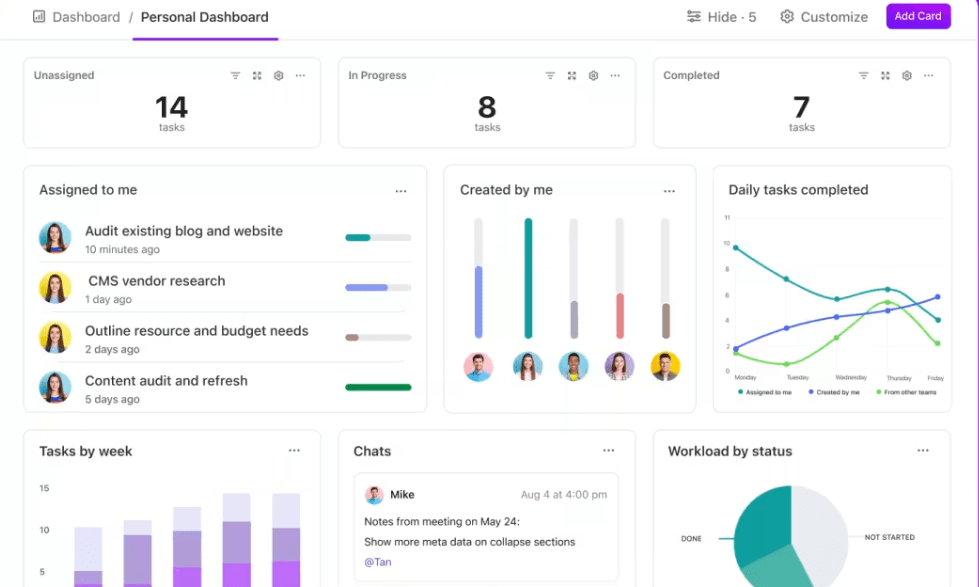
You can also break down review tasks and assign next steps through ClickUp Tasks, keeping your team aligned on follow-ups or pivots. And if you’re scaling or planning your future campaigns, these insights aren’t just helpful—they’re non-negotiable.
The takeaway? You don’t just run a campaign. You learn from it. And then you build something sharper next time
📖 Also Read: Best AI Tools for Influencer Marketing
The best campaigns don’t feel like campaigns anymore. They feel like culture. And that’s exactly where influencer marketing is headed: off the grid, into the group chat, and led by creators who’d never call themselves influencers.
Influencer marketing isn’t dying. It’s just growing up. And the brands willing to follow the audience instead of the algorithm will win what actually counts: attention, trust, and loyalty.
The most successful influencer marketing campaigns lead the conversation. Whether you’re partnering with a micro-influencer or building an always-on creator program, the goal stays the same: a real connection that amplifies your brand’s marketing efforts and drives results.
Now that you’ve seen what fuels effective influencer marketing campaigns, it’s time to put those insights into action. Backed by the right brand ambassadors, a clear message, and an effective influencer marketing strategy, your next campaign won’t just perform, it’ll stick.
Try ClickUp today to map your strategy, manage creator workflows, and launch influencer campaigns that actually convert.

Sean Hardy
Max 26min read
Manasi Nair
Max 29min read
Manasi Nair
Max 22min read

© 2026 ClickUp