








Still downloading templates?
There’s an easier way. Try a free AI Agent in ClickUp that actually does the work for you—set up in minutes, save hours every week.
Sorry, there were no results found for “”
Sorry, there were no results found for “”
Sorry, there were no results found for “”
You’re at your favorite local coffee shop. The barista remembers your name and knows exactly how you like your latte—extra foam, no sugar. The personal touch makes you feel valued, doesn’t it? That’s customer orientation in action.
Like the barista, businesses that prioritize customer orientation go beyond mere transactions. They build relationships—ones that keep customers coming back for more. They anticipate customer needs, listen attentively, and constantly strive to improve their offerings.
Whether you manage a cafe or sell software, it’s important to remember that implementing customer orientation isn’t a strategy you set and forget. It’s a daily commitment to understanding, adapting, and delighting those you serve.
Customer orientation is a business approach that prioritizes the needs of customers above everything. From product development and marketing to sales and customer service, this philosophy embeds customer-centric thinking into all facets of an organization.
You should make customer orientation an integral part of your business strategy because:
A customer-oriented company must have the following essential skills:
Pay attention to what your customers are saying. Put yourself in their shoes to understand how they’re feeling. Then, respond with empathy and tailor your solutions to meet their needs.
Let’s say you manage a B2B software company. One of your retainer clients is facing issues with the software update. Instead of providing only technical instructions, your customer service team should empathize with their challenges, offer personalized training sessions, and follow up with additional resources to ensure a smoother transition.
When conflicts arise, stay calm and focus on finding a solution that works for everyone. Listen carefully to both sides, propose logical solutions, and work together to resolve issues respectfully and efficiently.
Suppose you oversee a manufacturing company supplying parts to another business. Your client raises concerns about a delayed shipment impacting their production schedule. Instead of justifying the delay, your logistics team can apologize sincerely, expedite the shipment with express delivery at no extra cost, and offer a discount on the next order as a gesture of goodwill.
Think outside the box to surprise and delight your customers. Brainstorm new ideas for improving their experience, whether it’s through new features or better processes.
Let’s assume you lead a marketing agency serving corporate clients. You receive feedback that a client’s ad campaign isn’t generating the expected results. Instead of sticking to the initial strategy, your team can conduct a thorough analysis, propose new targeting techniques, and refresh the campaign to meet the client’s goals.
Break down silos and team up with your colleagues across departments. Share information, support each other, and collaborate closely to provide seamless service and tackle customer challenges as a united front.
Suppose you manage a pharmaceutical company, and a client wants you to speed up the delivery of a critical drug shipment. Your production, logistics, and quality assurance teams can come together to address this request. They can streamline manufacturing processes, expedite quality checks without compromising safety, and coordinate closely with shipping partners to ensure the timely delivery of the products.
Don’t wait for customers to come to you with problems. Reach out first, anticipate their needs, and offer solutions before they ask. Show them you’re always one step ahead and genuinely invested in making their experience smooth.
Let’s say you provide IT services to businesses. You notice unusual network activity on a client’s site that could potentially lead to security risks. Instead of waiting for them to report issues, your cybersecurity team can proactively alert the client, offer immediate mitigation, and propose ongoing monitoring to prevent threats.
Let’s now look at some key components and an example of customer orientation:
Customer satisfaction goes beyond just meeting basic expectations. You have to identify what makes customers happy and double down on that. Seek feedback through surveys, reviews, or direct interactions and use that information to improve.
Think of customer experience as the sum of all interactions a customer has with your brand. It covers everything from browsing your website to contacting customer support and receiving your product or service.
Each touchpoint is an opportunity to make a lasting impression. Businesses with strong customer orientation invest in creating seamless experiences that leave customers feeling valued and satisfied.
Let’s say you’re ordering a laptop online from an electronics retailer. You browse their website effortlessly, find comprehensive product details, and complete your purchase. After placing your order, you receive a confirmation email outlining clear delivery timelines.
During the waiting period, you contact customer support to check the status of your order. You connect with a friendly and knowledgeable customer service agent who provides accurate information and ensures timely delivery.
When your laptop arrives, it’s securely packaged and includes a thoughtful thank-you note. The product performs as expected, leaving you completely satisfied with your purchase and the overall positive experience across all touchpoints.
A core component of marketing is understanding your audience inside out. Customer orientation in marketing means tailoring your campaigns to resonate with different segments of your customer base. You have to use customer data to craft personalized experiences that build trust and loyalty.
For example, if a skincare brand launches a new anti-aging product range and its primary target group is 25–35-year-olds, its campaigns will focus on the importance of starting preventative skincare.
The shoe brand Zappos deserves special mention for its customer orientation strategy.
In 2004, Zappos faced staffing issues for its San Francisco call center due to high living costs and a culture that was not keen on customer service careers. Founder Tony Hsieh and his team took the tough call and relocated to Las Vegas, known for its 24/7 work culture and hospitality-focused economy, with over 75% of the staff moving.
Despite the internal changes, Zappos maintained a strong focus on personalized customer service—carrying Tony Hsieh’s mantra of ‘delivering happiness’.
Zappos’ USP was its 365-day return policy and free two-way shipping. This setup takes away the stress for customers—they can order shoes, try them at home, and easily send back what doesn’t fit without extra cost.
Despite bearing the cost of returns, Zappos sees big wins in customer loyalty. A whopping 75% of their revenue comes from repeat customers. They view this commitment to exceptional service as an investment in customer satisfaction that pays off in the long run.
Their Customer Loyalty Team is a big part of this success, available round the clock to ensure every interaction is smooth and helpful. Unlike many other customer service teams focusing on call volume, Zappos rates success by the value they add to each customer interaction.
There are no scripts or sales pitches here—they’re all about ensuring you have a great experience. This customer-first mindset is evident throughout their website, where they make it easy to find their customer care numbers.
If you want to truly live by the adage ‘Customer is King,’ take cues from Zappos. While replicating their customer oriented approach may not be viable, you can incorporate some elements of their strategy into your business model.
💡Pro tip: Use ClickUp’s Customer Support Template to improve your business’s customer service. It has two tiers, one for your front-line support team and another for the escalation team.
You can use this framework to:
This is a great resource for businesses that receive a large volume of support requests daily (e.g., tech or retail), and having an escalation team is necessary to maintain quality of service.
A value proposition statement clarifies why customers should choose your product or service over your competitors. Clearly articulate the unique benefits and value customers will gain and speed up the process of turning prospects into customers. While creating the proposition, keep these three components in mind:
To develop a customer orientation strategy, you need procedural knowledge and a deep understanding of your target market. Procedural knowledge helps you create efficient processes and guidelines to implement customer relationship management (CRM) strategies. For instance, knowing how to gather customer feedback systematically and analyze it to improve your products/services is crucial procedural knowledge.
Equally important is having detailed information about your target market. It includes demographics, such as age, location, and income level, as well as psychographics, such as interests, values, and buying behavior.
Customer service is a strategic asset in customer orientation. Set standards for service excellence, train employees to treat customers with empathy and respect, and empower them with the right tools and resources to resolve issues and handle inquiries. Excellent customer service can turn negative experiences into opportunities to build stronger relationships.
As your business grows, you have to focus on delivering quality customer service at scale. You can’t rely on manual operations after a point. What you need is the right set of tools in your tech stack to consolidate the multiple moving pieces of your customer strategy.
A streamlined system ensures that nothing falls through the cracks, from collecting feedback, responding to customer queries, and providing ongoing support to taking actions based on feedback.
This is where a project management tool like ClickUp comes into play. This comprehensive platform boosts customer success, improves client satisfaction, and simplifies internal operations. Here’s how you can make the most of it to create a customer-oriented strategy:
Gather customer responses on their experience with your business with ClickUp’s Form View. Organize the feedback to identify issues and automatically create trackable tasks to implement the feedback.

While you should collect feedback after each interaction (e.g., browsing experience, web/in-app experience, ordering experience), there’s one touchpoint you cannot afford to miss—the experience of talking to a support executive.
After a customer interacts with your support team, send them a survey to understand their experience. This step is necessary to improve how your customer service team interacts with customers and assess how efficiently they resolve issues. You can use ClickUp’s Customer Satisfaction Survey Template to create a standardized feedback collection system.
This ready-to-use framework empowers you to:
You can create customizable surveys with just a few clicks, capture responses, and find patterns to tailor your processes to your customer’s needs. This data will help you tweak your employee training modules and do more of what makes customers happy.
It’s great to have a customer support team that’s always a call or email away, but sometimes professionals may prefer to sort out minor issues by themselves. Keeping this preference in mind, you need to give your customers autonomy and convenience in self-service.
Integrate your CRM tool with a knowledge base so customers can look up solutions and troubleshoot issues independently. This will also reduce the workload of your support team.
You can design this knowledge hub with ClickUp Docs. Create user manuals, SOPs, FAQs, wikis, and knowledge bases, embed tables and nested pages to provide details, and share them securely with your customers. Give authorized employees access to update the documents when required.

Customer pipeline monitoring is essential to implement customer orientation. It allows you to map the journey from initial contact to conversion. By analyzing metrics and identifying areas for improvement, you can better understand customer behavior, personalize interactions, and ensure timely engagement throughout the sales process. Here’s how you can streamline this step using ClickUp’s CRM Project Management Software:


Pro tip: You can go a step ahead and visualize your customers’ experience throughout the Awareness, Consideration, and Conversion stage using ClickUp’s Customer Journey Map Template.
Here’s how you can use this framework:
You can collaborate with team members on this whiteboard and set custom statuses and fields to make it a good fit for your workflow.
As a customer-oriented business, you want to ace customer communication management, responding to queries and resolving issues as quickly as possible. ClickUp Brain can be your trusted AI partner here. Use it to accomplish everyday tasks faster with natural language commands:
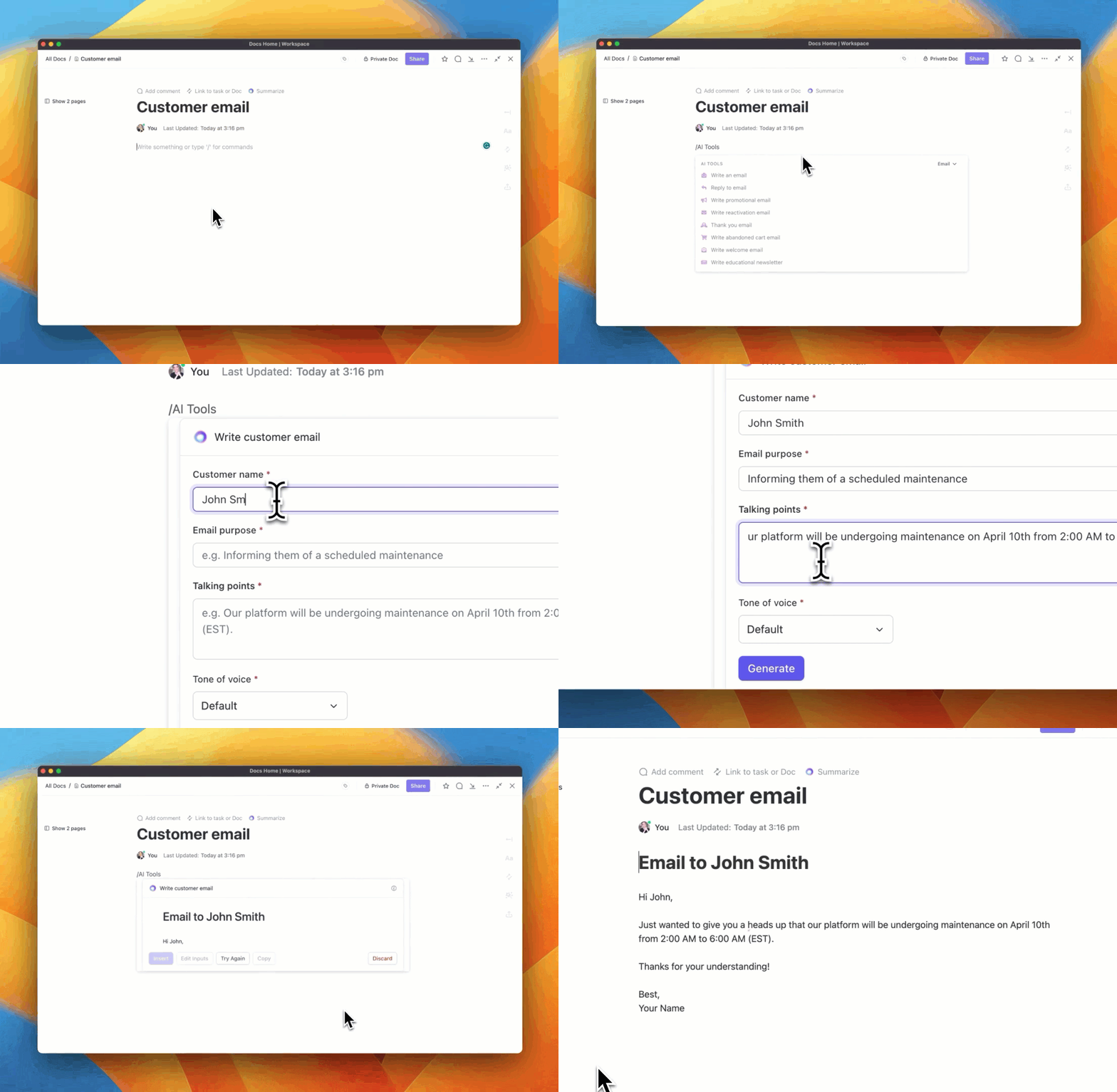
To have a competitive edge in a saturated industry, strive to deliver a uniform experience across touchpoints. The easiest way to do this is to create systems based on premade customer service templates.
Here are some templates from the ClickUp library you must check out:
Capture the step-by-step process you follow to onboard a new customer with ClickUp’s Customer Onboarding Template and offer a seamless experience.
You can set custom statuses such as Welcome Gift, Team Assignment, Onboarding Questionnaire, and Onboarding Call and list customers’ names under each status.
The template empowers you to:
Maintaining a top-notch customer experience can quickly become challenging when juggling multiple tasks simultaneously. From monitoring support tickets to initiating chats to ensuring quick resolution—a ton of work is involved.
The ClickUp Customer Service Management Template can help your customer service agents in many ways, including:
The best part is that it comes with four custom views: List, Board, Form, and Doc View. Whether you want to drag and drop a ticket’s progress with Kanban Boards or maintain all of your tickets using a flexible list, the power is in your hands!
Stay committed to client growth with this template and adjust your plan to hit the goals you’ve set for them.
The ClickUp Customer Success Plan Template helps you:
Do you use social listening to improve your products/services? Then, the ClickUp Voice of the Customer Template is perfect for your workflow.
You can capture customer feedback from surveys/interviews, social media, or online reviews and organize them under one roof. Identify common patterns and brainstorm solutions to address the most pressing concerns.
Hawke Media, a full-service outsourced CMO (chief marketing officer) digital marketing agency, experienced a 70% decrease in project delays after switching to ClickUp.
The company uses ClickUp to store, track, and collaborate on client deliverables on every project from start to finish. By offering visibility into progress, they maintain transparency with clients and vendors regarding the time required to complete a task.
Other users across industries also rave about how ClickUp has improved their client experience:
Clients can create tickets related to projects, and our team leads can quickly respond and delegate tasks. This saves tons of time sending emails back and forth, and provides a better client experience. And onboarding clients to ClickUp is simple because the tool is very user friendly.
With ClickUp, we went one step ahead of the game and created dashboards where our clients can access and monitor performance, occupancy, and projects in real time. This allows clients to feel connected to their teams, especially given that they are located in different countries, and sometimes even on different continents.
Use ClickUp for exceptional customer service, and experience it yourself!
Before you build a strategy, take inspiration from some brands that are doing excellent work keeping customers happy.
All businesses strive to please their customers, but only a few leave a lasting impact. Let’s understand the strategies of some notable customer-oriented companies:
Trader Joe’s makes it easy to provide feedback via their online portal or brick-and-mortar stores, takes customers’ opinions sportingly, and implements changes based on them.
For instance, when customers complained about the excessive use of plastic packaging, the company announced that they’d use more eco-friendly packaging and stop providing single-use plastic.
Another pillar of their exceptional customer service is their cheerful employees—always happy to help, even if it means spending extra time on a task.
Chick-fil-A has been rated #1 in customer satisfaction in the fast-food industry for nine consecutive years. What does it take to hold on to this coveted position for such a long time? There are quite a few things they do differently.
Even though the UPS Store has a massive global presence spanning over 5,200+ locations, they put extra effort into making the store experience homely and friendly. The staff takes the time to get to know regular customers personally, addresses them by their names, and ensures everyone gets top-quality service.
Our franchisees and associates are typically members of the community where the store is located. Staff members often know their regulars and make them feel welcomed.
ClickUp prioritizes delivering excellent customer service via tiered support options to cater to different user needs:
In addition to these reactive options, we offer a comprehensive Help Center with articles, guides, and videos. We also have the ClickUp University with courses to help users become ClickUp experts.
ClickUp users appreciate the effort:
I’ve used a lot of planning apps and software, but I’ve found ClickUp to be the most comprehensive, easy to use, and fundamentally motivational. But it’s their customer service that truly impresses. Whenever I’ve had questions or issues, the speed and helpfulness of the team in resolving them (and they were resolved) has been truly exemplary. The best customer support I’ve had from any company in a very long time. Big thanks to the whole team!
Customer Support is top-notch. I’ve only had to contact them 2-3 times and the response was timely and they resolved my issue within 24 hours.
The examples above show the impact a great customer-oriented strategy can have. Let’s have a close look at the benefits:
A customer-oriented perspective means you’re always looking out for the best interests of your customers, ensuring they have a great experience every time they interact with your business. This kind of consistent, positive engagement builds credibility and encourages customer advocacy.
Over time, a strong brand reputation can attract even more customers, creating a positive cycle of growth and business success. In a world where social media and online reviews play a key role in decision-making, a good reputation can take your business miles ahead.
When you focus on customer success and consistently deliver value, you create a strong bond with them. Loyal customers are more likely to return to you than jump ship for a competitor. Retaining existing customers is often cheaper and more effective than constantly trying to attract new leads.
A customer-first approach can work wonders for your team’s morale. Seeing the direct impact of their efforts on customer satisfaction boosts their motivation and productivity. This positive energy translates into better overall performance.
On top of that, by optimizing your processes to serve customers more efficiently, you reduce costs and improve profit margins.
You might come across some unexpected challenges while putting your customer-oriented strategy to use, such as:
When you call a company’s customer service desk, sometimes you get stuck in an endless loop of automated messages without ever talking to a real person. That’s the downside of relying too much on technology. It can make customers feel like they’re just another number, not a valued person with unique needs.
Impact: When businesses prioritize automation over human interaction, customers might feel frustrated or unappreciated. It can weaken the emotional connection with the brand.
Ways to address this: To balance things out, encourage your team to add a personal touch. Invest in training that emphasizes empathy and genuine interactions. Use technology to enhance, not replace, these personal interactions. For instance, you can use AI to handle customer queries but ensure there’s always a way for customers to connect with a real human when they need it most.
Ever walked into a store where all the salespeople kept pushing you to buy something right away, without caring if it’s what you needed? It makes you feel they’re only interested in closing the deal, not building a relationship with you.
Impact: Customers can sense when a company is more interested in making a quick sale than understanding their needs. It erodes trust and makes them less likely to stick around for the long haul.
Ways to address this: Shift the focus to nurturing relationships. Set up metrics that track customer satisfaction over time, not just for one-time purchases. Reward employees for keeping customers happy long term, not just for hitting sales targets. Show customers you value their loyalty by offering personalized services and support that goes beyond the initial sale.
Let’s say you’ve been using an email finder tool for years, and you love it for your lead gen. However, the recent version of the software has made the UI way too complex, and it’s slowing down your work. You want to reach out to the company about your concerns but can’t find a way to submit your feedback. So, you reluctantly switch to another tool with better UI.
Impact: Businesses that don’t listen to customers risk falling behind. Customer preferences and expectations evolve, and if they don’t keep up, they’ll lose out to competitors willing to adapt to changes.
Ways to address this: Make it easy for customers to give feedback. Take inspiration from ClickUp’s Feedback Board. Use surveys, online reviews/discussions (reviews on Google, G2, and TrustPilot and discussions on Reddit), or social media (user-generated content on LinkedIn, X, or Instagram) to gather insights. Actively analyze this feedback and use it to make meaningful changes. It’s a win-win: customers feel heard, and your business stays relevant and competitive.
Once you’ve devised and deployed a customer-oriented strategy across your organization, you have to monitor it from time to time and evaluate its impact. Here’s how you can go about it:
How do you know your customer-centric approach is having an impact? The easiest way is to look at the KPIs and track your customer service goals.
Here are a few important KPIs to consider:
Besides tracking the KPIs, you have to be open to continuous feedback. It’s not a collect-and-forget thing—feedback is an ongoing cycle of listening, analyzing, and acting on customer insights to refine your strategy.
Here’s how feedback can help your business:
Integrate these practices into your approach to gauge the effectiveness of your client management strategy.
After you deploy your customer orientation strategy, it’s time to sustain those meaningful relationships with your customers over time. Building trust, anticipating their needs, and showing that you’re committed to their satisfaction for the long haul—these are the ropes you need to learn.
With a tool like ClickUp, you can execute your strategy seamlessly. It helps you run the recurring processes on auto-pilot so you can devote all your attention to meeting or exceeding customer expectations.

© 2026 ClickUp

There’s an easier way. Try a free AI Agent in ClickUp that actually does the work for you—set up in minutes, save hours every week.