







Still downloading templates?
There’s an easier way. Try a free AI Agent in ClickUp that actually does the work for you—set up in minutes, save hours every week.
Sorry, there were no results found for “”
Sorry, there were no results found for “”
Sorry, there were no results found for “”
We all know about the Apple vs. Android debate. But have you ever stopped to think about why some brands inspire such strong loyalty?
Yes, Apple products are known for their sleek design and seamless performance. But what truly sets them apart is how the entire experience makes users feel—from the unboxing moment to the effortless sync between devices.
It’s more than a purchase; it’s belonging to a well-designed ecosystem.
That kind of loyalty doesn’t happen by chance. Around 81% of customers buy only from brands they trust, and that trust is built through a clear, consistent brand strategy that connects emotion with experience.
In this article, we’ll explore what makes a brand strategy truly effective—and how it helps people connect with your brand on a deeper level.
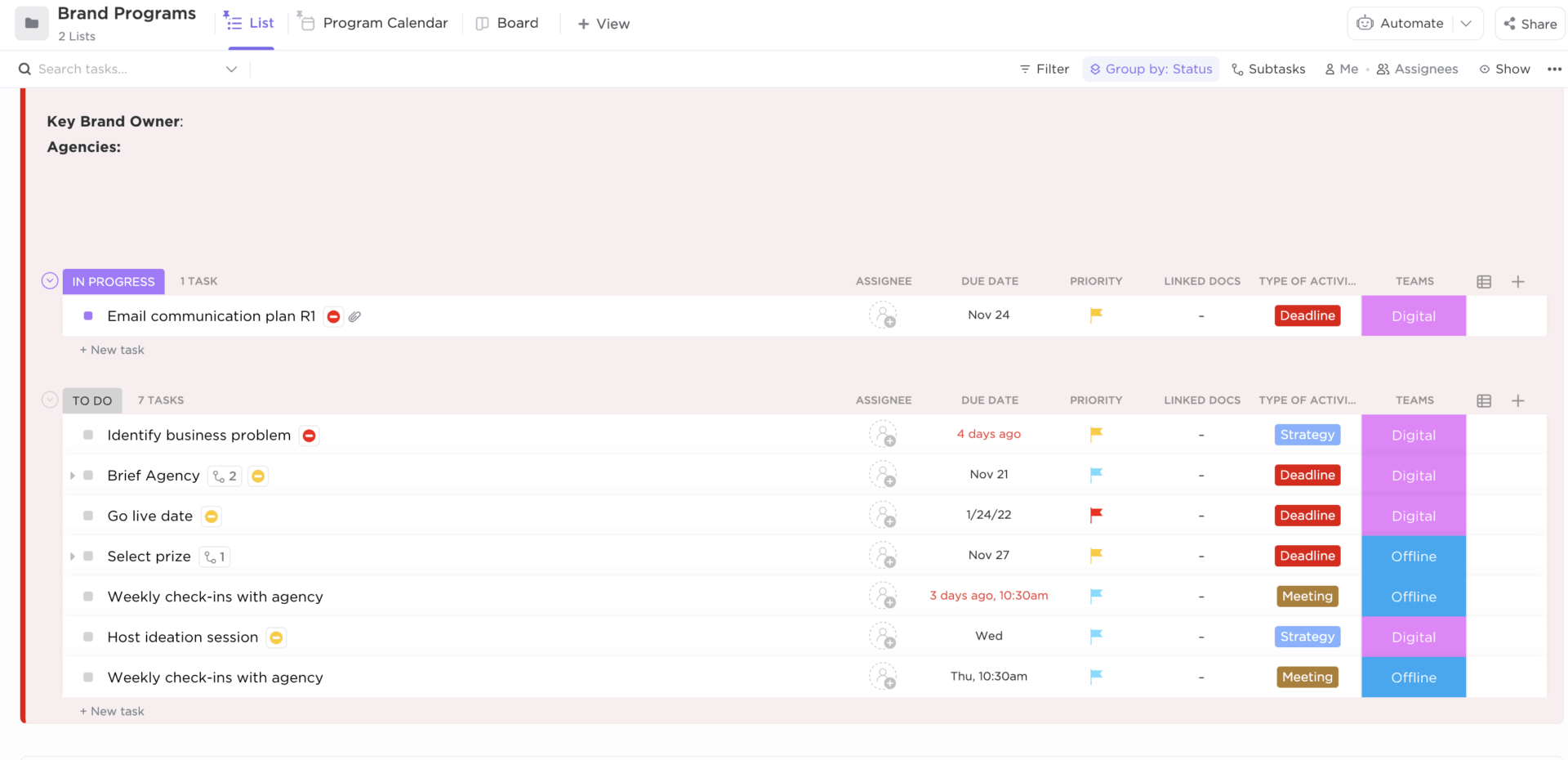
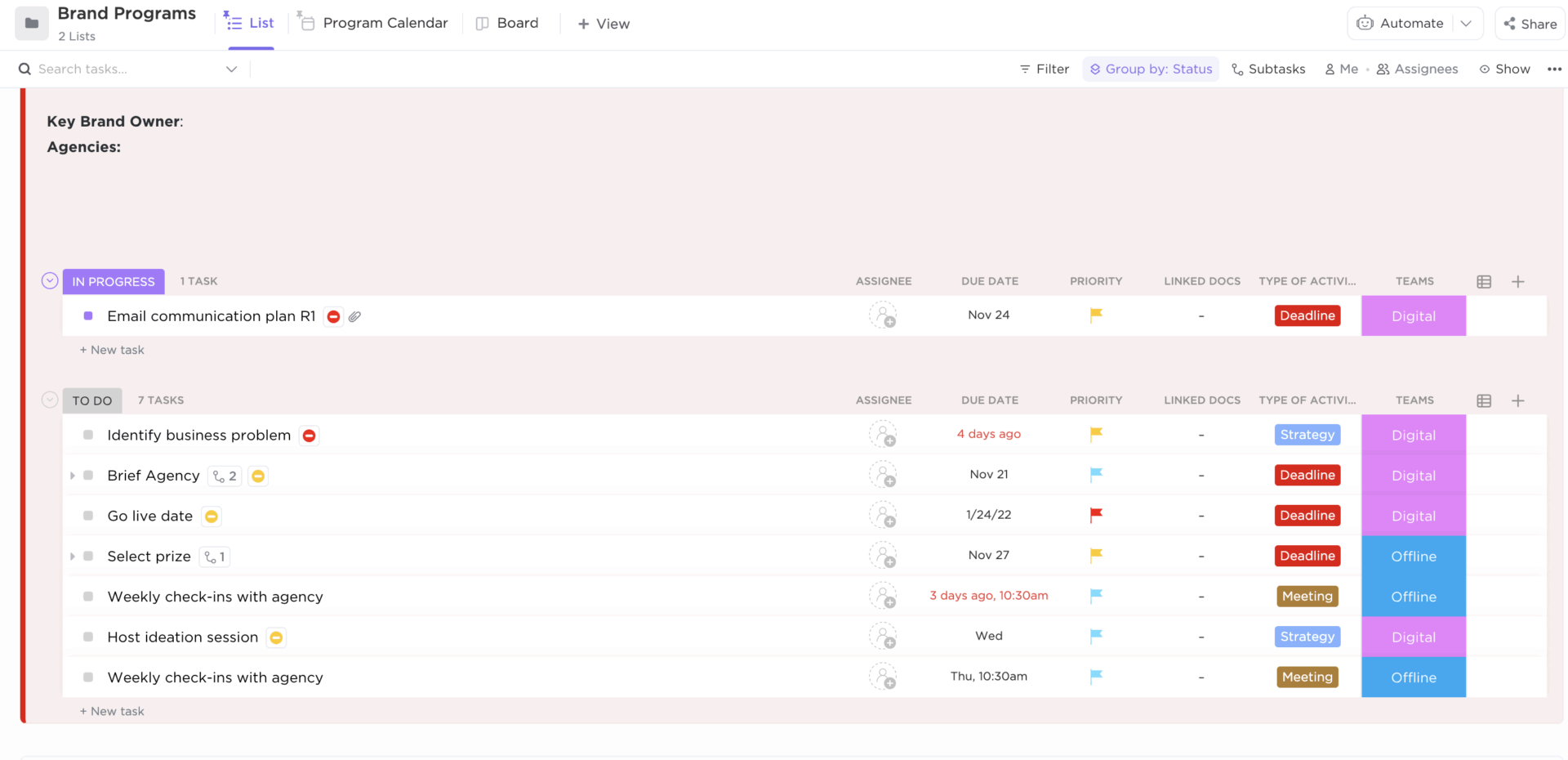
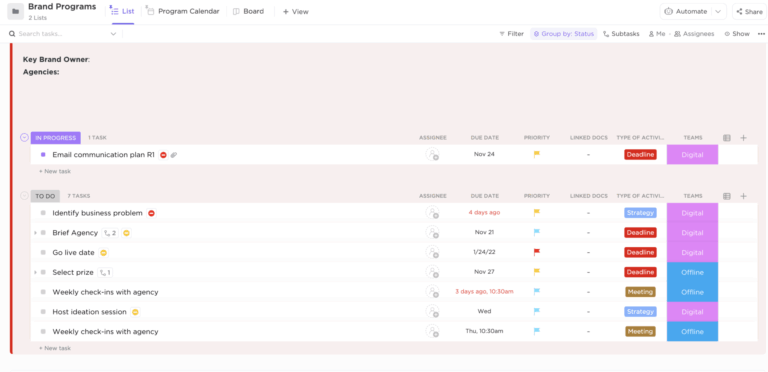
The ClickUp Brand Management Template centralizes your brand’s plans, ideas, and progress—helping you stay consistent, measure impact, and manage growth with confidence.
A brand strategy is the long-term plan for how your brand should be positioned, perceived, and experienced by your audience.
A well-executed brand strategy gives you a big-picture vision for how you want people to see, feel, and talk about your brand. It guides everything from the words you use to the way your products look and feel.
A strong strategy connects your core values, your purpose, and the unique way you engage with your target audience—supported by a consistent visual identity. It shapes your brand story, your personality, and the emotions people associate with you.
So why does a brand strategy matter so much for growth?
According to Forrester’s Business Trust Survey, 77% of potential customers and purchase influencers consider brand awareness when deciding whether to trust an organization. How people see and feel about what your brand represents often determines whether they choose to connect with you at all.
A well-thought-out brand strategy can be the difference between being just another name in the market and becoming a brand people remember and return to. It does this by:
📖 Also Read: Effective Marketing Plan Examples & Samples
Your brand marketing strategy is how you spread the word—whether that’s posting mouthwatering croissant photos on Instagram, running a local ad, or hosting a free tasting event.
Here’s what you should watch out for to identify them correctly:
| Aspect | Brand strategy | Marketing strategy |
| Focus | Builds trust, shapes perception, and creates a strong brand identity | Promotes products or services to reach and engage your target audience |
| Goals | Establish long-term reputation and brand values | Generate leads, boost sales, and support short-term objectives |
| Approach | Defines brand positioning, brand story, tone of voice, and visual identity | Uses channels like social media, advertising, PR, and events to execute campaigns |
| Time frame | Long-term, evolves slowly to maintain brand consistency | Short-term or campaign-based, changes with business needs and trends |
Your brand is a story unfolding across all customer touch points.
– quoted by Jonah Sachs
Every interaction someone has with your brand adds a new page to that story. A successful brand strategy makes sure those pages fit together, creating a memorable experience for your target audience. Here are the core elements that help shape it:
Purpose: Be clear about why your brand exists beyond making money. This deeper reason should guide your choices, inspire your team, and resonate with the people you serve
📌 Example: Patagonia’s mission to protect the planet is woven into its brand story, from donating profits to environmental causes to creating long-lasting products that reduce waste
Flexibility: Be adaptable enough to respond to cultural changes, shifting markets, and new opportunities while staying true to your core values. Flexibility keeps your brand fresh and relevant without losing its essence
Employee involvement: Your team is one of your most powerful brand ambassadors. Make sure your internal teams understand your brand voice, values, and customer promise so they can deliver a consistent experience at every interaction
Emotion: Give people a reason to feel something about your brand, not just think about it. Emotions are what turn casual buyers into loyal fans who will advocate for you
Consistency: Keep your brand messaging, tone, and visual identity aligned across every touchpoint, from your website and packaging to social media and customer service. Consistency builds familiarity, and familiarity builds brand recognition
Loyalty: Reward and nurture the potential customers who keep coming back. When people feel appreciated, they’re more likely to stay with you, recommend you, and contribute to your brand’s success
📮 ClickUp Insight: In our survey, 78% of respondents said they make detailed plans when setting goals, yet half admitted they don’t track those plans with the right tools.
ClickUp helps you bridge that gap by turning your goals into actionable tasks you can tackle one step at a time. With our no-code dashboards, you can see your progress in clear, visual snapshots, giving you the control and clarity you need to stay on track. After all, simply hoping for the best isn’t much of an effective brand strategy.
💫 Real Results: ClickUp users report they can take on about 10% more work without burning out.
Branding is not an exercise in abstract theoretics.
This insight from a Reddit thread reminds us that branding is about stories that carry meaning. Let’s walk through some common ways that brands show up in our lives and what makes each one special, with a few brand strategy examples to bring it to life.
This is all about giving a single product its personality so people instantly know what it is and why it matters.
Done well, product branding can make a single item feel like a must-have, even in a crowded market. It’s especially powerful when you want to create a strong emotional connection that turns buyers into loyal fans.
🧠 Did You Know: Liquid Death took something as simple as canned water and made it unforgettable. The edgy design feels like a rebellious energy drink, and the humor in its marketing gets people talking. That bold approach helped them raise $75 million in 2021 and build a passionate fan base.
Here, the focus is not just on what you provide, but on how you provide it.
Service branding creates a feeling that people come to expect every time they interact with you. Whether it’s in person, over the phone, or online, it’s about making every touchpoint feel consistent and cared for.
A strong service brand makes something intangible feel memorable and authentic.
📌 Example: Merit Beauty launched with only a few products, but their customer experience feels like a personal conversation. Thoughtful packaging, gentle messaging, and warm imagery all create the sense of a brand that genuinely cares. People say it feels like getting a gift from a friend, which makes them want to come back.
Corporate strategy employs a single name and identity for all the products and services a company offers.
This strategy gives people a single story to remember, no matter which product or service they’re using. When people trust the leading brand, that trust naturally extends to new things you create.
It also makes it easier to expand into new markets because the brand’s reputation accompanies you.
📌 Example: Virgin Airlines has used its playful red logo and adventurous spirit across airlines, music, health clubs, and more. People everywhere recognize it and connect it with fun and bold ideas. That trust and familiarity helped Virgin succeed in industries that are entirely different from each other.
Family branding links several products under one trusted name, while individual branding gives each product its own unique identity.
Many companies combine both strategies to leverage the trust of a well-known brand while allowing each product to stand independently.
📌 Example: Coca-Cola uses its main brand to lend credibility to products like Diet Coke and Coke Zero. On the other hand, Unilever lets brands like Dove and Magnum feel completely separate, each with its own audience and style. This balance allows both familiarity and freedom in how products are marketed.
Attitude branding is less about products and more about what you stand for. It ties your identity to a shared belief or lifestyle that people want to be part of.
Instead of focusing on features, it focuses on feelings and values. Done right, it inspires loyalty because people see themselves in your brand story. Over time, this connection can outlast trends or even specific products.
📌 Example: Apple has always been about more than just computers and phones. It stands for creativity, simplicity, and challenging the ordinary. That vision has built a worldwide community of devoted customers and helped Apple become the first brand to reach a $3 trillion market cap.
This type of branding goes beyond visuals and uses other senses like sound, smell, or touch to make an experience unforgettable.
It’s often used in physical spaces to make people feel at home or to signal quality. When done well, it adds another layer of connection that’s hard to copy.
🧠 Did You Know: Singapore Airlines uses a signature scent in its hot towels, calm boarding music, and a distinct look for its cabin crew uniforms. These sensory details create a feeling of comfort and luxury that travelers remember long after the flight. The approach has helped them earn one of the highest loyalty rates in the airline industry.
Here, the brand is built around a promise to care for the environment and society. It’s not just a marketing message but a commitment that runs through the whole business.
People increasingly want to buy from brands that align with their values, and sustainability can be a powerful way to build trust.
👀 Fun Fact: Seventh Generation has built its name on plant-based products, recycled packaging, and honest communication. By 2015, the company had grown to $200 million in revenue, and a year later, Unilever acquired it for around $700 million. Today, it remains a leader in eco-friendly household products, with a loyal customer base.
When building a brand, each step matters. Let’s walk through this process together, in a way that works for businesses of all shapes and sizes.
Before you can shape your brand, you need to know exactly who your ideal customer is that you are shaping it for. Go beyond basic details like age or location and dig into what matters most to them. What are their everyday frustrations? What sparks their excitement?
For B2B brands, those questions could mean learning about industry bottlenecks or regulatory pressures. For startups, this could involve identifying a small but loyal group of early supporters.
Spend time in their world through surveys, online forums, or informal conversations to uncover insights that numbers alone cannot show.
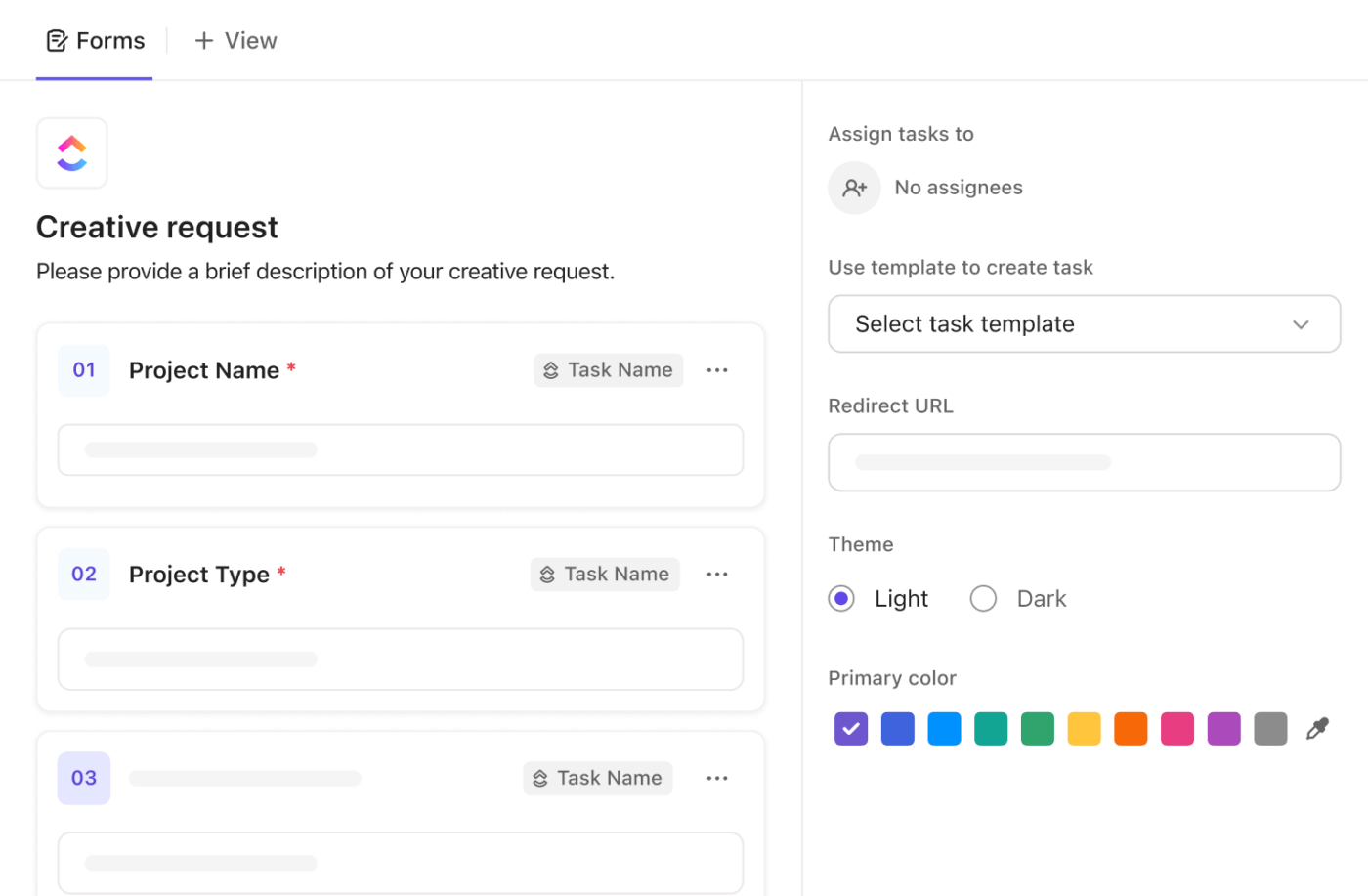
One easy way to gather these insights is through surveys. ClickUp Forms lets you create simple, shareable questionnaires that feed responses straight into your workspace.
💡 Pro Tip: On a small budget? Use free tools like Google Trends or Reddit discussions to uncover trends without spending anything.
Once you understand your audience, you can define the one thing that makes your brand the clear choice. This is your unique spot in the market. It might be unmatched customer service, a highly specialized product, or a personality that makes your audience feel at home.
In the B2B sector, it could refer to a proven track record of effectively solving complex problems. For startups, it often comes down to agility and bold ideas.
Whatever it is, make sure it is simple enough for someone to explain in one sentence.
📖 Also Read: How To Use AI For Creating Your Branding Strategy?
Facts can explain who you are, but stories help people care. Your brand story connects your values, purpose, and journey in a way that invites people in.
For B2B brands, this could mean highlighting how your work improves your clients’ world. For startups, this can involve sharing the human moments and challenges that contribute to your brand’s development.
Remember: A strong story is less about listing achievements and more about showing why your brand matters in the lives of your audience.
ClickUp Brain MAX turns brand strategy into real-time execution.
As you shape your brand story, the ClickUp Brain MAX desktop app helps you capture ideas the moment they appear and turn them into actionable work — without leaving your flow.
It’s the fastest way to move from inspiration to execution while staying true to your brand voice
💡 Pro Tip: Focus on consistency, not cost. Regularly share your story across free, high-impact channels, such as LinkedIn or your blog.
Your visuals are often the first introduction someone gets to your brand. This includes your colors, logo, fonts, and photography style. Everything you do should reflect your values and be consistent, wherever people see you. A polished, confident look can make a B2B brand feel reliable.
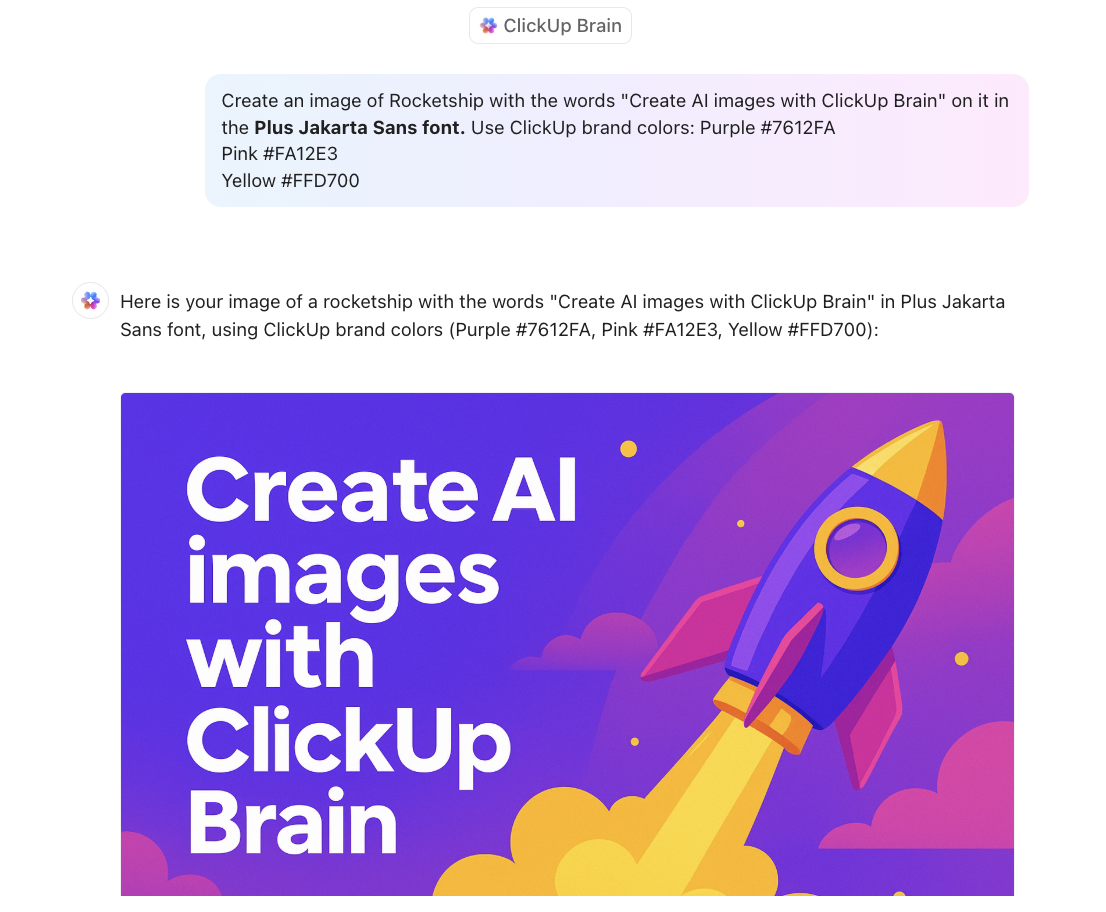
💡 Pro Tip: Keep your brand identity consistent across every asset. With ClickUp Brain, you can instantly generate on-brand visuals, headlines, and descriptions that match your tone and style—no jumping between tools or waiting on design reviews.
A brand strategy is not just about knowing who you are but also about being present where your audience is active. This might mean thought leadership on LinkedIn for B2B brands or short, lively videos on TikTok for consumer-facing startups, as well as implementing search engine optimization.
💡 Pro Tip for Startups: Depth beats presence. Start by mastering one or two channels that align with your audience and revenue goals—then use insights from those early wins to expand strategically instead of guessing where to grow next.
Your brand should grow with you to foster loyalty. Markets change, target customers change, and so should your strategy. Set aside time every few months to see what is working and what is not.
For B2B companies, these tasks may mean checking if your positioning still fits industry shifts. For startups, it might mean adjusting quickly based on feedback from early adopters.
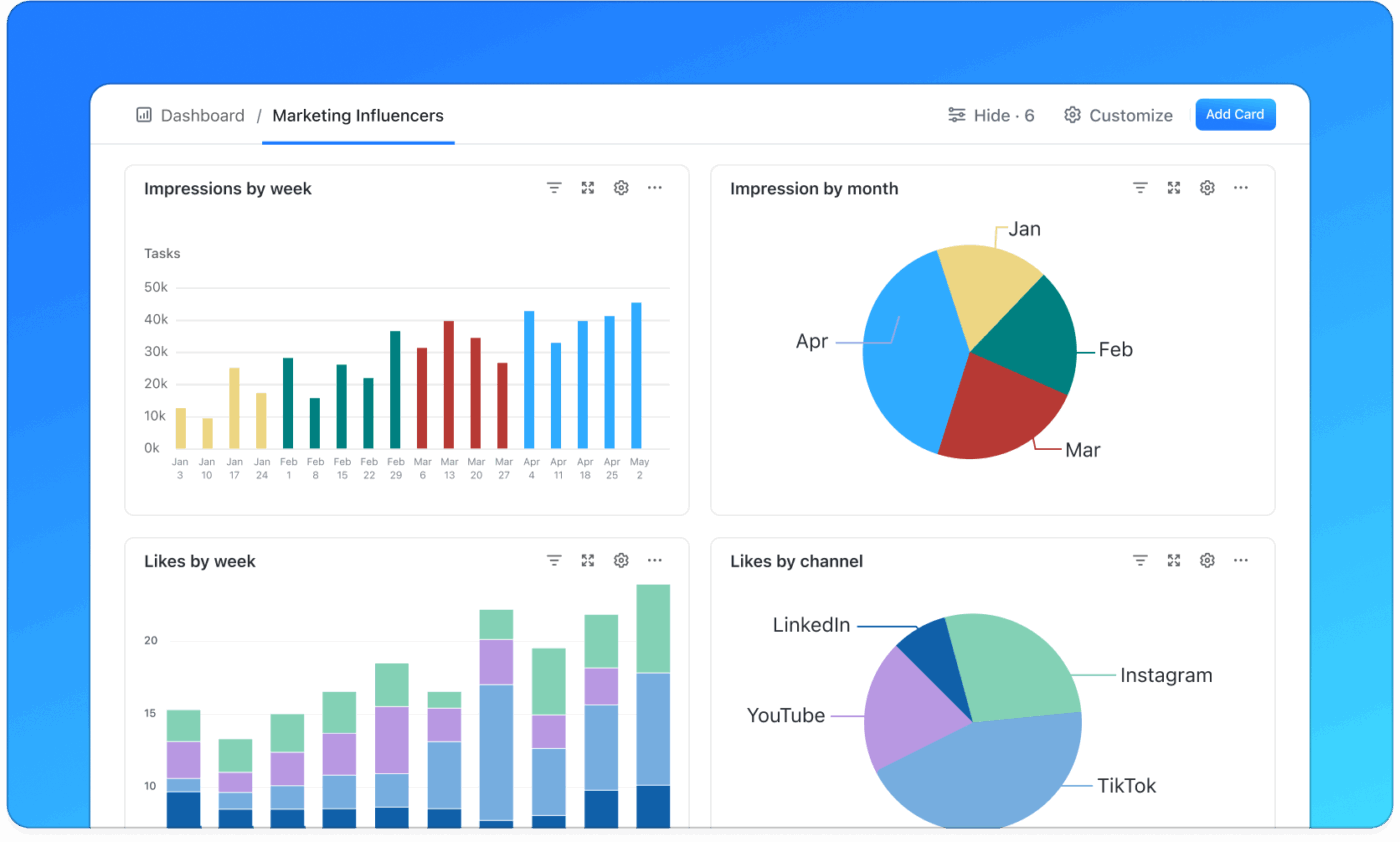
ClickUp Dashboards can make this process much smoother. You can pull in data from tasks, marketing campaigns, and even sales performance into one view, so you are not guessing which efforts are paying off. By tracking the right metrics in real time, you can refine your approach before small issues turn into missed opportunities.
Whether you’re working with a big budget or just getting started, these steps will guide you from first ideas to a brand management strategy you can confidently put into action.
Start with the deeper reason your brand exists. What’s the change you hope to make? What feeling do you want people to associate with your name?
📌 Example: TOMS founded a culture around “One for One.” For every pair of shoes sold, they gave a pair to someone in need. That simple purpose became the heart of their brand story and helped them lead the cause-driven movement in fashion.
Define a clear pledge to your customers: something they can count on every time they interact with your brand. Then live up to it.
🧠 Did You Know: FedEx built its reputation on “When it absolutely, positively has to be there overnight.” This promise created trust in both consumers and businesses, helping FedEx become synonymous with dependable delivery.
Skip lofty language and speak like a person. Share who you are, what problem you solve, and how it feels to be part of what you’re building.
👀 Fun Fact: Patagonia crafted its brand around simple, honest storytelling about environmental care. Their “Don’t buy this jacket” campaign encouraged repairs over replacement—and earned them even more respect from their community.
Choose visuals that say who you are at a glance—colors, logo, fonts, and imagery. Make every touchpoint feel like home.
Treat your brand strategy like a living thing.
Pay attention to what your audience responds to, messages they forward, images they save, and words they quote. Then do more of what works.
📖 Also Read: Brand Kit Examples to Inspire Building Yours
Some brands have mastered the art of crafting a message that is unforgettable.
Let’s look at three examples that show how powerful a clear, consistent brand can be in practice.
Nike sold the belief that anyone can be an athlete. The “Just Do It” slogan became more than a marketing line.
By aligning campaigns with real stories of perseverance, from elite runners to everyday fitness enthusiasts, Nike built a brand identity rooted in empowerment.
In 2018, their campaign, featuring American civil rights activist Colin Kaepernick, sparked a global conversation, proving that a brand with a strong stance can drive both loyalty and impact.
📖 Also Read: Creating a Killer Marketing Communication Strategy
For decades, Coca-Cola has focused less on the drink itself and more on the feelings it represents—joy, togetherness, and shared moments.
Campaigns like “Share a Coke,” where bottles featured popular names, invited people to connect with the brand on a personal level. That simple personalization effort boosted sales in many regions by double digits, proving that emotional branding can directly drive results and positively influence brand sentiment.
Airbnb shifted the focus from “where you stay” to “how you feel when you’re there.”
Their “Belong Anywhere” campaign tapped into the human desire for connection, making travelers feel at home in unfamiliar places.
By featuring real hosts and guests in their marketing, they built a sense of authenticity that strengthened trust and loyalty worldwide.
While Nike motivates and Coca-Cola connects, ClickUp brings it all together in the world of work.
At the earliest stage, ClickUp Whiteboards and ClickUp Docs give your team a blank canvas to brainstorm ideas, define your brand’s messaging pillars, and outline campaign themes. Because everything lives in the same workspace, those early sparks of creativity naturally flow into action plans without losing context.

When it’s time to turn strategy into action, ClickUp Tasks and ClickUp Automations keep campaigns on track without the endless email back-and-forth. Marketing roadmaps, launch calendars, and creative approval workflows can all run in ClickUp, ensuring that deadlines are visible and responsibilities are clear.
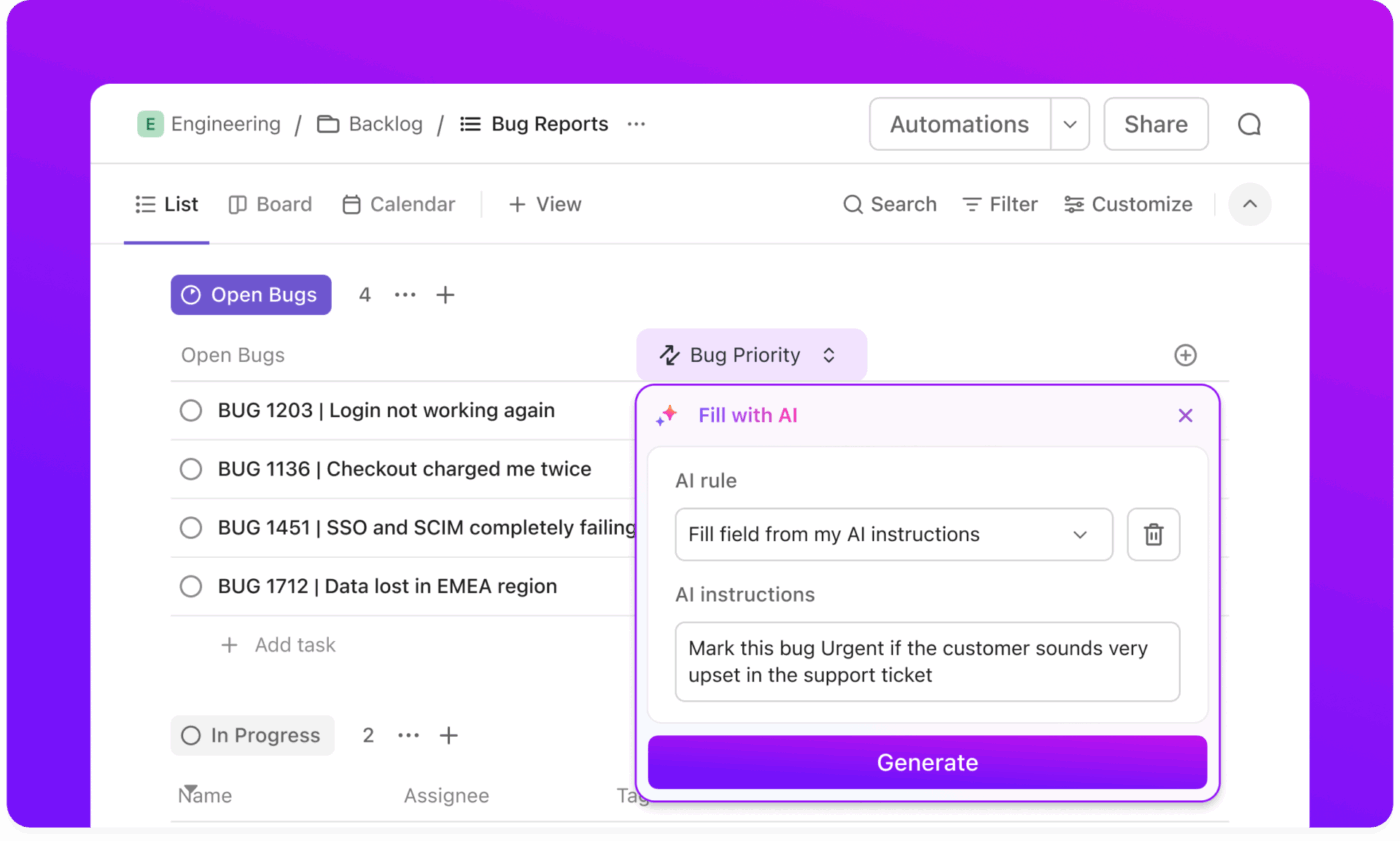
For ongoing brand health, marketing teams can use ClickUp Dashboards for a real-time pulse of campaign performance.
And because ClickUp integrates with over 200 tools—from HubSpot to Figma—you can pull in data, assets, and conversations from your existing marketing stack.
📖 Also Read: Best Brand Management Software Options
When your brand strategy and marketing work together, it feels a bit like music in perfect harmony.
This might sound like an exaggeration, but coordinated strategies allow people to feel who you are.
Think about Dove. Beyond beauty products, Dove’s Real Beauty campaign celebrates authenticity in every message, building trust over the years.
When this kind of connection is consistent, it creates more than recognition. It builds comfort. People know what to expect from you, and they choose you because it feels right.
Some companies learn this during times of significant change. When NortonLifeLock brought several brands together under one roof, they didn’t just merge products; they also unified their approach. They made sure every message and every customer touchpoint carried the same heart and purpose. It was about more than design or words. It was about making people feel at home with the brand, no matter which product they used.
McKinsey’s research backs this up too, pointing to a framework called the Six S’s that guides successful brand and marketing integration during M&A. Brands that follow steps like story alignment, customer segmentation, and data-driven brand definition often see revenue synergy improvements of 1.5 to 2 times.
📖 Also Read: Brand Awareness KPIs
Seven in ten adults in the U.S. start the year by setting personal goals, yet only about 38% believe they’ll actually stick to them.
The same goes for brands.
However, the best way to know if your brand strategy is working is to step outside your view and see your brand the way your audience does.
✅ Review how your brand is currently perceived through a detailed audit of every customer touchpoint
✅ Define a clear vision that guides every brand decision and reflects your purpose
✅ Translate your vision into specific, measurable goals that align with where you want the brand to grow
✅ Track the right metrics like awareness, loyalty, sentiment, and competitive position to see progress over time
✅ Use consistent research methods such as surveys, social listening, and customer feedback to keep your insights fresh and actionable
📖 Also Read: How to Develop a Unique Brand Identity
Occasionally, the best brands are the ones that know exactly how to make people feel something when they hear their name.
Building that kind of brand is the result of thoughtful choices, a clear sense of purpose, and a willingness to continually refine your approach as the world changes.
Here are a few guiding principles to help you shape a brand strategy that truly lasts:
Let’s imagine your company is about to roll out a refreshed brand strategy. You have updated visuals, a sharper positioning, and new messaging that you want to carry through every part of your business.
It sounds exciting, but the reality is that pulling this effort off across multiple teams can get messy quickly.
Here’s how ClickUp can bring order, clarity, and collaboration to the process from start to finish.

It begins with ClickUp Docs, your central hub for all brand guidelines and documentation. Instead of scattered files and outdated PDFs, you create a living document that holds your visual identity, tone of voice, logo rules, and approved color palette.
Everyone from designers to copywriters can view, comment, and update it in real time, so no one is working off old information. When you bring in a new agency, sharing the Doc link gives them instant access to everything they need, saving days of back-and-forth.
Combine ClickUp Docs and AI to improve your marketing and brand management strategies.
Boost your marketing with ClickUp AI using real tools and actionable hacks to save time, optimize content, and personalize campaigns effectively.

Once the foundation is set, the focus shifts to brand positioning, and this is where ClickUp Whiteboards and ClickUp Mind Maps shine. You pull the marketing, product, and leadership teams into a single visual workspace.
Here, ideas flow onto sticky notes, competitive landscapes take shape with simple diagrams, and customer personas come to life.
Now it is time to make the vision real. You break down the branding rollout into clear tasks inside ClickUp Tasks. Each task, whether updating the website, redesigning packaging, or preparing social media content, is assigned to the right person with a specific deadline.
ClickUp Automations quietly keep things moving, notifying teams when their turn comes and moving tasks along without manual check-ins.
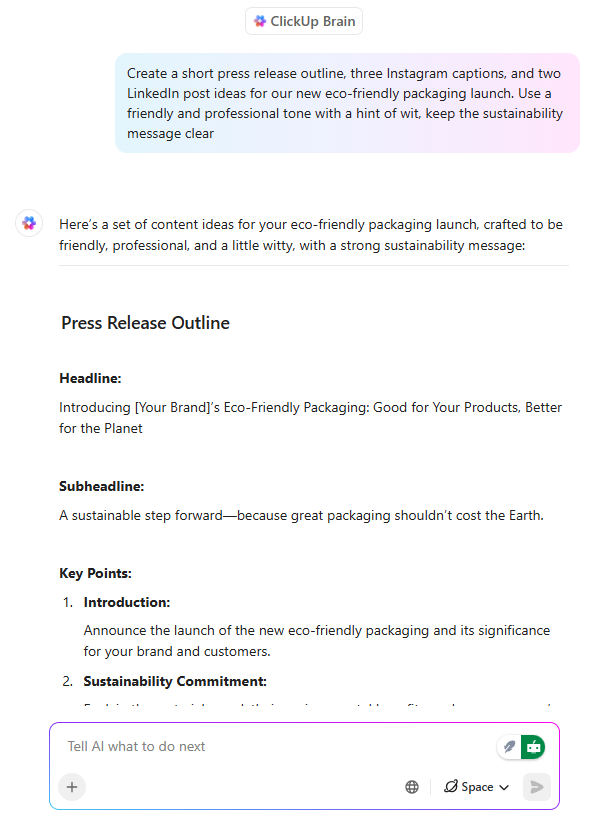
Meanwhile, ClickUp Brain suggests copy ideas, outlines press releases, and even drafts social captions, helping your team work faster without losing the brand’s personality.
Monitoring progress and performance with ClickUp Dashboards
As the campaign hits the market, ClickUp Dashboards give you a bird’s-eye view of how it is performing. Leadership can also pop in to see progress, making it easier to keep the momentum going without endless meetings.
✅ With everything connected in one platform, you are managing a brand strategy as a living, evolving process that stays aligned with your vision and your audience.
You can make things even easier by starting with ready-to-use brand strategy templates. These templates give you a structured head start so you can focus on creativity and execution instead of building processes from scratch.
ClickUp Brand Guidelines Template
If you want every piece of content, design, and messaging to feel unmistakably yours, ClickUp’s Brand Guidelines Template lets you:
ClickUp Brand Management Template
Managing multiple campaigns while keeping your brand’s essence intact can feel overwhelming. The Brand Management Template by ClickUp keeps everything in one clear, manageable view so that you can:
Building a strong brand strategy takes time and effort. From defining your brand story to ensuring every campaign reflects your values, the process works best when everything is organized, accessible, and easy to act on.
That’s where ClickUp truly shines. It allows you a single space to store your brand guidelines, brainstorm positioning, manage rollouts, and track campaign success without missing a beat. When your strategic branding is aligned with your overall business strategy and supported by consistent marketing efforts, every brand decision works toward long-term growth.
Whether you’re a solo founder or leading a large marketing team, ClickUp helps you turn your brand goals into tangible results while keeping your identity consistent and strong.
If you’re ready to take your brand strategy from planning to execution, sign up for ClickUp today!
Branding is the visible expression of your brand, such as your logo, colors, and messaging. Brand strategy is the plan behind it all. It shows how you want your brand to be seen, what you value, and how you will connect with your audience.
It depends on the size of your business, the clarity of your vision, and the amount of research needed. Some companies can create a basic strategy in a few weeks, while others may take several months to refine and finalize it.
Absolutely. A brand strategy helps small businesses stand out in a crowded market, attract loyal customers, and compete with bigger players. It can be scaled to fit your resources without losing impact.
Budgets vary widely, but the investment should match the importance of the role your brand plays in your business. Some companies spend a few thousand dollars, while others allocate significantly more for in-depth research, design, and rollout. What matters most is ensuring the investment delivers a clear and lasting return.

© 2026 ClickUp

There’s an easier way. Try a free AI Agent in ClickUp that actually does the work for you—set up in minutes, save hours every week.