
Gone are the days when customers were satisfied with just purchasing products or services. Nowadays, they crave personalized experiences, meaningful connections, and exceptional support.
To thrive in this customer-centric era, you must adopt a strategic approach to managing customer relationships—and that’s where a customer relationship management (CRM) strategy comes in.
In this article, we’ll explore 10 powerful CRM strategies to use in your business so you can elevate your customer experience, build customer loyalty, and drive sustainable growth. Let’s rock this! 💪
CRM Strategy: 10 Examples for Managing Customer Relationships
- What Is a CRM Strategy?
- Benefits of an Effective CRM Strategy
- 10 CRM Strategies for Your Business
- 1. Assess your existing CRM processes
- 2. Set clear CRM goals and KPIs
- 3. Identify your ideal customer
- 4. Create personalized customer experiences
- 5. Choose the right CRM software
- 6. Implement automated workflows
- 7. Prioritize and focus on high-value customers
- 8. Foster a customer-centric culture
- 9. Continuously train and support your team
- 10. Regularly evaluate and adapt

 Summarize this article for me please
What Is a CRM Strategy?
A customer relationship management strategy is a focused plan (or set of actions) you create to effectively manage your customer relationships. Additionally, a successful CRM strategy involves the use of a CRM tool and customer-focused processes to gather and analyze valuable information about your customers.

This information can include their demographics, purchase history, communication preferences, and more. By analyzing this data, you can gain deep insights into your customers’ needs.
Then you can tailor your products, services, and communication to better meet those needs. ✨
Summarize this article for me pleaseBenefits of an Effective CRM Strategy
Let’s dive into the most critical key benefits of having an effective CRM strategy for your business. Understanding these benefits will help you realize why customer relationship management is the best thing you can do to drive business growth.
1. Increase your customer retention
An effective CRM strategy helps you build stronger relationships with your customers. When you collect, analyze, and manage customer data, you understand their behaviors, needs, and preferences better. This knowledge lets you personalize customer interactions, offer tailored solutions, and create top-notch experiences that keep customers coming back.
2. Craft targeted marketing campaigns
When you use a CRM system to collect and store customer data, you can segment your customer base and create targeted marketing campaigns. By customizing marketing messages and offers for specific customer segments, you improve their relevance and effectiveness. This leads to higher response rates, increased lead generation, and improved return on investment for your marketing efforts. 📈
3. Streamline your business processes
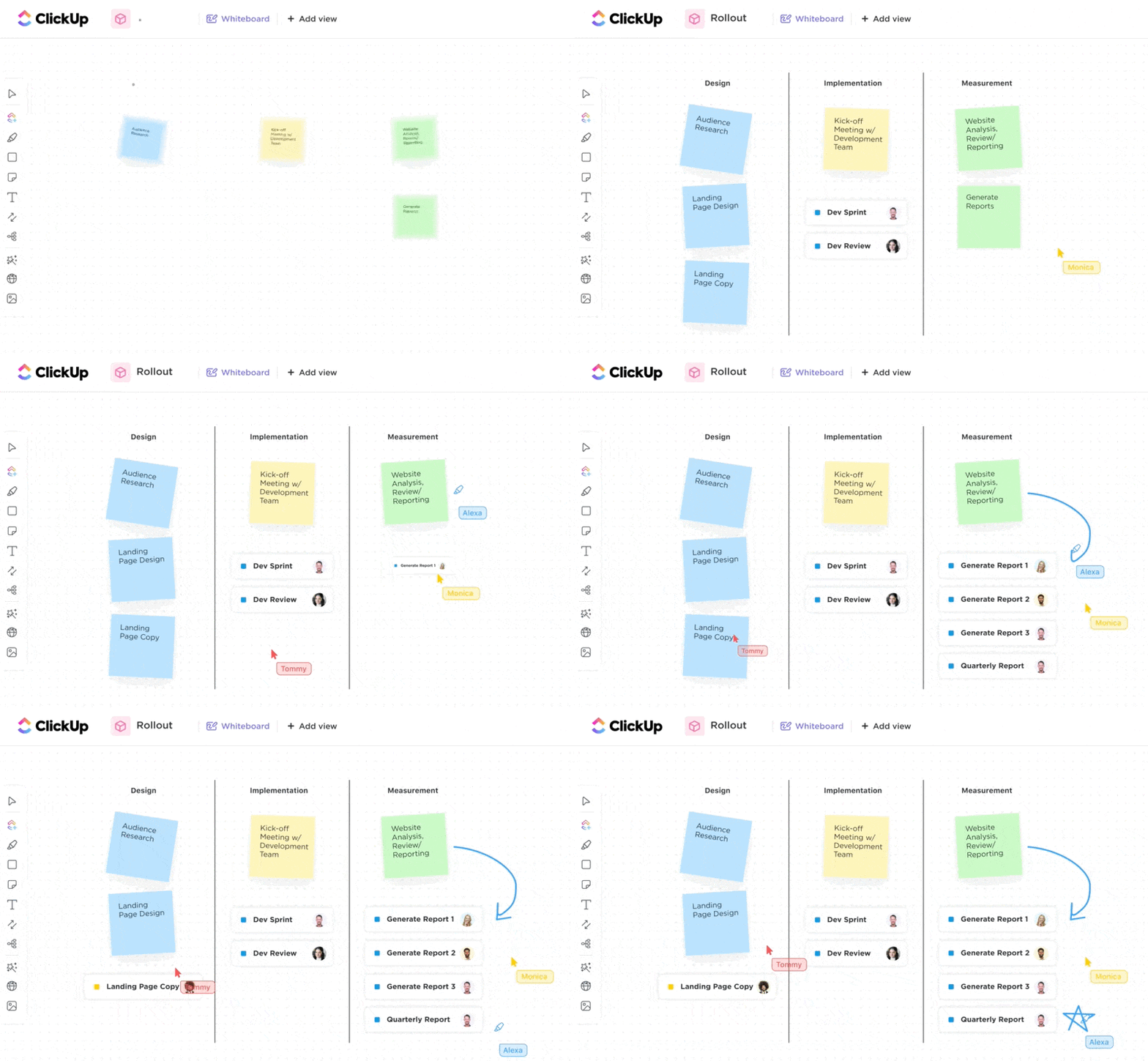
A CRM strategy helps streamline your business operations. By centralizing customer data, automating repetitive tasks, and integrating various systems, you can enhance productivity and efficiency. This allows your team to focus on high-value activities such as delivering exceptional customer experiences and driving up conversion rates.
4. Gain a competitive advantage
Implementing a CRM strategy means offering personalized experiences, excellent customer service, and proactive engagement. These factors set you apart from others in the market, giving you a competitive edge. As a result, you attract new customers, foster loyalty among existing customers, and position your brand as a customer-centric leader.
5. Boost sales and revenue
As we’ve discussed previously, a CRM strategy directly impacts factors like team productivity, customer retention, and marketing campaign conversions—all of which work together to significantly boost your business’s sales and revenue. 💰
Summarize this article for me please10 CRM Strategies for Your Business
For your business to stay competitive and be successful in the long run, building customer relationships is no longer optional—it’s a necessity. Use these top 10 CRM strategies to show your customers that you’re there for them … every step of the way!
1. Assess your existing CRM processes
If your business has paying customers, it likely has some CRM processes that are working well (and could also probably be improved further). At the same time, there could be bottlenecks, inefficiencies, or pain points that may hinder customer satisfaction.
For example, are there delays in responding to customer inquiries? Is your current CRM and project management software making it difficult to track customer interactions? 👀

You can reach out to your customers through surveys, focus groups, and conditional logic Forms to gather their feedback. In addition, involve your team in the assessment process—they’ll have valuable input from managing internal processes and interacting with customers.
The feedback you gather will provide valuable insights into your strengths and areas for improvement. Having this information will allow you to build an optimized CRM workflow that better serves your customers.
2. Set clear CRM goals and KPIs
Before you set CRM goals for your team, revisit your business strategy and long-term business goals—reflect on what you want to achieve and how your CRM goals can support these goals.
For example, if you aim to double your revenue, your CRM goals may revolve around improving customer retention or enhancing upselling and cross-selling opportunities. Evaluate the impact of each CRM goal on your business objectives to determine which CRM goals to tackle first. 🛠️
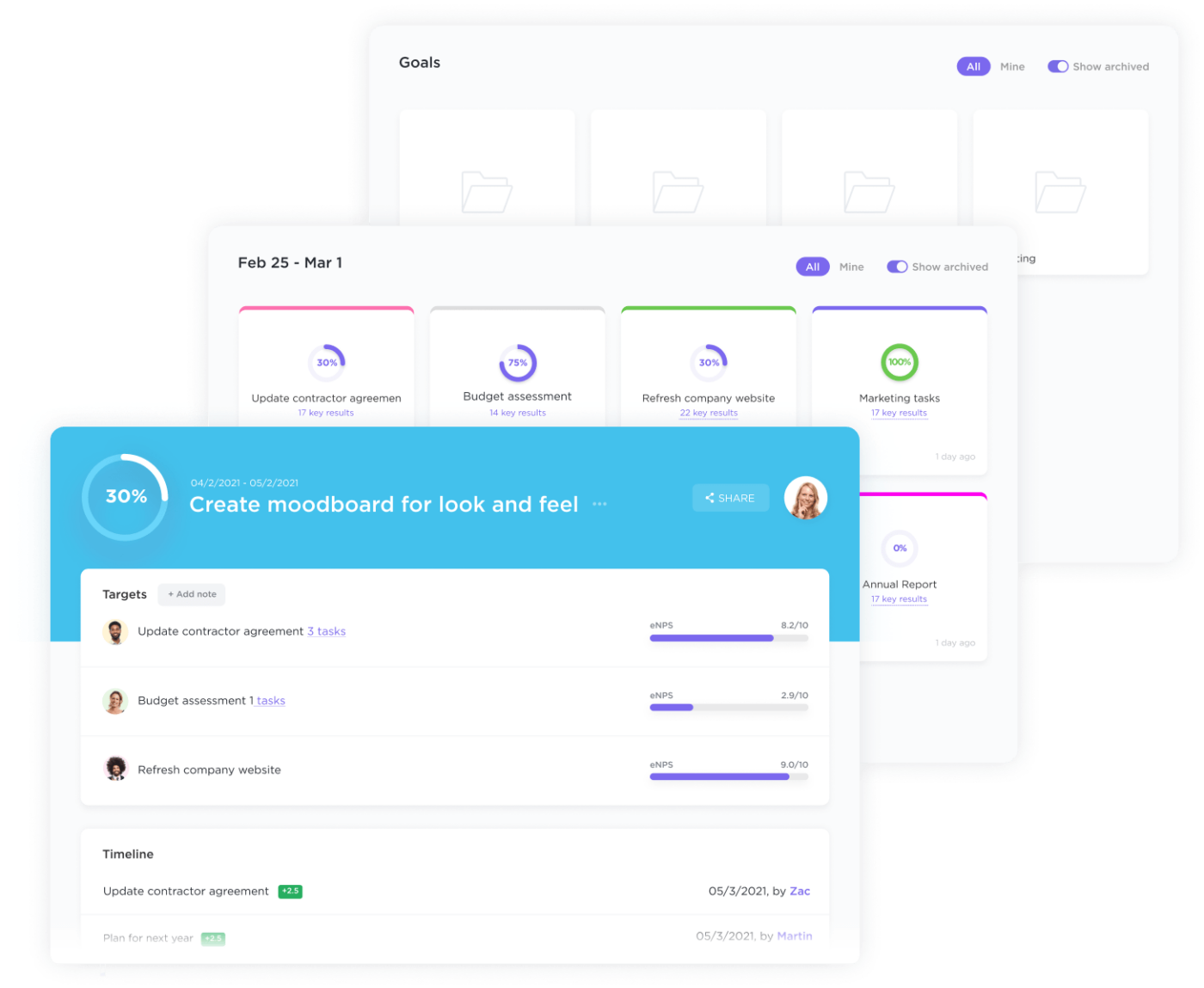
In addition, ensure your CRM goals are backed by relevant key performance indicators (KPIs). Suppose your goal is to improve response times—in this case, a specific and measurable KPI could be reducing the average response time to customer inquiries from three days to one day over the next three months.
This makes it easy to track progress and assess the effectiveness of your CRM strategy and overall customer journey.
3. Identify your ideal customer
To maximize the effectiveness of your customer journey, you have to gain a deep understanding of your target audience and create effective user personas (aka buyer personas or customer profiles).
Start by conducting thorough research to understand your target audience. This can involve market research, analyzing customer data, and conducting surveys in your CRM tool.
Look for patterns and commonalities that emerge from this research, such as demographics, behaviors, pain points, and motivations.
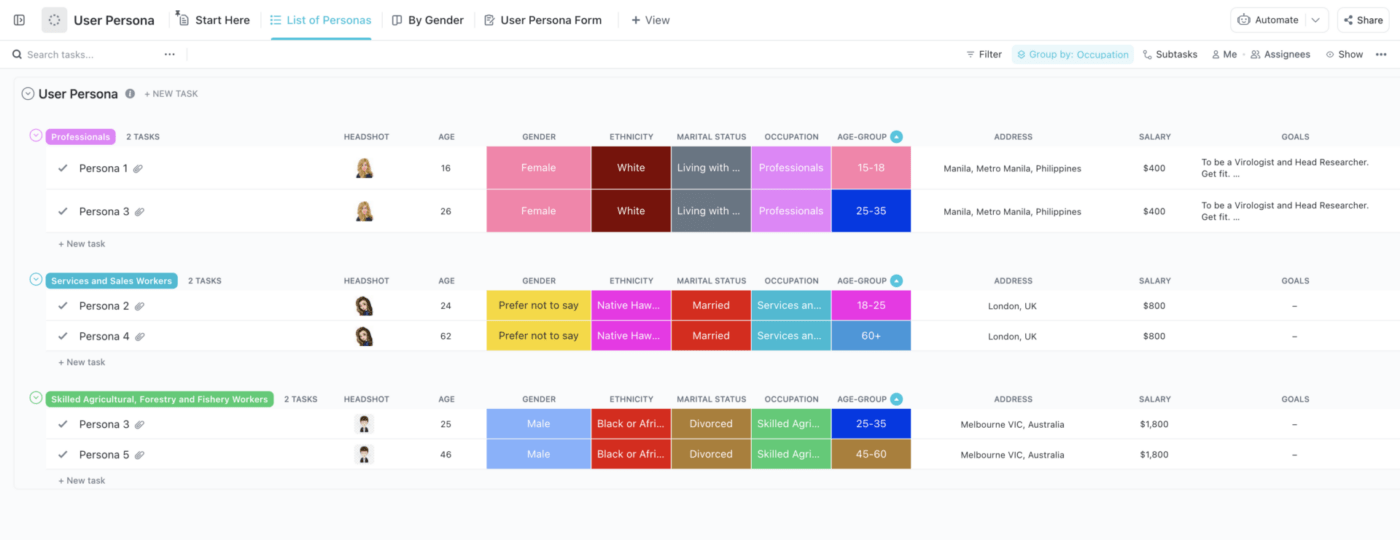
Summarize these details into multiple personas with ClickUp’s User Persona Template—each representing a distinct segment of your ideal customers. These user persona templates will guide your CRM strategy and help you tailor your communication, marketing campaigns, and product offerings to better resonate with your target audience. 🤩
4. Create personalized customer experiences
To create personalized experiences, you need to deeply understand your target customer (as explained in the previous strategy) and also where they are in their journey.
Customer journeys refer to the various touchpoints and interactions a customer has with your business throughout their buying process. You can easily map out the unique customer journeys at your business with any of these customer journey templates.
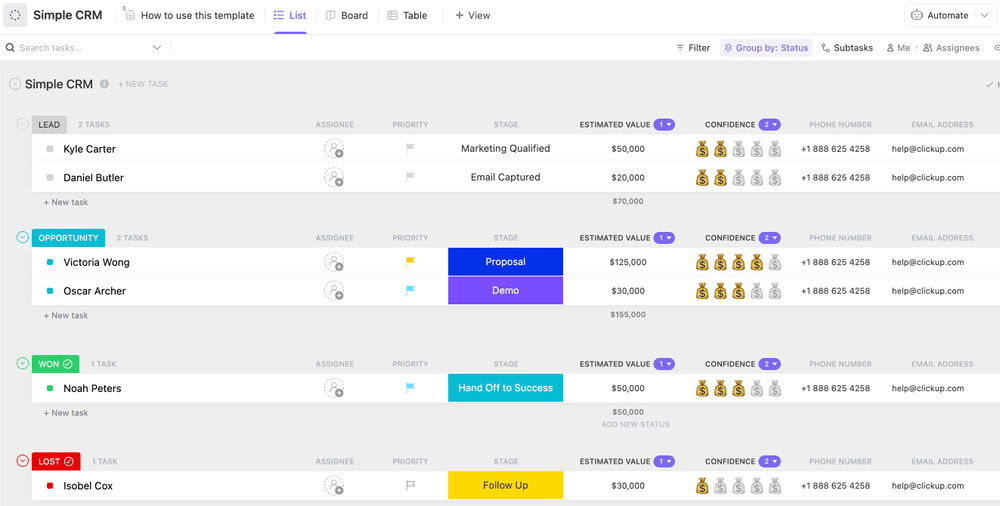
By mapping out these possible journeys, you can identify opportunities for personalization. Start by outlining the typical stages your customers go through, like awareness, consideration, decision, and post-purchase in ClickUp’s Simple CRM Template.
Then break down each stage into specific touchpoints and actions unique to your business. Armed with these insights, you can better personalize your customer interactions to strengthen relationships and boost engagement. 🤝
5. Choose the right CRM software
The ideal CRM software should support your business needs and bring out the best in your customer loyalty and relationship-building efforts. Look out for these key CRM systems features:
- Contact management: Look for CRM software that allows you to easily organize and track customer details (e.g., contact information, preferred social media apps/channels, past interactions, etc.) in a centralized database
- Scalability and flexibility: Consider CRM software that can grow with your business. It should be able to handle more users, a larger customer base, etc. without affecting its performance or usability
- Customization options: Look for CRM software that allows you to tailor the system to your specific business requirements. Customization options should include the ability to accept custom inputs and create unique workflows
- Reports and analytics: A robust CRM software should have customizable dashboards and reporting features for gathering performance insights and contributing to data-driven forecasting and decision-making
- Integration capabilities: The right CRM platform should integrate with your existing applications, such as email marketing tools, customer support systems, or project management platforms
By using ClickUp as a CRM tool, you get access to all these features. You also get CRM templates to help you get started and built-in project management functionality to keep your team organized.
6. Implement automated workflows
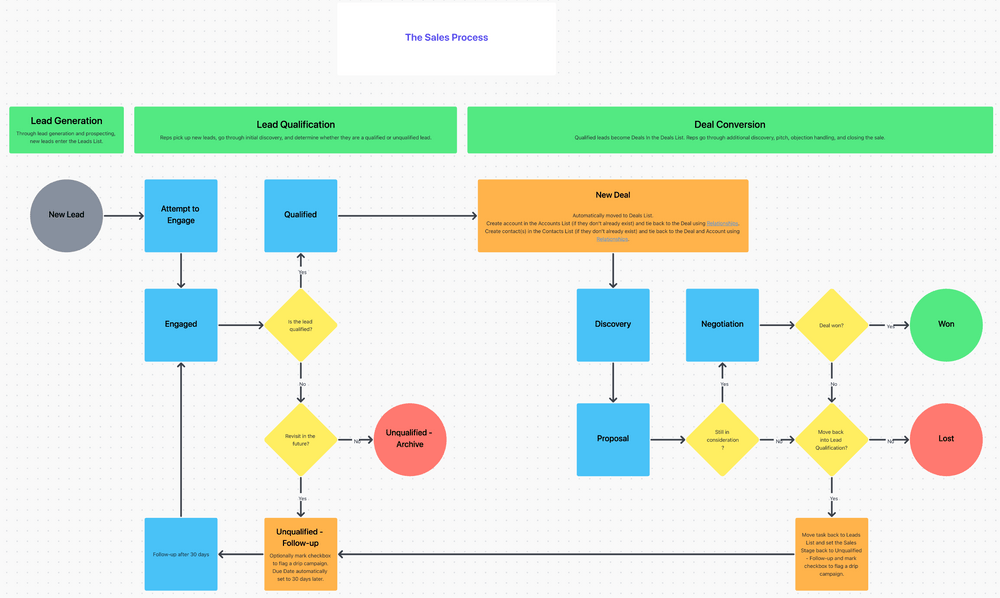
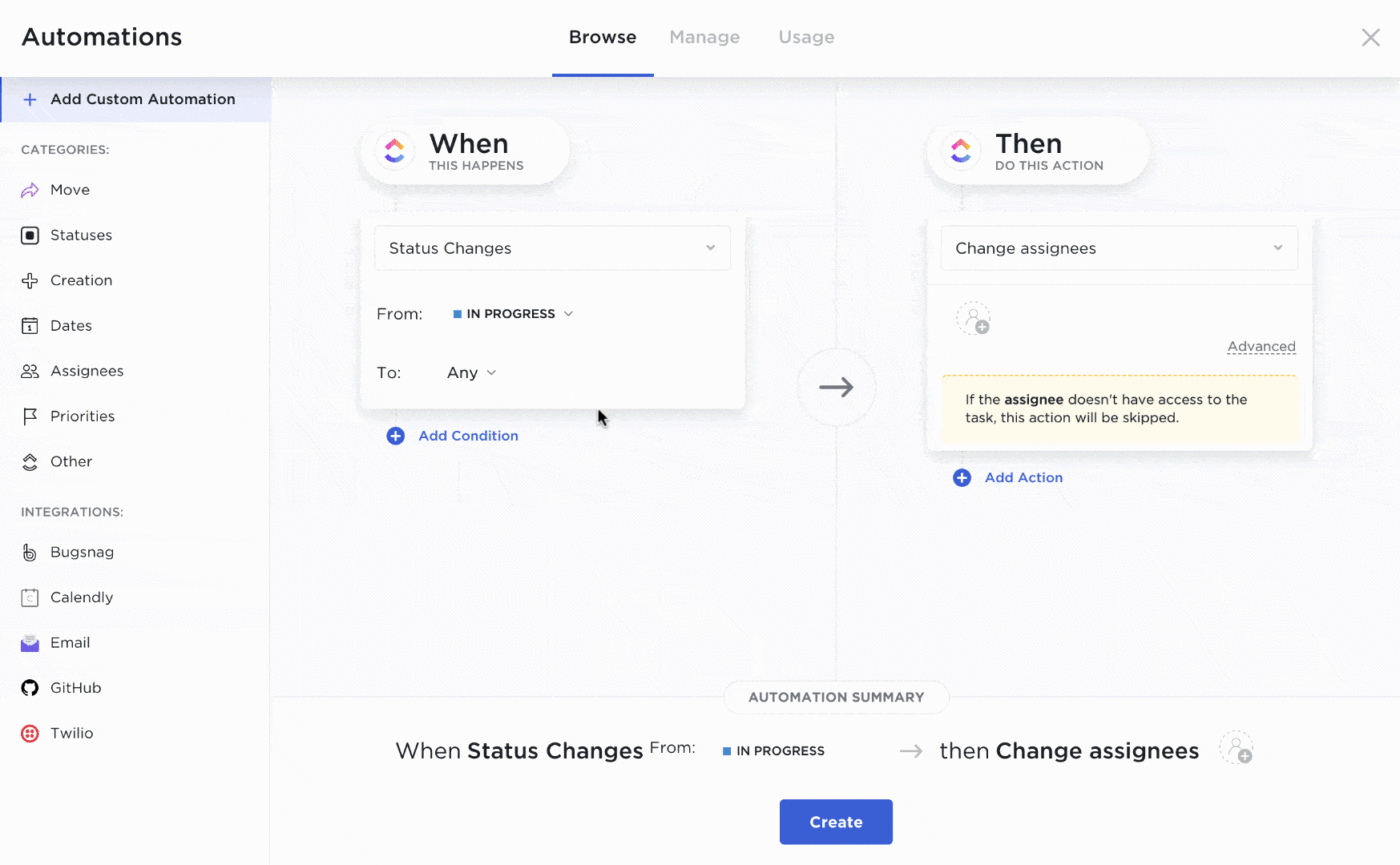
Using your CRM tool to automate repetitive tasks in your workflow boosts team productivity. It ensures consistency, reduces errors, and frees up time to focus on building customer relationships.
For example, a CRM solution like ClickUp’s Sales Pipeline Template that automates sales pipelines and manages client accounts. It has built-in forms to collect and automatically record responses from new leads.
As leads enter the sales funnel, you can use automation triggers to move them through different stages. The tool also generates reminders and notifications for follow-up tasks, so no leads or opportunities are left hanging. 💸
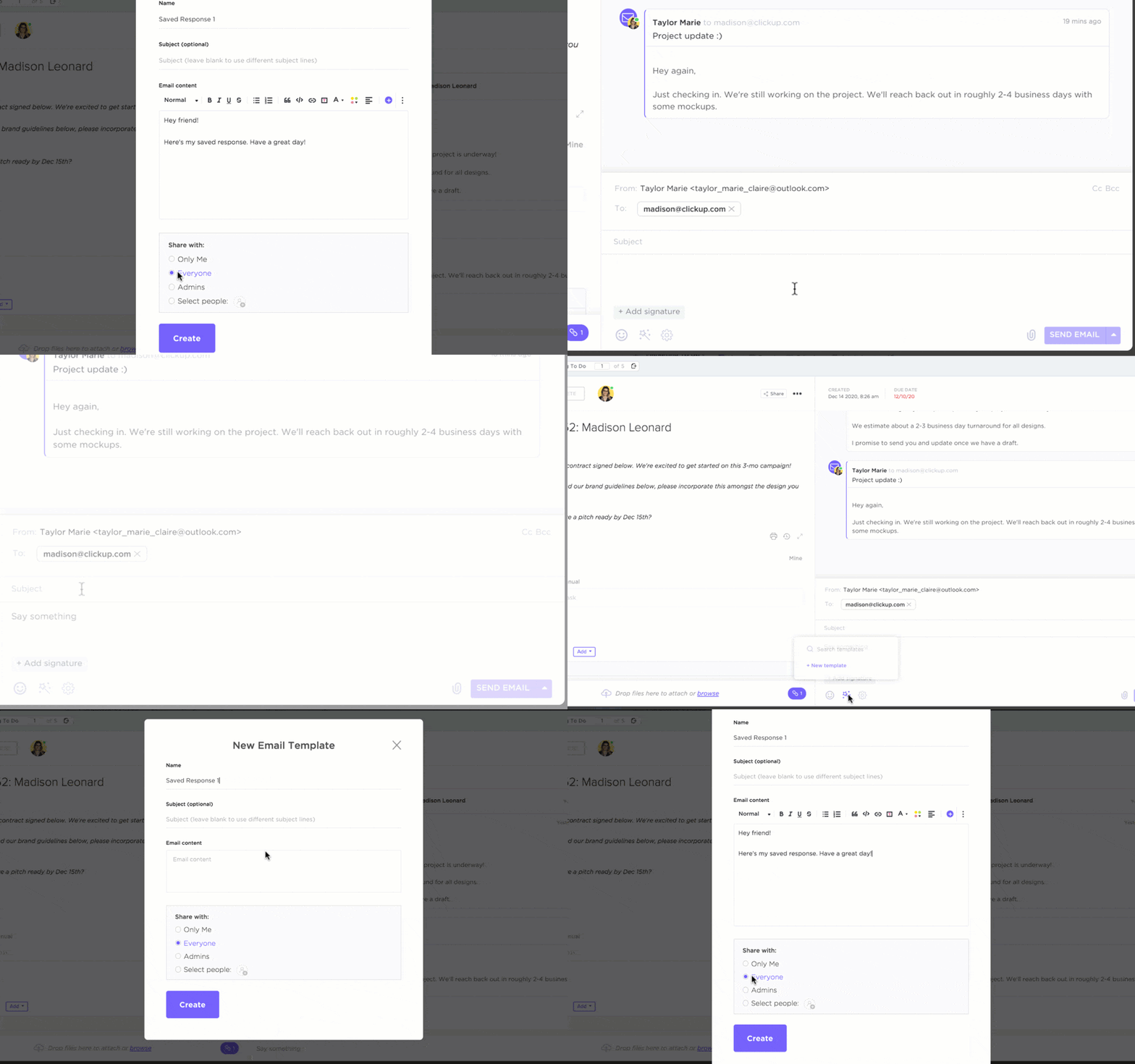
Email automation is another key component of effective workflow design. It allows you to nurture leads by automatically sending targeted emails that align with their position in the customer journey.
By sending timely and relevant information to leads, you enhance the chances of converting them into loyal customers.
PRO TIP
While email communication is best for nurturing existing clients and converting potential customers, it’s not ideal for internal communication. Consider these email alternatives for improving real-time communication and collaboration within your team so they can better serve your customers.
7. Prioritize and focus on high-value customers
To boost the success of your CRM efforts, identify and nurture your most valuable customers. These are clients who contribute significantly to your revenue and have the potential for long-term partnerships.
Once you’ve identified these key customers, focus on providing exceptional service, personalized attention, and tailored offerings that meet their individual needs and preferences. This can be done through:
- Regular communication: Communicate with your key customers through personalized emails, phone calls, or in-person meetings. Address their concerns, provide updates on new products or services, and seek feedback to ensure their satisfaction
- Exclusive benefits: Offer benefits as a token of appreciation for their loyalty. This could include priority access to new features or releases, discounts, special promotions, or personalized offers based on their purchasing history
- Proactive support: Monitor these customers’ usage patterns. Then identify potential issues or challenges they may face, and offer proactive solutions or assistance before they even reach out for help 🙌
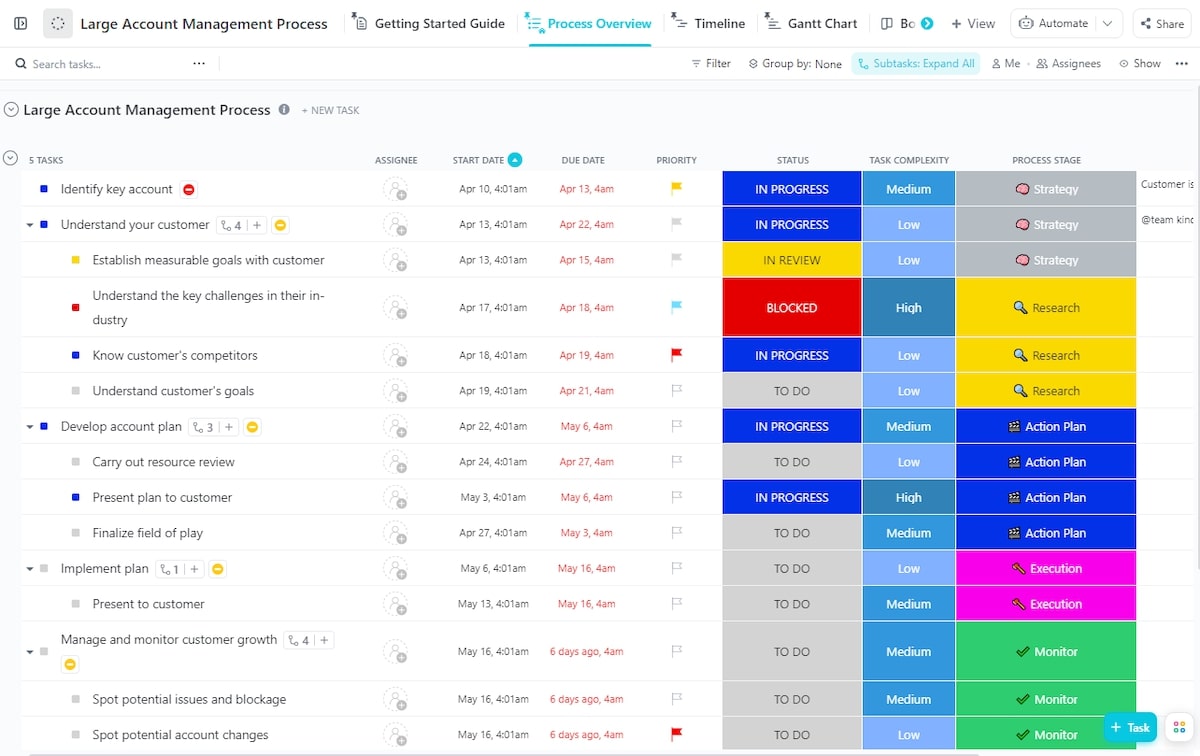
Managing high-value customers (who most likely are your large accounts) doesn’t have to be super overwhelming. Simplify the process with the ClickUp Large Account Management Process Template.
This allows you to dedicate the necessary resources and streamline the process. By doing so, you can strengthen these relationships and ensure their continued growth.
8. Foster a customer-centric culture
To create a customer-centric culture in your business, you have to involve every employee in prioritizing customer needs and delivering exceptional service. This can be achieved by integrating relevant metrics into performance evaluations and recognizing (and rewarding) team members when they excel in this area.
Remember, every customer interaction is an opportunity to exceed their expectations and foster loyalty. And establishing a company-wide commitment to customer-centricity is a great way to create a consistently positive and memorable experience for customers at every touchpoint.
Check out these SaaS CRM tools!
9. Continuously train and support your team
Train your team to maximize your CRM tool’s capabilities and deliver exceptional customer experiences. Alongside general training, invest in specialized programs tailored to specific roles.
For example, your sales team and marketing team can benefit from training on lead management techniques, while the customer service team can receive specialized training on effective ticket resolution.
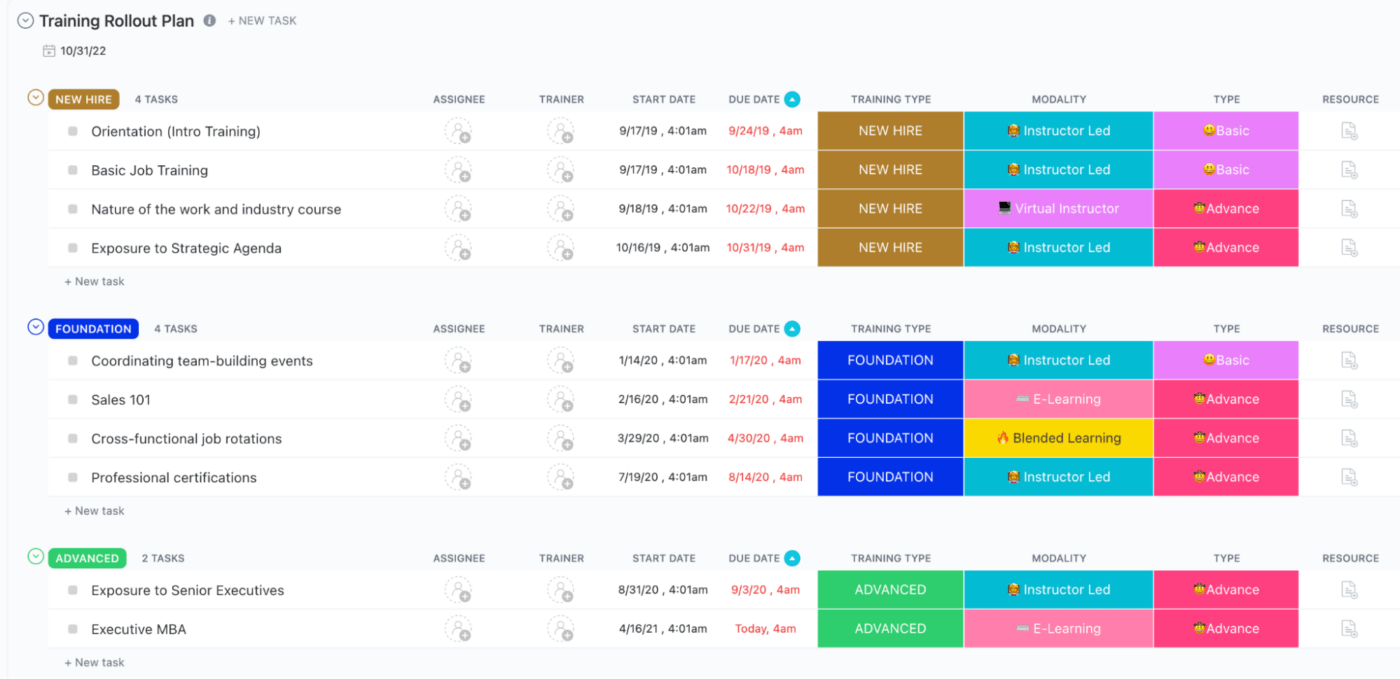
Trainers and HR leads can use the ClickUp Training Rollout Plan to ensure a smooth and effective implementation of team-training efforts. ⚡️
In addition, foster a continuous learning environment—organize workshops, webinars, or knowledge-sharing sessions where team members can exchange insights and success stories related to CRM usage and processes. This collaborative approach encourages growth and the adoption of best CRM practices.
10. Regularly evaluate and adapt
The success of your CRM strategy relies on continuous evaluation and adjustment. So keep a close eye on your goals and KPIs (with actionable KPI reports) to gauge the impact of your CRM strategy.
Look at customer engagement, conversion rates, and customer satisfaction scores to understand how well your strategy is working. You should also gather feedback from your team members and customers, identify areas where improvements can be made, and implement changes accordingly. ✔️
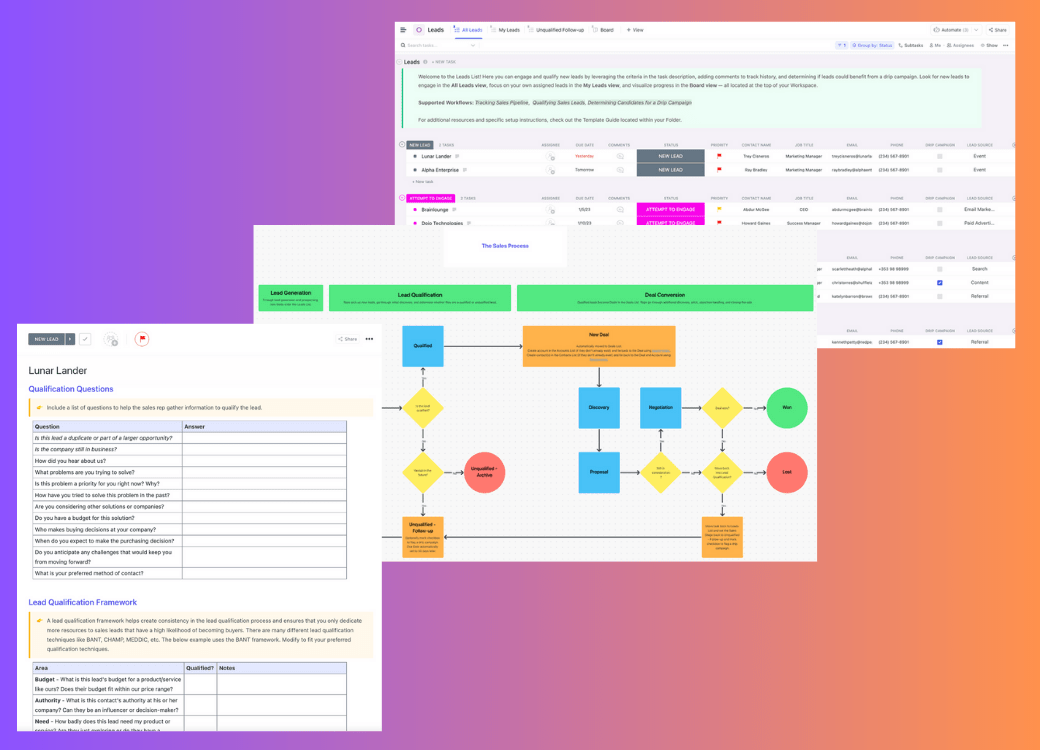
Customer needs and market trends are constantly evolving, so it’s important to stay updated and be responsive to these changes. This allows you to make proactive adjustments to your CRM strategy, ensuring it remains relevant and impactful.
Check out these CRM software for service businesses!
Summarize this article for me pleaseStrengthen Customer Relationships and Drive Business Growth With Powerful CRM Strategies
By incorporating these 10 proven and actionable strategies, you can improve team productivity, enhance customer relationships, raise the bottom line, and boost overall profitability in your business.
ClickUp’s CRM feature can help to streamline your workflows internally and externally. From contact management and task automation to analytics and integration capabilities, ClickUp has it all.
Get the ball rolling now with ClickUp’s free plan.


Everything you need to stay organized and get work done.

Recent Articles
ClickUp Custom Fields: How I Built a Connected Property Management System for Vendors and Work Orders 
ClickUp Custom Fields: How I Built a Connected Property Management System for Vendors and Work Orders

Ideal Client Roster: Build & Maintain Your Best Client Base 
Ideal Client Roster: Build & Maintain Your Best Client Base
