

You’re a financial analyst. You’ve just been handed a project to assess. Or maybe you’re a business leader who’s got to put together a project plan. The question at the forefront of your mind is most likely this: will this make money or not?
The answer to that drives your planning and decision-making. But how do you figure out which projects will make you a profit?
Of course, there are many ways to break this down depending on the industry, scale, and scope of the project, but there are some basic rules you can follow to see if your project will give you the returns you think it will.
So, let’s explore how you can maximize project profitability in seven easy steps!
How to Maximize Project Profitability in 7 Easy Steps

 Summarize this article for me please
What Is Project Profitability?
Project profitability measures a project’s financial success. It is calculated by comparing its total revenue to its total costs. It indicates whether a project generates a profit or loss.
Once all your costs, such as labor and materials, are accounted for, you can assess whether a project will provide a positive return on investment (ROI).
👀 Did You Know?
You can calculate project profitability by either absolute profits or profit margins (as a percentage). However, measuring your profits may give you only some of the picture of running your business. You need to see ‘profitability’ to see what percentage of that money you get to keep.
A project’s profitability is calculated as:
- Profit = Total Project Revenue – Direct Costs (Resources, etc) – Other Direct Costs
- Profit Margin = (Actual Profit / Actual Revenue) and can be represented as a percentage by multiplying the answer by 100
For instance, if you wanted to invest and two restaurants were making a pitch for your money, take a look at their numbers.
Restaurant 1, the smaller restaurant, has:
- Revenue: $100,000
- Expenses: $80,000
- Profit: $20,000
Restaurant 2, the bigger restaurant, has:
- Revenue: $500,000
- Expenses: $450,000
- Profit: $50,000
At first glance, Restaurant 2 seems like a better deal with greater profits at $50,000. But dig a little deeper, and you’ll see that Restaurant 1 has a better % profit margin at 20% compared to the 10% return on the dollar for Restaurant 2. More money for you to keep for every dollar you spend. It’s that simple.
Measuring profitability by profit margin rather than in terms of absolute profit is better.
The most common accounting profitability metrics are gross and net profit margins. Gross profit margin looks at a profit after the cost of sales, and net profit margin looks at a profit after accounting for all expenses.
You also want to keep track of your project profitability index (PI) or profit investment ratio. This is a useful indicator of how much value is created per unit of your investment.
The project profitability index formula is the ratio between the present value of future expected cash flows and your initial investment. Generally speaking, a PI > 1 indicates a safe investment, but < 1 suggests you may have something to worry about.
Summarize this article for me pleaseFactors Affecting Project Profitability
Now that you understand project profitability and how to measure it, there are some things to watch for that can impact profitability:
- Clear objectives and scope: Well-defined goals and scope prevent cost overruns, delays, and resource inefficiencies
- Rigorous cost control: Accurate budgeting and effective cost control measures are essential. Implement regular cost tracking and reporting to identify potential cost overruns early
- Prudent cash flow management: Timely revenue recognition and healthy cash flow ensure financial stability. Monitor cash inflows and outflows closely to ensure timely payments and avoid cash shortages
- Optimal resource allocation: Efficient utilization of resources maximizes productivity and minimizes costs. Monitor resource utilization and adjust as needed to avoid overallocation or underutilization
- Adherence to project timeline: Meeting deadlines avoids cost escalation and revenue loss. Use project management tools to track progress and identify potential delays
- Realistic financial projections: Accurate revenue forecasts and conservative cost estimates are crucial. Develop realistic financial models to assess the project’s profitability
- Proactive risk management: Anticipate and mitigate risks to protect profitability. Establish a risk management plan and regularly monitor and assess risks
- Market awareness: Stay informed about industry trends, market demand, and competition. Conduct market research to identify new opportunities and potential threats
- Strong stakeholder relationships: Effective communication and engagement foster project success and future opportunities. Develop effective communication channels to keep stakeholders informed and engaged
Summarize this article for me pleaseMaximize Project Profitability in 7 Easy Steps
Every project needs key metrics like scope, operating costs, budget, timelines, resource use, and more to be managed consistently and maintain project profitability.
And the best way to do that is to use project management software such as ClickUp.
ClickUp’s Project Management Software can help you optimize project performance and enhance profitability by providing a centralized platform for planning, progress tracking, budgeting, and collaboration.
Now let’s explore the seven steps you can follow to maximize your project profitability, conveniently using ClickUp’s features and templates:
Step 1: Define clear project objectives
The project will likely stay on budget and schedule and meet stakeholder expectations when objectives and scope are well-defined.
Here’s how you can set clear project objectives:
- Set Specific, Measurable, Achievable, Relevant, and Time-bound (SMART) goals. For instance, instead of aiming to “improve productivity,” set a SMART goal to “increase production output by 10% within six months without increasing costs”
- Define project deliverables and establish clear scope boundaries. For project managers, tamping down on costs means being clear about the project’s scope. Stay on track by creating a scope statement with a list of tasks, resources, and exclusions
- Identify key performance indicators (KPIs). Select KPIs that align with project objectives, such as cost variance, timeliness, and quality standards. Your project profitability analysis should regularly review KPIs related to cost per deliverable, ROI, and efficiency metrics
- Ensure all your stakeholders understand the project objectives and scope. Have alignment meetings with stakeholders to review project goals, expectations, and scope boundaries regularly
Step 2: Develop a comprehensive budget
A well-structured budget helps you manage project costs and can boost project profitability. Plan for expenses, track costs, and make adjustments through the project lifecycle.
Here’s how to build a robust budget to protect project profitability:
- Effective cash flow management: Ensure consistent invoicing to maintain cash flow and track client payments
- Detailed cost estimation: Identify all your cost categories while assessing project profitability. You’ll have to consider both direct project costs and indirect costs here. Make a contingency plan and keep a percentage of the budget (often 5-10% of costs, depending on project risk) for unexpected costs and risks
- Regular budget reviews: Once you’ve created a budget, schedule regular budget reviews that are aligned with project milestones or at monthly intervals
But, doing a comprehensive budget like this needn’t be daunting. You can use the ClickUp Budgeted Project Management Template to make this easier.
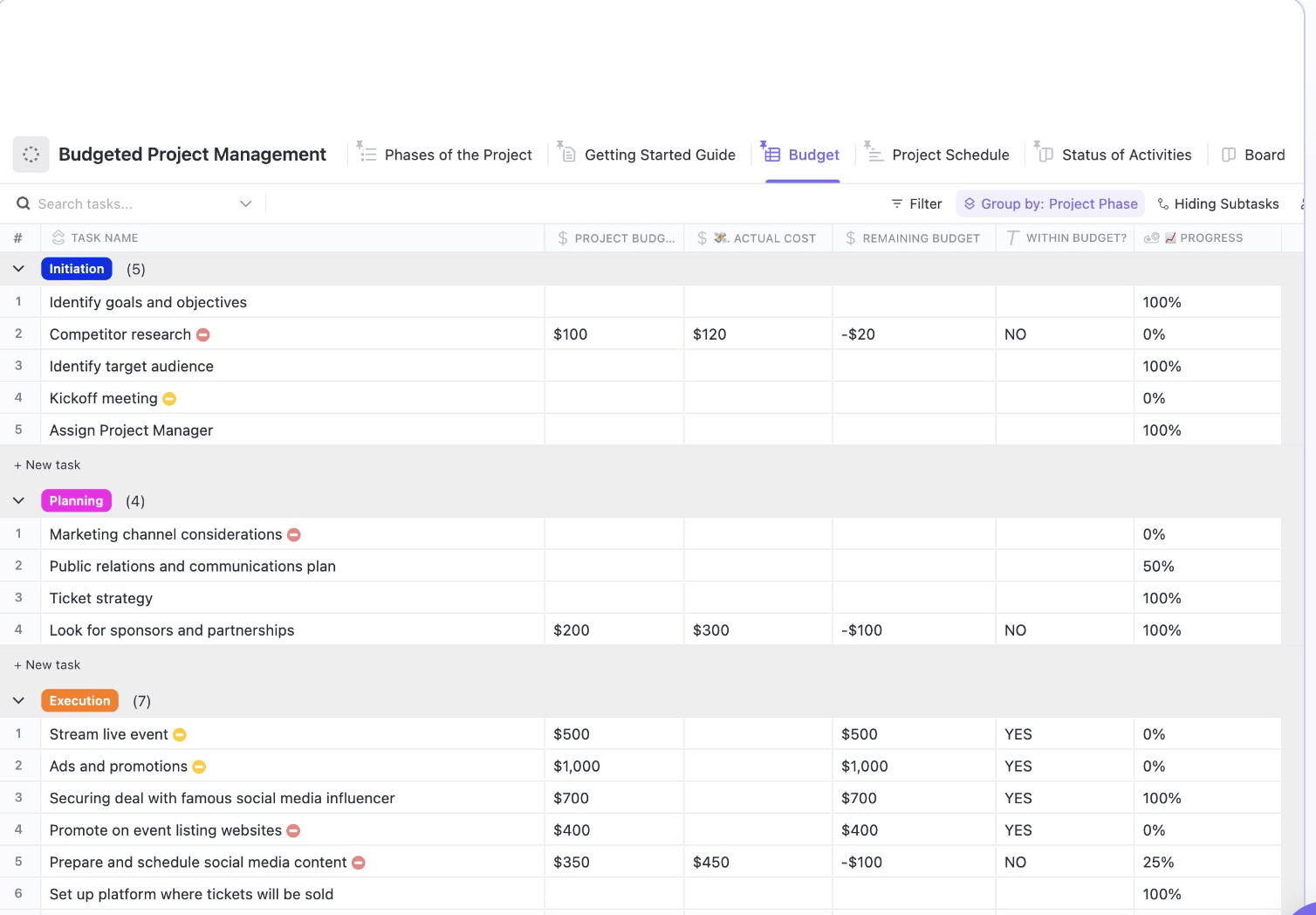
This intuitive template is designed to simplify project management, even for beginners. With its user-friendly interface and powerful features, you can effortlessly:
- Visualize your project: Gain a clear overview of your project’s timeline, budget, and key milestones
- Track costs and performance: Monitor expenses, measure profitability, and identify areas for cost savings
- Anticipate risks: Proactively identify and mitigate potential risks to ensure project success
- Customize your view: Access the specific information you need with Custom Views in ClickUp like ‘Budget,’ ‘Project Schedule,’ ‘Phases,’ and ‘Status’
- Stay informed: Track project progress, remaining budget, and phase status with Custom Fields in ClickUp
- Enhance productivity: Utilize built-in features like time tracking, employee utilization, and tagging to optimize resource allocation and boost efficiency
Whether you’re managing small-scale or complex projects, this template provides the right tools to stay organized, efficient, and profitable.
Step 3: Implement effective resource allocation
To run a profitable project, you must be extra cautious about where you’re putting your resources.
A few common-sense steps to improve project efficiency include:
- Match resources to the task. Ensure that the right people are working on the right things, and you’ll see lower costs and higher morale
- Optimize resource allocation. Balance workloads carefully to distribute tasks evenly among the team members to avoid burnout
- Keep your best resources for critical tasks to maximize their impact, helping efficiently complete important deliverables
- Track project time and effort. Monitor billable hours, identify bottlenecks, and take corrective action where needed
ClickUp’s Resource Allocation Template can help you effectively manage your human and material resources.

This powerful tool allows you to:
- Visualize resource availability: Gain real-time insights into the capacity of your team and materials
- Optimize resource use: Identify underutilized resources and reallocate them to high-priority tasks
- Efficiently allocate resources: Assign the right resources to the right projects at the right time
Whether managing a construction site, a software development team, or any other project-based organization, ClickUp’s Resource Allocation Template is your go-to solution for simplified resource management.
Also Read: 10 Free Cost-Benefit Analysis Templates
Step 4: Monitor project progress regularly
One thing that often gets lost in the effort to enhance project profitability is conducting regular check-ins and tracking project progress.
Here are a few things you can do to monitor progress systematically so that you get your profitability metrics in order:
- Regular check-ins: Schedule frequent meetings with team members to discuss project status, identify potential roadblocks, and adjust plans as needed
- Use project management tools: Leverage project management software to track tasks, deadlines, and resource allocation. These tools provide valuable insights into project progress and help identify potential issues
- Conduct progress reviews: Hold regular progress review meetings with stakeholders to assess project performance, discuss any deviations from the plan, and make necessary adjustments
- Use financial tracking: Monitor project budgets, expenses, and revenue to ensure financial viability
- Implement a change management process: Have a system to evaluate and approve project scope, budget, or timeline changes. This helps minimize unexpected costs and delays
ClickUp Goals can help you track project progress and ensure alignment with overall objectives.

Here’s how:
- Break down tasks: Divide larger goals into smaller, actionable ClickUp Tasks to improve focus and accountability
- Organize goals: Group related goals into folders to maintain a clear and structured overview of your project
- Set priorities: Prioritize goals based on their importance and impact
- Link tasks: Connect tasks directly to their corresponding goals
- Visualize progress: Monitor progress visually with progress bars that show the percentage of completion
- Track key metrics: Use metrics like task completion rates, time spent, and budget use to evaluate performance
- Trigger notifications: Set up automated notifications to alert team members of upcoming deadlines and important updates
💡 Pro Tip: Use the ClickUp Project Progress Report Template to create a snapshot of your project’s progress, track tasks, measure KPIs (Key Performance Indicators) in real time, and communicate project overviews with stakeholders and team members.
Step 5: Foster strong client relationships
The easiest way to lose stakeholder confidence in your project management capabilities is by bringing them in only when there’s a problem. Effective communication is key to client retention and, eventually, project profitability.
Here are the key things to keep in mind:
- Regular updates: Keep your clients informed about project progress, challenges, and milestones with agreed-upon times for project reports and meetings
- Beat the bar: Deliver high-quality work that beats expectations and meets project deliverables on time or ahead of schedule
- Build trust: Be transparent about project challenges and limitations, follow through on promises and commitments, and respond to client concerns promptly
- Get feedback: Ask clients how you’re doing on project performance and identify areas for improvement
Even these simple indicators of authenticity and trust-building can bring back customers and improve project profitability.
Also Read: How to Use Project Accounting: Must-Know Principles, Processes, and Tips for Project Teams
Step 6: Optimize costs without compromising quality
Understanding how to manage cost risk is one of the best ways to improve your profit margin. Optimizing your costs is a matter of managing your resources prudently.
To ensure you’re making your resources work optimally, implement the following:
- Quality control: Implement regular quality control checks at each phase to catch and correct issues early
- Strategic sourcing: Get competitive bids from multiple vendors to secure the best prices. Build long-term partnerships with reliable suppliers and negotiate bulk or loyalty discounts
- Prioritization of your tasks: Keep your focus on high-impact activities and deliverables so that resources go to tasks that drive project profitability
Step 7: Analyze post-project performance
Analyzing post-project profitability emphasizes lessons learned that can be applied to future projects to improve profitability.
By reviewing financial performance, timeline adherence, quality assurance, risk management, team performance, and client satisfaction, organizations can identify opportunities to enhance project profitability, improve efficiency, and strengthen client relationships.
The ClickUp Project Cost Analysis Template can help you with project profitability analysis by helping you take control of your budget and maximize ROI.

It acts as a powerful tool for:
- Accurate forecasting: Predict future expenses to ensure financial stability
- Real-time tracking: Monitor spending closely to avoid overspending
- Data-driven decisions: Analyze costs across projects and teams to make informed choices
- Continuous improvement: Identify opportunities to reduce costs and improve efficiency
Additionally, by leveraging ClickUp’s Table View, you can streamline your project’s financial tracking.

The Table View lets you structure your project’s financial information into an easy-to-read, spreadsheet-like format. With Custom Fields in Table View, you can track:
- Budgets
- Expenses
- Invoices
- Payment statuses
- ROI calculations (and more)
You can sort and filter this data by priority, due date, or status to quickly pinpoint overdue payments or budget overruns.
Unlike a traditional spreadsheet, Table View in ClickUp allows you to add context to every row. Attach receipts, link to client contracts, or include notes about expenses directly in the task. This eliminates hunting through emails or files for supporting documents.

You can also improve the quality of your financial insights by creating ClickUp Dashboards to display essential metrics like:
- Budget vs. actual costs: Compare planned and actual expenses
- Revenue and profit margins: Track income and profitability
- Burn rate: Monitor the rate at which the project is consuming resources
💡Pro Tip: Use ClickUp’s Formula Fields to calculate the profit/loss for each task or the entire project. Create custom reports to visualize key metrics like budget vs. actual costs, revenue and profit margins, and burn rate.
Summarize this article for me pleaseCommon Pitfalls to Avoid while Maximizing Project Profitability
Maximizing project profitability is a tightrope act that requires strategic foresight, meticulous planning, and constant monitoring. Here are common pitfalls that can derail profitability and actionable solutions to avoid them:
1. Lack of clear objectives
Why it hurts:
Without well-defined, measurable goals, projects risk drifting off course, consuming unnecessary time and resources.
Solution:
- Define SMART objectives: Use Specific, Measurable, Achievable, Relevant, and Time-bound goals to create a roadmap
- Align goals with stakeholders: Hold kickoff meetings to align the project scope with client and team expectations
- Track progress: Use tools like ClickUp’s Goals feature to monitor milestones in real time
2. Poor planning and scheduling
Why it hurts:
Haphazard planning leads to missed deadlines, resource bottlenecks, and budget overruns.
Solution:
- Adopt detailed project plans: Use Timeline views or Gantt charts in ClickUp to map tasks and dependencies
- Incorporate buffers: Plan for contingencies to address unexpected delays
- Automate scheduling: Rely on ClickUp Automations to auto-adjust timelines when tasks are delayed

3. Inaccurate cost estimation
Why it hurts:
Underestimated budgets create cash flow problems and erode profitability.
Solution:
- Perform cost-benefit analysis: Break down all potential costs, including hidden ones, such as taxes or overtime
- Use historical data: Learn from similar projects to set realistic budgets
- Monitor costs in real time: Employ financial tracking tools like ClickUp’s Table View to stay on top of budgets
4. Inefficient resource allocation
Why it hurts:
Mismanaged resources lead to overworked teams, idle equipment, and increased costs.
Solution:
- Conduct resource forecasting: Use workload management tools like ClickUp’s Team View to balance team capacity

- Track utilization rates: Regularly assess resource utilization to optimize assignments
- Centralize resource data: Integrate resource scheduling and tracking within your project management tool
5. Scope creep
Why it hurts:
Uncontrolled scope changes lead to spiraling budgets, blown timelines, and frustrated stakeholders.
Solution:
- Set clear change management protocols: Require formal approval for scope adjustments
- Document everything: Maintain a living document of scope agreements using centralized ClickUp Docs

- Use templates: Standardize processes to reduce the likelihood of unexpected changes
6. Inadequate risk management
Why it hurts:
Ignoring potential risks leaves projects vulnerable to unforeseen delays or costs.
Solution:
- Identify risks early: Conduct risk assessments during the planning phase
- Develop mitigation plans: Pair risks with actionable contingency strategies
- Create a risk register: Continuously update and review risks throughout the project
7. Poor communication
Why it hurts:
Miscommunication leads to delays, rework, and disengaged teams.
Solution:
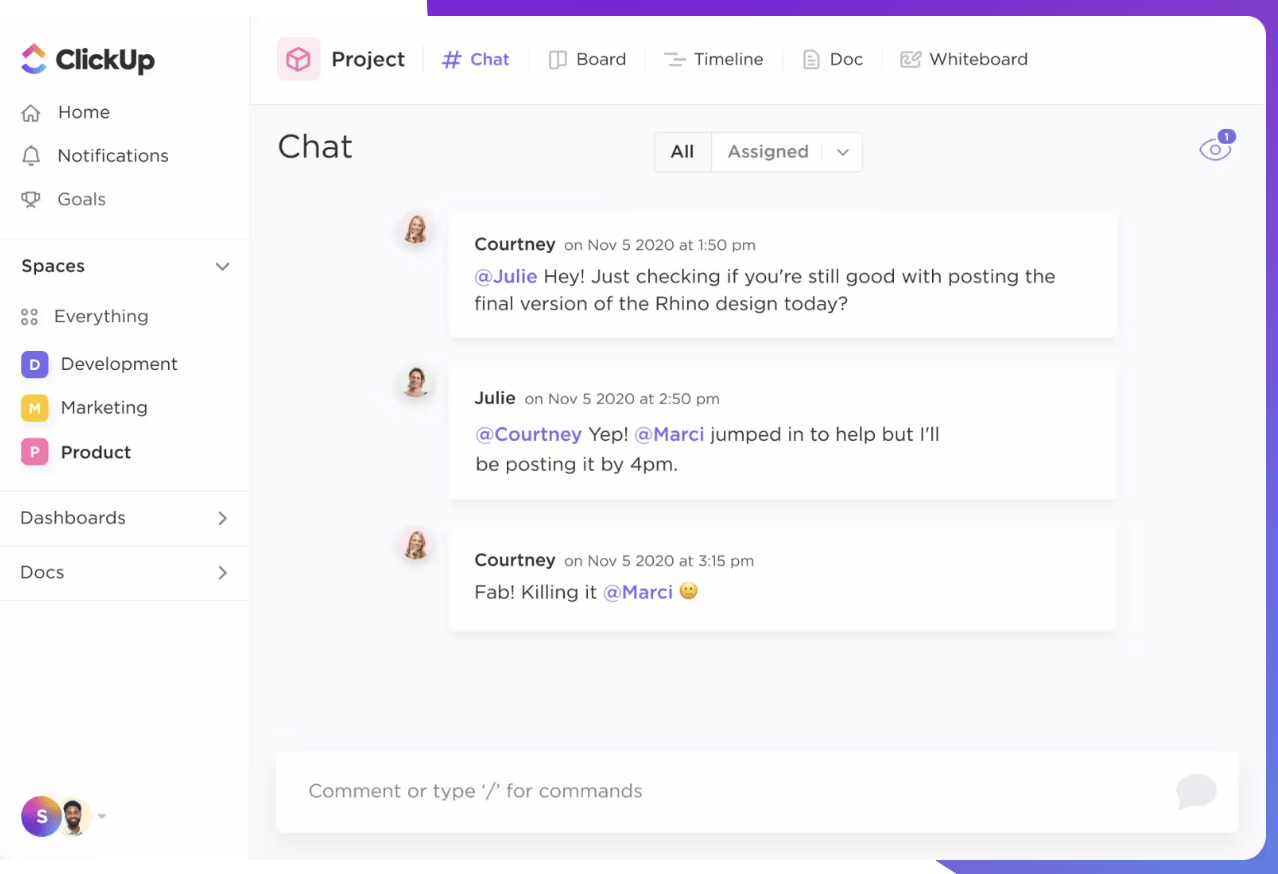
- Establish communication norms: Use shared communication channels for updates (e.g., ClickUp Chat)
- Use visual task assignments: Assign and clarify responsibilities with visual tools like Kanban boards
- Hold regular standups: Daily or weekly syncs keep everyone aligned and informed
8. Lack of post-project analysis
Why it hurts:
Not reviewing project performance leads to repeated mistakes and missed opportunities for improvement.
Solution:
- Conduct retrospectives: Debrief with teams to document successes and failures
- Leverage analytics: Use dashboards to review KPIs like budget adherence, timelines, and ROI
- Create playbooks: Develop process improvements based on post-project reviews to enhance future performance
Think of each pitfall as an opportunity to tighten your processes, strengthen team collaboration, and outpace your competition. When you combine meticulous planning with actionable insights and the right tools, profitability isn’t just possible—it’s predictable.
Summarize this article for me pleaseGetting Your Projects On The Path to Profitability
Managing projects with precision today guarantees a competitive edge tomorrow. Businesses can improve their bottom line and maintain a competitive edge by effectively managing costs, optimizing resource allocation, and delivering high-quality projects on time.
With ClickUp, profitability becomes the natural outcome of smarter planning, better resource management, and seamless collaboration. Think of it as your all-in-one project profitability playbook—a tool that tracks progress and actively transforms how your organization delivers value.
Why let inefficiency drain your project profit when smarter solutions are a click away?
Sign up to ClickUp today!


Everything you need to stay organized and get work done.

Recent Articles
How To Set Project Management Goals That Work (With Examples) 
How To Set Project Management Goals That Work (With Examples)
Project Management Calendar: How To Build One That Works 
Project Management Calendar: How To Build One That Works
