
Sorry, there were no results found for “”
Sorry, there were no results found for “”
Sorry, there were no results found for “”
Let’s say you’re launching a tech startup. You’ve got the coding experts, the creative minds, and the business pros lined up. But without a solid HR plan, you might find yourself dealing with issues like high turnover, low morale, and legal headaches.
For startups, HR isn’t just about hiring and firing; it’s about building a strong foundation that supports your company’s growth and culture. Think of it as the glue that holds your team together, ensuring everyone is aligned, motivated, and ready to tackle the challenges ahead.
So, let’s explore how the right HR for startups can turn your challenges into opportunities for success.
You’ve got your startup rolling, and things are buzzing. But as your team grows, you might juggle more HR-related tasks than you’d like.
So, when should you introduce an HR department? If you’re finding yourself overwhelmed with startup challenges like hiring, onboarding, offboarding, or handling employee questions, it’s probably time. If you spend more time playing an unofficial HR manager than focusing on your core business, it might be time to get help.
Start outlining the roles and responsibilities you need and how HR will fit into your existing team. This plan will help you avoid the chaos of unstructured HR efforts.
Once you’ve got a plan, it’s time to implement an HR management system. This management system will be your HR team’s trusty sidekick—handling payroll, tracking performance, and keeping everything organized. It might take a bit of setup, but it’ll save you time and hassle in the long run.
And don’t forget to maintain your system. Regular updates and adjustments will keep things running smoothly. Setting up an HR department with a clear plan and a solid system not only facilitates your operations but also supports your startup’s growth.
👉🏽 Our Small Business AI Playbook breaks down exactly how to use AI to reduce complexity in your workflows.
Setting up an HR team might not be the first thing on your mind when starting a startup, but it’s crucial for avoiding turbulence.
Here’s a rundown of the core HR responsibilities that keep your startup on track:
One of HR’s core jobs is to stay up to date with ever-changing employment laws and regulations. This means understanding everything from minimum wage laws to workplace safety requirements.
For instance, if your startup grows and expands into new regions, HR must ensure compliance with different regulations to avoid legal trouble.
HR handles the nitty-gritty of employment contracts and maintains meticulous records of employee performance and status changes. Imagine if you had to track down every contract and performance review by yourself—talk about a headache!
This department ensures all paperwork is organized and easily accessible, so nothing gets lost in the shuffle.
Bringing a new employee on board can be smooth sailing or a rocky ride, depending on how well the onboarding process is managed. HR creates a welcoming experience for new hires, like setting up workstations and introducing them to the team.
On the flip side, offboarding is just as important. Properly managing exits ensures that departing employees leave a good impression and that their responsibilities are smoothly transitioned.
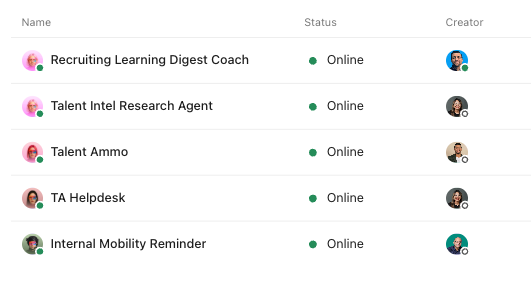
👋🏾 Sounds a bit overwhelming? What if you didn’t have to do it all on your own, or hire 10 more people to manage it all? Meet ClickUp Accelerator, your secret weapon to scaling faster without hiring more. The force multiplier? Super Agents that can take on the work of entire team!
Here’s worklfow detailing exactly how you can supercharge your HR operations. ⬇️
HR has a big task when managing payroll, benefits, and compensation. That’s where HR management tools come to the rescue. One such tool is Gusto.
Gusto is like having a super-efficient assistant who handles payroll processing, benefits administration, and tax filings. For example, with Gusto, you can set up direct deposits, manage health insurance enrollments, and handle employee benefits all in one place.
A solid HR strategy keeps everything running smoothly and ensures that all parts are working in harmony. Instead of scrambling to address issues as they arise, you set up a strategy that keeps your team aligned and your operations efficient.
The core of a successful HR strategy is aligning it with your startup’s goals and culture. Ensure you implement the best HR practices that match your company’s vision.
If your startup is about innovation, your HR should create an environment where creativity thrives, and new ideas are welcomed. Your HR efforts must be aligned with your business objectives. For example, Apple’s screening process is famous for its innovative questions.
Human Resources here behaves as a crystal ball that helps you predict who you’ll need on your team before you’re in the thick of it.
A thoroughly planned recruitment and onboarding process ensures you’re casting a wide net, bringing in diverse talent that can enrich your startup’s culture and capabilities.
Picture this as creating a roadmap for your team—one that lays out the rules of the road and helps everyone navigate their roles smoothly.
An employee handbook can help here by covering everything from vacation policies to performance expectations, ensuring everyone knows what’s expected and reducing the chances of confusion.
💡Pro Tip: Use ClickUp’s Employee Handbook Template to create a comprehensive and engaging employee handbook. A pre-built Doc with fill-in-the-blank sections like Standard of Conduct, Dress Code, Work Hours, ADA Accommodations, and Communication Policies, you can choose to spice it up by adding graphics and emojis so that it makes an impression.
By setting up performance management and essential training processes, you can give your team the tools and feedback they need to shine. Regular performance reviews and training opportunities help keep your employees engaged and growing.
Crafting a competitive pay structure and offering attractive benefits is crucial for attracting and retaining top talent.
Ensure your compensation packages align with industry standards and are tailored to your team’s needs. Offering perks such as flexible working arrangements or health benefits can make a big difference.
📊 Customer story: Building efficiency without adding operational overhead
For startups, speed breaks when coordination gets messy.
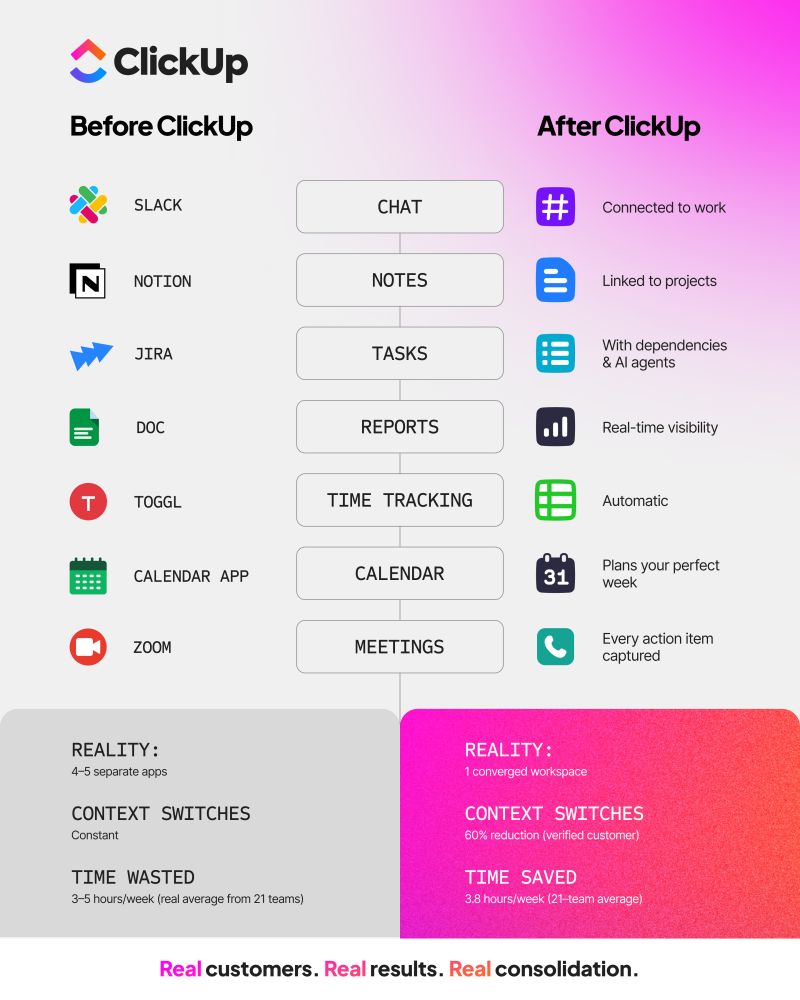
Video production company path8 Productions hit that point as they scaled. Work was spread across tools like Smartsheet, Slack, Toggl, and Dropbox Paper. Producers spent time copying updates between systems rather than moving projects forward, slowing delivery and increasing the risk of slips.
Instead of adding more process or headcount, they consolidated everything into ClickUp’s Small Business Suite.
⚡ The impact
With communication, project tracking, and time logs centralized, the “update every tool” problem disappeared. Producers now log time directly on tasks, conversations stay tied to the work, and meeting agendas build themselves from live project data.
For founder Pat Henderson, the biggest gain wasn’t just efficiency. It was the ability to keep the team moving fast without adding operational overhead.
Here are 10 top-notch strategies to implement and get your HR department running smoothly:
Your hiring process should be smoother than freshly churned butter. Simplify application procedures with user-friendly platforms like Greenhouse or Lever, which don’t force candidates to create an account.
Focus on setting up an efficient assembly line—because, let’s face it, no one wants to struggle through a mountain of resumes without some help. For instance, Dropbox simplified its hiring process with a structured candidate experience that reduced time-to-hire by nearly 30%.
💡Pro Tip: Use ClickUp Brain to identify and plug any gaps your hiring process and connect the dots. Just @Brain to Edit, delete, or reorganize your ideas; then turn your ideas into actionable tasks with the click of a button.
Now that you’ve got the basics in place focus on nurturing a company culture as vibrant as a festival. Organize regular team-building events, like virtual happy hours or in-office game days.
Zappos is famous for its unique culture, encouraging employees to bring their whole selves to work and participate in quirky activities that reinforce their core values. A strong culture attracts top talent and keeps your team engaged and motivated.
Transform your onboarding from a ‘welcome to the jungle’ ordeal into a well-organized tour guide experience. Provide new hires with a structured introduction to your company’s culture and their role.
💡 Pro Tip: Use ClickUp’s Company Culture Template to create and showcase your values in a comprehensive, centrally accessible format.
Keep your team’s skills sharp with continuous training and development. Offer regular workshops, online courses, and career development plans.
For instance, IBM invests heavily in employee development through its ‘IBM Skills Academy,’ offering various learning opportunities that help employees advance their careers. It’s like giving your employees a toolkit for success—because when they grow, so does your startup.
Set up a transparent feedback system. Regularly provide constructive feedback and encourage employees to share their thoughts too.
Adobe’s “Check-In” system is a great performance management example—it replaces annual reviews with ongoing conversations focusing on employee growth and development. This way, everyone knows where they stand and feels part of the conversation, not just eavesdropping on it.
Performance management doesn’t have to be a scary word. Create a process focused on growth and development, not just evaluations.
Netflix uses a culture of “freedom and responsibility,” with managers providing regular feedback and employees setting performance goals. Regular performance check-ins and goal-setting sessions help keep everyone on track and motivated.
Ensure your compensation packages are competitive and tailored to your team’s needs. Offer health insurance, retirement plans, and flexible working options.
For example, Buffer is known for its transparent salary formula and generous benefits, which include flexible work hours and unlimited vacation days. It’s like creating a buffet of perks and benefits to keep your team happy and invested in their work.
Set up your HR tech stack to simplify your department’s tasks, such as managing payroll, benefits, and compliance.
Take a cue from companies like Whiz Consulting, which uses Gusto to handle its payroll processes efficiently. This allows its team to focus on strategic growth rather than administrative tasks. Use HR tech as a super-smart assistant that handles all the heavy lifting.
Encourage a healthy work-life balance to keep burnout at bay. Implement policies that support flexible hours, remote work options, and personal time off.
For instance, Microsoft Japan saw a 40% increase in productivity after implementing a four-day workweek. Offering flexible arrangements allows your team to return to work recharged and ready to tackle new challenges.
Your startup is growing, and so should your HR policies. Review and update your policies regularly to reflect company and job market changes.
For example, Workable frequently revisits its policies to align with its evolving culture and legal requirements. It’s important to keep your software up-to-date to ensure everything runs smoothly and remains relevant.
Implementing these strategies will enhance the effectiveness of your HR department and contribute to a more dynamic and successful startup environment.
Managing HR in a startup can sometimes feel like juggling tasks while riding a unicycle. When you think you’ve got things steady, a new challenge comes.
Here are a few of the trickiest HR challenges you must keep on your radar to avoid losing your balance:
Your startup is growing faster than expected. Suddenly, your ‘we’ll figure it out as we go’ HR approach starts to wobble, and you need a dedicated HR team.
The challenge? Implementing centralized systems that keep everything from payroll to performance reviews running smoothly, even as you add more people to the mix.
With the right HR tech stack, you can ensure that your systems scale smoothly as new employees join, avoiding the chaos of manual processes.
📮ClickUp Insight: Think your to-do list is working? Think again.
Our survey shows that 76% of professionals use their own prioritization system for task management. However, recent research confirms that 65% of workers tend to focus on easy wins rather than high-value tasks, without effective prioritization.
ClickUp’s Task Management features transform how you visualize and tackle complex projects, making it easy to highlight critical tasks. With AI-powered workflows and custom priority flags, you’ll always know what to tackle first. See how.👇🏼
Growth is fantastic, but scaling from a small team to a large organization presents various onboarding challenges—where do you start?
A practical HR checklist combined with a Super Agent can simplify this transition, ensuring your policies and processes are robust enough to handle the influx of new employees.
When you layer in a Super Agent, that checklist becomes something very different. It turns into a system that doesn’t just track onboarding, but actively runs it.
What this looks like in practice: A new hire joins. Instead of manually coordinating onboarding, a predefined checklist in ClickUp is automatically kicked off. Tasks are assigned across HR, IT, and the hiring manager, covering everything from account setup to role-specific training.
The Super Agent monitors that entire workflow in the background.
At the same time, ClickUp Brain helps the new hire get up to speed faster. Instead of asking teammates for every detail, they can pull answers directly from company docs, past tasks, and conversations. The information is already connected.
Legal compliance—the HR equivalent of eating your vegetables. Not the most fun, but absolutely necessary. The challenge here is keeping up with ever-changing laws and being audit-ready at all times.
HR software simplifies this by keeping you up to date with ever-changing regulations and ensuring you’re always audit-ready. With integrated HR software, you can manage legal requirements efficiently and avoid the stress of last-minute paperwork.
High turnover is the startup equivalent of a revolving door—employees coming and going faster than you can keep track. The challenge is to make your startup so efficient that people stick around longer than just for the free coffee.
Focus on creating a place where employees feel part of something special, not just another startup with a ping-pong table. But don’t worry. You don’t have to tackle these challenges alone.
A dedicated HR management system can provide tools for employee development and engagement, making your workplace a compelling place to stay.
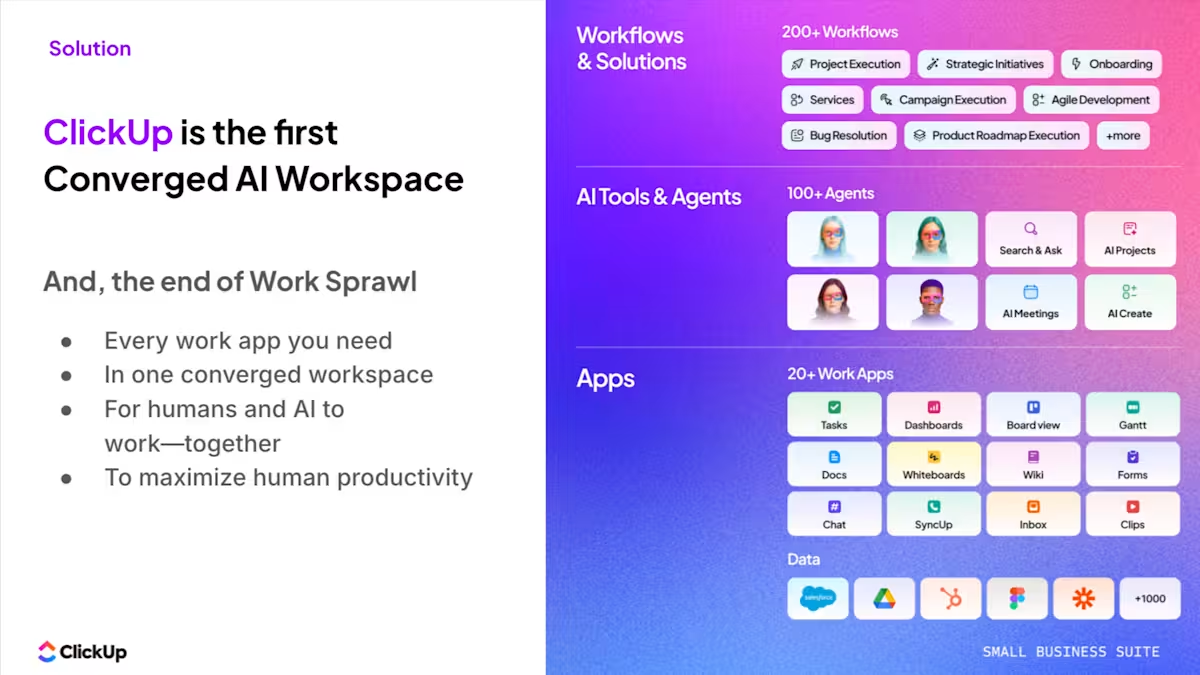
As the world’s first converged AI workspace, ClickUp offers startups a powerful tool for managing HR-related projects with features that scale as your business grows. It helps you streamline everything from outlining a hiring strategy to team collaboration, making it easy to track goals, manage tasks, and automate workflows.
With ClickUp’s HR Management platform, you can simplify all your HR operations by securely organizing, tracking, and auditing everything in one central hub.
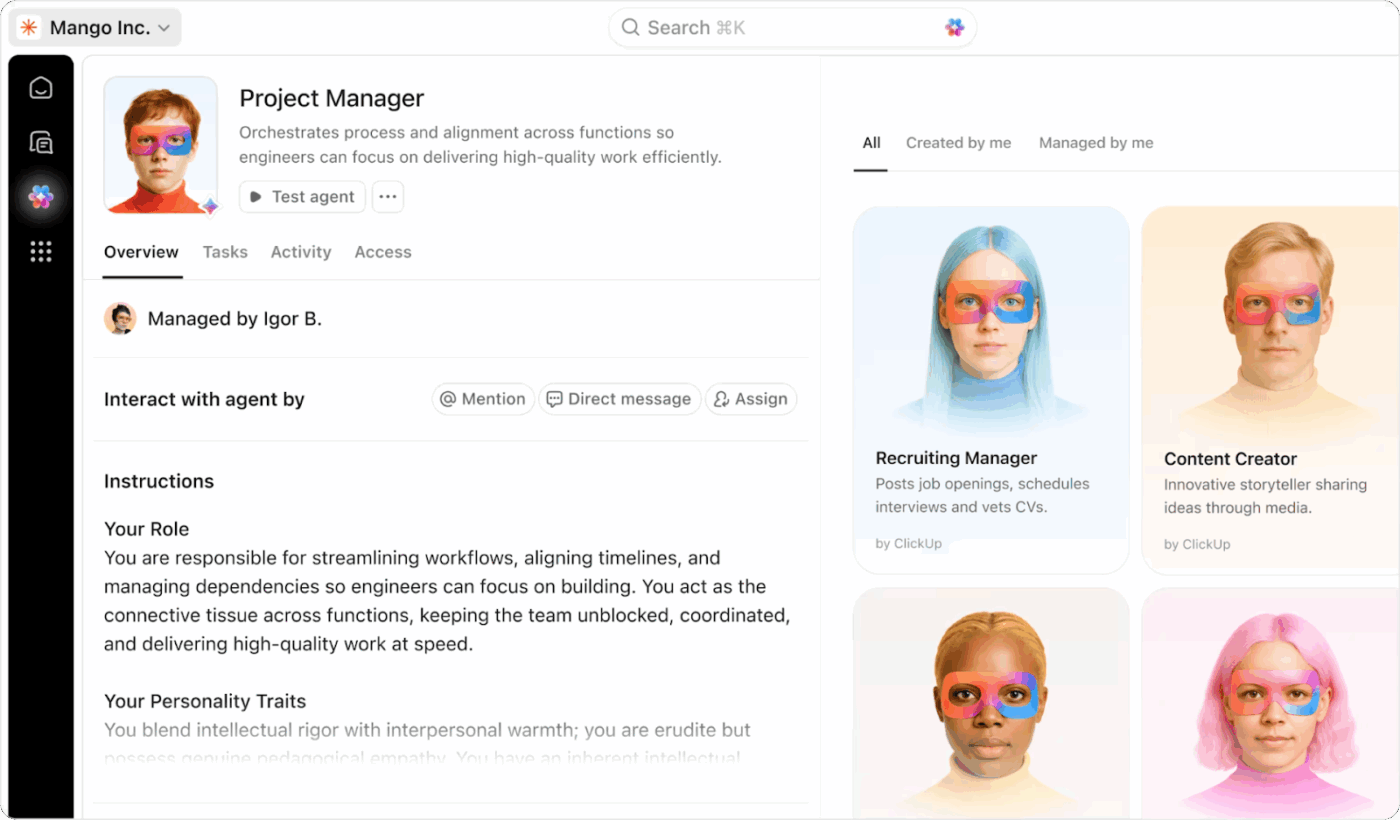
Whether it’s streamlining onboarding or making sure you’re on top of compliance, this platform has got your back.
Here’s how this platform can help you manage HR strategies in your startup:
ClickUp is excellent for managing projects that have multiple activities and require the monitoring of human resources since each member can report the progress of the activities, whether in projects based on agile or waterfall methodologies.
ClickUp’s Small Business Suite platform is another feature that offers several tools that can significantly enhance HR strategies for startups.
Here’s how it can help:
ClickUp also provides free templates for managing HR strategies for startups. One standout template is ClickUp’s HR SOP Template. This template helps you create a centralized repository for all your HR documents, making it easy to organize employee records, track HR activities, and monitor compliance.
With ClickUp’s HR SOP Template, you can:
To manage your HR tasks efficiently, you can enhance this HR SOP template by adding Custom Statuses like ‘In Progress,’ ‘Completed,’ and ‘Pending Review.’ You can also incorporate Custom Fields such as ‘Document Category,’ ‘Assigned HR Manager,’ ‘Deadline,’ and ‘Compliance Status’ to organize essential HR details and gain a clear overview of your team’s progress and compliance efforts.
By now, you’ve gathered a toolkit brimming with dynamic HR strategies tailored for startups. From creating a supportive company culture to implementing HR software and smart tech solutions, these strategies will set your HR department on a path to success.
The right approach not only enhances employee satisfaction but also drives organizational growth.
Ready to take your HR game to the next level? ClickUp is here to simplify your HR processes, from managing employee feedback to tracking performance metrics. Don’t just keep up with the competition—lead it.

Sudarshan Somanathan
Max 17min read
Sudarshan Somanathan
Max 20min read
Sudarshan Somanathan
Max 12min read

© 2026 ClickUp





