

Sorry, there were no results found for “”
Sorry, there were no results found for “”
Sorry, there were no results found for “”
You’ve gone through a rigorous first round of the interview process for your dream job.
Now, you wait for that one call that could change the course of your career. At this point, it’s natural to feel a myriad of emotions, wondering if you should reach out to the hiring or HR manager for an update.
That’s when, to keep the conversation going, you send a follow-up email after the interview.
Following up after an interview reaffirms your interest in the job opportunity and keeps you top-of-mind for the recruiter or hiring manager. Where earlier you’d send a handwritten note, today you just need to drop a quick interview follow-up email.
How to follow up after an interview, you ask? Read on to learn the best practices for crafting the perfect message.
As a bonus, we’ll also share some effective follow-up email templates that you could use, plus some tools to help you do this.
Here are four ways in which an interview follow-up plays a critical role in the outcome of your candidacy.
Interview follow-ups stressing you out? Try ClickUp’s free Job Search Template to stay organized and confident.
Whether it’s a thank-you note after an interview or a letter seeking a status update on the hiring process, proper email etiquette can reinforce your candidacy and demonstrate that you’ll bring the same level of professionalism to the job.
Even if you don’t land the current role, the chance to stay on the company’s radar by letting your profile marinate in their database due to your follow-up can be a big plus. You increase the likelihood of getting considered for other roles that may emerge later.
This is also a great time to explore career map templates to plan for other opportunities.
A well-timed follow-up allows you to address potential areas you think weren’t grasped during the interview.
For instance, let’s say you’re applying for a marketing role, and the team is unsure about your experience in PPC campaigns. A follow-up message outlining your contributions in this area with data-driven results could be the evidence that helps your candidature.
A succinct message to hiring managers or recruiters reiterating your qualifications and enthusiasm can make you memorable, especially when the decision is between you and another candidate.
That extra email can tip the scales in your favor.
Timing is key when sending a follow-up message. Here’s a general timeline for following up after an interview, based on different scenarios:
Send a thank-you email within 24 hours of the interview.
This note should express gratitude for the opportunity, reiterate your interest in the role, and mention a specific topic or moment from the interview to personalize it.
Example:
“Thank you for taking the time to discuss the [Position Name] role with me yesterday. I especially appreciated learning about [specific project or aspect of the role]. It’s exciting to think about contributing to such meaningful work, and I look forward to the possibility of joining your team.”
If the interviewer mentioned when they’d make a decision (e.g., “You’ll hear from us within two weeks”), wait until that period has passed before following up.
Politely inquire about the status of your application and reiterate your interest.
Example:
“I hope this message finds you well. I wanted to follow up regarding the [Position Name] role we discussed on [interview date]. This opportunity continues to interest me, and I wanted to check if there have been any updates regarding the hiring process.”
Wait 5-7 business days after the interview before following up. This gives the employer time to review candidates without seeming impatient.
A follow-up after a final interview should include more emphasis on your enthusiasm for the position and why you believe you’re the right fit.
Example:
“It was a pleasure speaking with you and the team during my final interview for the [Position Name] role. I’m genuinely excited about the opportunity to contribute to [specific company/project]. Please don’t hesitate to reach out if you need any additional information to assist with your decision.”
If it’s been over two weeks since your follow-up and you still haven’t received a response, you can send one last polite message. Keep it brief, professional, and respectful.
Example:
“I wanted to follow up once more regarding the [Position Name] role. I understand that the hiring process can take time, but I wanted to express my continued interest and ask if there are any updates.”
By following up appropriately, you’re reinforcing your candidacy and building a positive impression with potential employers. Just remember to balance persistence with patience—employers value enthusiasm but not pushiness.
Technically, sending a follow-up email is akin to keeping the conversation alive and running.
Don’t include unnecessary attachments like a resume, especially when the recruiter or hiring manager already has your information. This can make you seem disorganized or inattentive to detail. Add information that’s genuinely relevant and valuable to the conversation.
Read more: How to Write a Winning Job Proposal
Reference specific topics you discussed with each of them, like a project they mentioned or a challenge they’re facing.
For example, if you’ve talked about AI writing tools during the interview, mention how you can leverage those to streamline their existing workflow systems and processes. This shows your attention to detail and reemphasizes your genuine interest in the role.
When writing follow-up emails, avoid using language that pressures the hiring manager or recruiter into responding immediately. Also, there is no single best way to follow up after an interview because hiring processes are different for each company and can sometimes take a while. Keep theirs in mind.
❌ The wrong way: “If I don’t hear back by the end of the day, I’ll assume you’re no longer interested”—sets a negative tone
✅ The right way: “I understand the process takes time, and I’m happy to wait for an update when convenient”—shows you respect their timeline
While waiting, you can take online courses or work on a project that enhances your skill set, such as acquainting yourself with new remote interview tips to increase your chances of future candidacy. You can also take this time to learn how to write a job proposal.
Additionally, stay engaged in the job market by reaching out to your professional network for advice or new opportunities. Review what went well in your previous interviews and what you can improve—curate your own interview templates to refer to next.
💡Pro Tip: If you’re waiting for feedback on a marketing role, take a quick online course on platforms like Google Analytics. It shows initiative and keeps you sharp, which you can mention during follow-up to demonstrate your commitment to growth.
For a follow-up to work optimally, timing is everything. Send a thank you note within 24 hours of your interview, but then wait for 3-5 days before sending a follow-up email.
Strike the right balance between persistence and patience.
How do you write an interview follow-up email that is professional, clear, and well-received?
Which words or phrases should you use?
Which tone of voice should you maintain?
Let’s answer all these questions one by one.
Begin with a concise, clear subject line that reflects the purpose of your email and catches the attention of the recruiter or hiring manager.
A simple, professional subject line like ‘Thank you for interviewing me’ or ‘Follow up on interview on [Day/Date]’ works well.
More examples of subject lines for your follow-up email:
💡Pro Tip: If you don’t follow up on the day of your interview, refer to the date or day of the week in the subject line. Hiring managers often hold interviews over several days or weeks, so they’ll appreciate your specificity.
Address the person who interviewed you by name. A personal greeting such as ‘Hi [Interviewer’s Name]’ is appropriate. This shows you paid attention to how they introduced themselves during the interview.
❌ Avoid generic terms of address like ‘To whom it may concern’ or informal ones like ‘Dear.’
Start your email by thanking the interviewer for their time. Express your appreciation for the opportunity to discuss the role, and mention the positive aspects of the conversation or company that stood out to you.
Examples of suitable opening lines:
In the main body, reiterate your interest in the position. Reference something specific from the interview to make it clear that you were engaged in the conversation. For example, mention a project or team dynamic that excited you during the conversations.
Conclude by expressing your eagerness to move forward in the hiring process. Let them know you’re available to provide any additional information or documents if needed.
Indicate you look forward to hearing back from them soon.
Examples of professional closing lines for your follow-up email:
Writing the perfect follow-up email that shows you’re eager to join the organization and the right person for the job requires much thinking.
ClickUp Brain, ClickUp’s built-in AI Writer for Work, helps you give it your best shot.
Whether a thank-you note or a follow-up on your application status, ClickUp Brain writes the copy for you with the right tone and clarity while also checking for spelling in your Docs and tasks—without any plugins or extensions.
ClickUp Brain also acts as an AI Knowledge Manager, giving you instant access to information across all your tasks, Docs, and projects. Need to know when your next follow-up is due? Or perhaps you’re looking for the notes you took during an interview?
Simply ask ClickUp Brain.
💡Pro Tip: After an interview, upload a voice memo or notes into ClickUp and let the AI generate a transcript or summary that highlights important points. Use that to prepare your follow-up communication.
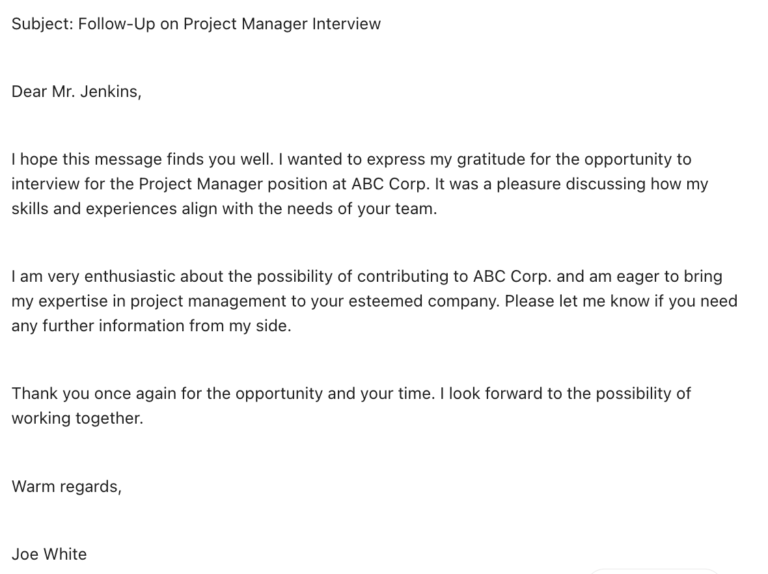
Subject: Excited about [Job Title] – Thanks for calling!
Hi [Interviewer’s Name],
I hope this email finds you well.
I wanted to take a moment to thank you for taking the time to speak with me on [Day/Date] regarding the [Job Title] position at [Company Name]. It was great learning more about the role and how the team operates.
The fact that [specific detail or aspect discussed] is part of the role makes me even more excited about the opportunity. I believe my [mention a relevant skill or experience] will be a great fit for your team.
Please let me know if you need any further information from me as you continue the hiring process.
Thank you once again, and I hope to hear from you soon.
Best regards,
[Full Name]
[Phone Number]
[LinkedIn Profile]
Subject: Thank you for a great meeting
Hi [Interviewer’s Name],
I wanted to thank you for meeting with me in person today. I appreciate the time you took to walk me through the expectations for the [Job Title] role and show me around the office.
It was great to get a sense of the team’s dynamic and energy—it definitely left a strong impression on me.
The project you mentioned, [insert specific details], sounds like a brilliant challenge, and I’m thrilled to bring my [particular skills or qualifications] to your team to help drive success.
You also mentioned there might be another round of interviews or technical assessments. Please feel free to share details as soon as possible, and I’ll get started on them.
Thanks again for your time.
Best regards,
[Full Name]
[Phone Number]
[LinkedIn Profile]
Subject: Reflecting on our final discussion
Hi [Interviewer’s Name],
Thank you and the team for this interview process. The skill assessment was an interesting challenge, and I also enjoyed our in-person meeting.
Overall, the experience has been both insightful and rewarding. I’m impressed with how professional everyone I’ve spoken with has been at each stage.
Now that I’ve completed the final interview, please feel free to reach out if you need additional information, such as my portfolio or other documents. I’m just a message away and happy to provide anything you need.
Thank you, and I look forward to hearing from you soon.
Best regards,
[Full Name]
[Phone Number]
[LinkedIn Profile]
Before you draft that follow-up email, take a moment to reflect on your intentions. If your sole motivation is to land that offer, the email may come off as overly transactional, which will likely do more harm than good.
Instead, focus on creating a thoughtful and constructive message that invites a genuine exchange of ideas.
Highlight a topic or detail from the interview that sparked your interest—perhaps the hiring manager discussed how to use AI in email communication.
✅ Ask thoughtful questions about the role/company and share practical tips.
Your follow-up should balance curiosity and professionalism.
When you’re focused on writing the perfect follow-up email, it can be easy to feel that you must convey a certain image or impression.
Presenting your authentic self during the hiring process can help ensure you’ll end up in a workplace where you feel accepted and empowered.
Similarly, the people you’re reaching out to are also likely trying to build a comfortable, aligned team. The interview offers a feasible platform to determine if your communication styles and values are a good match.
✅ Throughout your job search, stay true to who you are, what you offer, and what you’re looking for, and show up as yourself in every communication.
Ensure you interact with the main point of contact you’ve been in touch with for the job role.
If you feel the need to follow up with someone else, reference your previous interactions with their colleague and gently check for an update.
❌ Avoid aggressively reaching out to multiple people at the company for quick updates.
When you follow up with the recruiter or manager, remember their timeline. If they told you they need two weeks to be ready for the next steps, give them the full two weeks plus a day or two to account for delays before you reach out.
✅ There are exceptions where an earlier follow-up may be appropriate—such as receiving a job offer from another company.
Whether you’re leaning toward accepting the other offer or prioritizing this opportunity, inform the recruiter about the shift in your timeline to help everyone make an informed decision.
Applying for a job is never just about waiting for one opportunity to come through. You’re likely applying to several companies, exploring different roles, and trying to keep everything in order, which can be tedious.
You need a system to follow up strategically. That’s why using a powerful project and task management tool like ClickUp is essential. Let’s examine how it can help.
ClickUp Tasks are the heart of effectively managing your interview follow-up process. As a job seeker, organizing each follow-up precisely can make the difference between a smooth process and one that feels chaotic.
For each interview, create a Task with the interviewer’s name, company, and job title—for example, ‘Follow Up: Marketing Manager at XYZ Corp.’
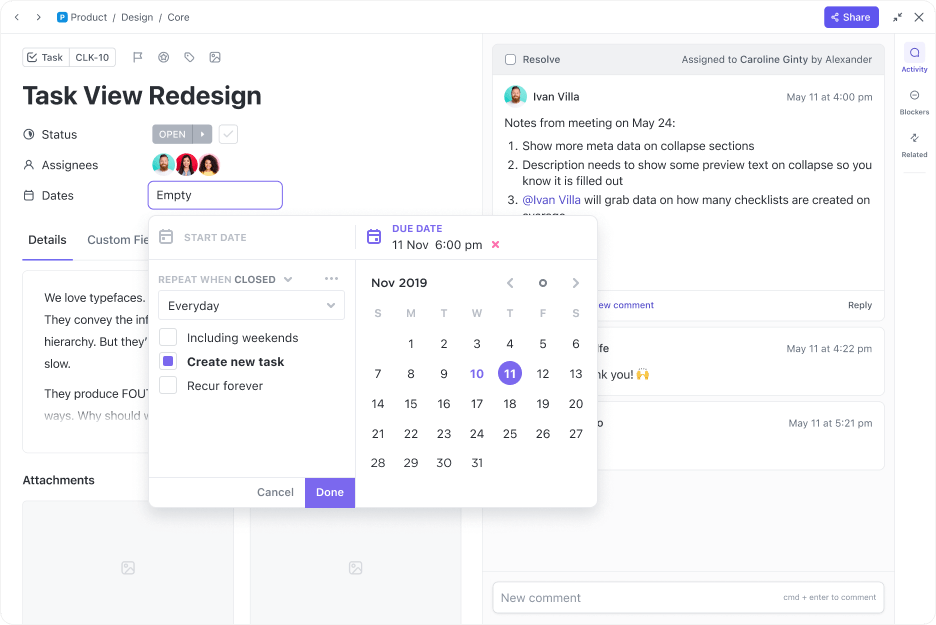
Assign a specific due date for sending a follow-up email, usually within 24-48 hours after the interview, and define a priority level for each Task (e.g., high for important follow-ups).
Add statuses like ‘Follow-Up Needed,’ ‘Email Sent,’ ‘Test Scheduled,’ and ‘Waiting for Response’ to track your candidacy and ensure nothing gets forgotten.
The best part?
With ClickUp Automations, you can set up automation to assign follow-up tasks to yourself after each interview or route them to your recruiter for updates.
For example, trigger a thank-you email 24 hours after each interview or set reminders if a response hasn’t been received within a certain timeframe. Once your follow-up email is sent, the task status can automatically change from ‘Follow-Up Needed’ to ‘Waiting for Response.’
If you’re looking for a dynamic hub to organize your interview notes, follow-up templates, and research, ClickUp Docs won’t disappoint.
After every interview, immediately jot down key points and insights from the conversation in your Doc. This could include the interviewer’s name, questions they asked, and anything you want to mention in your follow-up email.
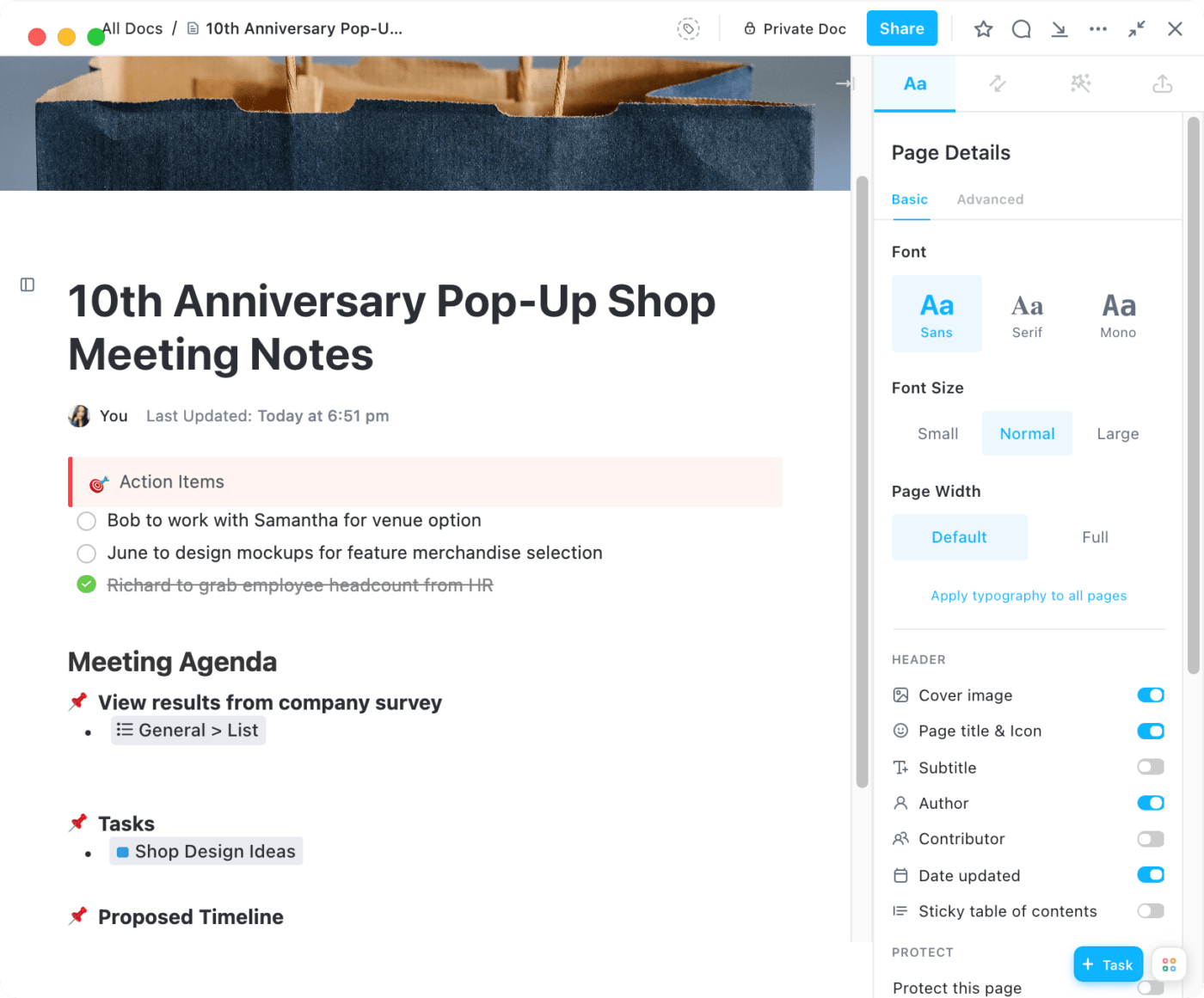
💡Pro Tip: Use the nested pages feature in ClickUp Docs to organize your notes by interview stage (e.g., phone interview, on-site, final round) for clearer progress tracking.
That’s not all.
Use the Job Search Template by ClickUp to simplify your job search. It’s a great tool, especially if juggling multiple applications simultaneously.
Here’s what you can do with it:
This way, everything is in one place, and you won’t have to scramble through your emails to reach out in the right way at the right time.
Hearing crickets even after following up? It’s frustrating, especially when days turn into weeks with no word. Here’s how to handle the radio silence.
Don’t follow up, but send over an article, podcast, or video that matches the company’s interests or something you discussed in the job interview. You could say, “I came across this article and thought of our conversation—it seems relevant to your current projects.”
Try something lighthearted like: “I hope my previous message didn’t disappear into the email black hole! Just wanted to follow up and see if there’s any update on the hiring decision.”
Research something they’ve recently achieved—maybe a public announcement, event, or project they were involved in—and reference it in your follow-up:
“Congrats on [achievement]! I wish you and [organization name] the very best for future growth. And, of course, if you feel I might fit into your plans going forward, I’d love to chat.”
Remember—to master the art of follow-up, you must view it as more than a formality.
Stay genuine, keep your curiosity alive, and use the follow-up email as a chance to reinforce the value you bring. Even if your dream role at a company doesn’t quite work out, you have nothing to lose with a well-crafted follow-up.
In fact, you’re leaving behind an impression that could pay dividends in future opportunities. Patience, persistence, and professionalism are your best-in-class tools.
If you’re looking for an effective way to manage and execute follow-ups, ClickUp has everything you need to organize, schedule, and automate all related tasks.
Sign up for ClickUp for free and get going.
Yes, but do it thoughtfully. After your initial thank-you note, wait at least a week before sending a follow-up. If there’s still no response after another week or two, you can send one more polite follow-up. Any more than that, and you risk coming off as overly persistent, which can backfire.
Typically, it’s best to wait 5-7 business days after the interview to send your first follow-up. This gives the hiring team time to go through candidates and internal discussions. Rushing to follow up too soon can make you seem impatient, but waiting too long may make them think you’re not interested.
If you don’t have the hiring manager’s direct email, check your email threads—sometimes they include that info. In case this isn’t available, contact the recruiter or HR contact who arranged the interview. And if all else fails, send a general follow-up message to the company’s HR representative or a contact email listed on their website.
If they told you they’d get back to you within a certain timeframe and that time has passed, send a polite follow-up. Reference their timeline and ask if there have been any updates. If you still don’t hear back after a reasonable amount of time, it may be a sign they’re moving forward with other candidates.

Sudarshan Somanathan
Max 22min read

Manasi Nair
Max 20min read

Praburam Srinivasan
Max 14min read

© 2026 ClickUp





