






Still downloading templates?
There’s an easier way. Try a free AI Agent in ClickUp that actually does the work for you—set up in minutes, save hours every week.
Sorry, there were no results found for “”
Sorry, there were no results found for “”
Sorry, there were no results found for “”
Your brand is the feeling people get when they interact with your business. That feeling, ideally a mix of trust, admiration, and connection, is what makes a brand relatable and aspirational.
And here’s the thing: 76% of consumers would rather buy from a brand they feel connected to than from its competitor. That connection can fade if you don’t check in on where your brand truly stands.
That is where a comprehensive brand audit comes in. It gives you a clear, honest picture of how your brand is perceived today.
This article will show you how to do a brand audit, what it consists of, and how it can help you create a well-known, beloved brand.
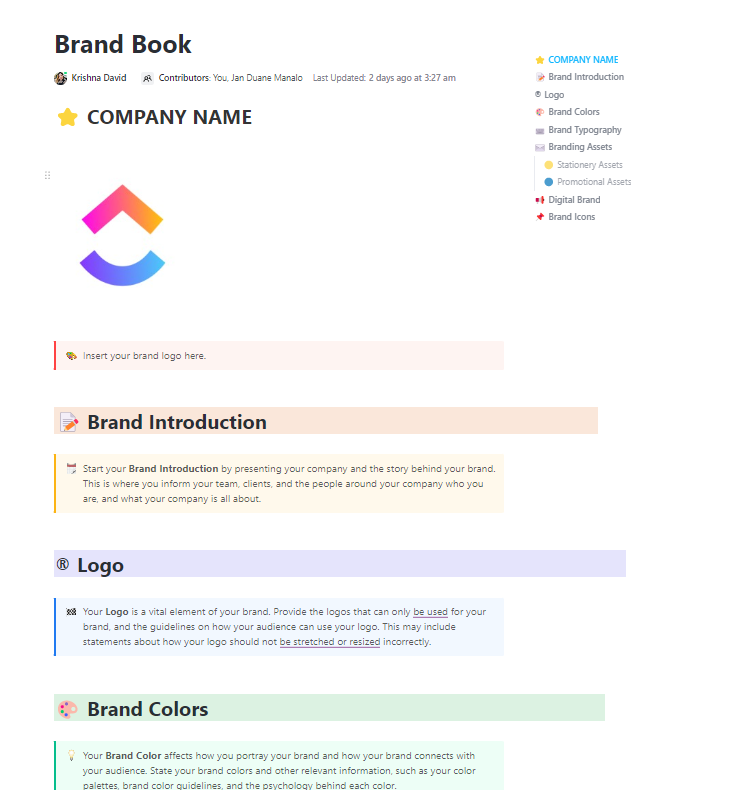
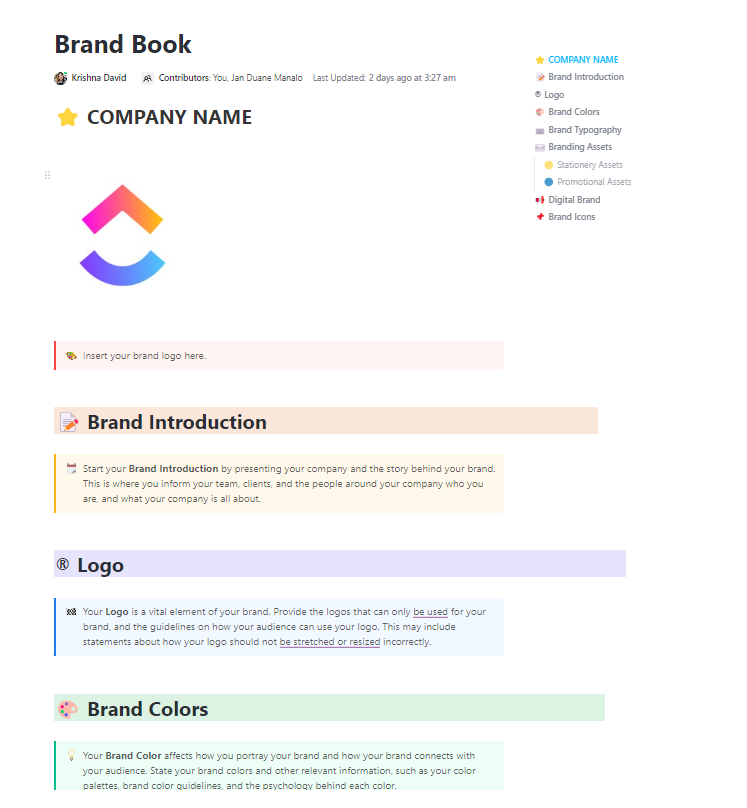
The ClickUp Brand Book Template is a simple way to increase brand awareness and ensure it’s represented consistently everywhere. It helps you organize visual assets, such as logos, fonts, and colors, while outlining your brand’s tone and values for easy reference.
A brand audit is a structured review of your brand identity, customer perception, and market positioning across every touchpoint.
It is like holding up a mirror to your brand to see how it truly appears to the world. It’s a deep dive into everything that shapes your brand identity: from the way you communicate to the way customers experience your products or services.
✅ It matters because it helps you understand whether your current branding matches customer expectations and preferences.
As well as:
📌 Example: In 2021, Burberry made headlines by live-streaming runway shows on Twitch and launching influencer collaborations, signaling a shift toward Gen Z and digital-first audiences. Industry analysts noted this as a response to streetwear trends and changing shopping behaviors; a strategic refresh that stayed true to luxury roots while embracing new platforms.
Inside the company, everyone feels like they know exactly what the brand stands for. The team articulates its values with pride, and the mission statement is prominently displayed on every wall. But step outside and listen to what customers are saying, and it feels like a different story.
That’s when you realize there are really two ways to look at your brand: from the inside and from the outside. This is where internal and external branding assessments (through dedicated brand audits) come in, helping you see both perspectives clearly.
Here’s a quick table explaining the difference between the two:
| Aspect | Internal Branding Audit | External Branding Audit |
| Focus | Examines company culture, brand values, messaging, and alignment with overall business strategy | Reviews how customers, competitors, and the market perceive the brand |
| Data Sources | Employee feedback, company policies, marketing materials, sales data, internal communications | Customer brand awareness surveys, social media analytics, website analytics, competitor analysis |
| Purpose | Ensure the team understands and delivers on the brand promise | Understand brand perception and market positioning |
| Outcome | Stronger internal alignment, improved brand messaging | Improved customer experience, actionable insights for growth |
| Frequency | Typically done during major strategy shifts or brand refreshes | Done periodically to track brand performance in the market |
Most teams start with an internal audit to confirm brand intent, then run an external audit to measure real-world perception.
Steve Forbes can answer this better:
Your brand is the single most important investment you can make in your business.
However, you will quickly find that there are very few valid reasons to avoid conducting a brand audit. It’s one of those rare exercises that always gives more than it takes. Here’s what you can expect from your brand audit:
📮 ClickUp Insight: Teams that struggle with performance often use 15 or more tools, while top-performing teams stay efficient with fewer than 9. What if you didn’t need to switch between tools at all? ClickUp brings everything—tasks, projects, docs, wikis, chat, and calls—into one platform, powered by AI to handle the busywork. Work becomes clearer, collaboration becomes easier, and your team can focus on what truly matters.
Sometimes, you sense unease. Maybe your last campaign didn’t click the way you imagined. Sales talks take longer, and people on social media aren’t as excited as they used to be. Customers describe your product in ways that don’t quite match your vision, and meanwhile, competitors seem to be saying exactly what buyers want to hear.
These are all gentle signs that it’s time to conduct a brand audit.
With brand management, external shifts can be just as telling: Forrester recently shared that 75% of B2B buyers now take longer to make decisions than they did a year ago. This means brands need to adjust how they connect and make sure their message feels personal and relevant.
🚩 So, watch for these quiet signs that it’s time for a brand audit:
Brand audit in one line: Define goals → review internal assets → audit touchpoints → measure perception → analyze competitors → write report → assign actions.
What a brand audit tells you: What your brand promises, what customers experience, and where the gap is.
A brand can feel perfectly fine on the surface while quietly drifting away from what customers truly want. A brand audit helps you pause and dig beneath day-to-day marketing tasks. And here’s how to get started.
Every meaningful brand audit begins with clarity. Before you collect data or review marketing materials, pause and ask, Why are we doing this now?
Perhaps sales have slowed despite increased marketing efforts. Maybe your customer feedback feels inconsistent.
Strong audits define measurable outcomes from the start. You might aim to:
📌 Example: A mid-sized eCommerce brand noticed website analytics showing high traffic but low conversions. They set a brand audit goal to understand if their brand identity and marketing campaigns aligned with customer expectations. Brand awareness KPIs included customer retention rates, sentiment analysis from social media data, and competitor share of voice.
Remember, KPIs often shift depending on your business model.
The HubSpot State of Marketing Report found that B2B brands saw the highest ROI from their website, blog, and SEO efforts, followed by paid social media campaigns and social shopping tools.
Meanwhile, for B2C brands, the top performers were email marketing, paid social content, and content marketing overall.
Here’s a more detailed table that connects business models to top-performing channels and key KPIs to track during a brand audit:
| Business Model | Key KPIs for Brand Audits |
| B2B | Website traffic, SEO rankings, lead generation, paid social conversions, share of voice, brand sentiment, retention rates, NPS |
| B2C | Email engagement, conversion rates, social media interactions, ad ROI, customer lifetime value, repeat purchases, brand recall, online reviews |
| SaaS/Tech | Free trial sign-ups, churn rate, product adoption, inbound lead quality, webinar conversions, CSAT, support feedback |
| Retail/eCommerce | Cart abandonment, average order value, repeat purchase frequency, influencer ROI, marketplace rankings, review ratings, social sentiment |
| Service Agencies/Consulting | Website inquiries, search visibility, lead-to-client conversion, LinkedIn engagement, client satisfaction, referral traffic, retention rates |
However, oftentimes, a brand audit can break down for a boring reason: the work is scattered. Your guidelines live in one doc, stakeholder notes live in another, survey results sit in a form tool, and action items get lost in spreadsheets. That is, work sprawl, which can slow down decisions and make it harder to accurately assess your brand’s current standing.
That’s why ClickUp works well for brand audits. ClickUp helps teams by being a converged AI workspace where team members and external stakeholders can keep audit notes, feedback, tasks, and reporting in one place.
💡 Pro Tip: To keep your brand audit goals tied to real work (and not scattered across notes), you can document them in ClickUp Docs, then turn each goal into action items your team can track.
From there, create ClickUp Tasks for each audit activity (stages such as touchpoint review, survey rollout, and competitor scan), assign owners, and add due dates so that all your brand audit goals can be effectively monitored.
Before you can understand how the world sees your brand, you need to look at how you see yourself. This means gathering the pieces that tell your story from the inside out: your brand guidelines, mission statement, and even the words your employees use when they talk about the company.
These are the roots of your brand, and they quietly shape every customer experience.
🧠 Did You Know: KPMG ran a “Purpose Program,” where employees answered the question, “What does my job mean to me?” Over 42,000 submissions were turned into posters expressing personal purpose statements like “I advance science” or “I help farms grow.” The initiative became a widely cited example of internal brand alignment done right.
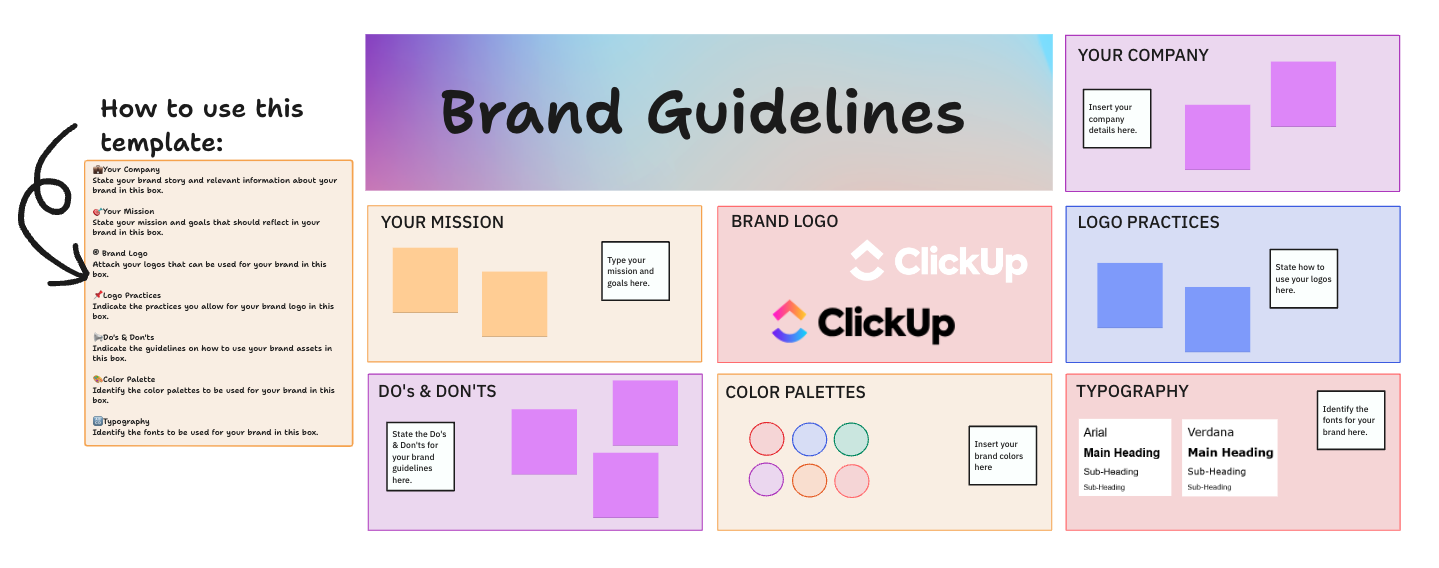
But you’re not alone in figuring all this out. ClickUp’s Brand Guidelines Whiteboard Template makes this process a little easier.
Here’s how it helps you see the whole picture:
📖 Also Read: How to Create a Style Guide for Your Brand?
Bill Gates once said, It’s true!
Your most unhappy customers are your greatest source of learning.
Every place a person comes across your brand tells them something about you: your website, a social media post, an online ad, or even a quick chat with your support team.
Start by stepping into your target customer’s shoes. Imagine the first time they hear about you and what they see when they land on your website. Notice how easy it feels to make a purchase and the kind of help they get afterward.
Each of these moments is a touchpoint. Some might be warm and welcoming, while others may leave them puzzled or frustrated. Both are worth paying attention to.
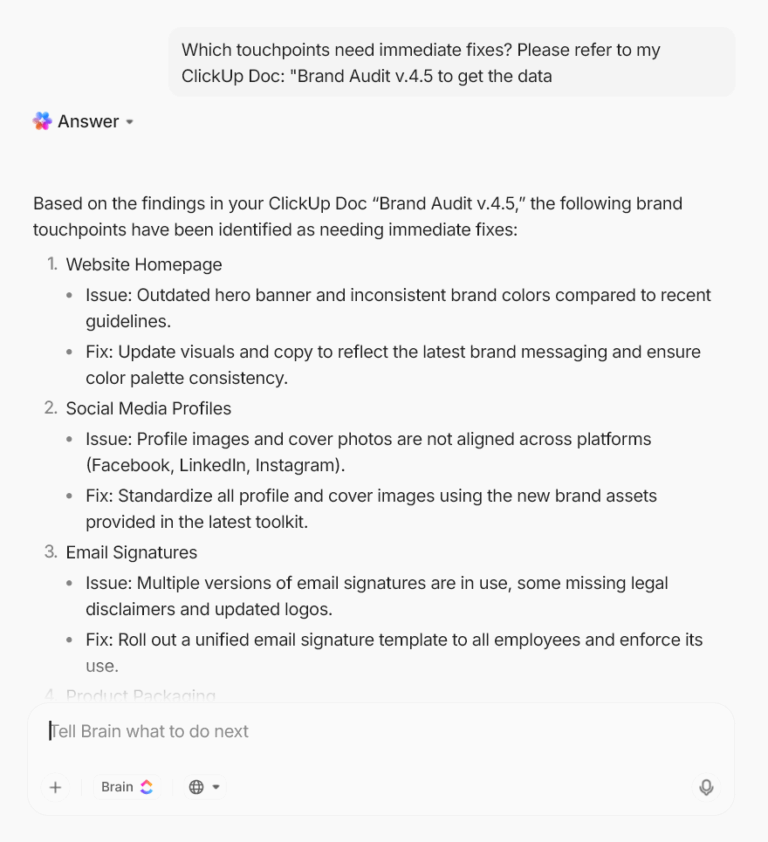
💡 Pro Tip: ClickUp Brain can take hours of brand audit work off your plate by instantly pulling insights from hundreds of survey responses, drafting clear audit reports in Docs, and auto-creating tasks for every needed change.
It even answers real-time questions like “Which touchpoints need immediate fixes?” so you can focus on making better branding decisions instead of getting stuck in data crunching.
To truly understand your brand, you need to hear from the people who experience it every day. Collecting feedback helps you see how customers describe your products, whether they trust your messaging, and what makes them choose you over others.
Surveys, online reviews, and even the tone of social media mentions give you a grounded view of your brand’s strengths and the places where customers wish for more.
With ClickUp Forms, you can collect customer surveys and route feedback straight into your workflow. Each submission can create an automatic task, and you can use ClickUp Automations to assign owners and move feedback to the right stage based on what someone selects in the form
This makes it easy to see patterns and assign follow-up actions.
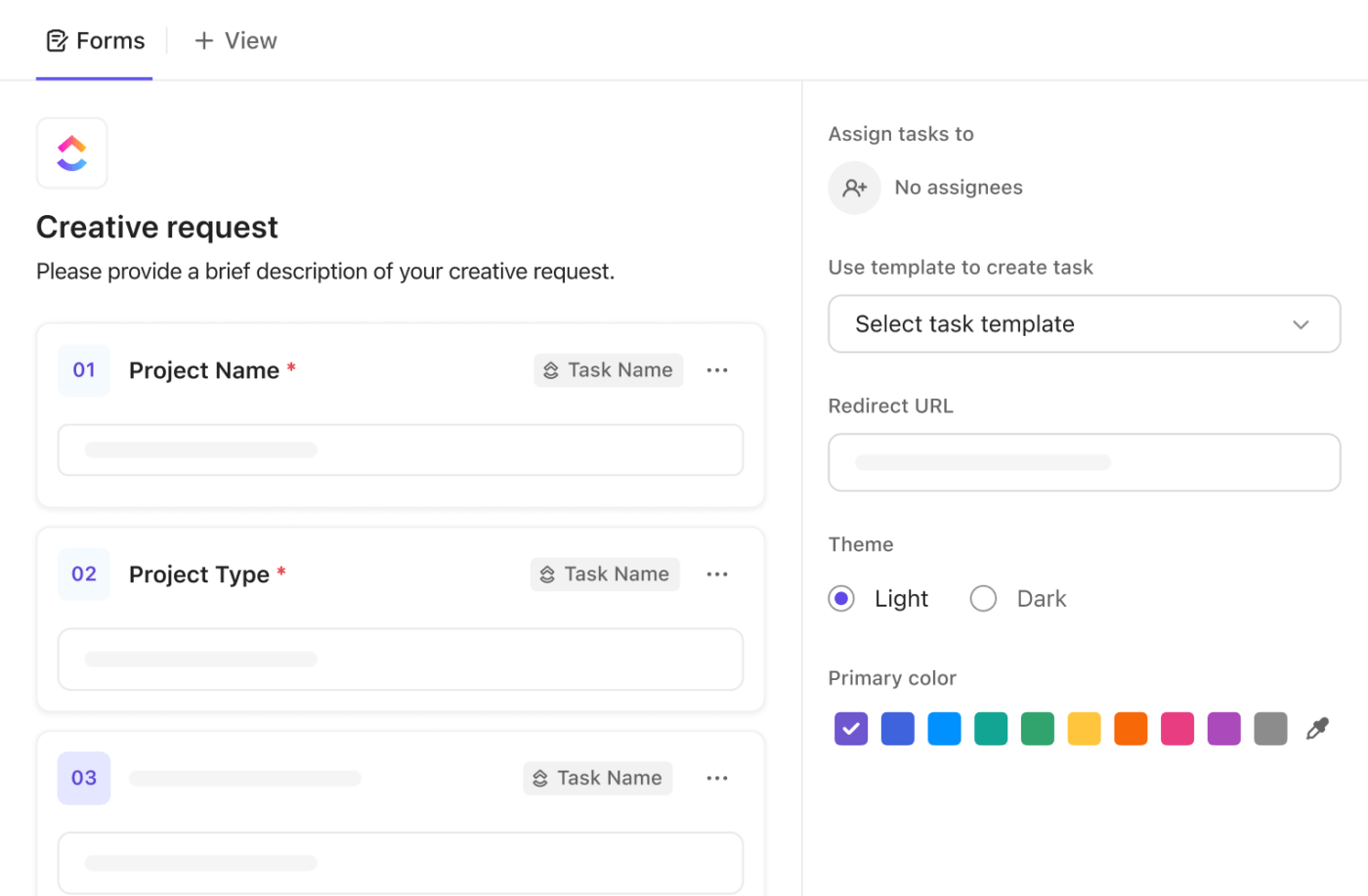
📌 Example: Picture a skincare brand wanting to know how well its message of “clean beauty” resonates. They send out a short survey through ClickUp Forms asking about product experience, trust, and suggestions for new lines. Every reply flows into a “Brand Audit” board, tagged as positive, neutral, or negative. The team reviews them weekly, quickly addressing concerns and building on positive feedback.
On Reddit, there’s an intriguing discussion where someone asked,
How do some brands show up on all their competitors’ brand searches on Google Shopping?
It’s a wonderful reminder that in a competitive market, brands are actively watching and responding to what others are doing as well.
When you analyze competitor branding, you’re not trying to copy anyone. You’re looking for gaps. What are they saying that resonates with your shared audience? What aspects might they be overlooking that you could address more effectively or transparently? This step helps you uncover how your brand stacks up.
Start by looking at your competitors’ websites, social media pages, marketing materials, and ad campaigns. Pay attention to their tone, their values, and the promises they make. Compare that with your brand messaging and identity.
✅ If your value proposition starts to sound similar to your competitors, it might be time to refresh how you show up.
👀 Fun Fact: The entire concept of modern brand management started with a single memo. In 1931, P&G’s Neil McElroy wrote a document proposing the “brand man” role, and that one idea became the blueprint for how brands are managed across the world today.
📖 Also Read: Best Brand Management Software Options
You’ve gathered feedback. Looked at competitors. Mapped out every customer touchpoint. Now comes the moment when everything needs to come together in one place.
A brand audit report is like a map for your next chapter.
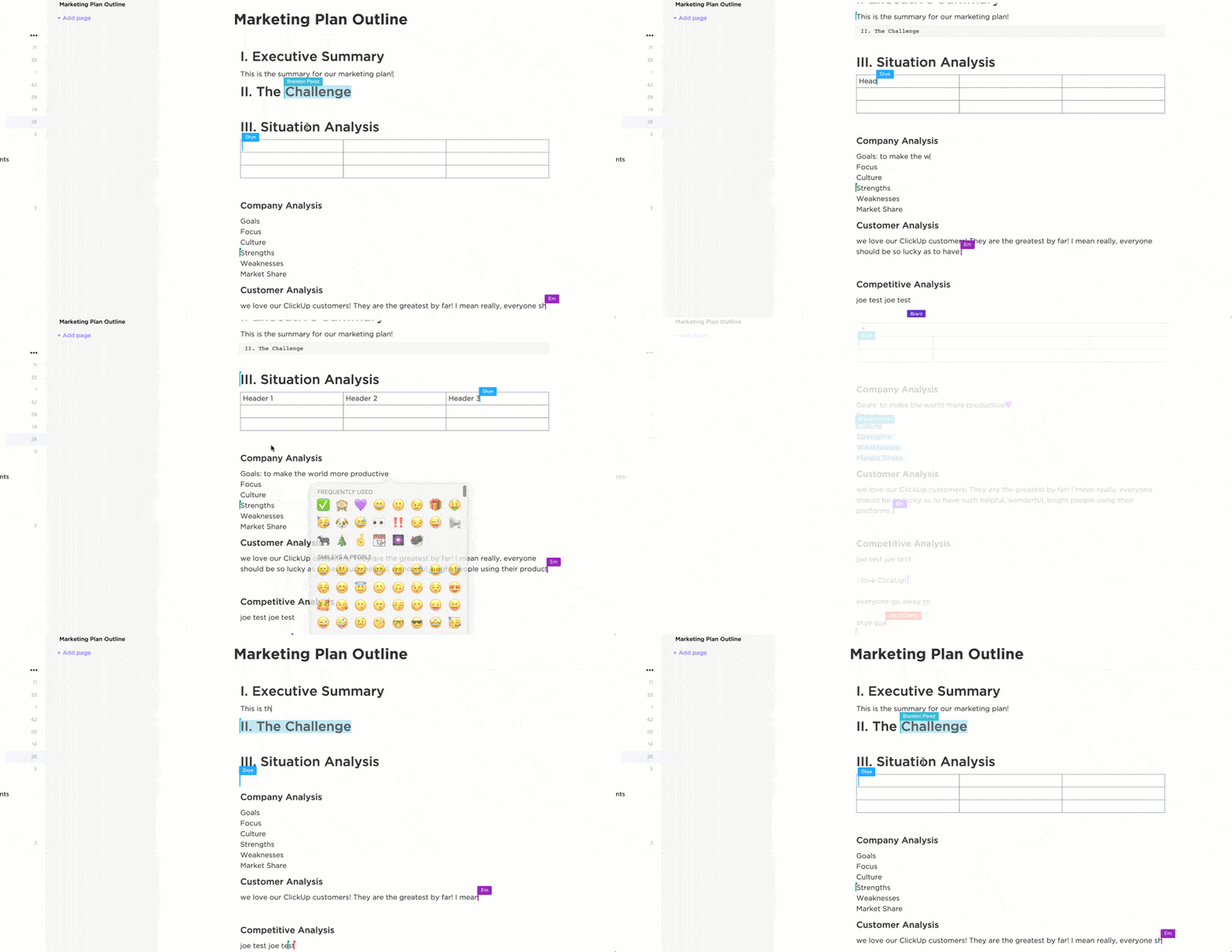
With ClickUp Docs, your brand audit report can live where the work happens, not in a file that goes stale. You can edit in real time, leave comments, assign action items, and even convert key notes into trackable tasks.
You can also link Docs to tasks and keep everything organized in Docs Hub, so the final report and supporting material are easy to find later.
💡 Pro Tip: Run faster brand audits with ClickUp BrainGPT.
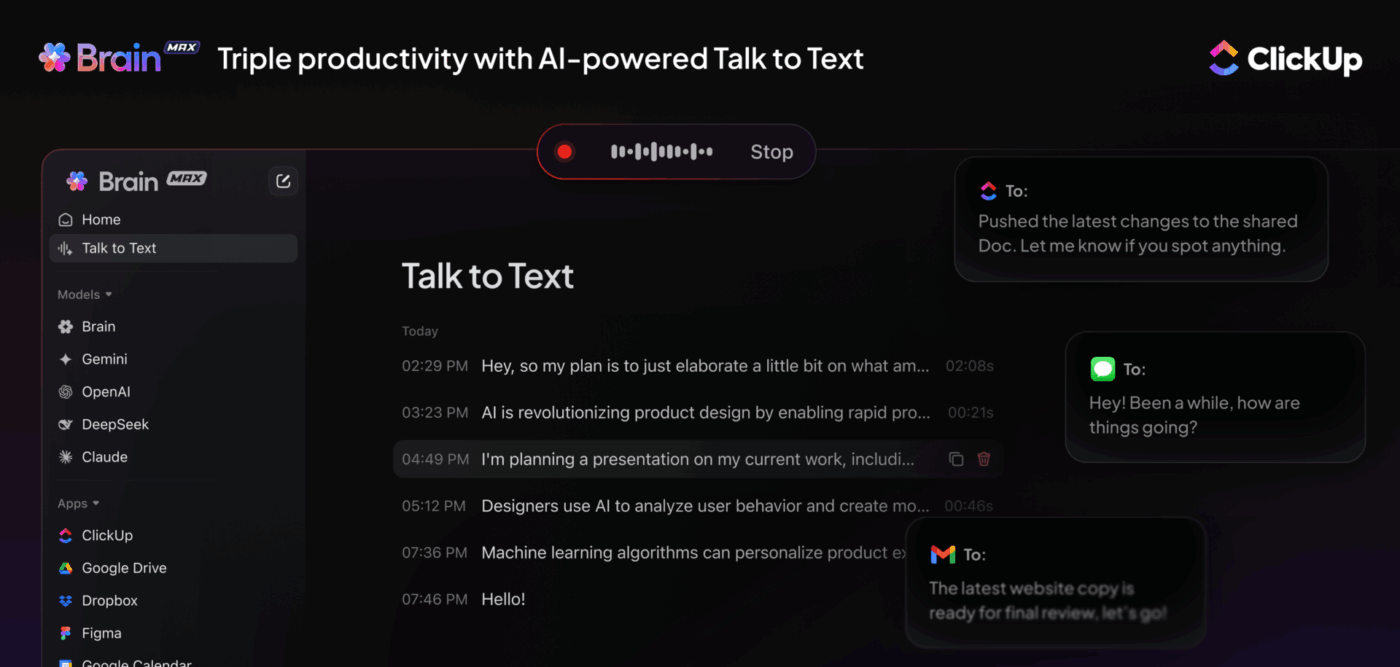
When you’re auditing a brand, the slowest part is usually the “messy middle,” with notes scattered across Docs and feedback living in a dozen tools. ClickUp BrainGPT helps you search across your work apps and the web and get work done twice as fast.
Here’s a quick overview of what you can achieve with ClickUp BrainGPT:
Dictate audit notes on the fly with Talk to Text: While reviewing your website, ads, and social media presence, speak your observations instead of typing. Talk to Text converts your voice to text hands-free in ClickUp BrainGPT (or any text box), so you can log findings quickly while you’re still in context.
Ask ClickUp BrainGPT to summarize what you’ve already collected: After you’ve gathered survey feedback and internal notes, prompt ClickUp BrainGPT with questions like “Summarize the top 5 recurring complaints about our messaging” or “List inconsistencies in tone across these channels,” then paste the output into your brand audit report.
Search your connected tools for proof fast: Use ClickUp BrainGPT’s Enterprise Search to find the exact doc, file, or thread tied to a specific claim (for example, “Find the Google Drive file with the latest brand guidelines” or “Show tasks related to website tone updates”).
Pick the right model for the job: ClickUp BrainGPT search uses ClickUp Brain by default, but you can switch models (ChatGPT, Claude, or Gemini) when you want a different writing or reasoning style.
A brand audit only matters if it leads to change. Once you’ve gathered insights and shared your findings, the next step is turning them into clear actions. Think of it as creating a to-do list for your brand. Update messaging. Refresh visuals. Launch new customer surveys.
💡 Pro Tip: Break these goals into manageable tasks, assign them owners, and set timelines.
With ClickUp Tasks, this process feels simple and organized. You can list every action item, assign it to the right person, and set deadlines. Add helpful notes, links, or attachments, and use statuses such as “To Do,” “In Progress,” and “Done” to track progress.
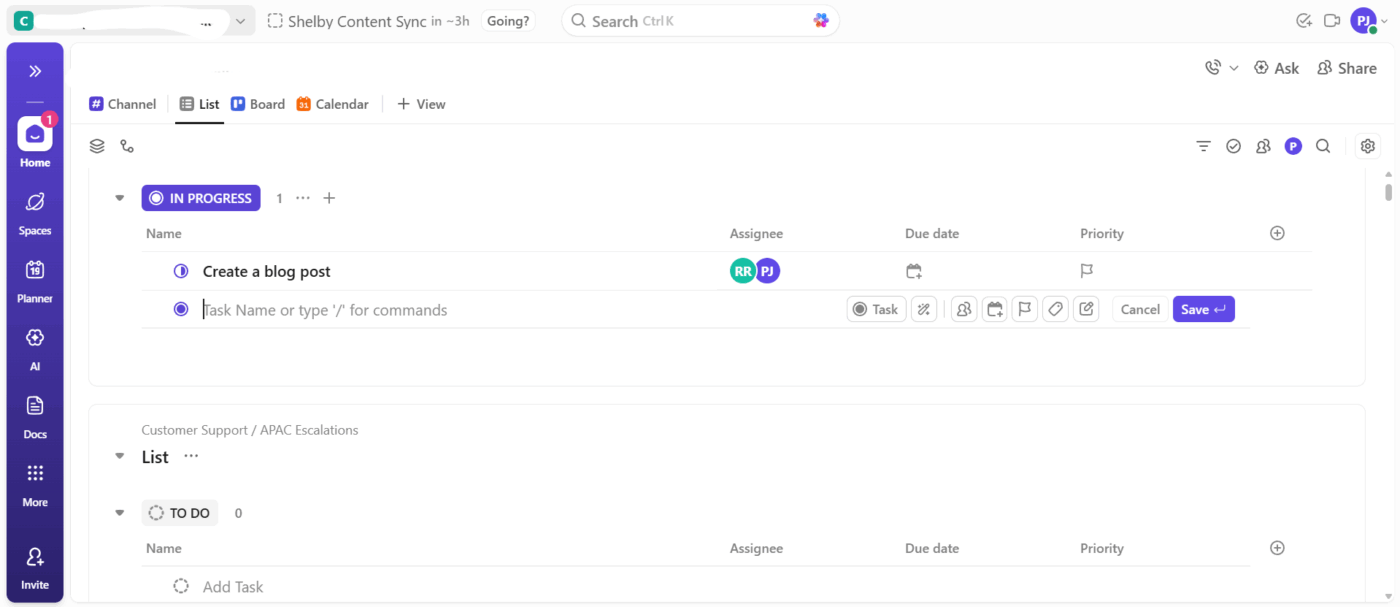
📌 Example: After finishing a brand audit, a tech startup created ClickUp Tasks for each improvement they wanted to make, including rewriting website copy, updating their logo, and scheduling new customer feedback sessions. They used the Board view to watch tasks move across columns as they were completed.
💡 Pro Tip: Use ClickUp Agents to keep the brand audit moving (and stop chasing updates).
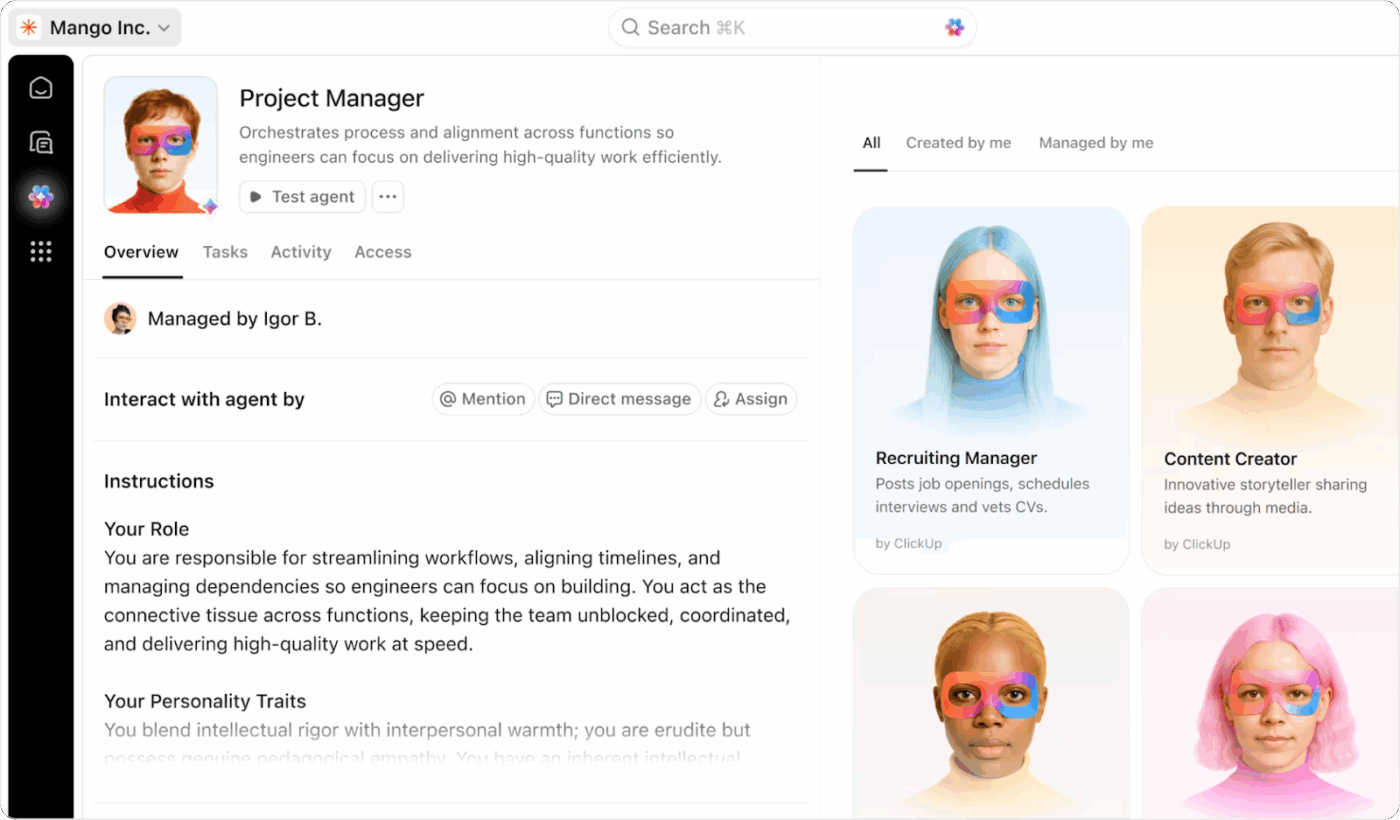
If your audit involves multiple reviewers and departments, set up a ClickUp Super Agent as a lightweight “audit ops” teammate. Super Agents can be triggered manually or automatically, can notify you when work is behind, and can run multi-step workflows based on the instructions you give.
You also control what tools and data sources the ClickUp Agent can access, who can trigger it, and what actions are logged.
Here’s a practical setup you can try out:
Use it to draft a first-pass action list from your audit report notes, so your team starts from a structured set of tasks instead of a blank page.
In 1985, Coca-Cola made what seemed like a bold refresh by launching New Coke. Blind taste tests showed a preference for the sweeter formula, but executives underestimated how deeply people felt about the original Coke.
The backlash was swift, and within 79 days, Coca‑Cola Classic was back on shelves. That moment may have been decades ago, but the lesson remains: audits help you spot the little cracks before they become disasters.
Here’s a simple, hands-on way to see if your brand feels as strong on the outside as it does on the inside:
✅ Visual identity looks the same everywhere (logo, colors, fonts)
✅ Messaging feels consistent across the website, emails, and social channels
✅ The brand stands out clearly from competitors
✅ Customer feedback matches the intended brand image
✅ Promises made in marketing match real customer experiences
Rule of thumb: If you mark 2 or more items as “no,” fix consistency first before doing a full refresh.
👀 Fun Fact: In the mid-2000s, Burberry was facing a diluted luxury image due to over-licensing and fluctuating brand consistency. Under new leadership, an internal audit revealed a loss of its core identity. The brand streamlined its product lines, brought operations back in-house, and recentered its iconic trench coat and British heritage.
Using brand strategy templates and software makes it easier to gather data and organize findings, especially when you’re starting out afresh and have never done a brand audit in the recent past.
Here are a few tools and ready-to-use templates that can guide you through each stage of your brand audit, from collecting feedback to mapping touchpoints and compiling reports.
You’ve gathered a mountain of feedback. You’ve scanned through reviews, studied competitors, surveyed your customers, and picked apart your brand’s messaging.
Now what?
For most teams, this is the stage where things quietly fall apart. That’s why the space where you store and shape your audit matters as much as the audit itself.
Marketing teams using ClickUp can create structured audit reports, write meeting notes, and store every reference in one easily searchable space.
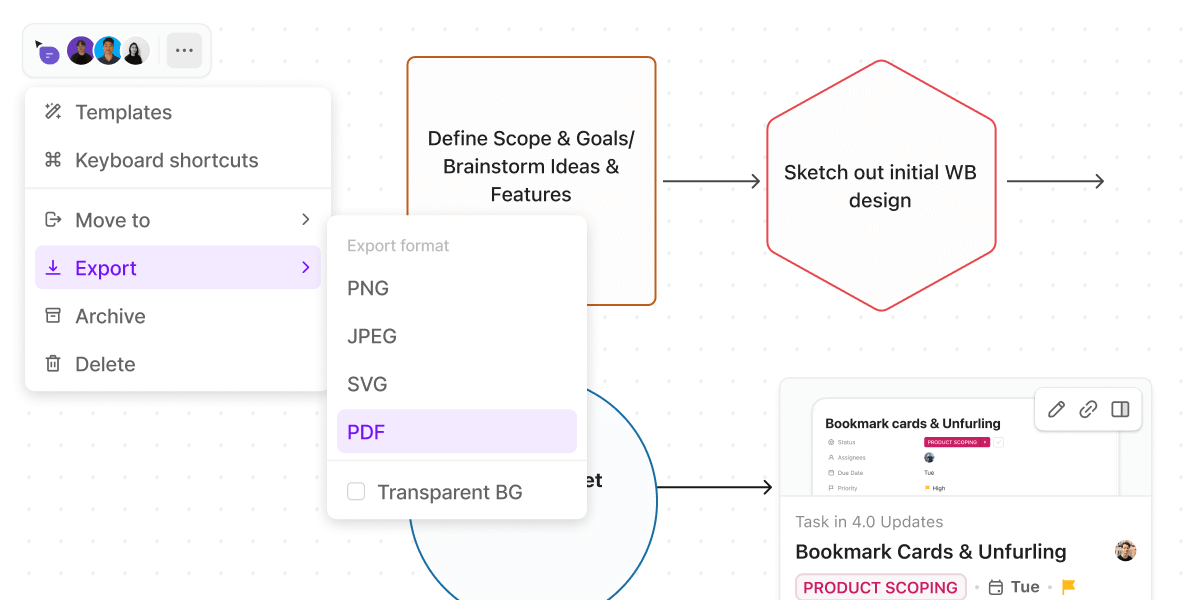
Teams can use ClickUp Docs to write the audit narrative (findings, supporting evidence, recommendations), then use ClickUp Whiteboards to map touchpoints and connect insights to next steps. This combo helps you keep brainstorming and execution tied together, instead of splitting them across slide decks, notes, and task lists.
You can also add task cards to your Whiteboards, highlight dependencies, and connect insights to milestones.
📌 Example: A creative agency used ClickUp Docs to draft and refine their audit report while simultaneously building a timeline of next steps on a ClickUp Whiteboard. Stakeholders could comment directly on both tools, ensuring decisions happened faster and actionable items were quickly turned into tasks within ClickUp.
Before we discuss tools, it helps to remember why surveys matter so much.
Big brands don’t just guess what their customers want. They ask, and they listen. Surveys let you hear the unfiltered voice of your audience, giving you insights no analytics dashboard can.
With ClickUp Forms, you can bring that same approach to your brand audit. Create and send surveys in minutes, and watch as every response neatly organizes itself in ClickUp. Organize feedback by topic or sentiment, assign follow-ups, and track improvements without losing context.

📌 Example: A SaaS company could use ClickUp Forms for a post-purchase survey to understand why customers are churning early. Each response turns into a task, flagged for the right team to review. Within weeks, they might identify a recurring onboarding issue and resolve it, turning customer feedback into measurable retention improvements.
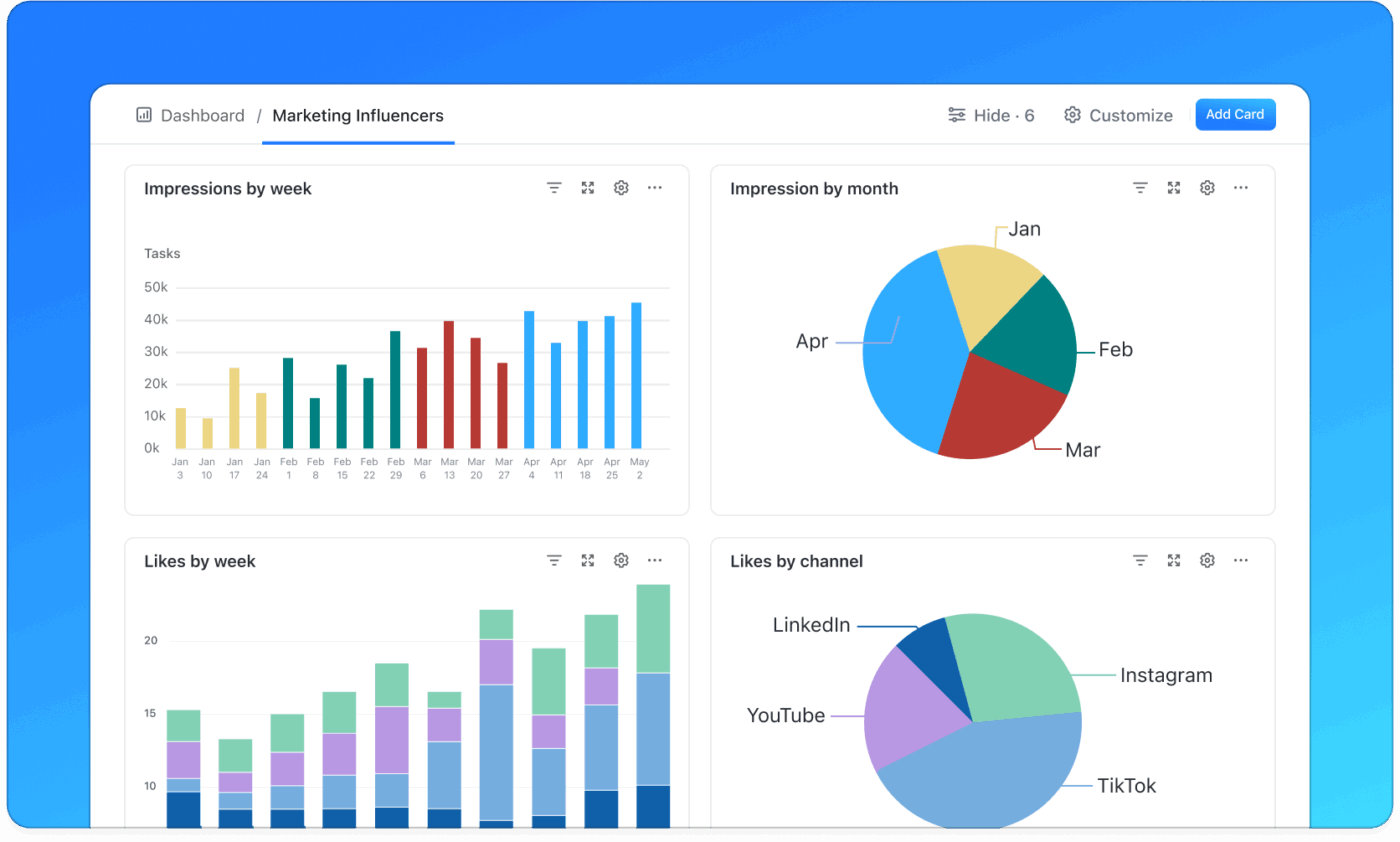
A brand audit can run for weeks, and progress gets fuzzy fast when updates live in messages. ClickUp Dashboards let you build custom reporting so you can track what’s done, what’s stuck, and who owns what in one view, without chasing status updates across channels.
If you want your brand audit dashboard to do more than show charts, you can add AI Cards. These AI Cards let you run a custom AI prompt (AI Brain) or generate ready-made summaries like AI StandUp, AI Team StandUp, AI Executive Summary, and AI Project Update.
AI Cards can be especially useful when leadership wants a quick view of brand audit health without reading the full report. You can add AI Cards to any Dashboard, rerun them as work changes, and even view history so your updates stay trackable over time.
📽️ Watch a video: Looking to get started with your own customized Dashboards? Here’s a step-by-step guide that walks you through all the steps:
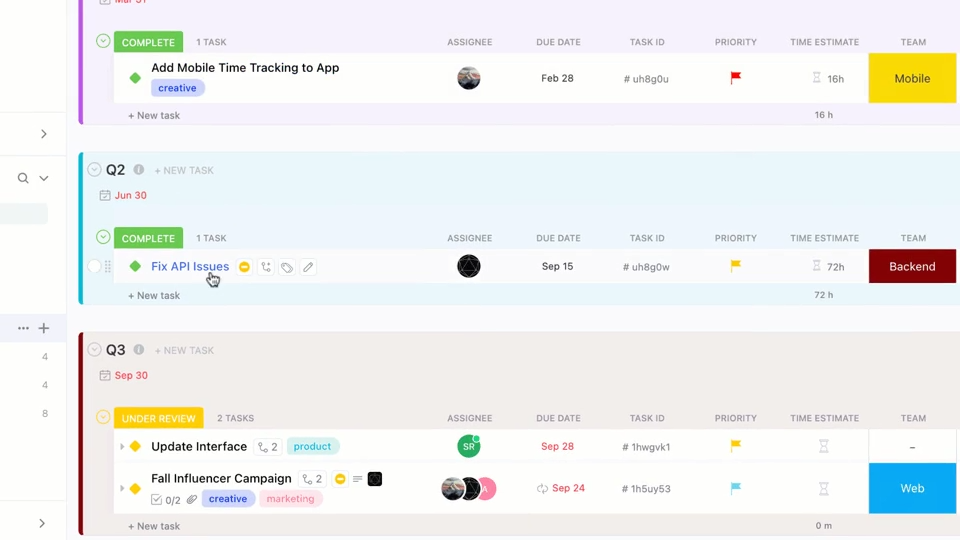
Milestones in ClickUp take it a step further. They help you flag critical points in the audit, like finishing the competitor analysis or completing the internal branding review. This helps your team rally around these big moments. You can view milestones directly in your Gantt charts, board view, or even on your dashboard, making it easy to see how close you are to your next major win.
📌 Example: A marketing team used ClickUp Dashboards to keep tabs on every stage of their brand audit. Task completion rates, overdue items, and survey responses are all updated in real time. They also established benchmarks for every stage, ranging from “Collected Customer Feedback” to “Final Brand Audit Report.”
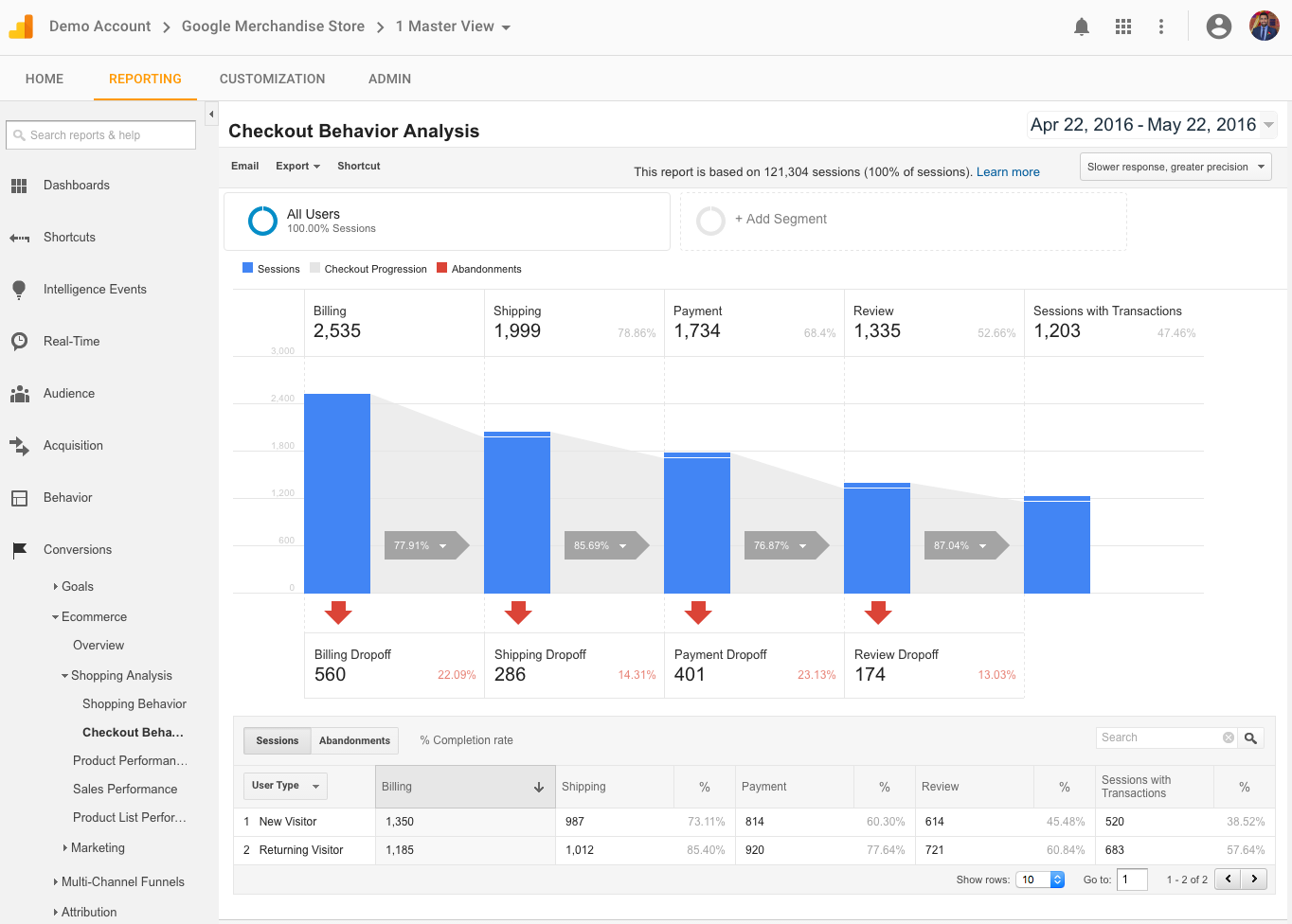
A solid brand audit examines how well your website performs where it matters most: search engines and user experience.
Google Search Console is your window for search visibility. It reveals which keywords bring visitors to your site, how your pages rank, and whether technical difficulties (like crawl errors or mobile usability problems) are hurting your performance.
Google Analytics picks up the story from there. It tracks how visitors navigate your pages, where they spend time, and which actions lead to conversions.
💡 Pro Tip: Most audits focus only on top-level metrics like clicks and sessions. Go deeper.
Set up Search Console filters for branded vs. non-branded keywords. Then, in Analytics, create segments to see how each group behaves on-site.
This layered view reveals whether your brand strength or search targeting needs more attention.
Connect Google Analytics insights to your ClickUp workflow:
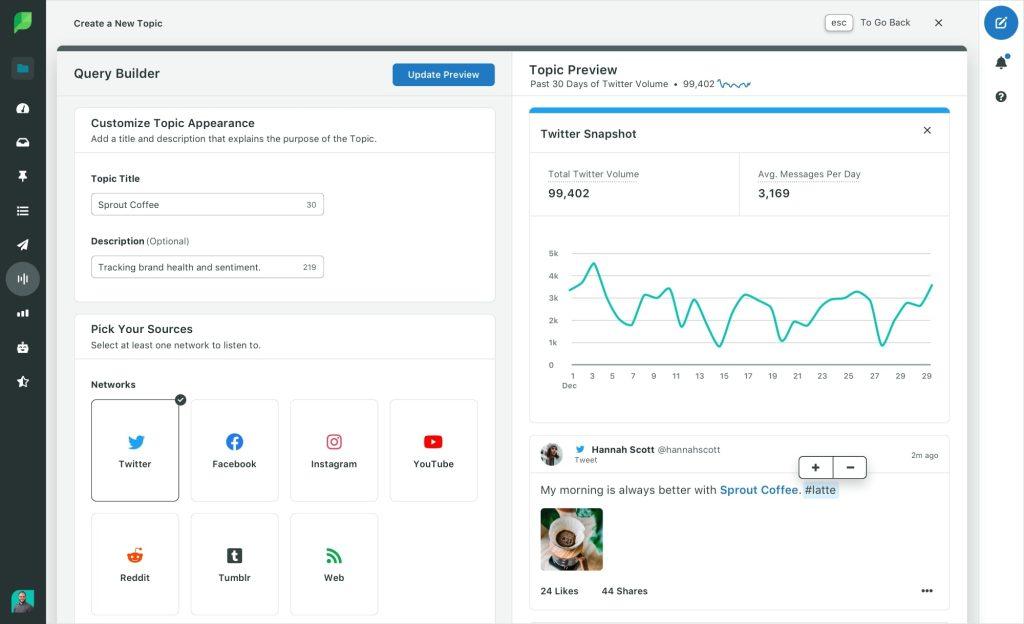
Sentiment tracking tools like Mention and Brandwatch help you listen in on how people talk about you online.
Mention provides you with immediate notifications whenever your brand or competitors appear online. It helps you quickly respond to negative comments, join positive discussions, and spot emerging trends before they gain traction.
Brandwatch takes it further with AI-powered sentiment analysis, breaking down conversations into positive, neutral, and negative tones.
📖 Also Read: How to Create a Winning Marketing Roadmap
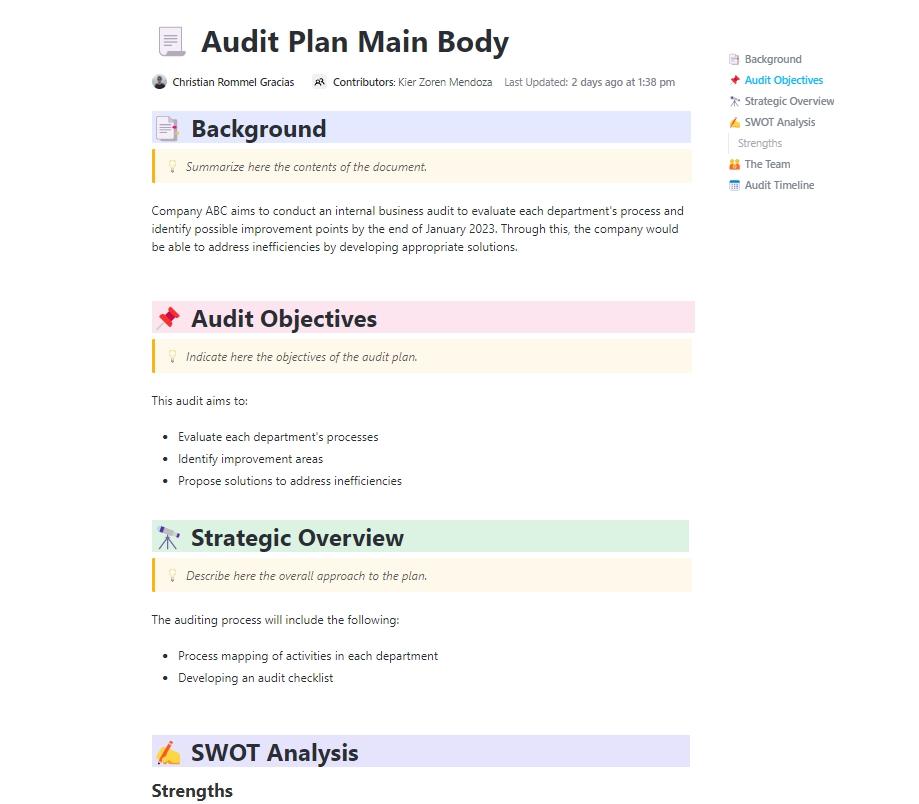
The ClickUp Brand Audit Template helps teams run thoughtful, structured brand audits without the overwhelm. Whether you’re reviewing brand consistency or assessing how your messaging lands with audiences, here’s how this branding template brings clarity and organization to every step:
Meanwhile, the ClickUp Brand Book Template helps businesses define and maintain a strong, unified brand identity. It brings together your visual elements and core values in one organized space, which helps teams and stakeholders align to a common vision.
Here’s how this template can help you:
🎥 If your brand audit uncovered gaps in voice, messaging, or posting consistency, this video walks through how AI can help you operationalize those findings faster.
The key to a well-rounded audit is approaching it thoughtfully. A few smart practices can make all the difference between a report that just sits on a shelf and one that truly strengthens your brand.
✅ Define clear goals before you start so your audit stays focused and actionable
✅ Involve different teams across marketing, sales, and customer support to capture every perspective
✅ Use tools like Brandwatch Academy or Forrester Wave reports to benchmark your brand against industry leaders
✅ Schedule recurring audits to stay ahead of market changes and evolving customer expectations
👀 Fun Fact: In the early 2000s, LEGO was on the brink of collapse. A deep internal brand audit revealed they had strayed too far from what made them iconic—brick-based play. The findings helped them refocus, leading to the LEGO renaissance we know today.
Sometimes the best way to understand the power of a brand audit is to see it in action. Each brand audit example below shows how well-known brands transformed their identity and strategy by looking inward:
By 2018, Mailchimp had grown from a simple email marketing tool into a complete marketing platform—but their brand still said “email newsletters.” Customers saw the disconnect first.
Through surveys and customer feedback, Mailchimp discovered something liberating: users no longer viewed it as just an email tool. Small business owners described Mailchimp as the thing that helped them “look more professional and grow.” That insight became the foundation of their rebrand.
Working with branding agency Collins, Mailchimp made some bold moves. They kept their quirky mascot, Freddie (simplified for modern use), while other tech companies were ditching personality for sleek minimalism. They introduced a playful new typeface (Cooper Light—a 1920s font in a sans-serif world), expanded their color palette, and shifted messaging from “Send Better Email” to “Build Your Brand. Sell More Stuff.”
The result? A reported 200% increase in user engagement within a year. And in 2021, Intuit acquired Mailchimp for approximately $12 billion—a testament to how a well-timed brand audit can unlock massive value.
Key takeaway: Mailchimp’s audit revealed that customers had already repositioned them mentally. The rebrand simply caught up to reality—while doubling down on the quirky personality that made them beloved in the first place.
Nike built its brand on emotional storytelling—campaigns like “Find Your Greatness” and the Colin Kaepernick partnership that sparked cultural conversations. But by 2024, industry analysts noticed something had shifted.
Under previous leadership, Nike had pivoted heavily toward direct-to-consumer digital sales and performance marketing. Former brand director Massimo Giunco summarized the problem publicly: the brand team had shifted “from brand marketing to digital marketing and from brand enhancing to sales activation.”
The numbers told the story. By late 2024, Nike’s revenues had declined 8% year-over-year to $12.4 billion, with digital sales down 13%. Brand tracking showed consumer preference dropping by roughly 6% in six months, approximately 8 million fewer people choosing Nike over competitors.
In December 2024, new CEO Elliott Hill announced a strategic reset: “We’re starting to shift dollars from performance marketing to brand marketing. We will invest in our fields of play, because that’s where we drive our product innovation, our newness, our distinction.”
Nike is now rebuilding around the emotional, narrative-driven advertising that originally made them a cultural icon—while pulling back on promotional discounts to restore premium positioning.
Key takeaway: Nike’s situation shows how even the strongest brands can drift when they prioritize short-term metrics over long-term brand building. Their ongoing reset is a reminder that brand audits aren’t just for struggling companies—they’re essential for market leaders who want to stay that way.
In August 2025, Columbia Sportswear launched its first major brand platform in a decade—the result of an internal reckoning with how its marketing had become indistinguishable from competitors.
The brand’s marketing team conducted a telling exercise: they compiled six competitor ads on a single slide and blocked out the logos. Every ad looked the same—sweeping vistas, sunny skies, pristine conditions, serious models. “Over the past 20 years, the outdoor category has kind of converged,” said Matt Sutton, Columbia’s head of marketing. “All follow each other and do the same thing.” (Marketing Brew)
Columbia’s audit also surfaced a crucial customer insight: even professional athletes feel anxious about what can go wrong outdoors. Rather than ignoring those fears with picture-perfect imagery, Columbia decided to address them head-on.
The resulting campaign, “Engineered for Whatever,” features hikers getting attacked by snakes, stumbling into hidden potholes, and facing off against the Grim Reaper. The brand enlisted stunt performers to test gear in extreme scenarios—dangling over alligator-infested waters, strapped to snowplows, rolling downhill inside giant snowballs.
Columbia also refreshed its visual identity with new typography, a modernized logo, and an updated color system. The shift represents what executives called “probably our most significant investment in brand marketing in five years.”
Key takeaway: Columbia’s audit revealed that playing it safe had made them invisible. By returning to the irreverent, humor-driven spirit of their ’80s and ’90s advertising, they’re carving out a distinctive position in a crowded market.
A strong brand does not happen by chance. It takes clearly communicated company values, a strong marketing plan with clear business objectives, and a unique selling proposition to make your brand stand out among your competitors.
Some teams rely on customer focus groups and customer feedback analysis, while others focus on building greater content marketing customer experiences. Brands also use social media polls and customer engagement trackers to understand customer sentiment.
But what if you could improve your brand positioning, compile all the data from your campaigns, and define your brand’s core values more effectively using a single tool?
ClickUp is that single ecosystem that can help you achieve your brand goals.
From gathering feedback with Forms to mapping findings in Whiteboards and tracking progress in Dashboards, ClickUp supports every step of your brand audit. It also helps you document everything from your social media account engagement to reworked brand designs in collaborative Docs.
If you are ready to take control of your brand’s future, sign up for ClickUp for free!
A brand audit looks at the bigger picture of how people perceive your brand, whether it’s consistent, and how it stacks up against competitors. A marketing audit focuses more narrowly on your campaigns and messaging performance. Think of the brand audit as the story you’re telling and the marketing audit as how you tell it.
Most teams benefit from doing a brand audit once a year. But if you’re going through a big change, like a rebrand, shift in audience, or dip in sales, it’s worth doing sooner to catch any misalignment.
Absolutely. In fact, small businesses often benefit the most. Even on a limited budget, a brand audit helps you understand how your audience perceives you, what resonates with them, and where you can stand out.
Some key ones to track include brand awareness, customer satisfaction (via surveys), website engagement (like bounce rate or conversions), social sentiment, and competitor comparison. The right mix depends on your goals, but these provide a well-rounded picture.
It depends. You can do an internal audit using free tools and templates like the ones in ClickUp, or you can hire a brand consultant or agency, which may charge you anywhere from $5,000 to $50,000, depending on the scope and depth. The key is to match the effort with your stage of growth.
The terms are often used interchangeably, but a brand audit tends to be more detailed and data-driven. A brand assessment is usually quicker and high-level, more like a pulse check, while an audit goes deeper into identity, strategy, perception, and performance.

© 2026 ClickUp

There’s an easier way. Try a free AI Agent in ClickUp that actually does the work for you—set up in minutes, save hours every week.