
Sorry, there were no results found for “”
Sorry, there were no results found for “”
Sorry, there were no results found for “”
Coding is not just about syntax and algorithms—it’s about solving real-world problems and shaping the future.
Think about the last time you ordered food, streamed a show, or unlocked your phone. Behind every tap and swipe are experts in different types of coding jobs making it possible.
With over 27 million developers worldwide, coding isn’t just a skill—it’s the foundation of modern life.
From crafting stunning websites to training AI that predicts your next favorite song, coding jobs are as diverse as they are impactful. Whether you’re drawn to solving complex problems, creating seamless user experiences, or safeguarding digital systems, there’s a coding career that fits your passion.
Ready to explore the Types of Coding Jobs that are shaping the future? Let’s dive into the roles, skills, payscales, and opportunities that make the tech world tick—and discover where you might fit in.
Every digital product relies on code, whether it’s a mobile app, a website, or an AI-powered chatbot. Coding jobs revolve around writing, testing, and maintaining this code to create seamless and efficient systems.
But coding isn’t just about building things. It’s about solving problems, automating processes, and making technology work smarter.
Bonus: Keep scrolling to read about different types of coding jobs available in the market, the average salary associated with each, and how to prepare for them!
With businesses increasingly relying on technology, coding jobs aren’t going anywhere. They’re evolving, expanding, and becoming more specialized.
📖 Also Read: How to Hire a Software Engineer?
Coding wasn’t always sleek IDEs and cloud computing. It started with punch cards and handwritten commands.
Today, coding careers are more diverse than ever, powering everything from software applications to AI-driven automation. Whether you’re designing secure networks, optimizing business tools, or developing the next big mobile app, coding skills open doors to endless possibilities.
😎 Fun Read: A Day in the Life of a Software Developer
Not all coders sit in dark rooms, hammering out endless lines of code. Some design the websites you scroll through daily, while others train AI to recommend your next binge-worthy show.
There are developers who build mobile apps, analysts who decode massive datasets, and cybersecurity experts who fight off hackers.
Whether you love problem-solving, creativity, or data-driven decision-making, there’s a coding job that fits your skill set.
Every website, from your favorite streaming platform to an online booking system, exists because of web developers. They build, optimize, and maintain sites to ensure smooth navigation, fast load times, and responsive designs.
Web development has three primary specializations:
📖 Also Read: Best AI Tools for Web Development
You can expect an average salary of around $82,000 per annum. But, of course, this varies widely based on experience, expertise, and other factors.
With businesses moving online at a rapid pace, the demand for skilled web developers is soaring. Whether it’s crafting visually stunning websites, optimizing large-scale platforms, or engineering interactive web apps, this remains one of the most high-demand careers in tech.
Every app, tool, and system you use—from cloud storage platforms to AI assistants—is powered by software engineers. They don’t just write code; they design, build, and optimize software applications to ensure performance, security, and scalability.
Software engineering is a broad field, covering various specializations:
A software engineer’s job doesn’t end with development. They conduct technical interviews, optimize algorithms, and debug technical issues to improve system efficiency. Many work with popular programming languages like Python, Java, and C++, depending on the project.
Reports suggest that the average salary for a software engineer is $137,324, with additional cash compensation averaging $18,852, contingent on a number of factors.
With businesses relying on digital transformation, software engineers remain some of the most in-demand professionals in the tech industry. Whether developing AI-powered applications, securing cloud networks, or building large-scale platforms, this career path offers endless possibilities.
Every time you book a ride, check social media, or track your fitness goals, you’re using an app built by mobile developers. These developers specialize in creating applications for smartphones, tablets, and even wearable tech, ensuring smooth performance across different devices.
Mobile app development is split into two major platforms:
Beyond writing code, mobile developers focus on user experience (UX), performance optimization, and security measures to ensure seamless functionality. They integrate APIs, manage cloud storage, and continuously refine apps based on user feedback.
Mobile application developers earn an average annual salary of $111,608, according to publicly available data, with most salaries ranging between $99,088 and $126,025.
With smartphone usage at an all-time high, the demand for mobile developers continues to grow. Whether it’s enhancing existing apps, developing the next viral social media platform, or building AI-driven applications, this field offers countless opportunities in the tech industry.
📖 Read More: Best Code Editors for Developers
Every click, purchase, and search generates valuable data. Data scientists turn this raw information into actionable insights, helping businesses make informed decisions.
They clean, process, and analyze large datasets, using machine learning and statistical models to identify trends, predict outcomes, and solve complex problems.
With businesses relying on data for everything from customer behavior to risk assessment, data scientists play a crucial role in various industries:
Data scientists work with programming languages like Python, R, and SQL, building models that help businesses visualize data, detect patterns, and automate decision-making. Their work fuels AI-powered systems, recommendation engines, and forecasting tools.
Internet research indicates that data scientists earn an average base salary of $126,490, with additional cash compensation averaging nearly $17k.
As businesses continue to generate massive amounts of data, the demand for data scientists rises. Whether improving business efficiency, enhancing customer experiences, or making smarter predictions, this career path remains one of the most impactful in the tech industry.
With cyber threats growing more sophisticated, information security analysts are the front line of defense, protecting networks, systems, and sensitive data from attacks. They monitor vulnerabilities, implement security measures, and respond to breaches before they cause serious damage.
Every industry that handles digital information relies on information security analysts to safeguard it:
Security analysts conduct penetration testing, simulate cyberattacks, and monitor networks for unusual activity. They also work with network systems administrators to patch vulnerabilities and enforce strict security protocols.
Information Security Analysts play a critical role in safeguarding an organization’s computer systems, with an average annual salary of approximately $96,652.
With cyber threats evolving, the demand for information security analysts remains at an all-time high. Whether it’s securing corporate networks, preventing cyber threats, or ensuring regulatory compliance, this role is critical to the tech industry and beyond.
Every app, website, and business system relies on data—customer information, transaction records, and product details all need to be stored, organized, and easily retrievable. That’s where database administrators (DBAs) come in. They design, manage, and secure databases, ensuring information is accessible, accurate, and protected from cyber threats.
Database administrators play a critical role in maintaining data integrity and performance:
The average base salary for a Database Administrator is reported to be $131,060, and they often receive additional cash compensation based on performance and other factors.
With businesses handling more data than ever, database administrators remain essential to keeping systems running smoothly. Whether working with SQL-based databases, cloud storage, or real-time analytics, DBAs play a critical role in the tech industry.
👀 Did You Know? Every single day, the world generates over 402 million terabytes of data—that’s like streaming Netflix non-stop for 3.5 million years!
With this data explosion, database administrators (DBAs) are the unsung heroes, ensuring everything stays organized, secure, and instantly accessible.
The way a website or app looks and feels is the work of front-end developers. They transform designs into functional, interactive experiences, ensuring seamless navigation, responsiveness, and performance across different devices.
Every time you scroll through an e-commerce site, play an online game, or interact with a web form, you’re engaging with front-end development in action.
Front-end developers focus on both technical skills and user experience (UX) to ensure digital products are engaging and accessible:
Research suggests that front-end developers earn an average base salary of $119,268, with additional cash compensation in certain cases.
Usability is at the core of front-end development. A great design means nothing if it doesn’t load quickly, respond smoothly, and provide an intuitive experience. Front-end developers bridge the gap between design and functionality, making sure everything runs flawlessly.
As businesses continue to prioritize seamless digital experiences, front-end developers remain essential in delivering high-performance, user-friendly applications. Whether it’s improving a site’s usability, enhancing its visual appeal, or ensuring cross-device compatibility, this role is crucial in modern web development.
📖 Also Read: Improvement Tips for Software Development Teams
Behind every seamless digital experience is a system administrator (SysAdmin) ensuring that networks, servers, and IT infrastructure run smoothly. They’re the troubleshooters, security enforcers, and performance optimizers who keep businesses online and operational.
From managing cloud servers to fixing sudden system crashes, SysAdmins are the backbone of IT operations.
System administrators oversee the health and security of an organization’s IT environment:
System administrators must be adaptable, as IT infrastructures are constantly evolving. They work with cloud-based systems, virtual machines, and hybrid environments, ensuring businesses stay connected and secure.
System administrators, who ensure the smooth operation of IT infrastructures, earn an average annual salary of $88,927, translating to approximately $42.75 per hour.
With businesses becoming more reliant on cloud computing and cybersecurity, the demand for system administrators continues to rise. Whether maintaining corporate networks, managing cloud servers, or implementing security measures, SysAdmins are critical in keeping IT operations running efficiently.
📖 Also Read: Best Practices For Software Project Management
Each coding role requires a unique set of skills, but some core competencies define success across the industry.
Every coding job demands more than just technical expertise. Whether you’re building web applications, analyzing data, or securing networks, your ability to think critically, write efficient code, and collaborate effectively defines your success.
Most importantly, in this day and age, the learning never stops! Those in the market for coding jobs, just like all knowledge workers, must constantly keep abreast of the latest developments in their field, upskill when they can, and add new capabilities to their portfolios.
📖 Also Read: How to Become a Better Programmer?
Staying ahead in tech requires consistent skill-building. Use the ClickUp Technical Skills Matrix Template to track your progress, identify gaps, and prioritize the next skills to master.
Jumping into coding can feel overwhelming—there are dozens of programming languages, endless tutorials, and a constant stream of new technologies. But starting a coding career doesn’t have to be a maze of confusion.
With the right approach, you can go from writing your first “Hello, World!” program to landing your first tech job.
Not all coding jobs are the same, so figuring out what excites you is key:
Once you identify the path that excites you, learning becomes a lot more fun—because you’ll be solving problems you actually care about.
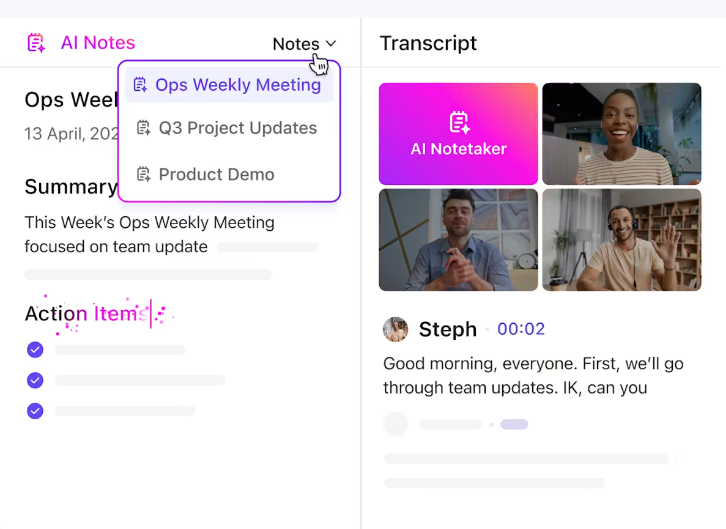
With ClickUp AI Notetaker, you can capture key insights from coding tutorials, track progress, and organize your learning journey effortlessly—so you stay focused on coding, not on keeping notes.
Mastering coding isn’t just about reading books or watching tutorials—it’s about learning smarter:
👀 Did You Know? NASA’s software engineers once found a missing hyphen in the code of the Mariner 1 spacecraft, which caused the entire mission to fail. A single character mistake cost $18.5 million in 1962!
This just proves that learning to debug and reverse-engineer code is just as important as writing it. Making mistakes is part of the process—what matters is learning how to fix them and improve along the way.
The key isn’t memorizing everything—it’s knowing how to find solutions and apply them in real-world scenarios.
Nothing proves your skills like a solid portfolio. Instead of just following tutorials, build something real:
Employers don’t just want to see what you know—they want to see what you can create.
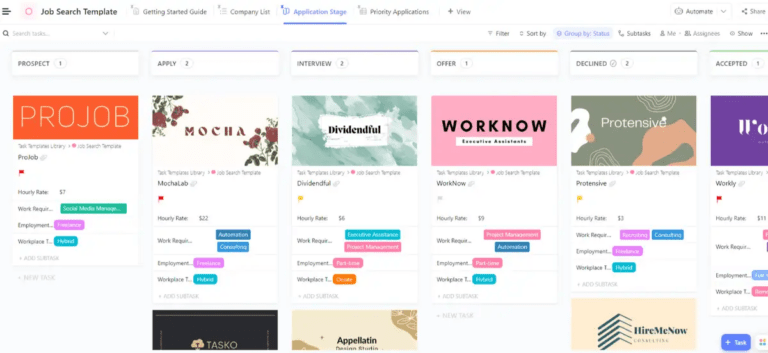
Breaking into tech takes more than just coding skills—you need to network, apply strategically, and craft a strong resume. Use the ClickUp Job Search Template to track applications, set reminders for follow-ups, and stay organized in your job hunt.
Every coder needs the right tools and communities to write, debug, and deploy code efficiently. Whether you’re a software engineer, web developer, or data scientist, the right stack can make or break your workflow.
Beyond mastering coding languages, being part of the right communities and platforms helps you sharpen your skills, stay updated, and collaborate with professionals worldwide.
Whether you’re a beginner or an experienced developer, these platforms provide essential learning resources, networking opportunities, and hands-on coding challenges.
These platforms serve as the backbone of modern software development, allowing developers to host repositories, track changes, and collaborate on projects.
Open-source contributions on GitHub can significantly boost your portfolio, making it easier to land coding jobs. Large companies often look at an applicant’s commit history to assess their coding expertise.
Stack Overflow has been a go-to resource for debugging, troubleshooting, and learning from real-world coding issues.
Dev.to, on the other hand, offers an interactive blog-style community where developers share tutorials, insights, and personal experiences in the tech industry.
These platforms are invaluable for improving problem-solving skills and preparing for technical interviews. Many tech companies, including FAANG, use HackerRank and LeetCode-style assessments to evaluate candidates.
Solving problems on these platforms consistently can give you a strong edge in coding interviews.
Contributing to open-source software isn’t just a great way to gain real-world experience, but it also helps you connect with seasoned developers and industry professionals.
Many top projects, including Linux, TensorFlow, and React, are open-source, and contributing to them can enhance your credibility in the coding world.
These platforms are about building connections, improving skills, and staying ahead in the rapidly evolving tech industry.
📖 Read More: Best Software Development Tools To Master
Writing code is only part of the equation—managing development workflows effectively ensures projects stay on track, bugs get fixed, and features are delivered on time. That’s why integrating development tools with project management software is a game-changer for developers and teams.

Keeping track of features, bug fixes, and releases is crucial for maintaining a smooth development cycle. ClickUp Tasks allow developers to break projects into actionable tasks, sprints, and milestones, ensuring nothing falls through the cracks.
Tracking project progress, issue resolution, and workload distribution in one place helps teams stay aligned. With ClickUp Dashboards and ClickUp Custom Fields, developers can monitor the status of pull requests, bug reports, and deployment timelines without digging through emails or chat threads.

Manually updating project status after every commit can be time-consuming. By syncing GitHub with ClickUp using ClickUp Integrations, developers can automatically link commits, pull requests, and branches to project tasks, making collaboration between teams more efficient.
For an all-in-one development workflow, try using the ClickUp Software Development Template to manage code reviews, sprints, and deployments effortlessly.
This is a dedicated project management template that ensures teams stay aligned, version control remains structured, and tasks move efficiently through the software development lifecycle.
⚡️Template Archive: Free Software Development Plan Templates to Use
Coding comes with its highs and lows. One moment, you’re debugging for hours; the next, you’re celebrating a breakthrough.
But that’s what makes it exciting—constant challenges, endless learning, and the thrill of building something from scratch.
Writing code is just one part of the job—what happens between the lines is where the real challenges emerge.
📮ClickUp Insight: About 41% of professionals prefer instant messaging for team communication. Although it offers quick and efficient exchanges, messages are often spread across multiple channels, threads, or direct messages, making it harder to retrieve information later
With an integrated solution like ClickUp Chat, your chat threads are mapped to specific projects and tasks, keeping your conversations in context and readily available.
Despite these challenges, coding offers opportunities that few other careers can match.
Navigating the coding field requires adaptability and persistence, but the rewards often outweigh the challenges. As technology evolves, so do career opportunities—let’s explore the biggest trends shaping the future of coding.
Technology moves fast, and coding careers evolve right alongside it. New programming languages, AI-driven development, and automation tools are reshaping how developers work.
Staying ahead of these changes isn’t just about keeping your skills fresh—it’s about unlocking new career opportunities.
AI is transforming how code is written, optimized, and debugged. Instead of replacing developers, AI-assisted coding tools are enhancing productivity:
Developers who integrate AI into their workflows can ship projects faster and focus on solving complex problems rather than writing repetitive code.
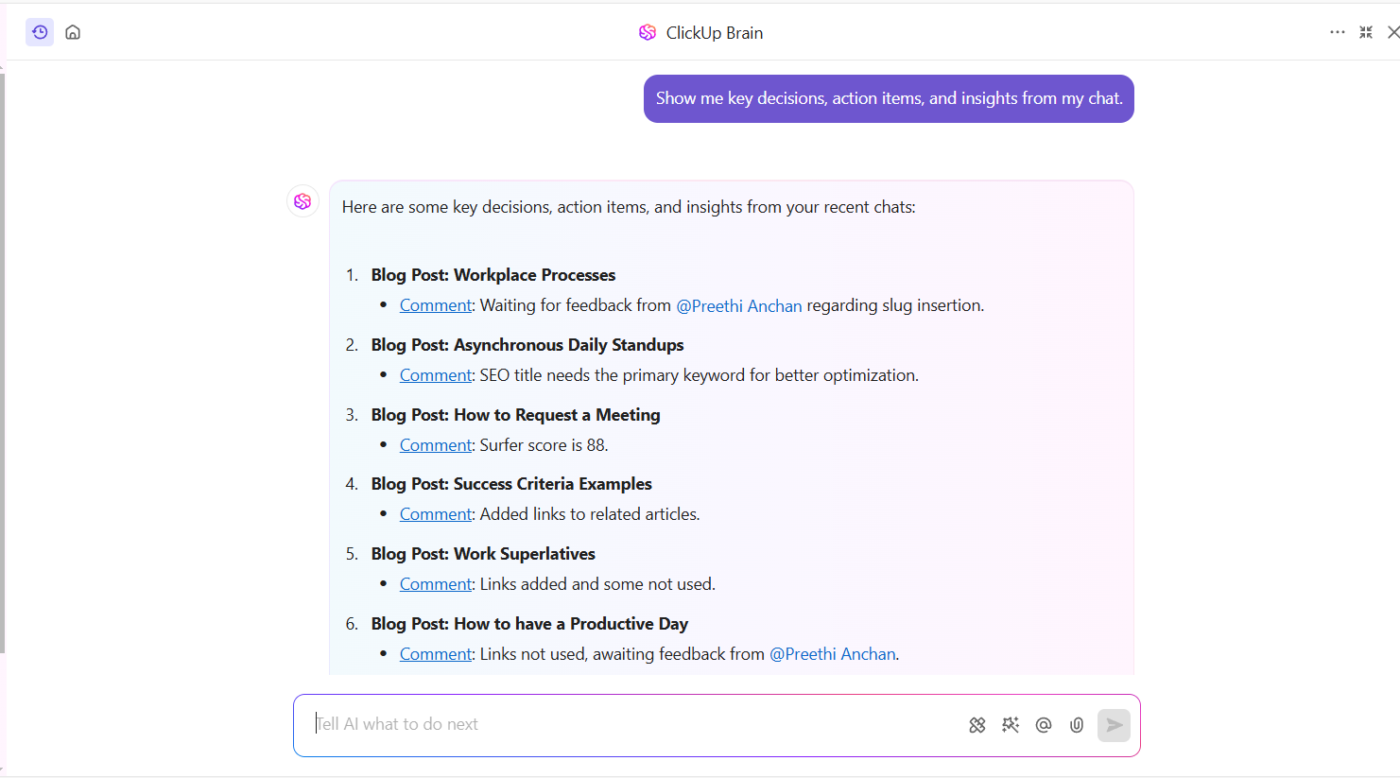
The ClickUp Brain can accelerate software development workflows by instantly retrieving project details, generating documentation, and streamlining task management. So developers can focus on building, not searching for information.
Not every project needs to be built from scratch. Low-code and no-code tools are allowing businesses to develop applications without deep programming knowledge:
While these tools simplify development, they also create new opportunities for developers—like customizing integrations, improving automation, and scaling applications beyond the platform’s limitations.
Quantum computing is moving from research labs to real-world applications:
It is widely accepted that Quantum programming is still niche, but developers who get ahead of the curve could be part of groundbreaking advancements in computing power.
With cyber threats evolving rapidly, security is no longer an afterthought—it’s built into the development process:
Developers with cybersecurity expertise can differentiate themselves by designing systems that are not just functional but also secure.
Remote work has reshaped how development teams collaborate:
With remote work becoming the norm, strong communication and self-management skills are just as valuable as technical expertise.
📖 Read More: How to Manage a Software Development Team Remotely?
Blockchain technology is going beyond cryptocurrency and powering the next wave of decentralized applications (dApps):
Developers who understand blockchain infrastructure, smart contract security, and decentralized app architecture can tap into an emerging sector with high demand.
📖 Also Read: Top Software Engineering Trends to Watch For
Whether it’s AI-powered coding, cybersecurity-first development, or the rise of Web3, one thing is clear: coding-related jobs are evolving faster than ever.
From software developers building applications to computer programmers optimizing algorithms and data analysts interpreting trends, tech roles continue to expand. Businesses rely on experts to maintain websites, secure networks, and manage an organization’s computer systems efficiently.
With a competitive average salary and endless career opportunities, staying adaptable and continuously learning is the key to success in this dynamic field. The right tools and skills can open doors to the most exciting roles in tech.
Ready to streamline your workflow and manage projects efficiently? Sign up for ClickUp and take your coding career to the next level!

Praburam Srinivasan
Max 25min read

Sudarshan Somanathan
Max 29min read
Sudarshan Somanathan
Max 17min read

© 2026 ClickUp





