






Still downloading templates?
There’s an easier way. Try a free AI Agent in ClickUp that actually does the work for you—set up in minutes, save hours every week.
Sorry, there were no results found for “”
Sorry, there were no results found for “”
Sorry, there were no results found for “”

Not too long ago, sales in India were built on relationships, phone calls, brick-and-mortar presence, and handwritten registers.
However, technology began to change the rules. Marketplaces like Amazon and Flipkart rewired distribution, UPI made payments instant, and WhatsApp became a sales channel.
Today, sales in India are shaped by mobile-first buying, regional language discovery, social commerce, quick commerce, and AI-driven insights. Teams that fail to adapt risk falling behind because their sales systems can’t keep up.
In this blog post, we’ll look at the top sales trends in India and how teams can prepare before these shifts become table stakes. We’ll also explore how ClickUp helps you stay ahead by connecting workflows and automating routine tasks.
India’s sales engine is being rewired by digital-first, non-metro, and value-seeking consumers. Here are some factors reshaping consumer behavior, channels, and market trends for brands and sellers in India.
Indian consumers have more money in hand, and they’re spending it. Per capita disposable income has risen sharply, giving households more room for discretionary purchases. This drives higher spending on durables, FMCG, and lifestyle products.
In fact, household consumption (defined as Private Final Consumption Expenditure or PFCE) makes up over 60% of India’s GDP, showing just how central consumer spending is to economic growth.
India’s e-retail market has scaled rapidly to reach about $60 billion today. With over 270 million online shoppers, India has now overtaken the US to become the second-largest e-retail market globally by number of shoppers.
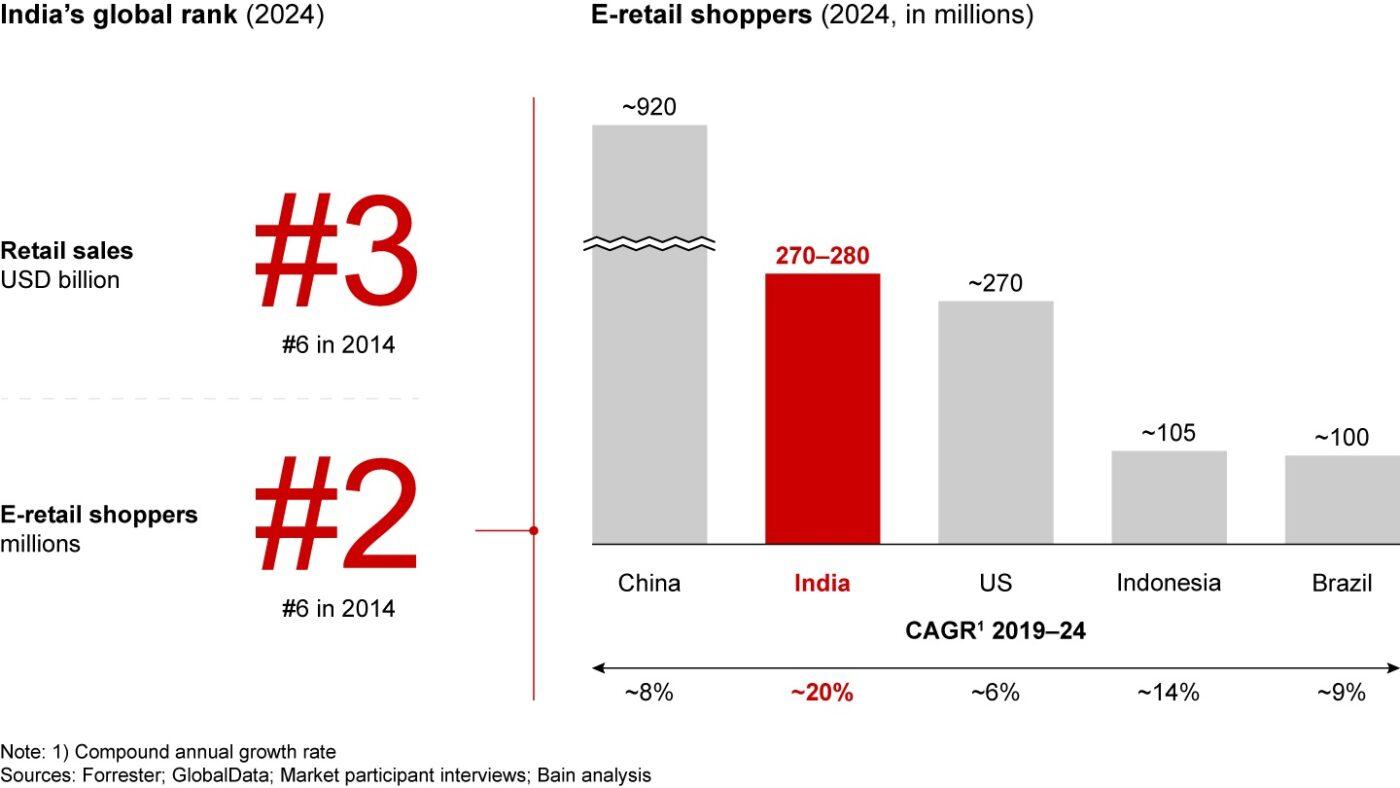
One of the biggest shifts is the rise of Gen Z, which already makes up nearly 40% of India’s e-retail shoppers. They’re far more experimental, spending 3x more on emerging fashion brands than millennials.
The same report expects India’s e-retail market to grow to $170-$190 billion by 2030, at a CAGR of 18% annually. For brands, this means e-commerce has become a core growth engine demanding deep localization, cohort-specific strategies, and Bharat-first execution.
Between 800-900 million Indians are now online, and UPI alone processed about 172 billion transactions in 2024, up 46% from 2023, making up roughly 80% of the country’s digital payment volumes.
This mobile-first, UPI-led behavior shortens the buying journey. Consumers now move from discovering products on social or vernacular content to purchasing on marketplaces or D2C apps in just a few taps.
🧠 Fun Fact: Medieval merchants invented the first product demos. In open markets, sellers performed dramatic live demos of knives, dyes, or fabrics to attract crowds. Some even hired performers to hype up the product.
India’s rank in the World Bank Logistics Performance Index improved to 38 out of 139 countries, reflecting faster, more reliable freight and multimodal connectivity.
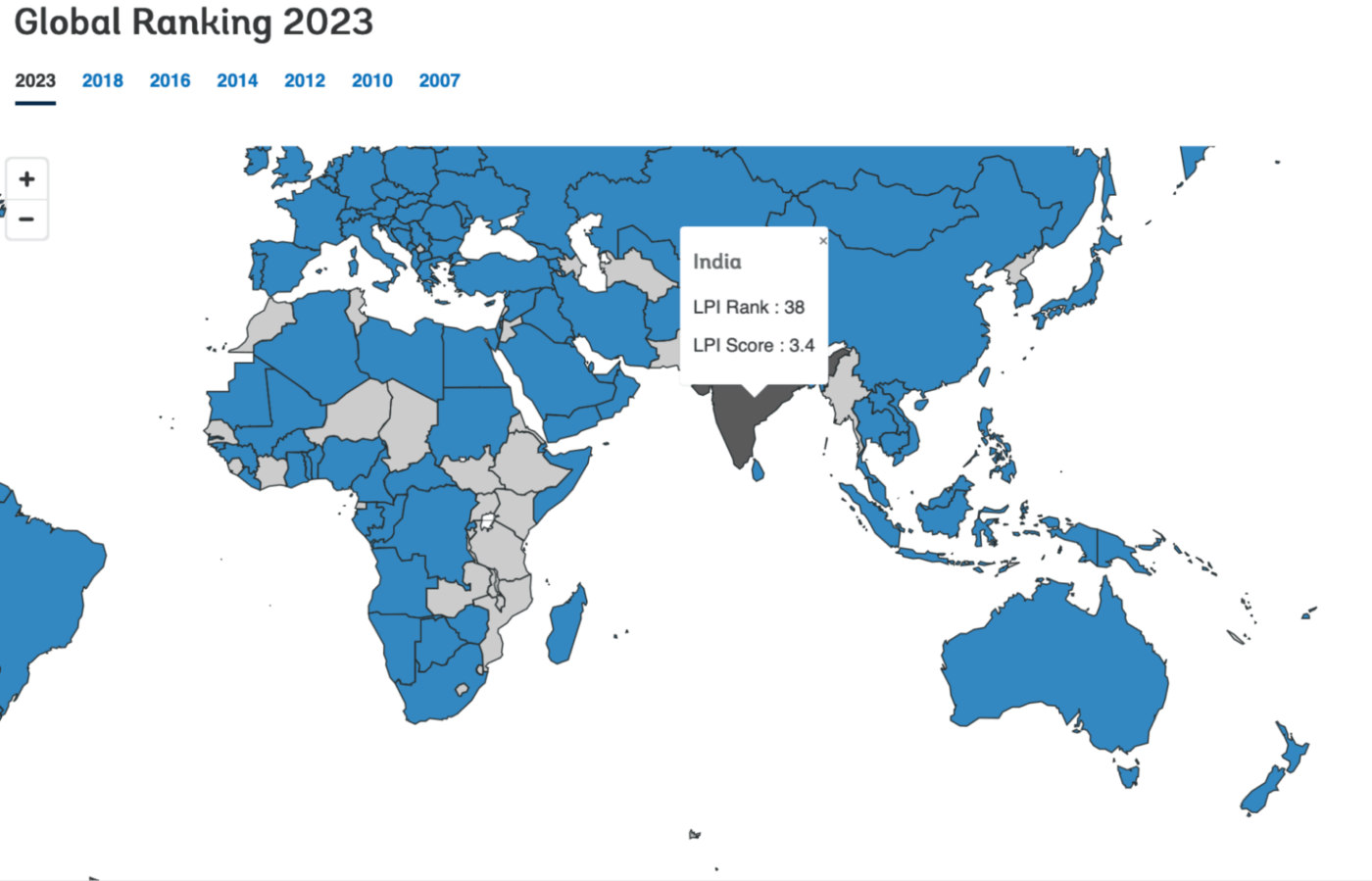
The combination of policies like the PM GatiShakti plan and facilities like the Unified Logistics Interface Platform (ULIP) has structurally lowered delivery times and logistics costs. This results in profitable expansion of cash on delivery (COD), quick commerce, and same/next-day SLAs beyond metros.
E-retail is steadily opening up access beyond India’s metros. Penetration has expanded from Tier-2 cities into Tier-3 and smaller towns, with nearly 60% of new online shoppers coming from Tier-3 and smaller cities.
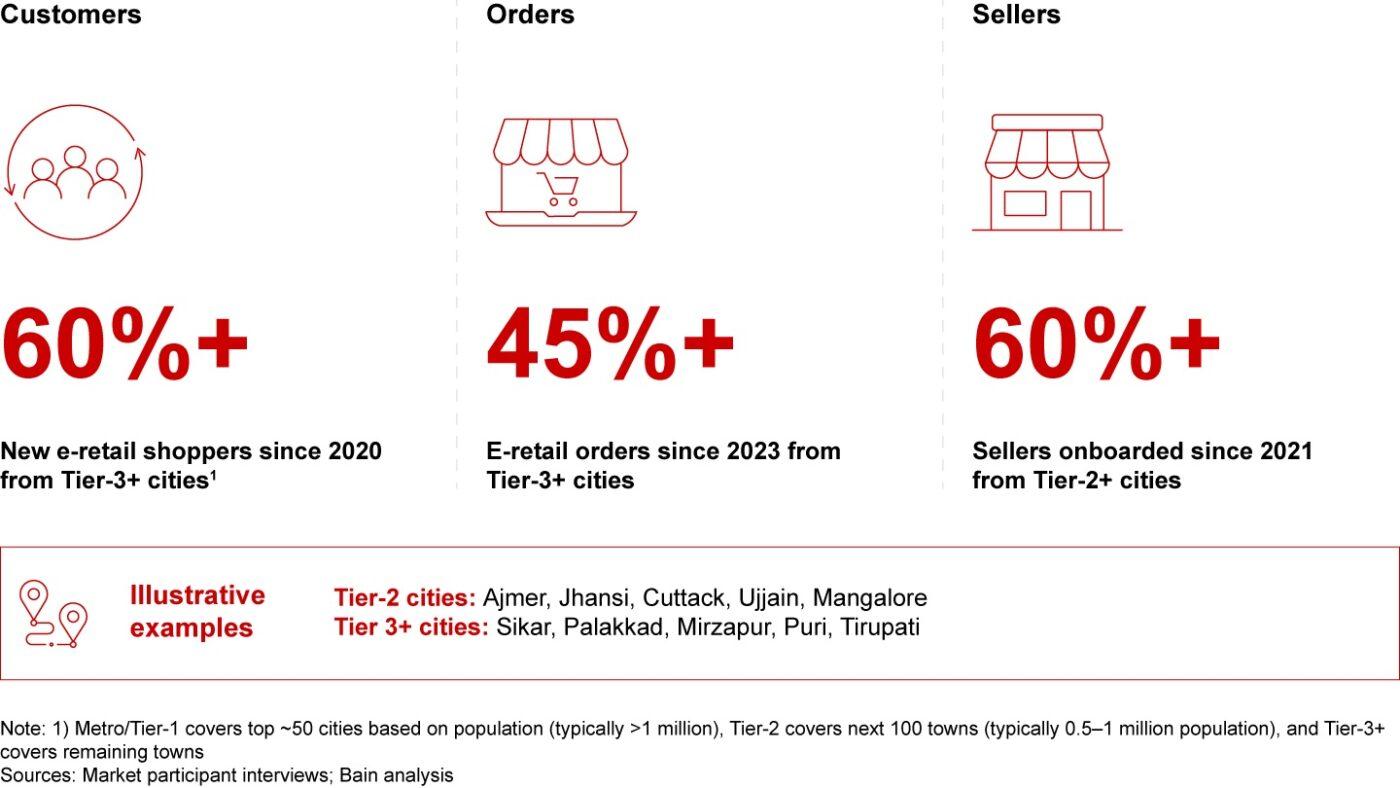
This expansion is also reshaping who sells online. Over 60% of new sellers onboarded since 2021 are from Tier-2 and smaller cities, signaling a more distributed and local seller ecosystem.
India’s sales landscape is being rewired at a frenetic pace. Buying behavior, trust signals, channel discovery, and purchase journeys now vary widely across languages, platforms, speeds, and situations.
The following sales trends in India collectively define what winning companies in India will look like. 💪
India is now a QR-native market, with codes embedded across kiranas (mom-and-pop stores), petrol pumps, salons, and modern retail outlets. What started as a convenient mode of payment has now evolved into a behavioral reflex.
📌 Leading use cases emerging in India:
🔍 Did You Know? Door-to-door selling exploded in the 1800s because of traveling peddlers with sample cases. They sold everything from books to perfume to sewing machines and were trained in scripted sales pitches, making them early SDRs.
India’s next wave of internet users is decisively non-English-speaking, driven by Indian languages and low-cost smartphones. Regionalization today goes far beyond language translation. It includes:
In practice, winning teams are doing three things:
Indian consumers are highly price-aware, socially influenced, and emotionally driven, often simultaneously. As app-based investing and credit adoption rise, platforms are starting to use ‘behavior-tech’.
These are analytics that flag emotional and cognitive patterns, such as:
Instead of only tracking what customers bought, platforms look at how often they cancel SIPs, check portfolios, churn after losses, or max out BNPL (Buy Now Pay Later) limits near the month-end. The shift allows more accurate demand planning, pricing strategy, and retention design, which can be a key differentiator in a crowded market.
🧠 Fun Fact: The first-ever mail-order business launched in 1872. Aaron Montgomery Ward created a single-sheet catalog that let rural Americans buy goods without traveling long distances. It revolutionized sales distribution long before e-commerce.
AI and automation are no longer a competitive advantage for sales teams in India—they’re the baseline.
From lead scoring and forecasting to personalized outreach and follow-ups, AI is embedded across the modern sales workflow. CRMs are evolving to automatically surface insights, flag risks in the pipeline, and recommend next best actions in real time. AI agents autonomously triage leads, research prospects, and create outreach messages.
Importantly, this shift isn’t about replacing salespeople. Instead, AI and automation are removing manual effort so reps can focus on what matters most: building relationships, understanding customer needs, and closing complex deals.
Sales professionals who treat AI as a daily co-pilot will consistently outperform those who don’t.
💡Pro Tip: Super Agents in ClickUp act like AI-powered teammates, automating repetitive sales tasks, surfacing insights, and freeing up your team to focus on closing deals. You can build one or more Super Agents to help in the following ways:
In India, more than 96% of social media users access platforms via smartphones, and a growing majority of commerce sessions start and end on mobile.
The shift to mobile-only funnels means:
In India, social platforms already sit at the center of daily digital behavior. WhatsApp reaches 80.8% of internet users, followed by Instagram at 77.9% for content discovery and sharing, and Facebook at 67.8% for news consumption.
For many first-time buyers, discovery, evaluation, trust-building, and purchase play out inside these platforms. Here are some changes seen over the years:
India’s creator economy is scaling aggressively. The number of influencers grew from under 1 million in 2020 to over 4 million across categories like fashion, beauty, tech, infotainment, and finance.
Plus, as trust shifts from brands to individuals, creators are increasingly driving product discovery, conversions, and repeat purchases, making influencer-led selling a core revenue operation.
Here’s how Indian influencers are becoming distribution channels themselves:
🔍 Did You Know? Ancient Roman shopkeepers used terracotta tokens as coupons. Customers collected little clay discs that could be redeemed for goods, making them one of the earliest recorded sales incentive systems.
Indian buyers are increasingly prioritizing sustainability and real value over big brand names. Customers are asking tougher questions about ethical sourcing, environmental impact, long-term cost savings, and product durability—especially in B2B, manufacturing, retail, and enterprise services.
Brand recall still matters, but it no longer guarantees trust or loyalty. Decision-makers are more willing to switch to lesser-known vendors if the offering clearly delivers measurable value and aligns with their sustainability goals.
Sales conversations are shifting from brand-led positioning to proof-led discussions grounded in outcomes, transparency, and responsible practices.
The takeaway for sales teams? Lead with evidence, not logos. Equip reps with clear value metrics, sustainability credentials, and real customer proof to support every sales conversation.
💡Pro Tip: Centralize all this information with ClickUp Knowledge Management. Connected Docs, wikis, and the world’s most complete Work AI mean answers are automatic. Live editing, advanced permissions, and versioning ensure everything stays updated and controlled.
Quick commerce is no longer just a convenience play for late-night snacks. In India, this channel hit around USD 6-7 billion in 2024, accounting for roughly two-thirds of e-grocery orders and nearly 10% of total e-retail spend.
Reports show Blinkit pulling ahead with over 50% market share by late 2025, with Zepto and Instamart competing for second place at a city-by-city level. That means territory and key account managers must treat each Q-commerce platform like a top account.
For sales leaders in FMCG, F&B, beauty, and small-ticket durables, quick commerce is effectively a new ‘modern trade’ with its own rules:
📖 Also Read: Sales Proposal Templates to Close Deals Faster
Brands like Lenskart have shown how AR can fundamentally change the purchase funnel. Its 3D virtual try-on feature lets users see frames on their faces in real time, reducing uncertainty and driving higher conversion. This reduces returns and increases time spent engaging with the brand, directly improving unit economics.
This playbook is spreading to:
🧠 Fun Fact: National Cash Register (NCR) in the late 1800s created the world’s first structured sales training program with John H. Patterson. Salespeople practiced scripts, role-plays, and objection handling, making NCR one of the earliest companies to formalize sales enablement.
Understanding emerging sales trends in India is only half the equation. The real advantage depends on how quickly sales teams translate these shifts into execution-ready processes.
Here’s how sales leaders can operationalize these changes.
With consumers engaging across online and offline touchpoints, data and activities easily fragment across systems and channels. And sales teams end up juggling project management tools, CRMs, chat tools, spreadsheets, and regional workflows, creating tool sprawl that slows execution and breaks visibility.
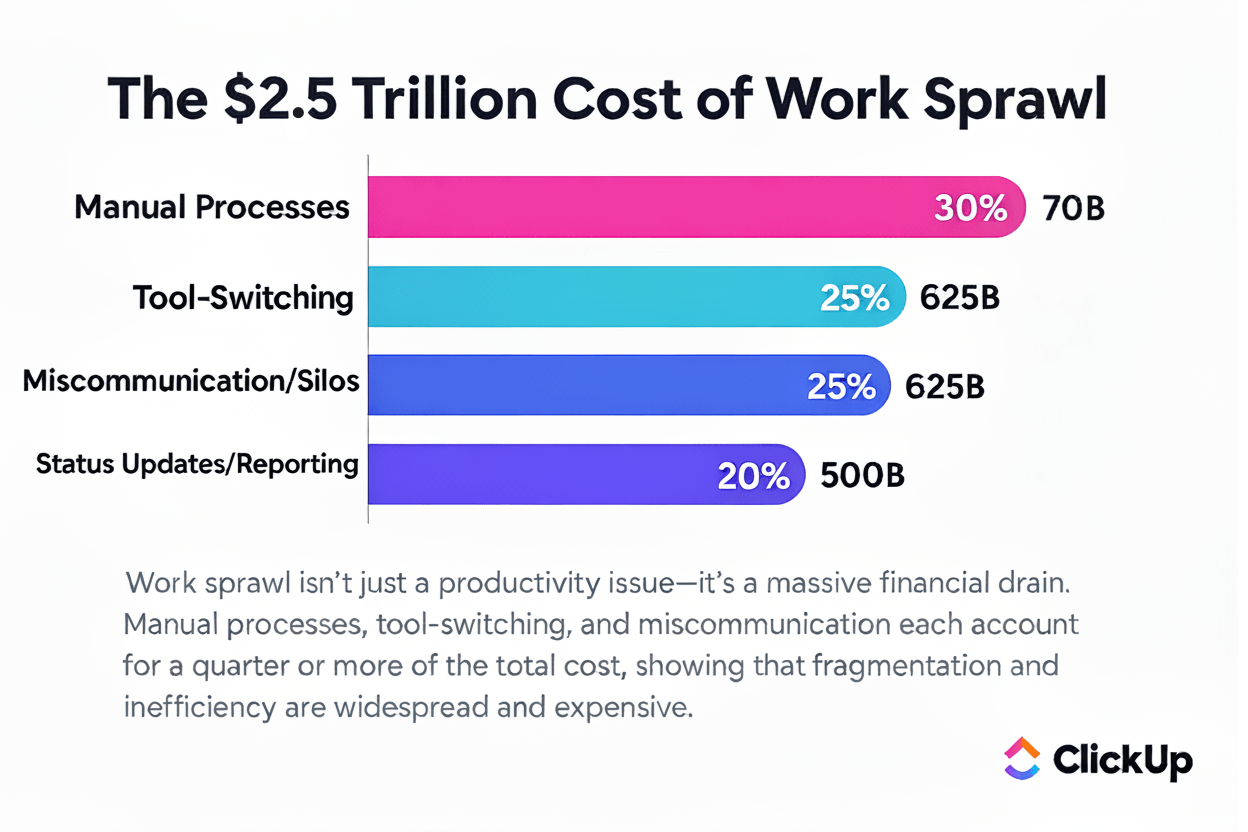
Globally, this kind of fragmentation drains productivity at scale, contributing to an estimated $2.5 trillion in lost efficiency as teams spend more time searching, reconciling, and updating systems than actually selling.
ClickUp is the world’s first converged AI workspace, built to eliminate work sprawl for sales teams that manage pipelines, follow-ups, deal notes, and forecasts across too many tools.
That clarity starts with visibility. Map your entire sales motion inside ClickUp for Sales Teams, capture leads from social, regional, marketplace, and offline channels, and follow every deal through qualification, follow-ups, compliance checks, and renewal.
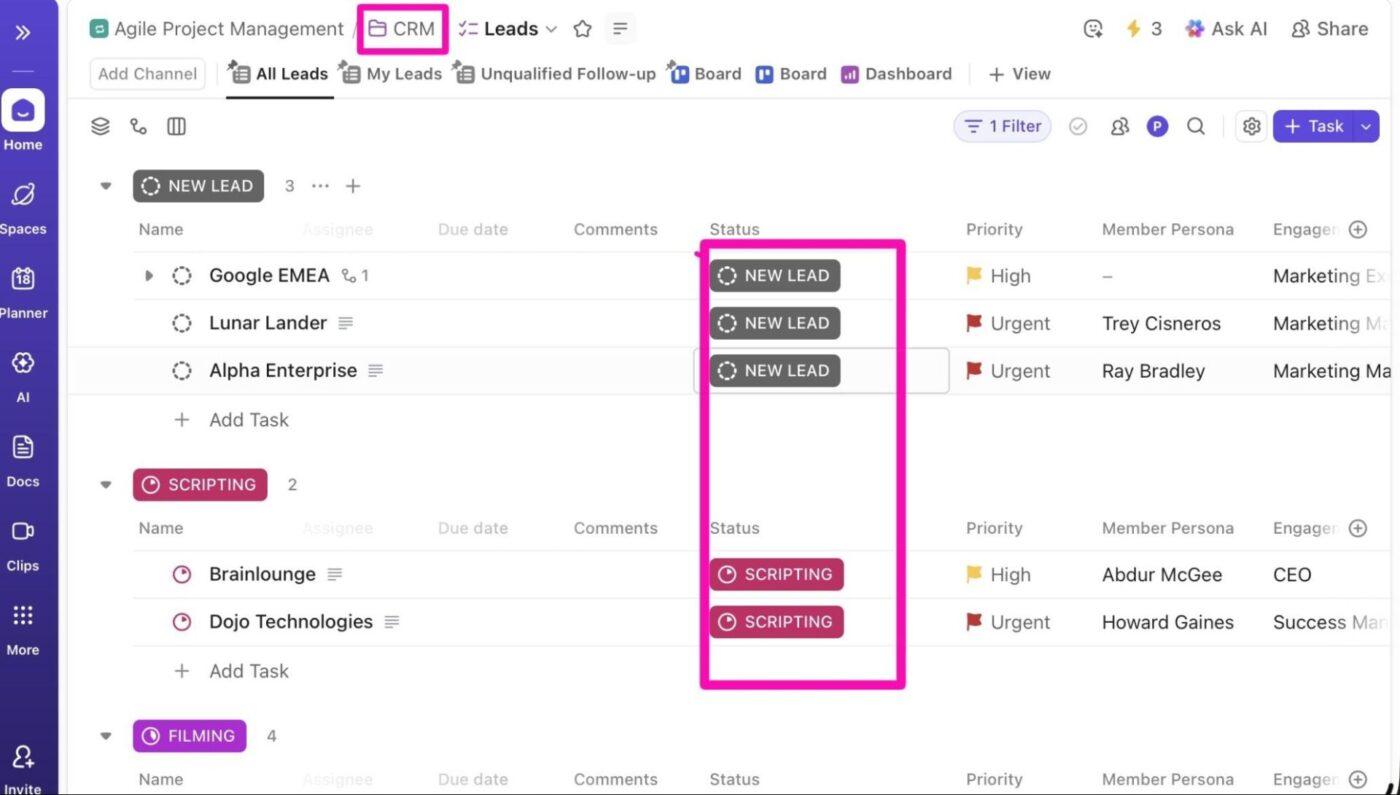
With ClickUp Custom Task Statuses, teams can define stages such as Inbound, Social Interest, Regional Follow-up Required, Verification & Compliance, and Ready to Close. This gives sales leaders a far clearer picture of where demand is getting stuck and why.
And at the core, ClickUp’s CRM keeps contacts, accounts, and deals connected to the work being done on them.
📮 ClickUp Insight: Our AI maturity survey highlights a clear challenge: 54% of teams work across scattered systems, 49% rarely share context between tools, and 43% struggle to find the information they need.
When work is fragmented, your AI tools can’t access the full context, which means incomplete answers, delayed responses, and outputs that lack depth or accuracy. That’s work sprawl in action, and it costs companies millions in lost productivity and wasted time.
ClickUp Brain overcomes this by operating inside a unified, AI-powered workspace where tasks, docs, chats, and goals are all interconnected. Enterprise Search brings every detail to the surface instantly, while AI Agents operate across the entire platform to gather context, share updates, and move work forward.
The result is AI that’s faster, clearer, and consistently informed, something disconnected tools simply can’t match.
Today’s buyer journey in India doesn’t start in one place. It can begin via social media messages, QR code scans, marketplace chats, website forms, or WhatsApp.
📌 Here’s what you need to do:
🚀 ClickUp Advantage: Handle routine sales actions and move leads and follow-ups through workflows without manual intervention with ClickUp Automations. Then, set up ClickUp Agents to add intelligence and context-aware decision-making to lead management.
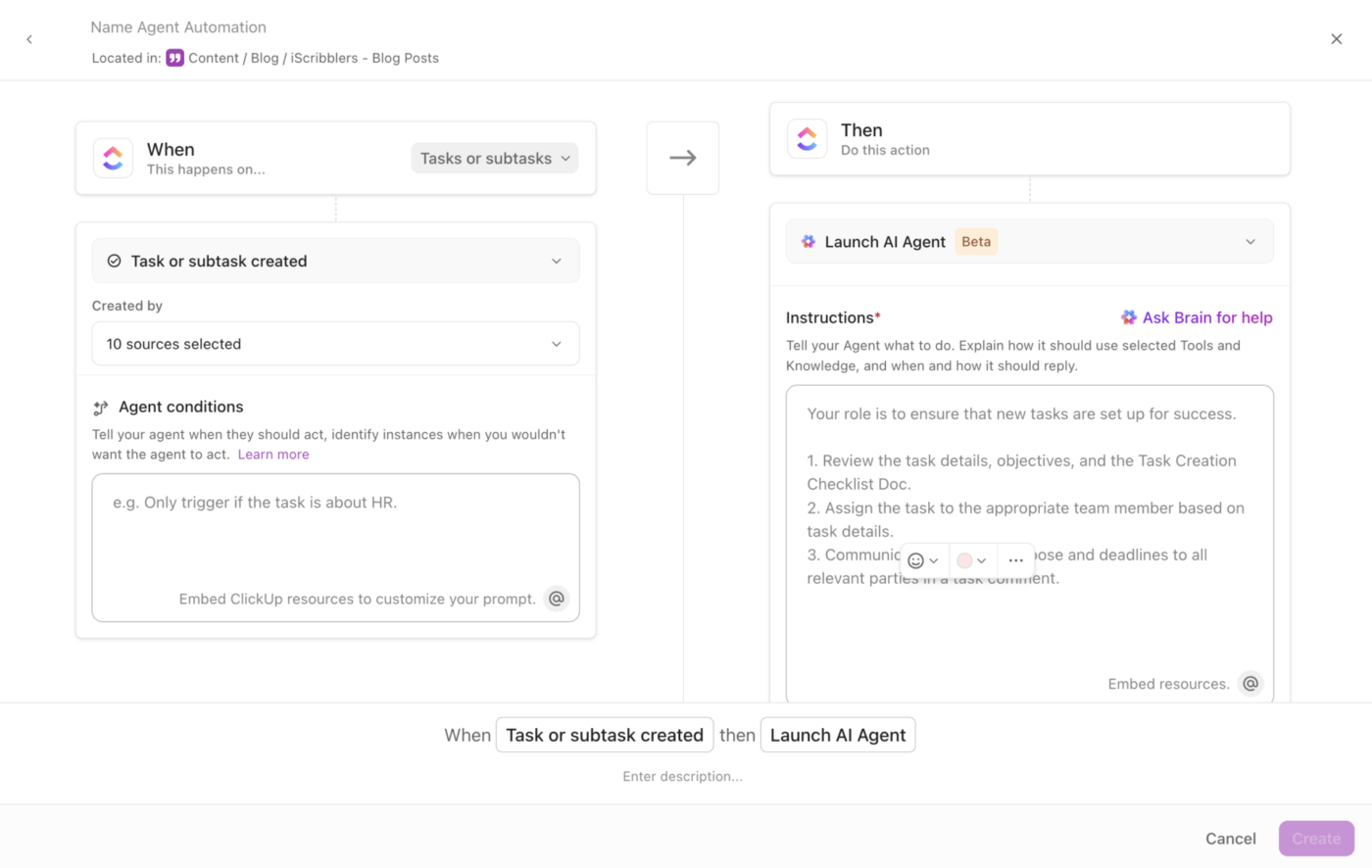
When a lead enters through ClickUp Forms, Agents can enrich the data, draft personalized follow-ups, suggest the best outreach channel (email, WhatsApp, or call), and schedule next steps automatically.
Plus, Agents also summarize lead activity for faster reviews and analyze closed-won or lost patterns to recommend improvements to forms, routing logic, and follow-up strategies.
Check out the best AI agents for sales productivity and CRM automations. 👇
Indian markets change quickly due to cultural events, regional cycles, pricing shifts, festival-driven spikes, and platform-level trends. In this environment, sales leaders need ongoing visibility into how the pipeline is behaving and where it is likely to move next.
And that’s exactly what ClickUp Brain provides.
Say you’re a sales leader preparing for the monthly sales forecast review. Instead of pulling reports, you ask ClickUp Brain, ‘Summarize current pipeline health, including lead velocity, conversion rates, and win rates.’
ClickUp Brain analyzes live workspace data and returns a real-time snapshot of sales momentum.
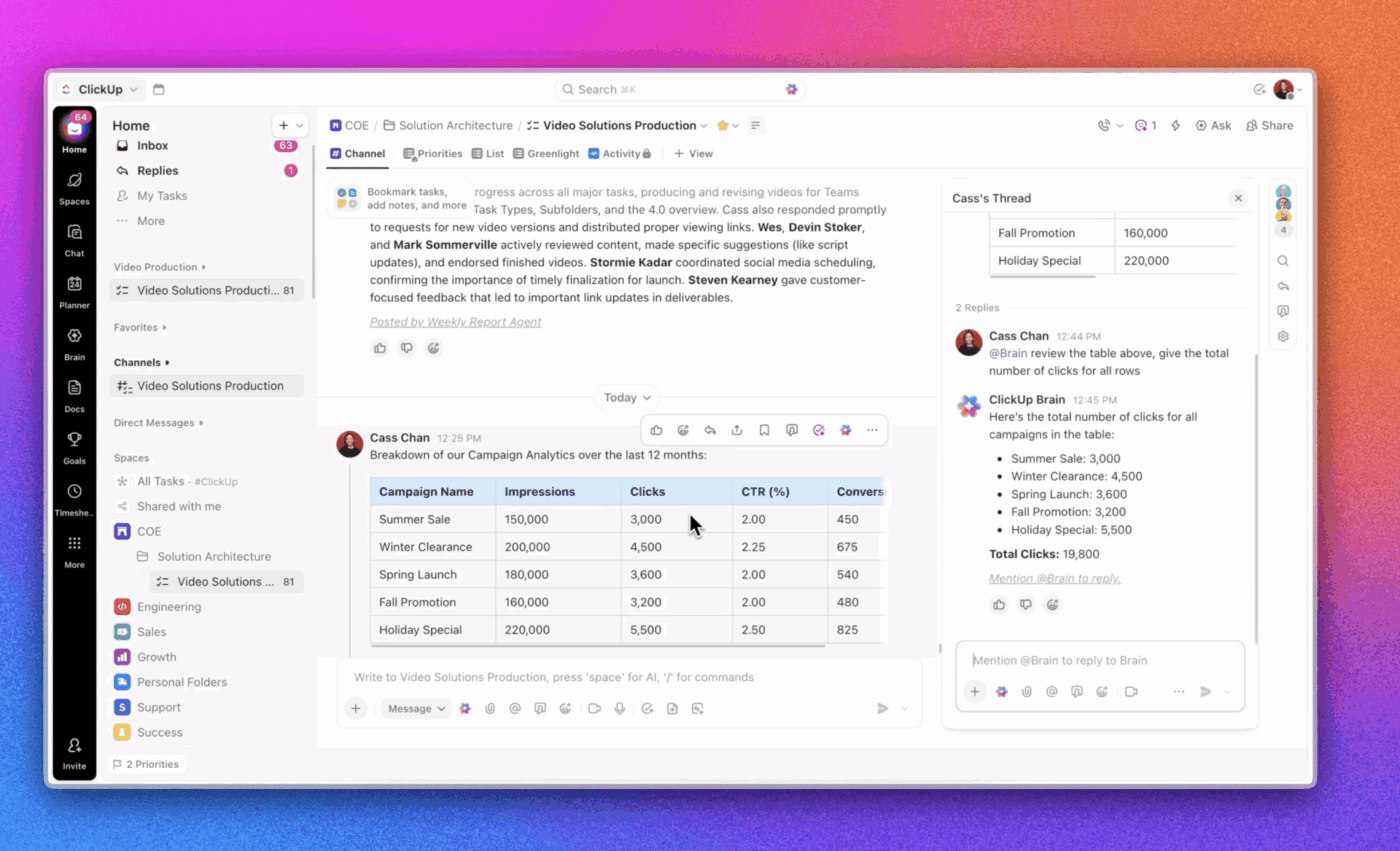
Next, you run a follow-up prompt, ‘Based on current trends, are we on track to hit this quarter’s target?’ ClickUp Brain then uses historical and current data to flag potential shortfalls, highlight regions or stages driving risk, and surface projected win rates.
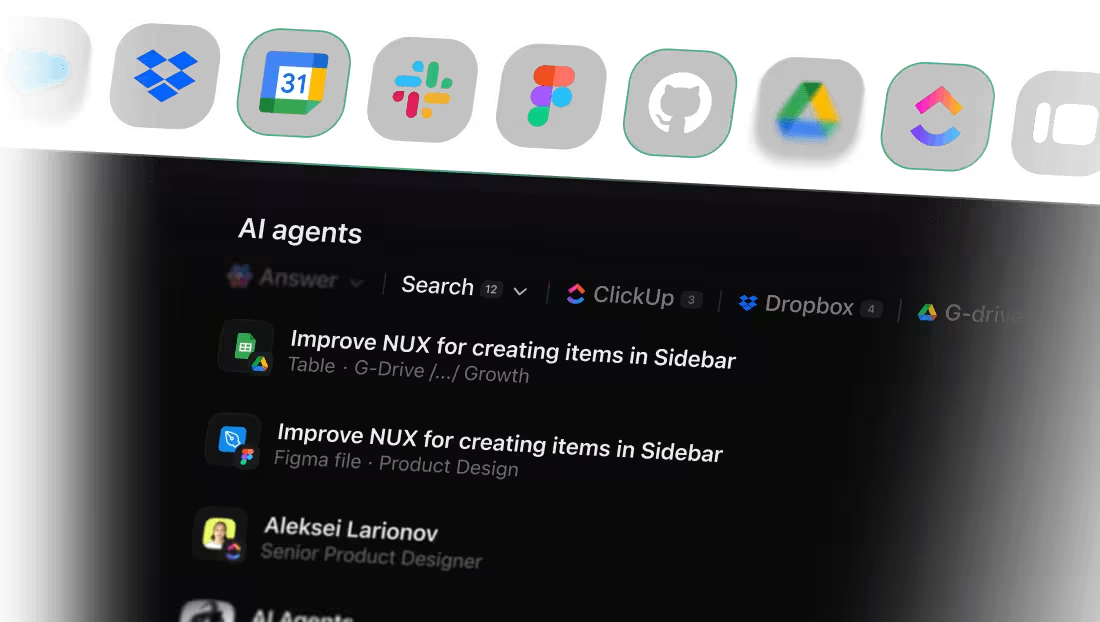
🚀 ClickUp Advantage: ClickUp BrainGPT is a desktop AI companion that brings insights from every connected tool into one searchable, action-ready interface.
Enterprise Search pulls data from tools like ClickUp, Google Drive, HubSpot, or Salesforce in a single query, so teams can quickly find campaign plans, pricing updates, or regional performance notes without switching tabs—especially when timelines are tight.
With ClickUp Talk to Text in BrainGPT, leaders can dictate deal observations, market feedback from calls, or meeting notes while on the move. These inputs become searchable and usable immediately, keeping frontline insights connected to project pipeline management and strategy.
As regionalization becomes a strategic pillar in India, one script doesn’t work for all markets. To get traction across linguistic and cultural segments, you need localized playbooks that sales reps can reliably execute.
Here’s how to standardize your sales playbook:
💡 Pro Tip: Create region-specific sales playbooks in ClickUp Docs. You can all your material into structured Docs or subpages for each language or market.
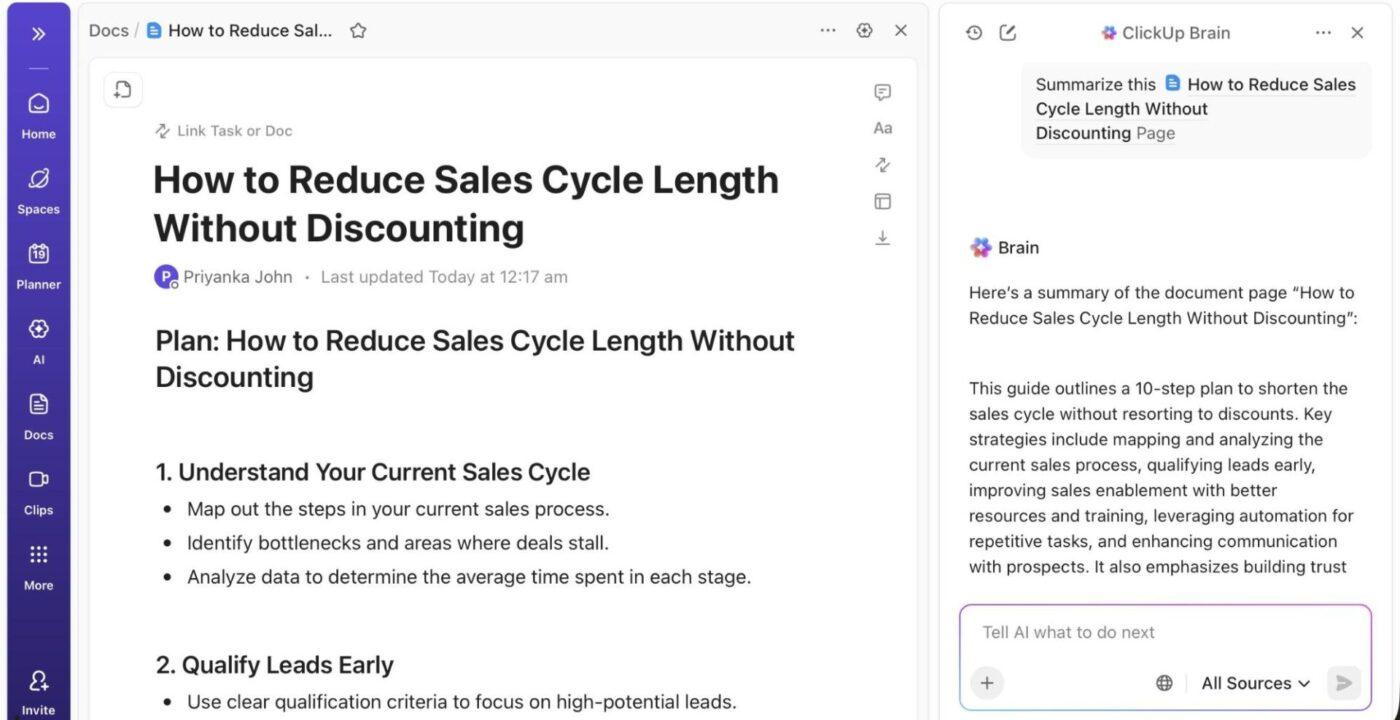
Real-time collaboration, comments, and version history help regional managers keep content accurate and up to date, while embedded training assets, checklists, and linked sales tasks ensure reps can quickly find and execute the right playbook for their context.
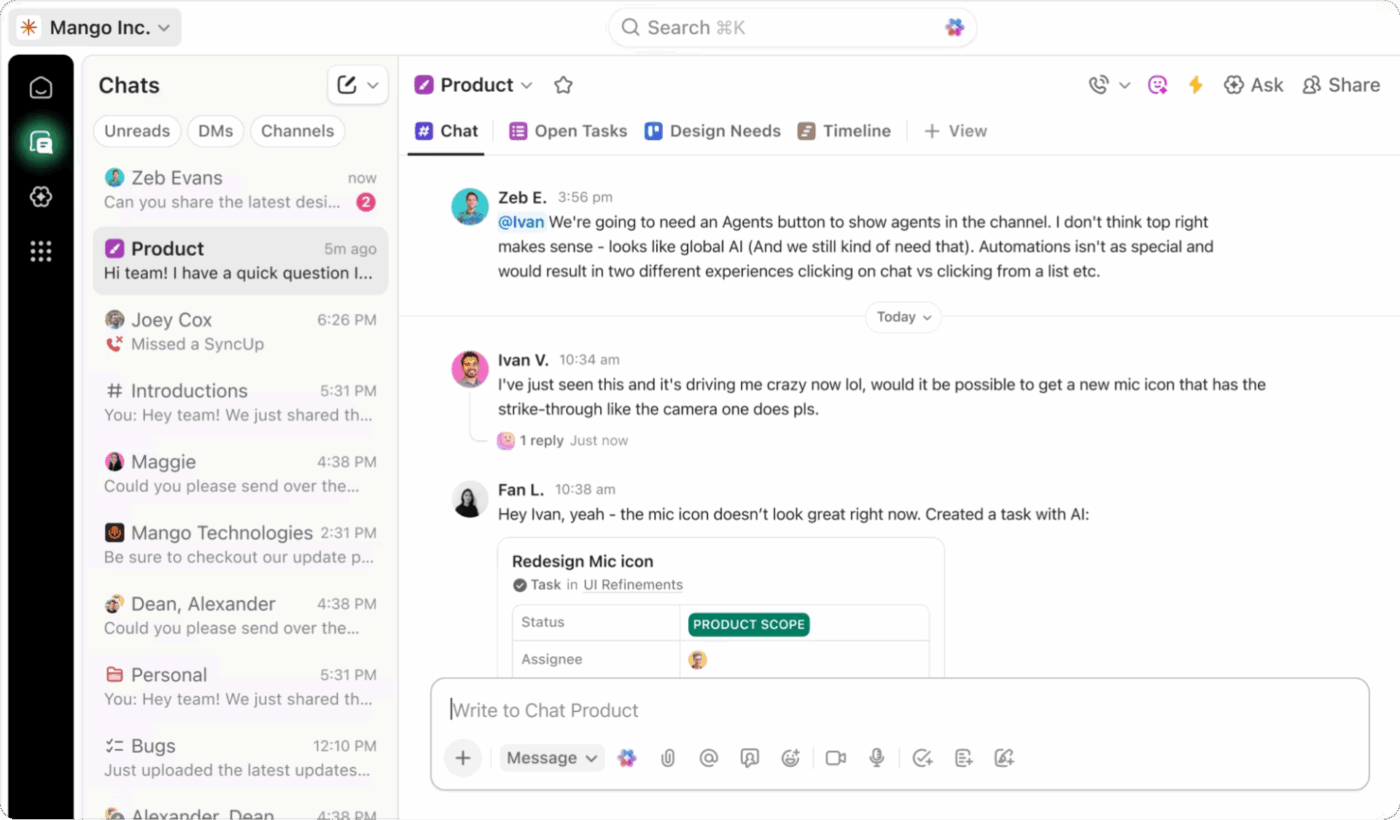
Sales momentum depends on individual seller performance and how well Sales connects with Marketing, Operations, Product, and Customer Support. When teams aren’t aligned in real time, it leads to mixed messaging, delayed responses to buyers, missed handoffs, and a poor customer experience.
ClickUp Chat helps solve this by bringing conversations directly into the work context:
With markets moving fast, clarity on targets and incentives keeps teams focused. Nevertheless, goals must align with regional realities, product priorities, and evolving customer behavior, not arbitrary corporate targets.
📌 Here’s what you can do:
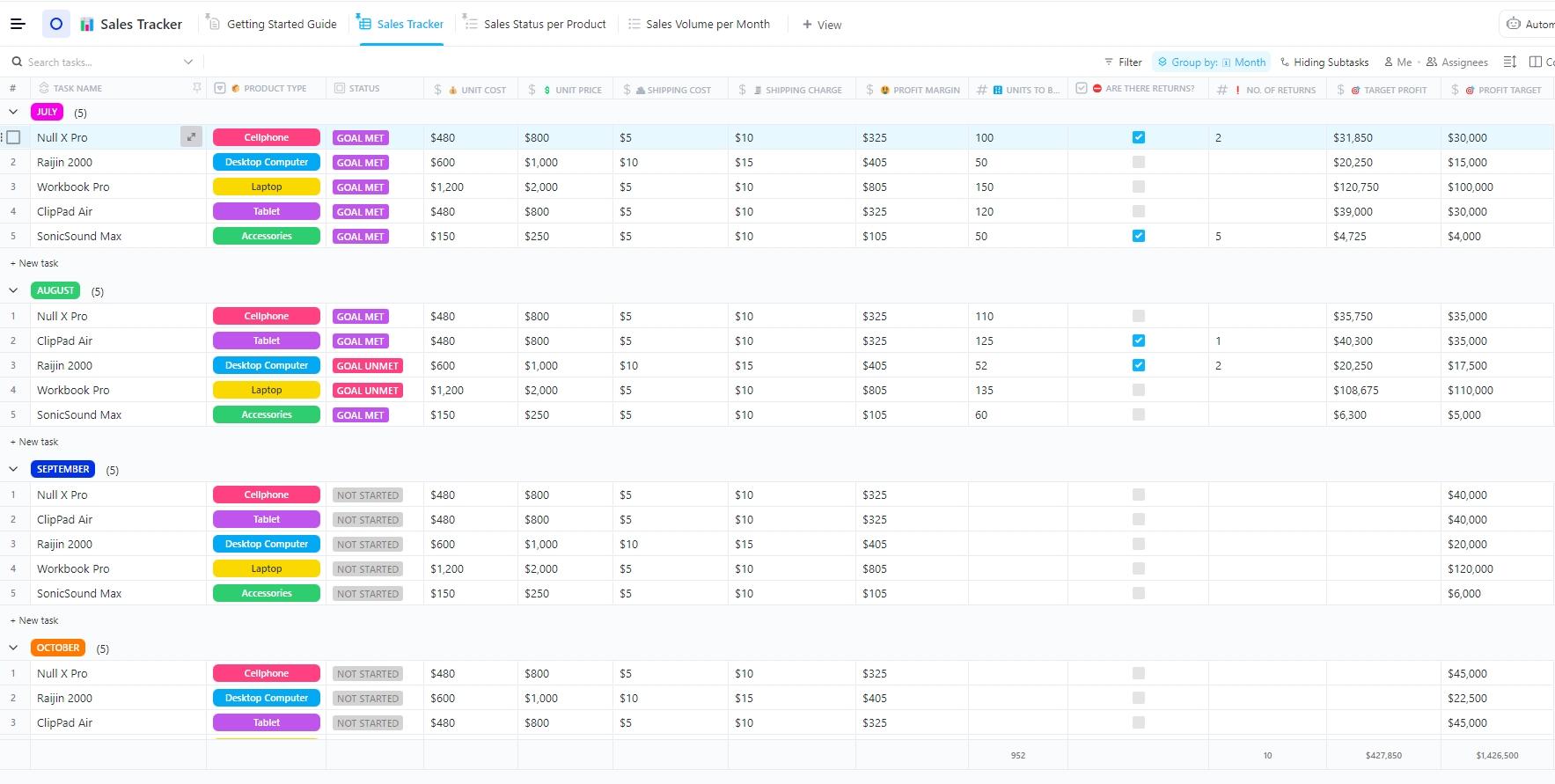
But too often, teams rely on spreadsheets or disconnected tools that make it hard to see what’s working, what’s stuck, and where to focus next. That’s exactly the gap ClickUp Sales Tracker Template is designed to solve. It’s built as a List-based sales tracker that follows each customer order or sales goal from start to completion.
With this template, you can:
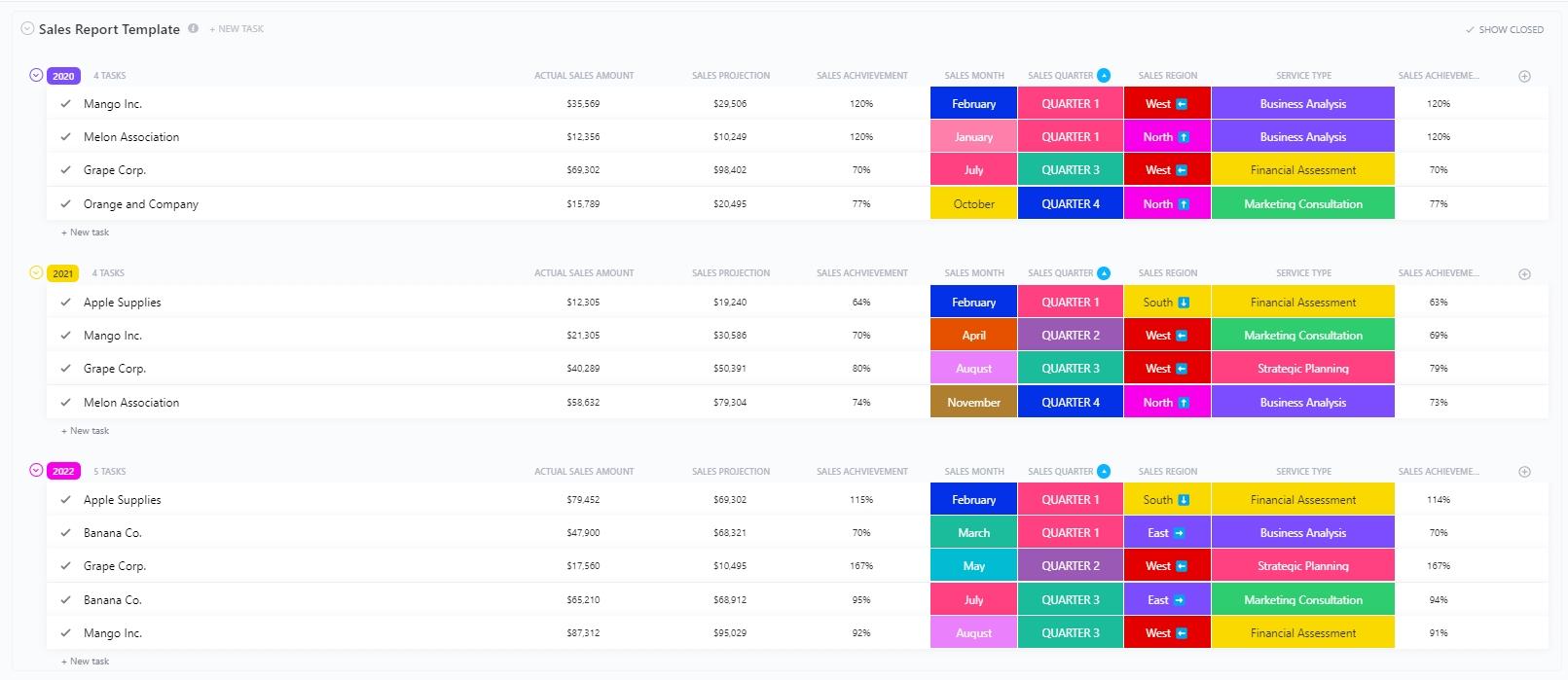
Pair this with the ClickUp Sales Report Template to turn day-to-day sales tracking into strategic performance insights without needing to manually compile updates from multiple sources.
This sales plan template allows you to:
Below are the key risks sales leaders need to watch out for, especially in the context of phygitalization, AI adoption, CRM modernization, and regional expansion:
Sales trends in India will continue to evolve in overlapping shifts driven by technology, regional nuance, and changing buyer expectations. In the coming years, advantage won’t come from predicting every change correctly, but from building sales systems that can adapt as those changes unfold.
ClickUp’s converged AI workspace brings planning, execution, collaboration, and reporting into one connected system. Within that foundation, its CRM centralizes pipeline management, forecasting, and deal execution. On top of that, ClickUp Brain and BrainGPT surface real-time insights, patterns, and risks across your sales data, helping leaders make faster, better-informed decisions.
And as volume and complexity increase, ClickUp Automations and Agents keep follow-ups, handoffs, and next steps moving automatically.
Sign up to ClickUp for free and prepare your sales team for what’s coming next.

© 2026 ClickUp

There’s an easier way. Try a free AI Agent in ClickUp that actually does the work for you—set up in minutes, save hours every week.