






Still downloading templates?
There’s an easier way. Try a free AI Agent in ClickUp that actually does the work for you—set up in minutes, save hours every week.
Sorry, there were no results found for “”
Sorry, there were no results found for “”
Sorry, there were no results found for “”
While content demand has doubled in the past two years, not all content meets the mark. In fact, random posting is the enemy of social media success.
This article walks you through building a content pillar framework that actually works—from choosing your core themes and mapping them to the right platforms, to measuring performance at the pillar level instead of obsessing over individual posts.
We’ve talked to dozens of social media teams who describe the same Monday morning panic: staring at an empty content calendar with a week of posts to create. This leads to a reactive, chaotic content strategy where posts are random, disconnected, and fail to build any real momentum. This constant scramble wastes creative energy, leaving a social media presence that feels inconsistent and forgettable.
Social media content pillars are the antidote to this chaos. They are the three to five foundational topics or themes that guide every single piece of content you create. Think of them not as individual posts, but as the strategic thematic categories that your posts fall into.
This framework ensures your content is always focused on what your audience cares about while staying true to your brand’s expertise and messaging.
👀 Did You Know: According to CoSchedule’s Trends Report, organized marketers are 674% more likely to report success than their peers.
Instead of throwing content at the wall and hoping something sticks, you can build a deliberate content framework.
💡 Pro Tip: Centralize your strategy and eliminate the guesswork with ClickUp Docs. You can create a living document that defines each pillar, then link it directly to your content tasks, ensuring every post is purposefully tied to your overarching goals.
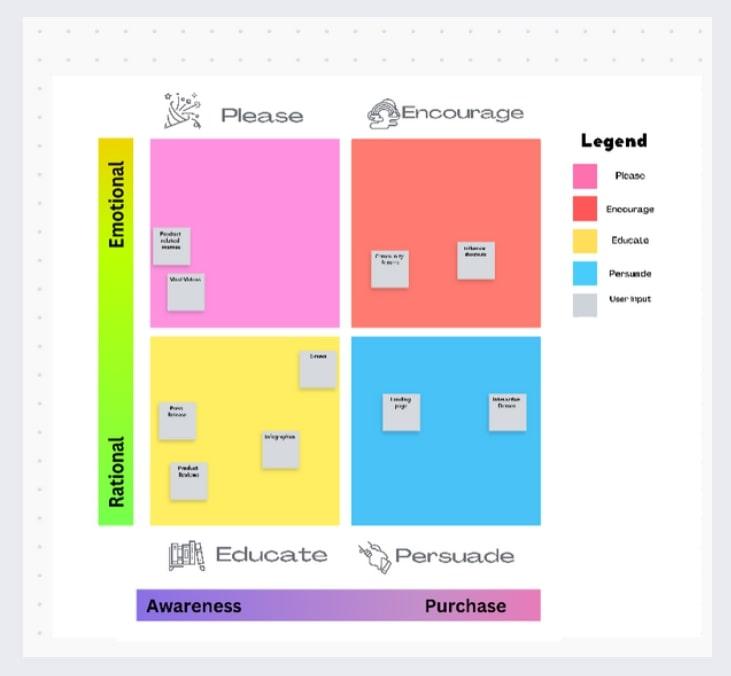
Creating a content matrix can be a great way to organize and track the content you create. ClickUp’s Content Matrix Whiteboard Template makes it easy to plan and organize your content pillars, and easily identify what works—and what doesn’t.
When your content strategy is fragmented, the hidden costs add up fast. Teams spend hours each week just searching for past content and recreating assets that already exist somewhere.
Work sprawl—fragmented work activities across disconnected tools and systems that don’t talk to each other—leads to duplicated efforts, a brand voice that shifts with the wind, and an inability to prove the value of your social media marketing.
Content pillars align your entire workflow, from ideation to performance analysis. They provide the structure needed to maintain brand consistency and finally measure your content ROI.
These are some of the benefits of building your social media strategy around defined content pillars:
Brand voice drift is real. When three different team members post to three different platforms without shared guidelines, your audience encounters what feels like three different brands.
This inconsistency makes it nearly impossible to build a loyal following that recognizes your brand, no matter where they find you.
Aligning your social media strategy across all channels is easier when you have content pillars in place.
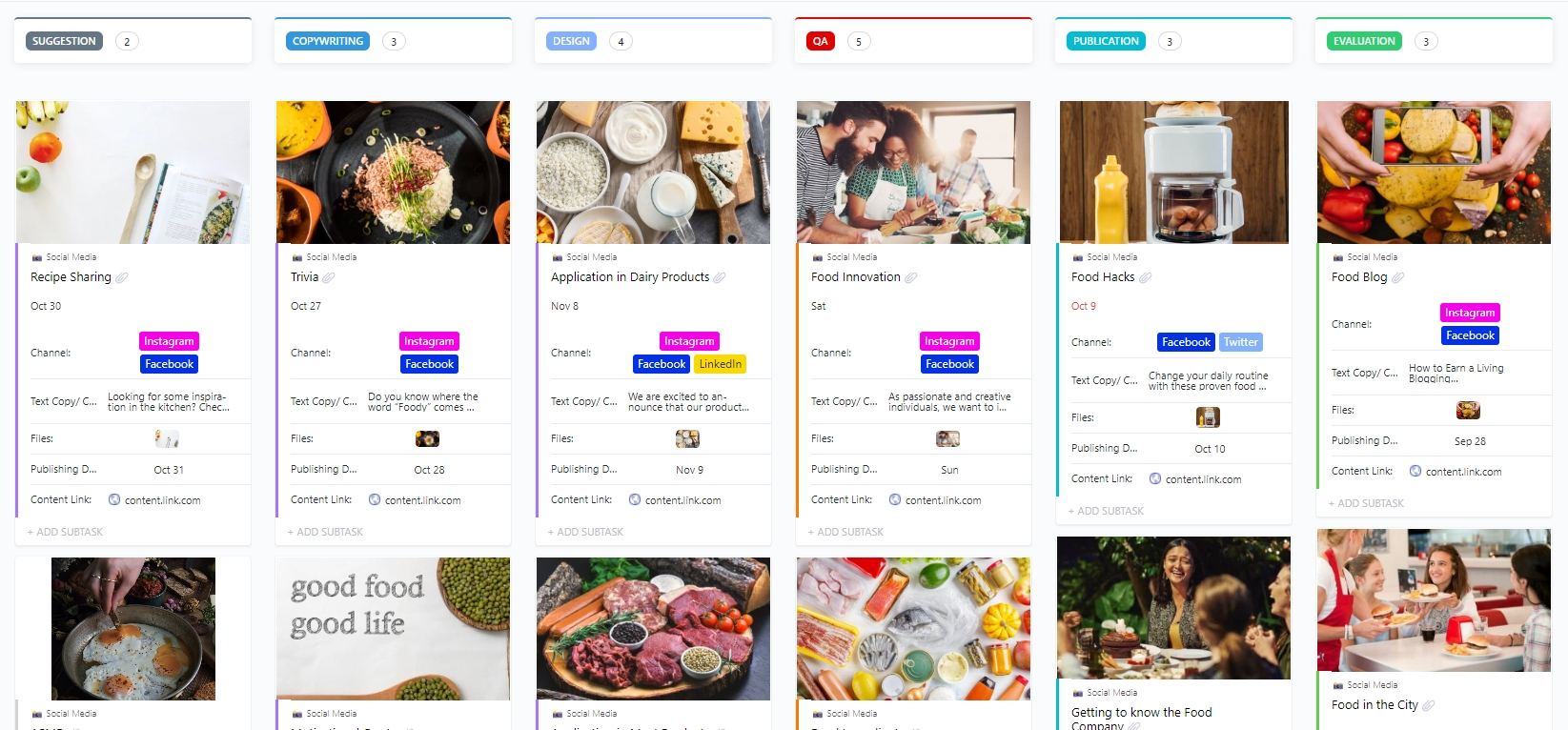
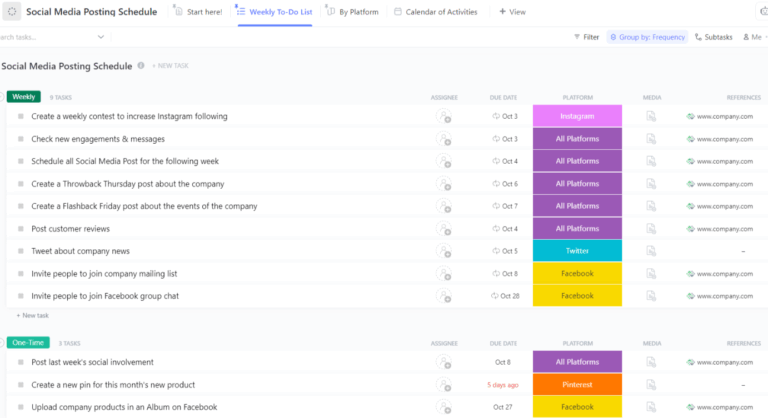
ClickUp’s Social Media Template helps you manage your social media presence in one place.
Here’s why you’ll like it:
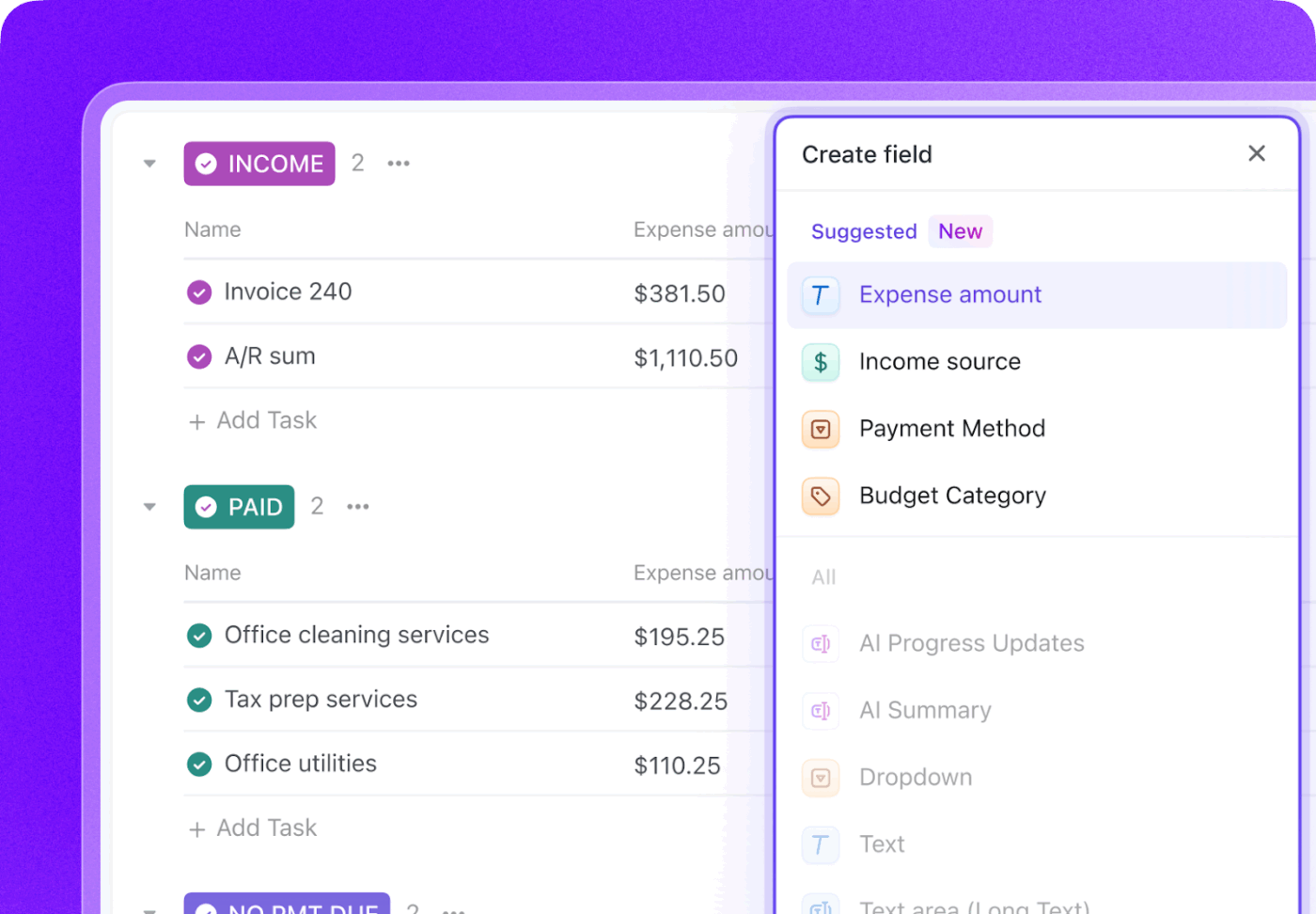
💡 Pro Tip: Tag every content task with its corresponding pillar using ClickUp Custom Fields to achieve cross-platform consistency. This lets you see at a glance whether your content mix is balanced across all channels. You can instantly spot if your TikTok is all promotional content while your LinkedIn is missing educational posts, and then adjust your strategy to ensure a unified brand voice everywhere.
Staring at a blank content calendar is a terrifying and unproductive way to start the week, but a solid content creation workflow can solve that.
When your team has no defined themes, brainstorming sessions become aimless, leading to last-minute, low-quality posts and eventual burnout. This constant pressure to invent new ideas from scratch is a massive drain on creativity and resources.
Pillars give your team defined boundaries, making content ideation faster and more focused.
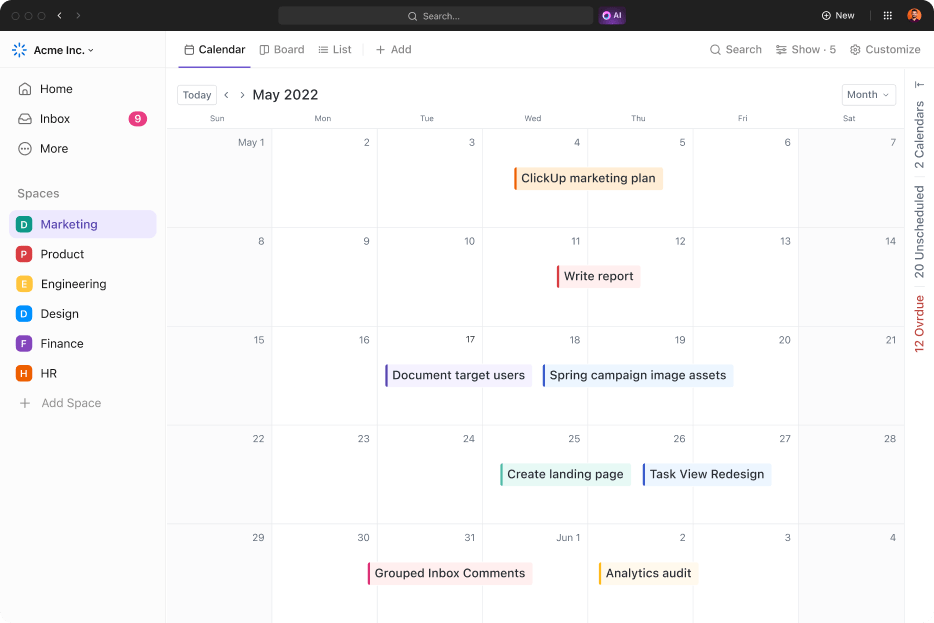
💡 Pro Tip: Eliminate the “what should we post” panic by planning your content with ClickUp Calendar View. You can visualize your pillar distribution for the entire month, batch-create content for each theme, and turn planning into a simple drag-and-drop exercise.
“Is this the final version?” “Where are the brand guidelines for this?” When your content workflow is disjointed, handoffs between writers, designers, and social media managers are plagued by endless back-and-forth and missed deadlines.
This friction slows down the entire production cycle and leads to team-wide frustration.
Create seamless handoffs by building your workflow around your pillars. When everyone shares a common language, team collaboration becomes effortless.
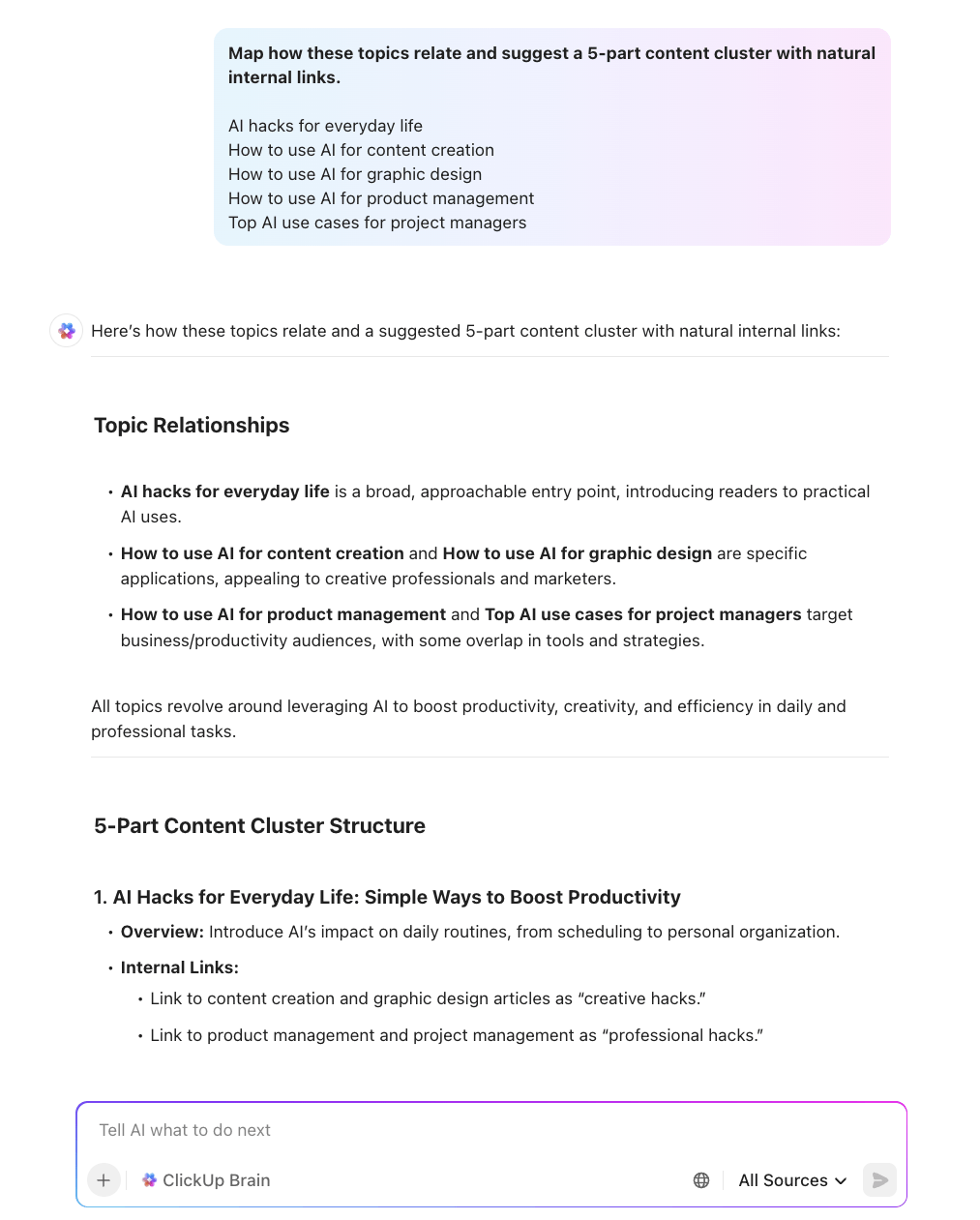
💡 Pro Tip: ClickUp Brain, the integrated AI assistant, can automatically surface pillar guidelines from your Docs and find high-performing posts from the past, giving every team member the context they need right where they work. But that’s not all. Brain can also brainstorm content ideas with you, and draft posts too. ✨
📮ClickUp Insight: A typical knowledge worker has to connect with 6 people on average to get work done. This means reaching out to 6 core connections on a daily basis to gather essential context, align on priorities, and move projects forward.
The struggle is real—constant follow-ups, version confusion, and visibility black holes erode team productivity, with workers interrupted every 2 minutes during focus work.
A centralized platform like ClickUp, with Connected Search and AI Knowledge Manager, tackles this by making context instantly available at your fingertips.
Are you tracking likes and comments but have no idea why some posts succeed while others fail? Without a strategic framework, your analytics are just a sea of numbers, offering no real insight into what resonates with your audience.
This makes it impossible to make informed decisions, leaving you to guess what might work next.
Content pillars make it easier to build a framework for meaningful performance analysis.
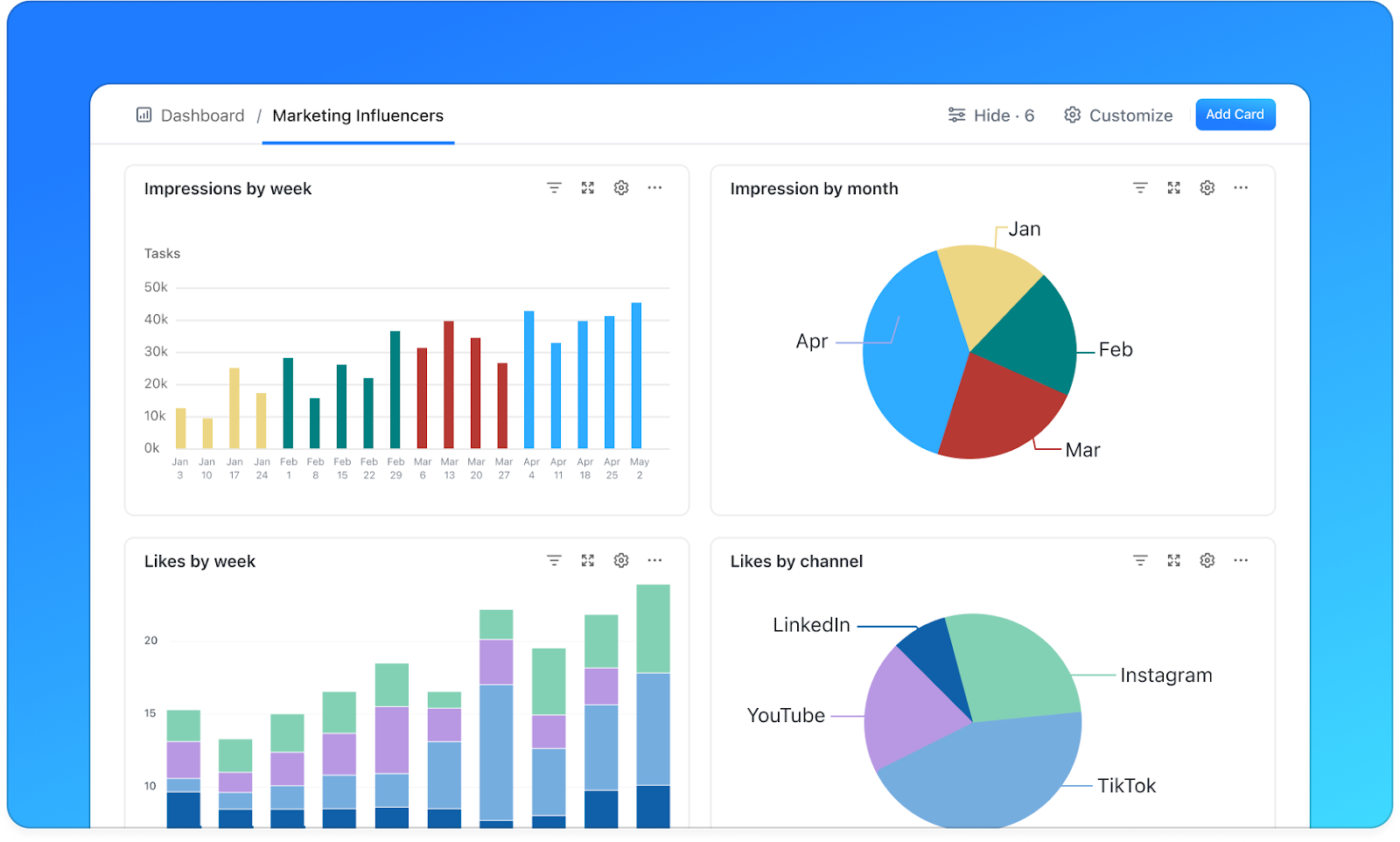
💡 Pro Tip: Create customized views that display pillar-level performance metrics with ClickUp Dashboards. By converting your workspace data into visual charts, you can finally answer critical questions like, “Does our ‘Educational’ pillar drive more website clicks than our ‘Behind-the-scenes’ pillar?” and use those insights for true content optimization.
You know you need pillars, but you have no idea what they should be. This is where most teams get stuck, and the paralysis leads them right back to random posting. Don’t overcomplicate it—start with proven content categories and adapt them to your brand.
These common pillar types are a starting point, not a rigid formula. Use them as inspiration to build a content mix that serves your audience and meets your business goals.
This pillar is all about being helpful. It includes how-to guides, tutorials, quick tips, answers to frequently asked questions, and industry insights.
It positions your brand as a trusted expert and is especially effective for B2B companies or any brand with a product that has a learning curve.
Educational content consistently outperforms promotional content on LinkedIn, with how-to posts generating 3x more engagement than product announcements.
Build an emotional connection with your audience through brand storytelling. This pillar includes customer success stories, motivational quotes, aspirational content, and posts that highlight your brand’s mission and values.
A word of caution: use this pillar to inspire, not just to create hollow “feel-good” posts.
This is where you talk about your products and services. Promotional content includes product spotlights, launch announcements, special offers, and company news. While necessary, this pillar should be used sparingly—a good rule of thumb is to keep it under 20% of your total content mix.
Turn your followers from passive viewers into active participants. This pillar, focused on community engagement, is designed to spark audience interaction and includes user-generated content (UGC), polls, Q&As, contests, and customer spotlights.
It’s highly effective for generating social proof and building strong relationships with your most loyal fans.
Humanize your brand by showing the people and processes that make it all happen. This pillar offers a glimpse into your company culture, spotlights team members, or reveals how your products are made.
It builds authenticity and transparency, which help modern brands stand out.
📚 Also Read: Your Guide to Social Media Project Management
Creating content pillars is a practical, step-by-step process that any team can follow. Remember, this isn’t a one-time exercise—your pillars should be living, breathing parts of your strategy that evolve with your audience and business.
You can’t create content that resonates if you don’t know who you’re talking to or what you’re trying to achieve. Your pillars must sit at the intersection of your audience’s interests and your business objectives.
For example, if your audience values sustainability and your goal is to increase product awareness, a pillar focused on “sustainable practices in our industry” could effectively bridge that gap.
Before you invent new pillars, look at what you’ve already created. What themes have naturally emerged? Which posts performed the best? Where are the gaps in your content? Auditing your past work prevents you from starting from scratch and often reveals surprising patterns about what your audience loves.
The ideal number of pillars is between three and five. Fewer than three can make your content feel repetitive, while more than five can dilute your focus and become difficult to manage. Each pillar should be broad enough to generate dozens of post ideas but specific enough to feel distinct from the others.
Here’s a quick test for each potential pillar: Can you brainstorm at least ten different post ideas that fit under this theme? If you’re struggling, your pillar might be too narrow.
💡 Pro Tip: Get your team together and brainstorm ideas for building content pillars and their related ideas. This is easy to do with AI-powered ClickUp Whiteboards that not only make idea-sharing easier but also turn ideas into tasks in one click.
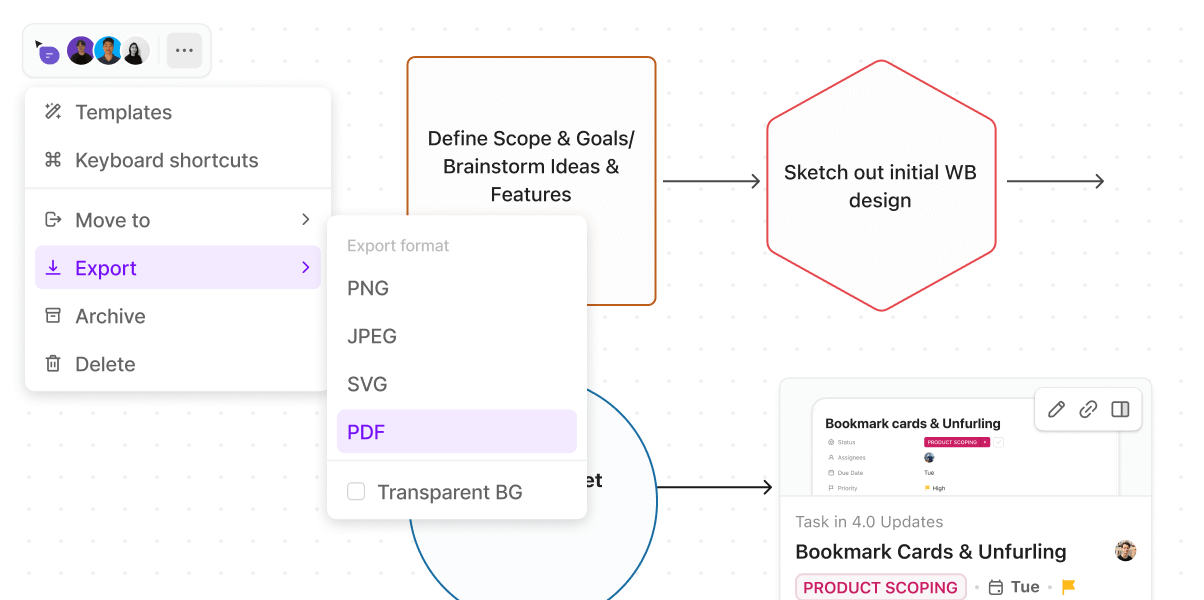
You can create mind maps, add inspirational screenshots from other brands, and collaboratively design your content framework before building it out in your workspace. 🛠️
See how Dragonfruit Media leveraged ClickUp Whiteboards to transform their content planning 👇
Not every pillar will perform equally well on every social media platform. For example, your in-depth educational content might be perfect for a LinkedIn carousel but would likely fail as a 15-second TikTok video.
Likewise, a fun behind-the-scenes video might thrive on Instagram Stories but feel out of place on a corporate blog.
Avoid this mismatch by creating a simple matrix that maps each pillar to its ideal social channels and formats.
💡 Pro Tip: You can build this out in a spreadsheet-style format with ClickUp Table View. Create columns for Pillar, Channel, and Format to make your content distribution plan clear, actionable, and easy for the whole team to follow.
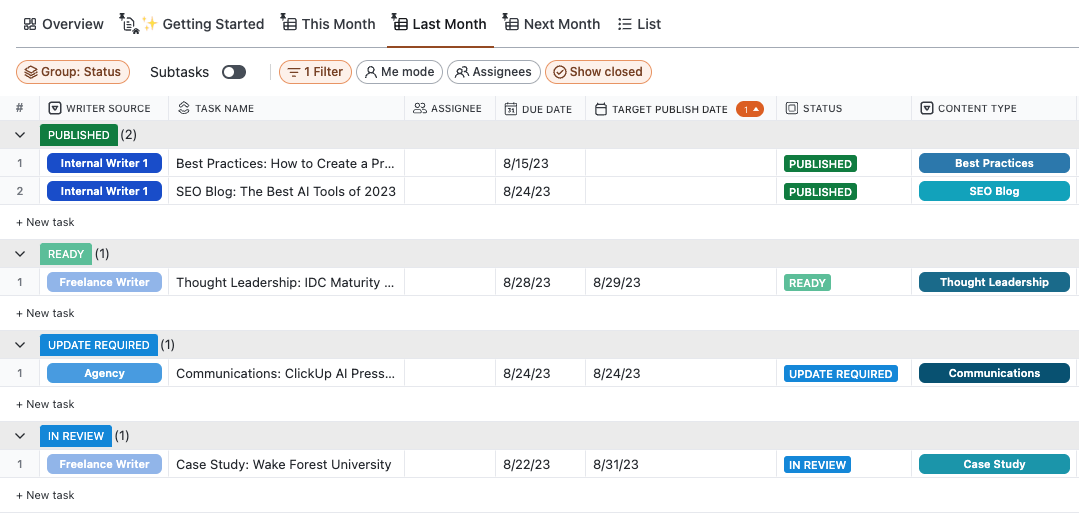
With your pillars defined and mapped, it’s time to build your content calendar. The goal is to ensure a balanced and varied content mix over time. This will help prevent oversights such as clustering all your promotional posts in one week or neglecting a pillar for an entire month.
You’ve already seen how tools like the ClickUp Calendar View help you visualize your pillar distribution and easily rebalance your schedule. You can drag and drop content tasks to new dates to ensure a healthy mix.
💡 Pro Tip: Set up ClickUp Automations to operationalize this. For example, create an automation that notifies the content lead if a specific pillar hasn’t been scheduled for the upcoming week, allowing you to catch gaps before they happen.
Learn more about how marketing teams use ClickUp Automations:
🦸🏻♀️ Build a team of ClickUp Super Agents to help you every step of the way.
These are your AI teammates, who work with full context from your work and connected apps, and are available 24/7.
Find your next AI teammate from the complete library of AI Agents for Marketing in ClickUp!
Looking at how established brands structure their social media content can make the concept of content pillars much easier to understand. Here’s how well-known brands use content pillars to drive their social media strategy. Notice how their pillars are tailored to their unique audience and brand identity.
Once you’ve established your content pillar framework, selecting the right social media management tools becomes crucial for executing your strategy efficiently. This video explores various platforms that can help agencies streamline their content pillar workflows across multiple clients and channels.
Pillar-level analysis separates tactical social media management from strategic content marketing. It allows you to see which themes are actually driving business results, so you can double down on what works and cut what doesn’t.
Instead of getting lost in vanity metrics, focus on tracking these key performance indicators for each of your content pillars:
| Metric | What it reveals |
|---|---|
| Engagement rate by pillar | Which themes and topics resonate most deeply with your audience |
| Content volume by pillar | Whether you are maintaining a healthy and balanced content mix over time |
| Conversion rate by pillar | Which themes are most effective at driving tangible business results, like leads or sales |
Reviewing this data monthly or quarterly will provide far more strategic value than obsessing over daily fluctuations. You can stop guessing and start making data-driven decisions about your content strategy.
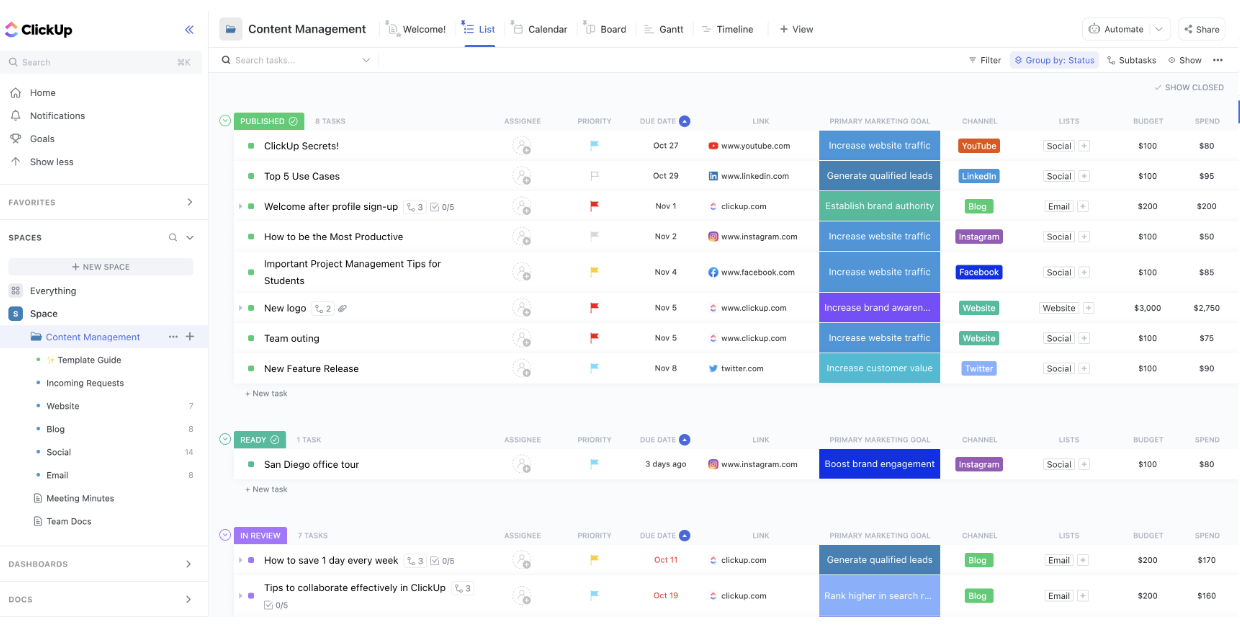
The ClickUp Content Management Template helps establish a reliable and effective system for planning, organizing, and tracking content.
The built-in features, like custom statuses and fields, allow you to categorize and monitor the progress of each content piece from ideation to publication.
Content pillars are the solution to the scattered, inconsistent, and reactive approach that plagues so many social media teams. They provide a strategic framework that brings order and purpose to your content, guiding everything from ideation and creation to collaboration and measurement.
However, pillars only work if your team consistently applies them.
The final hurdle is often tool sprawl. Your pillar definitions live in one doc, your calendar in another app, your tasks somewhere else, and your analytics in yet another platform. This context sprawl—when teams waste hours searching for information across disconnected apps and repeating updates across multiple platforms—kills productivity. Bring it all together in ClickUp’s converged AI workspace.
Ready to organize your entire content pillar strategy in one place, from high-level planning in Docs to granular tasks in your Calendar and performance insights in Dashboards? Get started for free with ClickUp today. ✨
Most brands find success with three to five pillars. Start with three solid themes and consider expanding to five once your content creation process is running smoothly.
The framework is the same, but the pillar topics will differ. For example, a B2B software company might have pillars like “Productivity Hacks” and “Integration Guides,” while a B2C fashion brand might use “Outfit of the Day” and “Sustainable Fabrics.”
Think of your pillars as the recipes in your cookbook and your content calendar as your weekly meal plan. The pillars guide what you can create, while the calendar determines when you’ll share it to drive audience engagement.

© 2026 ClickUp

There’s an easier way. Try a free AI Agent in ClickUp that actually does the work for you—set up in minutes, save hours every week.