

Warren Buffett and the late Charlie Munger have been some of the most successful investors of our time. But what is their secret to success? The answer is a mental model called the circle of competence.
A concept developed by these legendary investors, the circle of competence is a powerful framework for focusing your energy and achieving success. In fact, Warren Buffett made wise investment decisions using this model.
By understanding your own circle of competence, you can similarly make smarter decisions, avoid costly mistakes, and ultimately reach your full potential. Let us explore this concept in greater detail and understand how you can identify your own competency to build a successful career and business.
How to Navigate Your Circle of Competence

 Summarize this article for me please
Understanding Your Circle of Competence
The circle of competence is a mental model that helps you correctly evaluate and identify specific areas in which you thrive, helping you focus your energies on these core areas. As Charlie Munger explained in an interview,
Thus, your circle of competence is about recognizing the areas where you have genuine knowledge and proven ability. This can include your professional skills, personal strengths, or even specific hobbies where you’ve developed deep knowledge.
Self-awareness is crucial for identifying your own competence. This is because the core concept of finding one’s circle is based on the prism of:
- Inner circle or circle of competence: What you know or have strong knowledge of
- Outer circle: What you think you know. Or useful knowledge that can help you with decisions but falls outside your core values
For example, if you are a software developer, you might use your expertise in this domain to pick technology stocks with a potential upside. Since you know the domain and industry, you can make wise investment decisions. And of course, this is your competitive advantage over others who may not have such insights into the particular domain. As IBM’s founder Tom Watson said,
Even the most accomplished individuals have a defined circle of competence. The key for experts lies in strategically expanding it, using specific actions like:
- Continuous learning: Enhancing the circle of competence through active learning and experience. Seeking new knowledge on the core areas of a field or business area
- Focused exploration: Exploring complementary skills or expertise adjacent to the core. For example, if software development is your core competency, you can explore adjacent areas. So, you may decide to explore agile frameworks or AI skills to supplement your core expertise
- Collaboration: Work with mentors or experts in your domain to grow in your chosen field of expertise and tackle challenges beyond your individual circle
Summarize this article for me pleaseMastering Success within Your Circle of Competence
The power of the circle of competence becomes evident when we examine Warren Buffett’s investing philosophy. Buffett, known as the ‘Oracle of Omaha,’ has consistently delivered outstanding returns for Berkshire Hathaway shareholders. A key pillar of his strategy is staying firmly within his circle of competence.
- Focus on understandable businesses: Buffett invests in companies he can thoroughly understand. He avoids complex industries with factors he can’t readily grasp. This allows him to make informed decisions based on his deep knowledge. For example, Berkshire Hathaway has held only one pharmaceutical stock since 2006 despite the rapid rise of other players. The focus on selected businesses allows Warren Buffet to make smarter investment decisions, thus increasing his returns over the years
- Growth mindset: Operating within his circle of competence fosters a growth mindset since he can focus on selected businesses. Buffett understands these businesses and trusts his ability to identify their long-term value proposition. This sets him apart from other investors who tend to cash in their returns once they hit a certain threshold. This is what separates those with a fixed mindset from growth mindset
Generalists vs. The circle of competence
The circle of competence might seem like a framework that prioritizes specialists over generalists. However, the two approaches can actually work in harmony. Here’s how generalists can benefit from it:
- Identifying core skills: Within their broad knowledge base, generalists can pinpoint a core set of skills that form their circle of competence. These might be communication, problem-solving, project management, or the ability to learn quickly
- Mastery within the circle: By focusing on mastering core skills, generalists become highly valuable assets in any team environment. They bring a unique blend of broad knowledge and deep expertise to their core competencies
Generalists can also choose to become ‘specialist generalists’ by specializing within specific areas of their broader knowledge base. This allows them to combine their generalist skills with a deeper understanding of a particular field. For example, a generalist with strong communication and project management skills could specialize in coordinating cross-functional teams within a specific industry.
Summarize this article for me pleaseHow to Identify Your Circle of Competence
Identifying your circle of competence isn’t a passive process. It requires introspection, exploration, and a touch of self-discovery. Here’s a roadmap to guide you through this journey:
Introspection
The first step to identifying your circle of competence is to do a self-analysis of your skills. What are the things you are naturally good at? What are your interests and passions? Jot down everything you excel at—skills, experiences, even personal interests where you shine.
To help you with this exercise, you can use evaluation tools to gather information and create mind maps to identify recurring themes, patterns, and areas where you consistently delivered strong results.
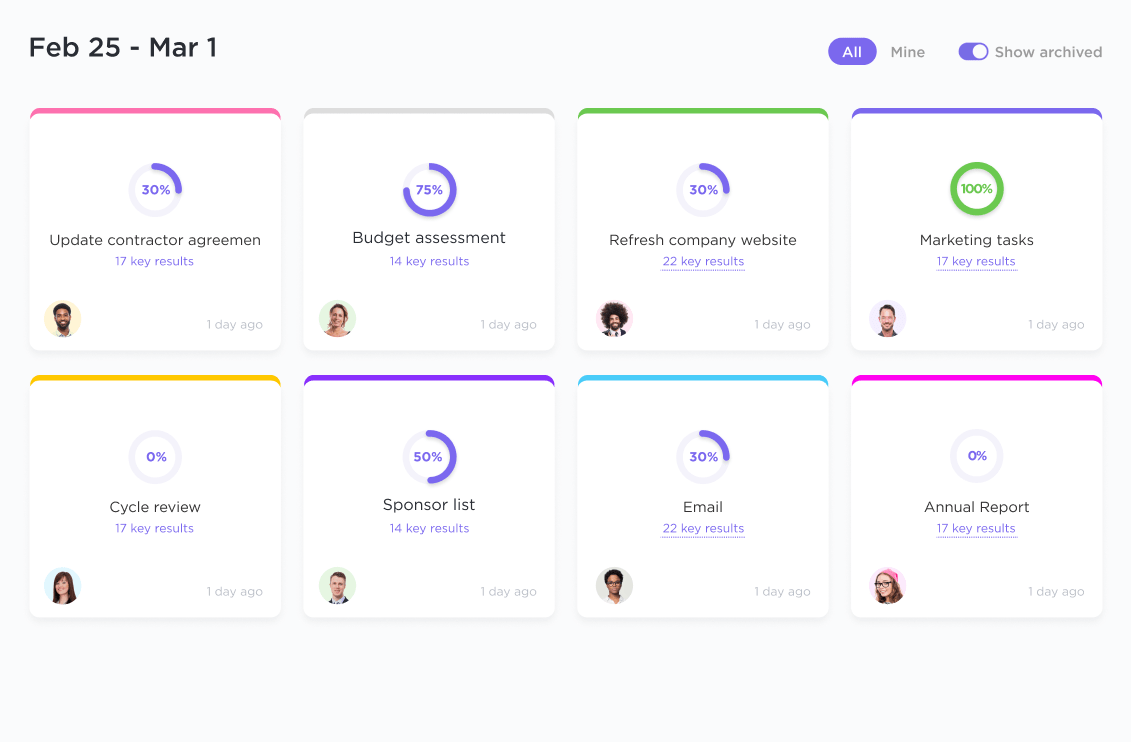
A great option for this exercise is ClickUp, a versatile personal tasks and project management software that empowers you to create and track your goals. Using ClickUp Goals, you can manage all your goals in one place and set clear targets using the SMART framework. This empowers you to measure success with key results and understand your areas of strengths and weaknesses based on specific data points.
Exploration
Next comes exploration or using external sources like books, knowledge bases, or other research to help you understand what lies within your circle of competence. This includes:
- Getting feedback: Ask your peers, seniors, and close friends about what they believe is your core skillset. Getting genuine feedback from others will help you build confidence about your chosen field and get a secondary perspective on what could be your circle of competence. To get detailed and instant responses, you can build a specific feedback form using the ClickUp Form View, allowing you to convert responses into actionable insights or trackable tasks
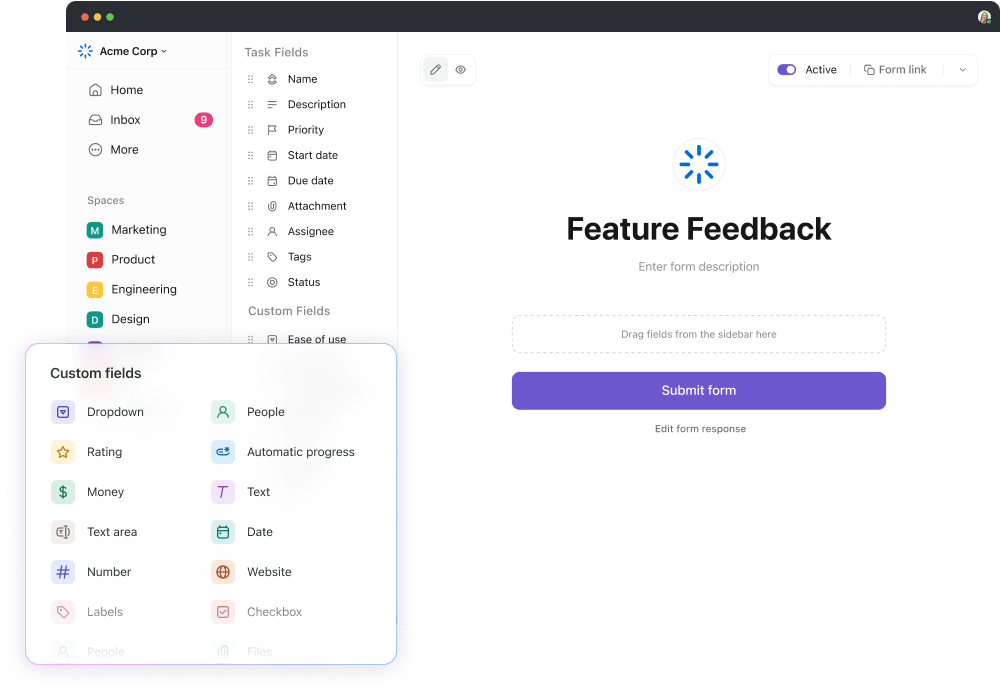
- Conducting research: Another crucial aspect of expanding your circle of competence is conducting your own research. This way, you take control of your learning and skill development. Use ClickUp Docs to document key takeaways and challenges from your research. Reflect on the skills you have effectively applied and identify areas where you can improve
- Use AI as your assistant: Human feedback and research are one thing, but with the power of AI, you can get detailed answers to your questions, especially since all this information can seem overwhelming. With ClickUp Brain, you get an AI assistant to help you gain insights from detailed research documents, find relevant information, and use prompts to analyze your data for detailed findings.

Self-discovery
After introspection and exploration, you need to do a self-discovery of what lies within your circle of competence. For this, you can use skills matrix templates, which can help you organize your learning in a more visual manner.
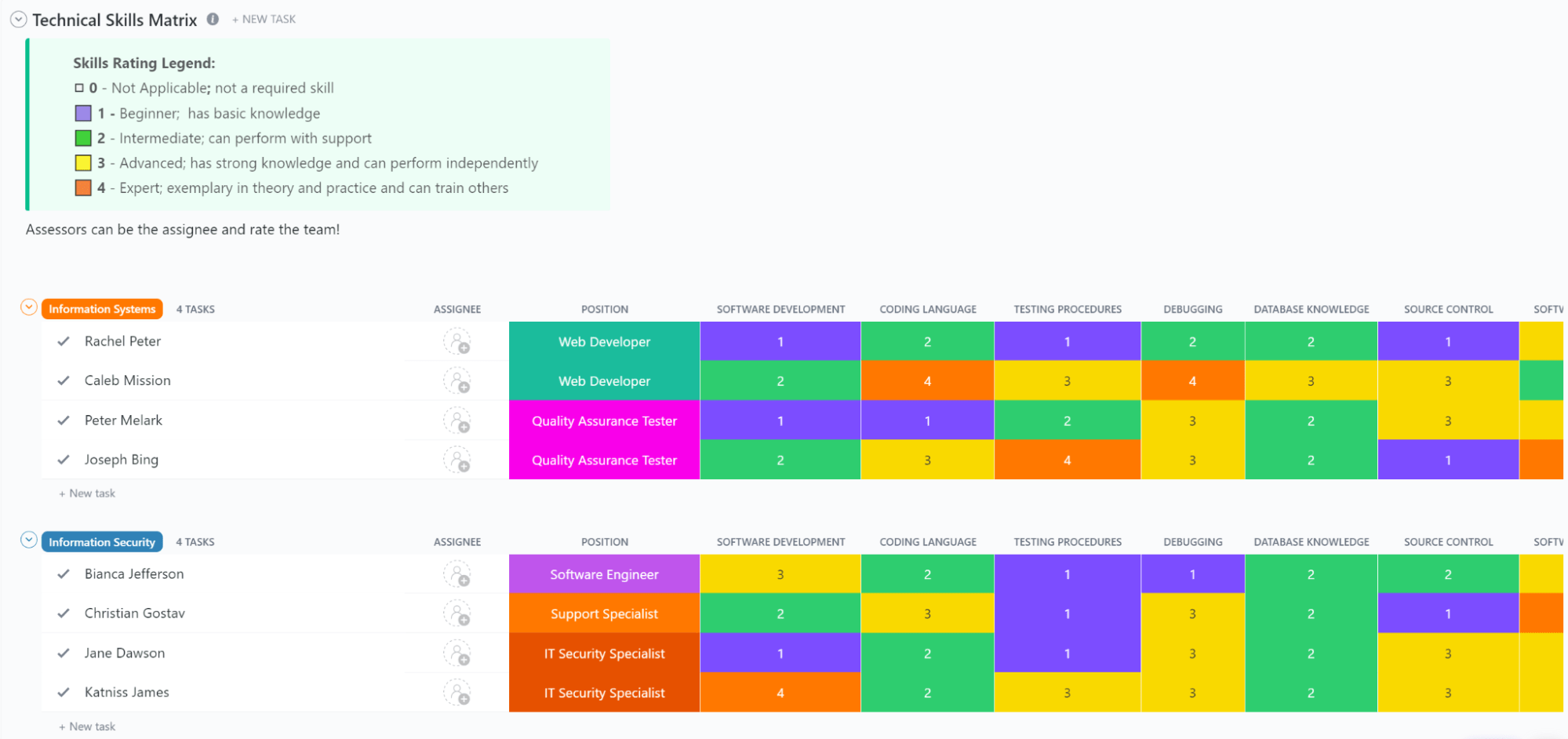
For example, if you are evaluating your technical skills, try the ClickUp Technical Skills Matrix Template. It can help you evaluate your competency against specific skills and knowledge areas. This pre-built template is a structured framework to map your technical skills and identify areas for further development. By actively managing your skillset within your circle, you can strategically expand your capabilities.
Summarize this article for me pleaseThe Role of Circle of Competence in Decision Making
Understanding your circle of competence isn’t just about personal growth; it’s also a powerful tool for making smarter decisions in all aspects of your life. By using the circle of competence for your decision-making, you can:
- Focus on what matters: Focusing on decisions within your circle of competence frees up mental energy. You can leverage your existing knowledge and intuition, leading to faster and more confident choices
- Mitigate risks: Venturing outside your circle can lead to blind spots and unforeseen challenges. By prioritizing decisions aligned with your expertise, you minimize the risk of costly mistakes
- Gain confidence: Operating within your circle fosters a sense of confidence in your abilities. This translates into more decisive action and a greater chance of achieving your desired outcomes
For example, you can leverage this philosophy when planning your product development lifecycle. Instead of trying to include multiple features for your product, you can leverage product thinking. You can choose to build lean and niche solutions that users will love. This allows you to:
- Focus on your target user: Understand the requirements and needs of your core user and build solutions targeted towards them
- Build a superior product: You can leverage your knowledge of a particular domain or group to create a product that excels in core functionalities and user experience
- Minimize risks: Focusing on what you know well reduces the risk of venturing into uncharted territory and encountering unexpected challenges
Another example could be using this mental model for making an investment decision. Using the circle of competence, you can:
- Pick niche stocks within your circle: Recognize your core skills and expertise and pick stocks that resonate with your approach. For example, if you are looking for long-term gains, pick established industries that can deliver long-term returns
- Less is more: Instead of complex options trading or hot new tech stocks, you can focus on investing in areas you’re knowledgeable about. For example, if you know the real estate market well, you can pick stocks in real estate or real estate investment trusts (REITs) to gain maximum returns

Use ClickUp Tasks and to-do lists to help you manage your decision-making and plan your business and professional life better. As outlined in the book 7 Habits of Highly Effective People—
Summarize this article for me pleaseThe Benefits and Drawbacks of Staying Within Your Circle of Competence
The circle of competence offers a compelling framework for success. However, it’s important to consider both the advantages and potential limitations. The clear advantages of using this framework include:
- Reduced risk of failure: Sticking to what you know minimizes the chances of costly mistakes
- Effective decision-making: Your deep understanding within your circle empowers you to make quicker, more confident decisions. Because of your knowledge and experience, you’re confident about navigating complex situations efficiently
- Increased efficiency: By focusing your efforts on areas of strength, you become more efficient in your work. You can leverage existing skills and processes, minimizing the need to constantly learn new things
- Enhanced confidence: Operating within your circle fosters a sense of mastery and accomplishment. This confidence translates into a positive self-image, boosting motivation and driving further success
However, it is not without limitations. Since you operate in a limited area, it can lead to:
- Limited growth potential: Overly emphasizing your current circle can lead to stagnation. While mastery is important, there’s also value in stepping outside your comfort zone for strategic learning and growth
- Missed opportunities: The world is constantly evolving, and new opportunities may emerge outside your current expertise. Being overly rigid can lead you to miss out on these possibilities
- Difficulty in recognizing limitations: Sometimes, self-awareness can be a challenge. It’s crucial to remain objective and recognize when a task might require expertise beyond your current circle
Thus, the key to success is not getting overly obsessed with the circle of competence but using it as a framework to make informed decisions. Remember, it’s not about staying rigidly confined but rather using your core strengths as a springboard for continuous growth and achievement.
Summarize this article for me pleaseEnhance Your Decision-Making Skills with ClickUp
The circle of competence offers a powerful lens for self-discovery, strategic decision-making, and, ultimately, achieving success. By understanding your areas of expertise and focusing your energy accordingly, you can navigate your professional and personal life with greater clarity and confidence.
Remember, the journey of mastering your circle of competence is a continuous cycle. You can use it for all your decision-making and planning while using ClickUp to help make it more actionable. As a powerful project management and productivity tool, it allows you to create tasks, build habits, track priorities, and keep you focused on what truly matters for your personal and professional goals.
Sign up for free, and embrace the circle of competency mental model to unlock your full potential.


Everything you need to stay organized and get work done.

Recent Articles
8 Communication Strategies That Actually Fix Team Chaos 
8 Communication Strategies That Actually Fix Team Chaos
ADHD Task Management: How to Build a System You’ll Still Use in a Month 
ADHD Task Management: How to Build a System You’ll Still Use in a Month

