


A career in marketing can mean countless opportunities to shape brands and influence consumer behavior. It wouldn’t be amiss to say that marketing is one of the most dynamic and diverse fields today.
However, because marketing itself is a vast universe, you must decide where to focus your efforts if you want to excel in it. Should you become a marketing specialist or marketing generalist? This decision can shape your entire career trajectory.
This article will help you understand each path’s key differences, benefits, and challenges and choose the one that best aligns with your goals and strengths.
Marketing Specialist vs. Generalist: Choosing Your Career Path

 Summarize this article for me please
Who Is a Marketing Generalist?
Marketing generalists possess a diverse skill set covering strategic planning and hands-on execution across various marketing channels.
If you choose to be a marketing generalist, then your key responsibilities are:
- Campaign planning and management: Plan, create, and execute marketing campaigns across channels such as PPC, email, social media, etc.
- Content management: Develop and manage content for web and marketing collaterals
- Data analysis: Monitor and analyze campaign performance metrics and marketing data and optimize future campaigns
- Project coordination: Communicate marketing efforts and report campaign results to leaders, team members, and other stakeholders.
Let’s understand this job role better.
Imagine your company is launching a new product. As a marketing generalist, you’d create a comprehensive marketing strategy that involves social, email, and content channels to generate buzz around the product launch.
You must collaborate with the product team to determine whether marketing messages align with the product’s capabilities. Your role involves conducting or overseeing market research, creating content for all channels, executing it on respective channels, and analyzing its performance.
Your primary goal is to assess initial interest and generate leads, such as sign-ups for trials or demos. All channels must work together to reach your overall marketing goals as a marketing generalist and increase product adoption.
Summarize this article for me pleaseWho Is a Marketing Specialist?
Specialist marketers, on the other hand, focus on one specific marketing area. They develop deep expertise and specialized skills within their chosen field, becoming experts in that niche.
Here are some examples of marketing specialists:
- SEO Specialist
- Content Marketing Specialist
- PPC Specialist
- Email Marketing Specialist
- Digital Marketing Specialist
- Market Research Specialist
Your daily tasks will differ depending on your specialization, but the role and its KPIs significantly contribute to the digital marketing team.
In the above scenario, PPC marketing specialists focus on driving traffic and generating leads through paid advertising campaigns.
Your role would involve setting up a campaign, creating an ad, managing ad budgets, doing keyword research, and monitoring and optimizing campaigns across Google Ads and social media. Your KPIs can be to measure the conversion rate, cost per conversion, and return on ad spends (ROAS).
Summarize this article for me pleaseMarketing Generalist vs. Specialist: The Differences
| Roles/Responsibilities | Marketing generalists | Marketing specialists |
| Expertise | Possess competence across areas like SEO, content creation, and social media management | Have the know-how in one or two areas of digital marketing, such as SEO or PPC |
| Scope of work | Broad: Create and implement marketing plans, manage marketing budgets, conduct market research, oversee brand development, coordinate marketing campaigns, and analyze marketing performance etc. | Broad: Create and implement marketing plans, manage marketing budgets, conduct market research, oversee brand development, coordinate marketing campaigns, analyze marketing performance, etc. |
| Ideal for | Suitable for small businesses or startups with limited resources or when a broad overview of marketing is needed | Ideal for larger organizations with specialized marketing needs or when a deep dive into a particular area is required |
| Flexibility | Highly adaptable. Can switch between various marketing disciplines and tasks | Less Flexible. Cannot switch to projects outside their domain |
| Collaboration | Can work independently and manage projects across functions | Thrive in collaborative teams where each member contributes their unique expertise |
Summarize this article for me pleaseHow to Choose a Marketing Career Path?
When deciding between becoming a marketing generalist or specialist, it’s essential to consider your interests, skills, and long-term career goals. Here’s when you might want to choose one path over the other.
When should you choose to become a marketing generalist?
A marketing generalist role might be your best bet if you love wearing many hats.
Startups or small businesses often need someone who can handle a little bit of everything—social media, content creation, email marketing, and maybe even a dash of graphic design.
Marketing generalists often have a broader view of marketing, can communicate effectively across departments, promote collaboration, and ensure everyone is working toward the same goals.
This holistic approach lets you see the big picture, integrate various marketing strategies, and create unified campaigns.
Consider this path if you enjoy variety at work, learn new things, and excel in a dynamic environment that requires adaptability.
If you’re still discovering your passion or want to explore various aspects of marketing, being a generalist provides the flexibility and diverse experiences you’re looking for.
When should you choose to become a marketing specialist?
On the other hand, becoming a marketing specialist could be more rewarding if you have a strong interest in and knowledge of a particular niche or area of marketing, such as SEO, content strategy, or analytics.
Despite the versatility of generalists, marketing specialists play a vital role in marketing. A specialist’s in-depth knowledge and expertise in a particular channel enables them to develop and implement highly targeted and effective strategies.
For example, a social media specialist with a deep understanding of platform algorithms can create content, optimize social media pages, and increase community interactions.
In contrast, generalists may lack the bandwidth to focus on a single digital marketing channel, limiting their ability to leverage the full potential of specific platforms.
If you enjoy digging into the details and mastering a very specific skill set, specialization allows you to become the go-to expert in that field.
Which role is more relevant, and who succeeds in today’s job market?
The answer isn’t one-size-fits-all—it depends on what the job market demands, your interests, and the support system available to you.
Startups and smaller companies often prefer generalists who can handle multiple macro roles. At the same time, larger organizations with more resources might seek specialists to bring in their expertise to solve micro-level problems.
In today’s market, both roles are essential. The key to success lies in continuous learning, aligning with your passion, staying adaptable, and considering your professional work goals.
What are the implications of being a marketing generalist vs. specialist?
As a generalist, you may face the challenge of being a ‘jack of all trades, master of none.’ While your broad skill set is valuable, it can sometimes be hard to command the same level of authority or salary as a specialist.
However, generalists often have an easier time moving into management roles because they understand the bigger picture.
As a specialist, you might enjoy the perks of being highly sought after in your niche, but this also comes with the risk of your expertise becoming obsolete if market trends shift. You need to upskill continuously to stay relevant.
Additionally, your career trajectory may be more linear, with fewer opportunities to diversify unless you choose to branch out later.
Summarize this article for me pleasePivoting from a Specialist to a Generalist
Whether you’re driven by a desire for broader responsibilities or a deeper passion for a niche, here’s how you can successfully navigate the transition.
If you’re a specialist looking to transition into a generalist role, the key is to expand your skill set while maintaining your expertise. Start by taking on projects that expose you to different areas of marketing—like overseeing a cross-channel campaign or managing a small team.
This helps you build a more holistic view of how all the pieces fit together. Upskilling in different niches will make you more versatile while allowing you to leverage your specialized knowledge.
Conversely, if you’re a generalist aiming to become a specialist, focus on choosing a niche where you’d like to grow. This approach will help you avoid spreading yourself too thin and ensure you’re making the most of your time and efforts.
Reflect on these questions to guide your decision:
- Where do you get the best results?
- Which type of clients do you enjoy working with?
- Which markets are experiencing rapid growth?
- Which areas spark your curiosity?
Remember, it’s not about what you’re good at but where you can make the most significant impact. Once you decide on your niche, deepen your knowledge through marketing certifications and online courses, or find a marketing mentor who can guide you.
Volunteer for tasks or projects that let you apply your expertise, positioning yourself as the go-to person in that domain.
Examples of real-life transitions
Here are two real-life examples, drawn from Linkedin, that highlight how marketers have successfully navigated these shifts to grow their careers and make a significant impact.
Sujan Patel: Specialist to T-shaped marketer
Sujan Patel started as an SEO and digital marketing specialist. As he mastered these skills, he expanded into content marketing, growth hacking, and digital strategy, evolving into a T-shaped marketer.
This broader expertise enabled him to co-found companies like Mailshake and Web Profits, where he combines deep SEO knowledge with a wide-ranging marketing approach.
Ann Handley: Specialist to generalist
Ann Handley began as a journalist, specializing in writing and content creation.
She later broadened her focus, becoming the Chief Content Officer at MarketingProfs, where she expanded into strategy, brand development, and community building, making her a leading digital marketing figure.
Can a T-shaped marketer bring the best of both worlds?
The most successful marketers often possess a combination of generalist and specialist skills. By becoming a T-shaped marketer, you can benefit from a generalist’s versatility while also maintaining a specialist’s precision and deep subject matter expertise.
This allows you to effectively bridge the gap between different marketing roles, integrate a marketing tech stack, and contribute significantly to your team’s success.
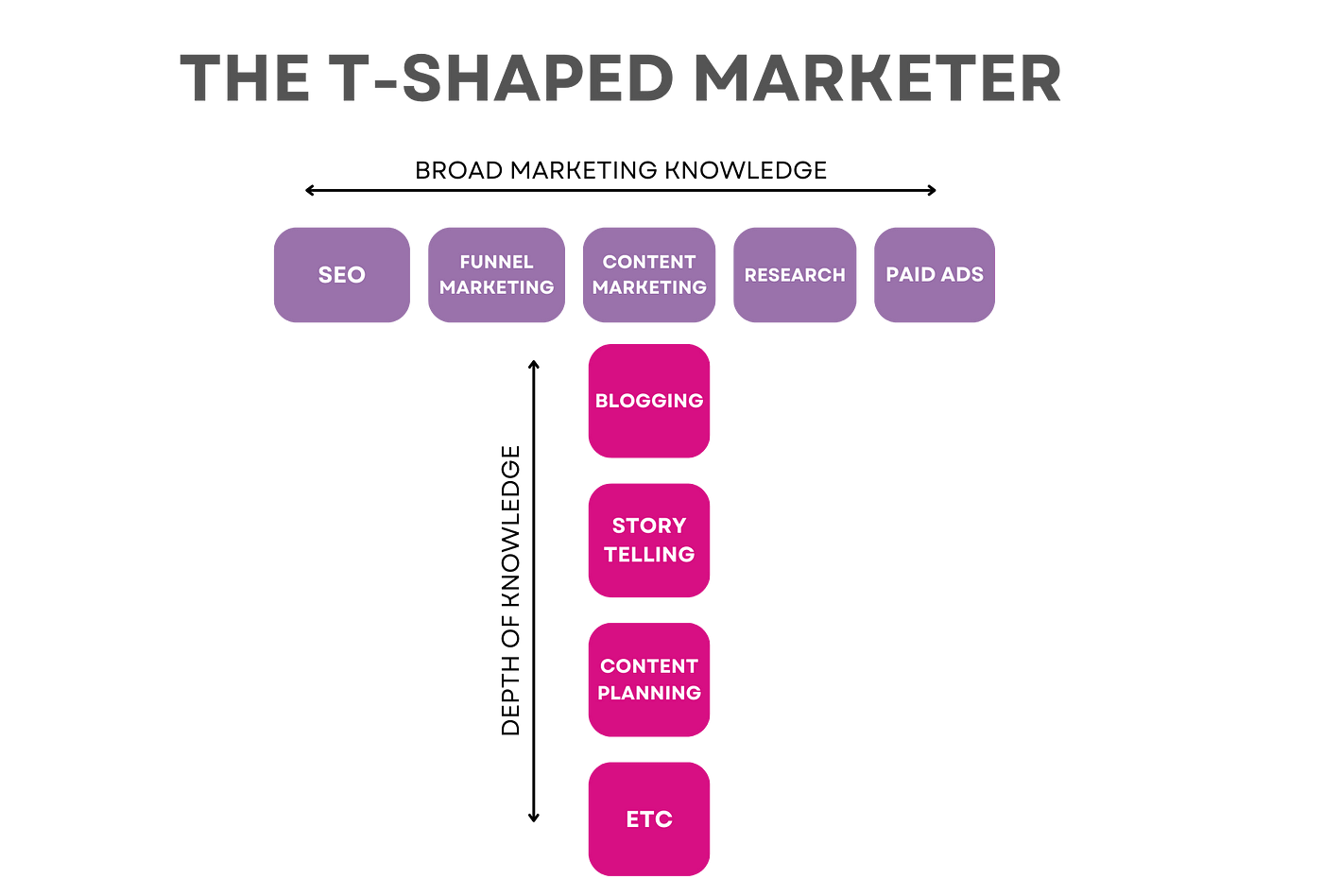
For example, a T-shaped marketer’s PPC expertise can enhance campaign effectiveness. They can also translate technical jargon into understandable terms for other team members, fostering collaboration and strategy implementation.
This ability makes T-shaped marketers invaluable in cross-functional teams. You can enhance collaboration, adapt to changes, solve problems, think strategically, and promote continuous learning.
Also Read: Day in the life of a marketing manager
Leveraging ClickUp to ease your transition
Whether you’re a specialist zeroing in on one area or a generalist juggling multiple tasks, ClickUp Marketing Project Management Software is the ultimate productivity tool to keep you on track. Here’s how:
Universal benefits for all marketers
Whether you’re a specialist or a generalist, ClickUp provides benefits that help you stay productive and achieve marketing goals. Here’s how the ClickUp marketing team uses ClickUp to optimize workflow and drive success in their roles:
- ClickUp Templates: Utilize ClickUp templates to streamline your marketing efforts. Career Map templates guide personal development within the marketing team, while Marketing Roadmap templates organize and track campaign strategies, enhancing consistency and productivity

ClickUp’s Career Path Template helps marketers looking to manage their team’s growth. It helps you:
- See each team member’s career path clearly: Know exactly where they’re headed and what’s next
- Track progress: Keep tabs on how close everyone is to reaching their professional goals
- Set milestones: Plan and set achievable goals for your team to hit along the way
This template helps employees understand the skills they need, shows them how their careers can progress, and lets employers spot skill gaps and plan to hire marketing specialists better.
- ClickUp Brain: ClickUp Brain is an AI tool that simplifies work by connecting tasks, documents, and company knowledge. Quickly generate campaign ideas, content briefs, blogs, case studies, emails, and more

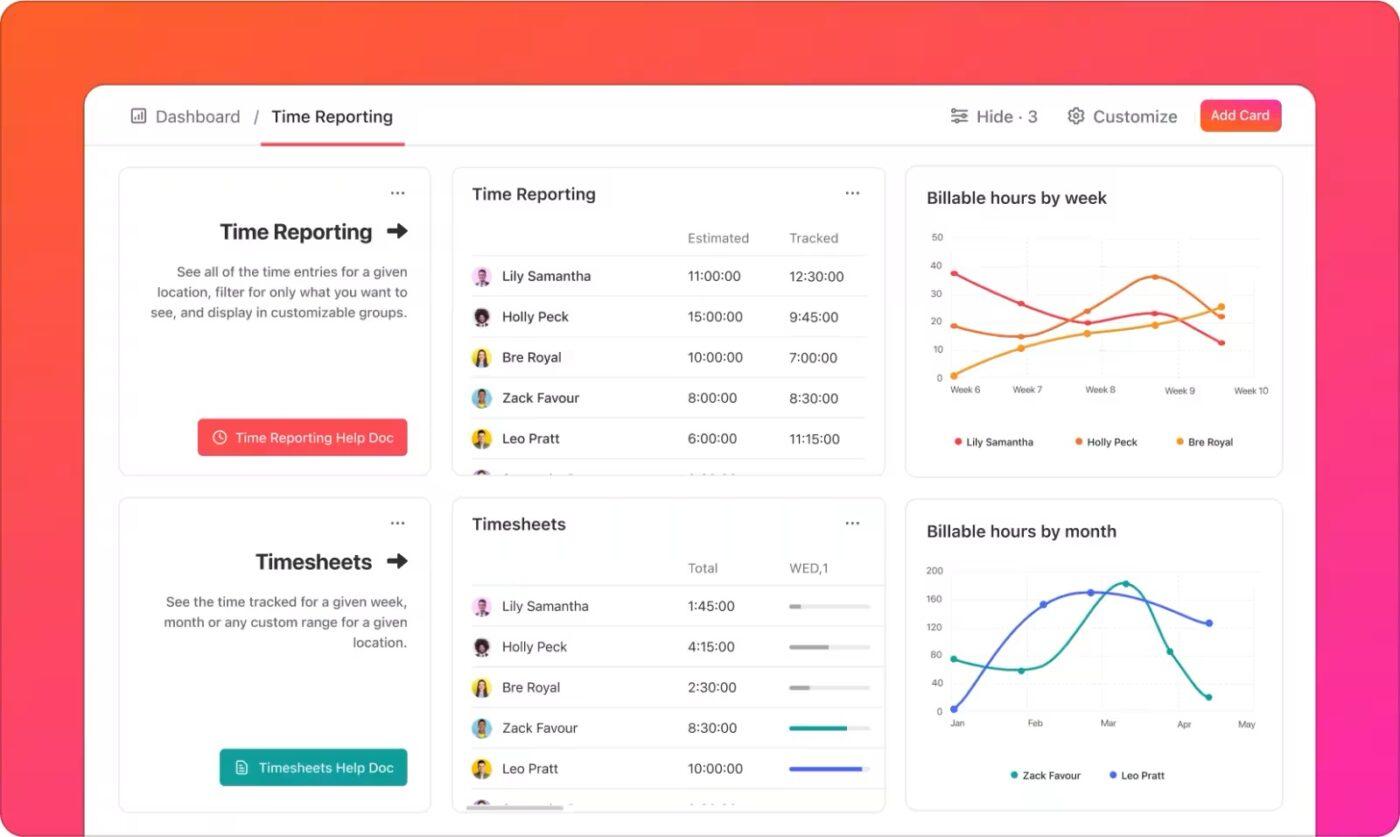
- ClickUp Dashboards: Use customizable ClickUp Dashboards to track marketing progress, monitor team workloads, and prioritize Tasks. Visualize performance to align efforts, reduce bottlenecks, and boost efficiency
- Goal Tracking: Set, track, and achieve your marketing goals with ClickUp Goals. Align your daily Tasks with your long-term objectives, ensuring that every action contributes to your overall success

ClickUp for marketing specialists
ClickUp is the best marketing project management software with advanced features that help streamline processes and ensure that nothing falls through the cracks. You can focus on mastering specific aspects of marketing with the following tools:
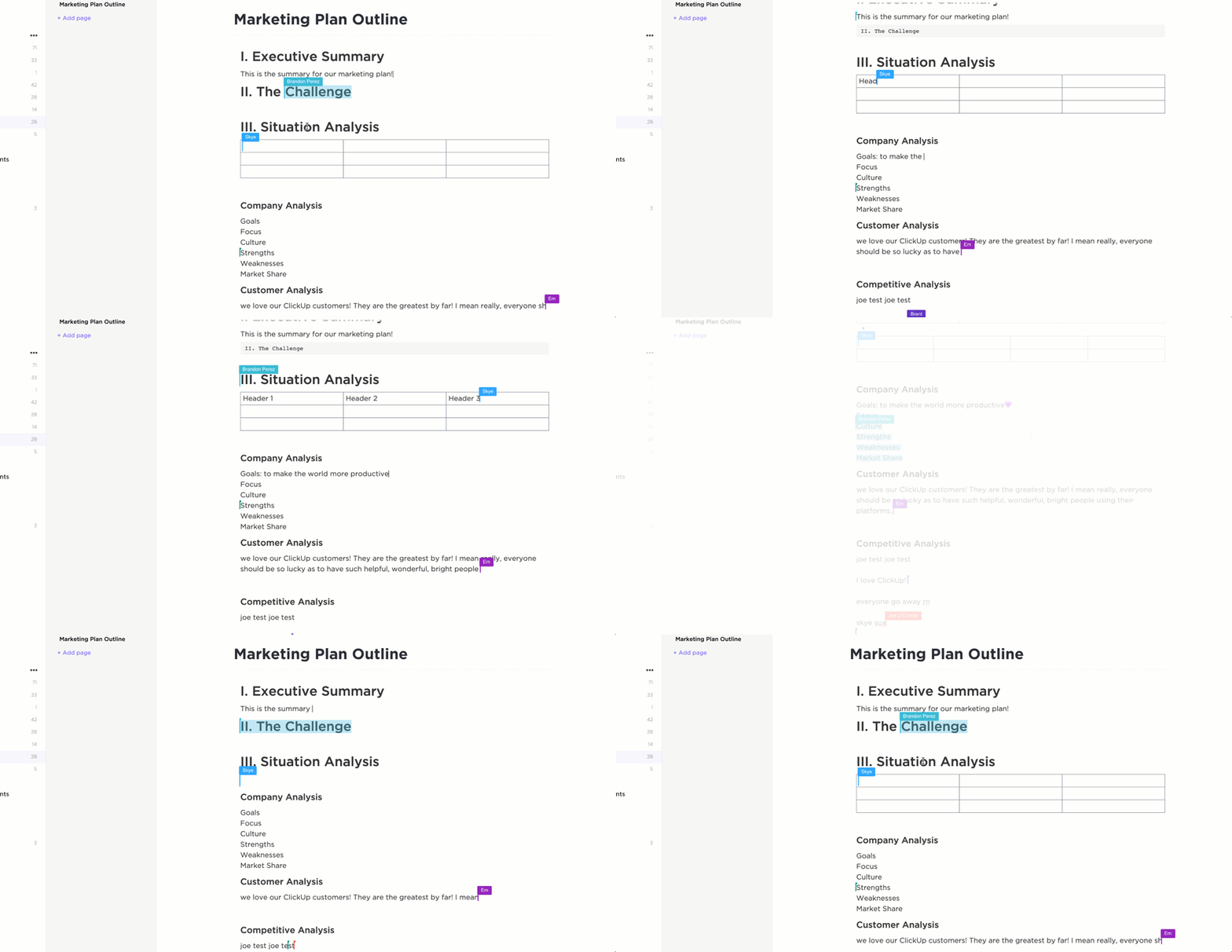
- ClickUp Docs: Organize all your strategy documents, content briefs, and campaign notes in one place. Whether it’s a product roadmap, a wiki, or a knowledge base, you can build nested pages within ClickUp Docs that fit your work perfectly
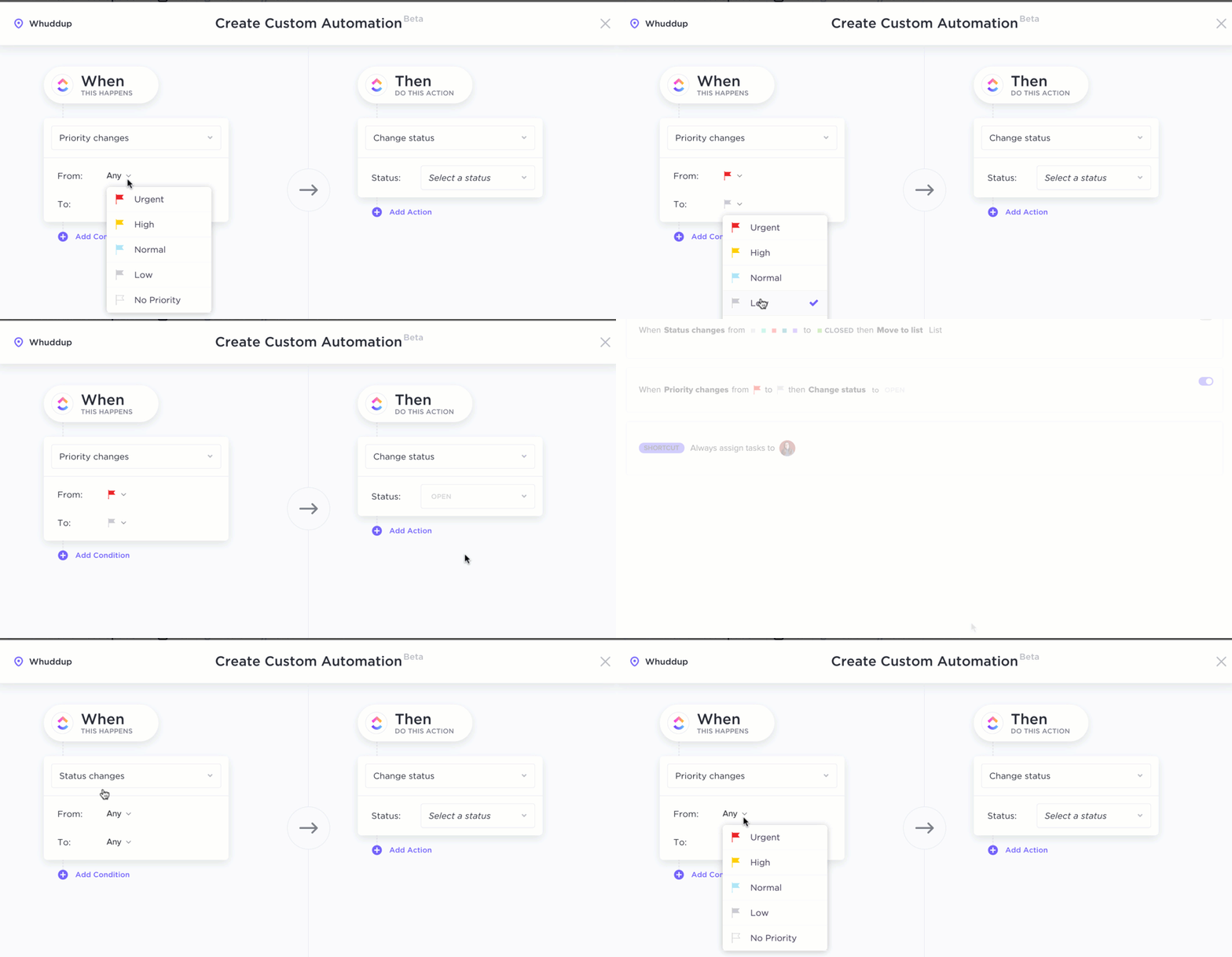
- ClickUp Automations: Automate repetitive activities like moving tasks through stages, assigning responsibilities, and updating project statuses. Focus on high-value work while ClickUp Automations handles the routine
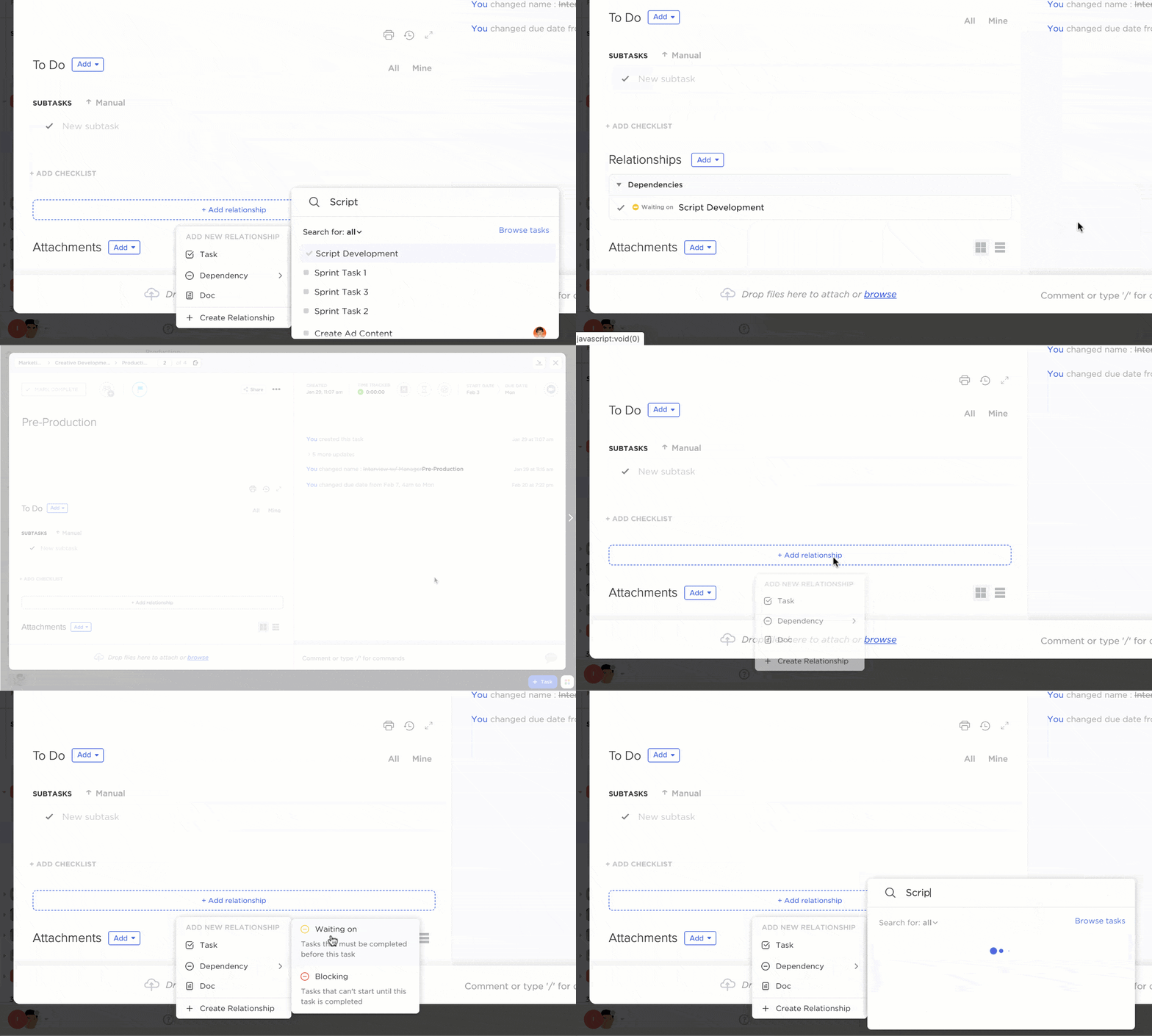
- ClickUp Dependencies: With ClickUp Dependencies, you can set clear sequences between Tasks by marking them as ‘blocking’ or ‘waiting on.’ This links related Tasks, documents, and tools, creating a streamlined workflow so your team knows the exact order to complete tasks
ClickUp for marketing generalists
For generalists, ClickUp’s all-in-one platform lets you manage everything from content calendars to campaign tracking in one place. You can juggle multiple roles, from planning campaigns to coordinating with different teams.
ClickUp’s versatile tools help you stay on top of everything:
- ClickUp Whiteboards: Collaborate effortlessly with your team using ClickUp Whiteboards. Brainstorm ideas, map out campaign strategies, and visualize your marketing plans in a space that everyone can contribute to in real-time

- ClickUp Calendars: Keep all your projects organized with ClickUp’s Calendar View. Plan out your entire campaign schedule, set deadlines, and sync with your team to ensure everything runs on time

- ClickUp Integrations: Connect your favorite marketing tools directly to ClickUp, making it the central hub for all your work. With over 200 native integrations, including Hubspot, Slack, and Google Drive, you can manage everything from one platform
Summarize this article for me pleaseMaster Marketing With ClickUp
Whether you choose to be a generalist or a specialist depends on your career goals, interests, and market needs. Success lies in leveraging your strengths while also cultivating a well-rounded skill set. Both roles offer unique value, and striking the right balance between breadth and depth can set you apart.
ClickUp offers the flexibility you need to manage every aspect of your work. A centralized workspace simplifies complex, multi-channel campaigns for generalist marketers, while customizable dashboards provide specialists with automation and detailed insights.
Sign up to ClickUp to enhance your marketing efficiency and adaptability.

Everything you need to stay organized and get work done.
