






Still downloading templates?
There’s an easier way. Try a free AI Agent in ClickUp that actually does the work for you—set up in minutes, save hours every week.
Sorry, there were no results found for “”
Sorry, there were no results found for “”
Sorry, there were no results found for “”
Historically, data practitioners have spent 80% of their time managing data, leaving only 20% for the actual analysis, which makes the role valuable.
A modern data catalog with embedded AI capabilities can fix that.
Secoda connects directly to your data sources, mapping lineage and metadata to deliver context-aware AI that scales with your organization. It was also recently acquired by Atlassian and is now part of Atlassian’s AI and data infrastructure strategy.
This guide covers the top Secoda alternatives, what each does well, and how to find the right fit for you and your team. 🤝
Before evaluating alternatives, here are the key factors worth considering. 🤖
The best alternative is not always the most feature-rich one. It is the one that fits your enterprise data governance maturity, technical setup, and the scale at which your data teams operate.
Before committing to any data catalog tool, here’s what to check. 👇
✅ Pricing and packaging stability: Confirm whether pricing is locked in post-acquisition or subject to change. Some vendors restructure tiers or retire legacy plans after a buyout
✅ Support SLAs: Check whether response times and dedicated technical support availability are contractually guaranteed or informally offered
✅ Export formats: Ensure you can export metadata, lineage maps, and documentation in standard formats so you’re not locked in if you need to migrate
✅ Security and RBAC: Verify that role-based access controls and audit logs meet your compliance requirements, especially if ownership structures are changing
✅ Integration continuity: Confirm that existing connectors and API contracts will be maintained under new ownership and not deprecated without notice
Sorting these out upfront protects you from surprises long after the contract is signed.
Here’s a snapshot of every tool covered in this guide. 📊
| Tool | Best features | Best for | Pricing* |
| ClickUp | AI-powered documentation, Brain, Dashboards, Enterprise Search, Automations | Data teams, enterprises, cross-functional teams | Free Forever; Custom pricing for enterprises |
| Atlan | Column-level lineage, natural language search, business glossaries, policy management | Data engineers, governance teams, enterprises | Custom pricing |
| Alation | ML-driven asset discovery, Ask Alation generative AI, behavioral query analysis | Enterprises managing regulated data workflows | Custom pricing |
| Collibra | Anomaly detection, in-warehouse quality checks, automated ML rules, AI oversight | Enterprises in regulated industries | Custom pricing |
| DataHub | Natural language metadata queries, end-to-end lineage, fine-grained access policies | Data engineers, open-source teams | Free (open-source) |
| Amundsen | PageRank-style dataset ranking, automated metadata capture, lineage views | Data engineers, analysts, open-source teams | Free (open-source) |
| OpenMetadata | Unified metadata graph, no-code lineage editor, role-based access control | Data teams scaling open-source governance | Free (open-source) |
| Select Star | Column-level lineage, usage insights, auto-generated ER diagrams, dbt sync | Data teams managing warehouse cost and lineage | Custom pricing |
| Fivetran Catalog | 700+ source connectors, schema drift handling, near real-time replication | Data teams managing pipeline automation | Free plan available; Custom pricing |
| Metaphor | Plain English search, behavioral lineage, social collaboration features | Teams improving data literacy and discovery | Custom pricing |
Our editorial team follows a transparent, research-backed, and vendor-neutral process, so you can trust that our recommendations are based on real product value.
Here’s a detailed rundown of how we review software at ClickUp.
Most data catalog tools help you find and govern data. But the surrounding work, like project management, data documentation, cross-team collaboration, and workflow automation, still ends up scattered across separate tools.
ClickUp solves that by bringing it all into one Converged AI Workspace, and works as a knowledge layer that connects your projects, documentation, and AI without context switching.
Here’s what makes ClickUp the best fit for teams: ⬇️
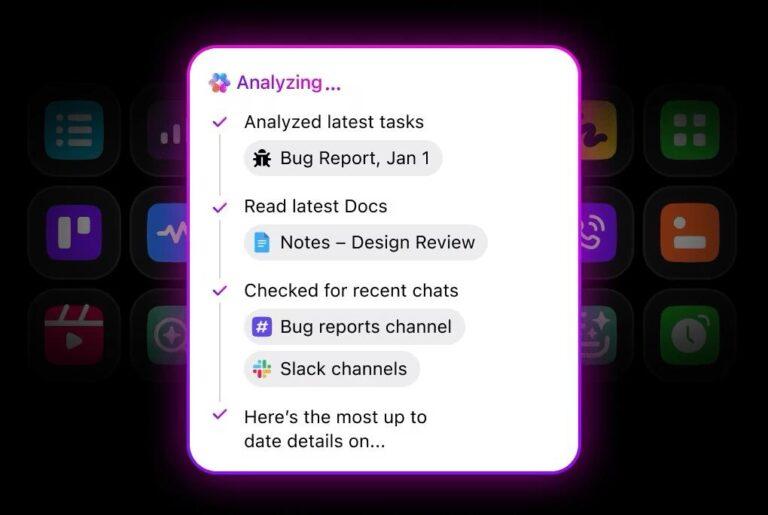
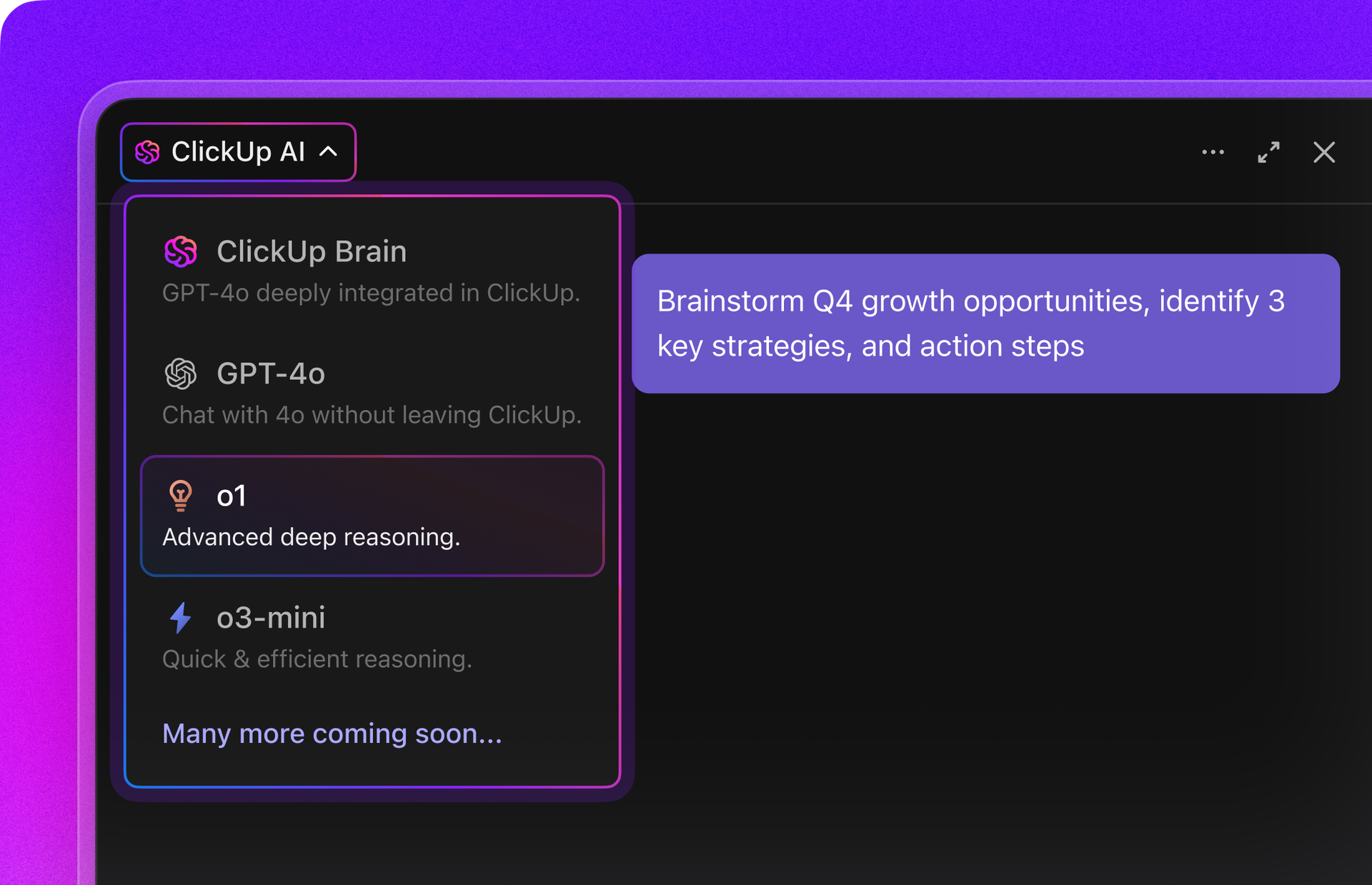
One of ClickUp’s most useful capabilities for data teams is ClickUp Brain, an AI layer that connects tasks, documentation, conversations, and project history into a searchable knowledge system. The AI can summarize documents, generate updates from task activity, and answer questions using information across the workspace.
When managing documentation and governance knowledge, you can ask Brain questions about dataset ownership, previous compliance reviews, or historical decisions tied to specific data assets.
For compliance audits, Brain can pull the status of open audit tasks, flag any unresolved items, and draft a summary without you having to compile it manually.
Large data teams often struggle with knowledge fragmentation.
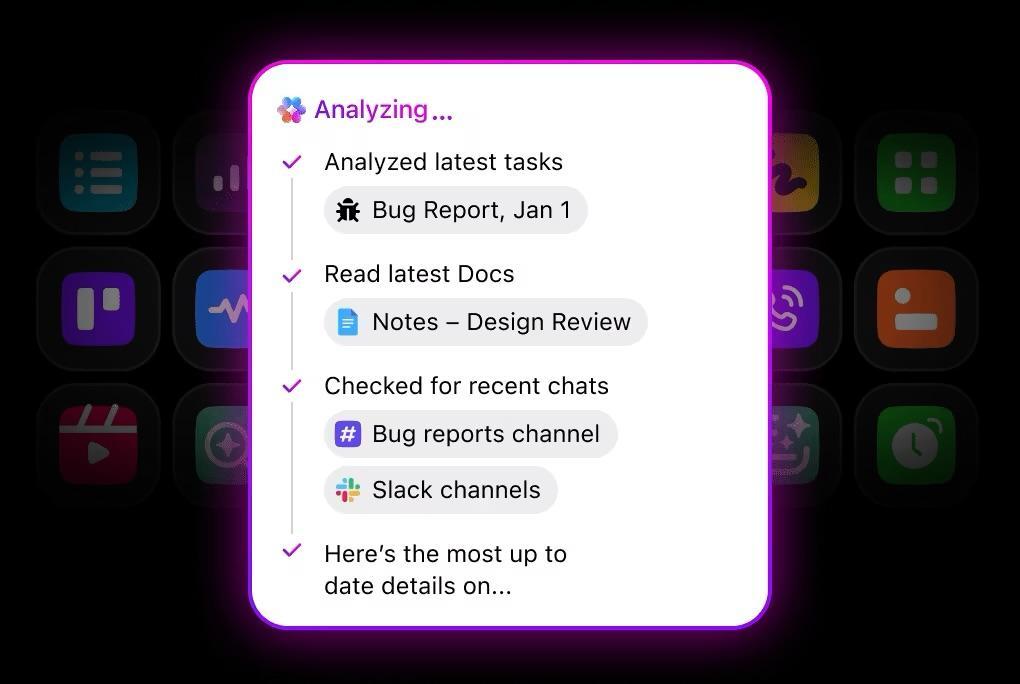
ClickUp’s Enterprise Search capability addresses this by indexing information across the workspace and connected tools, so teams can find everything they need in one place. The system can retrieve answers from tasks, documents, conversations, and external applications, combining them into contextual responses.
Contextual filtering lets you sort by project, status, or assignee so results stay relevant, and permissions management ensures sensitive governance documents stay accessible only to authorized users.
ClickUp’s security policies enforce role-based access control and audit logs across the workspace, with customer data hosted on AWS under SOC 2 Type 2 certification. With ClickUp’s 100+ Integrations, data from tools like Tableau, Google Sheets, Airtable, etc., flows seamlessly and securely into your workspace.
Effective data governance requires clear documentation: dataset definitions, governance policies, onboarding guides for analysts, and standard operating procedures for handling sensitive data.
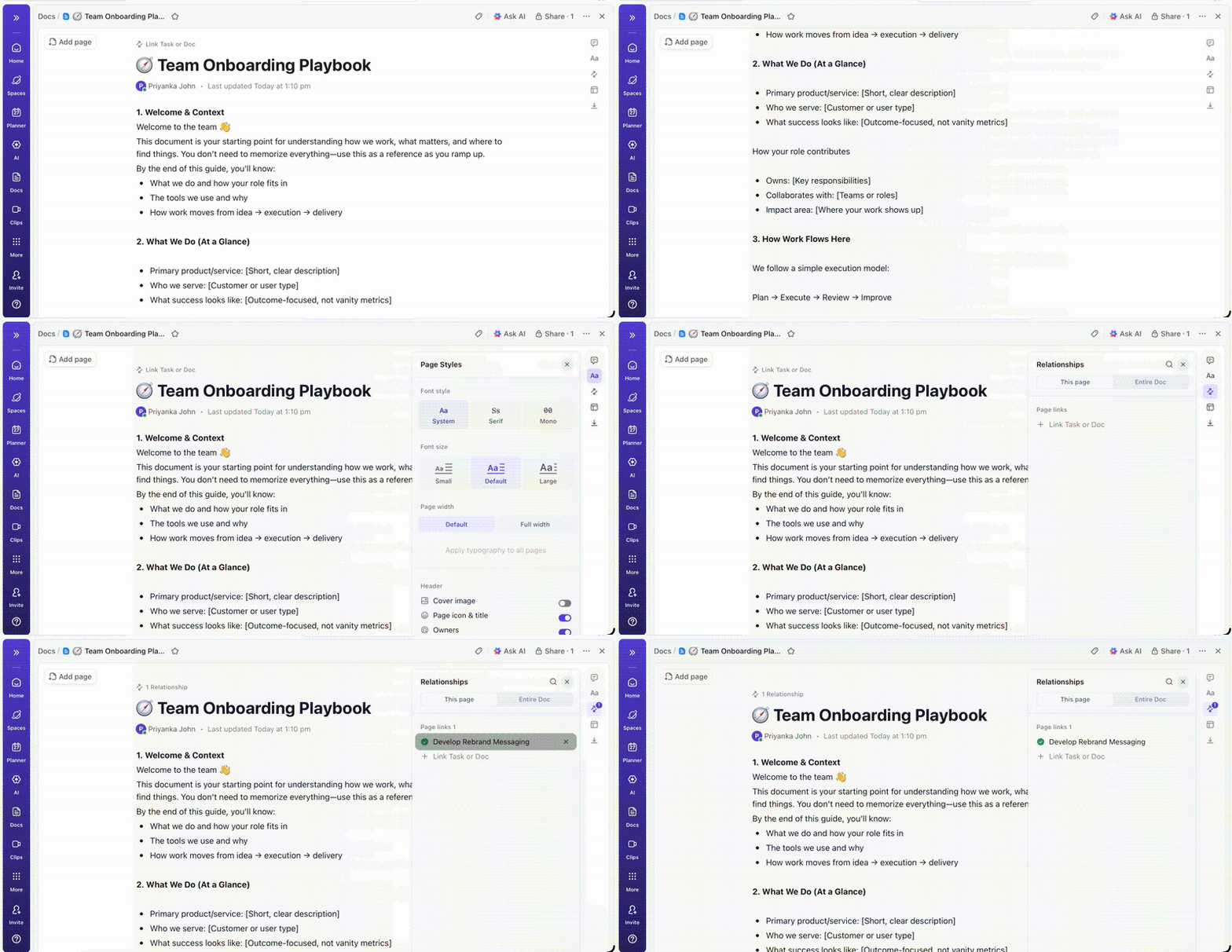
With ClickUp Docs, you get a collaborative environment for building internal wikis and knowledge bases that are directly linked to tasks and workflows.
Teams can create technical documentation, collaborate in real time, convert action items into ClickUp Tasks, and use version history to track how documentation evolves as datasets change over time.
It’s especially useful when engineers and business stakeholders need to stay aligned without relying on internal communication tools that sit outside the work entirely. And for enterprise users, the Docs Hub makes it easy to find the latest version of anything without digging through old chat messages or email threads.
Another challenge for data leaders is visibility into ongoing governance work. From compliance initiatives to catalog adoption, efforts often span multiple teams and months of work.
ClickUp Dashboards lets you build customizable reporting views that track everything from project progress and workload distribution to compliance readiness and operational metrics. By consolidating data from tasks, workflows, dependencies, and project timelines, leadership gets a clear view of governance initiatives across the organization.
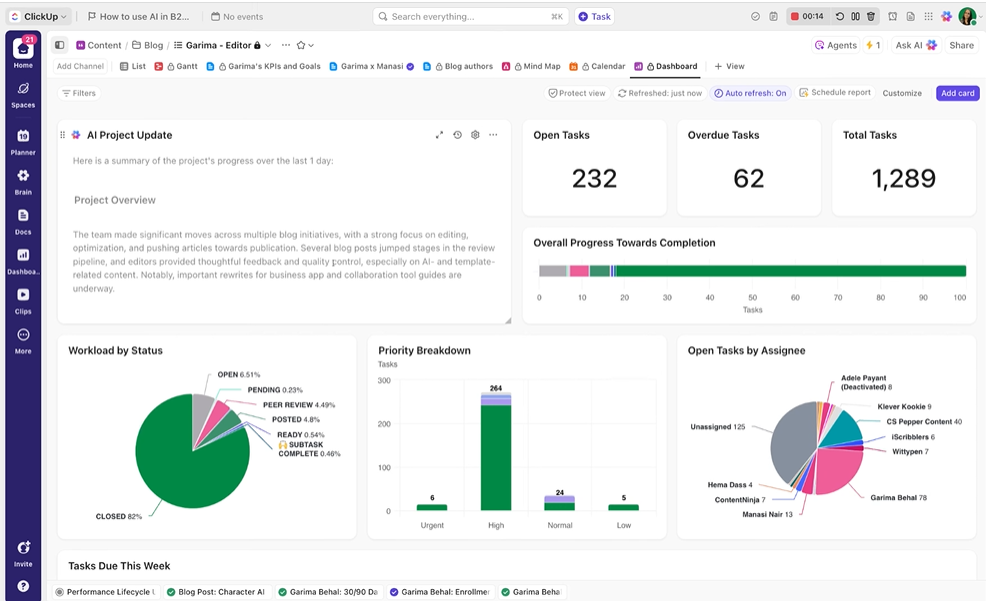
A user review says:
I find ClickUp easy to use for the entire team, which is great. I really like the flexibility and the flexible apps that ClickUp offers. The data I can input into the database is really rich and useful for follow-ups in every kind of task, post-sale, and in sales pipelines. It’s very viable because it allows for smooth transitions between team members, making sure everyone knows what was solved for a client and can give the correct follow-up and closure.
📮 ClickUp Insight: 22% of our respondents still have their guard up when it comes to using AI at work. Out of the 22%, half worry about their data privacy, while the other half just aren’t sure they can trust what AI tells them.
ClickUp tackles both concerns head-on with robust security measures and by generating detailed links to tasks and sources with each answer.
This means even the most cautious teams can start enjoying the productivity boost without losing sleep over whether their information is protected or if they’re getting reliable results.
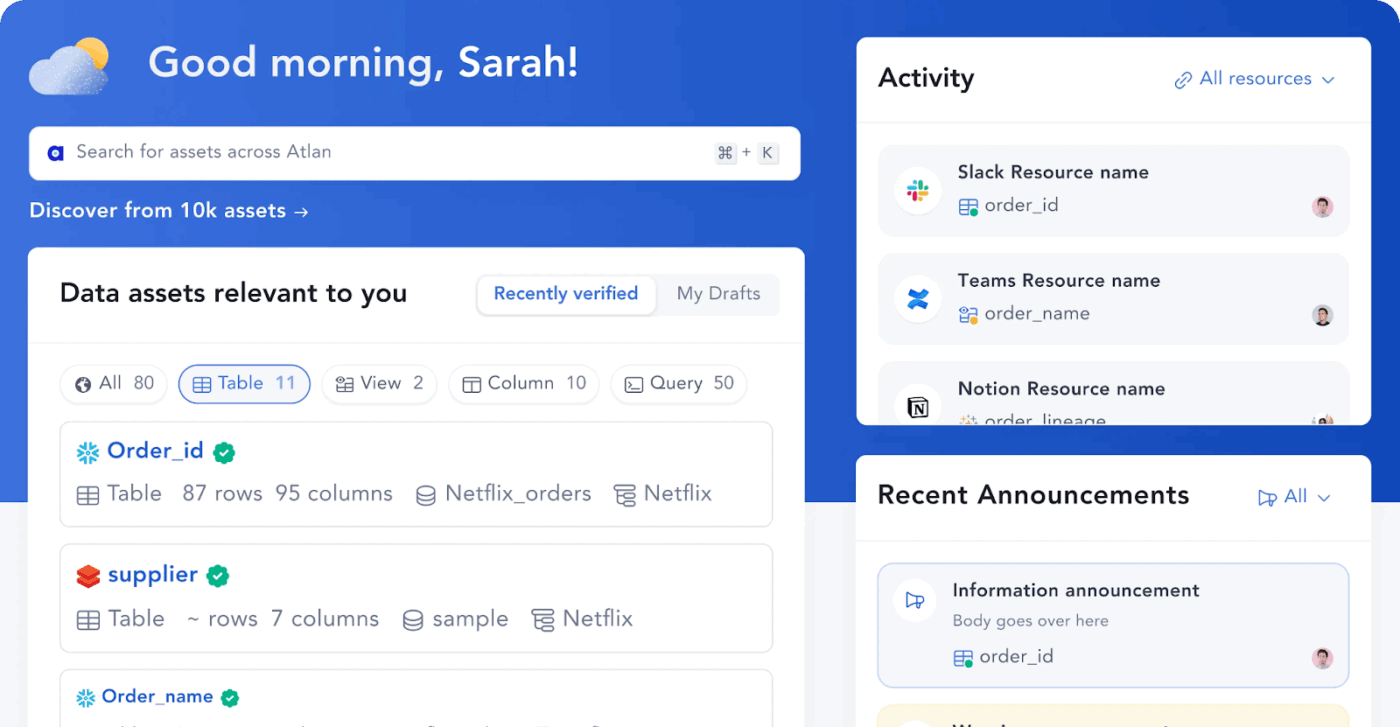
Atlan connects directly to tools such as Snowflake, dbt, and Tableau to automate lineage, cataloging, and governance in a single collaborative workspace. It continuously updates metadata from connected sources rather than relying on manual input and surfaces context through integrations with Slack and Chrome.
Column-level lineage tracks how data flows from source to final report, supporting impact analysis and debugging across complex environments. AI-powered features generate SQL queries from natural language and automatically keep asset descriptions up to date.
A user review says:
What I appreciate most about Atlan is how it transforms working with data into a truly collaborative and seamless experience. By bringing together people, data, and context in a single platform, it enables teams to genuinely understand and trust their data. I find it incredibly easy to locate what I need, document my work, and maintain organization without the usual confusion. Atlan is clearly designed to make data serve people, rather than forcing people to adapt to data. Its smooth integration with modern tools allows teams to work more efficiently, and it makes the entire data process feel more human, transparent, and enjoyable.
📖 Also Read: Best Internal Company Wiki Software
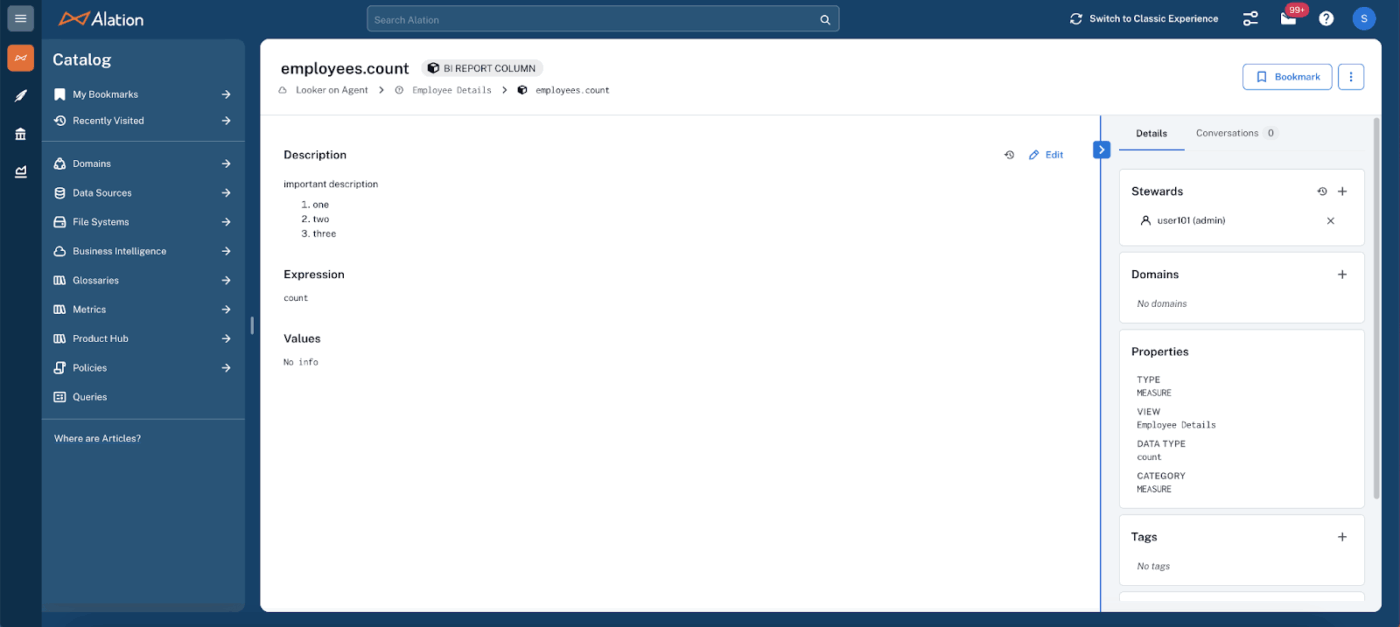
Alation is an AI-powered data intelligence platform that acts as a centralized catalog, enabling organizations to find and trust their data across databases, warehouses, and data lakes.
The platform uses machine learning to analyze actual query behavior and automatically surface trusted assets, keeping the catalog accurate based on real usage rather than manual documentation. It automates data governance, lineage tracking, and metadata extraction, reducing the time teams spend searching for reliable data.
Ask Alation converts plain English questions into SQL or Python instantly, making data accessible to business users without technical expertise. Data Products Marketplace lets teams discover and consume governed data products across the organization, while native integrations with BI tools like Tableau and Power BI keep analysis connected to trusted data.
A user review says:
I find Alation to be fantastic with its product innovation and am impressed by its ongoing development, including piloting a new AI product feature. The excellent customer service stands out, with the Alation team being very approachable and consistent in their client interactions. From the initial sale through to software renewal, they immerse themselves in understanding the client’s perspective and strive to ensure their success. I’m grateful for the ease of setup, facilitated by Alation’s professional services team through their Right Start program, making the implementation process smooth and hassle-free.
🌟 Bonus: Need AI that works beyond ClickUp and pulls context from your other tools too? ClickUp Brain MAX is a Super App that connects your ClickUp workspace with apps like Google Drive, HubSpot, and Figma, so you can search across all of them using just one desktop app.
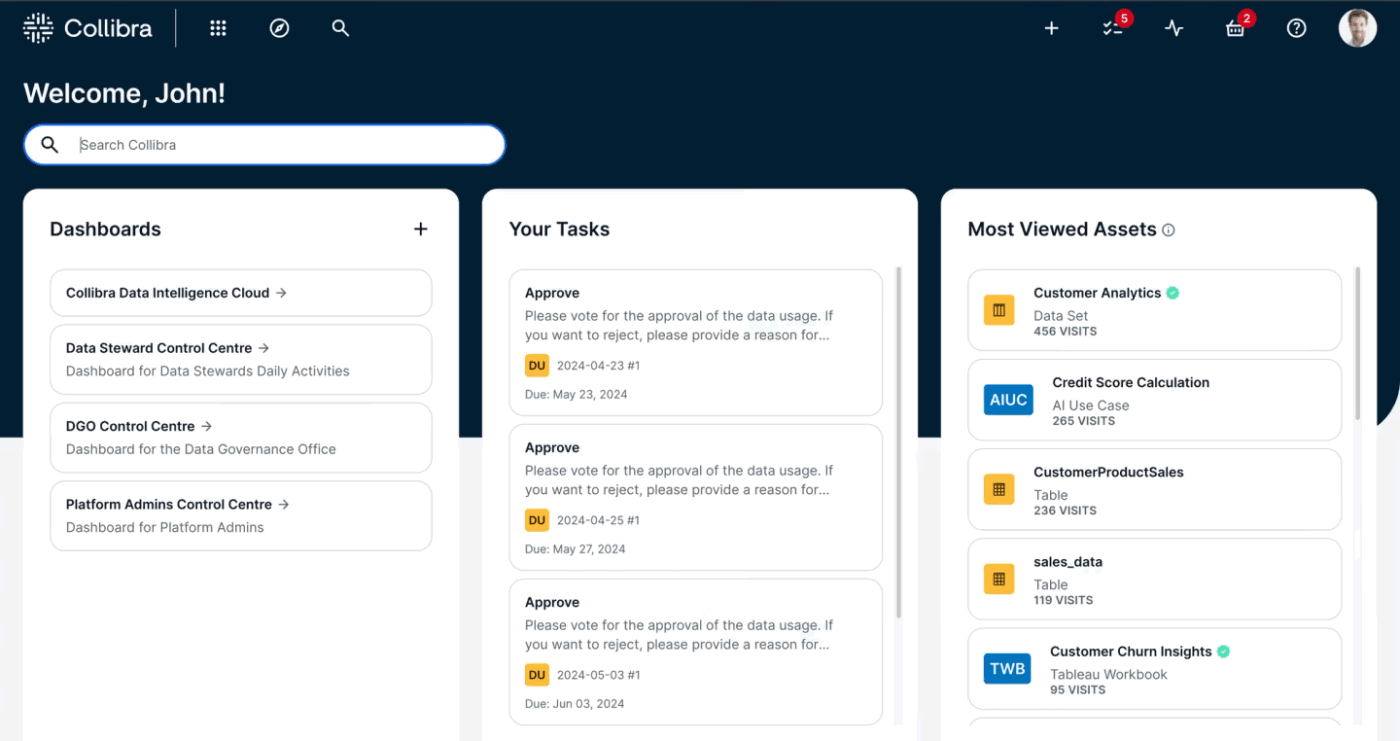
An enterprise-grade Data Intelligence Platform, Collibra helps organizations manage and govern data and AI assets at scale. Built on the concept of Data Confidence™, it serves as a centralized system of record, providing business and IT teams with a shared place to discover and certify data across the organization.
Machine learning proactively detects data anomalies, while automated workflows replace scattered spreadsheets and manual compliance processes. It also manages the lifecycle of AI models and agents, ensuring they are built on trusted data and comply with internal and regulatory standards.
A user review says:
I find it is very easy to relate the core offerings of the platform to key business issues and propose Collibra as the tool that can solve these issues and thus generate value through cost savings.
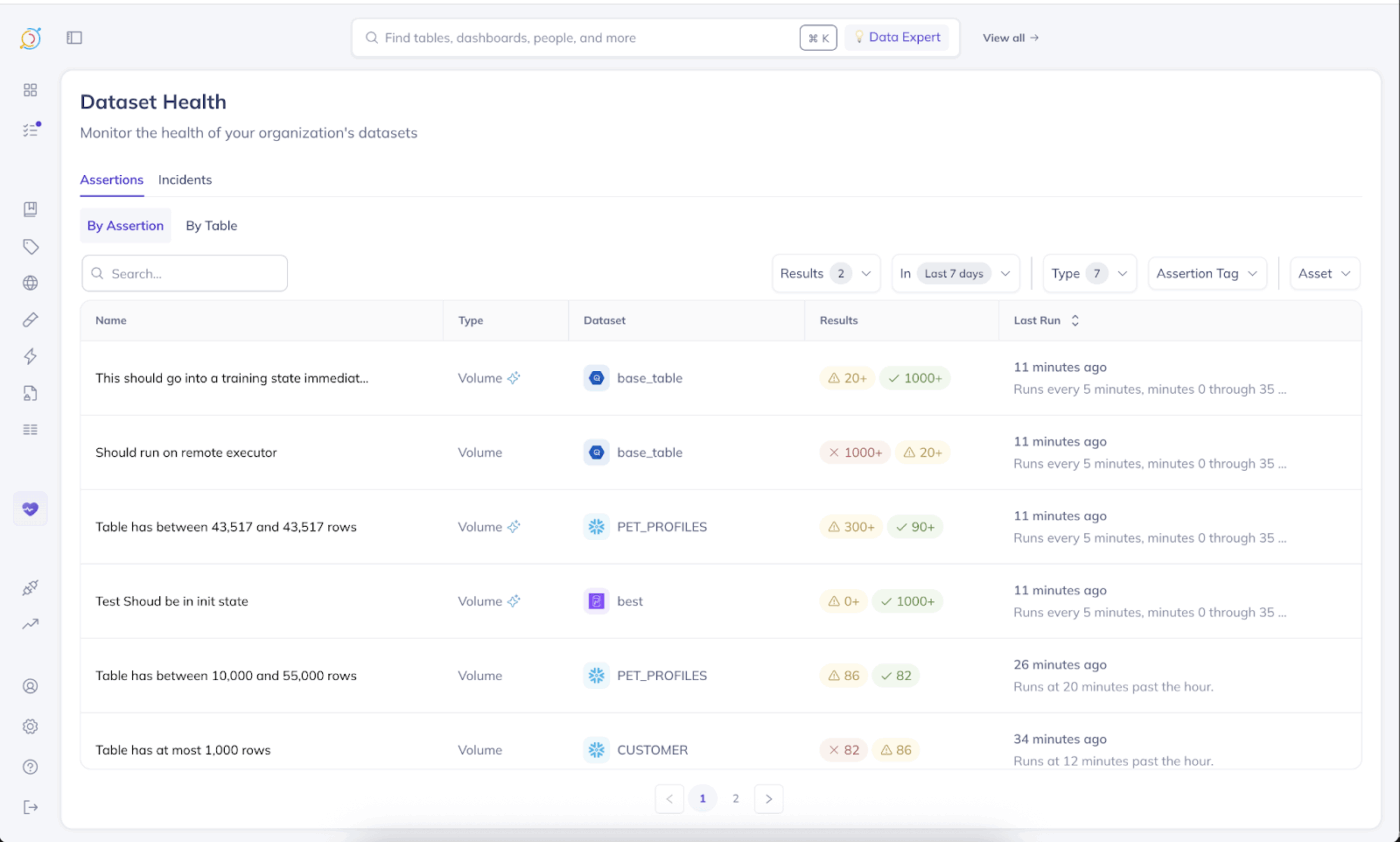
For data engineers managing complex pipelines and large data ecosystems, DataHub is a good choice. It helps organize and understand data by centralizing metadata across datasets, dashboards, pipelines, and ML models into a single unified view.
The open-source data catalog supports search-based discovery, end-to-end lineage tracking, ownership management, and data quality monitoring. Teams can define data contracts, track PII, and apply governance policies across the data ecosystem.
Originally built by LinkedIn to handle metadata at scale, the tool provides data engineering teams with a flexible foundation they can deploy and extend to fit their own infrastructure, without being tied to a vendor roadmap.
A user review says:
DataHub is simple to use and helps keep my data organized. It’s great for sharing and managing datasets, and the version control is a big plus. I’d definitely recommend it!
📖 Also Read: Best Affordable Small Business Database Software
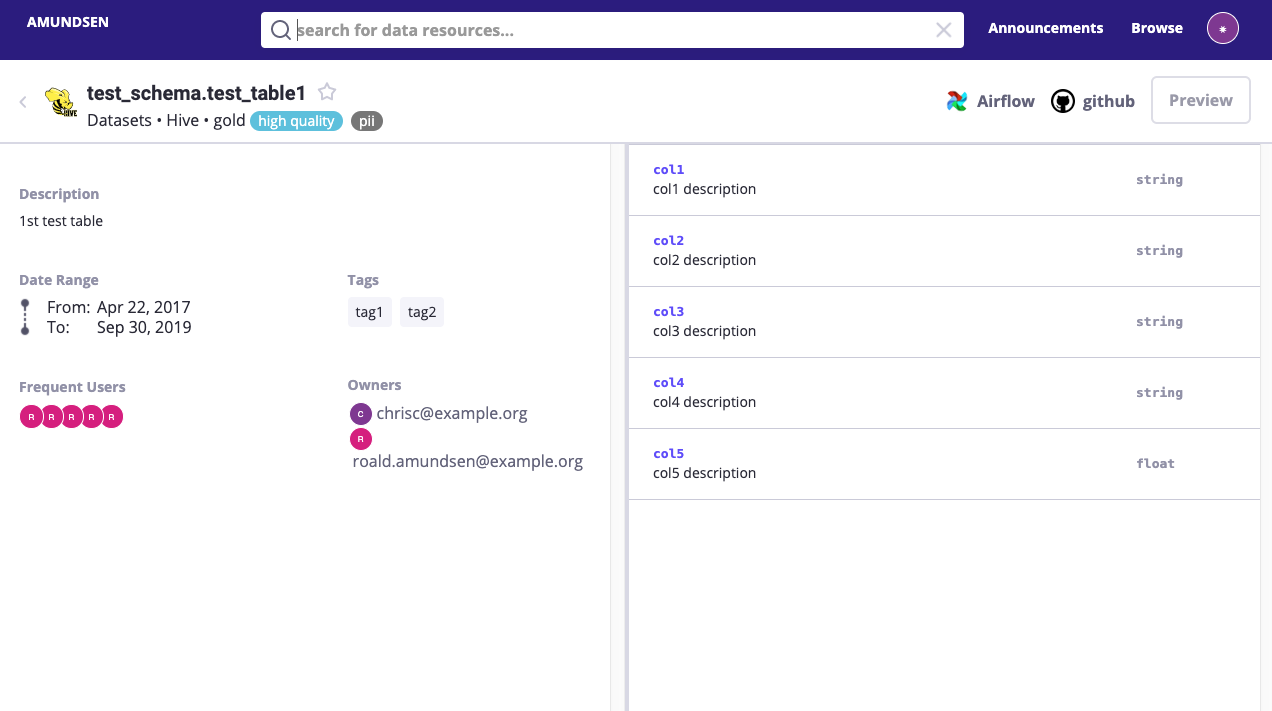
Amundsen takes a search-first approach to the metadata problem. Its ranking algorithm surfaces datasets based on actual usage patterns rather than how recently someone updated the documentation, so the assets your team already relies on tend to show up first without anyone maintaining a list.
The tool connects datasets to the ETL pipelines, dashboards, and queries that depend on them, giving teams a clearer view of how data flows across the organization. This visibility also helps teams understand where data originates, how it is transformed, and what downstream systems rely on it.
A Reddit review says:
We needed something quick and based on our experience Amundsen was easier of the two (you cannot go wrong with either one). We had to make modifications to support graphdatabase and Amundsen was easy to modify.
🔍 Did You Know? Amundsen is named after Roald Amundsen, the Norwegian explorer who was the first person to reach the South Pole.
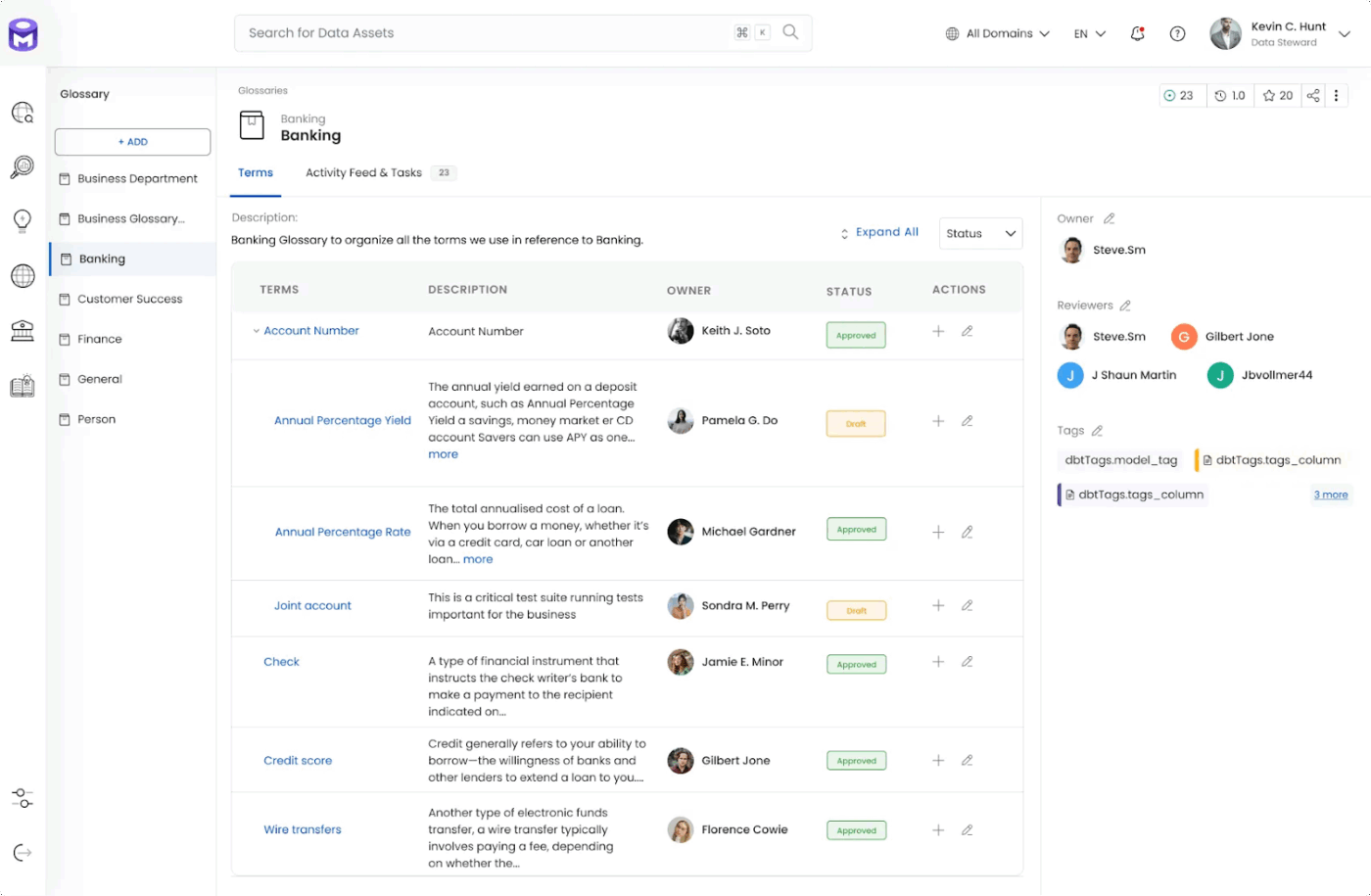
OpenMetadata unifies data discovery, observability, and governance across modern data stacks. It centralizes metadata from pipelines, warehouses, dashboards, and ML models into a single unified graph, breaking down silos across tools like Snowflake, Airflow, and dbt.
The platform supports automated metadata ingestion through 100+ connectors, with built-in lineage tracking, data quality monitoring, and collaboration features. A no-code lineage editor lets anyone on the team map and update data flow visually without filing a ticket.
Built on an API and schema-first architecture, it is designed to scale across enterprise data environments while remaining accessible to both technical and non-technical users.
A Reddit user says:
I personally found openmetadata to be great tool. Not sure why its not popular enough. their OSS has some issues. but they provide a lot of flexibility. its very easy to extend.
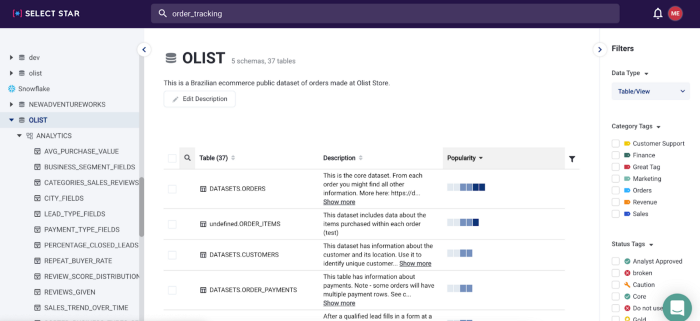
Select Star does not ask you to change how your data is stored or managed. It reads your existing infrastructure and immediately starts documenting assets, mapping column-level lineage, and surfacing how data is actually being accessed across your warehouse and BI tools.
A Snowflake cost analysis feature connects data usage directly to warehouse spend, so you can see which assets are driving costs. Continuous DBT sync keeps documentation accurate automatically, and auto-generated entity relationship diagrams help new team members get up to speed without having to track down whoever built the system.
A user review says:
What I like best about Select Star is how usable and intuitive the platform feels from the start. The interface is clean, well-organized, and makes navigating complex datasets much simpler. The search functionality is powerful. I can quickly locate the right tables, columns, or dashboards without needing to ask around. It’s been an excellent tool for onboarding onto new data environments and understanding relationships across datasets faster. Overall, Select Star really improves data discovery and collaboration across teams.
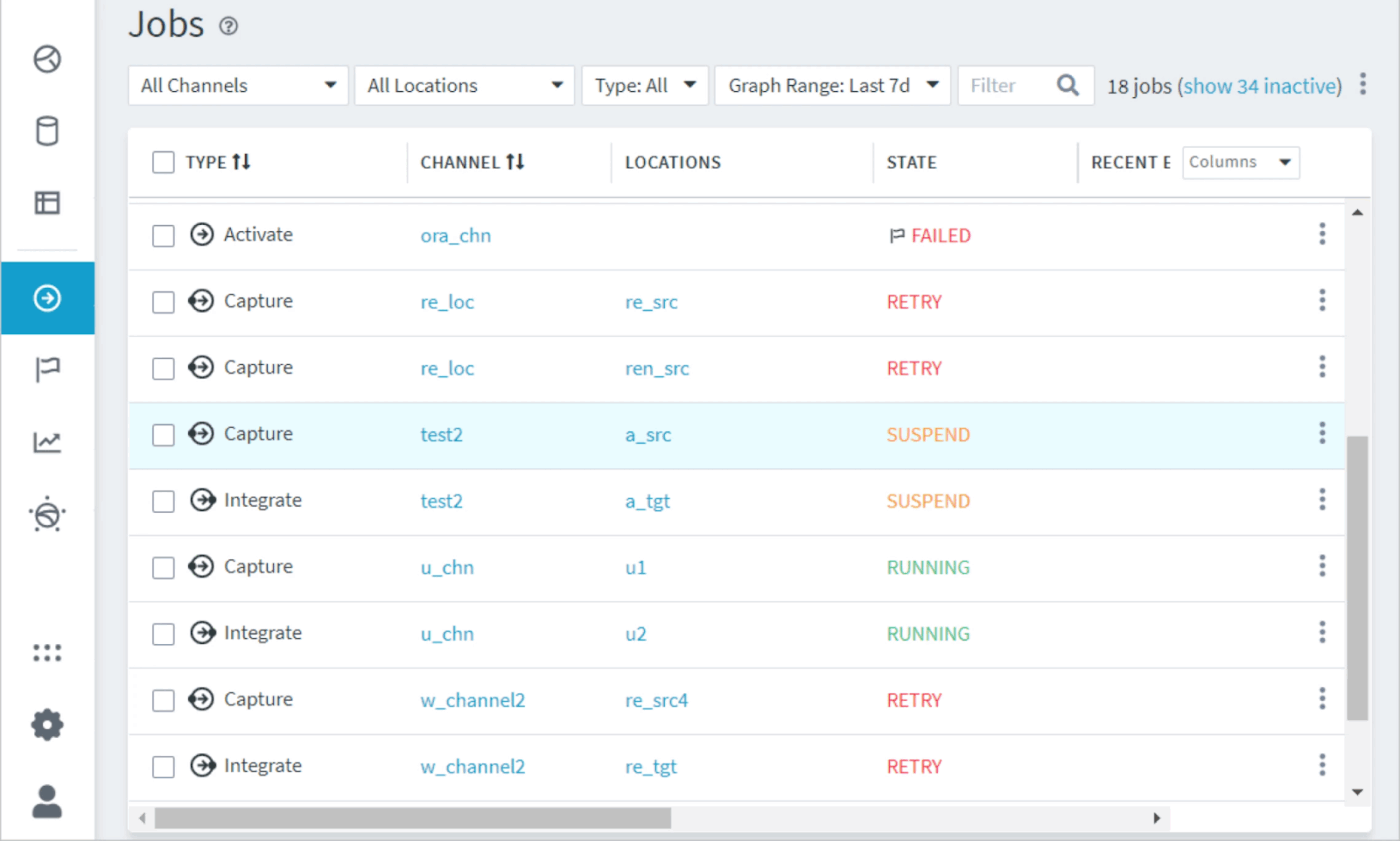
Fivetran is a fully managed, cloud-native data integration platform that automates ELT, moving data from SaaS applications, databases, and files into a centralized data warehouse or data lake without requiring custom engineering fixes.
It handles schema changes, API maintenance, and historical syncs automatically, so pipelines don’t need manual intervention as sources evolve. Security and compliance certifications, including SOC 2, GDPR, HIPAA, and ISO 27001, are included out of the box.
A user review says:
Fivetran excels at doing one thing incredibly well: reliably syncing data from multiple SaaS tools into a central data warehouse like BigQuery. The setup is remarkably fast—most connectors are essentially plug-and-play, with minimal configuration. I especially appreciate the wide connector library, automatic schema management, and robust alerting system. For a small team without a full-time data engineer, it’s a game-changer. It eliminates a ton of manual work and lets us focus on deriving insights rather than wrangling APIs.
🧠 Fun Fact: Fivetran is a play on Fortran, the programming language. The founders originally set out to build a spreadsheet for big data, but user feedback kept pointing to one thing: just move our Salesforce data into Redshift. So they pivoted, and a data pipeline company was born.
Most data catalog tools do their job and stop there. The documentation still lives in a separate wiki, and the conversations that matter get buried in chat threads nobody goes back to read.
ClickUp closes this gap by connecting the work itself to the documentation, the tasks, and the context around it. So when your team needs answers, they’re already there.
Sign up for ClickUp for free and see what a connected data workflow actually feels like. ✅

© 2026 ClickUp

There’s an easier way. Try a free AI Agent in ClickUp that actually does the work for you—set up in minutes, save hours every week.