






Still downloading templates?
There’s an easier way. Try a free AI Agent in ClickUp that actually does the work for you—set up in minutes, save hours every week.
Sorry, there were no results found for “”
Sorry, there were no results found for “”
Sorry, there were no results found for “”
What actually breaks when a team grows? Is it the culture or the lack of structure?
At 10 people, alignment feels natural. Context is shared, decisions are visible, and culture reinforces itself through everyday work. You don’t need systems because proximity does the job.
That model stops working as the team grows.
With 30 to 40 employees, context spreads unevenly. Teams drift into different ways of working. New hires learn by watching, not because things are clearly defined. Nothing is broken, but consistency starts to slip.
This is where culture stops being a shared experience and starts becoming an operational problem.
Scaling from 10 to 50 employees demands a structural shift. Implicit norms have to become explicit systems. Decisions need durable visibility. Communication needs predictable paths. Knowledge must live somewhere more reliable than memory.
This article breaks down how to design those systems across hiring, communication, knowledge management, and core infrastructure, so culture doesn’t weaken as headcount grows.
At a 50-person headcount, you can’t rely on hallway conversations to keep everyone aligned.
Simply because everyone’s not in the same room anymore. The engineering team is solving problems you don’t hear about. Marketing is running campaigns that sales doesn’t know exist. A new hire asks, “How do we handle customer escalations?” and gets three different answers depending on who they ask.
This is the case where most startups break.
✅ Fact Check: Research by Jordana Valencia in Harvard Business Review found that companies scaling rapidly lose cultural cohesion unless leaders intentionally redesign how culture transfers as the team grows. The problem is that the mechanisms that built it in the first place stop working.
Culture doesn’t usually fail loudly. It fails in small, everyday moments that people stop noticing. A missed update. A decision no one remembers making. A new hire is guessing things out instead of being confident enough to know where to look. As teams scale, these moments stack up.
The following three patterns are where most startup cultures start to slip.
At 10 people, you probably use 3-4 tools: Slack for communication, Google Docs for collaboration, and maybe a lightweight project tracker. Everyone knows where everything lives because there isn’t much of anything yet.
By 30-40 people, that number increases exponentially. Engineering adopts Jira. Marketing lives in Asana. Sales builds everything in HubSpot. Finance uses a separate budgeting tool. HR introduces a typically overpriced HRMS.
Each tool makes sense in isolation. Together, they create Work Sprawl. It is nothing but the fragmentation of work across disconnected platforms that creates information silos and kills productivity.
Here’s what that looks like in practice:
The information exists, but it is disconnected from decisions, owners, and next steps. People spend more time searching for summaries than using them to move work forward.
The real value is not just in capturing information. It comes from keeping that information attached to the work it supports. When context stays close to tasks and outcomes, teams can act with clarity instead of guesswork.
📊 The thing that makes or breaks small businesses? Clarity!
Many growing teams run their operations across 20+ different apps. One tool for tasks. Another for chat. Another for docs. Another for reporting. Before long, the real work becomes stitching information together.
The ClickUp Small Business Suite consolidates projects, docs, chat, dashboards, and AI into a single workspace, so teams operate from a single system of record rather than dozens of disconnected tools.
The impact goes beyond tool consolidation. When work lives in one connected system:
Instead of manually coordinating updates across apps, the platform handles the operational glue.
The result is a leaner operating model where a single system absorbs work that previously required multiple tools and layers of coordination.
Your team doesn’t need to grow just to manage the work. The system carries the operational weight, so the team can focus on delivering it. 🚀
📖 Read More: How to reduce context switching
Initially, with just 10 people in your organization, communication is simple. You have one standup. Maybe one weekly sync. Important updates happen in the main Slack channel, where everyone can see them.
At 40 people, that breaks down fast.
You now have multiple teams with different schedules, different priorities, and different communication norms. The effortless information flow you had with 10 people? It’s gone. Replaced by:
New hires feel this most acutely. They’re trying to learn how the company works, but the information they need is scattered, outdated, or living in someone’s head. The solution is to build communication rhythms in consistent, predictable ways for information to move through your company.
🛠️ Toolkit: ClickUp helps by centralizing communication where the work actually happens. That means important conversations no longer disappear into Slack threads; they live in ClickUp Chat, connected directly to the relevant tasks and projects.
Your early employees are walking databases. They know why decisions were made, which client feedback shaped your product, and the unwritten rules that define how your company actually works.
As you scale, those people get stretched thin. They’re in meetings, managing teams, putting out fires. They can’t answer every “how do we…?” question anymore.
Later, here’s what you’ll see:
The fix is turning tribal knowledge into documented processes and searchable knowledge bases.
🤖 Callout: Culture breaks the moment onboarding becomes optional
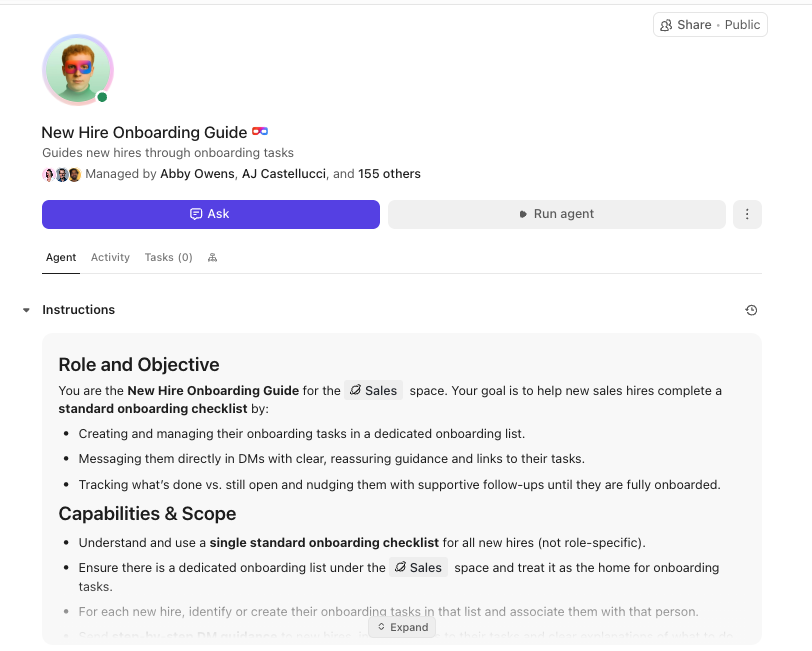
The moment a new hire has to ask three people how something works, your culture has already fragmented. A Super Agent in ClickUp enforces consistency where humans can’t, turning onboarding into a system rather than a favor.
Every role learns the same way, from the same source, through the same workflows. Culture stops depending on memory and starts compounding by design.
📖 Read More: How to run an effective all hands meeting
You’ve seen what breaks. Now here’s how to prevent it: build infrastructure before you need it.
When your team is small, culture lives in people’s heads. Everyone absorbs it through proximity. As your company grows, that stops working. You need a foundation: documented systems, centralized workflows, and accessible knowledge that scales with your headcount.
That infrastructure starts with where your information lives.
Here’s how to close the gaps and bring in a system that creates a tangible impact on the way your organization functions.
When information lives in too many places, culture becomes inconsistent by default. People don’t act differently because they disagree with values—they act differently because they’re operating with different information.
The first step is consolidating where work, decisions, and documentation live. In practice, this means centralizing:
When tasks, docs, and communication are connected, decisions stay attached to outcomes instead of drifting into chat history. This is how context survives team growth.
The fix here is to centralize everything in a single workspace where tasks, docs, and communication are connected.
For companies scaling from 10 to 50 employees, this means culture-critical information lives in a single searchable hub rather than being scattered across tools.
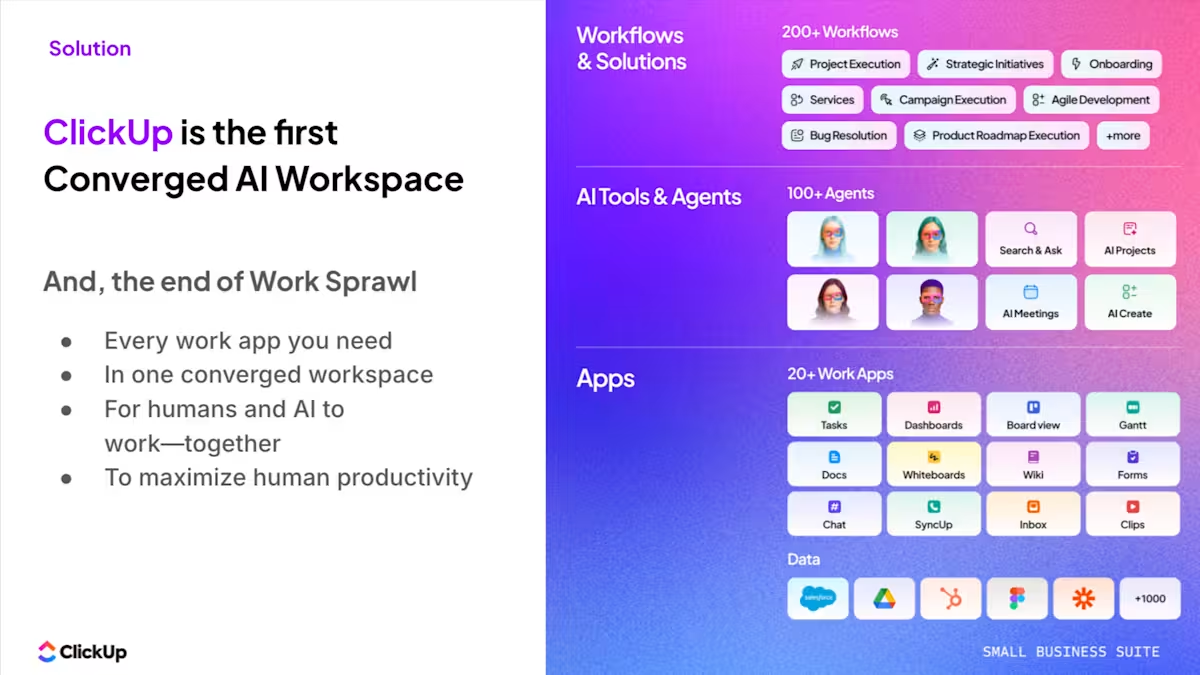
📺 Watch: As the world’s first converged AI workspace, ClickUp unifies your work apps, data, and workflows into one platform.
ClickUp Docs becomes your living knowledge base, replacing scattered files in Google Docs. With Enterprise Search + ClickUp Brain, context is searchable across tasks, conversations, and documents, so tribal knowledge doesn’t disappear as teams grow. Linking docs and conversations directly to ClickUp Tasks keeps decisions visible where work actually happens, preventing hidden context and lost context from derailing alignment.
Our CEO, Zeb Evans, breaks down how to build communication systems that scale in this 8-minute video.
Most companies document culture too late, and when they do, they freeze it in a static handbook that no one revisits.
Scalable culture requires living documentation. That means writing things down in a way that invites use, updates, and discussion, and not passive consumption.
At this stage, teams should explicitly document:
When this documentation lives alongside daily work, it becomes a reference point rather than a formality.
📖 Read More: How to create effective documentation
Early employees carry enormous amounts of implicit knowledge. As the team scales, expecting them to transfer that context manually is unrealistic and unsustainable.
Searchability is the bridge between experience and scale. Instead of routing every “how do we…?” question through founders or early hires, teams need a way to surface answers independently, from real, authoritative sources.
ClickUp Brain makes your team’s institutional memory searchable. New hires ask questions in natural language, “How do we handle pricing exceptions?” and get answers pulled from your entire workspace: docs, tasks, comments, everything.
Which means:
As teams scale, learning breaks when it depends on Slack pings, meetings, or who happens to be online. ClickUp Brain MAX is a standalone desktop app that gives every employee a single place to think, ask, and act.
It unifies your systems into a single interface, lets people speak instead of type with Talk-to-Text, and searches across work instantly without opening 5 tools. Learning becomes continuous, self-serve, and always available, not delayed by hierarchy or availability. When knowledge is one command away, scale stops slowing people down.
📖 Read More: How ClickUp Brain transforms team productivity
Culture isn’t just what you say. It’s what people observe. When workflows are hidden, people guess. When workflows are visible, they learn by seeing how work actually moves through the company.
Visibility means people can instantly look up:
This kind of clarity is infrastructure, not micromanagement. When work lives in a single system, visibility becomes the default. New team members don’t need culture explained to them; they see it in action through tasks, updates, and decisions unfolding in real time.
👉🏽 Our Small Business AI Playbook breaks down exactly how to use AI to reduce complexity in your workflows.
📖 Read More: How to build transparent workflows
Vague values don’t scale. If your company values are feel-good phrases like “We value excellence” or “Be innovative,” they’re useless when a new hire needs to make a decision, and you’re not in the room.
What does “excellence” mean when choosing between shipping fast or adding one more feature? What does “innovation” look like when a client asks for something you’ve never done before?
The values that felt obvious and were absorbed through osmosis by 10 people need to be explicitly translated for a team of 50. Your new hires weren’t there for the origin stories, so they need you to spell out what those values look like in action. This is the key to preventing culture dilution.
Scalable values are different. They’re specific enough to guide decisions and observable enough to show up in daily behavior.
To make your values actionable, define them with clear behavioral examples.
Don’t let your values live in a forgotten handbook that HR sends to new hires and no one reads again. Here’s the step-by-step process:
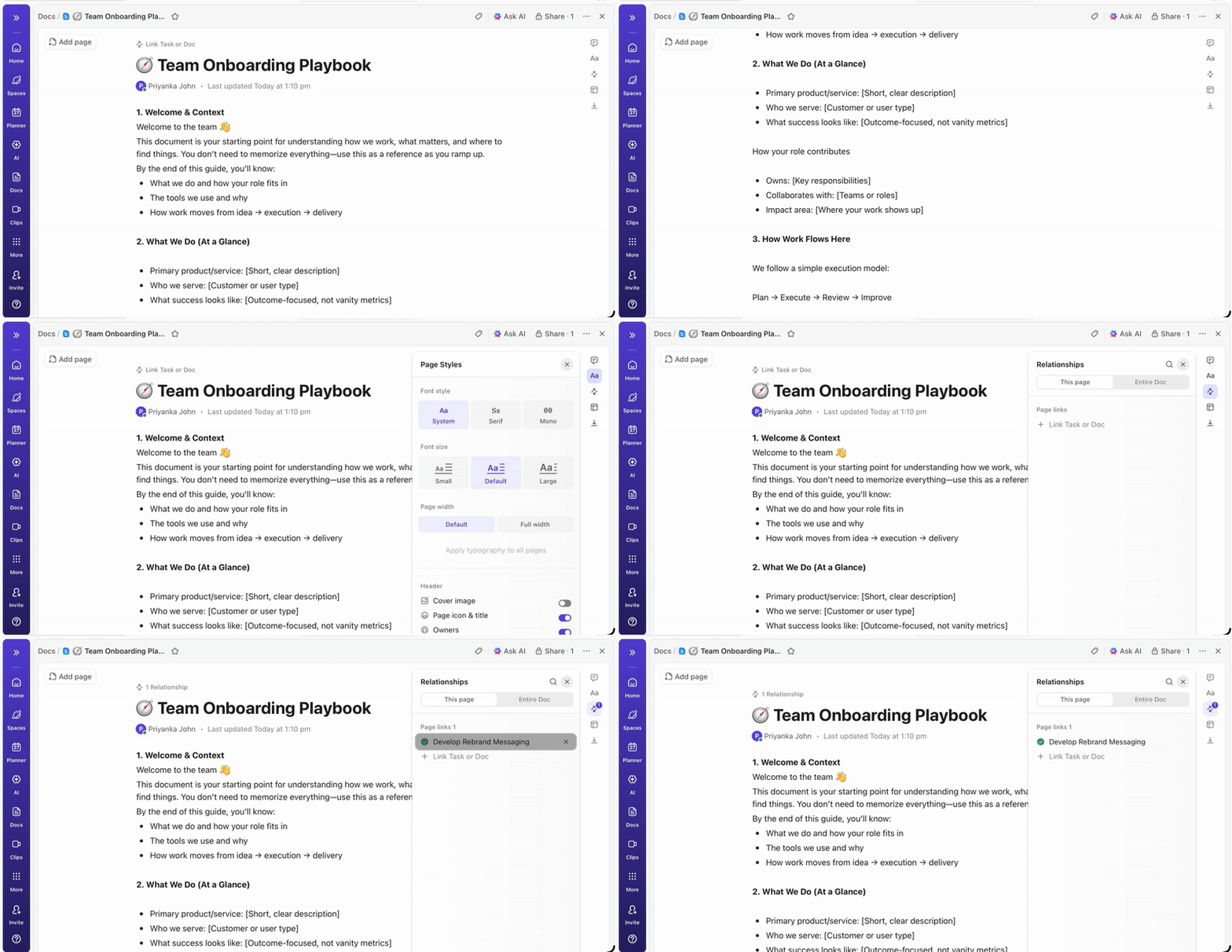
Rather than relying on memory, make values searchable and visible inside your workspace so they’re referenced naturally in day-to-day work.
When values are documented, discussed, and consistently visible in the tools your team uses every day, they’re far more likely to survive the scaling process.
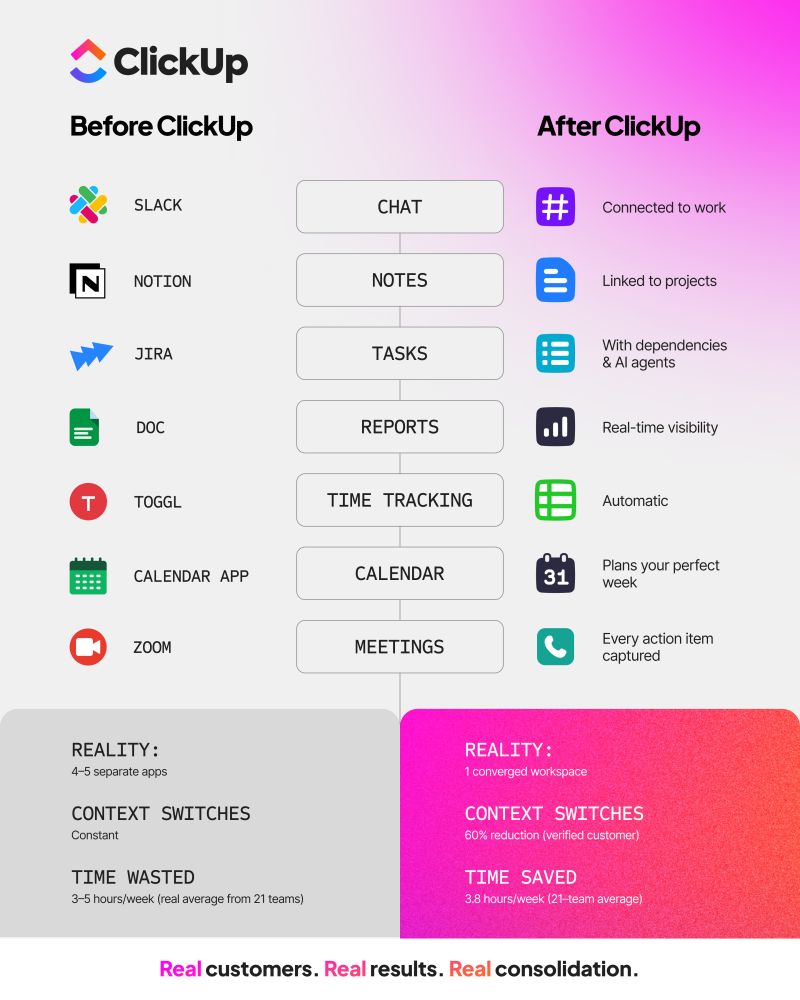
We were spending too much time updating different systems that weren’t talking to each other. It slowed us down and increased the chance of things falling through the cracks.
For path8 Productions, tool consolidation is not just about speed alone. They wanted to preserve clarity and consistency as the team scaled. When everyone works from the same system, culture doesn’t depend on who’s in the room. It shows up in the work itself.
What changed
Cultural impact
Their biggest gain wasn’t just efficiency. It was the ability to keep the team moving fast without adding operational overhead.
You’ve built the infrastructure. You’ve defined actionable values. Now comes the execution: making sure culture doesn’t erode as you add 20, 30, 40 new people who weren’t there when you started.
Infrastructure and values create the foundation, but culture doesn’t maintain itself; it requires daily practices that reinforce what matters. Here are five practices that actually work, not because they sound good, but because they address the exact moments where culture breaks during scale.
When you’re desperate to fill a role, it’s tempting to lower the bar on culture fit. “We need a senior engineer NOW” turns into “This person’s resume is great, and they can start Monday.”
That’s the trap.
A misaligned hire doesn’t just fail to contribute; they actively slow everyone down. They ask questions that reveal they don’t understand how decisions get made here. They push back on norms that everyone else has bought into. They create friction that compounds across the team.
The fix? Systematize culture assessment in your hiring process.
How to do it:
💡The ClickUp Checklist: Make your hiring process consistent. Here’s how:
And you’re presented with ready-to-use insights for the human in the loop!
Your company’s values are meaningless if they only exist as words on a wall. For values to have a real impact, they need to show up in the team’s daily behavior, which means operationalizing your values by embedding them directly into your workflows.
If you value transparency, for example, you should make project updates visible to the entire team by default. When you see someone demonstrate a core value, recognize them publicly where everyone can see it.
Build your values into your core processes, from how you run meetings to how you give feedback and make critical decisions earlier:
Make your values a visible, filterable part of your everyday work by tagging tasks and projects with the specific value they exemplify. To fully build this into the workflow, conduct team retrospectives that explicitly discuss how your values showed up or didn’t in a recent project. ClickUp Whiteboards is great for this!
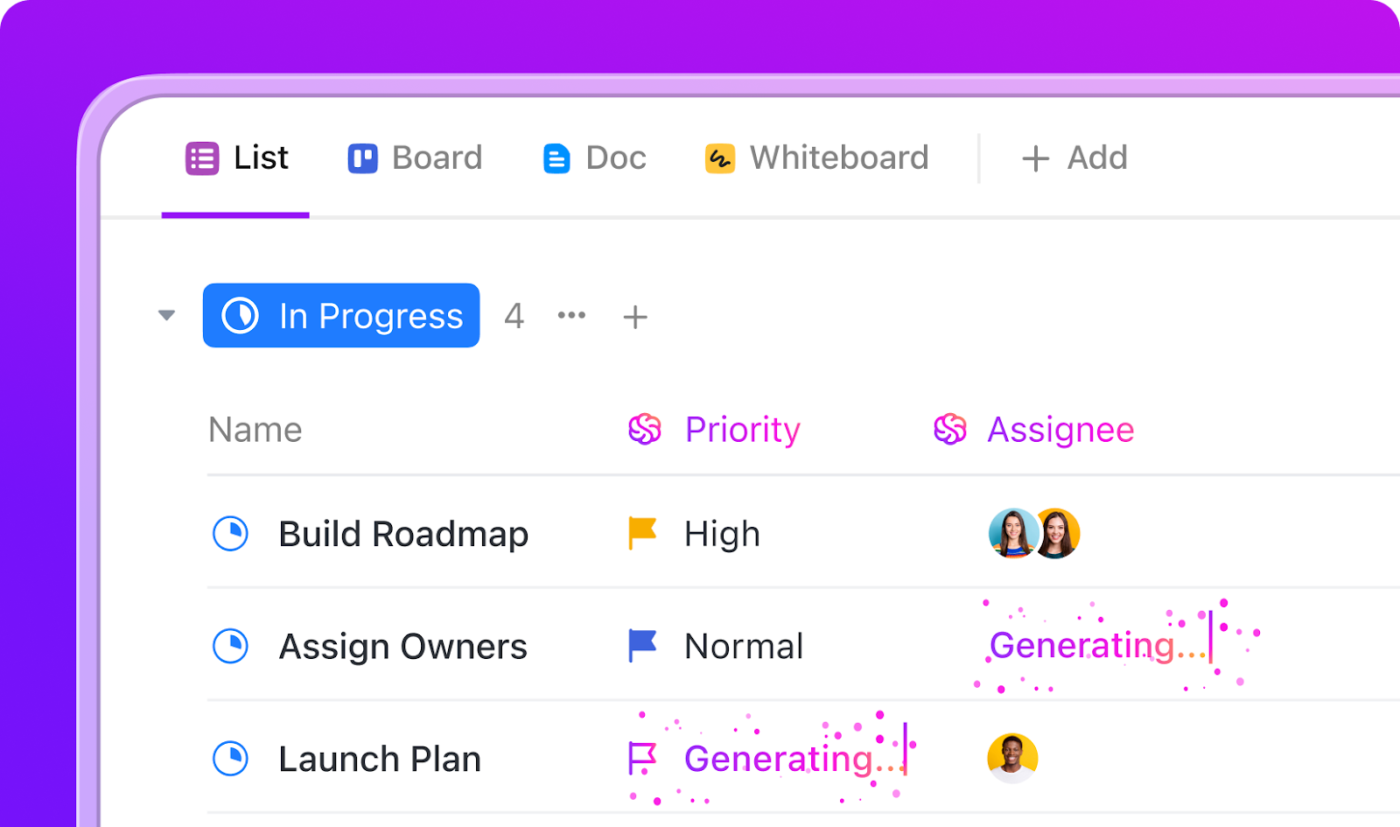
💡Pro Tip: Automate key yet repetitive parts of the process with ClickUp Automations.
You can’t be the only person transmitting culture. As you scale, you become a bottleneck.
Culture carriers aren’t people with “culture” in their job title. They’re the individuals who naturally embody your values in daily work. They’re the ones new hires instinctively go to for advice. The ones who set the tone in meetings. The ones who call out when something feels off.
How to identify them:
If you don’t formally empower culture carriers, your culture becomes inconsistent. Different teams develop different interpretations of how work should happen. New hires receive conflicting signals about what actually matters. Over time, culture carriers burn out from being the informal go-to people without recognition or authority. Here’s how ow to empower them properly:
How to do it: Organize dedicated ClickUp Spaces to give your employees clear ownership of culture-related projects and resources, making them active participants in scaling your culture. This way, you can empower your culture carriers to shape your company’s culture by giving them visibility into company-wide initiatives and the ability to contribute to central culture documentation using ClickUp’s permission and sharing features.
Different tools create different workflows. Different workflows create different norms. Before you know it, you have three subcultures operating under completely different assumptions about “how we work here.”
| Challenge | Fragmented Tools | ClickUp Converged Workspace |
| New hire onboarding | Hunt through multiple apps for context | Everything searchable in one place |
| Cross-team collaboration | Context lost between tools | Work and communication connected |
| Institutional knowledge | Trapped in individual heads or scattered docs | ClickUp Brain surfaces answers instantly |
| Process consistency | Each team does things differently | Templates and automations standardize workflows |
This is the unplanned proliferation of tools and platforms with no oversight, leading to wasted money, duplicated effort, and security risks. If different teams use different AI tools, your institutional knowledge becomes siloed, inconsistent, and hard to manage.
Successfully scaling from 10 to 50 employees without losing your culture requires building infrastructure that keeps everyone connected and aligned. A single, unified workspace creates a single, unified way of working.
📖 Read More: What is Tool Sprawl and How Can It Be Avoided
As you navigate the rapid growth from 10 to 50 employees, it’s easy to fall into common traps that can unintentionally erode the very culture you’re trying to protect.
Being aware of these pitfalls is the first step to avoiding them:
Successfully scaling company culture comes down to intentional documentation, consistent communication rhythms, empowered culture carriers, and unified systems. The companies that maintain their unique identity through rapid growth are the ones that treat culture as a system to be designed, not a vibe to be hoped for.
Scaling culture from 10 to 50 employees is about consistent, intentional choices in how you build infrastructure, define values, hire people, and structure work. Here’s a checklist to help you:
If you’re at 10-15 people (building the foundation):
If you’re at 15-30 people (preventing fragmentation):
If you’re at 30-50 people (reinforcing at scale):
As teams grow, culture doesn’t fail because people forget the values. It fails when the signals around how work gets done become inconsistent. Decisions are harder to find. Context gets lost. New hires aren’t sure which version of “how we work” is the right one.
The teams that scale cleanly solve this by designing for clarity early. They make work visible, decisions durable, and knowledge easy to access so the right behaviors are reinforced naturally, without constant explanation.
That’s where ClickUp fits in. By bringing tasks, docs, communication, and knowledge into a single workspace, ClickUp helps growing teams turn their operating principles into everyday practice.
When how you work is clear, culture doesn’t need protecting. It carries itself forward as the company grows. Ready to build yours? Start with ClickUp for free!
Evolution is the intentional adaptation of your culture that preserves core values while updating practices for new contexts and a larger team. Dilution is the unintentional weakening of your culture, where values become vague or inconsistent because they weren’t actively maintained during growth.
Remote and hybrid teams must be even more intentional about documentation and communication rhythms, since culture can’t be transferred through physical proximity. A centralized platform like ClickUp, which unifies work, communication, and knowledge, becomes the essential infrastructure for a strong distributed culture.
While both are important, you should prioritize culture fit for roles that involve significant team interaction or decision-making authority, as values are much harder to teach than skills. For highly specialized, independent technical roles, skills may occasionally take precedence, but it’s a trade-off that should be made carefully.
Yes, it is possible to rebuild a damaged culture, but it’s far more difficult than maintaining it in the first place. It requires openly acknowledging the problems, a strong recommitment to specific values from leadership, and making structural changes like tool consolidation or new communication rhythms to support the desired culture

© 2026 ClickUp

There’s an easier way. Try a free AI Agent in ClickUp that actually does the work for you—set up in minutes, save hours every week.