Sorry, there were no results found for “”
Sorry, there were no results found for “”
Sorry, there were no results found for “”
Microsoft OneNote has been a long-standing tool for digital note-taking. It is popular for its fuss-free design, efficient note-taking capabilities, and real-time collaboration.
However, OneNote isn’t a one-size-fits-all solution. You must integrate several other tools with the platform to enhance its feature set.
So, if you’re looking for a more comprehensive solution, there’s a likely Microsoft OneNote alternative waiting for you. Read on and find out the 13 top OneNote alternatives that fit your needs.
Here are the best OneNote alternatives you should try out in 2025:
OneNote is great for Microsoft Office users. It’s free, easy to use, and offers a decent amount of cloud storage. But there are certain downsides.
🧠 Did you know? Microsoft OneNote ranked 13th in the ‘Most Popular Microsoft Apps Worldwide by Downloads’ in the third quarter of 2024, with 3 million downloads worldwide.
Our editorial team follows a transparent, research-backed, and vendor-neutral process, so you can trust that our recommendations are based on real product value.
Here’s a detailed rundown of how we review software at ClickUp.
Work today is broken. We’re all working in too many disconnected apps, and it’s killing team productivity. The constant switching between apps—copying, pasting, formatting, and sharing notes—wastes time and increases the chances of miscommunication or losing important details.
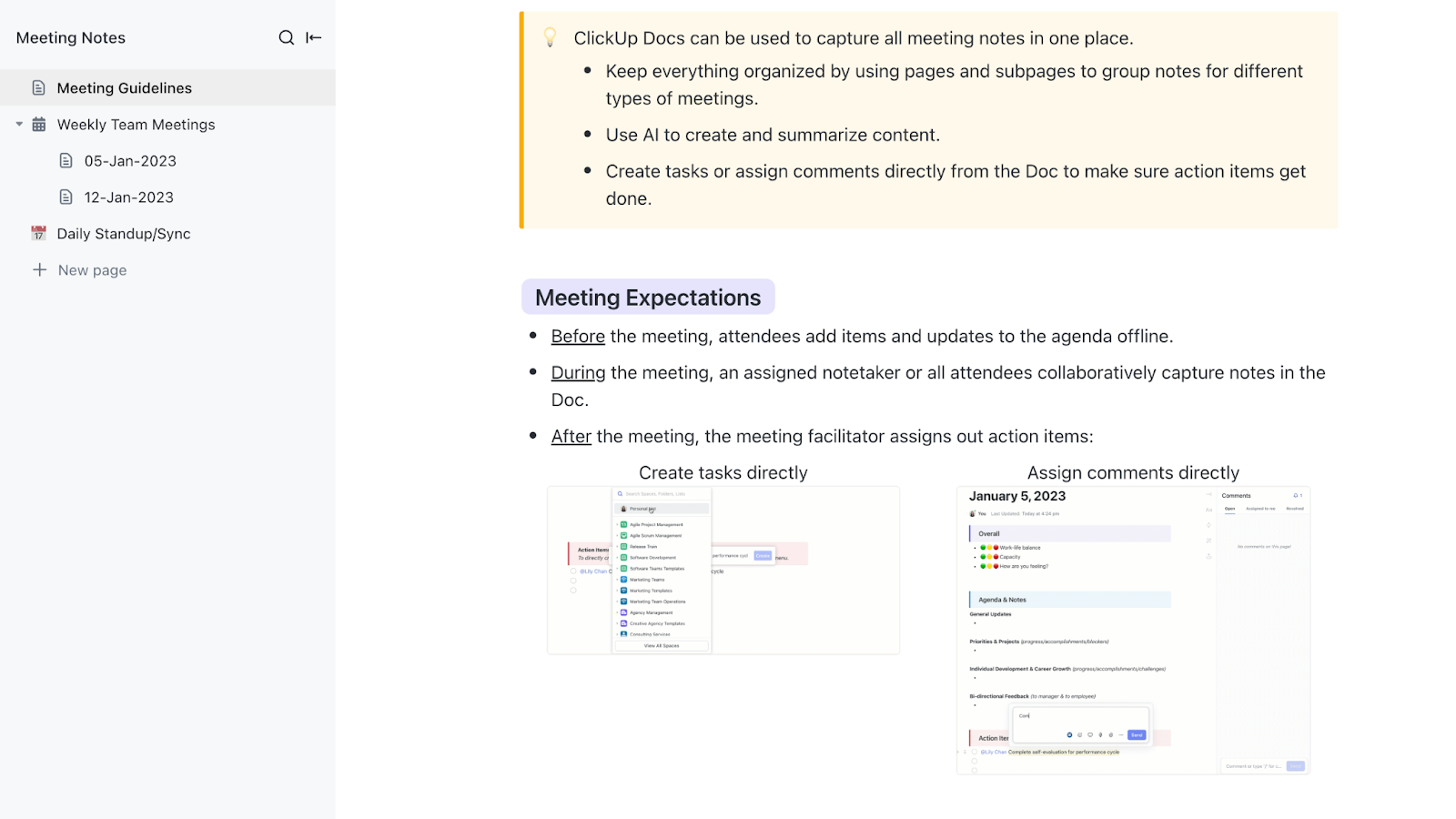
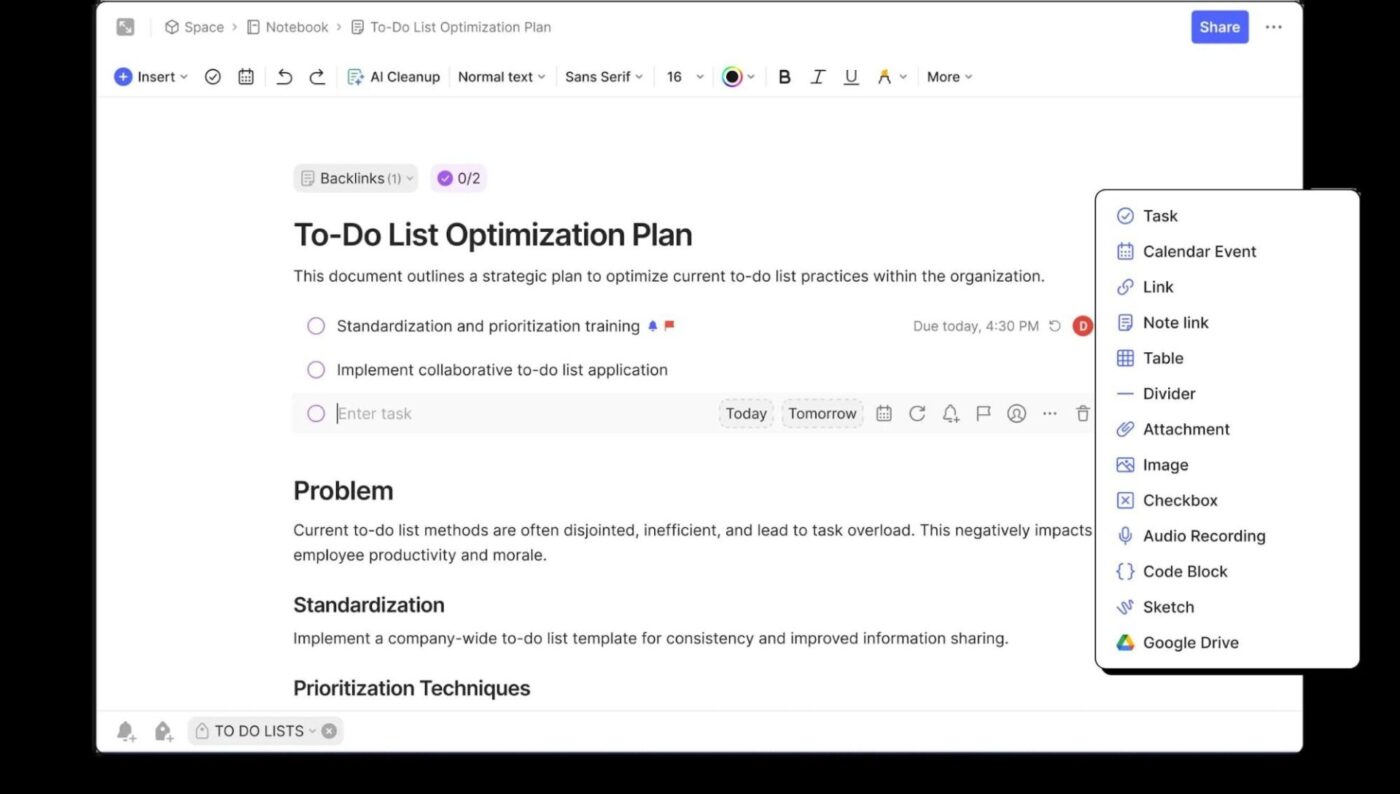
ClickUp helps you tackle this easily and improves work efficiency. It is the everything app for work that does much more than simple note-taking. Unlike OneNote’s rigid approach, ClickUp captures and integrates notes directly into your project management workflows via ClickUp Docs.
It helps you organize your ideas and workflows, create nested pages to maintain a hierarchical structure, add tables, embed bookmarks, and even build wikis to centralize scattered knowledge. You can also use bi-directional links on Docs to link notes and tasks within ClickUp.
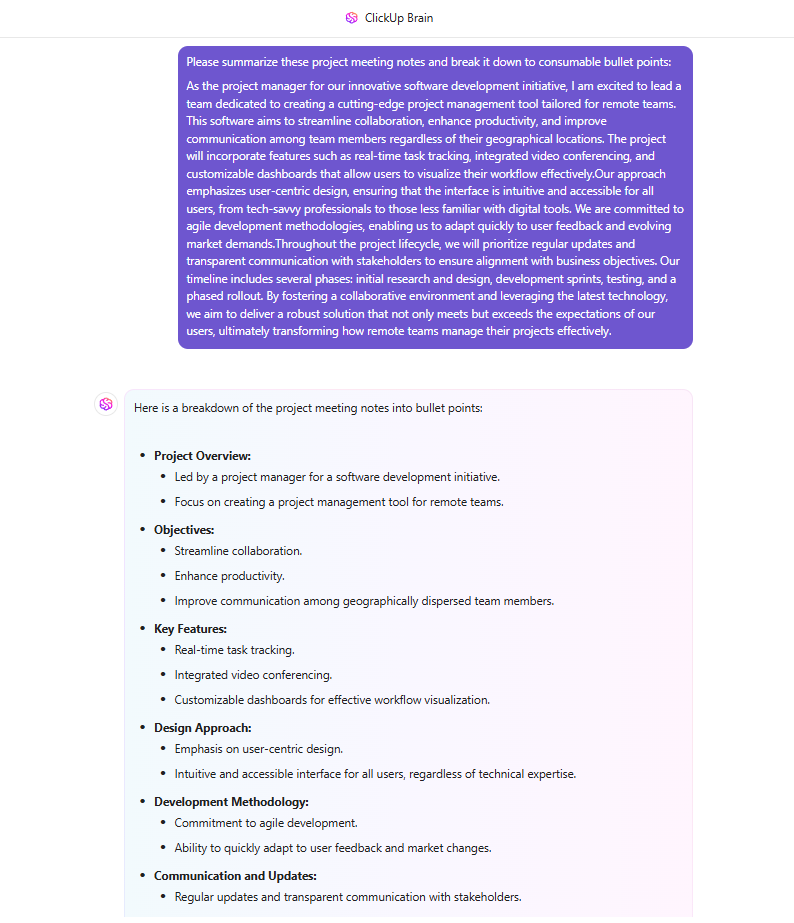
ClickUp’s AI tool further improves the note-taking experience. ClickUp Brain is an intelligent AI assistant that helps with brainstorming, content formatting, follow-ups, and task management. You can also use it as an AI note summarizer to summarize long documents and meeting and lecture notes.
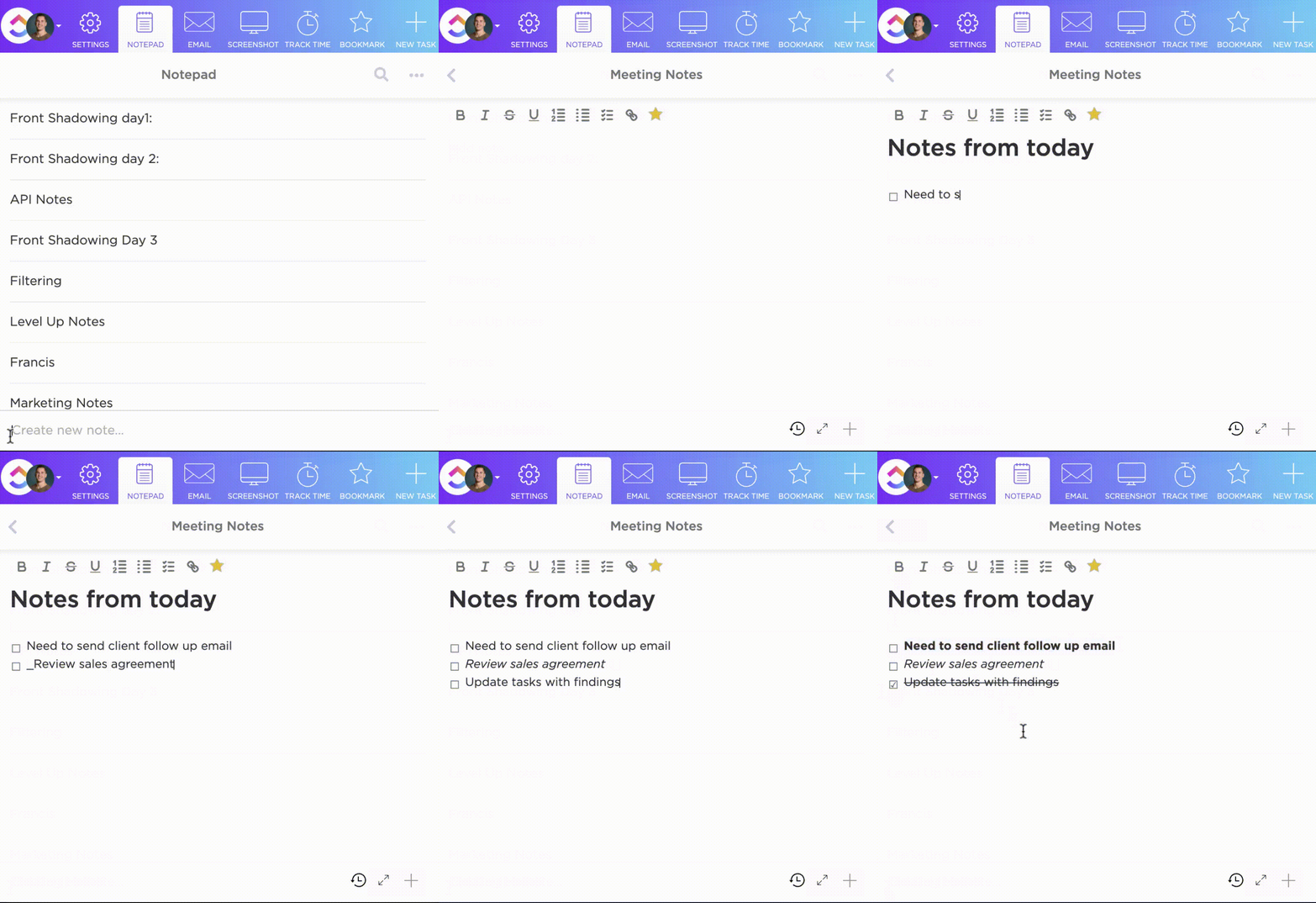
ClickUp Notepad is your perfect companion that can be used to quickly jot down, organize, and format notes and transform entries into trackable tasks. Plus, you can easily access these notes from the browser or via the ClickUp app.
ClickUp also has a variety of templates to help you capture notes in a standard format. For example, the ClickUp Meeting Notes Template can help you track your team’s discussions.
Using this template, you can:
What are real-life users saying about ClickUp?
I really love that it is both a note-taking app, and a project management app—all in one place. The features and configuration make it easy to stay on top of multiple projects as well as view dashboards for all tasks. However, the way to format is a little hard to get used to but there are still some great options and templates to help.
Before committing, you can test drive ClickUp’s note taking experience with our free online notepad tool — no signup needed.
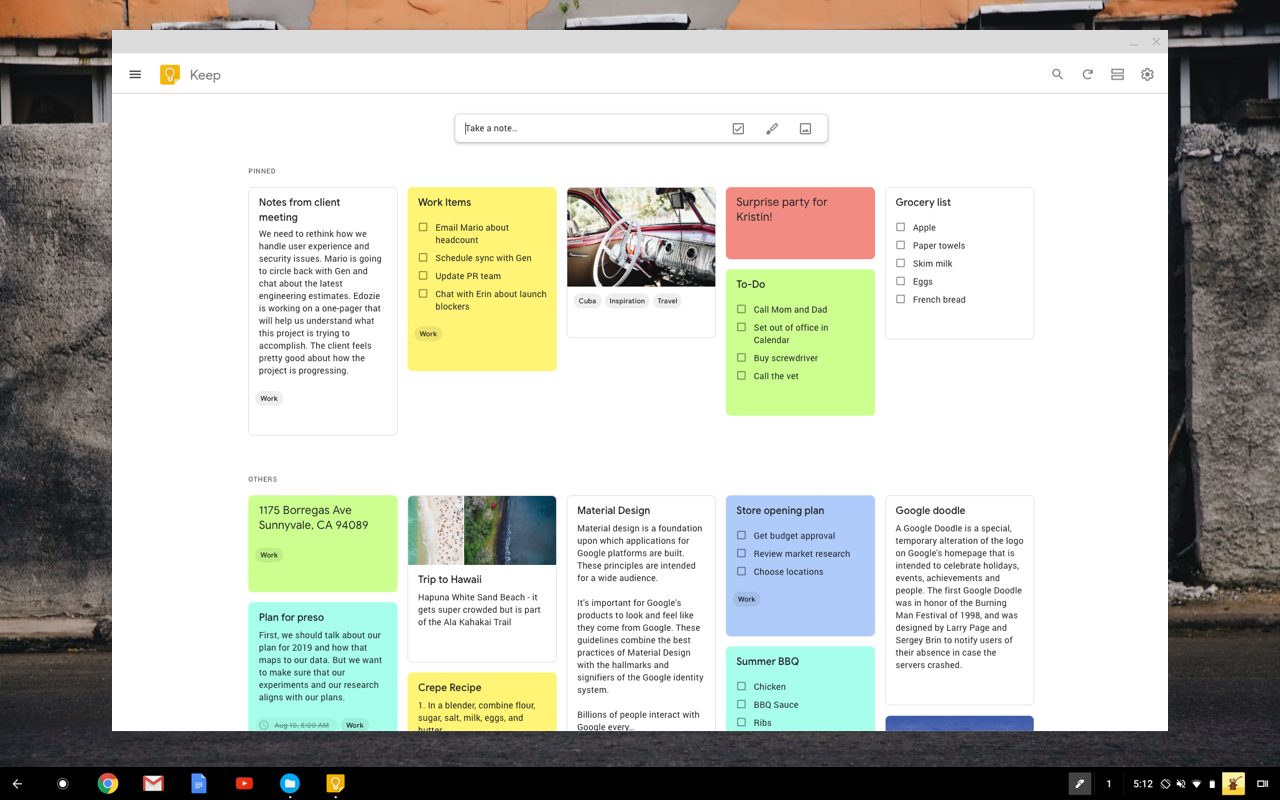
Google Keep’s integration with other Google apps is what makes it one of the simplest yet most effective Microsoft OneNote alternatives. Though minimalistic, the tool does a decent job as a notes app.
You can use the handy Chrome extension or access it from your Gmail to save notes and links quickly. Plus, you can share these notes via Gmail or collaborate on them using Google Docs.
What are real-life users saying about Google Keep?
Overall, I love Google Keep’s ease of use for fast and efficient note-taking. The voice-to-text feature is awesome and makes creating personal reminders a breeze. Google Keep works across all my devices and syncs perfectly, making it ideal for staying organized and productive. However, it doesn’t have a lot of formatting options for note-taking.
Evernote’s digital note-taking tool offers a sophisticated system for organizing and searching notes. You can store audio clips, texts, and images and sync your notes across multiple devices to access them anytime.
It’s also easy to search any note, attachment, or photo using note titles, dates, tags, or keywords. Evernote also offers seamless integrations with Google apps like Google Calendar, which helps you sync your schedules and tasks effectively.
What are real-life users saying about Evernote?
My experience with Evernote Teams has been great since the beginning. It has so many features for improving productivity within the page, as it is used for team collaboration and project management. Even though beginners may face difficulties when starting because it has a lot of features.
📖Read More: How to Take Notes from a Video Like a Pro
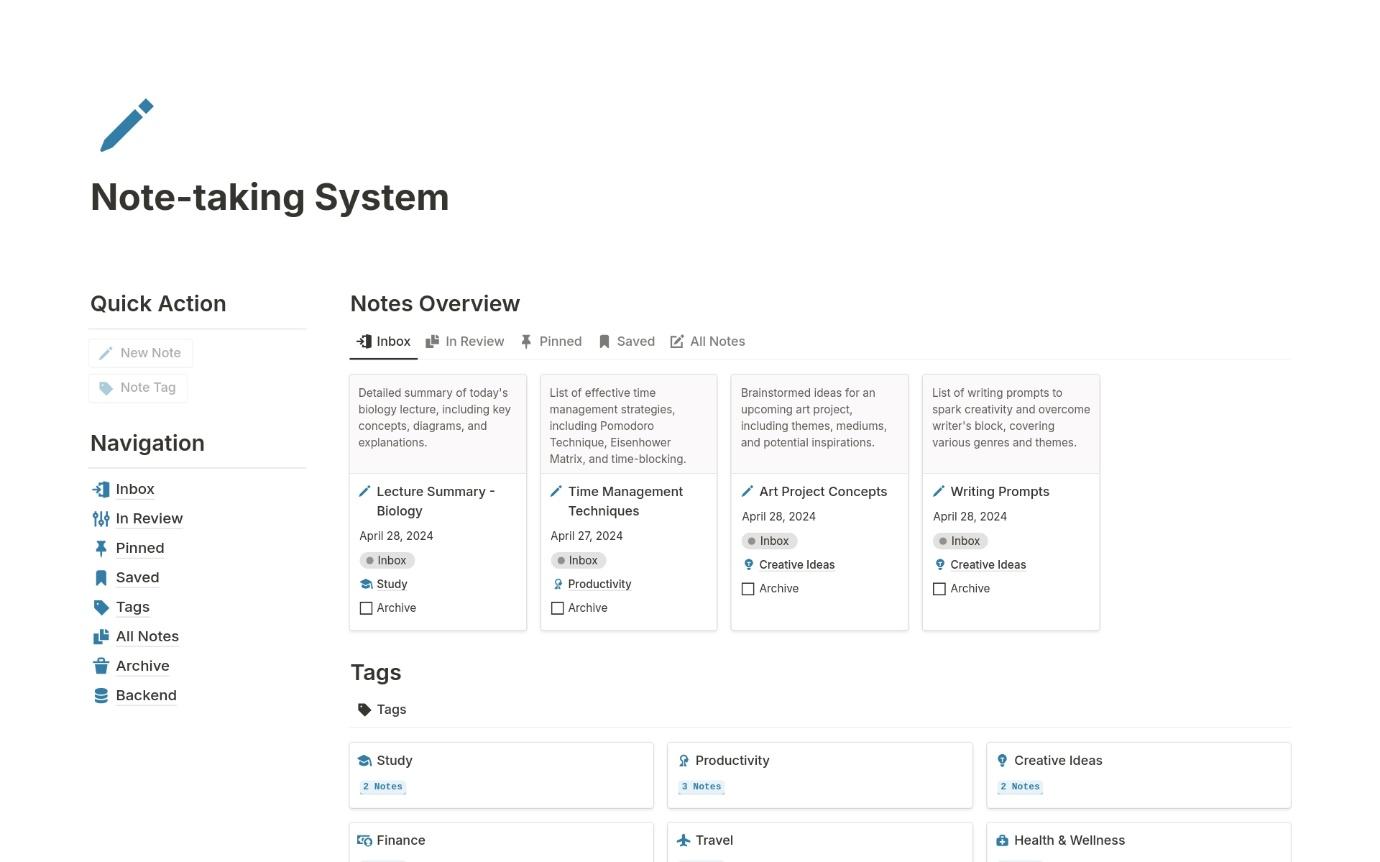
Notion is a collaborative note-taking tool that stands out with its highly customizable workspaces. It combines notes, databases, and project management in one platform. With Notion, you can create interconnected pages, manage projects, and organize information with multiple view options.
It also offers ready-made templates to standardize processes and collaborate on notes. Plus, Notion’s AI tool for note-taking comes in handy for searching and translating notes.
What are real-life users saying about Notion?
I liked being able to leave notes written on the document. It always notified us when someone else made changes or added to the project. It was an easy way to keep everyone on the same page. However, Notion was not very user-friendly. I feel like it took our team a while to figure out how to effectively use the program.
📮ClickUp Insight: Our survey found that knowledge workers maintain an average of 6 daily connections at their workplace. This probably entails multiple pings back and forth across emails, chat, and project management tools.
What if you could converge all these conversations in one place? With ClickUp, you can! It’s the everything app for work that combines projects, knowledge, and chat in one place—all powered by AI that helps you and your team work faster and smarter.
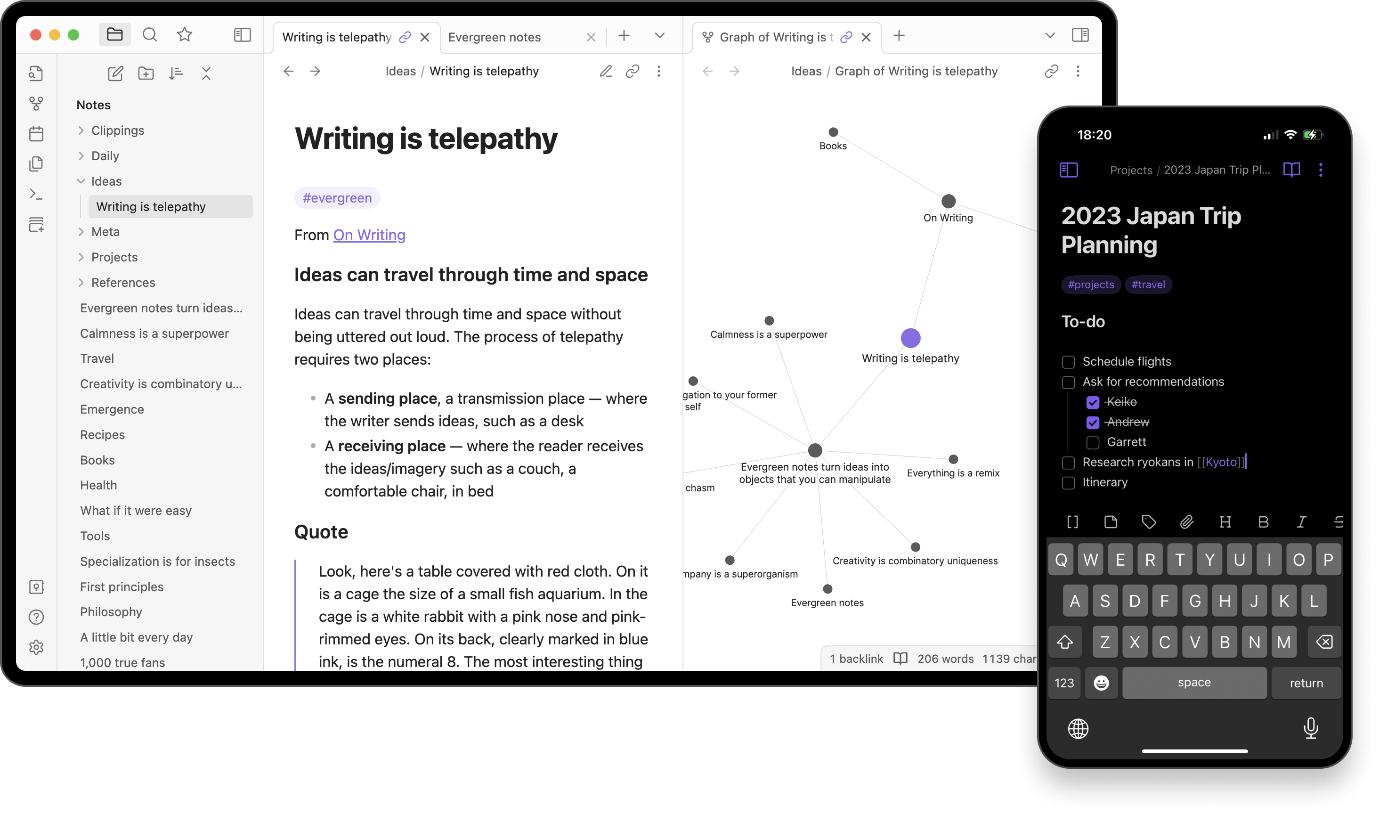
Obsidian is a unique network-focused OneNote alternative that lets you link your ideas and thoughts, creating a network of notes. It offers several customization options with plugins and helps you build a personal knowledge base through linked notes.
You can use backlinks to link one note to another and form an interconnected web that simplifies complex thoughts and research. Obsidian can also help you create a graph visualizing the link between your notes so you can understand your thinking patterns.
What are real-life users saying about Obsidian?
I think Obsidian is ideal for text-centric tasks, and it excels at note-taking and daily task tracking. However, it’s missing the ability to create forms, which might be a bummer for me. Setting up team collaboration isn’t a walk in the park either—it lacks seamless integration for smooth group work.
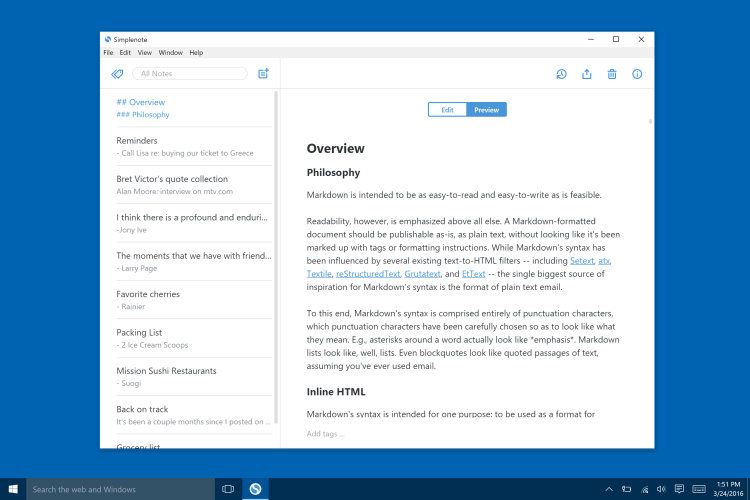
Simplenote is a no-frills app for quick and efficient note-taking. It has a clean interface that helps capture notes, tag notes for instant search, and auto-sync them across devices. So, if you’re a student or a professional looking for simplified OneNote alternatives to jot down meeting notes, Simplenote can be a great option.
What are real-life users saying about Simplenote?
It’s a good software, but I feel like they still have more to do when it comes to securing documents.
📖 Read More: How to Share and Collaborate on Notes
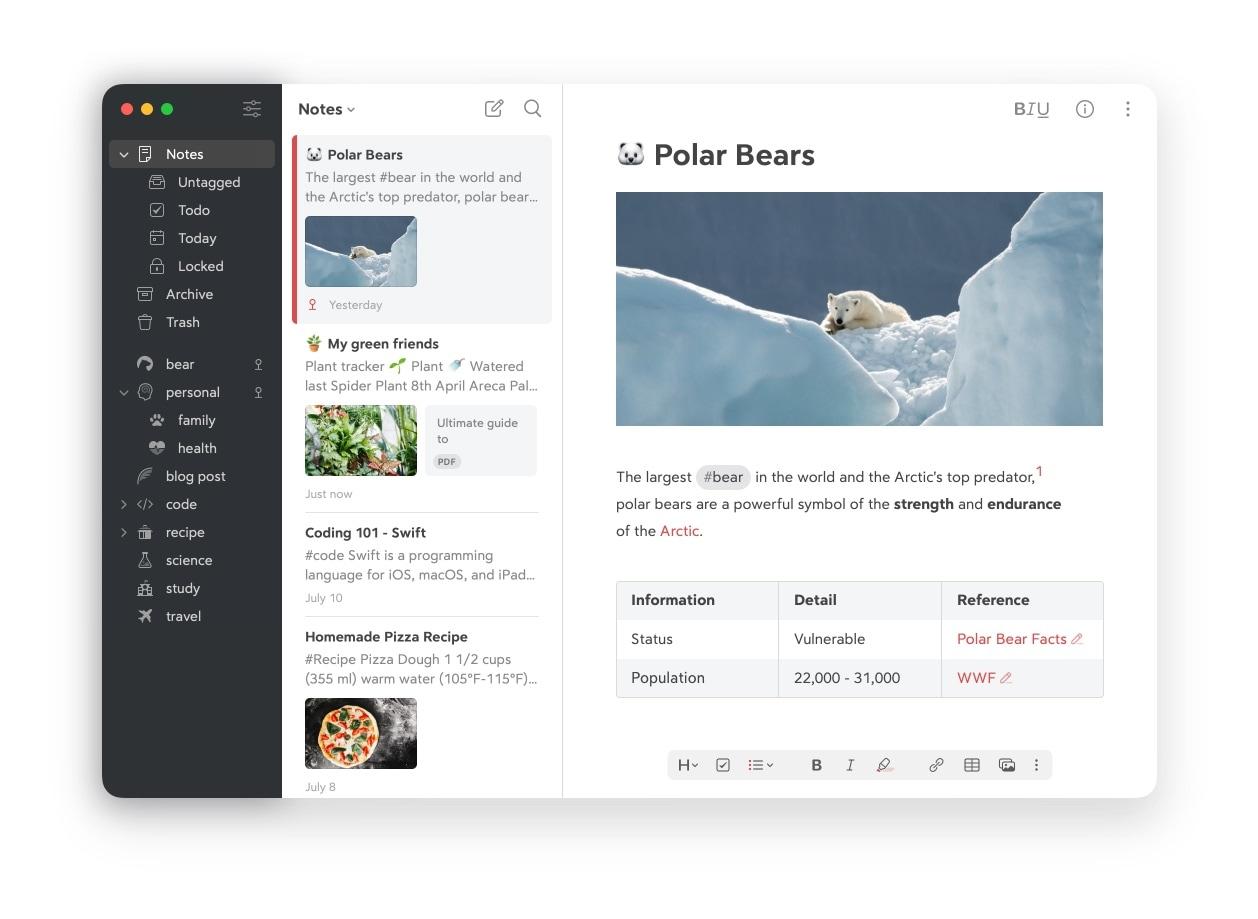
Bear is a solid OneNote alternative for Apple users. It uses Markdown language to write and format notes. Be it shopping lists or project to-dos, you can easily organize notes with photos, tables, and lists, add flexible tags for search, and format them the way you like with the Markdown editor. You can also share notes with multiple users across devices using iCloud.
While the app isn’t robust, it’s useful for writers, bloggers, and professionals as they can create aesthetic and simple visual designs, write books, or even build a wiki to store ideas centrally.
What are real-life users saying about Bear?
Bear is wonderful to type in. It’s a light app so it opens quickly without issue. In all my years of using it, it never crashed. The organization and system are also super easy to get into. Just add a hashtag, and then sub-categories are just as simple. However, while the organization system is wonderful because it’s simple, it also lacks complexity if you need more robust options. In my work, I needed to build a reference library but that became too complicated to manage in Bear. It also didn’t have share options.
💡Pro Tip: Use a consistent tagging system across your notes and use broader categories like projects, personal, meetings, etc., to make search faster and more efficient.
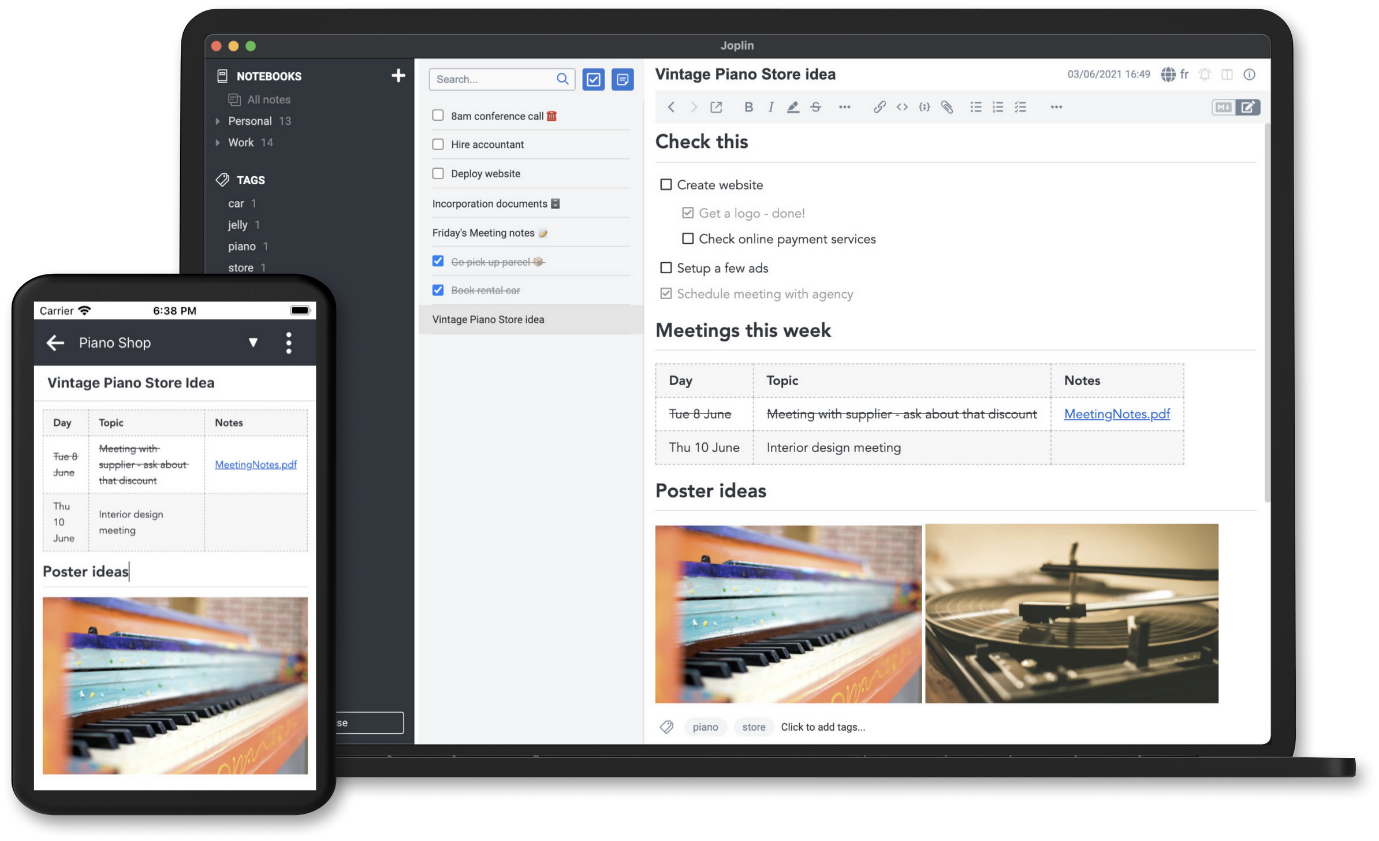
Joplin is a privacy-focused, customizable, open-source Microsoft OneNote alternative that lets you organize your notes within notebooks. You can use its rich Markdown editor and toolbar to create aesthetically formatted notes while ensuring their protection with end-to-end encryption.
Since the platform is popular as a strong privacy-focused note-taker and allows adding drawings and diagrams, it’s suitable for personal note-taking. Plus, you can also work on images, PDFs, audio files, and other multimedia content.
What are real-life users saying about Joplin?
I love the organizational structure of the notes, where you can have notebooks and different notes within them. I also love that the notes are stored in Markdown, which allows for easy reading because of the preview pane, and it also keeps the size very small for the notes because it doesn’t store a huge bunch of unnecessary junk. I use it every day, and it is very easy to use and integrate into your daily life. However, I wish the options for Joplin Cloud were slightly cheaper, as it doesn’t appear to have that many additional features.
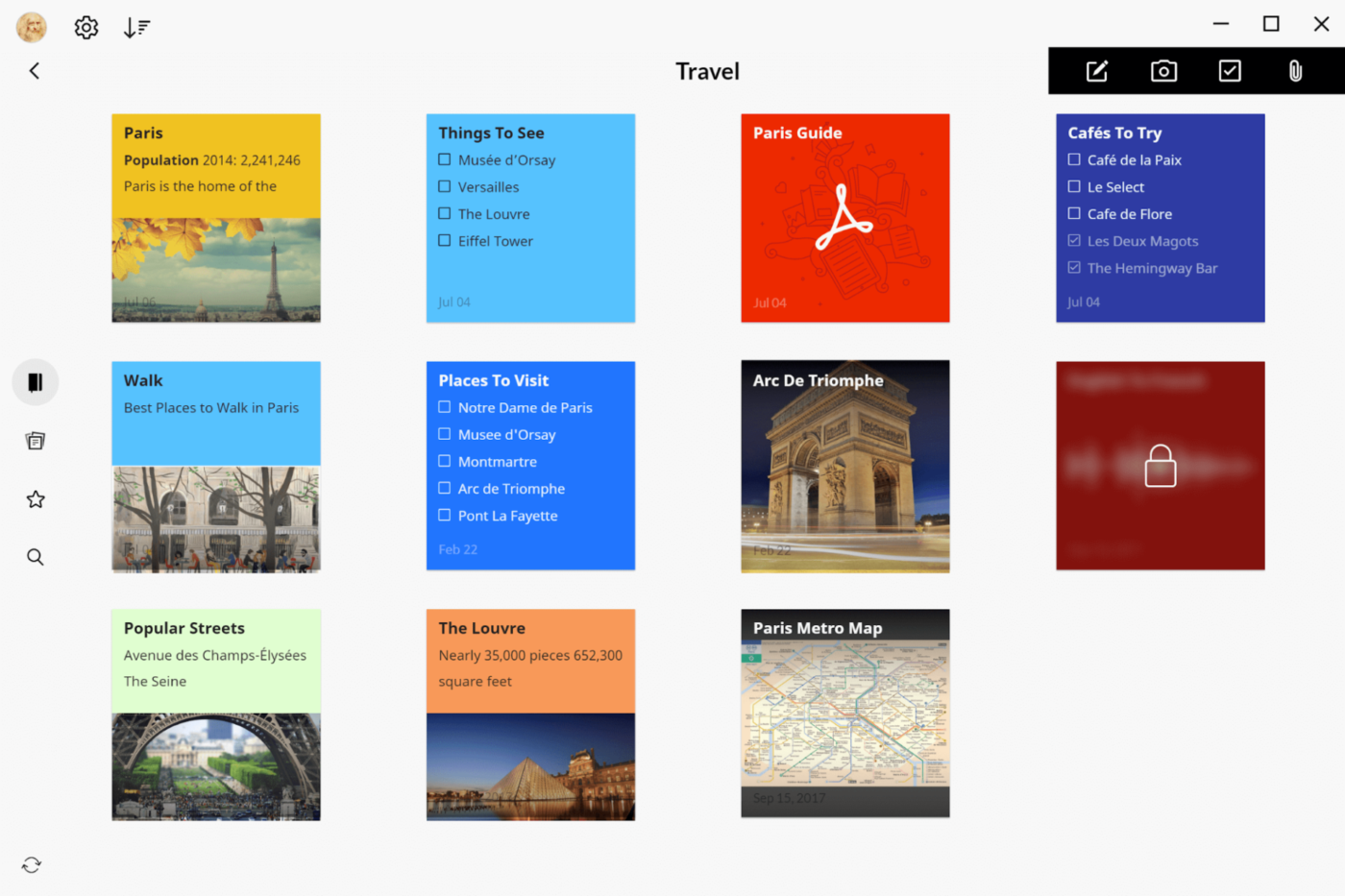
Zoho Notebook has a similar notebook-based structure to OneNote but offers a card system for arranging notes within notebooks. It lets you create individual notebooks on different topics with texts, images, audio files, sketches, etc.
Plus, you can store your ideas on separate sticky notes, keep them organized, and even color-code them for easy tracking. However, it works best for creative professionals and students who work on visual ideas and value an intuitive note-taking experience.
What are real-life users saying about Zoho Notebook?
Zoho notebook has made note taking so easy, it’s so easy to use. I like the ability to allow image dragging while taking notes, color code for your notes makes it so incredible. However, the only issue I have with the application is that it offers limited storage for notes of just 5GB and documents can only be in PDF or TXT. This needs to be improved a bit.
📖 Read More: Best AI Note-Taking Apps for Meeting
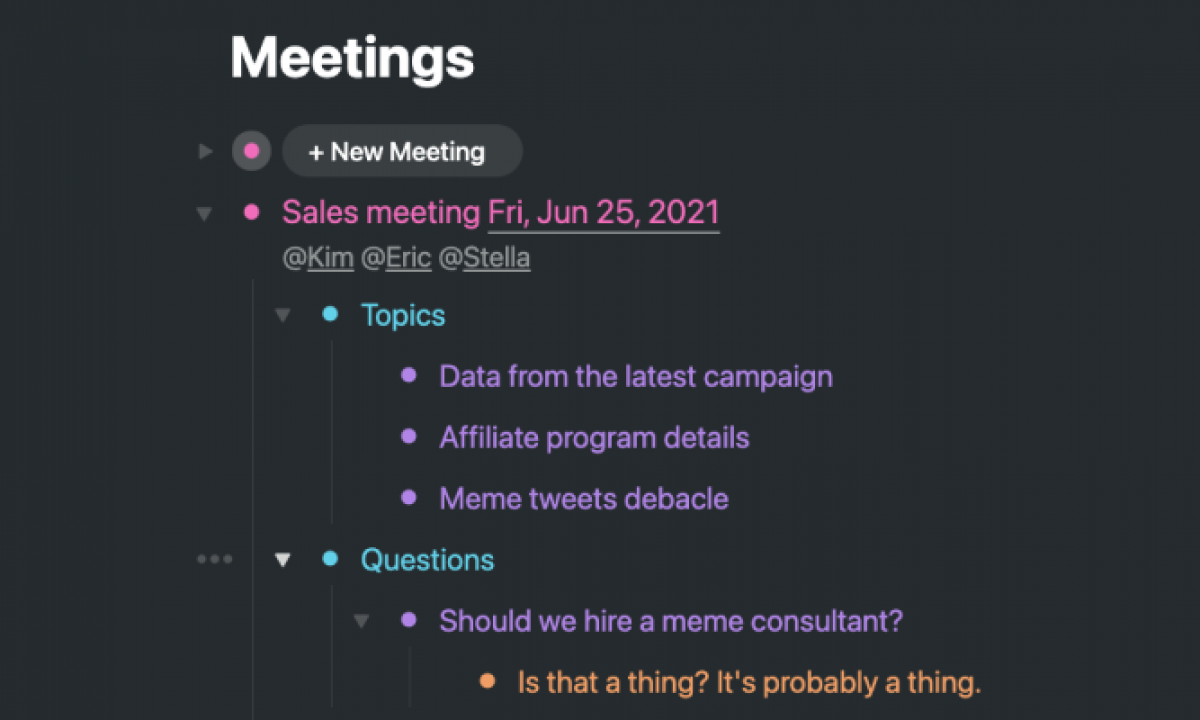
Workflowy is one of the best OneNote alternatives when it comes to structured note-taking. It uses bullets to help you break down larger tasks and organize them into to-dos.
The tool also has great outlining capabilities, such as a drag-and-drop functionality to reorder sections, which makes it easier to create article outlines. Plus, Workflowy comes with zoom-in/out abilities that help you stay focused on your tasks.
What are real-life users saying about Workflowy?
Overall, I feel Workflowy is a great tool if all you want to manage is a small amount of text such as todolists, your goals or twitter posts. But the value of it drops significantly if you need large amounts of paragraphs, images, videos, etc.

Milanote is a digital note-taking app ideal for creative professionals. While OneNote has a more linear approach to note-taking, Milanote is popular for its freeform flexible interface that allows you to organize ideas, collaborate in real time, and create visual boards that speak your mind.
So, if you’re a marketing or design professional or a student working on creative projects, this OneNote alternative can give you the best mood board-like experience with ideal mind-mapping features.
What are real-life users saying about Milanote?
I love how easy it is to use and the flexibility. Being able to freely move the variety of “cards” around any way you want makes it useful for so many different things. For a creative like me who loves to be organized, it’s super helpful. However, the phone app is not as easy to view your boards on because the order they show up is kind of random.
📖 Read More: Obsidian vs. OneNote: What’s Better for Note-Taking?
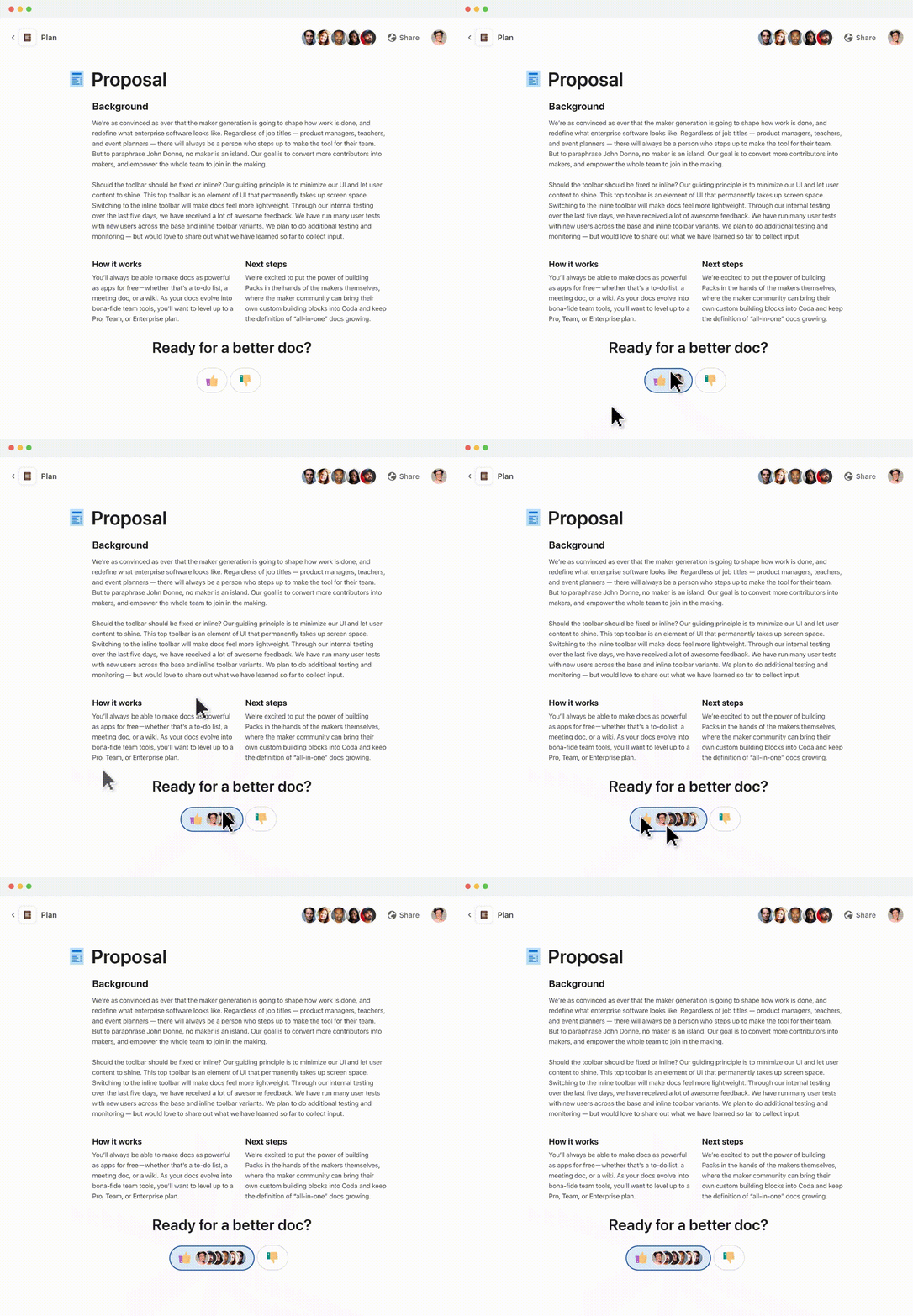
Coda allows you to create interactive docs with tables, charts, pages and sub-pages, images, links, and other dynamic elements. You can also maintain databases, monitor team performances, and collaborate for task assignments.
In short, Coda is a note-taking and task management tool with robust features that combines document editing, and database capabilities and is best for enterprise teams working in highly customizable environments.
What are real-life users saying about Coda?
I love the balance of easiness and complexity for implementing great pages that can suit any need we have had so far. It has great connectors like Google Maps that help to create complex things very easily. Customizations are easy to use with the formulas and allow to add a granular level of user experience that makes it feel very friendly for our everyday use. However, some basic features feel unintuitive, for example, the tables are pretty confusing. I had to check a lot of Coda tips videos to understand how to use it at the level desired, so it was hard to integrate into some documents I created.
📖 Read More: Best Document Management Software to Get Organized
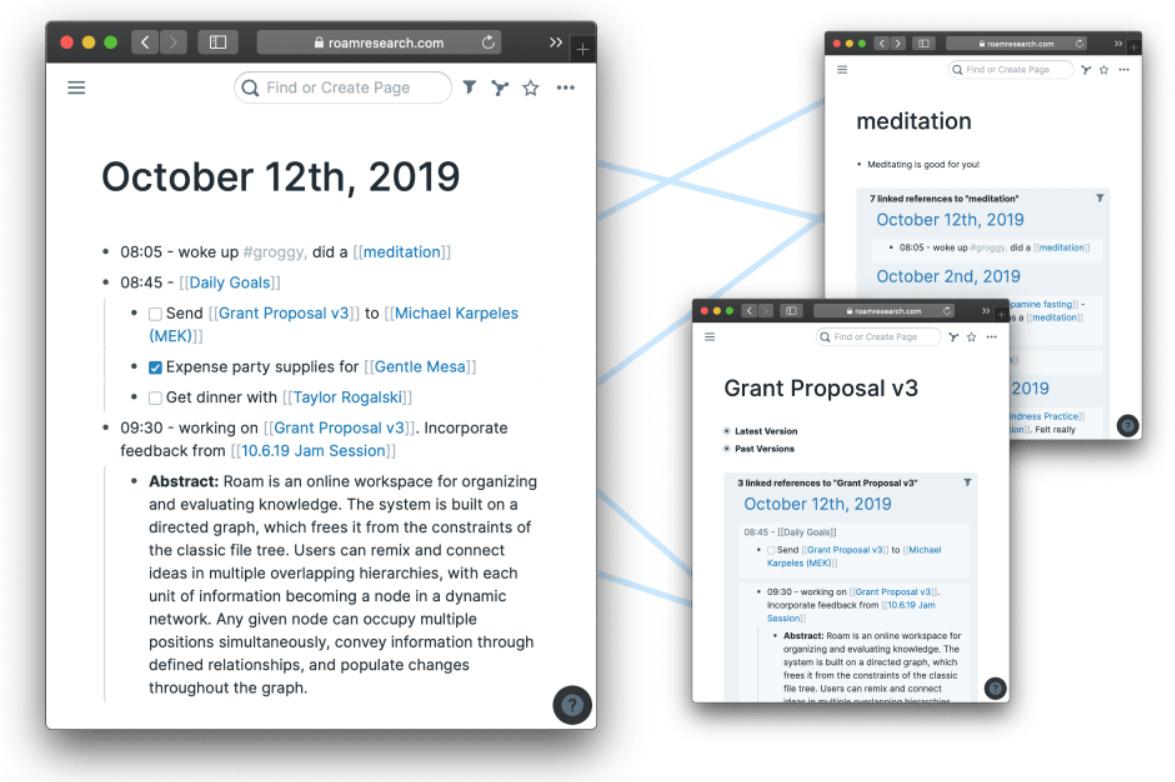
Roam Research is known for its bidirectional links, which you can use to link notes, related pages, and blocks. You can track page edits and use ‘/’ command to add relevant blocks like to-dos, text editing tools, live timer, etc.
The best part? Roam gives you a graph view of your notes where your notes are represented as nodes and backlinks, creating a cosmic web. Though the tool has a steep learning curve, its graph view can help explore note connections, trace their origins, and extract insights.
What are real-life users saying about Roam Research?
Roam introduced me to networked linking and this amazing way of taking notes. Everything is to the point and you don’t lose time in random features. Simple and clean note taking. However, I don’t like the pricing model compared with other tools available on the market.
While note-taking might be a seemingly easy job, it isn’t. When you juggle several projects and have too many notes to handle, you need a solution that makes things easier.
OneNote is great for capturing notes and seamlessly integrates with the Microsoft ecosystem, but its lack of advanced features makes users look for alternatives.
We’ve covered several solid OneNote alternatives. And now, the final call is yours. Assess your needs and choose the tool that ticks all the boxes. If you need a simple note-taker, you can consider Simplenote. For visual note-taking, consider Milanote or Zoho Notebook. However, if you’re looking an everything app with collaborative features, choose ClickUp.
ClickUp gives you an integrated platform where you can capture notes, document ideas, brainstorm, and even execute these ideas without switching apps Ready to explore ClickUp? Sign up for free today! 🏃♂️➡️

Manasi Nair
Max 26min read

Arya P Dinesh
Max 16min read
Manasi Nair
Max 24min read

© 2026 ClickUp