

Sorry, there were no results found for “”
Sorry, there were no results found for “”
Sorry, there were no results found for “”
When payment terms aren’t tied to real progress, timelines can blur, and invoices can stall. Milestone billing flips the script.
Instead of invoicing at the end of a project or on a fixed monthly schedule, milestone billing lets you send invoices tied to specific deliverables or stages. Whether it’s completing a design mockup, finishing a sprint, or reaching a project milestone like “foundation complete,” you get paid for the completed milestone.
In this guide, we’ll explain how milestone billing works, when to use it, and how to manage it with the right tools and templates—plus examples from different industries.
🔎 Did You Know? The term “milestone” comes from literal stone markers used in ancient Rome to show how far travelers had come on a road. Today, they help teams track how far they’ve come in a project—and when it’s time to get paid.
Milestone billing works by tying payments to specific deliverables or checkpoints within a project. Instead of billing hourly or collecting one lump sum at the end, the client pays in installments, each triggered by a completed milestone.
These milestones are defined at the start of the project and included in the billing schedule or contract.
🔁 The milestone billing process typically looks like this:
1. Define the project scope and key milestones: Start by outlining the full scope of work and breaking it into clear, outcome-based checkpoints. These should reflect major deliverables or approvals that mark tangible progress in the project.
2. Create a payment schedule tied to each milestone: Each milestone may carry a fixed amount or a percentage of the total project cost
3. Track progress toward milestones: Use a project management tool to monitor tasks and deliverables tied to each milestone
4. Invoice the client upon milestone completion: Once the milestone is achieved, an invoice is sent based on pre-agreed payment terms
5. Repeat until project completion: The process continues until all milestone payments are collected and the entire project is delivered
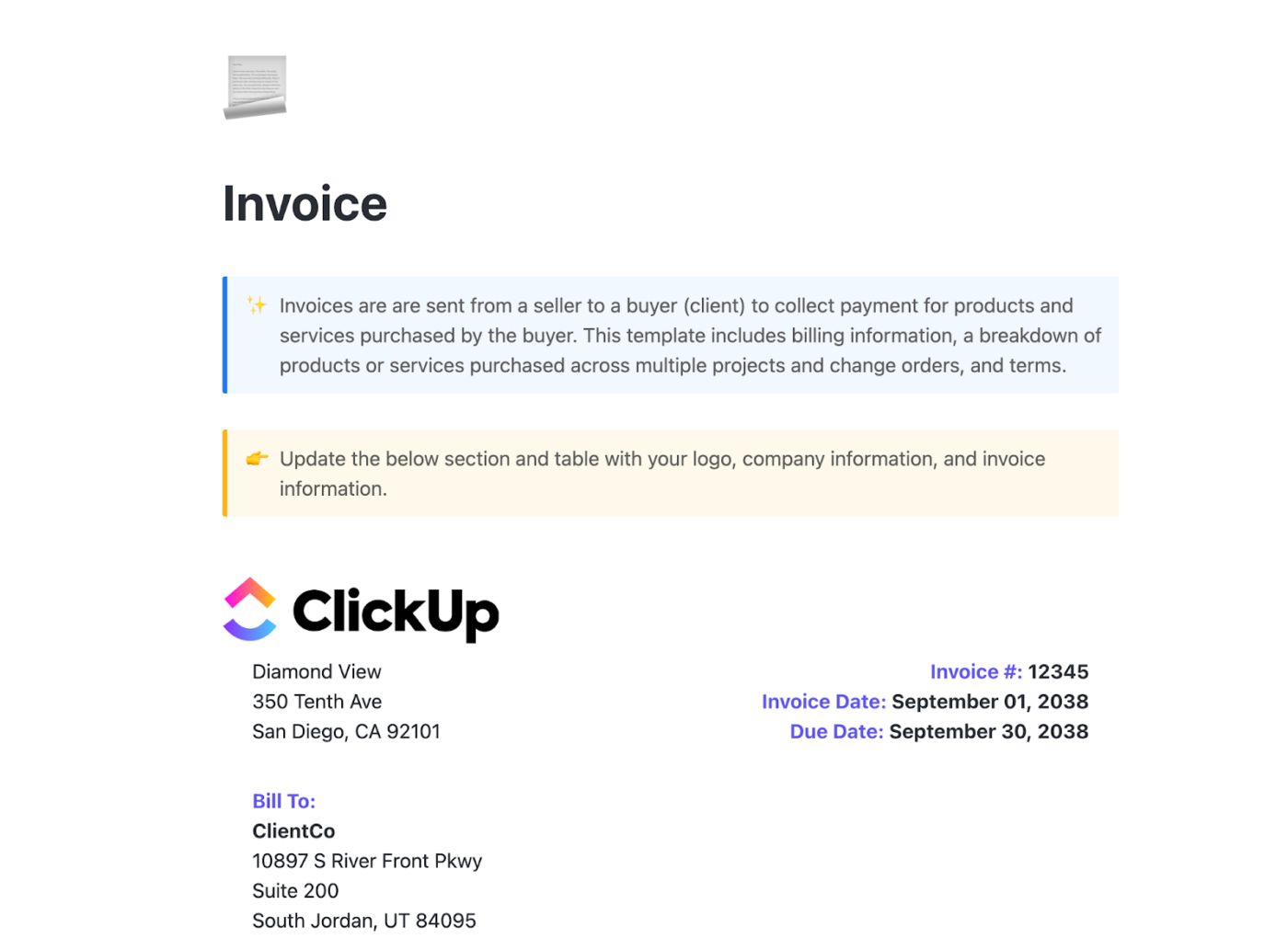
Whether you’re freelancing or running a small business, ClickUp’s Invoice Template will help ensure that billing, payments, and accounting are all done right—and fast!
Milestone billing is used across industries—each with its own rhythm, deliverables, and expectations. Here are a few real-world examples that show how businesses align payment milestones with project stages:
Agile teams often break work into sprints. Milestone billing allows them to get paid as each sprint is delivered and approved.
📌 Example: A SaaS vendor bills 25% after sprint 1 (MVP delivery), 25% after sprint 2 (core features), and 50% after sprint 3 (QA + deployment)
⭐ Bonus: Explore project milestone examples you can apply across software projects.
Campaigns often follow a three-phase approach: strategy, execution, and reporting. Milestone billing makes it easy to structure payments around that flow.
📌 Example: A digital marketing agency bills after delivering the campaign strategy, again after launch and implementation, and once more after presenting the results.
Designers work in stages—initial concepts, client feedback, and final files. Milestone billing keeps both creative flow and payments on track.
📌 Example: A freelance brand designer bills 30% after initial mockups, 30% after revisions and feedback, and 40% after final logo and assets are delivered.
⭐ Bonus: Build your workflow with these freelancer templates.
One of the most common industries for milestone billing, construction projects naturally move through defined checkpoints.
📌 Example: A general contractor bills 20% after permits, 30% after the foundation is poured, 30% after framing, and 20% after final walkthrough and sign-off.
📚 Also Read: Start with this breakdown of how to bill a client to weigh your options and demystify the complexities of the client billing process.
Milestone billing brings structure to your billing process, but it only works well when your project management system supports it. From defining deliverables to invoicing clients, every step needs to be documented, trackable, and easy to follow—for both you and your client.
That’s where ClickUp, the everything app for work, comes in. It’s an all-in-one platform that helps you plan projects, visualize milestones, track task progress, and automate follow-ups—all while keeping your billing workflow clean and organized.

ClickUp for Finance Teams makes the whole process easy. You can:
Before you can bill for milestones, you need to set them. Each milestone should represent a meaningful piece of work—something tangible your client can review and approve. These should also have defined due dates so expectations are set early.
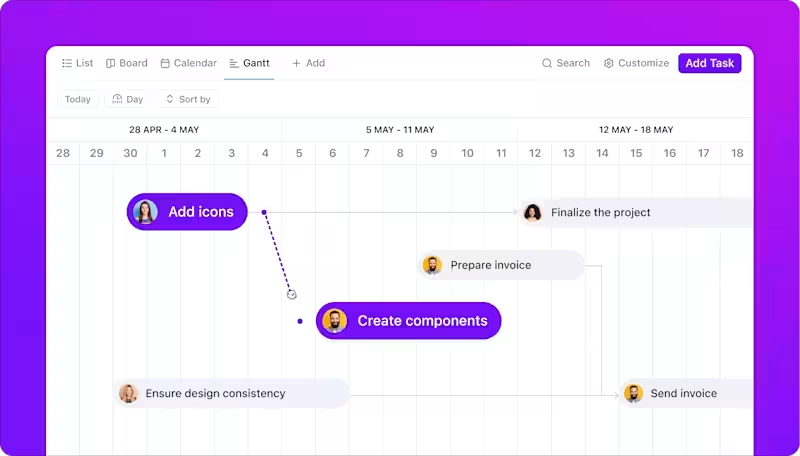
ClickUp makes this easy with visual planning tools like the ClickUp Gantt View and Timeline View. These views allow you to map out your entire project, assign deadlines, and connect milestones to related tasks or deliverables.
Once milestones are defined, document them clearly in your statement of work (SOW) or contract. Outline what will be delivered, when it’s due, and how much will be billed.

Use ClickUp Docs to draft and collaborate on client-facing documentation. You can link milestones to tasks directly from the doc, so your team can reference and act on them without switching tools.
Determining milestones is not enough—you need to know exactly where you stand at any point in the project. This visibility ensures you can confidently invoice when a milestone is complete.
In ClickUp, you can track task status, time spent, and overall project progress in real time. Assign tasks to team members, add dependencies, and view milestone health using ClickUp Dashboards.
Once a milestone is delivered and approved, speed is key. Automating your billing flow reduces delays and ensures a smooth client experience.
With ClickUp Automations, you can create triggers like:
Pair this with the ClickUp Invoice Tracking Template to organize pending, sent, and paid invoices without relying on spreadsheets.
Milestone billing thrives on transparency—keeping both your team and client in sync ensures approval delays are minimized and trust stays high. With ClickUp, communication doesn’t live in multiple disconnected tools—it happens right where the work and billing take place.
When it’s time to invoice, send polished, branded documents using the ClickUp Invoice Template, ensuring client communication and billing remain in lockstep.
📚 Also Read: Use these project timeline templates to visually map out milestone billing across your projects and make tracking effortless.
Milestones only work if they’re planned well. Here are a few practical tips to ensure that your milestone billing process supports your project, not slows it down.
Avoid vague goals like “Finish project phase 1.” Instead, define specific, measurable outputs like “Submit first draft of brand strategy” or “Deliver functional login module.”
A milestone should reflect a real outcome that moves the project forward, not just an internal task. For example, “Prototype approved by client” is a stronger milestone than “Wireframes completed.”
Sync your billing timeline with project delivery. This ensures you’re not doing large chunks of unpaid work and gives clients a predictable payment plan. Use ClickUp’s Invoice Tracking Template to map payments to project stages and avoid back-and-forth on outstanding invoices.
Whether you’re a freelancer, an agency, or a finance team, setting up milestone templates helps maintain consistency across projects.
⭐ Bonus: Explore the ClickUp Freelance Invoice Template to get started quickly with a proven structure.
Don’t let milestones catch clients off guard. Use ClickUp comments, Chat, and dashboards to share progress updates and confirm approvals before moving forward.
📮ClickUp Insight: Our survey found that knowledge workers maintain an average of 6 daily connections at their workplace. This probably entails multiple pings back and forth across emails, chat, and project management tools. What if you could converge all these conversations in one place? With ClickUp, you can! It’s the everything app for work that combines projects, knowledge, and chat in one place—all powered by AI that helps you and your team work faster and smarter.
📚 Also Read: Explore real-world project milestone examples to better understand how milestone billing works in different industries.
While milestone billing and progress billing both support phased payments throughout a project, they follow different logic for when and how payments are triggered.
In milestone billing, payments are linked to defined milestones—specific deliverables or outcomes agreed upon at the start of the project. Each invoice is tied to a major checkpoint, like “Phase 1 development complete” or “Final mockup delivered.”
Progress billing, on the other hand, involves invoicing clients based on the percentage of work completed over time. This model is often used in industries like construction, where it’s harder to define neat deliverables but easier to track overall progress.
💡 Pro Tip: Not sure which billing model fits your work style? If your project is broken into specific deliverables and deadlines, milestone billing will likely offer better visibility and help maintain a steady cash flow.
Whether you’re a freelancer, an agency, or a finance team managing high-value projects, milestone billing offers clear advantages for both you and your clients. It’s built to support clarity, cash flow, and stronger client relationships.
💸 Improves cash flow
Instead of waiting until project completion, you receive payments as the project progresses. This keeps your business financially stable and ensures you’re not fronting all the work without timely compensation.
🤝 Builds trust with clients
By linking payments to visible progress, clients know what they’re paying for and when. This transparency helps set clear expectations and avoids billing surprises.
📊 Encourages accountability and timely delivery
With payments tied to specific deliverables, teams are more likely to stay on track. Milestones naturally create deadlines, keeping projects moving forward.
🗂️ Supports project tracking and planning
Milestone billing aligns closely with project timelines and helps project managers break down large projects into manageable chunks, making it easier to assign tasks, estimate project costs, and monitor progress.
🧾 Reduces billing disputes
Having a defined payment schedule based on clear milestones leads to fewer misunderstandings. Each invoice is tied to work that’s already been delivered.
📚 Also Read: Check out these ready-to-use milestone templates to map out your project stages with clarity.
Milestone billing is a smart choice when your project has clear stages, measurable deliverables, and a defined timeline. It helps teams and clients stay aligned while supporting a more predictable cash flow throughout the project lifecycle.
Here are some ideal scenarios where milestone billing works best:
If your project spans weeks or months with multiple phases, milestone billing ensures you’re paid along the way, without waiting until full project completion
📌 Example: A six-month website redesign project bills after each phase—wireframes, development, testing, and launch
Each milestone should represent meaningful progress, like a delivered mockup, an approved strategy, or a completed feature. The clearer the output, the easier it is to tie it to an invoice
📌 Example: A video agency bills after the storyboard, rough cut, and final video approval
Clients feel more confident paying based on visible results. Milestone billing gives them transparency into what they’re paying for at each stage of the billing process
📌 Example: A consulting firm bills after completing discovery, strategy design, and final report delivery
If you’re not billing hourly or using time-based billing, milestone billing breaks down the flat fee into manageable chunks, aligned with your project schedule
📌 Example: A freelance UX designer charging $5,000 bills 40% upfront, 30% after user testing, and 30% upon project handoff
Construction projects, consulting, SaaS onboarding, design work, and creative marketing campaigns often follow structured stages, making milestone payments the norm
📌 Example: A construction project bills after permits, foundation, framing, and final inspection
📊 Research Shows: Structured billing models lead to more reliable cash flow and fewer disputes. Here’s a list of helpful milestone tracking software to monitor each stage efficiently.
If your projects involve well-defined deliverables, longer timelines, or multiple stages of client approval, milestone billing is a smart approach to structure your payments. It improves cash flow, builds client trust, and ties payments directly to progress—key ingredients for project success.
Whether you’re a freelancer delivering creative assets, a SaaS team building new features, or a marketing agency managing a rollout, milestone billing ensures you’re paid fairly and on time.
With ClickUp, you can manage project billing and task progress all in one place. As a leading project management software, ClickUp helps you track deliverables, set clear milestones, automate follow-ups, and keep your workflow organized.
You don’t just hit milestones—you get paid for them. Try ClickUp for free now!

© 2026 ClickUp




