Sorry, there were no results found for “”
Sorry, there were no results found for “”
Sorry, there were no results found for “”
For years, ranking on Google guaranteed visibility. But now, AI-powered search tools like ChatGPT, Gemini, and Perplexity are taking over.
Unlike traditional search engines, these large language models don’t rank websites—they rewrite, summarize, and reinterpret content, often mixing information from multiple sources.
The catch is that even if your site ranks #1 on Google, the AI search model might ignore it.
That’s where LLM tracking tools come in.
Also known as LLM observability tools, they allow businesses to monitor AI-generated references to their brand, track visibility in search results, and optimize content for AI-driven search engines. These tools also help identify biases, factual errors, or outdated details that could spread across multiple AI products.
Here are seven LLM monitoring tools to help you examine how AI models store and process brand-related information.
Top 7 LLM tracking tools that help brands stay visible and competitive in the AI-powered search landscape include:
An LLM tracking tool helps businesses analyze how often and in what context an LLM references a brand or product. This information can be used to refine content so it’s better represented in AI-driven search tools and ensure brand messaging remains consistent across different platforms.
Some tools also assess application performance by monitoring response speed, accuracy, and AI processing efficiency. Here are the key factors to consider when choosing an LLM tracking tool:
🤝 Friendly reminder: Since LLM applications vary across industries, ensure your tracking tool can adapt to different use cases, from customer support bots to code generation.
➡️ Read More: What Are LLM Agents in AI and How Do They Work?
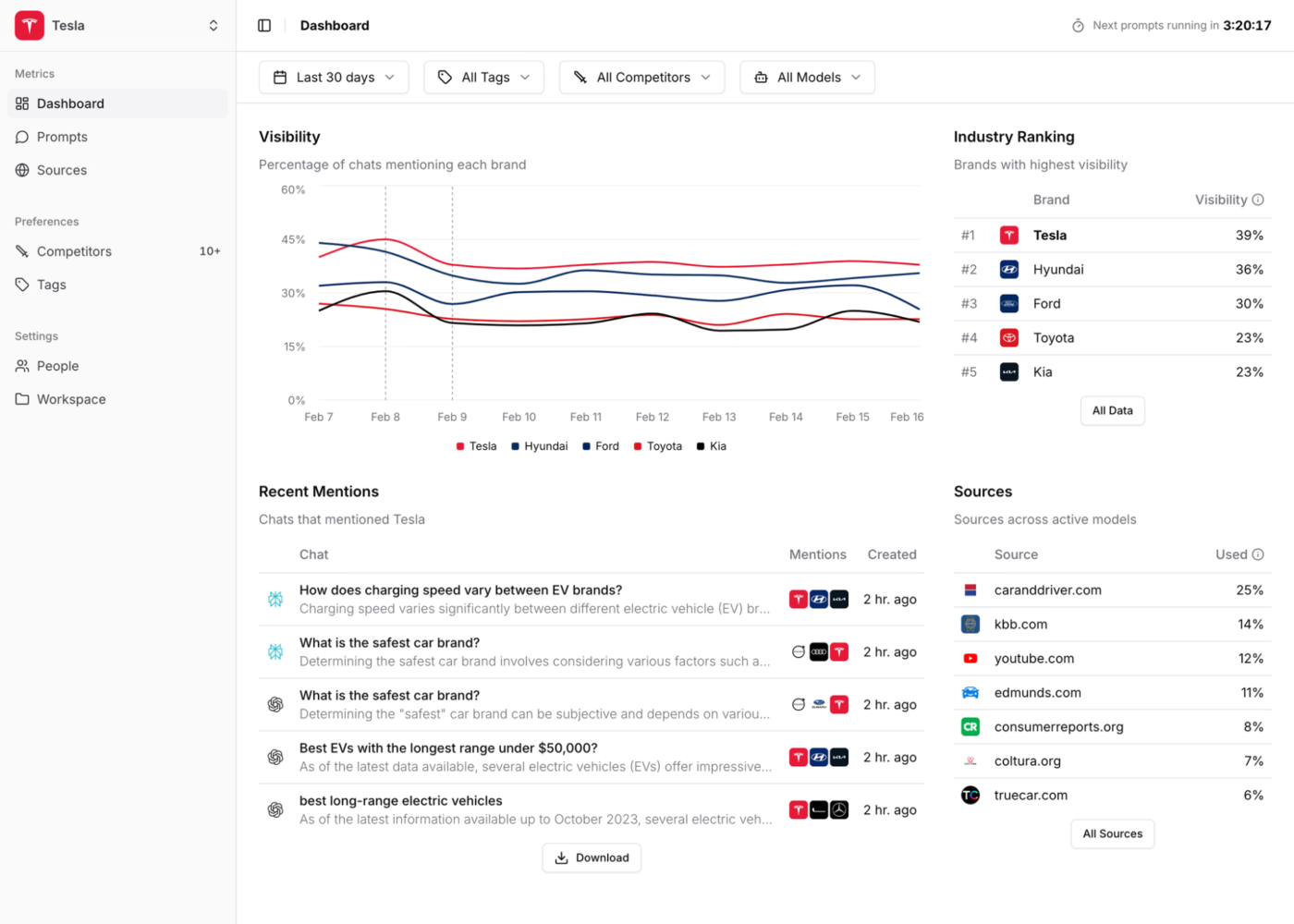
Built for in-house marketing teams and agencies of all sizes, Peec AI is an AI search analytics platform offering robust, in-depth features at an accessible price. It’s the most well-rounded solution when it comes to value for money.
Peec AI’s metrics, including Brand Visibility, Sentiment Analysis, and Position Scoring, help you understand how your brand appears in AI-generated answers over time. For the prompts that matter, Peec AI tracks your performance against them with clear, actionable metrics.
It monitors your brand visibility and the sources influencing it across ChatGPT, Perplexity, and Google’s AI Overviews. For example, your visibility might be 70% on ChatGPT but only 40% on Perplexity, insights that help you prioritize and act.
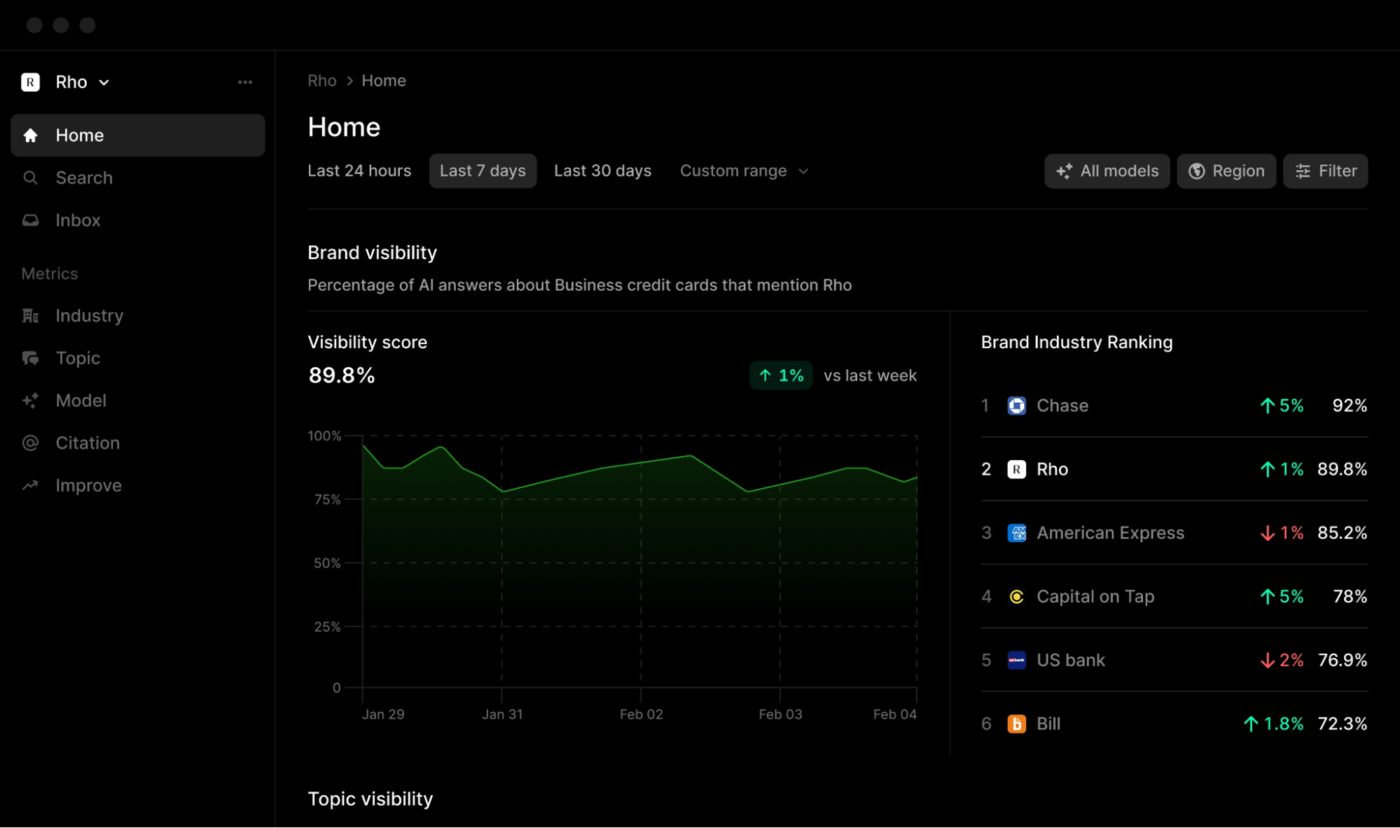
Founded by James Cadwallader and Dylan Babbs, Profound is an enterprise-grade platform that tracks how large language models like ChatGPT, Gemini, Bing Chat, and Microsoft Copilot mention and rank your content.
It analyzes the input data these AI models process to generate responses, helping businesses understand how different user queries, prompts, datasets, and sources impact brand visibility. It also offers compliance and security features like SOC 2 certification and single sign-on to protect the enterprise’s sensitive data and ensure safe access.
📮ClickUp Insight: 88% of our survey respondents use AI for their personal tasks, yet over 50% shy away from using it at work. The three main barriers? Lack of seamless integration, knowledge gaps, or security concerns.
But what if AI is built into your workspace and is already secure? ClickUp Brain, ClickUp’s built-in AI assistant, makes this a reality. It understands prompts in plain language, solving all three AI adoption concerns while connecting your chat, tasks, docs, and knowledge across the workspace. Find answers and insights with a single click!
🚀 Productivity Hack: Set up scheduled LLM calls to retrieve responses from ChatGPT, Gemini, or Perplexity for specific keywords related to your brand. Store and compare these outputs in a centralized dashboard for quick insights.
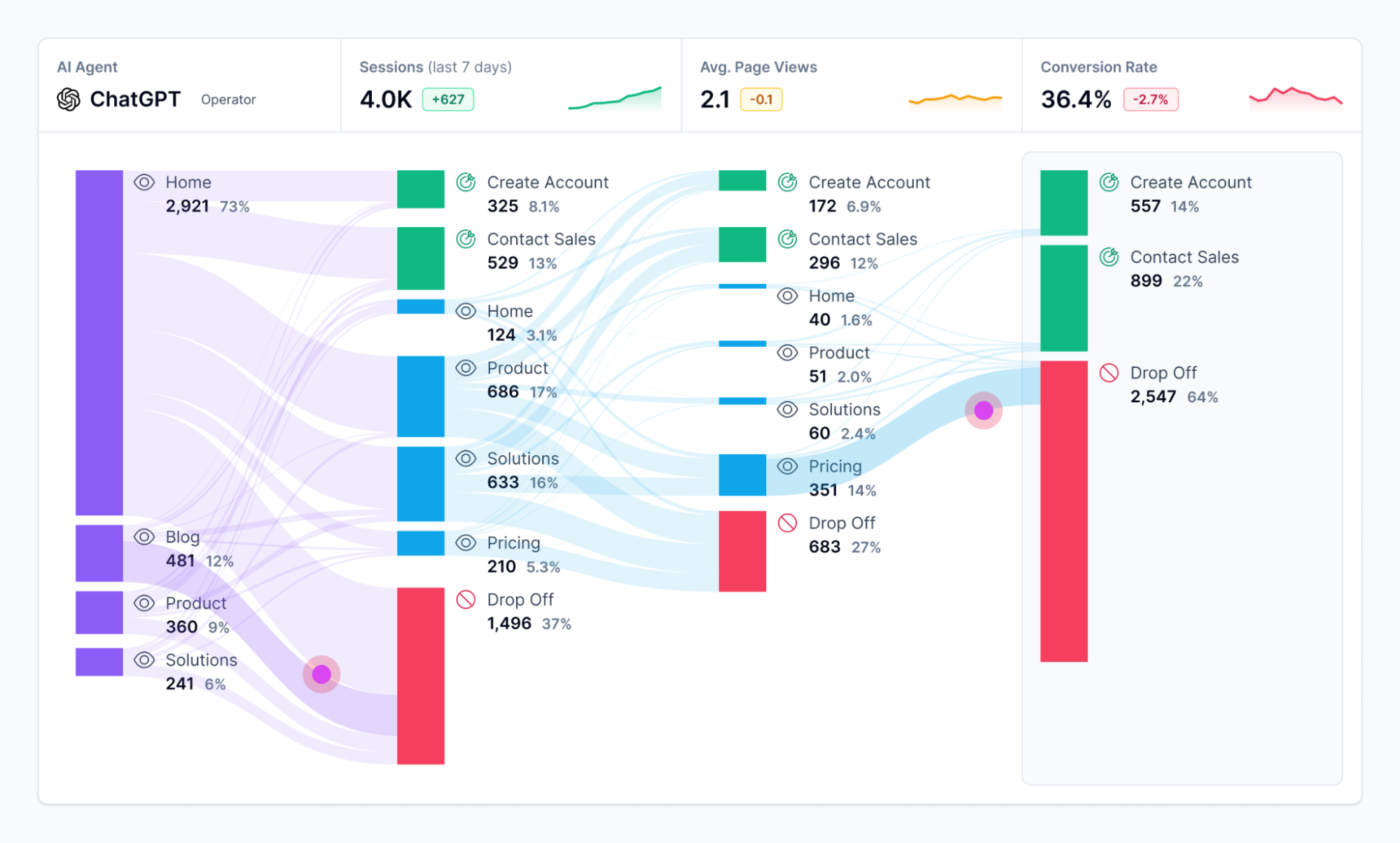
Customers are already interacting with AI when they search for products, compare services, or look for recommendations. Scrunch AI tracks where your brand appears in these AI-generated answers, whether it’s a top result, barely mentioned, or missing altogether.
The tool tracks three core aspects: Presence, position, and sentiment. ‘Presence’ shows where and how your brand is mentioned in AI responses, ‘position’ indicates your ranking or prominence in those answers, and ‘sentiment’ analyzes the tone (positive, neutral, negative) when your brand is mentioned.
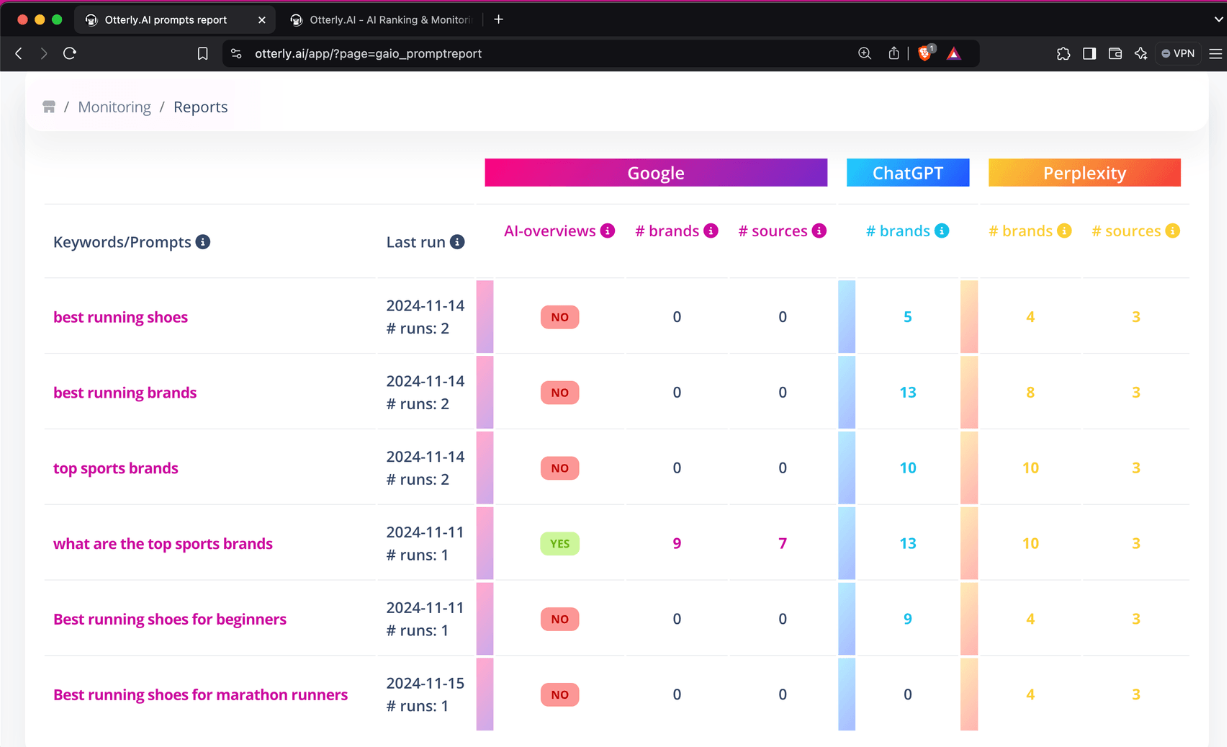
Otterly lets you monitor your brand, content, competitors, or any prompt across AI services.
A key feature of Otterly is its ease of use. It’s suitable for those who want to quickly check AI search results without a deep learning curve. The platform supports multiple AI chatbots/LLMs, such as ChatGPT, Google’s Gemini, and Bing Chat.
It’s one of the few AI search monitoring tools that let you track output quality based on your customers’ locations. If your brand is popular in the U.S. but rarely mentioned in AI searches in India or Germany, you know where to focus your content efforts
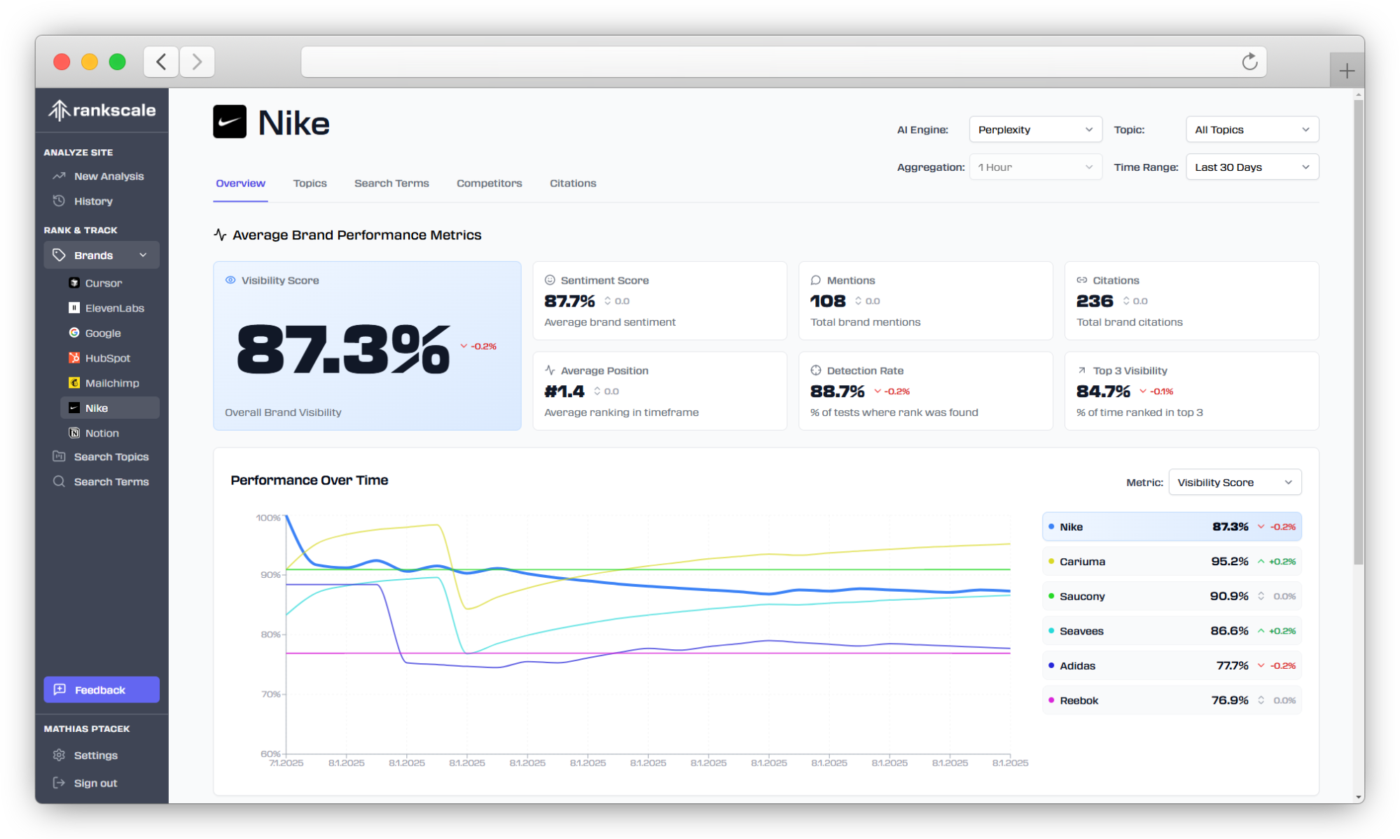
Rankscale (often styled as Rankscale.ai) is a Generative Engine Optimization (GEO) tool designed to be an all-in-one solution for AI search visibility.
One of its standout features is the AI search engine simulator, which shows how different AI models crawl and interpret your site, giving you a content score for AI relevance. This helps you identify if something on your site might be blocking or discouraging AI bots.
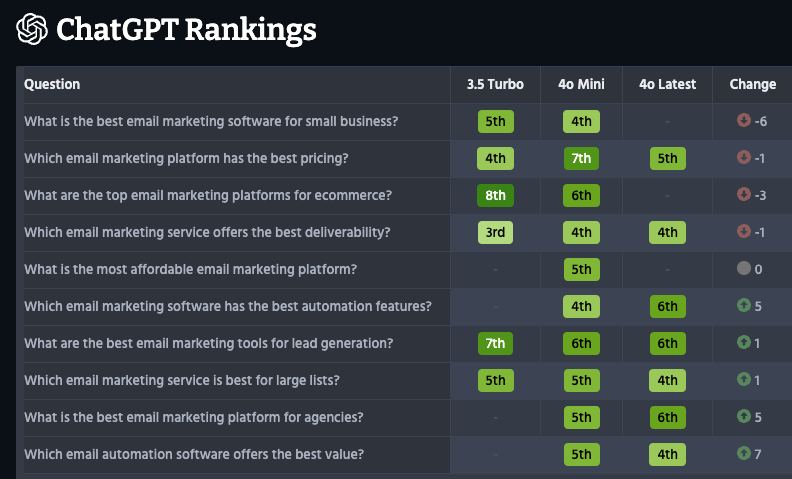
Knowatoa works as a dedicated rank-tracking tool that shows how AI services perceive and rank your brand.
It tracks your brand’s mentions in AI answers and checks if AI models describe your products accurately by comparing them with your actual product info. For example, if an AI says your software is missing a feature that you actually have, Knowatoa would flag that discrepancy.
Knowatoa is a very cool tool that is getting in front of change in our industry, rank tracking for AI search services like ChatGPT, Perplexity, and Claude.
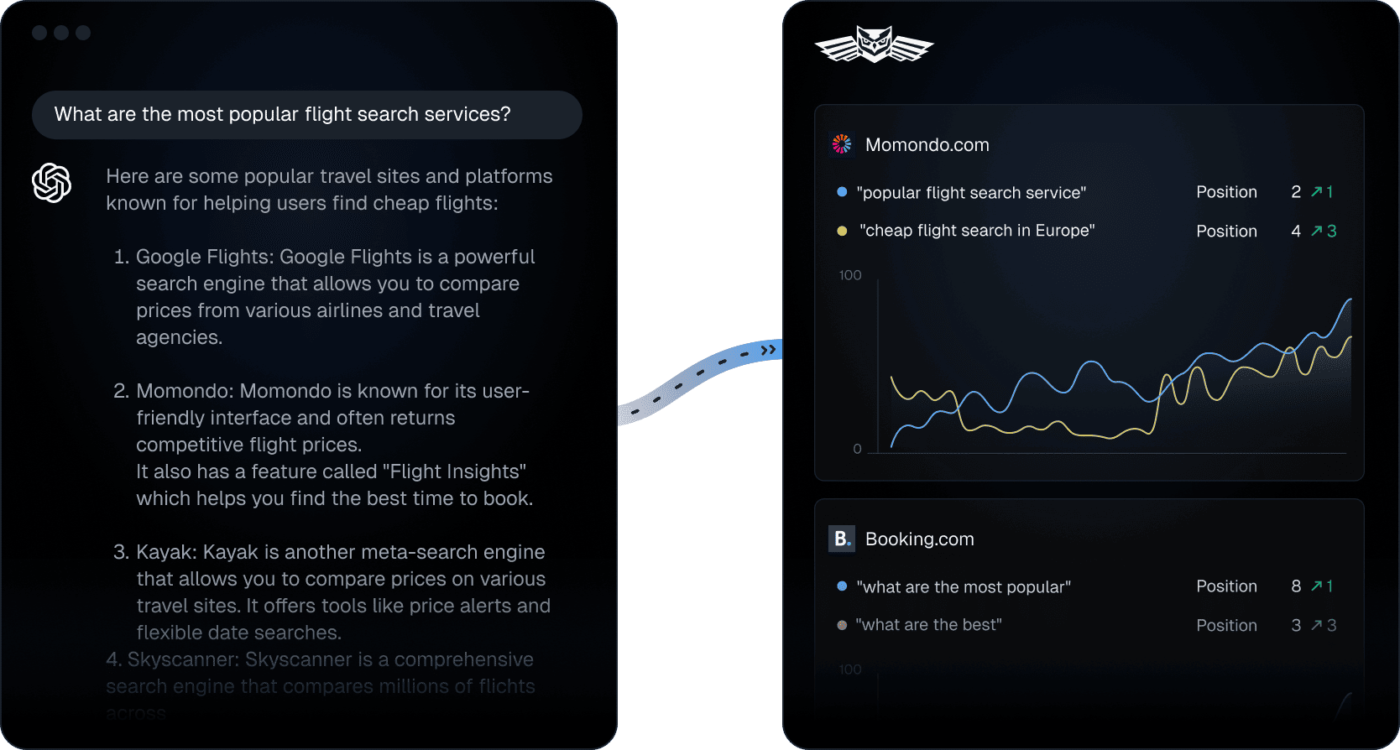
Nightwatch’s AI Tracking lets you monitor the performance of ChatGPT 3.0 and 4.0 in real time. You can track where your company or service appears, see how often you’re mentioned, and understand the context of those mentions by inputting key prompts or letting the system observe over time.
For those already using it for SEO, you can track your visibility in ChatGPT and other LLMs using the same interface.
➡️ Read More: How to Use Chain of Thought Prompting (With Examples)
These seven tools are purpose-built for LLM evaluation. But how do you connect the trends and results from these tools to your existing workflows?
This is where ClickUp comes into play.
As the everything app for work, ClickUp can help you evaluate LLM responses and how a brand appears in AI-generated search results across multiple large language models, such as ChatGPT, Gemini, and Perplexity.
It empowers teams to organize monitoring, capture actionable insights, and implement changes based on ranking fluctuations. Let’s look at how!
ClickUp combines project management and task tracking into one platform, making it easy to monitor deadlines, priorities, and dependencies for optimal operational efficiency.
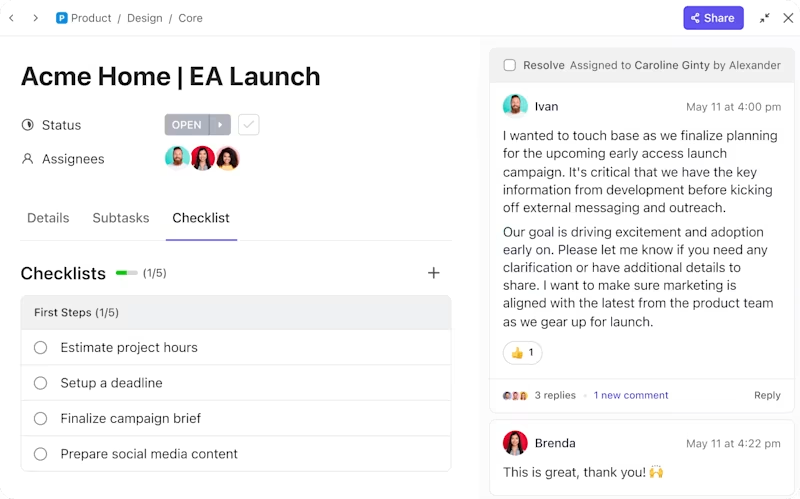
Let’s say the ClickUp marketing team wants to know why ClickUp is missing from AI Search responses for ‘best productivity tools’ or ‘best project management software.’ The team can log this as a task in ClickUp Tasks and add subtasks to investigate the issue on AI models like ChatGPT, Perplexity, or Bard.
📌 Example:
Task Name: Investigate ClickUp’s missing mentions in Perplexity’s AI search
👥 Assigned to: Joshua (AI Researcher)
Subtasks:
1️⃣ Analyze Perplexity AI’s knowledge sources
2️⃣ Conduct prompt testing
3️⃣ Check LLM training data & content sources
You can also use ClickUp Custom Fields to add structure and key insights to the investigation. For example:
Assign this task to a team member for investigation, with Custom Statuses to track progress: ‘Open’, ‘In Review’, and ‘Resolved.’ ClickUp also lets you set priorities so that critical issues get attention first.
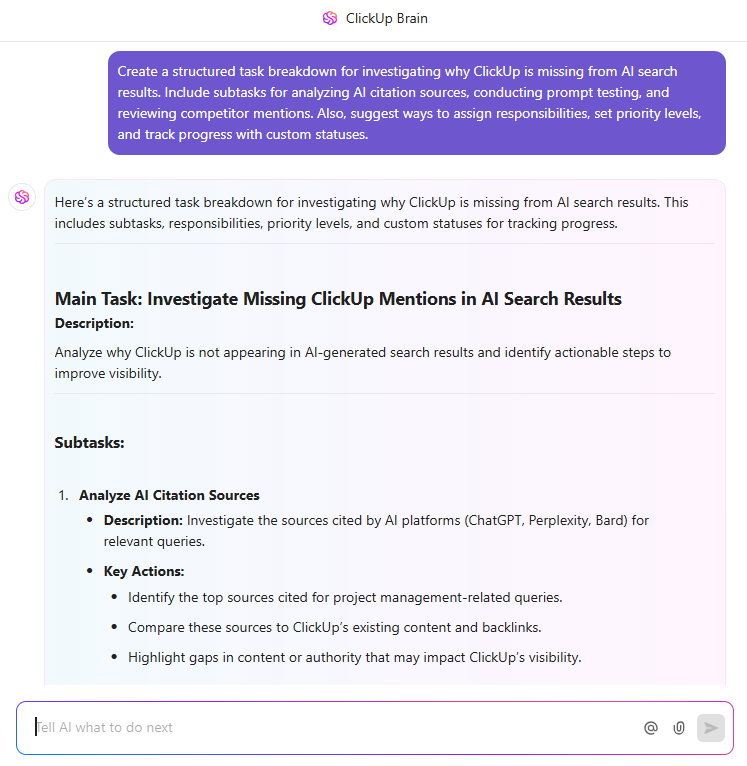
ClickUp Brain, a powerful neural network that connects everything within ClickUp, can suggest task structures for AI search investigation. This helps teams break down the process into actionable subtasks, assign responsibilities, and track progress.
Since AI model responses can change frequently, teams need real-time notifications when their brand is missing or misrepresented. You can configure ClickUp Automations to trigger alerts based on specific actions.
📌 For example, when a team member updates the ‘Mention Status’ field from Mentioned → Not Mentioned, you can set custom automations to:
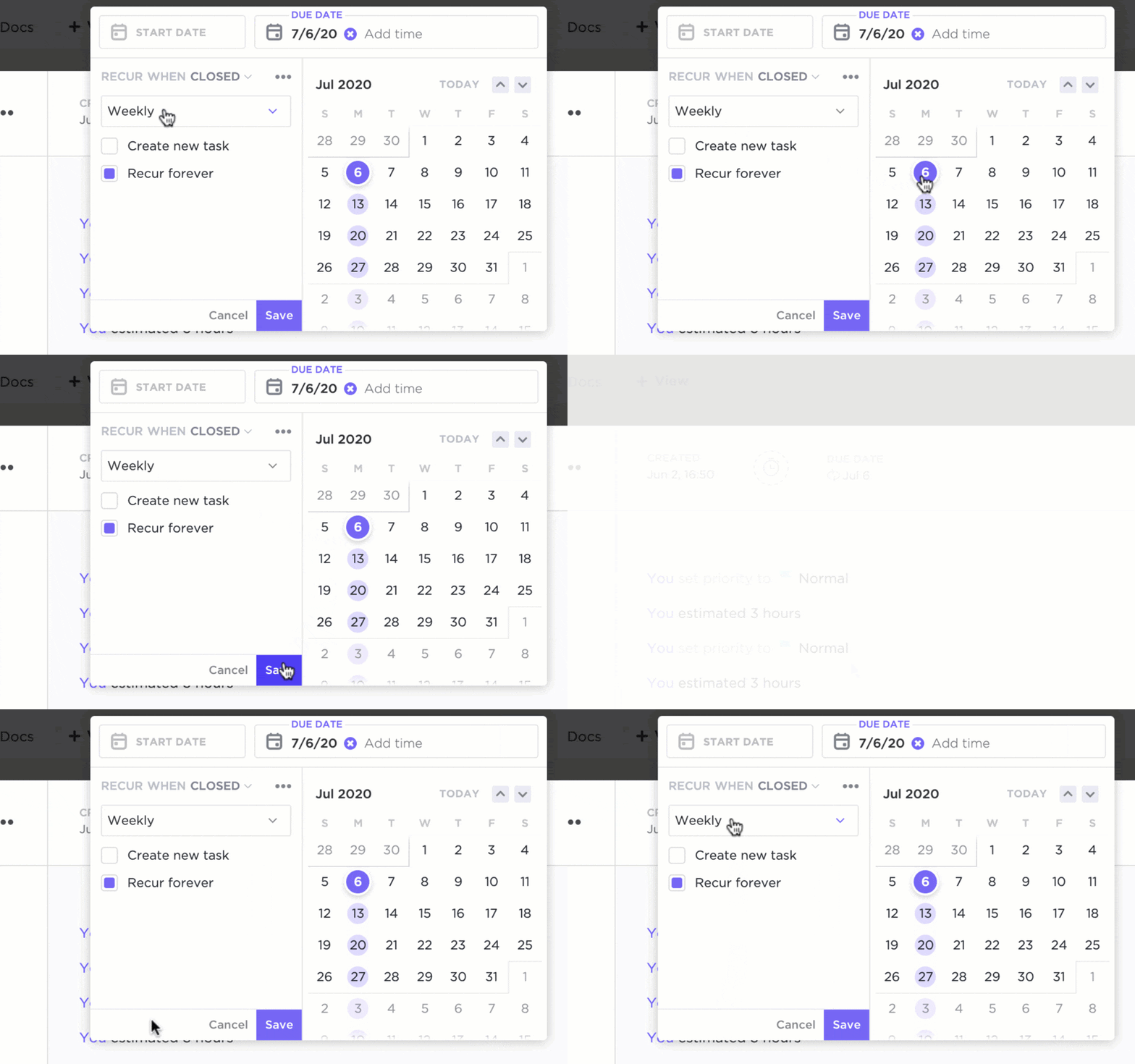
ClickUp Automations can also create recurring tasks to track visibility on a weekly or monthly basis. This ensures that AI search tracking happens regularly without anyone forgetting to check it manually.
Instead of scattered notes or emails, ClickUp Docs provides a centralized knowledge management system where teams can log AI-generated search results, document competitor insights, and collaborate on content strategies to improve brand visibility in LLM responses.
For example, you can maintain a document to log AI search findings, naming it AI Search Trends Report- March 2045. It can:
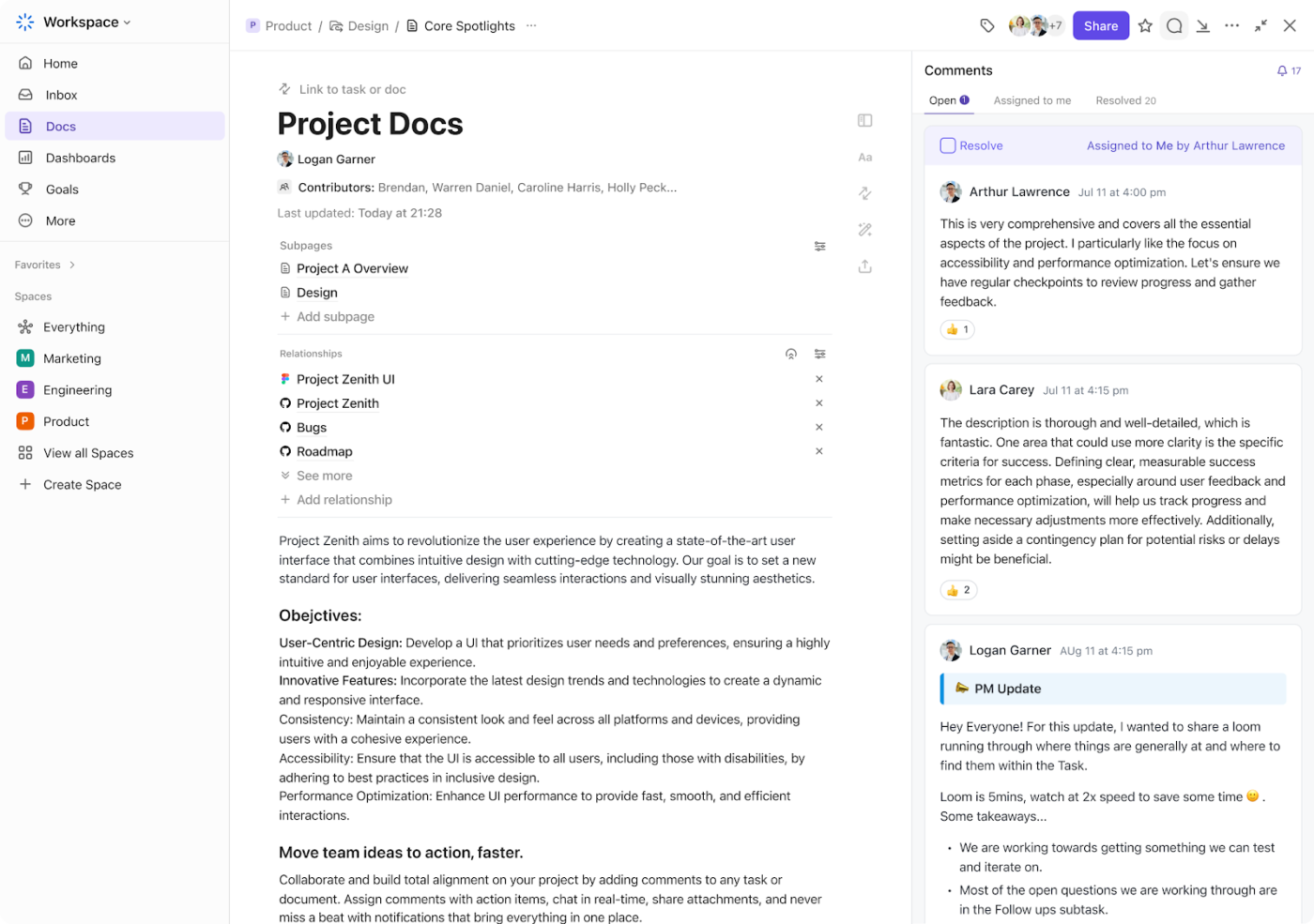
ClickUp Docs makes it easy for AI researchers, data scientists, machine learning engineers, and SEO specialists to collaborate in real time. Teams can track AI search results, add notes, and refine content strategies in one place.
💡 Pro Tip: Use rank tracker report templates to build your brand’s AI rank tracking report. Track how often your brand appears in AI search results, compare competitor rankings, and log sentiment analysis. This structured approach helps identify gaps and optimize content to boost AI visibility.
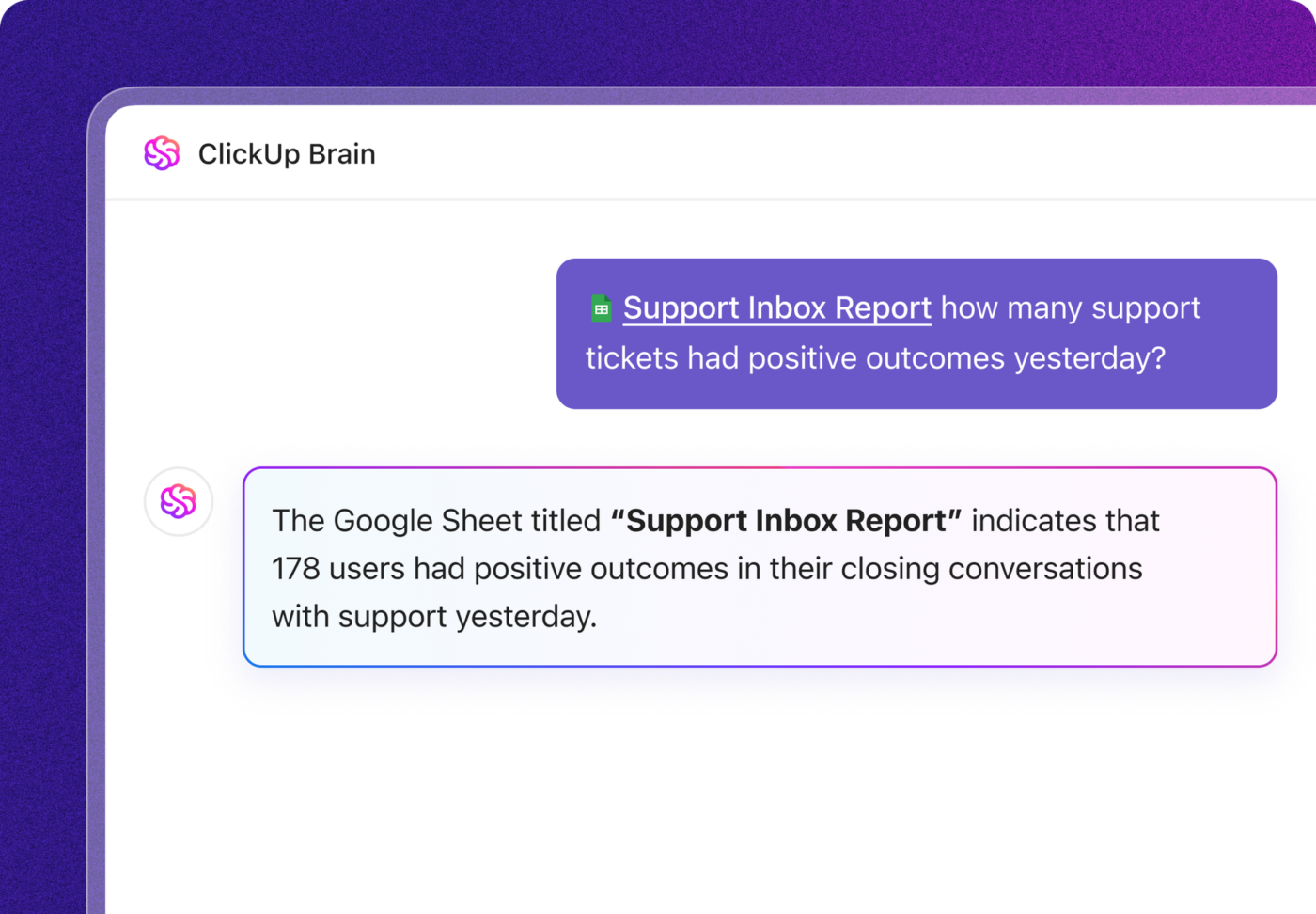
ClickUp Brain, ClickUp’s AI assistant, tracks AI search visibility and retrieves information from Tasks, Docs, Chat, and Dashboards to help teams analyze mentions, spot trends, and optimize strategies.
📌 For example, teams can ask ClickUp Brain:
ClickUp Brain scans stored data and instantly pulls relevant insights, saving time and keeping teams informed.
It also analyzes historical data to spot patterns in AI-generated search rankings.
While ClickUp Brain pulls insights from your workspace, ClickUp Brain MAX lets you capture them even faster with a voice-first desktop AI that understands your projects, tasks, and reports.
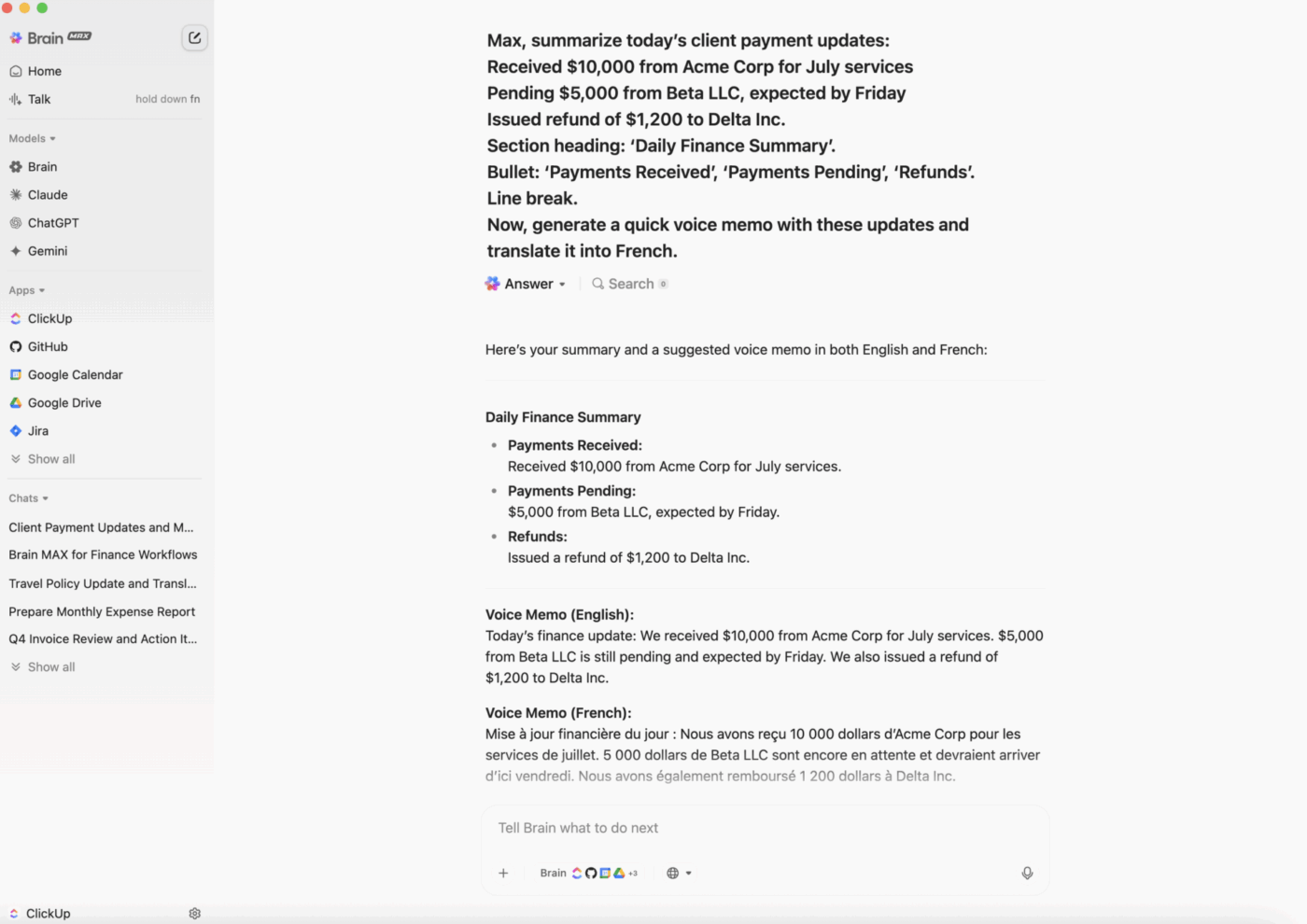
Dictate updates, findings, or next steps hands-free, and have them instantly structured into ClickUp Docs, tasks, or comments—perfect for logging LLM tracking insights without breaking your workflow.
Why Brain MAX helps with AI monitoring:
As AI-generated content reshapes how brands appear in search, tracking your brand’s presence across large language models is crucial. LLM tracking tools help businesses monitor AI-generated mentions, analyze competitor visibility, and optimize content strategies for LLM-powered search results.
But if you’re not ready to invest in a dedicated monitoring tool or need more help making sense of the data, ClickUp can help. It lets you organize insights, automate monitoring, and collaborate on AI visibility strategies. With ClickUp Brain, you can stay on top of AI search trends without adding another tool to your tech stack.
Ready to optimize your brand’s visibility with ClickUp? Sign up for ClickUp today.

Manasi Nair
Max 14min read

Arya P Dinesh
Max 21min read
Arya P Dinesh
Max 15min read

© 2026 ClickUp