

Great managers don’t just appear—they’re developed through intentional management training and real-world experience. Knowing how to train managers is the key to unlocking their potential to inspire teams, solve problems, and drive meaningful results.
This guide skips the fluff and dives straight into practical solutions, innovative tools, and strategies to transform your managers into confident leaders who make an impact from day one.
Keep reading to discover what it takes to build a thriving leadership pipeline that fuels your company’s growth
How to Train Your Managers for Better Leadership

 Summarize this article for me please
⏰ 60-Second Summary
Training managers effectively creates strong leaders who drive team success and foster a thriving company culture. Here’s how to start:
- Define clear roles, responsibilities, and goals for managers
- Focus on essential skills like leadership, empathy, coaching, and strategic thinking
- Design personalized programs addressing skill gaps and new manager training topics
- Combine hands-on learning, workshops, and online tools to engage managers
- Set KPIs and use feedback to refine training and avoid poor management pitfalls
- Overcome challenges like balancing training and responsibilities with tailored solutions
- Leverage tools like ClickUp for tracking progress, centralizing materials, and enhancing collaboration
Summarize this article for me pleaseUnderstanding the Role of a Manager
At its core, a manager’s role is to guide team members toward achieving organizational goals while balancing strategic decision-making with daily operations. They act as mentors, problem-solvers, and communicators, bridging leadership and employees to ensure alignment with the company’s vision.
Key responsibilities and expectations
Managers are expected to wear many hats, juggling diverse responsibilities that directly impact team and organizational success. Their key duties include:
- Setting clear goals that align with the company’s objectives and organizational goals
- Providing constructive feedback to enhance management skills and team performance
- Resolving conflicts and fostering a productive work environment through strong interpersonal skills
- Monitoring progress, ensuring accountability, and driving results with leadership skills
Great leader effectively manage other by leveraging emotional intelligence to build trust, encouraging collaboration and innovation, and adapting to challenges. Their ability to lead by example, delegate tasks effectively, and foster employee engagement ensures a productive and motivated team.
Summarize this article for me pleaseEssential Skills for New Managers
Transitioning into a managerial role requires mastering core skills to lead effectively and align with organizational goals. For new managers, these skills lay the foundation for successful leadership and team development.
Prioritization and delegation
Balancing competing priorities while distributing tasks effectively is critical for new managers. Key practices include:
- Identifying high-impact tasks that align with organizational goals
- Delegating responsibilities based on team members’ strengths
- Providing support and monitoring progress without micromanaging
A manager leading a product launch might assign research tasks to a team member with analytical expertise while having a confident communicator handle client presentations. This approach leverages individual strengths and ensures efficiency across the team.
Effective team leadership
Strong leadership is about inspiring a team to work toward shared goals while maintaining clarity and trust. Essential elements include:
- Setting clear expectations to prevent confusion
- Delivering constructive feedback to drive growth
- Building trust through consistent and open communication
When a team faces challenges meeting deadlines, a manager who provides actionable feedback while showing empathy can address the issues without diminishing morale, creating an environment where the team feels supported.
Change management
Navigating change effectively is crucial in today’s dynamic workplaces. Managers must:
- Address resistance by listening to concerns and providing clarity
- Communicate the purpose of changes to gain team buy-in
- Lead by example to show adaptability and commitment
Adopting new software, for instance, becomes more seamless when the manager actively participates in training sessions alongside the team. This demonstrates commitment and eases the transition.
Strategic thinking
Managers must look beyond immediate tasks to focus on long-term success. This involves:
- Using data to make well-informed decisions
- Preparing for potential challenges with contingency plans
- Aligning team efforts with the organization’s overall goals
Planning resource allocation for a major project often requires anticipating future needs and ensuring the team’s work contributes to overarching business objectives. This proactive approach fosters alignment and mitigates risks.
By developing these essential skills, new managers can navigate challenges confidently, lead effectively, and create a culture of collaboration and innovation.
Summarize this article for me pleaseDesigning a Manager Training Program
Creating an effective manager training program begins with understanding key manager training topics. These topics are subjects that managers need to master to excel in their roles as leaders. A well-structured program not only builds leadership skills but also helps retain top talent and reduces turnover.
Assessing training and development needs
The first step is identifying gaps in skills and knowledge. This can involve:
- Conducting surveys or assessments to evaluate management competencies
- Reviewing performance data to pinpoint areas for improvement
- Collaborating with senior leaders to align training with organizational goals
For instance, if new managers struggle with conflict resolution, targeted workshops or real-world scenarios can address this challenge.
Incorporating mentorship and coaching
Mentorship and coaching are critical for accelerating manager development. These strategies offer:
- Personalized guidance from experienced leaders
- Opportunities for new managers to navigate challenges with support
- Continuous learning through real-time feedback and discussions
Pairing new managers with seasoned mentors fosters confidence and prepares them to handle complex situations. One-on-one coaching sessions can also enhance interpersonal skills and emotional intelligence.
👀Did You Know? The concept of workplace mentorship dates back to ancient Greece, where the term “mentor” originated from Homer’s Odyssey—Mentor was a trusted advisor to Odysseus’ son, guiding him through challenges
Strategies and tools for turnover and employee retention
An effective training program doesn’t just develop skills; it also reinforces engagement and reduces turnover. Focus on:
- Building a supportive culture that prioritizes growth and employee satisfaction
- Encouraging open communication to identify and resolve potential issues early
- Offering flexible learning options, such as workshops, online courses, or hybrid models, to meet diverse needs
To streamline the process, tools like the ClickUp Training Rollout Plan Template help organize training schedules, track progress, and ensure no detail is overlooked.

With this template, you can:
- Simplify planning with a clear structure for training initiatives
- Keep stakeholders informed with real-time updates
- Ensure consistency across training programs
An impactful manager training program aligns development goals with business objectives while providing resources to address challenges like turnover. Investing in mentorship, targeted learning, and retention strategies builds strong leaders who inspire their teams and drive success.
Summarize this article for me pleaseTraining Techniques and Methods
Building a robust manager training program requires combining innovative tools, practical experience, and a balance of technical and leadership skills. These methods ensure managers are equipped to handle dynamic challenges while fostering team success.
Leveraging educational technology
Modern training programs thrive on smart tools that make learning organized and engaging. ClickUp is a powerful ally for HR teams and L&D specialists, offering features that turn complex training processes into streamlined success stories.
Centralizing training materials

With ClickUp Docs, you can create and share centralized training materials tailored to your organization’s needs. Paired with ClickUp Tasks, you can assign actionable learning steps, like completing role-play exercises or reviewing key policies, ensuring every manager knows exactly what to focus on next.
Meanwhile, ClickUp Goals can help track progress by setting measurable milestones, keeping development on course, and motivating managers to reach their targets.
Making training interactive and collaborative
ClickUp Clips adds an interactive touch, allowing managers to record and share walkthroughs or scenarios.
Imagine a new manager sharing their approach to conflict resolution through a short video that documents their process and research—mentors and peers can review it and provide constructive feedback in real time.
To make this process even smoother, the ClickUp Training Framework Template provides a structured foundation for designing impactful training programs.
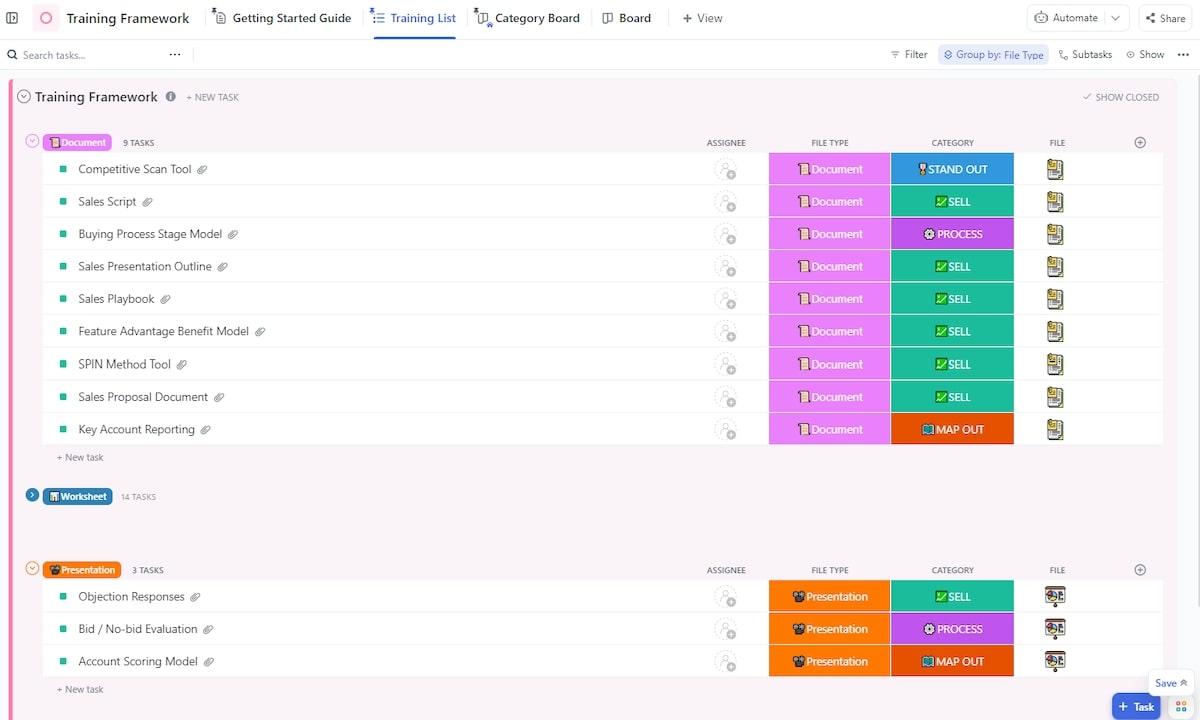
This template will help you:
- Simplify program planning by organizing content and timelines
- Allows customization to address the unique needs of different teams
- Ensure consistency across all training modules, reducing gaps
By integrating technology, organizations can create efficient, scalable programs that resonate with today’s learners.
Importance of hands-on experience and role-playing
At the end of the day, you can not put a price on experience. Practical application is the key to reinforcing theoretical knowledge, and role-playing in real-world scenarios give managers the confidence to handle workplace challenges.
Here are all the effective techniques for you to try:
- Simulate common managerial tasks, such as resolving conflicts or delivering feedback
- Organize mock meetings to practice communication and decision-making skills
- Encourage managers to shadow experienced leaders to observe best practices in action
For example, assigning a new manager to lead a team brainstorming session can help them practice active listening and foster collaboration in a controlled environment.
Balancing technical knowledge and leadership skills
It’s tempting to think of leadership as this amorphous, either-you-have-it-or you-don’t quality. But the truth is quite different. Being data-driven makes you an objective and clear-headed leader. And effective managers require a blend of technical expertise and strong leadership abilities.
All the mandatory and recommended leadership training programs should:
- Emphasize decision-making and problem-solving using real-world data
- Focus on interpersonal skills, such as emotional intelligence and conflict resolution
- Offer technical training tailored to industry-specific tools and systems
A manager overseeing a tech-driven team, for instance, might benefit from training in project management software alongside workshops on building team trust. This dual approach ensures managers can lead with both confidence and competence.
Also Read: 10 User-Friendly Training Video Software
Summarize this article for me pleaseImplementing Effective Training Strategies
A well-rounded training program combines practical experience, structured learning, and consistent feedback. These elements ensure managers are prepared for the challenges of their roles while continually improving their skills.
On-the-job training
Hands-on experience helps managers develop critical skills quickly.
- Shadowing senior leaders offers insights into real-time decision-making and team management
- Assigning practical tasks such as leading team meetings or handling projects helps managers apply what they’ve observed and build confidence
Practical Insight: After leading a post-project review meeting, a new manager refines their ability to synthesize feedback and encourage productive discussions. Exercises like these help managers foster collaboration and take ownership of outcomes
Classroom and online training
Combining workshops and virtual platforms creates a balanced learning experience.
- Workshops encourage group discussions on topics like leadership styles and emotional intelligence, fostering peer interaction
- Online platforms provide flexibility for managers to complete modules or tutorials at their own pace
| Training component | Focus |
| Workshops | Group activities, interactive learning |
| Virtual platforms | Self-paced learning, technical skills, management theory |
Pairing group exercises on effective communication with online modules on conflict resolution ensures managers develop interpersonal and operational expertise.
Read More: 10 Best Online Employee Training Software
Feedback mechanisms
Feedback refines training programs and supports growth.
- Regular performance reviews offer structured insights into progress
- Surveys and check-ins reveal what’s working and identify improvement areas
- Experience-sharing encourages participants to highlight impactful methods, guiding future sessions
Feedback Impact: When participants report that role-playing improved their decision-making, you should tweak your training sessions to ensure they prioritize practical scenarios. This will help make the program more relevant and effective
By incorporating on-the-job learning, hybrid training methods, and responsive feedback, organizations create a dynamic and adaptable training ecosystem. This ensures managers are prepared for success while continuously refining their abilities.
Also Read: How to Write a New Hire Onboarding Checklist
Summarize this article for me pleaseEvaluating Manager Training Effectiveness
Evaluating the impact of manager training ensures that programs deliver real results. By setting clear benchmarks and gathering actionable feedback, HR teams and senior leadership can fine-tune their strategies and ensure long-term success.
Setting benchmarks and KPIs
Clear benchmarks and key performance indicators (KPIs) provide a structured way to measure the success of training programs. These benchmarks may include:
- Improved team performance metrics, such as reduced turnover or higher productivity
- Enhanced leadership skills, assessed through 360-degree feedback or manager self-assessments
- Increased alignment with organizational goals, as demonstrated by goal-setting and achievement rates
With tools like ClickUp Custom Fields, you can track training progress in real time. For example, Custom Fields can document metrics like attendance rates, completion status, and post-training performance improvements. This enables HR teams to visualize trends and identify areas requiring more focus.

Feedback mechanisms and improvement strategies
Feedback plays a crucial role in refining training programs. Gathering insights from multiple perspectives ensures a holistic view of what’s working and what isn’t.
- Surveys and one-on-one check-ins provide a platform for managers to share their learning experiences and highlight gaps
- Performance reviews assess how training translates into real-world results, such as improved decision-making or team collaboration
- Post-training workshops offer an opportunity to address challenges and reinforce critical skills
For instance, if surveys reveal that managers struggle with conflict resolution despite training, introducing more role-playing exercises can strengthen this area. Similarly, if feedback highlights the success of interactive modules, doubling down on such methods enhances engagement and retention.
Evaluating effectiveness isn’t a one-time activity—it’s an ongoing process. By continuously setting goals, measuring progress, and acting on feedback, organizations create dynamic programs that keep pace with evolving needs, ensuring managers are always prepared to lead effectively.
Summarize this article for me pleaseOvercoming Training Challenges
Designing and implementing manager training programs can be complex, but tackling common challenges ensures a smoother process and greater impact.
Challenge: Limited retention of training material
Solution: Reinforce learning with practical application and spaced repetition. After each session, provide real-world scenarios for managers to apply their knowledge immediately. Follow-up quizzes or short refresher sessions a few weeks later can solidify retention and prevent skill fade
Challenge: Overwhelming new managers with information
Solution: Break training into digestible modules. Instead of day-long sessions, opt for short, focused lessons that allow managers to absorb concepts gradually. Pair these with hands-on tasks or collaborative group discussions to keep the content manageable and actionable
Challenge: Disconnect between training and job expectations
Solution: Align training content closely with real-world challenges managers face in your organization. Incorporate department-specific scenarios and tools they’ll actually use. For instance, teaching a tech team manager how to handle agile sprints mirrors the environment they’ll lead
Challenge: Low buy-in from managers
Solution: Create a culture of shared ownership in training. Involve experienced managers in delivering parts of the program, such as peer-led workshops or sharing case studies of their success. Seeing peers actively engaged makes new managers more likely to value the program
Challenge: Difficulty tracking long-term training impact
Solution: Move beyond initial feedback by implementing periodic assessments. After six months, you can measure changes in team performance or leadership quality using quantitative metrics like turnover rates and engagement scores. Include qualitative feedback through regular manager check-ins
By addressing these challenges with thoughtful strategies, organizations can craft training programs that are impactful, relevant, and geared toward developing managers who excel in their roles.
Summarize this article for me pleaseEmpower Managers to Lead With Confidence
Investing in manager training goes beyond skill development—it shapes a strong company culture built on trust, collaboration, and innovation. When managers understand their roles and responsibilities, they’re better equipped to handle direct reports, inspire their teams, and address challenges effectively.
Poor management can lead to disengaged teams and missed opportunities, but a focus on coaching skills and tailored learning, including new manager training topics, ensures leadership thrives. Empowering managers today prepares them to meet the evolving demands of tomorrow with confidence and clarity.
Ready to build a stronger leadership foundation in your organization? Sign up for ClickUp today!


Everything you need to stay organized and get work done.

Recent Articles
Managing Creative Teams: How to Lead Your Team to Success 
Managing Creative Teams: How to Lead Your Team to Success
20 SMART HR Goals & Examples for Real Results in 2026
20 SMART HR Goals & Examples for Real Results in 2026
25 Employee Satisfaction Survey Questions to Pulse Check Your Team
25 Employee Satisfaction Survey Questions to Pulse Check Your Team
