

Attracting top talent requires more than just posting a job ad!
You need a recruitment campaign that can convince the best candidates to apply for your jobs.
What’s a recruitment campaign?
A recruitment campaign is a strategic, targeted effort designed to attract, engage, and hire qualified candidates for open positions within an organization.
A well-executed recruitment campaign accelerates recruitment and fills positions quickly at a low hiring cost. More importantly, through its messaging and outreach processes, it showcases the company’s culture, values, and benefits, enhancing its reputation as an employer of choice.
Read on to discover how to run a successful recruitment campaign that results in great hires.
How to Run a Recruitment Campaign: Strategies and Tools
- The Framework of Recruitment Campaigns
- Stepping Stones to an Effective Recruitment Campaign
- Utilizing Online Tools for Setting Up Recruitment Campaigns
- Measuring and Tracking the Success of Recruitment Campaigns
- Creative Recruitment Campaign Ideas for Inspiration
- Risks and Hurdles in Recruitment Campaigns
- Ace your Recruitment Game with ClickUp

 Summarize this article for me please
The Framework of Recruitment Campaigns
Running a successful recruitment campaign can be an exact science if you understand that the essence of a good campaign lies in creating brand awareness.
Your company culture should be your campaign’s biggest draw. Patagonia excels at this when marketing itself to potential employees. Every year, they send 150 employees to volunteer for environment-focused nonprofits. Initiatives like these attract the kind of people they want to hire: people who deeply value sustainability and love exploring the great outdoors—people whose values align with the brand with their customers.
Attracting candidates who align with your organization’s culture and values is an essential part of a successful recruitment campaign strategy. Here’s how you can achieve that:
- Goals and objectives: Define what the campaign aims to achieve (e.g., number of hires, brand awareness).
- Define your target audience: Clearly identify the specific demographics and characteristics of the candidates you want to attract
- Market your employer’s brand: Promote your company’s culture, values, and benefits to showcase why it’s a great place to work
- Advertise in the right places: Choose the most effective platforms and channels to reach your ideal candidates, ensuring maximum visibility and engagement
- Timeline and metrics: Set a schedule for campaign activities and determine how success will be measured (applications, engagement, etc.)
By systematically aligning all recruitment activities, you can optimize the efficiency and effectiveness of your recruitment marketing.
Summarize this article for me pleaseStepping Stones to an Effective Recruitment Campaign
Having set the framework, it’s time to get down to the details of launching a spectacular recruitment campaign.
Step 1: Set clear goals
Start by figuring out what roles you need to fill and why.
Are you seeking fresh talent or trying to fill a specific skill gap?
Set clear goals, such as the number of new hires you need, the timeline, and so on.
Step 2: Define your target audience
First, identify your target by creating a detailed job description (JD) that outlines key responsibilities, necessary skills, and experience level.
Next, create detailed candidate personas.
Finally, review existing team members to identify traits and patterns that align with the role you’re hiring for.
Step 3: Find your ideal talent community
Start by analyzing industry trends to find out where the best talent is coming from and what skills are in demand.
Use online platforms like LinkedIn and industry-specific forums to find potential candidates.
Browse job boards and leverage AI recruitment tools to analyze data and discover emerging talent pools.
Step 4: Define the Employee Value Proposition
An Employee Value Proposition (EVP) is essentially your company’s unique promise to candidates. It answers every potential employee’s question, “Why should someone join your company?”
A successful EVP includes competitive salaries, career growth opportunities, flexible work arrangements, and a welcoming work culture. When you’re talking to potential candidates, make sure to highlight these perks.
Step 5: Choose the right keywords
Keywords help your job postings get noticed by the right people in a crowded market. Your core keywords name the responsibilities, skills, and qualifications for the role you’re hiring for.
Tools like Google Keyword Planner, SEMrush, or Ahrefs can help you discover popular and effective search terms in your industry.
Once you have your list, incorporate these keywords into job descriptions, titles, and social media posts to boost your visibility.
💡Pro Tip: While keyword optimization is essential, writing engaging and informative content that speaks to your target audience is equally important. A balance of both is key to a successful recruitment campaign.
Step 6: Refine your messaging
Your recruitment message is potential candidates’ first impression of your company and the job role.
Speak directly to your audience. Differentiate yourself from competitors and let candidates know how they’ll benefit by joining you.
Step 7: Select your media/platform
Now that you’re ready to connect with the right people, choose the right places to reach them.
For example, Volkswagen intentionally distributed faulty car parts with a secret message on the undercarriage to service centers across Germany. The message invited applicants to send in their resumes—and 53,705 of them did.
With a little ingenuity, you can also select the right platform for your recruitment campaign, expanding your reach.
Step 8: Set up advertising campaigns
Once you’ve selected the right channels, craft a compelling ad. Use a catchy headline and a strong call to action.
Next, run A/B tests to see which ad variations and channels perform best. This will help you refine your approach based on actual data.
Don’t forget to set up drip campaigns to nurture your leads. This way, you can engage with potential candidates over time and keep them interested in your opportunities.
Finally, monitor your ad performance closely. Track metrics like clicks, conversions, and cost-per-click to determine what’s working and make adjustments as needed.
Step 9: Track your results and optimize
Once your recruitment campaign is up and running, monitor its performance regularly. Set clear metrics, such as click-through rates (CTR), conversion rates, cost-per-click (CPC), cost-per-hire, and time-to-fill.
Use tools like Google Analytics, LinkedIn Analytics, or recruitment-specific platforms to track your campaign’s performance. If a particular ad or job post isn’t performing well, don’t hesitate to make adjustments. By staying flexible and responsive, you can ensure your campaign remains effective.
Once you’ve identified your target talent and key skills, it’s time to leverage online tools to launch an impactful recruitment campaign.
Summarize this article for me pleaseUtilizing Online Tools for Setting Up Recruitment Campaigns
Online recruitment tools are a great resource. Let’s explore some of them. We’ll also see how AI can take your hiring strategy to the next level.
Using Google Ads for recruitment
Google Ads can be a powerful recruitment tool. Many candidates begin their job hunts via a general Google search, and investing in a Google Ad gives you first dibs on these candidates.
Google Ads positions your job ad at the top of the search engine result pages related to relevant job searches.
For example, if you’re looking for a graphic designer, the search term “graphic designer jobs” will return your campaign to the top of the page.
Running a campaign using Google Ads
A recruitment campaign that relies on Google Ads must be focused on the end goal. Follow these steps:
- Create targeted job ads: Select the right keywords that potential candidates are likely to use
- Design visually appealing ad copy: Use eye-catching graphics, fonts, and colors. Highlight key benefits like career growth opportunities or flexible working conditions
- Include a clear Call-to-Action (CTA): A good CTA encourages candidates to take action, like “Apply Now!” or “Join our team today.” This will help drive clicks
Setting the budget
Start by setting aside a portion of your overall budget specifically for your Google Ads campaign. Decide your budget for different aspects, like high-priority keywords or competitive ad placements.
Then, monitor your spending regularly, check performance metrics to see how your ads perform, and adjust your spending as needed.
Crafting effective recruitment ad copy
Crafting a compelling job ad is key to attracting candidates and encouraging clicks. Keep it snappy, highlight key benefits, and include a strong CTA.
Measuring and optimizing campaign results
Use Google Analytics to track the performance of your recruitment campaign. Key metrics to monitor include CTR and conversion rates.
Tracking these metrics will help you understand how well your ads perform and guide you in making data-driven adjustments to optimize your campaign.
💡Pro Tip: Regularly analyze your campaign to spot underperforming keywords or ads. If you notice specific keywords that aren’t performing well, refine them and adjust your ad copy as needed. This ongoing optimization will help improve your campaign’s effectiveness and drive better results.
Leveraging social media for recruitment
Social media is where many of your ideal candidates spend their time, so use social media advertising to reach them. LinkedIn and Facebook let you run targeted ads for people matching your ideal candidate profile.
Share behind-the-scenes content, employee testimonials, and other engaging posts that reflect what makes your company a great place to work.
Respond actively to comments, messages, and inquiries. Engaging with your audience helps build relationships and demonstrates that your company values aspiring job seekers.
Implementing content marketing and SEO strategies
Posting random content won’t cut it in today’s competitive job market. You can boost your recruitment efforts by leveraging content marketing to showcase your company culture, success stories, and employee experiences—attracting candidates who align with your values and vision.
Optimize your job postings by sprinkling the relevant keywords in them. This helps search engines understand what your content is about and improves visibility.
Understanding the role of Search Engine Results Pages (SERP)
As mentioned earlier, many young job seekers start their job searches by simply typing out a few words (“software developer jobs”) into a search engine.
If you happen to be seeking software developers, your company’s name must appear high up—preferably first—on the SERP they see.
Users typically don’t even scroll past the first few results on a SERP—more than 70% of clicks happen on the first result page of a Google search. If your campaign does not show up there, it’s floating in a deserted land of obscurity, and most candidates will miss it.
It should now be clear that there’s a lot that goes into managing a recruitment campaign. It’s a complex process demanding meticulous planning, organization, task delegation, and ongoing monitoring. Missteps—or missed steps!—could mean time and money lost. But you don’t have to do it alone.
With an ally like ClickUp, you can navigate the process smoothly and stay on track.
How ClickUp can help manage recruitment campaigns
With ClickUp, you have everything you need in one place. From tracking candidates and deadlines to collaborating with your team, ClickUp will help you streamline the entire process, making recruitment campaigns more organized and efficient.
A recruitment campaign is essentially a multi-channel marketing effort. And you can manage it just like one in ClickUp.
ClickUp for Marketing Project Management lets you plan and execute your recruitment campaign strategy easily.

Here’s what you can do with the ClickUp Marketing Platform:
- Create ClickUp Tasks and Task Lists for researching social media platforms, identifying the right talent community, and creating campaign content. This makes real-time tracking easy

- Connect Tasks to ClickUp Goals and track their progress
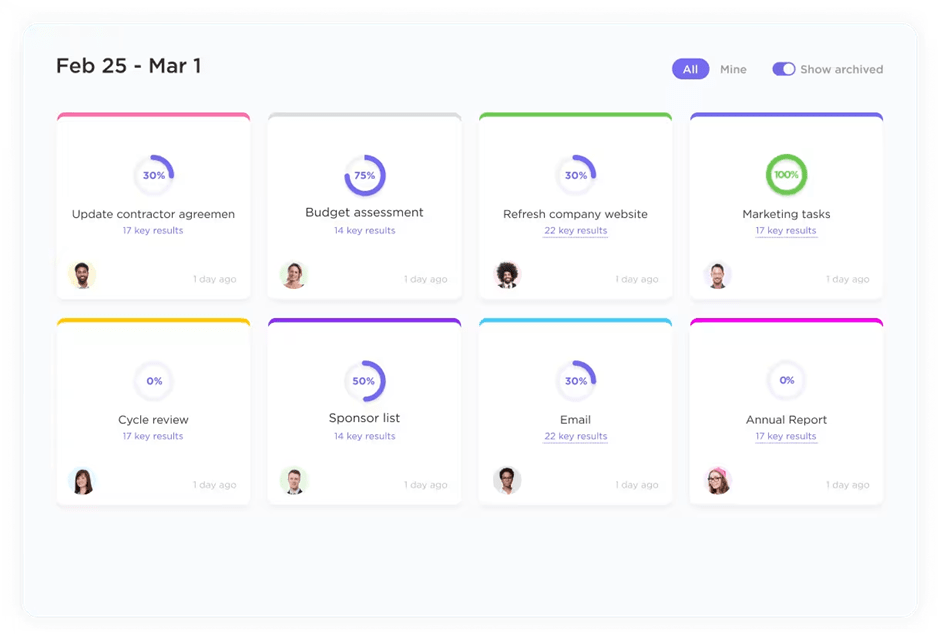
- Use ClickUp Brain to add accelerate and elevate your marketing campaign. As an AI assistant, ClickUp Brain can give you instant answers to all your campaign-related questions by accessing information from all across your organization. It can create copy for social media posts or job descriptions, generate customized templates as per your specifications, and automate repetitive tasks

ClickUp’s HR Management Platform can help you at every stage of the recruitment process. You can streamline your hiring, onboarding, and employee development processes with this comprehensive HR management platform.

You can also deliver an exceptional experience to talented candidates with a system that streamlines candidate organization, applications, and outreach. Save time using templates, custom statuses, and automation to move candidates seamlessly through your pipeline.
These ClickUp features are just a sample of what’s available:
- ClickUp Views: Tailor your Dashboards to focus on specific stages in your recruitment campaign (for example, “started Google ads promotions”). Use the Calendar View to schedule various campaign activities
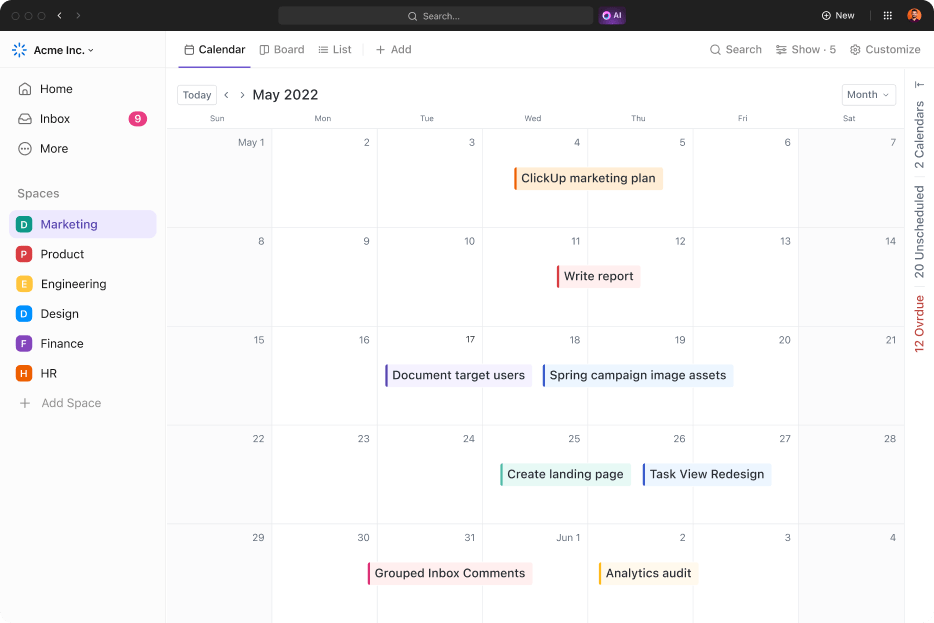
- ClickUp Reminders: Set reminders for important tasks and check off, snooze, reschedule, or delegate them based on your needs

- ClickUp Docs: Create documents detailing job descriptions, candidate personas, social media content, and copy for content like recruitment videos, stories, or photographs that showcase your company culture. These Docs allow real-time editing and commenting, allowing marketing and HR teams to collaborate easily
- ClickUp Dashboards: Use performance data from customizable dashboards to identify candidate engagement data, using that to adjust your campaign strategy over time

ClickUp streamlines cross-functional collaboration between marketing and HR teams during large-scale recruitment campaigns. Features like automated deadline reminders, real-time chat, and dedicated channels help keep everyone aligned and enable quick discussions.
Bonus: Ready to elevate your marketing game? Discover the 10 best campaign management software tools to streamline your strategies.
How to use ClickUp templates to implement recruitment strategies
ClickUp offers a variety of ready-to-use campaign and promotion templates that give recruiters a head start.
The Recruiting and Hiring Template is designed to simplify the hiring process, from job posting to onboarding.

Here’s how to make the most of it:
- Create a recruitment pipeline: Set up stages for your recruitment process, such as Sourcing, Screening, Interviewing, and Offer, and move candidates seamlessly through each stage, providing a clear overview of where each candidate stands
- Assign responsibilities: Assign tasks to team members for each stage of the process. Use the template’s task assignments and due dates to ensure everyone’s aware of their responsibilities and deadlines
- Centralize candidate information: Store all candidate details, resumes, and interview feedback in one place
The Campaign and Promotion Management Template can also be adapted for recruitment campaigns, especially when promoting job openings.

With this template, you can:
- Plan your campaign: Outline promotional activities you’ll use to attract candidates, such as social media posts, job board listings, and email campaigns, and set timelines for each
- Manage content creation: Create Tasks for writing job descriptions, designing promotional graphics, and crafting social media posts. Assign these Tasks to team members and track their progress
- Monitor engagement: Use the template to track the performance of your promotional efforts. This helps you understand which platforms are most effective for reaching your specific target audience and allows you to adjust your recruitment strategy incrementally
The Campaign Tracking and Analytics Template is perfect for monitoring the performance of your recruitment campaigns. The visual reports and dashboards make sharing insights with your team and making data-driven decisions easy.

Here’s how you can leverage it:
- Set clear goals: Start by defining the key objectives of your recruitment campaign, such as the number of positions to fill, the ideal candidate profile, and the target hiring timeline
- Track campaign metrics: Use the template to monitor important metrics like application rates, candidate sources, and conversion rates at each stage of the recruitment funnel. A robust recruitment pipeline requires the same rigor as a CRM campaign
- Analyze and optimize: Regularly review the analytics provided by the template to identify trends and bottlenecks. For instance, if you notice a drop-off at the interview stage, you can investigate and address potential issues
Summarize this article for me pleaseMeasuring and Tracking the Success of Recruitment Campaigns
Recruitment teams should continuously refine their marketing strategies and learn from past experiences. Analyzing each campaign using qualitative and quantitative metrics is important to see what works and what doesn’t.
Some qualitative metrics are:
- Quality of new hires
- Retention/attrition rates
- Employer brand perception
- Hiring manager feedback
- Candidate experience surveys
Quantitative metrics include:
- Time to fill
- Cost per hire
- Source of hire
- Conversion rates
By analyzing metrics across various campaigns, you can gain insights into what works for your organization and what doesn’t. Use these insights to refine your next campaign and keep tweaking your strategy.
Summarize this article for me pleaseCreative Recruitment Campaign Ideas for Inspiration
The best campaigns are those that grab your target audience’s attention from the start. They’re unconventional, unexpected, and fun for everyone: candidates, recruiters, and even onlookers or customers.
Campaigns like these create a domino effect: they not only attract eager job seekers right away but also leave a lasting impression for future hires.
Here are some examples of intriguing recruitment campaigns run by companies:
IKEA’s “Career Instructions” campaign
IKEA’s “Career Instructions” campaign placed ‘career instructions’ inside the box of IKEA products—a quick guide to help customers apply to IKEA and ‘assemble their future.’
This creative approach aligned well with IKEA’s playful and innovative culture and tapped into a built-in source of talent: customers who enjoy DIY projects and a Scandinavian aesthetic.
The results? IKEA received 4285 applications and 280 hires with $0 media spend.

Deloitte’s “Will You Fit into Deloitte?” campaign
Deloitte’s “Will You Fit into Deloitte?” campaign used gamification to attract recent graduates. They created a gamified video that introduced viewers to the Deloitte culture and service lines. Viewers could click on choice points within the video, play-act at being new Deloitte employees, and pick various courses of action to get ahead in the game.
Toggl’s “10 minutes, 10 questions” campaign
Toggl created a skills test challenge and advertised it all over social media, offering a free t-shirt to candidates who achieved high scores. This simple but quick approach was very successful in reaching a large pool of passive candidates and increasing Toggl’s brand awareness.
Google’s “Puzzle on a Billboard” campaign

Google placed a billboard in Silicon Valley posing a complex mathematical question. The answer, 7427466391.com, led to another webpage with a new equation. Solving that would lead to a page on Google Labs, where recruiters lay waiting!
As Google themselves put it, their innovative campaign, aimed at recruiting engineers, helped them reduce the “signal-to-noise” ratio—it attracted promising candidates while filtering out the ones who didn’t quite fit the bill.
Summarize this article for me pleaseRisks and Hurdles in Recruitment Campaigns
Once your recruitment campaign is underway, you may encounter hurdles that can hinder your progress. From miscommunication within the team to unexpected changes in candidate interest, recognizing these challenges is key to adapting your strategy and keeping your campaign on track.
Common risks faced by recruitment campaigns include:
- Budget overruns: Spending more than planned without achieving the desired results
- Low response rates: Fewer applications than expected
- Misalignment with company values: Campaign messages that do not align with company values
Recognizing these risks early on can help prevent setbacks and ensure a more successful recruitment outcome.
Summarize this article for me pleaseAce your Recruitment Game with ClickUp
A solid recruitment strategy is essential for attracting top talent and boosting your company’s brand reputation. With the right tactics in place, you can create engaging recruitment campaigns that truly resonate with potential candidates.
The best campaigns involve careful planning, strategic execution, and continuous optimization—elements that ClickUp excels at by providing a comprehensive recruiting tech stack.
By leveraging ClickUp’s robust feature offerings, you can easily understand your target audience, craft compelling messages, manage your campaigns, and measure your results precisely.
Don’t just take our word for it. Sign up for your free ClickUp account today!


Everything you need to stay organized and get work done.

Recent Articles
Managing Creative Teams: How to Lead Your Team to Success 
Managing Creative Teams: How to Lead Your Team to Success
20 SMART HR Goals & Examples for Real Results in 2026
20 SMART HR Goals & Examples for Real Results in 2026
25 Employee Satisfaction Survey Questions to Pulse Check Your Team
25 Employee Satisfaction Survey Questions to Pulse Check Your Team
