
Sorry, there were no results found for “”
Sorry, there were no results found for “”
Sorry, there were no results found for “”
Ever felt overwhelmed trying to condense mountains of information into a single, reader-friendly document?
Learning how to make a fact sheet can be the ultimate solution. Whether you’re launching a product, explaining a service, or presenting key data, fact sheets cut through the noise, delivering essential details in a clear and digestible format.
In this blog, we’ll explore everything you need to know about crafting fact sheets, diving into proven practices, and the ultimate real-world examples.
A fact sheet is a streamlined document that provides core information about a specific topic, product, service, or organization. Usually a one-page document, it’s designed to deliver essential details quickly, allowing readers to grasp the main points at a glance.
Typically, a fact sheet template includes:
Primarily used in business and communication, fact sheets maintain a clear and consistent structure, making information accessible and memorable.
Fact sheets are essential for clear, quick communication and are especially effective in situations requiring precise, high-impact information delivery.
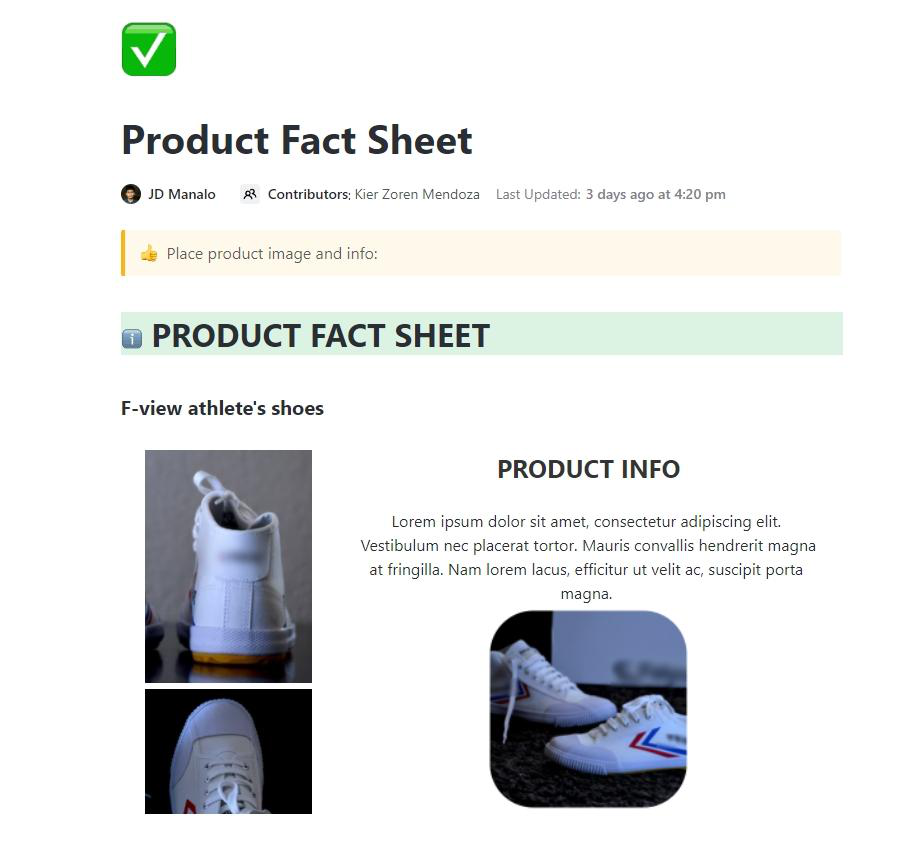
🎯Want to create a Fact Sheet but can’t quite wrap your head around what you should include? No worries, ClickUp has done the heavy lifting for you✨. ClickUp’s Fact Sheet Template helps you summarise products, services, or reports in one clear, skimmable page—no fluff, just facts.
Here are key instances when business professionals and communication specialists should consider using a fact sheet:
Fact sheets are powerful communication tools that distill essential information into a clear, easy-to-understand format. They play a vital role across multiple business functions to convey key points effectively.
Here’s why fact sheets matter:
Fact sheets break down complex information, making it accessible to various audiences. Through bullet points, graphics, and concise wording, they help readers quickly grasp crucial details without wading through lengthy explanations.
By providing standardized information, fact sheets ensure consistency in messaging across teams, departments, and external communications.
This uniformity helps maintain a cohesive brand voice and reduces misunderstandings, especially when the same fact sheet is shared with clients, media, or stakeholders.
Fact sheets offer a quick reference to relevant data for decision-makers, aiding in strategic planning and evaluations.
They provide a summary of key metrics, product features, or market insights—making it easier for leaders to review information and make informed choices without sifting through detailed reports.
Fact sheets streamline preparation for presentations, pitches, or meetings. They allow presenters to focus on the main points, facilitating more engaging and concise presentations. Audiences can follow along with printed or digital copies, reinforcing key messages.
Well-designed fact sheets communicate that an organization is organized, transparent, and professional.
Clear, structured information fosters trust, helping businesses display their knowledge and reliability to clients, partners, and investors.
Fact sheets are invaluable for communicating with potential or current investors. They provide a snapshot of the company’s financial health, growth metrics, and future goals, ensuring stakeholders have a clear understanding of the business. This concise format allows investors to quickly evaluate opportunities and stay informed about key developments.
Fact sheet templates are easy to distribute and share within teams, departments, or externally. Digital formats make them even more versatile, enabling remote teams to access up-to-date information instantly and enhancing collaboration.
Fact sheets hold a unique place in business for their ability to simplify, clarify, and communicate critical information quickly and professionally.
Creating fact sheets involves strategic content planning, clear design, and seamless collaboration. Using a powerful tool like ClickUp simplifies this process, with features designed to enhance fact sheet quality, from task management to real-time collaboration. Here’s a step-by-step guide:
💡Pro Tip: Using ClickUp Tasks helps you break down the fact sheet creation process into actionable steps. Assign tasks for gathering information, drafting a single-page document, creating design elements, and reviewing content, ensuring each team member knows their responsibilities and deadlines.
💡Pro Tip: With ClickUp Docs, teams can collaboratively draft and refine content within the platform. Real-time editing allows multiple users to contribute simultaneously, eliminating back-and-forth emails and ensuring everyone works with the most up-to-date version.
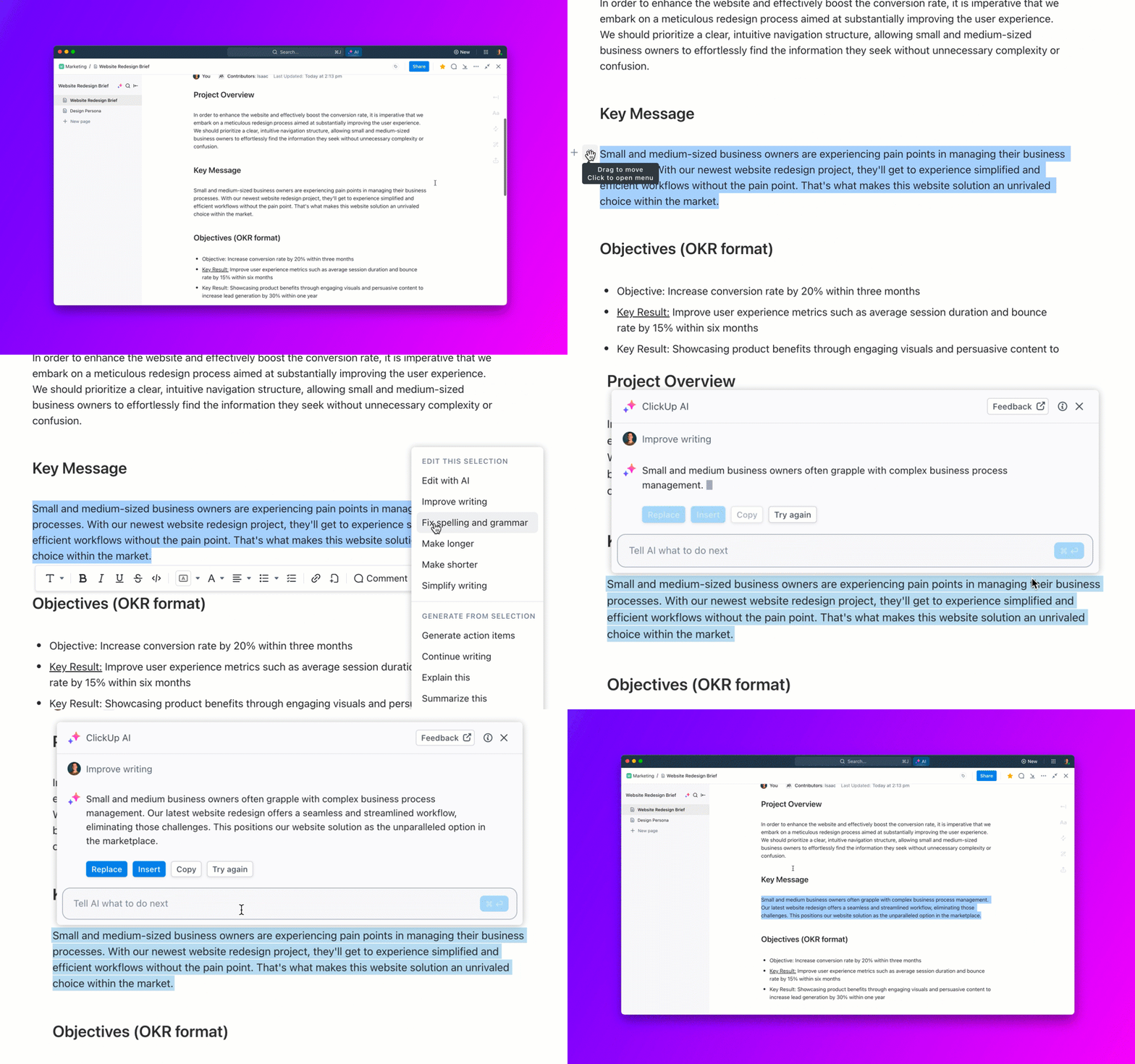
💡Pro Tip: ClickUp Brain, the integrated AI tool in the ClickUp platform, speeds up the writing process by helping you fine-tune language and tone, essential for fact sheets where clarity and conciseness are key.

💡Pro Tip: Are there specific types of fact sheets you must create frequently? Use a template!
ClickUp’s Fact Sheet Template simplifies the process of creating high-quality fact sheets by offering a ready-to-use framework. It is designed to help professionals present essential information clearly and effectively.
The template is a great asset for professionals as:
This template ensures every fact sheet you create is professional, polished, and perfectly suited for your communication goals.
💡Pro Tip: ClickUp Chat and ClickUp Assign Comments can help teams discuss edits, suggest changes, and resolve queries in real time. Plus, proofing and annotation in ClickUp enables you to leave comments directly on images, videos, and PDF files

📮ClickUp Insight: ClickUp’s meeting effectiveness survey found that 18% of respondents use comments in documents for asynchronous collaboration. While this reduces meeting time, scattered comments often lack accountability, leaving action items untracked and incomplete.
ClickUp Docs transforms document collaboration with Assigned Comments. Each comment can be assigned to a specific team member, turning passive feedback into actionable tasks. Build accountability into your document workflows!
💫 Real Results: Teams using ClickUp’s meeting management features report a whopping 50% reduction in unnecessary conversations and meetings!
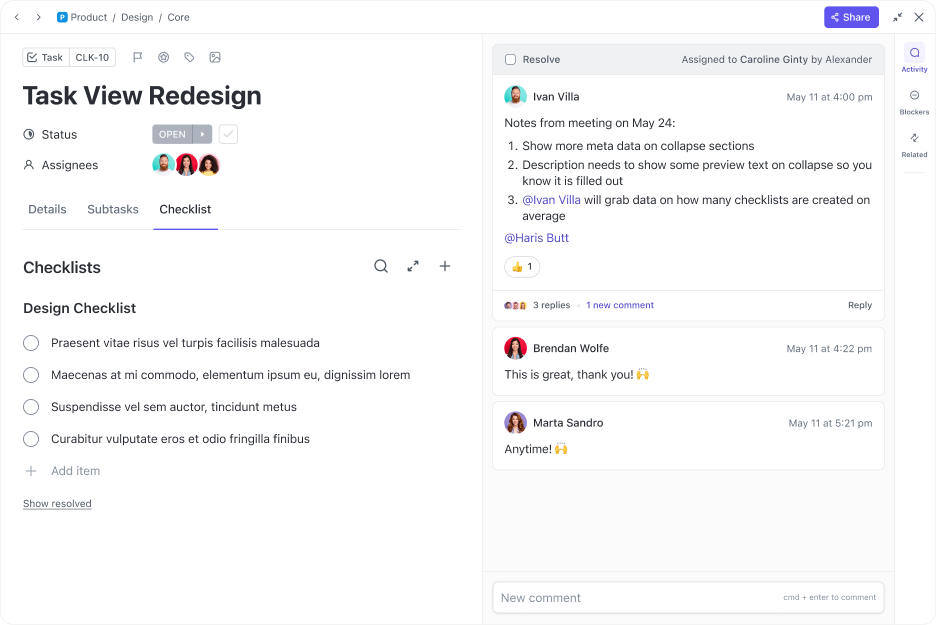
💡Pro Tip: ClickUp Task Checklist ensures that every step of your fact sheet creation is accounted for. From drafting to final edits, use checklists to track progress and confirm that all key details are reviewed before completion.
A polished and well-organized fact sheet is essential for leaving a professional and lasting impression, regardless of your chosen distribution method.
Design plays a critical role in understanding how to make a fact sheet effective. To create a clear and engaging fact sheet, consider these best practices for layout, structure, and presentation:
Besides these key aspects, a good fact sheet will include a solid but brief introduction, a clear message, and visual appeal. This ensures that the intended audience can quickly and easily access the most vital information.
Studying real-life examples can provide valuable insights into creating a fact sheet that captures attention and communicates effectively.
Here are a few highly effective fact sheet examples and what makes them successful:
When a company introduces a new product, a fact sheet focusing on key features, target audience, and competitive benefits is essential. A strong product fact sheet might include:
Often used in investor pitches or introductory meetings, a company fact sheet provides a snapshot of the business. Effective company fact sheets typically feature:
For conferences, seminars, or company events, a fact sheet can provide attendees with all the essential details in one place. An impactful event fact sheet includes:
Companies involved in sustainability initiatives may use a fact sheet to communicate their impact. This type of fact sheet generally includes:
Service-oriented businesses, such as consulting firms or agencies, can use fact sheets to outline their offerings. An effective service overview fact sheet might include:
Companies often create fact sheets to summarize important internal policies, especially during employee onboarding. A clear and useful internal policy fact sheet typically features:
Effective fact sheets stand out by clearly and succinctly providing essential information tailored to the intended audience’s needs.
Understanding how to make a fact sheet is essential, as these documents are powerful tools for delivering key messages with clarity and precision. Whether you’re introducing a product, summarizing research, or writing company pitches, a well-designed fact sheet can make a lasting impression.
It grabs attention, conveys critical details quickly, and ensures your message stands out. With the right approach, it can be your go-to tool for impactful communication. Start crafting better fact sheets effortlessly—sign up for ClickUp today!

Manasi Nair
Max 10min read
Manasi Nair
Max 12min read

Arya Dinesh
Max 12min read

© 2026 ClickUp