
Sorry, there were no results found for “”
Sorry, there were no results found for “”
Sorry, there were no results found for “”
Client onboarding software is the tool a business uses to take a new client from a signed contract to the first real win. It collects documents, assigns tasks, and gives the client visibility in one place, rather than scattered emails and spreadsheets.
It falls into four categories.
Delivery platforms (Rocketlane, GUIDEcx) run onboarding as a billable project. Intake collectors (Content Snare, Clustdoc) chase documents so you don’t have to. Client portals (Dock, Moxo) give the customer a branded view of progress. Process and workspace engines (Process Street, ClickUp) enforce consistency or keep client onboarding and delivery in the same place.
This guide covers eight tools matched to where onboarding actually fails: intake, delivery, compliance, or the handoff into ongoing work. Each gets honest pricing, real review scores, and one clear limitation.
| Tool | Best for | Standout feature | Pricing* | Where it taps out |
|---|---|---|---|---|
| Rocketlane | Professional services teams that bill clients for delivery work | Its CRM-to-project handoff and SmartFill draft the onboarding plan, forms, and contracts the moment a deal closes | Paid plans start at $19/user/mo | Advanced reporting filters fall short for analysts who need to slice project data by many custom fields |
| GUIDEcx | Teams that onboard many clients from one standardized playbook | Its AI reads live project data to flag at-risk customers early and point your team to the next action | Custom pricing | Search hides projects with no recent updates, so dormant onboardings stay buried until you clear the filter |
| ClickUp | Teams that run onboarding and delivery inside the same workspace | Its Forms and Automations spin up a full onboarding project from a template, then keep delivery running in the same Space | Free forever; paid plans available | Teams from single-purpose tools spend their first week or two configuring Spaces, views, and automations |
| Dock | Client-facing CSMs who onboard through a no-login portal | Its portal links let the customer track progress without ever creating an account | Free; paid plans start at $350/team/mo | Limited native integrations force workarounds for teams that lean on apps Dock cannot connect to yet |
| Clustdoc | Teams onboarding clients in document-heavy, regulated fields | Its audit trail timestamps every upload, edit, and approval with the reviewer’s name for compliance | Paid plans start at $190/team/mo | Field validation rules sometimes drop off on their own, requiring manual fixes |
| Content Snare | Accounting and bookkeeping firms collecting recurring client documents | Its AI drafts a full questionnaire from a PDF upload, then auto-reminds clients until they finish | Paid plans start at $35/team/mo | Templates live in one flat list with no tags or folders, so a large library gets hard to navigate |
| Process Street | Firms running cross-functional onboarding under compliance rules | Its conditional logic trims the checklist by deal type, so a small client skips steps, and a complex one must clear them | Custom pricing | Building branching rules takes trial and error; new users fight the setup before it clicks |
| Moxo | Teams onboarding clients, vendors, and partners across multiple roles | Its persona-based flows assign each step to a specific role, controlling who sees what at every stage | Free; paid plans start at $960/yearly | No built-in time tracking on tasks, so teams that bill by duration log hours elsewhere |
Our editorial team follows a transparent, research-backed, and vendor-neutral process, so you can trust that our recommendations are based on real product value.
Here’s a detailed rundown of how we review software at ClickUp.
When picking the client onboarding tool that’s right for you, evaluate these five features: intake collection, client-facing visibility, automation, integrations, and fit to where you break. Here’s what each one buys you:
Before you weigh any feature, settle one thing: what kind of client onboarding software are you buying? The answer to that decides how much your client has to do, where the tool stops helping, and what you actually pay for. Four approaches cover this market, and each fits a different failure point.
| Approach | Ideal fit | Main trade-off | Tools |
|---|---|---|---|
| Delivery platform | Teams running onboarding as a multi-week, billable project | Client must log in and learn a portal | Rocketlane, GUIDEcx |
| Intake collector | Teams whose bottleneck is getting documents out of the client | Collects files, not project work; no delivery tracking | Content Snare, Clustdoc |
| Client portal | Teams that need the client to self-serve from a branded link | Great client experience, shallow integration depth | Dock, Moxo |
| Process/workspace engine | Teams that need consistent steps or want onboarding and delivery in one place | Broader tools with a setup cost upfront | Process Street, ClickUp |
Eight client onboarding tools made this list: Rocketlane, GUIDEcx, ClickUp, Dock, Clustdoc, Content Snare, Process Street, and Moxo.
Every customer onboarding software below gets the same treatment: who it fits, what it does best, where it taps out, and what it costs.
A closed deal in Rocketlane’s CRM automatically launches the matching onboarding project. Your team starts with a plan already in place, rather than building one from scratch. SmartFill drafts early project details, forms, and contracts, reducing setup work at kickoff.
From there, the client works alongside your team in a shared portal, reducing your need to explain where things stand. They open their onboarding plan, read your messages, and track each task. All this happens while your project managers and customer success staff move it toward go-live.
It also keeps that onboarding on schedule for you. Automated reminders follow up on open steps, and CSAT surveys ask how they feel at each stage. Which means you catch a stalled onboarding before it slows.
When Rocketlane is not an ideal choice: Rocketlane can leave a heavy reporting team wanting more. Reviewers say it drops some advanced filters. So an analyst who wants to sort project data by many custom fields cannot build every view inside the tool.
Skip Rocketlane if: Report flexibility sits at the top of your must-have list when you pick an onboarding tool.
Hear about Rocketlane from this G2 reviewer:
Rocketlane makes client onboarding much more structured and transparent. The ability to share a dedicated project portal with clients, track milestones collaboratively, and keep all communication in one place has significantly reduced back-and-forth emails. The task templates save a lot of setup time for recurring onboarding projects, and clients appreciate the visibility it gives them on progress.
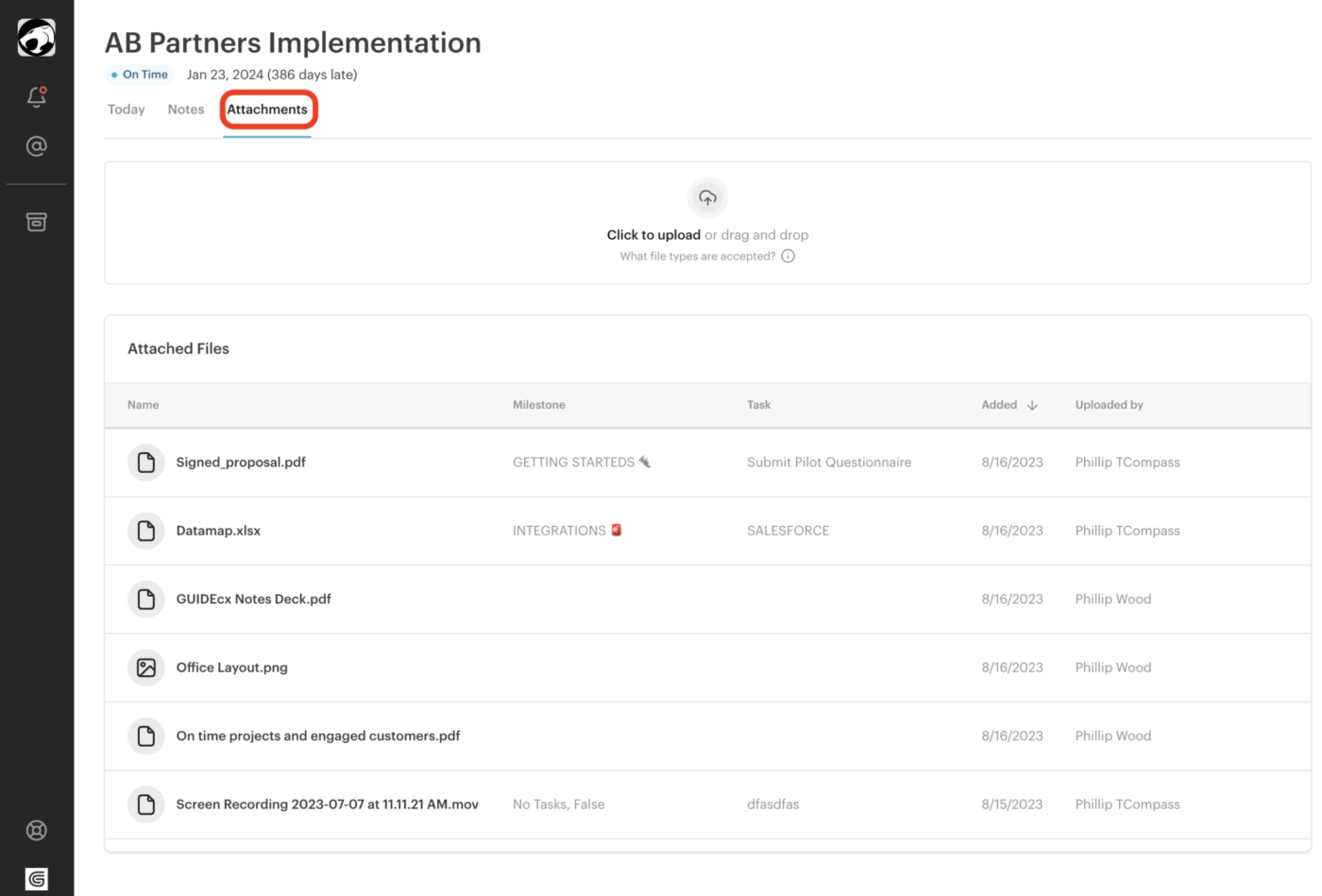
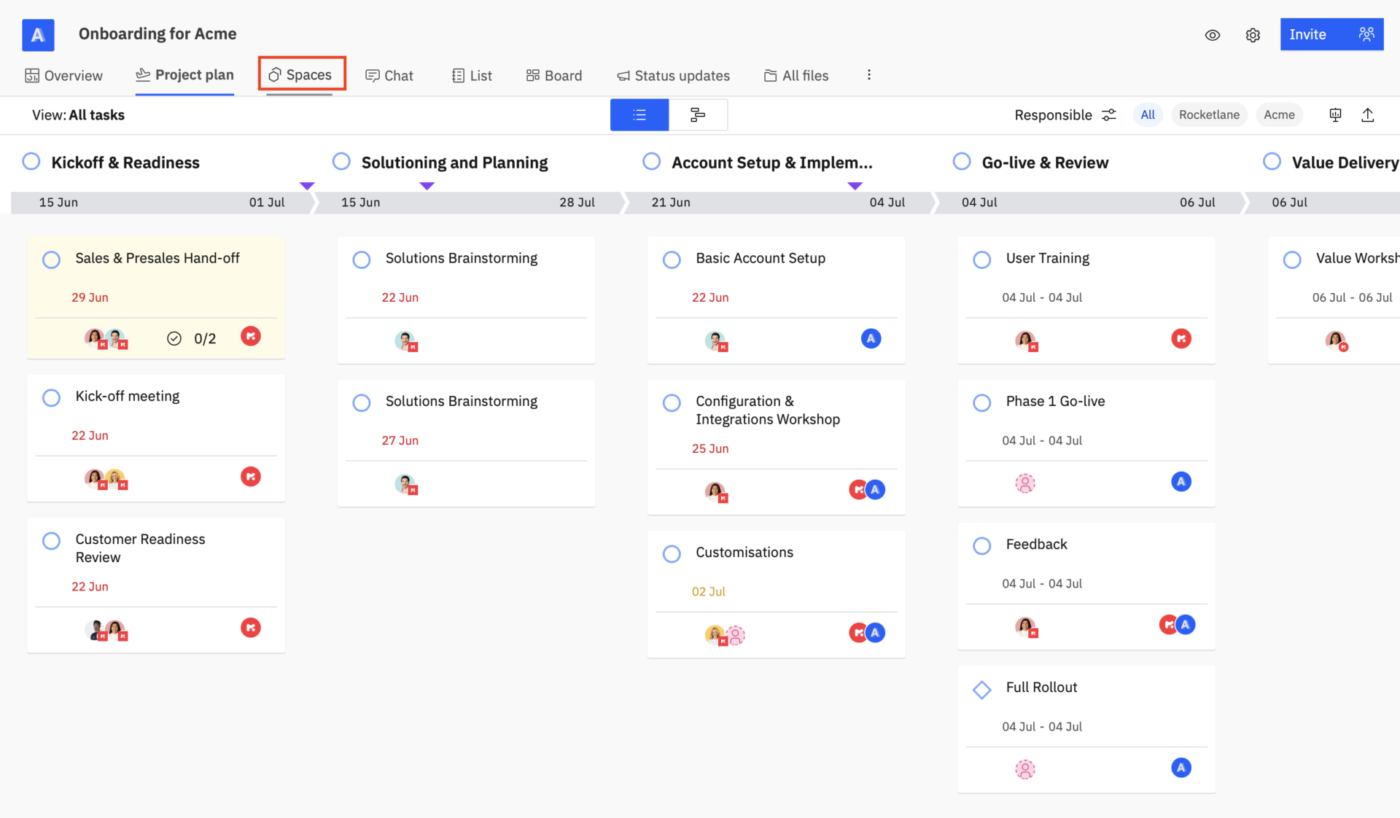
If onboarding varies across all your clients, GUIDEcx can help. Your team starts each new customer from a dynamic project template. The roadmap stays consistent from one client to the next, but still bends to a different product line or setup path.
Once a project is live, you and the customer work from the same plan. You pick the view that fits the moment. For example, a List view to run down tasks, a Gantt view to read the timeline, or a Board view to see stages at a glance. Inside the Task view, your project managers group tasks, assign them to the customer’s own people, and add watchers so everyone knows who owns each step.
GUIDEcx also pushes the work forward on its own. Its AI reads your real project data to flag a customer at risk early and point your team to the next action.
When GUIDEcx is not an ideal choice: GUIDEcx leans toward your active work by default. Its search hides projects with no recent updates, so an older or stalled onboarding stays out of view until someone clears the filter by hand.
Skip GUIDEcx if: Fast access to long-dormant onboarding projects is an important requirement.
See how this G2 reviewer is using GUIDEcx as a customer onboarding software:
Guide CX is providing our Onboarding Team a streamlined process with the integrations to other project tools that our organization utilizes. Guide CX also will provide the a organized customer view of the status and dependencies of what is next in line on the to do list.
Guide CX staff has been excellent in walking our team through the implementation of the software.
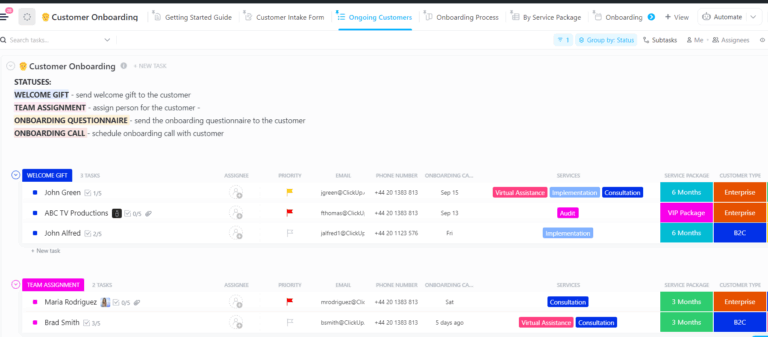
ClickUp is an all-in-one work platform. It builds the onboarding flow with ClickUp Forms, Docs, and Automations. And the work that follows, like project delivery, reporting, retainers, etc., stays in the same workspace. The client never notices a seam because there isn’t one.
Here’s how it works: a new client submits an intake form. That form triggers ClickUp Automations that spin up a full-onboarding project from a saved template, assign each task by role, set due dates, and notify the account owner. Your team works through the checklist while the client tracks progress from a shared view you control with guest permissions.
They see what you want them to see: their tasks, timelines, and uploaded assets. Internal notes stay hidden.
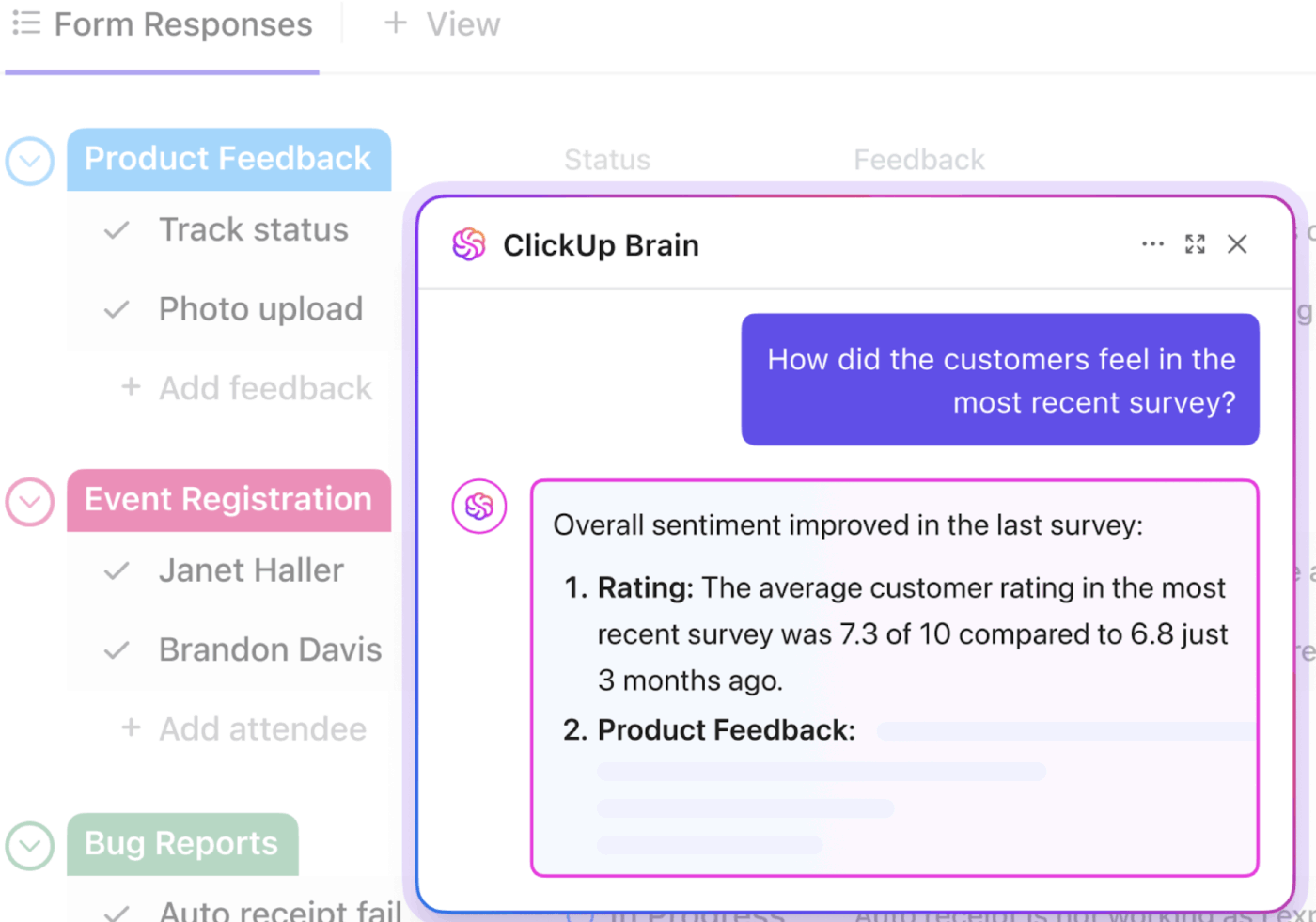
Once onboarding wraps up, the client’s Space does not go into a dormant state. It becomes the home for active delivery. ClickUp Brain drafts kickoff agendas, summarizes client briefs, and flags a stalled task before it costs you a check-in call. And ClickUp Dashboards show each client’s onboarding stage, time-to-value, and open blockers on a single screen. Your ops lead catches a slow start at day three, not day thirty.
When ClickUp is not an ideal choice: ClickUp is a full-featured AI workspace, not a single-purpose onboarding portal. Teams coming from a tool that does one thing well will spend their first week or two configuring Spaces, views, and automations, before the system runs on its own.
Skip ClickUp if: You need a plug-and-play onboarding tool with zero configuration and have no interest in running post-onboarding work in the same platform.
See what ClickUp does for this G2 reviewer:
Considering all the features it includes—such as task management, integrations, collaboration tools, documentation, and AI assistance—the pricing is very reasonable. Another feature I find very useful is using ClickUp as a training resource for my teammates. I can create documentation, organize processes, and share step-by-step instructions, making onboarding and knowledge sharing much easier. Overall, ClickUp makes my daily work more organized, collaborative, and productive.
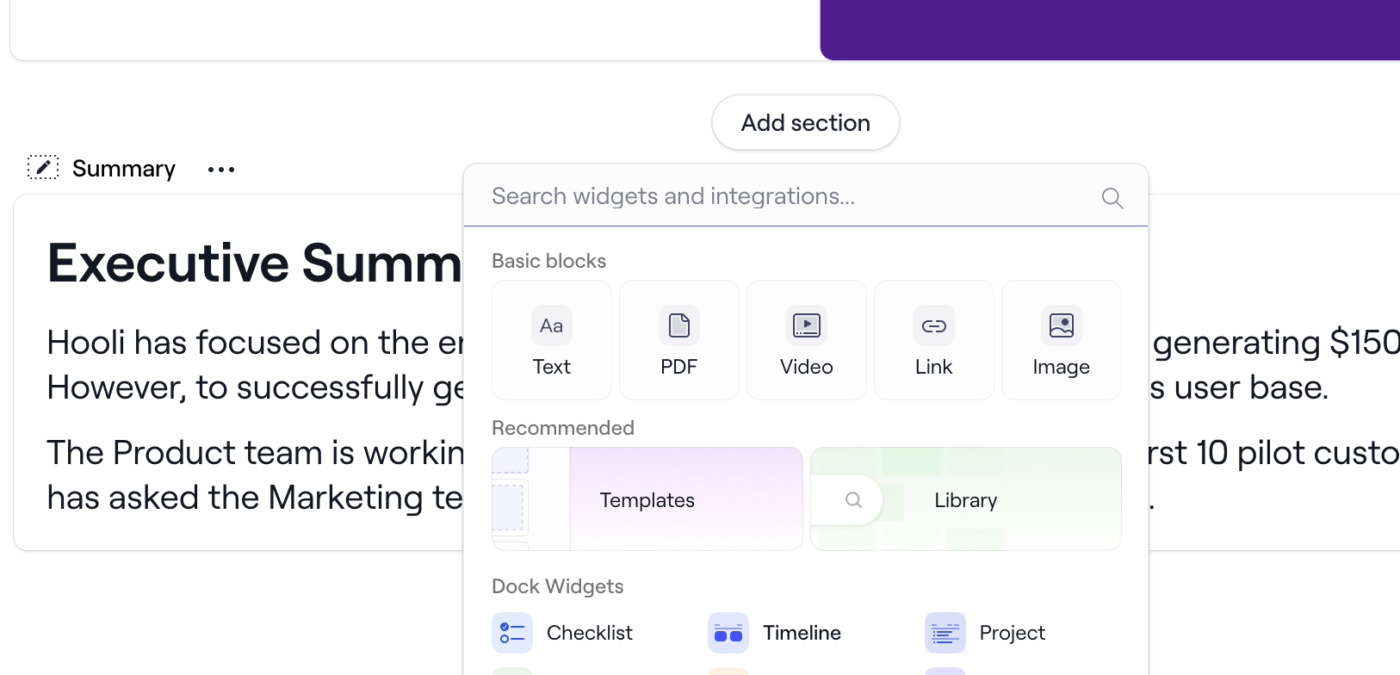
Dock replaces the email threads and shared spreadsheets that most teams use to onboard a customer. Build the onboarding portal once as a company template, and each new customer gets a copy with their own logo and contact details filled in.
The customer opens the portal via a single link and progresses through a success plan in phases, tasks, and due dates. Dock reveals each phase only as they finish the one before it, so they always see the next step and nothing past it.
One choice separates this customer onboarding software from most portals: the client never creates an account to get in. As they move, Dock tracks which stakeholders open the portal and what they engage with. It tells who is on track for renewal and who needs a nudge before the contract comes up.
When Dock is not an ideal choice: Dock has limited integrations. Reviewers say they sometimes work around a tool Dock does not yet link to, which adds a manual step for teams that lean on those apps every day.
Skip Dock if: Your onboarding relies on a specific app that Dock cannot connect to natively yet.
Here’s why this G2 reviewer likes Dock:
Since many clients don’t have experience with onboarding platforms, I can keep things very simple and easy for them to work through in Dock. I also like that I get notifications for all tasks and sub-tasks client enters so I can get in Dock quickly and start working on it. My most favourite thing is that my clients are not required to setup an account for Dock which can be one of the biggest blockers for some of my clients if they are not very tech-savy.
Here is a quick visual walkthrough of what a strong client-facing portal looks like in practice:
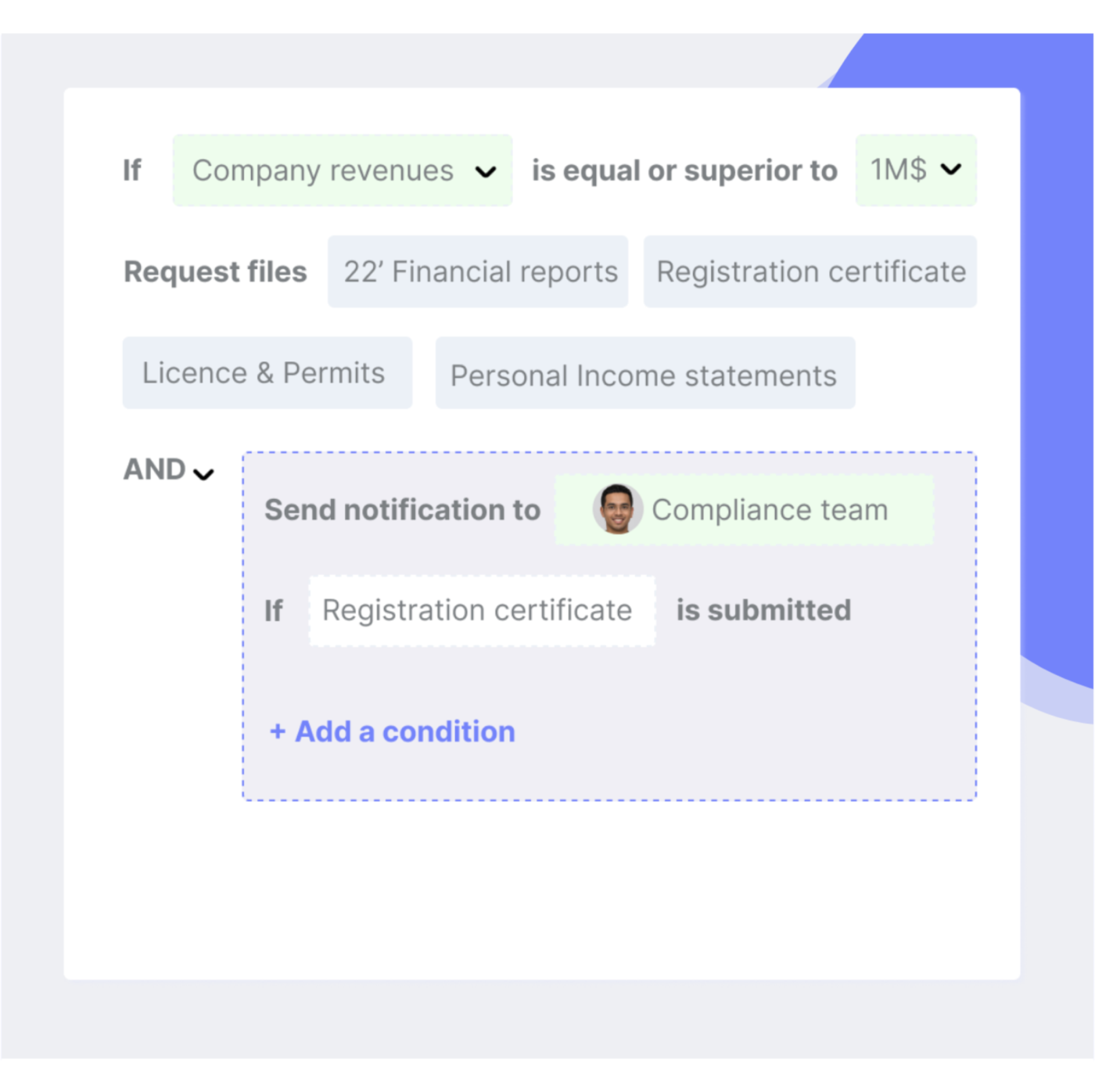
A missing tax record or ID can delay a loan or a vendor deal for days. Clustdoc replaces that broken system with a branded portal where your client uploads files, completes forms, and signs contracts in a set order.
Build the flow once with a drag-and-drop form builder, then reuse it for every client of the same type. Conditional logic decides what each client sees, so an LLC and a sole trader never get the same checklist. The customer can pause and pick up later without losing progress, which helps when the paperwork takes days to gather.
Approvals and records set Clustdoc apart from a plain form. A team member approves or rejects each file before the flow moves on. Every upload, edit, and approval is logged in an audit trail with a timestamp and the reviewer’s name. So when a regulator asks who signed what and when, your answer already sits in the log.
When Clustdoc is not an ideal choice: Some Clustdoc reviewers report that field rules they set, such as a required nine-digit routing number, drop off on their own and need to be fixed.
Skip Clustdoc if: Your team has no engineering time to keep form logic working and cannot take on stray debugging.
This Capterra reviewer highlighted which feature worked for them in Clustdoc:
The documents accept/reject feature is very handy, we used it for web development projects. Saved us so much time and hassle from back and forth emails. Secondly, the user interface is pretty tidy and finally the customer service is excellent.
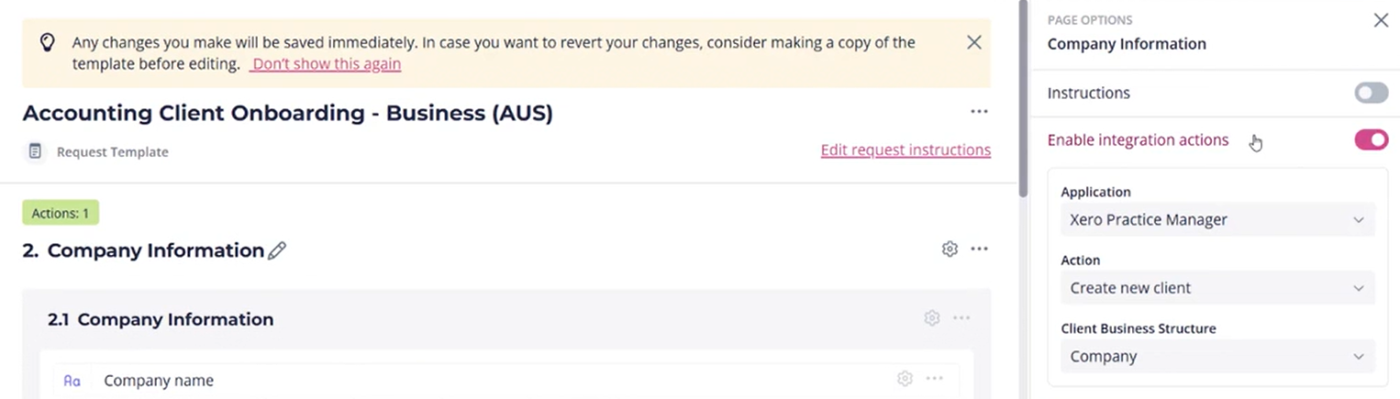
Get the right information and documents out of a new client using Content Snare. Describe what you need, or upload an old PDF form, and its AI drafts a full questionnaire with sections and field types already set. Save that as a template, and the next client of the same type can be set up in under a minute.
Anything they type saves as they go, so no one loses work halfway through. If a client sends the wrong file, reject that item and prompt them to fix it.
Automatic reminders do the chasing for you, nudging each client before a due date so you stop writing follow-up emails. For accounting and bookkeeping firms, this doubles as a compliance workflow. The client uploads an ID and takes a selfie. Then, Content Snare verifies the document, screens it against sanctions and PEP databases, and files the result beside their answers.
Note: This is the starting range for their custom pack. The final pricing is tailored to your firm’s needs once you choose a plan.
When Content Snare is not an ideal choice: It stores every custom request template in a single flat list. Reviewers who send many tailored requests say they cannot tag or folder them, so a busy user hunts for the right template and sometimes rebuilds one they already made.
Skip Content Snare if: Your team keeps a big library of custom templates and needs to tag or folder them to find the right one.
How this G2 reviewer feels after switching to Content Snare:
Content Snare is fantastic for its flexibility, ability to have multiple uses and the array of pre-built templates that come with it. We were using one piece of software for tax/accounting queries to clients and another piece of software for client onboarding. We are now able to use Content Snare to do both which provides a better experience for our clients.
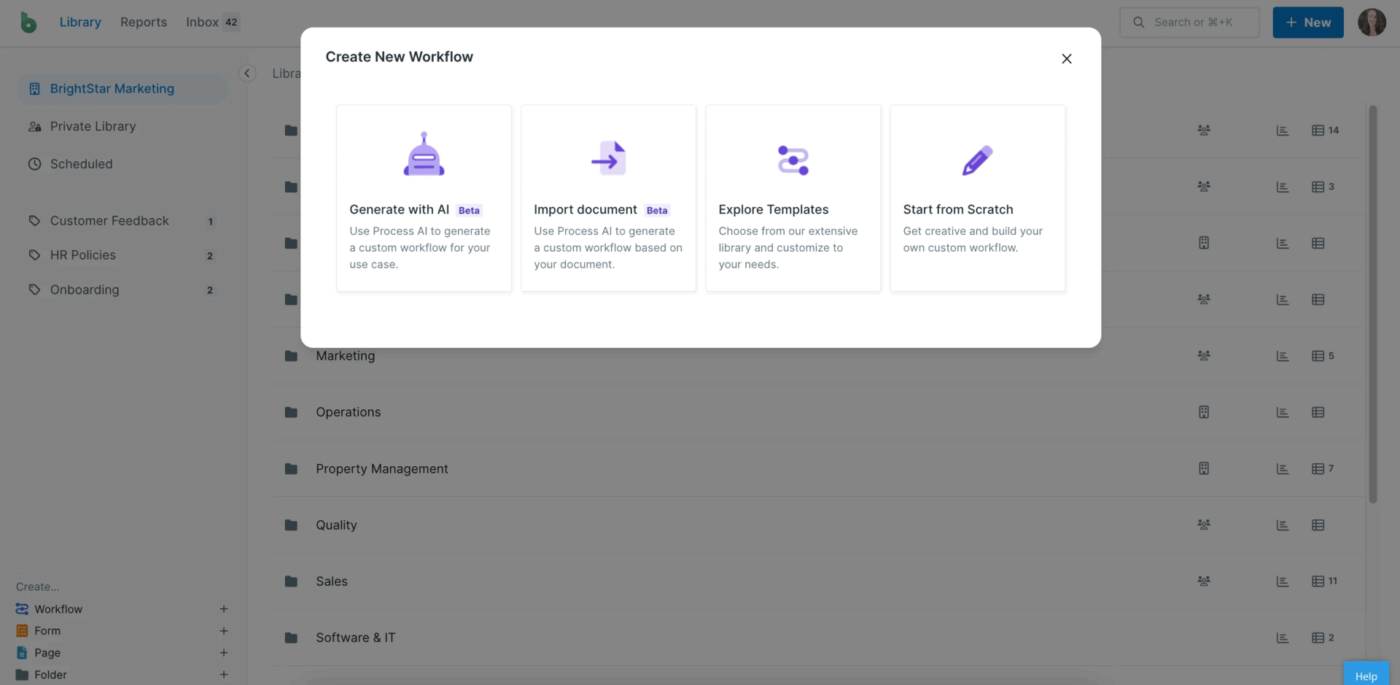
Onboarding a client touches sales, success, legal, and delivery, and one dropped handoff can stall the whole account. Process Street runs that handoff as a structured workflow.
A close-won deal in Salesforce launches the onboarding workflow automatically, built from a template that covers intake, setup, and kickoff. Each task lands with the role that owns it, sales, success, legal, or delivery, and a due date. Conditional logic trims the onboarding checklist to what the deal needs, so a small client skips the steps a complex one has to clear.
From there, the client moves through the steps in order. They fill in forms and upload documents. DocuSign captures each signature, and legal or financial steps stay locked to the roles cleared to see them. Cora, the built-in AI, watches the run and flags a late task or a missing approval before that delay reaches the client. Once done, the workflow hands the account to your delivery team in Jira or Asana.
When Process Street is not an ideal choice: In Process Street, building branching rules is trial-and-error, and a new user may find themselves fighting the setup before it clicks.
Skip Process Street if: Your onboarding needs heavy conditional branching and your team has no time to climb that learning curve.
This is what a G2 reviewer thinks about Process Street:
We used Process Street for many years for things like onboarding new clients, onboarding and offboarding users from our managed clients. You can have form fields, add conditional logic and approvals at key steps – the options are almost limitless! There are integrations via Zapier and native webhooks and we experimented with integrating Process Street with our PSA at the time.
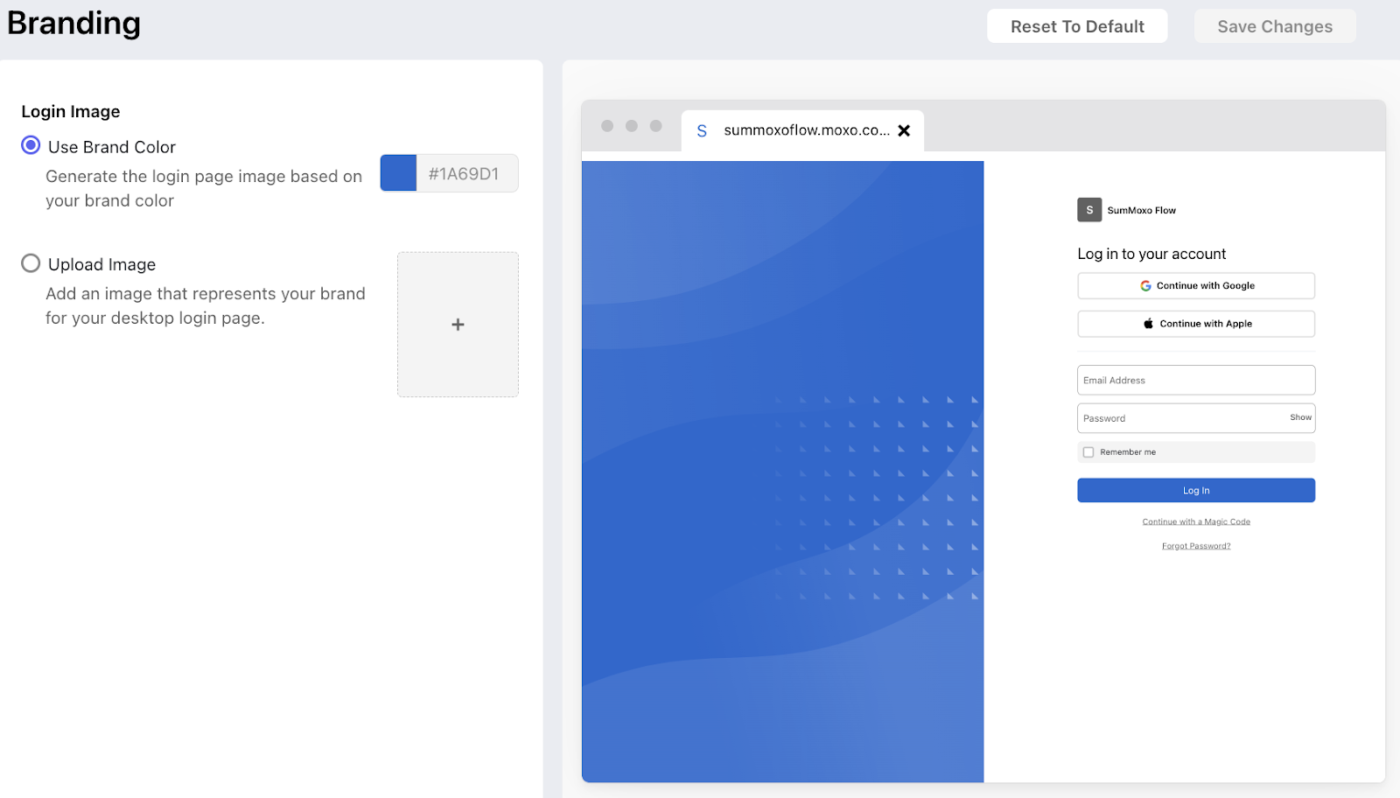
A new account often pulls in the client, their legal contact, and your own service team. Moxo gives each person a defined role in the same flow.
Each step is a business action: a form to fill, a file to request, a task, an approval, or an acknowledgment. Drop these into order and assign each one to a persona. For example, the client uploads reference photos and the legal contact signs the consent form, all on their own due dates. Personas also decide who sees what, which keeps a sensitive document in front of only the people cleared for it.
The client uses a branded portal or app to sign documents, track progress, and avoid emailing for status updates. Because any teammate can step into the flow where needed, onboarding keeps moving forward even when one owner is out.
When Moxo is not an ideal choice: Moxo tracks who does what, but it has no built-in timer for tasks. Reviewers who want to measure how long each onboarding step takes should log that time in a separate tool.
Skip Moxo if: Your team needs to time each onboarding task inside the platform for billing or duration reports.
Hear about Moxo from this G2 reviewer:
We currently use the Moxo app to communicate with some of our clients, sharing updates and collateral with them. They’re even able to sign their onboarding documents through the app when they join their brokerage, which is incredibly useful.
A landmark Harvard Business School study proved a counterintuitive truth about human psychology: we place a much higher value on things we help create.
Known as the IKEA Effect: When Labor Leads to Love, this research explains why stripping all effort out of client onboarding actively hurts product adoption. Researchers Michael Norton, Daniel Mochon, and Dan Ariely set out to measure how personal effort impacts value. They asked participants to fold amateur origami cranes and frogs, then place bids to buy their own work.
Participants who folded their own amateur origami bid around 23 cents to keep it, while neutral buyers looking at the same crumpled cranes offered about 5 cents. The builders valued their own flawed work at the same rate as what people paid for origami folded by experts. A follow-up study with flat-pack storage boxes found the same gap.
The effect has a hard limit that the researchers explicitly stated. Labor only creates value when the task is finished. Participants who built something and then took it apart, or who never completed it, showed no ‘IKEA effect’ at all, indicating that effort that ends in failure produces frustration, not attachment.
That caveat is the whole design brief for onboarding. Good client onboarding software should handle every step where client effort yields no results: reminder emails, intake chasing, status updates, document collection, and task assignment.
What you protect is the effort that pays off. Have the client build their first live project rather than receiving a pre-configured one. Make connecting their own data and inviting their own team a milestone they clear, not a setup task you complete on their behalf. Then, guide them well enough that they actually finish, because a client stranded halfway through a configuration flow is worse off than one you set up entirely.
In summary: automate the busywork, keep the building.
When you hand a client a fully automated, pre-configured account, you are giving them a pre-assembled table. They didn’t build it, so they may not care as much about it. When they hit a minor bump in month three, they cancel.
To build long-term clients, your onboarding needs ‘good friction’. You need to make your client assemble the furniture alongside you:
Takeaway: You don’t need a passive, automated customer intake process that does all the work for the user. You need a structured, guided effort that lets your client build psychological equity in your tool from day one.
Four real-world insights separate great onboarding software from sales hype: passwordless intake, executive seat pricing, personal touchpoints, and two-way CRM syncs. Here is what team leaders on r/CustomerSuccess say actually matters in practice:
Eight buyer profiles cover almost every team: the professional services firm, the multi-stakeholder SaaS company, the all-in-one workspace team, the login-averse CS team, the regulated document collector, the file-chasing accounting firm, the consistency-obsessed ops lead, and the brand-first consultancy.
Find yourself below, then shortlist from there.
Pro Tip: Still torn? Pick the tool that matches who you are today, not who you plan to be next quarter. Migration is cheaper than months of low product adoption.
When assessing client onboarding tools, compare approaches first, then feature checklists. Whether a tool runs your onboarding as a project, collects documents, provides a client portal, or enforces a process matters far more than how many integrations it lists. That one decision sets your client’s first-week experience and your team’s ongoing workload.
Settle the approach question against your failure point and budget. Then score the finalists on three metrics: time from signed contract to first client win, percentage of clients who complete onboarding without manual chasing, and internal hours spent per onboarding. Set that baseline before rollout so you catch a stalled account in days instead of months.
The bottom line: No tool wins outright. Rocketlane and GUIDEcx go deepest on delivery. Clustdoc and Content Snare own intake. Dock and Moxo own the client experience. Process Street locks consistency. But if onboarding keeps bleeding into delivery, docs, and reporting across five disconnected tools, no amount of category-picking fixes that. Instead, put the work where the rest of the work already lives. Get started with ClickUp for free.
Most client onboarding software runs from about $19 per user/month at the low end to $350+ per month for team plans, and several vendors are quote-only. Rocketlane starts at $19/user/month; ClickUp is free to start, with paid plans from $7/user/month; and Dock’s Standard plan is $350/month for 5 users. GUIDEcx and Process Street are sales-led, so budget for a demo before you see a number.
Dock and GUIDEcx both sync natively with Salesforce and HubSpot, making them the safest picks if your onboarding data lives in a CRM. GUIDEcx also connects to Slack, Jira, and Zendesk, while Clustdoc offers 1,500+ integrations via connectors. ClickUp integrates with both CRMs and adds Forms and Automations, so intake data becomes automatically trackable work. Confirm the specific objects each tool syncs before you commit.
There is no single best; it depends on where your onboarding breaks. Rocketlane and GUIDEcx are strongest for project-based delivery; Clustdoc and Content Snare for document collection; Dock and Moxo for client portals; and ClickUp for teams that want onboarding and ongoing work in one workspace.
Yes, there are free customer onboarding software. Dock offers a usable free tier, and ClickUp has a Free Forever plan you can use to build onboarding forms, a client-facing view, and automations. Most other tools offer time-limited free trials rather than permanent free plans.
No, client onboarding cannot and should not be fully automated. You should only automate the repetitive parts. Tools can automate intake forms, reminders, task assignment, and status updates, and AI can draft questionnaires and flag where clients stall. Keep the high-trust moments, like kickoff calls, milestone check-ins, and exception handling, human, and automate the routine steps around them.
A typical client onboarding process runs through five stages: intake and document collection, account and system setup, kickoff and expectation-setting, guided first-value delivery, and handoff to ongoing account management. The software’s job is to run and track these stages, not define them. Map your own sequence first, then pick a tool that fits where it breaks.
It depends on complexity: a document-collection onboarding can close in days, while a multi-week implementation for an enterprise account can run 30 to 90 days. The metric that matters isn’t calendar time but time-to-first-value: how fast the client reaches a meaningful win. Track it as a baseline before rollout so you can catch a stalled account in days instead of at the quarterly review.
Yes, if you onboard more than two or three clients a month and lose hours to email chasing, then consider getting client onboarding software. A lightweight tool (Content Snare, Dock, or ClickUp’s free plan) replaces the manual back-and-forth with a single guided intake flow, which pays off quickly once the admin time exceeds the subscription cost. Solo operators with rare, one-off clients can usually stick with templates and a shared folder.

Manasi Nair
Max 22min read
Manasi Nair
Max 23min read
Manasi Nair
Max 29min read

© 2026 ClickUp




