Sorry, there were no results found for “”
Sorry, there were no results found for “”
Sorry, there were no results found for “”
Disclaimer: This article is intended to provide information on tools and strategies to overcome procrastination. It is not intended to be a substitute for professional medical advice, diagnosis, or treatment of ADHD or any other health condition.
Your most brilliant work is hiding behind your most dreaded task.
Yet here you are—replying to emails, organizing files, and tackling every minor task instead of the one that really matters. 📚
This isn’t laziness—it’s productive procrastination, the art of avoiding important tasks by performing other productive tasks with impressive enthusiasm. Many of us can probably relate. 🥲
But being a productive procrastinator doesn’t mean you’re unmotivated; it often means your brain is choosing the safest-feeling path forward.
So, what makes this pattern so alluring?
Unlike Netflix binges, productive procrastination feels like you’re managing work responsibly. Each completed task delivers a small sense of accomplishment that masks the anxiety of what you’re avoiding.
In this guide, we’ll explain why your brain defaults to this pattern (especially with ADHD), and how ClickUp can help you turn these habits into real progress, without guilt. 🌱
✨ Fun fact: Productive procrastination often appears right before a breakthrough. Your brain’s brewing something—give it a minute.
Productive procrastination involves avoiding high-priority, meaningful tasks by tackling smaller, easier ones. It’s not laziness but often a response to overwhelm, perfectionism, or executive dysfunction (especially in ADHD).
While it can stall real progress, with the right strategies, it can become a bridge—not a barrier.
🎯 What helps:
✨ The goal isn’t to fight procrastination—it’s to work with it gently.
🛠️ Tools like ClickUp make it easier to turn scattered effort into steady progress, with features like visual boards, ADHD-friendly templates, time tracking, and ClickUp Brain to help you start without the pressure.
Build momentum your way, and let every small win carry you toward the work that truly matters. 💡
Productive procrastination is a natural coping mechanism for stress, perfectionism, or fear of failure. Your brain seeks manageable wins, choosing “safe” tasks over difficult or emotionally charged ones.
Although it may seem like you’re avoiding your important tasks, your brain is still at work. Here’s a twist: Your brain gets a mini dopamine boost whenever you check something off the list.
Here are a few examples of productive procrastination:
🌻 Surprisingly, this type of procrastination can be a coping mechanism for managing overwhelm, decision fatigue, or creative thinking. It gives your brain a breather while staying productive.
Let’s break it down.
✨ Fun fact: This concept is also called structured procrastination and was coined by philosopher John Perry, who argued that avoiding a critical task by doing other useful ones can make you more productive overall.
Here’s a lovely real-world example from ClickUp Senior Content Editor, Garima Behal:
When I catch myself procrastinating, I don’t fight it—I redirect it. I switch to a task that feels easier or more enjoyable but still moves the needle—like clearing my inbox, catching up on a meeting replay, or organizing my notes. It’s still progress—just in disguise. And by the time I’m ready to return to the hard task, I already have momentum on my side.

Procrastination often stems from stress, perfectionism, fear of failure, or a lack of clarity. Your brain wants a manageable win, so it picks a “safe” task over a difficult or emotionally charged one.
The key difference between productive procrastination and regular procrastination? You’re still doing something even if it’s not what you planned.
🧠 Did you know? Your brain gets a mini dopamine spike every time you check something off your list, even if it’s “clean desk” instead of “submit report.”
If you have ADHD, you’ve probably mastered the fine art of productive procrastination without even realizing it.
Sound familiar? 🧠✨ Same.
ADHD can make it tough to focus on non-urgent tasks thanks to executive dysfunction—things like time blindness, trouble getting started, or difficulty prioritizing. So instead, your brain shifts to something else that feels doable.
That “I’ll just do this other thing real quick” habit? It’s not laziness—it’s a brain doing its best to regulate attention and dopamine.
💡 Quick insight: Studies show people with ADHD are more likely to procrastinate to seek quick rewards. Frequent motivation and clear goals can make a big difference.
The good news? Productive procrastination can be a helpful bridge between stuck and started.
Instead of rigidly forcing productivity, supportive tools and techniques—like visual aids, short sprints, or even “productive distractions”—can keep momentum flowing without triggering burnout.
✅ This is where ADHD-friendly apps like ClickUp can make all the difference. Think:
And yes, we have a whole blog on ADHD templates to support you. We’ve got your back. 💜 More on that in some time.
Read more: Explore our guide to creating effective to-do lists for ADHD to make daily planning feel less overwhelming.
Here’s how productive procrastination can work for you:
🧠 Did you know? 🛁 Archimedes’ Eureka moment? It came in the bath, not while sitting at a desk.
Before changing your procrastination habits, you need to understand what triggers them.
And no, it’s not just “I’m lazy”. Let’s officially retire that myth, shall we? 🚫
— ADHD Memes (@ADHDForReal) July 2, 2024
Here are a few common triggers:
The task feels too big, too vague, or just plain scary. So your brain taps out and defaults to something easier (hello, color-coding your folders).
📉 True story: A study found that task aversion, not time mismanagement, is the core of procrastination. It’s not that you can’t manage your time—you’re just trying to protect yourself from discomfort. (Aww, brain.)
Especially common for folks with ADHD, time blindness is the inability to accurately perceive how long tasks take. When you can’t tell if something will take 20 minutes or two hours, the beginning feels like walking into a fog, making procrastination a completely understandable response.
Procrastination becomes a safety mechanism when “doing it wrong” feels worse than not doing it at all.
👀 Behavioral truth: Emotionally charged tasks are procrastinated more than time-consuming ones.
Two-hour spreadsheet? Already done.
A five-minute awkward email? Delayed.
If you don’t know what matters most, you’ll do everything except the most important thing.
Brain science: The anterior cingulate cortex in your brain processes pain and reacts similarly to physical pain when you face tasks tied to fear or uncertainty. So yeah, starting that big thing does feel painful.
Some valuable tasks require more mental bandwidth than others. When energy is low, we default to simpler tasks that feel achievable.
💡 Pro Tip: Quickly log when and why you switch tasks. Is it always after lunch? When do emails stack up? Right before creative work?
Spot the patterns → tweak the plan.
With ClickUp’s Custom Fields, tags, and flexible views, it’s easy to track task shifts and uncover your procrastination triggers 🔍
Uma Kelath, Staff Content Editor, from ClickUp shares her honest take on procrastination—here’s what she had to say:
“Procrastination and I have a love-hate relationship—mostly hate! It stresses me out and creates this nagging sense of unfinished business. For work stuff, I’ve got a decent system going. Every night, I jot down tomorrow’s to-do list and highlight the priority ones. But here’s my mistake—I keep forgetting to assign actual time blocks to these tasks! Without those boundaries, they stretch, taking way longer than they should. So now I’m trying this whole time-blocking thing. The funny/sad part? When it comes to personal adulting—you know, doctor appointments, sorting out investments, or basic self-care—I transform into a professional procrastinator!”
We’ve all been there, Uma!
📮ClickUp Insight: 60% of workers respond to instant messages within 10 minutes, but each interruption costs up to 23 minutes of focus time, creating a productivity paradox. By centralizing all your conversations, tasks, and chat threads within your workspace, ClickUp allows you to ditch the platform hopping and get those quick answers you need. No context is ever lost!
🧠 Did you know? 40% of people run into financial trouble due to procrastination, like filing taxes late.
But productive procrastination? It can help when used intentionally.
The trick? Pause with purpose, not panic.
Here’s how to work with your brain, not against it, and how ClickUp helps turn “not now” into “done.”
Ever opened a doc, stared at the blinking cursor… and immediately decided to clean your kitchen instead?
That’s cognitive overload, not laziness.
That’s where ClickUp Brain helps in:
Real-world use case:
You’ve been avoiding a performance review. It feels awkward, and you’re unsure how to phrase constructive feedback.
Instead of avoiding it (again), you open a ClickUp Doc and type:
“Hey, ClickUp AI, write a kind but honest performance review for a team member who missed deadlines but showed strong communication skills.”

In seconds, you’ve got a thoughtful draft you can customize—and most importantly, you started. That’s a win. ✅
Why it works:
ClickUp Brain lowers the activation energy your brain needs to begin. It helps you move from a blank page to a starting point without judgment, pressure, or overthinking.
Read more: Want more tools built with your brain in mind? Check out these AI tools for ADHD that help reduce overwhelm and spark action.
Some days, it feels like you’re doing everything and, somehow, nothing.
That’s the trap of productive procrastination: you’re moving and active, but not sure where your time is going. Enter ClickUp’s Project Time Tracking.

It’s not just about logging hours. It’s about seeing your brain’s invisible progress behind the scenes.
Use ClickUp Time Tracking to:
🧠 Example:
You put off the big report but updated tags, clarified statuses, and replied to comments.
It’s not failure—just flow in disguise. Even when you’re not hitting big milestones, tracking micro-wins shows that you still accomplish tasks during avoidance spirals.
To break the cycle of productive procrastination, Adele Payant, SEO Manager at ClickUp, shares her go-to strategy:
When I catch myself procrastinating, I like to play lo-fi music and it’s like my brain goes, ‘Alright, time to lock in.’
💡 Pro Tip: Create a custom tag like “productive delay” and track how those tasks stack over time. You’ll likely find that the things you do while “avoiding” still support your bigger goals.
To stay on top of his work, Praburam Srinivasan, Manager – Growth Marketing, from ClickUp, uses a system that helps him push past procrastination:
I’m a deadline-loving adrenaline junkie at heart. When procrastination hits, I fight fire with fire. I literally procrastinate on my procrastination by setting up a 30-minute ‘Panic Mode’ time block where I knock out all those tiny tasks I’ve been avoiding. I also swear by the ‘Eat the Frog’ technique, which sounds way more exciting than it actually is (spoiler: no amphibians are harmed). Am I a master procrastination-slayer yet? Not even close! But armed with my trusty productivity tools like ClickUp, I’m slowly climbing that mountain.
Let’s talk attention span. If an hour-long task makes you want to reorganize your bookshelf, the Pomodoro Technique was built for you.
This productive procrastination technique uses 25-minute work sprints and short breaks to help you ease into focus—no burnout, no pressure.
It’s perfect for:
Use the ClickUp Pomodoro Timer to assign sprints to specific tasks and stay on track, right from your workspace.

⏱️ Dopamine bonus: Each Pomodoro session completed = tiny victory + momentum boost = motivation loop engaged.
Not all tasks feel the same. Some scream “ugh,” others feel like “finally.” Your to-do list should reflect your emotional bandwidth, not just deadlines.
Skip the rigid list, try an emotionally intelligent task list instead:
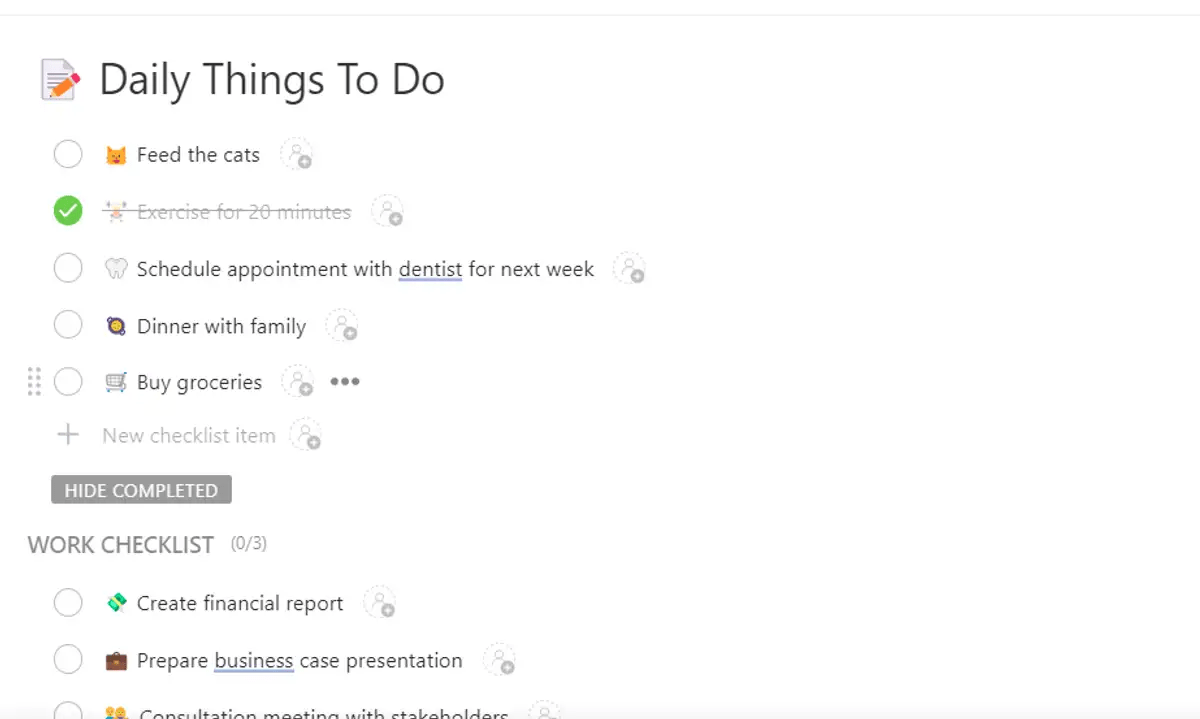
Use the ClickUp Daily To-Do List Template to build a flexible, emotionally aware task management system. This system helps you categorize tasks by effort or mood to stay productive without burning out.
Inside the template, you can:
🎯 Tiny tweak, big win:
Use ClickUp’s recurring tasks feature for the things you keep forgetting—like “close tabs,” “log out of Slack,” or “actually eat lunch.” Set it once and thank yourself daily.
Vague goals = instant overwhelm. (“Launch campaign” doesn’t exactly scream start here.)
Break it into visible, trackable chunks. The tiny, visual wins give you something to aim for and feel good about.
Use the ClickUp Goals feature to break major projects into smaller, trackable steps. This helps you visualize progress and stay motivated—especially when you need quick wins.

Here’s how it helps:
You’re not just “working on something”—you’re actively completing pieces of a bigger mission. That shift alone can help rewire procrastination from avoidance to progress in action.
📊 Interesting stat: People who break goals into sub-goals are 2x more likely to follow through, positively impacting their overall productivity.
Sometimes your brain needs a break—and that’s okay. Instead of guilt-scrolling, try low-effort but useful tasks:
Use the ClickUp Procrastination Space or Custom List Template to set up a low-effort workspace for distractions. This helps you make small progress without abandoning productivity altogether.
Try this:

When your brain says “no,” give it something it can still say “yes” to. It’s productivity with softness—and that’s precisely what procrastination needs.
Treating these as intentional micro-wins allows you to stay productive without burning out.
Know more: Try temptation bundling—pairing tasks you resist with something you enjoy—to turn those micro-wins into legit momentum.
Time blocking works best when it matches your energy levels—not some ideal schedule.
Use the ClickUp Time Blocking Template to create flexible, color-coded blocks that reflect your work rhythms. This helps you easily plan around focus peaks and burnout dips.
You’ll be able to:
⏳ ADHD insight: External structure = internal freedom. The less you think about what comes next, the more energy you save.
When your mind is overloaded, it’s hard to see where to start.
ClickUp’s ADHD-Friendly To-Do List Templates are built for neurodivergent minds, with flexible structures that match how you think and work.
Here’s what’s baked in:
Bonus: Check out the ClickUp Neurodivergent Productivity Guide for additional strategies explicitly tailored to ADHD work styles.
The problem with most productivity systems? They expect you to become someone you’re not.
Use the ClickUp Customizable Dashboard to create a workspace that adapts to your natural tendencies rather than fighting against them. This powerful feature allows you to build personalized views, automate repetitive tasks, and filter information to reduce overwhelm.

You can:
You’re not fighting procrastination alone—you’re building an ecosystem that understands how you function best.
Sometimes, procrastination isn’t about resistance but confusion, and visuals help clear the fog.
Use the ClickUp Whiteboards to map out complex projects and brainstorm ideas without judgment visually. This collaborative tool helps externalize your thinking, making it easier to see connections and next steps that might otherwise remain foggy.

🧠 It’s like putting your brain on display—suddenly, it all clicks.
You don’t need another tool to “keep you accountable” by yelling at you with deadlines. You need a workspace that evolves with you.
Use the ClickUp Workload View to ensure you’re setting realistic expectations and not overcommitting. This feature helps you visualize your capacity, making it easier to plan work that acknowledges your limits and prevents burnout.

ClickUp gives you structure without shame, flexibility without chaos, and support without micromanagement. Use it to:
With features like AI capabilities to help draft content, dark mode for late-night productivity sessions, and global search functionality to find information quickly, ClickUp becomes a true productivity partner rather than just another task manager.
🧠 What to do when you’re procrastinating
💡 Sometimes, the only way out is through. Gently. It only takes a few moments of curiosity to shift from avoidance to action.
Your environment shapes your focus more than you think. A loud ping, a cluttered desk, or an uncomfortable chair isn’t just a minor annoyance—it’s a built-in excuse to put things off.
Let’s identify the hidden procrastination triggers in your space—and how to redesign it so your brain stays on task without the fight.
A messy desk isn’t just annoying—it signals your brain to stress and stall. Visual clutter increases cortisol and makes it harder to focus.
Do this:
💡 Pro Tip: Set a recurring “workspace reset” task in ClickUp to stay ahead of the mess.
Too many tabs, scattered files, and non-stop pings pull focus. If your digital setup feels chaotic, so will your mind.
ClickUp keeps things clean by:
🧠 Did you know? Visual overload leads to decision fatigue—and more procrastination.
It’s not just what you do—it’s when you do it. Forcing deep work during low-energy hours sets you up to delay.
This is where time boxing—assigning tasks to specific time slots—can reduce ambiguity and make your day more manageable.
Try this:
⏳ Tip: Stop copying 5 AM routines. Find your rhythm.
Here’s a trick from Neha Sharma, Senior Content Editor, at ClickUp, on how she handles procrastination:
I am a fan of the 2-minute rule. Whenever I feel like I am procrastinating and not making the kind of headway I need to with my work, I scan my to-dos to check what I can quickly get out of the way in two minutes. For example, a quick response to a check-in email from a colleague. Just getting one or two things closed quickly usually brings me back into a productive mood.
Stress, perfectionism, or decision fatigue? All fuel procrastination. If your internal space feels chaotic, starting anything feels harder.
Support yourself by:
Creating a focus-friendly environment isn’t about aesthetics—it’s about giving your brain less friction and more clarity.
The average worker spends 2 hours and 11 minutes procrastinating every day.
Productive procrastination isn’t the enemy. It’s a coping tool—and a smart one. The key idea is that it can work to your advantage with the right approaches, but it works best when paired with a structure that nudges you back when “just five more minutes” becomes a full camera-roll cleanse.
Accountability doesn’t have to feel like pressure. It can be the gentle guide that helps you move forward while honoring how your brain works.
Here’s how to make it work (without guilt or overwhelm):
When your to-do list is a mile long, it’s easy to do anything except what matters most.
ClickUp helps by letting you:
💡 Quick insight: Metacognition—thinking about your feelings—can boost decision-making and focus. It’s a trick top performers swear by.
When productivity seems impossible, sometimes the kindest thing you can do is listen to your body and try something different.
Feeling stuck? Here’s a gentle strategy from Arya Dinesh, Senior Content Editor, from ClickUp, that might help:
If I feel tired and that’s blocking me from being productive, I take a 26-minute nap. It’s supposed to be the most efficient nap duration. Otherwise, I make a list of things to do, dump it all into paper every little step, empty my brain out, and then pick it up later. There’s also rotating between tasks, doing three tasks at the same time but rotating between them every 10 minutes; keeps it interesting.
Accountability fails when it’s too rigid or too vague. The fix? Low-stress, consistent nudges that promote adaptive behavior.
With ClickUp, you can:
It’s about staying connected to your progress, not micromanaging it.
Sharing goals creates positive pressure. You don’t need to post updates on Slack every hour, but a little visibility goes a long way.
ClickUp makes this easy with:
Even solo? You’ll feel the impact of seeing your progress visibly move.
Progress isn’t just finishing—it’s every little step forward.
With ClickUp, you can:
Not finishing the report doesn’t mean you didn’t move forward. Track what did happen.
Motivation sticks better when there’s something to look forward to.
ClickUp helps you:
Effort → reward → repeat. Your brain will thank you.
Some days, the only thing you’ll check off is “wake up.” That’s not failure—it’s being human.
Accountability with compassion looks like:
ClickUp grows with you—no need to start from scratch.
✨ Bottom line?
Productive procrastination works when it’s paired with a soft structure.
The goal isn’t to never delay a task—it’s to avoid getting stuck there. ClickUp gives you the tools to refocus, adapt, and move forward—your way. 💜
While productive procrastination can feel smart, it can easily slip into unproductive procrastination if you’re not careful. Here are some common traps and time management problems to watch out for and how ClickUp can help you avoid them:
“I’m doing everything, but not the important task.”
✅ Solution: Use ClickUp’s priority levels to keep essential tasks at the top of your mind and tackle them first.
“I’m chasing easy wins all day.”
✅ Solution: Balance small wins with deep work by using Custom Fields in ClickUp to stay focused on bigger goals.
“I keep organizing or refining instead of tackling the core task.”
✅ Solution: Break tasks into small, manageable steps with ClickUp’s “Start Badly” method or use the “Eat the Frog” technique by tackling the toughest task first.
“The tough tasks just feel too overwhelming to start.”
✅ Solution: Eat the Frog—start with the hardest task to get it out of the way, and use recurring reminders in ClickUp to help you stay on track.
“I’m not sure why I’m procrastinating.”
✅ Solution: Schedule reflection sessions with recurring tasks in ClickUp to understand your procrastination triggers and adjust accordingly.
If you’ve ever felt guilty for “not doing enough,” here’s a reframe: Productive procrastination isn’t failure—it’s feedback.
It’s your mind asking for a gentler, more sustainable path. One rooted in encouragement, not shame or burnout. Real productivity comes from understanding your rhythms, honoring your energy, and using tools that support your flow.
This is where ClickUp becomes your ally 💜
Whether you’re:
ClickUp helps you start small, stay flexible, and move forward—even when focus is out of reach. From redirected distractions to neurodivergent-friendly systems, it’s all progress.
Try ClickUp for free and turn every “I’ll get to it later” into “Wow, I actually did it.” 🎉
© 2025 ClickUp